Abstract
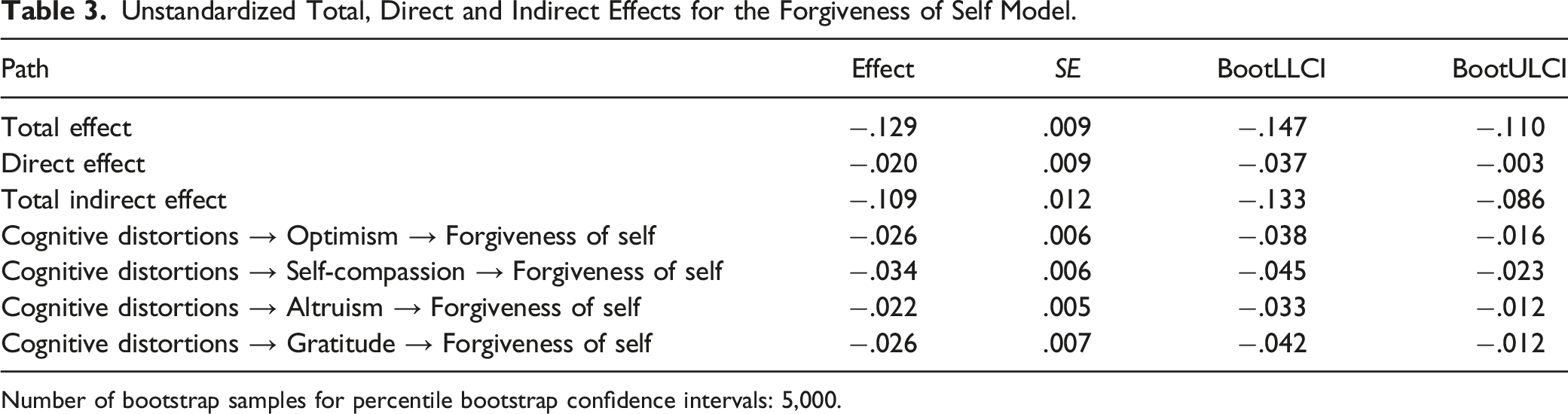
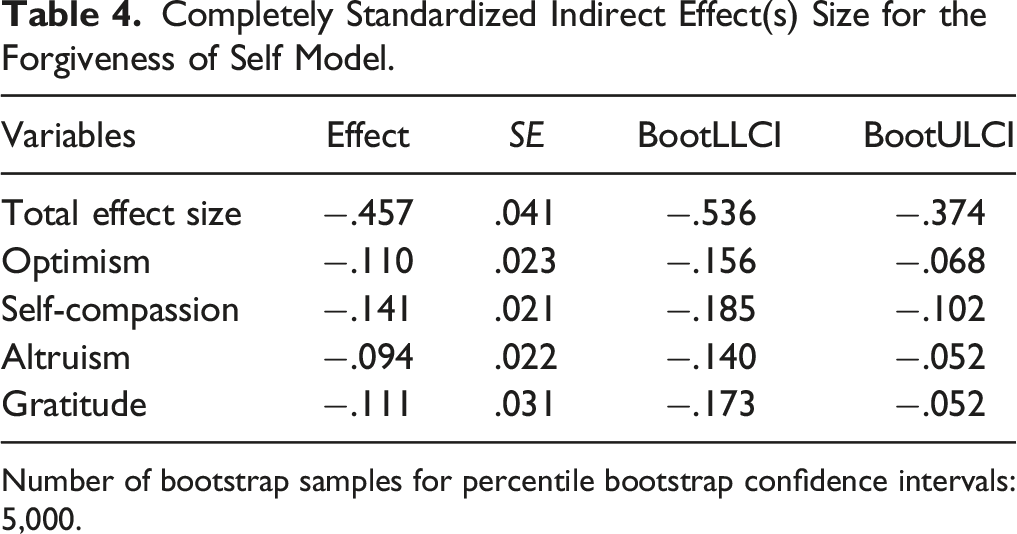
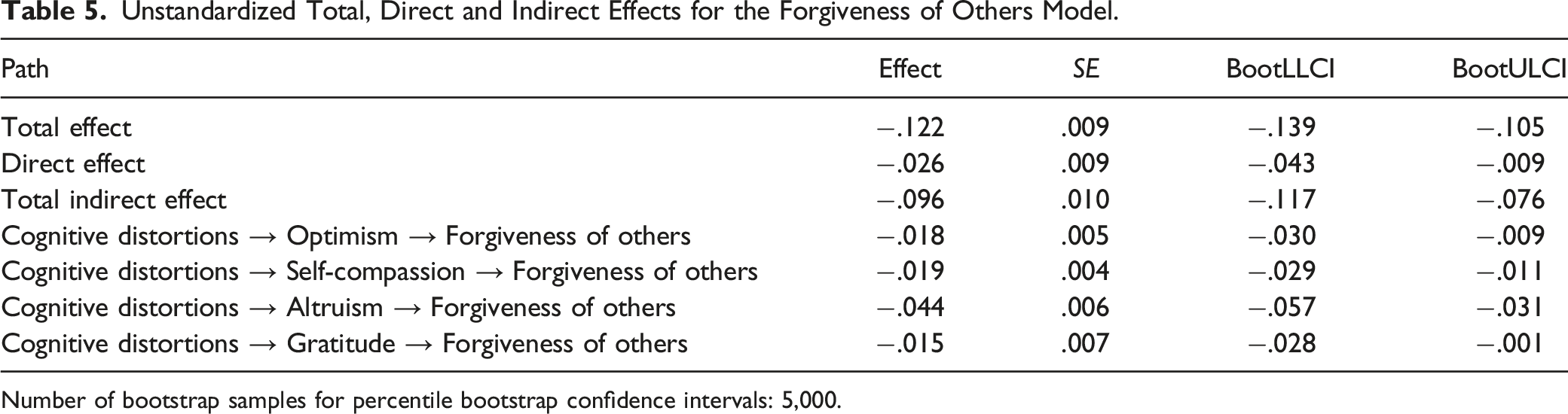
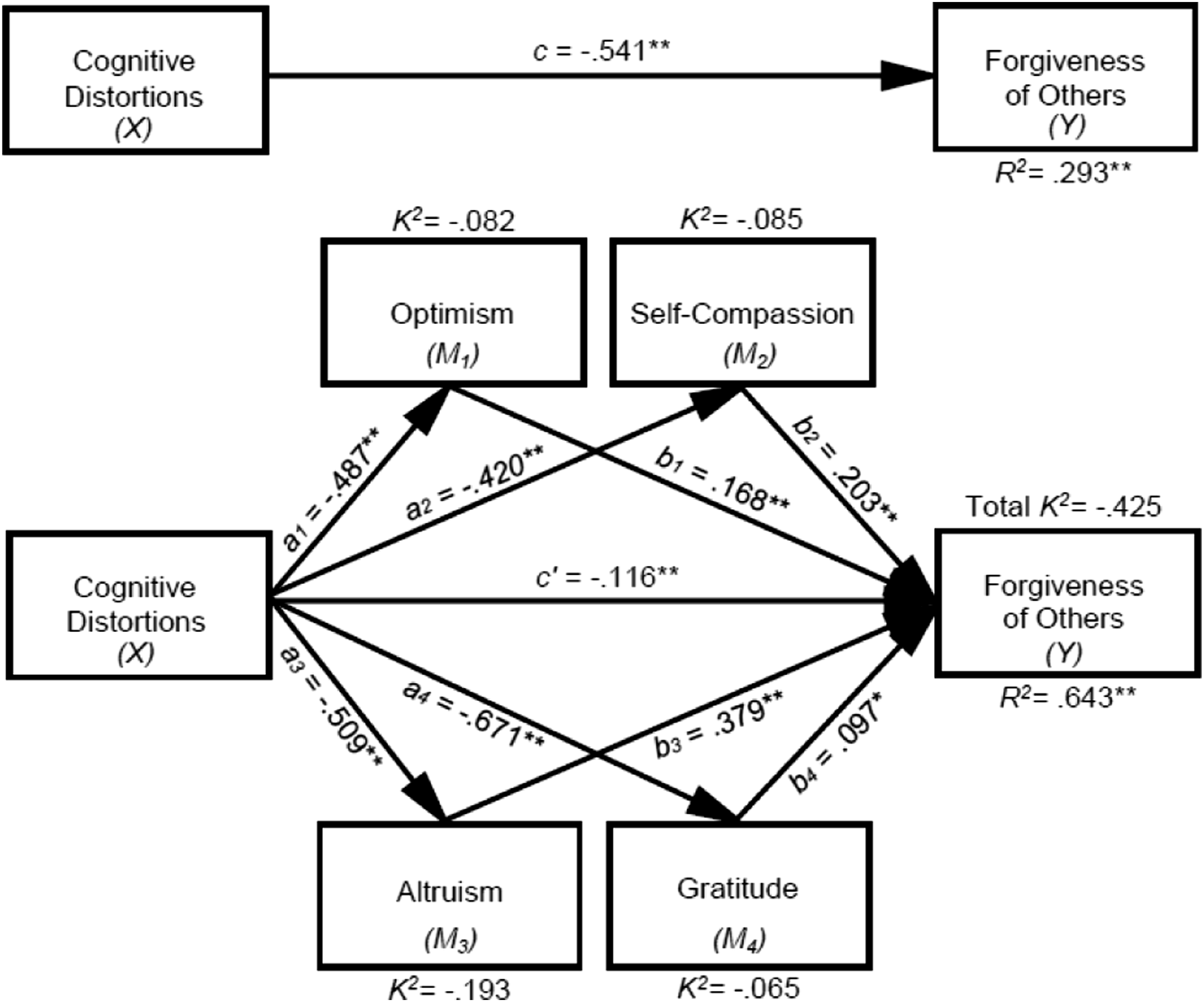
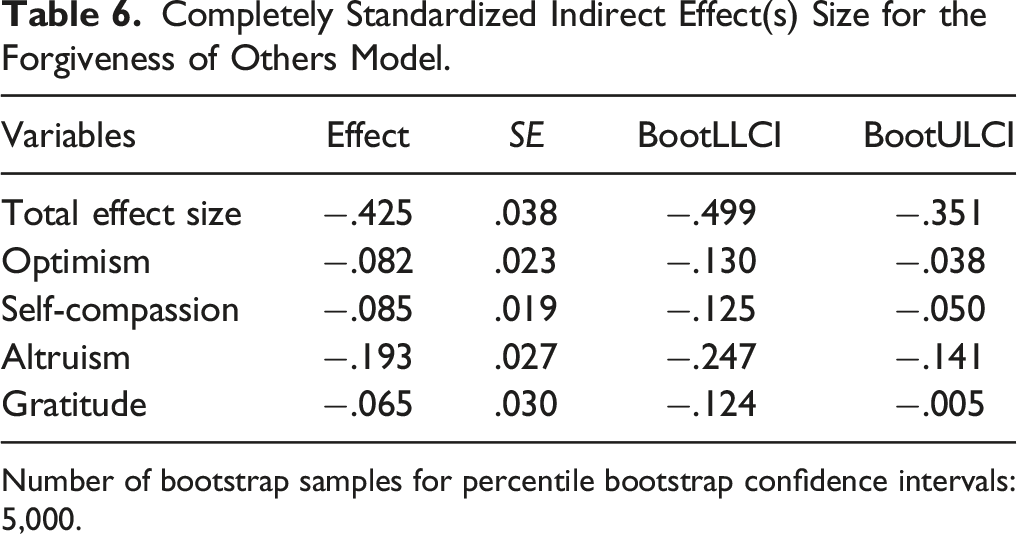
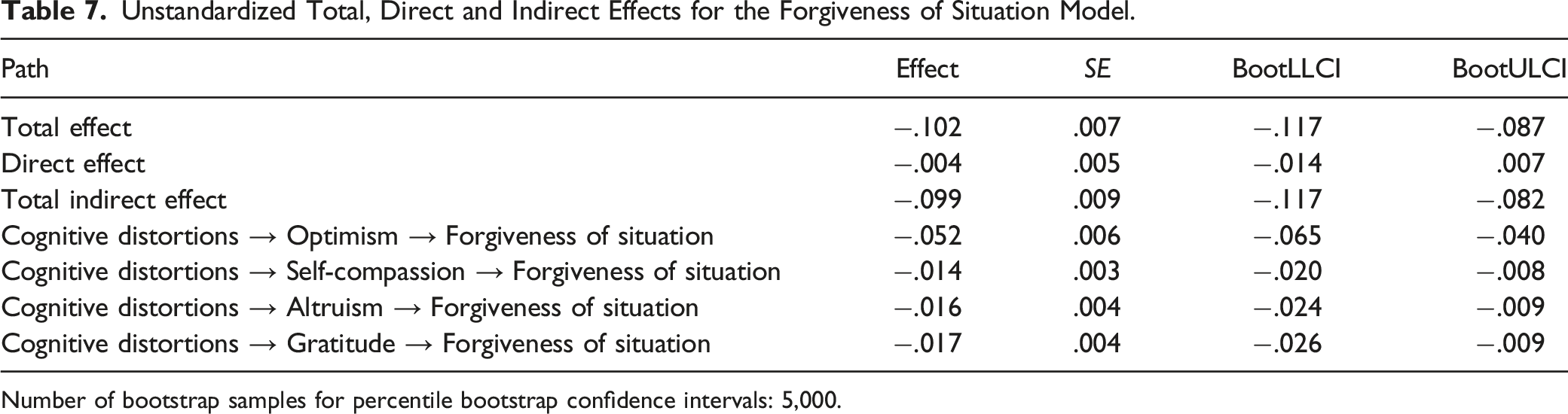
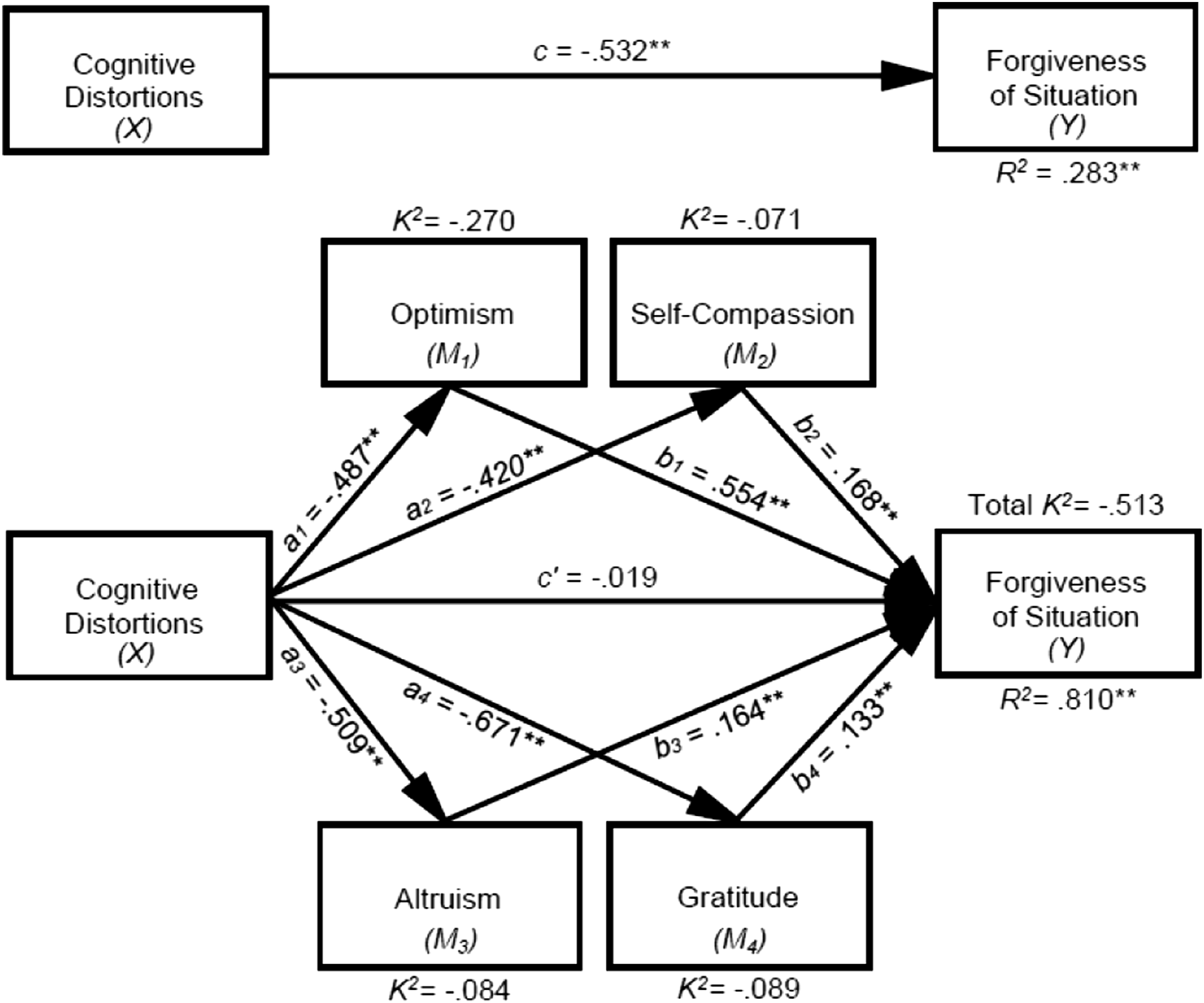
The aim of this study was to investigate whether optimism, self-compassion, altruism, and gratitude act as mediators in the relationship between cognitive distortions and emerging adults' forgiveness of themselves, others, and situations. The sample consisted of 488 university students in their emerging adulthood, comprising 66.20% females and 33.80% males, ranging in age from 18 to 32 years (M = 20.32, SD = 2.43). The data were collected using a demographic information form and six self-report scales. In addition to descriptive statistics, Pearson Correlation Coefficient and Bootstrap Analysis were used to analyze the data. The results indicated that optimism, self-compassion, altruism, and gratitude significantly mediated the relationship between cognitive distortions and forgiveness of self (b = −.109, %95 BCA CI [−.133 to −.086]), others (b = −.096, %95 BCA CI [−.117 to −.076]), and situations (b = −.099, %95 BCA CI [−.117 to −.082]). Self-compassion (K2 = −.14) was found to be the strongest mediator in the self-forgiveness model, followed by altruism (K2 = −.19) in the forgiveness of others model, and optimism (K2 = −.27) in the forgiveness of situations model. The study highlights the potential use of positive psychology concepts such as optimism, self-compassion, altruism, and gratitude to reduce the negative effect of cognitive distortions on emerging adults' forgiveness and to enhance their forgiveness skills.
Introduction
With the influence of positive psychology, studies are focused on how individuals can take advantage of their positive characteristics to develop strategies on how to effectively cope with developmental tasks and life difficulties (Aishvarya et al., 2021; Arslan & Wong, 2021). Like capacity to love, compassion, tolerance, hope, interpersonal skills, courage, perseverance, originality and wisdom, forgiveness is also accepted as one of these positive characteristics of individuals (Seligman & Csikszentmihalyi, 2000). In interpersonal relationships, individuals can sometimes be hurt or hurt others for some reasons. In such cases, it is revealed that forgiveness has an important role for the continuation of social relations and the subjective psychological well-being of the individual (Ergi et al., 2021). Studies on forgiveness gathered momentum in the 1980s, and in the 2000s, forgiveness became one of the most studied topics in the field of psychology (McCullough et al., 2005). The concept of forgiveness is explained as the process of giving up negative emotions such as anger, disappointment, hatred and revenge that harm the person and his/her environment, and replacing negative emotions such as anger and revenge with positive emotions such as love, compassion, tolerance and empathic understanding in order to fix the damaged relationship (Enright & Fitzgibbons, 2000). In the literature, especially after the 1990s, it has been realized that forgiveness has moved away from being a one-dimensional concept involving only forgiveness of others and has begun to be considered as a multidimensional construct (Enright, 1996). In the current study, in compliance with the literature, the concept of forgiveness is considered as a multidimensional construct that deals with forgiveness of self, others and situations (Thompson et al., 2005).
Self-forgiveness is defined as a decrease in negative feelings such as grudge and anger against oneself and the desire to punish oneself, and an increase in positive emotions and thoughts that will help oneself instead (Wohl et al., 2008). The self-forgiveness process takes place in two ways. The first is the individual’s forgiving himself/herself for the harm he/she has caused to other individuals or individuals other than himself/herself, and the second is the individual’s forgiving himself/herself for the harm he/she has done to himself/herself (Hall & Fincham, 2005). Self-forgiveness occurs when the individual accepts his/her mistake and takes responsibility for the behaviour. Forgiving others, on the other hand, can be defined as the individual’s willingness to give up the negative feelings and negative evaluations he/she feels towards the other individual who has hurt him/her unjustly, by fostering feelings such as compassion, generosity and love (Enright et al., 1998). Forgiving others contributes positively to the improvement of interpersonal relationships and the well-being of the individual (Worthington, 1998). In this context, it can be said that in the case of forgiving others, the guilty or faulty behaviour belongs to someone else, while in the case of self-forgiveness, the faulty behaviour belongs to the individual himself/herself (Hall & Fincham, 2005). Although the situations experienced are sometimes not under the control of the individual or someone else (flood, earthquake, illness, etc.), these situations can lead to negative emotions and reactions in the individual. Forgiveness is defined as the individual’s ability to let go of the negative emotions he or she experiences arising from these situations in which he or she cannot intervene (Thompson et al., 2005). After realizing the positive effects of forgiveness on individuals’ psychological health, studies to determine the variables that may be effective in individuals’ forgiveness processes have gained importance rapidly. One of these variables is cognitive distortions. Cognitive distortions are one of the main starting points of the cognitive behavioural theory, which started to be influential in the field of psychology since the 1960s under the leadership of Aaron T. Beck. According to this theory, the emotions and behaviours of individuals are shaped by the way they interpret the events they have experienced. In other words, what determines the feelings of individuals is not the event itself, but the meaning that the individual attributes to the event in his/her own thought system (Beck, 1976). Dysfunctional beliefs, which are in the cognitive structure and affect the emotions of individuals, cause some errors in the processing of information coming from outside and automatic thoughts emerge as a result of these repetitive mistakes and cognitive distortions occur by categorizing these automatic thoughts according to certain characteristics (Türkçapar, 2019). As a result of cognitive distortions, when individuals do not accept that they can be wrong, when they do not see themselves or others as beings who can make mistakes, when they think all or nothing and when they continue to overestimate the negative, it is likely that their forgiveness of themselves, others and events will be distorted (Kılıç & Tunç, 2020). In this context, when the studies in the literature are reviewed, it is understood that cognitive distortions have negative effects on individuals’ forgiveness (Aşçıoğlu-Önal & Yalçın, 2017; Moriatis, 2018; Ramsey, 2019). In addition, it is possible to reach researches that cognitive distortions negatively affect forgiveness of self (Kılıç & Tunç, 2020), others (Bahari et al., 2010) and situations (Aydın et al., 2015), which are sub-dimensions of general forgiveness.
At this point, it becomes important to identify possible mediator variables that can reduce the negative effect of cognitive distortions on individuals’ forgiveness. When these variables are determined and used, it may be possible to completely eliminate or partially reduce the negative effect of cognitive distortions on individuals’ forgiveness. In this regard, it would be a very reasonable decision to choose the possible mediator variables that can be used to reduce the negative effects of cognitive distortions on individuals’ forgiveness from among the basic concepts of positive psychology (optimism, self-compassion, altruism, etc.) whose effectiveness has been proven on the psychological well-being of individuals. Positive psychology can prevent individuals from experiencing psychological problems with its preventive function by focusing on the positive and strong characteristics of individuals rather than their negative, defective and problematic characteristics (Hefferon & Boniwell, 2011). In addition, positive psychology is a field that contributes to the most effective functioning and growth of people, groups and institutions by examining the conditions and processes necessary for them to do so (Gable & Haidt, 2005). In this context, it can be thought that the variables of positive psychology will contribute positively to the forgiveness of individuals as well as affecting all other variables that contribute to the psychological health of individuals by reducing the negative effects of cognitive distortions that individuals have. Positive psychology contributes to the levels of optimism and hope by increasing the psychological resilience levels of people by improving their character strengths and positive characteristics, helping them to find meaning and purpose in life by making them more forgiving, and finally, by functioning as a preventive measure by raising the levels of subjective and psychological well-being (Doğan & Eryılmaz, 2013). In the current study, the variables of optimism, self-compassion, altruism and gratitude which are teachable - learnable and addressed under the umbrella term of positive psychology and which provide evidence that the negative impact of cognitive distortions on individuals’ forgiveness can theoretically be reduced were investigated. It was thought that the negative effect of cognitive distortions on individuals’ forgiveness would be eliminated or at least reduced by including these variables in the model established by testing the mediator effect.
Optimism and Its Mediator Role
Optimism is the first variable included in the model established to reduce the negative effect of cognitive distortions on individuals’ forgiveness. Optimism is defined as having a positive expectation that everything will go well in life in general, despite the difficulties and obstacles to be encountered in life (Scheier & Carver, 1992). The basis of optimism is the belief that the individual can cope with the events in life (Scheier & Carver, 1985). Optimism is among the concepts of developmental positive psychology (Ümmet & İme, 2020). The higher the cognitive distortion level of individuals is, the lower their positive expectations and optimism levels for the future are (Carver & Scheier, 2005). In the experimental studies in the literature to improve the positive expectations and optimism levels of individuals, it is seen that optimism training significantly reduces the cognitive distortions of individuals (Karagöz, 2011; Ulusoy & Duy, 2013). In addition, there are correlational studies in the literature showing that there is a negative correlation between cognitive distortions and optimism (Caryk & Walker, 1986; Pacheco & Malagris, 2020). On the other hand, when the literature is reviewed, it is seen that there are also correlational studies in which optimism is positively correlated with forgiveness (Nembhard, 2017; Ramadhani et al., 2021). In addition, it is known that optimism has positive and significant relationships with forgiveness of self (Ramadhani et al., 2021), others (Nembhard, 2017) and situations (Sivri, 2019), which are sub-dimensions of general forgiveness. Some personality traits, such as optimism, are effective in having the necessary emotions, thoughts and relationship style in order for the individual to forgive (McCullough et al., 1998). The relationship of optimism with both cognitive distortions and forgiveness is theoretically supported. Since it is also known that optimism is a concept that can be taught and learned (Karagöz, 2011), it can be used as a mediator variable to reduce or eliminate the negative effect of cognitive distortions on individuals’ forgiveness.
Self-Compassion and Its Mediator Role
Another variable included in the model established to reduce the negative effect of cognitive distortions on individuals’ forgiveness is self-compassion. Self-compassion is defined as people being kind to themselves in the face of their inadequacies and failures, displaying an understanding point of view instead of being judgmental towards themselves, and accepting their inadequacies and failures as a natural part of being human (Neff, 2003b, 2003a). Self-compassion is shown among the self-focused concepts in positive psychology (Dinç, 2020). Contrary to cognitive distortions, self-compassion is a healthy attitude towards the individual’s self and is a variable that positively contributes to the individual’s coping with pain by relaxing himself/herself (Neff, 2003b). When the results of the studies in the literature are examined, it is seen that there is a negative and significant correlation between cognitive distortions and self-compassion (Hou et al., 2020; Stephenson et al., 2018). Given that cognitive distortions can create self-deprecating thoughts and feelings in individuals, it is clear that reducing cognitive distortions will increase self-compassion and support well-being (Kılıç & Tunç, 2020). In this context, it can be said that self-compassion plays a protective role against emotional disturbances caused by cognitive distortions (Stephenson et al., 2018). On the other hand, there are also study results in the literature showing that there is a positive and significant correlation between self-compassion and forgiveness (Karataş & Uzun, 2021; Miyagawa & Taniguchi, 2020; Pandey et al., 2020). In addition, it is known that self-compassion has positive and significant relationships with forgiveness of self (Wu et al., 2019), others (Booker & Perlin, 2021), and situations (Breen et al., 2010), which are sub-dimensions of general forgiveness. It is known that positive emotions such as self-compassion expand the attention and thinking of individuals and eliminate negative emotional arousal such as holding grudges and revenge (Fredrickson, 2004). Based on Fredrickson's (2001) research, it would be logical to conclude that self-compassion is related to another positive emotion, forgiveness. In addition, Jordan (1989, 1991) has given a comprehensive account of a self-compassion-like construct called self-empathy. According to Jordan, self-empathy directly translates into empathy for others. Jordan (1989) suggested that individuals who realize their similarities with others can better empathize with the inevitable violations associated with being human, and this will facilitate their behaviour of forgiveness. In addition, the person hurting the individual may be the individual himself/herself. In this context, the individual needs to give up his/her negative feelings and overcome his/her resentments. Self-compassion and accepting one’s negative experiences are associated with forgiveness (Kılıç & Tunç, 2020). In this context, it can be said that the relationship between self-compassion and both cognitive distortions and forgiveness is theoretically supported. Given that self-compassion is a concept that can be taught and learned (Ekşi et al., 2020), it can be a mediator variable that can reduce or eliminate the negative effect of cognitive distortions on individuals’ forgiveness.
Altruism and Its Mediator Role
Another variable included in the model established to reduce the negative effect of cognitive distortions on individuals’ forgiveness is altruism. Altruism is a moral view based on the principle of making self-sacrifice for the sake of others without any self-interest and the idea that the main obligation of each individual is to devote himself/herself to others and society (TDK, 2021). Altruism includes many positive social behaviours such as helping, assuming responsibility and giving. In short, altruism is a helping behaviour without any expectation of reward (other than the pleasant feeling of having done something positive to others) (Ümmet et al., 2013). In this respect, self-interested or coerced help is not considered altruism. Altruism is shown among the concepts focused on interpersonal approach in positive psychology (Keskinoğlu & Akbulut, 2020). In this context, when the studies in the literature are reviewed, it is understood that there is a negative significant correlation between cognitive distortions and altruism (Krieger & Falcone, 2017; Reed, 1983). Cognitive distortions can trigger a dysfunctional form of altruism that is harmful or unhelpful while seeking to enhance the well-being of other individuals. Thus, neither the helper nor the person receiving help can benefit from a positive emotion. Cognitive distortions that lead to guilt will create difficulties in perceiving social cues and in emotional regulation, preventing a productive altruistic behaviour. On the other hand, when the literature is examined, it is seen that there are also studies suggesting that there is a positive and significant correlation between altruism and forgiveness (Ergi et al., 2021; Naeem & Akhtar, 2016; Shabizade et al., 2016). In addition, it is known that altruism has positive and significant relationships with forgiveness of self (Oliner, 2005), others (Naeem & Akhtar, 2016), and situations (Sanlav, 2016), which are sub-dimensions of general forgiveness. In these studies, altruistic behaviours of individuals, which include helping others by sacrificing, have an important role in explaining individuals’ forgiveness. Given the reciprocal relationship between altruism and forgiveness, it is normal for the individual to become more altruistic by being more sensitive to the individuals and events around him/her and not being indifferent to the needs of his/her environment through the sense of empathy that becomes evident when he/she puts forgiveness into practice (Ergi et al., 2021). The relatively less use of altruism and forgiveness by therapists can be explained by the fact that these two therapeutic strategies are less compatible with the theory of the self that philosophically underlies most of the popular psychotherapeutic approaches in use today. As a result of the literature review, it is seen that the relationships between altruism, cognitive distortions and forgiveness have been theoretically proven. In this context, it can be thought that altruism, which is a teachable and learnable concept (Kaynak, 2020), can be a mediator variable that can reduce the negative effect of cognitive distortions on individuals’ forgiveness.
Gratitude and Its Mediator Role
The last variable included in the model established to reduce the negative effect of cognitive distortions on individuals’ forgiveness is gratitude. Gratitude is a positive emotion that individuals feel towards other people or God in the face of a favour made to them (Karataş & Uzun, 2020). Gratitude is often associated with appreciation (Wood et al., 2008). Appreciation is defined as acknowledging the value and meaning of something (an event, a person, a behaviour, an object, etc.) and feeling a positive emotional connection with it (Karataş & Uzun, 2020). The gratitude aspect of appreciation is the recognition and acceptance of a gain from another person or God, and being grateful to another for his/her efforts, sacrifices and actions (Adler & Fagley, 2005). Gratitude is shown among the concepts focused on interpersonal approach in positive psychology (Keskinoğlu & Akbulut, 2020). When the studies in the literature are reviewed, it can be said that gratitude softens the negative effects of cognitive distortions (Jung et al., 2014; Ramsey, 2019). Gratitude softens cognitive distortions focused on an individual’s not deserving the good things he/she has experienced in his/her life and nurtures positive feelings. When individuals begin to feel gratitude and realize the good in their lives, they will be able to move away from negative emotions and cognitive distortions such as self-blame and unfair self-criticism (Jung et al., 2014). On the other hand, when the literature is reviewed, it is seen that there are also studies reporting a positive and significant correlation between gratitude and forgiveness (García-Vázquez et al., 2020; Hermaen & Hussain Bhutto, 2020; Satıcı et al., 2014). In addition, it is known that gratitude has positive and significant relationships with forgiveness of self (Hermaen & Hussain Bhutto, 2020), others (Kane et al., 2021), and situations (Aishvarya et al., 2021), which are sub-dimensions of general forgiveness. Gratitude has a pro-social nature, so it might naturally be positively associated with forgiveness (McCullough et al., 2002). Gratitude and forgiveness conceptually reinforce each other as pro-social and empathetic character strengths. In addition, they contribute positively to the psychological and physical health of individuals (Breen et al., 2010). Studies in the literature show that both gratitude (McCullough et al., 2002) and forgiveness (Wade et al., 2005) can be improved with psychological interventions and both contribute positively to the well-being of individuals. When all these studies in the literature are examined, it can be said that the relationship between gratitude and both cognitive distortions and forgiveness is theoretically supported. In this context, gratitude, which is a teachable and learnable concept (Haskins, 2009), can be a mediator variable that can reduce or eliminate the negative effects of cognitive distortions on individuals’ forgiveness.
The Current Study
University students are in a complex transition period in which they prepare for adult roles. It is assumed that university students who are in the period called emerging adulthood mature physically and psychologically and they are expected to solve the problems they face by moving away from emotionality and thinking and acting more rationally (Kılıç, 2013). In fact, forgiveness has recently started to be taken into consideration by some researchers taking cognitive or cognitive behavioural approach as the basis of their research (Miceli & Castelfranchi, 2011). It is stated by many researchers that in this painful process where the individual tries to forgive someone else or himself/herself for a mistake he/she has made, he/she experiences a cognitive transformation (Enright, 1996). In this respect, it is necessary to determine the variables that will reduce the negative correlation between cognitive distortions and forgiveness and contribute to the desired cognitive transformation. Although there are correlational studies on forgiveness in the literature, it is seen that a comprehensive model for forgiveness has not been designed in Turkish culture. In this respect, it is understood that there is not enough knowledge to explain the forgiveness process specific to Turkish culture yet. Therefore, the current study has been planned considering that there is a need for further research on understanding the forgiveness process, identifying and reducing the situations that harm forgiveness and determining and fostering the variables that strengthen forgiveness. University students in the emerging adulthood period need to recognize and strengthen the supportive resources they have in order to cope with the internal and interpersonal problems they experience. In the current study, the effects of cognitive distortions, optimism, self-compassion, altruism and gratitude variables, which have been theoretically proven to be related to forgiveness, were tried to be examined by using a mediation model. In addition, when the studies on forgiveness in the literature are examined, it is seen that the same variable exhibits different characteristics when individuals forgive themselves, others or situations (Karataş & Uzun, 2021). In this regard, the role of the mediator variables determined in the relationships between cognitive distortions and the processes of forgiving oneself, others and situations were examined separately and thus the findings were enriched. This study is very important in terms of determining the variables to be considered in future studies on increasing forgiveness (experimental, relational, psycho-educational, etc.) and laying the groundwork for the establishment of a comprehensive forgiveness model. The research is unique in this respect and makes important contributions to the knowledge of forgiveness in the literature. In addition, the findings on how to support forgiveness will also constitute a useful data source for field practitioners who provide counselling or psychotherapy services. In this respect, it is thought that the study will fill both the theoretical and practical gap in the literature.
In this connection, the purpose of the current study is to determine whether optimism, self-compassion, altruism and gratitude play a mediator role in the relationship between emerging adults’ cognitive distortions and their forgiveness of themselves, others and situations. In the three different forgiveness models (self, others and situations) established for this purpose, the following hypotheses were formed by considering the suggestions made by Baron and Kenny (1986) to test mediated structural models; For the Self-Forgiveness Model,
For the Forgiveness of Others Model,
For the Forgiveness of Situations Model,
Method
Study Group
The current study consisted of 488 university students attending different faculties of a state university in Turkey. Schumacker and Lomax (2016) stated that in quantitative research based on model building, it is sufficient to have between 250 and 500 observations. The data of the study was gathered using convenience sampling approach which is a non-random sampling method. The non-random sampling method is for researchers to form study groups, starting with the most accessible participants, until they reach the sample size they need (Büyüköztürk et al., 2016). The sample included 66.20% female (n = 320) and 33.80% male (n = 168). The ages of the participants range from 18 to 32 and the mean age is 20.32 (SD = 2.43). Of the participants, 57.70% (n = 276) are first grader, 11.90% (n = 61) are second grader, 11.50% (n = 58) are third grader, and 18.90% (n = 93) are fourth grader university student. 4.90% (n = 29) of participants defined their socioeconomic status as poor, 84.90% (n = 405) as moderate, and 10.20% (n = 54) as good.
Data Collection Tools
In the current study, as the data collection tools, a demographic information form to elicit personal information of the emerging adults and six different self-report scales were used. For all the data collection tools used in the study, permissions to use were obtained from the intellectual property owners via email.
Demographic Information Form
In order to obtain information about the personal characteristics of the emerging adults in the study group, a demographic information form was created by the researchers in which gender, age, grade level, and socioeconomic status variables were asked.
Heartland Forgiveness Scale (HFS)
HFS was developed by Thompson et al. (2005) to measure individuals’ tendency to forgive themselves, others and situations. The scale was adapted to Turkish by Bugay and Demir (2010). The scale consists of 18 items scored on a seven-point Likert scale. HFS consists of three sub-dimensions: self-forgiveness, forgiveness of others and forgiveness of situations. The scale also yields a total forgiveness score. High scores from each sub-dimension indicate a high level of forgiveness for that domain. The Cronbach Alpha internal consistency coefficient was calculated to be .81 for the whole scale, .64 for the sub-dimension of self-forgiveness, .79 for the sub-dimension of forgiveness of others and .76 for the sub-dimension of forgiveness of situations (Bugay & Demir, 2010). In order to test the usability of HFS in the current study, CFA (Confirmatory Factor Analysis) was used to check the construct validity and Cronbach Alpha internal consistency coefficient analysis was used to determine its reliability. As a result of these analyses, the validity values obtained for HFS (χ 2 [n = 470] = 496.224, df = 132, p = .000, χ 2 /df = 3.759, RMSEA = .067, SRMR = .058, CFI = .914) and reliability values (.84 for the whole scale, .76 for the sub-dimension of self-forgiveness, .76 for the sub-dimension of forgiveness of others and .66 for the sub-dimension of forgiveness of situations) were found to be in a good compliance with the reference ranges given in the literature (Büyüköztürk, 2014; Kline, 2015) and thus it was decided that the scale could be used in the current study. Example items for better understanding of HFS: [3] Learning from bad things that I’ve done helps me get over them. [12] When someone disappoints me, I can eventually move past it. [18] Eventually I let go of negative thoughts about bad circumstances that are beyond anyone’s control.
Cognitive Distortions Scale (CDS)
CDS was developed by Briere (2000) to measure cognitive distortion, which is one of the basic concepts of the Aaron Beck’s cognitive behavioural theory. The scale was adapted to Turkish by Sert-Ağır and Yavuzer (2018). The scale consists of 40 items scored on a five-point Likert scale. CDS consists of five sub-dimensions: self-evaluation (negative self-perception and inadequate self-perception), self-blame, helplessness, hopelessness and seeing life (future) as dangerous. The scale also yields a total cognitive distortion level score. Higher scores taken from the scale indicate high cognitive distortion levels. The Cronbach Alpha internal consistency coefficient was calculated to be .96 for the whole scale (Sert-Ağır & Yavuzer, 2018). In order to test the usability of the CDS in the current study, CFA was used to check the construct validity and Cronbach Alpha internal consistency coefficient analysis was used to determine its reliability. As a result of these analyses, the validity values obtained for CDS (χ 2 [n = 470] = 2447.959, df = 735, p = .000, χ 2 /df = 3.331, RMSEA = .070, SRMR = .066, CFI = .935) and reliability value (.95 for the whole scale) were found to be in a good compliance with the reference ranges given in the literature (Büyüköztürk, 2014; Kline, 2015) and thus it was decided that the scale could be used in the current study. Example items for better understanding of CDS: [7] When something bad happens, you think you deserve it. [33] You think you are not in control of your life.
Optimism Scale (OS)
OS was developed by Balcı & Yılmaz (2002) to measure the optimism levels of university students. The scale consists of 24 items scored on a four-point Likert scale. OS has a single dimension. Higher scores taken from the scale indicate higher levels of optimism. The Cronbach Alpha internal consistency coefficient was calculated to be .96 for the whole scale (Balcı & Yılmaz, 2002). In order to test the usability of OS in the current study, CFA was used to check the construct validity and Cronbach Alpha internal consistency coefficient analysis was used to determine its reliability. As a result of these analyses, the validity values obtained for OS (χ 2 [n = 470] = 919.732, df = 252, p = .000, χ 2 /df = 3.650, RMSEA = .075, SRMR = .048, CFI = .927) and reliability value (.95 for the whole scale) were found to be in a good compliance with the reference ranges given in the literature (Büyüköztürk, 2014; Kline, 2015) and thus it was decided that the scale could be used in the current study. Example items for better understanding of OS: [5] No matter what age I am, I try to see the interesting and beautiful aspects of life. [20] I think that every descent has an ascent and I do not despair.
Self-Compassion Scale (SCS)
The original scale was developed by Neff (2003a) to measure individuals’ self-compassion levels. The original scale consists of 26 items and six sub-dimensions called self-kindness, self-criticism, common experiences of humanity, isolation, awareness and hyper-identification. The scale was adapted to Turkish by Deniz et al. (2008). Unlike the original scale, the adapted SCS showed a one-dimensional structure. In addition, two items with a value below .30 in the item total correlation table were removed from the scale and a total of 24 items were obtained. The 24 items in the Turkish version of the scale are scored on a five-point Likert scale. Higher scores taken from the scale indicate higher levels of self-compassion. The Cronbach Alpha internal consistency coefficient was calculated to be .89 for the whole scale (Deniz et al., 2008). In order to test the usability of SCS in the current study, CFA was used to check the construct validity and Cronbach Alpha internal consistency coefficient analysis was used to determine its reliability. As a result of these analyses, the validity values obtained for SCS (χ 2 [n = 470] = 919.732, df = 252, p = .000, χ 2 /df = 3.650, RMSEA = .075, SRMR = .048, CFI = .927) and reliability value (.90 for the whole scale) were found to be in a good compliance with the reference ranges given in the literature (Büyüköztürk, 2014; Kline, 2015) and thus it was decided that the scale could be used in the current study. Example items for better understanding of SCS: [14] I try to see my failures as part of being human. [21] I am tolerant of my own faults and inadequacies.
Altruism Scale (AS)
AS was developed by Ümmet et al. (2013) to measure individuals’ altruism levels. The scale consists of 38 items scored on a five-point Likert scale. The scale consists of seven sub-dimensions: participation in voluntary activities, financial assistance, help in traumatic situations, support to the elderly/patients, physical strength-based help, support in the education process and help offered on the basis of sense of intimacy. The scale also yields a total altruism score. Higher scores taken from the scale indicate higher levels of altruism. The Cronbach Alpha internal consistency coefficient was calculated to be .93 for the whole scale (Ümmet et al., 2013). In order to test the usability of AS in the current study, CFA was used to check the construct validity and Cronbach Alpha internal consistency coefficient analysis was used to determine its reliability. As a result of these analyses, the validity values obtained for AS (χ 2 [n = 470] = 1866.935, df = 658, p = .000, χ 2 /df = 2.837, RMSEA = .065, SRMR = .059, CFI = .938) and reliability value (.94 for the whole scale) were found to be in a good compliance with the reference ranges given in the literature (Büyüköztürk, 2014; Kline, 2015) and thus it was decided that the scale could be used in the current study. Example items for better understanding of AS: [17] When my loved ones are busy, I help them to lighten their work. [22] When my relatives need it, I help them with their repair and renovation works as much as I can.
Gratitude Scale (GS)
GS was developed by Kardaş and Yalçın (2019) to measure individuals’ tendencies towards gratitude, which is seen as an effective resource in improving mental health in recent years. The scale consists of 25 items scored on a five-point Likert scale. GS consists of six sub-dimensions: positive social comparison, expressing gratitude, focusing on the positive, recognizing the contributions of family and environment, feeling of abundance rather than deprivation and gratitude for small things. The sub-dimensions of the scale are not used alone, they should be used as a whole over the total score. Higher scores taken from the scale indicate higher tendencies to feel gratitude. The Cronbach Alpha internal consistency coefficient was calculated to be .88 for the whole scale (Kardaş & Yalçın, 2019). In order to test the usability of GS in the current study, CFA was used to check the construct validity and Cronbach Alpha internal consistency coefficient analysis was used to determine its reliability. As a result of these analyses, the validity values obtained for GS (χ 2 [n = 470] = 923.181, df = 269, p = .000, χ 2 /df = 3.431, RMSEA = .078, SRMR = .072, CFI = .925) and reliability value (.90 for the whole scale) were found to be in a good compliance with the reference ranges given in the literature (Büyüköztürk, 2014; Kline, 2015) and thus it was decided that the scale could be used in the current study. Example items for better understanding of GS: [13] I believe that other people or factors also contribute to all the positive things in my life. [21] Compared to other people, I think my conditions are good.
Data Collection
In order to collect the data, an application form including the personal information form together with the six different scales was created by the researchers. Afterwards, the researchers went to the faculties determined for the study group. The researchers entered each classroom separately where the data would be collected and made necessary explanations to the students about the content of the study and the scales. Then, signed informed consent forms were obtained from the students who volunteered to participate in the study. Then the scales were administered to the students and completed by them. This administration lasted for about 30 minutes. The scales completed by the students were examined and the scales that were not filled in completely were not included in the study. Data collection was continued in this way until the target number for the size of the study group was reached. The data of the study were collected in the fall term of the 2021–2022 academic year.
The data collecting method was self-report and the dependent measures were applied in a crosssectional design, potentially raising concerns for common method bias. It can pose a threat especially in survey research when all variables are perceptual and/or data is collected from a single respondent. To check for common method bias, Harman's (1960) single factor test was performed to see if a single factor constitutes for the majority of the covariance between variables. Based on exploratory principal components factor analysis, we find that 22.43% of the variance is explained by the first factor, which is below the commonly accepted threshold of 50.00% (Podsakoff et al., 2003). Therefore, it can be concluded that this study does not suffer from common method bias.
Data Analysis
In the analysis of the data collected with the measurement tools determined in accordance with the purpose of the study, SPSS 22.0 and AMOS 21.0 software packages were used and the level of significance was taken as .05. In order to perform statistical operations on the data, first, 488 data sets were transferred to the SPSS 22.0 program. Then, the accuracy of the data set was checked and it was determined that all the values were within the possible ranges. Afterwards, it was examined whether there were missing data in the data set and it was determined that there was less than 5% missing data. It was observed that the missing data were randomly distributed, based on the fact that the result of the Little’s MCAR test, which was performed to control whether the missing data pattern was randomly distributed, was not statistically significant (p > .05). Since the missing data ratio was lower than 5% and the missing data were randomly distributed, values were assigned to the missing data with the expectation maximization (EM) method (Tabachnick & Fidell, 2013).
After solving the missing data problem, univariate and multivariate outlier analyses were performed to detect outliers in the data set. First, Z test was conducted for univariate outlier analysis, since the sample size was greater than 100, the Z score range reference value was taken as between −4.00 and +4.00 (Mertler & Vannatta, 2016). The data of 11 participants whose standardized Z scores were outside the range of −4.00 and +4.00 were excluded from the study. Then, Mahalanobis distance coefficients were calculated for multivariate outlier analysis, and seven data sets expressing multivariate outliers in the data set were also excluded from the study (Tabachnick & Fidell, 2013). A total of 18 participants’ data sets were excluded from the analysis and all the other analyses were conducted using data from 470 participants.
After the data were made ready for analysis, validity and reliability studies were conducted for the Heartland Forgiveness Scale, Cognitive Distortions Scale, Optimism Scale, Self-Compassion Scale, Altruism Scale and Gratitude Scale to be used in this study. CFA was conducted using AMOS 21.0 program to test the validity values and Cronbach Alpha internal consistency coefficient analysis was performed using the SPSS 22.0 program to test the reliability values. The obtained values showed that the scales were valid and reliable enough to be used in the study. The validity and reliability values of the scales are presented in detail in the data collection tools section of the study.
Descriptive Statistics and Correlation Coefficients Between Variables (N = 470).
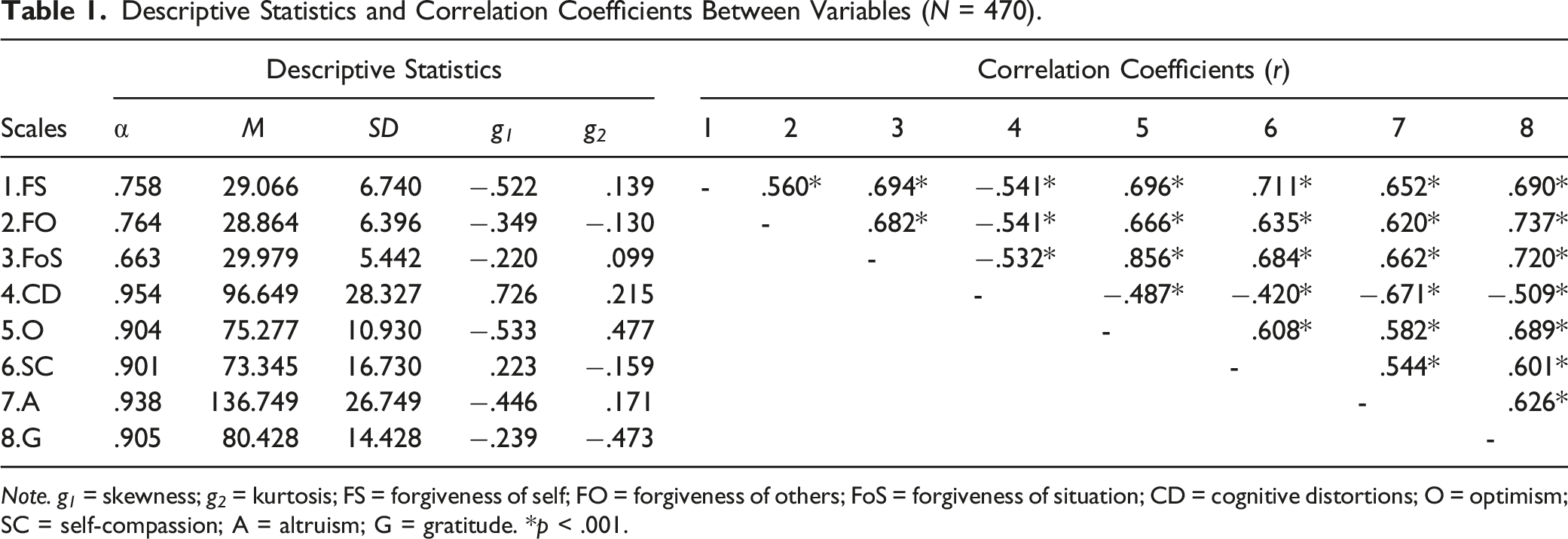
Note. g 1 = skewness; g 2 = kurtosis; FS = forgiveness of self; FO = forgiveness of others; FoS = forgiveness of situation; CD = cognitive distortions; O = optimism; SC = self-compassion; A = altruism; G = gratitude. *p < .001.
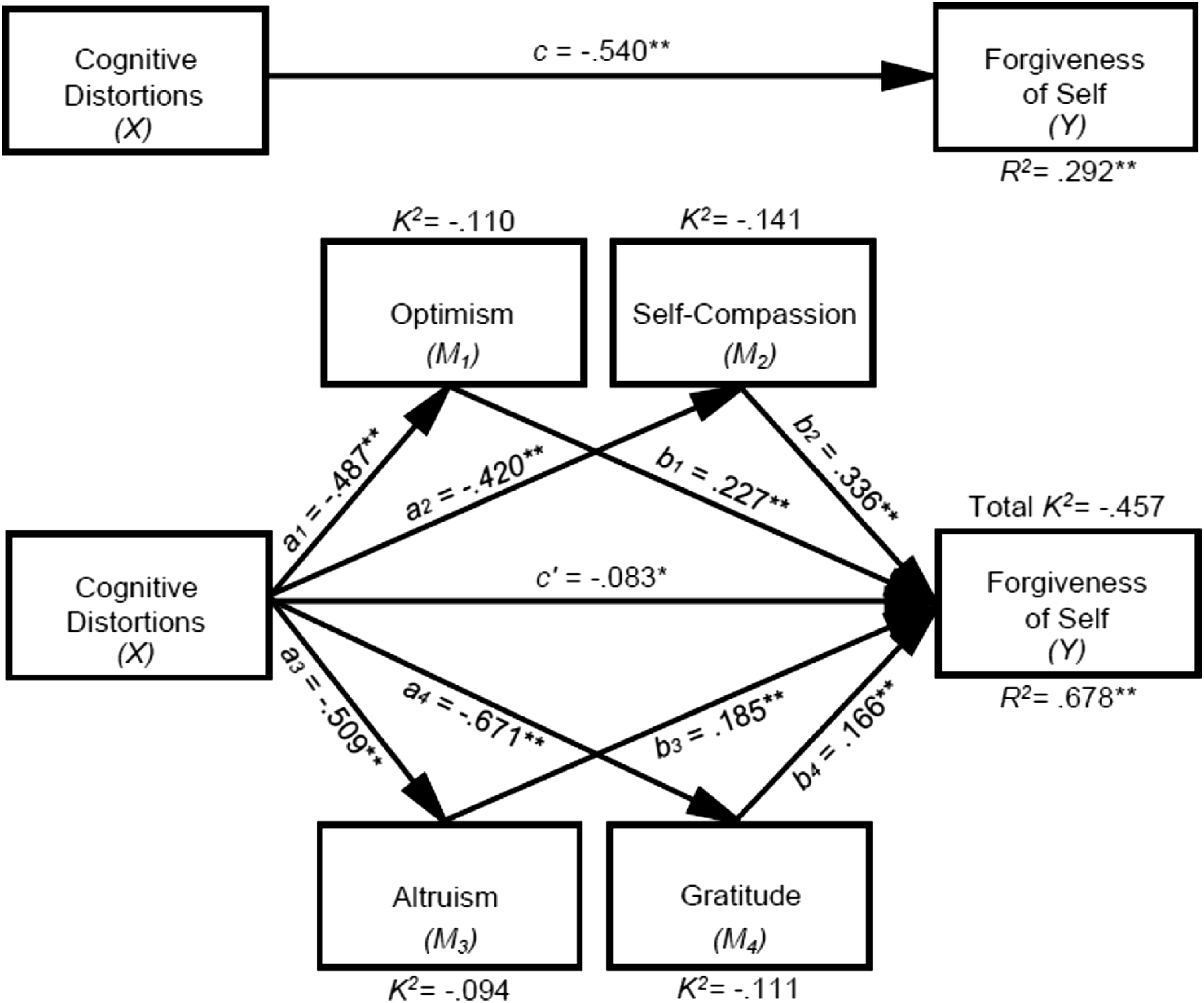
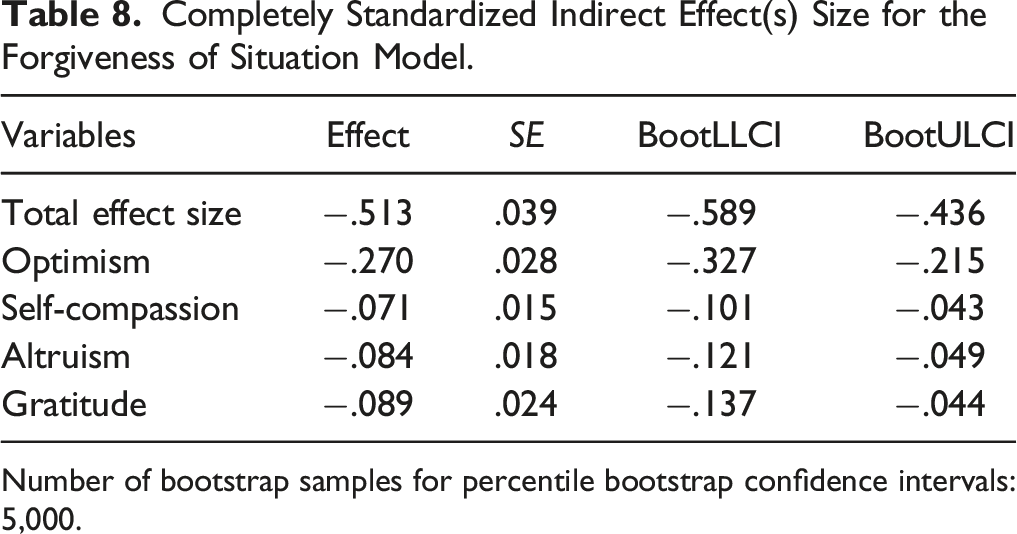
As a result of all these processes, it can be said that the assumptions necessary for the conduct of the mediation effect analysis on the data were met. In this connection, in the multiple parallel mediation analysis to investigate the role of the mediator variables (optimism, self-compassion, altruism and gratitude) in the relationship between the independent variable (cognitive distortions) and the dependent variables (self-forgiveness, forgiveness of others and forgiveness of situations), the fourth model of the Process Macro developed by Andrew F. Hayes and integrated into the SPSS 22.0 program was used (Hayes, 2018). The primary focus of mediation analyses is to calculate the indirect effect and make inferences (Gürbüz, 2019b). The indirect effect of emerging adults’ cognitive distortions on forgiveness through optimism, self-compassion, altruism, and gratitude was tested with the Bootstrap technique (5,000 resamples), which is thought to yield more valid results than the Sobel test (Gürbüz, 2019a). In the mediation effect analyses performed with the bootstrap technique, the value in the 95% confidence interval obtained as a result of the analysis should not include the zero (0) value in order for the research hypothesis to be supported (MacKinnon et al., 2004). It is stated that another important parameter to be considered when evaluating mediation models is the fully standardized effect size (K 2 ) (Gürbüz, 2019b). A mediator variable’s effect size value close to .01 is interpreted as low effect, close to .09 as medium effect and close to .25 as high effect (Preacher & Kelley, 2011).
Ethics Committee Approval Information
This study was reviewed by the Burdur Mehmet Akif Ersoy University Non-Invasive Clinical Research Ethics Committee at the meeting number 2021/09 on 01/09/2021 in terms of justification, purpose, approach and method and was found ethically appropriate (Decision Number: GO 2021/304).
Results
Descriptive Statistics and Correlation Results
Before analyzing the data related to the hypotheses of the study, descriptive statistics related to the variables of the study were calculated and the relations between the variables were examined using the Pearson product-moment correlation analysis method (see Table 1).
When Table 1 is examined, it is seen that cognitive distortions, which are the independent variable of the study, are negatively and significantly correlated with self-forgiveness (r = −.54, p < .01), forgiveness of others (r = −.54, p < .01) and forgiveness of situations (r = −.53, p < .01), which are the dependent variables of the study and optimism (r = −.49, p < .01), self-compassion (r = −.42, p < .01), altruism (r = −.51, p < .01) and gratitude (r = −.67, p < .01), which are the mediator variables of the study. On the other hand, self-forgiveness as the dependent variable of the first model established and optimism (r = .70, p < .01), self-compassion (r = .71, p < .01), altruism (r = .69, p < .01) and gratitude (r = .65, p < .01) as the mediator variables were found to be positively and significantly correlated while forgiveness of others as the dependent variable of the second model established and optimism (r = .67, p < .01), self-compassion (r = .63, p < .01), altruism (r = .74, p < .01) and gratitude (r = .62, p < .01) as the mediator variables were found to be positively and significantly correlated. Forgiveness of situations as the dependent variable of the third model established and optimism (r = .86, p < .01), self-compassion (r = .68, p < .01), altruism (r = .72, p < .01) and gratitude (r = .66, p < .01) as the mediator variables were found to be positively and significantly correlated. In light of these findings, it can be said that the condition of finding significant correlations between independent, dependent and mediator variables, which Baron and Kenny (1986) argue is necessary for structural equation models, was met.
Testing the Proposed Models
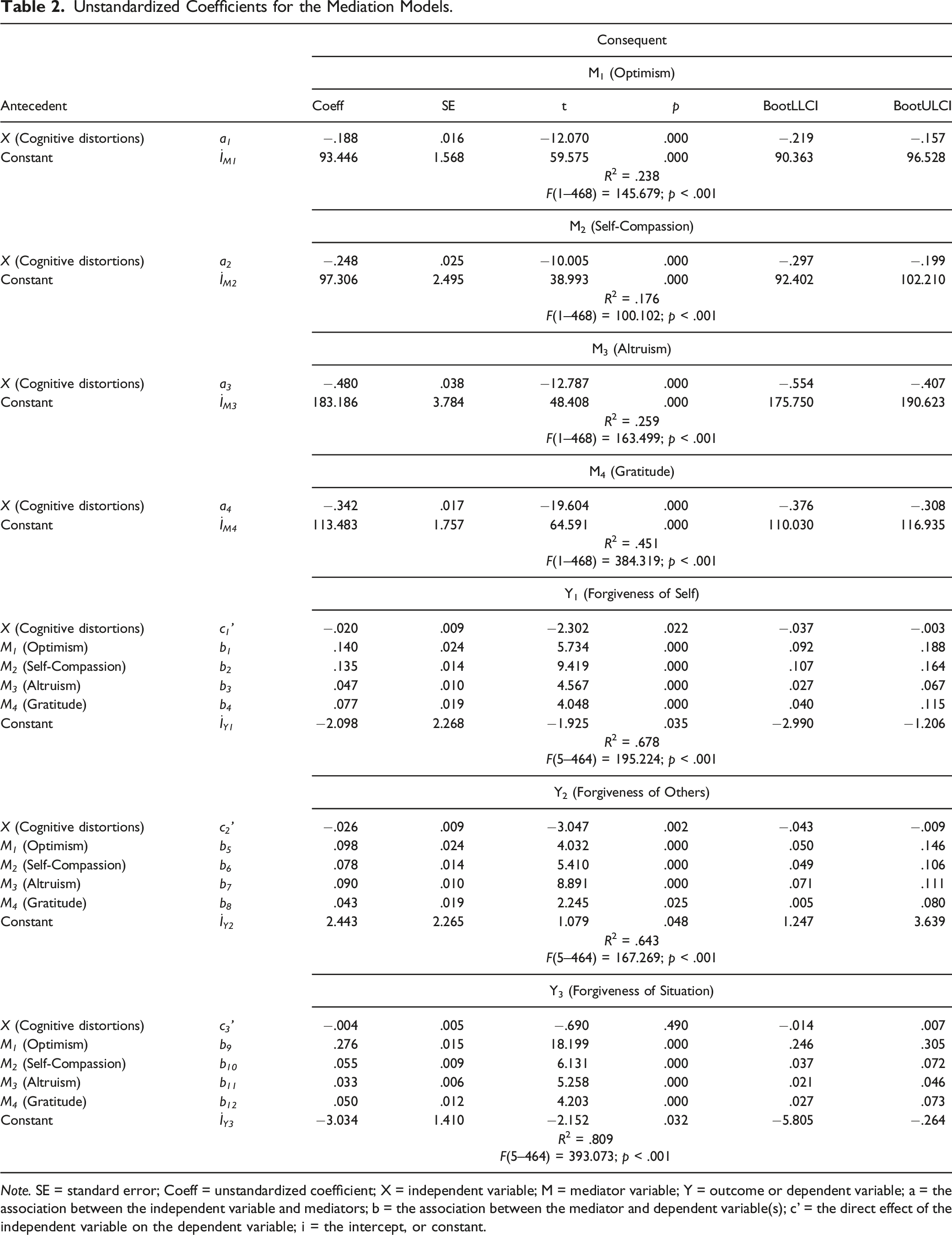
The mediator effect of optimism, self-compassion, altruism, and gratitude on the relationship between cognitive distortions and self-forgiveness, forgiveness of others and forgiveness of situations was revealed with three different models. The outcomes were evaluated in separate analyses and models to avoid problems with multicollinearity.
Self-Forgiveness Model
Unstandardized Coefficients for the Mediation Models.
| Antecedent | Consequent | ||||||
|---|---|---|---|---|---|---|---|
| M1 (Optimism) | |||||||
| Coeff | SE | t | p | BootLLCI | BootULCI | ||
| X (Cognitive distortions) | a 1 | −.188 | .016 | −12.070 | .000 | −.219 | −.157 |
| Constant | İ M1 | 93.446 | 1.568 | 59.575 | .000 | 90.363 | 96.528 |
| R2 = .238 | |||||||
| F(1–468) = 145.679; p < .001 | |||||||
| M2 (Self-Compassion) | |||||||
| X (Cognitive distortions) | a 2 | −.248 | .025 | −10.005 | .000 | −.297 | −.199 |
| Constant | İ M2 | 97.306 | 2.495 | 38.993 | .000 | 92.402 | 102.210 |
| R2 = .176 | |||||||
| F(1–468) = 100.102; p < .001 | |||||||
| M3 (Altruism) | |||||||
| X (Cognitive distortions) | a 3 | −.480 | .038 | −12.787 | .000 | −.554 | −.407 |
| Constant | İ M3 | 183.186 | 3.784 | 48.408 | .000 | 175.750 | 190.623 |
| R2 = .259 | |||||||
| F(1–468) = 163.499; p < .001 | |||||||
| M4 (Gratitude) | |||||||
| X (Cognitive distortions) | a 4 | −.342 | .017 | −19.604 | .000 | −.376 | −.308 |
| Constant | İ M4 | 113.483 | 1.757 | 64.591 | .000 | 110.030 | 116.935 |
| R2 = .451 | |||||||
| F(1–468) = 384.319; p < .001 | |||||||
| Y1 (Forgiveness of Self) | |||||||
| X (Cognitive distortions) | c 1 ' | −.020 | .009 | −2.302 | .022 | −.037 | −.003 |
| M 1 (Optimism) | b 1 | .140 | .024 | 5.734 | .000 | .092 | .188 |
| M 2 (Self-Compassion) | b 2 | .135 | .014 | 9.419 | .000 | .107 | .164 |
| M 3 (Altruism) | b 3 | .047 | .010 | 4.567 | .000 | .027 | .067 |
| M 4 (Gratitude) | b 4 | .077 | .019 | 4.048 | .000 | .040 | .115 |
| Constant | İ Y1 | −2.098 | 2.268 | −1.925 | .035 | −2.990 | −1.206 |
| R2 = .678 | |||||||
| F(5–464) = 195.224; p < .001 | |||||||
| Y2 (Forgiveness of Others) | |||||||
| X (Cognitive distortions) | c 2 ' | −.026 | .009 | −3.047 | .002 | −.043 | −.009 |
| M 1 (Optimism) | b 5 | .098 | .024 | 4.032 | .000 | .050 | .146 |
| M 2 (Self-Compassion) | b 6 | .078 | .014 | 5.410 | .000 | .049 | .106 |
| M 3 (Altruism) | b 7 | .090 | .010 | 8.891 | .000 | .071 | .111 |
| M 4 (Gratitude) | b 8 | .043 | .019 | 2.245 | .025 | .005 | .080 |
| Constant | İ Y2 | 2.443 | 2.265 | 1.079 | .048 | 1.247 | 3.639 |
| R2 = .643 | |||||||
| F(5–464) = 167.269; p < .001 | |||||||
| Y3 (Forgiveness of Situation) | |||||||
| X (Cognitive distortions) | c 3 ' | −.004 | .005 | −.690 | .490 | −.014 | .007 |
| M 1 (Optimism) | b 9 | .276 | .015 | 18.199 | .000 | .246 | .305 |
| M 2 (Self-Compassion) | b 10 | .055 | .009 | 6.131 | .000 | .037 | .072 |
| M 3 (Altruism) | b 11 | .033 | .006 | 5.258 | .000 | .021 | .046 |
| M 4 (Gratitude) | b 12 | .050 | .012 | 4.203 | .000 | .027 | .073 |
| Constant | İ Y3 | −3.034 | 1.410 | −2.152 | .032 | −5.805 | −.264 |
| R2 = .809 | |||||||
| F(5–464) = 393.073; p < .001 | |||||||