







Abstract
The theory of planned behavior (TPB) is a widely used framework for predicting behavior. Considering that technology supported sexual behavior (e.g., sexting) is widespread among emerging adults, it is logical to assume that it is driven by existing social norms, accepted standards of behavior, and the opinions of others, all of which are core constructs of TPB. Therefore, the purpose of this study is to examine whether intention to sext can be predicted by the constructs of the theory of planned behavior. A quantitative cross-sectional study was conducted with 314 emerging adults aged 18–29 years who completed a self-report questionnaire online. The modified Theory of Planned Behavior Questionnaire for the sexting context, which measures attitudes toward sexting, subjective norms, and perceived behavioral control, and sexting intention, was used. The results of the path analyses mainly confirmed the model proposed by the Theory of planned behavior. Of the three TPB core factors, only subjective norm did not significantly have effect on sexting intention. Our results show that attitude, normative beliefs, and control directly predict sexting intention, and control beliefs indirectly predict sexting intention via perceived behavioral control, partially confirming the sequential relationship proposed by the Theory of planned behavior.
Keywords
Introduction
Emerging adulthood is a developmental period of exploration in a variety of domains, including sexuality, in which various sexual activities serve as a means of exploring and experimenting with sexual identity (Arnett, 2015). The experience of various sexual encounters becomes the social norm (Arnett, 2015) and is followed by changes in sexual beliefs and behaviors that result from exposure to different cultures (Baete Kenyon & Silverberg Koerner, 2009). The study of sexual behavior in this population is even more important today as the digital media landscape continues to change and more individuals participate in sexuality-related activities through their smartphones (Anzani et al., 2018). Technologically mediated sexual interactions can be based on digital text communication (“cybersex”), digital audio communication (“telephone sex”), digital image communication (“sexting”), and/or digital video communication (“webcam sex” or “camming”) (Döring et al., 2021).
Digital image communication or sexting among emerging adults, a technologically mediated sexual behavior of interest to this study, is common among emerging adults. For example, a recent meta-analysis of sexting studies found that the prevalence of sexting among emerging adults was 38.3% for sending, 41.5% for receiving, and 47.7% for reciprocal sexting, and was largely predicted by involvement in a romantic relationship (Mori et al., 2020). This is likely due to their greater sexual maturity, greater independence from their caregivers (i.e., more privacy), and lower concerns about the legality of sexting (see Mori et al., 2020).
Numerous studies have examined sexting behavior, although most of these studies have focused on adolescents (Castañeda, 2017; Van Ouytsel et al., 2020) and young adults (Van Ouytsel et al., 2020), while few studies have examined sexting behavior among emerging adults (Castañeda, 2017). Because emerging adulthood is a developmental period in which exploratory sexual and relationship behaviors evolve toward more committed, longer-term relationships (Vasilenko et al., 2018), their decisions to participate in sexting may be different than those of adolescents. Their decision-making process, due to developmental changes in the formation of attitudes, may be more influenced by cultural/societal norms than by the expectations of major referents (Potard et al., 2017). Furthermore, their perceived control over a sexual behavior may change if they are exposed to many temptations after entering a relationship and living apart from their parents (Nurmala et al., 2019). However, less is known about how emerging adults make decisions about participating in sexting behaviours. Examining the mechanisms that lead emerging adults to participate in sexting would provide insight into the specific influences that shape their sexual behaviours, such as sexting, and would help specify important issues related to non-consensual forwarding sexts that should be considered when implementing sex education and interventions with this group.
Researchers have proposed many theories to explain the mechanism of sexting (i.e. self-control criminological theory, opportunity theory, social-learning theory, evolutionary-based theory, multiple goal theory etc., see Dodaj & Sesar, 2020, for a review). However, one of these theories, the Theory of Planned Behavior (TPB), appears to be the most appropriate because it provides a systematic approach to identifying personal, procedural, and social characteristics that predict intention and participation in sexting. Considering that technologically enhanced sexual behavior such as sexting is widespread among emerging adults and has become a contemporary form of sexual expression, it is logical to assume that it is driven by existing social norms, accepted standards of behavior, and the opinions of others, which are the main determinants of the TPB.
As such, drawing upon the Theory of Planned Behavior (TPB), this study will examine the intention of emerging adults from Croatia and Bosnia and Herzegovina to engage in sexting. Given the limited research on sexting behavior among emerging adults, this study examines TPB factors such as attitudes, subjective norms, and perceived behavioral control that may predict sexting intention. This study aims to contribute to the existing literature by providing a comprehensive understanding of emerging adults’ sexting behavior using the TPB framework.
The Theory of Planned Behavior
The TPB is a psychological theory of human behaviour (Ajzen, 1991, 2002) and is widely used for the purpose of researching different forms of behaviors (Armitage & Conner, 2001), including sexual behaviour (Asare, 2015; Chilisa et al., 2016; Tseng et al., 2020) and sexting (Hudson & Fetro, 2015; Liong & Cheng, 2017; Wilson et al., 2021). According to the TPB (Figure 1), voluntary behaviors, such as participation in sexting, are best predicted by behavioral intention. Behavioral intention indicates how much effort a person is willing to invest in a particular behavior and is determined by three core factors: the person’s attitude, subjective norms (SN), and perceived behavioral control (PBC) (Ajzen, 1991). Attitude toward a behavior is defined as the extent to which the behavior is evaluated as favorable or unfavorable. SN represent a person’s perception of social pressure to perform or not perform a particular behaviour, and PBC refers to the perceived ease or difficulty of performing a particular behavior. Thus, the three core constructs of TPB include three beliefs that represent specific factors that may lead to variances in behavior: behavioral beliefs, normative beliefs, and control beliefs. Behavioral beliefs are related to attitudes toward behavior, normative beliefs are related to SN, and control beliefs are related to PBC. Behavioral beliefs relate to perceptions of the likelihood of a particular outcome, for example, a negative or positive outcome. Normative beliefs involve the motivation to comply with the person’s applying social pressures, whereas control beliefs refer to past experiences and anticipated obstacles or difficulties in performing the behavior Hypothesised paths of influence among TPB factors.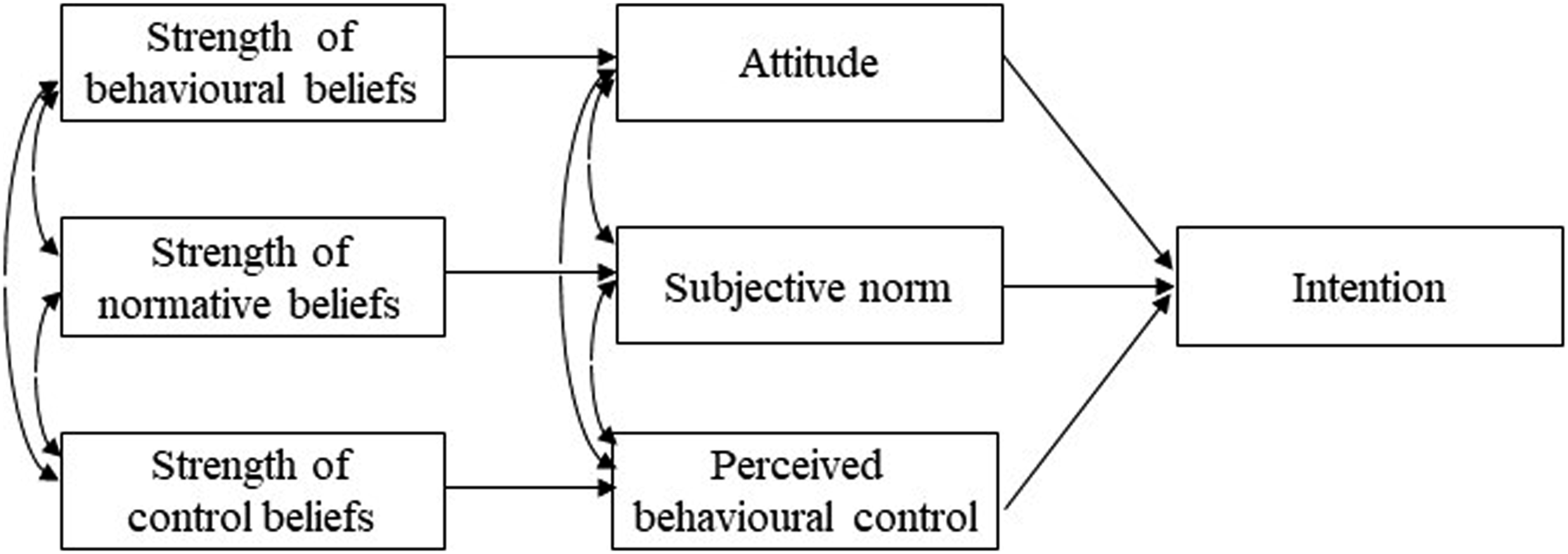
According to the TPB, the intention to perform a behavior is the most important and closest cognitive antecedent to the actual performance of the behavior (Fishbein & Ajzen, 1975; Fisher & Fisher, 1992), whereas the core constructs of the TPB mediate the relationship between beliefs and intentions to actual behavior (Ajzen, 1991).
While some studies have examined some of the core constructs of TPB, few have considered them together, as described later in the text, so the complex interplay between them has not been fully captured. Moreover, the beliefs that precede these core constructs and contribute to understanding the process by which TPB constructs relate to intentions and actual sexting behavior have been ignored.
Regarding attitudes toward sexting, recent research has found that some women perceive sexting as improving the quality of an intimate relationship, while others perceive the pressures and risks associated with sharing their content due to sexting (Lenhart, 2009; Ringrose et al., 2012). Similarly, for some men, sexting is positive and perceived as fun, while for others it causes stress (Gewirtz-Meydan et al., 2018; Ringrose et al., 2012). The results of some research (Lim et al., 2016) showed that previous involvement in sexting significantly contributes to positive attitudes toward sexting. Among emerging adults, positive attitudes, such as the view that sexting is attractive and desirable or confirms a romantic relationship, may be due to individuals focusing on the positive outcomes of sexting (Prinstein et al., 2003). Furthermore, studies (Davidson, 2020; Drouin & Landgraff, 2012) confirm that individuals in committed relationships, regardless of gender, are more likely to participate in sexting. It is conceivable that individuals who are in secure (Feeney & Noller, 2004) or long-term relationships (Kaestle & Halpern, 2007) try innovative sexual activities such as sexting.
In terms of SN, emerging adults who view sexting as normative behavior may have wider pressure to do so (Walker et al., 2013) or they may be pressured by partner, peers, or wider sociocultural pressure (Lee et al., 2015). Moreover, women are particularly vulnerable to pressure from their partner or social group to sext (Lee et al., 2016; Lippman & Campbell, 2014), although their acceptance of participation in sexting is lower (Burén et al., 2021). In response to peer pressure associated with more sexting (Lee et al., 2016; Maheux et al., 2020), individuals may seek to achieve peer group status by sharing sexting (Prinstein et al., 2003), particularly males (Lippman & Campbell, 2012; Ringrose et al., 2013), who also often do so to show how proud they are of “their” girl (Renfrow & Rollo, 2014).
The frequent use of digital technology, particularly mobile phones (Benotsch et al., 2013) among young adults (Wysocki & Childers, 2011) compared to adolescents or adults contributes to higher sexting participation. Wysocki and Childers (2011) found that younger individuals are more comfortable and skilled with digital technology, which affects their involvement in sexting. Although these authors did not directly examine the relationship between PBC and sexting, it could be assumed that greater familiarity with and comfort in using technology contributes to their perceived control over sexting. More specifically, they might feel that they have control over sexting because they have the necessary tools and knowledge. Participation in sexting requires only a personal mobile phone, a built-in camera, a mobile data package, or a Wi-Fi connection (Madden et al., 2013), and young people have these resources, which may be directly related to greater confidence in their ability to sext.
In the context of sexting, intention has been shown to be a strong predictor of actual mobile phone or internet use (Israelashvili et al., 2012). In sexting research conducted by Speno and Aubrey (2019), sexting behavior was directly predicted by two types of intentions: security-based intentions and situational-based intentions. Security-based intentions refer to sexting when there is trust in the sexting partner, whereas situational-based intentions refer to sexting that is triggered by certain situational cues. Although both types of sexting intentions were predicted by attitudes toward sexting, only security-based sexting intentions further predicted sexting behavior. That is, attitudes toward sexting influenced sexting intentions, especially when adolescents felt safe and trusted their sexting partner. Consequently, adolescents who intended to sext when they felt safe with their sexting partner were more likely to actually sext.
Taken together, these studies demonstrate the importance of considering TPB as a significant model to explain sexting behaviour. However, these studies can identify some factors that have a significant impact on sexting behaviour, but not all factors postulated by the TPB.
Testing the Theory of Planned Behavior
To our knowledge, several studies have demonstrated the value of TPB in predicting sexting behavior (e.g., Hudson & Fetro, 2015; Liong & Cheng, 2017; Walrave et al., 2013; Wilson et al., 2021). For instance, Walrave et al. (2013) found that all TPB components (i.e., attitudes, SN, and PBC) significantly predicted sexting intentions in a sample of adolescents from the United States. Hudson and Fetro (2015) found that in accordance with TPB, attitudes toward sexting, SN, and behavioral intentions, were significant predictors of student’s sexting behaviour in the United States. Additionally, Liong and Cheng (2017) confirmed gender effects on sexting among young adults in Hong Kong based on the TPB. A positive association between SN and sexting existed only among females, while PBC was negatively associated with sexting among both males and females, although this association was stronger among males. More recently, Wilson et al. (2021) confirmed that attitudes and SN were associated with sexting intentions and intentions related to sexting behavior in a wide age range of participants (18–55 years; 73.5% were 18–30 years old), primarily of British nationality. In addition to examining TPB beliefs, to our knowledge, only two studies have examined the relative importance of the major beliefs underlying TPB components. The first study, by Walrave et al. (2014), conducted on a sample of adolescents, found that behavioral beliefs expressing a positive outcome of sexting contributed significantly to adolescents’ sexting intentions. Among normative beliefs, social pressure from friends and romantic partners affected sexting intentions, whereas the control belief that affected adolescents’ sexting intentions was the belief that sexting occurs relatively frequently among those whom adolescents can fully trust. The study by Wilson et al. (2021) also applied the two-component TPB to examine the relationship between adult beliefs and reported sexting behavior. Their study, which included adult women aged 18–55 years, found that certain sexting beliefs (e.g., fun and carefree beliefs, perceptions, and relational expectations), which typically reflect behavioral beliefs, were not associated with sexting intentions or behavior.
Previous studies have shown that the TPB was able to predict sexting behavior in different cultures and across different age groups, including in the United States, Asia, South Africa, and the United Kingdom, as well as among adolescents and young adults. Given the lack of sexting studies in the south-eastern regions of Europe (see Dodaj et al., 2022) and among emerging adults, it appeared to be useful to explore sexting intention in Croatia and Bosnia and Herzegovina. Furthermore, as a sexting is understood as a cultural phenomenon shaped by cultural norms and value systems that determine how individuals interact with each other in this aspect of sexual behaviour, TPB seems as useful theoretical framework for understanding sexting behaviour (Crofts et al., 2015).
Because Croatian and Bosnian-Herzegovinian populations are more traditional cultures associated with repressive sexuality, including sexting practices, compared to other parts of Western Europe (Dodaj et al., 2022), their own beliefs and desire to explore sexuality through sexting may differ. In addition, we must take into account that emerging adulthood in the southern parts of Europe, which were examined for this study, looks somewhat different or has cultural characteristics than in other parts of Europe. For example, young adults in the southern parts of Europe often stay longer in their parental home compared to other parts of Europe, a phenomenon known as nesting, likely due to strong family ties and family financial support, so they tend to leave their parents, marry, and have children later (Sompolska-Rzechuła & Kurdyś-Kujawska, 2022), which may also affect their decision to participate in sexting. Thus, in applying this theory as a significant predictor of sexting to the Southeast European context, there were several considerations. First, because previous research has shown that social factors in the form of the concept of subjective norm, which refers to differential reinforcement and friend imitation, play an important role in sexting (Brodie et al., 2019), we felt it was very important to examine this for sexting in traditional cultures. A second reason is that by closely examining the TPB antecedents that influence individuals' behavioural intentions regarding sexting, we can gain valuable information about what programmes of support are appropriate to address aspects of sexting in such cultures. These programmes can acknowledge sexting as part of individuals’ exploration and experimentation in their sexual relationships and promote healthy and responsible sexting practises that are consistent with cultural values and expectations in Southeastern Europe. Third, to our knowledge, the beliefs that are antecedents to the core constructs of TBP in the sexting context have not yet been explored. We believe they are important because they can more clearly explain why people engage in sexting. Finally, the above studies have primarily focused on testing the TPB theory in young adults or adolescents. We assume that motivations for sexting engagement may be context specific in emerging adulthood, so there is an urgent need to test the adequacy of TPB in samples of emerging adults, as we cannot assume that results from a sexting sample of young adults or adolescents can be generalized to emerging adults.
Research Aims and Hypotheses
This study examines the relationships between the constructs of the TPB and sexting. The target population are emerging adults from Croatia and Bosnia and Herzegovina. Following the postulate of TPB and recent review of the literature, we hypothesize the following (see Figure 1):
The constructs of beliefs (behavioral beliefs, normative beliefs, and control beliefs) will directly predict the core TPB constructs (attitudes, SN, and PBC). That is, behavioral beliefs will directly predict attitudes toward sexting, normative beliefs SN, and control beliefs PBC.
The core TPB constructs would significantly predict intention to engage in sexting. More specifically, emerging adults who have predominantly positive attitudes toward sexting, who rely heavily on the approval of referents individuals, and who have higher self-efficacy beliefs in performing sexting behaviors will be more likely to have higher intentions to engage in sexting.
Constructs of beliefs will indirectly predict intention to sext through core constructs of TPB. That is, behavioral beliefs will indirectly predict intention through attitudes, normative beliefs through SN, and control beliefs through PBC.
Methods
Participants
Data were collected from 314 university students (87.58% women) from Bosnia and Herzegovina and Croatia. Age ranged from 18 to 29 years (M = 21.40; SD = 1.98). 57.96% were 18–21 years old and 42.04% were 22–29 years old. 39.81% of respondents identified themselves as Serbian, 38.22% as Croatian, and 21.67% as Bosnian, with one respondent not providing nationality information. 65.61% of participants reported being in a relationship and 34.39% were single. Of the participants in a relationship, 10.51% were in a relationship of less than 6 months, 8.28% were in a relationship between 6 and 12 months, 22.29% were in a relationship between one and three years, and 15.61% were in a relationship of more than three years.
Measures
In this study, the Theory of Planned Behavior Questionnaire (TPBQ) was used to assess emerging adults’ sexting motivation based on Ajzen’s (1991) guidelines and the items used in Walrave et al.’s (2013) study. The subscales used were sexting intention, attitude, subjective norms, perceived behavioral control, and demographic data.
Sexting Intention Subscale
Sexting intention was determined as the mean of three items on a 6-point Likert scale (e.g., “I would like to send a sext in the following two months”; “There is a chance that I could send sexts in the next two months”; “I want to send sexts to a specific person in the next two months”, 1 = completely disagree, 6 = completely agree). Cronbach’s alpha was .94.
Attitude Toward Sexting Subscale
Direct measures of attitude were calculated as the mean of three semantic differential scales (e.g., “Your view of sexually explicit content sharing behavior electronically would be…” not funny - very funny, stupid - very clever, not enjoyable - very enjoyable; all scores from 1 to 7). Internal consistency (Cronbach’s alpha) was acceptable for this subscale (α = .89). The indirect measure of attitude (strength of behavioral belief) was obtained by multiplying the score on six outcome items asking respondents to indicate how likely it is that participating in sexting will lead to a specific outcome (e.g., “Sexting leads to getting more attention; 1 = completely disagree, 6 = completely agree) with the rating of that specific outcome (e.g., “−2 = getting attention is very bad, +2 = very good). The Cronbach’s alpha for the subscales measuring the strength of behavioral beliefs was .76.
Subjective Norms (SN) Subscale
The direct measure of SN was the mean of three items that asked what “people important to me” would think about participants sending sexts (e.g. “In general, most people I know would have no problem with me sending sexts”, “Most of the people who are important in my life would approve of me sending sexts”, “Most of the people who are important to me have already sent sexts themselves”) on a 6-point scale ranging from 1 = completely disagree to 6 = completely agree. The reliability coefficient for this subscale yielded a Cronbach’s α = .81. The indirect measure of subjective norm (strength of normative beliefs) combined seven items on normative belief with corresponding items on motivation to comply. On the normative belief scale, the questions were in the format “My [referent] would approve of me sending sexts”. On the motivation to comply scale, participants were asked, “I attach much importance to my [referent] opinion on sexting.” Important referents included siblings, romantic partners, friends, partners, and professors. Response options ranged from 1 = completely disagree to 6 = completely agree. The Cronbach’s alpha for the measure of strength of normative belief was .74.
Perceived Behavioral Control (PBC) Subscale
The direct measure of PBC was assessed as the mean of four items about respondents’ thoughts that they might participate in sexting on a 6-point scale with opposing anchors on each side of the items. The items were “I am able to send sexts”, “I have tool needed to engage in sexting” or “I am convinced that sexting is easy to do”, with anchors of 1 = completely disagree and 6 = completely agree. Reliability analyzes yielded an initial Cronbach’s α of .88. The indirect measure of PBC (strength of control beliefs) was the product of five control belief items asking respondents to indicate the likelihood that various factors (e.g., “Sexting happens more when sender is involved in a romantic relationship”) would facilitate/hinder their ability to participate in sexting, multiplied by the likelihood items that this factor occurs in situations related to sexting (e.g., “It is likely that someone involved in a romantic relationship will send a sext”). The 6-point Likert scale used the anchors 1 = completely disagree and 6 = completely agree. The Cronbach’s alpha for this subscale was .94.
Demographic Measures
For demographic characteristics, participants provided their gender, age, nationality, and relationship status. Participants were asked to indicate their sex assigned at birth (female/male), as well as their age and nationality. When asked about relationship status, participants indicated the type of relationship: not in a relationship, in a relationship for less than 6 months, in a relationship between 6 and 12 months, in a relationship between one and three years, and in a relationship for more than three years.
Procedure
All procedures and measures were approved by the University Ethics Committee. The survey was conducted online between September and December 2021. Participants completed the instrument package that contained questions assessing demographic characteristics and scales measuring relevant TPB concepts. Before beginning the survey, participants were informed of the details of the study. Informed consent was signed electronically by checking an opt-in box before beginning the survey. Participants could withdraw from participation at any time during the study. Participants were entered into a drawing to receive a $6.00 gift card to a Target shop as compensation for their participation in the study.
Results
Preliminary Analyses
Frequency of Response to Items on Intention Subscale.

Means, Standard Deviations (SDs), and Correlations Among the Concerned Variables.
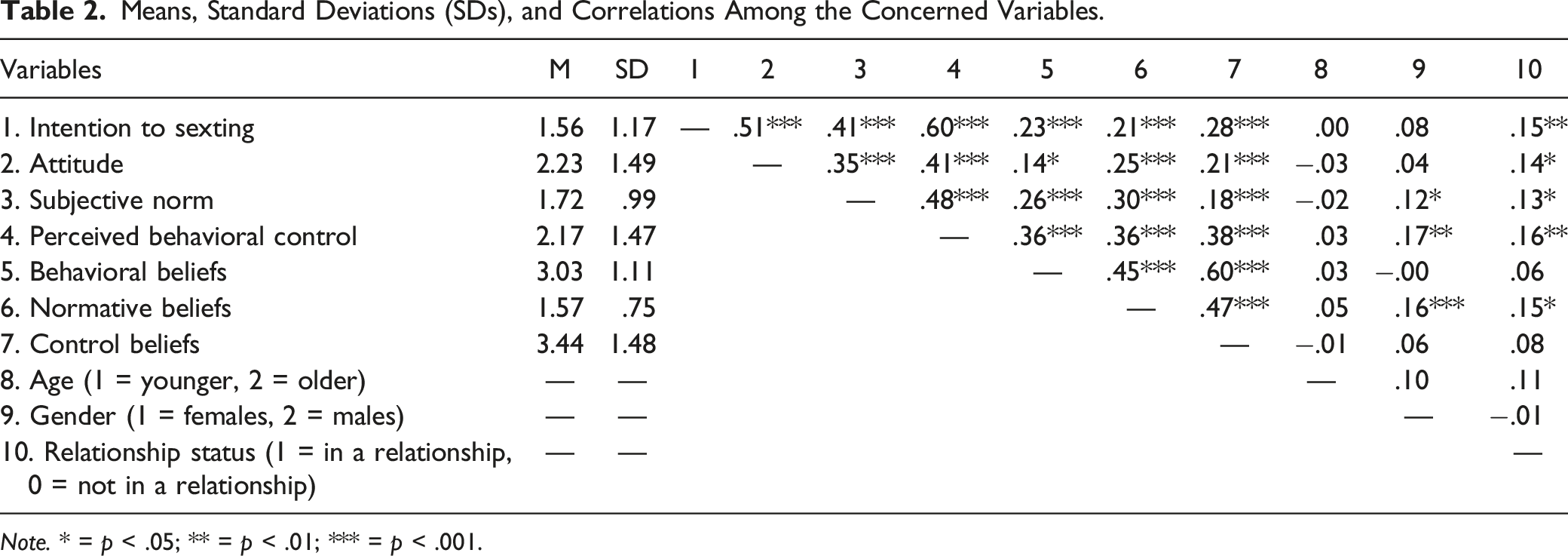
Note. * = p < .05; ** = p < .01; *** = p < .001.
SEM Analyses
After the preliminary analysis, a confirmatory factor analysis (CFA) was conducted to assess the adequacy of a measurement model for the subscales of the TPB. Model fit was considered acceptable if the Comparative fit index (CFI) was greater than .90 (Bentler, 1992), the Root mean square error of approximation (RMSEA) was less than .08 (Browne & Cudeck, 1993), and the Standardized mean square residual (SRMR) was less than .08 (Hu & Bentler, 1999). Overall, the CFA provided an adequate goodness of fit (χ2 = 153.08, df = 48, p < .000; CFI = .98, RMSEA = .07; SRMR = .03). All indicators in the range of .67–.91 were statistically significant and loaded on their respective a priori designated factors.
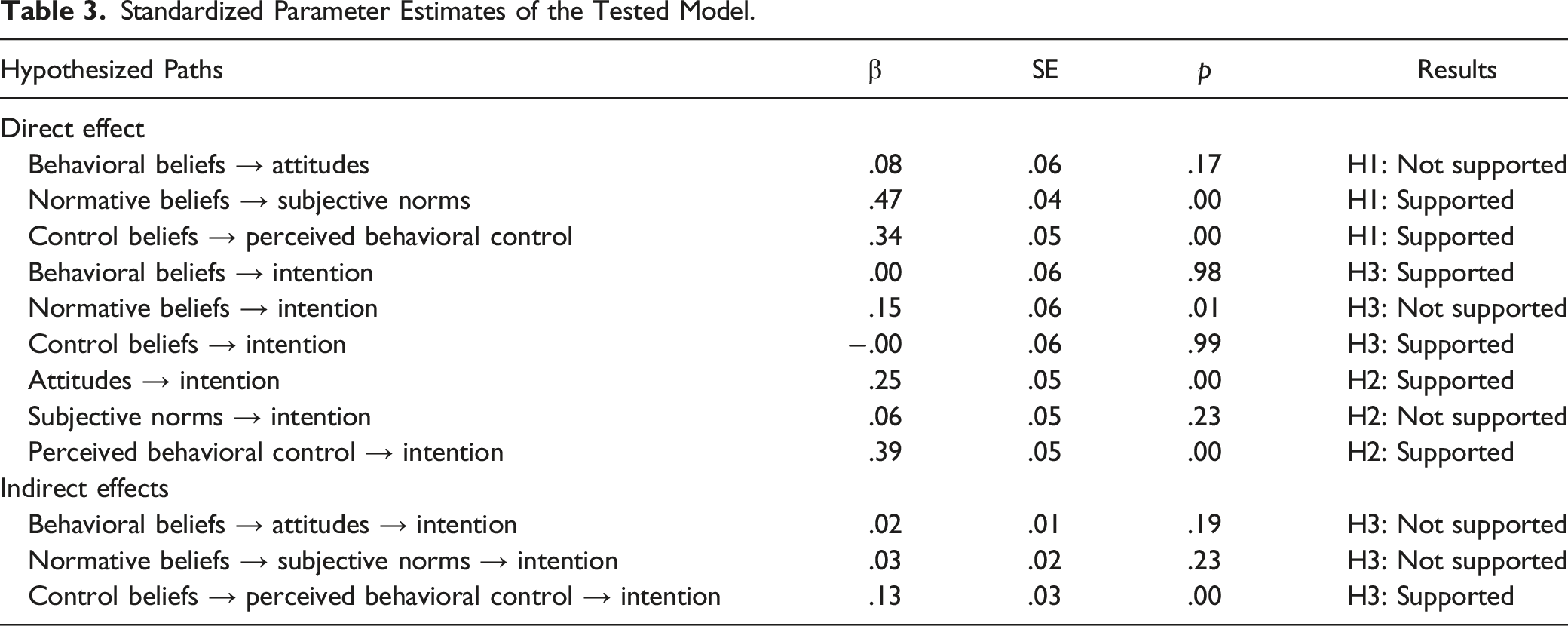
Standardized Parameter Estimates of the Tested Model.
Discussion
The primary aim of this study was to determine the predictive power of the TPB in relation to intentions for sexting. Additionally, this research considered the role of gender, age and relationship status that differentially influenced intentions.
The intention to sext was relatively common in this sample of emerging adults. Almost 3/5 of the respondents indicated that they have the desire to sext, while about 40% indicated that they have the opportunity to do so. This proportion is higher than the results of a meta-analysis of 50 studies of emerging adults (Mori et al., 2020), which found a prevalence of sending, receiving, or reciprocating sexting ranging from 38.3% to 47.7%. However, these differences may be negligible because we compared the data from the meta-analysis that measured actual behavior with our data on intention, as we assume that intention is the most important predictor of volitional behavior (Fishbein & Ajzen, 1975).
The results presented here show no gender differences in sexting intentions. However, gender was positively associated with SN and PBC. Although researchers generally agree that there are few gender differences in sexting behavior, research findings in this area are highly inconsistent. For example, in Brodie et al.’s (2019) study, males sext more often than females. In the study by Wysocki and Childers (2011), the effect was just the opposite, while Currin et al. (2020) found no effect of gender on sexting frequency. In addition, Walrave et al. (2013) found more negative attitudes toward sexting and more negative perceived social influence in girls compared to boys. It is important to note that our sample consisted primarily of females, which should be taken into account when considering our finding that gender had no influence, despite contradictions in the literature.
We found no significant effect of age on emerging adults’ sexting intentions. This supports the findings of Klettke et al. (2014), who found that the prevalence of sexting among adolescents increases with age, but not among adults. This finding also supports research on sexual behavior, which found that the majority of emerging adults perceive sexual behavior as normative, and sexual activity is less stigmatized (Vasilenko & Lefkowitz, 2018).
The results of this study provide evidence that relationship status has a significant impact on emerging adults’ sexting intentions and are consistent with the findings of previous studies (Klettke et al., 2014; Wilson et al., 2021). According to the results of previous studies, sexting is more common among individuals in relationships than singles (Weisskirch & Delevi, 2011) and is frequently used to maintain and enhance romantic relationships (Currin et al., 2017; Van Ouytsel et al., 2017). Students who are in intimate relationships use sexting as a means to enhance and maintain an intimate relationship at a more intimate level of communication than just practical or functional information exchange (Kelly et al., 2017). Therefore, adult sexting can be a positive behavior for a relationship (Brodie et al., 2019).
Preliminary data supports the theoretical assumptions of the theory (Ajzen, 2020) as well as the meta-analytic results of Hagger et al. (2002) in the area of physical activity, who empirically found a significant but low to moderate correlation between the TPB factors. In general, results showed that men performed better than women on direct and indirect measures of SN and PBC, suggesting that SN are less restrictive in men compared to women, giving them a greater sense of freedom and behavioral control (Springston, 2017). Furthermore, our findings suggest that emerging adults who are in relationships have more positive attitudes toward sexting, SN related to sexting, and normative beliefs, and experience greater PBC. This pattern of results supports established findings that sexting is not only a normative experience in emerging adulthood, but also a positive experience that promotes intimacy and pleasure in an intimate relationship (Burkett, 2015; Parker et al., 2013). Therefore, individuals with more sexual experience may be more skilled at engaging in a broader range of sexuality-related behaviors in relationships, including sexting, which could contribute to a sense of self-efficacy in expressing sexual desires with a romantic partner, including the use of digital technology (Castañeda, 2017).
The results of the path analysis show that the theoretical model fits the sample. Our results support our first hypothesis that, consistent with TPB (Ajzen & Fishbein, 1980), normative beliefs are antecedents of SN, control beliefs of PBC, whereas behavioral beliefs were not found to be significant antecedents of attitudes. Our finding that behavioral beliefs do not affect attitudes may suggest that attitudes toward sexting are complex and are not determined solely by instrumental components, which were examined as main components in this study (e.g., not funny/very funny, stupid/very clever, not enjoyable/very enjoyable). According to the two-component TPB, there are instrumental (perceived outcomes associated with performing a behavior) and affective attitudes toward a particular behavior (beliefs about how enjoyable the behavior is and what emotions it elicits; Fishbein & Ajzen, 2010), and the use of the two-component TPB instead of the original one should be tested in the future (Wilson et al., 2021).
Consistent with our second hypothesis, attitudes and PBC were predictors of self-reported sexting intentions. PBC were the strongest direct predictors of intention, followed by attitude toward sexting. However, the second hypothesis about the relationship between SN and sexting intention was not supported. The data on the relationship between attitude and PBC and sexting are consistent with other research on sexting (e.g., Liong & Cheng, 2017; Walrave et al., 2014; Wilson et al., 2021) and demonstrate the utility of using TPB in the sexting context. Our finding that PBC predicts sexting intentions supports the view that sexters are perceived as self-efficacious or, in other words, have more confidence in sexting (Liong & Cheng, 2017; Wilson et al., 2021). As Wilson et al. (2021) found, participants feel safe when (sending) sexting because they have control over what the recipient sees. These findings and the significant prediction of intention by attitudes toward sexting suggest that youth who participate in sexting perceive greater acceptance of sexual activity in their environment, which may normalize and reduce inhibitions about sex, including sexting, and contribute to their adoption of selective attitudes that condone this behavior (Houck et al., 2014). The findings that perceived expectations and behaviors of significant others are not important predictor of sexting intention do not support previous research with adults (Wilson et al., 2021) and adolescents (Walrave et al., 2014) who reported that those who believed significant others (e.g., friends) would approve of sexting behavior were more likely to intend to engage in the behavior. Brodie et al. (2019) examined sexting within a romantic relationship among adults and confirmed that imitation by friends and reinforcement (the belief that participation in sexting will be rewarded) play a central role in predicting sexting. However, our data support meta-analytic findings (Armitage & Conner, 2001) on the effectiveness of TPB, showing that the relationship between subjective norms and intentions is weaker than that between attitudes or PBC and intentions. In addition, the data are consistent with studies (Park & Oh, 2023) of preventive behavior showing that subjective norms (friends and school) do not have a strong influence on preventive behavior in emerging adults compared to adolescents.
Finally, the last hypothesis regarding the mediating role of the TBP core construct in the relationship between specific sexting beliefs and sexting intentions was partially supported. Our results showed that only the PBC mediated the relationship between control beliefs and sexting intentions, whereas indirect effects of attitudes or SN on the relationship between behavioral or normative beliefs and sexting intentions were not found. More specifically, although PBC is the direct antecedent of sexting intention, whereas control beliefs are not, our data showed that underlying beliefs that primarily reflect the likelihood of situational factors that facilitate sexting (e.g. trusting and/or romantic contexts; two items) or inhibit (e.g., parental monitoring, sexting with unknown people, or fear that sexting will be forwarded, all one item) influence perceived control or difficulty in engaging in sexting and therefore have a strong, unique effect on sexting intention. This supports the general assumption of the TPB, but not the findings of sexting research (Walrave et al., 2014) on the direct relationship between control beliefs and sexting intention in the sample of adolescents. Since the TPB added the construct of PBC to be able to explain the performance of behaviors that are not under an individual’s volitional control, it could be that the external environment, especially trustworthy content, allows the person to be motivated and perceive the ease of performing such behavior and consequently influence sexting intention. This explanation is consistent with our data, as the control variable relationship status was found to be significantly positively associated with PBC. This result suggests that individuals who are in a relationship have a greater sense of control and trust when it comes to sexting. This is plausible given that sexting is increasingly used in dating or romantic relationships (Van Ouytsel et al., 2020) and that such a supportive and trusting environment may contribute to a stronger belief in one’s ability to sext and deal with the potential consequences. With respect to beliefs, we also found that normative beliefs, although an antecedent of SN, have a direct strong effect on sexting intentions that is not mediated by SN. This supports the findings of Walrave et al. (2014) on the direct effect of normative beliefs on sexting intentions among adolescents. The significant relationship between normative beliefs and sexting intentions could be due to individuals’ desire to conform to sexting behavior and/or beliefs about others who also engage in sexting behavior. Because normative beliefs refer to a specific behavior that is expected or desired to be performed under the circumstances, rather than a broad range of permissible but not necessarily required behaviors, it is logical that normative beliefs are important in predicting behavioral intentions (see Ajzen & Fishbein, 1972).
Recommendations for Future Research
Recommendations for replication of this study should be considered. This study should be expanded to examine sexting in different age groups and in groups with different genders, ethnicities, and sexual orientations. Future research should examine sexting behavior with a prospective design. In addition, sexting behavior may have been influenced by variables other than those examined in this study. Furthermore, the behavioral, normative, and control beliefs that emerging adults hold regarding sexting behavior are influenced by a variety of personal, situational, and cultural factors. Thus, we may find differences in beliefs between men and women, young and old, etc.
Limitations
The study was limited to students and was a sample of convenience. The sample was primarily females, and it is important that male and females are equally represented in future research samples. The cross-sectional design of the study and the use of self-report questionnaires may be considered a limitation of the study. In addition, the question about perceived social desirability regarding sexting behavior may have influenced participants’ responses, such that they may have underreported or over reported their sexting behavior, depending on individual attitudes or subjective norms regarding sexting behavior. Students who did not engage in sexting were allowed to skip participation in the study. In addition, the survey instrument used in the current study did not measure actual sexual behavior, only intention to sext. Consequently, participants’ intention to sext may have differed slightly from actual sexting behavior.
Conclusion
Our results show that all TPB factors were significantly positively correlated with each other. Relationship status was positively related to intention to sext, attitudes, SN, PBC, and normative beliefs. Gender was positively related to SN, PBC, and normative beliefs.
The results of the current study support the importance of normative beliefs in directly explaining the variance of SN and of control beliefs in explaining the variance of PBC. Attitudes, PBC, and normative beliefs had a positive and significant direct effect on sexting intention. Moreover, our data showed that control beliefs indirectly influenced sexting intention through PBC. In addition, emerging adults who are in a relationship have significantly higher PBC. The results of our study contribute to understanding what cognition increases the likelihood that a person will sext during emerging adulthood.
Supplemental Material
Supplemental Material - Theory of Planned Behaviour and Sexting Intention of College Student
Supplemental Material for Theory of Planned Behaviour and Sexting Intention of College Student by Arta Dodaj, Kristina Sesar, Lucijana Bošnjak, and Martina Vučić in Emerging Adulthood.
Footnotes
Declaration of Conflicting Interests
The author(s) declared no potential conflicts of interest with respect to the research, authorship, and/or publication of this article.
Funding
The author(s) disclosed receipt of the following financial support for the research, authorship, and/or publication of this article: This work was supported by Croatian Science Foundation under grant 3553.
Transparency and Open Science Statement
1. Are the raw data contained in this manuscript openly available for download?
The raw data contained in this manuscript are not openly available due to privacy restrictions set forth by the institutional ethics board but can be obtained from the corresponding author following the completion of a privacy and fair use agreement.
2. For quantitative analyses, is the analysis code/syntax used for the analyses openly available for download?
The analysis code used in this study are not openly available but are available upon request to the corresponding author.
3. For qualitative analyses, are the list of questions and coding manuals openly available for download?
No! Not applicable for this data.
4. Are all materials used in the study openly available for download?
The materials used in this study are not openly available but are available upon request to the corresponding author.
5. Did this study include a pre-registration plan for data collection and/or analysis?
No aspects of the study were pre-registered.

Supplemental Material
Supplemental material for this article is available online.
Author Biographies
References
Supplementary Material
Please find the following supplemental material available below.
For Open Access articles published under a Creative Commons License, all supplemental material carries the same license as the article it is associated with.
For non-Open Access articles published, all supplemental material carries a non-exclusive license, and permission requests for re-use of supplemental material or any part of supplemental material shall be sent directly to the copyright owner as specified in the copyright notice associated with the article.
