







Abstract
Amidst a decline in exclusionary school discipline, the current study asks how a more holistic set of school discipline practices are associated with emerging adult well-being. We use original survey data from over 700 college-educated emerging adults to show that this sample can be categorized into three groups with unique school disciplinary histories—those who received minimal discipline, those who received primarily school-managed discipline, and those who received intensive discipline. These groups were distinguishable not just on the severity or exclusionary nature of discipline but also the involvement of parents, police, or support staff (e.g., counselors). After accounting for selection into these groups, we find that emerging adults with histories of both school-managed and intensive discipline reported lower well-being than their minimally-disciplined counterparts. Such findings demonstrate the reach of school discipline even to this relatively privileged sample and the need to think about discipline and its potential consequences more expansively.
Keywords
Introduction
Exclusionary school discipline, its unequal application, and its implications for young people’s future chances have received much attention in the criminological, educational, and developmental literature in recent decades. We have focused much of this attention on zero-tolerance policies, adopted by schools en masse amidst the increase in juvenile crime in the late 1980s and 1990s (Kang-Brown et al., 2013; Leung-Gagné et al., 2022). Because these policies mandate discipline, typically exclusionary in nature, for certain conduct violations regardless of context, they have been charged with fueling the school-to-prison pipeline. This has been especially the case for low-income, Black, and Hispanic students, who, no matter which metrics are used, receive more office disciplinary referrals (ODRs) and harsher sentences than their higher-income and White counterparts for the same behaviors (Anyon et al., 2014; Cruz et al., 2021; Curran, 2020; Girvan et al., 2019; Henderson & Bourgeois, 2021; Johnson et al., 2019; Liu et al., 2022; Owens, 2022; Rodriguez & Welsh, 2022; Skiba, 2015; U.S. Commission on Civil Rights, 2019).
Since 2008, there has been a general reversal in zero-tolerance policies in American schools, however (The Policy Surveillance Program, 2018). This reversal was largely in response to evidence that such policies, and the exclusionary punishments that often result, can be harmful and are generally ineffective at promoting student and school well-being. A 2003 policy statement by the American Academy of Pediatrics Committee on School Health noted, for instance, that “Suspension and expulsion may exacerbate academic deterioration” and “jeopardize children’s health and safety” (American Academy of Pediatrics Committee on School Health, 2003). In the 2010s, then, a plethora of evidence-based practices for reducing ODRs and other exclusionary practices emerged, although such practices did not uniformly reduce disproportionality in disciplinary practices (Cruz et al., 2021). Hence, the current generation of emerging adults has come of age in a context of scaling back zero-tolerance policies and punitive treatment in school, but one in which racial, gender, ability, and class disparities remain (Cruz et al., 2021; Office for Civil Rights, U.S. Department of Education, 2021b).
Efforts to understand these persistent disparities in the application and severity of school disciplinary practices have focused mostly on exclusionary discipline. This is not surprising given a long line of research showing the long-term detrimental effects of these practices on the life course, particularly their tendency to push students out of school, thereby preventing reengagement (Boylan & Renzulli, 2017; Davison et al., 2022) and feeding the criminal justice system (Bacher-Hicks et al., 2019; Barnes & Motz, 2018; Davison et al., 2022; Hemez et al., 2020; Morris et al., 2018; Rios, 2011; Wolf & Kupchik, 2017). As Cruz et al. (2021) note, such practices include a variety of measures that remove a student from the classroom, often beginning with an ODR and proceeding to suspension, expulsion, and/or referral to the juvenile justice system. School discipline is a “complicated process involving complex interactions among students, teachers, and school leaders” (Rodriguez & Welsh, 2022, p. 3), however, and, we argue, much broader than the formal exclusionary incidents captured in administrative data. For instance, in one urban school district, although those students who received any ODRs were likely to receive more than one in a given year, only about half of students received any ODRs (Kaufman et al., 2010). Hence, if we are to understand the role of school discipline in young people’s lives, we need a more holistic lens with which to conceptualize school discipline that maps onto the realities and perceptions of students.
In the current study, we consider a fuller range of student experiences with school discipline, including informal or classroom-managed discipline that does not result in office referrals (e.g., verbal reprimands, loss of privileges), in-school exclusionary measures (e.g., being sent out of the classroom or to detention), and out-of-school exclusionary measures (e.g., suspension), as well as measures that involve parents, police, and non-instructional support staff (e.g., counselors). In doing so, we focus on a unique sample of young people unlikely to dominate ODRs or to have received the most exclusionary types of discipline – college-educated emerging adults. We ask two questions: (1) what are the unique school disciplinary histories among a relatively privileged sample of emerging adults?, and (2) how are these school disciplinary histories associated with emerging adults’ well-being? In using a privileged group of emerging adults (i.e., those who are in college or have a college degree), we highlight limitations of the near-exclusive focus on exclusionary discipline and explore the reach of school discipline even to those young people who are doing well by conventional standards. Further, given the inequitable application of school discipline measures, we use an approach that helps account for selection into different histories of school discipline in estimating the association between adolescent school discipline and emerging adult well-being.
Literature Review
Contemporary School Discipline
The use of exclusionary discipline, that which removes a child from the classroom or school, is common in American schools (Leung-Gagné et al., 2022; Office for Civil Rights, U.S. Department of Education, 2021b). Its use increased sharply in the late 1980s and 1990s following a proliferation of zero-tolerance policies in response to federal mandates to curb gun violence via the Gun-Free Schools Act of 1994 (Leung-Gagné et al., 2022). Many states took leeway so that their zero-tolerance policies applied to many more forms of misconduct than bringing a weapon to school (Kang-Brown et al., 2013). Such policies, as well as other presumed school security measures like metal detectors and school law enforcement, expanded through the early 2000s. Not surprisingly, the overall suspension rate among U.S. students nearly doubled from 4% in 1973 to 7% in 2009–2010 (Leung-Gagné et al., 2022).
Since 2008, however, we have seen a scaling back of zero-tolerance in American schools and a shift toward states mandating suspension or expulsion alternatives (13 states as of 2018) and that school disciplinary officials consider individual circumstances for each student violation (14 states as of 2018; The Policy Surveillance Program, 2018). These changes followed public statements by the American Bar Association (2001), the American Academy of Pediatrics (2003), and the American Psychological Association (Skiba et al., 2006) challenging the justness and effectiveness of zero-tolerance policies and their associated exclusionary practices. Further, in 2014, the Obama administration put forth national guidelines, the first of their kind, to curb exclusionary discipline in schools (Gately, 2014). From 2009–2010 to 2017–2018, then, the overall suspension rate fell to 5% (Leung-Gagné et al., 2022).
Despite the general reversal of zero-tolerance policies in the 2010s, Obama-era guidelines on school discipline were rolled back by the Trump administration (Binkley, 2018), and exclusionary school discipline, including expulsion and suspension, is still widespread. For instance, over 2.5 million public school students in grades K-12 received at least 1 out-of-school suspension in the 2017-2018 academic year (Office for Civil Rights, U.S. Department of Education, 2021a). These exclusionary punishments are not applied only for violent offenses, which often mandate suspension or expulsion, but also for discretionary offenses. A 2011 report of Texas public schools found that 97% of disciplinary actions were discretionary (i.e., not mandated) and often for conduct code violations (Fabelo et al., 2011). In 2018, 26 states still allowed a student to be expelled for “willful defiance” (The Policy Surveillance Program, 2018), a particularly subjective offense. Further, alongside declines in suspensions and expulsions, other exclusionary sanctions, like referrals to law enforcement, have increased (Office for Civil Rights, U.S. Department of Education, 2021b).
Shifts in school policies and practices must be considered in the context of persistent racial and class disparities. Most school discipline is for discretionary violations, and discipline for such violations is not equitably applied, perpetuating race and class inequality in the experience of school punishment, particularly exclusionary punishment (Anyon et al., 2014; Henderson & Bourgeois, 2021; Johnson et al., 2019; Owens, 2022; Skiba, 2015; U.S. Commission on Civil Rights, 2019). For instance, from 1999 to 2017, Black students were three to four times more likely to be suspended than their White peers (Perera, 2022). Research by Owens and McLanahan (2020) and Barrett et al. (2017) suggests that these disparities are at least in part due to disparate treatment rather than disparate behavior or the sorting of youth by race into different types of schools. Administrative data, for instance, show racial disparities in both the rate of ODRs and the sanctions that result, even for the same multi-student incidents (Liu et al., 2022). Further, a recent experimental study by Owens (2022) finds that Black youth are perceived as more blameworthy by teachers than White youth for the same (mis)behavior. Although the magnitude of racial disparities in discipline and extent to which such disparities are changing depends upon the metric used to measure racial gaps (Curran, 2020; Girvan et al., 2019), it is clear that such disparities remain. Such findings support longstanding arguments that schools tend to punish types of students rather than types of behavior (Bowditch, 1993). It is within this context of both change and stagnation in school discipline policies and practices that the current generation of emerging adults has come of age and that an understanding of how school discipline shapes well-being must be considered.
School Discipline and Well-Being
Exclusionary school discipline, particularly suspension and expulsion, are associated with a string of negative outcomes in adolescence and across young adulthood. Although studies measuring these effects vary in the extent to which they can make causal claims, we know that exclusionary discipline is associated with poor outcomes in adolescence, like school dropout and reduced student engagement (Babey et al., 2019; Fabelo et al., 2011), substance use (Prins et al., 2023), and poor health (Duarte et al., 2023; Rushton et al., 2002), as well as long-term effects into young adulthood, like limited reengagement with school (Boylan & Renzulli, 2017; Davison et al., 2022), limited civic engagement (Kupchik & Catlaw, 2015), greater reliance on public assistance (Davison et al., 2022), criminal victimization, criminal engagement, and criminal justice contact (Bacher-Hicks et al., 2019; Wolf & Kupchik, 2017). Studies linking school discipline in adolescence to health outcomes in young adulthood are sparse, but there are several plausible mechanisms through which school discipline may impact emerging and young adult well-being.
Mechanisms Linking School Discipline to Emerging Adult Well-Being
Criminal-Legal Contact
Perhaps the most-studied mechanism linking school discipline to later well-being is that evoking the juvenile and/or criminal justice systems. In particular, we have paid much attention to the school-to-prison pipeline, whereby students are pushed out of school via exclusionary policies and then enter the juvenile or criminal justice system either directly because of law enforcement’s involvement with the school or indirectly via involvement in deviant behavior outside of school (Fabelo et al., 2011; Morris et al., 2018; Rios, 2011). In perhaps the largest and most suggestive study of the role of school discipline in predicting entry into the juvenile or criminal justice systems, a 2011 study of Texas students showed 23% of students with disciplinary actions at school had later juvenile justice contact, while just 2% of those with no disciplinary actions at school had such contact (Fabelo et al., 2011). More recent studies using more sophisticated statistical methods to investigate causality support this association and show that exclusionary discipline at school increases the risk of police stops (Jackson et al., 2022), arrest (Barnes & Motz, 2018; Mowen & Brent, 2016), and incarceration (Hemez et al., 2020; Wolf & Kupchik, 2017; see Muñiz, 2021; Novak, 2018 for systematic reviews).
Most work on the school-to-prison pipeline stops short of measuring later well-being; rather, its effect on health and well-being is often implicit. This assumption is not far-fetched, however, as we have ample evidence to suggest that even minimal contact with law enforcement erodes young people’s health and well-being. For instance, Geller et al. (2014) found that police contact among young men in New York City was associated with greater anxiety and symptoms of post-traumatic stress disorder, while Dennison and Finkeldey (2021) employed more stringent propensity score methods to show that police contact perceived as unfair predicted increased depressive symptoms, lower self-efficacy, increased suicide ideation, and increased drug use. Police stops in school were particularly detrimental for young people’s well-being both during and after the stop (Jackson et al., 2019).
Erosion of Conventional Social Bonds
In addition to contact with the juvenile/criminal justice system, punitive and exclusionary school discipline has been shown to erode one’s attachment to school, and potentially, bonds to other conventional institutions. Youth in schools with high suspension rates had lower levels of school connectedness (Babey et al., 2019; but see Eyllon et al., 2022), and punished youth are far more likely to drop out of school (Fabelo et al., 2011) and less likely to enroll in college (Davison et al., 2022) than their unpunished peers. As Rios (2011) points out, school discipline can be seen by vulnerable youth as one piece of a “youth control complex” whereby community, school, and legal institutions work together to control and punish their behavior. Consistent with this notion, school punishment seems to erode more than bonds to school; it seems to erode bonds to other conventional institutions, as well. For instance, punished youth were less likely to be employed than their unpunished peers (Davison et al., 2022). Punished youth were also less likely to vote and volunteer in civic activities than their unpunished counterparts during emerging adulthood (Babey et al., 2019; Kupchik & Catlaw, 2015; Wolf & Kupchik, 2017).
Social bonds to conventional institutions have long been shown to promote well-being. For instance, students take fewer sick days in schools where they feel more connected (Babey et al., 2019). Further, after accounting for selection into higher education, attaining a college degree predicts greater emotional (K. S. Lee & Yang, 2022) and physical health (Zheng, 2017). Recent evidence across 74 countries shows that feeling bonded to close (e.g. family and friends) and extended groups (e.g. country, government, humanity) is associated with better mental health (Tunçgenç et al., 2023). Hence, to the extent that school discipline reduces attachment to school and other conventional institutions, it may impede well-being among emerging adults.
Distrustful Schemas
Punitive or exclusionary school discipline may also impair the development of prosocial cognitive schemas, thereby placing young people at increased health risk. Cognitive schemas are global ways of organizing and interpreting information that underly our interactions with the world (Beck et al., 2015). As Nicol et al. (2020) and Young et al. (2006) note, such schemas can be maladaptive long-term to the extent that they, for instance, reinforce that people are untrustworthy or unreliable, that a child does not belong, or that they are helpless, stupid, or unworthy of love. An example of a maladaptive schema is hostile attribution bias, whereby youth interpret ambiguous situations and intent as threatening and hostile (Dodge, 2006). Such maladaptive schemas form based on early relationships (Lee et al., 2019), and emerging evidence suggests that school disciplinary context, although often excluded from the socialization and schemas literature, may be important for the formation or reinforcement of maladaptive schemas (Braun et al., 2023; Talwar & Lee, 2011; Thomas et al., 2019). Although likely adaptive in the context in which they were formed, in the long-term, maladaptive schemas such as hostile attribution bias impair social bonds and lead to increased and chronic physiological arousal (Banks et al., 2018), thereby likely increasing health risk.
Selection Concerns
Although the aforementioned mechanisms imply a causal link between school discipline and later well-being, the evidence supporting them is only rarely causal in nature. Given well-documented educational segregation by race and social class in the U.S. and well-documented disparities by race and class in the application of school disciplinary policies, it is difficult to parse out causal effects of school discipline on later well-being in the absence of experimental data. For instance, a recent systematic review by Duarte et al. (2023) found punitive school discipline was associated with a host of negative mental, behavior, and physical health outcomes in adulthood, yet nearly one-third of the studies examined were cross-sectional in nature, many had a relatively small list of potential confounders, and none controlled for parental punitive discipline (although some did control for parental socioeconomic status and other parenting quality more generally). Given the strong link between parental punitive discipline and poor health outcomes (Durrant & Ensom, 2012) and presumed overlap between family and school punitive environments, this latter oversight is particularly problematic.
Current Study
In addition to selection concerns, much of what we know about the effects of exclusionary discipline comes from relatively narrow conceptualizations of exclusionary discipline that include suspension or expulsion. As Cruz et al. (2021) note, however, exclusionary discipline includes more than suspension or expulsion, and, we argue, does not capture most of the disciplinary practices experienced by most students. For instance, at the height of exclusionary practices, about half of students in an urban school district did not receive any ODRs (Kaufman et al., 2010), considered the first step of more punitive sanctions like suspension and expulsion. Although the focus on the most punitive discipline is important given the disproportionality of implementation and, therefore, the disproportionality of consequences, we argue that to understand the role of school discipline in young people’s lives, we need a more expansive lens with which to conceptualize school discipline and need to attend to even those more privileged students unlikely to experience the most severe sanctions.
The current study extends existing literature on school discipline and emerging adult well-being in three important ways. First, we take a much more holistic approach to the conceptualization of school discipline. Rather than focusing on ODRs and their outcome and other administrative data or students’ reports of suspension or expulsion alone, we assess a wide range of disciplinary measures that include informal or classroom-managed discipline, in-school exclusionary measures (e.g., being sent out of the classroom or to detention), and out-of-school exclusionary measures (e.g., suspension), as well as measures that involve parents, police, and non-instructional support staff (e.g., counselors). Using latent class analysis, we parse students into different groups based on the profile of school discipline they report. Second, although we cannot attend fully to issues of causation that plague existing research, we employ an inverse-probability-weighted regression adjustment approach to account for selection into different disciplinary histories. We include a robust array of personal and family characteristics, including punitive treatment by parents and adverse childhood experiences, that could confound the school discipline-health link. Finally, we use a contemporary, privileged sample of emerging adults (average age of 22) who underwent primary and secondary education during the rollback of zero-tolerance and other exclusionary school policies and is now enrolled in or completed college.
Although this privileged group of emerging adults is unlikely to have experienced the most exclusionary forms of school discipline, understanding the types and roles of school discipline in their lives may yield insight into the limitations of the near-exclusive focus on exclusionary discipline. It may also reveal the reach of school discipline even to those young people who are doing well by conventional standards.
Method
Data
We use original survey data from the Young Adult Experiences of Family and Justice Study collected in March and April 2022 to examine the link between childhood/adolescent school discipline and emerging adult well-being. All study protocols were approved by the university Institutional Review Board. Undergraduate and graduate students enrolled in a Sociology of Juvenile Justice course and a Families and Crime course, respectively, at a large public, northeastern university acted as research assistants (RAs) and disseminated an internet-based survey to their social networks through social media accounts, educational, workplace, and community group listservs, and any other online avenues available to them. The only inclusion criterion was that respondents needed to be between the ages of 18 and 25 (for the undergraduate RAs) and 18 and 35 (for the graduate RAs), and no identifying information was collected from respondents. In total, 1143 respondents completed the survey (928 recruited from the undergraduate RAs and 215 recruited from the graduate RAs). Although RAs were encouraged to recruit respondents that varied in educational experiences with the hope of enrolling those currently enrolled in college, those who graduate from college, and those who never attended college, RA networks precluded them from obtaining a sizeable number of respondents who were not currently enrolled in college anddid not already have a college degree. Hence, we restrict the sample here to the 946 respondents currently enrolled in college or with a college degree. The analytical sample size varies across outcomes, as the different measures of well-being have different degrees of missingness.
Measures
School Discipline
Prevalence of School Disciplinary Measures.
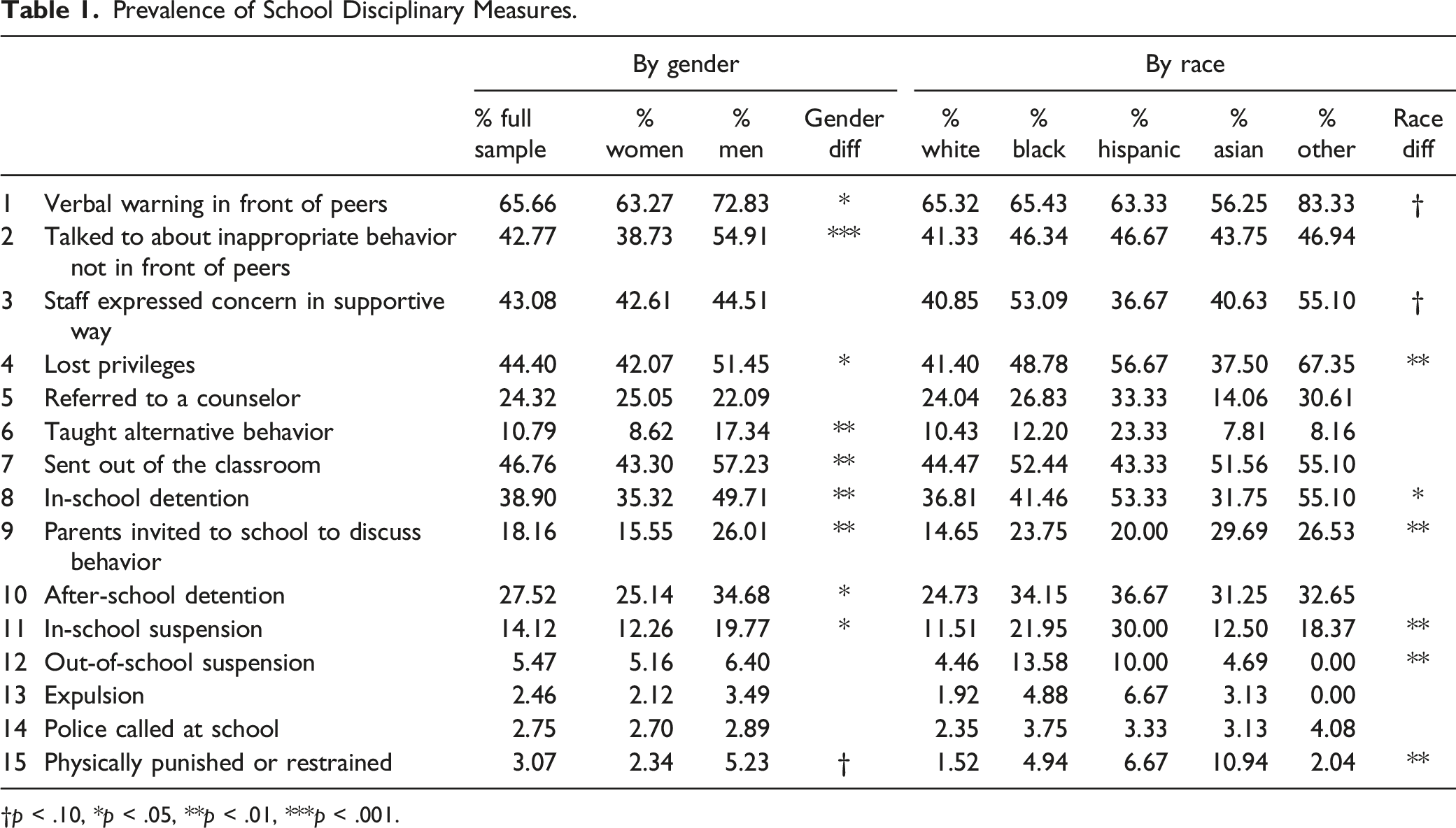
†p < .10, *p < .05, **p < .01, ***p < .001.
Well-Being
We examine four measures of well-being among emerging adults. To measure depressive symptoms, we use a count measure of 8 symptoms from the CES-D (Radloff, 1977). Respondents were asked “In the past 12 months, was there ever a 2-week period (or longer) when…” and then answered 1 “Yes” or 2 “No” to items such as “you couldn’t shake off the blues” and “you lost interest in your usual activities.” Items were summed to form a count index of depressive symptoms (α = .85). We assess good self-rated physical health by asking respondents to rate their overall health from 1 “Very bad” to 5 “Very good.” We dichotomize the measure to indicate good/very good health versus all else. We assess life expectancy by asking respondents what they think their chances are of surviving until their 50th birthday, and we dichotomize the measure to indicate “almost certain” to live to 50 years old versus all else. We assess perceived stress with 4 items from the Perceived Stress Scale (Cohen et al., 1983) assessing global feelings of overwhelm and stress in the past 30 days. Items were prefaced with “In the past 30 days, how often have you felt…” and included things like “unable to control the important things in your life?” and “difficulties were piling up so high you could not overcome them?” Responses ranged from 1 “Always” to 4 “Never,” and items were recoded so that higher values indicated more stress. Items were averaged to form an index of perceived stress (α = .82).
Confounding Variables
As there is well-documented inequality in the application of school disciplinary practices, we control for a series of confounding factors, including race, gender, parental education, adverse childhood experiences, deviant behavior prior to age 18, and parental punitive treatment, all of which have been shown to be predictive of school disciplinary experiences (e.g., Barrett et al., 2017; Huang, 2018; Pierce et al., 2022). Race and gender were self-reported by respondents in response to questions asking “With which racial group(s) do you identify? Select all that apply.” and “With which gender do you most identify?” Although inclusive options were offered to respondents for each question, racial groups other than White, Black or African American, Hispanic or Latino, or Asian contained fewer than 1% of respondents each, and so response options were collapsed into these four groups plus an “other/multirace” category. Among the college-educated sample, there were no respondents who identified as gender non-binary or another gender. Hence, gender is coded as men or women. For parental education, respondents were asked the highest degree earned by either of their parents. Responses were collapsed to indicate whether either parent had a college degree.
We assessed adverse childhood experiences with 11 items prefaced with “Thinking about your childhood (from birth through 17 years old), select all of the following things that you experienced when you were a kid.” Items included standard measures of childhood adversity, like “You lost a parent through divorce, abandonment, death, or other reason” and “Your parents or adults in your home hit, punch, beat, or threatened to harm each other” (Felitti et al., 1998), as well as other items like “Your family moved around a lot” and “There was a lot of violence in your neighborhood.” Items were summed to form a count measure of adverse childhood experiences (α = .74). We measured delinquent behavior with 14 items indicating whether or not the respondent reporting engaging in them before their 18th birthday. These items included things like petty theft, robbery, physical violence, gambling, and burglary. Items were summed to form a variety index of delinquent behavior (α = .78). Finally, parental punitive discipline was assessed with 9 items measuring punitive discipline by parents or caregivers. Items were prefaced with “From what you can remember prior to the age of 18, when you did something you were not supposed to do, how often did a parent or caregiver respond by…” and included items like “taking away something you enjoyed (e.g. TV, phone),” “shouting or yelling at you,” “embarrassing you in front of others,” and “hitting you with a belt, stick, or object.” Response options ranged from 1 “Never” to 4 “Always,” and items were summed to form an index of parental punitive discipline (α = .74).
One important confounding variable we do not have in our cross-sectional data is health status in childhood. This remains a limitation but one that should be tempered by recent longitudinal research showing that childhood health and disability was no longer associated with exclusionary discipline after accounting for adverse childhood experiences, delinquency, and family background (Pierce et al., 2022), all of which we were able to measure.
Descriptive Statistics for Independent and Confounding Variables.
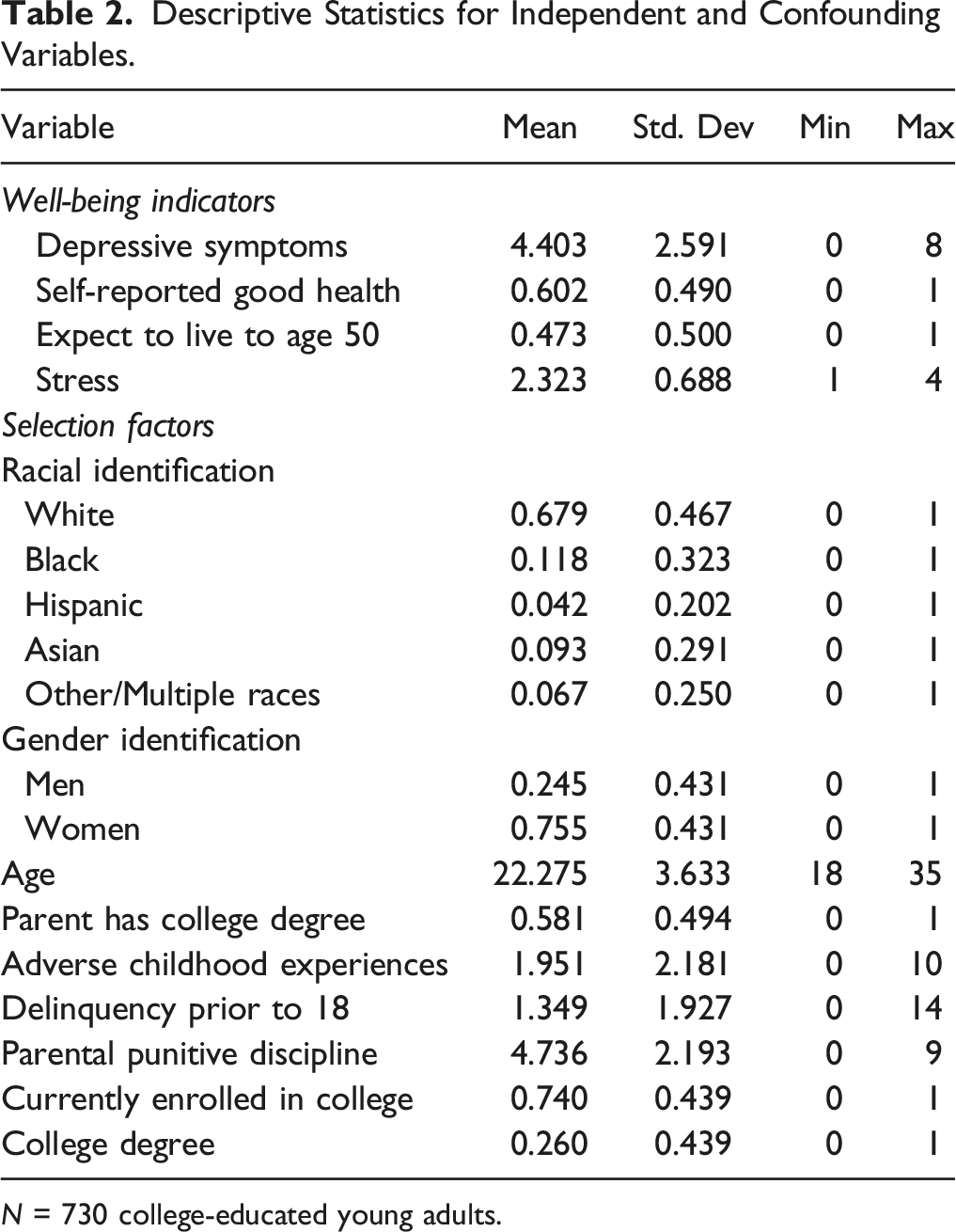
N = 730 college-educated young adults.
Analytic Strategy
We begin our analysis by conducting a latent class analysis (LCA) of school discipline experiences via Stata 17 (StataCorp, 2021). LCA allows us to identify unique groups (classes) of students with qualitatively different school discipline profiles (Goodman, 2002) to answer our first research question identifying the unique disciplinary histories of students in our sample. It assumes that membership in these unobserved classes predicts the patterning of discipline experienced at school (Weller et al., 2020). We then assign respondents to their most likely class based on their predicted probabilities of class membership and use these classes as our treatment variable in later regression analyses.
Because school discipline is not randomly distributed across the population (or the sample, as shown in Table 1), school discipline classes are likely confounded by demographic and background characteristics. Hence, we use inverse-probability-weighted regression adjustment (IPWRA) models via Stata’s teffects command to address this confounding (StataCorp. (n.d.)). IPWRA models include both a treatment model, whereby selection into school discipline classes is modeled, and an outcome model, whereby weights are assigned to individual respondents based on the inverse probability of treatment (for treated individuals) and the inverse probability of no treatment (for untreated individuals). By magnifying effects for treated individuals with low probability of treatment and for untreated individuals with a high probability of treatment, these weights effectively create counterfactuals to estimate unbiased treatment effects when confounding variables are present (Caldera, 2019; Winship & Morgan, 2014). Importantly, three benefits of the IPWRA approach over more traditional propensity score matching approaches are that it allows for a multinomial treatment variable (e.g., greater than two classes), allows for continuous, binary, and count outcome models, and is doubly robust, meaning that it includes both a treatment equation and an outcome equation, only one of which must be properly specified for the IPWRA estimator to produce unbiased results (Caldera, 2019; StataCorp, n.d; Winship & Morgan, 2014).
In the current analysis, we include all demographic and background characteristics in both the treatment and outcome models, and we also include current educational status (enrolled in college vs. college degree) as an additional covariate in the outcome models. Outcome models were differentially specified according to the nature of the dependent variable. A poisson model was used for depressive symptoms given its count nature, while a logit model was used for self-rated health and life expectancy given their binary nature. A linear model was used for stress.
Results
Latent Class Analysis
Conditional Probabilities of School Disciplinary Measures in Each Class.
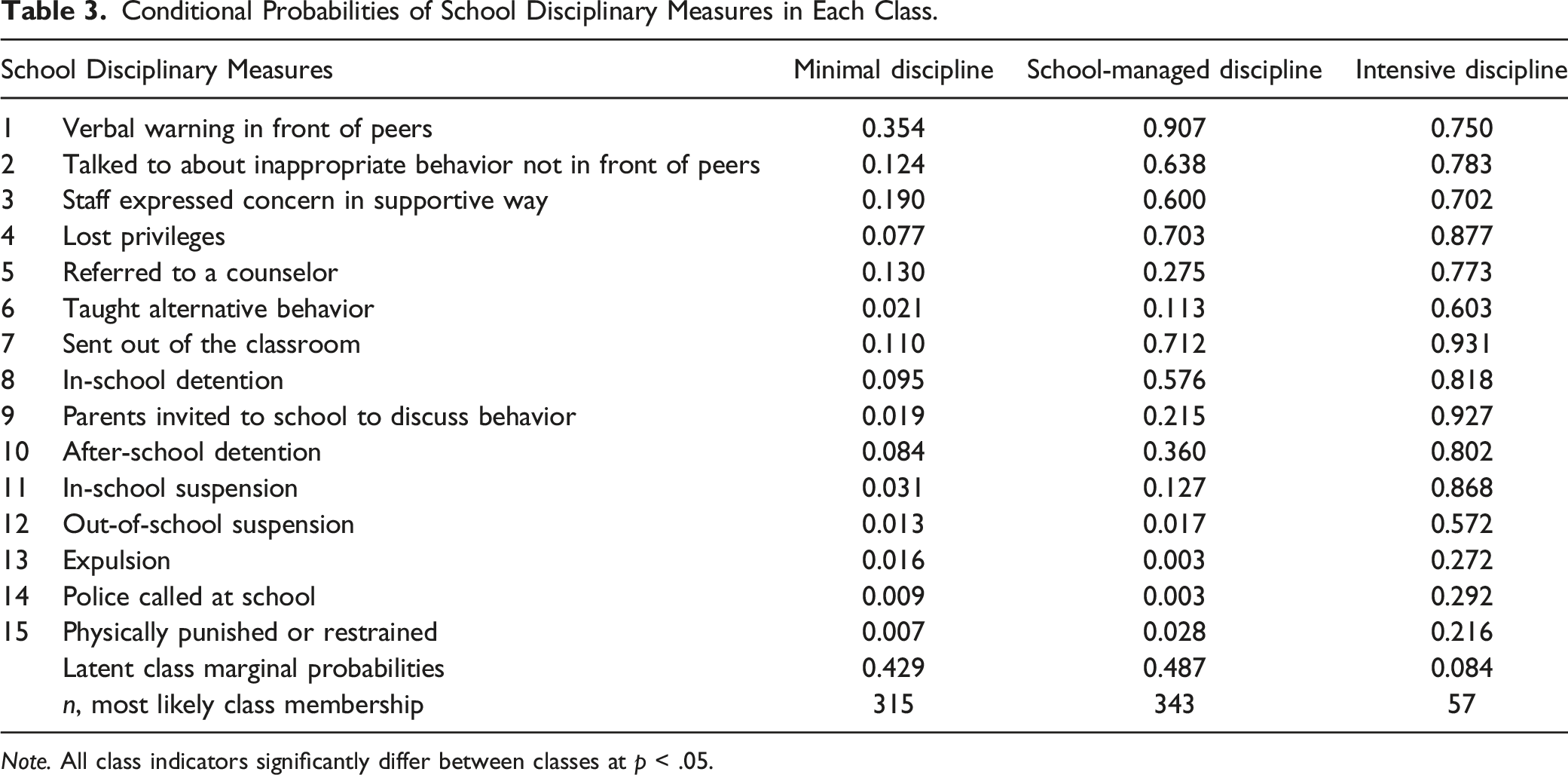
Note. All class indicators significantly differ between classes at p < .05.
As indicated by the latent class probabilities, about 43% of the sample fell into class 1, a class we describe as receiving minimal discipline at school. This group of respondents did not experience a lot of discipline, as none of the disciplinary measures was experienced by the majority of the group. Further, exclusionary measures that kept kids out of the classroom, school, or after-school activities were nearly absent among this group. Only 11% of the group, for instance, was ever sent out of the classroom, and less than 10% received either in-school or after-school detention. We describe the second class of respondents (49%) as those who received school-managed discipline. Discipline in the form of verbal warnings (91%), being talked to about inappropriate behavior (64%), losing privileges (70%), being sent out of the classroom (71%), and in-school detention (58%) were common among this class. Importantly, however, respondents in this class were unlikely to be removed from the school via suspension (2%) or expulsion (<1%) or to involve parents (22%), police (<1%), or counselors (28%). Although the literature distinguishes between classroom-managed behavior and office-managed behavior (Welsh, 2023), we use the term school-managed discipline here given that we do not know what behavior the discipline was for, who enacted the discipline, or if there was a formal ODR. Finally, the third class of respondents (8%) experienced much more intensive discipline. The intensive discipline group differed in both the severity of discipline and the involvement of parents, police, or non-educational support staff. For example, more than half of this group (57%) reported having received out-of-school suspension, while nearly all (87%) reported receiving in-school suspension. Nearly all (93%) reported that their parents were invited to the school to discuss their behavior, about three-quarters (77%) reported being referred to a counselor, and almost one-third (29%) reported having the police called at school. We call this class intensive rather than exclusionary, because some exclusionary forms of discipline were also experienced by the school-managed class, and the focus on exclusionary discipline detracts from the fact that this group experienced high rates of non-exclusionary discipline, as well. Further, the focus on exclusionary discipline does not recognize a crucial difference among this group, which is the involvement of parents, counselors, and/or law enforcement, a point we return to in the discussion. For subsequent analyses, we classified respondents into their most likely class based on the highest predicted probability of class membership. As previously noted, the average predicted probability for a given class was .937, indicating high confidence in class membership.
Importantly, the three latent classes identified did not map directly onto a simple frequency measure of school discipline. Although a count index of punishment was positively and significantly related to the three classes (that is, those in the intensive discipline class, on average, scored higher than those in the school-managed discipline class and the minimal discipline class on the number of different types of discipline received), nearly half of those in the highest quartile on a count index of school discipline were in the school-managed discipline class rather than the intensive discipline class. Hence, the latent classes seem to be capturing something that a simple count index does not.
Mean Values for Demographic and Background Characteristics by Class Membership.
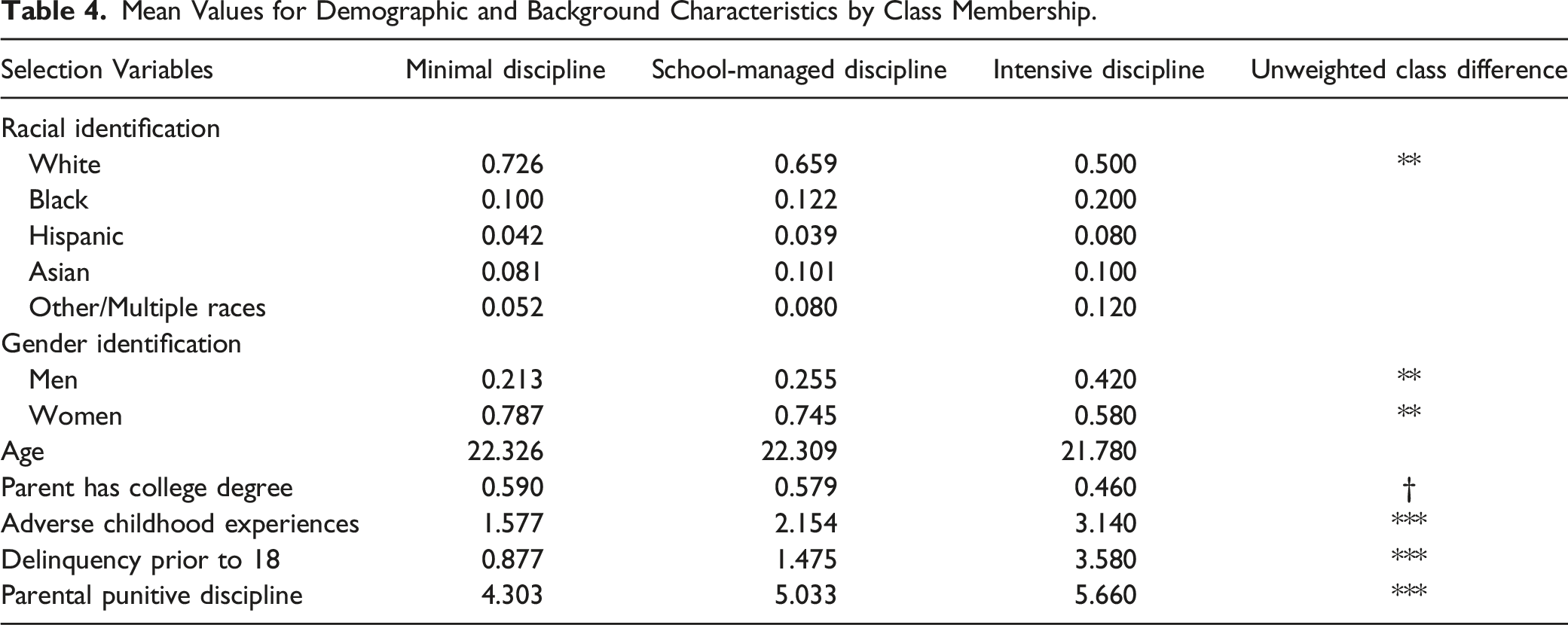
School Discipline and Well-being
Inverse Propensity Score Weight Adjusted Models Predicting Emerging Adult Well-being From School Discipline Classes.
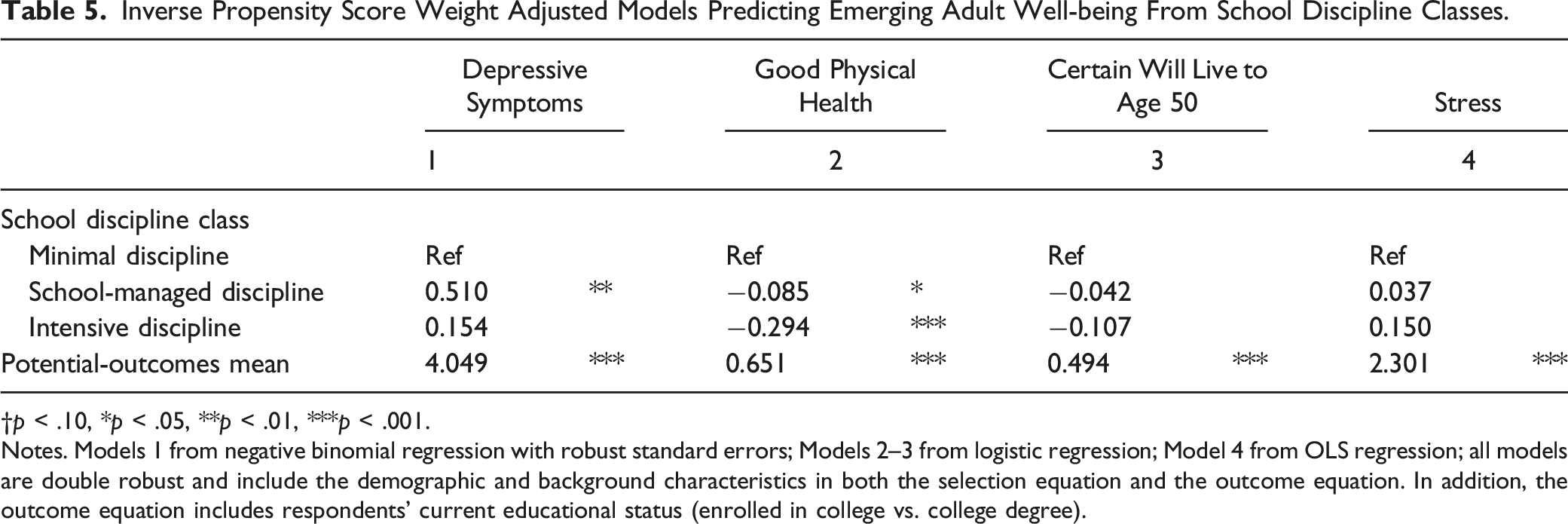
†p < .10, *p < .05, **p < .01, ***p < .001.
Notes. Models 1 from negative binomial regression with robust standard errors; Models 2–3 from logistic regression; Model 4 from OLS regression; all models are double robust and include the demographic and background characteristics in both the selection equation and the outcome equation. In addition, the outcome equation includes respondents' current educational status (enrolled in college vs. college degree).
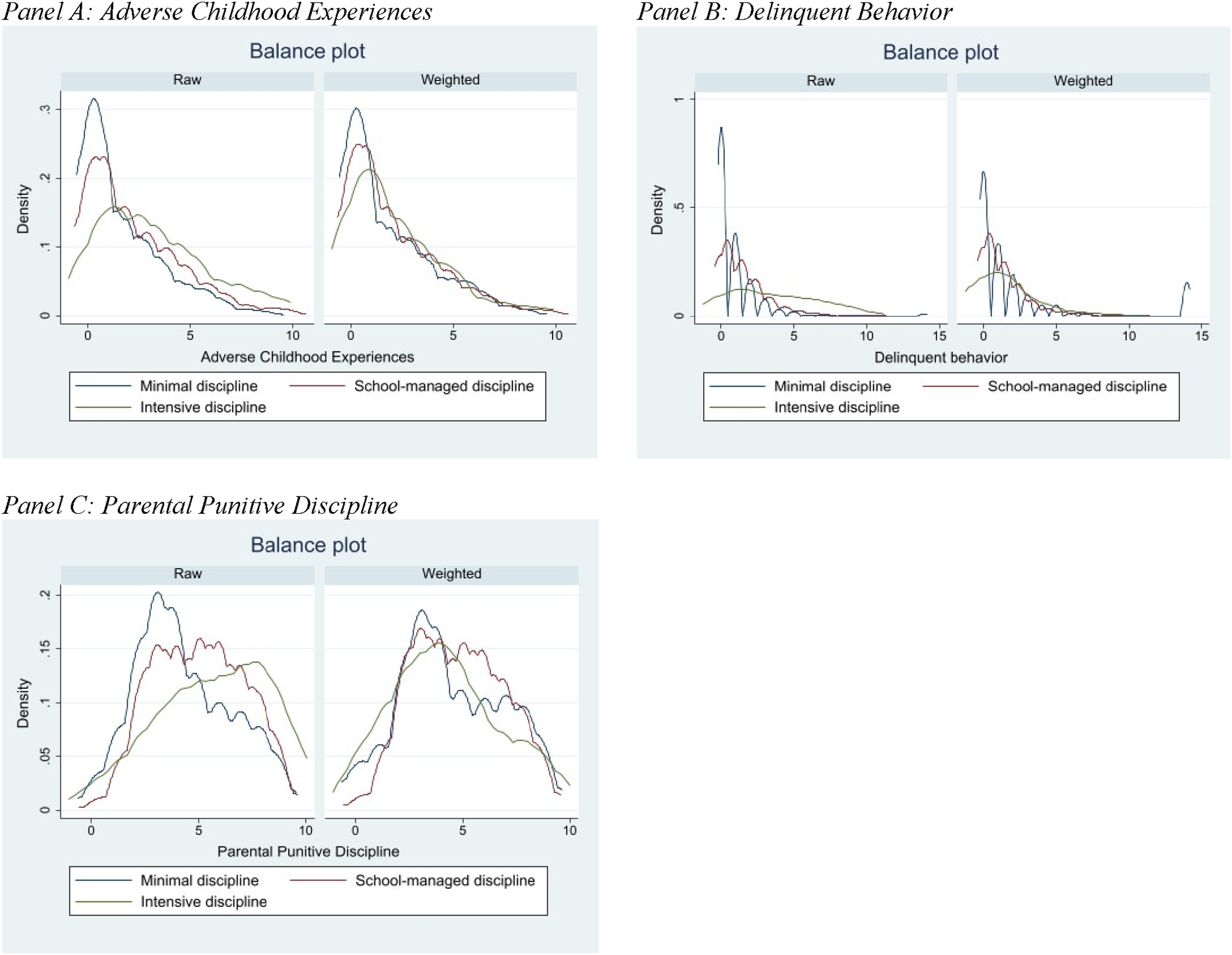
Balance plots for exemplar selection variables.
As shown in Table 5, after balancing of covariates between the three classes was achieved via inverse probability weighting, school discipline was associated with depressive symptoms and self-rated physical health but not with life expectancy or stress. Relative to their counterparts in the minimal discipline class, those in the school-managed discipline class averaged significantly more depressive symptoms (b = .510, p < .01). No difference in depressive symptoms was found for the intensive discipline class versus the minimal discipline class (b = .154, p > .10). As for self-rated health, both the school-managed discipline class (b = −.085, p < .05) and the intensive discipline class (b = −.294, p < .001) were associated with lower odds of reporting good or very good physical health compared to the minimal discipline class. Further, posthoc analyses indicated that the intensive discipline class was less likely than the school-managed discipline class to report good/very good physical health (b = −.208, p < .01).
We found no difference by school discipline history for life expectancy or for stress after accounting for selection. Post-hoc tests limiting the sample only to those currently enrolled in college, who were, on average younger than their peers with a college degree, did find differences by discipline class in life expectancy. Among those currently enrolled in college, those in the intensive discipline class were less likely to expect to live to age 50 than those in the minimally disciplined class (b = −.200, p < .01) and marginally less likely than those in the school-managed discipline class to expect to live to age 50 (b = −.112, p < .10)
Discussion
The current study found three distinct histories of school discipline among a contemporary, college-educated sample—those who were minimally disciplined at school, those who experienced school-managed discipline, and those who were disciplined intensively, receiving a wide swath of discipline that was likely to include parents, police, and/or counselors. Further, as anticipated from the vast literature on inequitable punishment in school (Barrett et al., 2017; Liu et al., 2022; Owens & McLanahan, 2020), there was fairly substantial selection into discipline classes based on gender, race, parental education, childhood adversity, parental punishment, and delinquency. That is, respondents who were White, female, had parents with a college degree, had fewer adverse childhood experiences, reported less delinquency, and reported less punitive punishment from parents were overrepresented in the minimal discipline group. After adjusting for selection into these disciplinary histories via inverse probability weighting, however, they were predictive of mental and self-rated physical health. Emerging adults with a history of school-managed discipline reported more depressive symptoms and worse self-rated physical health than their minimally-disciplined counterparts, while those who experienced intensive discipline reported worse self-rated health than their peers who experienced minimal discipline and those who experienced only school-managed discipline. Although we found no difference by school discipline history for life expectancy or for stress after accounting for selection, a difference for life expectancy did emerge when we limited our sample to respondents currently enrolled in school. These respondents were younger and therefore both closer to their experiences of school discipline and farther removed from the age of 50. For these currently-enrolled respondents, those who were disciplined intensively were less likely to expect to live to age 50 than their minimally-disciplined and school-managed-disciplined peers.
Such findings are important in several respects. First, findings from our latent class analysis showed that the disciplinary histories of this relatively privileged group of respondents did not break down into a simple exclusionary/non-exclusionary dichotomy. Those in the school-managed class, for instance, experienced some forms of exclusionary discipline, like being sent out of the classroom and receiving detention. Likewise, although those in the intensive discipline class were more likely to experience exclusionary discipline, particularly the kind that removes a student not just from the classroom but also from the school (e.g., suspension or expulsion), they also experienced a host of non-exclusionary practices (e.g., being taught alternative behavior, staff expressing concern in a supportive way, being talked to about inappropriate behavior) and the involvement of non-educational parties, like counselors, police, and parents. Hence, neither the basic exclusionary versus not-exclusionary distinction nor the classroom-managed versus office-managed distinction commonly used in the school discipline literature seemed to capture the experiences of this college-educated sample. Although this finding could be due to the privileged nature of the sample, it is consistent with other literature suggesting that discipline often begins with non-punitive and non-exclusionary, classroom-managed measures and proceeds, albeit more quickly for students of color, to punitive and exclusionary measures (Cruz et al., 2021; Welsh, 2023).
Second, and perhaps more importantly, our findings indicate that it was not simply the respondents who received intensive discipline who experienced negative health outcomes in emerging adulthood. Out-of-school suspension and expulsion have been the primary focus of school discipline research, as they are considered to be most closely related to the school-to-prison pipeline and where we see the starkest racial disparities. Our findings suggest that the consequences of these practices extend even to those young people who make it to college, not in the form of criminal justice contact or educational disengagement but in the form of poorer health. Further, these poorer health outcomes were also associated with a pattern of school discipline marked by school-managed and much more common exclusionary practices (e.g., detention). Stated more simply, conventional exclusionary discipline, like suspension and expulsion, and other punitive treatment like police involvement and physical punishment, do not seem to be the only forms of discipline that are associated with well-being later in the life course. After all, these exclusionary punishments were relatively absent from the sample in general. It may be the case that even informal and seemingly benign disciplinary practices in school may weaken social bonds by invoking shame or reducing feelings of belongingness despite not forcing young people out of the classroom or school. Such possibilities need further study.
Third, and relatedly, the current study showed sizeable selection into school discipline histories, as well as sizeable effects of school discipline histories on emerging adult well-being among a relatively privileged sample who came of age during a national decline in school zero-tolerance policies and a push for more effective discipline in American schools. This decline was accelerated during the height of the COVID-19 pandemic as virtual learning dominated (Welsh, 2022). The fact that we found effects of school discipline on emerging adult well-being even among this college-educated, primarily White and female sample should give us pause with respect to our intense focus on the effects of school discipline on poor and minoritized youth. We know that these youth experience a much higher likelihood of school punishment, particularly exclusionary punishment, than their more privileged peers, but it is not yet settled whether the health implications of school punishment differ across groups. The current findings could be indicative of an exacerbated effects of school discipline on health among more privileged youth given that punitive treatment in school is generally rarer (although still fairly common) in their lives. This is consistent with recent research showing increased risk for negative health outcomes following unfair police contact for those least at risk for police contact rather than for those for whom police contact is ubiquitous (Dennison & Finkeldey, 2021). Alternatively, if school discipline matters more for the health of those young people most at risk, as recent work by Davison et al. (2022) examining labor market, educational, and criminal justice outcomes suggests, then the current findings demonstrating negative health consequences of school discipline may indeed be conservative. Future research that considers a much wider array of school disciplinary measures and uses a heterogeneous sample of young people can parse out these alternatives.
Study findings should be considered in light of several limitations. Although the current sample offers insight into the role of school discipline in the well-being of a contemporary sample of college-educated emerging adults, this sample is not representative of contemporary emerging adults nor the more privileged among them. It is convenience sample generated from the networks of students at one research-intensive, public university in the Northeastern United States. This university is both racially and economically diverse with a large international student presence. Nonetheless, the sample generated from student networks at this university was primarily White and female college students and therefore not representative of the diversity among young people today. The privileged nature of the sample is both a strength and a limitation. While findings suggest the reach of school discipline even in the lives of those doing well by conventional standards and the need to consider and theorize about school discipline beyond the dichotomy of exclusionary versus not exclusionary, our study can say little about the prevalence of particular types of school discipline or their varying impact in young people’s lives. Such conclusions require data from more representative samples that includes a more holistic assessment of school discipline.
Second, although the measure of school discipline used here is more expansive than that used in past work, it is also limited in several ways. For instance, our data are based on retrospective reports from students rather than administrative data or teacher reports. Further, we have neither an assessment of the age at which a student experienced specific types of discipline nor an assessment of the ordering in which or frequency with which different types of discipline occurred. Such nuanced information would help weave together the “complicated process” (Rodriguez & Welsh, 2022, p. 3) that is school discipline.
Third, although powerful confounding variables were included in the selection equation and data were successfully balanced on observable characteristics in the IPWRA, it is possible that unobserved characteristics (e.g., school climate, health prior to discipline) further confound the association between school discipline and emerging adult well-being. In one of the only studies to examine the effects of school discipline among more privileged youth, for example, Eyllon et al. (2022) showed that more exclusionary policies in schools were associated with higher levels of depressive symptoms among students with no history of suspension or expulsion. Further, although past work has shown that childhood health and disability were no longer predictive of exclusionary discipline after accounting for adverse childhood experiences, delinquency, and family background (Pierce et al., 2022), all of which we were able to measure, we have no reliable measure of childhood health and could not demonstrate this with the current sample. Hence, we encourage interpreting our findings as being suggestive of a causal relationship between school discipline and emerging adult well-being but caution against a strict causal interpretation. Longitudinal, prospective analyses can more firmly establish causation.
Finally and relatedly, we were not able to test mechanisms whereby school discipline histories may impact emerging adult well-being. Even if we had adequate measures to do so, the cross-sectional nature of our data would limit our ability to establish appropriate time-ordering. Longitudinal prospective studies could again help with understanding mechanisms of effects.
Despite such limitations, this work suggests the need to rethink discipline in schools beyond just a rolling back of zero-tolerance policies and exclusionary punishments. We are making headway in understanding evidence-based practices for reducing exclusionary discipline in schools and disproportionality in such discipline (Cruz et al., 2021), and such changes are laudable and necessary. Our intense focus on these issues may have blinded us from challenging the role and practice of school discipline more broadly and considering its lasting impacts beyond educational engagement and the school-to-prison pipeline. Both Rios (2011) and Gorski (2022), for instance, show that youth behavior must be considered in a context of perceived institutional control where developmentally appropriate behavior is criminalized. Although this control is amplified for low-income students of color (Morris et al., 2018; Rios, 2011), it is perhaps perceived by youth to be part and parcel with most school disciplinary practices today. No matter the reason for persistent effects of even seemingly benign school discipline practices on young people’s well-being, however, given the importance of emerging adulthood for modifying or solidifying life course trajectories (Settersten & Ray, 2010), a deeper understanding of institutional influences on emerging adult well-being is vital. The current findings suggest that a reconceptualization of school discipline beyond the exclusionary versus non-exclusionary dichotomy may be central to that understanding.
Supplemental Material
Supplemental Material - Juvenile School Discipline and Well-Being Among College-Educated Emerging Adults
Supplemental Material for Juvenile School Discipline and Well-Being Among College-Educated Emerging Adults by Ashley B. Barr, and Zhe Zhang in Emerging Adulthood.
Footnotes
Declaration of Conflicting Interests
The author(s) declared no potential conflicts of interest with respect to the research, authorship, and/or publication of this article.
Funding
The author(s) received no financial support for the research, authorship, and/or publication of this article.
Transparency and Openness Statement
The analysis code and materials used in this manuscript will be made openly available upon publication. The raw data contained in this manuscript are not openly available due to privacy restrictions set forth by the institutional ethics board. No aspects of the study were pre-registered.

Supplemental Material
Supplemental material for this article is available online.
Author Biographies
References
Supplementary Material
Please find the following supplemental material available below.
For Open Access articles published under a Creative Commons License, all supplemental material carries the same license as the article it is associated with.
For non-Open Access articles published, all supplemental material carries a non-exclusive license, and permission requests for re-use of supplemental material or any part of supplemental material shall be sent directly to the copyright owner as specified in the copyright notice associated with the article.
