







Abstract
This study characterizes the profile of Black emerging adults aged 18-29 generated from sociodemographic characteristics and indicators of police contact and exposure to racism-based police violence (RPV), and the relationship between profiles and traumatic stress symptoms. A purposive sample of 300 Black emerging adults was recruited for this exploratory study. Cluster analysis (CA) was performed to generate profiles of this sample. Two distinct profiles emerged from the CA. Cluster 1 is characterized by participants with low rates of police contacts and direct RPV exposure, whereas Cluster 2 consists of participants with higher rates of police contacts and direct RPV exposure. Regression analysis revealed that being in Cluster 2, as opposed to Cluster 1, was associated with increased scores for depression, avoidance, and intrusion symptoms. Findings provide guidance for mental health intervention strategies to combat the psychological impact of RPV exposure for Black emerging adults.
Introduction
Focusing on emerging adulthood, a crucial life stage spanning from 18 to 29 years old (Arnett, 2000, 2006), this study sheds light on the unique vulnerabilities faced by Black individuals during this developmental stage that is characterized by significant life transitions and identity exploration (Arnett, 2000). With a heightened risk for exposure to violence (Motley et al., 2017; Walker et al., 2023), as defined by the World Health Organization (2002) as any intentional use of physical force with potential to result in harm or deprivation, Black emerging adults find themselves at a crossroads of systemic oppression and personal development. The intersection of structural racism in policing has fostered an environment of anti-Black violence and discrimination, disproportionately impacting Black emerging adults and subjecting them to targeted brutality and fatalities at the hands of law enforcement (Alang, 2020; Carvalho et al., 2022; Edwards et al., 2019; Gellman et al., 2007; Levchak, 2016; Motley & Rogers, 2021; Obasogie & Newman, 2017; Russell-Brown, 2021; Sharif et al., 2022; Simmons, 2021). This study aims to spotlight the specific challenges faced by Black emerging adults during this critical developmental stage, characterizing the profile of Black emerging adults who are most at risk of police contacts and perceived racism-based police violence exposure, while also examining associated traumatic stress symptoms.
Fatal and Non-Fatal Police Violence Exposure Among Black Emerging Adults
Nationally, Black emerging adult men (96 deaths per 100,000) and women (5.4 deaths per 100,000) are significantly more likely to be killed by police officer(s) than their Latino (53 per 100,000, and 2 per 100,000 respectively) and White (39 per 100,000, and 2 per 100,000 respectively) counterparts (Edwards et al., 2019). Black emerging adults are also more likely to experience police threats or use of non-fatal violence than their counterparts from other ethnic groups (DeVylder et al., 2017; Durose et al., 2007; Eith & Durose, 2011; Hyland et al., 2015; Langton & Durose, 2013; Tapp & Davis, 2022). Data from the Bureau of Justice Statistics’ Police–Public Contact Survey (Motley & Joe, 2018) found that more Black emerging adult men reported experiencing police shouting (32%), threatening arrest (23%), punch/grabbing (16%), and handcuffing (15%) during a street stop than their White male counterpart (9%, 10%, 3%, and 3%, respectively). In addition, Black emerging adult women reported experiencing more police shouting (55%), threatening arrests (36%), and handcuffing (12%) than their White female counterpart (14%, 10%, and 9%, respectively).
Police Violence Exposure Via Social Medial Among Black Emerging Adults
Social media has provided another pathway for increased exposure to police violence for Black emerging adults (Bor et al., 2018; Eichstaedt et al., 2021; Motley, Chen, Masood, et al., 2023). Emerging adults lead the way when it comes to using YouTube (95%), Instagram (71%), and Twitter (42%) in comparison to adults ages 30–49 (93%, 47%, and 26% respectively) and 50–64 (83%, 26%, and18%, respectively) (Auxier & Anderson, 2021). In addition, roughly 84% of Black emerging adults report using social media and over half report being active on social media sites several times a day (Auxier & Anderson, 2021). Videos of policing killing 43-year-old Eric Garner, 22-year-old Stephon Clark, 46-year-old George Floyd, 20-year-old Daunte Wright, 29-year-old Tyre Nichols, and other unarmed Black Americans have been shared widely across social media platforms with many registering over several million views and retweets (Acosta & Spencer, 2016; Hoyt, 2016). Data from a sample of Black emerging adult college students (n = 382) attending community colleges/universities in 24 states across the U.S revealed that participants reported seeing images or videos of police violence (i.e., beaten, arrested, detained, or shot) toward individuals from their racial group on most days during the previous year (M = 3.40, SD = 1.13) (Maxie-Moreman & Tynes, 2022). Similarly, Campbell and Valera (2020) found that 91% of their sample of emerging adult college students (n = 134; 61% Black) reported that they found out about incidents of police violence on social media and 34.6% reported watching videos of police violence on social media.
Perceived Racism-Based Police Violence Exposure Among Black Emerging Adults
According to The International Association of Chiefs of Police Law Enforcement Policy Center (2019), the primary role of police officers when dealing with the public is to treat individuals with courtesy, respect, and dignity; not employ an attitude or use language that might belittle, ridicule, or intimidate individuals; perform their duties equitably in both the enforcement of laws and the delivery of law enforcement services within the community; and strive to maintain public trust by conducting all law enforcement business in an unbiased, fair, and impartial manner. When police disproportionately engage in violence toward certain groups (i.e., Black emerging adults), some members of that group can perceive the actions of police as racism-based and experience negative mental health outcomes (Bryant-Davis & Ocampo, 2005; Carll, 2007; Carter, 2007; Carter & Pieterse, 2020; Clark et al., 1999; Polanco-Roman et al., 2016; Utsey et al., 2002; Williams, 2018). Research suggests that an individual’s subjective experience can lead to mental health issues if they perceive an event as being racist, even if it cannot be objectively proven (Carll, 2007; Clark et al., 1999). Therefore, some Black emerging adults who experience direct (victim or witness in-person) and/or indirect (seen in media) exposure to police violence can perceive the event as racism-based and experience related mental health issues (e.g., trauma stress symptoms).
Exposure to racism-based police violence (RPV) has significant implications for the mental health of Black emerging adults, potentially resulting in trauma-related stress symptoms. Research has shown that individuals who experience or witness police violence can develop symptoms akin to post-traumatic stress disorder (PTSD), including intrusive thoughts, hyperarousal, and avoidance behaviors (DeVylder et al., 2017, 2022; Motley & Baidoo, 2023; Motley et al., 2020, 2023; Motley, Chen, & Motley, 2023; Bryant-Davis & Ocampo, 2005; Carll, 2007; Carter & Pieterse, 2020). These trauma-related stress symptoms can be exacerbated when the violence is perceived as racially motivated, as the experience becomes not only a personal trauma but also a reminder of the systemic racism that affects the individual’s community (Alang et al., 2017; Clark et al., 1999; Polanco-Roman et al., 2016; Utsey et al., 2002; Williams, 2018). Moreover, these traumatic stress symptoms can contribute to long-term negative outcomes, such as chronic mental health conditions, substance abuse, and difficulty in personal and professional relationships (Bryant-Davis & Ocampo, 2005; Carll, 2007; Carter, 2007; Carter & Pieterse, 2020; Clark et al., 1999; Polanco-Roman et al., 2016; Utsey et al., 2002; Williams, 2018). As such, it is crucial to consider the prevalence and profound impact of RPV exposure on the mental health of Black emerging adults when studying this population.
Prior research has investigated the frequency and impact of RPV exposure among Black emerging adults, providing insights into the gender differences and associated mental health outcomes. Motley and colleagues (2022) employed the 12-item direct RPV exposure and 5-item indirect RPV exposure scales from the Modified-Classes of Racism Frequency of Racial Experiences measure, utilizing a 6-point Likert scale to assess exposure over the past 12 months. Their findings indicated a variation in exposure levels, with men reporting higher rates of direct RPV exposure, while women reported higher rates of indirect RPV exposure. English et al. (2017) also examined direct exposure to police-based discrimination among Black men across four Georgia counties, utilizing the Police and Law Enforcement (PLE) scale. Their study revealed substantial levels of direct police-based discrimination.
Importantly, the relationship between RPV exposure and mental health outcomes has been established in previous studies (English et al., 2017; Maxie-Moreman & Tynes, 2022). Elevated rates of direct RPV exposure have been significantly linked to more severe race-based traumatic stress symptoms, including intrusion and avoidance, whereas indirect RPV exposure was associated with depression, intrusion, and avoidance symptoms (Motley, Joe, and colleagues, 2022). These findings highlight the profound mental health implications of RPV exposure.
Although extant research has documented an association between RPV exposure and associated trauma stress symptoms among Black emerging adults, research describing the profiles of Black emerging adults with police contacts and RPV exposure and associated trauma related stress symptoms is scant. Our study aims to build upon these previous investigations by further exploring the profiles of Black emerging adults most at risk for police contact and RPV exposure. In doing so, we will contribute to a more comprehensive understanding of the relationship between RPV exposure and trauma-related stress symptoms, thereby enhancing our knowledge of the mental health challenges faced by this population.
The Present Study
This exploratory study provides a first look at the profiles of Black emerging adults by self-reported frequencies of police contacts and RPV exposure, combined with other sociodemographic factors (i.e., self-reported sex at birth, age, years living in St Louis, income, employment status, and reside in city or county), and the association between each profile and trauma related stress symptoms. Sociodemographic factors such as sex at birth, age and income have been shown to significantly influence an individual’s likelihood of experiencing police encounters, with younger Black emerging adult males and those with lower incomes facing a higher risk (DeVylder et al., 2017; Eith & Durose, 2011; Hyland & Langton, 2015; Motley & Joe, 2018). Similarly, place of residence can affect the frequency of police contacts and exposure to police violence due to the varying levels of police presence and activity in different communities, with predominantly Black and low-resourced communities often facing higher levels of policing (Alang et al., 2017; Gelman, Fagan, & Kiss, 2007; Robert F. Kennedy Human Rights Global Justice Clinic, New York University School of Law, International Human Rights Clinic, University of Virginia School of Law, & Hansford, 2016; Ross, 2015).
Methods
Participants
A purposive sampling strategy was used to recruit Black emerging adults ages (n = 300) in St Louis, Missouri. We use the term “Black” to refer to a social, political, and culturally constructed ethnic group identity and recognize that this group, like all other ethnic groups in the United States, are heterogeneous (Graves, 2001; Sussman, 2014; Zuberi, 2001). The participants in this study were 300 Black college students (M = 20.44, SD = 2.72) enrolled at a local community college (n = 285) or private university (n = 15) in St Louis, Missouri. Most participants identified as female (51%) and a resident of St Louis for an average of 16.68 years (SD = 6.94). Most participants reported incomes of less than US$10,000 per year (63%) and were employed part-time at the time of the study (50%). Individuals who identified as Black/African American, were 18–29 years old, were residents of the St Louis Metropolitan area, and reported experiencing exposure to at least one police violence event as a victim, witness, or seeing a video in media in their lifetime were eligible to participate in the study. Individuals who did not meet the inclusion criteria or self-reported (yes or no) having a serious mental illness or disability that would prevent them from participating in a computer assisted survey were excluded from participating in the study. All potential participants met the inclusion criteria and none self-reported having a serious mental illness or disability.
Procedures
The current study was granted ethical approval by a university-based institutional review board. Potential participants were approached by the lead author and a trained graduate research assistant at the college campuses and informed of the proposed study. Approved flyers describing the study were posted on bulletin boards at the college campuses. The flyers gave a brief description of the study and the days, times, and locations on campus where the researchers would be conducting the computer assisted surveys. After written informed consent was obtained, each participant was directed to a computer station in the computer lab where they could complete the 60-min survey on their own. All eligible participants either signed a consent and given a copy or were emailed a consent form for them to read and sign and emailed a copy to keep for their record. Most computer assisted surveys (n = 210, 70%) were conducted in a private computer room at the community college. However, some of the participants (n = 90, 30%) were emailed a link and access code to complete the survey on their own (due to the COVID-19 pandemic). Survey participants received remuneration in the amount of US$25.
Measures
Demographics
Participants were asked to self-report their sex at birth, age, years living in St Louis, income, employment status, and whether they live in the city or county. Sex at birth was measured as a binary variable (i.e., male, or female). Age was the reported age of the participant. Years of living in St Louis was measured as a scale variable, as participants were asked to report the number of years they have been living in St Louis. Personal income in the past 12-month was originally measured on a 6-point Likert scale ranging from “1 = less than US$10,000 to 6 = US$50,000 or more”. Roughly 63% of participants reported an income of less than US$10,000. Thus, we collapsed this measure into two levels: “1 = less than US$10,000, and 2 = US$10,000 or more”. Employment status was measured using a 3-point Likert scale ranging from “1 = Unemployed, 2 = part-time, to 3 = full-time”. To assess whether participants lived in St Louis City or County, participants were asked to report their zip code.
Police Contact
Two variables were assessed to capture if respondents’ experienced police contact during their lifetime. Respondents were asked to report if they ever experienced a voluntary (meeting with police where you were free to leave) or involuntary (being pulled over, or stopped by police while standing, walking, or sitting in a public place or parked vehicle) police contact. For the voluntary police contact question, participants were instructed to only include police contacts where they initiated the contact with police because they needed services or help from police. For the involuntary police contact question, participants were instructed to only include police contacts that were initiated by the police. Each police contact variable was measured on a dichotomous scale (yes or no).
Exposure to Perceived Racism-Based Police Violence (RPV)
The 12-item direct RPV exposure (victim, or witness in -person) and 5-item indirect RPV (seen in media) exposure scales from the Modified-Classes of Racism Frequency of Racial Experiences (M-CRFRE) measure (Motley, Joe, and colleagues, 2022) was used to assesses the frequency of participants’ RPV exposure in the past year using a 6-point Likert scale (0 = not at all, 5 = several times a day). The survey items for the direct and indirect RPV exposure scales from the M-CRFRE was developed using focus groups (n = 5) and cognitive interviews (n = 8) with a sample of Black emerging adults (n = 44) and then piloted to a sample of Black emerging adults (n = 300) to assess the psychometric properties of each scale which showed construct validity, internal reliability, and measurement invariance between men and women for each scale (Motley, Joe, and colleagues, 2022). Examples of survey items included “I have been threatened with use of force by police (e.g., thrown to the ground, pushed, grab, punched/slapped, kicked, or weapon), even though I was not doing anything illegal,” “I have been with a person of my race who was unarmed and not doing anything illegal, and witness police use their weapon (e.g., Taser, pepper spray, baton, or firearm) on that individual,” and “I have noticed that the majority of individuals physically abused (e.g., thrown to the ground, pushed, grab, punched/slapped, kicked, or weapon) by police in the videos I see in media (e.g., Television or Internet) are people of my race.” The RPV scales had a possible range of zero–60 on the direct exposure scale and zero–25 on the indirect exposure scale, with higher scores representing more exposure. Cronbach’s alpha for the direct RPV exposure scale was α = .95 and α = .87 for the indirect RPV exposure scale.
Race-Based Trauma Symptoms
The 10-item depression, 8-item intrusion, and 4-item avoidance scales from the Race-Based Traumatic Stress Symptom (RBTSS) scale (Carter & Sant-Barket, 2015) was used to assess participants’ stress reactions to RPV exposure right after the event occurred. Each scale uses a 5-point Likert scale (0 = does not describe my reaction, 4 = this reaction would not go away). Examples of survey items included “I felt that I had nothing to look forward to,” “I can’t seem to get the event out of my mind,” and “I was in a state of nervous tension.” Before responding to survey items, each participant was asked to think about the most memorable RPV exposure they had as a victim, witness in-person, or seeing a video in media. The score on the depression scale ranged from zero to 40, intrusion zero to 32, anger zero to 32, and avoidance zero to 16 with higher scores representing more severe symptoms. Cronbach’s alpha for the RBTSS scales ranged from .78 to .97. The RBTSS has demonstrated good construct validity, convergent validity, and discriminant validity in prior research (Carter et al., 2013; Carter & Muchow, 2017).
Data Analysis
SPSS Statistics version 25.0 was used to generate descriptive and multivariate statistical results. The TwoStep Clustering method selected for this analysis assigned individuals with similar characteristics to the same cluster, allowing for the identification of similar groups that might go unnoticed using other multivariate techniques. Cluster analysis has been used in studies of interpersonal violence due to its ability to unearth distinct profiles of victimization that can be targeted with tailored public health and social support interventions (Ferreira et al., 2021). The TwoStep Clustering method allows for categorical and continuous variables to be modelled at once, determining the optimal number of clusters by using Bayesian information criterion (BIC) or Akaike information criterion (AIC) to compare potential solutions.
Cluster analysis is particularly sensitive to missing data. No variables in this analysis were missing any observations. Additionally, the silhouette measure of cohesion between the clusters should be .0 or higher, indicating variation between clusters. Variables with a negative importance value, indicating that there is no difference between clusters on that variable, should be removed. The clusters generated in this analysis had a recommended silhouette measure of cohesion of .2 and no variables warranted removal (i.e., no variables showed a negative importance value). Finally, as cluster analysis will find groupings with any set of observations and variables, variables selected for the analysis must have the appropriate conceptual grounding. Keeping this in mind, socio-demographic variables of the sample were chosen, as were police contact variables and RPV exposure variables. These sets of variables are shown below in Figure 1. Each set is theorized to influence the next, moving from left to right across the figure as indicated by the arrows. Theoretical model used to characterize the profiles of exposure to perceived.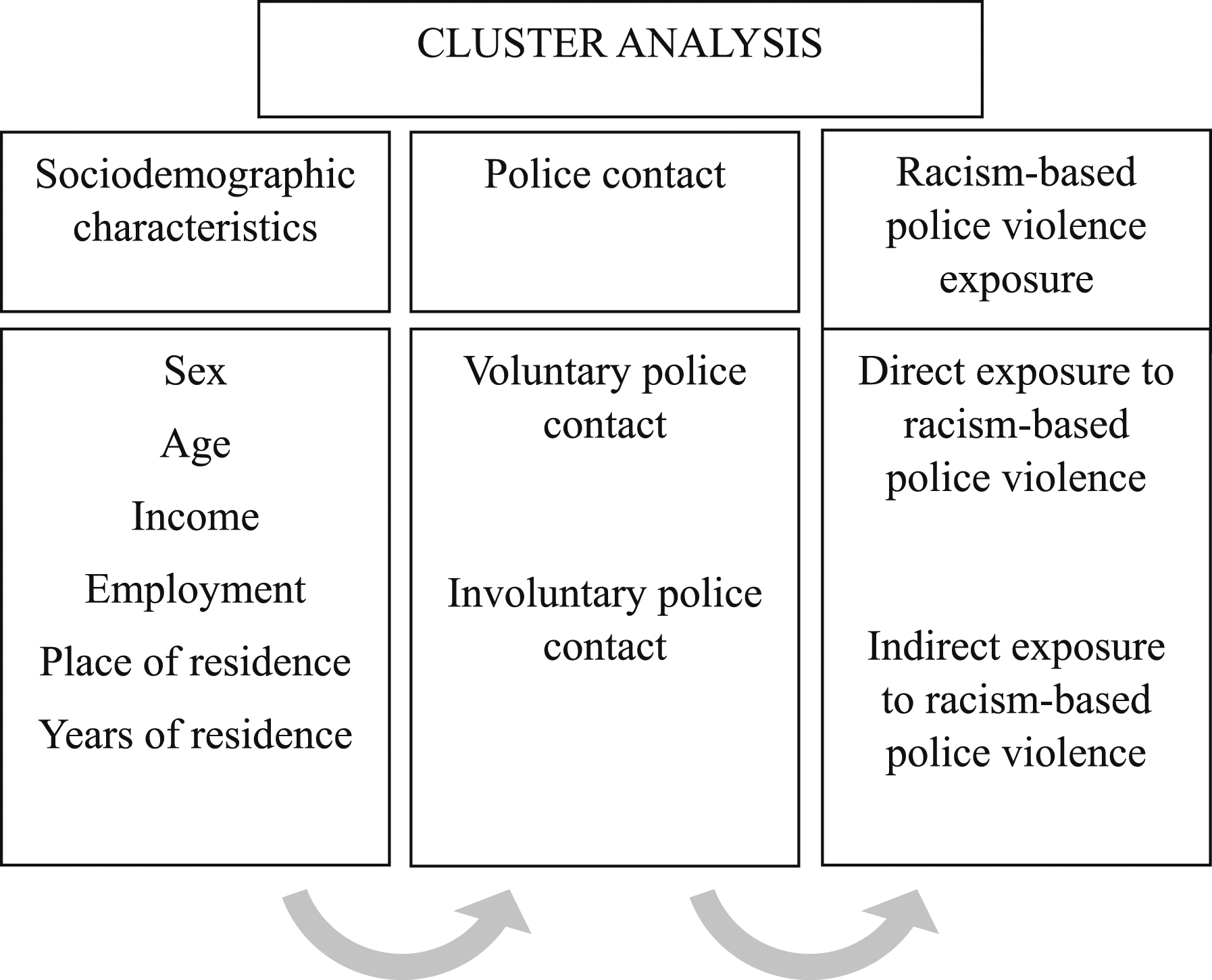
The criterion for selecting the number of clusters in this analysis was BIC, with log likelihood used to determine the maximum likelihood of the final cluster solution given the data. Two distinct clusters were generated using this method. Clusters were com-pared along each variable of interest using either Pearson’s chi-square test for contingency tables generated using categorical variables, or t-tests for continuous variables. Significant results from these comparisons were used to characterize each cluster.
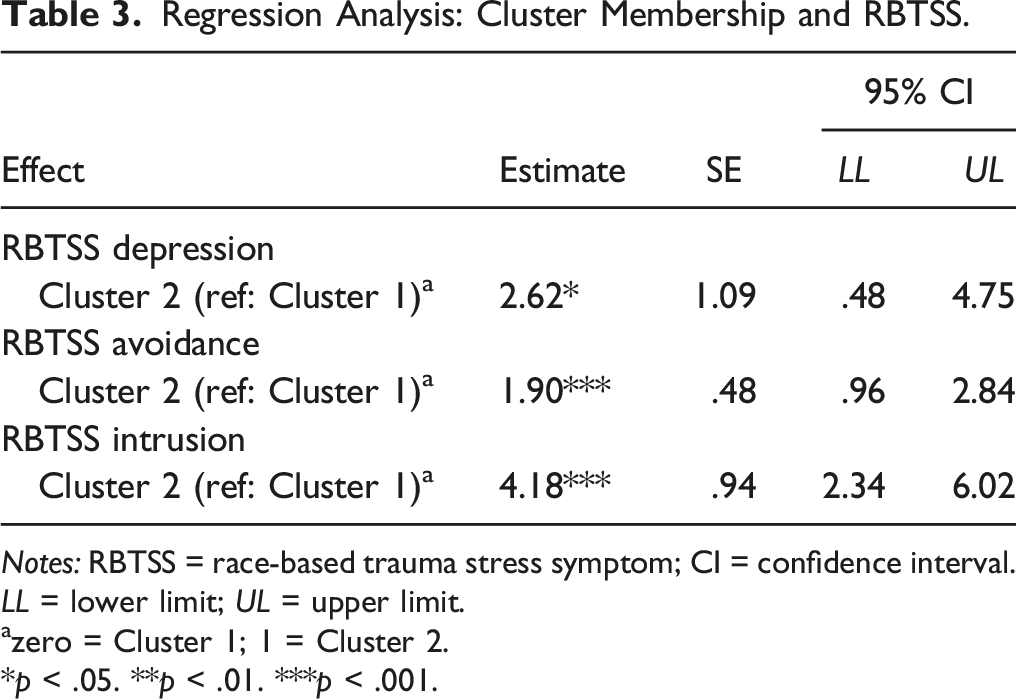
Finally, the associations between cluster membership and incidence of RBTSS were explored using regression analysis, allowing us to estimate the effect of cluster membership on RBTSS scores (Hair et al., 2014; Salas-Hernandez et al., 2022). Results from this analysis allow comparisons of how individuals clustering together on key sociodemographic, police contact, and RPV exposure variables might experience differing levels of RBTSS.
Results
Description of Sociodemographic Characteristics, Police Contact, RPV Exposure and RBTSS.
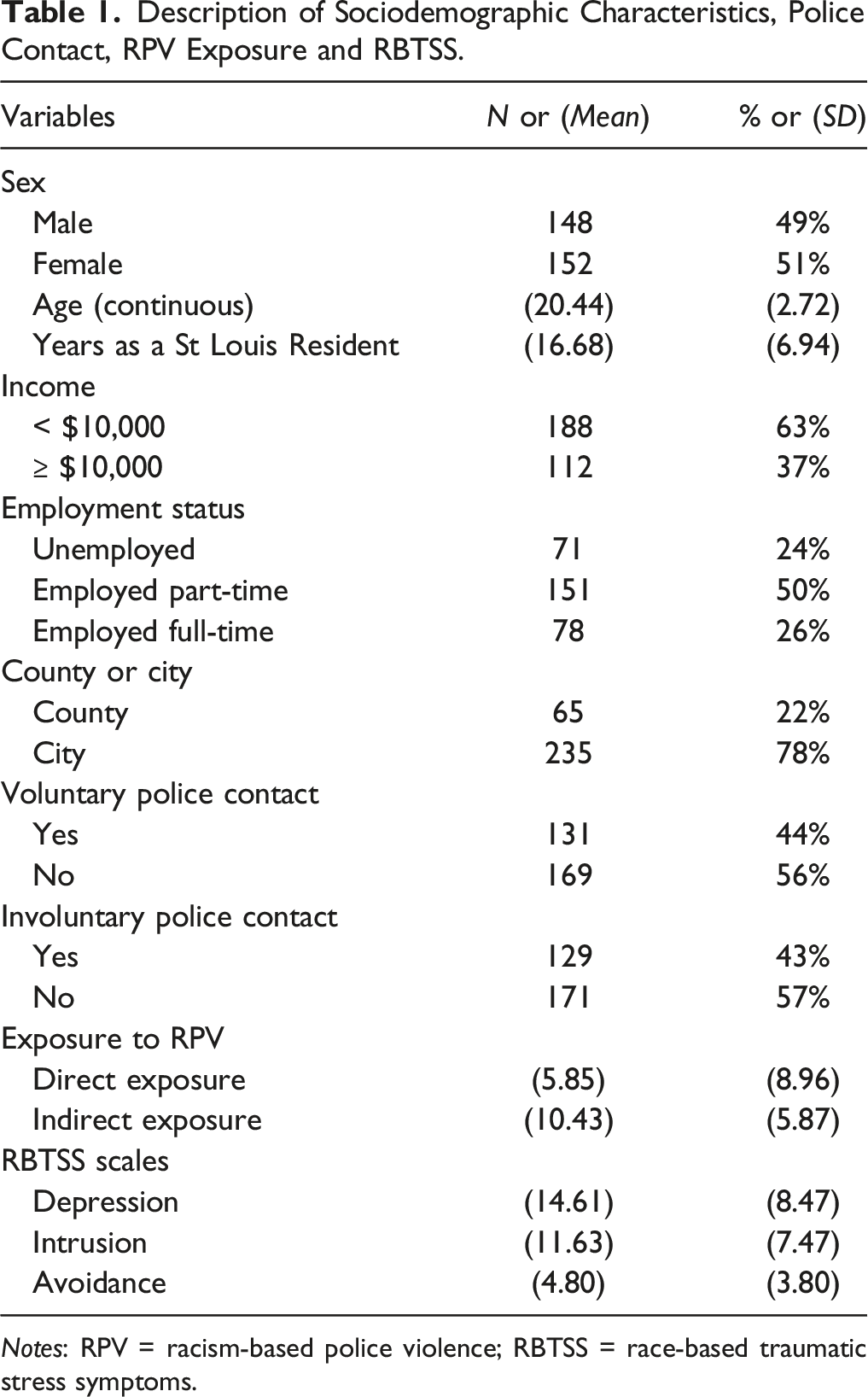
Notes: RPV = racism-based police violence; RBTSS = race-based traumatic stress symptoms.
Comparative Analysis of Clusters Across Sociodemographic Characteristics, Police Contact, and RPV Exposure.
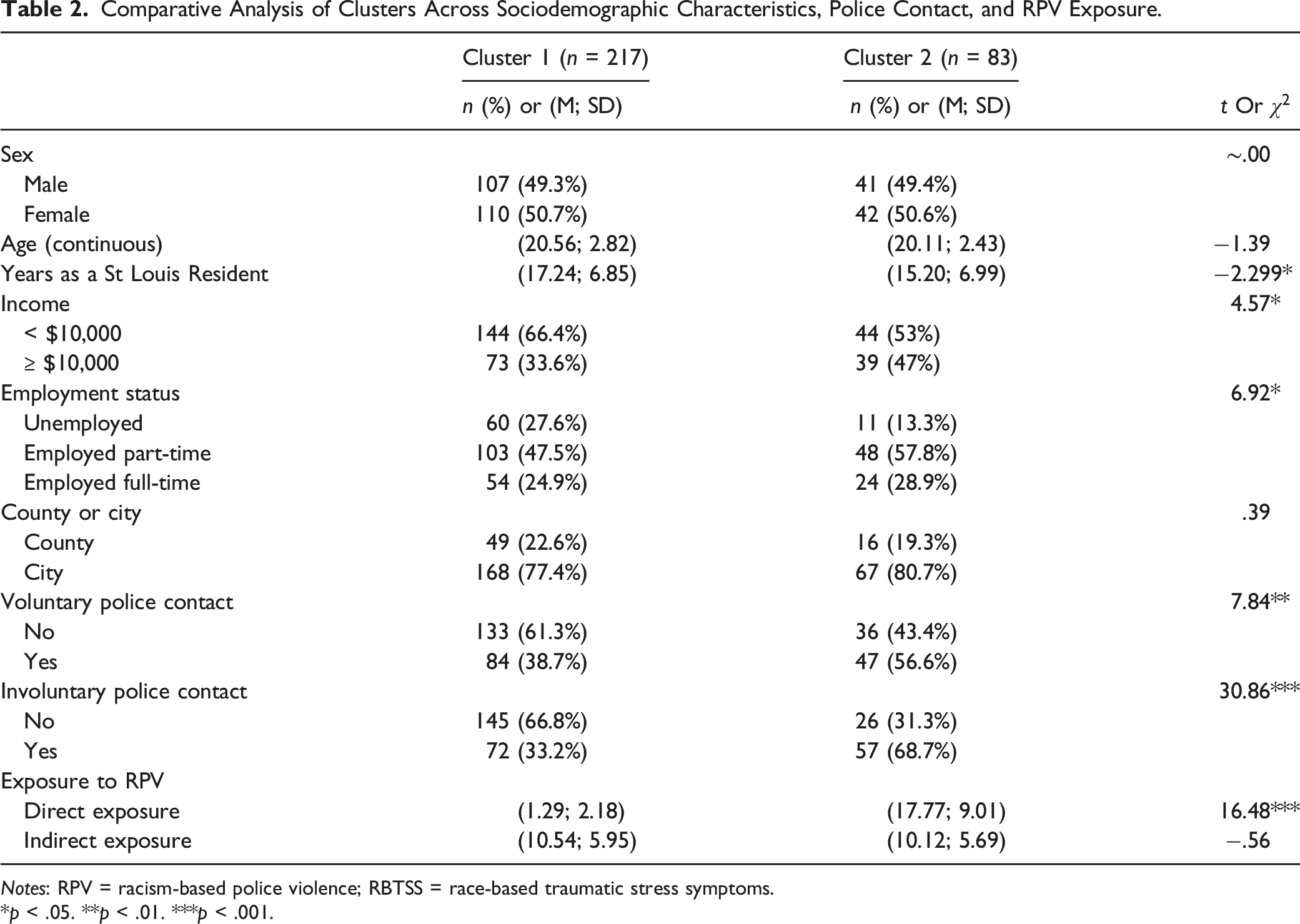
Notes: RPV = racism-based police violence; RBTSS = race-based traumatic stress symptoms.
*p < .05. **p < .01. ***p < .001.
Differences between Cluster 1 and Cluster 2 are shown in Figure 2. Cluster 1 is characterized by participants with low rates of police contacts and direct RPV exposure, whereas Cluster 2 consists of participants with higher rates of police contacts and direct RPV exposure. On average, compared to individuals in Cluster 2, individuals in Cluster 1 have spent significantly more years as a St Louis resident, have a significantly higher proportion of individuals making fewer than US$10,000, and relatedly, have a significantly higher proportion of unemployed individuals. Significant differences between clusters were not found along the variables of sex, age, county versus city residence, and indirect RPV exposure Table 3. Cluster characteristics along sociodemographic, police contact, and RPV exposure characteristics. Regression Analysis: Cluster Membership and RBTSS. Notes: RBTSS = race-based trauma stress symptom; CI = confidence interval. LL = lower limit; UL = upper limit. azero = Cluster 1; 1 = Cluster 2. *p < .05. **p < .01. ***p < .001.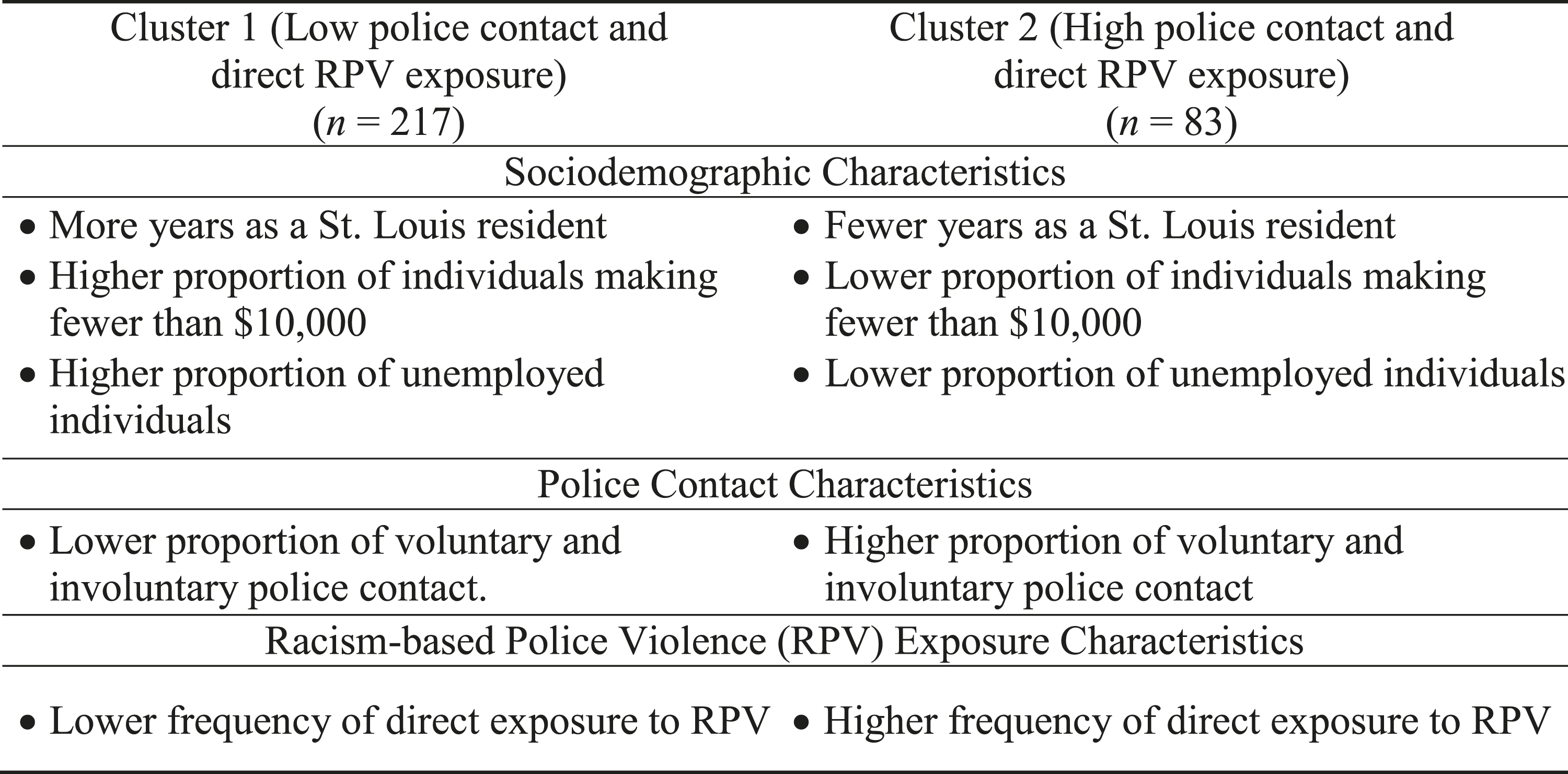
Discussion
To the authors knowledge, this is the first study to use cluster analysis to produce profiles of Black emerging adults living in St Louis, Missouri across sociodemographic variables and indicators of police contact and RPV exposure. This study stands out as a novel contribution to our understanding of the Black emerging adulthood life stage by uncovering the nuanced ways in which direct RPV exposure and police contact impact the mental health of Black emerging adults, ultimately providing valuable insights for mental health practitioners tailoring interventions for this specific demographic.
Findings from the cluster analysis revealed that despite Cluster 2 consisting of lower proportion of participants being unemployed and making fewer than US$10,000 compared to Cluster 1, participants in Cluster 2 had experienced higher frequency of direct RPV exposure and police contact than participants in Cluster 1. Previous research has shown that Black emerging adults with higher socioeconomic status are significantly less likely to experience direct exposure to police violence in comparison to those with lower socioeconomic status (DeVylder et al., 2017; Feldman et al., 2019). For example, data from a national representative sample of Black U.S. residents ages 16 and older revealed that residents with an income of less than US$20,000 had significantly higher rates of self-reported exposure to police use of force that included police shouting, cursing, threatening arrest, pushing, grabbing, and using handcuffs during a street stop than Black residents with higher incomes (Motley & Joe, 2018). Thus, findings from our cluster analysis suggest that factors beyond individual socioeconomic status, such as neighborhood characteristics (e.g., poverty level, cohesion, crime rate), may play a more pivotal role in determining the frequency of direct RPV exposure and police contact among Black emerging adults (Terrill & Reisig, 2003).
Results from the current study also revealed that participants in Cluster 2, as opposed to Cluster 1, had higher scores on all three RBTSS subscales (depression, avoidance, and intrusion) demonstrating the detrimental impact of police contacts and direct RPV exposure on trauma stress symptoms. These findings are consistent with extant literature that has documented the detrimental impact of racism (Pieterse et al., 2012; Williams et al., 2019) and police violence (Alang, 2020; Alang et al., 2023; Bor et al., 2018; DeVylder et al., 2022; Jindal et al., 2022; Oh et al., 2017; Salas-Hernandez et al., 2022) on mental health outcomes, particularly trauma-related stress symptoms. For example, results from a systematic review and meta-analysis found that data from 293 studies documented a significant association between racism-based experiences and depression, anxiety, and psychological stress for Black emerging adults (Paradies et al., 2015). Similarly, Haile et al. (2023) systematic review revealed that direct and indirect exposure to police violence was significantly associated with higher scores on the depression, anxiety, hypervigilance, and post-traumatic stress measures among Black emerging adults. As such, findings from the current study add to the existing literature by elucidating the contextual differences between two profiles of Black emerging adults in relation to their police contacts, RPV exposure, and associated RBTSS.
Although we found no significant differences in the prevalence of indirect RPV exposure by cluster profiles for the current study, previous research has shown that Black female emerging adults report significantly higher rates of indirect RPV exposure than their male counterpart (Motley, Byansi, and colleagues, 2022). Considering the prevalence of social media usage among Black emerging adults (Auxier & Anderson, 2021), more research investigating risk factors for indirect RPV exposure for this population is warranted.
The current study underscores the need for a developmental perspective in understanding the impact of police contact and RPV exposure on RBTSS during emerging adulthood, which could serve as a guide for mental health practitioners in tailoring interventions to address the specific needs of Black emerging adults. Moreover, this study acknowledges the potential variability in both the prevalence of direct RPV exposure and its association with RBTSS outcomes among Black emerging adults, underscoring the necessity for accurate measurement and assessment in understanding these relationships.
Limitations
There were several limitations to this study. First, although this study found clusters with high rates of police contact and direct RPV exposure which predicted variance in RBTSS outcomes, the study used a cross-sectional design which limits our ability to make causal inferences about the relationships between police contact, direct RPV exposure, and RBTSS. Second, we relied on participants’ self-reports, which may have been minimized due to recall biases inherent in self-reports. Third, our use of a convenience sample of Black emerging adult college students in St Louis, MO limits generalizability of findings to non-student Black emerging adults. Thus, research with a larger sample of Black emerging adults is warranted for generalizability of findings. Fourth, the direct and indirect RPV exposure scales did not assess other possible forms of RPV such as psychological violence that could be perceived as racism-based, limiting our ability assess the impact that this type of violence may have had on the mental health of our study participants. Lastly, our use of sex at-birth variable did not allow participants who may identify as LGBTQ + to self-report their gender identity which would have enabled us to examine gender identity variations among clusters.
Conclusion
Over the past few years’, the joint effects of the COVID-19 pandemic and attention brought to RPV exposure through the high-profile murders of several unarmed Black men and women have led some to identify police violence as a public health crisis (Benjamin, 2020; DeVylder et al., 2022; Matthew, 2022; Strazewski, 2020; The Lancet, 2021). To replicate and extend the findings presented in the current study, future research utilizing a longitudinal design could provide a more nuanced understanding of the long-term linkages between sociodemographic variables, police contact, RPV exposure, and RBTSS outcomes among Black emerging adults. Research examining the role of intrapersonal (e.g., coping, Black identity) and interpersonal (e.g., racial socialization, social support) factors in buffering the impact of direct RPV exposure on the mental health of Black emerging adults is warranted (Anderson et al., 2020; Anderson et al., 2021; Carver et al., 1989; Greer, 2007; Jones et al., 2021).
Findings from the current study also speak to the need for culturally tailored mental health intervention efforts to combat the traumatic effects of direct RPV exposure. Bryant-Davis et al. (2017) encourage coping interventions which include digital activism, emotional emancipations circles, and spiritually based practices that have a collectivistic component and are rooted in community. These interventions may help Black emerging adults develop a sense of empowerment and support, which is crucial in combatting trauma symptoms associated with RPV exposure (Carter, 2007; Carter & Pieterse, 2020; Matthew, 2022).
The structural roots of police violence in the U.S. are historically linked with systemic racism that has existed in the country for centuries (Hadden, 2001; Russell-Brown, 2021). Contemporary policing practices such as racial profiling (i.e., targeting individuals for suspicion of a crime based on their racial/ethnic group identity) and “stop and frisk” have been found to be associated with creating a culture of fear and distrust among Black and Brown individuals who are often found to be disproportionately affected by police violence (Bowleg et al., 2022; Gelman et al., 2007; Parker et al., 2005; Warren et al., 2006). This violence exists alongside beliefs in white supremacy and racial superiority (Alang, 2020; Alang et al., 2017; Bowleg et al., 2022), contributing to ongoing cycles of trauma and injustice. While the underlying systems of racism in our society persist, the prevalence of RPV exposure remains a significant concern, especially for Black emerging adults. (Alang, 2020; Alang, 2020; Alang et al., 2017; Alang et al., 2017; Bowleg et al., 2022; Bowleg et al., 2022).
Supplemental Material
Supplemental Material - Profiles of Black Emerging Adults Exposure to Racism-Based Police Violence and Associated Mental Health Outcomes
Supplemental Material for Profiles of Black Emerging Adults Exposure to Racism-Based Police Violence and Associated Mental Health Outcomes by Robert O. Motley, Eric Williamson, Alex L. Pieterse, and Madelyn Harris in Emerging Adulthood
Footnotes

Declaration of Conflicting Interests
The author(s) declared no potential conflicts of interest with respect to the research, authorship, and/or publication of this article.
Funding
The author(s) disclosed receipt of the following financial support for the research, authorship, and/or publication of this article: This work was supported by the National Institute on Minority Health and Health Disparities (F31MD013386).
Open Practices
The raw data, analysis code, and materials used in this study are not openly available but are available upon request to the corresponding author. The analysis was conducted with SPSS package’s standard procedures. The study does not include a preregistration plan for data collection and/or analysis.
Supplemental Material
Supplemental material for this article is available online.
Author Biographies
References
Supplementary Material
Please find the following supplemental material available below.
For Open Access articles published under a Creative Commons License, all supplemental material carries the same license as the article it is associated with.
For non-Open Access articles published, all supplemental material carries a non-exclusive license, and permission requests for re-use of supplemental material or any part of supplemental material shall be sent directly to the copyright owner as specified in the copyright notice associated with the article.
