







Abstract
The purpose of this study was to examine the moderating effects of technology use for relationship maintenance on the longitudinal associations among self-isolation during COVID-19, depressive symptoms, and financial stress. Participants were 606 (53% female; M age = 20.36, SD = .99; 57% Caucasian) emerging adults. Data were collected in May 2020 (Time 1) and again in November 2020 (Time 2). Findings revealed that increases in self-isolation during COVID-19 related positively to technology use for relationship maintenance, Time 2 depressive symptoms, and Time 2 financial stress. High use of technology for relationship maintenance buffered against the negative effects of self-isolation during COVID-19 on emerging adults’ depressive symptoms and financial stress at Time 2, whereas lower use strengthened the positive relationship. These findings suggest the importance of considering the implications of societal crises or pandemics on emerging adults’ mental health and financial stress.
The Coronavirus-19 (COVID-19) pandemic has increased stress, hindered coping strategies, diminished social support resources, and taxed close interpersonal relationships (Harris & Tarchak, 2020). Close relationships serve an important function by helping emerging adults receive social support to cope with stress (Pettit et al., 2011). Disruptions in emerging adults’ close relationships have dire consequences for their mental and financial health (Guintella et al., 2021). The resulting self-isolation from the COVID-19 pandemic might further increase emerging adults’ mental health issues, particularly depressive symptoms, and financial stress, due to mandatory stay-at-home orders which could lead to diminished working hours or layoffs (Panchal et al., 2020).
Available research confirms that voluntary and forced isolation resulting from COVID-19 has a negative impact on mental health by increasing loneliness, feelings of isolation, depression, and financial strain (Kunar & Nayar, 2020). Self-isolation might also create additional stressors due to not being able to physically interact with parents or extended family, friends, and significant others, as well as not being able to attend special events and increased unemployment, food insecurity, and/or housing insecurity. Various sources have highlighted the negative consequences of COVID-19 pandemic on financial wellness (De Beer, 2020; Morgan & Boxall, 2020). The negative impact of the COVID-19 pandemic on usual activities, routines, and livelihoods are hypothesized as accounting for increases in mental health and financial challenges resulting from self-isolation (World Health Organization, 2020). Not being able to engage in normal routines might increase stress and reduce coping strategies to deal with the negative influences of the COVID-19 pandemic (Center for Disease Control, 2021).
Utilizing mechanisms to stay connected with parents or extended family, friends, and romantic partners through information and communication technologies (e.g., Smartphone) might replace or augment physical connections. Technology use has had a profound impact on human interactions by changing the process for initiating, maintaining, and terminating close relationships (Hertlein, 2012). Interactive technology might allow emerging adults to connect with their parents and extended family, friends, and romantic partners and enhance their closeness, increase confidence, open communication, improve emotional connection, and promote interactions (Coyne et al., 2011; Johnson et al., 2008; Neustaedter & Greenberg, 2012; Valentine, 2016). In romantic relationships and other close relationships, technology use can increase intimacy, relationship quality, and relationship satisfaction (Coyne et al., 2011).
Emerging adults might not be able to engage in many of their usual activities and routines during the COVID-19 pandemic, and consequently, they might be stressed by dealing with self-isolation because they cannot control the situation, regardless of forced or voluntary self-isolation (Center for Disease Control, 2012). For those in forced isolation, they might feel helpless and not in control because of governmental regulations; similar feelings might be shared by those in voluntary self-isolation who might have a strong conviction to “flatten” the curve but ultimately not like the situation and feeling obligated to isolate, a decision that continues to make them feel helpless. The Locus of Control Theory might help to explain the negative consequences associated with isolation during the COVID-19 pandemic. According to this theory, individuals with less internal locus of control interpret circumstances beyond their control, are less confident in the future, and have less resilience during extreme circumstances, such as during global pandemics. This feeling of helplessness might manifest itself in psychological difficulties, including depression (Seligman, 1975). Furthermore, financial stress is a logical consequence associated with self-isolation and it might continue to contribute to emerging adults’ feelings that they cannot control the situation. Emerging adults might try to compensate through their communication with friends, families, and other close individuals, in an attempt to gain some degree of control again, while continuing isolation practices. Technology use for maintaining their close relationships might help diminish the uncertainty caused by the COVID-19 pandemic, leading to less depressive symptoms and financial stress.
Drawing on The Locus of Control Theory, the present research focused on whether using technology to maintain close relationships could buffer against the negative effects of self-isolation during the COVID-19 pandemic on emerging adults’ depressive symptoms and financial stress. There are gaps in the research on how technology use might facilitate relationships and diminish negative outcomes associated with self-isolation. To address this gap, the present study examined the associations among self-isolation during COVID-19, technology use for relationship maintenance, depressive symptoms, and financial stress. Another goal was to investigate the moderating effect of technology use for relationship maintenance in these associations. The following research questions were created to address this purpose: 1) Are self-isolation during COVID-19 and technology use for relationship maintenance associated with depressive symptoms and financial stress, measured six months later? 2) Does technology use for relationship maintenance moderate the associations between self-isolation during COVID-19 and depressive symptoms and financial stress, measured six months later?
Methods
Participants
There were 606 emerging adults (ages 18-29; M age = 20.36 years; SDage = 0.31; 53% female) who participated in this study. Participants self-identified as White (57%), Latinx (21%), Black/African (18%), Asian (2%), biracial (1%), and other (1%). Many emerging adults were classified as college sophomores (46%), followed by freshmen (25%), seniors (18%), and juniors (11%). Most participants (36%) attended a 4-year public college/university, 26% attended a community college, 20% attended a 4-year private college/university, 10% attended a junior college, and 8% attended a trade school. Seventy-three of the participants reported that they were full-time students and the rest indicated that they had part-time status. Their own income ranged from $3416 to $36,671 and their family’s income ranged from $19,637 to $336,000, with most of the participants from middle-class families. Approximately 60% of the participants lived with their parent(s) or family, 30% lived with roommate(s), friend(s), or romantic partner, and 10% lived alone. Seventy percent of the participants received financial assistance, including student loans, scholarships, and/or work-study programs. Ninety-seven percent of emerging adults reported that they were attending classes remotely during May 2020 and 91% were attending classes remotely during November 2020.
Procedures
Emerging adults were recruited via social media websites during May 2020 (Time 1). A recruitment letter was posted on social media websites that specifically targeted college students (e.g., university social media websites). If emerging adults were interested in the study, they clicked on the link for the study. The website described the purpose of the study in more detail, how they could participate, the eligibility criteria (i.e., current part-time or full-time college student, be between 18 and 29 years old), and what they would be asked to do if they were to participate in the study. If they were interested, participants went to the next page and were asked to complete eligibility questions: “Are you a current part-time or full-time college student?” and “Are you between 18 and 29 years of age?” If they answered “no” to either of these questions, they were taken to a “thank you” page and told that they did not qualify for the study. If they answered yes to both questions, they were taken to the informed consent document. They could select “yes” or “no” indicating whether they agreed to participate in the study or not. If they selected “no”, they were taken to a “thank you” page. If they selected “yes”, they were taken to the background information questionnaire (i.e., age, gender, ethnicity, class standing, types of school attended, full-time or part-time status, their income, family income, living situation, financial aid status). There were no potential participants who declined to participate. Next, emerging adults completed measures in the following order: Self-isolation during COVID-19, technology use for relationship maintenance, depressive symptoms, and financial stress. Approximately 713 emerging adults participated in the study at Time 1. After they completed the measures, emerging adults were invited to participate in the study again during November 2020 (Time 2). If they were interested, they recorded their first name, contact phone number, and email address. They were also informed that providing their contact information now did not mean they had to participate in the study later. Of the participants from Time 1, 606 recorded their contact information to participate in the study again at Time 2.
At Time 2, 606 of the original participants were sent a reminder email, which indicated their participation on the study in May 2020 and asked them to participate in the study again. The link to the measures was provided in the reminder email. Emails were sent out and 23 were undeliverable. Research personnel called these participants. Three participants never responded to calls. Twenty participants were contacted and provided updated email information, and then they were sent the reminder email again. During Time 2, emerging adults completed one question on their school’s delivery modality during Fall 2020 and measures on depressive symptoms and financial stress. At Time 2, six emerging adults declined to participate, 63 never responded to the request, and 534 completed all measures.
Measures
Self-Isolation During COVID-19
To measure how often emerging adults engaged in self-isolation practices during COVID-19, they answered three items, which were rated on a scale of 1 (never) to 5 (all of the time). The three items included: “I avoid going to stores or restaurants”, “I avoid interacting with other people, except for the people in my household”, and “I avoid special events such as birthdays and graduations”. These items were averaged to form a final score for this questionnaire, with higher scores indicating greater self-isolation during COVID-19. This questionnaire was administered at Time 1 only. McDonald’s ω was .88.
Technology use for Relationship Maintenance
The Technology and Intimate Relationship Assessment was used to measure emerging adults’ use of technology for maintaining their current interpersonal relationships, including parent-child relationships, friendships, and romantic relationships.23 This questionnaire does not measure the quality of the interaction or relationship but instead the amount of technology use for maintaining relationships. It includes 22-items and two subscales: Intimacy-Enhancing (11-items) and Intimacy-Reducing (11-items). Only the Intimacy-Enhancing Subscale was used for this study because findings from Campbell and Murray (2015) indicate that the items demonstrate better correlations with this subscale than do the items for the Intimacy-Reducing Subscale. The original items included: “My use of technology helps me feel more emotionally connected to my partner” and “Technology helps my partner and me make plans for sharing time together”. These items were modified to not only include “my partner” but also “parent or extended family” and “friends”. Therefore, a revised sample item included: “My use of technology helps me feel more emotionally connected to my partner, parent(s) or extended family, and friends”. Technology was defined as using a cell phone or smartphone, Zoom or other video-conferencing software (e.g., Skype, FaceTime), social media, email, blogs, and instant messaging programs. This questionnaire was administered at Time 1 only. McDonald’s ω for the Intimacy-Enhancing Subscale was .80.
Depressive Symptoms
The Center for Epidemiological Studies Depression Scale was used to assess emerging adults’ depressive symptoms (Radloff, 1977). There were 20 items on this questionnaire, and each one was assessed on a scale of 0 (rarely or none of the time) to 3 (most or all of the time). The sample items included: I was bothered by things that usually don’t bother me and I did not feel like eating, my appetite was poor. All items were averaged to form final scores on depressive symptoms at Time 1 and Time 2. McDonald’s ωs were .87 for Time 1 and .82 for Time 2.
Financial Stress
The Financial Stress Scale – College Version was used to assess emerging adults’ financial stress (Northern et al., 2010). The 22 items were rated on a scale of 1 (never) to 4 (all the time). The instructions indicated that they should consider their own financial stress as well as their families’ financial stress if they lived at home. Sample items included: “Being behind on payments”, “Having a low credit score”, “Being in a job where work isn’t steady/predictable”, and “Living paycheck to paycheck”. The items were averaged to form final scores on financial stress at Time 1 and Time 2. McDonald’s ωs were .87 for Time 1 and Time 2 for .88.
Analytic Plan
The measurement model was examined using Confirmatory Factor Analysis in R, using lavaan package. The model fit was adequate, x2 = 976.09, df = 869, p < .05, CFI = .99, TLI = .99, RMSEA = .04, SRMR = .04. All factor loadings were significant, ps < .001. Items served as indicators for the latent variables in the structural regression model, which was used to investigate the study’s research questions. Paths were specified from Time 1 self-isolation during COVID-19 to Time 1 technology use for relationship maintenance, Time 2 depressive symptoms, and Time 2 financial stress. Paths were also added from Time 1 technology use for relationship maintenance to Time 2 depressive symptoms and Time 2 financial stress. Gender, Time 1 depressive symptoms, and Time 1 financial stress were controlled in the analysis. Interactions were also added between Time 1 self-isolation during COVID-19 and Time 1 technology use for relationship maintenance. To account for potential gender effects, gender was allowed to predict all variables examined in this study. Time 1 depressive symptom was specified to predict Time 2 depressive symptoms, and Time 1 financial stress was specified to predict Time 2 financial stress. Significant interactions were examined further with the Interaction Program (Soper, 2019). This program provides the unstandardized simple regression slopes, the significance of these slopes, and displays graphical illustrations at +1 SD, the mean, and −1 SD.
Outliers
Boxplots were performed for all the study’s variables. There were no outliers identified at the lower or upper end for either of the variables.
Missing Data
To handle missing data, multiple imputation, specifically joint multivariate normal imputation for Time 2 depressive symptoms and Time 2 financial strain was performed in R with the jomo package (Quartagno et al., 2019; Rezvan et al., 2015; Sterne et al., 2009). This technique allows for the creation of multiple copies of the dataset in each of the missing values and are replaced with imputed values from their predictive distribution given the observed data. Furthermore, the multiple copies of the dataset are analyzed using statistical models and assumes the data are missing at random. The joint modelling approach assumes a multivariate normal distribution and it has been applied to variation simulations using longitudinal data and has demonstrated adequate estimation of regression parameters and less biased estimations (Goldstein et al., 2009; Schafer, 1997; Schafer & Yucel, 2002).
Results
Correlation Between all Variables.
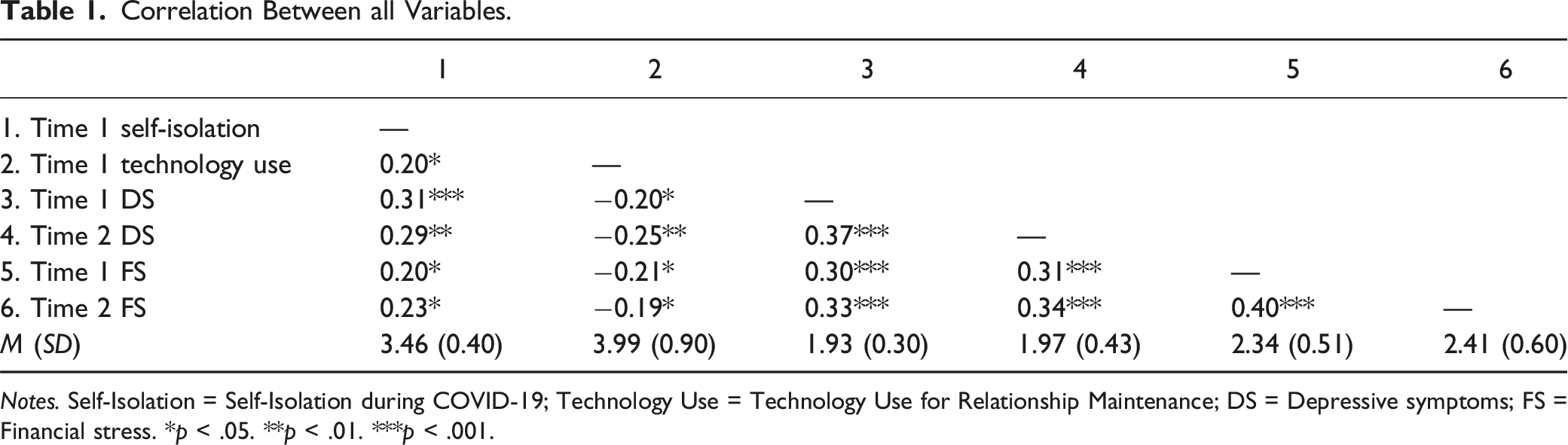
Notes. Self-Isolation = Self-Isolation during COVID-19; Technology Use = Technology Use for Relationship Maintenance; DS = Depressive symptoms; FS = Financial stress. *p < .05. **p < .01. ***p < .001.
Structural Regression Model
The results revealed that the structural model fit the data adequately, x2 = 973.88, df = 811, p < .001, CFI = .99, TLI = .98, RMSEA = .04, SRMR = .03 (see Figure 1).
1
Gender was unrelated to all variables examined in the study. Time 1 depressive symptoms was related positively to Time 2 depressive symptoms, as were Time 1 and Time 2 financial stress. Furthermore, Time 1 self-isolation was related positively to Time 1 technology use for relationship maintenance, Time 2 depressive symptoms, and Time 2 financial stress. Time 1 technology use for relationship maintenance was associated negatively with Time 2 depressive symptoms, and Time 2 financial stress. Structural Regression Model for Predicting Time 2 Depressive Symptoms and Time 2 Financial Stress from Time 1 Self-Isolation During COVID-19 and Time 1 Technology Use for Relationship Maintenance. Some paths were not displayed to facilitate reading, specifically the interaction term. The path from Time 1 Depressive Symptoms to Time 2 Depressive Symptoms was significant, β = 0.32, p < .001, as was the path for Time 1 Financial Stress to Time 2 Financial Stress, β = 0.30, p < .001. The interaction for Time 1 Self-Isolation During COVID-19 and Time 1 Technology Use for Relationship Maintenance were significant for Time 2 Depressive Symptoms (β = −0.11, p < .05) and Time 2 Financial Stress (β = −0.07, p < .05). *p < .05. **p < .01. ***p < .001.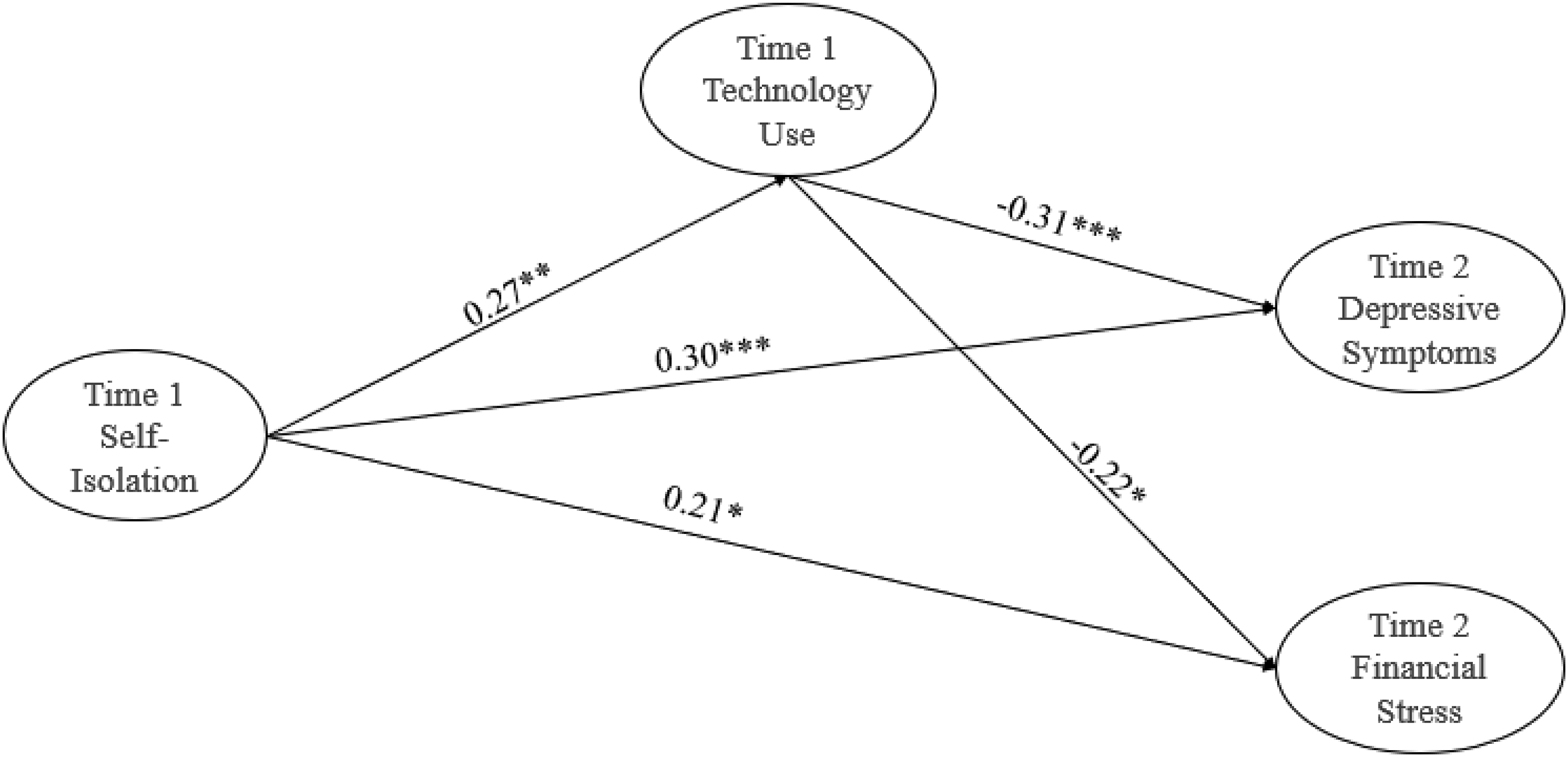
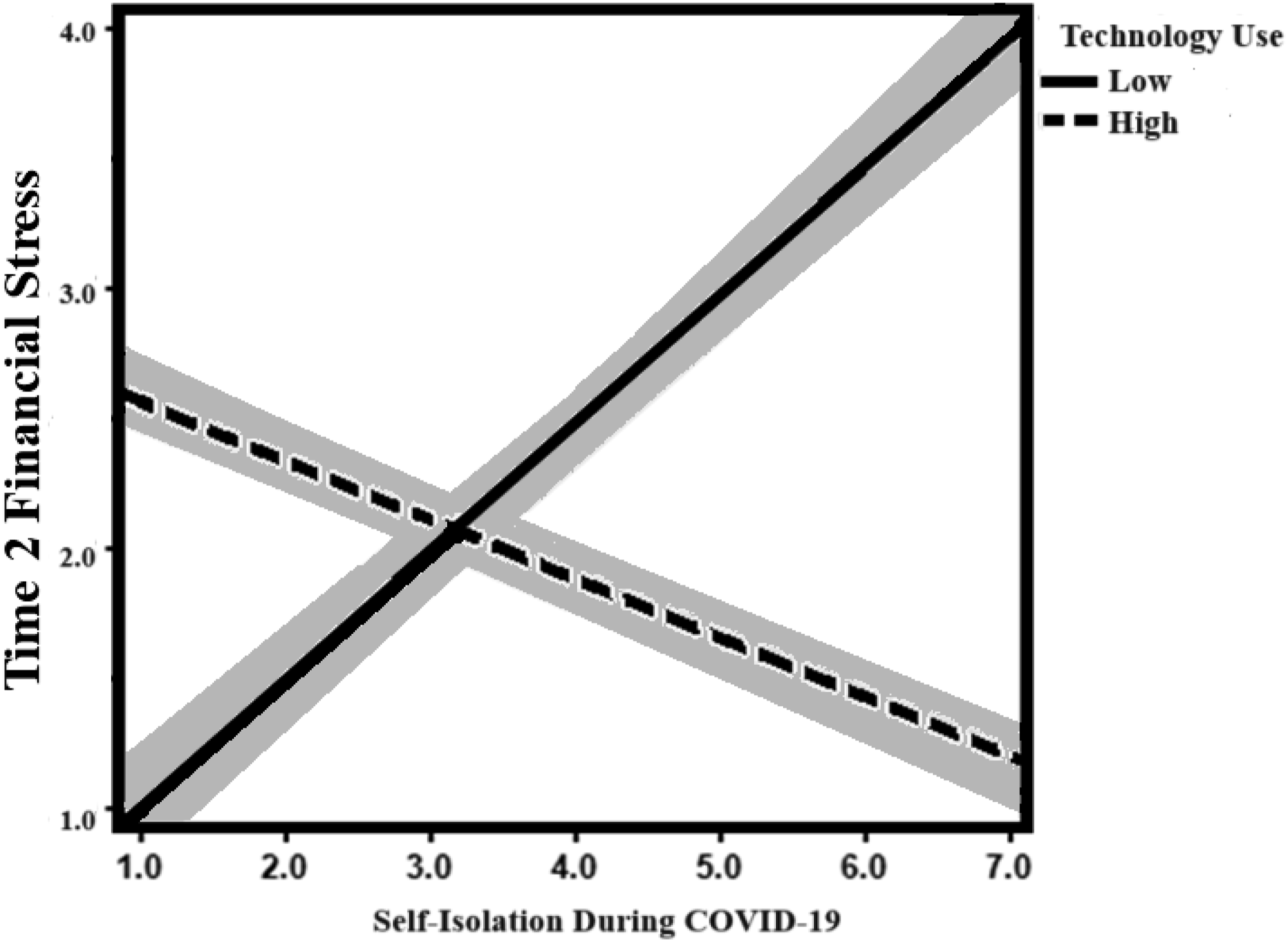
Significant two-way interactions were found between Time 1 self-isolation during COVID-19 and Time 1 technology use for relationship maintenance when predicting Time 2 depressive symptoms and financial stress (see Figure 2). Examining the interaction further revealed that self-isolation at Time 1 was associated with less depression and financial stress at Time 2 for emerging adults who engaged in more technology use for relationship maintenance (depressive symptoms: B = −0.08, SE = 0.04, p = .05; financial stress: B = −0.05, SE = 0.03, p = .05). On the other hand, self-isolation at Time 1 was associated with more depression and financial stress at Time 2 for emerging adults who engaged in less technology use for relationship maintenance (depressive symptoms: B = 0.10, SE = 0.06, p = .05; financial stress: B = 0.07, SE = 0.06, p = .05; see Figure 3). The simple slopes for average levels were not significant (depressive symptoms: B = −0.01, SE = 0.01, p = n.s.; financial stress: B = −0.02, SE = 0.01, p = n.s.). Graphical Depiction of the Interaction Between Time 1 Self-Isolation During COVID-19 and Time 1 Technology Use for Relationship Maintenance. Technology Use corresponds to Technology Use for Relationship Maintenance Confidence intervals are displayed as the grey area coming from the simple slopes. Low = - 1 Standard Deviation; High = +1 Standard Deviation. Graphical Depiction of the Interaction Between Time 1 Self-Isolation During COVID-19 and Time 1 Technology Use for Relationship Maintenance. Technology Use corresponds to Technology Use for Relationship Maintenance Low = - 1 Standard Deviation; High = +1 Standard Deviation.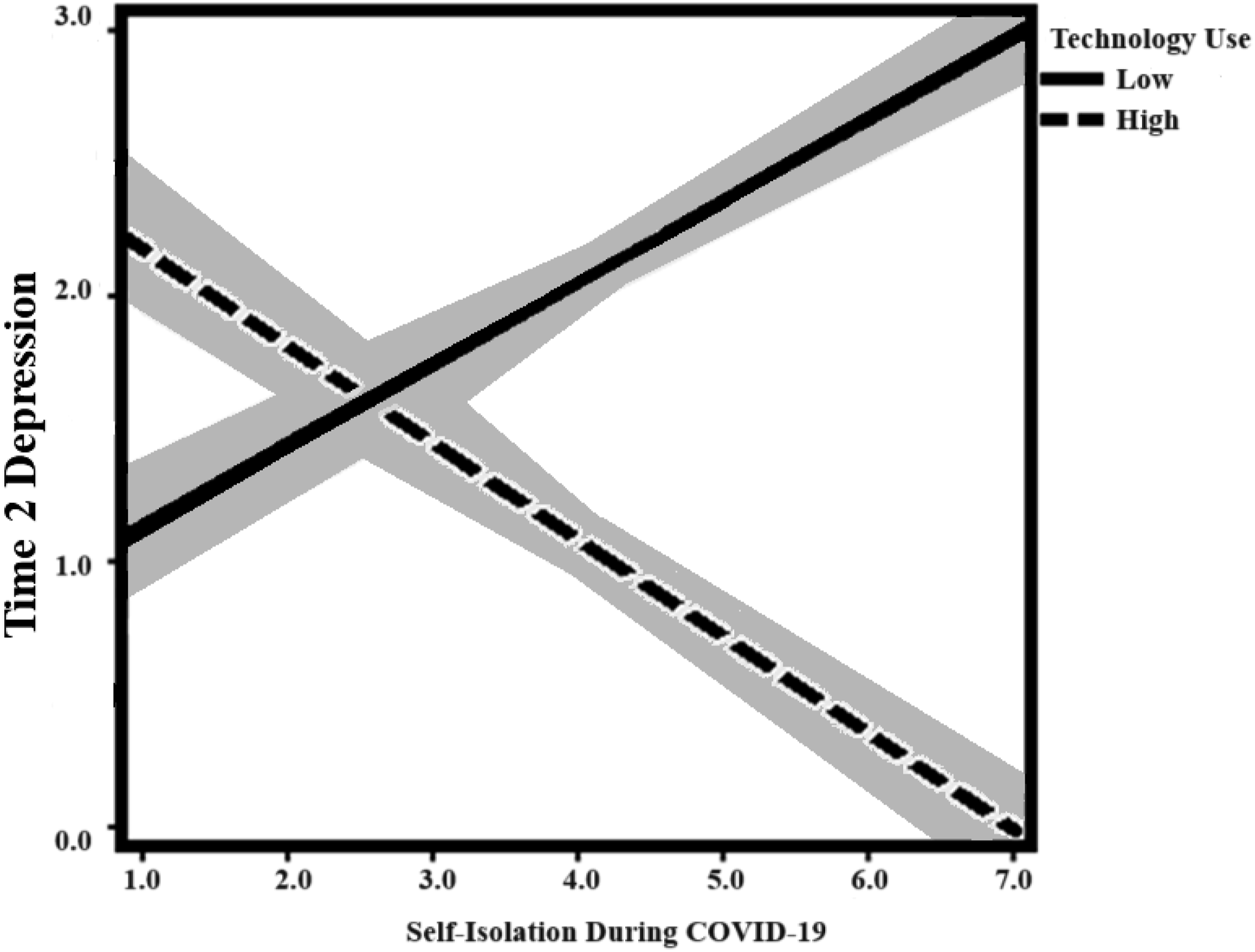
Discussion
The purpose of the present study was to examine the relationships among self-isolation during COVID-19, technology use for relationship maintenance, Time 2 depressive symptoms, and Time 2 financial stress, as well as the moderating effect of technology use for relationship maintenance in these associations, while controlling for gender, Time 1 depressive symptoms, and Time 1 financial stress. Results from the present study indicated that self-isolation during COVID-19 was related positively to Time 1 technology use for relationship maintenance, Time 2 depressive symptoms, and Time 2 financial stress. Self-isolation diminishes usual activities and routines during the COVID-19 pandemic, and many emerging adults might feel helpless and uncertain. Emerging adults might feel as if the situation is beyond their control and experience helplessness that manifests itself in depressive symptoms and increases stress, particularly financial stress (Seligman, 1975). Therefore, finding a relationship between self-isolation practices and depressive symptoms and financial stress in the present study might further highlight emerging adults’ feelings of helplessness and contribute less control over their routines and activities during the COVID-19 pandemic.
Finding also revealed that technology use for relationship maintenance weakened the associations between self-isolation during COVID-19 and Time 2 depressive symptoms and Time 2 financial stress, with lower levels of technology use for relationship maintenance increasing the positive relationship. Given their greater helplessness and uncertainty and less sense of control over their lives, emerging adults might turn to information and communication technologies to compensate for these feelings. Communicating with people close to them might allow emerging adults to gain some sense of control again, while continuing to practice isolation. Emerging adults might experience fewer depressive symptoms and financial stress when they utilize technology to maintain their close relationships as such use diminishes uncertainties caused by isolation during the COVID-19 pandemic. However, emerging adults who do not utilize such technologies might not regain a sense of control and thereby experience negative outcomes. Available research indicates that greater locus of control positively diminishes mental health issues and psychological strain (Reknes et al., 2019). The results from the present study extend the Locus of Control Theory to understanding the connections among self-isolation during COVID-19, technology use for relationship maintenance, and depressive symptoms and financial stress.
Increases in external stressors experienced by emerging adults during the COVID-19 pandemic might disrupt their ability to cope effectively (Harris & Tarchak, 2020; Holt-Lunstad et al., 2010; Pietromonaco & Collins, 2017). The strain of the pandemic, along with few coping resources, furloughs, and less working hours, might increase depressive symptoms and financial stress (Beach et al., 1998; Karney et al., 2005). Self-isolation has the potential to protect emerging adults by allowing them to avoid infection, but more attention should be given to how such isolation, combined with few social support systems, might increase mental health issues and stress. Utilizing technology for relationship maintenance might help emerging adults stay connected with significant others in their life. Support was found for this proposal as findings from the present research indicated that greater technology use for relationship maintenance might potentially buffer against the negative effects of self-isolation (Research Question 1). Therefore, an important conclusion from this study indicates that the effects of the external stressors triggered by the COVID-19 pandemic on emerging adults’ depressive symptoms and financial stress might be reduced when they use technology for maintaining their close relationships with their parents or extended family, friends, and romantic partners.
Gender was unrelated to all variables examined in this study. There is a lack of research on gender differences in self-isolation during COVID-19 to determine if such a finding is consistent with the literature. There is no research on emerging adults to draw conclusions. One poll found that adult women and young people were more likely to self-isolate than adult men and older people (Naidu-Ghelani, 2020). Although the findings were for adults, the range of ages were beyond the ones examined in this study (ages 18–29). Therefore, the results might not align because emerging adults are slightly younger, and they might self-isolate at similar levels regardless of gender. In addition, the pandemic could trigger similar technology-related behaviors to maintain close relationships among men and women.
There are some limitations of the present research that should be addressed in future studies. The first is that the study relied on self-reports which might be subject to bias. Follow-up research might consider examining perceptions of technology use for relationship maintenance among parents or extended family, friends, and romantic partners to determine consensus and differences among reporters. In addition, the technology use for relationship maintenance questionnaire did not assess the quality of the interactions, and such a focus might be important for the understanding the relationships examined in this study. Second, it might be important to understand the specific types of technologies and behaviors emerging adults engaged in with their parents or extended family, friends, and romantic partners. Some of these interactions might have included social support and other factors that might have helped with coping. Third, the questionnaire for self-isolation during COVID-19 might need further development and updated to ask specifically about the stressors that might have increased during the pandemic. Furthermore, we did not assess whether isolation was mandatory or voluntary, and such knowledge might provide a better understanding of self-isolation practices. Fourth, it is difficult to determine the ordering of the relationships in the present research; follow-up research with longer term designs and those that measure the variables at multiple time points are important for understanding the temporal ordering of the relationships between the variables.
Footnotes
Declaration of Conflicting Interests
The author(s) declared no potential conflicts of interest with respect to the research, authorship, and/or publication of this article.
Funding
The author(s) received no financial support for the research, authorship, and/or publication of this article.
Open Research Statement
The analysis code and materials used in this manuscript are not openly available but can be requested from the corresponding author. The raw data contained in this manuscript are not openly available due to privacy restrictions set forth by the institutional ethics board, but can be obtained from the corresponding author following the completion of a privacy and fair use agreement. No aspects of the study were pre-registered.
