







Abstract
Flourishing has emerged as an important concept in human thriving. Yet, limited research has examined flourishing among Black emerging adults. Ethnic and racial identity (ERI) and religiosity are critical cultural strengths that promote positive outcomes for Black emerging adults. However, their unique and concurrent contributions to flourishing remain understudied. Data from 591 African American, Black Caribbean, and Continental African Christian undergraduates in the 2020-2021 Healthy Minds Study tested hypothesized links between one domain of ERI (i.e., centrality), religiosity, and flourishing. We probed for within-group differences. Linear regression results revealed that higher levels of ERI centrality and frequency of religious social participation were positively associated with flourishing for the full sample. Ethnicity did not moderate the ERI centrality-flourishing link. Stratified model results suggest that these relationships were only significant for African Americans. Our findings underscore the importance of studying positive outcomes in Black emerging adults and probing for within-group heterogeneity.
Flourishing is often studied within the emerging adulthood and positive psychology literatures (de la Fuente et al., 2020; Nelson, 2021; Nelson & Padilla-Walker, 2013). However, the role of flourishing for Black emerging adults remains understudied (Grier-Reed et al., 2023; Jackson-Nevels et al., 2024; Mushonga, 2021). Ethnic and racial identity (ERI) is known to be associated with positive outcomes for Black college aged emerging adults. However, research in regard to ERI’s component of centrality reveals mixed findings (e.g., Chavous et al., 2018; Thomas Tobin et al., 2022). Concurrently, most Black individuals in the United States identify as Christian and rank their faith as being important (Pew Research Center, 2021). For those who identify as Christian, ethnic and racial group membership and religiosity in tandem may inform how they navigate college life and often are connected to positive outcomes (Donahoo & Caffey, 2010; Nance, 2009; Strayhorn, 2011). This may be partially due to religious life occurring within predominantly Black religious settings (Hall & Park, 2024; Marks & Chaney, 2006). ERI and religiosity often play important roles for Black college-attending emerging adults’ psychological adjustment. Yet, most studies focus on African American emerging adult experiences, with less attention paid to Black undergraduates from other ethnic groups (Sanchez & Gilbert, 2016). Over the last two decades, the percentage of Black undergraduates from other countries has increased. Findings from a national study showed that 27% of Black undergraduates attending selective colleges and universities in the United States are of immigrant origin (Massey et al., 2007). More recently, according to the Open Doors Report on International Education Exchange (Institute of International Education, 2024), 21,083 undergraduates enrolled at four-year postsecondary institutions in the United States were from Africa.
Social science research has widely documented the race-related institutional and systemic obstacles (and the extant protective factors) experienced by individuals of African descent, with far less emphasis on using strengths-based approaches to identify and understand the factors that contribute to positive outcomes (Sellers et al., 1998; Sellers & Shelton, 2003; Sellers et al., 2003; Perry et al., 2016). With this in mind, we explore the connections between ERI centrality, religious involvement, and flourishing for Black emerging adults from three ethnic groups.
Theoretical Frameworks
The following theoretical perspectives underscore this study’s focus on how ERI and religiosity may contribute to flourishing outcomes among Black emerging adults. First, our study is informed by positive psychology theory from an Africentric perspective. While aligned with other positive psychology perspectives (e.g., Seligman et al., 2005) that emphasize the importance of investigating positive outcomes, protective factors, assets, resources, and strengths, Africentric positive psychology (e.g., Caldwell-Colbert et al., 2009) posits that racial and cultural identity and religion and spirituality are key features contributing to African Americans’ resilience and strength. Similarly, the perspective articulated by Mattis and colleagues (2016) asserts that, although the positive psychology field uses a strengths-based lens to examine the factors that promote positive outcomes, less attention has focused on the Black experience. They advocate for positive psychology perspectives to be informed by the cultural and sociopolitical factors, dynamics, and systems present within the environments that Black individuals navigate. This perspective is critical, given that “research on the lives of African Americans is almost irrevocably linked to concepts of distress and ‘risk’” (p. 85). Our study responds by examining the role of religion, a long-standing and multifaceted cultural strength with cognitive and contextual function, used by Black individuals to construct meaning of their experiences within the United States. Second, our study is informed by culturally relevant developmental theory which has identified ERI to be an important facet of development that provides a protective and promotional function for Black youth’s positive outcomes (Neblett et al., 2012). Although well-established in the developmental literature (e.g., Rivas-Drake et al., 2014), limited positive psychology research has examined the role of ERI in promoting positive outcomes. Finally, our study is informed by the Phenomenological Variant of Ecological System Theory (Spencer, 2006; Velez & Spencer, 2018), which emphasizes the importance of understanding developmental outcomes at different stages of the life course (e.g., emerging adulthood) as they are influenced by dimensions of human diversity including race, ethnicity, and immigration. Thus, given that Black individuals daily live within contexts that are directly and indirectly influenced by systemic and institutional racism (Pew Research Center, 2022a), understanding how cultural strengths (e.g., ethnic and racial identity, religiosity) function to promote flourishing across an ethnically diverse sample of Black college-attending emerging adults is critical.
What is Flourishing?
Positive psychology describes the psychological study of factors and mechanisms that promote positive outcomes (Seligman & Csikszentmihalyi, 2000; Strümpfer, 2005). Gable and Haidt (2005) observed that the catalyst for positive psychology originated from scholarly responses to an overemphasis in psychology on mental illness and disorders. Resultantly, positive psychology approaches tend to use strengths-based perspectives that emphasize the presence of positive factors and subsequent contributions to positive outcomes. Examples of positive psychology constructs include self-esteem, life satisfaction, happiness, optimism, and well-being.
First conceptualized by Keyes (2002), the construct of flourishing concerns the extent to which individuals perceive that their lives are going well and that they can thrive (Ryff & Singer, 2003). It encompasses hedonic well-being (subjective feelings about life) and eudaimonic well-being (functioning in life) (de la Fuente et al., 2020; Keyes, 2002). These components can be further broken down into purpose and meaning in life, competence, self-esteem, optimism, engagement, and connections with others (Diener et al., 2010). Although flourishing includes multiple positive dimensions, de la Fuente and colleagues (2020) caution against using flourishing as another way to describe related concepts like optimism or self-esteem.
Although the flourishing literature has continued to grow over the last two decades, most studies examine flourishing within youth and adult populations. However, not much is known regarding flourishing during emerging adulthood (Chen et al., 2019; de la Fuente et al., 2023). Results from these studies suggest that individual and contextual factors play significant roles in flourishing outcomes. For example, emerging adults who reported having high life satisfaction, displayed good problem-solving skills, and took responsibility for their actions tended to exhibit higher levels of flourishing (Palmer et al., 2023). Having supportive relationships with family members, friends, and romantic partners also appear to promote flourishing (Padilla-Walker et al., 2017). In an Australian sample, Sofija and colleagues (2021) found that flourishing emerging adults tended to be university students, were older in age, and in a romantic relationship. Participants also reported they had access to more social resources. Similarly, emerging adults who have a mentor for their career path tend to report higher levels of flourishing (Boeder et al., 2022). First year undergraduates with high levels of civic, community, and volunteer engagement tend to report higher levels of flourishing (Low, 2011). One longitudinal study found that flourishing remained stable for Spanish university students and suggested that the societal practice of remaining in the family home during emerging adulthood may have contributed to this outcome (de la Fuente et al., 2023). Follow-up results from an 8-year longitudinal study demonstrated that individuals experiencing daily discrimination had 7% lower odds of flourishing, even after researchers controlled for demographic factors (Palmer et al., 2023).
When studies on flourishing are conducted using emerging adult samples, they tend to focus on college students (Palmer et al., 2023). This scholarship tends to reflect the experiences of white emerging adults in North America, with very few studies on more diverse samples as well as samples situated in other parts of the world (Padilla-Walker & Nelson, 2017). To date, very few studies have explored indicators of flourishing outcomes in Black populations. Keyes (2009) observed that Black Americans tend to have higher levels of flourishing than European American counterparts. More recently, results from Oh’s (2023) study, which used data from the Healthy Minds Study (2020–2021), suggested that Black undergraduates had greater odds of flourishing compared to Multiracial and Asian American undergraduates as well as LGBTQ counterparts across ethnic groups. Following this line of research, more work is needed to further examine what demographic and individual characteristics contribute to flourishing for Black emerging adults.
Ethnic and Racial Identity
Ethnic and racial identity is a psychological and psychosocial construct related to one’s race and ethnicity (Rivas-Drake et al., 2014; Umaña-Taylor et al., 2014). While race and ethnicity represent distinct and unique social constructs (Cokley, 2007), consistent with prior literature, we use the term ethnic and racial identity (ERI) to acknowledge the overlapping and interrelated nature of these concepts among Black participants in the United States (Rivas-Drake et al., 2014). As a multidimensional concept, ERI represents the degree to which an individual has explored and achieved clarity about their group (e.g., exploration and resolution), identification (or lack of) with the group, thoughts and feelings about the group (e.g., awareness, private regard, affirmation), connection to the group (e.g., belonging), other’s perceptions (e.g., public regard), and the extent to which one views race and ethnicity as central to their overall sense of identity (e.g., centrality).
Previous research indicates that dimensions of ERI (e.g., private regard, centrality) may differentially relate to health and flourishing (Lee & Ahn, 2013; Williams et al., 2020). While substantially more is known about other ERI dimensions (e.g., affirmation and pride, achievement; Rivas-Drake et al., 2014; Umana-Taylor et al., 2014), less is known about ERI centrality, specifically. For Black emerging adults, ERI centrality may function as a crucial factor in shaping their experiences and attitudes. Research has shown that those with a high level of ERI centrality tend to have a strong attachment to their ethnic and racial group and view their ERI identity as a core component of their self-definition (Sellers et al., 1997). This heightened ethnic and racial awareness can lead to greater involvement in their communities, which in turn can provide support and a sense of belonging during the transitional phase of emerging adulthood (Sellers et al., 1997).
Empirical research on this ERI dimension is quite limited. Most studies have examined ERI centrality in relation to perceptions of discrimination (e.g., Seaton et al., 2009, 2011) or as a moderator (Wantchekon et al., 2021). One study revealed that ERI centrality predicted poorer physical health (measured as elevated hypertension) in Black young adults compared to Black older adults (Thomas Tobin et al., 2022). In other research, centrality was found to be more predictive of negative mental health outcomes (Perry et al., 2016; Sellers et al., 2003; Sellers & Shelton, 2003). Other studies have shown ERI centrality to moderate one’s feelings toward Black people and self-esteem while experiencing racial discrimination (Sellers, Chavous, & Cooke, 1998). The same study found ERI centrality was significantly and positively related to academic performance measured through GPA. At the same time, ERI centrality has been associated with increased academic motivation and achievement among Black college students (Chavous et al., 2018). Embracing their ethnic and racial identity can empower Black emerging adults to challenge stereotypes and expectations, leading to improved academic outcomes. Further, ERI centrality may play a vital role in the development of a positive self-concept and psychological well-being for Black emerging adults (Smith & Silva, 2011).
Essentially, mixed findings based on the ERI dimension or component (e.g., pride vs. centrality) examined, and differences by developmental phase (e.g., young adulthood vs. older adulthood), warrant further exploration of the function of different ERI domains at different stages of the life span. In the current study, we focus on the function of ERI centrality specifically. Since much of the prior literature has examined the protective role of ERI centrality, the current study seeks to advance our understanding of the promotional role, mainly by examining the relationship between ERI centrality and flourishing among Black emerging adults.
Religious Involvement
During emerging adulthood, service attendance and other forms of organizational involvement tend to decline (Vaidyanathan, 2011). That said, Black emerging adults often remain religiously affiliated (Denton & Culver, 2015). For college-attending emerging adults, changes in organizational religious involvement may be due to several reasons. First, many college-attending emerging adults move away from home, where religious service attendance may have been an activity done with or supported by family members (Leath et al., 2022). This transition to campus life may provide space for Black emerging adults to choose whether/how they want to remain active in their faith (Cooper & Mitra, 2018; McGuire, 2018). Second, although they would like to be religiously active, they may discover that they encounter challenges in finding a religious community that fits their specific beliefs and practices. This lack of fit may also be influenced by cultural group membership. For example, Black, Indigenous, and other People of Color (BIPOC) Christian undergraduates desire faith spaces where they might experience being “known for their full ethnoracial and Christian selves” (Kim & Murdock, 2023, p. 970). Third, traditional forms of organizational religiosity may be substituted for or complemented by involvement in faith-based groups on campus (McGuire et al., 2020; Pinto, 2022; Pope & Moore, 2004). Some also may turn to non-organizational religious practices (e.g., prayer or watching online services) (Riggins et al., 2008). More work should delineate the factors underscoring shifts in religious participation during this developmental stage.
Subjective religiosity typically concerns individuals’ perceptions of how important religion is in their lives (Chatters et al., 2008; Taylor et al., 1999). Some scholars expand the definition of subjective religiosity to include individual perceptions on the importance of parents taking their offspring to service, the importance of prayer during stressful events, and the importance of religion during childhood (Hudson et al., 2015). Taylor and Chatters (2010) observed that subjective religiosity highlights the extent to which religion plays a “central, purposeful, and consequential” role in life (p. 282). Within the literature on the role of religion for Black Americans, studies that explore the contributions of subjective religiosity tend to reflect the experiences of adults and older adults (Taylor et al., 2007b, 2011). Demographic characteristics may play a role in subjective religiosity. African American women tend to have higher levels of subjective religiosity than male counterparts (Taylor et al., 1999). Older African Americans with higher SES groups tended to have lower levels of subjective religiosity than counterparts in lower SES groups (Taylor et al., 2011). Conversely, Baptist-identified Black Caribbeans tended to report higher levels of subjective religiosity than Catholic counterparts. For some individuals, subjective religiosity may significantly predict positive psychosocial outcomes, such as helping and satisfaction (Grayman-Simpson & Mattis, 2013). Because subjective religiosity has not been explicitly explored within the developmental context of emerging adulthood, more attention is essential for identifying whether subjective religiosity begins to play a significant role in the lives of Black individuals earlier in the life course.
Substantial evidence documents strong connections between religious activity and a wide range of positive psychosocial outcomes for Black individuals (Lee et al., 2015; Rose et al., 2020). For those who participate in organized religious activities, they can establish and nurture relationships with those who share similar beliefs, values, and traditions by participating in services and other religious programing, as well as pursue intrapersonal faith-related activities (e.g., personal prayer) (VanderWeele, 2017). Belonging to predominantly Black religious communities for Black college-attending emerging adult women provided space for racial identity processes alongside faith development (Leath et al., 2022). Such participation has been linked to flourishing-adjacent outcomes, such as life satisfaction, well-being, and mental health (VanderWeele, 2017). Concurrently, it is important to acknowledge that religiosity does not always correspond to positive outcomes for Black emerging adults. For example, those who express changes in religious beliefs may experience tensions in their relationships with family members or religious community members (Cooper & Mitra, 2018). More recently, Black emerging adults who experienced disagreements and conflicts with their religious community’s understanding of sexual behavior and identity tended to report negative mental health outcomes (Parker et al., 2023). To date, no study has explicitly explored the connections between religiosity and flourishing within Black emerging adult populations.
Ethnic Group Membership as a Moderator
Accounting for ethnic group membership can significantly elucidate oft-neglected factors embedded within Black experiences. Numerous studies on Black emerging adult experiences tend to focus on African Americans. Similarly, it is not uncommon for “Black” and “African American” to be used interchangeably (Blake, 2014). This contributes to other diasporic groups’ narratives remaining understudied. Moreover, the practice of interchanging Black (a racial category) with African American (an ethnic category) indirectly communicates that Black experiences are monolithic (Mwangi, 2014). Numerous cultural markers differentiate African Americans from Black Caribbeans and Africans, two of the most rapidly growing groups of African descent in the United States (Asante et al., 2016; Joseph et al., 2013; Pew Research Center, 2022b). Yet, only a few studies on Black emerging adults within higher education explicitly acknowledge these ethnic group distinctions (Badio et al., 2024; Chacko, 2020; Mwangi & Fries–Britt, 2015). Black individuals from immigrant origins (e.g., African and Caribbean nations) often report different perceptions of what it means to be Black in the United States. For example, they may attribute racialized experiences to individual-level factors (e.g., rudeness), whereas African Americans may understand racialized experiences as by-products of individual, institutional, and systemic racism (Hunter, 2008; Sanchez & Awad, 2016). In addition, Black emerging adults from immigrant backgrounds may view themselves as separate from African American counterparts, reporting a belief that African Americans do not take academic success as seriously (Griffin et al., 2012).
While ERI is a fairly well-established construct for Black individuals (Lee & Ahn, 2013; Williams et al., 2020), people of African descent are not a monolithic group (Volpe et al., 2022). Although people of African descent in the United States may share similar racialized experiences with racial discrimination, for example, they may not share the same connection with ERI (Benson, 2006; Forsyth et al., 2015; Sanchez & Awad, 2016; Sanchez & Gilbert, 2016). Moreover, while these groups share some common experiences related to ERI, there are significant distinctions based on their unique historical, cultural, and social backgrounds. For example, some research indicates that Black Caribbean young adults may develop their ERI differently based on place of birth (e.g., U.S.-born or foreign-born; (Jones & Erving, 2015). Researchers have also found subtle differences in ERI profiles when examining African American and Black Caribbean American undergraduates, whereby Black Caribbeans reported more conflicted racial identities and less identity resolution and African Americans reported emerging racial identities approaching identity resolution (Sanchez & Awad, 2016). Further, some research involving African women living in the U.S. revealed that for some individuals, ERI may be viewed as a source of discrimination, rather than protection (Showers, 2015). Finally, identity formation for Black immigrant groups may involve experiences around ethnicity and race, as well as immigration status, language, and acculturation to United States and Black American culture (Asante et al., 2016; Hernandez & Murray-Johnson, 2015).
Limited research has explored the similarities and differences in ERI centrality among African American, Black Caribbean, and Continental African emerging adults. In the case of Black Caribbean emerging adults, research indicates that ERI centrality may vary depending on factors such as the extent of their exposure to Caribbean culture and traditions, as well as their level of acculturation in the host country. Some studies suggest that Black Caribbean individuals who maintain strong connections to their Caribbean heritage may exhibit higher levels of ERI centrality (Duru et al., 2015). However, others who identify more strongly with their host country’s culture may experience a shift in their ERI centrality towards embracing a more pan-ethnic Black identity (Matthews et al., 2016). For Continental African emerging adults, ERI centrality may differ due to their distinct cultural and social backgrounds. Their ERI may be influenced by factors such as nationality, tribal or ethnic affiliations, and the experience of being part of an immigrant community in their host country. Research on this specific group is limited, but some studies suggest that Continental African emerging adults might prioritize their national or ethnic identity over a broader pan-ethnic Black identity (Bashi, 2007). Overall, these nuanced findings involving African American, Black Caribbean, and Continental African individuals living in the U.S. highlight the importance of examining heterogenous experiences among diverse Black American groups. Since much of the prior literature focused on African Americans, we seek to explore if similar patterns or differences exist for Black Caribbeans and Continental Africans.
Similarly, some work does suggest within-group ethnic differences with regard to religiosity (Pew Research Center, 2021). For example, compared to Black Caribbean counterparts, African Americans reported being official members in their religious community and were more likely to be involved in activities in their religious community (Chatters et al., 2009). African individuals tend to report greater service attendance per week and to be involved in groups that center around religious education, studying scriptures, or prayer than Caribbean or Black individuals born in the United States (Pew Research Center, 2021). Within-group ethnic differences also pertain to religious affiliation. For example, in the United States, most individuals of African descent identify as Protestant Christian (Pew Research Center, 2021). Black Protestant Christians vary across theological and denominational lines (Shelton & Cobb, 2017). For example, those who attend predominantly Black churches are more likely to report believing in reincarnation and that ancestors can be contacted for guidance and support, compared to those attending services elsewhere (Pew Research Center, 2021). Beyond Protestant Christian groups, 7% of Black individuals identify as Catholic Christians (Public Religion Research Institute, 2020), with African and Caribbean individuals more likely to identify as Catholic Christians than African Americans (Pew Research Center, 2021). It is important to note, however, that those from African nations are more likely to be affiliated with Islam and other religious traditions outside of Christianity (Pew Research Center, 2021 ). Given that 74% of Black individuals in the United States tend to identify as Christian (Pew Research Center, 2021), this paper focuses on ethnic group differences within the largest religious group represented within the African diaspora in the United States.
The Current Study
Informed by the Phenomenological Variant of Ecological Systems Theory (Spencer, 2006; Velez & Spencer, 2018), Africentic positive psychology perspectives (Caldwell-Colbert et al., 2009; Mattis et al., 2016), and culturally informed developmental theory (e.g., Neblett et al., 2012), the current study explores the contributions of ERI centrality and two forms of religiosity to the flourishing outcomes of Black Christian emerging adults. Previous research suggests that ERI generally is significantly associated with a wide range of positive psychosocial outcomes for Black emerging adults (Blassingame et al., 2023; Smith & Silva, 2011), but little attention has been paid to the promotional role of ERI centrality. Concurrently, religiosity is significantly related to positive psychosocial adjustment (e.g., career development, healthy decision-making) for Black emerging adults at college (Constantine et al., 2006; Donahoo, 2011; Hall, 2024). However, to our knowledge, no study has explicitly examined how ERI centrality and religiosity may concurrently promote flourishing in Black emerging adults. Reflective of this, we hypothesized that strong ERI centrality and high levels of religiosity would be associated with higher levels of flourishing.
Beginning in March 2020, Black emerging adults attending college navigated the unexpected challenges of COVID-19 as they simultaneously pursued their academic goals and faced race-related stressors (Barredo et al., 2023; Jones et al., 2022). However, to our knowledge, no study has explored these factors while considering Black ethnic diversity. Given that cultural distinctions are associated with non-African American ethnic groups (Asante et al., 2016; Hope et al., 2020), we hypothesized that ERI centrality and religiosity (i.e., importance of religion, religious social activities) would function differently for flourishing across African Americans versus Black Caribbeans and Continental Africans. Considering the diverse range of undergraduate experiences in this sample, this hypothesis will be tested by accounting for gender, enrollment status, college or university type, and citizenship status.
Method
Data Collection and Participants
The current study is a secondary analysis of existing data from the 2020-2021 Healthy Minds Study (HMS) -- a cross-sectional survey that measures college students’ mental health on campuses across the U.S. The HMS survey includes three main modules of demographics, mental health status, and mental health service utilization/help-seeking that are administered to all participants who agree to participate in the survey. However, administrators and staff at each campus determine whether any additional modules that highlight various social, interpersonal, and academic topics are included in the surveys that are administered to students on their campus. The 2020-2021 survey included responses from students attending 140 colleges and universities in the U.S. These institutions had voluntarily opted into the Healthy Minds Study, and samples of randomly selected undergraduates enrolled at those institutions could consent to participate (Healthy Minds, 2021). Invitations to participate, alongside links to the web-based survey, were emailed to students. According to the 2020-2021 HMS report, the response rate was 14% (Healthy Minds, 2021). All participants were compensated for their willingness to take part in the study. Moreover, participants could also opt to receive a brief report that describes and interprets their responses to the measures of anxiety, depression, and other relevant mental health constructs.
We restricted our sample to undergraduates who reported that they were Black alone in their self-reported race, identified as Christian, and were between 18 and 25 years old at the time of the survey. In doing so, we recognize that some individuals who racially identify as Black may also identify with other ethnic and cultural groups. For example, some individuals with African ancestry do not racially identify as Black, rather emphasizing their ethnic background (e.g., being Dominican or Puerto Rican) or reporting multiple racial or ethnic backgrounds (e.g., multiracial). These self-identifiers can influence how individuals understand themselves within the current sociopolitical context of the United States, e.g., they may not see themselves as Black, even if they may have African ancestry. Resultantly, only including those who self-reported being Black within the analytic sample allows for a more in-depth and nuanced understanding of how being Black may function in the lives of who understand themselves to be Black.
Our inclusion criteria reflect historical and empirical findings that merit the singular focus on Christianity within Black emerging adults. First, current national estimates suggest that most Black individuals who identify as religious typically report affiliations with some form of Christianity (Pew Research Center, 2021). Second, not all different religious faiths emphasize frequent community participation for adherents. However, a core tenet of Christianity encourages adherents to regularly participate with co-religionists (i.e., those who share their faith) (Dibley, 2018). To reduce the effects of potential confound variables associated with different religious traditions, participants who reported religious affiliations outside of Christianity were excluded from analysis. Thus, the final analytic sample for this study includes survey responses from 591 Black college students in the U.S. Additional information is available at healthymindsnetwork.org.
Measures
Flourishing
Eight items from the Flourishing Scale were used to measure student’s experiences of positive mental health (Diener et al., 2009). Sample items include, “I am competent and capable in the activities that are important to me,” and “I am engaged and interested in my daily activities.” Responses are measured using a 7-point Likert scale that ranges from 1 = strongly disagree to 7 = strongly agree.” The Cronbach’s alpha for the Flourishing scale among this sample of Black students is 0.90.
Ethnic and Racial Identity
Three items were adapted from Sellers and colleagues’ (1998) Multidimensional Model of Racial Identity (MMRI). While the initial MMRI measure consists of 7 subscales, the HMS dataset includes three adapted items from the racial centrality subscale only. Here, participants responded to the following items: (1) “Being a member of my racial/ethnic group is an important reflection of who I am,” (2) “I have a strong sense of belonging with other people in my racial/ethnic group,” and (3) “I have strong attachment to other people in my racial/ethnic group.” A five-point Likert scale was used to capture responses where 1 = strongly disagree, 2 = disagree, 3 = neither agree or disagree, 4 = agree, and 5 = strongly agree. Higher scores indicate that one’s race or ethnicity is more central to their identity. Cronbach’s alpha for this adapted version of the centrality subscale is 0.89.
Religious Importance
Participants responded to a single item: “How important is religion in your life?” Responses were recoded to reflect the following options on the Likert scale: 1 = very unimportant, 2 = unimportant, 3 = neutral, 4 = important, and 5 = very important. Higher scores reflect more self-reported religious importance.
Participation in Social Religious Activities
The following item was used to capture frequency of participation and engagement in activities connected to their religion: “How often do you attend meetings, events, activities, clubs, social gatherings, etc., that support your religious/spiritual identity?” Potential responses are listed as: 1 = never, 2 = less than once per month, 3 = one to three times per month, 4 = weekly, 5 = multiple times per week, and 6 = every day. Higher scores reflect more frequent participation in religiously oriented activities.
Demographics
Gender, enrollment status (full-time vs. part-time), school type (public vs. private), current levels of financial stress and citizenship (e.g., international student vs. citizen) were included as covariates in each of the regression models. Financial stress was captured by asking participants to characterize their present financial condition. Response options ranged from 1 = Never Stressful to 5 = Always Stressful. Models were also adjusted to account for participants’ ethnicity where 1 = African American and 0 = Black Caribbean and Continental African. The Black Caribbean (n = 74) and Continental African (n = 97) students were combined into one group for two reasons. First, both groups share voluntary immigrant experiences in the United States (Johnson, 2008, 2016). Second, there were not enough participants in each group to create separate variables in the model.
Data Analysis Plan
We used linear regression tests to measure whether demographic covariates, religious importance, participation in religious social activities, and ERI centrality are associated with flourishing for Black college students. In doing so, we probe for differences across and within ethnic groups by first testing whether ethnicity moderates the strength of the association between ERI centrality and flourishing. Moreover, we also tested for stratified regression models across ethnic groups to determine whether differences emerged within each group (e.g., African American vs. Black Caribbean and Continental African). The svyset command was applied to account for complex survey design and sampling weights. Approximately 5% data were missing and were handled using listwise deletion procedures. All analyses were performed in Stata version 17 (StataCorp, 2019).
Results
Descriptives
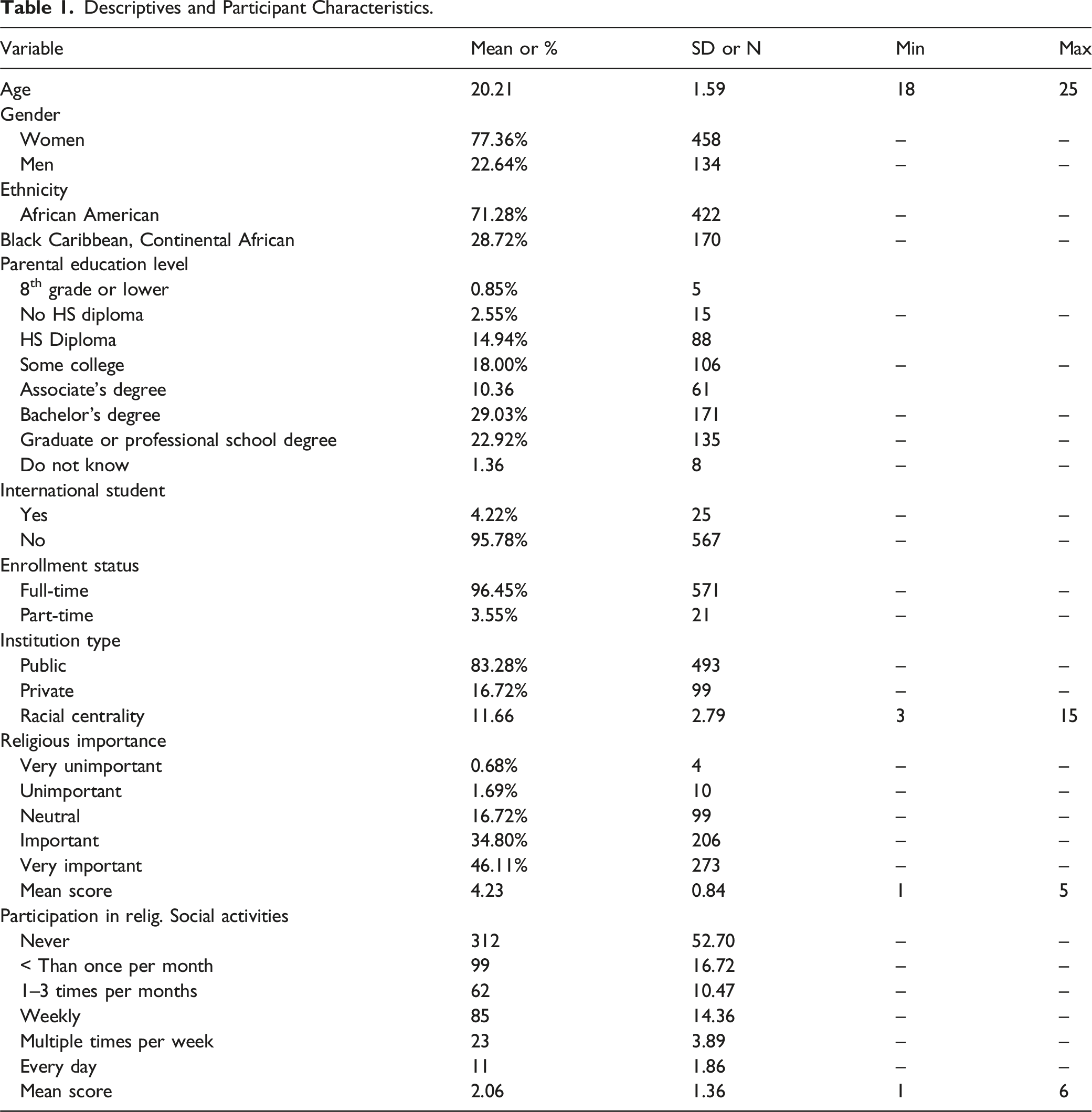
Descriptives and Participant Characteristics.
Full Sample
Linear Regression Measuring Associations With Flourishing Among the Full Sample.
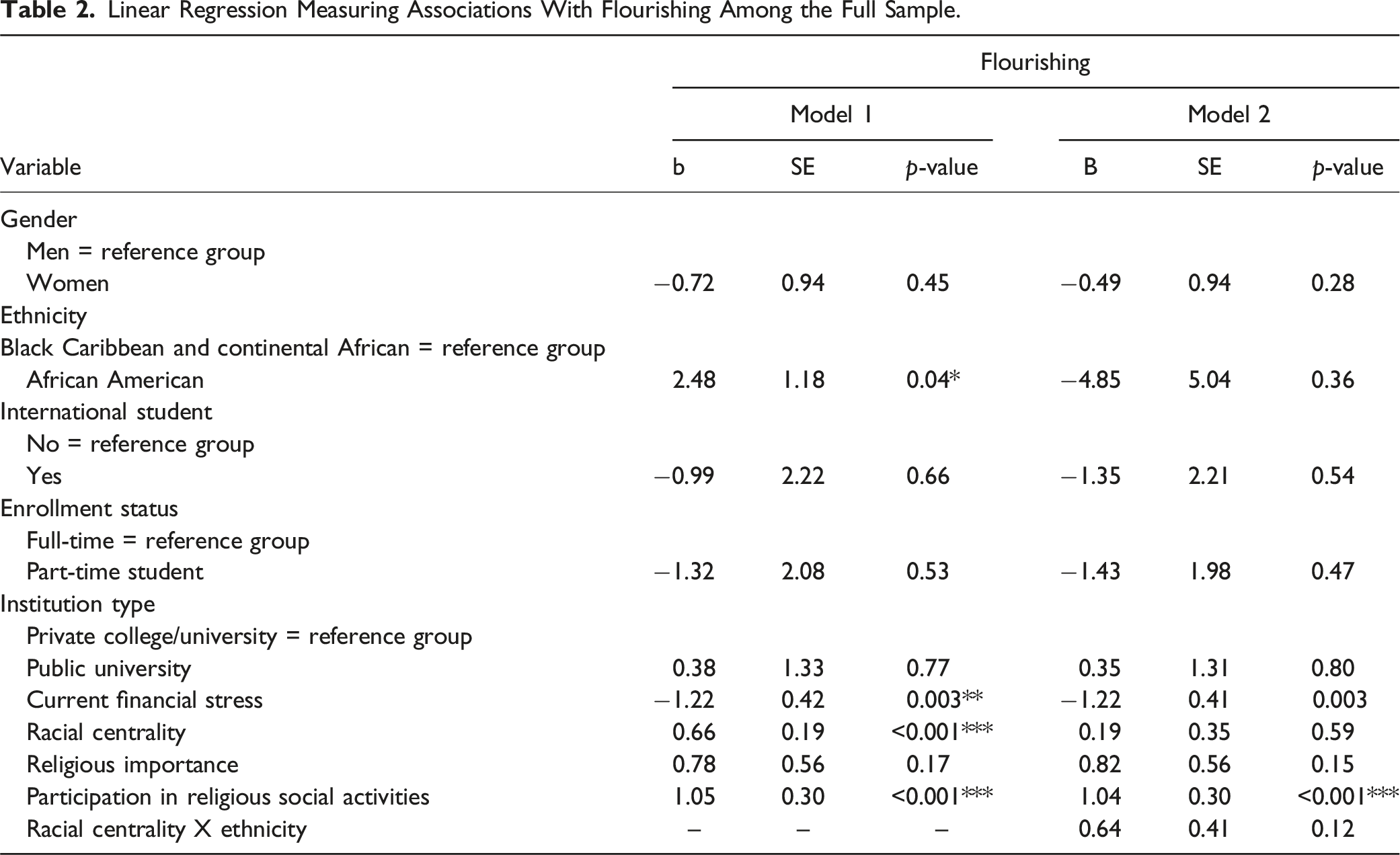
In Model 2, we examined the interaction between ERI centrality and ethnicity to determine whether any differences emerged for African American versus Black Caribbean and Continental African students. Findings presented here indicate that the interaction term was not statistically significant (b = 0.64, p = .12). Thus, ethnicity does not appear to moderate the link between ERI centrality and flourishing for Black college students (Table 2).
African American Students
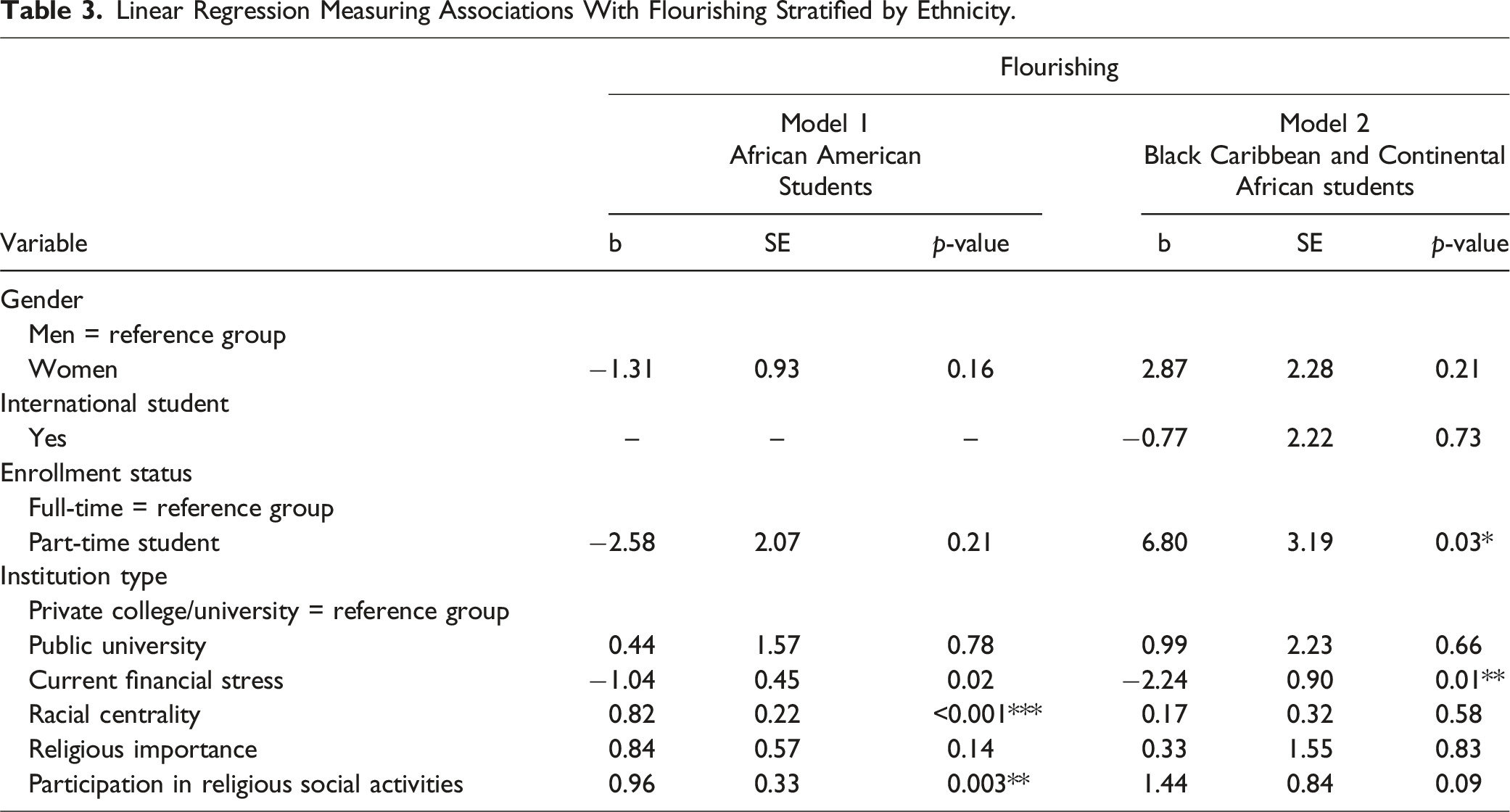
Linear Regression Measuring Associations With Flourishing Stratified by Ethnicity.
Black Caribbean and Continental African Students
The final regression model measuring associations among Black Caribbean and Continental African students (n = 169) reveals that current financial stress was negatively associated with flourishing (b = −2.24, p = .01). Religious importance, participation in religious social activities, and ERI centrality, however, were not significantly related to flourishing for Black Caribbean and Continental African students in this study (Table 3).
Discussion
Guided by Africentric positive psychology theory, culturally informed developmental theory, and the Phenomenological Variant of Ecological Systems Theory, the primary goal of this study was to examine the associations between ethnic and racial (ERI) centrality, two forms of religiosity, and flourishing. To date, flourishing tends to be an understudied outcome (Grier-Reed et al., 2023; Mushonga & Henneberger, 2020). The current study provides empirical evidence to support the importance of considering cultural factors as they may relate to flourishing. It is critical that positive psychology consider cultural assets as they relate to positive outcomes, when considering Black emerging adults. While some studies have examined the contributions of ERI and religion to positive outcomes for Black emerging adults (e.g., Chapman-Hilliard et al., 2022; Herndon, 2003; Patton & McClure, 2009; Riggins et al., 2008; White-Johnson, 2012), our study is the first, to our knowledge, to explore a specific link between ERI centrality, religiosity, and flourishing within a sample of African American, Black Caribbean, and Continental African emerging adults. These aspects of development do not simply function protectively, but may also offer promotional benefits. Thus, our study extends current knowledge regarding flourishing within the fields of positive psychology, emerging adulthood, and higher education.
In Model 1, we found that greater ERI centrality and more participation in religious social activities significantly predicted higher levels of flourishing for all Black Christian undergraduates. Thus, while positive psychology emphasizes the importance of identifying pathways which lead to human thriving, generally (e.g., Seligman et al., 2005), our findings add empirical support to Africentric positive psychology perspectives which have hypothesized ethnic and racial identity (e.g., Caldwell-Colbert et al., 2009) and religiosity and spirituality (e.g., Mattis et al., 2016, Mattis et al., 2019) to be important factors contributing to resilience in Black Americans. Thus, positive psychology must consider the role of cultural strengths and their contributions to thriving among Black individuals (Mattis et al., 2016).
This finding also complements previous studies which show that individuals who perceive that their ethnic and racial background is more important to how they self-identify tend to experience a wide range of positive outcomes (e.g., Chavous et al., 2018; Smith & Silva, 2011). Concurrently, Black Christian undergraduates with more involvement in social activities suggests that more opportunities to form relationships with co-religionists. Furthermore, depending on their institution’s geographical location, some Black students can access religious organizations where they can express their faith within racially homogenous contexts. For example, Black Christian undergraduates who joined gospel choirs perceived that these organizations provided relational space to obtain social support and to engage their religious faith at college (Constantine et al., 2006; Pope & Moore, 2004; Strayhorn, 2011). In addition, social activities sponsored by religious groups may not necessarily be explicitly faith-based. For instance, it is not uncommon for these activities to emphasize socializing over faith formation. Within many expressions of Christianity, regular connections to like-minded others are highly prioritized for adherents. Given that many emerging adults at college may be less likely to participate in organized religious activities, the results from Model 1 suggest that the frequency of being socially involved within a religious group while in college may promote positive adjustment outcomes such as flourishing.
Compared to Oh (2023)’s comparative design study that investigated between-group differences, our within-group analysis, which focused on the experiences of Black emerging adults, elucidates potential ethnic diversity. Specifically, our findings further suggest that ERI centrality and other aspects of ERI may function differently for Black emerging adults when considering ethnic group membership. This finding is consistent with the Phenomenological Variant of Ecological Systems Theory (e.g., Spencer et al., 1997; Velez & Spencer, 2018), which argues for an intersectional approach to understanding developmental outcomes among diverse individuals at different stages of the life course. Essentially, the findings for African American emerging adults were not found among Black Caribbean and African Continental emerging adults. Prior research indicates that some Continental African undergraduates struggle to negotiate awareness of their own ethnic background with the negative stereotypes associated with being Black in the United States and with being grouped together with African Americans (Asante et al., 2016). Consequently, their understanding of racial group belonging (being Black) varied. Reflective of this consideration, Model 2 tested an interaction between ERI centrality and ethnic group membership. However, results did not support a significant interaction. In one study of Black immigrant undergraduates’ participation in campus organizations, Griffin & McIntosh (2015) noted that “while participants were from shared backgrounds, their level of knowledge and comfort with their ethnic identity varied, which could influence experiences within ethnically focused groups” (p. 258). With the results of the current study in mind, the degree to which individuals feel that being Black is important may not be significantly influenced by their ethnic group membership.
By contrast, our results suggest that higher levels of ERI centrality and social interactions with religious communities significantly predict higher levels of flourishing for African American Christian undergraduates. Many African American Christian emerging adults are religiously socialized in historically or predominantly Black churches, where both cultural heritage and religious values are espoused and emphasized. ERI centrality and religious involvement, respectively, have been shown to have significant connections to African American positive outcomes (Grapin et al., 2024; Hope et al., 2019; Hubbard et al., 2022). However, the importance of religion was not significant.
For Black Christian undergraduates who identified as Black Caribbean or African Continental, results presented in Model 4 results suggest that neither ERI centrality nor religiosity significantly predicted flourishing. Some Black individuals from Caribbean or African Continental ethnic groups often perceive themselves as socially and culturally distinct from African American counterparts, emphasizing their immigrant identity to highlight that they are not like African Americans (Benson, 2006; Waters, 2022). Three factors may partially explain this. First, cultural group membership may be prioritized as a self-identifier. For example, African immigrants tend to describe their ERI by spotlighting their language, country of origin, and culture (Okonofua, 2013). Similarly, Black Caribbean individuals identified as Black but stressed that they were not African American (Bailey, 2017). Second, immigration status may play a significant role for these emerging adults. Individuals who may be first-generation immigrants typically have stronger ties to their nation of origin than counterparts whose families have been in the United States for two or more generations. Furthermore, in one study, second-generation Black Caribbeans expressed that they felt as though they could not fully identify as Caribbean or a Black American, “trying to exist in between two cultural experiences while retaining a commitment to both their racial and ethnic identities” (Butterfield, 2004, p. 86). Lastly, intersections of ethnicity and immigrant generational status may shape ERI via ethnic and racial socialization. Although Black Caribbeans and African Americans have ancestral enslavement in common, first-generation Black Caribbeans are typically socialized in countries where they are in the numerical racial majority, similar to first-generation Continental African counterparts. Conversely, over time, continuing generation immigrants of African origin may be more likely to report ethnic and racial socialization experiences like those of African Americans (Ludwig, 2020). Ethnic and racial socialization for African Americans typically includes awareness that they belong to a racially minoritized group that encounters historical structural and systemic barriers linked to anti-Black racism and discrimination (Harris-Britt et al., 2007). This information can inform their understanding of their ethnic and racial identity. In contrast, some work suggests that Black Caribbeans do not incorporate their awareness of systemic discrimination into their understanding of themselves as a Black person in the United States (Rogers, 2001). We did not have enough statistical power to measure Caribbean Black and Continental African students as individual groups, and instead needed to combine them into one group in the analyses. Future studies should, however, be intentional in recruiting larger samples of Caribbean Black and Continental African students so that their experiences can be tested and examined separately across regression models.
The finding in Model 4 shows that neither religiosity variable (i.e., importance of religion; frequency of religious social activities) significantly predicted flourishing for Black Caribbeans or African Continental emerging adults was unexpected. First, this may be due to single-item measures to assess the importance of religion and frequency of religious social activities. Second, Continental Africans in the United States tend to report higher levels of the importance of religion in their lives than African Americans and Black Caribbeans (Pew Research Center, 2021), thus a ceiling effect may be at play. Third, religiosity for Black individuals in the United States tends to be significantly connected to positive outcomes, in general. Considering that this current study may not have the sample size to detect a significant difference for Black Caribbeans or African Continental emerging adults, additional research that attends to within-group ethnic differences will play a critical role in elucidating what aspects of ethnic and racial identity or religiosity may promote flourishing. More work is needed to explicate what ERI dimensions (e.g., pride, clarity) and religiosity factors might promote flourishing for Black emerging adults who are not African American. Finally, within-group religious diversity may play a role. Although most Black individuals identify with Protestant Christian traditions, Black immigrant groups include higher numbers of Catholic Christians, adherents of other religious groups, and those who identify as unaffiliated (Pew Research Center, 2022b). Not all religious traditions emphasize or include religious-based social activities. We emphasize the need for stakeholders working with Black Christian undergraduates to consider how ethnic group membership and religiosity may influence their dual experiences as racialized minorities and as people of faith on campus. Concurrently, we exhort scholars to study within-group ethnic differences within other faiths, considering that each faith tradition has unique theological and religious distinctiveness.
It is also worthwhile to consider the role of financial stress when assessing matters of psychological wellbeing and positive outcomes among Black undergraduate students in the U.S. While not the primary focus of this study, we accounted for pertinent sociodemographic factors like age, sex, and institution type in an attempt to carefully consider the social context in which university students live and navigate the world. In doing so we found that current forms of financial stress were consistently related to less flourishing for Black students across all models (Tables 2 and 3). This means that irrespective ethnic identity, the stress students felt and attributed to their current financial troubles was linked to poorer wellbeing (i.e., flourishing). The results generated here are not surprising and align with much of the existing work in this area (Adams et al., 2016; House et al., 2020; Peltz et al., 2021). Notably, enrollment as a part-time student was also linked to less flourishing for Black Caribbean and Continental African student participants. This is a new contribution to the literature, as it indicates that part-time students may be facing additional financial burdens that may go overlooked by peers, counselors, and professors in educational settings. The stress and pressure that stems from needing to work while also navigating the challenges of being enrolled part-time can be overwhelming and may negatively impact part-time students' opportunities to build on-campus relationships and to foster meaningful connections with others (Adams et al., 2016; House et al., 2020).
Still, while earlier scholarship has measured associations between financial stress and adverse mental health outcomes generally, our study demonstrates that a deeper and more thorough analysis of the various responsibilities and familial expectations faced by Black Caribbean, Continental African, and part-time enrolled students is warranted. Greater efforts are also needed to identify other resource-related barriers that thwart or interrupt the development of positive psychological outcomes and experiences of wellbeing for Black undergraduate students. For example, promising priorities have already been outlined by leaders at The Hope Center for Student Basic Needs, now housed at Temple University, where a team of dedicated researchers and higher education professionals measure how matters ranging from food insecurity to homelessness shape student’s wellbeing and academic outcomes overtime. Collective models like this are necessary in working to promote positive psychological health while reducing financial hardship among Black undergraduate students both within and across ethnic groups in the U.S. today.
Limitations & Next Steps
Although our study found significant links between ERI centrality, religious involvement, and flourishing for an ethnically diverse sample of Black undergraduates, we acknowledge four limitations. First, the 2020–2021 wave of the Healthy Minds Study was conducted during the first academic year of the COVID-19 pandemic. Undergraduates enrolled at colleges and universities all over the United States experienced various and overlapping residential, social, economic, and academic disruptions, as their institutions navigated remote and hybrid models of instruction. In addition, mandates regarding outdoor and indoor in-person gatherings significantly affected religious services. Though some religious communities shifted to provide online services, the experience is not the same as in-person attendance and engagement. Given that so much of academic and religious life occurred virtually during this point in the pandemic, it is plausible that these circumstances influenced how participants responded to questions regarding the importance of religion in their lives and the frequency of religious participation. Although the Healthy Minds Study offers a wealth of information regarding the multifaceted academic and personal experiences of Black undergraduates, the use of single-item scales and scales not validated in prior research do constrain our ability to attain more detailed information about religious importance and participation in social religious activities. Due to religious diversity within the African diaspora in higher education in the United States, religious importance may vary. Furthermore, it remains unclear whether participation in social religious activities includes virtual religious involvement. During COVID-19, many colleges and universities transitioned classes online, and it is well documented that religious organizations that prioritized in-person meetings either transitioned to virtual platforms or paused any organized activity. That said, other dimensions of religiosity beyond social activities (e.g., prayer, meditation, religious support) were not assessed. Although religion may be important, it may not be equivalently important across all contexts and domains. To better understand the complexity of Black undergraduate religious experiences, future work might add questions where participants can describe how important religion may be in their lives and to provide details of their social religious activities. For example, Black undergraduates described their increased participation in religious groups that affirmed their racial and religious identities (Kim & Murdock, 2023).
Second, we did not have enough participants who identified as Black Caribbean or African Continental to explore within-group differences. More work is needed to understand how Continental African undergraduates navigate the intersections of ERI within the context of higher education in the United States. Importantly, some scholars note that the reasons underlying why Continental Africans choose to relocate to the United States vary (e.g., refugee status, higher education, medical care, employment) (Guenther et al., 2011; Njororai, 2023; Shandy & Fennelly, 2006). Similarly, more scholarship regarding Black Caribbean undergraduates is needed. With the increasing numbers of Black Caribbeans and Continental Africans in the United States, it is imperative that scholars consider these populations in conceptual and empirical studies on racial identity (Thelamour et al., 2024). For example, including ethnicity-centered demographic questions may be a critical step toward strengthening current understanding of the diverse experiences within the African diaspora.
Third, our study did not find a significant association between ERI centrality and religiosity on flourishing for Black Caribbean and Continental African undergraduates. Cultural practices, traditions, and language of origin often intersects with religiosity (Brittian et al., 2013). For those who cannot access religious communities that reflect the nuances of their culture, language, and worship of origin while they are at college, religious participation within the college context may not contribute to flourishing outcomes. Future research should explore what aspects of religiosity contribute to flourishing for Black undergraduates from Caribbean and Continental African countries. This limitation may also reflect variations in how Black undergraduates from different ethnic groups understood what the ERI centrality questions assessed. The original wording of the ERI centrality scale did not include “ethnicity” and instead says “Black.” Because the Healthy Minds Study is administered to students from many backgrounds, the original wording of the ERI centrality scale was adapted so that all students could respond. Substantially more work is needed to explicate how Black individuals from varying ethnic groups define and understand racial and ethnic identity broadly (e.g., Loyd et al., 2019), and ethnic and racial centrality, specifically.
Finally, we did not have information regarding how long students from immigrant backgrounds had spent in the United States or whether they identified as first-, second-, or third-generation immigrants in the United States. Those born in the United States typically have different acculturation experiences than those born elsewhere (Foner, 2016). Having more information about the duration of time spent in the United States may underscore why ethnic and racial centrality for immigrant-origin Black emerging adults may not be as important for their flourishing outcomes as it is for Black emerging adults who ethnically identify as African American.
Conclusion
To date, very few studies on Black emerging adults feature ethnic group diversity. Ethnic and racial identity (ERI) and religiosity may function significantly yet differently across ethnic groups characterized as Black. Although these groups may share African heritage, their respective histories influence how group members understand themselves as Black within the United States (Anderson et al., 2023). This study extends what is currently known regarding the role of ERI and religiosity in the lives of Black Christian emerging adults attending college in the United States. In tandem, this study harnesses a strengths-based perspective by exploring connections to flourishing, an outcome that is rarely examined within Black populations. Taken together, it is pivotal that researchers make empirical room for the rich and multifaceted diversity that is found within populations of African descent.
Supplemental Material
Supplemental Material - Black Undergraduate Flourishing: Contributions of Racial Centrality and Religiosity
Supplemental Material for Black Undergraduate Flourishing: Contributions of Racial Centrality and Religiosityby Meredith O. Hope, Janelle R. Goodwill, Nia Williams, and Aerika Brittian Loyd in Emerging Adulthood
Supplemental Material
Supplemental Material - Black Undergraduate Flourishing: Contributions of Racial Centrality and Religiosity
Supplemental Material for Black Undergraduate Flourishing: Contributions of Racial Centrality and Religiosity by Meredith O. Hope, Janelle R. Goodwill, Nia Williams, and Aerika Brittian Loyd in Emerging Adulthood
Footnotes
Declaration of Conflicting Interests
The author(s) declared no potential conflicts of interest with respect to the research, authorship, and/or publication of this article.
Funding
The author(s) received no financial support for the research, authorship, and/or publication of this article.
Transparency and Openness Statement
Upon reviewing the Transparency and Openness Promotion Guidelines, we have identified and confirmed that our manuscript meets the following criteria: The raw data for this manuscript are openly available for download from the Healthy Minds Study website ( ) The raw data came from the 2020-2021 wave of the Healthy Minds Study. Information regarding the materials used in this wave of the Healthy Minds Study can be found here as well. The analysis code/syntax used for the analyses conducted by the research team is not openly available for download, but available upon request. Consistent with the study design, this study did not include a pre-registration plan for data collection.
Supplemental Material
Supplemental material for this article is available online.
Author Biographies
References
Supplementary Material
Please find the following supplemental material available below.
For Open Access articles published under a Creative Commons License, all supplemental material carries the same license as the article it is associated with.
For non-Open Access articles published, all supplemental material carries a non-exclusive license, and permission requests for re-use of supplemental material or any part of supplemental material shall be sent directly to the copyright owner as specified in the copyright notice associated with the article.
