







Abstract
As emerging adults navigate in and out of relationships, experiencing romantic conflict is inevitable. Emerging adults must develop effective conflict resolution skills, which may be influenced by their romantic beliefs. The present study builds on existing research by (a) examining the role of implicit theories of relationships (growth beliefs and destiny beliefs) on conflict resolution styles, (b) testing the incremental validity of these associations by accounting for demographic factors and well-established predictors of conflict resolution, and (c) exploring whether the interaction between growth and destiny beliefs predicts conflict resolution styles. Participants (N = 191) completed a baseline survey and five daily surveys one week later. A series of longitudinal path-analysis models were conducted to explore our study aims. Findings demonstrated a positive association between growth beliefs and positive problem solving. These findings are important for understanding the impact of implicit theories of relationships on romantic relationship processes in emerging adulthood.
Keywords
Romantic conflict significantly increases during emerging adulthood and unmet expectations, intimacy, and trust are some topics of conflict among couples in their late teens and early twenties (Chen et al., 2006; Reese-Weber et al., 2015). Although conflict can be a way to express concerns and dissatisfaction while promoting both personal and relationship growth (Adams & Laursen, 2007), this is dependent on the conflict resolution styles employed. Effective conflict resolution is crucial for building and maintaining stable and satisfying romantic partnerships (Kurdek, 1994). Conflict resolution skills begin to emerge in adolescence and continue to develop in emerging adulthood. During emerging adulthood, individuals navigate in and out of relationships and subsequently adjust their relationship beliefs (Arnett, 2000; Brunson et al., 2019), setting the stage for how romantic conflict is resolved, including the degree to which they engage in constructive or destructive conflict resolution behaviors (Watkins & Beckmeyer, 2020).
Though conflict resolution styles are associated with several individual and relational differences, including attachment style, depressive symptoms, and relationship satisfaction (Marchand, 2004; Shi, 2003), the impact of relationship beliefs on conflict resolution styles and the extent to which they predict conflict resolution styles over and above these well-established predictors remains unexplored. Past work has demonstrated the importance of social cognitions on romantic relationship processes, emphasizing the need to consider emerging adults’ broader beliefs about the nature of intimate relationships, such as their implicit theories of relationships (ITRs). ITRs are composed of two beliefs about the nature and stability of romantic relationships: destiny (romantic destiny determines relationship success) and growth (relationship growth determines relationship success; Knee, 1998) beliefs. Both beliefs play an important role in how individuals view their romantic relationships and the trajectory of the relationship itself (Franiuk et al., 2002). ITRs may be particularly relevant for understanding emerging adults’ transitory relationships, as these beliefs may help determine whether a relationship is worth the effort of constructively resolving a conflict. If relationship beliefs play an important role in emerging adults’ conflict resolution styles, then these beliefs may be a malleable factor to target in future interventions designed to promote constructive conflict resolution. Therefore, using a short-term longitudinal design, we investigated the role of ITRs on conflict resolution styles over and above well-established predictors of conflict resolution styles in emerging adults.
The Nature of Romantic Relationships in Emerging Adulthood
Emerging adulthood encompasses individuals from industrialized societies who are between the ages of 18–29 (Arnett, 2000; Arnett et al., 2014). Emerging adults face many developmental tasks, including the formation and maintenance of romantic relationships (Roisman et al., 2004; Taylor et al., 2013). These developmental tasks are a result of social and economic forces delaying the achievement of traditional adulthood milestones, such as the age of first marriage and parenthood to the late 20s (U.S. Census Bureau, 2022). Given these societal shifts and evolving cultural perceptions regarding marriage/committed romantic relationships, it is timely to consider today’s emerging adults’ beliefs regarding committed romantic relationships and whether these beliefs alter their interpersonal behaviors, particularly conflict resolution behaviors. Though previous research has examined emerging adults’ beliefs and attitudes about marriage (Willoughby et al., 2015) and relationship importance (Watkins & Beckmeyer, 2020), beliefs about how relationships work and survive (i.e., implicit theories of relationships) may be more relevant to understand conflict resolution.
Effective conflict resolution is especially critical in emerging adulthood as romantic conflict is significantly higher compared to adolescence (Chen et al., 2006). This rise in conflict is likely due to emerging adults’ romantic relationships being of longer durations (more than a few weeks or months) and from the stress of other developmental tasks associated with this life stage (Arnett, 2000; Collibee & Furman, 2015; Roberson et al., 2015). For example, experiencing drastic changes and pressures associated with establishing a career path can spill over and impact responses to relationship stressors (Ranta et al., 2014; Schwartz, 2016). Unsurprisingly, frequent conflict in romantic relationships is associated with adverse outcomes, including greater depressive symptoms and dissolution (Davila, 2008; Lantagne et al., 2017). Despite the relation between frequency of conflict and negative individual and relational outcomes, researchers suggest the way individuals resolve conflict is a more accurate predictor of relationship outcomes than frequency of conflict (Shulman et al., 2006).
Conflict Resolution Styles
The way one resolves conflict, also known as a conflict resolution style, is associated with important individual and relational outcomes, such as social adjustment and relationship satisfaction (Roberson et al., 2015). More specifically, constructive conflict resolution styles are related to higher relationship quality and satisfaction, whereas destructive conflict resolution styles are related to less relationship satisfaction and more relationship instability (Kurdek, 1994; Paat & Markham, 2019; Wheeler et al., 2010). One of the most used measures of conflict resolution style is Kurdek’s (1994) Conflict Resolution Style Inventory scale which includes four conflict resolution styles: positive problem solving, conflict engagement, withdrawal, and compliance.
Positive problem solving is a constructive conflict resolution style, entailing active discussion, compromise, and negotiation (Kurdek, 1994), demonstrating high concern for oneself and one’s partner (Aušraitė & Žardeckaitė-Matulaitienė, 2019). Individuals engaging in positive problem solving collaborate to reach a solution acceptable for both partners, which is associated with higher relationship quality and satisfaction (Cramer, 2000; Kurdek, 1994, 1995; Wheeler et al., 2010). These positive problem-solving tendencies are associated with one’s attachment style, such that securely attached individuals are more likely to compromise during romantic conflict and display more verbal engagement, self-disclosure, and mutual discussion (Mikulincer & Nachshon, 1991; Shi, 2003). Positive problem solving is consistently associated with positive relationship outcomes, but this is not the case for destructive conflict resolution styles.
Conflict engagement is a destructive conflict resolution style involving personal attacks and loss of control toward a romantic partner (Kurdek, 1994). Conflict engagement also involves specific antagonizing behaviors such as anger outbursts, psychological aggression, and dominance attitudes, which have been linked to dating violence perpetration in college students (Paat & Markham, 2019). These behaviors are consistently associated with attachment style, depressive symptoms, and relationship satisfaction. For example, higher anxious attachment scores are positively associated with launching personal attacks (Bonache et al., 2019). Similarly, Marchand (2004) found husbands’ depressive symptoms were positively related to their attacking behaviors and wives’ depressive symptoms were negatively related to their attacking behaviors. Further, relationship satisfaction is negatively associated with relationship violence, aggression, and criticism (Fonseca et al., 2006).
A withdrawal conflict resolution style is characterized by avoidance and distance between oneself and their partner during conflict (Kurdek, 1994) and is considered destructive, as it reflects a low concern for the self and others (Aušraitė & Žardeckaitė-Matulaitienė, 2019). Withdrawal from communication and expression is harmful to a relationship, leading to dissolution, less relationship satisfaction, and shorter relationship duration (Barzeva et al., 2021; Norona et al., 2017). Linked to withdrawal are attachment styles, such that those who exhibit avoidant attachment display emotional detachment from their romantic partners and are more likely to withdraw and use evasive communication (Bonache et al., 2019). Further, individuals with depression tend to withdraw from communication and perceive a lack of understanding from their partners’ who do not have depression (Sharabi et al., 2016). It is important to note, however, that sometimes withdrawal can be effective in reducing immediate conflict and preventing escalation (Holley et al., 2018). Withdrawal can serve as a temporary pause rather than a complete disengagement, potentially benefitting the relationship by preventing hasty decisions or hurtful exchanges and engaging in more constructive dialogue later.
Individuals who adopt a compliance conflict resolution style easily concede with their partner’s view, with minimal attempt to defend their side of the issue (Kurdek, 1994). Compliance is considered destructive as it involves low concern for self and high concern for partner needs (Aušraitė & Žardeckaitė-Matulaitienė, 2019). An individual’s tendency to satisfy their partner’s needs over their individual needs is associated with decreased satisfaction (Cramer, 2000) and is also linked to one’s attachment and depressive symptoms, as avoidant attachment and depressive symptoms are positively associated with obliging behaviors (Marchand, 2004; Shi, 2003). Compliance can also be an effective conflict resolution strategy during low stakes conflict (e.g., deciding what movie to watch on date night) when long-term relationship goals take priority (Horan et al., 2015).
Conflict resolution styles are a strong indicator of romantic relationship functioning. In addition to the well-established predictors of conflict resolution highlighted above (attachment style, depressive symptoms, and relationship satisfaction), one’s existing beliefs about romantic relationships may also contribute to one’s conflict resolution styles. For instance, an individual who believes relationships are meant to be cultivated may be more likely to utilize a constructive conflict resolution style (positive problem solving) than an individual who believes relationships are destined from the start. Understanding the association between relationship beliefs and conflict resolution styles may identify efficient ways to promote more constructive conflict resolution styles in emerging adulthood.
Implicit Theories of Relationships (ITRs)
Implicit theories are beliefs individuals hold about themselves and the world, influencing their perceptions, intentions, and behaviors (Dweck et al., 1995). The broader implicit theories framework is widely used by social and personality researchers to examine how beliefs about abilities and attributes contribute to personal and academic growth (Dweck & Leggett, 1988). Branching from this broader framework, Knee (1998) proposed two belief systems (destiny beliefs and growth beliefs) about romantic relationships specifically, collectively known as ITRs. Destiny beliefs reflect a belief in romantic destiny—that relationships are either meant to be or they are not (Knee, 1998), leading to one basing the success of their relationships on the amount of conflict they experience at the beginning of the relationship. Conversely, growth beliefs posit that relationships will grow over time and with experience (Knee, 1998), with those adopting growth beliefs believing their relationships can be improved through effective communication and conflict resolution (Knee et al., 2003). The interactions of these beliefs have also been examined as orientations (Knee et al., 2001). Those who hold high growth beliefs and low destiny beliefs display a cultivation orientation, believing relationships cannot be predicted, and problems can be overcome. Those who hold high destiny beliefs and low growth beliefs hold an evaluation orientation, believing relationships can be predicted and problems cannot be overcome. Some individuals hold both low destiny and growth beliefs which reflects a helpless orientation, believing relationships cannot be diagnosed and problems cannot be overcome. Others hold both high destiny and growth beliefs which reflects an optimistic orientation, wherein relationships can be diagnosed but problems can also be overcome (Knee et al., 2001). ITRs are related to the early development and dissolution of romantic relationships, suggesting they play an important role in how individuals view their romantic relationships.
ITRs may contribute to the interpretation, reaction, and response to conflicts. Past research has demonstrated differences in coping strategies and conflict resolution styles between individuals who hold strong destiny beliefs versus strong growth beliefs (Dovala et al., 2018; Franiuk et al., 2002; Knee, 1998; Knee et al., 2004). In response to a relationship stressor, Knee (1998) found destiny beliefs were positively associated with relationship disengagement, avoidance coping strategies, and a lack of maintenance attempts. Similarly, those who held a soulmate theory (analogous to destiny beliefs), were more likely to comply during conflicts with their romantic partner than those who held a work-it-out theory (analogous to growth beliefs; Franiuk et al., 2002). In comparison, growth beliefs were positively associated with active coping and maintenance strategies, which represent positive problem-solving and serve as a protective factor against decreases in commitment following conflict (Knee et al., 2004). However, a more recent study examining dyadic conflict communication patterns in romantic relationships found the opposite. Dovala et al. (2018) found growth beliefs were associated with withdrawal and demand communication patterns whereas destiny beliefs were associated with withdrawal patterns. The above findings support the idea that ITRs are related to different interpretations and responses surrounding conflict. The limited research and conflicting findings in this area, highlight the need to examine the implications of ITRs for day-to-day conflict resolution.
The Present Study
As emerging adults explore and engage in various romantic and sexual experiences (Shulman & Connolly, 2013), these experiences continue to shape their beliefs about romantic relationships. Emerging adults hold a variety of beliefs about romantic relationships, which may set the stage for their romantic conflict resolution (Watkins & Beckmeyer, 2020). As such, emerging adults’ ITRs may be a precursor to how they resolve conflict. Moreover, given the societal shifts regarding marriage and cohabitation in this developmental period (Sassler & Lichter, 2020), it is timely to examine emerging adults’ current beliefs about romantic relationships. Existing research on ITRs and conflict resolution styles is largely cross-sectional, increasing susceptibility to recall bias and decreasing the reliability of past findings. Therefore, this study used a short-term longitudinal design, including a baseline survey and a five-day daily diary to assess the role of emerging adults’ ITRs on day-to-day conflict resolution styles. This research may help identify which beliefs and individuals should be targeted for future interventions designed to promote constructive conflict resolution styles in emerging adulthood.
Our first aim was to examine the associations between ITRs and conflict resolution styles. Based on cross-sectional research on ITRs and conflict resolution markers, we hypothesized destiny beliefs assessed during the baseline period would be positively associated with destructive conflict resolution styles (i.e., compliance, withdrawal, and conflict engagement) and negatively associated with positive problem solving reported during the daily diary period. In contrast, we hypothesized growth beliefs reported during the baseline assessment would be positively associated with positive problem solving reported during the daily diary period and negatively associated with destructive conflict resolution styles. Our second and third aims were to test the incremental validity of these associations, and we predicted the above hypotheses would hold over and above demographic factors (i.e., age, relationship length, gender, and race; Aim 2) and well-established psychological predictors of conflict resolution styles (i.e., attachment style, depressive symptoms, and relationship satisfaction; Aim 3). Our fourth aim was to examine whether the interaction between growth beliefs and destiny beliefs (i.e., ITR orientations) predicted conflict resolution styles. We hypothesized cultivation (high growth and low destiny) and optimistic (high on growth and destiny) orientations would be positively associated with positive problem solving and negatively associated with destructive conflict resolution styles. We also hypothesized that evaluation (high destiny and low growth) and helpless (low on growth and destiny) orientations would be negatively associated with positive problem solving and positively associated with destructive conflict resolution.
Method
Participants
We recruited 239 participants from the California State University San Marcos Psychology Human Participant Pool who were enrolled in lower division courses. We only included participants (a) who completed the baseline assessment and at least one daily diary assessment and (b) did not break up during the study. Our final sample included 191 participants who were in the early half of emerging adulthood. Our sample was limited to English-speaking participants between 18-25 years old (M = 19.76, SD = 1.63), who were in a committed relationship of at least three months. On average, participants reported being in their relationship for 24.67 months (SD = 19.81). Our sample was 52.9% Hispanic/Latino, 30.4% European American, 15.7% Asian American and Pacific Islander, 5.8% African American, and 1.6% Native American. Our sample included 159 women, 28 men, and 4 individuals who selected non-binary, other, or prefer not to answer.
Procedure
The Institutional Review Board at California State University San Marcos approved the project before data collection began (Approval # 1838291-2), and participants completed an informed consent before completing a series of online surveys through Qualtrics. Data collection took place from Spring 2022-Fall 2022. The present study consisted of two parts: a baseline survey and five daily diary surveys. All surveys were emailed directly to participants enrolled in the study. First, participants were asked to complete an online baseline survey at the beginning of the week (Monday) regarding their demographics, current relationship, attachment style, depressive symptoms, relationship satisfaction, and ITRs. The following week, participants were asked to complete one online daily diary survey daily for five days assessing their conflict resolution styles, regardless of whether they reported experiencing a conflict. To increase the likelihood of contact with their romantic partners, these daily diaries took place over the weekend, beginning on Thursday and ending on Monday. The daily diary surveys were sent at 7:00pm and participants had until 5:00am the following morning to submit their surveys. Participants received partial course credit commensurate with the number of surveys they completed.
Relationship Beliefs
To assess relationship beliefs, participants completed the 22-item Implicit Theories of Relationships Scale (Knee et al., 2003) during the baseline assessment. This scale consists of two 11-item subscales assessing destiny (e.g., “Potential relationship partners are either compatible or they are not”) and growth beliefs (e.g., “A successful relationship evolves through hard work and resolution of incompatibilities”). Participants responded on a scale ranging from 1 (strongly disagree) to 7 (strongly agree). Higher sum scores on each subscale reflect a higher adherence to a given belief. The ITR scale demonstrated good internal reliability in the current sample (α = .85 for destiny beliefs and α = .83 for growth beliefs).
Attachment Style
During the baseline survey, participants completed the Experiences in Close Relationships-Revised (ECR-R) Questionnaire (Fraley et al., 2000). The ECR-R consists of two 18-item subscales assessing anxious attachment (e.g., “I often worry that my partner doesn’t really love me”) and avoidant attachment (e.g., “I prefer not to be too close to romantic partners”). Participants were prompted to rate how they generally feel in their romantic relationships on a 1 (strongly disagree) to 7 (strongly agree) scale. Higher mean scores on both subscales indicate a high adherence to the attachment style. The scale showed good internal reliability for both the anxious attachment subscale (α = .94) and avoidant subscale (α = .93) in the current sample.
Depressive Symptoms
To assess depressive symptoms, participants completed the Center for Epidemiological Studies-Depression Scale (CES-D; Radloff, 1977) during the baseline assessment. The CES-D is a commonly used 20-item measure asking participants to rate how often over the last week they experienced depressive symptoms from 0 (rarely or none of the time) to 3 (most or almost all the time) for each item. Sample items include “I had crying spells” and “My sleep was restless”. Higher sum scores on the CES-D indicate greater depressive symptoms. The CES-D demonstrated good internal reliability in the current sample (α = .80).
Relationship Satisfaction
To assess relationship satisfaction, participants completed the Relationship Assessment Scale (RAS; Hendrick, 1988) during the baseline assessment. Participants responded to the 7-item measure on a 5-point scale. A sample item from the RAS includes, “in general, how satisfied are you with your relationship?” All items were summed to produce a total score of relationship satisfaction, with higher scores indicating higher satisfaction with their relationship. The RAS demonstrated strong internal reliability in the current sample (α = .87).
Conflict Resolution Styles
The Conflict Resolution Style Inventory (CRSI; Kurdek, 1994) was assessed during the five-day daily diary assessment. Participants completed this measure regardless of whether they experienced conflict or disagreement with their romantic partner that day. The CRSI is a widely used 16-item measure assessing participants’ way of handling conflict and disagreements in their relationships. This measure consists of four different conflict resolution styles: conflict engagement, positive problem solving, withdrawal, and compliance. Participants responded to each item on a 1 (never) to 5 (always) scale. The following are samples for each conflict resolution style: “launching personal attacks” for conflict engagement, “focusing on the problem at hand” for positive problem solving, “remaining silent for long periods of time” for withdrawal, and “not being willing to stick up for myself” for compliance. Consistent with the recommendation from Kurdek (1994), items for each subscale were summed across each day and averaged across the daily diaries. The scales showed good internal reliability in the current sample across all five days (α = .89-.92).
Analysis Plan
Bivariate Correlations and Descriptive Statistics (n = 187).
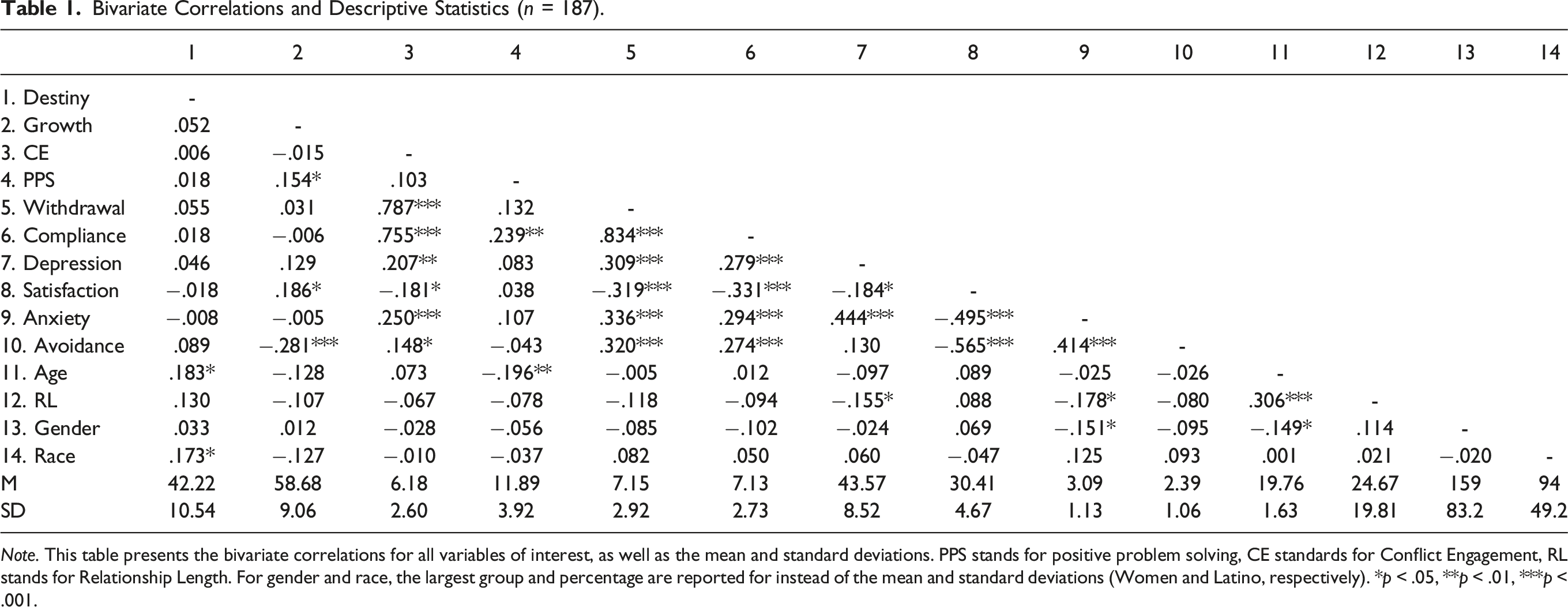
Note. This table presents the bivariate correlations for all variables of interest, as well as the mean and standard deviations. PPS stands for positive problem solving, CE standards for Conflict Engagement, RL stands for Relationship Length. For gender and race, the largest group and percentage are reported for instead of the mean and standard deviations (Women and Latino, respectively). *p < .05, **p < .01, ***p < .001.
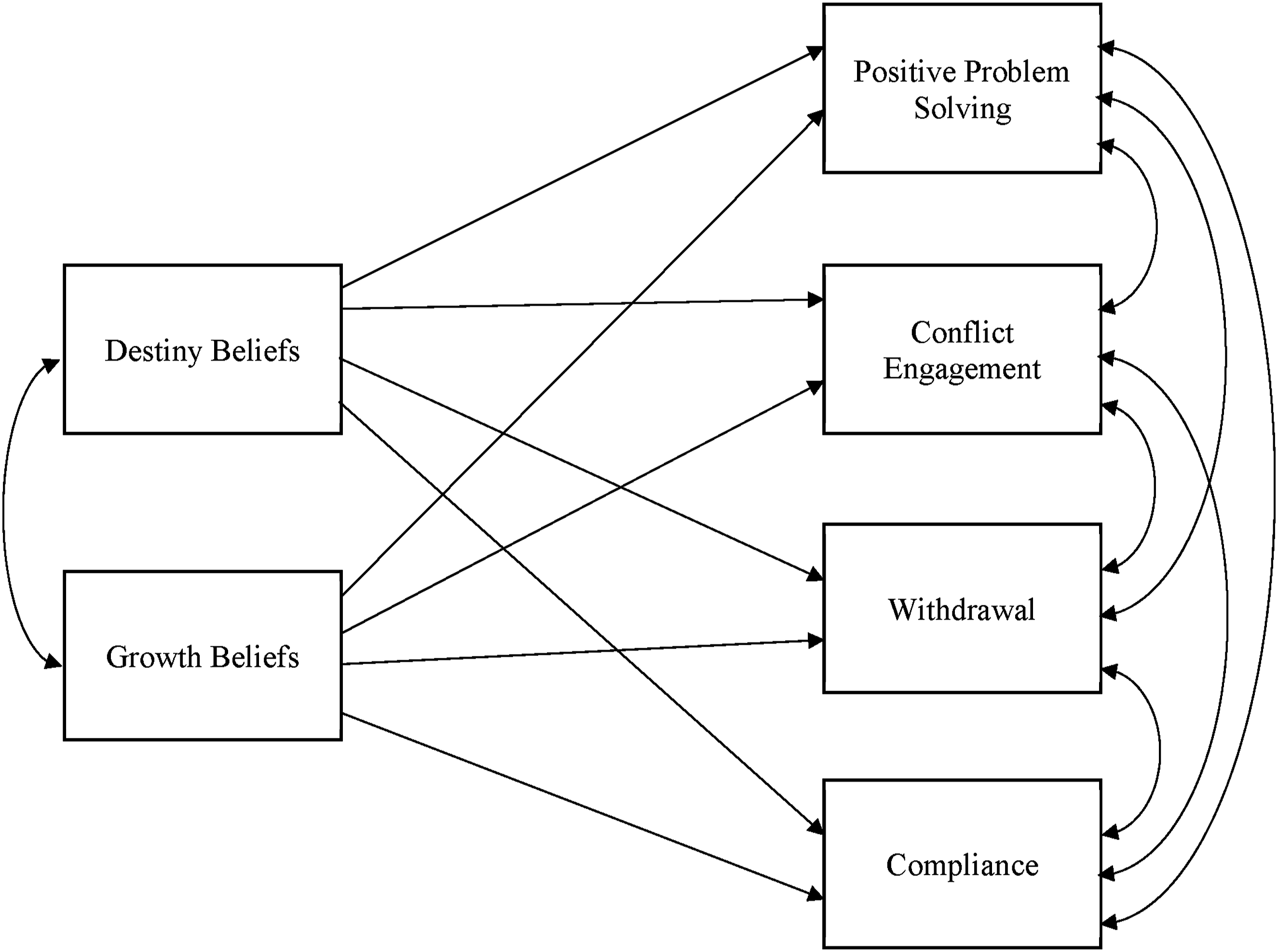
Aim 1 conceptual model.
To test the incremental validity of the above associations, two additional path models were conducted. Specifically, for Aim 2 we controlled for relevant demographic variables (i.e., age, relationship length, gender, and race). Next, for Aim 3, we additionally controlled for relevant psychological constructs (i.e., anxious attachment, avoidant attachment, depressive symptoms, and relationship satisfaction). Conflict resolution styles were regressed onto growth beliefs and destiny beliefs and the control variables in all models, while maintaining the correlations among predictors and outcomes.
A final path model was conducted to examine whether there is an interaction between growth beliefs and destiny beliefs (i.e., ITR orientations) predicted conflict resolution styles (Aim 4). The model included the same variables as the Aim 3 model, with the addition of the interaction between growth beliefs and destiny beliefs. This interaction was created by centering destiny beliefs and growth beliefs, then multiplying these centered variables using the define command in Mplus. Standardized regression coefficients and standard errors are reported throughout, as are standard model fit indices (X2, RMSEA, CFI, and TLI). All missing data were estimated using full information maximum likelihood. Daily diary response rates were 73.2% on average, though they ranged from 64.9% on day three to 79.6% on day two.
Results
Descriptive Statistics
All descriptive statistics and bivariate correlations between measures are reported in Table 1. As expected, growth beliefs assessed during the baseline assessment were positively correlated with positive problem solving assessed during the daily diary period. However, there were no other significant correlations between growth beliefs or destiny beliefs and any of the remaining conflict resolution styles.
Aim 1: ITRs and Conflict Resolution Styles
One path-analysis model (see Figure 1 for conceptual model) was used to test the direct associations between ITRs and each of the four conflict resolution styles. Consistent with our hypothesis, growth beliefs were positively associated with positive problem solving (β = .16, SE = .07, p = .04). However, growth beliefs were not significantly associated with conflict engagement (β = −.02, SE = .08, p = .81), withdrawal (β = .03, SE = .08, p = .72), nor compliance (β = −.01, SE = .08, p = .92). Contrary to our hypotheses, destiny beliefs were not associated with positive problem solving (β = .01, SE = .07, p = .91), conflict engagement (β = .01, SE = .07, p = .92), withdrawal (β = .05, SE = .07, p = .48), nor compliance (β = .02, SE = .07, p = .80). Only including destiny beliefs and growth beliefs as predictors for each conflict resolution style did not explain a significant amount of variability for positive problem solving (R2 = .03, p = .29), conflict engagement (R2 = .00, p = .90), withdrawal (R2 = .004, p = .69), or compliance (R2 = .00, p = .90).
Aims 2 and 3: Testing Incremental Validity
Path Analysis Results for Aim 2 (n = 186).
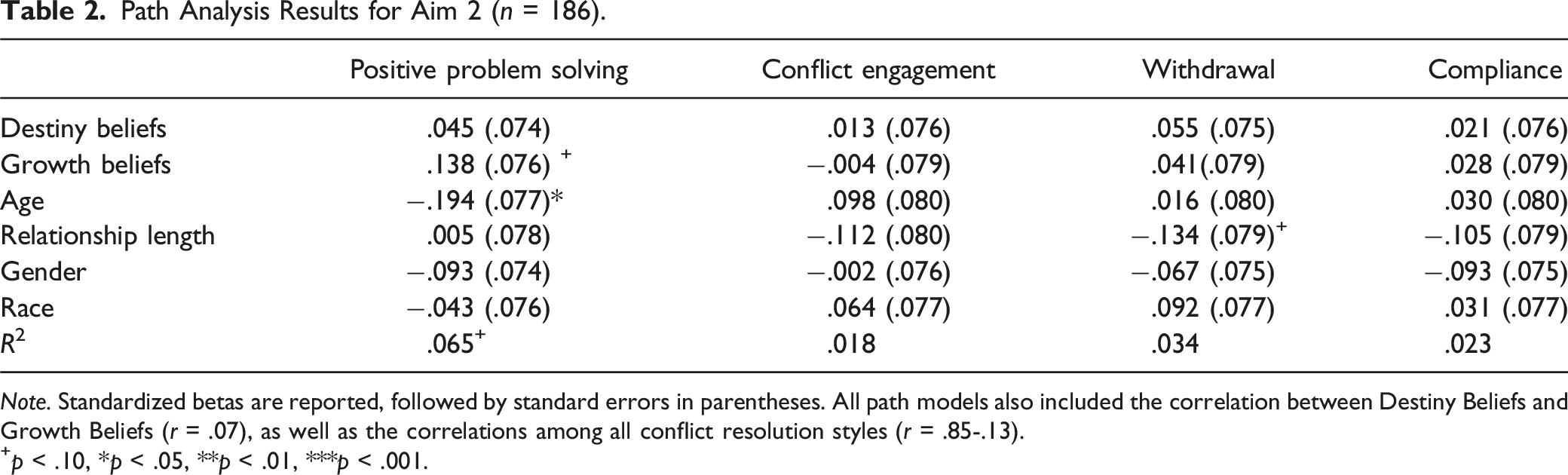
Note. Standardized betas are reported, followed by standard errors in parentheses. All path models also included the correlation between Destiny Beliefs and Growth Beliefs (r = .07), as well as the correlations among all conflict resolution styles (r = .85-.13).
+p < .10, *p < .05, **p < .01, ***p < .001.
Path Analysis Results for Aim 3 (n = 174).
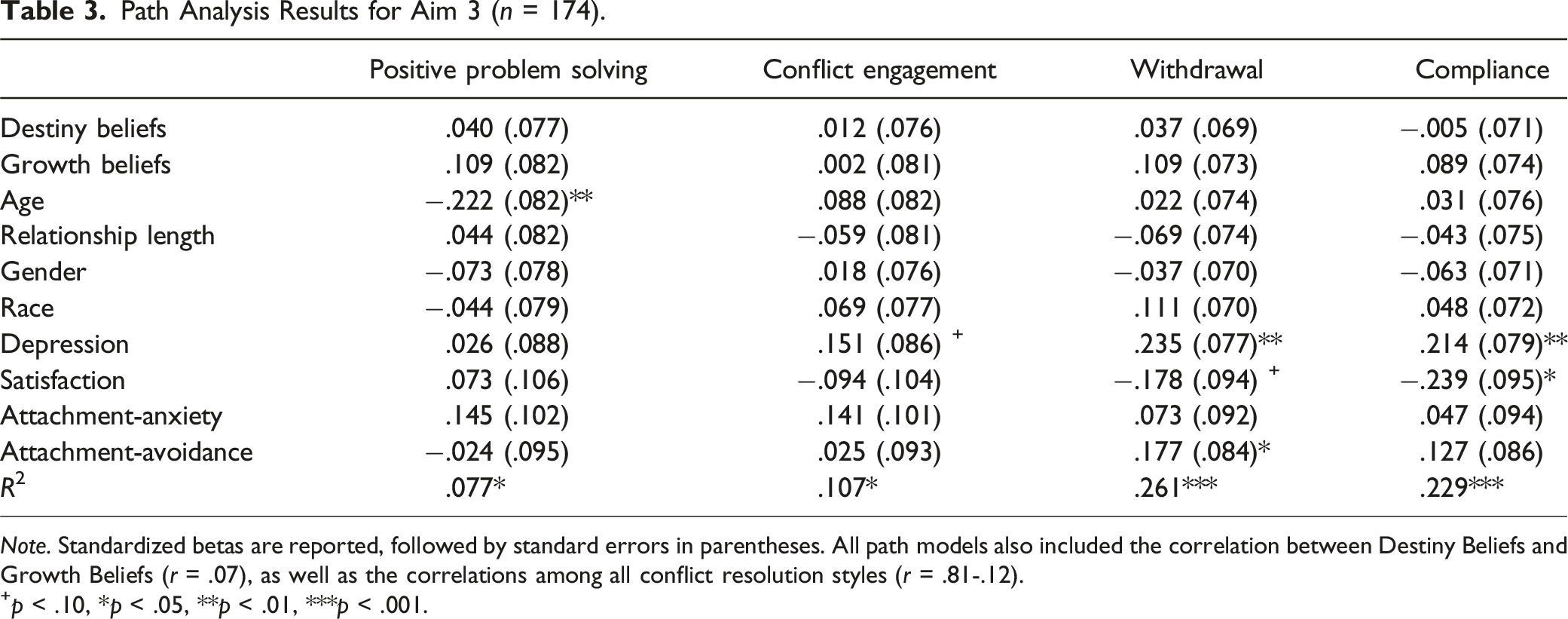
Note. Standardized betas are reported, followed by standard errors in parentheses. All path models also included the correlation between Destiny Beliefs and Growth Beliefs (r = .07), as well as the correlations among all conflict resolution styles (r = .81-.12).
+p < .10, *p < .05, **p < .01, ***p < .001.
Aim 4: Growth and Destiny Beliefs Interaction
Finally, we tested the whether the interaction between growth beliefs and destiny beliefs (i.e., orientations) predicted conflict resolution styles. We first tested these interaction terms without any control variables in the model. This model demonstrated poor model fit, suggesting the model did not represent the data well: X2 (2) = 24.12, p < .001; RMSEA = .25; CFI = .94; TLI = .49. Moreover, this model did not explain a significant amount of variance in any outcome (R2 = 0.3–2.3%). Contrary to our hypotheses, the interaction between growth beliefs and destiny beliefs (i.e., ITR orientations) was not significantly associated with positive problem solving (β = .03, SE = .08, p = .71), conflict engagement (β = .04, SE = .08, p = .59), withdrawal (β = .14, SE = .08, p = .07), nor compliance (β = .14, SE = .08, p = .08). These interaction terms remained non-significant when demographic variables and relevant psychological control variables were added to the model.
Discussion
The present study investigated how emerging adults’ ITRs (reflected by growth beliefs and destiny beliefs) contributed to their romantic conflict resolution styles. These associations were also examined in the context of demographic factors (age, relationship length, gender, and race) and well-established predictors of conflict resolution (depressive symptoms, relationship satisfaction, and attachment style). In addition, we examined whether the interaction between destiny and growth beliefs (i.e., ITR orientations) predicted conflict resolution styles. We found partial support for our Aim 1 hypotheses as growth beliefs were positively associated with positive problem solving. However, there were no other significant associations between destiny beliefs and growth beliefs and the remaining conflict resolution styles. Contrary to expectations for Aims 2, 3, and 4, neither destiny beliefs nor growth beliefs (as separate beliefs or their interaction) were associated with conflict resolution styles when controlling for demographic factors and well-established psychological predictors of conflict resolution. Though few significant associations were found, the lack of findings may suggest that the previously observed cross-sectional findings do not hold up longitudinally, there may be age-related or generational shifts in relationship dynamics, conflict is measured inconsistently across the existing research, and/or early emerging adults conflict resolution styles and relationship beliefs are still developing and thus they share little variability.
ITRs and Conflict Resolution Styles
Consistent with our hypothesis, a positive association between growth beliefs and positive problem solving was found in Aim 1. This finding is in line with previous research suggesting growth beliefs are associated with constructive conflict resolution tendencies, including active coping, active discussion, positive reinterpretation of conflict, and more implementation of relationship maintenance strategies (Knee, 1998). Surprisingly, this finding did not hold when we tested the incremental validity of this association (Aims 2 and 3). Together, these findings may suggest that although growth beliefs may promote constructive conflict resolution, there may be other factors that play a stronger role in whether emerging adults decide to engage in positive problem-solving during conflict. Some factors may include support, commitment, and investment. For example, if one has a highly supportive partner, they may be more likely to engage in positive problem solving when conflicts arise to maintain the relationship, as compared to those in less supportive relationships who show more negative conflict resolution behaviors over time (Sullivan et al., 2010).
Contrary to our hypotheses, destiny beliefs were not negatively correlated with positive problem solving (Aim 1). This null association remained while testing the incremental validity of this association (Aims 2 and 3). We expected a negative correlation with positive problem solving because past research demonstrates destiny beliefs are positively associated with destructive conflict resolution tendencies (Franiuk et al., 2002; Hania & Amjad, 2016; Knee, 1998). Our findings may suggest that previously observed cross-sectional associations between ITRs and conflict resolution styles may not extend to longitudinal associations. If so, this may suggest that ITRs are less stable/more variable than previously thought (Franiuk et al., 2002), which could be an important area for future research.
Though we hypothesized conflict engagement would be negatively associated with growth beliefs and positively associated with destiny beliefs, no significant associations were found in any of the tested models. These findings were surprising because previous work has demonstrated negative associations between growth beliefs and destructive conflict resolution tendencies (Cobb et al., 2013; Hania & Amjad, 2016) and positive associations between destiny beliefs and destructive conflict resolution tendencies (Cobb et al., 2013; Knee, 1998; Molden et al., 2006). A plausible explanation for our null findings is the low levels of conflict engagement in our sample. Given that this previous research is a decade old and primarily examined older participants who had been married 10–20 years (Cobb et al., 2013; Hania & Amjad, 2016), our finding may suggest today’s early emerging adults are not engaging in conflict engagement or holding these fixed beliefs at high levels, perhaps suggesting an age-related or generational shift in relationship dynamics. Specifically, our sample scored the lowest on conflict engagement (M = 6.27, with scores ranging from 4-20) compared to the other three conflict resolution styles, suggesting conflict engagement may be less common among today’s early emerging adults. Similarly, our sample’s mean level of destiny beliefs was much lower than the mean level of growth beliefs, suggesting these beliefs may be less common among today’s early emerging adults.
Neither growth beliefs nor destiny beliefs were significantly associated with withdrawal in any of the models tested. The non-significant association between growth beliefs and withdrawal is inconsistent with previous work as growth beliefs have been found to be negatively correlated with behavioral disengagement (Knee, 1998), a characteristic associated with withdrawal. Past research also shows a link between destiny beliefs and avoidant coping strategies during conflict (Knee, 1998). One explanation for these inconsistent findings may be how the present study assessed conflict resolution compared to Knee’s (1998) study. Knee (1998) asked participants to describe the most upsetting relationship event they experienced during the semester and report their coping strategies following this event. Because of this, participants likely reflected on an instance of conflict that was more severe or distressing than the participants in the present study, who reported relatively low levels of all conflict resolution styles. Therefore, it may be that severity of conflict plays a role in the relationship between ITRs and withdrawal.
Contrary to our hypothesis, growth beliefs were not negatively associated with compliance. In addition, destiny beliefs were not positively associated with compliance. These findings contradict past research by Franiuk et al. (2002) suggesting individuals who hold a strong soul-mate theory (analogous to destiny beliefs), versus a work-it-out theory (analogous to growth beliefs), are more likely to give in to comply with their partner during conflict. Once again, these findings may be explained by differences in conflict resolution assessment between the present study and previous work. The measure used by Franiuk et al. (2002) assessed responses to interpersonal arguments in general whereas the present study focused on the conflict resolution styles participants used in their romantic relationships for a given day. This difference could explain the discrepant findings because the way conflict is approached between a close friend versus a romantic partner may differ (Connolly et al., 2015).
We included the interaction between growth and destiny beliefs to test whether the orientations proposed by Knee et al. (2001) would be significantly associated with conflict resolution styles. However, this interaction was not significantly associated with any of the conflict resolution styles. Though this analysis was exploratory, previous research suggests those with evaluation and helpless orientations tend to believe relationships cannot be improved, whereas those with cultivation and optimistic orientations tend to have the goal of maintaining the relationship (Knee & Petty, 2013). Considered with the previously discussed null findings, our research suggests other contextual factors related to the conflict may be at play, such as the severity of the conflict. Similarly, other relational factors may play a stronger role in understanding conflict resolution during emerging adulthood, such as emotion regulation abilities and attachment style. For example, those with higher emotion regulation skills or a secure attachment orientation may be better equipped to engage in positive problem solving regardless of their implicit theories of relationships (Collins et al., 2006).
Correlates and Controls
A key aim of this study was to test the incremental validity of destiny and growth beliefs as predictors of conflict resolution styles. However, most of our proposed control variables were not significantly associated with any of the conflict resolution styles, with the exception of depression, avoidant attachment, and relationship satisfaction. Consistent with previous literature suggesting depressive symptoms and avoidant attachment are associated with destructive conflict resolution (Bonache et al., 2019; Ha et al., 2012), we found depressive symptoms and avoidant attachment scores were positively associated with a withdrawal conflict resolution style. We also found higher depressive symptoms were associated with more engagement with a compliance conflict resolution style, demonstrating consistency with past work (Davila, 2008; Ha et al., 2012). These findings suggest that in the case of a withdrawal conflict resolution style, depressive symptoms and avoidant attachment play a stronger role than ITRs. As for the significant negative association between relationship satisfaction and withdrawal, this finding also aligns with previous research demonstrating the same effect (Gesell et al., 2020).
Our models also accounted for the associations between the predictors (destiny and growth beliefs) and the outcomes (all conflict resolution styles). In line with previous research and the conceptualization of the ITRs, destiny and growth beliefs were not significantly correlated in any of the models (Knee, 1998). In general, conflict resolution styles were associated with each other in the expected directions, but some correlations were stronger than expected. For example, the correlations among the destructive conflict resolution styles ranged from r = .755-.834. Kurdek’s (1994; 1995) early work showed much smaller correlations among these conflict resolution styles, yet more recent research shows stronger associations. Some work with adolescents demonstrates a stronger association between conflict engagement and withdrawal (Fortin et al., 2022) and that teens are more likely to employ both conflict engagement and withdrawal (Bonache et al., 2016). Considering our findings show strong correlations among all destructive conflict resolution styles, this may suggest that emerging adults are still using destructive techniques and have not yet learned how to adaptively resolve conflict. In addition, we found a significant positive association between compliance and positive problem solving, which has also been found in previous research (e.g., Bonache et al., 2016; Kurdek, 1995). This finding seems to reflect more recent conceptualizations of conflict resolution which have included aspects of compliance as a part of positive problem solving (e.g., Bonache et al., 2016). Finally, though we did not find a significant negative association between conflict engagement and positive problem solving, which was original shown in Kurdek’s work (1994; 1995), this is consistent with more recent research which did not find a significant association between the latent factors of problem solving and conflict engagement (Bonache et al., 2016).
Limitations and Future Directions
Although these findings offer some new insights for how ITRs may impact emerging adults’ conflict resolution styles, there are limitations that should be considered. First, all constructs were assessed using single-informant, self-report data. The present study offered a novel approach by identifying conflict and examining conflict resolution styles daily, however, our findings only reflect the participant’s perceptions of their ITRs and conflict resolution styles. Assessing these constructs from both partners would provide a better understanding of the associations between ITRs and conflict resolution styles. In addition, this would allow us to test whether one’s conflict resolution style influences their partner’s conflict resolution styles. In addition, though we assessed daily reports of conflict resolution styles, we did not assess daily reports of ITRs. Though ITRs are expected to relatively stable constructs (Franiuk et al., 2002), it is possible that there are daily fluctuations in these beliefs based on relationship experiences and conflict. Therefore, future research should include dyadic data to examine how couples’ perceptions may differ and consider examining day-to-day fluctuations in ITRs based on conflict experiences.
Another limitation is that we did not control for conflict importance or severity. It is possible that minor disagreements (e.g., not being able to decide on a place to eat) may result in more positive problem solving or compliance to maintain the peace within a relationship. In comparison, more serious disagreements (e.g., infidelity) may result in conflict engagement or withdrawal during conflict. Furthermore, it is possible that the impact of ITRs may be more prominent for serious disagreements compared to minor disagreements or vice versa. As such, future research examining emerging adults’ relationship beliefs and conflict resolution styles should include conflict severity. Finally, our sample is not highly representative, as it consists of college students from a single university, limiting the generalizability of the findings to broader emerging adult populations. Our sample predominantly included women, which could have also introduced a gender bias in exploring ITRs and conflict resolution. Although there is racial diversity within the sample, our sample size was relatively small. Future studies should aim to include a larger sample from a wider range of educational and cultural backgrounds, as well as gender identities, to better understand these constructs across diverse groups.
Conclusions
The present study builds upon the existing literature by being one of the first to examine implicit theories of relationships and conflict resolution styles in emerging adults’ romantic relationships. In addition, the short-term longitudinal approach with the daily diary component allowed us to capture emerging adults’ daily conflict resolution styles. We found further support for the positive association between growth beliefs and positive problem solving. However, we did not find support for any further associations between implicit theories and conflict resolution styles. Overall, these findings likely reflect emerging adults’ continued exploration in romantic relationships and may be used to inform future research aimed at promoting constructive conflict resolution styles among emerging adults. As the literature regarding emerging adults’ conflict resolution styles continues to grow, future research should continue to examine the contexts in which growth beliefs and destiny beliefs serve as risk and/or protective factors for conflict resolution.
Footnotes
Declaration of Conflicting Interests
The author(s) declared no potential conflicts of interest with respect to the research, authorship, and/or publication of this article.
Funding
The author(s) received no financial support for the research, authorship, and/or publication of this article.
Transparency and Openness Statement
The data, analysis code/syntax used for the analyses used in the research, list of questions and coding manuals, and other study materials are available upon request by emailing the corresponding author (
