







Abstract
One hundred and twenty-four Israeli emerging adults reported at the ages of 20, 23, 25, and 28, on the level of breakup distress they experienced. At age 28, romantic competence was assessed via interviews. A trajectory analysis yielded two breakup distress trajectories. The first trajectory represented a stable, low level of breakup distress, comprising two-thirds of the sample. The second trajectory represented a stable high breakup distress and comprised one-third of the sample. Analysis of the interviews showed that affiliates of the high breakup distress trajectory described being involved in difficult relationships in which they were willing to be controlled by their partners. In contrast, affiliates of the low distress trajectory are described as having the skills to manage their relationship competently. Based on the findings, it would be important to raise awareness of the conditions when a relationship is toxic and learn what adaptive relationships look like.
Keywords
Introduction
Romantic breakups can be major stressful life events as they result in significant changes in individuals’ daily lives and psychological well-being, and undermine the sense of emotional security (Hunt & Chung, 2012; Machia et al., 2023). Previous research has primarily focused on a single breakup experience; however, breakups are a common event that is expected to occur multiple times throughout development (Tashiro & Frazier, 2003). Furthermore, emerging adults are likely to be in and out of relationships during their twenties (Arnett, 2000; Shulman & Connolly, 2013), as well as report a significant number of multiple relationship resolutions (Bae & Wickrama, 2019). While the existing research widely examined the post-breakup distress of a single breakup experience (Dailey et al., 2023), less is known about how an individual reacts to repeated breakups (Tashiro & Frazier, 2003).
Furthermore, a breakup does not result only in increased distress; a breakup experience, and in particular repeated breakup experiences, can also lead to questioning the extent to which partners can be trusted, or the better way to keep a relationship intact in the future (Frost et al., 2016). In the current study conducted on Israeli emerging adults, we seek to understand whether or not individuals are consistent with regard to the intensity of distress response across repeated breakup experiences. In addition, we focus on the ways that repeated breakup experiences might be associated with an individual’s sense of confidence in addressing and handling a romantic relationship.
Understanding Responses to Repeated Breakup Experiences
Existing research identifies factors influencing post-dissolution distress. Dailey et al.’s (2023) comprehensive model highlights both situational factors (e.g., relationship duration, commitment level, who initiated the breakup; Field et al., 2009; Locker et al., 2010; Rhoades et al., 2011) and personal characteristics (e.g., attachment styles, self-esteem, coping mechanisms, capacity to make meaning; Acolin et al., 2023; Frost et al., 2016; Gehl et al., 2024; O'Sullivan et al., 2019). The situational factors are relevant for understanding the response to a recent single breakup experience, such as who initiated the breakup (Dailey et al., 2023). In contrast, personal factors can be relevant for understanding the response to repeated breakups. For instance, secure attachment (Gehl et al., 2024) and the capacity to find meaning and draw lessons from difficult experiences (Sbarra & Hazan, 2008) might buffer distress or even promote learning across breakups (Frost et al., 2016; Norona et al., 2017). In contrast, attachment insecurities (Gehl et al., 2024) or rumination (Eisma et al., 2014) might lead to persistently high distress, potentially reinforcing insecure internal models.
The role of situational and personal factors for understanding distress responses across multiple breakups remains unclear and is particularly relevant for emerging adults, among whom breakups are common (Shulman & Connolly, 2013). Situational factors across different relationships are likely to lead to fluctuating distress levels (Kuppens, 2009; Locker et al., 2010). In contrast, personal characteristics suggest potential response stability (Steyer et al., 2015; Tashiro & Frazier, 2003). Notwithstanding the likelihood of stability across different breakups, the magnitude of response may differ among individuals. For some, elevated stress may be experienced across different breakups, while others might have a greater capacity to cope with the pain of a dissolution or draw positive lessons for future encounters (Frost et al., 2016; Norona et al., 2017).
To the best of our knowledge, earlier research has not examined breakup distress across multiple separations and examined the extent to which the level of distress stays stable or fluctuates. In addition, it is not known whether, in addition to stability or fluctuations, there are individual differences in breakup distress across time. Individual differences in the developmental course of depressive affect were consistently found in previous research. For example, longitudinal analyses reveal multiple developmental pathways in depressive symptoms, exhibiting meaningful developmental patterns that distinguish subgroups of people (Costello et al., 2008; Magnusson, 2003). Therefore, examining longitudinal trajectories is crucial to capture the potential diversity in how emerging adults navigate repeated relationship dissolutions.
Long-Term Impact of Repeated Breakups: A Behavioral Systems Perspective
As discussed above, the majority of research on romantic breakups focused on the emotional sequelae following the breakup. For example, a significant number of individuals reported an elevated level of depressive affect and, in particular, emphasized the pain they felt due to the “sudden loss” (Verhallen et al., 2019). However, less is known about the extent to which a breakup experience might affect future romantic relationships.
From a developmental perspective, romantic experiences, including a breakup, can be viewed as a series of life events and as such might serve as a model for future relationships (Vasilenko et al., 2014). Elaborating on these notions, Furman and Collibee (2018) formulated the Behavioral Systems Theory, contending that experiences in close relationships, such as peer or romantic relationships, are internalized and influence one’s approach to intimacy and closeness in future relationships. They found that representations of relationships with parents, friends, and romantic partners during adolescence were associated with future romantic representations during emerging adulthood. Relatedly, Madsen and Collins (2011) showed that a better quality dating relationship in adolescence explained smoother relationship processes in young adulthood, such as successfully negotiating conflicts and effective and timely caregiving.
Though the majority of breakup research focused on the magnitude of the emotional reaction to a romantic breakup (Chung & Hunt, 2013; Dailey et al., 2023), breakups also involve issues of intimacy, closeness, trust, and security. Losing a partner can evoke a sense of abandonment and betrayal, which can explain the increased mental distress. Cutting ties with a romantic figure might consequently hamper the capacity to trust a future romantic figure. The loss of trust might increase feelings of insecurity about a partner’s availability, or uncomfortable feelings about being close to and dependent upon a partner in future relationships (Kansky & Allen, 2017). Thus, elevated stress following repeated breakups might represent continued rumination about the loss and unfairness, signifying less confidence in handling a relationship.
Decreased distress following repeated breakup experiences signifies that anger and sadness might have decreased over time, suggesting the possible start of a recovery process. A closer inspection of the breakup research literature suggests that the decrease in the magnitude of the emotional stress is more than waning in painful emotions over time. The decreased stress is likely to represent more adaptive coping with breakups and, possibly, greater reflective capacity to better understand the former relationship (Frost et al., 2016). Drawing lessons from a negative experience can subsequently improve well-being and romantic relationships in the future (Tashiro & Frazier, 2003). Furthermore, such reflective processes might facilitate rediscovery of one’s sense of self and subsequent post-breakup growth.
Integrating the breakup literature (see Dailey et al., 2023) and Behavioral Systems Theory (Furman & Collibee, 2018) impels us to suggest that repeated breakups can be perceived as a series of transitional experiences for emerging adults and serve as a model for how to address and handle a romantic relationship. This consequential internalized representation is likely to serve as a model for a confident and secure relationship, or rather as a model for insecurity and lower trust in a future relationship (Furman & Collibee, 2018). Difficulty in overcoming the breakup experience might thus shatter one’s confidence in handling a relationship in the future, refrain from handling disagreements, and prefer to stay in a difficult relationship (Dailey et al., 2023; Machia & Ogolsky, 2020). In contrast, decreased breakup distress is likely to facilitate better understanding of the dissolved relationship, learning what works and what does not work in romantic relationships, and be associated with more competent ways to handle a relationship and confidence in dissolving a difficult relationship (Frost et al., 2016).
The Present Study
Accumulating research that followed the developmental course of depressive symptoms among adolescents and young adults repeatedly showed the existence of distinct depressive trajectories (Schubert et al., 2017). For example, among some individuals, the level of depressive affect stayed stable, while among others it increased or decreased over time. In a similar vein, the first aim of the study is to explore possible distinct longitudinal trajectories of breakup distress across repeated assessments. In addition, the study explores the extent to which individual differences in these response patterns exist over time, investigating whether individuals exhibit consistently high or low levels of stress across multiple breakups, or if their distress levels fluctuate between different breakup experiences.
Research on breakup distress primarily examined emotional responses such as negative emotions, intrusive thoughts, and emotional and physical dysregulation. In addition to a possible increase in emotional stress following a breakup, breakups might also increase relational ambivalence and shatter a sense of security and undermine competence in handling a relationship (Dailey et al., 2023). Sbarra and Hazan (2008) showed that pain might decrease over time, lead to reevaluation of the dissolved relationship, and draw lessons for the future (Frost et al., 2016).
The second aim of the study is thus to examine whether and how different trajectories are associated with relationship experiences (Dailey et al., 2023). We expected that affiliation with an increased distress trajectory following repeated breakups would be associated with a lesser capacity to handle a romantic relationship. For example, they might be very cautious in their interaction in order not to raise a partner’s disagreement and stay in a difficult relationship (Machia & Ogolsky, 2020). In contrast, affiliation with a low distress trajectory would signify greater confidence in addressing a relationship and is expected to associate with a greater capacity to cope with disagreements or disappointments in a relationship (Frost et al., 2016).
Method
Participants and Procedure
Participants were enrolled in a comprehensive longitudinal study in Israel focusing on the progression of romantic and sexual relationships from adolescence to emerging adulthood. The original sample consisted of 144 11th and 12th-grade Jewish Israeli students who were recruited from three schools in the center and the north of Israel. Schools were assigned by local educational authorities after the Ministry of Education approved the study. Flyers were distributed in classes, and adolescents were invited to participate in a study on romantic relationships. Participants were included in the study after parental consent was given. The response rate after receiving parental consent was 60%. Participants were followed from their adolescence into their late twenties.
Data for this report were collected when participants were 20, 23, 25, and 28 years old. The age 20 assessment comprised 124 participants (79 women, 45 men), with a mean age of 20.22 years (SD = 0.89). The subsequent assessment at age 23 included 110 participants (69 women, 41 men), with a mean age of 22.79 years (SD = 0.86, range = 21-24 years). At age 25, the cohort consisted of 102 individuals (68 women, 34 men), with a mean age of 24.74 years (SD = 0.71, range = 23-26 years). The age 28 assessment comprised 100 participants (66 women, 34 men), with a mean age of 27.44 years (SD = 0.75).
Participants completed questionnaires online. At each wave, participants were asked first to report whether they had experienced a significant romantic relationship breakup in the preceding twelve months. If the answer was positive, they were asked to complete a questionnaire assessing the intensity of distress following the breakup. The percentage of participants reporting a breakup experience across waves was between 80 and 88%. The mean number of reported breakups for the sample was 3.11, SD = .08, Median = 3.00. Only participants who reported on breakup distress at least at two assessments were included in the analyses, N = 88.
All participants were from middle-class backgrounds where the majority of parents had post-secondary education, more than 12 years of schooling. The mean years of education for fathers and mothers were 15.37 years (SD = 2.59) and 15.58 years (SD = 3.40), respectively, with a range of 10 years to 22 years. Participants were compensated at each assessment with 100 NIS (about $25). The University’s Institutional Review Board approved all procedures; Bar Ilan University; Department of Psychology, # 30000-6412, 01.2012.
Finally, comparisons were conducted between individuals who participated until age 28 and those who dropped out. Participants were compared using demographic variables (age and parental education) and gender ratios. No significant differences were found in any of the demographic variables between those who remained in the study and those who dropped out (t = 0.79, p = .54 for age; t = 1.02, p = .72 for parental education). In addition, no difference was found regarding the reported level of breakup distress at age 20, t = 0.72, p = .63. The gender ratio among those who participated in the age 28 assessment was 66% women versus 34% men. The gender ratio among those who dropped out was 62.5% women versus 37.5% men, χ2 = 2.41, p = .26.
Measures and Procedures
Breakup distress was assessed four times at ages 20, 23, 25, and 28. At each assessment, participants were asked to report a recent or any other breakup they had experienced in the last twelve months. The romantic competence interview was administered at age 28. Participants were interviewed by trained graduate students in clinical psychology either in person or via Zoom. Due to logistical demands, only eighty participants were interviewed; some were willing to complete questionnaires but did not find time to be interviewed, or claimed to have technical difficulties to contact via Zoom.
Breakup Distress
The Breakup Distress Scale (BDS; Field et al., 2009) is a 16-item inventory that assesses the intensity of distress and preoccupation with an ex-partner following a romantic breakup (i.e., “I feel I cannot accept the breakup I’ve experienced”). Items were rated on a four-point Likert scale ranging from 1 (‘strongly disagree’) to 4 (‘strongly agree’). Cronbach’s alphas in the current study for the four assessments were in the range of .91 −.94.
Field et al. (2009) reported high correlations between higher BDS scores and sense of betrayal and rejection, intrusive thoughts, sleep disturbance, depression, and anxiety, indicating the validity of the scale. In addition, Zapata-Vega et al. (2022) showed that those who initiated the breakup experienced less breakup distress than non-initiators, which is congruent with the literature and demonstrates the construct validity of the scale.
The Romantic Competence Interview
The romantic competence interview (Davila et al., 2017) was adapted to assess romantic capacity among emerging adults. It was consistent with the romantic competence interview with adolescents (Shulman et al., 2010). At first, participants are asked to tell their romantic relationship stories, followed by a semi-structured interview designed to examine individuals’ interpersonal attitudes and behavior, and their capacity for intimacy in romantic relationships. Participants were asked about emotional closeness, conflict resolution, involvement and autonomy, satisfaction, and commitment in their relationships with past and/or present romantic partners. The interview assesses the capacity for intimacy based on past and present relationships, even if the respondent is not currently in a romantic relationship, and captures optimal ability, not necessarily current characteristics. Participants who reported on breakups were further probed to provide more information about the dissolved relationship(s). In addition, they were encouraged to describe how the relationship ended, who initiated the breakup, and what their feeling were experiencing the breakup. Interviews were recorded, transcribed, and subjected to qualitative analysis, as outlined below.
Data Analysis
To investigate the patterns of distress over time, we employed a customized variant of the K-means clustering algorithm, specifically adapted for repeated measurements. This unsupervised machine learning approach was implemented through the “Kml” R package (Genolini et al., 2015; Genolini & Falissard, 2009, 2011). The key advantage of this method is its capacity to identify trajectories that diverge from polynomial patterns. As a non-parametric technique, it avoids the assumptions typically required by alternative methods. The algorithm conducts multiple iterations with varied starting points to ensure a stable outcome, thereby minimizing the risk of converging to a local maximum. This strategy enhances the robustness of the clustering results by improving the likelihood of discovering a global or near-global solution. Comparative data from Monte Carlo simulations indicate that cluster analysis is at least as effective as, if not superior to, other modeling approaches, particularly in real-world contexts where the exact number of clusters is not known in advance (Steinley & Brusco, 2011). This method produces reliable outcomes with as few as 20 subjects per group when there is a clear difference between trajectories on the variable on the respective measure - breakup distress in the current study. Consequently, it is advised to design studies with an expected trajectory size of 20 to 30 subjects (Dalmaijer et al., 2022). The number of trajectories was determined using the Calinski-Harabasz index, a recommended selection criterion, and the default setting of the “Kml” package. See Steinley and Brusco (2011) for additional benefits of this approach. The algorithm deals with missing measurements and assigns a participant to the trajectory given two or more measurements based on the similarity to the nearest trajectory that is formed.
The K-means trajectory analysis was conducted using the R statistical programming environment (R Core Team, 2024). This analysis addresses the aspect of missing data. All chi-square calculations were performed using IBM SPSS Statistics (IBM Corp., 2023).
Qualitative Analysis
Two sources guided the qualitative analysis. First, the literature on the association between romantic breakups and subsequent depression (Chung & Hunt, 2013), the literature on the dynamics of romantic relationships (Furman & Collibee, 2018), and the difficulties forming and trusting new relationships following a breakup (Kansky & Allen, 2017). Second, the raw material that emerged from reading participants’ transcribed interviews guided the analysis of the transcripts (Spector-Mersel, 2011). In particular, we aimed to identify patterns of behavior in handling a romantic relationship, both coping and difficulties, among individuals affiliated with different levels of breakup distress trajectories. For this reason, 23 cases of affiliates belonging to the high breakup distress trajectory and 30 cases of affiliates belonging to the low breakup distress trajectory were randomly selected. (The number of cases in the low breakup distress trajectory was lower than that in the high breakup distress trajectory, and, therefore, a lower number of cases was selected.)
Reading participants’ romantic relationship stories across the years, we considered various components such as confidence in handling a relationship, feeling greater security or insecurity about a partner’s availability (Dailey et al., 2023), capacity to negotiate disagreements or conflicts, or a tendency to lose one’s voice in the relationship, to refrain from conflicts and give in to one’s partner (Gomillion et al., 2015). We were interested in learning the extent to which persons with different trajectories of breakup distress would decide to stay in a difficult relationship for reasons such as fear of loneliness or lack of alternatives, or to leave due to the lack of support and interdependence (Machia & Ogolsky, 2020). In contrast, we explored whether affiliation with a low breakup distress trajectory would be associated with a lower likelihood of staying in a difficult relationship or putting efforts into improving the relationship (Dailey et al., 2023). However, despite being guided by the existing literature, we were open to themes that emerged from the transcripts and not necessarily drawn from the literature cited above. As a result, the process of analysis could be described as hybrid, moving back and forth between possible emerging themes that align with the existing literature and themes that emerged from interviewees’ stories about the breakup.
The analysis was conducted in the following manner: We first randomly chose interviews from each trajectory group. We then began with initial coding, which involved labeling each paragraph of the interview data by asking what the data suggests and exemplifies. This constant comparative method (Charmaz, 2006) was used to compare data within each interview and across interviews (e.g., interviews of individuals affiliated with the same trajectory, as well as cross trajectories) and to identify commonalities and differences. Through this evolving process, proposed patterns of handling a romantic relationship and of approaching challenges were adapted and reformulated to ensure that all stories of romantic accounts and history were represented (Morrow & Smith, 2000). To ensure saturation, transparency saturation was considered achieved when no new themes emerged from the analysis of five consecutive interviews within each trajectory group. In addition, we examined the extent to which emergent themes represented well the themes that were assumed based on the existing literature and on the transcribed breakup stories (Saunders et al., 2018).
To increase the adequacy of interpretations, the process described was conducted by two raters who are familiar with the literature on romantic relationships (developmental clinical psychologists), and they coded transcripts independently. In the few cases when agreement was not reached, disagreements were subsequently resolved through negotiations until coders agreed on all themes. ICC values were calculated based on the initial independent coding before any discussion of disagreements, excluding the few cases where consensus was reached through discussion. The themes that emerged, and an example for each theme are presented in Appendix A.
Results
Trajectory Analysis
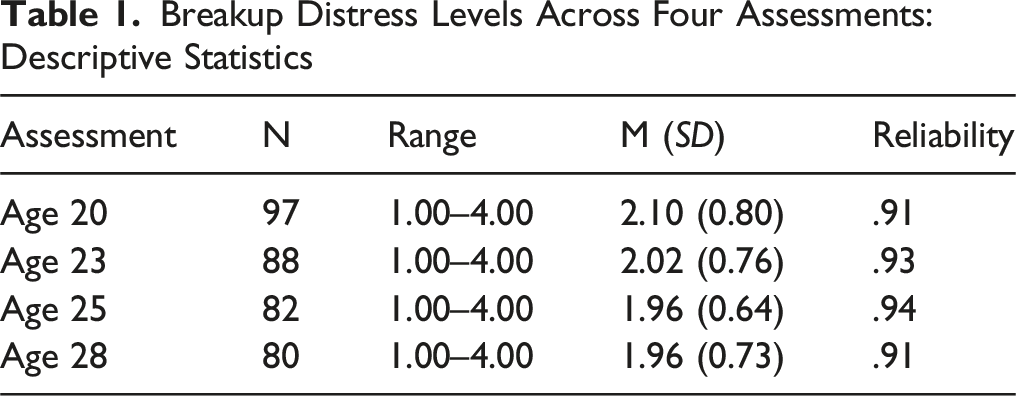
A trajectory analysis was conducted on the reported breakup distress scores across the four assessments. However, only 88 participants who reported at least two breakup experiences were included in the trajectory analysis. To determine the optimal number of trajectories, models with 2-6 trajectories were systematically compared using the Calinski-Harabasz index, the default selection criterion in the Kml R package. This criterion demonstrated clear superiority for the 2-trajectory model (standardized value ∼1.0) compared to alternatives: three trajectories (∼0.3), four trajectories (∼0.2), five trajectories (∼0.1), and six trajectories (∼0.0). The 2-trajectory solution also ensured adequate statistical power, with both trajectories containing sufficient participants (57 and 31 participants, respectively) to exceed the recommended threshold of 20-30 participants per trajectory group (Dalmaijer et al., 2022). The optimal partition, therefore, consisted of two change trajectories. The first trajectory (A), marked by a low, stable pattern of breakup distress, was applied to 65% of the sample. The second trajectory (B) was applied to the remaining 35% of the sample. This was characterized by high initial breakup distress at age 20, a significant decrease up to age 25 (p = .008), and another increase up to the last measurement at age 28 (p = .042). The two trajectories are presented in Figure 1 below. Descriptive data for the levels of breakup distress are presented in Table 1. Mean Level of Breakup Distress Across the Four Assessments for the Two Trajectories Breakup Distress Levels Across Four Assessments: Descriptive Statistics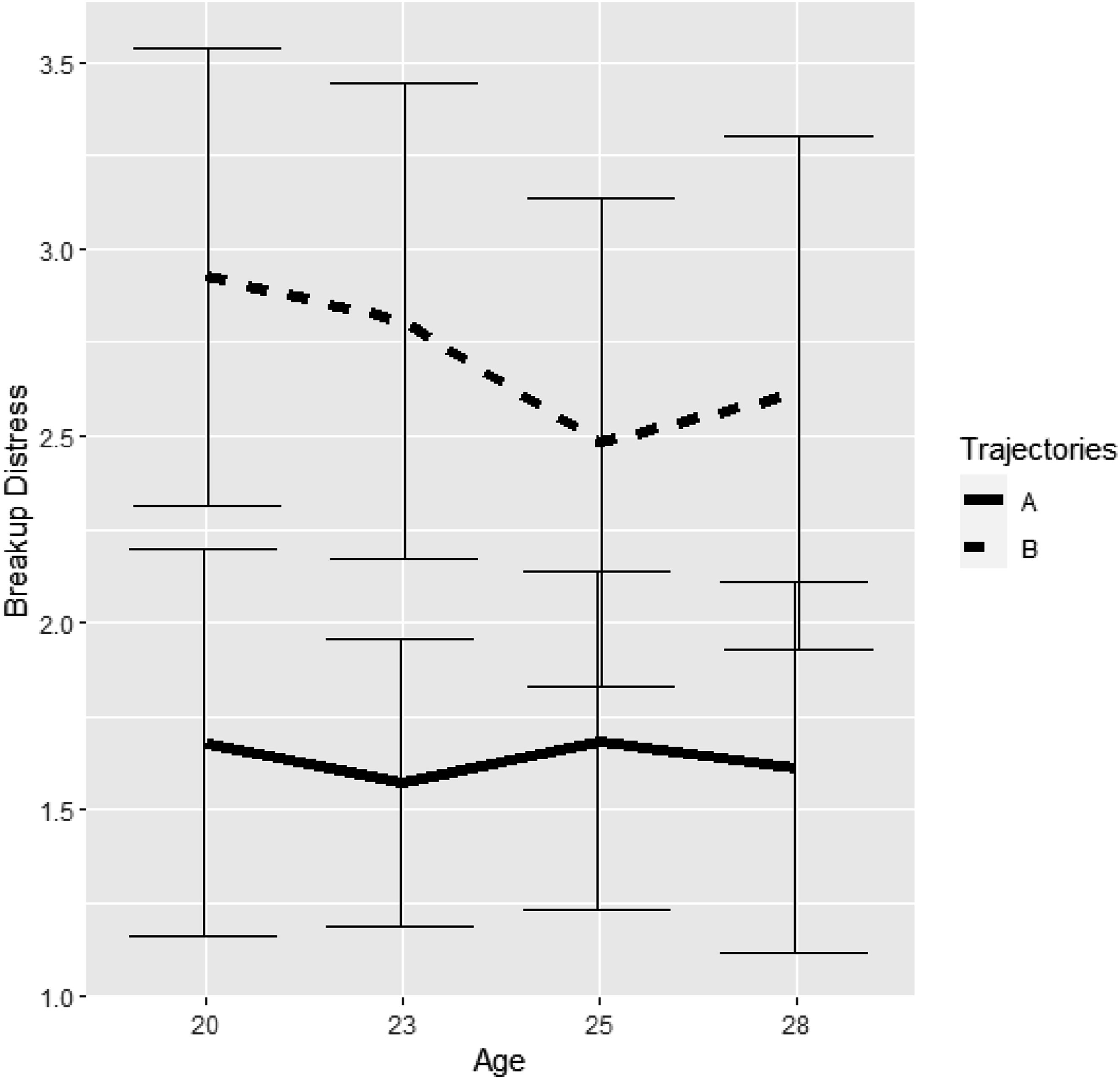
Patterns of Involvement in and Handling a Romantic Relationship Across Breakup Distress Trajectories and Inter-Rater Agreement
Reading the interviews gave the impression that women were more likely to affiliate with the high breakup distress trajectory. Therefore, first, a crosstabulation of gender across the high and low breakup distress trajectories was conducted and showed that of 21 men, only six were affiliated with the high breakup distress trajectory. In contrast, 17 of 32 women were affiliated with the high breakup distress trajectory. However, Chi-Square analysis showed that these differences were not significant: χ2 (df = 1, n = 52) = 3.11, p = .078. Thus, an affiliation of men versus women with the low or high breakup distress trajectory did not differ significantly.
As can be seen in Appendix A, different themes for staying or leaving a romantic relationship emerged in the analysis of the breakup stories. In addition, different themes emerged among the high and low distress young adults. Affiliates of the high distress group explained why they stayed in a difficult relationship or were not fully aware that the relationship was not good for them. In contrast, affiliates of the low distress group tended to describe greater awareness if a relationship was not good for them, to decide to leave such a relationship and draw lessons for future relationships.
A conceptual analysis of the different themes suggested that they could be collapsed into two broader, distinctive patterns of the ways emerging adults handle their romantic relationships and decide whether to stay in the relationship or to break up. The two patterns are presented below and conceptually capture individual difficulty versus capacity to handle a romantic relationship in an adaptive manner.
Willingness or Resistance to Give in to Controlling Behavior
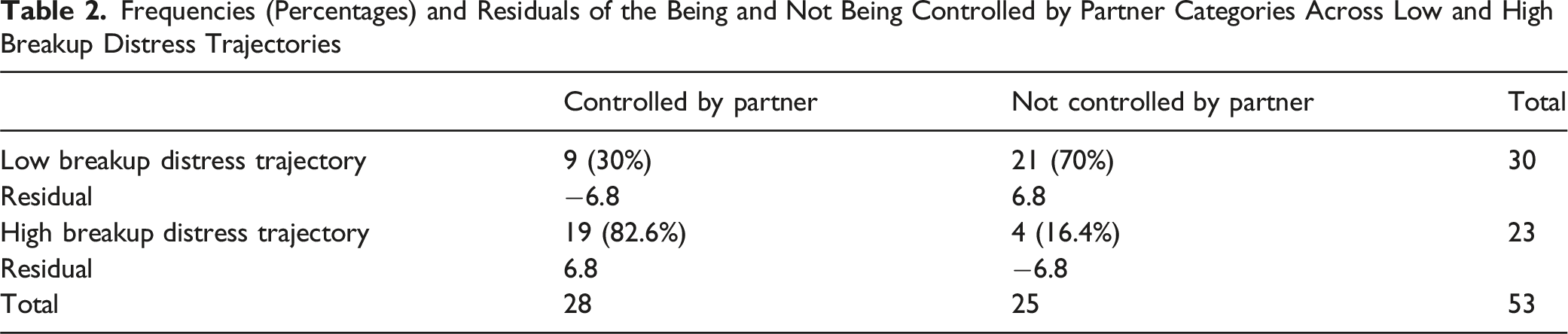
The first pattern that emerged focused on whether individuals are, or were, engaged and immersed in a relationship in which they tend to give up their own needs for the sake of keeping the relationship intact. Affiliates with continuous high breakup distress often described that they tended to get lost in their relationship and, as a result, were controlled by their partner. One participant described metaphorically: “There is a saying – blind love – and this was totally correct with me (to give up myself). I did not see anything. I did not see how he treated me, and I felt high and was very invested; I gave up; I surrendered my wishes.”)Sarah, age 27). Another participant attributed the willingness to give to their partner by sliding into this kind of relationship due to her high enthusiasm: “This relationship was very intense and full of enthusiasm, I could not see where it developed, and then I was afraid to lose this ‘wonderful’ relationship” (Rikki, age 28). Other participants described that they were not independent in their relationships. They described how quickly they became totally dependent on their partner. One participant described a feeling of being in a “deep hole” and not seeing beyond it. They tended to do everything together with their partner while neglecting their own wishes and preferences. One participant further described: “I regret this way of behavior, but admit I am also happy because I know that I did everything to keep this relationship intact; I loved him” (Danielle, age 29). Affiliates of the high breakup distress trajectory described that, in addition to being a placating person, they did not set any limits and allowed their partner to trample on their needs. “So when I bring somebody into my life, I quickly forget myself and what I truly want”(Ron, age 28).
In contrast, affiliates of the low breakup distress trajectory described a different reaction on becoming aware that their partner tried to control them. “She did not allow me to have my freedom and wanted me to follow her wishes. I felt that this was a relationship where I could not develop as a person, and after a while, I decided that this (the relationship) was not for me. The next relationship was similar; again, I found myself in a relationship that wanted me to be dependent. I quickly understood that this was not for me. These experiences were important teachers for the future” (Gadi, age 28). Heela, age 29, described: “This was quite a long relationship. It seemed to me that it was going well. Then I realized that he wants to dictate. One day, we had a disagreement, and when I was firm in not accepting what he wanted, he slapped me on my face. Right away, I understood this is not for me, no matter that he started apologizing, I decided it is (the relationship) over “. As can be seen, although members of the low breakup distress trajectory might also have described that they were involved in a relationship in which they were expected to give up their own needs and preferences once they realized that their partner expected them to give up their individuality, they decided to separate.
Furthermore, reading the stories of the low breakup distress trajectory suggested that these individuals reached some level of reflectivity and understanding of what was wrong in the relationship. On the contrary, members of the high breakup distress trajectory tended to give in to a controlling partner and were less likely to become reflective and decide that the relationship did not suit them.
In sum, the first pattern that emerged from the interviews assessed whether individuals were or were not willing to give in to a controlling partner and to stay in a relationship in which they were expected to “lose themselves,” become immersed in the relationship, give up their individuality, and allow the partner to control them. It was hoped that this pattern of behavior would keep the relationship intact. Interrater reliability for the first pattern was ICC = .89.
Frequencies (Percentages) and Residuals of the Being and Not Being Controlled by Partner Categories Across Low and High Breakup Distress Trajectories
Staying or Not Staying in a Difficult Relationship
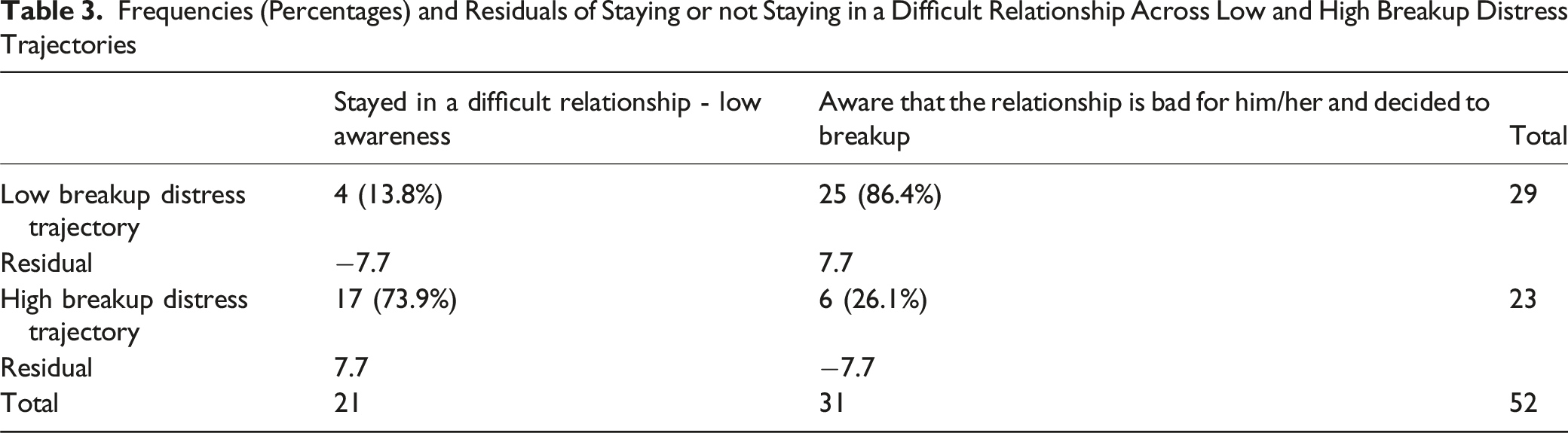
The second pattern that emerged referred to whether individuals stayed in or left a long relationship they explicitly described as difficult for them. Interestingly, despite the way they were treated and how they suffered, they stayed in the relationship. “ It was terrible, and I always cried in response to the way he talked to me when we had a fight, but overall, I felt that he loved me (Sharon, age 28)”. These individuals felt that they were loved, and to keep this feeling, they were willing to stay in the relationship. The high investment in a difficult relationship, despite thinking that they are involved in a loving relationship, can explain the surprise these individuals felt once their partner decided to break off. “My partner dumped me” - all of a sudden, out of the blue, after we had been together for a whole year. I was devastated. Honestly, I did not understand that it was not working; Only now I understand that we were not suited. There were warning signs, but I preferred not to see them” (Gila, age 29). Because separation was an unexpected surprise, it was common among these members of the high breakup trajectory to describe a highly intense reaction to the separation. One young woman described: “The breakup of my first love was very, very sad. I think I cried for half a year. I did not want to leave my room. I was in love over my head and did everything that I could to succeed. Then, all of a sudden, he decided to separate. This happened again in my second love. I was again very much in love. Sometimes, I wonder why I allowed it to go on for three years. I should have had more courage” (Dana, age 28).”
An additional explanation for staying in a difficult relationship was the fear of being alone. Reading the stories of affiliates of the high distress trajectory suggested that they were aware that they were involved in a difficult relationship, but the fear of staying alone prevented them from leaving the relationship. Rachel (age 27) said, “What guides me is that I do not want to be alone. So, I give in and refrain from fighting. I was with my partner for five years, and the separation was awful, difficult; I was left scarred.” The extent to which affiliates of the high distress trajectory are ready to take in order not to stay alone is well exemplified in Carmela’s (age 28) story: “One day my partner told me he wants us to have an open relationship, I was devastated, but it was important for me not to lose him, so I agreed.”
In contrast, affiliates of the low breakup distress trajectory often told different stories. They became aware of the difficulties while still in the relationship, and probably not being afraid to be alone for a while led them to dissolve the relationship. “We were in the relationship for almost a year, and I started to feel that I was suffocating. Little space for myself. She always demanded that we be together most of the time. So, I decided this was not for me. I am not a person to hurt another, but I had to make this decision” (Dan, age 28). Orly (age 27) also described: “ I think that altogether we were for about a year and a half. I started to feel that I was suffocating. He wanted us to be always together, only the two of us, and then I decided this was not for me. I also want to see my friends from time to time.” Feeling that the relationship does not leave room for independence was a common reason for deciding to separate, and this was repeated in many stories of affiliates of the low breakup distress trajectory. Another reason for separation in the low breakup distress trajectory was a feeling of the partner interfering with one’s self-development: “ I felt he dragged me down instead of lifting me up. Always take the backseat. So, I decided this was enough for me. He was very hurt when I decided to separate. I did not want to hurt him, but the separation was inevitable” (Rikki, age 27). Of note, in contrast to affiliates of the high breakup distress trajectory who were afraid to be alone, affiliates of the low breakup distress trajectory emphasized their need for independence, which guided their relationships.
In sum, the second pattern that emerged from the interviews assessed whether or not individuals stayed in a difficult relationship that they considered to be close and loving. Interrater reliability for the second pattern was ICC = .87.
Frequencies (Percentages) and Residuals of Staying or not Staying in a Difficult Relationship Across Low and High Breakup Distress Trajectories
Considered together, affiliates of the high and low breakup distress trajectories are described as being involved in different patterns of romantic relationships. Affiliates of the high breakup distress trajectory were likely to be willing to give in to a controlling partner, lose their voice, and give up on their wishes with the hope of keeping the relationship intact while overlooking the difficulties. In addition, affiliates of the high breakup distress trajectory tended to report that they stayed in a difficult relationship because they were afraid to be alone. “Forcing” themselves to stay in a difficult and controlling relationship was also associated with lower awareness, and they might have felt that they were involved in a loving relationship. This lack of awareness led them to be surprised when their partner suddenly decided to dissolve the relationship, and they were likely to respond with heightened distress for a long period of time. Needless to say, affiliates of the low breakup distress trajectory were less likely to be involved in such maladaptive relational patterns. Furthermore, due to their increased self-awareness and their value for independence, they were able to decide to dissolve a relationship where their independence and personal wishes were not respected. Affiliates of the high breakup distress trajectory were able to realize and understand the toll of staying in such a relationship only after being dumped by their partner.
Discussion
The current study is among the first to examine breakup distress across different breakup experiences over a period of eight years among emerging adults. Participants of the current study reported an average of three breakup experiences, suggesting that experiences of romantic breakups are common among emerging adults, as reported in the past (Shulman, 2024). A trajectory analysis determined by the Calinski-Harabasz index yielded two breakup distress trajectories spanning ages 20-28 years. The first trajectory represented a stable, low level of breakup distress across the different breakup experiences and across eight years. This trajectory comprised two-thirds of the sample. The remaining third of the sample was affiliated with the second trajectory, characterized by high initial breakup distress at age 20, a significant decrease up to age 25, and another increase up to the last measurement at age 28. Breakup experiences are common among emerging adults (Bae & Wickrama, 2019), but to the best of our knowledge, earlier studies did not assess breakup distress across repeated breakups. In this vein, the current study and its findings are among the first to show the different ways that emerging adults respond to repeated breakups. The large body of breakup research has often focused on a single breakup event, assessing the role of either situational or personal factors in post-breakup distress (Dailey et al., 2023). While our longitudinal design did not include specific data about situational aspects of each breakup (such as relationship qualities or breakup circumstances), it offered unique insights through repeated measurements across different relationships and time points. The stability of the first trajectory observed across years is particularly meaningful given that these measurements captured different relationships and breakups, suggesting that personal characteristics probably play a significant role. In addition, though some fluctuations in the level of distress were observed among affiliates of the second trajectory, it was high across the different assessments.
The two trajectories of breakup distress that emerged in the current study indicate the complexity of breakup distress and the role of individual differences in the patterns of breakup distress over time (Cicchetti & Toth, 2009; Costello et al., 2008; Magnusson, 2003). Two-thirds of our participants, belonging to the first trajectory, reported a stable low level of breakup distress across the different breakup experiences and across eight years. This low distress following a breakup may be associated with a higher level of security attachment (Gehl et al., 2024). Individuals high on attachment security, contrary to those high on attachment insecurities, employ more adaptive coping strategies following a breakup, such as finding meaning in stressful experiences (Sbarra & Hazan, 2008). They are consistently more competent at accommodating and know how to help themselves. This is reflected in their lower distress across separations and across time. Being in and out of relationships and experiencing multiple breakups is probably common among emerging adults (Bae & Wickrama, 2019; Shulman, 2024), and the majority of them know how to cope with a breakup. It might be that for a large number of individuals, these repeated experiences might have taught them how to face a breakup (Frost et al., 2016). The second trajectory, comprising a third of the sample, consistently reported a high level of breakup distress from the first assessment at age 20. As speculated above concerning the affiliates of the first trajectory, members of the second trajectory possibly have high attachment insecurities (Gehl et al., 2024). Therefore, over the eight years, they reported a high level of breakup distress quite consistently. Nevertheless, over time, some fluctuations in the level of breakup distress among affiliates of the second trajectory were found. The initial reported high breakup distress at age 20 decreased at age 25 and then increased again at age 28. Information about situational factors (such as the quality of the particular relationship or the characteristics of the breakup experience) of the different separation events was not collected in the current study, but the fluctuation in emotional responses raises the question of whether this echoes some effect of different situational circumstances.
An additional question is whether there are individual differences in the dialectics between situational and personal factors in determining the effect of each factor (Dailey et al., 2023). One could ask whether individuals who are more resilient and know how to cope with stress are less likely to be affected by situational factors. In contrast, individuals who have lower coping skills, such as the affiliates of the second trajectory, would be more affected by situational factors, and fluctuations in the level of breakup distress are more likely to be observed. This will have to be examined in a future study. The stories of the romantic relationships told by affiliates of the two trajectories shed light on the difference between the two trajectories. Affiliates of the high breakup distress trajectory described being involved in relationships in which they gave up their wishes and submitted to those of their partners; “ when I bring somebody into my life, I quickly forget myself and what I truly want.” Further, while in the relationship, they felt that they were involved in the best relationship they could have. In addition, a number of affiliates of the high distress trajectory explicitly described the relationship in which they were involved as difficult. They might have described that they suffered in the relationship but preferred to stay in the relationship rather than be alone. These relationship patterns recall the type of relationships in which preoccupied individuals tend to be involved, where the end is to be in a relationship at any price (Gehl et al., 2024). This pattern of continued high breakup distress recalls studies of bereavement, showing that relationship anxiety is associated with “chronic mourning” and preoccupation with the dead partner (Fraley & Shaver, 1999). The lack of awareness that these individuals are controlled by their partners corresponds to findings by Kansky and Allen (2017), showing that emerging adults who had difficulties moving on after a breakup also had difficulty developing a coherent narrative of the dissolved relationship. As a result, they tended to continue to idealize the dissolved relationship, and the difficulty of separating continued to be strong over time. This understanding of the relationship dynamic of affiliates of high breakup distress sheds light on the partner’s decision to separate, which came as a surprise to them. They believed they were involved in the best relationship they could have, and grief continued to be high over time. Furman and Collibee (2018) contended that experiences in close relationships are internalized and enacted in future relationships. Affiliates of the high distress trajectory may replicate their behavior in a future relationship with the hope of keeping a relationship intact as long as possible. Consequently, a future breakup again leads to increased breakup distress response, and the pattern of high distress continues in the future. In contrast to affiliates of the high distress trajectory, affiliates of the low distress trajectory were more likely to be aware of the quality of the relationship in which they were involved; “She did not allow me to have my freedom and wanted me to follow her wishes. I felt that this was a relationship where I could not develop as a person, and after a while, I decided that this (the relationship) is not for me”. They had the confidence and skills to manage their relationship, cope with difficulties, and make the decision to separate. A separation could thus serve as a learning arena for these individuals, as it did not result in high distress (Frost et al., 2016). Together, affiliates of the low distress trajectory described in their stories greater competence to manage their romantic relationships compared to affiliates of the high distress trajectory. It might be thus suggested that individuals affiliated with low breakup distress are more romantically competent, and findings of the study suggest that romantic competence is evidenced not only in handling a relationship but also in the capacity to cope with a breakup (Furman & Collibee, 2018; Shulman, 2024).
Machia and Ogolsky (2020) discussed the reasons that individuals choose to stay in or leave a relationship. Greater versus lower satisfaction and commitment are stronger reasons to stay or to leave. The stories of members of the high distress trajectory were either less aware of the pros and cons of leaving or staying, or were more guided by their fear of being alone. In contrast, members of the low distress trajectory indicated that they had the capacity to consider the different reasons to stay or leave and were able to make a decision. Furthermore, they might describe that they learned a lesson on how to handle a relationship in the future. Thus, breakup experiences have the potential to serve as a learning arena in interpersonal growth for a substantial number of emerging adults (Kansky & Allen, 2017), while for others, such as young adults who belong to the high distress trajectory, a breakup may increase their stress and undermine their confidence to handle a future relationship. In sum, following emerging adults over a period of eight years and assessing their distress response following repeated breakups sheds light on the distinctive ways that emerging adults cope with repeated breakups. Furthermore, the incorporation of the qualitative data added for understanding the cycle of why, in some cases, repeated breakups can serve as a model for future growth, while for others, it serves as a model for replicating difficulties in future relationships, and to experience elevated breakup distress consistently.
Strengths, Limitations, Future Research, Implications
The present work contributes to the existing literature on breakups in several ways. Existing research mostly focused on the study of the emotional sequelae following a single breakup event (Machia et al., 2023), though individuals are likely to experience a number of breakups throughout development (Arnett, 2000; Shulman & Connolly, 2013; Tashiro & Frazier, 2003). To the best of our knowledge, prior research did not examine the emotional sequelae following repeated experiences of romantic dissolutions, and the current study adds to the existing research. Moreover, the findings of this study suggest that there are individual differences in the pattern of responding to a breakup. There are individuals whose intensity of emotional response, even following a number of breakups, stays low over a period of eight years, whereas others are characterized by a consistently high level of distress across time and across repeated breakups. An additional strength of the study is that it employed a mixed-method design, and participants were given in-depth interviews about their romantic experiences. These romantic narratives of individuals who experienced repeated breakups shed light on the ways that experiencing a breakup might affect the quality of future relationships. In this vein, the current study adds to the existing research that has focused mainly on the emotional sequelae, such as depressive reactions, following a breakup. In addition, it raises the question as to the extent to which repeated breakup experiences are internalized and might affect the quality of future romantic competence (Furman & Collibee, 2018).
This study is not without limitations. First, this study is based on self-reports, and the sample is relatively small. Information from additional sources, such as partners or measures such as daily diaries, might enrich our data and provide an additional perspective. Participants reported breakup distress following a recent separation. However, no information about the quality of the relationship or the separation process was available. Also, we have no data on who initiated the separation at the different breakups. In addition, the time between the separation and reporting might affect the extent to which the distress is reported. Moreover, participants were asked to report on a breakup they experienced in the last twelve months, and did not report on a significant breakup that might have taken place earlier during the entire period of time between assessments. Reporting on distress shortly after the breakup might align with reporting greater distress. Unfortunately, this is very difficult to have participants right after a breakup, and this was not controlled in either of the four assessments and should be controlled in future research. Collecting more detailed data about a recent breakup and inquiring how it affected the participant more in-depth might provide more comprehensive information about the cumulative effects of repeated breakups. Further, it is important to emphasize that the current findings do not indicate a causative process. It might be that a third factor, such as personality, is likely to affect the capacity to manage a relationship as well as a breakup. Additionally, we do not have information about the sexual orientation and identity of the participants. Less is known about breakups among same gender couples and could shed light on how breakups are dealt with in these samples. Finally, this sample was comprised of Israeli youth. Israel is a Western culture, and research has shown that romantic encounters and relationships of Israeli emerging adults are similar to those of their Western counterparts (Shulman, 2024). However, despite these similarities, establishing a family and becoming a parent is highly valued in the Israeli culture (Schwartz, 1994), and a high percentage of young Israelis are married in their thirties. This suggests that there might exist some implicit pressure to move toward settling down. Affiliates of the high distress trajectory mentioned that fear of staying alone might lead them to stay in a difficult relationship. It might be that these young adults are more afraid that a breakup might increase the likelihood of not finding a partner for marriage in the future. Thus, it is possible that this fear of breakups might have caused young Israelis to assess or react differently to breakups and, in particular, toward the later stage of emerging adulthood. Therefore, it is important to replicate our findings in a different culture and, in particular, in more individualistic cultures.
Considering both the strengths and limitations of the current study, it is important to gather more data about the distinctive situational factors that play a role in the pattern of responding to a breakup across time. Relatedly, it is important to learn more about personal attributes, such as attachment style or coping capacity, which might affect the pattern of responding to repeated breakups over time (Gehl et al., 2024) and shed further light on the ways that emerging adults learn or have difficulties handling romantic relationships. The study also has a number of implications. The breakup research often focuses on the emotional sequelae of a breakup.
The findings of the current study suggest that it is also important to consider the ways that repeated breakup experiences are likely to affect future relationships. More specifically, it is important to be more aware of the adverse effects of repeated breakup experiences on a substantial number of young adults (affiliates of the high breakup distress trajectory). It would be important to try to identify these individuals and work on increasing their romantic competence. In addition, findings showed that high breakup distress affiliates are less competent in handling a romantic relationship. It would be important to raise awareness of the conditions when a relationship is toxic and gain the capacity to leave a difficult relationship, and learn what adaptive relationships look like. It might as well be important to educate young people about how adaptive relationships operate and how a breakup might be beneficial for future relationships.
In sum, romantic breakups can be common among emerging adults, but less is known about how individuals cope with repeated breakups. By following emerging adults over a period of eight years and assessing levels of breakup distress four times, we found individual differences in the trajectories of distress over time. Two-thirds of our participants reported consistently on a stable low level of breakup distress across time. In contrast, about one-third reported consistently on a high level of breakup distress that slightly fluctuated across assessments. Analysis of romantic interviews of the high and low distress individuals yielded interesting findings. Affiliates of the high breakup distress trajectory described as being involved in relationships in which they submitted to the wishes of their partners and were less aware of where the relationship led. In contrast, affiliates of the low distress trajectory described greater competence to manage their romantic relationships. Together, findings shed new light on understanding breakups among emerging adults and suggest that breakups can serve as a lens for understanding emerging adults’ romantic relationships.
Supplemental Material
Supplemental Material - Breakup Distress Trajectories Across Emerging Adulthood and the Quality of Romantic Relationships: A Mixed-Method Study
Supplemental Material for Breakup Distress Trajectories Across Emerging Adulthood and the Quality of Romantic Relationships: A Mixed-Method Study by Shmuel Shulman, Refael Yonatan-Leus, Asher Strauss, Tal Gabay in Emerging Adulthood.
Footnotes

Funding
The authors disclosed receipt of the following financial support for the research, authorship, and/or publication of this article: This study was supported by the Israeli Ministry of Health - Grant # 6412/12 and The Ben Dov Chair in Youth Psychology given to Shmuel Shulman.
Declaration of Conflicting Interests
The authors declared no potential conflicts of interest with respect to the research, authorship, and/or publication of this article.
Transparency and Openness Statement
The raw data is not openly available for download but can be sent upon request. The method of the qualitative analysis is described in detail in the manuscript. The materials can be sent upon request. The quantitative data was collected via Qualtrics. The link is in Hebrew and can be shared upon request.
Supplemental Material
Supplemental material for this article is available online.
Author Biographies
References
Supplementary Material
Please find the following supplemental material available below.
For Open Access articles published under a Creative Commons License, all supplemental material carries the same license as the article it is associated with.
For non-Open Access articles published, all supplemental material carries a non-exclusive license, and permission requests for re-use of supplemental material or any part of supplemental material shall be sent directly to the copyright owner as specified in the copyright notice associated with the article.
