







Abstract
The present study examined Colombian emerging adults’ interpersonal conflict narratives within a motivational framework of forgiveness, focusing on contexts of forgiveness and unforgiveness. A diverse sample of 227 emerging adults wrote stories in which they forgave and did not forgive a close social partner and responded to questions regarding their past violence exposure and gratitude. We coded narratives for resentment and retaliation, decisional/emotional forgiveness, and social partners as antagonists. Individual differences in past violence exposure and gratitude were associated with resentment, retaliatory desires/actions, and retaliation carried out. Resentment correlated positively with decisional and emotional forgiveness, revealing motivational complexity in transforming from malevolence to benevolence. Retaliatory desires/actions were linked to more explicit decisional forgiveness, but retaliation carried out was linked to less decisional forgiveness. Participants described more explicit forgiveness with family and romantic partners, consistent with interdependence theory’s assertion that higher relationship commitment motivates stronger benevolent transformations.
The capacity to forgive is an important component of social life, enabling growth of healthy relationships and psychological flourishing across the lifespan (McCullough, 2000; Rapp et al., 2022; Toussaint, 2022; van der Wal et al., 2017). Although much research defining and assessing conflict and forgiveness has occurred among emerging adults, these have tended to be college student samples of convenience, principally from WEIRD populations (Lawler-Row et al., 2007; McCullough et al., 2003; but see Wu et al., 2022). Little is known about how diverse samples of emerging adults construe forgiveness and unforgiveness, resentment, and retaliation in conflicts with various close partners at a stage in development when they become less dependent on families for support and increasingly reliant on meaningful relationships with friends, romantic partners, and colleagues (Arnett, 2000; Borjas et al., 2020). The present mixed-methods study examined resentment and retaliation in personal narrative accounts of conflict and forgiveness (and unforgiveness) with close social partners in association with past violence exposure and personal gratitude among Colombian emerging adults.
A Motivational Framework of Interpersonal Forgiveness
Interpersonal forgiveness fundamentally involves changes in individuals’ motivations to respond when harm occurs in their relationships. McCullough and colleagues’ (1998) framework originally identified two key motivational factors underlying responses to interpersonal offenses: avoidance motivation (the tendency to withdraw from the transgressor) and revenge motivation (the desire to seek harm against the transgressor or the “yearning to see a transgressor suffer”; Schumann & Ross, 2010, p. 1194). This theoretical foundation, defining forgiveness as the reduction of these motivations, shaped decades of subsequent forgiveness research and theory.
More recent research expanded this framework to include a third motivational factor: benevolence motivation (the tendency to act prosocially and constructively toward the transgressor) (McCullough et al., 2003, 2006). This framework recognizes that forgiveness does not just involve a reduction of malevolent motivations, but also an increase in benevolent motivations. Contemporary work suggests that interpersonal forgiveness is best understood as a general process of motivational change from malevolence to benevolence, particularly in close relationships where ongoing interaction and investment motivate individuals to repair those relationships (Forster et al., 2020). Evidence supported the idea that the conceptualization of forgiveness can be understood as a single attitudinal continuum, ranging from malevolence (revenge), to avoidance, to benevolence among young adults in both individualistic and collectivistic cultures. In short, a motivational framework recognizes that forgiveness often requires the presence of positive, relationship-building behaviors alongside the absence of negative responses and involves a transformation from malevolent to benevolent motives.
This motivational framework provides a foundation for understanding the processes underlying both resentment and retaliation in close relationships. Resentment, a “reactive feeling of bitterness, indignation, displeasure or ill will toward some condition, behavior, individual, group, or other agents” (TenHouten, 2018, p. 50), represents the emotional manifestation of sustained malevolent motivations (both avoidance and revenge), while retaliatory desires and actions reflect the behavioral expression of revenge motivation. Conversely, the development of benevolent motivations facilitates the emotional and behavioral changes characteristic of full forgiveness (Worthington et al., 2007). Understanding when, why, and with whom these motivational transformations occur is important to comprehend the process of forgiveness, particularly in close relationships that are central during emerging adulthood.
Building on this motivational understanding of forgiveness, most definitions of forgiveness emphasize how these underlying motivational transformations manifest in observable behavioral and emotional ways. Specifically, forgiveness involves two complementary processes: (1) the reduction of negative thoughts, feelings and behaviors (reflecting decreased revenge motivation); and (2) the enhancement of positive thoughts, feelings and behaviors (reflecting increased benevolence motivation) (McCullough et al., 2003; Worthington et al., 2005). These dual processes are captured in two core types of forgiveness that typically unfold sequentially: decisional and emotional forgiveness (Worthington et al., 2007).
Decisional forgiveness is an interpersonal, cognitive process focused on behavioral change–specifically, the conscious decision to reduce negative behaviors (such as retaliation or avoidance) and enhance positive behaviors toward the transgressor (Davis et al., 2015; Kaleta & Mróz, 2021; Worthington & Sandage, 2016; Wu et al., 2022). Often described as the “choice to forgive” decisional forgiveness represents the first step toward full forgiveness but is not sufficient to alleviate negative emotions. Consequently, individuals who engage in decisional forgiveness alone may continue to harbor negative feelings, ruminate, and hold a desire for retaliatory action (Worthington et al., 2007).
Emotional forgiveness, in contrast, involves the internal transformation of feelings toward the transgressor, reducing negative emotions (such as anger and resentment) while enhancing positive emotions (such as empathy and compassion) (Worthington & Sandage, 2016). This process can be driven by the desire for inner harmony or personal healing to support overall well-being (Kurniati et al., 2017; Wu et al., 2022). Full forgiveness typically requires both decisional and emotional components, with emotional forgiveness taking more time to develop (McCullough et al., 2003). Conversely, unforgiveness is characterized by the persistence of revenge and avoidance motivations, marked by continued retaliatory actions and sustained resentment toward the transgressor (Worthington & Wade, 1999).
Motivational Antecedents to Forgiveness: The Role of Resentment and Retaliation
Resentment and retaliation are key motivational barriers to forgiveness that operate within McCullough and colleagues’ (2003, 2006) motivational framework of forgiveness. As a persistent negative emotional state, resentment maintains and strengthens both avoidance and revenge motivations while inhibiting the development of benevolent motivations toward the transgressor (Feather & Nairn, 2005). Similarly, retaliatory desires and actions reflect the direct expression of revenge motivation, representing the urge to inflict harm in response to perceived injustice (Schumann & Ross, 2010). Yet the extent to which individuals harbor malevolent motivations largely depends on the nature of their relationship with the person who caused them harm. Interdependence theory posits that interaction within relationships is fundamentally shaped by the structure of situations that partners encounter, namely the degree to which each person’s outcomes depend on the other’s actions and whether their interests align or conflict (Kelley & Thibaut, 1978; Rusbult & Van Lange, 2003). In the case of interpersonal transgressions, individuals may put aside or “transform” their immediate self-interests for retaliation or revenge in favor of long-term relationship goals, concern for their partner’s welfare, or particular social norms. Such prosocial transformation, including forgiveness, is more likely to occur when individuals are strongly committed to the relationship and hold positive perceptions of their partner. In essence, interdependence theory suggests that the strength of motivational barriers to forgiveness is influenced by various relationship factors such as closeness and commitment, with individuals being more motivated to overcome malevolent motivations and develop benevolent responses in relationships characterized by higher interdependence and investment.
An important aspect of full forgiveness is letting go of resentment, which, while connected to the forgiveness process, ultimately becomes incompatible with emotional forgiveness. The experience of negative feelings appears to be necessary for forgiveness to occur (i.e., there must be something or someone to forgive), but the extent to which resentment (and the decision to let go of it) leads to decisional and emotional forgiveness is unclear. Though resentment is associated with lower psychological wellbeing (Almeida & Cunha, 2023; Bankard et al., 2023), relinquishing intense, negative feelings toward a person or situation may lead eventually to personal growth and greater well-being (Fisher & Exline, 2006). Understanding how individual characteristics such as gratitude, a prosocial trait that may compete with resentment, relate to these motivational processes remains an important area for investigation.
The experience of having been wronged or harmed by a peer can provoke one’s desire to seek revenge (MacEvoy & Asher, 2012). Revenge represents a fundamental motivational response that has been a feature of interpersonal conflict throughout human history, as illustrated in ancient stories such as the Greek tale of Achilles seeking revenge against Hector. Prior research indicated that some individuals experienced a desire for retaliation against a perpetrator driven by a desire for justice or for harming an individual who first caused harm (Recchia et al., 2020). Research with urban, Colombian mid-adolescents found that a desire for retaliation sometimes preceded the eventual forgiveness of a peer (Recchia et al., 2020). This research highlighted the complex interplay between individual characteristics and motivational responses to transgression, underscoring the role of key personal factors involved in malevolent versus benevolent motivations in interpersonal conflicts.
Individual and Contextual Differences in Motivations to Forgive and Not to Forgive
Past research indicated that individual differences and contextual factors were related to malevolent motivations (revenge) and the development of benevolent motivations in the context of forgiveness and unforgiveness for an interpersonal offense (Recchia et al., 2020). Violence exposure may normalize retaliatory and vengeful responses by providing models of aggressive conflict resolution, while simultaneously inhibiting the development of prosocial, benevolent responses to conflict. In contrast, gratitude may enhance prosocial motivations that compete with resentment and retaliatory desires by directing a person’s attention to positive aspects of relationships, thus fostering their benevolent orientations. Importantly, these individual factors may show different patterns of association with revenge and benevolence motivations depending on whether individuals are constructing narratives of forgiveness or unforgiveness.
Retaliatory desires and actions toward a peer were associated with past exposure to violence in the context of unforgiveness (but not forgiveness) experiences in one study (Recchia et al., 2020). This finding is consistent with another study of Colombian youth that indicated a negative link between past exposure to violence and crime and youths’ moral reasoning and capacity to forgive (Posada & Wainryb, 2008). In line with an evolutionary perspective (Billingsley et al., 2020), both studies suggest that environments with higher violence may activate defensive motivational systems that prioritize quick retaliation to deter future threats. This defensive orientation may be particularly relevant in the Colombian context, where decades of societal violence may have normalized retaliatory responses, while the collectivistic cultural emphasis on relationship harmony creates competing pressures toward benevolent motivations. This orientation may also be pronounced in contexts of unforgiveness, where retaliatory motivations persist without the counterbalancing development of prosocial motivations.
Consistent with interdependence theory (Rusbult & Van Lange, 2003), Recchia and colleagues’ (2020) qualitative analysis also revealed that instances of retaliation in the context of unforgiveness occurred selectively in relationships that were less intimate and were more often accompanied by hostile attributions of the perpetrator. While the desire for revenge is not uncommon, acting on that desire is less so. Collectively, findings suggest that, like resentment, the desire for retaliation is not atypical in the context of interpersonal conflict, particularly with less intimate partners, and even in scenarios that result in forgiveness. Acting on those desires, however, is less common and is associated with a history of exposure to violence (Crombag et al., 2003; Recchia et al., 2020).
Research indicates that forgiveness, particularly emotional forgiveness, promotes well-being, while unforgiveness marked by persistent resentment and desire for retaliation undermines it (McCullough, 2008; Toussaint, 2022; Worthington et al., 2007). Individuals who are higher in gratitude may be less likely to harbor resentment or pursue retaliation for past wrongs (Satici et al., 2014). Gratitude, “recognition and appreciation of an altruistic gift” (Emmons, 2004, p. 9), is linked to positive affect, life satisfaction, optimism, and empathy (McCullough et al., 2002; Portocarrero et al., 2020; Toussaint & Friedman, 2009) and may facilitate the motivational transformation from malevolence to benevolence underlying forgiveness. Recent studies on gratitude in Colombian school contexts have emphasized its importance in local culture as a valued moral virtue consisting of emotional, attitudinal, and behavioral components, expressed in a wide diversity of interdependent social relationships encompassing the family, friendship, study/work, and even spiritual domains (Carrillo et al., 2023; Gómez et al., 2022; Ingram et al., 2023). Given gratitude’s role as a prosocial character strength that may compete with malevolent motivations in the forgiveness process, the present study examined how individual differences in gratitude related to emerging adults’ narrative constructions of resentment, retaliation, and decisional and emotional forgiveness.
Developmental Context
Emerging adulthood represents a critical developmental period when peer relationships become increasingly important for social support and identity formation. During this period, individuals actively establish new patterns of relationship investment, commitment, and satisfaction as they transition from family-dependent to more autonomous social networks (Arnett, 2000). These new relational patterns can influence forgiveness motivations throughout adulthood (Kelley & Thibaut, 1978; Rusbult & Van Lange, 2003). The increased salience of peer relationships during emerging adulthood makes this period particularly important for understanding how motivational systems underlying forgiveness operate in close relationships.
The interdependent development of conflict management and forgiveness in Colombian emerging adults is shaped by the nation’s distinct socio-cultural milieu, characterized by collectivistic values, a culture of honor, and a history of societal violence. Colombia’s collectivistic orientation emphasizes familismo (familism) and relationship harmony (Cahill et al., 2021; Lopez et al., 2022), theoretically promoting benevolent motivations and forgiveness, particularly within interdependent relationships with family and romantic partners. However, this coexists with a culture of honor that can normalize retaliatory responses to personal affronts as a means of restoring social status and justice (Nisbett & Cohen, 1996; Uskul et al., 2023). This tension is further complicated by decades of internal armed conflict, which has exposed many young people and their families to violence, potentially strengthening malevolent, vengeful motivations as a defensive adaptation (Posada & Wainryb, 2008; Recchia et al., 2020). Colombian emerging adults are thus situated within a developmental context where the push for relational harmony competes with models of honorable retaliation and the psychological legacy of violence, as they move from family-oriented to peer- and work-oriented interaction spheres. This makes their navigation of social and motivational processes surrounding forgiveness, in response to the interpersonal transgressions that inevitably befall them from time to time, both complex and culturally significant.
Present Study
Drawing on the motivational framework described above, the present mixed-methods study aimed to examine how Colombian emerging adults construct meaning around malevolent motivations (resentment and retaliation) and motivational transformation (descriptions of decisional and emotional forgiveness) in personal narratives about interpersonal conflict and forgiveness (and unforgiveness) in association with past exposure to violence and gratitude. To understand how these motivational processes underlying forgiveness operate in the close relationships central to emerging adulthood, the present study analyzed personal conflict narratives from this sample. A narrative approach allows individuals to create meaning out of conflict experiences with close others; in doing so, it reveals how motivational processes underlying forgiveness are experienced, interpreted, and given meaning in real, interpersonal relationships (Bruner, 1990). Colombia provides a particularly rich context for this investigation given its collectivistic cultural values emphasizing relationship harmony alongside a history of armed conflict that may have shaped approaches to interpersonal retaliation and forgiveness. Building on prior work with Colombian mid-adolescents (Recchia et al., 2020), we extended this research to an older and more diverse sample.
Our first goal was to examine individual and contextual correlates of motivational expressions in the forgiveness process. Specifically, we aimed to examine descriptions of malevolent motivations (resentment and retaliation) in association with individual differences in past exposure to violence and gratitude and with the unique contexts of forgiveness versus unforgiveness. Based on prior research linking violence exposure to youths’ (diminished) capacity to forgive in a Colombian society (Posada & Wainryb, 2008) and their increased likelihood to engage in retaliatory responses and vengeful behavior towards peers in the context of unforgiveness, specifically (Recchia et al., 2020), we hypothesized that resentment and retaliatory desires and actions described in unforgiveness narratives would correlate positively with past violence exposure. We also were interested in associations between resentment and retaliation and personal gratitude, hypothesizing negative associations between narrative descriptions of malevolent motivations and the personal character strength. Regarding our investigation of differences between the contexts of forgiveness and unforgiveness, we predicted that resentment and retaliatory desires and actions described in forgiveness narratives would be less explicit than in unforgiveness narratives.
Our secondary goal was to examine the extent to which participants described their experiences with decisional and emotional forgiveness (indicators of motivational transformation) within the forgiveness narratives, and the associations of decisional and emotional forgiveness with resentment and retaliation. We hypothesized that the explicitness of decisional and emotional forgiveness descriptions would be positively correlated and that more explicit descriptions of decisional and (in particular) emotional forgiveness would be associated with less explicit descriptions of resentment and retaliation (Worthington et al., 2007). Given that full forgiveness is a process that takes time (McCullough et al., 2003; Worthington & Drinkard, 2000), we also hypothesized that both aspects of forgiveness would be more explicit in conflicts described as occurring in the more distant past.
An exploratory aim of the present study was to examine the variety of social partners portrayed as antagonists in emerging adults’ forgiveness and unforgiveness conflict narratives. We did not have explicit hypotheses about differing levels of resentment, retaliation, and forgiveness for different types of antagonists. However, considering that individuals generally are more motivated to repair relationships with close and committed social partners (McCullough et al., 1998; Rusbult & Van Lange, 2003), we hypothesized that emerging adults would be more inclined to describe conflicts with more intimate social partners, such as family and romantic partners, in forgiveness (compared to unforgiveness) narratives. Similarly, within forgiveness narratives, we expected more explicit decisional and emotional forgiveness in conflicts with family and romantic partners compared to other social partners.
Method
Participants
A diverse sample of 227 Colombian emerging adults (M = 25.80 years, SD = 3.24; 120 female, 103 male) were recruited online via Netquest (https://www.netquest.com/), a digital data collection platform commonly used in Spanish-speaking countries. Participants were recruited across all five main regions of Colombia, namely the Andean (36%), Caribbean (25%), Orinoquian (20%), Pacific (16%), and Amazonian (4%) regions. Participants were ethnically diverse, with 28.2% identifying as white, 19.4% as ethnically mixed, 8.8% as Afro-Colombian, 1.8% as Indigenous, .4% as Gitano, 20.3% as “other”, and 9.7% who preferred not to respond. Colombia utilizes a 6-level socio-economic stratification system based on place of residence, with neighborhoods ranging from 1 (lowest income) to 6 (highest income). Participants were socio-economically diverse, too, with 35% living in level 1–2 neighborhoods, roughly 37.5% living in level 3–4 neighborhoods, and 14% living in level 5–6 neighborhoods, while 13% did not indicate their social strata.
Procedures
The study was approved by institutional review boards in both Colombia and the United States. We distributed a link to a Qualtrics survey via the Netquest platform described above. This survey link allowed us to collect the qualitative and quantitative responses that characterized our convergent mixed-methods research approach (Creswell & Clark, 2017). Individuals ranging in age from 18–30 were eligible to participate. Upon opening the survey link, participants were provided with a consent form that described the procedures, voluntary nature of the study, risks and benefits of being in the study, compensation, privacy, and who to contact if questions arise about the study. The median time taken to complete the survey was 18 minutes, and participants were compensated with ‘points’ worth approximately $7.50 USD/hour, which they could redeem for various products through Netquest. Data collection took place between August 26 and September 28, 2022. We exported participants’ responses to SPSS (quantitative measures) and Excel (qualitative responses) for data cleaning, coding, and analysis. To increase the validity of the response set, we included three validation questions in our survey, which prompted participants to select an obviously true response. Thirty-nine respondents (14.4%) failed at least one of these questions and were therefore deleted from the dataset before primary analyses began.
Measures
Past Exposure to Violence
Participants completed a Spanish translation of a modified Lifetime Exposure to Violence scale (Buka et al., 1997; ⍺ = .74) utilized by Recchia et al. (2020) with a Colombian adolescent sample. The measure contains items that assess the presence (1) or absence (0) of lifetime exposure to various forms of violence that increase in severity across the items. Items are summed to create three subscales of past exposure to violence experienced as a witness, victim, or indirectly. For the present study, we utilized the 7 items that comprised the witness subscale because the scale was normally distributed with good variability across participants (e.g., “Have you ever seen someone else get attacked with a weapon?”).
Gratitude
Participants completed the Gratitude Questionnaire-Six-Item Form (GQ-6), a six-item self-report questionnaire designed to assess individual differences in the propensity to experience gratitude in daily life (e.g., “I have so much in life to be thankful for”; McCullough et al., 2002; ⍺ = .70). The scale is measured on a 7-point Likert scale (1 = strongly disagree; 7 = strongly agree) and two negatively worded items are reverse-scored. Participants completed the questionnaire in Spanish, using a translation validated with an adolescent and adult sample in Chile (Langer et al., 2016).
Narrative Measures
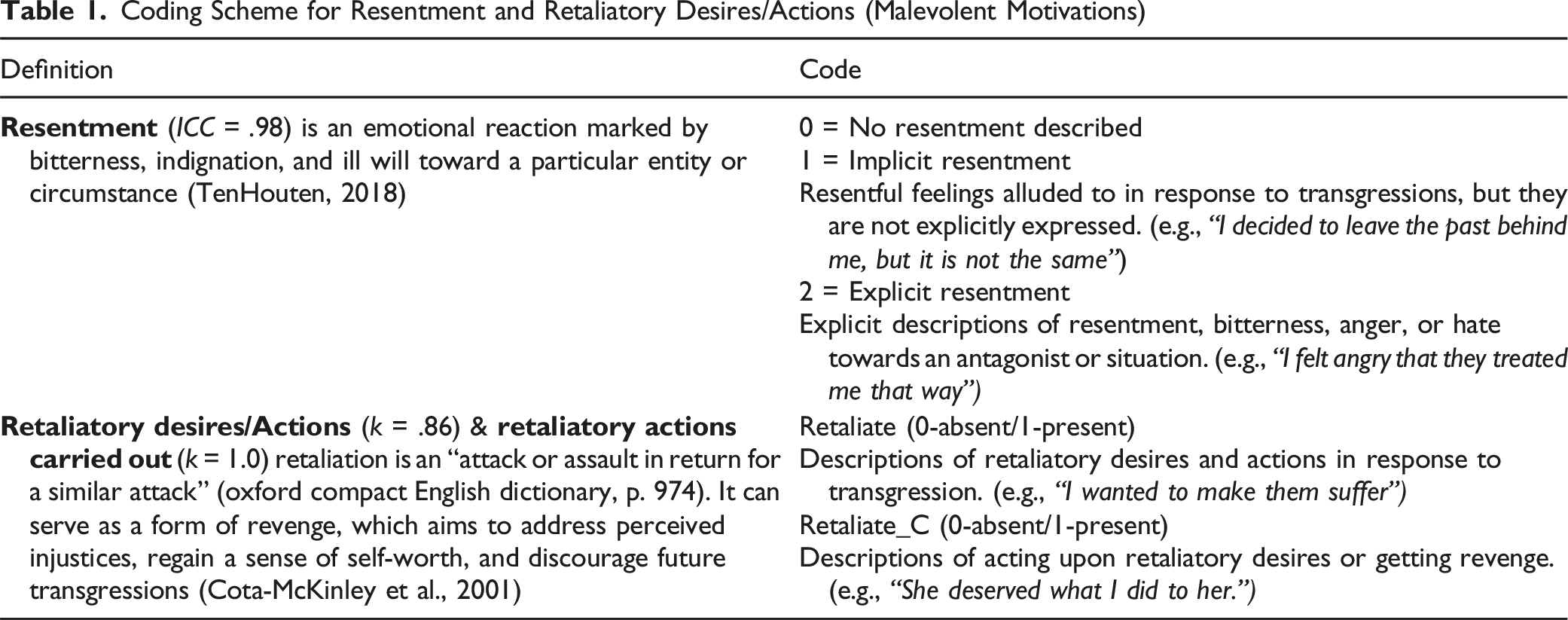
Each participant wrote two narratives (in Spanish) about past conflict experiences with a close peer in which they “were so hurt or angry that they wanted to get back at them but ended up forgiving [or not forgiving] them.” (se sintió tan herido o enfadado que quiso vengarse de él/ella, pero al final le [no] perdonó). They were instructed to write everything they remembered about that experience. Stories were translated into English and back-translated into Spanish by bilingual speakers naïve to the hypotheses of the study. Following recommendations for analyzing qualitative data by in vivo coding to identify themes related to malevolent motivations (resentment and retaliation) and indicators of benevolent transformation (decisional forgiveness and emotional forgiveness; Miles et al., 2019), the research team began with close reading and open coding of approximately 475 of forgiveness/unforgiveness narratives, taking note of examples and patterns that seemed to exemplify the constructs of interest.
Coding Scheme for Resentment and Retaliatory Desires/Actions (Malevolent Motivations)
Coding Scheme for Decisional and Emotional Forgiveness (Indicators of Motivational Transformation)
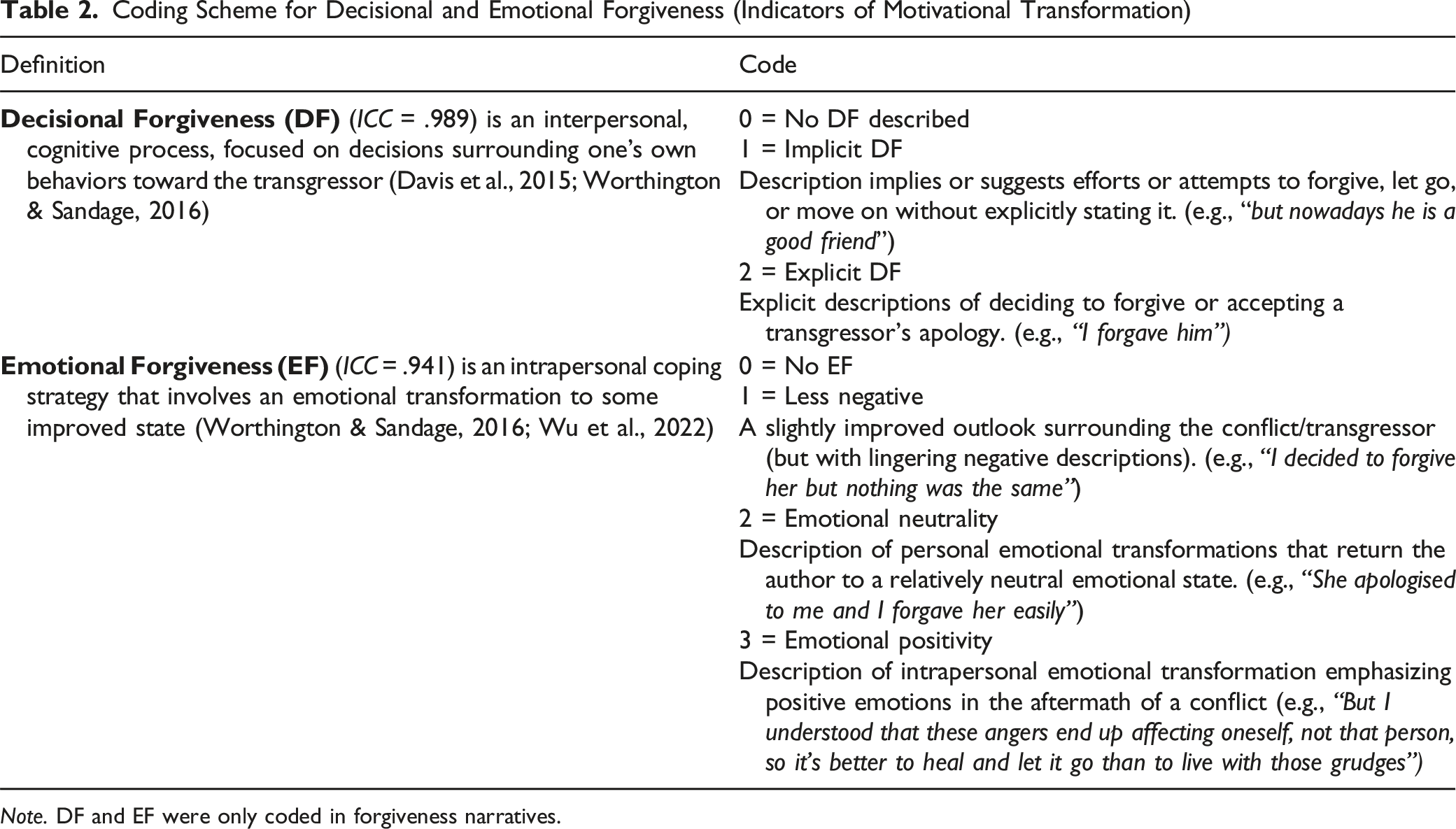
Note. DF and EF were only coded in forgiveness narratives.
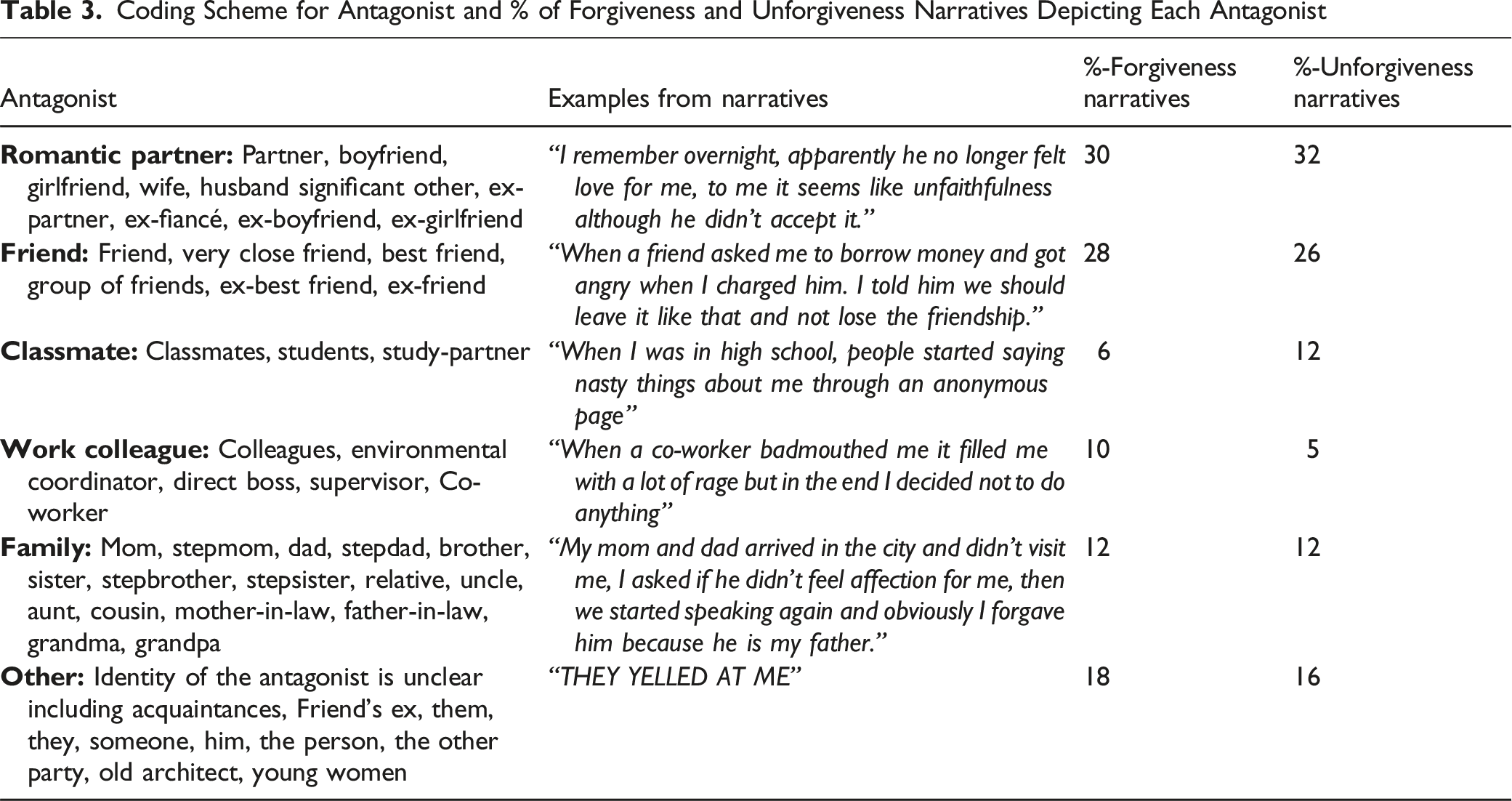
Coding Scheme for Antagonist and % of Forgiveness and Unforgiveness Narratives Depicting Each Antagonist
Data Analytic Plan
Data analyses were conducted using SPSS version 28. After ensuring study variables met criteria for normality, we employed a convergent mixed-methods approach (Creswell & Clark, 2017), combining quantitative analyses of coded narrative variables with quantitative measures to address our research questions. Descriptive analyses included relative frequencies (rf) for categorical narrative codes, representing the proportion of cases in each category to provide standardized comparisons across coding schemes with varying scales.
For inferential statistics, Spearman’s rho correlations examined associations between ordinal narrative variables (resentment explicitness, decisional/emotional forgiveness explicitness) and continuous variables (gratitude, violence exposure, time since conflict). Binary logistic regression models predicted dichotomous outcomes (expressions of malevolent motivations: retaliatory desires/actions; retaliation carried out) from continuous predictors (gratitude, violence exposure), with odds ratios (OR), 95% confidence intervals, Nagelkerke R2, and classification accuracy reported. Paired-samples t-tests compared malevolent motivational expressions (retaliatory desires/actions; retaliation carried out) between forgiveness and unforgiveness contexts, while independent-samples t-tests examined motivational transformation toward benevolence (decisional and emotional forgiveness) across antagonist types. Fisher’s exact tests assessed categorical variable relationships when cell counts were small. All analyses used α = .05 significance level for interpretation of results.
Results
Individual and Contextual Correlates of Malevolent Motivational Expressions
To investigate our primary goal regarding individual and contextual differences in malevolent motivational expressions (resentment and retaliation), we first conducted a series of Spearman’s rho correlations to examine associations between the explicitness of resentment described in conflict narratives and past violence exposure and gratitude. Resentment described in unforgiveness narratives correlated negatively with gratitude, r (185) = −.169, p = .022. We conducted a series of binomial logistic regressions to predict the effects of past violence exposure and gratitude on the likelihood that participants described retaliatory desires/actions (yes/no) and retaliatory actions carried out (yes/no) in forgiveness and unforgiveness narratives. With both predictors included in the models, the logistic regression model for retaliatory desires/actions described in unforgiveness narratives was statistically significant, χ2 (2) = 6.55, p = .038. The model explained 6% of the variance (Nagelkerke R2) and correctly classified 81.4% of cases. Past exposure to violence was not linked to an increased likelihood of expressing retaliatory desires/actions (OR = 1.08, 95% CI [.88, 1.31], p = .464). Increasing gratitude was associated with a reduction in descriptions of retaliatory desires/actions (OR = .65, 95% CI [.45, .93], p = .018). The model for retaliatory actions carried out in unforgiveness narratives was marginally significant, χ2 (2) = 5.35, p = .069. The model explained 19.2% of the variance (Nagelkerke R2) and correctly classified 65.7% of cases. Increasing past violence exposure was significantly associated with an increased likelihood of carrying out retaliation, OR = 1.55, 95% CI [1.01, 2.38], p = .045. Gratitude was not associated with the likelihood of carrying out retaliation, OR = .83, 95% CI [.43, 1.59], p = .830.
To compare malevolent motivations [mean levels of resentment, retaliatory desires or actions, and retaliation carried out] described in forgiveness versus unforgiveness narratives, we conducted a series of paired samples t-tests. There were no differences in the explicitness of resentment described in forgiveness (M = 0.92; SD = 0.87) and unforgiveness (M = 0.90; SD = 0.82) narratives, t (166) = .20, p = .42. Likewise, forgiveness narratives (M = 0.21; SD = 0.41) did not differ significantly from unforgiveness narratives (M = 0.19; SD = 0.39) in descriptions of retaliatory desires or actions, t (163) = .44, p = .33. Finally, among the stories that described retaliatory desires or actions, there was no statistically significant difference between unforgiveness narratives (M = 0.44, SD = 0.53) and forgiveness narratives (M = 0.22, SD = 0.44) in descriptions of carrying out retaliation, t (8) = 1.51, p = .09.
Motivational Transformation Toward Benevolence: Decisional and Emotional Forgiveness
To address our secondary goal, we examined how explicitly participants described motivational transformation toward benevolence (decisional and emotional forgiveness) in forgiveness narratives and whether each type of forgiveness was associated with malevolent motivations (levels of resentment and retaliation) and time since the conflict occurred. We first computed the relative frequency of each category of decisional and emotional forgiveness. For decisional forgiveness, the frequencies were as follows: No DF (rf = .51); Implicit DF (rf = .22); and Explicit DF (rf = .27). For emotional forgiveness, the frequencies were No EF (rf = .50); Less Negative (rf = .24); Neutral (rf = .18); and Emotional Positivity (rf = .08). A statistically significant Fisher’s exact test (p < .001) indicated that the proportion of individuals who described emotional forgiveness (less negative, neutral, and positive) was significantly greater than expected by chance when individuals described explicit decisional forgiveness compared to no descriptions of decisional forgiveness in personal conflict stories. In general, descriptions of explicit decisional forgiveness were accompanied by a description of some type of emotional forgiveness (see Figure 1). Further indication of this was observed with a statistically significant Spearman’s rho correlation, indicating that decisional forgiveness correlated positively with emotional forgiveness, r (191) = .65 p < .001. Emotional and decisional forgiveness both correlated positively with time since the conflict occurred, EF: r (191) = .16, p = .027; DF: r (191) = .13, p = .07, supporting the notion that forgiving a close social partner’s transgression is a process that takes time. Decisional and emotional forgiveness in narrative (forgiven) accounts of interpersonal conflict.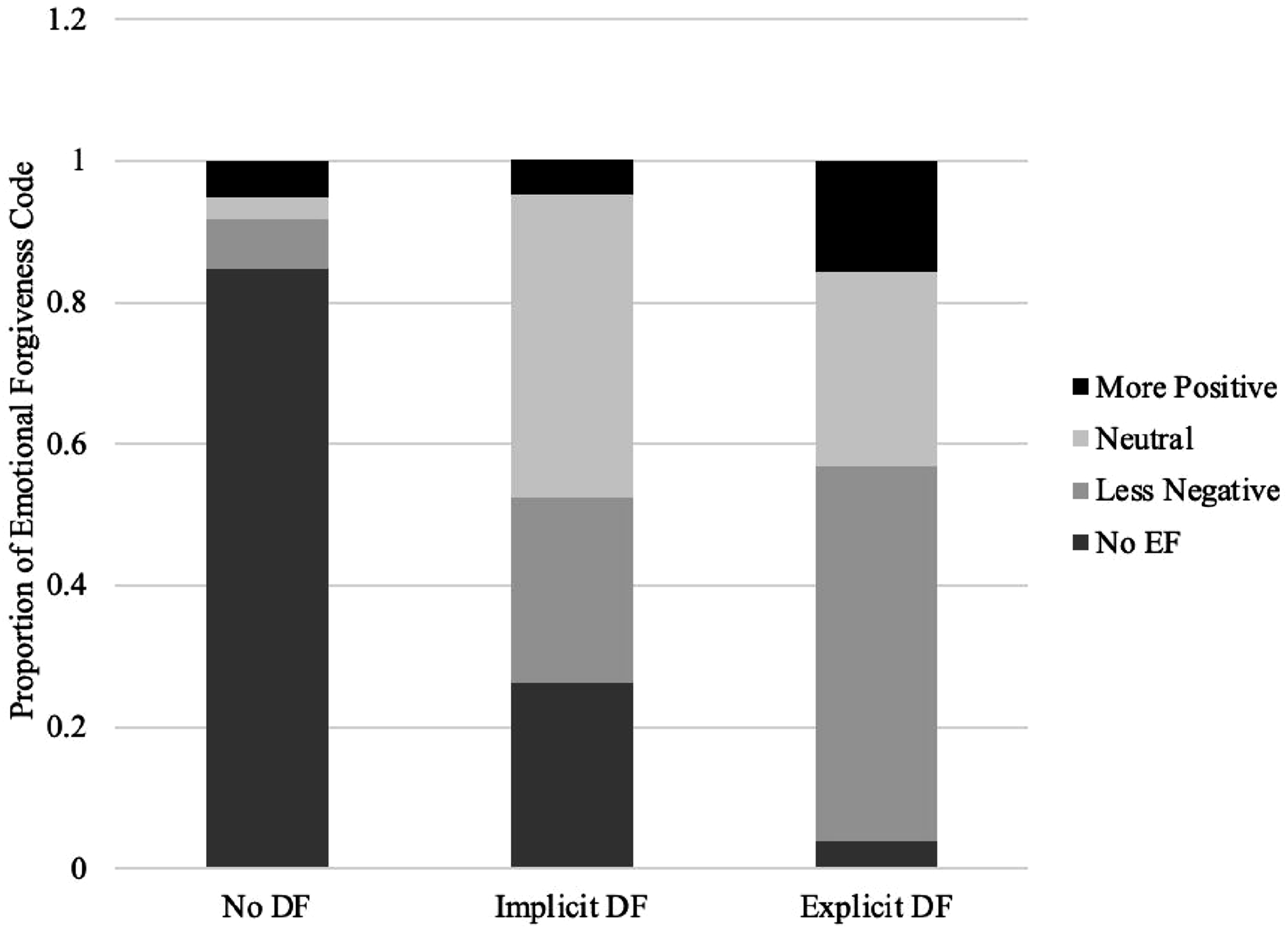
Next, we examined associations between indicators of motivational transformation (explicitness of decisional and emotional forgiveness) and malevolent motivations (explicitness of resentment, retaliatory desires/actions, and retaliation carried out) described in forgiveness narratives. Both decisional and emotional forgiveness correlated positively with descriptions of resentment (DF: r (191) = .26, p < .001; EF: r (191) = .24, p < .001). Decisional forgiveness correlated positively with descriptions of retaliatory desires/actions (r (190) = .18, p = .014) and negatively with descriptions of retaliation carried out (r (40) = −.45, p = .003).
Relationship Context and Motivational Transformation: the Role of Social Partner Type
Finally, to investigate an exploratory aim of our study regarding the variety of social partners portrayed as antagonists in conflict stories, we first calculated the relative frequency with which each antagonist type (romantic partner, friend, classmate, work colleague, mom, dad, sibling, non-immediate family member, self and other) was described in the forgiveness and unforgiveness narratives. Because frequency counts were low for the family-related categories (mom, dad, sibling, and non-immediate family), we combined these into one category. Romantic partners were most frequently portrayed as antagonists in both the forgiveness (rf = .30) and unforgiveness narratives (rf = .32), followed by friends (rf forgive = .28; rf unforgive = .26). Proportions for each antagonist category were almost identical within the forgiveness and unforgiveness accounts (see Table 3).
We conducted a series of independent-samples t-tests to examine whether indicators of motivational transformation (explicitness of decisional and emotional forgiveness) varied depending on the antagonist involved in the conflict in forgiveness narratives (see Figure 2). Participants described more explicit decisional, t (171) = 3.52, p < .001, and emotional forgiveness, t (171) = 3.55, p < .001, in conflicts with family members; more explicit decisional forgiveness, t (173) = 1.79, p = .038, (but not emotional forgiveness, t (173) = .45, p = .33) with romantic partners; and less decisional, t (21.5) = 2.21, p = .038, and emotional forgiveness, t (23.18) = 2.47, p = .021, with colleagues. Decisional and emotional forgiveness in narratives of (forgiven) interpersonal conflict by antagonist.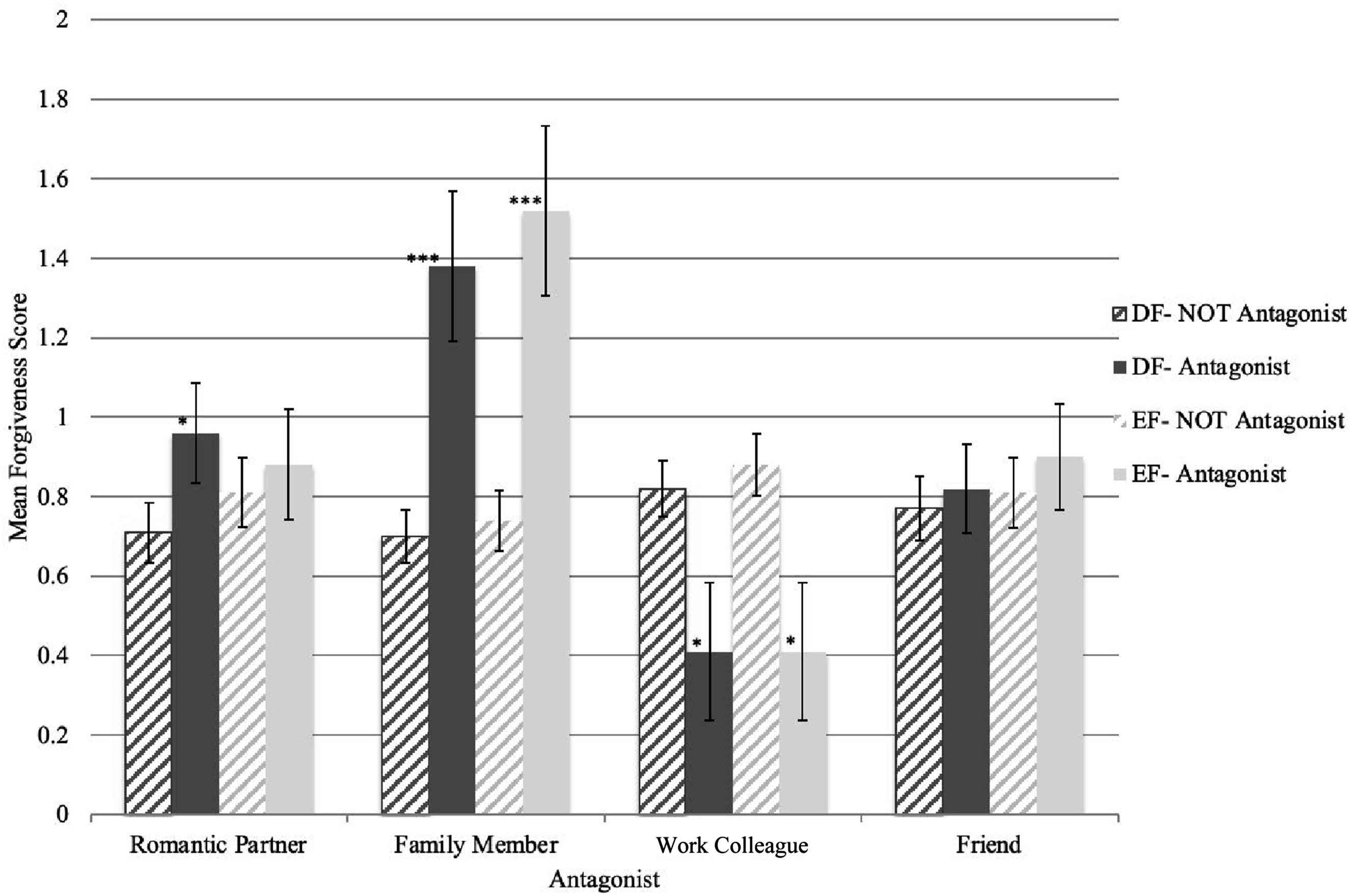
Discussion
The present study sought to examine how Colombian emerging adults made meaning out of motivational processes underlying forgiveness and unforgiveness in interpersonal conflict experiences through creating personal narratives. By analyzing how these young adults construed malevolent motivations (resentment and retaliation) and benevolent transformations (decisional and emotional forgiveness) in their conflict stories, we gained insight into the complex interplay between individual characteristics and motivational responses involved in the forgiveness process. First, we examined differences in construals of resentment and retaliation in association with past exposure to violence and gratitude in forgiveness and unforgiveness narratives. Our hypotheses were partially supported: while the narrative context was not associated with differing descriptions of malevolent motivations, individual differences in past violence exposure and gratitude were associated with descriptions of resentment, retaliatory desires, and retaliation carried out. Secondly, within forgiveness narratives, we examined links between indicators of motivational transformation (decisional and emotional forgiveness), malevolent motivations (resentment, retaliation), and time since the conflict occurred. As hypothesized, decisional and emotional forgiveness were positively correlated, and both were associated with time since the conflict occurred. Contrary to hypotheses, resentment (a malevolent motivation) correlated positively with both decisional and emotional forgiveness (indicators of benevolent transformation). Retaliatory desires/actions also were linked to more explicit decisional forgiveness, but retaliation carried out was linked to less decisional forgiveness. Finally, as an exploratory aim, we examined the variety of social partners portrayed as antagonists in participants’ conflict narratives and associations with decisional and emotional forgiveness within forgiveness narratives specifically. Romantic partners, followed by friends, were the most common social partners portrayed as antagonists in both forgiveness and unforgiveness narrative accounts. Within forgiveness narratives, decisional and emotional forgiveness varied by the antagonist, with higher levels of forgiveness described in stories about more intimate (family and romantic) partners.
Individual Differences in Malevolent Motivational Expressions
Past violence exposure was associated with a greater likelihood of carrying out retaliation in the context of unforgiveness specifically. From a motivational perspective (McCullough et al., 2003), this suggests that violence exposure may strengthen revenge motives while inhibiting the development of benevolent responses, particularly when malevolent motivations persist (as in unforgiveness contexts). Our findings are consistent with past research (Recchia et al., 2020) and suggest that witnessing violence during early, formative years may provide individuals with a more vengeful model of responding to conflict. The decision to act (or refrain from acting) on strong, negative emotions may be influenced by factors such as past exposure to violence and more positive dispositional qualities, such as gratitude.
In support of this, we found that gratitude correlated negatively with descriptions of resentment and predicted a lower likelihood of describing retaliatory desires/actions in unforgiveness accounts, supporting this emotion’s characterization as a kind of “mirror image” of resentment (Roberts, 2004). From a motivational perspective, this suggests that dispositional gratitude may compete with malevolent motivations even (or especially) in the context of unforgiveness. This is related to past findings that enhanced feelings of gratitude were associated with a lower likelihood of seeking vengeance (Satici et al., 2014) and it could reflect the important role of creating personal narratives to make meaning of conflict experiences. Experiencing high degrees of gratitude may be incompatible with explicit feelings of resentment toward and desire for retaliation against a close partner in cases where the individual has not forgiven that person. On the other hand, within the context of forgiveness, it may be more feasible for gratitude to co-exist with (previous feelings of) resentment. One possibility is that individuals with (previous) higher levels of gratitude might be less likely to hold onto feelings of bitterness or the desire to act on retaliatory actions, instead choosing to focus more on positive feelings and personal appreciation for growth (Howells, 2022). Another possibility is that individuals might feel (posterior) gratitude for overcoming feelings of bitterness and resentment towards a close social partner whom they eventually forgave, in a form of post-traumatic growth (Bowen, 2023).
Similarities in Malevolent Motivations Described in Narrative Contexts of Forgiveness and Unforgiveness
While we observed individual differences associated with malevolent motivations (resentment and retaliation), descriptions of resentment and retaliatory desires/actions were similar in contexts of forgiveness and unforgiveness. This was not consistent with our expectation of more resentment in unforgiveness accounts. As participants were asked to recount two peer conflict scenarios involving both forgiveness and non-forgiveness, observed differences in resentment and retaliation were likely due to individual-level differences rather than the prompt. It is also possible that because we explicitly prompted participants to think of malevolent motivations (i.e., “a time in which you were so hurt or angry by a peer you wanted to get back at them”) for both the forgiveness and unforgiveness narratives, it precluded the observation of meaningful differences between the two contexts that may exist.
The lack of distinction between forgiveness and unforgiveness narratives, however, recalls Recchia and colleagues’ (2020) study of Colombian adolescents, which found that youth were equally likely to describe carrying out desires for revenge across forgiveness and unforgiveness events. Recchia et al. suggested several possible explanations for this, including the prevalence of past exposure to violence across the country, and Colombia’s characterization (in common with the rest of Latin America) as an “honor culture” (Nisbett & Cohen, 1996), where it can adversely affect one’s reputation to let an offense against one’s person go unpunished (Krys et al., 2022; Shackelford, 2005; Uskul et al., 2023). Considering the former explanation, it is not clear by what cognitive mechanism exposure to violence might cause a greater desire for retaliation in general, since most of our narratives discussed non-violent means of retaliation. Perhaps exposure to violence and “indiscriminatory” retaliation might both be explained by the Colombian culture of honor, in which retaliation is required to “cancel out” a perceived offense (so that the victim can move on, including sometimes by then forgiving the original offender); and which has also encouraged some of the interpersonal and intergroup tensions that have caused so much violence in the country’s turbulent history (Cao et al., 2021; Nawata, 2020; Waldmann, 2007).
Motivational Transformation and the Paradox of Resentment in Forgiveness Processes
Consistent with hypotheses, indicators of motivational transformation (decisional and emotional forgiveness) described within forgiveness narratives correlated positively, and both were associated with time since the conflict occurred. Generally, when individuals described explicit decisional forgiveness, they also described some aspect of emotional forgiveness. This finding is consistent with previous research findings in that decisional forgiveness is the first step to reach full forgiveness, and it predicts emotional forgiveness (Kurniati et al., 2017; Worthington, 2020). It could be that when an individual makes the behavioral intention to control their emotions toward the transgressor, it opens the way for release of negative emotions, enhancement of positive emotions, and overall emotional forgiveness to occur. Although decisional forgiveness is not necessary for emotional forgiveness to occur, it may be a facilitating factor in the process of full forgiveness. Furthermore, findings suggest that full forgiveness takes time (McCullough et al., 2003; Worthington & Drinkard, 2000).
Our findings suggest that resentment (a malevolent motivation) plays a complex role in the forgiveness process rather than simply representing a barrier to it. Contrary to our predictions, resentment correlated positively with both decisional and emotional forgiveness, suggesting malevolent motivations may paradoxically facilitate awareness of the need for motivational change toward benevolence. This pattern may reflect motivational tension inherent in the transformation from malevolence to benevolence described by Forster and colleagues (2020). The solicitation of personal narrative accounts proves particularly revealing for understanding this complexity, as many participants retrospectively described the journey from initial malevolent feelings to eventual forgiveness, illustrating how resentment may serve as a catalyst for motivational transformation rather than an obstacle to overcome. Our work further suggests that analyzing the content of personal narratives, rather than merely using narrative prompts to prime participants before they complete a survey, is a valuable methodological approach.
This interpretation aligns with past research, in which getting revenge or harboring anger allowed victims to reflect on their own wrongdoings within the conflict to facilitate forgiveness (Recchia et al., 2020). Recchia and colleagues speculated that seeking revenge may have restored victims’ sense of justice and empowerment, which in turn motivated their forgiveness of the transgressor. Relatedly, rumination predicted emotional forgiveness in another study, perhaps because the negative emotions motivated the person to forgive in order to release the negative emotion (Kurniati et al., 2017). Feelings of bitterness precede forgiveness in the aftermath of conflict (McCullough, 2001), and it could be that resentment or desire for retaliation is necessary for or even facilitates the behavioral intention to treat the transgressor as a person of value (decisional forgiveness) and the emotional transformation from resentment to some form of emotional forgiveness (Recchia et al., 2020). Also, authoring personal narrative accounts that include descriptions of resentment that came before forgiveness may allow emerging adults to make additional meaning of instances in which they forgave a close partner for inflicting harm. On the other hand, resentment may sometimes lead to retaliation, which can hinder forgiveness. An important question for future research is how to promote a victim’s sense of justice without encouraging vengeful thoughts, which might lead to actual attempts to take revenge. Our findings indicated that decisional forgiveness correlated positively with retaliatory desires, but negatively with carrying out retaliation. Many individuals may want to see a transgressor feel similar harm to themselves; fortunately, most do not act on those desires.
Relationship Context and Motivational Transformation Toward Benevolence
We observed romantic partners, followed by friends, to be among the most frequently described conflict relationships in the context of forgiveness and unforgiveness among this emerging adult sample. Given this stage of development, these findings were unsurprising. During this period, emerging adults tend to rely less on family members in the face of new challenges and independence, in contrast to adolescents who still live at home and can easily seek guidance from family members (Arnett, 2000).
The explicitness of forgiveness varied by the specific type of social partner with whom individuals had a conflict. Consistent with interdependence theory (Rusbult & Van Lange, 2003), participants described stronger motivational transformation toward benevolence (more explicit decisional and emotional forgiveness) in relationships characterized by higher interdependence and commitment. Participants described more explicit decisional and emotional forgiveness in conflicts with family members compared to stories about non-family members, more explicit decisional forgiveness (but not emotional forgiveness) in conflict stories with romantic partners compared to stories with non-romantic partners, and less decisional and emotional forgiveness with colleagues compared to conflicts with non-colleagues. These patterns align with interdependence theory’s claim that individuals are more motivated to overcome malevolent motivations and develop benevolent responses in relationships with higher investment, commitment, and ongoing interdependence (Rusbult & Van Lange, 2003). Individuals may be more compelled to fully forgive their closest attachment figures, particularly within a Hispanic cultural context that highly values family relationships (Cahill et al., 2021; McCullough et al., 1998). Emotional forgiveness was not higher with romantic partners, which may be due to the developmental stage of our emerging adult participants, many of whom described conflicts with ex-partners. At later ages, shared investment in offspring and/or material possessions (especially homes) may create more pressure to engage in emotional forgiveness.
Limitations and Future Directions
While this narrative study provides valuable insights into malevolent motivations and benevolent transformations in interpersonal conflict experiences within the contexts of forgiveness and unforgiveness during emerging adulthood, future studies should expand on factors influencing these associations. For example, the specific cause of a conflict (e.g., infidelity) may be linked to the likelihood that resentment or retaliation is experienced and a social partner is forgiven. Our findings may be particularly relevant to contexts characterized by both collectivistic cultural values and histories of societal violence, and future cross-cultural research would help establish the broader applicability of these patterns. For example, cross-cultural studies may illuminate differences in forgiveness related to exposure to violence, SES, gender, and individualism/collectivism, and help researchers to better understand emerging adults’ development and construction of social relationships.
The data collected for this study relied on self-report measures, which may have led participants to answer survey questions in a socially desirable way, potentially causing bias in participant responses. We also focused on the ends of the forgiveness continuum outlined by Forster and colleagues (2020) and did not explicitly examine description of avoidance in participants’ personal narratives. Future study of participants’ personal reflections on their avoidant behavior in the aftermath of interpersonal harm may shed additional light on the forgiveness process. Finally, our narrative prompt explicitly asked participants to recall conflicts where they “wanted to get back at” the transgressor for both forgiveness and unforgiveness stories. This methodological choice, while ensuring comparable initial conditions across narratives, may have limited our ability to detect important differences in malevolent motivations between forgiveness and unforgiveness contexts. Future research would benefit from using more open-ended prompts that allow for descriptions of naturally occurring motivations in these distinct contexts.
Finally, our coding scheme for decisional and emotional forgiveness in forgiveness narratives resulted in a score of 0 being inherently ambiguous. It could mean either (a) a participant did not experience that type of forgiveness, or (b) they experienced it but chose not to include it in their personal narrative. Higher scores reflect more explicit descriptions (indicating someone who has clearly moved toward the benevolent end of the forgiveness continuum), but not necessarily “more” forgiveness compared to someone who simply chose not to write about their emotional or decisional forgiveness. Future research may benefit from combining narrative coding of forgiveness with self-report measures of interpersonal forgiveness motivations, such as the TRIM (McCullough et al., 2006), to better understand when a low score on a narrative measure of benevolent motivations is consistent with actual malevolent motivations and when it is not.
Conclusion
Our study contributes to a growing understanding of the ways in which Colombian emerging adults make meaning out of motivational processes underlying forgiveness – specifically, how they navigate the transformation from malevolent motivations (resentment and retaliation) to benevolent motivations (decisional and emotional forgiveness) across conflicts with a variety of social partners, in relation to individual differences in past violence exposure and gratitude. Descriptive analysis of personal narrative accounts revealed the nuanced ways young adults construct their conflicts with family members, friends, classmates, and colleagues, revealing the complex motivational dynamics that characterize the forgiveness process. Because Colombia is a collectivistic, democratic society with a recent history of armed conflict and socioeconomic inequality, working with Colombian participants allowed us to go beyond the study of forgiveness in emerging adults from WEIRD contexts and examine how cultural factors relate to motivational responses to interpersonal transgressions. Our narrative study of interpersonal conflict allows for a richer understanding of individual differences in motivational systems underlying forgiveness, within a cultural context in which resentment, retaliation, and forgiveness are hugely relevant topics.
Footnotes
Acknowledgements
We thank the participants for sharing their personal stories with us. We also thank Sonia Carrillo Ávila who provided valuable guidance in the early conceptualization of this project. We are indebted to Faolán Ingram and Juan Camilo Tovar and for their translation of our narrative data. Thanks to Gabby Nash and Kaitlyn Blagbrough for coding assistance. Finally, we thank the reviewers for their thoughtful feedback on an earlier version of this manuscript.

Funding
The authors disclosed receipt of the following financial support for the research, authorship, and/or publication of this article: This work was supported by the Jack B. Critchfield Research Grant.
Declaration of Conflicting Interests
The authors declared no potential conflicts of interest with respect to the research, authorship, and/or publication of this article.
Transparency and Openness Statement
The raw data, analysis code, qualitative coding manuals, and materials used in this study are not openly available, but coding manuals are available upon request to the corresponding author. No aspects of the study were pre-registered.