







Abstract
Sexual passion represents a multidimensional construct encompassing one’s love of sex, investment in sexual activities, and incorporation of sexuality into self-definition, yet its development remains understudied. Using the Triadic Sexual Passion model (i.e., harmonious, obsessive, inhibited), this study examined how early emerging adulthood factors predict sexual passion seven years later. Data from 1,073 emerging adults in the United States assessed demographic, wellbeing, and relational factors at Wave 1, with sexual passion measured at Wave 7. Regression analyses revealed sexual regret associated with lower harmonious passion, while helicopter parenting was significantly associated with higher inhibited passion. Drug use and personal income were associated with obsessive passion. These findings demonstrate how context plays a role in sexual passion, highlighting the need to tailor interventions based upon individual circumstances to promote healthy sexual development during emerging adulthood.
Keywords
Emerging adulthood represents a transitional stage of the lifespan often characterized by significant developmental and relational changes (Arnett, 2000). During this period, significant exploration and identity development occur as emerging adults experiment across multiple life domains. One particularly important area of exploration is sexual identity development. While many factors influence the development of sexual identity, sexual passion (see Busby, Leonhardt, & James, 2019) has emerged as a key aspect of adult human intimacy that likely begins developing during the emerging adult years. The current study examines these developmental processes in a sample of emerging adults from the United States, where emerging adulthood as a distinct developmental period is particularly pronounced due to extended educational opportunities and delayed transitions to adult roles (Arnett, 2000).
Within the domain of sexual identity development, sexual passion has been defined as the motivational and emotional forces that drive sexual expression (Philippe et al., 2019). Sexual passion may serve as a crucial pathway through which early experiences and individual characteristics influence long-term relational and sexual wellbeing. This idea is supported by past research which has indicated that sexual passion can be a driving force in sexual relationships, influencing relational outcomes such as sexual satisfaction and fulfillment (Busby, Leonhardt, & James, 2019; Valdez et al., 2021).
While existing research has established the significant impact of sexual passion on relationship outcomes (Beaudoin et al., 2021; Busby, Leonhardt, & James, 2019; Leonhardt et al., 2020; Valdez et al., 2021), gaps in literature remain on the development of sexual passion among emerging adults. Without understanding the long-term contributors of sexual passion, we lack clarity into how the dimensions of sexual passion develop and persist over time. This knowledge gap is particularly concerning given that emerging adulthood is a critical period for sexual and relational development (Arnett, 2000; Morgan, 2013), and sexual passion patterns established during this time may influence relationship satisfaction and sexual well-being across the lifespan.
To address these gaps, the current study leverages data from Project READY, a multi-year longitudinal survey, which provides a unique opportunity to explore developmental predictors, although it was not originally designed to examine sexual passion. Given the exploratory nature of this investigation and the availability of measures from Wave 1, we organized our examination around three broad domains that theory and prior research suggest may influence sexual passion development: (1) individual well-being (including physical health, emotional health, life satisfaction, and risk behaviors), (2) relational and sexual behavior (including sexual experiences, attitudes, and media consumption), and (3) family dynamics (including parental characteristics and parenting behaviors). This approach aligns with existing frameworks that emphasize the role of both intrapersonal factors and social contexts in passion development (Vallerand, 2015; Vallerand et al., 2003), while also building on emerging research identifying determinants of sexual passion specifically (Philippe et al., 2019).
Considering how sexual passion has been found to contribute to both relational and individual outcomes (Busby, Leonhardt, & James, 2019; Valdez et al., 2021), our study seeks to understand how sexual passion is established. Specifically, this study aims to explore how a variety of contexts, including individual characteristics (e.g., sex, race), indicators of well-being (e.g., life satisfaction, regret, risk-taking), relational behaviors (e.g., break-ups, sexual intercourse behavior), and parental behavior (e.g., mother’s helicopter parenting), influence the establishment of sexual passion within emerging adults. By studying these domains across a seven-year period, we seek to identify long-term factors shape sexual passion trajectories.
Sexual Passion
Passion is defined as having “a strong inclination towards a specific object, activity, concept, or person that one loves and values, that one invests time and energy in, and that is part of personal identity that may be experienced in either an active or passive fashion…” (Vallerand, 2015, p. 39). Research points to passion having a significant impact on self-growth as it works as a motivational force leading to cognitive outcomes such as developed concentration and flow (Vallerand, 2015). General passion is often measured through the dualistic model of passion, which frames passion into two distinct dimensions, harmonious and obsessive. According to Vallerand (2015), harmonious passion is viewed as an autonomous internalization, meaning the passion feels controllable and is well-integrated with an individual’s day-to-day life. In contrast, obsessive passion is viewed as a controlling internalization where individuals feel subjugated to their passions.
Given passion’s influence on developmental trajectories such as self-growth, researchers have applied this framework to understand sexual passion specifically. Sexual passion is composed of several key elements: loving sex, valuing sexual activity, frequent engagement in sexual behaviors, sexual desire, and sexual self-definition (Philippe et al., 2019). Research by Philippe and colleagues (2017) revealed that sexual passion develops through interdependent relationship dynamics and partner experiences that shape both motivational and cognitive aspects of sexual passion, suggesting that relational context plays an important role in sexual passion development and expression.
Building on the dualistic model of passion (Vallerand, 2015; Vallerand et al., 2003), Philippe and colleagues (2019) initially applied this framework to understand sexual behaviors and outcomes. The Triadic Sexual Passion model (Busby, Chiu, et al., 2019) expands off their model by introducing a third dimension known as inhibited sexual passion. Like obsessive passion, inhibited passion is heavily influenced through extrinsic motivations, leading individuals to suppress or constrain their sexual expression to meet external social, cultural, or relational expectations (Busby, Leonhardt, & James, 2019). Inhibited sexual passion still develops as individuals may temper their sexual behavior to match extrinsic expectations rather than internal desires (Busby, Leonhardt, & James, 2019). This introduction of a third dimension expands the idea regarding sexual motivational orientation, the underlying psychological approach that drives how individuals direct and regulate their passion toward a sexual partner, surrounding sexual passion.
In contrast to harmonious passion, obsessive and inhibited sexual passions involve over- or under-regulated sexual behavior, with research highlighting associations with avoidant and anxious attachment patterns (Valdez et al., 2021). These distinctions between harmonious, obsessive, and inhibited sexual passion underscore an individual’s ability to navigate sexual and relational experiences. Furthermore, the model frames sexual passion as a multidimensional concept, distinguishing it from drive and desire to provide a wider understanding of healthy sexual motivation (Busby, Chiu, et al., 2019). Having these distinguishments allows for further understanding of individuals’ sexual motivations.
Empirical findings support the triadic model’s relevance for relationship outcomes. Sexual passion is seen to be more than a sexual motivation or sexual incentive motivation (Toates, 2009) impacted by cognitive processing and internalization (Philippe et al., 2019). Harmonious passion emerges as the most predictive of positive relationship outcomes, demonstrating significant positive associations with both sexual satisfaction and overall relationship satisfaction across diverse samples (Busby et al., 2019a, 2019b). In contrast, inhibited passion consistently shows the strongest negative associations with relationship outcomes, with higher inhibited passion linked to diminished sexual satisfaction and relationship quality, making it detrimental to relational well-being (Busby, Chiu, et al., 2019). Obsessive passion presents a more nuanced pattern, showing generally weaker associations with satisfaction outcomes compared to the other dimensions, showing generally weaker and more variable associations with satisfaction outcomes compared to the other dimensions (Busby, Leonhardt, & James, 2019; Philippe et al., 2019). While some studies have found mean-level gender differences in sexual passion dimensions, with women reporting higher harmonious passion than men (Busby, Leonhardt, & James, 2019), research has generally not found that gender moderates the associations between sexual passion types and relationship outcomes (Philippe et al., 2019). These differential patterns across passion types underscore the complexity of sexual passion in shaping relationship satisfaction and sexual well-being.
While research has addressed how sexual passion impacts relational outcomes, there is limited research on the developmental correlates of sexual passion, particularly during emerging adulthood. Although cross-sectional research has examined influences on sexual passion across the adult lifespan, identifying substantial predictors and mediating effects (Leonhardt et al., 2020; Valdez et al., 2021), little is known about how sexual passion dimensions develop longitudinally. This gap is notable given that relationship experiences and identity formation during this period often serve as foundational templates for future relationships and may persist into later adulthood (Arnett, 2000; Boislard et al., 2016). Understanding predictors of sexual passion development could inform interventions aimed at promoting positive outcomes across the lifespan. Thus, this study examines factors impacting sexual passion development across a seven-year period.
Predictors of Sexual Passion
Drawing on general models of passion development (Vallerand, 2015; Vallerand et al., 2003) and emerging research on sexual passion specifically (Philippe et al., 2019), we examine how three broad domains—individual well-being, relational and sexual behavior, and family dynamics—may influence the development of sexual passion patterns during this critical developmental period. These domains encompass the available measures from Wave 1 of Project READY and allow us to explore both intrapersonal factors and social contexts theorized to shape passion internalization processes.
Within these broad domains, we examined specific variables that were assessed at Wave 1 of the longitudinal study. While these measures were not originally developed with sexual passion in mind, they provide opportunities to explore theoretically relevant pathways. In the domain of well-being, we examined indicators of physical and emotional health, life satisfaction, and substance use behaviors that may reflect regulatory capacities and overall functioning. In the relational and sexual behavior domain, we examined sexual experience, attitudes toward past sexual behavior, and pornography use as potential markers of sexual exploration patterns. Finally, in the family dynamics domain, we examined helicopter parenting as an indicator of parental control that may interfere with autonomous identity development. We recognize that these specific measures represent only a subset of potentially relevant factors, but they allow for an initial exploration of how these domains relate to sexual passion development over a seven-year period.
With the relationship between sexual experience and sexual passion being complex, numerous variables were incorporated to encapsulate relational and sexual experiences. Recognizing that sexual exploration and experiences have a complex relationship with sexual passion and have significant influence on emerging adulthood (Boislard et al., 2016), both number of sexual partners and desires around sexual behavior were included to capture the breadth and motivation of sexual experiences. Additionally, regret surrounding sexual behavior was examined, as negative sexual experiences may contribute to the development of obsessive or inhibited passion patterns rather than harmonious sexual expression, as previous research has demonstrated that obsessive sexual passion is negatively associated with relationship functioning (Beaudoin et al., 2021). Pornography has also been found to influence sexual behavior with pornography usage being significantly increasing the development of sexual activities in adolescents (Pirrone et al., 2022). Given that pornography usage has become more normative among emerging adults (Wright, 2012), pornography usage was included as a variable within the study.
Research has documented complex, bidirectional associations between sexual behavior and both physical and mental health (Vasilenko et al., 2014; Vasilenko & Lefkowitz, 2018), which suggest that wellbeing may play a role in sexual passion development. Research has also found strong associations between substance use and mental health problems, with substance users showing significantly higher rates of anxiety disorders, affective disorders, and psychological distress, though the directionality of these relationships remains unclear (Degenhardt & Hall, 2001). Moreover, research has found that substance use is associated with increased risky sexual behavior in early emerging adults (Staton et al., 1999). The co-occurrence of substance use and risky sexual behavior may indicate the development of maladaptive coping strategies which could be associated with obsessive or inhibited sexual passion patterns in emerging adults.
Even though increased autonomy is a characteristic of emerging adulthood (Arnett, 2000), parental influence remains significant. Research has shown that parental demographics alongside parent-child relationships influence adolescent and emerging adults’ sexual trajectories into adulthood (Cheshire et al., 2019). Helicopter parenting, characterized by excessive involvement and control (Padilla-Walker & Nelson, 2012), was examined to understand how overparenting may be associated with sexual passion in emerging adults. Helicopter parenting can be particularly harmful during emerging adulthood when individuals are working toward developmental goals of self-reliance and autonomy (Kouros et al., 2017). Research has demonstrated that helicopter parenting is associated with undermined autonomy development (LeBlanc & Lyons, 2022) and worse mental health and well-being (Kouros et al., 2017). The block in autonomy development due to over-parenting has been argued to keep emerging adults dependent on their parents (LeBlanc & Lyons, 2022), which may interfere with the internalization necessary for developing healthy sexual passion.
Current Study
The aim of the current study was to conduct an exploratory examination of potential predictors of sexual passion in emerging adults across a seven-year period. Specifically, we examined how indicators of well-being, relational behavior, and family dynamics measured during early emerging adulthood (ages 18-19 at Wave 1) predicted sexual passion at Wave 7 (when participants were ages 26-27). By leveraging an existing longitudinal dataset, we sought to identify associations between these broad domains and the triadic dimensions of sexual passion, recognizing that these analyses represent an initial exploration that can inform more targeted research designs in future studies.
Given that emerging adulthood is a time marked by significant identity development, including sexual identity (Arnett, 2000; Morgan, 2013), we sought to find how behavior during this time frame impacts sexual passion. To accomplish this goal, we examined established metrics for wellbeing, relational behavior, family dynamics, and demographic characteristics. Wellbeing indicators included physical health, emotional health, life satisfaction, and risk-taking behaviors (drug use). Relational and sexual behavior measures included pornography use, sexual regret, number of sexual partners, and sexual behavior patterns. Family factors included parental income and helicopter parenting behaviors. Demographic controls included sex, race/ethnicity, education, and personal income.
The research question guiding this study was: What early emerging adulthood factors are associated with the development of the dimensions of sexual passion after a seven-year period? This question builds off research which has highlighted how sexual identity is actively being developed during emerging adulthood (Morgan, 2013).
To help answer our main research question, the triadic model of sexual passion was used to develop several hypotheses for each dimension of sexual passion:
Higher levels of wellbeing at Wave 1 will be (a) positively associated with harmonious sexual passion and (b) negatively associated with obsessive and (c) inhibited sexual passion at Wave 7.
These hypotheses stem from the idea that harmonious passion produces positive feelings and experiences that enhance wellbeing while obsessive and inhibited passions are more maladaptive (Busby, Leonhardt, & James, 2019; Vallerand, 2015).
Higher levels of sexual regret at Wave 1 will be (a) negatively associated with harmonious sexual passion and (b) positively associated with obsessive and (c) inhibited sexual passion at Wave 7.
This was theorized as negative sexual experiences early on may limit the development of autonomous sexual passion.
(a) Pornography and (b) drug use at Wave 1 will be positively associated with obsessive sexual passion at Wave 7.
Both pornography use and drug use were hypothesized to positively predict obsessive sexual passion, as both can lead to addictive behaviors that may foster obsessive sexual passion.
Helicopter parenting at Wave 1 will be (a) negatively associated with harmonious sexual passion and (b) positively associated with obsessive and (c) inhibited sexual passion at Wave 7.
These hypotheses stem from research demonstrating that helicopter parenting undermines emerging adults’ autonomy development and increases anxiety (Padilla-Walker & Nelson, 2012; Schiffrin et al., 2014) which may hinder the development of autonomous sexual passion.
Participants & Procedure
Participants were drawn from Project READY (Researching Emerging Adults’ Developmental Years), a multi-year longitudinal study of emerging adults in the United States that began in 2017. The study follows participants as they transition through emerging adulthood with the goal of collecting data for 10 years. At the time of this study, seven waves of data had been collected.
Initial recruitment for Wave 1 (2017) was initially conducted using Qualtrics normal research panel using simple random sampling, targeting individuals aged 18 or 19. Following Wave 1, participants were invited to participate in subsequent annual waves, with roughly 2,133 individuals enrolling in the longitudinal study. For the purpose of this study only participants who had completed both Wave 1 and Wave 7. The retention rate from Wave 1 to Wave 7 was 50.7%, and retention between Waves 6 and 7 was 95.5%.
Participants were presented with an informed consent document outlining the study and topics of the questions on the survey. Those that consented then proceeded to the main survey. Throughout the survey, attention check questions (e.g., “If you are reading this, select strongly agree”) were used to check participants attention and to reduce the presence of bots in the data. Qualtrics also provided metadata to flag potential bot responses. Additional measures, such as examining the data for straight-lining (i.e., consistently selecting the highest or lowest values) and identical IP addresses, were used to further eliminate inaccurate or duplicate responses. Participants were offered compensation for their participation with $50 each wave.
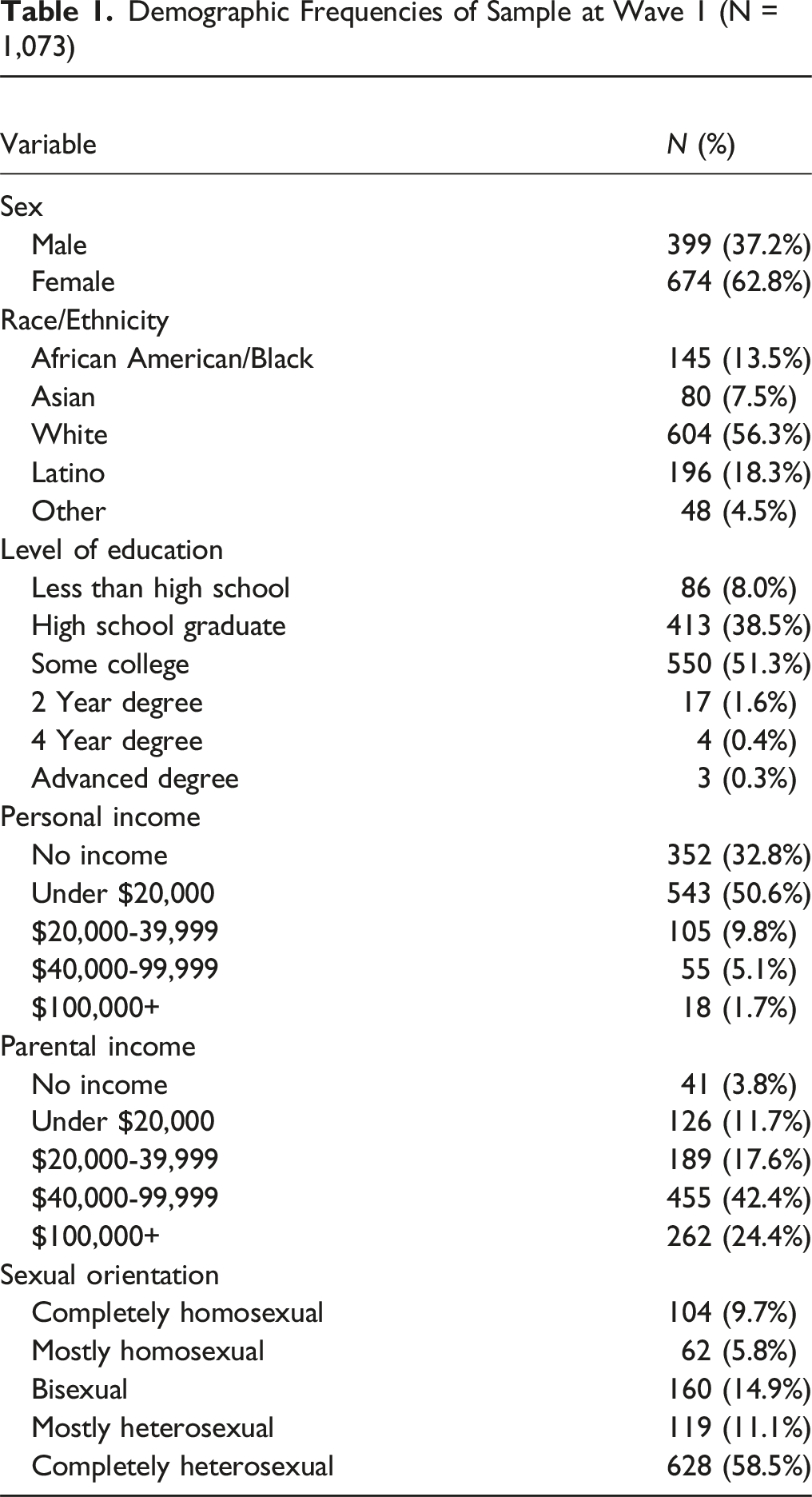
Of the final sample of participants who completed Wave 1 and Wave 7, there were 1,073 valid responses. 37.2% of sample was male and 62.8% was female. Of the final sample of participants who completed both waves, 69.6% identified as mostly/completely heterosexual, 15.5% identified as mostly/completely homosexual, and 15.9% identified as bisexual. The racial/ethnic composition was 56.3% White, 18.3% Hispanic, 13.5% Black, 7.5% Asian, with 4.5% identifying as “Other”. Religious affiliation in the sample reported 18.0% Catholic, 17.7% Protestant, 20.1% with no religious affiliation, and 44.2% reporting another affiliation 1 . With participants being either 18 or 19 at the first wave of the sample, both personal and parental income was reported. Personal income was reported 32.8% with no income, 50.6% earning under $20,000, 9.8% reporting earning $20,000–$39,000, 5.1% earned $40,000–$99,000, with 1.7% earning $100,000+ annually. Regarding parental income, 15.6% earned under $20,000, 17.6% reported earnings between $20,000–$39,000, 42.4% earned $40,000–$99,000, with 24.4% earning $100,000+ annually. Regarding relationship status, 37.7% of the participants were single and looking to start a relationship, 18.4% were single and not looking to start a relationship, 4.4% were casually dating, 33.7% were exclusively dating, with 5.9% either engaged or married.
Measures
Sexual Passion
Sexual passion was analyzed at Wave 7 with participants being asked nine questions from the Triadic Sexual Passion model developed by Dean Busby and Colleagues (2019). The scale uses a 5-point Likert scale to measure harmonious, obsessive, and inhibited sexual passion at Wave 7. Each dimension of sexual passion was measured using 3 items. The reliability for harmonious passion was α = .92. Obsessive passion’s reliability was found to be α = .84 and reliability for inhibited passion was seen to be α = .79.
Wellbeing
Several wellbeing indicators from Wave 1 were examined, including physical health satisfaction, emotional health, life satisfaction, and drug use. We acknowledge that several of these measures represent brief, non-validated assessments that may not fully capture the complexity of these constructs; however.
Physical health satisfaction was measured with a single item asking participants to rate their satisfaction with their physical health over the past three years on a 5-point scale ranging from “very dissatisfied” to “very satisfied.”
Emotional health was measured using a single item which asked participants “On average, over the past three years, I have experienced emotional problems such as: severe depression, anxiety attacks, eating disorders, or other mental/emotional problems” using a five-point Likert scale with higher scores indicating higher frequencies. The measure reflects self-perceived frequency of emotional difficulties rather than clinically diagnosed conditions.
Life satisfaction was measured using a 9-item composite scale developed for the Project READY study by Nelson and Walker. Six items assessed satisfaction in specific life domains (e.g., “life overall,” “your personal financial situation”) on a 4-point scale from “very dissatisfied” to “very satisfied.” Three items assessed frequency of positive self-perceptions (e.g., “I think I am doing pretty well”) on a 4-point scale. Items were averaged to create a composite score. This scale demonstrated acceptable internal consistency (α = .86 at Wave 1), though it has not been validated against established life satisfaction measures.
Drug use was measured with two items asking how often in the past twelve months participants (1) abused prescription medications or (2) took illegal drugs. Responses were rated on a 6-point scale from “never” to “daily or almost daily.” These items were averaged to create a composite score. The correlation between the two items was .55 (p < .001), indicating moderate internal consistency.”
Relational Behavior
Participants were asked about their pornography use, number of sexual partners, and sexual regrets and desires at Wave 1.
Pornography use was measured with two items that assessed frequency of viewing videos or images of graphic sexual media in the past twelve months, rated on a 6-point scale from “never” to “daily or almost daily.” These items had a Pearson correlation of .83 (p < .001) and were averaged to create a composite score.
Number of sexual partners was assessed with two items: (1) “How many people have you had sex with while in a committed relationship?” and (2) “How many people have you had sex with while NOT in a committed relationship?” Participants provided numerical responses for each item. These items were summed to create a total count of sexual partners. The two items had a Pearson correlation of .61 (p < .001).
Sexual regret was measured with a single item: “I regret the sexual decisions I made during my teenage years,” rated on a 6-point scale from “strongly disagree” to “strongly agree.”
Desire for more sexual partners was measured with a single item: “I wish I had more sexual partners during my teenage years,” rated on a 6-point scale from “strongly disagree” to “strongly agree.”
Helicopter Parenting
Helicopter parenting was measured using 13 items adapted from a study by Padilla-Walker and Nelson (2012) a study by Schiffrin and Colleagues (2014). Respondents were asked to rate their parents on a scale from 1 (not at all like him/her) to 5 (a lot like him/her) on questions such as “My parent intervenes in settling disputes with my roommates and friends” and “My parent solves any crisis or problem I might have.” Mother’s helicopter parenting had a Cronbach’s alpha of .89 while father’s helicopter parenting had a Cronbach’s alpha of .91.
Demographics
Demographic characteristics assessed at Wave 1 included sex, race/ethnicity, education level, personal income, parental income, and sexual orientation.
Sex was assessed by asking participants to select their sex. Response options included male, female, and prefer not to answer. For the current analyses, sex was coded as a binary variable (male = 0, female = 1).
Race/ethnicity was assessed by asking participants to select the category that best described their racial or ethnic identity. Response options included: White/Caucasian, Black/African American, Asian/Asian American, Hispanic/Latino, American Indian/Alaska Native, Native Hawaiian/Pacific Islander, Multiracial/Biracial, and Other (with write-in option). For analysis purposes, we used White as the reference category and created comparison groups for African American/Black, Asian, Latino, and Other (which included American Indian/Alaska Native, Native Hawaiian/Pacific Islander, Multiracial/Biracial, and other responses).
Education level was assessed using an ordinal scale with the following categories: less than high school, high school graduate, some college, 2-year degree, 4-year degree, and advanced degree.
Personal income and parental income were assessed using ordinal categories: no income, under $20,000, $20,000-$39,999, $40,000-$99,999, and $100,000 or more.
Sexual orientation was assessed by asking participants to indicate their sexual orientation on a 5-point scale: completely heterosexual, mostly heterosexual, bisexual, mostly homosexual, and completely homosexual.”
Data Analysis
For the data analysis, a series of multiple linear regressions were conducted, one for each dimension of sexual passion (i.e. harmonious, obsessive, and inhibited). Model fit was assessed via R2 and F-statistics, and the significance of predictors was evaluated at p < .05. Missing data was handled using listwise deletion, and all statistical analyses were performed in Stata (version 18). While controls were included to address potential confounding, we emphasize that the results do not imply causality due to the observational nature of the data.
Prior to interpretation, regression assumptions were systematically evaluated. Multicollinearity was assessed using Variance Inflation Factor (VIF) tests, with all variables showing values below 1.69, indicating no multicollinearity concerns. Linearity was evaluated through component-plus-residual plots for continuous predictors. Independence of observations was assumed given the cross-sectional survey design with non-clustered sampling.
Diagnostic tests revealed normality violations across all three models (Shapiro-Wilk tests: all p < .001), primarily due to positive skewness. Heteroscedasticity was detected for harmonious (White’s test: χ2 = 244.43, p = .014) and obsessive (χ2 = 248.39, p = .009) passion models, but not for inhibited passion (χ2 = 216.54, p = .174). To address assumption violations, robust standard errors were employed across all regression analyses for consistency and conservative inference. The large sample size (N = 1,073) supports the robustness of findings despite normality violations, as the Central Limit Theorem ensures that sampling distributions of regression coefficients approximate normality in large samples.
Results
Demographic Frequencies of Sample at Wave 1 (N = 1,073)
Descriptive Statistics (N = 1,073)
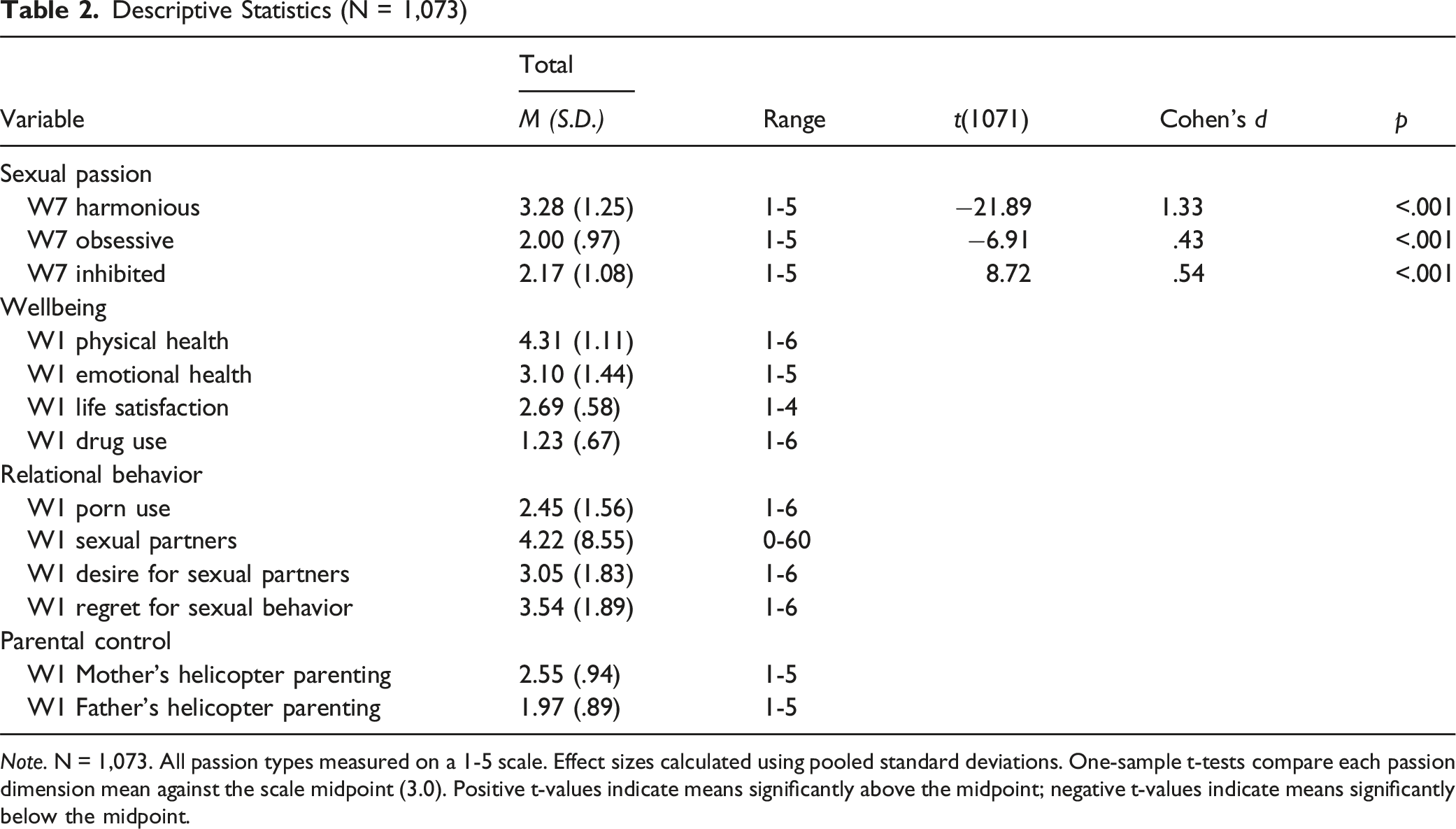
Note. N = 1,073. All passion types measured on a 1-5 scale. Effect sizes calculated using pooled standard deviations. One-sample t-tests compare each passion dimension mean against the scale midpoint (3.0). Positive t-values indicate means significantly above the midpoint; negative t-values indicate means significantly below the midpoint.
Bivariate Correlations of Variables
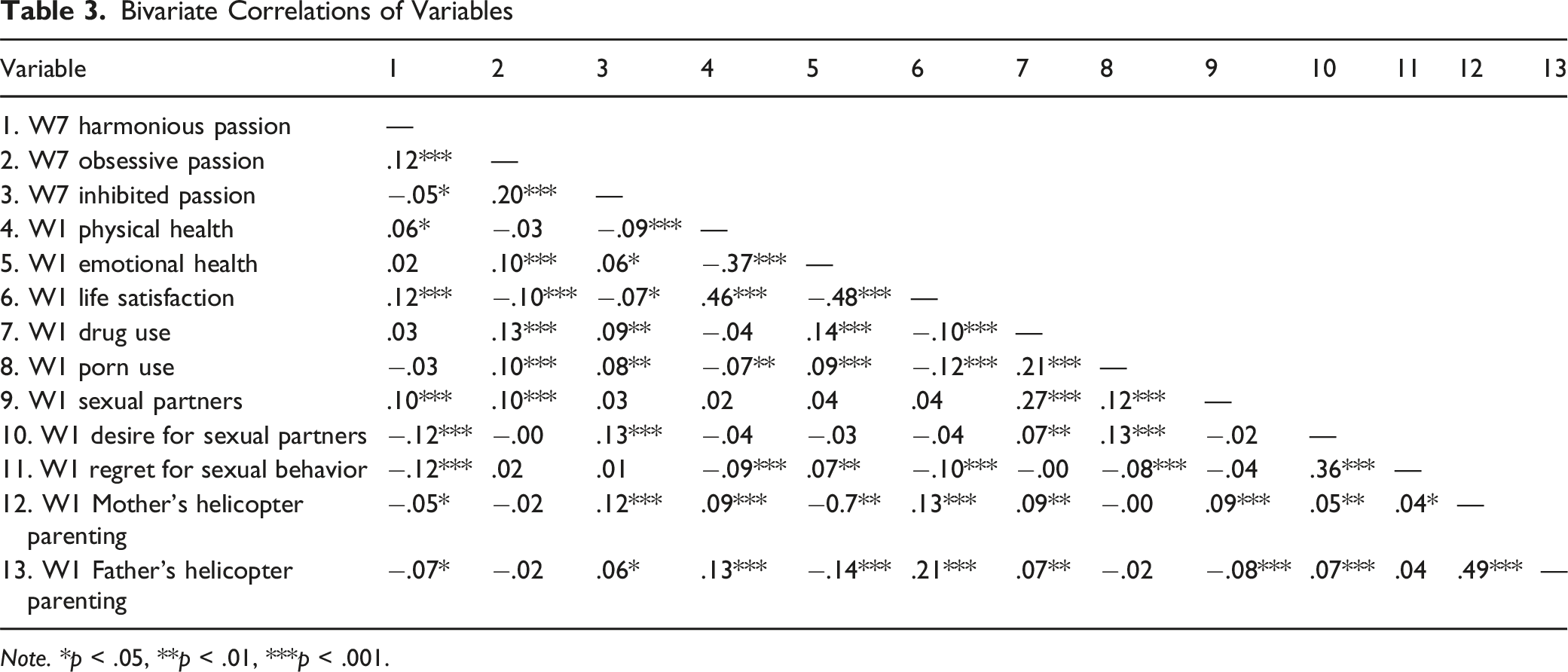
Note. *p < .05, **p < .01, ***p < .001.
Several wellbeing and behavioral variables showed significant associations with the sexual passion dimensions. Life satisfaction was positively correlated with harmonious passion (r = .12, p < .001) and negatively associated with both obsessive (r = −.10, p < .001) and inhibited passion (r = −.07, p < .05). Sexual regret showed negative associations with harmonious passion (r = −.12, p < .001), supporting the hypothesis regarding the impact of early sexual experiences on long-term sexual passion. The number of sexual partners was positively correlated with both harmonious (r = .10, p < .001) and obsessive passion (r = .10, p < .001), while parental helicopter behaviors showed generally weak associations with the passion variables.
Harmonious Passion
Standardized Coefficients for Variables on Harmonious Sexual Passion
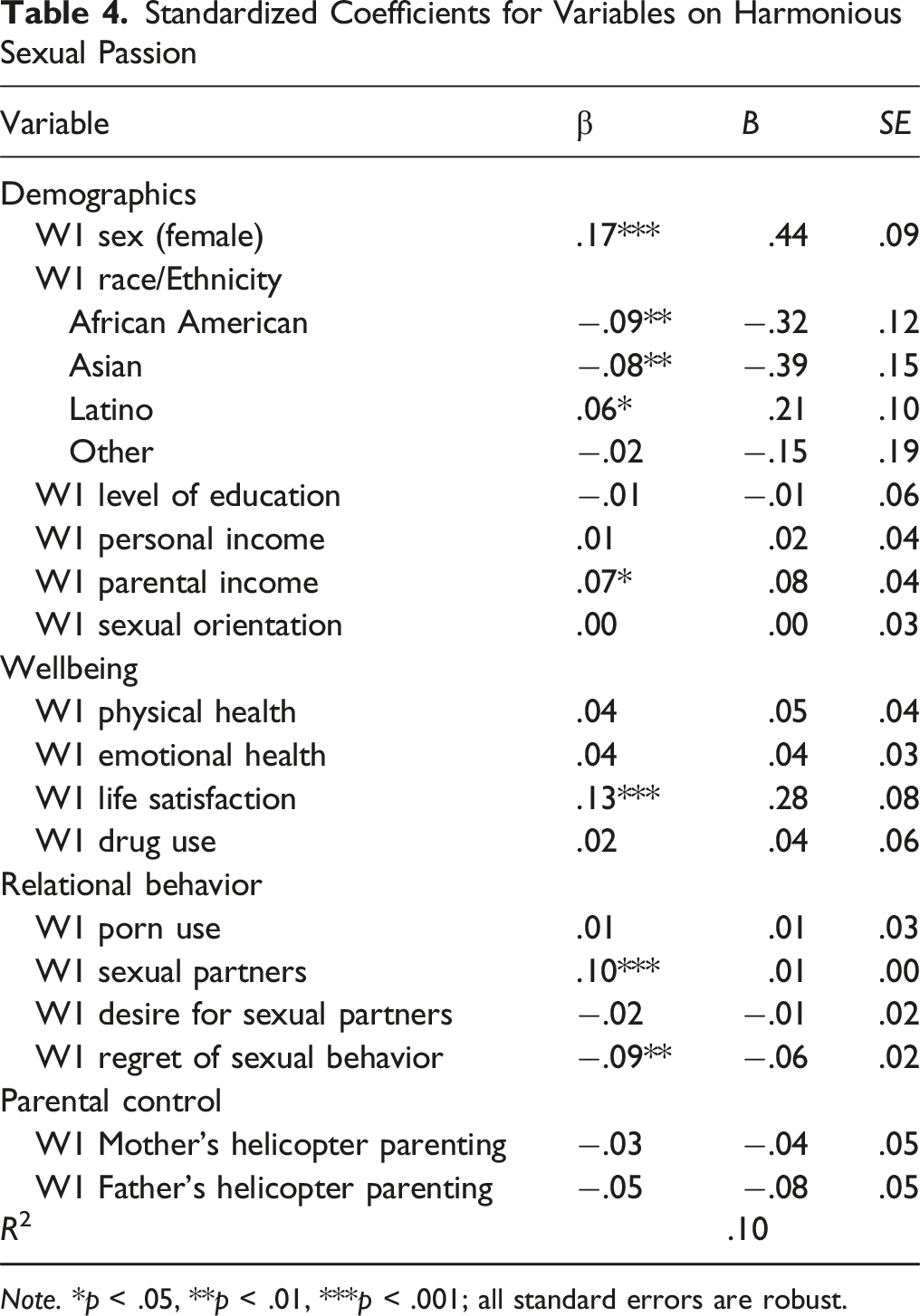
Note. *p < .05, **p < .01, ***p < .001; all standard errors are robust.
Racial identity also emerged as a significant factor, with African American participants (β = −.09, p = .007, S.E. = .12) and Asian participants (β = −.08, p = .008, S.E. = .15) showing negative associations with harmonious passion at Wave 7, while Latino participants demonstrated a positive association at Wave 7 (β = .06, p = .03, S.E. = .10) compared to the White reference group. The model explained 10.0% of the variance in harmonious passion (R2 = 0.100, F(19, 1053) = 6.58, p < 0.001).
Obsessive Passion
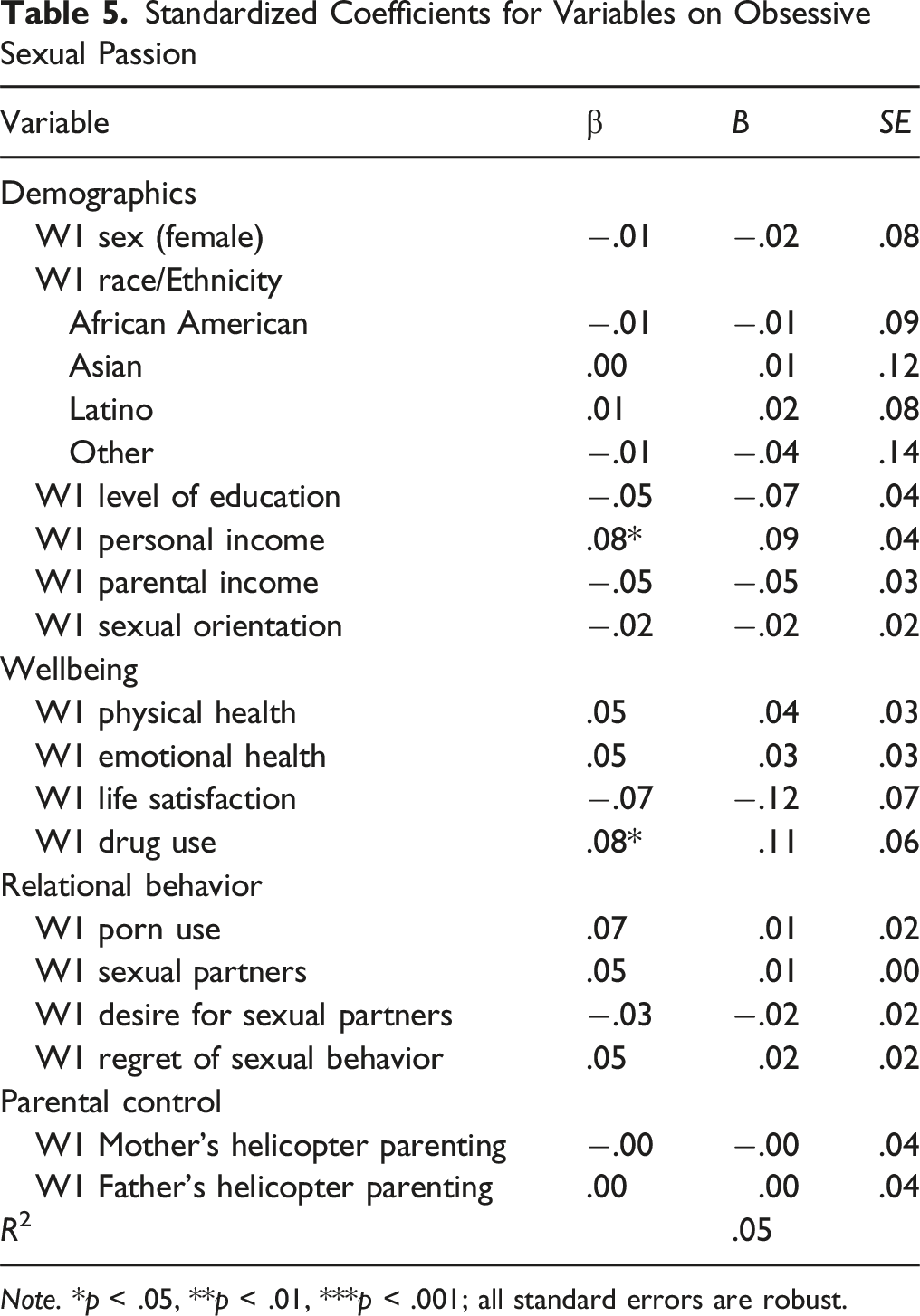
Standardized Coefficients for Variables on Obsessive Sexual Passion
Note. *p < .05, **p < .01, ***p < .001; all standard errors are robust.
Inhibited Passion
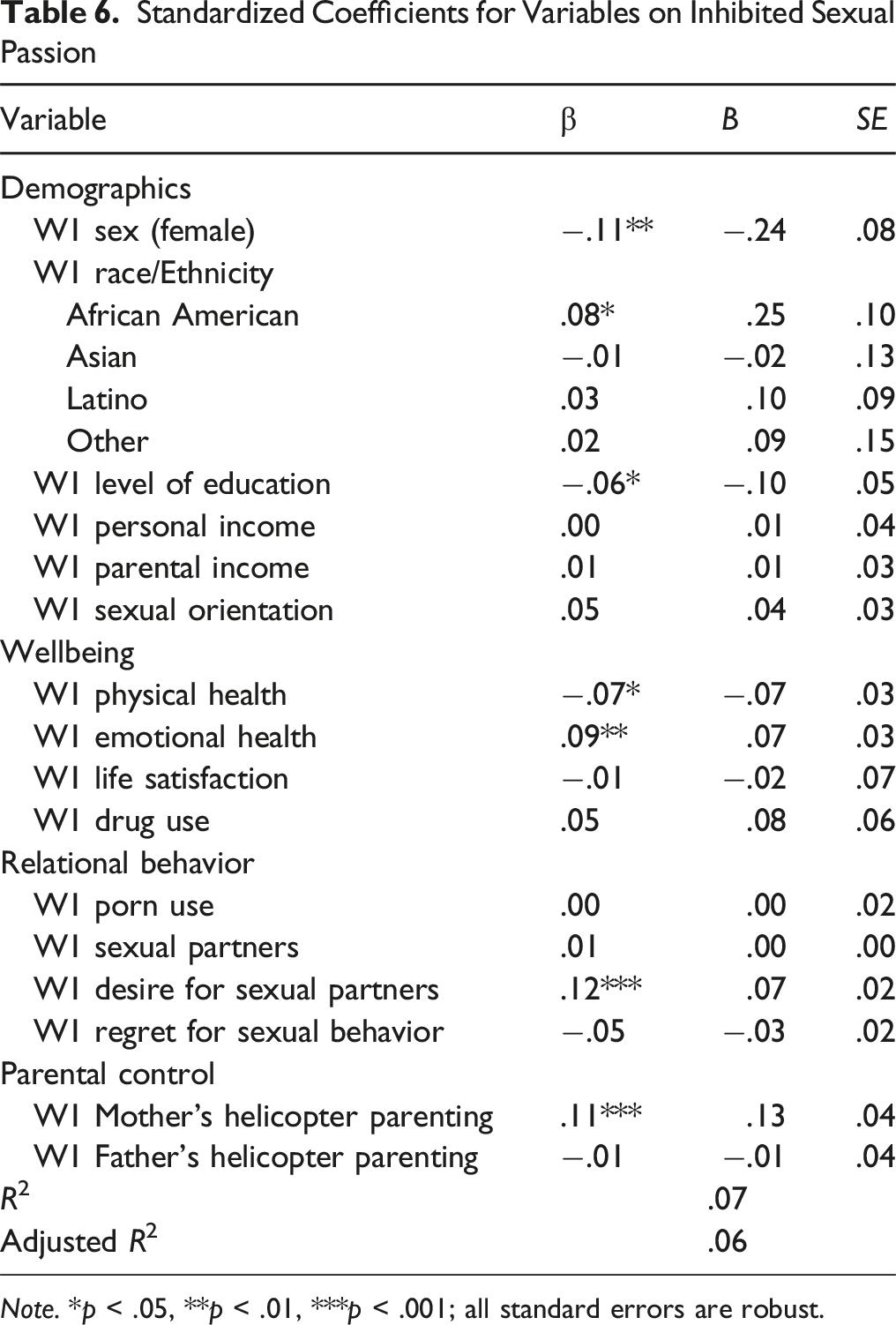
Standardized Coefficients for Variables on Inhibited Sexual Passion
Note. *p < .05, **p < .01, ***p < .001; all standard errors are robust.
Discussion
The current study aimed to examine early predictors of sexual passion that impacted emerging adults after a seven-year period, finding distinct pathways for each dimension of sexual passion. These findings contribute insight into how individual characteristics, family behavior, and early experiences influence sexual passion during the developmental period of emerging adulthood (Arnett, 2000). Notably, harmonious, obsessive, and inhibited sexual passion displayed differing associations with early predictors, suggesting each dimension may have a unique pathway during this developmental period. This pattern aligns with Vallerand’s (2015) assertion that passion is shaped by both intrinsic motivations and environmental contexts, while extending this framework specifically to sexual passion across emerging adulthood.
Harmonious Passion
The results from the regression models for harmonious passion supported the idea that early experiences in emerging adulthood can influence sexual passion seven years later. The strong gender effect, with females reporting higher harmonious passion than males, supports past research which has found that gender may cause nuances to sexual passion (Busby, Leonhardt, & James, 2019). This may reflect gendered socialization patterns in which women may be more likely to integrate emotional intimacy with sexual expression, facilitating the autonomous internalization associated with harmonious passion (Philippe et al., 2019).
The positive association between life satisfaction at Wave 1 and harmonious sexual passion at Wave 7 supported our hypothesis that higher reports of early well-being would be positively associated with harmonious sexual passion in later emerging adulthood. This finding aligns with Vallerand’s (2015) theoretical framework which proposes that harmonious passion both stems from and contributes to overall well-being through reciprocal processes. This concept is further supported by the finding that early sexual regret was negatively associated with harmonious sexual passion. Sexual regret often stems from engaging in sexual behavior that conflicts with one’s values or occurs under external pressure (Fisher et al., 2011), representing the opposite of the autonomous sexual expression characteristic of harmonious passion. Together, these findings highlight how early well-being and sexual regret set up emerging adults’ later sexual passion.
The positive association between number of sexual partners during early emerging adulthood and harmonious sexual passion seven years later extends previous cross-sectional research linking sexual passion to relationship and sexual outcomes (Busby, Leonhardt, & James, 2019). This finding suggests that sexual experience during early emerging adulthood—a period characterized by identity exploration and experimentation (Arnett, 2000; Boislard et al., 2016)—is associated with higher harmonious sexual passion in later emerging adulthood. Sexual experience may facilitate sexual knowledge, confidence, and opportunities to discover sexual desires. Importantly, both number of sexual partners and sexual regret emerged as independent predictors in our model, suggesting that sexual experience and the emotional evaluation of that experience each make distinct contributions to harmonious sexual passion development. Sexual exploration accompanied by positive evaluations of those experiences appears to create optimal conditions for developing harmonious sexual passion.
Contrary to our hypothesis, helicopter parenting was not significantly associated with harmonious passion after seven years, despite the relationship being negative as predicted. This null finding still provides insight into harmonious sexual passion as it suggests that the influence of early parental control may diminish across the seven-year period. As emerging adults engage in the developmental tasks of establishing independence, forming intimate relationships, and consolidating identity separate from their family of origin (Arnett, 2000), these experiences may become more strongly associated with sexual passion than early parental behaviors. Alternatively, helicopter parenting’s effects may operate through indirect pathways not captured in the current model.
Obsessive Passion
While many hypotheses were not confirmed for obsessive sexual passion, the results provided valuable insight into obsessive sexual passion. The relative lack of significant predictors compared to harmonious and inhibited passion may reflect this dimension’s nuanced nature, with weaker and more variable associations documented in previous research (Busby, Leonhardt, & James, 2019). This suggests obsessive passion may develop through different mechanisms or be more influenced by current factors rather than early emerging adulthood experiences.
Personal income at Wave 1 emerged as a significant predictor, with higher personal income during early emerging adulthood associated with increased obsessive passion seven years later. This stands in contrast to the pattern observed for harmonious passion, where parental, rather than personal, income was the significant economic predictor. Research has shown that emerging adults view financial independence as a crucial step into adulthood (Arnett, 2000), setting it apart from the influence of parental income. Higher personal income during early emerging adulthood may enable behavior which feeds into maladaptive sexual passion, such as facilitating engagement with a consumption-oriented view of sexual activities. This could consequently foster the controlling internalization found within obsessive passion (Vallerand, 2015). Alternatively, higher income during early emerging adulthood might be capturing an unmeasured variable of high-achieving individuals who may feel pressured by external factors to achieve, which works in conjunction with how obsessive sexual passion develops through controlling internalization processes (Philippe et al., 2019).
Drug use during early emerging adulthood positively predicted obsessive sexual passion, supporting our hypothesis that addictive behaviors lead to maladaptive sexual passion at Wave 7. This aligns with research documenting co-occurrence between substance use and risky sexual behavior in emerging adults (Staton et al., 1999), suggesting both may reflect underlying difficulties with self-regulation and impulse control that characterize the controlling internalization process of obsessive passion (Philippe et al., 2019).
Pornography use approached significance (p = .06) with a positive association to obsessive sexual passion, suggesting a marginal relationship that warrants attention despite not reaching conventional significance thresholds. While pornography use may not be significant after a seven-year period for emerging adults, it still supports the idea that individuals may internalize outside elements leading to maladaptive passion (Vallerand, 2015). Research has demonstrated that pornography use can influence sexual expectations and behaviors in adolescence and early emerging adults (Pirrone et al., 2022), which may create a disconnect between authentic sexual desires and externally derived sexual scripts that characterizes obsessive sexual passion (Philippe et al., 2019).
Inhibited Passion
Demographic factors including sex, race/ethnicity, and level of education emerged as significant predictors, suggesting that social identity and cultural expectations shape inhibited sexual passion patterns after a seven-year period, similar to the pattern observed for harmonious sexual passion. This finding is supported by past research which found sociocultural factors influence adolescent sexual development (Shoveller et al., 2004).
The positive association with desire for sexual partners is noteworthy. Unlike harmonious passion’s positive relationship with actual sexual partners, inhibited passion relates to unfulfilled desire, suggesting that while sexual experience may encourage autonomous passion, unmet desire may contribute to constrained passion patterns. This supports research conceptualizing inhibited passion as leading individuals to feel constrained from and hesitant about sexual activities (Busby, Chiu, et al., 2019). The persistence of this association across seven years suggests early patterns of desire without corresponding experience may establish lasting trajectories of sexual inhibition.
Mother’s helicopter parenting at Wave 1 positively predicted inhibited sexual passion at Wave 7, supporting our hypothesis that overprotective parenting contributes to sexual inhibition by limiting sexual autonomy and exploration. This aligns with research documenting negative effects of helicopter parenting on emerging adults’ well-being through violated autonomy needs (Schiffrin et al., 2014). By constraining autonomy, helicopter parenting may lead individuals to internalize maladaptive attitudes toward sexuality, contributing to inhibited passion characterized by constraint and avoidance. Interestingly, father’s helicopter parenting was not significant, suggesting parental gender influences how helicopter parenting impacts sexual passion. This may reflect traditional parenting roles making maternal overprotection particularly salient, or emerging adults’ greater sensitivity to maternal versus paternal control in sexuality due to gendered socialization patterns.
Another hypothesis supported by the results was inhibited passion being associated with worse wellbeing. The negative association with physical health satisfaction and positive association with emotional health problems highlight how personal health influences sexual passion. Emerging adults experiencing poorer physical health and greater emotional difficulties at Wave 1 were positively associated with inhibited sexual passion at Wave 7, as health concerns may create barriers to sexual expression. This supports research showing well-being and passion build off each other (Vallerand, 2015).
Implications & Future Directions
These findings highlight how multifaceted sexual passion is during emerging adulthood. The study revealed that context can significantly alter the variables associated with sexual passion. Moreover, the seven-year longitudinal association between sexual regret and harmonious passion suggests that interventions focused on healthy sexual decision-making and managing regret during adolescence and early emerging adulthood may have lasting impacts on sexual passion throughout emerging adulthood. These findings build the theory surrounding sexual passion demonstrating that the potential pathways to each passion type may be uniquely dependent on context. These differences in sexual passion highlight how sexual passion may not be fully understood through a one-size-fits-all model, but rather consideration of context is needed for each form of passion.
Several limitations should be considered when interpreting these findings. The usage of self-report measures introduces potential bias, especially given the sensitive nature of sexual behavior and sexual passion when reporting. Moreover, the measures of sexual passion, while validated, represent relatively new constructs which may evolve over time as our understanding of how they manifest across diverse populations continues to evolve. Additionally, the study’s correlational nature limits causal inferences. While the longitudinal design and controls were employed to address potential endogeneity, we cannot definitively establish that the measured predictors caused sexual passion.
An important limitation concerns the post-hoc nature of our predictor selection. Project READY was not originally designed to study sexual passion specifically, and the measures available at Wave 1 were not selected with sexual passion development as the primary research question. Consequently, our examination was necessarily constrained to variables that happened to be available in the existing dataset. While we have organized these variables into theoretically meaningful domains (well-being, relational behavior, and family dynamics) that align with broader passion research (Philippe et al., 2019; Vallerand, 2015), we acknowledge that other potentially important predictors were not assessed.
Additionally, several of our measures represent relatively brief assessments or non-validated scales rather than established psychometric instruments (e.g., single-item assessments of sexual regret and desire, brief assessments of health satisfaction), which limits the precision and comprehensiveness with which we could assess these constructs. While the use of one-item variables does allow for the possibility of bias and measurement error, social science researchers have noted that one-item measures when used appropriately still possess validity (Allen et al., 2022; Matthews et al., 2022). That said we acknowledge that the emotional health measure relied on participants’ self-perceived frequency of experiencing problems such as “severe depression” or “eating disorders” without providing standardized definitions, likely resulting in substantial variation in how participants interpreted and responded to these items. The life satisfaction measure, though demonstrating adequate internal consistency, has not been validated against established measures. Moreover, some measures had ambiguous construct boundaries. For example, our sexual partners measure combined partners from both committed and non-committed relationships without distinguishing monogamous from non-monogamous relationship contexts, potentially conflating consensual non-monogamy with infidelity. We also note that non-binary gender identity options were not included in the Wave 1 survey, which represents a limitation in capturing the full diversity of gender identities. These measurement limitations reduce our confidence in the precision with which we assessed several predictors and suggest that future research should employ validated, comprehensive measures of these constructs to provide more definitive tests of their associations with sexual passion development.
A noteworthy mention is that this study examined the development of sexual passion in late emerging adulthood rather than the changes in sexual passion across emerging adulthood. That being said a strength of this study stems from its longitudinal nature. We were able to identify early emerging adulthood predictors that are associated with the development of sexual passion seven years later. Despite the noted limitations, this data contributes meaningful contributions to understanding surrounding sexual passion in emerging adulthood and what predictors remain significant seven years later. Future research should continue to expand this theory by examining how past and present predictors of sexual passion impact relationships and individual development.
Conclusion
This study provides insight into the complex developmental pathways of sexual passion during emerging adulthood. By demonstrating that harmonious, obsessive, and inhibited passion develop context-dependent variables, these findings foster greater understanding of sexual passion in emerging adults after a seven-year period. The impact of early sexual regret on harmonious sexual passion underscores the lasting consequences of adolescent sexual experiences and points to the need for early intervention strategies.
As emerging adults continue to navigate increasingly diverse relationship contexts, understanding these nuanced developmental pathways becomes essential for promoting healthy sexual development and supporting positive relationship outcomes throughout the lifespan. This research contributes to our understanding of sexual passion by demonstrating that context creates distinct developmental pathways, providing a foundation for more targeted approaches to supporting healthy sexual development during this critical life stage.
Supplemental Material
Supplemental Material - Different Paths, Different Passions: Sexual Passion in Emerging Adults
Supplemental Material for Different Paths, Different Passions: Sexual Passion in Emerging Adults by Rebekah M. Hakala, Brian J. Willoughby in Emerging Adulthood.
Footnotes

Funding
The authors received no financial support for the research, authorship, and/or publication of this article.
Declaration of Conflicting Interests
The authors declared no potential conflicts of interest with respect to the research, authorship, and/or publication of this article.
Transparency and Openness Statement
The raw data contained in this manuscript is not openly available due to privacy and confidentiality restrictions established by the institutional review board and data use agreements with participants. Requests for data access may be directed to the corresponding author and will be considered following completion of appropriate data use agreements and institutional approval. The quantitative analysis code/syntax used for the analyses is not openly available but may be obtained from the corresponding author upon request. All materials used in this study, including survey measures and questionnaires, are not openly available due to proprietary restrictions but are described in detail within the manuscript and available upon request to the corresponding author. This study did not include a pre-registration plan for data collection or analysis.
Supplemental Material
Supplemental material for this article is available online.
Note
Author Biographies
References
Supplementary Material
Please find the following supplemental material available below.
For Open Access articles published under a Creative Commons License, all supplemental material carries the same license as the article it is associated with.
For non-Open Access articles published, all supplemental material carries a non-exclusive license, and permission requests for re-use of supplemental material or any part of supplemental material shall be sent directly to the copyright owner as specified in the copyright notice associated with the article.
