







Abstract
Alcohol pre-loading (predrinking/pregaming/prepartying) has been linked to alcohol-related harms. Although researchers have developed measures of pre-loading motives, less research has investigated how responses on such ‘forced choice’ measures map onto open-ended responses that gauge emerging adults’ pre-loading motivations. Further, research on the validity of these measures, including possible variations in pre-loading motives across different cultural contexts, is needed. We conducted a mixed methods study with university students in New Zealand (N = 224, female = 64.7%, Mage = 19.79) and found support for the 4-factor model of the Prepartying Motivations Inventory (PMI). Students’ top reasons for pre-loading supported all but one PMI subscale (intimate pursuit), and some open-ended responses did not align with PMI subscales (e.g., cost/money savings). Intimate pursuit and interpersonal enhancement motives were positively associated with pre-loading frequency and negative alcohol consequences, respectively. Findings suggest that there are important pre-loading motives/reasons that are not captured by the PMI, which could inform refinement of pre-loading motives measures.
Introduction
According to the World Health Organization (World Health Organization [WHO], 2024), in 2019, 45.4% of males and 26.8% of females (aged 15+ years) who reported current alcohol use engaged in heavy episodic drinking 1 . Pre-loading (also referred to as predrinking, pregaming, or prepartying; Zamboanga & Olthuis, 2016) entails consuming one or multiple substances (most commonly alcohol) before attending a target event (Hughes & Devilly, 2021) and has been found to increase risk of experiencing negative alcohol consequences (Caudwell & Hagger, 2021; Foster & Ferguson, 2014). This is because those who pre-load might (a) consume alcohol quickly before heading to their target event, and (b) drink more when they arrive at their target event (Pedersen, 2016). Despite these risks, however, pre-loading is widely practiced among university students in many countries including New Zealand (Zamboanga, Van Hedger, & George, 2023), with reports showing that 88.6% of New Zealand students drink alcohol prior to their attendance at a social event (Riordan et al., 2018) and 78.3% of students pre-loaded at least once in the past month (Zamboanga, George, et al., 2021).
Given the international prevalence of pre-loading, researchers have developed survey instruments to measure motivations to pre-load among emerging adults in the United States (U.S.) (Bachrach et al., 2012; LaBrie et al., 2012), Switzerland (Labhart & Kuntsche, 2017), and Argentina (Pilatti & Read, 2018). Although these standardized measures of pre-loading motives are widely used and have advanced our understanding of emerging adults’ pre-loading behaviors, less research has investigated how pre-loading motives assessed by these measures map on to open-ended responses that gauge emerging adults’ motivations or reasons to pre-load. Research examining the validity of such measures and possible variations in pre-loading motives across different cultural contexts are needed. Moreover, the extent to which these measures fully capture emerging adults’ motivations to pre-load in a New Zealand context remains unclear. This may be especially pertinent given the prevalence of pre-loading among university students in New Zealand, as well as legal drinking age disparities and cross-country differences in drinking cultures, alcohol use, and motivations to drink (e.g., Gordon et al., 2012; Mackinnon et al., 2017; WHO, 2024). Thus, the current study examines (a) the factor structure of a widely used measure of pre-loading motives that was developed in the U.S. (Prepartying Motivations Inventory-PMI; LaBrie et al., 2012) in a sample of New Zealand university students, (b) the link between pre-loading motives and related behaviors over and above general drinking motives, and (c) self-reported motives and reasons to pre-load using an open-ended response format.
According to a motivational theoretical framework of alcohol use, people drink so they can achieve positively and/or negatively reinforcing outcomes (Cooper, 1994; Cox & Klinger, 1988; Kuntsche et al., 2005). People’s motivations for drinking are proximal predictors of alcohol use (Bresin & Mekawi, 2021) and are thought to serve as “the final common pathway to” alcohol use (Cox & Klinger, 1988; Kuntsche et al., 2005). Guided by this theoretical framework, Cooper (1994) developed the Drinking Motives Questionnaire-Revised (DMQ-R) and derived four general motives for consuming alcohol. The drinking motives of enhancement (e.g., “Because it gives you a pleasant feeling”) and social (e.g., “To be sociable”) are positively reinforcing with internal and external sources, respectively. Coping (“To forget your worries”) and conformity (e.g., “So you won’t feel left out”) are negatively reinforcing drinking motives with internal and external sources, respectively. Although theory (i.e., motivational model; Cox & Klinger, 1988; Kuntsche et al., 2005) posits and research (Bresin & Mekawi, 2021) suggests that general drinking motives are proximal predictors of alcohol use, they may not fully capture the breadth of motives or reasons why university students pre-load (Bachrach et al., 2012; Sorbello & Devilly, 2024). The difference between a motive to consume alcohol versus a reason to drink rests on the notions of generality and specificity, respectively (Kuntsche et al., 2005). Specifically, Kuntsche et al. (2005) argued that “drinking reasons appear to imply a rational process based on practical facts, whereas drinking motives appear to be more general and also incorporate unconscious and automatized causes” (p. 845). Thus, in the context of pre-loading, a motivation to pre-load could be categorized under a broad general motivation to drink (e.g., to be more social, to be intoxicated before arriving at the target event). Conversely, a specific reason to pre-load (e.g., to save money) may not align with any of these broad motivational domains. In other words, when it comes to people’s motivations and reasons to pre-load, the motivational theoretical framework of alcohol use (Cox & Klinger, 1988) and broad general drinking motives (Cooper, 1994) may not tell the complete story. Indeed, Sorbello and Devilly (2024) acknowledged such theoretical limitations, and their proposed theoretical model of pre-loading includes the cost-saving benefits of pre-loading in addition to reductions in people’s anticipated negative affective states (e.g., stress, anxiety, low confidence) at the target-event, as motives to pre-load.
Summary of Standardized Pre-Loading Survey Instruments
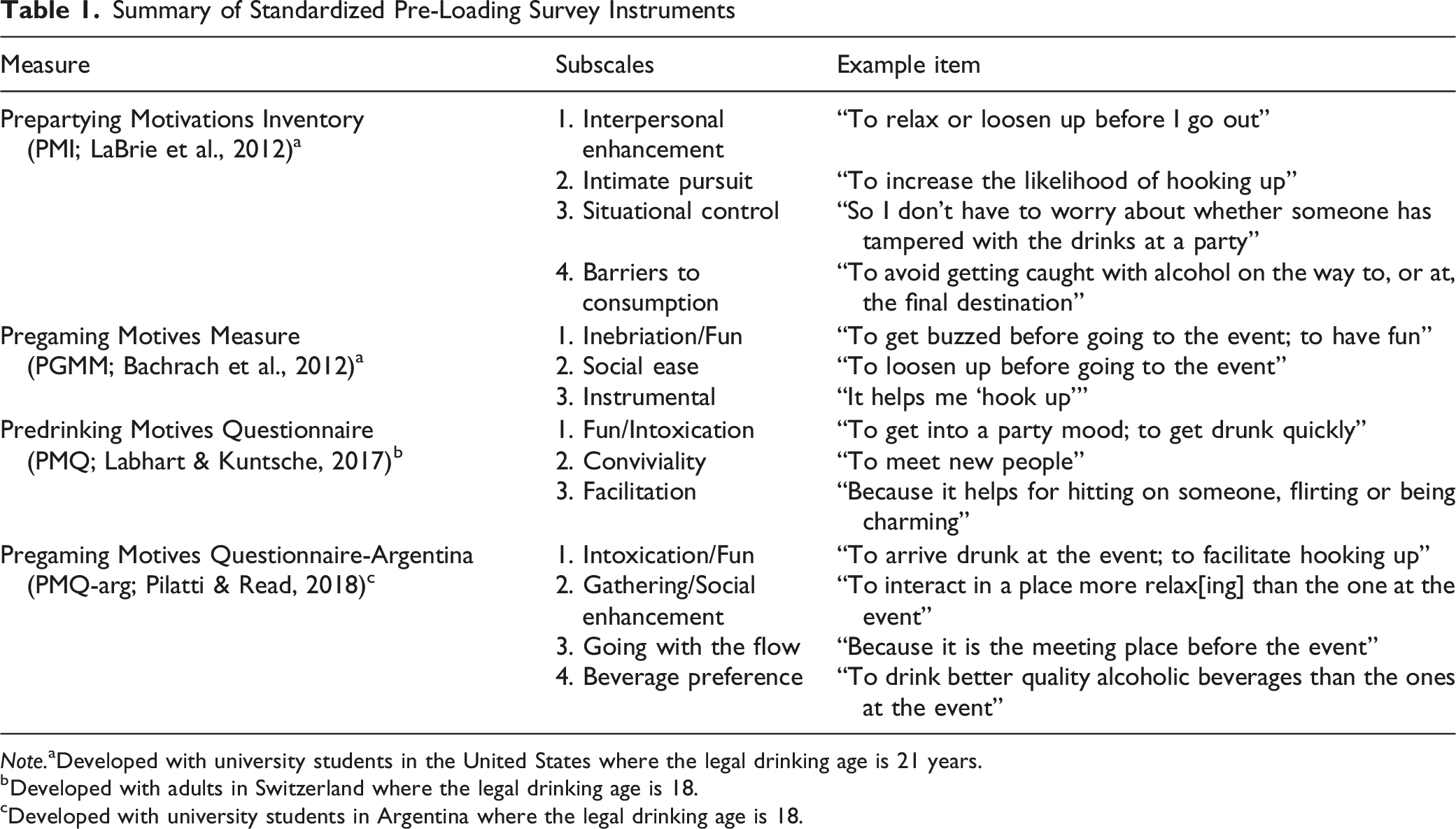
Note.aDeveloped with university students in the United States where the legal drinking age is 21 years.
bDeveloped with adults in Switzerland where the legal drinking age is 18.
cDeveloped with university students in Argentina where the legal drinking age is 18.
Research on pre-loading has grown substantially during the last two decades (Caudwell & Hagger, 2021; Foster & Ferguson, 2014; Zamboanga, Van Hedger, & George, 2023; Zamboanga & Olthuis, 2016), and several findings regarding people’s reasons to pre-load in a New Zealand context are worth noting. Findings from McCreanor et al.’s (2016) qualitative work with young adults (not restricted to university students) in New Zealand suggest that a key driving force underlying the practice of pre-loading is cost-savings due to the high price of alcohol at licensed venue sites (e.g., clubs, bars, sporting arenas). Participants also reported other experiential aspects of pre-loading which included socializing, having fun, and arriving intoxicated at the target-event (McCreanor et al., 2016). Indeed, in their study of adults during the night-time economy, Cameron et al. (2020) found that participants reported the following reasons for pre-loading: price/to save money (48.9%), to get intoxicated (34.5%), to have fun (23.7%), and to socialize/catch up with peers (21.8%). Moreover, more women (vs. men) reported pre-loading due to price/money savings (55.9% vs. 44.9%, respectively); conversely, more men (vs. women) reported pre-loading to socialize/catch up with their peers (25.1% vs. 15.8%, respectively). To socialize/have fun and to become intoxicated as motivations for pre-loading could fall under (a) interpersonal enhancement motives on the PMI and (b) social and enhancement motives on the DMQ-R. In contrast, price/money savings would appear to be an example of a practical reason to pre-load that does not fit into these broad drinking motive categories.
Study Aims
The available standardized pre-loading motive measures were developed with emerging adults outside of New Zealand. Although the PMI has been widely used to measure pre-loading motives among emerging adults in several countries, less work has examined how responses on such ‘forced choice’ measures map on to open-ended responses that tap into university students’ motivations or reasons to pre-load, despite past research pointing to other factors (e.g., cost to purchase alcohol) that can influence this behavior (e.g., McCreanor et al., 2016). Recognizing the possibility that the PMI may not capture all the motives or reasons to pre-load endorsed by university students in New Zealand, we used a mixed methods study design consisting of the following steps. First, we conducted a confirmatory factor analysis (CFA) of the 4-factor solution structure of the PMI. Second, to better understand the utility of pre-loading motives in predicting students’ pre-loading frequency and negative alcohol consequences, we examined how each PMI subscale is uniquely associated with these outcomes while adjusting for age, gender, alcohol use on non-pre-loading drinking occasions, and two general drinking motives: social and enhancement. Although some studies have found additional drinking motives such as coping and conformity motives to be linked with pre-loading behaviors (e.g., Sorbello & Devilly, 2023; Zamboanga et al., 2023), other work found no such associations (e.g., LaBrie et al., 2012). Thus, considering the latter findings and given the conceptual alignment of social and enhancement motives with the interpersonal enhancement subscale on the PMI, we included social and enhancement motives as covariates in our multivariate models, which is consistent with past research (Zamboanga, Merrill, et al., 2023). Third, we examined students’ self-reported motives or reasons to pre-load using an open-ended response format so we could (a) verify the motivations for pre-loading as measured by the PMI, and (b) identify other reasons or motivations to pre-load that extend beyond the PMI, including those that align with established drinking motives (e.g., DMQ-R subscales). Given differences in the legal drinking age between the U.S. and New Zealand, we hypothesized that (after removing the item regarding underage consumption) the PMI’s originally validated structure would demonstrate acceptable fit for New Zealand university students. Given prior research, we expected interpersonal enhancement and intimate pursuit to be positively associated with pre-loading frequency and negative alcohol consequences. We also expected participants to report financial reasons for pre-loading, which is consistent with theory (Sorbello & Devilly, 2024) and prior research (e.g., McCreanor et al., 2016). We did not posit other specific hypotheses with respect to identifying pre-loading motives among New Zealand university students that are not already captured by the PMI and as such, we treated this as qualitative research inquiry as exploratory.
Method
Participants and Procedures
The research team recruited emerging adults (N = 224; female = 64.7%; Mage = 19.79, SD = 1.76, range = 18–25 years) enrolled in health and business, humanities, and social science classes at a public university in New Zealand to participate in a confidential online alcohol survey study. We compensated students with a $10 petrol/grocery gift card for completing our questionnaire. Given our study aims, we restricted our data analytic sample to students who reported that they engaged in pre-loading at least once in their lifetime. Of note, free-text responses for pre-loading reasons were provided after the pre-loading behavior questions and the PMI. This decision was employed so that participants had been thinking about motives and reasons and may therefore have been able to consider both what they rated highly and what was missing.
Measures
Bivariate Correlations and Descriptive Statistics
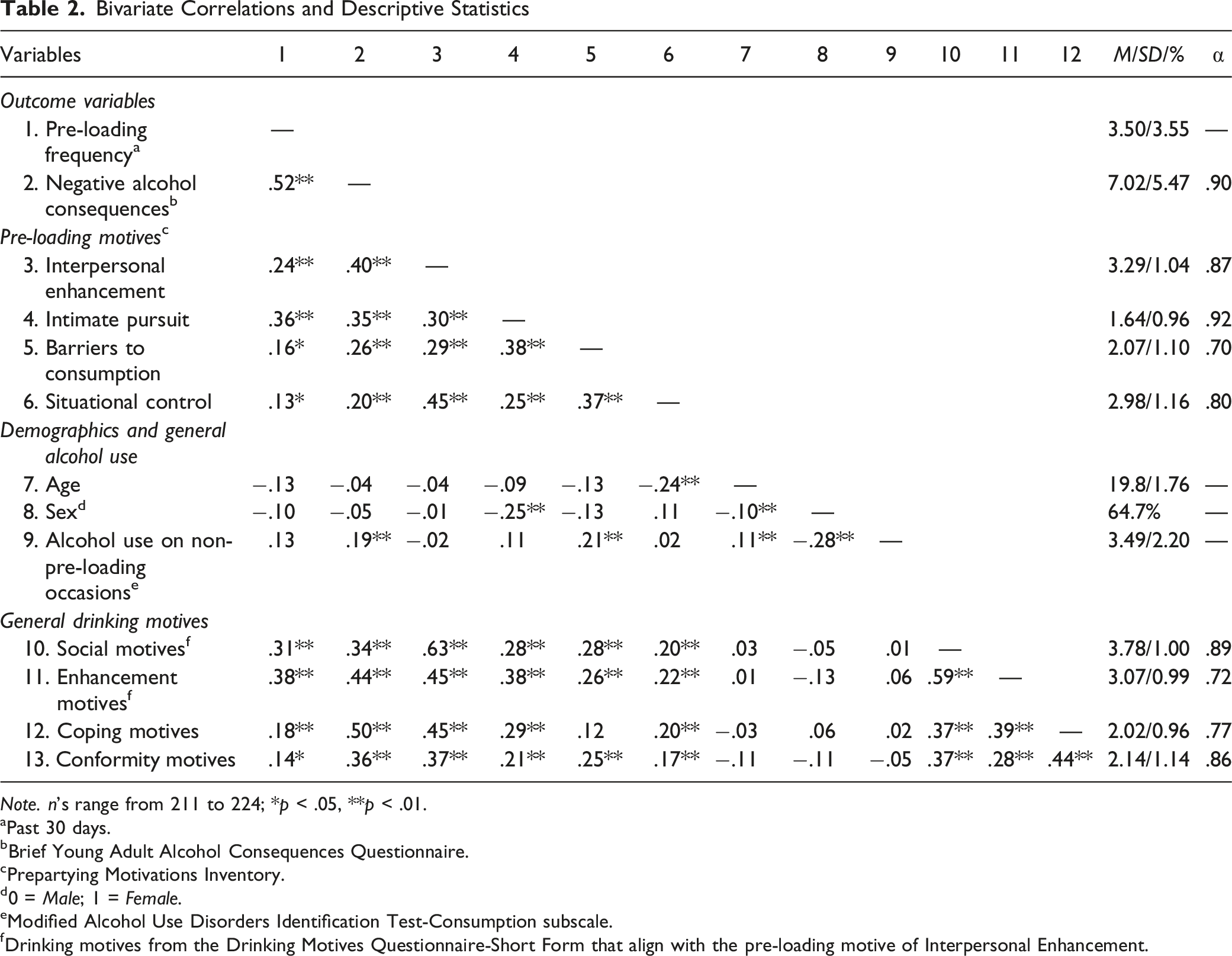
Note. n’s range from 211 to 224; *p < .05, **p < .01.
aPast 30 days.
bBrief Young Adult Alcohol Consequences Questionnaire.
cPrepartying Motivations Inventory.
d0 = Male; 1 = Female.
eModified Alcohol Use Disorders Identification Test-Consumption subscale.
fDrinking motives from the Drinking Motives Questionnaire-Short Form that align with the pre-loading motive of Interpersonal Enhancement.
Pre-Loading Motives
Participants completed the Prepartying Motivations Inventory (PMI; LaBrie et al., 2012). The PMI is a 16-item questionnaire that asks how often people pre-load using a 5-point scale (1 = Never/almost never to 5 = Almost always/always). One item referencing underage drinking (“Because I am underage and cannot purchase alcohol at the destination venue”) was removed prior to analysis because it was not relevant to this sample, since all participants were of legal drinking age.
Pre-Loading Behaviors
Participants reported the number of days (M = 3.50, SD = 3.55; range = 0-18) they pre-loaded in the past 30 days (Hummer et al., 2013).
Negative Alcohol Consequences
We used the Brief Young Adult Alcohol Consequences Questionnaire 2 (B-YAACQ) to measure negative alcohol consequences (e.g., “I have passed out from drinking”) in the past 30 days (Kahler et al., 2008). We computed total scores by summing affirmative responses to each question.
Alcohol Use on Non-Pre-Loading Occasions
To assess participants’ alcohol use on drinking occasions they were not pre-loading, we modified the three items on the Alcohol Use Disorders Identification Test-Consumption (Barry et al., 2015) by including a stem (“On drinking occasions when you are NOT pre-loading”) to each item on this scale.
General Drinking Motives
We measured general drinking motives with Drinking Motives Questionnaire-Revised-Short Form 2 (DMQ-R-SF; Kuntsche & Kuntsche, 2009). We focused our analysis on the social and enhancement motives on the DMQ-R-SF because the items on these subscales align closely with the interpersonal enhancement motive to pre-load on the PMI.
Open-Ended Reasons to Pre-Load
Participants reported their top three reasons for pre-loading via three open-ended text response questions.
Data Analyses
Quantitative
A CFA with maximum likelihood estimation was conducted in Mplus, Version 8 (Muthén & Muthén, 2017). Similar to LaBrie et al. (2012), we used the following criteria to evaluate good model fit: Bentler’s comparative fit index (CFI) > .90, the Tucker-Lewis index (TLI) > .90, and standardized root-mean-square residual (SRMR) < .08. The chi-square test is reported for completeness, but it was not used to evaluate model fit because it is sensitive to sample size. Then, two negative binomial regressions were conducted in SPSS, Version 29, to examine whether PMI subscales were associated with (1) pre-loading frequency and (2) negative alcohol consequences. Negative binomial regressions were conducted to account for the count nature of the outcome variables. Age, sex, alcohol use on non-pre-loading occasions, and general social and enhancement motives were included as covariates in both models.
Qualitative
A coding manual was developed and used to categorize the text responses participants provided when asked about their top three reasons for pre-loading. Two codes were assigned for each of the three responses–a PMI code and a DMQ-R code. For the PMI code, the four subscales of the PMI were used to guide classification; a category of “cost” was also included in the initial stage, based on prior research demonstrating that this is a common reason for pre-loading and based on preliminary review of participants’ responses. Subscale descriptions and PMI items were included in the coding manual to define the codes. If a reason did not fit with one of the four PMI subscales or cost, it was coded as “other.” Second, the four subscales of the DMQ-R were used to determine how the open-ended responses aligned with the general motivational theory of alcohol use. Because some reasons were expected to reflect more than one DMQ-R subscale (e.g., involve both negative and positive internal reinforcement), a code of “more than one DMQ-R subscale” was also included. Additionally, codes of “cost,” “situational control,” and “barriers to consumption” were included as code options, as reasons in these categories were expected, but these categories are not represented within DMQ-R subscales. As with the PMI codes, subscale descriptions and DMQ-R items were included in the coding manual to define the codes. Each reason was coded by two coders, and a total of four individual coders were involved with this task. Agreement between coders was then examined (PMI codes: Κappa = .89, indicating excellent agreement; DMQ-R codes: Kappa = .74, indicating substantial agreement). In the event of a discrepancy (13.1% of PMI codes; 21.0% of DMQ-R codes), a coder who had not previously coded that reason assigned a final consensus code. Then, two coders reviewed the reasons coded as “other” for the PMI code to identify themes in these codes. The reasons coded as “other” for the DMQ-R code were not reviewed for themes due to the small percentage of reasons that received this code and minimal similarities between responses.
Results
Quantitative
CFA Factor Loadings for PMI Items by Subscale
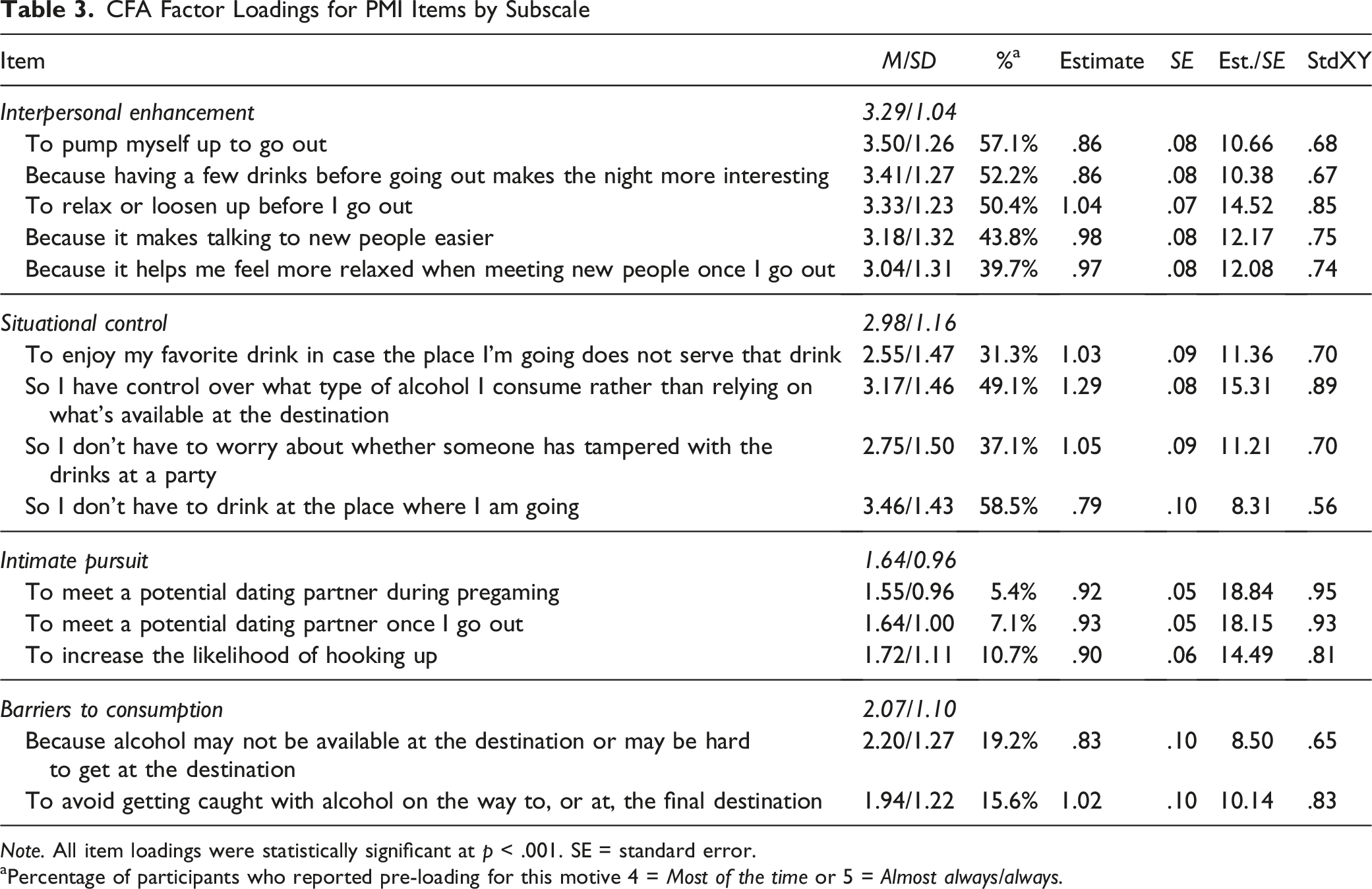
Note. All item loadings were statistically significant at p < .001. SE = standard error.
aPercentage of participants who reported pre-loading for this motive 4 = Most of the time or 5 = Almost always/always.
Pre-loading Motives and Their Associations With Frequency of Pre-Loading and Negative Alcohol Consequences
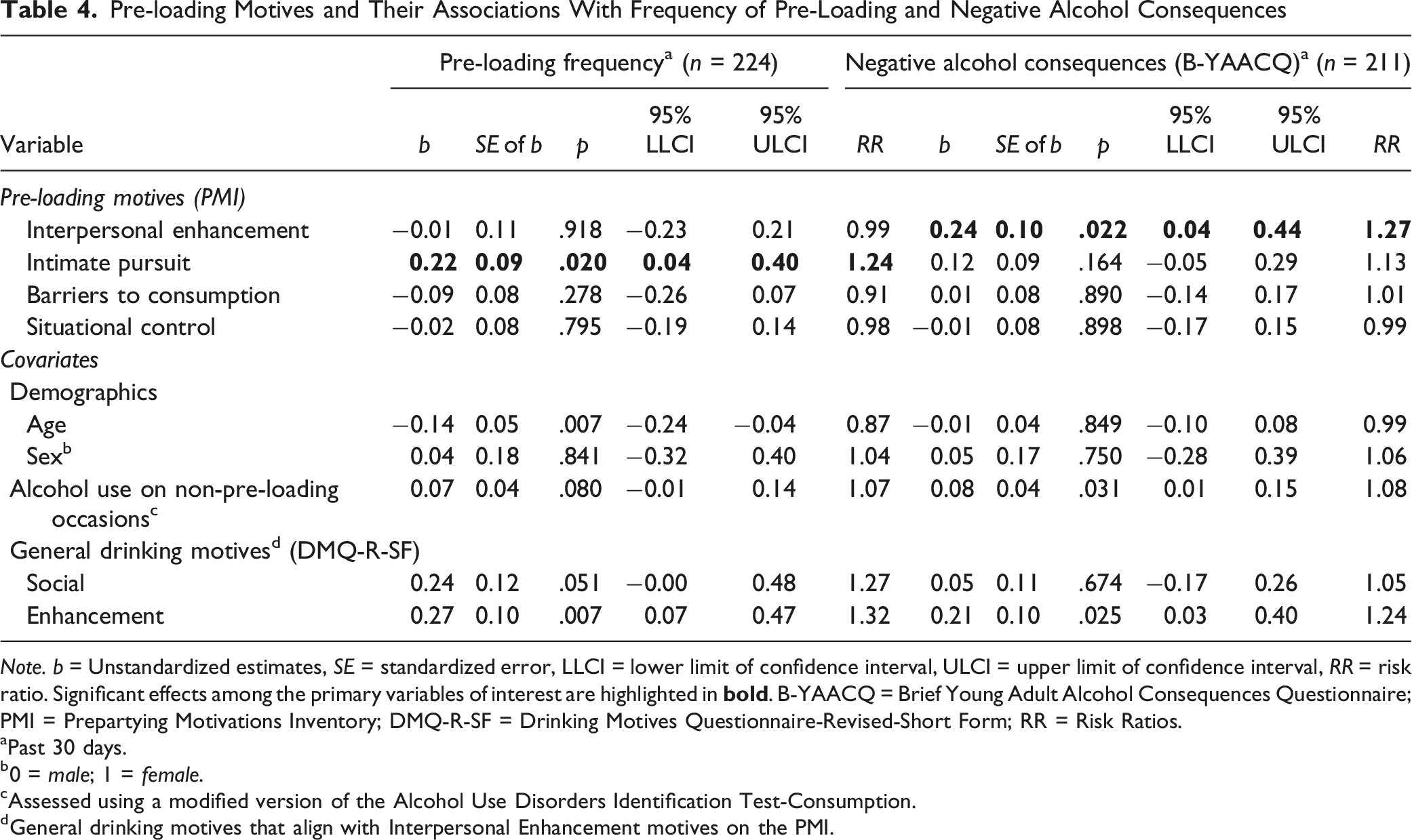
Note. b = Unstandardized estimates, SE = standardized error, LLCI = lower limit of confidence interval, ULCI = upper limit of confidence interval, RR = risk ratio. Significant effects among the primary variables of interest are highlighted in
aPast 30 days.
b0 = male; 1 = female.
cAssessed using a modified version of the Alcohol Use Disorders Identification Test-Consumption.
dGeneral drinking motives that align with Interpersonal Enhancement motives on the PMI.
Qualitative
Overview of Codes, Descriptions, and Sample Responses
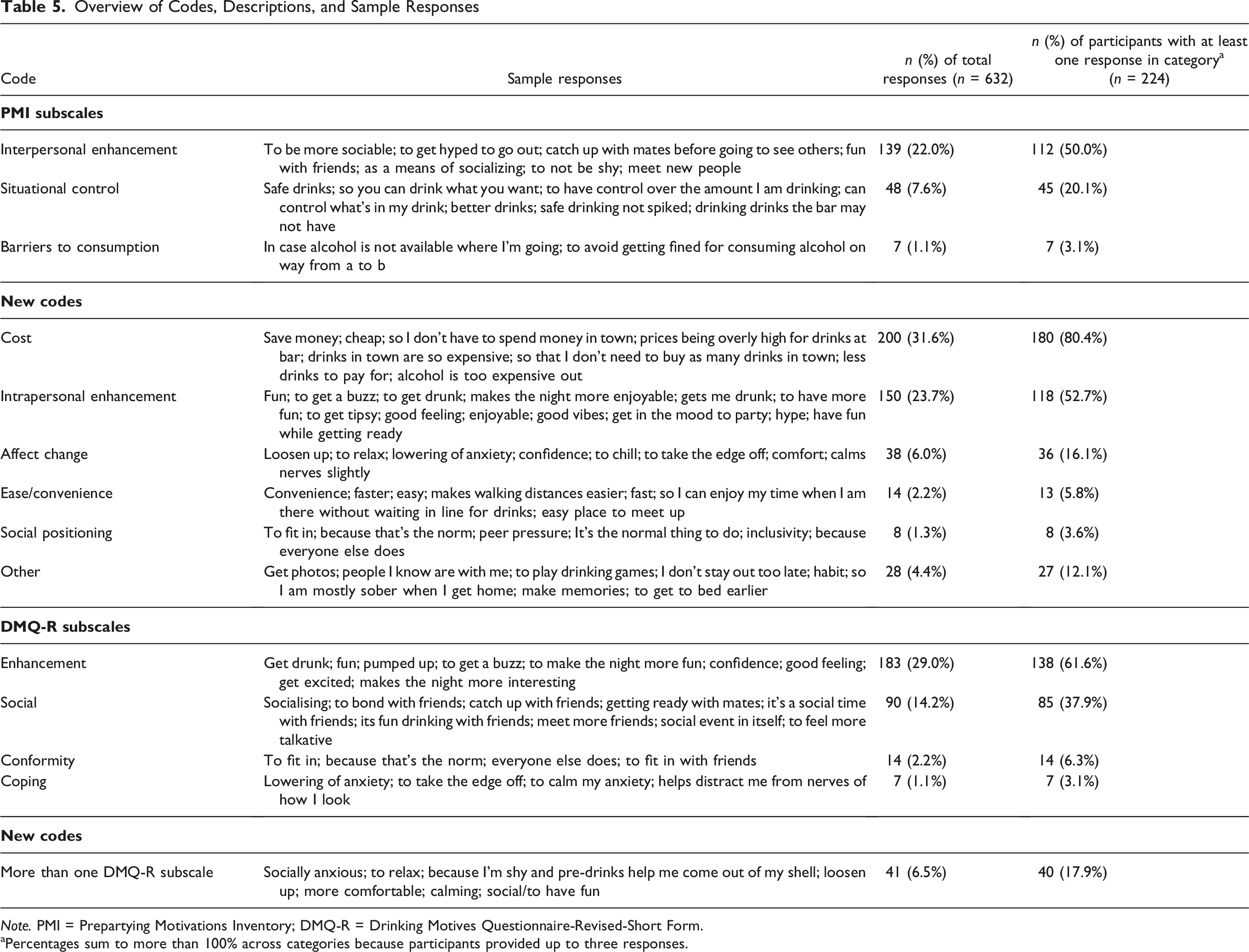
Note. PMI = Prepartying Motivations Inventory; DMQ-R = Drinking Motives Questionnaire-Revised-Short Form.
aPercentages sum to more than 100% across categories because participants provided up to three responses.
In terms of alignment with DMQ-R subscales, 294 responses (46.5%) were coded as aligning with one subscale (see Table 5 for sample responses and percentages by category) and 41 (6.5%) were coded as aligning with more than one subscale. After accounting for responses coded as situational control, barriers to consumption, and cost (coding was identical to PMI coding with one exception, one response contained multiple reasons and was coded as situational control for PMI and conformity for DMQ-R), 43 responses (6.8%) were coded as “other” (e.g., play a drinking game), and no clear themes were identified in these responses.
Discussion
The aims of the present study were threefold. The first aim was to examine the psychometric properties of the PMI among university students in New Zealand. The second aim was to test how each PMI subscale is uniquely associated with pre-loading frequency and negative alcohol consequences while adjusting for key covariates (age, gender, alcohol use on non-pre-loading drinking occasions) and general drinking motives (social and enhancement) that align with the interpersonal enhancement subscale on the PMI. The third aim was to examine students’ motives or reasons to pre-load using an open-ended response format so we could (a) verify their motivations to pre-load as measured by the PMI, and (b) identify other motivations or reasons to pre-load including those that align with established drinking motives. Several findings are noteworthy.
Psychometric Properties of the Prepartying Motivations Inventory
As hypothesized, and in line with past research (LaBrie et al., 2012; O’Neil et al., 2016), we found support for the four-factor structure of the PMI. Consistent with past criticisms of the PMI (particularly the Barriers to Consumption subscale) when it is used in countries where the legal drinking age is under 21 years of age (Sorbello & Devilly, 2024), removing an item specific to underage drinking (O’Neil et al., 2016) was appropriate for the present sample and dropping one additional cross-loading item improved model fit. Overall, our findings suggest that the PMI’s four-factor structure is generally robust and extends to New Zealand university students despite this group having a younger legal drinking age than young adults in the country where the measure was originally developed. These results suggest that practitioners and researchers in New Zealand can use the PMI to identify pre-loading motives among these students.
Pre-Loading Motives, Pre-Loading Frequency, and Negative Alcohol Consequences
Although intimate pursuit motives to pre-load were not frequently endorsed among the university students in our sample, results from our multivariate analysis (which adjusted for age, sex, alcohol use on non-pre-loading occasions, and social and enhancement drinking motives) support our hypothesis that intimate pursuit motives would be associated positively with pre-loading frequency, which is consistent with prior research with university students in the U.S. (e.g., Buch et al., 2024; LaBrie et al., 2012) and other work that adjusted for general alcohol use and drinking motives (Zamboanga, Merrill, et al., 2023). We also found that interpersonal enhancement was positively related to negative alcohol consequences. This finding aligns with results from studies conducted in Australia (Caudwell & Hagger, 2014) and the U.S. (Zamboanga, Merrill, et al., 2023). Although we did not examine drinking consequences that resulted from pre-loading, our findings are consistent with past research which assessed pre-loading specific consequences and adjusted for (a) general drinking motives but not alcohol use (Napper et al., 2015) or (b) alcohol use but not general drinking motives (Walukevich-Dienst et al., 2022). One possible explanation for our findings could be that students who are motivated to pre-load for intimate pursuit reasons are being socially rewarded for doing so, which might explain their frequent participation in this activity. On the other hand, the positive association between interpersonal enhancement and negative alcohol consequences may be indicative of overall riskier practices via increased overall alcohol consumption (Bresin & Mekawi, 2021).
Although prior research with university students in the U.S. has pointed to a positive association between situational control and pre-loading frequency (LaBrie et al., 2012), our findings align with past research in Canada (O’Neil et al., 2016), the U.K. (Howard et al., 2019), and the U.S. (Buch et al., 2024; Zamboanga, Merrill, et al., 2023) which found no associations between this motive and pre-loading frequency. As far as barriers to consumption motives to pre-load are concerned, research in the U.S. (LaBrie et al., 2012) and Canada (O’Neil et al., 2016) has shown positive associations with pre-loading frequency, which differs from our null findings and those reported in other studies in the U.S. (Buch et al., 2024; Walukevich-Dienst et al., 2024). We also found that barriers to consumption motives were not associated with negative alcohol consequences, which is consistent with prior work (Buch et al., 2024) but differs from other studies that were conducted in Australia (Caudwell & Hagger, 2014) and the U.S. (Napper et al., 2015; Zamboanga, Merrill, et al., 2023) which found positive associations between this pre-loading motive and negative alcohol consequences. In short, relative to interpersonal enhancement or intimate pursuit motives, neither situational control nor barriers to consumption appear to pose a significant risk for increased pre-loading frequency or negative alcohol consequences in our sample of university students in New Zealand. Future research should explore whether students choose to pre-load for destination sites (Zamboanga et al., 2013) where they (a) know alcohol will be widely available and (b) feel relatively safe drinking, as well as consider who is likely to be present at these destinations (e.g., casual acquaintances, people they are hoping to have intimate/sexual encounters with, family members, close friends).
Open-Ended Motives or Reasons to Pre-Load
Students’ responses aligned with three out of the four PMI subscales with 50.0% of participants reporting interpersonal enhancement, 20.1% reporting situational control, and 3.1% reporting barriers to consumption. The low number of participants reporting barriers to consumption is not surprising given that all students in our sample were of legal drinking age. We did not find that any students gave self-reported reasons to pre-load that aligned with the PMI subscale of intimate pursuit. Thus, while a low percentage of students endorsed the items on this subscale (5.4% to 10.7%) when asked about it on the PMI, it does not appear to be a primary reason to pre-load among university students in a New Zealand context, even though it was predictive of higher frequency of pre-loading. Students also reported reasons to pre-load that did not align with the PMI subscales. For example, 80.4% of the participants reported at least one cost-related reason. Cost and saving money are commonly reported reasons to pre-load among emerging adults in New Zealand (Cameron et al., 2020; McCreanor et al., 2016), adults in the U.K. (Østergaard & Andrade, 2014), and university students in Australia (Sorbello & Devilly, 2023), the U.S. (e.g., Pedersen et al., 2009), and Canada (i.e., monetary concern was reported by 54% of the students as a reason to pre-load; O’Neil et al., 2016). Roughly a quarter (23.7%) of all responses were coded as intrapersonal enhancement as a reason to pre-load, with over half of participants (52.7%) reporting at least one reason that was coded in this category. Such motives to pre-load appear to differ from interpersonal enhancement motives (e.g., to be more sociable, fun with friends) where the source of the reinforcement appears to be external, and the source of the reinforcement for intrapersonal enhancement seems to be internal (e.g., good vibes, get in the mood to party).
Another key finding was that 16% of the students listed reasons that were coded as affect change (e.g., loosen up, relax, take the edge off, feel less anxious, feel more confident) and were different enough from specific PMI items (e.g., “To relax or loosen up before I go out; It helps me feel more relaxed when meeting new people once I go out”) to warrant their own code. Some of the responses coded as affect change appear to be negatively reinforcing reasons to pre-load with an internal source that does not necessarily refer to a social interaction (e.g., “to take the edge off”). Affect change has also been found to be a reason to play drinking games (Zamboanga et al., 2024), which are sometimes played while pre-loading (e.g., Ford et al., 2022). These findings align with the affective management component of Sorbello and Devilly’s (2024) theoretical model of pre-loading, which posits that some individuals pre-load to help modify anticipated negative affective states (e.g., stress, anxiety, low confidence) at the target-event. A small percentage of the students’ responses were coded as ease/convenience (2.2%; e.g., fast, easy, convenient) and social positioning (1.3%; e.g., to fit in, it’s the norm, peer pressure), the latter of which mostly aligns with conformity motives on the DMQ-R. Finally, students’ primary reasons for pre-loading aligned with all four motives on the DMQ-R, but the percentage of students reporting at least one aligned reason varied across each motive, with enhancement (61.6%) motives having the most responses followed by social (37.9%), conformity (6.3%), and coping (3.1%). Thus, the four drinking motive factors believed to influence general alcohol use also seem to fit primary reasons for pre-loading reported by many New Zealand university students.
Taken together, based on our analysis of the free response reasons university students provided, general enhancement and social motives, interpersonal enhancement motives, and cost/saving money are the most widely reported reasons for pre-loading among the students in our sample. Both enhancement and social types of motives to pre-load have been documented in studies that include samples (not restricted to university students) with New Zealand emerging adults (Dresler & Anderson, 2018; McCreanor et al., 2016) and are well represented in current measures of pre-loading motives (see Table 1). In general, many emerging adults pre-load to enhance their drinking experience and social interactions (e.g., McCreanor et al., 2016). Although cost/saving money is commonly reported as a reason to pre-load among young adults in New Zealand (Cameron et al., 2020; McCreanor et al., 2016) and other countries (e.g., O’Neil et al., 2016; Pedersen et al., 2009; Sorbello & Devilly, 2023; Østergaard & Andrade, 2014), which include both university students and non-university students, it is not assessed in the PMI (or the PGMM). However, there is one question related to cost in the PMQ (i.e., “To spend less money on alcoholic drinks”) and PMQ-Arg (“Because drinks cost less than at the place of the event”). Although we acknowledge that these items are currently included in some pre-loading instruments (e.g., PMQ and PMQ-Arg), we recommend that researchers consider including items related to cost/saving money when assessing and/or developing survey instruments that measure people’s motives or reasons to pre-load. Researchers will also need to be mindful of the effects of adding such items to existing pre-loading instruments like the PMI or the PGMM on the factor structures and/or item loadings of these measures.
Limitations and Future Directions
The present findings should be considered in light of several limitations. First, while our results indicate that the factor structure and item performance of the PMI (LaBrie et al., 2012) are consistent in a sample of university students from New Zealand, we cannot rule out the possibility that pre-loading motives differ across cultural or national samples. Future work with cross-cultural (i.e., multiple countries/cultural contexts) samples will be needed to assess potentially universal vs. culturally specific motives for pre-loading. Second, we were not able to assess the quantity of alcohol consumed while pre-loading due to a survey development error on the pre-loading consumption item; specifically, the question was entered as an open-ended item without validation, which resulted in significant missing data and considerable variations in the nature of responses. Third, the open-ended pre-loading questions were administered after the DMQ-R-SF, pre-loading behavior questions, and the PMI; thus, it is possible that students’ responses on the DMQ-R-SF and/or the PMI could have influenced their answers to the open-ended questions. Fourth, although we adjusted for alcohol consumption on non-pre-loading occasions, we did not examine negative alcohol consequences that resulted specifically following instances of pre-loading, as compared to consequences arising on occasions that did not involve pre-loading. This is an important consideration for future work because it would help explain consequences that are unique or specific to pre-loading, as opposed to those associated with overall increased alcohol consumption that can accompany instances of pre-loading. Fifth, the present study provides a cross-sectional overview of the associations between pre-loading motives or reasons and frequency of pre-loading. Future longitudinal pre-loading work using ecological momentary assessment methods is needed to explore potential changes in pre-loading motivations over time or in response to interventions designed to minimize potential harm resulting from pre-loading. Finally, the source of the reinforcement between interpersonal enhancement, intrapersonal enhancement, and affective change is an important theoretical distinction and could impact pre-loading frequency, consumption, and consequences. Future research is needed to explore this further.
Conclusion
Pre-loading is widely practiced among emerging adults in New Zealand (e.g., Riordan et al., 2018; Zamboanga, George, et al., 2021) and other countries (Foster & Ferguson, 2014; Labhart et al., 2017; Zamboanga, Van Hedger, & George, 2023). In response to the global prevalence of pre-loading, several measures of pre-loading motives have been developed (Caudwell & Hagger, 2021), but do not necessarily capture all of the reasons university students report for pre-loading when asked. The present findings suggest that university students in New Zealand pre-load so they can save money, boost their drinking experience, and enhance their social interactions. Moreover, different motives for pre-loading are associated with different pre-loading behaviors (e.g., frequency) and experience of negative alcohol consequences. Although saving money is a straightforward practical reason to pre-load, the type of desired outcomes that underlie people’s enhancement (e.g., to get intoxicated, pump oneself up, loosen up, take the edge off) and social (e.g., bond before going to a crowded event) motives to pre-load might vary depending on the cultural drinking norms and practices in a given society, the economic context, and the group dynamics of the people that one is pre-loading with. Paying close attention to these factors will prove useful in furthering our understanding of universal, culture-specific, and group-specific motivations to pre-load.
Supplemental Material
Supplemental Material - Motives and Reasons to Pre-load Among University Students in New Zealand: A Mixed-Method Study
Supplemental Material for Motives and Reasons to Pre-load Among University Students in New Zealand: A Mixed-Method Study by Byron L. Zamboanga, Amie R. Newins, Kathryne Van Hedger, Shane D. Marohnic, Jordan Ortman, Derek Heim, Rebecca L. Monk, Emma Dresler in Emerging Adulthood
Footnotes

Funding
The authors received no financial support for the research, authorship, and/or publication of this article.
Declaration of Conflicting Interests
The authors declared no potential conflicts of interest with respect to the research, authorship, and/or publication of this article.
Transparency and Openness Statement
The data, analysis codes, and coding manual used in this study are not openly available but can be made available upon request to the corresponding author and approval from all co-authors.
Supplemental Material
Supplemental material for this article is available online.
Notes
Author Biographies
References
Supplementary Material
Please find the following supplemental material available below.
For Open Access articles published under a Creative Commons License, all supplemental material carries the same license as the article it is associated with.
For non-Open Access articles published, all supplemental material carries a non-exclusive license, and permission requests for re-use of supplemental material or any part of supplemental material shall be sent directly to the copyright owner as specified in the copyright notice associated with the article.
