






Abstract
Most emerging adults, whether attending college or not, engage in multiple casual sex relationships and experiences (CSREs). CSREs are not inherently risky, but subsequent CSREs can increase risk for STIs and unplanned pregnancies. Understanding predictors of subsequent CSRE engagement is important to ensure emerging adults are engaging in CSREs safely. This study examined whether peer approval was positively associated with subsequent CSRE engagement and if the riskiness of a CSRE moderated this association. Peer approval and riskiness of a CSRE were assessed using five daily diaries, and subsequent CSRE engagement was assessed one month later. Riskiness included five indicators: individual and partner alcohol consumption, marijuana and hard drug use, and condom use. Peer approval was positively associated with subsequent CSRE engagement, but the riskiness of the CSRE did not moderate this association. Findings highlight the importance of peer approval in understanding subsequent CSREs for emerging adults, regardless of college status.
Emerging adulthood is a developmental period when individuals are exploring various aspects of their identities (Arnett, 2000, 2015). Sexual identity exploration, which involves determining one’s likes and dislikes regarding sex, is a key aspect of identity developed during this time period (Arnett, 2015; Worthington et al., 2008). Emerging adults are reevaluating their sexual values and trying new relational and sexual behaviors (Wade & Heldman, 2012). In addition to exploring their values by engaging in committed relationships, emerging adults may also use casual sexual relationships and experiences (CSREs), which involve sexual behavior outside of committed relationships. Though the age of marriage has increased in recent years, emerging adults’ desire to explore intimacy has remained (Claxton, 2021). Engaging in CSREs is a developmentally salient way for emerging adults to explore intimacy and experiment without the commitment of marriage (Arnett, 2015; Claxton & van Dulmen, 2013). Indeed, more than 50% of emerging adults report engaging in at least one CSRE (Claxton, 2021), and the majority of college-attending emerging adults report they have engaged in a CSRE since starting college (60%) (Kuperberg & Padgett, 2016). Given the prevalence of CSREs in emerging adulthood, it is important to understand what predicts CSRE engagement and to understand what factors can ensure that emerging adults engage in CSREs safely.
Most previous research on CSREs focuses on the general correlates of CSRE engagement, such as descriptive and injunctive norms about casual sex (van de Bongardt et al., 2015), personal attitudes about casual sex, and situational expectations (Olmstead, 2020). These studies typically assess whether individuals have engaged in a CSRE within a specific timeframe (e.g., the past year) or within their lifetime. Yet, emerging adults often engage in multiple CSREs (Lyons et al., 2013; Rossi et al., 2021; Vasilenko & Lanza, 2014) during this developmental period. Compared to adolescents and older adults, emerging adults likely engage in elevated levels of CSREs due to increased autonomy, reduced parental oversight, and delayed transitions into long-term commitments, such as marriage or parenthood (Claxton & van Dulmen, 2013; Shulman & Connolly, 2013). Repeated CSRE engagement also reflects the instability and fluidity typical of this developmental stage as emerging adults are exploring love and sexuality (Arnett, 2015). Despite the prevalence of multiple CSREs during this period, little is known about what predicts whether individuals will engage in a CSRE again (i.e., subsequent CSRE engagement), highlighting the need for research examining repeated participation in casual sexual experiences.
One factor that may be particularly important in predicting subsequent CSRE engagement is injunctive norms, which represent the perceived approval or disapproval of peers in response to a given behavior. Given the importance of peers in emerging adulthood (Barry et al., 2015) and the fact that peers can give feedback on specific previous CSREs (Morgan & Korobov, 2012), peer approval may influence whether individuals choose to engage in casual sexual behaviors again (DeLuca Bishop, 2021). However, CSREs exist along a continuum of riskiness (Wesche et al., 2021), such as protected versus unprotected sex. Risky sexual behavior reflects behavior that increases the likelihood of unintended pregnancy, sexually transmitted infections, or adverse emotional consequences (Chawla & Sarkar, 2019). When individuals have previous encounters that are risky, they may rely less on peer approval and more on personal assessments of risk to decide if they are going to engage in a CSRE again. In other words, the association between peer approval and subsequent CSRE engagement may vary based on the risk level of the initial encounter. In this paper, we investigated the association between peer approval of a specific CSRE and subsequent CSRE engagement, and whether the riskiness of the initial encounter moderated this association.
CSREs
Casual sexual relationships and experiences (CSREs) are common among emerging adults as they may want to explore romantic connections outside of a committed romantic relationship (Arnett, 2000, 2015; Stinson, 2010). The term CSRE implies that the experience or relationship is casual and therefore lacks commitment; however, the term CSREs encompasses all types of casual sex encounters, including hookups, one-night stands, booty calls, and friends-with-benefits relationships (Claxton & van Dulmen, 2013). These relationships vary in how well individuals know each other, as well as the frequency and continuation of sexual contact, with some CSREs (e.g., one-night stands) happening only once and others (e.g., friends-with-benefits relationships) occurring multiple times. The term CSRE also covers a wide range of behaviors that may occur in conjunction with one another, such as kissing, touching, giving or receiving oral sex, and sexual intercourse.
Engaging in CSREs during emerging adulthood represents a normal developmental milestone as individuals begin to explore intimacy, autonomy, and their identity (Arnett, 2000). Emerging adulthood is characterized by ongoing emotional, social-cognitive, and neurological development, including continued maturation of the prefrontal cortex, which plays a key role in impulse control, decision making, and risk evaluation (Guyer et al., 2023). The pre-frontal cortex is not thought to be fully mature until the mid-20s while the nucleus accumbens, which is associated with reward processing, is heightened during adolescence and emerging adulthood (Galvan et al., 2006). The mismatch in the developmental timing of these two brain structures creates an increased vulnerability to engage in risky behaviors (Galvan et al., 2006; Willoughby et al., 2014). As a result, emerging adults may be more likely to engage in risky sexual behaviors, like those involving alcohol/drug use, or inconsistent condom use. This developmental context helps explain why the risk level of a sexual encounter is salient during this developmental period and underscores the importance of examining what predicts emerging adults’ risky sexual behaviors, such as engaging in multiple CSREs over time.
Researchers have also argued for a need to understand how the social context surrounding emerging adults may reduce or promote risk behaviors (Willoughby et al., 2014). Importantly, while much of the existing research has focused on college students, it is essential to recognize that CSREs also occur among emerging adults outside of the college context. Studies indicate that individuals in various life situations, including those who are not enrolled in higher education, engage in CSREs, highlighting the need for broader research that encompasses diverse experiences and backgrounds (Claxton, 2021). By including non-college students in research, we can capture a more comprehensive view of the factors influencing risky behaviors and the diverse contexts in which these relationships and experiences unfold.
Engaging in Multiple CSREs
On average, emerging adults reported having 3.1 casual vaginal sex partners and 2.1 casual oral sex partners in their lifetime (Lyons et al., 2013), meaning most emerging adults are engaging in multiple CSREs with multiple partners. Despite most emerging adults engaging in multiple CSREs (Lyons et al., 2013; Rossi et al., 2021; Vasilenko & Lanza, 2014), most previous research only provides a glimpse into one CSRE encounter or evaluates CSRE engagement on a long timeframe (past year, lifetime). Thus, the current study builds upon this limitation by assessing multiple encounters and examining how one encounter may influence immediate future CSRE behaviors.
Studying event-level CSREs may provide valuable information for predicting subsequent CSRE engagement. Research shows prior experience of casual sex is a strong predictor of both intentions (Herold et al., 1998) and subsequent engagement in casual sex (Owen & Fincham, 2011; Olmstead et al., 2015). Yet, most previous research on subsequent CSRE engagement focuses on the number of partners (Lyons et al., 2013; Rossi et al., 2021; Vasilenko & Lanza, 2014) or continuation of casual sex with the same partner (Dubé et al., 2017), leaving event-level characteristics of the encounter largely unexplored. Event-level characteristics, such as perceived peer reactions and risks taken before/during the encounter (e.g., condom use and alcohol consumption), may offer a more nuanced understanding of subsequent CSRE engagement, as immediate effects may differ depending on these factors. This focus on the context and characteristics of each encounter enriches our understanding of CSRE dynamics and helps reduce recall biases that may influence perceptions of past CSREs.
The Role of Peer Approval in CSREs
Peer approval may be an important predictor of subsequent CSRE engagement, as it has been consistently linked to lifetime CSRE engagement and may interact with peer approval to shape future behaviors (Holman & Sillars, 2012; Kaufman-Parks et al., 2023; Lyons et al., 2011; Napper et al., 2015; Pai et al., 2010; Yu & Zheng, 2020). Peer approval is a key injunctive norm that reflects an individual’s perceptions of what behaviors are socially approved or disapproved by their peers (Cialdini et al., 1990). Previous research on peer approval (see van de Bongardt et al., 2015 for review) primarily assesses perceived and/or anticipated peer approval (e.g., I think my peers will approve of this CSRE), instead of approval reported by peers themselves because individuals’ perceptions of peer approval are better predictors of their attitudes and behaviors than actual peer-reported norms (Prentice, 2008). For clarity, perceived/anticipated peer approval is simply referred to as peer approval throughout the remainder of this paper. While descriptive norms (i.e., perceptions of the frequency of behaviors by peers; Cialdini et al., 1990) are often studied simultaneously with injunctive norms, the current study focuses on injunctive norms. Studying injunctive norms is particularly important to consider when examining event-specific CSREs (i.e., peer approval of a specific instance of casual sex) because they should more directly capture the social approval that may motivate CSRE engagement.
As early as adolescence, individuals’ perceptions of peer approval are positively associated with their sexual behavior, an association which strengthens over the course of adolescence (van de Bongardt et al., 2015). This trend continues into emerging adulthood as emerging adults move away from their parents and increasingly rely on their peers for support in developmental tasks like searching for a romantic partner, pursuing academic and career goals, and engaging in sexual experiences (Barry et al., 2015; Connolly et al., 2004; Holman & Sillars, 2012). Given the increased importance of peers, peer approval plays a critical role in emerging adults’ sexual attitudes and behaviors (see DeLuca Bishop, 2021 for review).
In general, emerging adults who perceive their peers to be approving of CSREs are more likely to have positive attitudes about CSREs themselves (Holman & Sillars, 2012; Napper et al., 2015). Peer approval of casual sex is also positively associated with engaging in CSREs in general (Holman & Sillars, 2012; Kaufman-Parks et al., 2023; Lyons et al., 2011; Napper et al., 2015; Pai et al., 2010; Yu & Zheng, 2020), continued CSRE engagement with the same partner (Hughes et al., 2005), and satisfaction with CSRE engagement (DeLuca et al., 2015). These associations may be partially explained by individuals perceiving their peers as more approving of casual sex than they truly are. Consequently, this perception may prompt individuals to feel obligated or pressured to engage in sexual behaviors, potentially in an effort to obtain peer approval (Napper et al., 2015). Indeed, emerging adults have noted gaining approval from peers as a positive consequence of casual sex engagement (Lyons et al., 2014) and reported peer approval as a motivation for engaging in casual sex (Anders et al., 2020). In addition, prior research suggests that both past experiences (e.g., past sexual experiences) and social norms contribute to future behaviors (Turchik & Gidycz, 2012), indicating that individuals’ previous CSRE experiences (e.g., the risk involved) may interact with peer approval to shape future behaviors.
Most existing research that assesses the role of peer approval on CSRE engagement examines these associations in general or across the lifespan, rather than examining them as event-level processes. Event-level assessments are important because they capture how immediate perceptions of peer approval influence the likelihood of engaging in a specific CSRE, rather than reflecting broader or retrospective behavior. Because emerging adults report peer approval as both a motivator and a positive consequence of CSREs (Anders et al., 2020; Lyons et al., 2014), these immediate perceptions of peer endorsement may shape decisions in real time. Examining these event-specific associations allows us to understand how a specific instance of approval or disapproval may influence future sexual behaviors. Thus, the current study builds on previous research by examining event-level perceived peer approval, rather than global assessments of peer approval.
In addition to peer approval, it is important to recognize the larger context peers provide for emerging adults’ CSRE engagement. For instance, it is common during emerging adulthood for peer groups to mutually agree on engaging in risky behaviors, especially during certain social events, such as Spring Break (Patrick et al., 2011), Halloween (DeLuca et al., 2015), 21st birthdays (Rodriguez et al., 2016; Rutledge et al., 2008), and New Year’s Eve (Del Boca et al., 2004). In addition, hookup culture norms show that CSRE engagement is typically initiated at social events during or after which partners can engage in some form of CSRE (Wade & Heldman, 2012). Collectively, these findings display how emerging adults’ CSRE engagement is influenced by their peers through peer approval and creating contexts that accept risky behaviors. However, this association may be influenced by individual and contextual factors. While some studies have found gender differences in peer approval (Woerner & Abbey, 2016) and CSRE engagement (Claxton, 2021), meta-analytic findings suggest that gender differences in peer approval may not be robust (van de Bongardt et al., 2015). Other contextual factors, such as the level of risk involved in the initial encounter, may play a role. For instance, research has shown that peers tend to approve of both CSRE engagement and safe sex practices (Potard et al., 2008), suggesting that peer approval may depend on how risky the behavior is perceived to be.
Risky Behaviors in CSREs
Risky sexual behavior includes sexual activity that increases the likelihood of pregnancy or sexually transmitted infections (STIs) and sexual activity with potential negative emotional consequences (see Chawla & Sarkar, 2019 for a review). Although engaging in CSREs is not inherently a risky behavior, there are contextual factors that can make engaging in a single CSRE risky, such as not using a condom during the encounter or consuming alcohol or drugs prior to the encounter. These contextual factors can be measured at an event-specific level to get a measure of riskiness for a specific CSRE. Recent research indicates that a substantial number of emerging adults engage in sexual risk behaviors, including inconsistent condom use (60%) and alcohol (33%), and drug use (9.7%) prior to sexual engagement (Santos et al., 2024). Because these behaviors can carry significant health consequences, individuals may be more likely to weigh personal risk over peer approval when deciding whether to engage in a subsequent CSRE.
Failure to use a condom during a CSRE is an especially important risk factor, as non-usage can put one directly at risk for STIs and unintended pregnancy (Leigh, 2002; Vasilenko & Lanza, 2014). Research suggests that while not using a condom is more common in romantic relationships, the lack of condom use is also a problem in CSREs, with over 1/3 of individuals reporting engaging penetrative CSRES without condoms (Hall et al., 2019; Santos et al., 2024). Importantly, condom use is also associated with rates of alcohol and drug use, which contributes to the cumulative risk of alcohol and drug use within the context of a CSRE.
Alcohol use is a common factor in CSRE engagement (Claxton et al., 2015; Garcia et al., 2019), and CSREs involving alcohol are more likely to lead to negative emotional responses (see Wesche et al., 2021 for a review). Negative emotional responses range from negative emotional reactions, like feelings of regret following a CSRE, to negative emotional health associated with CSRE engagement, such as depression or anxiety (Wesche et al., 2021). Furthermore, alcohol use may be related to sexual assault within the context of a CSRE (see Garcia et al., 2019 for a review), and alcohol consumption before engaging in sex has been associated with a significant increase in the risk of HIV (Baliunas et al., 2010). Additionally, experimental research suggests links between alcohol use and intentions to engage in unprotected sex (see Rehm et al., 2012; Scott-Sheldon et al., 2016 for reviews), and non-experimental studies have found (mixed) associations between alcohol use and condom use (see Brown et al., 2016 for a review). Furthermore, within the context of CSREs, research suggests associations between alcohol use and lack of condom use (Cho & Yang, 2023; Downing-Matibag & Geisinger, 2009; Kiene et al., 2009; Lewis et al., 2014; although see Lewis et al., 2012 for an example of a study with no relationship). Collectively, these findings display that alcohol use prior to CSRE engagement is a risky behavior that may lead to other negative outcomes, including risk of sexual assault and/or HIV, or other risky behaviors (e.g., failure to use a condom).
Similarly, there are associations between hard drug use and sexual risk-taking, including not using a condom (e.g., Koffarnus et al., 2016). Findings are mixed, however, on whether marijuana use is associated with failure to use a condom. For example, Anderson and Stein (2011) found that marijuana users are more likely to have unprotected sex than marijuana non-users. On the other hand, Tucker et al. (2019) found that marijuana users are more likely to engage in condom-protected sex than non-users when engaging with a casual partner.
The Current Study
Overall, the research shows that CSRE engagement is common in emerging adulthood, and those who engage in multiple or subsequent CSREs (especially if they include risky contextual factors) may be at an increased risk for exposure to negative emotions, STIs, and unintended pregnancies compared to those who do not engage in CSREs (e.g., Garcia et al., 2019; Wesche et al., 2021). Thus, understanding predictors of subsequent engagement in CSREs is particularly important. The current study focuses on risky behaviors in CSREs, particularly condom use, individual alcohol consumption, partner alcohol consumption, marijuana use, and hard drug use, rather than the negative outcomes that can come from these risky behaviors, such as the risk of sexual assault, unplanned pregnancies, or STIs. Research has demonstrated that peer approval is associated with general CSRE engagement in cross-sectional (e.g., Holman & Sillars, 2012; Pai et al., 2010; Potard et al., 2008) and longitudinal data on general CSRE engagement (Lyons et al., 2011; Napper et al., 2015; Yu & Zheng, 2020), so it may be associated with subsequent CSRE engagement as well. In addition, peers often create specific event contexts, such as Spring Break Trips, for engaging in CSREs with a common understanding to engage in risky behaviors like getting drunk or having sex without a condom (Maticka-Tyndale et al., 1998; Patrick et al., 2011).
Most of this research, however, is cross-sectional and/or does not evaluate event-specific occurrences of CSREs or peer approval, and the association with future sexual behaviors. The current study addresses this gap by assessing CSRE engagement immediately after it occurs and examining how one CSRE may influence immediate future behaviors. By focusing on event-level CSREs, we aim to provide a more nuanced understanding of the factors that influence future CSRE engagement.
Furthermore, previous research does not consider the interactive effect that the riskiness of CSREs may have on peer approval and subsequent CSRE engagement. There is mixed evidence on how risk and social norms interact to predict future behavior, which suggests the interactive effects may depend on the specific behaviors being examined (Zhuang & Carey, 2025). It is possible that riskiness weakens the association between peer approval and CSRE engagement because riskier CSREs introduce personal concerns about health, such as STIs and unintended pregnancy (Leigh, 2002; Vasilenko & Lanza, 2014), which may override the influence of peer approval. In other words, when individuals perceive an encounter as risky, they may rely less on peer approval and more on their own assessments of potential health risks. In contrast, when behaviors are perceived as less risky, peer approval may carry greater weight. For example, if an individual’s previous CSRE involved high levels of alcohol use or lack of condom use, they may be less likely to engage in CSREs in the future regardless of peer approval, whereas, if their prior experience felt low-risk, peer approval may continue to be positively associated with future CSRE engagement. Meta-analytic findings also show peer norms have a weaker association with sexual risk behaviors than sexual behavior in general likely due to less frequent discussion of risky sexual activity due to shame and/or discomfort (van de Bongardt et al., 2015), suggesting the impact of peer norms on sexual behavior may be diminished in the context of risk taking behaviors (e.g., alcohol use, no condom use).
Hence, the current study examines the impact of peer approval on subsequent CSRE engagement and whether that association is moderated by the riskiness of a specific CSRE. Similar to Spring Break (Maticka-Tyndale et al., 1998; Patrick et al., 2011), we expect peers to influence risky behaviors during other high alcohol consumption events that are often celebrated with peers, so we utilized a short-term longitudinal design surrounding Halloween and St. Patrick’s Day. The daily diaries were timed around the weekend when these holidays were celebrated (Thursday-Monday), and were used to assess the details of CSREs, including peer approval of the CSRE and the riskiness of the encounter (defined by condom use, individual alcohol consumption, partner alcohol consumption, marijuana use, hard drug use). To assess subsequent CSRE engagement, a follow-up survey was given to participants one month later.
The first aim of the present study is to examine whether perceived peer approval of a specific CSRE is associated with subsequent CSRE engagement. Consistent with previous research (Laflin et al., 2008; L’Engle & Jackson, 2008; Little & Rankin, 2001; Lyons et al., 2011; Napper et al., 2015; Yu & Zheng, 2020), we hypothesize that perceived peer approval of a CSRE during the daily diary period will be positively associated with subsequent CSRE engagement one month later (H1). The second aim is to explore whether the association between perceived peer approval of a specific CSRE and subsequent CSRE engagement is moderated by the riskiness of the CSRE. Though there is little research on what factors may qualify the impact of peer norms on casual sex engagement, we expected the level of risk during the first casual sex experience to weaken the association between peer approval and subsequent CSRE engagement because the personal concerns about health consequences should override the influence of peer approval (Leigh, 2002; Vasilenko & Lanza, 2014).
Finally, the current study includes both college and non-college students. Although we did not make specific hypotheses about differences between the college and non-college samples, including these groups helps to address the issue of the “forgotten half” that is common to emerging adult research and broadens our understanding of the experiences of all emerging adults, not just those who are in college settings (Ravert et al., 2018).
Methods
Participants
Baseline Demographic Variables of the Current Study Sample
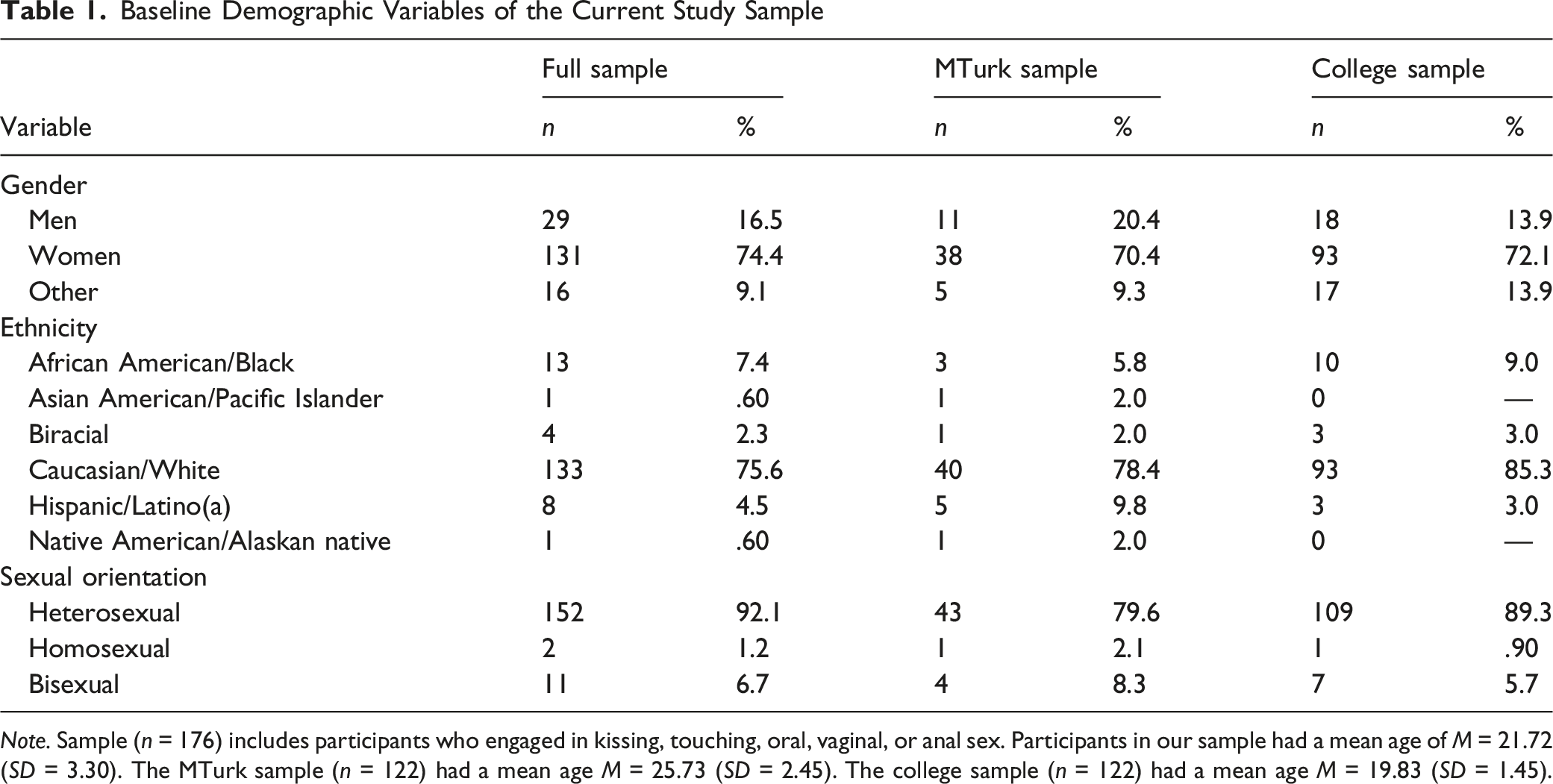
Note. Sample (n = 176) includes participants who engaged in kissing, touching, oral, vaginal, or anal sex. Participants in our sample had a mean age of M = 21.72 (SD = 3.30). The MTurk sample (n = 122) had a mean age M = 25.73 (SD = 2.45). The college sample (n = 122) had a mean age M = 19.83 (SD = 1.45).
Descriptive Statistics and Frequencies for Study Variables
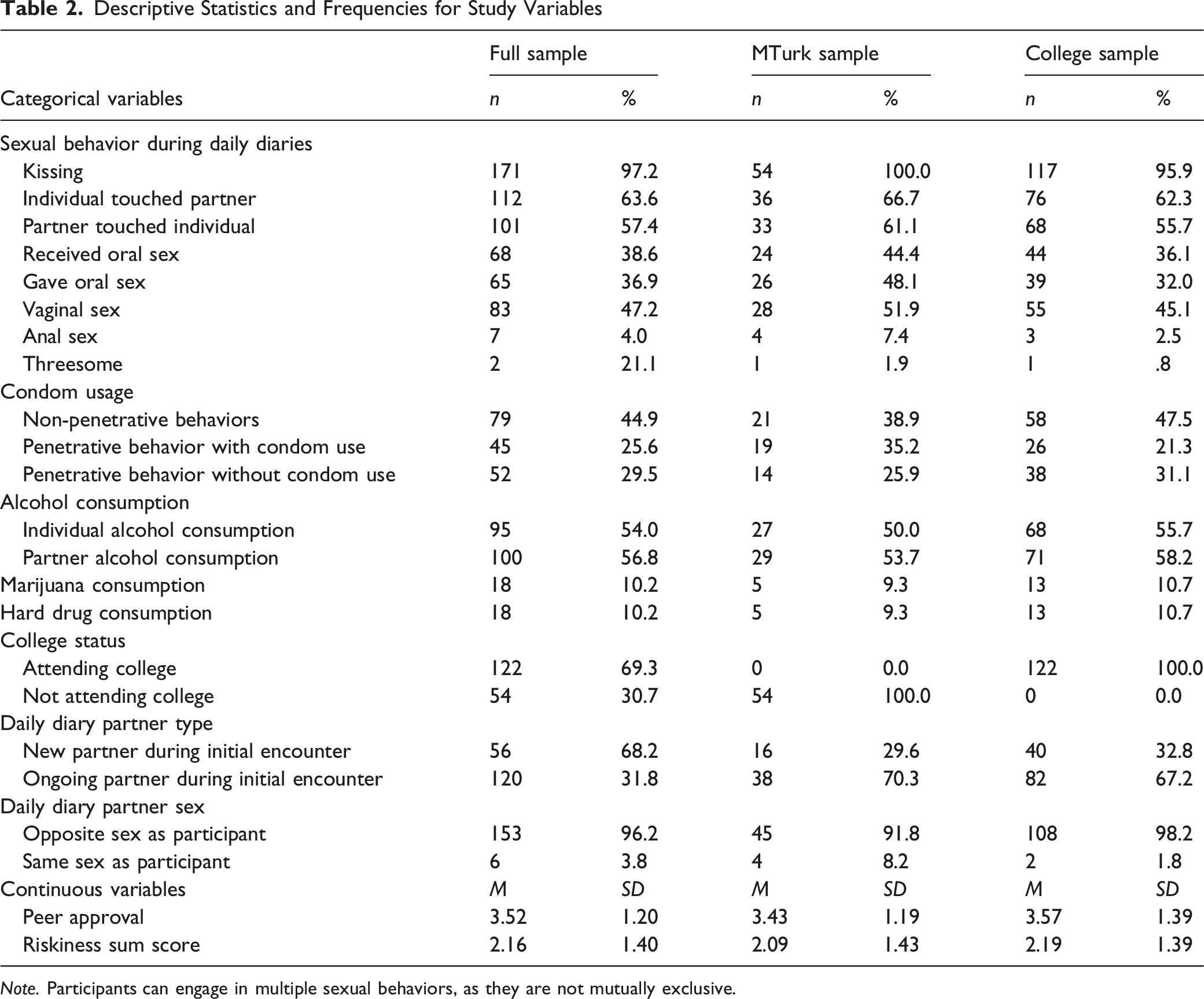
Note. Participants can engage in multiple sexual behaviors, as they are not mutually exclusive.
Procedure
The original study was approved by the institutional review board (IRB) at Kent State University, where the data were collected (Approval number 13-380). The original study collected data from emerging adults attending college and those not attending college to gather a more representative sample of emerging adults and make the results more generalizable, as most emerging adults do not attend college, making the college context fairly unique (Arnett, 2016). This original study aimed to improve upon the existing research by investigating CSREs around specific events (e.g., spring break, New Year’s Eve) and by capturing daily reports rather than retrospective reports. Participants were asked to complete three waves of data collection: a baseline survey, five daily diary surveys, and a follow-up survey. The baseline survey included demographic data, as well as a battery of psychosocial assessments and sexual history. A week after the baseline survey, participants completed five days of daily surveys that surrounded the high alcohol consumption events, Halloween and St. Patrick’s Day. Participants were emailed a survey link each morning and asked to report on the previous day, including their sexual behaviors, peer approval of these behaviors, and contextual factors indicating risk (i.e., condom use, individual alcohol consumption, partner alcohol consumption, marijuana use, and hard drug use). All daily surveys contained the same measures. One month later, participants were emailed a follow-up survey that included a battery of psychosocial measures and subsequent CSRE engagement since the daily diary assessment. For the analyses in the current study, demographic data were assessed during the baseline assessment, and the primary study variables were obtained from the daily diaries and the follow-up survey.
Measures
All variables obtained during the daily-diary period (i.e., peer approval, condom use, individual alcohol consumption, partner alcohol consumption, marijuana use, and hard drug use) were created using data from the first day a sexual behavior occurred to maximize our sample, given the low base rates of CSREs. For example, if a participant engaged in a CSRE on days 2 and 5, their data was pulled from day 2. During the daily-diary period, participants reported whether they engaged in the following sexual behaviors that day: kissing, touching above clothes, touching below clothes, giving, or receiving oral sex, and having vaginal or anal sex.
Peer Approval
As is common when assessing injunctive norms (van de Bongardt et al., 2015), peer approval during the daily-diary period was assessed with a single item asking participants to directly rate their perceptions of peer approval. Participants rated the degree to which they agreed with the statement “My friends will approve of my sexual encounter, if I tell them.” The item was rated on a 5-point Likert scale ranging from 1 (strongly disagree) to 5 (strongly agree).
Indicators of Risk Used for Aggregate Sum Score
Condom Use
Condom use was assessed during the daily diaries by asking, “Did you (or your partner) use a condom?” However, this question was only asked of participants who engaged in penetrative sex (i.e., oral, vaginal, or anal sex). To account for non-penetrative behavior, condom use was recoded to include three different levels of risk. This coding is similar to that of Evans et al. (2004) and Capaldi et al. (2002), which used a cumulative risk score to examine different levels of risk. The lowest risk level (coded as 0) indicates the participant engaged in non-penetrative behaviors (i.e., kissing and/or touching) and did not use a condom. The next level of risk (coded as 1) indicates the participant engaged in a penetrative behavior (i.e., oral, vaginal, or anal sex) and a condom was used. Finally, the highest level of risk (coded as 2) indicated that the participant engaged in penetrative behaviors, but a condom was not used. Since the type of sexual behavior was accounted for in the tri-level condom use variable, we excluded the type of behavior from the model to avoid redundancy.
Alcohol Consumption
As is common when assessing alcohol consumption related to CSREs (Claxton et al., 2015), a dichotomous measure was used. Participants were asked, “Did you consume alcohol before engaging in these behaviors?” to which they answered no (0), yes (1), or prefer not to answer (coded as missing data). Casual sex partner’s alcohol consumption was measured during the daily diaries by asking “Did your partner consume alcohol or use drugs before engaging in these behaviors?” to which participants answered no (0), yes (1). There was no missing data for this variable.
Marijuana and Drug Use
Substance use prior to a sexual encounter is commonly assessed using single-item questions (Gómez-Núñez et al., 2023). In the current study, individual drug use was assessed during the daily diaries by first asking, “Did you consume drugs before engaging in these behaviors?” This item was rated either as no (0), yes (1), and there was no missing data for this variable. Drug use was then coded using a follow-up question where participants indicated the type of drug they consumed. Marijuana use and hard drug use (i.e., any kind of cocaine, crystal meth, any other type of illicit drug) were coded separately.
Aggregate Sum Score of Riskiness
Similar to Evans et al. (2004) and Capaldi et al. (2002), an aggregate sum score was created for the riskiness of the sexual encounter during the daily diary period. A risk score was computed for each participant by summing the five indicators of risk described above (i.e., individual alcohol consumption, partner alcohol consumption, marijuana use, hard drug use, and condom use). If the participant engaged in a behavior, the variable would be coded as 1, and the participant would receive one point towards the riskiness sum score for each behavior in which they engaged. As previously mentioned, condom usage was coded as a tri-level variable. A participant who did not use drugs or alcohol, whose partner also did not consume alcohol, and who engaged in a non-penetrative behavior would receive an aggregate score of 0. In contrast, a participant who consumed drugs, alcohol, reported their partner also consumed alcohol, and engaged in penetrative behavior without a condom would receive an aggregate score of 6. See Table 2 for descriptive statistics for each indicator of risk separated by college status.
Subsequent CSRE Engagement
Subsequent CSRE engagement was measured one month after the daily diary diaries through a follow-up survey, and was assessed using two items: “Did you engage in further sexual contact with the individual whom you had an encounter with during the daily dairy period?” and “Did you engage in any sexual behaviors with anyone else over the past month?” Both items were rated either yes (1), no (2), or prefer not to answer (coded as missing data). The answers to both questions were combined to create a single subsequent CSRE engagement variable that was coded as either yes (1) or no (0). At follow-up, 59.70% (n = 105) of participants subsequently engaged in a CSRE, whereas 40.30% (n = 71) of participants did not subsequently engage in a CSRE at follow-up.
Planned Analyses
Bivariate Correlations for All Study Variables
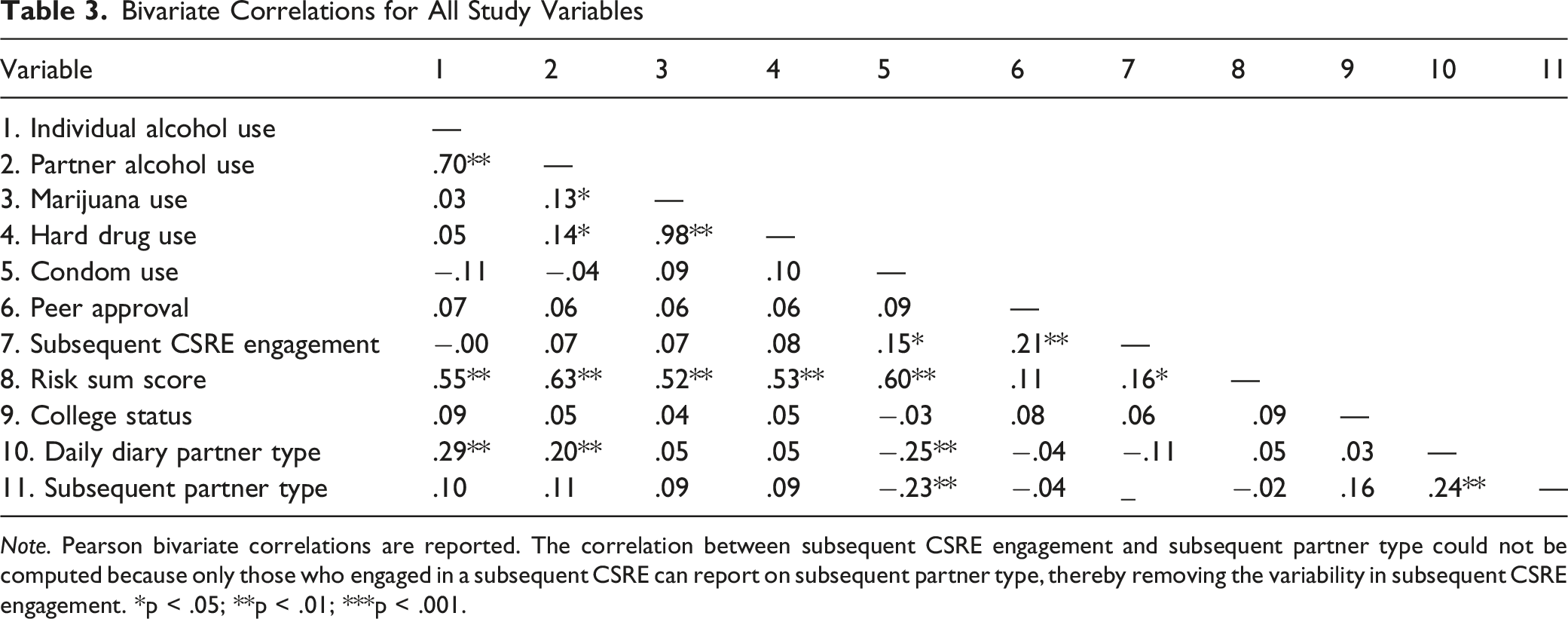
Note. Pearson bivariate correlations are reported. The correlation between subsequent CSRE engagement and subsequent partner type could not be computed because only those who engaged in a subsequent CSRE can report on subsequent partner type, thereby removing the variability in subsequent CSRE engagement. *p < .05; **p < .01; ***p < .001.
Results
Aim 1
Logistic Regression: Subsequent CSRE Engagement Regressed Onto Peer Approval
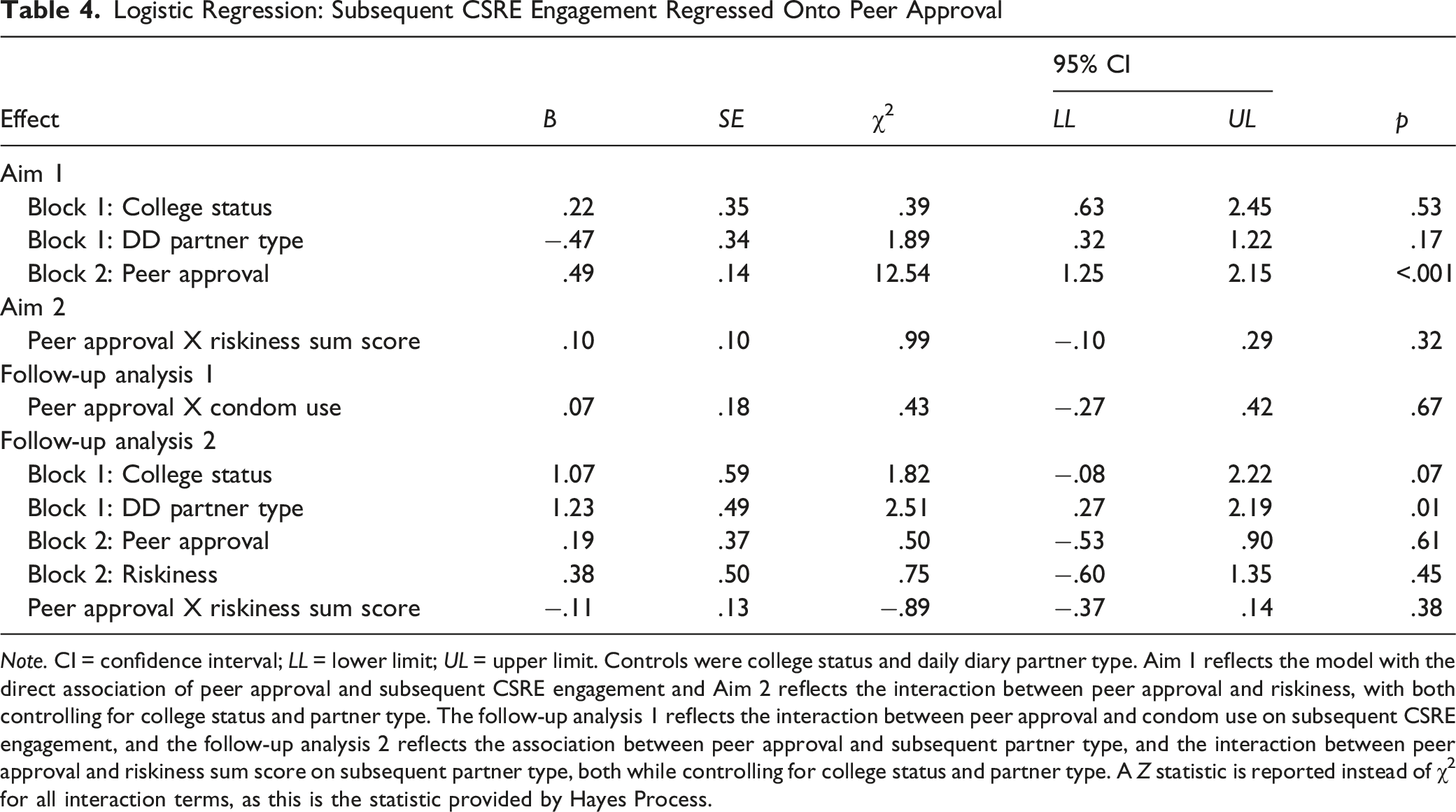
Note. CI = confidence interval; LL = lower limit; UL = upper limit. Controls were college status and daily diary partner type. Aim 1 reflects the model with the direct association of peer approval and subsequent CSRE engagement and Aim 2 reflects the interaction between peer approval and riskiness, with both controlling for college status and partner type. The follow-up analysis 1 reflects the interaction between peer approval and condom use on subsequent CSRE engagement, and the follow-up analysis 2 reflects the association between peer approval and subsequent partner type, and the interaction between peer approval and riskiness sum score on subsequent partner type, both while controlling for college status and partner type. A Z statistic is reported instead of χ2 for all interaction terms, as this is the statistic provided by Hayes Process.
Aim 2
To test the hypothesis that the riskiness of a specific encounter would moderate the relationship between peer approval and subsequent CSRE engagement, moderation analyses were performed. There was no significant interaction of riskiness by peer approval on subsequent CSRE engagement when controlling for college status and daily diary partner type, b = .10, SE(b) = .10, z = 0.99, p = .32, 95% CI = [−.10, .29].
Exploratory Follow-Up Analyses
Given the positive bivariate correlation that emerged between condom use and subsequent CSRE engagement (r = .15, p = .01) and the fact that condom use is associated with other risk factors, such as alcohol use (Downing-Matibag & Geisinger, 2009; Kiene et al., 2009; Lewis et al., 2014), we conducted an exploratory follow-up analysis to see if condom use alone would moderate the effect between peer approval and subsequent CSRE engagement. However, there was no significant interaction of condom usage by peer approval on subsequent CSRE engagement, b = .07, SE(b) = .18, z = .43, p = .67, 95% CI = [−.27, .42].
Given various types of CSREs may involve differing levels of continuation (e.g., friends with benefits versus one-night stands) and because less familiarity may provide increased risk for negative emotional outcomes (Wesche et al., 2021), we wanted to see whether peer approval of a CSRE during the daily diary period would predict if an individual engaged in a CSRE with the same sexual partner or a different sexual partner one month later. It is plausible that when peers approve of the initial encounter, individuals may be more likely to continue engaging with the same partner. Conversely, if the encounter is perceived as risky and receives less peer approval, individuals may be more inclined to engage with a new partner. To examine this, we created a binary variable of subsequent partner type that assessed if participants engaged with at least one new partner since the daily diary period (n = 26) or if they engaged with only the same partner since the daily diary period (n = 73). This variable was then used as the dependent variable, with college status as a control variable, and peer approval as the predictor. Loading college status and daily diary partner type into block 1 did provide a better overall fit than the intercept model [χ2(2, N = 105) = 9.25, p = .01]. However, loading peer approval into block 2, did not provide a better overall fit than block 1 [χ2(1, N = 105) = .18, p = .67]. Similar to Aim 2, we wanted to explore if riskiness would moderate the relationship between peer approval and subsequent sexual partner type. However, there was no significant interaction of cumulative riskiness by peer approval on subsequent sexual partner type, b = −.11, SE(b) = .13, z = −.89, p = .38, 95% CI = [−.37, .14].
Discussion
The current study examined the impact of peer approval on subsequent CSRE engagement and whether that association was moderated by the riskiness of a specific CSRE in a sample of emerging adults. It was hypothesized that perceived peer approval of a CSRE during the daily-diary period would be positively associated with emerging adults’ CSRE engagement one month later. It was also hypothesized that the riskiness of the earlier CSRE would weaken the association between perceived peer approval and subsequent CSRE engagement. Overall, the results revealed that peer approval was positively associated with emerging adults’ subsequent CSRE engagement; however, this association was not moderated by the riskiness of the initial CSRE. By using an event-specific, daily-diary approach with both college and non-college attending emerging adults, this study adds an important contribution to the literature by highlighting peer approval as a key factor influencing subsequent CSRE engagement during emerging adulthood, regardless of college status.
Peer Approval and Subsequent CSRE Engagement
Similar to previous studies on peer approval and general CSRE engagement (Holman & Sillars, 2012; Kaufman-Parks et al., 2023; Lyons et al., 2011; Napper et al., 2015; Pai et al., 2010; Yu & Zheng, 2020) and continued CSRE engagement (Hughes et al., 2005), the current study found peer approval to be positively associated with subsequent CSRE engagement. That is, when emerging adults perceived their friends to be more approving of a specific CSRE, they were more likely to engage in a CSRE again within the next month. This aligns with prior research showing that peer approval is a significant predictor of emerging adults’ sexual attitudes and behaviors (van de Bongardt et al., 2015). As most studies examine peer approval and CSRE engagement over the lifespan, this study adds an important contribution to the literature with its use of event-specific instances of peer approval and its longitudinal associations with subsequent CSRE engagement. Given that CSREs are a developmentally normative behavior in emerging adulthood (Arnett, 2000) and that most emerging adults engage in multiple CSREs (Lyons et al., 2013), these findings highlight the influential role of peer approval in predicting continued casual sexual behavior. Because most prior research on predictors of CSRE engagement has focused on college student samples (Lyons et al., 2013), the current study also extends and validates these findings by using a more diverse sample of emerging adults that includes both college-attending and non-college-attending individuals.
Interestingly, peer approval was better at predicting subsequent engagement in a CSRE (90.9% correctly estimated) versus non-engagement (33.3% correctly estimated). One explanation for this discrepancy is that participants reported moderate-to-high perceptions that their peers would approve of the sexual encounter that occurred during the daily diary period (M = 3.52, SD = 1.20). These favorable perceptions of peer approval are consistent with previous research that notes perceived peer approval is generally high, possibly due to emerging adults’ overestimation of their peers’ approval of casual sex (Lyons et al., 2014; Napper et al., 2015). Prior sexual experiences may further reinforce these perceptions, as individuals who have engaged in CSREs previously may perceive greater approval and lower risk, suggesting that past behavior can interact with social norms to shape behaviors (Turchik & Gidycz, 2012). Past experiences and the overestimation of peer approval can create perceptions of limited alternatives to CSREs (i.e., committed romantic relationships) and diminish the fear of being judged for engaging in a CSRE (Anders et al., 2020), which may motivate emerging adults to continue engaging in CSREs. In addition, our measurement of peer approval solely measured peer approval, not peer disapproval. A lack of peer approval is not necessarily equivalent to peer disapproval. It is possible that peer disapproval may be a deterrent to subsequent CSRE engagement, whereas peer approval (even at low levels) reinforces CSRE engagement. In sum, peer approval may not be a good predictor of not engaging in a subsequent CSRE, so future studies should assess what may better predict non-engagement.
Riskiness and Subsequent CSRE Engagement
Contrary to our hypothesis, the riskiness of a previous CSRE did not moderate the relationship between peer approval and subsequent CSRE engagement. In part, this can be explained by the fact that, in general, peers are approving, sometimes even encouraging, of CSRE engagement (Maticka-Tyndale et al., 1998; Patrick et al., 2011) if the risk involved is low (Potard et al., 2008). In the current study, the average-level of riskiness of a specific CSRE during the daily diary was relatively low (M = 2.12, SD = 1.43, Min = 0, Max = 6). In line with our hypothesis, it is possible that only high levels of risky sexual behavior weaken the association between peer approval and subsequent CSRE engagement because they elicit personal health concerns (Leigh, 2002; Vasilenko & Lanza, 2014), but high levels were only observed for a small proportion of our sample. In other words, when individuals perceive an encounter as risky, they may rely less on peer approval and more on their own assessments of potential health risks, whereas when behaviors are perceived as less risky, peer approval may carry greater weight. We also found no significant association between peer approval and risk, which may reflect the overall low levels of risk in our sample, could indicate that participants perceive peer approval as independent of the risky behaviors engaged in a particular encounter, or that they are generally approving of risk, since levels of peer approval were generally high in our sample (M = 3.52, SD = 1.20). Alternatively, we may have been underpowered to detect this effect because statistical interactions typically have small effect sizes and are difficult to detect (McClelland & Judd, 1993).
Interestingly, although previous research has found associations between alcohol (Claxton et al., 2015) and drug use (Fairlie et al., 2018) and CSRE engagement, there were no bivariate associations between these risk indicators (aside from condom use) and subsequent CSRE engagement (see Table 3). Given that previous studies have not focused on predicting CSREs in the short term, it may be that risk behaviors during a particular CSRE are not a strong predictor of subsequent CSRE engagement. In other words, these risk behaviors may predict engaging in a CSRE in the moment but may not be predictive of whether one will engage in a CSRE later. Alternatively, measuring perceived risk, which has been shown to be distinct from actual risk and have unique associations with sexual behaviors (Roberts & Kennedy, 2006), may be more strongly related to subsequent CSRE engagement. It is also possible that condom use has a more robust relationship given its association with other risky sexual behaviors (e.g., Boislard et al., 2016; Cho & Yang, 2023).
Exploratory Analyses
Given the significant positive correlation between condom use and subsequent CSRE engagement, exploratory analyses examined whether condom use would weaken the association between peer approval and subsequent CSRE engagement. Like the riskiness sum score, condom use did not moderate the association between peer approval and subsequent CSRE engagement. One reason for this may be that our measure of peer approval did not focus on the contextual risk factors of the encounter (i.e., condom use), but rather general peer approval of the specific CSRE. It may be beneficial to evaluate peer approval of specific behaviors (e.g., do your peers approve of you having casual sex without a condom?) to determine if there is a significant moderation of condom use specifically.
Additionally, emerging adults’ sexual experiences are complex, and there are many types of CSREs, some of which are defined by engaging in continued CSREs, like friends with benefits relationships (Claxton & van Dulmen, 2013), so exploratory analyses were conducted to see if there was peer approval or riskiness would predict whether an individual would engage with the same or a different partner since the daily diary period. We found that peer approval did not predict whether a participant engaged with a new or old partner since the daily diaries, and this association was not qualified by riskiness.
Implications
Overall, the results confirm the importance of peer approval and injunctive norms in understanding subsequent CSRE engagement and demonstrate that peer approval is a robust positive predictor of engagement even in the presence of risky sexual behavior. Importantly, we observed this association at the event level, highlighting that the influence of peers on future sexual behavior is linked to specific, recent encounters. Consequently, interventions aimed at reducing health risks associated with CSREs, such as STIs and unintended pregnancies, should take into account the influence of peer approval and focus on supporting safer behaviors in the context of these social experiences. Understanding that peer approval exerts its effects around specific events can help programs design strategies that reinforce safer choices shortly after these encounters, such as reflecting on risk or making concrete plans for protection in future encounters, without aiming to prevent casual sexual activity altogether. Additionally, this study intentionally included both college students and non-college students. This broader perspective is crucial for developing effective interventions and educational programs that address the diverse needs of all emerging adults.
Limitations and Future Directions
Although the current study provides important insight into the role of peer approval in subsequent CSRE engagement, the findings should be interpreted considering potential limitations. One limitation is that our sample (N = 176) was only powered to detect a large interaction effect. Because previous research has not examined moderators of peer approval and future CSRE engagement, it was unclear how large the interaction effect size would be. However, in general, statistical interactions have small effect sizes and are quite challenging to detect, especially in non-experimental studies (McClelland & Judd, 1993). Future studies should recruit larger samples to appropriately power their statistical analyses to detect small potential interaction effects.
Furthermore, the sample used in the current study consisted primarily of women (71.6%), so the findings may not generalize to men. Given sexual double standards surrounding CSRE engagement for men and women (Endendijk et al., 2020), it is not surprising that men (M = 4.10, SD = 0.86) reported higher levels of perceived peer approval than women (M = 3.42, SD = 1.22) in the current sample, t (158) = 2.87, p = .005. It is possible that peer approval may play a different role in subsequent CSRE engagement for women than for men, though we were underpowered to conduct these moderation analyses in the current sample. Future studies with a larger sample of men could consider whether there are any gender differences in the relationship between peer approval and subsequent CSRE engagement, though meta-analytic findings on the association between peer approval and sexual behavior suggest this is not the case (van de Bongardt et al., 2015). In addition, the participants were primarily White and heterosexual, with 96.2% of casual sex encounters during the daily diary occurring with opposite-sex partners. Research indicates that sexual orientation and race may play a role in both the likelihood of engaging in CSREs as well as one’s attitudes toward CSREs (see Claxton, 2021, for a review). Given these findings, it is also possible that these factors change the role of peer approval in CSRE engagement, and future research should continue to evaluate the social elements and contexts of CSRE engagements to better understand how these factors affect peer approval.
As described above, our measure of peer approval focused on approval but did not evaluate disapproval. It also focused on overall approval rather than on approval of specific aspects of the CSRE such as the use of a condom. In addition, our measure of peer approval did not consider individuals’ satisfaction with the encounter, which could influence peer approval, and has been shown to influence motivations to engage in a CSRE again (Hawkins et al., 2023). Future research could benefit from a more nuanced evaluation of approval, including evaluation of peer disapproval and approval of specific contextual factors, and individuals’ satisfaction of a given CSRE. Finally, because participants rated their perceptions of their peers’ approval, these ratings are susceptible to individual bias. Although previous research has noted that individuals’ perceptions of social norms are better predictors of their attitudes and behaviors than actual peer-reported norms (Prentice, 2008), future research would benefit from an examination of peer-reported approval. The examination of objective peer approval would allow for a comparison between perceived and objective peer approval to see which is a stronger predictor of future CSRE engagement.
It is worth noting that the data for this study were gathered during high-alcohol consumption events (Halloween and St. Patrick’s Day) between 2014 and 2015, so there could be differences if compared to more recent data. Given that peers seem to agree to engage in risky behaviors during these high alcohol consumption events (Maticka-Tyndale et al., 1998; Patrick et al., 2011), our findings may reflect a stronger association between peer approval and subsequent CSRE engagement than would be observed otherwise. The positive association between peer approval and sexual behavior is well-documented, though, making it unlikely that this association would disappear entirely. We also believe these findings remain pertinent to today’s landscape of CSRE engagement. In particular, recent research suggests a decrease in the prevalence of casual sex, mirroring a more general decline in sexual activity among emerging adults (South & Lei, 2021). This decline may have accelerated during the onset of the COVID-19 pandemic (Blum et al., 2023; Qaderi et al., 2023); however, there is no indication that the association between peer approval and CSRE engagement has changed. Additionally, researchers point out that the decline in casual sex might be temporary, potentially influenced by factors like pandemic-related restrictions, fear of COVID-19, or virtual learning environments in colleges and universities (Qaderi et al., 2023). As these contextual factors continue to evolve, it is reasonable to expect that patterns of engagement may return to pre-pandemic norms. Therefore, while the age of the dataset may introduce variation in baseline rates of casual sexual activity, we do not anticipate substantial changes in the core relational dynamics—such as peer approval—that predict engagement in CSREs.
Furthermore, today, there are preventative measures such as Pre-Exposure Prophylaxis (PrEP) that can reduce the risk of sexual risk behaviors like inconsistent condom use. When the data from the study was collected (2014-2016) PrEP was only recently FDA-approved and was still gaining popularity (Center for Disease Control and Prevention, 2019), so participant reports of PrEP use were not included in this study. Future research would benefit from including PrEP as another form of protection during CSREs. Finally, it is important to note that although the results suggest that peer approval is associated with subsequent CSRE engagement, this does not necessarily mean that peer approval is causing this behavior. Other explanations could explain this finding. For example, having more permissive attitudes towards casual sex in general might be associated with believing more positive injunctive norms related to casual sex and might also explain subsequent CSRE engagement. However, given that previous studies have found that manipulations of peer approval and injunctive norms can affect risky behavior and attitudes (e.g., Lac & Donaldson, 2020; Simons-Morton et al., 2014; Widman et al., 2016), it is reasonable to believe that peer approval may play a similar role in CSRE engagement. Future studies might evaluate whether manipulating peer approval has a direct impact on CSRE intentions or behavior.
Conclusions
Overall, the current study provides a unique evaluation of CSRE engagement. Specifically, the use of a daily-diary design combined with a short-term longitudinal follow-up allowed for a more nuanced evaluation of the role of contextual factors and immediate perceptions of a specific CSRE encounter on subsequent CSRE participation. Unlike most previous research that relied on retrospective reports, the daily-diary design minimizes the biases inherent in retrospective reports, providing a clearer picture of the immediate effects of peer approval.
In addition, by examining both college and non-college emerging adults, the study helps expand our understanding of risk in these groups. The results indicated comparable levels of riskiness and peer approval between college and non-college students, highlighting that CSRE engagement is similar across all emerging adults, regardless of college status. Additionally, the findings confirm that individuals engage in varying levels of risk. For example. 29.5% of the sample engaged in penetrative behavior without a condom. This rate aligns with findings from other research (e.g., Hall et al., 2019). Overall, the results confirm the importance of peer approval and injunctive norms in understanding subsequent CSRE engagement and demonstrate that peer approval is a robust positive predictor of subsequent CSRE engagement even in the presence of risky sexual behavior. Consequently, interventions focused on reducing health risks associated with CSREs, such as sexually transmitted infections and unintended pregnancies, should consider the influence of peer approval.
Supplemental Material
Supplemental Material - The Stamp of Peer Approval: The Longitudinal Associations Between Peer Approval, Riskiness, and Subsequent CSRE Engagement
Supplemental Material for The Stamp of Peer Approval: The Longitudinal Associations Between Peer Approval, Riskiness, and Subsequent CSRE Engagement by Mckenzie E. Blake, Haylee K. DeLuca Bishop, Shannon E. Claxton in Emerging Adulthood
Footnotes
Acknowledgements
Special thanks to Dr. Manfred van Dulmen (previously at Kent State University, now at University of Maryland, Baltimore County) for his support of this data collection project.

Ethical Considerations
The authors confirm that the research presented in this article met ethical and legal guidelines and was approved by the Institutional Review Board of Kent State University.
Funding
The authors received no financial support for the research, authorship, and/or publication of this article.
Declaration of Conflicting Interests
The authors declared no potential conflicts of interest with respect to the research, authorship, and/or publication of this article.
Transparency and Openness Statement
The raw data, analysis code, and materials used in this study are not openly available but are available upon request to the corresponding author. The data collection and analysis were not pre-registered.
Supplemental Material
Supplemental material for this article is available online.
Notes
Author Biographies
References
Supplementary Material
Please find the following supplemental material available below.
For Open Access articles published under a Creative Commons License, all supplemental material carries the same license as the article it is associated with.
For non-Open Access articles published, all supplemental material carries a non-exclusive license, and permission requests for re-use of supplemental material or any part of supplemental material shall be sent directly to the copyright owner as specified in the copyright notice associated with the article.
