






Abstract
Emerging adulthood is a concept largely grounded in Western contexts. This study explored the lived experiences of emerging adults in Pakistan and examined how these experiences shape their mental health. A purposive sample of ten emerging adults aged 18–25 years was selected from universities in Lahore. Data were collected through semi-structured interviews to capture participants’ narratives. Reflexive Thematic Analysis (RTA) was used due to its flexibility and suitability for exploring subjective experiences. Five major themes emerged: unprecedented experiences, sense of self, social wellness, parent–emerging adult relationship, and emotional and psychological well-being. Findings indicate that uncertainty about the future, struggles with social integration, and parental expectations contribute to psychological pressures, while supportive relationships and adaptive coping strategies promote mental health. Overall, the study provides culturally relevant insights into transitional challenges faced by Pakistani emerging adults and highlights the interplay of personal, familial, and societal factors shaping mental health.
Introduction
Emerging adulthood (Arnett, 2000, 2019) is a distinct developmental phase between adolescence and adulthood, typically characterized by five distinct features, i.e. identity exploration, instability, self-focus, feeling in-between and optimism/possibilities. This phase is marked by major life transitions involving education, work, relationships, and autonomy, as emerging adults navigate evolving relationships, changing academic paths, and uncertain early career experiences, all of which have implications for their mental health and well-being. While emerging adulthood offers opportunities for exploration and personal growth, the ambiguity of roles and shifting responsibilities can also contribute to psychological distress, including anxiety and depression (Arnett et al., 2014; Schulenberg et al., 2004).
Although the concept of emerging adulthood has been extensively studied in Western contexts, its relevance and expression in non-Western, collectivistic societies remain underexplored. In collectivistic countries like Pakistan, socio-cultural factors such as strong family involvement and societal expectations significantly shape how emerging adults experience the transition to adulthood. Additionally, economic constraints may further influence the opportunities and challenges encountered during this developmental period (Hasnain et al., 2012; Hassan et al., 2019; Yerofeyeva et al., 2024). Existing findings suggest that emerging adults often navigate both traditional and evolving pathways to adulthood, with many experiencing ambivalence about their adult status. Under the influence of globalization, Pakistani emerging adults increasingly define adulthood through independence and relational maturity rather than traditional milestones like marriage, education, or parenthood, reflecting the country’s gradual shift toward more individualistic values (Alvi & Ahmad, 2018; Numan et al., 2024; Numan & Muazzam, 2023). However, how these meanings are formed, negotiated, and experienced in everyday life remains underexplored. Existing research in Pakistan has largely focused on the external influences (e.g., family involvement, economic constraints, and societal expectations) or on outcomes such as perceived adult status, with less attention given to how emerging adults themselves understand, interpret, and construct meaning around this developmental stage. In particular, there is limited qualitative work that captures lived experiences of emerging adulthood.
Given the rapid expansion of higher education, shifting family norms, and increasing exposure to global influences, university students represent a particularly important group for examining how emerging adulthood is experienced in Pakistan. For students, this phase often involves extended identity exploration, educational commitments, and delayed entrance into traditional adult roles such as marriage, parenthood, and financial independence (Arnett, 2016). A demographic shift is evident in Pakistan, where higher education enrollment among emerging adults—who typically enter university between the ages of 17 and 19 has expanded significantly. According to the Higher Education Data Repository (HEDR) Annual Report (2022–23), approximately 3.036 million students were enrolled in higher education institutions in Pakistan (Higher Education Commission [HEC], 2023). This represents a substantial increase from 1.24 million students enrolled in 2013–14, reflecting a 144 % growth over the past decade. These figures suggest that a significant and growing proportion of Pakistani emerging adults are pursuing higher education, highlighting the relevance of studying developmental experiences within this population. Although their experiences may not fully represent all emerging adults, university students provide critical insight into how education, social class, and cultural expectations shape the transition to adulthood, as they navigate both the opportunities of emerging adulthood and the potential risks to their mental health.
The cultural context of Pakistan differs markedly from the individualistic cultures where most research on emerging adulthood has been conducted, highlighting the need to study the developmental stage within a tightly normative cultural context. Moreover, Pakistani emerging adults are facing high levels of poverty, unemployment, political instability, relationship issues, and future insecurity, which may contribute to distinct mental health concerns (Anwar, 2014; Iqbal, 2019). Therefore, there is a need for a deeper understanding of how Pakistani emerging adults make sense of this developmental stage and how their experiences align with or diverge from established theoretical understandings. The present study addresses this gap by offering a culturally grounded qualitative exploration of emerging adulthood among Pakistani university students. Although Arnett’s theory of emerging adulthood provides a theoretical framework, the present study adopts an inductive qualitative approach to explore lived experiences, allowing for culturally grounded meanings that may align with, extend, or challenge the existing theoretical understanding.
Literature Review
Foundations of Emerging Adulthood Theory
Research studies in Western contexts consistently indicate that emerging adults navigate a mixture of opportunities and challenges. Young adults experience increased freedom, exploration, and personal growth, alongside stress, uncertainty, and identity-related concerns. Moreover, research suggests that life events during emerging adulthood can shape long-term mental health outcomes, exerting lasting effects into adulthood (Demiray et al., 2009; Tanner, 2016). Survey research by Arnett and Schwab (2012) has further highlighted the contrasting emotional experiences of emerging adulthood. They found that emerging adults in the United States described this period as exciting and full of freedom, but simultaneously reported elevated stress, anxiety and depressive symptoms. These mixed emotions reflect the struggle between seeking autonomy and feeling uncertain about future, a pattern that can be shaped by cultural context.
Emerging Adulthood in Non-Western and Collectivistic Contexts
Since the Arnett’s theory was first proposed, researchers have examined emerging adulthood in diverse cultural settings to determine its generalizability and contextual variations. Findings from non-Western societies suggest that while the dimensions of emerging adulthood appear across cultures, their expression is often shaped by cultural norms. For instance, Kok’s (2015) qualitative study in Malaysia found that instability and relational challenges were particularly salient among emerging adults experiencing depression, especially during transitions such as moving from high school to university or forming intimate relationships. Similarly, Fathi et al. (2018), in a collectivistic context of Iran, reported that university students frequently identified themselves as being “in-between,” reflecting the ambiguity of this developmental stage. While four of Arnett’s dimensions were strongly endorsed, instability appeared less prominent, pointing toward unique cultural variations.
In a similar vein, Seiter and Nelson’s (2011) found that Indian emerging adults were generally optimistic about their transition to adulthood, expecting better life outcomes than their parents in areas such as career success, financial well-being, social relationships, and overall quality of life, highlighting the role of cultural values and generational comparisons. Furthermore, Othman and Jaafar (2022) reported that among Malaysian emerging adults, instability and self-focused traits significantly predicted depression and anxiety, indicating links between developmental experiences and mental health outcomes. Collectively, these studies suggest that although emerging adulthood is evident across diverse non-Western contexts, its core features may manifest differently depending on the broader socio-cultural context. In collectivistic societies, the experience of autonomy, instability, and identity exploration is often shaped by relational obligation and social expectations, which may influence how emerging adults perceive their transition and how it affects their mental health.
Emerging Adulthood in a Pakistani Context
In Pakistan, research on emerging adulthood remains limited but is gradually expanding. Existing studies suggest that the transition to adulthood is undergoing noticeable shift, particularly in urban and educated populations. For instance, Alvi and Ahmad (2018), using a mixed-method design in one of the major cities of Pakistan, i.e., Lahore, highlighted changing patterns in the transition to adulthood, including delayed marriage, increased prioritization of education and employment, and evolving attitude toward extended family structures. Their findings also suggested a growing orientation toward individualistic values, although parental involvement remained central in shaping emerging adults’ life decisions.
Similarly, Hassan et al. (2019), in a qualitative study with Pakistani emerging adults aged 18–24, found that emerging adults actively negotiate tensions between personal identity exploration and strong societal norms. Rather than passively complying with cultural expectations, participants actively negotiated and reconciled normative pressures with their personal goals, indicating that emerging adults adopt flexible strategies to balance autonomy with socio-cultural obligations. More recently, Numan et al. (2024) examined perceived adult status among Pakistani emerging adults and reported that while many participants identified themselves as adults, a substantial proportion still viewed themselves as being “in-between,” highlighting one of Arnett’s core dimensions. Collectively, these studies indicate that the transition to adulthood in Pakistan is marked by ambivalence, family involvement, and shifting social expectations.
Adding further depth to the Pakistani context, Shah et al. (2025) explored the concept of waithood and demonstrated how economic uncertainty, gendered expectations, and family involvement contribute to delayed entry into conventional adult roles. Their findings emphasized that prolonged dependency does not necessarily reflect passivity; rather, participants often adapt and negotiate constraints in ways that align with their circumstances and available opportunities. The findings underscore the relational nature of emerging adulthood in Pakistan, where family dynamics, social class, and gender are interrelated to shape opportunities and constraints.
Taken together, these studies indicate that Pakistani emerging adults may navigate both opportunities for personal growth and challenges that can impact psychological well-being. The literature emphasizes the importance of addressing mental health concerns during this transitional stage, as emerging adulthood is widely recognized as a psychologically challenging developmental phase. In Pakistan, where higher education is expanding and emerging adults face strong normative pressures alongside economic and social uncertainties, there is a pressing need for in-depth investigation into how emerging adults experience and interpret this transition.
Research Gap and Rationale for the Present Study
Although the above studies provide preliminary evidence that emerging adulthood is a relevant developmental phase in Pakistan, the existing literature remains limited in both scope and explanatory depth. Most Pakistani research has focused on broad socio-cultural influences (e.g., family involvement, shifting norms, and economic constraints) or has examined specific outcomes such as perceived adult status, rather than providing an in-depth exploration of how emerging adults themselves subjectively experience this developmental stage. Moreover, qualitative research examining how the core dimensions of Arnett’s theory are expressed within Pakistan’s collectivistic and tightly normative context remains limited. Therefore, the present study addresses these gaps by providing an in-depth qualitative investigation of Pakistani university students’ lived experiences of emerging adulthood, while also identifying culturally specific features that may extend or challenge Arnett’s framework. A qualitative Reflexive Thematic Analysis (RTA) approach is particularly appropriate, as it allows for a detailed exploration of participants’ lived experiences and the meanings they attach to this transitional phase. Additionally, focusing on university students provides an important context in which identity exploration, uncertainty, and mental health concerns may be particularly salient, offering a psychologically relevant perspective that remains underexplored in prior Pakistani research.
Research Questions
Building on the literature, the present study addresses the following research questions: • How do Pakistani emerging adults experience the transition to adulthood? • What are the mental health implications of the transitional experiences of Pakistani emerging adults?
Method
This study employed a qualitative design using reflexive thematic analysis (RTA) as outlined by Braun and Clarke (2006, 2013). RTA was selected because the aim of the study was to explore how young adults make sense of the transition between adolescence and adulthood within their sociocultural context. Its flexibility made it suitable for examining subjective meanings, lived experiences, and culturally embedded interpretations of emerging adulthood in Pakistan. While Arnett’s theory of emerging adulthood served as a guiding framework, the analysis was conducted inductively following reflexive thematic analysis. Themes were developed from participant’s accounts rather than being pre-determined by existing theory.
Participants
Demographic Characteristics of Participants (N = 10)
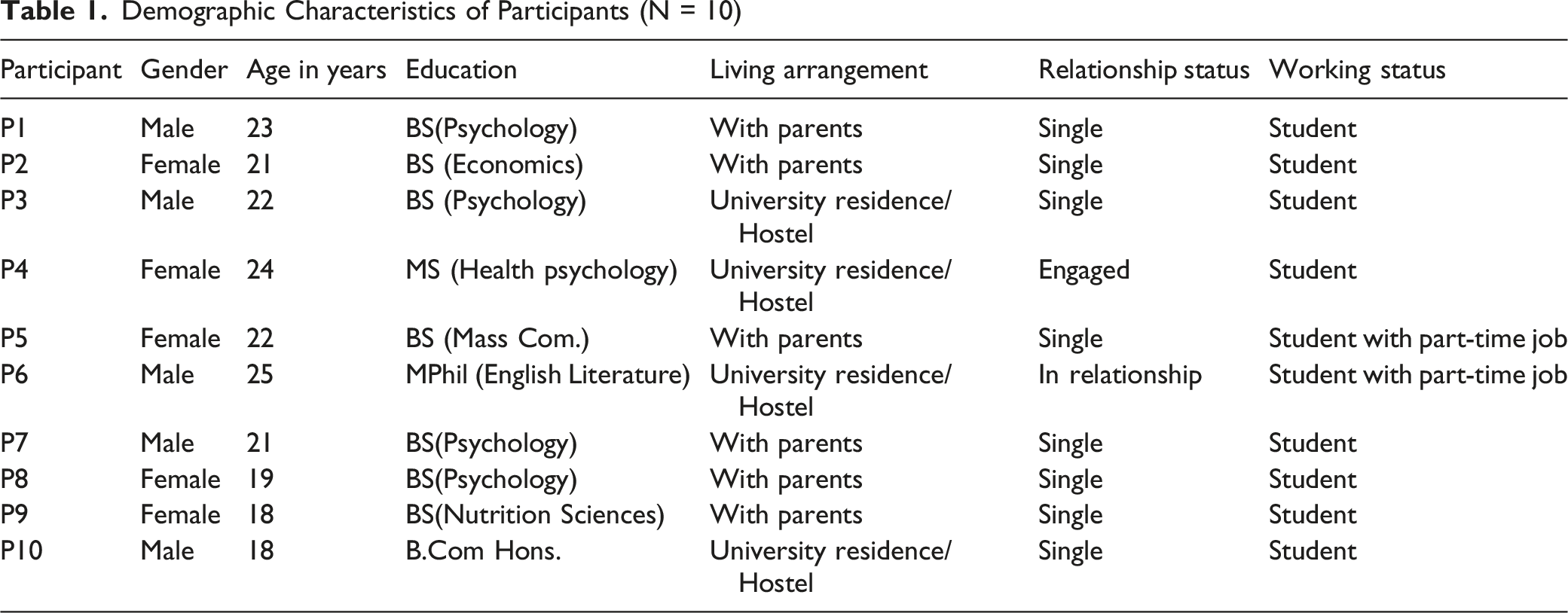
University students represent an important subgroup of emerging adults in Pakistan as they are typically engaged in prolonged education and identity exploration and they experience delayed transitions into traditional adult roles (e.g., marriage, financial independence). Moreover, higher education enrollment in Pakistan has expanded significantly, making students a large segment of the emerging adult population. While not all emerging adults in Pakistan attend university, this subgroup provides valuable insights into how emerging adulthood is experienced in a rapidly changing sociocultural environment. The sample was therefore appropriate for the study’s objective of understanding the lived experience of this developmental phase.
Procedure
First, the research proposal was approved by the Departmental Board of Studies and Advanced Studies Research Board (ASRB) of Lahore College for Women University, Lahore. Permission was obtained from the respective authorities of each University of participants. Each participant was interviewed individually at their own University campus by the first author in a private and comfortable place. Participants were briefed about the nature and purpose of the study, and informed consent was taken from each of them. A semi-structured interview schedule was developed to elicit detailed accounts of the diverse experiences of emerging adults in Pakistan. The interview schedule focused on issues related to the transition from adolescence to adulthood, with particular emphasis on the dimensions of emerging adulthood. The interview consisted of 22 questions in three sections focusing on (a) transition from adolescence to adulthood (e.g., “What are the changes this phase bring to your life and how do these changes affect you?) (b) dimensions of EA (e.g., Do you think you have explored everything about yourself or there is still something to be explored? and (c) relationships with others and society (e.g., How would you define your relationship with your parents during this transitional phase?). These sections were structured from prior literature, with the first exploring Pakistani emerging adults’ lived experiences and the second focusing on the phase of emerging adulthood and related experiences. The third section aimed to explore the relationships with society which plays an important role in emerging adults’ well-being. To get detailed responses, probes and prompts followed questions. The full set of interview questions is presented in the Online Appendix.
The interview schedule served as a flexible guide to ensure coverage of all key areas while allowing participants to respond freely to maintain the natural flow of discussion. Each interview lasted about an hour on average (ranging from 38 minutes to 1 hour and 22 minutes). Respondents were given the opportunity to request a summary of the research findings. All the interviews were audio recorded with participants’ permission and transcribed later. Interviews were conducted in both languages, i.e., Urdu and English, to allow participants to express themselves the way they preferred. Later, Urdu phrases were translated into English while transcribing data.
Analytical Approach
Reflexive thematic analysis (RTA) was employed to identify patterns of experience from the participants’ perspectives (Braun & Clarke, 2006, 2013). Although RTA offers theoretical flexibility, it is not atheoretical; thus, the ontological and epistemological assumptions guiding data collection and analysis must be acknowledged (Braun & Clarke, 2021). This study adopted a critical-realist ontology combined with a constructivist epistemology (Maxwell, 2012), recognizing the existence of a reality shaped by human interpretation, culture, language, and perspectives (Braun & Clarke, 2013). In an attempt to combine critical-realist ontology with constructionism, participants’ accounts were sought as meaningful reflections of their embodied, lived phenomenological experiences, while also acknowledging that these experiences are influenced by individual and social factors. The study was theoretically informed by Arnett’s framework of emerging adulthood, which guided the development of the interview guide and ensured that key domains were explored. However, the analysis itself was primarily inductive at the level of coding and theme development, allowing patterns to emerge from participants’ accounts and prioritizing culturally grounded interpretations rather than being forced into pre-existing theoretical framework.
While conducting interviews, the first author remained mindful of minimizing the influence of her prior knowledge and experience on data collection and analysis, using reflexivity to enhance understanding of participants’ contexts. The first author is a Pakistani female researcher in her early thirties with formal training in psychology and qualitative research methods, and has prior academic and clinical exposure to emerging adulthood-related concerns. This cultural, linguistic, and partial age proximity supported rapport-building and encouraged participants to openly share their experiences. Data were analyzed using a bottom-up approach (Braun & Clarke, 2013), focusing on participants’ explicit meanings and the contexts in which the accounts were produced. Reflexive thematic analysis was conducted using a six-step iterative process: data familiarization, initial coding, theme development, theme review, theme refinement, and report writing.
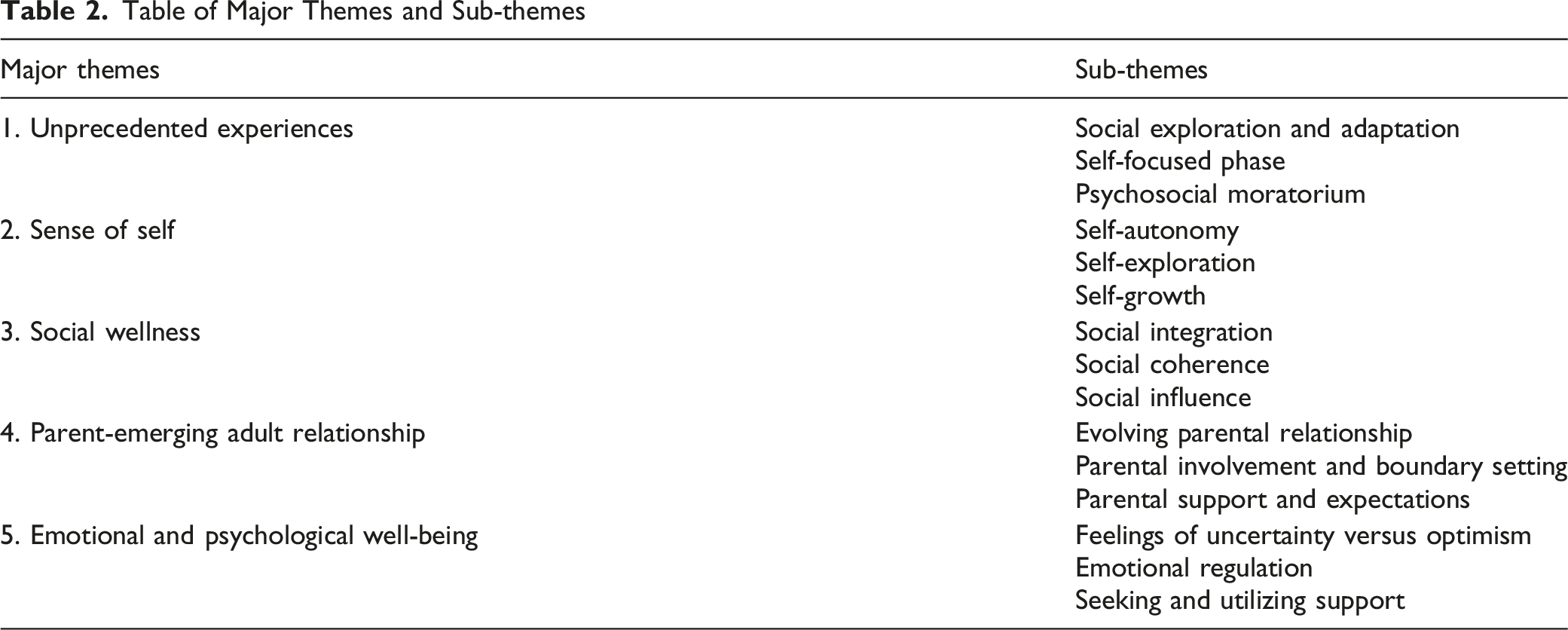
All transcribed interviews were read multiple times to ensure deep familiarity with the data. In the first phase, initial codes were generated inductively, staying close to the participants’ language and meanings. These codes were then organized into broader patterns through constant comparison, leading to the development of preliminary themes. These themes were iteratively reviewed and refined to ensure coherence with themes and clear distinction between themes. Representative quotations were selected to illustrate each theme. At each stage of data analysis, the first author consulted the second author to gain alternative perspectives, critically examine differences in interpretation, and ensure analytical transparency. A comprehensive record of coding and theme refinement decisions was kept to ensure transparency and trustworthiness. Through this iterative and collaborative process, the final set of five major themes and associated subthemes was generated.
Results
Table of Major Themes and Sub-themes
Theme I: Unprecedented Experiences
This major theme captures the novel and unique experiences that emerging adults in Pakistan encounter during the transitional phase between adolescence and adulthood. These experiences are unprecedented because they differ qualitatively from earlier life stages and require new psychological and social adjustments. Three subthemes were identified: social exploration and adaptation, self-focused phase, and psychosocial moratorium.
Another key aspect of this phase was social exploration, which involved engaging with new social environments and adapting to unfamiliar contexts. Participants described encountering diverse lifestyles and norms that differed from their earlier experiences, requiring them to adjust socially and emotionally. Participant 4 (age 24, female) highlighted this challenge: “I have spent six years in the hostel (University residence). So when you come out of your home it takes a lot of time to adjust to a new environment and to find people like you.”(P4)
Participants frequently discussed the struggle to connect with others and the emotional demands of navigating unfamiliar settings. This was particularly evident among those who moved from small towns to urban contexts, where cultural norms and daily interactions differed significantly. The analysis highlighted feelings of isolation and the effort required to establish new social connections. For example, participant 9 (age 18, female) explained: “I am from a small town, and there people give more importance to values and norms. There (in Lahore) environment is a bit different and maturity is to take both things together.”
The analysis suggested that social exploration in Pakistani emerging adult involves not only expanding social networks but also negotiating cultural identity. Participants had to balance inherited moral and family-based values with the demands of urban university life. Thus, “maturity” was described as the ability to manage both worlds, reflecting a culturally specific form of identity development shaped by collectivistic norms and strong value systems. Participants also described adapting to new urban influences, while gradually developing flexibility and interpersonal competence.
Analysis further indicated that emerging adulthood in Pakistan is marked by a self-focused phase, where individuals prioritize personal goals, career development, and self-improvement. However, this self-focused phase appeared less individualistic and more closely tied to socially valued goals such as career success, family expectations, and future responsibility. Participants described a shift from the externally directed routine of adolescence to a more purposeful focus on personal development. For example, participant 3 (age 22, male) reported: “Currently my focus is my own self for instance my studies, improvement in myself, and all that. In [secondary] school, our focus was just to study, we didn’t know why we needed to study. But after entering college I realized that I needed to make a career and excel in it.”
The analysis also revealed that this self-focus phase is culturally shaped, where this phase is facilitated by financial and emotional support from family, which allows individuals to pursue personal objectives while delaying traditional adult responsibilities. In Pakistani context, self-focus does not reflect detachment from family, but is facilitated by strong financial and emotional support from family. Rather than complete independence, Pakistani emerging adults described a form of supported autonomy, where families provide resources and stability while allowing them to focus on self-development.
The psychosocial moratorium also emerged as a key feature of this transitional phase, reflecting participants’ deliberate postponement of long-term commitments, such as marriage or permanent caregiving roles, to explore life choices. However, this moratorium appeared strongly shaped by cultural expectations, as participant often framed delay not as rejection of traditional roles but as a need to become ready and stable before fulfilling them. Participant (age 21, female) shared: “I need more time to be in a relationship or get married. I don’t think I would be ready even after the age of 24. I need more time for myself for my career.” (P2)
The above quotation indicated her decision to postpone traditional adult roles and prioritize other aspects of life over forming long-term personal commitments. In Pakistan, where marriage is considered as important marker of adulthood, postponement reflected a negotiation between personal aspirations and traditional expectations, rather than a complete disengagement from cultural norms.
Participants also emphasized the central role of parental support in making this moratorium possible. For example, participant 7 (age 21, male) shared his point of view: “My parents have given me the space to just focus on my life to cope with the societal challenges and learn new things. I have complete financial support from my parents and I think it’s better to just focus on your life without responsibilities.”
The analysis showed a distinctly Pakistani pattern of family-supported moratorium, where parents provide financial security and emotional reassurance, allowing emerging adults to delay adult responsibilities while focusing on education and self-development. In this context, moratorium is not experienced as a complete freedom from obligation, but as a socially negotiated phase enabled by family investment and collective hopes for emerging adults’ future success.
Overall, the findings suggested that while features of emerging adulthood described in Western literature (such as self-focus, moratorium, and feeling in-between) are evident in Pakistan, they manifest in culturally specific ways. The transition is shaped by strong family involvement, moral and social expectations, and the need to balance traditional values with modern urban demands.
Theme II: Sense of Self
This theme reflected an important psychological dimension of emerging adulthood that is closely linked to emerging adults’ mental and emotional well-being. Sense of self refers to the process of developing a clearer understanding of personal identity, values, beliefs, and life goals. It is a crucial aspect of self-realization and personal development during the life stage of emerging adulthood. In the present findings, this process was not only described as a developmental milestone, but also as a source of psychological stability and resilience. This theme highlighted the multi-dimensional nature of the sense of self, encompassing self-autonomy, the awareness of one’s self, and the commitment to personal growth and development.
Self-autonomy refers to emerging adults’ ability to make independent decisions and direct their own lives. Participants emphasized balancing external advice with personal choice, highlighting a shift from reliance on others to self-sufficiency. For instance, decisions regarding career or educational paths were made autonomously, often with supportive family endorsement, reinforcing confidence in their choices. For instance, participant 2 (age 21, female) reflected: “I was independent in choosing the major subject for my degree. Family is involved in my decision but the final decision was mine.”
The analysis highlights the importance of developing inner strength and the capacity to manage one’s life independently, which is a critical component of self-autonomy during emerging adulthood. Participant 6 (age 25, male) described his experience of living alone: “I live alone and I quite enjoyed that too. I make my own decisions. I can do what I want.”
The analysis illustrates how independent living provides emerging adults with both practical and psychological opportunities to exercise control over their daily lives. Moreover, the ability to make independent decisions without constant reliance on others fosters the development of self-regulation, responsibility, and confidence. Living independently or achieving financial autonomy further enhanced participants’ sense of control and empowerment. The analysis indicates that self-autonomy fosters mental well-being by providing emerging adults the freedom to make deliberate choices and take responsibility for their own lives.
Self-exploration emerged as a continuous and dynamic process, central to the development of the sense of self during emerging adulthood. Participants actively sought to understand their strengths, weaknesses, interests, and values, and described how experiences such as engaging in new activities or encountering failures facilitated this exploration. For example, Participant 8 (age 19, female) stated, “There is a part of me I am not aware of. I am still exploring a lot about myself.” (P8)
This quote reflects the participant’s awareness of the unknown self and highlights the ongoing nature of self-exploration, which contributes to identity formation and personal growth. The analysis further revealed that environmental opportunities play a crucial role in shaping this process. Exposure to both supportive and challenging contexts enables emerging adults to uncover latent abilities, refine self-perceptions, and develop a more coherent and empowered sense of self. Participants suggested that this process could be emotionally demanding, as uncertainty about the self sometimes contributed to confusion and self-doubt. However, greater self-awareness also appeared to strengthen confidence and psychological well-being by helping them gain clarity about their identity. Overall, self-exploration during this phase is context-dependent, shaped by life experiences and opportunities, and acts as a foundation for self-growth and identity development.
The last subtheme under the “Sense of Self” theme was self-growth, which is referred to as the ongoing process of personal development in emerging adulthood. It is characterized by a growing awareness of one’s potential and an active effort to enhance strengths, address weaknesses, and move toward a more refined and genuine sense of self. The analysis revealed that participants often acknowledged their weaknesses, which is a crucial first step in the process of self-growth, as it allows emerging adults to identify the specific aspects of their self that need improvement. The analysis also revealed the participants used a proactive approach to addressing their challenges by seeking help and taking concrete steps to improve them. A participant (age 22, female) shared: “I took a semester break and did some other courses to groom myself. Now I feel more positive as a person and my patience level has increased.” (P5)
Self-growth reflects the active process of personal development, where emerging adults address challenges, enhance skills, and cultivate confidence. Participants reported improvements in communication, academic and professional competencies, and emotional regulation, often facilitated by deliberate efforts such as seeking mentorship, taking on new responsibilities, or developing positive habits. Education was highlighted as catalysts for self-growth, allowing emerging adults to gradually develop a more positive and confident sense of self. Overall, the findings indicated that the developed sense of self contribute to emotional strength of emerging adults and help them cope with uncertainty and life pressures.
Theme III: Social Wellness
The theme of social wellness emerged as a significant aspect of the participants’ overall well-being, encompassing various dimensions of their social functioning and connectedness. The analysis indicated that emerging adults’ ability to feel socially connected shape not only their sense of belonging but also their experiences of loneliness, stress, and social well-being. Within this theme, four key subthemes were identified: social integration, social coherence, social influence, and social contribution. These subthemes collectively highlight how emerging adults perceive their role in society, maintain meaningful relationships, and derive a sense of belonging and purpose from their social interactions, ultimately influencing their mental well-being.
The first subtheme that emerged under the broader category of social wellness was social integration, which involves the degree to which individuals feel they belong and are connected within their social networks. Social integration is an important aspect of emerging adults’ social wellness because it affects overall mental health. For instance, Participant 6 (age 25, male) reported: “Sometimes I consciously try to fit into society, but I feel lonely. I struggle to engage in casual conversations about daily life or jokes, and feel more comfortable discussing philosophy or general ideas.”(P6)
The statement reflects the individual’s struggle to fit into social groups and engage in typical social conversations. This struggle to connect with peers could foster loneliness and vulnerability to a sense of inadequacy. Participant 5 (age 22, female) similarly stated: “Initially I was so naive to understand inside jokes so people used to make fun of me and I felt like I don’t fit into this social circle.” (P5)
The analysis reflects the participants’ struggle to fit into social groups and engage in typical social conversations. Their experience highlights a common challenge in social integration, where individuals may feel marginalized or left out because they do not fully understand social cues. The participant’s experience indicates that social integration involves not only understanding and adapting to group norms but also gaining acceptance and a sense of belonging within a social circle. The analysis indicated that reduced sense of social integration function as a stressor that undermine participants’ social well-being, while heightened sense of integration could serve as a protective factor by enhancing belongingness and reducing isolation.
The second subtheme of social wellness that emerged through reflexive thematic analysis was social coherence. Here social coherence refers to how effectively emerging adults perceive their social surroundings to be understandable, meaningful, and consistent. It involves how emerging adults make sense of social behaviors, values, and broader societal changes. For instance, participant 9 (age 18, female) shared her stance about her society’s values: “I think our religious and old societal values are good and they should remain as they are.” (P9)
Participant 10 (age 18, male) also shared his belief in the importance of preserving existing cultural values and traditions: “Values and culture should remain same.” (P10)
His statement reflects his stance on the preservation of traditional values and culture as a means of maintaining societal cohesion. But he further added: “But our generation has adopted so many such things, those should be changed.” (P10)
The analysis indicates that the second statement of Participant 10 critically analyzes the modern behaviors and practices that the current generation has embraced. It suggests that the new behaviors adopted by the younger generation are not aligned with the fundamental cultural and societal values pointing out a discrepancy between traditional values and contemporary behaviors of the younger generation. In a similar vein, another participant (age 23, male) also reported: “I think our society and people are moving towards toxicity. Our elders have very cultured personalities. On the other hand people of my generation are getting very selfish. They can modify anything for their advantage.”(P1)
The above statement suggests a perception that traditional social values, which were upheld by older generations, are fading. The participant perceives the younger generation as increasingly self-centered, leading to a perceived decline in moral and ethical standards. The participants’ perception that society is becoming “toxic” or morally inconsistent appeared to create frustration, mistrust, and emotional discomfort. Conversely, those who perceived societal values as meaningful seemed to experience greater social clarity and security, which support resilience during the uncertain transition of emerging adulthood.
The third subtheme under social wellness is social influence, which refers to the way individuals’ behaviors, beliefs, and decisions are shaped by societal expectations, peers, or indirect messages from social context media. Emerging adults described experiencing strong social pressure and judgment: “Society is judgmental and sometimes I feel a crushing burden on my shoulders. There are very rigid norms that you have to follow otherwise people will not consider you as part of their society.” (P6: age 25, male)
The statement reflects a strong sense of societal judgment, where the use of ‘you’ generalizes the experience as a shared or collective experience rather than an individual one. The reference to a ‘crushing burden on my shoulders’ highlights the weight of rigid norms and the pressure to conform, showing how social influence can have significant psychological implications. Such social pressure may contribute to heightened anxiety, reduced self-expression, and difficulty developing autonomy those are the key developmental tasks of emerging adulthood. In this way, rigid societal expectations functioned as an ongoing stressor that negatively shaped participants’ mental well-being.
The analysis also showed that the tension between emerging adults’ desire for autonomy in career decisions and the controlling influence of extended family members, leading to frustration over perceived loss of personal freedom. Participant 1 (age 23, male) reported: “Even when I was sure I wanted to do this… my extended family opposed my decision about my career. I was like why is everyone involved in my life’s decisions? That’s why I felt a lot of freedom issues.” (P1)
Theme IV: Parent-Emerging Adult Relationship
The theme refers to the evolving relationship between parents and their children as they transition into adulthood, marked by increased independence, mutual respect, and a shift toward more equal and understanding interactions. The analysis underscored that parental relationships played a central role in emerging adults’ psychological adjustment during this challenging developmental phase. Participants consistently described the parent-child relationship as one of the most important relationships during the transition from dependency (adolescence) to a relatively independent state (emerging adulthood). Notably, participants’ accounts suggested that supported parental relationships served as a protective factor for mental health by enhancing emotional support, confidence, and coping.
Evolving parental relationship is a subtheme that refers to how a parent-child relationship evolves and develops as the children get older, especially when they are in the phase of transition from adolescence into adulthood. The analysis revealed that this relationship develops, changes, and evolves throughout time, often becoming more harmonious, understanding, and respectful of one another. Participant 5 (age 22, female) reported: “My relationship with my parents has improved in the sense that they have started giving me respect. They started giving value to my point of view.” (P5)
This improvement in relationship reflects a developmental shift where parents begin to acknowledge their child’s growing maturity and individuality. Such recognition appeared to positively influence emerging adults’ self-worth and provide them with a secure relational base during a period often characterized by uncertainty and identity exploration.
The subtheme parental involvement and boundary settings describes a way of parenting in which parents take an active role in their child’s life and yet establish boundaries that are clear enough to ensure the child’s safety and well-being. As children grow, especially into emerging adulthood, the boundaries and the level of involvement often change to accommodate the emerging adult’s growing autonomy and independence. For instance, one of the participants (age 21, male) reported: “They (parents) had a check on me like in school and college, what I do where I go and all that, but now they trust me. They know that I will not do anything wrong.” (P7)
The analysis indicates a shift from parental control to greater autonomy, where initial rigid supervision gradually evolves into trust and independence. The evolution from close supervision to trust and independence marks a significant positive development in the parent- emerging adult-child relationship. This transition from monitoring to trust may reduce anxiety and tension within the household, allowing emerging adults to experience greater psychological freedom, autonomy, and confidence in decision-making. Participants gradually reinterpret parental involvement not merely as restriction but as emotional care and protection. As one participant (age 19, female) noted: “In our teenage years, we're like, Why are parents always questioning? But as you grow older, you realize that you need someone who cares for you”. (P8)
Parental concern becomes perceived as a form of social support rather than control which may support emotional regulation and coping of emerging adults. In addition, healthy boundary setting may function as a balance between autonomy and connectedness, which positively impact emerging adults’ mental health.
The subtheme parental support and expectations reflects the dual role of parents—providing emotional and practical support while upholding expectations for their children’s accomplishments. This balance facilitates the positive development of emerging adults and their relationship with their parents. When emerging adults feel safe to share problems and receive reassurance, parental expectations may function as motivation rather than pressure, thereby strengthening resilience and reducing psychological distress. Participant 3 (age 22, male) shared: “My parents have many expectations, but I never feel pressured. I can openly share my problems with them and always find their support.” (P3) “In my family, I was the first person who went to the university. And I had strong support from my parents throughout this process. So they also have a lot of expectations from me and I can't let them down.” (P7)
The analysis of the statement explained the dual aspects of parental support and expectations. A strong sense of obligation to meet his parents’ hopes and expectation is created by this dynamic. While this obligation can foster motivation and achievement, it may also increase vulnerability to stress, guilt, or fear of failure if expectations become difficult to fulfill. This reflects the complex psychological role of parental expectations in shaping emerging adults’ mental health. A female participant (age 22) emphasized parental encouragement toward self-sufficiency: “My father literally encouraged me to earn and to spend money. He always says you should be financially independent—even if you are a girl you should have a well-established career.” (P5)
This reflects not only parental support but also progressive expectations that challenge traditional gender norms and promote autonomy. Overall, the analysis reveals that supportive and respectful parental involvement was associated with reduced conflict and greater psychological stability, whereas overly rigid involvement or intense expectations could increase stress and distress. Thus, parental relationships contribute to the psychological foundation during emerging adulthood.
Theme V: Emotional and Psychological Well-Being
The theme of emotional and psychological well-being captures the internal experiences and coping mechanisms individuals engage in while navigating the transitional phase of emerging adulthood. This theme reflects how individuals make sense of their emotional states, manage psychological challenges, and seek resources for support. The first subtheme was feelings of uncertainty and optimism. These dual feelings are contrasting emotional states that often coexist, particularly during the phase of emerging adulthood. In emerging adulthood, it is common to experience both simultaneously. For example, Participant 4 (age 24, female) shared her mixed feelings toward her present and future life: “This phase of my life is so unstable and uncertain but at the same time I am hopeful about my future.” (P4)
Participant 1 (age 23, male) shared: “I am very much excited about my further studies but sometimes things are really uncertain. If things go the way I have been planning then I know what I want to do.” (P1)
In the above quotation, the excitement expressed indicates a strong sense of anticipation for what is to come. This reflects a positive outlook and eagerness to engage with new academic challenges. The phrase “sometimes things are really uncertain” captures the unpredictability and potential challenges that might arise. The analysis suggests that uncertainty and optimism coexist as complementary forces: uncertainty prompts caution and reflection, while optimism motivates goal-directed behavior.
The subtheme of emotional regulation emerged as a key aspect of emotional and psychological well-being, highlighting the capacity to recognize, understand, and manage emotions effectively during emerging adulthood. Participants shared how, over time, they learned to control impulsive reactions, accept differing opinions, and develop healthier emotional responses. For example, some described moving from resistance and sensitivity in relationships to greater understanding and acceptance of others’ perspectives. Others reflected on how idealized friendships in adolescence gave way to more realistic expectations in adulthood. Experiences of heartbreak, relational pressures, and societal criticism were common, yet participants emphasized their efforts to process these challenges positively and grow from them. For instance, one of the participants (age 23, male) shared the complexity of emotional regulation in the context of relationships: “I broke up and it really hurt and I still feel that something is missing. But you have to move on and I have moved on now.”(P1)
The subtheme of seeking and utilizing support highlighted how emerging adults rely on family, friends, faith, and professional help to cope with emotional challenges. Participants emphasized turning to trusted relationships for guidance and encouragement, especially in times of failure or stress. Faith and religious practices also emerged as key sources of strength, particularly during periods of isolation or emotional struggle. Some participants shared how their connection with religion deepened over time, while others spoke of rediscovering faith after drifting away. Participant 6 (age 25, male) shared his experience: “In childhood, I was deeply connected to my religion, but during university I distanced myself, believing it irrelevant to life. Now, I have returned to seeking guidance from it.”
A few also sought professional counseling for support. Overall, the analysis showed that emerging adults draw on a mix of personal, spiritual, and professional support systems to manage emotional difficulties and enhance their well-being.
Discussion
The findings of the present study provide evidence for emerging adulthood as a distinct developmental phase in Pakistan. Participants consistently described partial financial and emotional dependence on family, uncertainty about future roles, and the gradual assumption of responsibilities. While this pattern aligns with Arnett’s (2000) conceptualization of emerging adulthood as a period marked by ambiguous adult status, the findings also suggest that this ambiguity is shaped by culturally embedded expectations in Pakistan. Participants’ narratives indicated that adulthood is defined by socially evaluated markers such as behavioral maturity, fulfillment of family expectations, and adherence to moral and cultural norms. Thus, feeling in-between in the Pakistani context appears to reflect not only developmental uncertainty but also the pressure to demonstrate adult-like conduct within a collectivistic and morally regulated social environment. This supports the arguments that prolonged education and delayed role transitions extend the period between adolescence and adulthood (Arnett, 2019; Côté, 2006), while also highlighting that the experience of in-between is culturally constructed. Consistent with Hendry and Kloep’s (2007) emphasis on the ambiguity of adulthood, participants also reflected emotional and cognitive tension while navigating dependence and independence, a pattern noted in previous research (Crocetti et al., 2012; Sica & Ragozini, 2017).
The current research highlights increased opportunities for social exploration among emerging adults, attributed to more chances for mobility and higher education. Participants described adjusting to mixed-gender settings, engaging with culturally and linguistically diverse peer groups, and learning new social norms of independence and interaction within university settings. These experiences reflect social exploration in emerging adulthood, however, in Pakistan this process appears strongly shaped by the tension between traditional and modern value systems. This finding aligns with prior research suggesting that suggesting that this phase broadens social horizons and supports identity development (Arnett, 2016; Buhl & Lanz, 2007; Shulman & Connolly, 2013; Zimmer-Gembeck & Collins, 2003). The process of adapting to urban settings, particularly among participants from small towns, indicates that social exploration is accompanied by identity negotiation and value integration, this supports literature emphasizing that identity development occurs through interaction with changing social contexts (Ward et al., 2020) and suggests that emerging adulthood in Pakistan may involve balancing inherited cultural norms with new social demands rather than a complete shift toward individualistic independence.
Another central theme involved increased self-focus and intentional self-prioritization. Participants frequently prioritized personal goals, academic achievements, and career aspirations, reflecting Arnett’s (2000, 2019) conceptualization of self-focus as a defining dimension of emerging adulthood. However, the findings suggest that self-focus in Pakistan is not purely individualistic but closely tied to future-oriented goals aimed at fulfilling family and societal responsibilities. Similarly, psychosocial moratorium appears to be family-supported, as parental emotional and financial support enables Pakistani emerging adults to delay commitments such as marriage and caregiving. This differs from Western conceptualizations where moratorium may reflect greater independence from family systems. Importantly, this delay may also reflect conditions of waithood (Shah et al., 2025), shaped by unemployment among emerging adults, uncertain career pathways, and broader socioeconomic inequalities that restrict timely transitions into stable roles. In Pakistan, postponement of adult roles appears to be a negotiated and context-dependent process rather than a complete rejection of traditional responsibilities, highlighting how cultural norms shape the expression of emerging adulthood.
The study further highlighted the multifaceted development of self during this phase, encompassing autonomy, self-awareness, and self-growth, consistent with identity development theories and emerging adulthood framework (Arnett, 2000; Erikson, 1968). Participants described autonomy as empowering, yet this autonomy was not absolute; it coexisted with family involvement in decision-making. Participants described autonomy as a source of empowerment, echoing prior evidence that autonomy is a core psychological need fostering growth and well-being (Deci & Ryan, 2000; Padilla-Walker et al., 2017). At the same time, family involvement in decision-making reflected the cultural dimension of emerging adulthood in collectivist contexts, where autonomy is balanced with interdependence. This balance, particularly in Pakistan, supports Kagitcibasi’s (2017) view that autonomy and family connectedness can coexist.
Our findings showed that Pakistani emerging adults actively engage in discovering and understanding themselves, aligning with prior research (Schwartz, 2005; Schwartz et al., 2013). Participants noted that opportunities such as involvement in college activities and challenges facilitated this process. These insights correspond with Berman et al. (2004), who highlight that critical life events often trigger self-exploration. Pakistani emerging adults engaged in intentional self-growth through college involvement and life challenges, underscoring the role of autonomy and active exploration in fostering psychological well-being. These results reinforce that emerging adulthood is a period of deliberate growth, where exploring diverse life paths supports positive mental health outcomes.
Social wellness and belonging emerged as essential aspects of participants’ psychological functioning. Those who felt socially integrated described greater confidence and emotional stability, while those lacking meaningful connections reported loneliness—consistent with research linking belongingness to mental health (Asendorpf, 2000; Cacioppo et al., 2015). Participants’ reflections on social environments often included critiques of perceived moral decline, hypocrisy, or weakening religious values in society. Unlike Western literature that emphasizes openness to change and individualistic values (Schwartz et al., 2005; Twenge et al., 2012). Pakistani emerging adults appeared more invested in moral preservation and social stability, illustrating a culturally embedded form of meaning making during value exploration. Another significant theme was social and familial pressure. Participants frequently noted that extended family, peers, and broader societal expectations shaped their decisions, behaviors, and career choices. This contrasts with Western contexts, where peer or social pressure is often secondary to individual choice (Brown et al., 2008). In Pakistan, cultural norms of interdependence make such pressures more pronounced and influential.
Our findings highlighted the parent-child relationship as the most critical influence during emerging adulthood. Consistent with prior research, supportive parental ties were found to promote well-being, independence, and development (Arnett, 2000, 2019; Fingerman et al., 2012; Tanner, 2006). The emphasis on parental involvement by Pakistani emerging adults aligns with Nelson et al. (2011), who found that parent-child relationships during emerging adulthood often balance support and autonomy. It was also seen in our research that parent-emerging adult relationships frequently shift from one of dependence to a relationship based on mutual respect. In the course of this stage, emerging adults frequently report having more cooperative, understanding, and mature interactions with their parents (Crocetti & Meeus, 2014; Lefkowitz, 2005). In our study, emerging adults emphasized the importance of parental involvement, echoing Padilla-Walker and Nelson’s (2012) findings that a supportive yet autonomy-respecting role fosters emotional well-being and life satisfaction. Participants described a shift from parental control to trust, reflecting the broader developmental trajectory of this stage.
A culturally specific pattern that emerged was delayed autonomy, where ongoing parental involvement—typical in collectivist contexts—shapes decision-making well into adulthood. Participants often reframed this involvement as interdependence rather than restriction, illustrating how family cohesion remains central even as individuality increases (Aquilino, 2006; Luyckx et al., 2007). At the same time, strong parental expectations regarding career success played a dual role: they served as a source of motivation but also contributed to stress, consistent with studies showing that the impact of expectations depends on how they are communicated (Liu et al., 2022; Tanner et al., 2009). Overall, the theme highlights how parent–child dynamics actively structure the developmental tasks of emerging adulthood in Pakistan, rather than merely accompanying them.
Further results showed that contrasting feelings of uncertainty and optimism reflected a common experience in the transition from adolescence to adulthood. The dual emotions of uncertainty and optimism are key indicators of the psychological complexity of this life stage, as emerging adults go through personal, educational, and career transitions. This theme is well supported by existing literature on emerging adulthood, suggesting emerging adults are often unsure about career paths, relationships, and life direction, but they maintain hope and belief in their potential to succeed (Arnett, 2000, 2019; Côté, 2006). Arnett and Schwab (2012) also found that emerging adulthood is characterized by a mix of positive and negative emotions, as emerging adults reported enjoyment, freedom, and excitement and also experienced stress and anxiety simultaneously.
Our findings indicate that Pakistani emerging adults experience notable emotional growth, including improved regulation and coping skills, consistent with literature identifying emotional development as a core task of this life stage (Zimmermann & Iwanski, 2014). Participants described learning to manage stress and balance personal goals with social expectations, illustrating how real-life challenges drive emotional maturation. Religion and spirituality also emerged as significant coping mechanisms. Contrary to Western patterns of declining religiosity (Nelson & Barry, 2005), participants reported maintaining or returning to religious practices during times of uncertainty and stress, suggesting that spiritual engagement supports emotional regulation in culturally embedded ways (Arnett, 2002, 2019). In addition, some participants sought professional psychological support to manage anxiety, depression, or identity-related stress, aligning with prior research on emerging adulthood and mental health (Galambos et al., 2006). Collectively, these findings highlight that emotional development in Pakistani emerging adults is shaped by both general developmental mechanisms across contexts and culturally specific practices.
A notable scope restriction is that all participants were university students, whose experiences may differ from emerging adults who enter the workforce early or live in rural areas. These groups may face different responsibilities, economic pressures, and family expectations, leading to distinct pathways into adulthood. Future research should include more diverse samples to capture these variations. Overall, the findings suggest that emerging adulthood in Pakistan reflects both common developmental patterns across contexts and culturally specific experiences. Themes such as feeling in-between, identity exploration, expanding social worlds, and emotional development mirror global patterns, while strong family involvement, moral meaning-making, cultural adaptation, and sustained religiosity reflect Pakistan’s collectivist and value-oriented context. Together, these insights contribute to a more nuanced and culturally grounded understanding of emerging adulthood in non-Western societies.
Conclusion
This study demonstrates that while several dimensions of emerging adulthood—such as identity exploration, self-focus, and emotional development—are evident among Pakistani emerging adults, their experiences are not identical to those reported in Western contexts. Although participants engaged in exploration and delayed some traditional adult roles, these processes were shaped not by personal choice but also by cultural expectations, family obligations, and collectivist norms. These findings highlight the importance of mental health and counseling interventions that support autonomy, emotional regulation, and identity development while acknowledging the realities of familial interdependence and socio-economic constraints.
By identifying both cross-culturally shared developmental patterns and culturally specific challenges, this study contributes to a more contextualized understanding of emerging adulthood in Pakistan. Practically, the findings suggest the need for university-based counseling and career guidance programs that address uncertainty, identity confusion, and employment-related stress, as well as parent-focused awareness sessions that encourage supportive autonomy rather than excessive control. Such culturally grounded efforts may foster resilience and psychological well-being during this transitional life stage.
Supplemental Material
Supplemental Material - Emerging Adulthood in Pakistan: Lived Experiences and Mental Health Implications
Supplemental Material for Emerging Adulthood in Pakistan: Lived Experiences and Mental Health Implications by Ammara Numan, Amina Muazzam, Jeffrey Jensen Arnett in Emerging Adulthood
Supplemental Material
Supplemental Material - Emerging Adulthood in Pakistan: Lived Experiences and Mental Health Implications
Supplemental Material for Emerging Adulthood in Pakistan: Lived Experiences and Mental Health Implications by Ammara Numan, Amina Muazzam, Jeffrey Jensen Arnett in Emerging Adulthood
Footnotes

Funding
The authors received no financial support for the research, authorship, and/or publication of this article.
Declaration of Conflicting Interests
The authors declared no potential conflicts of interest with respect to the research, authorship, and/or publication of this article.
Transperency and Openness Statement
Dear Editor, We describe our sampling plan, recruitment procedures, and data collection process in detail within the study. All interview protocols/materials are available upon request. Data were analyzed using reflexive thematic analysis (Braun & Clarke, 2013) with manual coding. This study’s design and analysis were not preregistered.
Supplemental Material
Supplemental material for this article is available online.