







Abstract
Care coordination focuses on interdisciplinary collaboration to provide high-quality health care at reduced costs. Pharmacists have integrated themselves into collaborative teams and are expected to continue expanding their role in order to provide services to patients throughout the continuum of care. This report details an online survey that was used to determine whether pharmacists envision an expanded role in care coordination in the next 5 years, in light of health care reform and the US Patient Protection and Affordable Care Act (2010), and to determine the types of tools pharmacists will need to better facilitate care coordination. Results indicate that pharmacists predict an expanded role in care coordination in the near future as well as the need for innovative tools to aid in this expansion, especially electronic tools such as mobile technology and social media.
Keywords
Introduction
The Patient Protection and Affordable Care Act (PPACA) of 2010 set forth many provisions to the US health system in an effort to improve disease prevention, reform care delivery, and reduce the rate of growth in health care spending. 1 A main focus of the PPACA that will facilitate each of these aims is care coordination. Care coordination has been defined as an interdisciplinary approach to integrating health care and social support services that is person centered and assessment based. 2 Pharmacists are at the forefront of care coordination because they are already interacting with patients, prescribers, and other health professionals to improve quality of care. Further, it has been determined that pharmacist-provided care can reduce drug costs, hospital readmission rates, emergency department visits, and hospital length of stay. 3 The role of pharmacists is evolving and manifests in different forms with varying points of focus. Clinical pharmacists participate in patient care teams within the hospital setting, while community pharmacists provide outpatient medication and counseling services. Pharmacists may become certified educators in diseases such as diabetes and play a more comprehensive role in the management of costly and chronic diseases. Given these roles and the further evolution of pharmacists, new and innovative tools will be needed to facilitate care coordination efforts.
The objective of this survey was to assess the current ways in which pharmacists contribute to care coordination and to examine how they believe their roles will expand over the next 5 years. In addition, the survey aimed to determine what tools would be needed to aid pharmacists in their efforts to facilitate care coordination in the coming years.
Methods
A survey was disseminated to examine pharmacists’ current roles in care coordination activities and how they anticipated their roles to change in the next 5 years. The electronic survey was e-mailed to pharmacists (N = 3665) in the United States. There were 15 questions in total, with 13 multiple-choice questions and 2 rating scale questions. Of the multiple-choice questions, 7 instructed respondents to “select all that apply,” and 9 were designed to include an “other” box to capture additional responses. The survey was sent in December of 2012 and remained open for 1 week. Results were processed with SPSS predictive analytics software (SPSS Inc, Chicago, Illinois).
Among the 15 questions were those that were designed to evaluate the level of impact that the PPACA would have on the current role of pharmacists, whether there were particular therapeutic areas in which pharmacists’ efforts were focused, what types of communication tools would be needed for improved care coordination, and what challenges pharmacists currently faced in performing care coordination tasks.
Results
Demographics
A total of 216 respondents completed the online survey. Respondents from nearly all contiguous US states are represented in this research, as shown in Figure 1. Over half of the respondents were currently working in general hospitals, followed by those working at teaching hospitals, long-term care facilities, government-run facilities, pediatric hospitals, and rehabilitation facilities. Forty-four percent of respondents held primary positions as clinical pharmacists, while 43% held administrative positions. Others were staff pharmacists, pharmacy directors, pharmacy consultants, or academics.
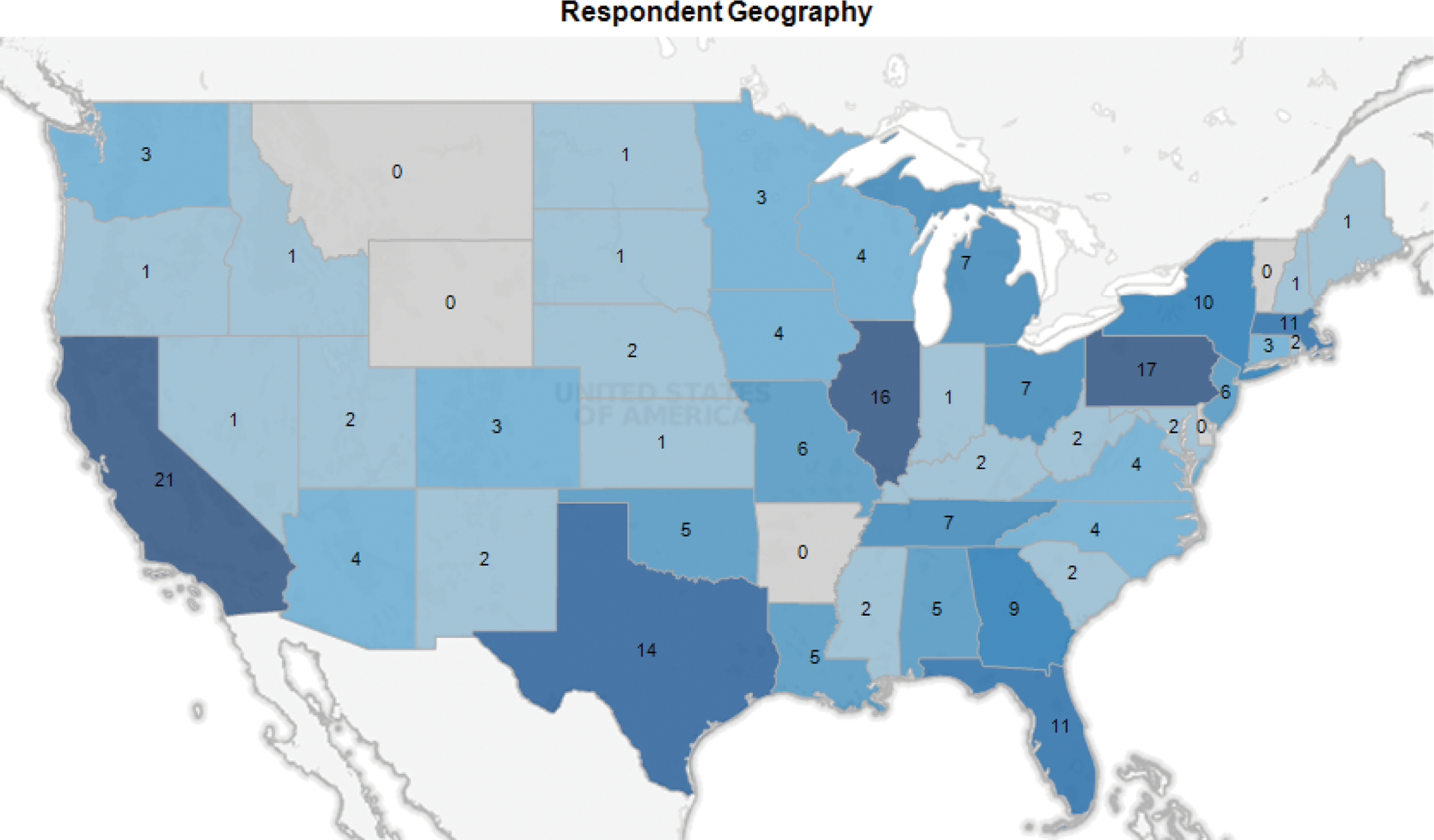
Survey response to the question, “What state do you practice in?”
Evaluation of Current Role
Key results of the survey findings are depicted in Figures 2 to 5. Nearly all respondents said that care coordination is currently an important focus at their institution. Seventy percent of respondents indicated that care coordination is focused on specific disease states at their site of practice, and of these respondents, 80% indicated that heart failure was the highest priority patient population for care coordination. Other disease states of focus included diabetes, myocardial infarction, pneumonia, anticoagulation, and chronic obstructive pulmonary disease. Respondent involvement in care coordination activities over the past 5 years was mainly focused on medication reconciliation, adverse drug reporting, electronic health records, anticoagulation care, discharge counseling, and postdischarge care coordination. A vast majority of respondents currently use printed patient education materials and hospital discharge medication lists to communicate with patients. These methods were followed by use of mobile technology, social media, and “other” responses, including phone calls, face-to-face conversation, and patient portals. The majority of respondents interact with nurses, primary care physicians, nurse case managers, social workers, specialists, and community pharmacists in the process of care coordination. Top “other” responses for interaction included home health agents, hospitalists, and behavioral health specialists. Respondents reported that challenges with care coordination stem mostly from a lack of pharmacist time, interdisciplinary communication, advanced technology, adequate pharmacist training, and sufficient patient education tools. The most common care coordination goals as reported by respondents included the improvement of patient outcomes, reduced readmission rates, and increased compliance.
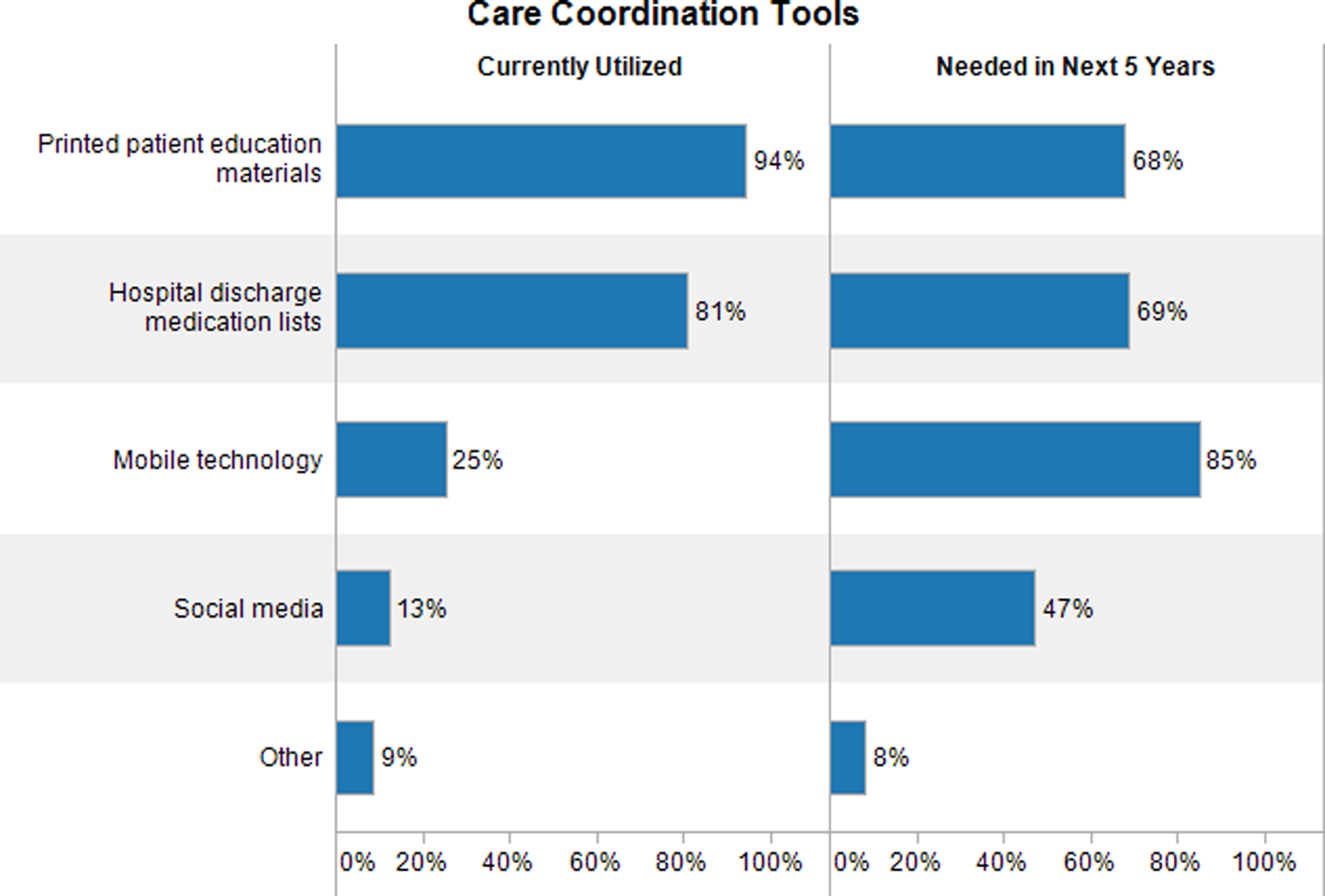
Response to “Currently, what tools do you use in order to communicate with patients? In the next five years, what additional tools will you need in order to improve care coordination?”
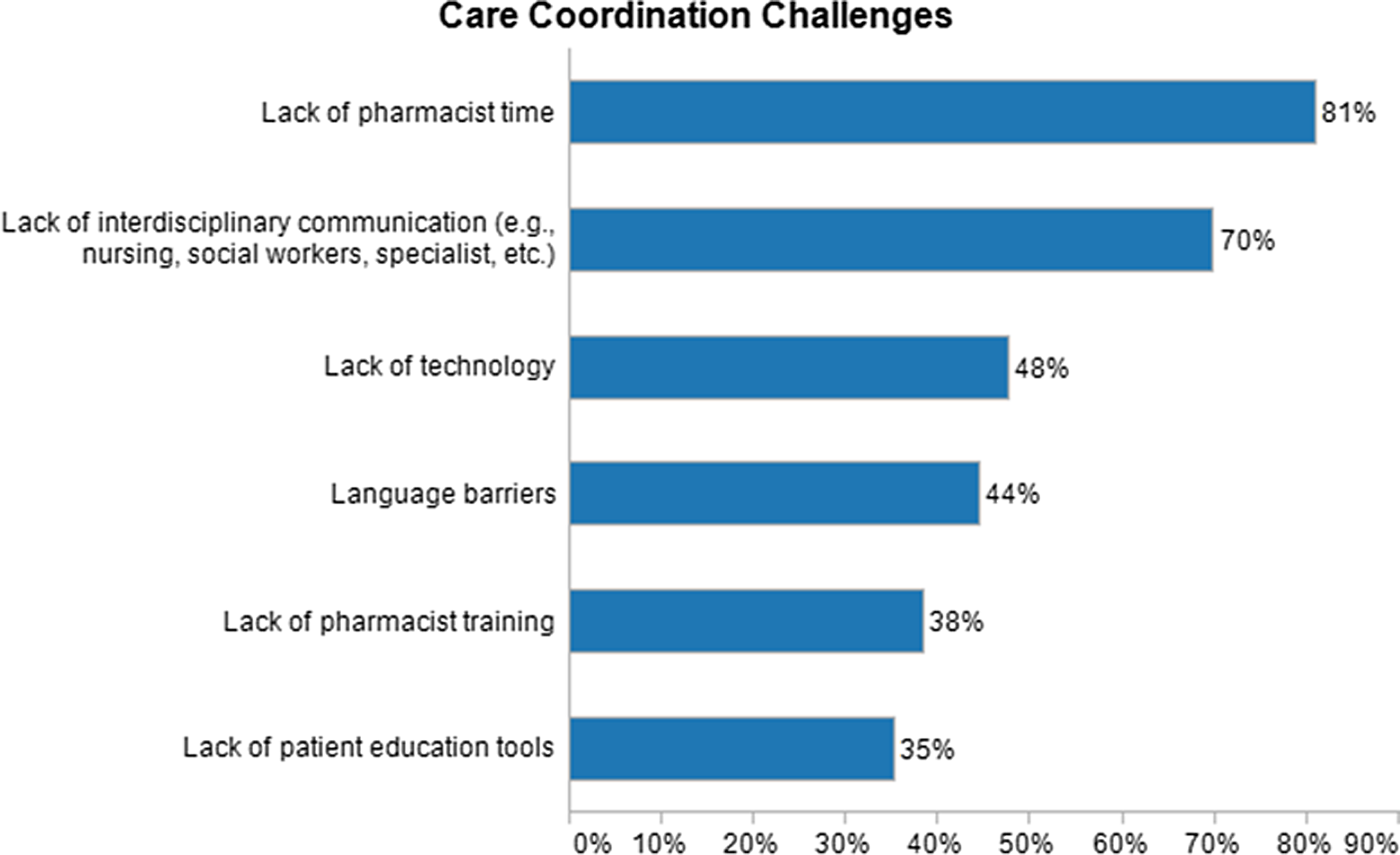
Response to “What are some challenges you face with care coordination?”
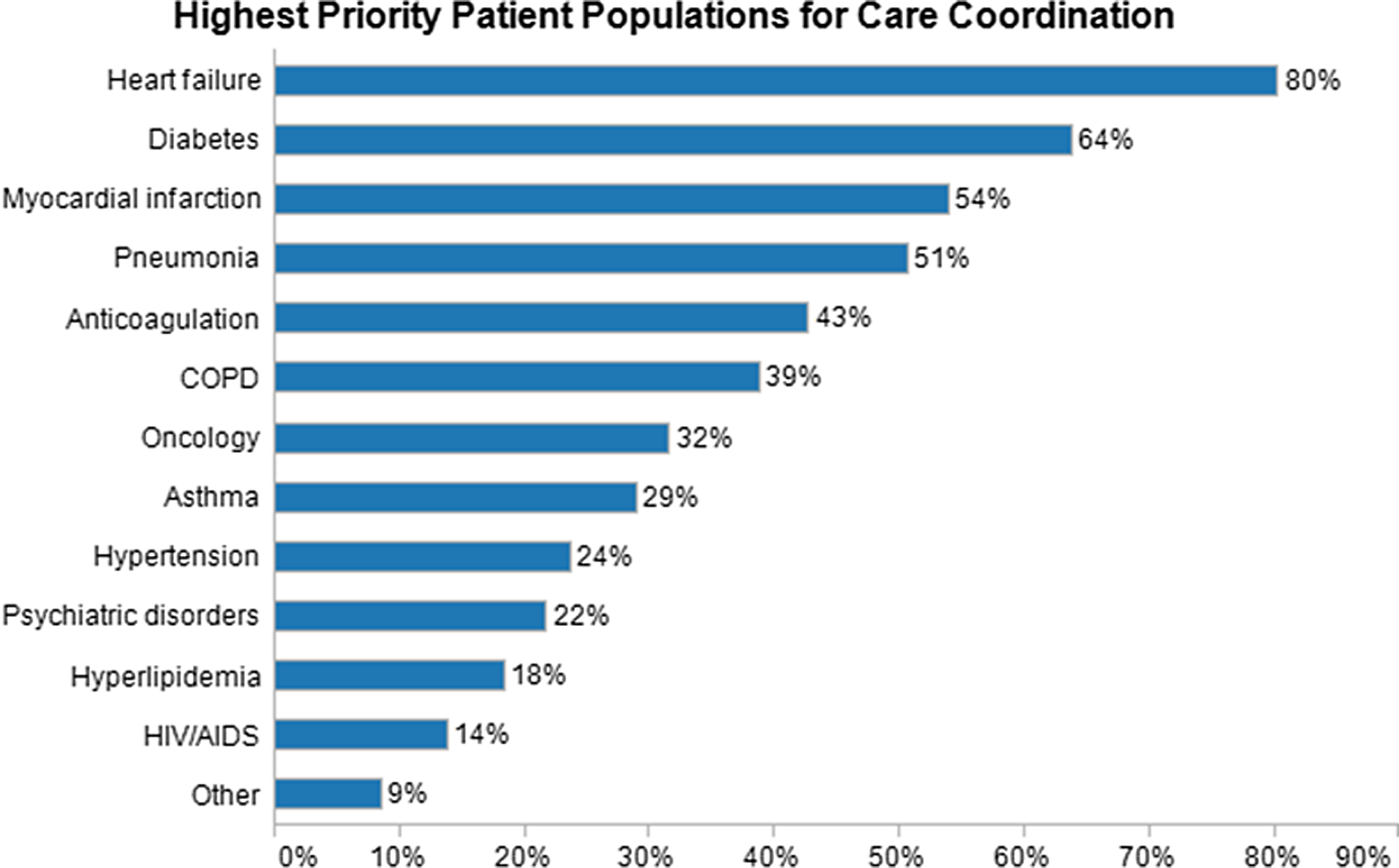
Response to “Which patient populations are the highest priorities for care coordination efforts?” COPD, chronic obstructive pulmonary disease.
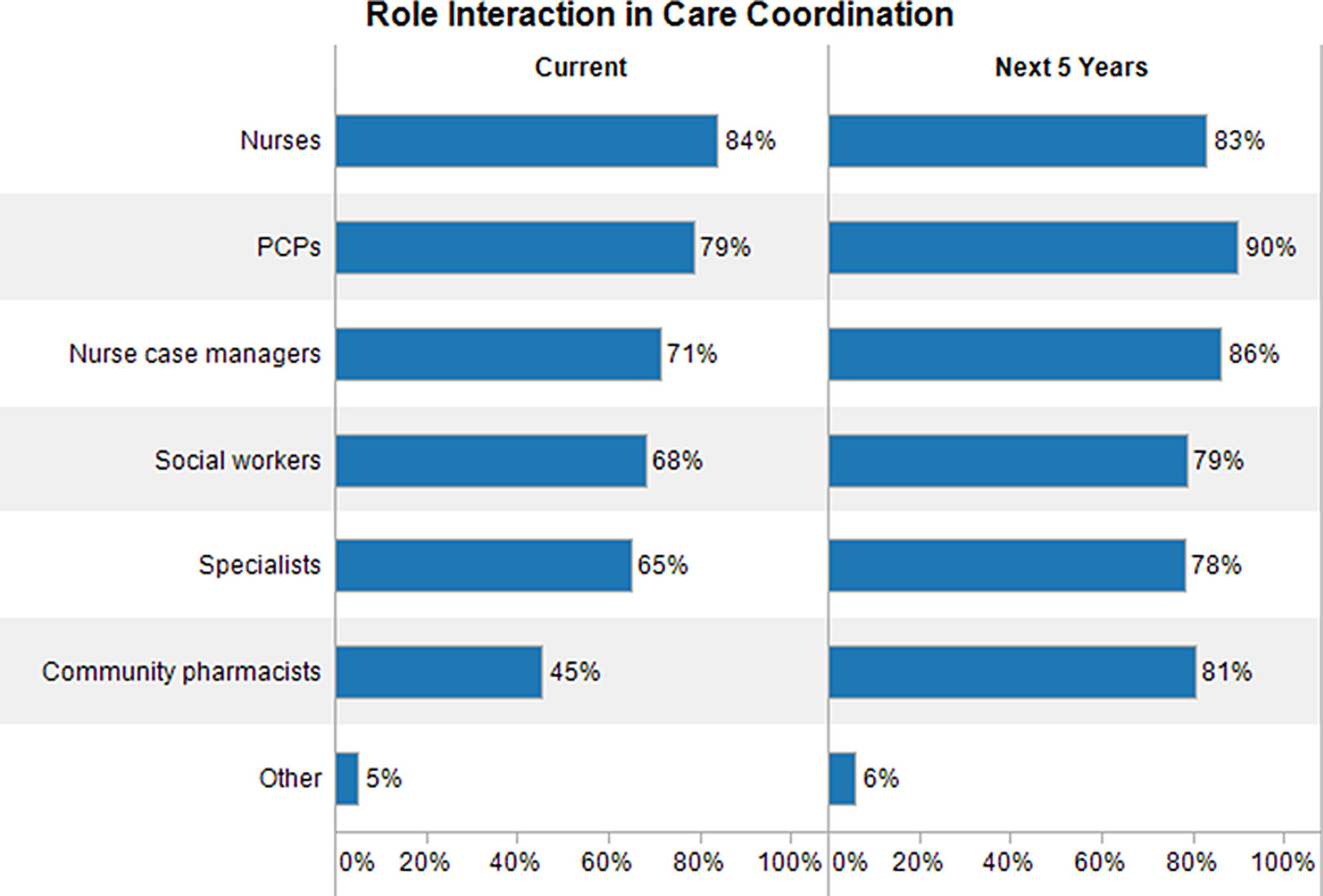
Response to “Currently, with which of the following roles do you interact in care coordination? In the next five years, which of the following roles do you predict you will interact with in care coordination?” PCP, primary care physician.
Future Predictions for Role
Nearly all respondents predicted that their role in care coordination will be strongly affected in the next 5 years due to the PPACA. Respondents predicted that mobile technology and social media will play a larger role as tools for patient communication in the next 5 years. Conversely, responses indicate that the need for hospital discharge medication lists and printed patient education materials is expected to decrease over the next 5 years. “Other” responses to what tools would be needed to improve care coordination included electronic patient support materials, increased staff, and telephone outreach. Respondents predict that they will begin to have more interaction with other members of the health care team including primary care physicians, nurse case managers, social workers, specialists, clinical pharmacists, hospitalists, home health agents, dieticians, and behavioral health specialists.
Discussion
Pharmacists have proven that they have the ability to make a significant impact on patient care and are continuously making strides to expand their role. We believe that one particular area in which pharmacists will evolve in the coming years is care coordination, and this served as the basis of this survey. We also recognize that improved tools are needed to better facilitate care coordination activities and improve communications among health care providers, patients, and caregivers. As a result, we sought the insight of practicing pharmacists to help identify challenges and solutions that can assist them in becoming increasingly effective members of care coordination teams.
There is a shared belief among respondents that electronic tools will be increasingly used while printed materials may become obsolete. This conclusion can be drawn by evaluating Figure 2, which asked pharmacists the questions “Currently, what tools do you use in order to communicate with patients?” and “In the next five years, what additional tools will you need in order to improve care coordination?” Responses to these questions can be coupled with selections to the question “What are some challenges you face with care coordination?” as shown in Figure 3. An evaluation of responses to both questions provides enlightenment on how current challenges may be improved using the suggested tools. Electronic tools have the ability to improve interdisciplinary communication, provide language assistance options, and decrease time utilization with streamlined processes.
Figure 4 displays responses to the question “Which patient populations are the highest priorities for care coordination efforts?” The most frequently selected patient populations are not surprising, as most of them are chronic conditions that have traditionally been the focus of coordinated care efforts in order to decrease hospital readmission rates. 4
According to Figure 5, pharmacists foresee increased communication with all listed roles other than nurses, which is expected to remain nearly the same. This reveals pharmacists’ acknowledgement that improved interdisciplinary interactions are necessary for the optimization of care coordination. The responses also demonstrate the fact that pharmacists can influence a variety of care transitions for patients.
There are limitations to the survey findings. First, respondents practice in a variety of areas, which may cause a variance in care coordination practices as well as tools used. A majority of the respondents were clinical pharmacists and administrators working in hospitals. Care coordination activities of pharmacists working in hospitals would likely differ from those performed in a community setting. In addition, respondents were not asked whether their institutions were part of an accountable care organization, which would likely affect their level of participation in care coordination activities. Furthermore, responses regarding tools for care coordination did not take into account the variation in tools used in the different institutions.
This survey evaluated pharmacists’ role in care coordination both now and in the future. Our results indicate that pharmacists foresee increased involvement in care coordination activities. These results can also serve as a starting point from which changes can be made to address current challenges. Care coordination activities and pharmacists’ involvement and challenges will vary between different settings such as primary care and the community setting, and additional thought must go into these considerations to evolve pharmacists’ roles across the continuum of care. The survey results warrant the creation of tools specifically for pharmacists’ use as well as further studies to examine how the suggested tools can be effectively used by pharmacists to carry out care coordination functions.
Conclusion
Our results have demonstrated that care coordination is important at most institutions. Pharmacists are engaging in care coordination, and their roles are expected to evolve over the next 5 years. Results indicate that a lack of time, interdisciplinary communication, and technology were among the many challenges to the implementation of care coordination. There is a need for tools to aid pharmacists in care coordination and increase interdisciplinary communication, particularly tools such as mobile technology and social media. The survey results can serve as an assessment of the current challenges and opportunities pharmacists have in performing care coordination duties and can be used to develop digital tools for use by pharmacists that will address and overcome these issues.
Footnotes
Declaration of Conflicting Interests
The author(s) declared no potential conflicts of interest with respect to the research, authorship, and/or publication of this article.
Funding
The author(s) received no financial support for the research, authorship, and/or publication of this article.