






Abstract
Purpose:
This study assessed patients’ comprehension of the Advair and Serevent medication guides (MGs) and MG reading behaviors with the goal to improve risk communication.
Methods:
After reading their assigned MGs, 452 adults with asthma or chronic obstructive pulmonary disease participated in structured interviews to assess comprehension of safety risks in the Advair MG (asthma, n = 150; chronic obstructive pulmonary disease, n = 153) and Serevent MG (asthma, n = 149). Generalized estimating equations for correlated binary data were used to identify factors associated with correct responses.
Results:
For 10 of 12 individual risk questions, ≥75% of patients reported correct responses. After adjusting for patient characteristics, health literacy was significantly associated with correct responses (odds ratio = 1.03, 95% confidence interval = 1.02-1.05 per 1-point increase in the Rapid Estimate of Adult Literacy in Medicine). MG reading behaviors were inconsistent, with many patients reading MGs only once (40%) despite multiple prescriptions.
Conclusions:
Comprehension of safety risks in the Advair and Serevent MGs was adequate for most patients in the study but decreased with health literacy. Initiatives to improve patient-directed risk communication should consider health literacy and reasons for inconsistent reading behaviors.
Introduction
Medication guides (MGs) are required by the US Food and Drug Association (FDA) for medications in circumstances where labeling could prevent serious adverse effects, where directions for use are crucial for effectiveness, and/or where risks could affect patients’ decision to use the medication. 1 MGs can also be part of a Risk Evaluation and Mitigation Strategy (REMS), which requires assessment that the MG is adequately communicating the serious risks associated with the medication, when the FDA determines that an MG alone is insufficient.
The degree to which any MG can facilitate the mitigation of potential risks associated with the use of the medication is inherently dependent on the ability of the patient to read and comprehend the content, which must be approved by the FDA. Despite this requirement, MGs have well-documented shortcomings. For example, a study published in 2006 found that the average reading level of the 40 MGs assessed was 11th to 12th grade and that none of the MGs assessed met the suggested reading level of 6th to 8th grade. 2 Little had changed a few years later, when MGs were deemed too complicated and difficult to understand for many patients, particularly those with low literacy or low education. 3,4 Although no link between MG comprehension and adverse outcomes has been established, FDA drug risk communications can influence many factors associated with health care practice. 5 Therefore, an MG could mitigate risk if patients read and understand it.
Between November 2010 and August 2012, salmeterol (Serevent Diskus) and the combination of fluticasone propionate and salmeterol (Advair Diskus or Advair HFA) were the subject of class-level FDA-mandated and (REMS) for long-acting β-agonist–containing medications due to concerns about long-acting β-agonist safety in asthma (see the Advair/Serevent MGs provided in Supplementary Appendix 1, available online). 6 –8 Advair and Serevent are indicated for the treatment of chronic obstructive pulmonary disease (COPD), and Advair is indicated for the treatment of asthma when disease severity warrants use of an inhaled corticosteroid plus a long-acting β-agonist. The purpose of the present study was to determine whether patients with asthma and/or COPD comprehend the key safety messages found in the Advair and Serevent MGs after reading them, using a scenario-based approach. The study further sought to identify demographic and/or clinical factors associated with comprehension of the MGs.
Methods
Data Source and Population
This was a cross-sectional noninterventional observational study of 452 patients, conducted in 10 dedicated market research centers in the US from July to August 2011. Patients were identified from market research databases based on self-reported diagnosis by a health care provider of COPD, asthma, or both (mixed disease). Patients from the market research databases were called to determine interest and eligibility in participating in the study. For eligibility, patients were required to be ≥18 years and to have used ≥2 respiratory medications in the past 6 months, including long-acting bronchodilator medications in COPD or inhaled corticosteroid-containing medications in asthma. Health care providers were excluded from the study. This study was conducted in accordance with guidelines for good pharmacoepidemiology practices. 9 The study was approved by a central institutional review board, and analyses were conducted on de-identified data reported in aggregate form.
There were 3 groups of participants recruited, comprising patients with asthma who evaluated the Advair MG (n = 150), patients with COPD who evaluated the Advair MG (n = 153), and patients with asthma who evaluated the Serevent MG (n = 149). The comprehension of the Serevent MG was not assessed in patients with COPD, as the safety risks pertained specifically to the use of salmeterol (a long-acting β-agonist) in asthma. Patients reporting both asthma and COPD (mixed disease) were grouped with COPD patients, as they tend to be more clinically similar to these patients. This sample size was determined to be adequate based on the expected precision. Based on a comprehension level of 80% for each question (see Comprehension Outcome Definition section), an expected margin of error of 3.8 and 6.7 percentage points was expected for the overall sample and each group, respectively.
Survey Development
All survey questions were piloted with cognitive testing, including “think-aloud interviews” in >60 patients with asthma and/or COPD during the development of the REMS. Participants included those with and without prior use of Advair, and they were provided the MG for context. Participants read a set of instructions, were asked to paraphrase items, and were provided specific prompts addressing issues such as subject understanding of both questions and response choices and the complexity of questions and wording. Based on the cognitive testing, adjustments were made to the structured interview and survey. Before study initiation, interviewers conducted mock face-to-face interviews using the structured interview guide under the supervision of the principal study managers (Concentrics Research LLC) to ensure quality and consistency across the study.
Patient Survey
During the study, participants completed informed consent, followed by the Rapid Estimate of Adult Literacy in Medicine (REALM) 10 test to establish their level of health literacy. The REALM score and grade-equivalent reading levels are as follows: 0-18 (3rd grade), 19-44 (4th-6th grade), 45-60 (7th-8th grade), and 61-66 (9th grade). The interviewer then initiated the comprehension exercise using a dedicated interview guide (see Supplementary Appendix 2, available online), which incorporated methods suggested by the FDA guidance for assessing label comprehension of nonprescription drug products. 11 Briefly, all patients were first allowed to familiarize themselves with the MG that they were evaluating; they were then asked a series of scenario-based questions related to the risks associated with Advair or Serevent as described in the MG. Patients were allowed to refer to the MG during the assessment, and answers could be provided as open-ended responses, as one of the multiple-choice options provided (where appropriate), or by stating “don’t know.” To be considered correct, patients were required to provide responses to the original question and to the follow-up question (“Why do you say that?”) that could be categorized as correct overall when combined. Following the comprehension assessment, the subset of patients with prior/current use of Advair (in the past 6 months) was also asked a series of questions regarding MG usage behaviors (see Supplementary Appendix 2). Questions included reasons why the MG was not read, what modifications could be made to the MG to improve readership, and where patients typically obtain medication information.
Comprehension Outcome Definition
Comprehension was considered to have been demonstrated if ≥80% of patients provided the correct answer and rationale to the scenario-based question when combined. Patients’ characteristics and responses to comprehension and MG reading behaviors were tabulated through descriptive statistics by group, based on self-reported diagnosis (asthma, COPD) and MG evaluation (Advair, Serevent). Generalized estimating equation models for correlated binary responses were used to identify patients’ characteristics associated with correct responses to the comprehension questions. 12 Comprehension questions were coded as a binary responses (yes/no) indicating whether the response was correct, and an exchangeable correlation structure was assumed. Explanatory variables taken into account in the modeling included age, sex, REALM, education, race, ethnicity, insurance, and group.
Results
Study Population
Of 2660 patients screened, 452 were interviewed. The primary reasons for patients not being interviewed were that they did not have a diagnosis of asthma or COPD (n = 866) or other reasons (see Figure 1). Among patients categorized into the other category (n = 813), 43% were not interested in participating in the study, and the remaining did not meet the inclusion criteria (eg, <2 qualifying medications used in 6 months, employed in health care profession). Patients with COPD tended to be older than patients with asthma; they had lower levels of education; and they were more likely to receive care through Medicare and Medicaid (Table 1). A greater proportion of patients assessing the Serevent MG had a REALM test score of ≤60 (≤8th grade) compared with other groups. In the overall population, 292 patients (65%) had used Advair before initiating the study, with most (92%) reporting use for >1 year.
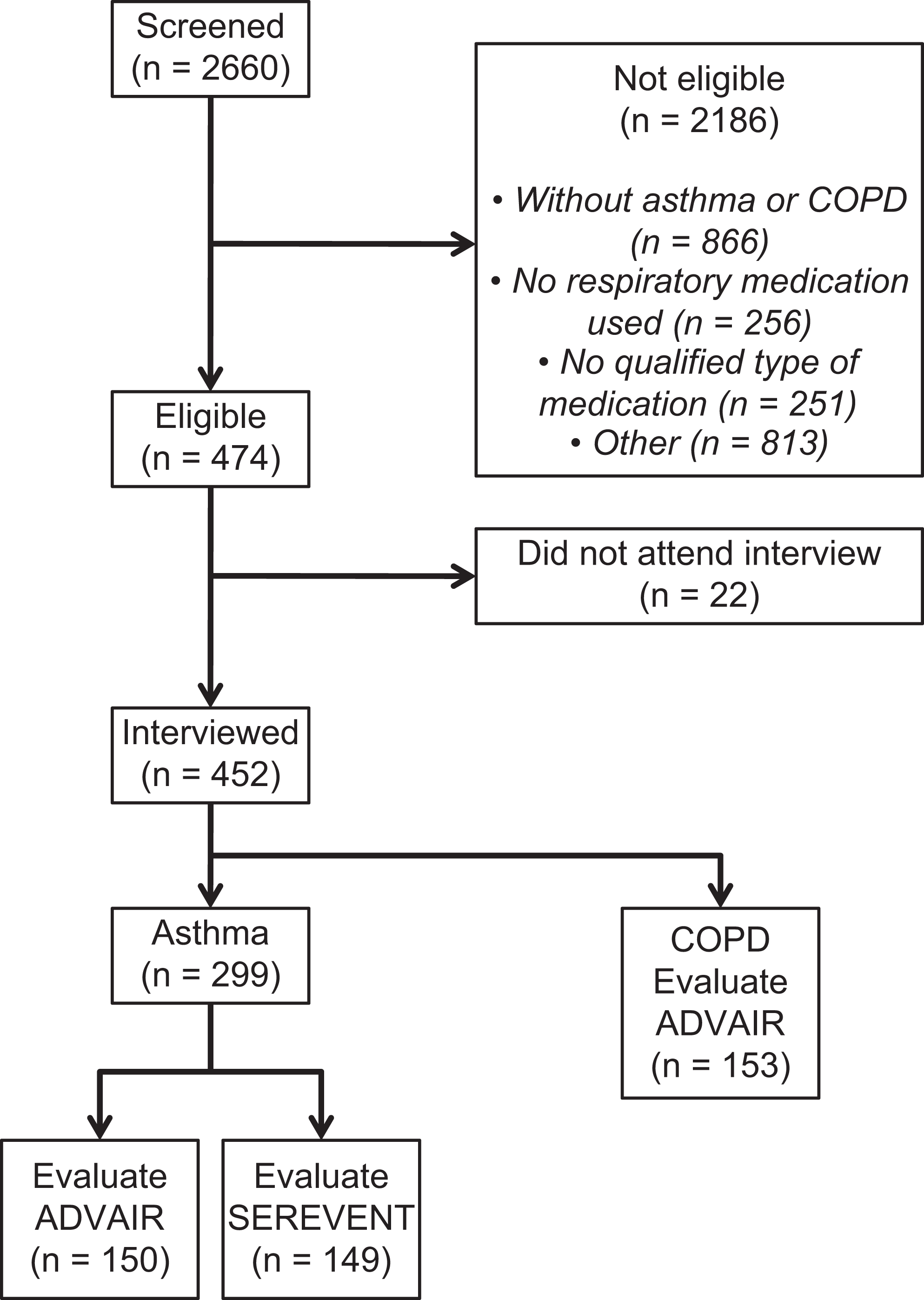
Study flowchart. COPD, chronic obstructive pulmonary disease.
Patient demographics.

Values are expressed as percentages. Due to rounding, percentages may not sum to 100%. COPD, chronic obstructive pulmonary disease; MG, medication guide; REALM, Rapid Estimate of Adult Literacy in Medicine.
aMore than 1 response allowed per participant.
Patients’ Comprehension of the MG Questions
Comprehension levels met or exceeded the 80% threshold for 8 of the 12 risk questions (Table 2). Questions with the greatest comprehension (>90%) were as follows: to consult a physician before halting therapy (97.8%), the need to take only 2 doses per day (96.9%), when to seek emergency medical care (95.8%), the need to carry a rescue inhaler (92.5%), and what action to take in the event of pneumonia symptoms in a COPD patient (Advair assessment only; 91.1%). Scores were below the threshold for 2 questions: one addressing “step-up” therapy (Advair assessment only; 61.7%) and the other pertaining to the increased risk of asthma-related hospitalization in pediatric patients (46.7%). Overall, the proportion of questions that were answered correctly across each group was 82.6% (n = 1363 of 1650 questions; Advair asthma), 84.6% (n = 1134 of 1341 questions; Advair COPD/mixed), and 81.0% (n = 1363 of 1683 questions; Serevent asthma [data not shown]).
Patient comprehension responses to safety questions, ranked and coded by extent of comprehension for total population.
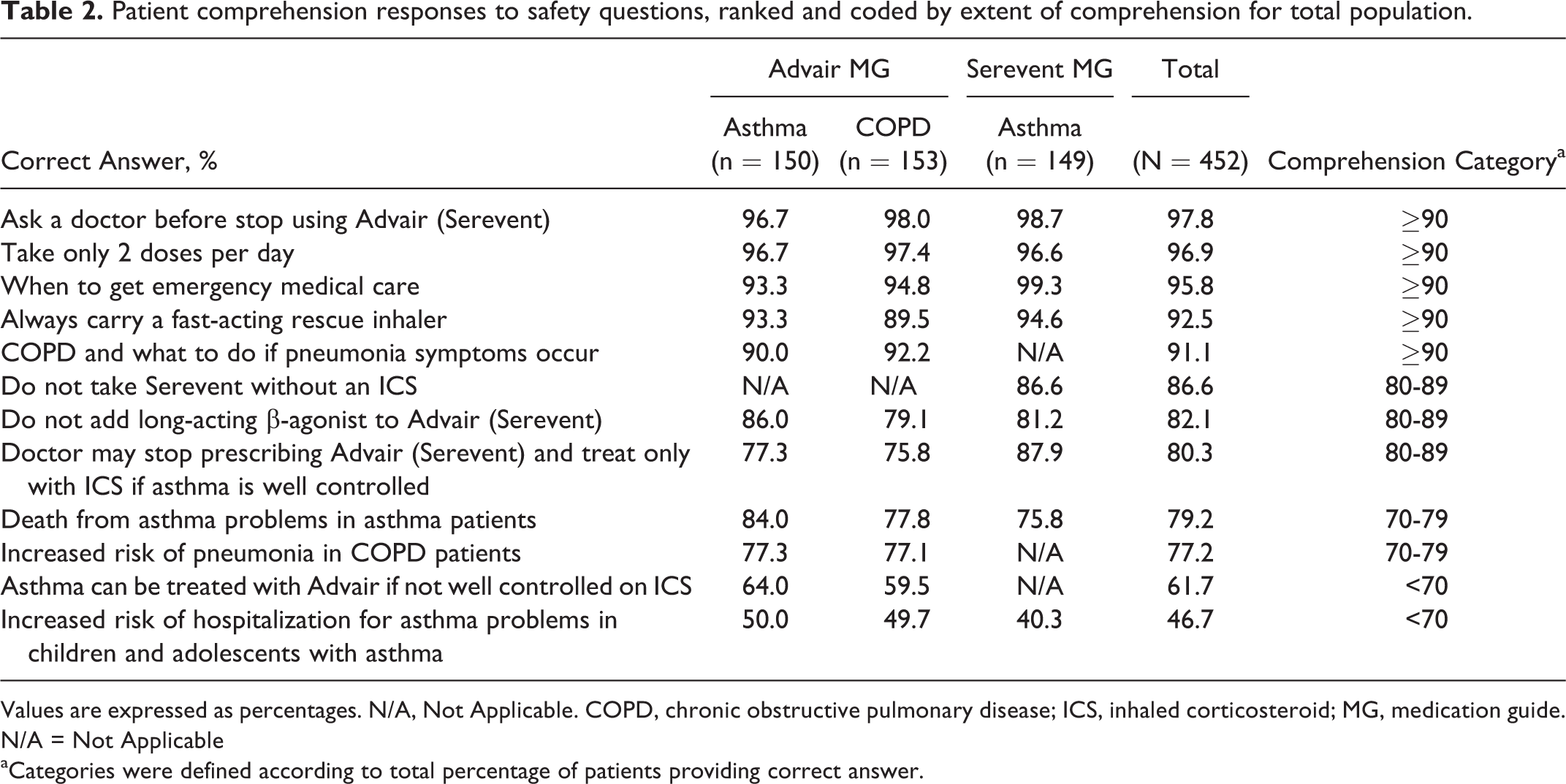
Values are expressed as percentages. N/A, Not Applicable. COPD, chronic obstructive pulmonary disease; ICS, inhaled corticosteroid; MG, medication guide. N/A = Not Applicable
aCategories were defined according to total percentage of patients providing correct answer.
Reasons for Poor Comprehension of the MG
For the 2 scenarios in which patients’ comprehension of the MG was low, the incorrect responses and the verbatim responses provided as the rationale (“Why do you say that?”) were further reviewed to identify reasons behind incorrect responses (Table 3). In both scenarios, the principal rationale for the incorrect response was that the “guide doesn’t say” (ie, the patient indicated that the information required to provide the correct response was not in the MG). The next most prevalent rationale for an incorrect response was an incorrect guide reference, in which patients mentioned a section of the MG that did not contain the relevant information.
Rationales for answers to questions with low correct response rates (<69% of overall population providing correct response and rationale).
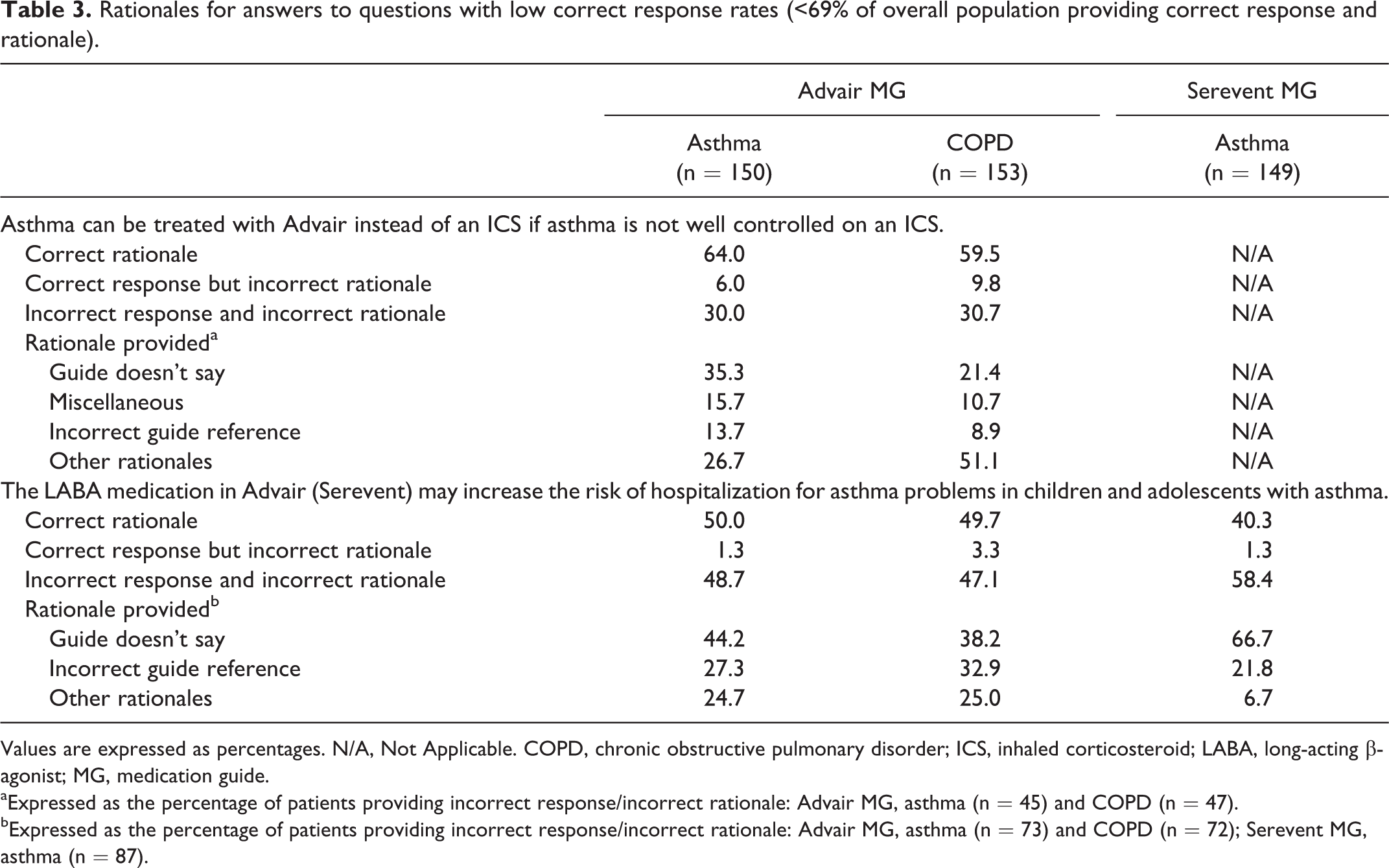
Values are expressed as percentages. N/A, Not Applicable. COPD, chronic obstructive pulmonary disorder; ICS, inhaled corticosteroid; LABA, long-acting β-agonist; MG, medication guide.
aExpressed as the percentage of patients providing incorrect response/incorrect rationale: Advair MG, asthma (n = 45) and COPD (n = 47).
bExpressed as the percentage of patients providing incorrect response/incorrect rationale: Advair MG, asthma (n = 73) and COPD (n = 72); Serevent MG, asthma (n = 87).
Trends in Comprehension of the MG
In multivariable analyses (Figure 2), higher literacy level as measured by the REALM was significantly associated with increased odds of correct responses (odds ratio = 1.03; 95% confidence interval = 1.02-1.05 per 1-point increase in the REALM; P < .001). There was greater comprehension among COPD patients who evaluated the Advair MG relative to those patients with asthma who evaluated the Serevent MG (odds ratio = 1.25; 95% confidence interval = 1.01-1.55; P = .040). No other demographic characteristics were significantly different. Prior experience with Advair was not associated with improved comprehension. There were no interactions between health literacy and other factors.

Factors associated with providing correct responses to comprehension questions (N = 452 patients, n = 4674 observations). Generalized estimating equation models were used, adjusting for all explanatory variables in the table. CI, confidence interval; COPD, chronic obstructive pulmonary disease; OR, odds ratio; REALM, Rapid Estimate of Adult Literacy in Medicine. *P < .001. **P = .040.
MG Reading Behaviors
Patients across the 3 groups with prior Advair dispensings (n = 292) reported variable reading behaviors for the Advair MG (Table 4). Forty percent reported reading the MG once; 41% read it more than once but not every time; 16% had never read the MG; and 3% reported reading it every time it was received. Reading behaviors were generally consistent across groups. When asked about hypothetical scenarios and MG reading behaviors, most patients stated that they would be somewhat likely or very likely to read an MG for a medication that they had never taken before (96%; n = 279) or had restarted after not taking it for a while (80%; n = 233). However, only 16% (n = 48) reported that they would read the MG for a medication that they had filled several times.
MG reading behaviors among prior Advair users: likelihood to read.
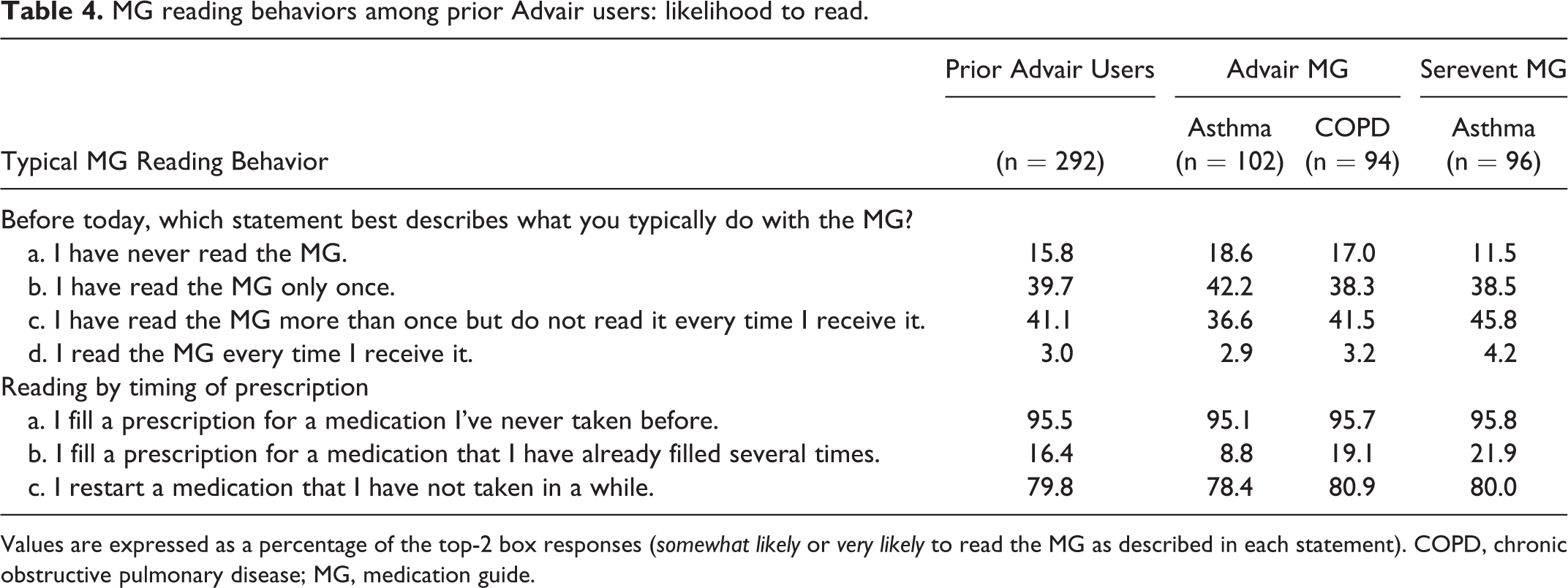
Values are expressed as a percentage of the top-2 box responses (somewhat likely or very likely to read the MG as described in each statement). COPD, chronic obstructive pulmonary disease; MG, medication guide.
Discussion
This study assessed comprehension of Advair and Serevent MGs in asthma and COPD patients based on 12 risk-based scenarios. For 10 of the 12 individual risk questions, ≥75% of patients reported correct responses; however, only 8 questions met the 80% prespecified threshold for demonstrated comprehension for each question. Health literacy as measured by REALM was significantly associated with comprehension. For the majority of incorrect responses, patients reported that the information was not located in the MG, and/or they referred to a section where the information was not located (eg, some patients expected long-acting β-agonist safety information to be in the adverse effects section and did not reference the boxed warning). In the subset of patients with prior experience with Advair, MG reading behavior ranged from those who read the MG on every occasion (3%) to those who had never read it (16%). These findings have potential implications for the utility of MGs in mitigating the risk of adverse events in asthma and COPD. Poor comprehension of MGs and other written patient-directed materials have been documented by others 2 –4,13 who have cited higher reading-level requirements and more complex layout/format as reasons for poor comprehension, particularly in patients with lower health literacy. In the 2006 assessment by Wolf and colleagues, 2 the Advair and Serevent MGs contained approximately 2400 words each and were written above the high school level (Lexile scores of 1560 and 1590, respectively), which does not meet the goal of achieving a 6th- to 8th-grade reading level or lower.
Patient characteristics have not demonstrated a consistent relationship with comprehension. Older age, male sex, and fewer years of schooling have been shown to be independent predictors of poorer attendance to drug warnings. 14 Other studies assessing knowledge of the risks provided in written patient-directed materials supplied to patients 15 or interpretation of drug warning labels 16 found no association between demographic characteristics and comprehension. Our study found no association between age, sex, or educational status and the likelihood of providing a correct response concerning comprehension of the MG in the adjusted model. There were no differences in comprehension between asthma and COPD patients who both evaluated the Advair MG. However, comprehension was higher overall among patients with COPD who evaluated the Advair MG relative to patients with asthma who evaluated the Serevent MG. It was not possible to separate the potential effect of the disease state (asthma vs COPD) and the MG evaluated (Advair vs Serevent). In general, Serevent is not prescribed as frequently as Advair for the treatment of asthma or COPD, 17 and lack of familiarity may have affected comprehension scores in the Serevent MG group. This potential difference between the asthma and COPD patients is contrary to what might be expected, given that patients with COPD in this study were older and had lower education levels. However, asthma patients who evaluated the Serevent MG had slightly more patients with lower health literacy (4th-8th grade) than did the COPD patients.
In our analysis, greater health literacy was associated with greater MG comprehension when assessed with REALM. This corroborates previous findings of associations between lower health literacy and lower health care knowledge. 4,13,18 In asthma, health literacy has been shown to be associated with improved disease management and outcomes, including increased disease knowledge, proper inhaler use, improved asthma control, improved quality of life, and fewer emergency department visits, 19 –21 and it has been suggested that in COPD, adherence to therapy and health outcomes are both related to health literacy. 22
Patient-directed materials including MGs have well-documented shortcomings, which may partially explain why these materials are inconsistently read by patients. One survey indicated that 23% of respondents reported reading the MG or other patient-directed materials, 2 while another found that 67.6% of patients who were prescribed a nonsteroidal anti-inflammatory drug had read the provided materials. 23 A recent REMS survey in smoking cessation found that 86% of patients surveyed had read at least part of the MG. 24 In our study, the majority of patients (>80%) with prior Advair experience had read the MG once or more than once, but only a minority (3%) reported reading it on every occasion.
We did find that certain situations were potential drivers of MG readership. For example, patients were more likely to read the MG for a new prescription versus a prescription filled several times. In the case of multiple refills, patients were less likely to read the MG, as they assumed that “the information had not changed since the last time they read it” (85%; n = 201 [data not shown]). Patients also expect to receive safety information from their physician. Among patients with prior Advair use, 74% (n = 208 [data not shown]) stated that they may not read an MG with each prescription, because they “trust that their doctor or pharmacist told them everything they need to know.”
MGs must be read to convey safety information to patients. While it may seem to follow that greater understanding of risks may result from more frequent reading of patient-directed materials, a recent study found no association between the activity of repeated reading and awareness of the risk associated with nonsteroidal anti-inflammatory drug therapy. 23 However, another study found somewhat greater awareness of risks in the MG in patients who reported having read the MG versus those who had not. 24 Activities to promote readership of MGs are one component in improving comprehension of the risks described. However, our study and others demonstrated that reading an MG does not guarantee that the risk information will be understood. In addition, multiple factors contribute to knowledge of risks that can be independent of the MG, including discussions with physicians and media coverage of risk information. 25
In our study, patients were asked hypothetically what would increase the likelihood that they would read an MG with each prescription, without any reference to a specific MG. Responses generally related to shortening the length and improving the layout such that it was easier to read and find information (data not shown). These findings are consistent with other studies assessing patient-directed information presented in “standard” versus “simplified” formats (eg, more limited information, active text, limiting complex medical terms, formatting and icons for emphasis). 14,16,18,26,27 It has also been established that the use of pictorial aids in consumer medication information can improve comprehension. 28 As patients with diabetes recalled less than 50% of the information conveyed to them during a consultation, 29 MGs and any form of written patient-directed materials can play a critical role in informing patients of risks associated with their medication.
Our study did have limitations. The patient population was recruited from geographically dispersed market research centers through a convenience sample and may not be representative of the asthma, COPD, and mixed disease populations in the US. Furthermore, there was no assessment of disease severity, which may relate to comprehension of risk questions and/or MG reading behaviors. Patients with lower health literacy were underrepresented in this study (10% of sample) relative to the population-based estimates (14% and 22% with below-basic and basic health literacy, respectively) from a national survey. 30 Despite these limitations, this study offers important insights into MG comprehension, MG reading behaviors, and potential improvements that could be made to improve the MGs for Advair and Serevent based on patient-reported responses to the survey. The results also may inform on the development of patient-directed materials beyond the Advair and Serevent MGs.
The FDA is currently working with industry and interested groups to improve the utility of MGs and consumer medical information, including the eventual adoption of the “one document solution” based on empirical testing of prototypes. 31,32 This patient medical information document would become a single page and replace the MG, patient package insert, and any materials distributed at the pharmacy that are not regulated by FDA. Relatedly, the FDA is also investigating the most appropriate ways to evaluate if REMS, including MGs, are achieving their risk communication goals. 33
The results of this study have been provided to the FDA to contribute information relating to comprehension and MG reading behaviors when testing the MG directly. Before making changes to MGs (eg, Advair and Serevent), patient-provided feedback on layout and comprehension testing should be performed before implementation, including groups with lower health literacy. Additional research should be conducted to understand how to best address inconsistent reading behaviors.
Footnotes
Acknowledgments
Editorial support in the form of developing an outline and initial draft of the manuscript under the guidance of the lead author, copyediting, referencing, and generation of figures and tables was provided by Geoff Weller, PhD, at Gardiner-Caldwell Communications.
Declaration of Conflicting Interests
The author(s) declared the following potential conflicts of interest with respect to the research, authorship, and/or publication of this article: R.L.D., A.M.Y., I.R., and D.A.S. are employees of GlaxoSmithKline and own shares/share options in GlaxoSmithKline. M.B. has no conflicts of interest to declare.
Funding
The author(s) disclosed receipt of the following financial support for the research, authorship and/or publication of this article: This study was sponsored by GlaxoSmithKline.

References
Supplementary Material
Please find the following supplemental material available below.
For Open Access articles published under a Creative Commons License, all supplemental material carries the same license as the article it is associated with.
For non-Open Access articles published, all supplemental material carries a non-exclusive license, and permission requests for re-use of supplemental material or any part of supplemental material shall be sent directly to the copyright owner as specified in the copyright notice associated with the article.
