







Abstract
A universal framework for the evaluation of the benefit-risk assessment of medicines during development by pharmaceutical companies and in the regulatory review by regulatory authorities is considered of value, as it would result in the systematic structured approach to support transparency in decision making. Several organizations have developed frameworks over the past few years, including those recommended by pharmaceutical companies such as the PhRMA BRAT (Pharmaceutical Research and Manufacturers of America Benefit-Risk Action Team) and the BRAIN (Benefit-Risk Assessment in New and Old Drugs) as well as frameworks advanced by regulatory agencies, including the FDA 5-step framework and the EMA PrOACT-URL. However, a review of the criteria—including logical soundness, comprehensiveness, acceptability of results, practicality, specificity and sensitivity, presentation (visualization), and scope proposed for the development of a universal framework—demonstrated that all these different frameworks described can be incorporated into UMBRA (Universal Methodology for Benefit-Risk Assessment).
Introduction
Currently, regulatory agencies may make different decisions despite having the same data on new medicines submitted for their assessment, leading to increased pressure to improve agency transparency and accountability and to establish appropriate document governance for decision-making processes. A universal benefit-risk assessment framework applicable to pharmaceutical companies and regulatory agencies could serve as a standardized structured model for benefit-risk assessment to support transparency in decision making. 1
A survey conducted among pharmaceutical companies and regulatory agencies demonstrated that the main hurdle to the establishment of a universal framework was the lack of an accepted, validated, and internationally relevant model. 2 Although harmonizing requirements that could be applied across different jurisdictions and scenarios are challenging, establishing a universal framework with the participation of major regulatory agencies may ensure its uptake by other regulators across the world.
The EMA Benefit-Risk Methodology Project was aimed at the development and testing of tools and processes for balancing multiple benefits and risks, which could be used as an aid to informed, science-based regulatory decisions about medicinal products. 3,4 This project consisted of 5 consecutive work packages. The second work package examined the applicability of 18 quantitative approaches for assessing the benefit-risk balance and 3 qualitative frameworks—namely, the framework of the PhRMA BRAT (Pharmaceutical Research and Manufacturers of America Benefit-Risk Assessment Team), the 7-step framework developed by the Centre for Innovation in Regulatory Science (CIRS), and the benefit-risk framework developed by the FDA. 5
In the EMA’s evaluation of quantitative approaches, it was concluded that any quantitative method or approach would require a qualitative framework within which the model could be effectively developed. Combinations of approaches could prove useful in situations that required a review of the contributions, such as the magnitude of favorable effects, the seriousness of unfavorable effects, uncertainties, transitions in health states and the time spent in each state, and trade-offs between effects. Therefore, an overarching benefit-risk assessment framework with the capacity to incorporate various quantitative methods would be ideal.
The International Society for Pharmacoeconomics and Outcomes Research Risk-Benefit Management Working Group conducted a study to review and compare published quantitative benefit-risk assessment methodologies employed by regulatory agencies and/or the pharmaceutical industry to identify unique characteristics of techniques applicable to a specific drug evaluation scenario or therapeutic indication. It found that each quantitative method had unique advantages and disadvantages based on data requirements and statistical properties. Because there was a limited number of empirical applications of proposed techniques and no consensus regarding a clear gold standard, the authors recommended the use of multiple benefit-risk assessment approaches across different therapeutic indications and treatment populations. 6 This was similar to the EMA opinion regarding the need to select the most appropriate tools available for effective benefit-risk assessment, which should be governed by an overarching framework.
In the report of methods for benefit and harm assessment in systematic reviews by the Agency for Healthcare Research and Quality, some principles for a review protocol development were highlighted. First, the key potential benefits and harms should be identified; then, the approaches used in the reporting of outcomes should be described, including the assumptions undertaken, such as numbers needed to treat and numbers needed to harm. Patients’ preferences should also be considered in the assessment and sensitivity analyses conducted to determine the impact of varying preferences. 7
Mussen and colleagues
8
conducted a literature review of tools for the assessment of medicines and argued that the development of any new framework ought to achieve the following objectives: match current regulatory agency practices for benefit-risk assessment so that it could be used in the scope of those practices; take into account the data in a marketing authorization application and the scientific data otherwise available to regulatory agencies; not require additional analyses or reanalyses of source clinical data or additional clinical meta-analyses; be fit for use for initial registration and postapproval reassessment of existing medicines; be applicable to all kinds of medicines, including vaccines and nonprescription medicines; be considered a tool for regulatory agencies and pharmaceutical companies for assessing the benefit-risk balance of medicines but not as a substitute for decision making; and be validated.
A study was conducted to explore the current status of and need for a universal benefit-risk framework for medicines in regulatory agencies and pharmaceutical companies. 2 It found that most agencies and companies believed that a benefit-risk framework should be applied throughout the life cycle of the medicine with the emphasis on its applicability to product registration and to supporting health technology assessment. The general consensus was that a universal framework would enhance the quality of communication and enable the ongoing assessment of benefit-risk management plans and that it should be utilized by both agencies and companies. Advantages of a universal framework cited by survey respondents included its ability to provide documentation for structured discussion, to act as a tool for communication among peers within an organization and among stakeholders, as well as to provide the opportunity to enhance communication and document transparent and accountable decisions.
The objective of this research was to build on these experiences to develop a universal framework for the assessment of medicines that supports a systematic approach to benefit-risk decision making.
Methods
The potential components of a universal benefit-risk framework that would facilitate decision making were collated from a systematic review of published literature and reports from workshops conducted since 2007 by the CIRS. Five frameworks were reviewed and assessed against the following criteria: logical soundness, comprehensiveness, acceptability of results, practicality, specificity and sensitivity, presentation (visualization), and scope. Finally, the overarching applicability of the proposed framework—namely, the Universal Methodology for Benefit-Risk Assessment (UMBRA)—was evaluated by comparing its components with those of the assessed frameworks to determine if it encompassed the common essential elements.
Results
Requirements of a Universal Framework
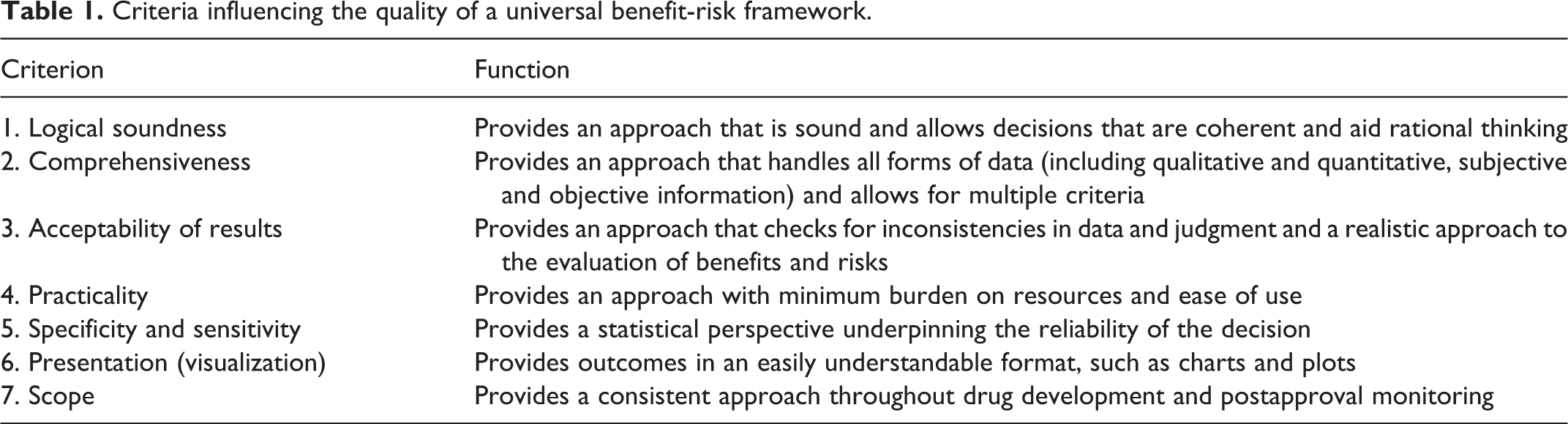
The criteria identified by the EMA Benefit-Risk Methodology Project 4 and subsequently used by Leong and colleagues in their survey of pharmaceutical companies and regulatory agencies 2 were employed here to assess the suitability of this universal framework (Table 1). Among these criteria, “comprehensiveness” includes the use of multiple assessment tools within an overarching framework, the appropriateness of which had been previously detailed by several investigators. 5,6
Criteria influencing the quality of a universal benefit-risk framework.
Identification of a Suitable Framework
Five frameworks currently used for the assessment of the benefits and risks of medicines were reviewed (Table 2). Of these, 2 were used by regulatory agencies and 2 by pharmaceutical companies, and the 7-step CIRS framework had been reviewed by both these stakeholders.
Selected current frameworks for the assessment of the benefits and risks of medicines.
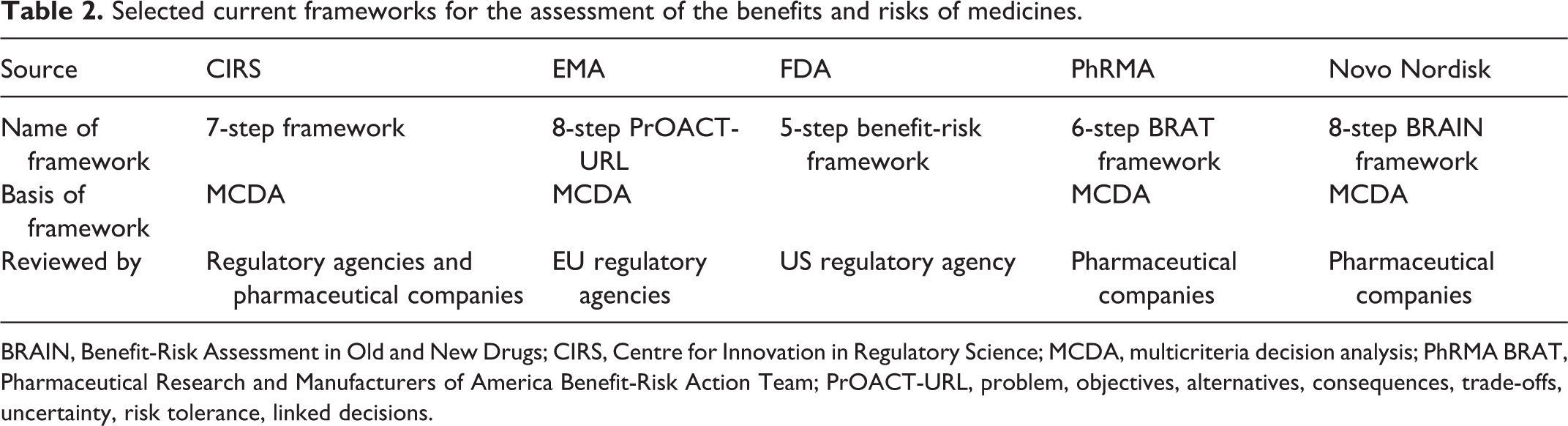
BRAIN, Benefit-Risk Assessment in Old and New Drugs; CIRS, Centre for Innovation in Regulatory Science; MCDA, multicriteria decision analysis; PhRMA BRAT, Pharmaceutical Research and Manufacturers of America Benefit-Risk Action Team; PrOACT-URL, problem, objectives, alternatives, consequences, trade-offs, uncertainty, risk tolerance, linked decisions.
The platform on which 4 of the 5 reviewed frameworks are based—multicriteria decision analysis (MCDA)—is a process described by Dodgson and associates, which defines the individual contributing aspects of the decision-making process allowing these outcomes to be systematically organized to form the basis of the decision. 9 The 3 key phases of the MCDA process are as follows: identifying and structuring the problem, taking the decision maker’s preferences into account, and developing an action plan. The various steps in MCDA that can be applied to the benefit-risk assessment of medicines are found in Table 3.
Steps in multicriteria decision analysis (MCDA).
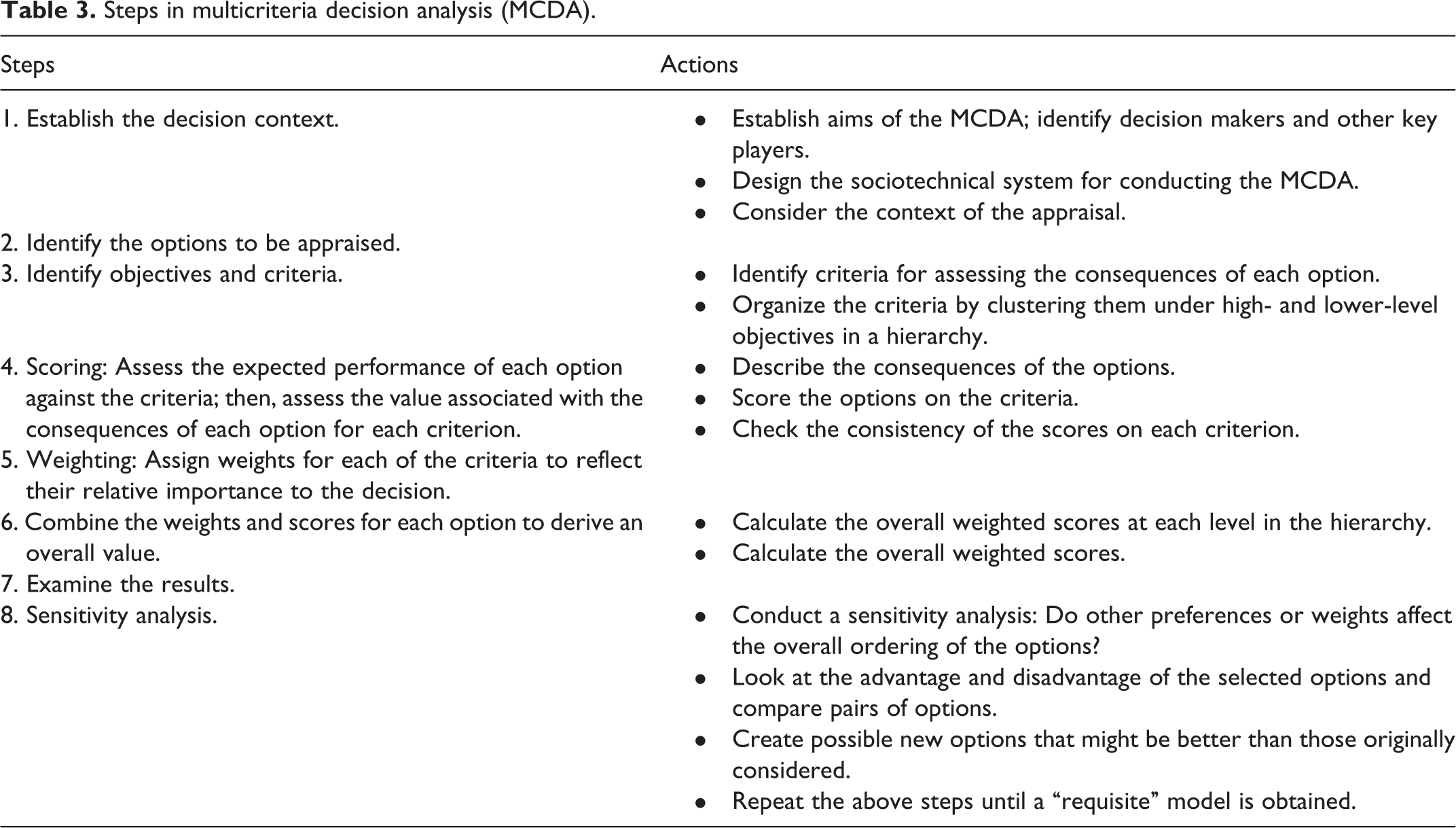
A number of factors make the MCDA approach relevant to the benefit-risk assessment of medicines. It does not require additional analyses or aim to replace decision making. Additionally, scoring, weighting, and sensitivity analyses facilitate the required acceptability, specificity, and sensitivity of results. By providing a structured flow of information leading to a decision, an MCDA-based framework is a tool for communicating a transparent and consistent decision. In support of its use in a universal benefit-risk framework, the MCDA model is applicable to all types of medicines at different life cycle decision stage gates and by multiple stakeholders, including industry and regulatory and health technology assessment agencies.
Although MCDA does not provide any form of visualization to facilitate understanding of outcomes, it can enhance the consistency, objectivity, and transparency of benefit-risk decision-making processes by providing a structured and systematic approach with appropriate documentation for tracking the process and providing greater accountability for a decision. It also facilitates the reviewing of past decisions and experiences to ensure the consistency of regulatory decisions across a therapeutic area, and it allows an understanding of the context of differing agency decisions when based on the same or substantially similar dossiers.
Accordingly, because of its MCDA basis, as well as its independent development and input from regulatory agencies and pharmaceutical companies, the CIRS 7-step framework was chosen as the basis for the further development of a universal framework.
Development of the Framework
The processes of the CIRS 7-step framework were reviewed to identify areas for enhancement. Step 1, “decision context,” is the identification and structuring of the problem, while steps 2 to 5 are the development of decision-maker preferences—that is, the benefit-risk criteria. Because step 7, “expert judgment,” provides an action plan leading to a decision, it is correlated to the final key phase of MCDA. Step 6, “visual presentation,” was added to fulfill the previously identified requirement for a universal framework.
Unlike the other frameworks, the CIRS 7-step framework had been applied to real-world use to only a limited degree. To impart universal utility and increase the likelihood of global uptake of a universal framework, a comparative review of the FDA, EMA, PhRMA, and Novo Nordisk frameworks was conducted with the goal of harmonizing the essential elements into an overarching framework.
The FDA framework (Table 4) was developed to accurately and concisely describe benefit-risk considerations to help assessors apply a structured approach in regulatory decision making. 10 –12 The context of the decision, an understanding of the condition treated, and the unmet medical need are important aspects in the use of this framework. Unlike other frameworks, it is not based on MCDA.
FDA approach to assessment of benefits and risks.
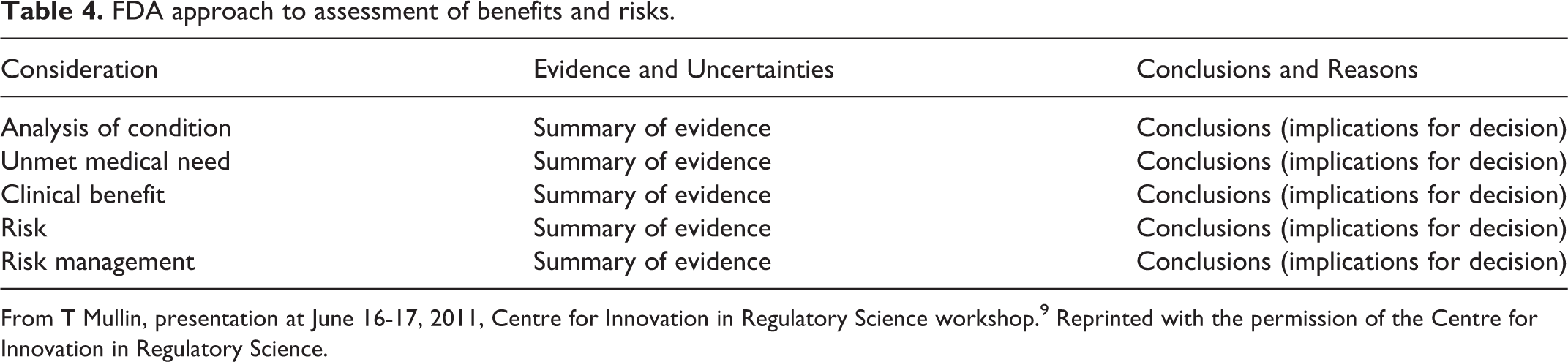
From T Mullin, presentation at June 16-17, 2011, Centre for Innovation in Regulatory Science workshop. 9 Reprinted with the permission of the Centre for Innovation in Regulatory Science.
According to its set of guiding principles, the EMA initiates decision making for medicines by examining the decision to be made and the objectives of that decision and then considers the options, alternatives, and trade-offs before a decision or action would be decided. 13,14 Based on these principles and a generic framework for decision making developed by Hammond and colleagues, 15 the EMA PrOACT-URL approach (problem, objectives, alternatives, consequences, trade-offs, uncertainty, risk tolerance, linked decisions) prompts the assessor to address the considerations required to develop the benefit-risk profile of a medicine (Table 5).
EMA 8-Step PrOACT-URL.
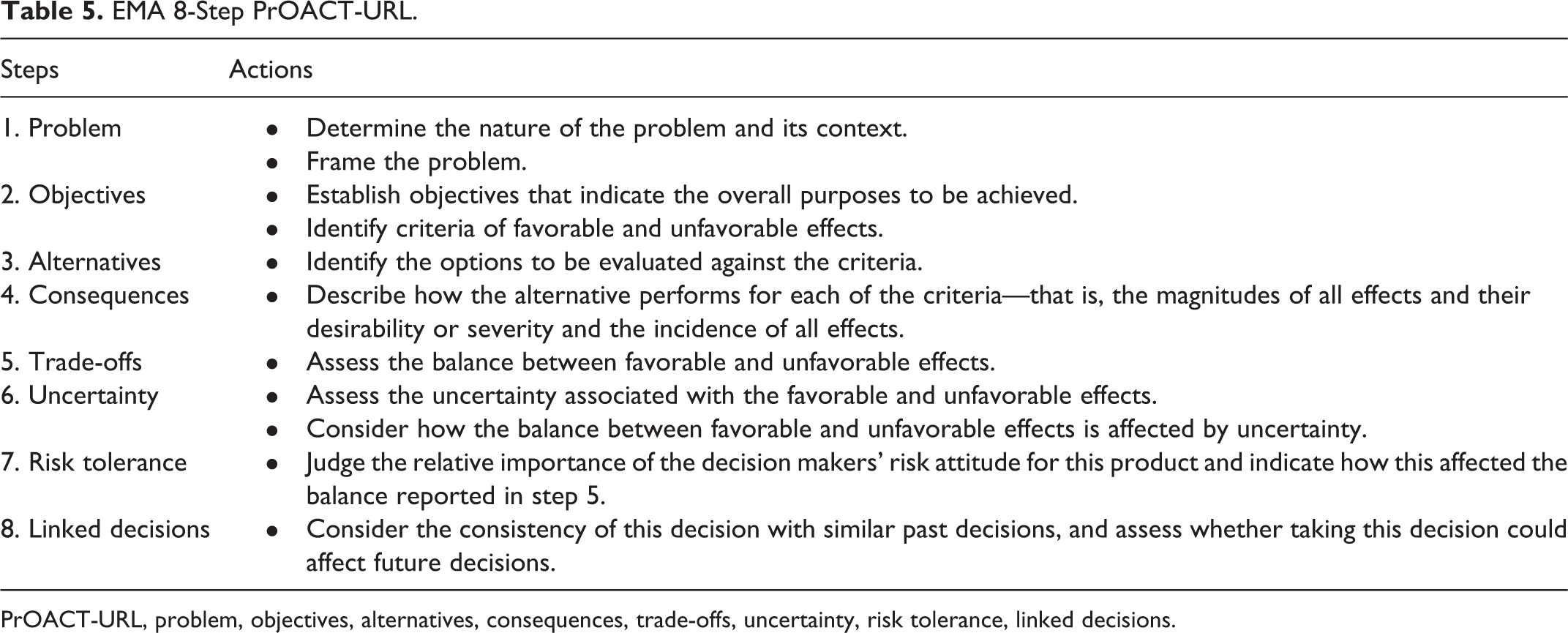
PrOACT-URL, problem, objectives, alternatives, consequences, trade-offs, uncertainty, risk tolerance, linked decisions.
The BRAT, under the auspices of the PhRMA, developed a framework for benefit-risk assessment. 16 –18 The BRAT framework (Table 6) consists of 6 steps that produce representations of key trade-offs, with appropriate documentation of the rationale for decisions and the assumptions made in their development.
PhRMA BRAT framework.
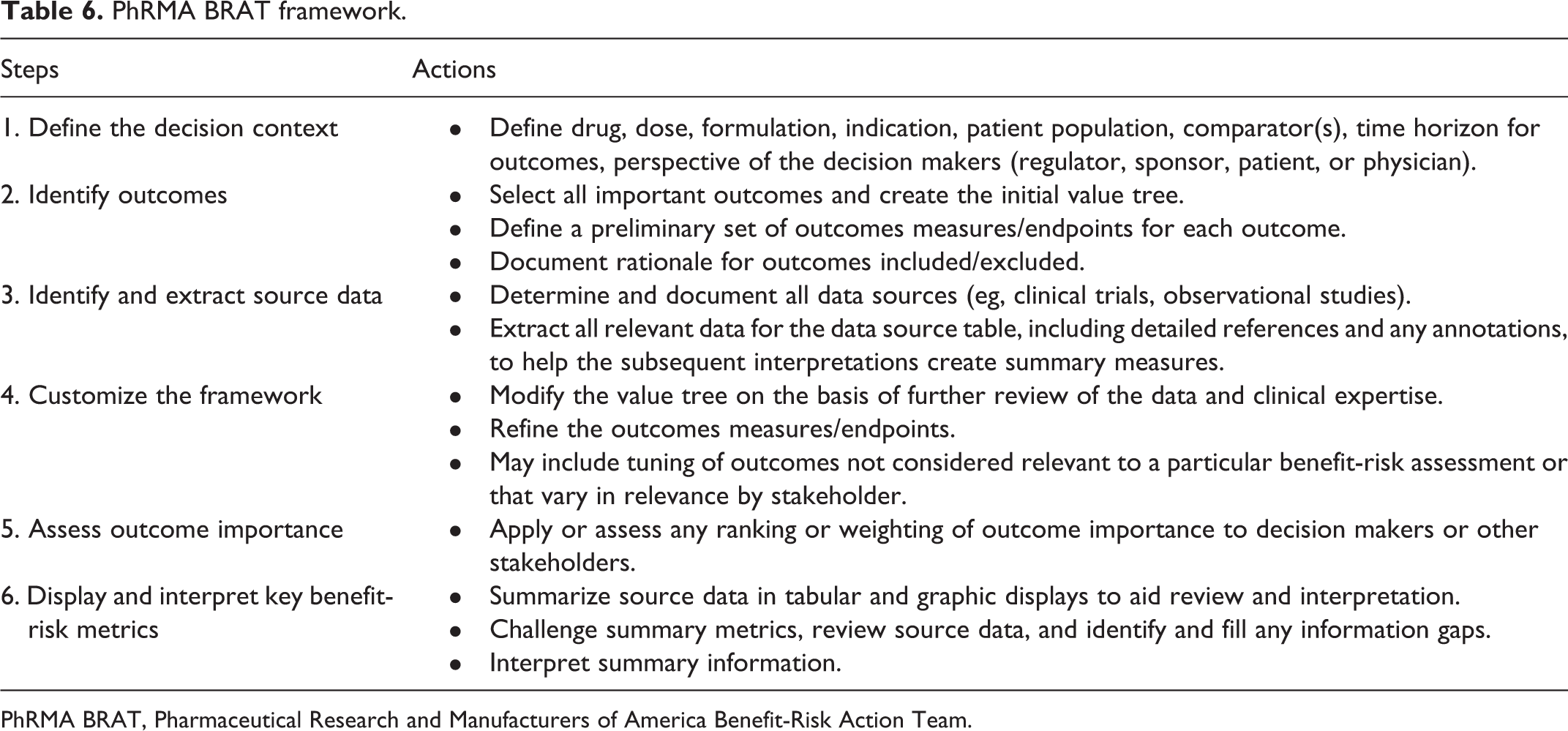
PhRMA BRAT, Pharmaceutical Research and Manufacturers of America Benefit-Risk Action Team.
BRAIN (Benefit-Risk Assessment in New and Old Drugs) is an 8-step interactive process that was developed by the pharmaceutical company Novo Nordisk A/S that can extract information from clinical trials that is otherwise not captured by direct statistical analyses. 19 With the use of this tool in profiling the decision context, the aims, goals, expectations, and relevant information to support the benefit-risk assessment are identified.
The steps of these frameworks were tabulated and common process elements identified. It was found that at a higher level of categorization of the tasks involved, four common core elements were identified: framing the decision, identifying benefits and risks, assessing the benefits and risks, and interpretation and outcomes (Table 7). It was then possible to construct an overarching 8-step framework that incorporated all the elements included in each framework.
Comparisons of existing benefit-risk assessment frameworks by core elements.
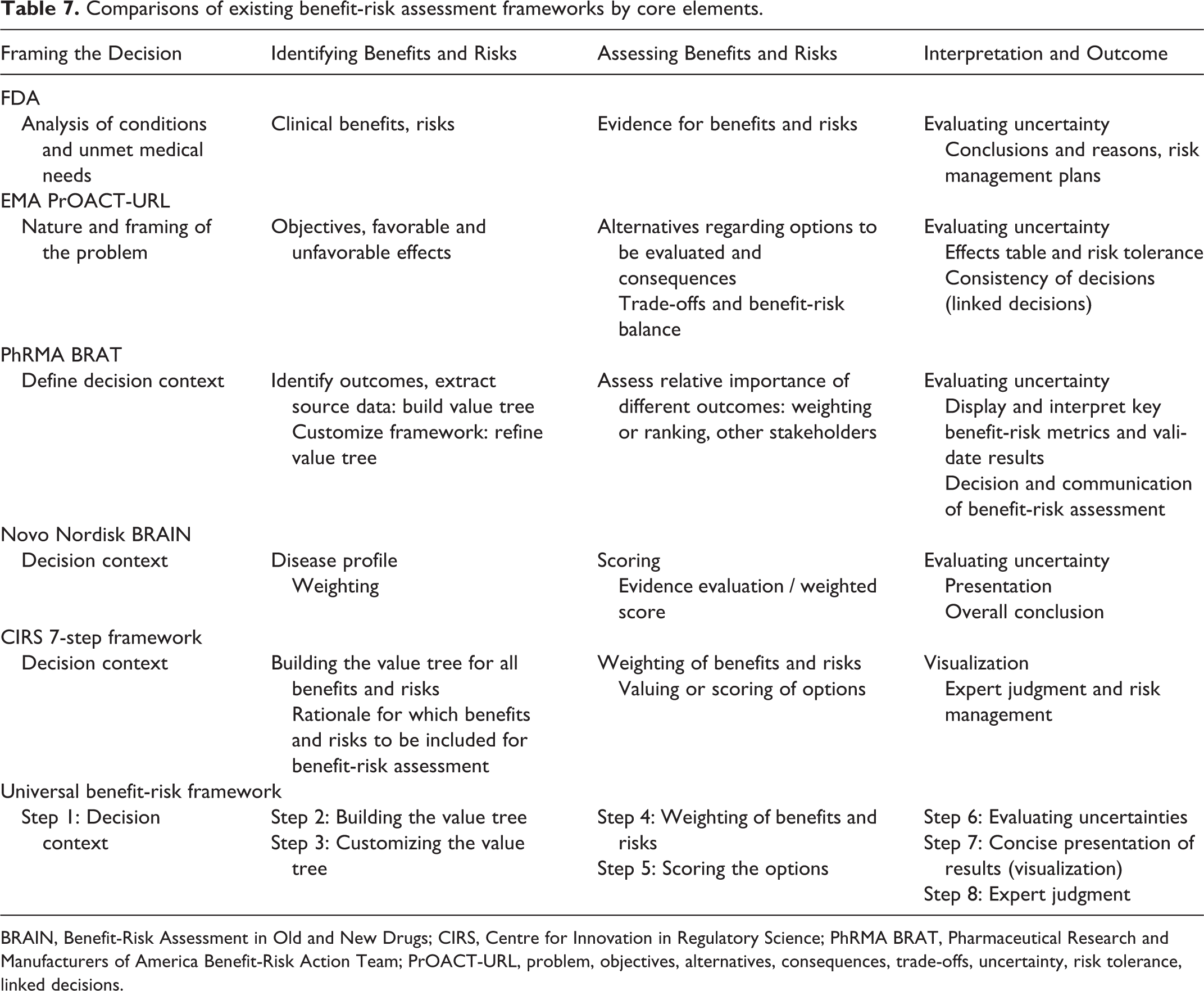
BRAIN, Benefit-Risk Assessment in Old and New Drugs; CIRS, Centre for Innovation in Regulatory Science; PhRMA BRAT, Pharmaceutical Research and Manufacturers of America Benefit-Risk Action Team; PrOACT-URL, problem, objectives, alternatives, consequences, trade-offs, uncertainty, risk tolerance, linked decisions.
In a bid to promote the universal utility of the proposed framework, the CIRS 7-step framework was amended to reflect the core elements and provide a unified standardized framework that would meet the requirements of the FDA, EMA, PhRMA BRAT, and Novo Nordisk models, which had been used by the 2 major regulatory agencies and pharmaceutical companies. The final universal benefit-risk framework (Figure 1) consists of 8 steps. The processes were essentially unchanged, but step 6 (“evaluating uncertainty”; previously conducted as part of the overall process) was added as a specific step to ensure that the 3 key components of benefit-risk-harm evaluation are explicitly considered. This consolidated approach, termed the UMBRA framework, was subsequently endorsed by a group of regulatory agency and pharmaceutical industry leaders. 20
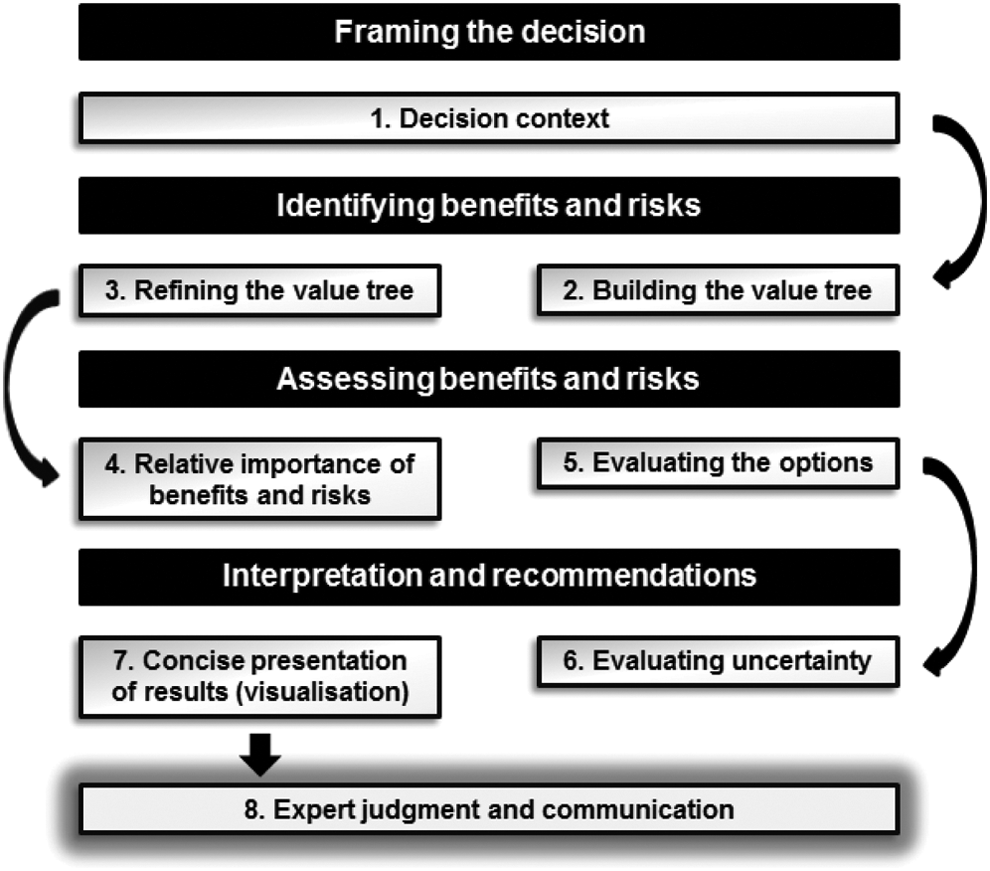
The universal benefit-risk framework for the assessment of the benefits and risks of medicines.
The details of what should be considered in each step of the UMBRA 8-step framework are shown in Table 8.
UMBRA steps.
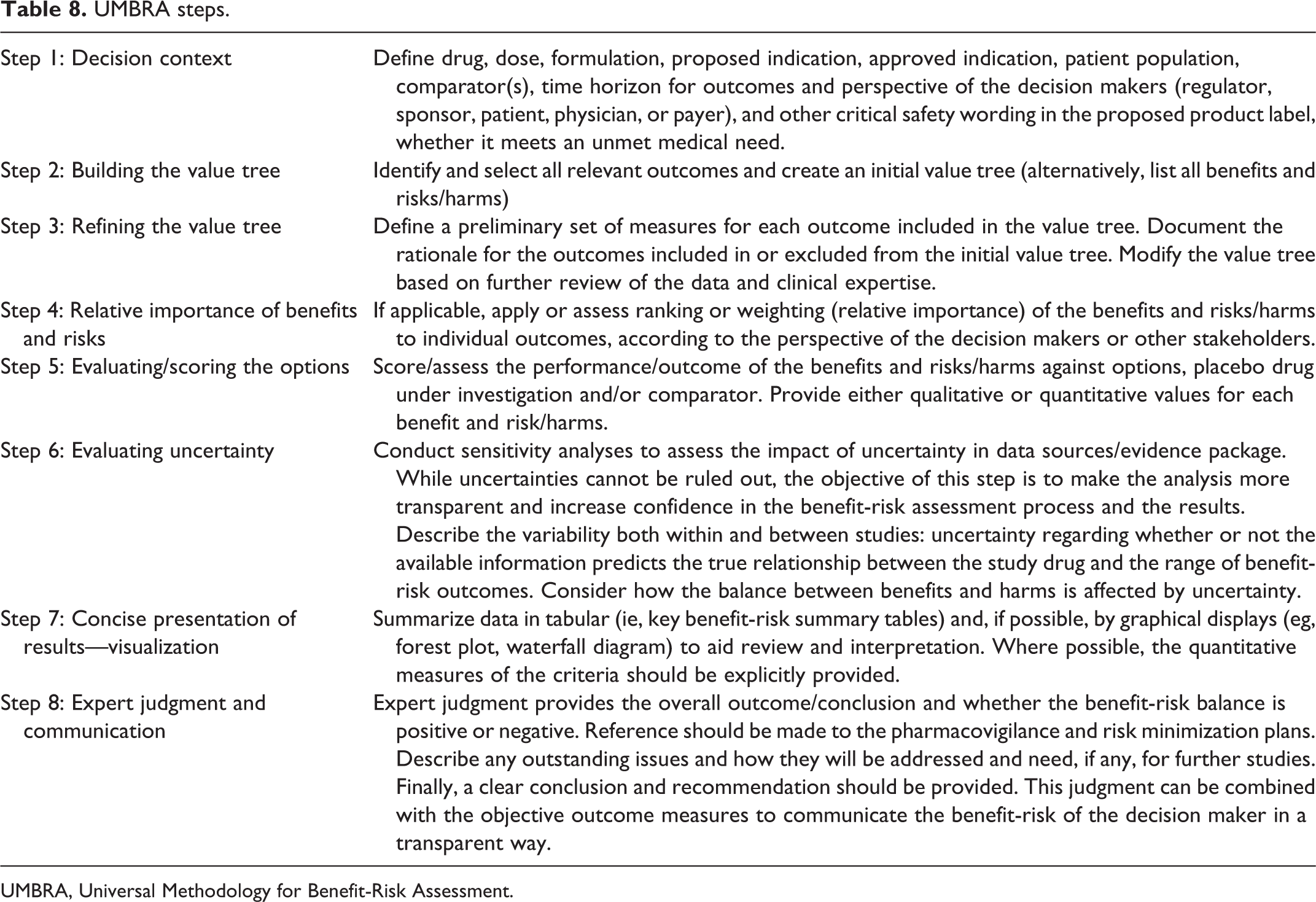
UMBRA, Universal Methodology for Benefit-Risk Assessment.
Discussion
Currently, there is a need for a systematic, standardized, structured approach to the benefit-risk assessment of new medicines that is broadly accepted and utilized by developers and regulators. 18 In this study, the universal framework for the assessment of the benefits and risks of medicines was developed with input from regulators and pharmaceutical companies and the review of existing frameworks used by both these stakeholders. In addition, essential components of each framework were preserved through standardization to facilitate its global uptake and ensure its international relevance.
Additionally, while the incorporation of all stakeholder perspectives in benefit-risk assessment is ideal, there remain some challenges in collecting and integrating patient and health care professional perspectives into these frameworks. Furthermore, the UMBRA framework is not able to discern the intrinsic significance of the values provided and require that the regulators be able to apply clinical judgment at the conclusion of the assessment, given that such judgment is an accumulation of education and experience. Importantly, the UMBRA framework for the assessment of benefits and risks has yet to incorporate a quantitative methodology in the decision model. 21 The framework allows for relative importance and values to be assigned to benefit and risk parameters, which can provide a more transparent perspective for decision making. 22 However, the concept behind relative importance is not currently embraced by all stakeholders. 23
While we have observed a common alignment among the various frameworks, there is currently no consensus with regard to the specific methodologies that are considered appropriate or commonly applied in the evaluation of the benefit-risk assessment of medicines. However, this is not an issue, as long as they align to a universally accepted framework that accommodates the various existing methodologies used by companies and agencies. The importance of this is to enable other stakeholders, such as patients, physicians, and regulatory agencies, to be able to identify the key elements used to reach a benefit-risk decision and to assess the uncertainties surrounding the decision based on a common language. However, more research is required to further the understanding and application of weightings (relative importance) and identification and consensus of assessment methodologies.
Finally, the acceptance of a universal framework for companies and agencies requires further evaluation and implementation in practical situations. It is important that this work be continued to ensure the relevance and currency of the concept and tools as well their ability to meet the expectations of stakeholders. This will require the continuous and ongoing involvement of various stakeholders concerned with enhancing the science of decision making with respect to the benefit-risk assessment of medicines so that it may ultimately facilitate a universal system that provides improved patients’ access to medicines.
Conclusion
A universal framework should include the following characteristics: logical soundness, comprehensiveness, acceptability of results, practicality, specificity and sensitivity, presentation (visualization), and scope. This study demonstrated that the 5 key frameworks used by the pharmaceutical industry and regulatory agencies could be consolidated into a single framework—namely, the UMBRA. This represents the way forward by providing a structured, systematic approach for consistent, transparent, quality decision making. Testing the practical application and validity of the UMBRA framework through a prospective study will help to determine its place in global medicines development and assessment.
Footnotes
Declaration of Conflicting Interests
The author(s) declared no potential conflicts of interest with respect to the research, authorship, and/or publication of this article.
Funding
The author(s) received no financial support for the research, authorship, and/or publication of this article.