






Abstract
Compared with single-entity treatments, multientity or combination products have the potential to provide enhanced therapeutic utility. Because they involve components that would normally be overseen by different branches of health authorities (eg, different FDA centers), they raise numerous scientific, regulatory, policy, and review management challenges. This article summarizes the current status of the evolving combination product development landscape and potential options to address key challenges facing combination product developers. Continued collaboration and transparency among regulators, combination product developers, and other stakeholders is essential to streamlining the global combination product development and review process to ensure the availability of high-quality new products that are being used in a way that is safe and effective.
Introduction
On November 5, 2013, the DIA hosted a meeting on combination products. Speakers from the FDA and the drug and diagnostic industries provided attendees with an understanding of the regulatory framework of drug/device combination products development and registration while highlighting the key developmental challenges facing combination product developers in the United States and European Union. This meeting also provided an open forum to discuss practical approaches to addressing development processes and infrastructure to support the evolving combination product landscape. The next few sections provide a history and overview of the current status in combination product development with recommendations from the various stakeholders for driving growth and innovation in this area.
Combination products (medical products that combine drugs, medical devices, and/or biologic products) are some of the most innovative and cutting-edge new health care products incorporating novel technologies that hold great promise for advancing patient care. Combination products range in complexity—from a simple prefilled syringe to drug-eluting stents, gene therapy systems, chemotherapeutic drugs combined with radiolabeled versions of a monoclonal antibody, and regenerative medicinal products such as a bioartificial pancreas 1 (Figure 1). Other examples include antibody-drug conjugates. These innovative products have the potential to offer novel alternatives for patient care because the unique combination of drugs, medical devices, and/or biologic products introduces products to wider therapeutic settings, or it produces therapeutic or diagnostic results not seen in single-entity products for a variety of disorders, from cardiovascular disease to Alzheimer disease, cancer, diabetes, and beyond.
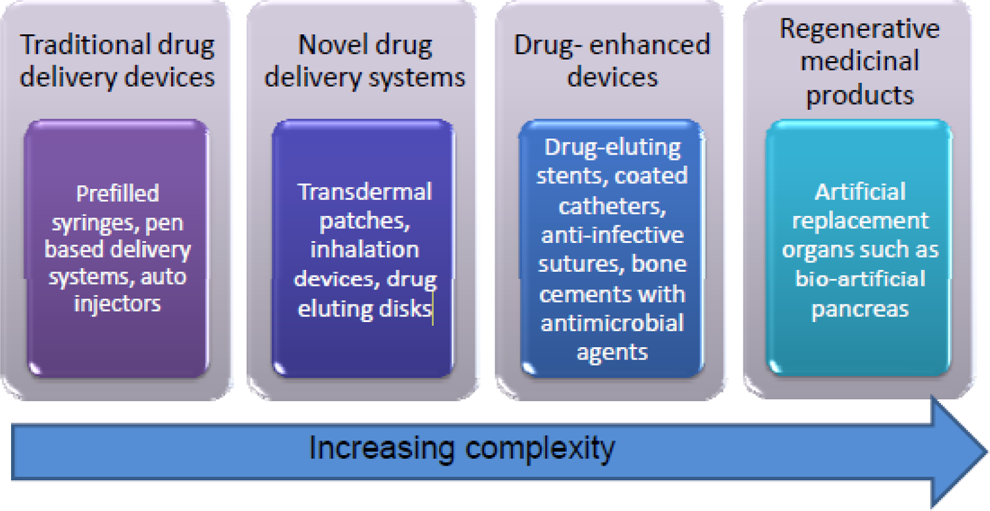
Example of combination products.
Combination Products Defined in the United States
Combination products as defined in the US Code of Federal Regulations (21 CFR 3.2.e) include the following
2
:
“A product comprised of 2 or more regulated components, ie, drug/device, biologic/device, drug/biologic, or drug/device/biologic, that are physically, chemically, or otherwise combined or mixed and produced as a single entity.” “Two or more separate products packaged together in a single package or as a unit and comprised of drug and device products, device and biological products, or biological and drug products.” “A drug, device, or biological product packaged separately that according to its investigational plan or proposed labeling is intended for use only with an approved individually specified drug, device, or biological product where both are required to achieve the intended use, indication, or effect and where upon approval of the proposed product the labeling of the approved product would need to be changed, eg, to reflect a change in intended use, dosage form, strength, route of administration, or significant change in dose.” “Any investigational drug, device, or biological product packaged separately that, according to its proposed labeling, is for use only with another individually specified investigational drug, device, or biological product where both are required to achieve the intended use, indication, or effect.”
Combination Products Defined in the European Union
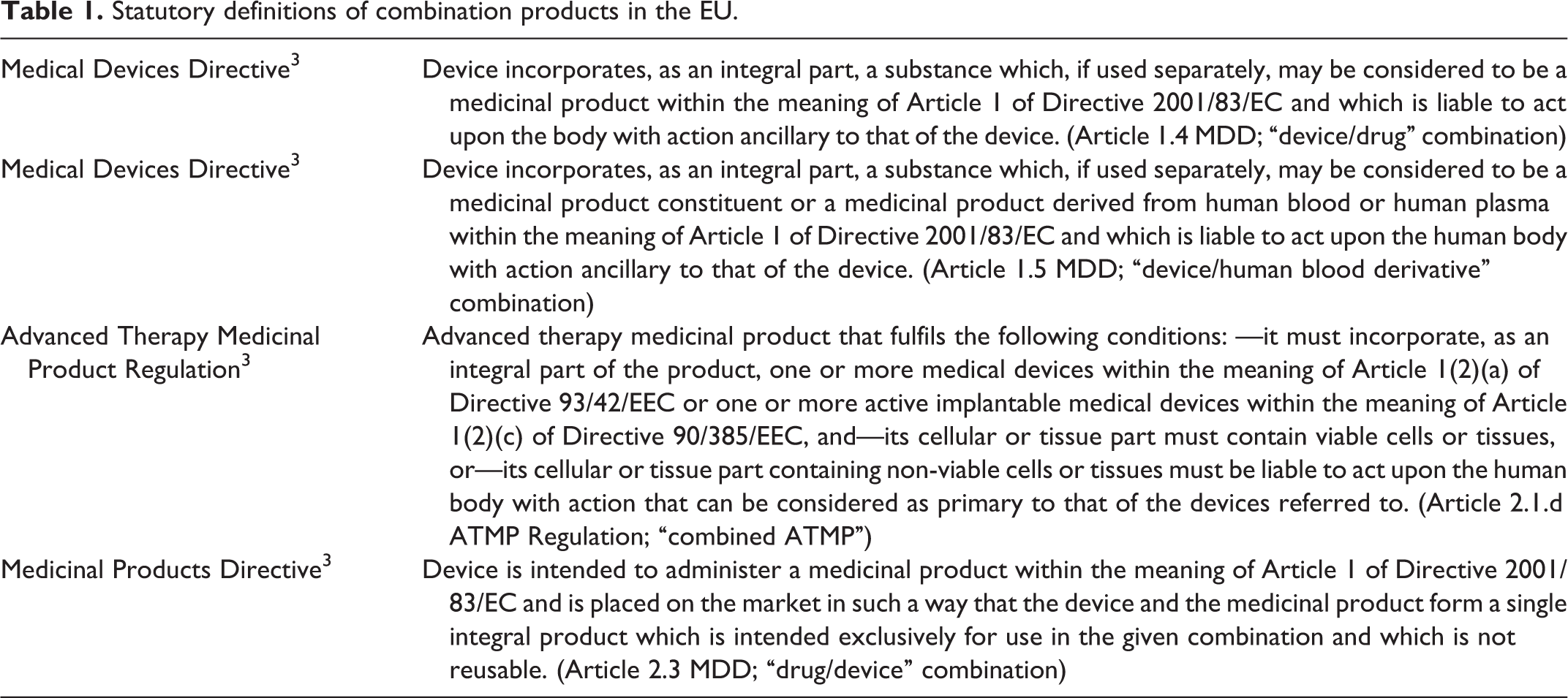
The EU regulation of drug/device combinations is complex and often conflicting for drug and device manufacturers. It can be particularly challenging for innovators who may find the lexicon of the different regimes unfamiliar (Table 1). In the EU, the regulation of combination products is covered by the Medical Device Directive, the InVitro Diagnostics Directive, the Medicinal Products Directive, and the Advanced Therapy Medicinal Product regulation (Figure 1). EU regulations make distinctions among 6 types of drug/device combinations 3 :
Statutory definitions of combination products in the EU.
Device intended to administer medicinal product
Device and drug forming an integral (not reusable) product
Device incorporating a drug as an integral part, a drug with ancillary action
Device incorporating a medicinal product derived from human blood or plasma where the action of this substance is ancillary
Advanced therapy medicinal product combined with a medical device
Drug/companion in vitro diagnostics
At present, unlike in the US, there is no central decision-making regulatory body equivalent to the FDA Office of Combination Products (OCP) to indicate which regulatory pathway should be followed in cases of uncertainty.
The EU Medical Device Directives are currently being revised, and the final result may also affect combination products. The objective of these legislative changes are to ensure that devices are safe and can be freely and fairly traded throughout the EU.
4
The proposals have been submitted to the European Parliament and the Council of the European Union. To become binding union law, the parliament and the council need to adopt the texts by ordinary legislative procedure. If these proposals are adopted, the following potential changes could be vital for any drug manufacturers who are involved, or intend to be involved, in the development of drug/device combination products
5
: “A wider, clearer scope for EU legislation on medical devices—extended to include, for example, implants for aesthetic purposes, and clarified for genetic testing.” “Stronger supervision of independent assessment bodies by national authorities.” “More powers for assessment bodies to ensure thorough testing and regular checks on manufacturers, including unannounced factory inspections.” “Clearer rights & responsibilities for manufacturers, importers and distributors, which would also apply to diagnostic services and internet sales.” “Extended EUDAMED database will provide comprehensive information on products available on the EU market.” “Nonconfidential data will be publicly available.” “The EUDAMED service is an information system for exchanging legal information related to the application of European Union Directives on medical devices between the EC’s Directorate General for Enterprise and Industry and the Competent Authorities in the European Union Member States on medical devices.”
6
“Better traceability of medical devices throughout the supply chain—enabling a swift and effective response to safety problems (eg recalls).” “Stricter requirements for clinical evidence to support assessments of medical devices.” “Updated classification rules dividing medical devices into 4 different risk categories and health & safety requirements, including labelling rules—to keep pace with technological and scientific progress.” “Better coordination between national surveillance authorities, with the Commission providing scientific, technical and logistic support.” “International guidelines to be harmonized into EU law.”
In 2012, an estimated 30% of all new health care products under development were “combination products” involving medical devices codeveloped with pharmaceutical or biologic components. 7 Innovative drug, biologic, device combinations have the potential to enhance the safety, effectiveness, tolerability, patient adherence, and convenience of single-entity treatments for patients, through their controlled drug release, targeted drug delivery mechanisms, or ease of use. In many cases, combination products are developed to improve the function of clinically approved products. Additionally, the prospect of synergistic benefits of combining drug, biologic, and medical device technologies into a range of diseases has stimulated stakeholders in the biotech, pharmaceutical, and device industries, academia, and government to discuss practical approaches to development processes and regulations in these evolving landscapes.
Regulatory Challenges by Region
US Regulatory Landscape
Congress first acknowledged the need for specific regulation on combination products through the enactment of the Safe Medical Devices Act of 1990, which added section 503.g to the Food, Drug, and Cosmetic Act.
8
The amendment addressed various difficulties that sponsors were experiencing when seeking approval of a product that did not fit exclusively into the category of drug or device but are instead a combination of 2 or more single-entity products (eg, drug, biologic, and device). The 1990 Safe Medical Devices Act amendment required the FDA to assign combination products to one lead agency center for regulatory oversight and review based on the product’s primary mode of action (PMOA).
9
Under section 503.g.1 of the Safe Medical Devices Act, assignment to a center with primary jurisdiction, or a lead center, is based on a determination of the PMOA of the combination product. Factors that influence the PMOA include the following
10
: “Proposed use(s) or indication(s)” “How it achieves its overall intended therapeutic effect(s)” “Relative contribution of each component toward the overall intended therapeutic effect” “Duration of the contribution of each component towards the intended therapeutic effect” “Data or information that describes and supports the mode of action”
For example, if the PMOA of a device/biologic combination product is attributed to the biologic activity of the product, the agency/center responsible for premarket review of that biologic product would have primary jurisdiction for the combination product. This means that, while one center will have primary jurisdiction for reviewing and regulating the product, another center should be consulted.
The primary responsibility for assigning combination products to a lead agency center was first implemented by Office of the Chief Mediator and Ombudsman and then transferred to the OCP, which was statutorily created in 2002 by the FDA’s Office of Special Medical Programs as required by the Medical Device User Fee and Modernization Act of 2002. 2,11
FDA Office of Combination Products
Upon its creation, the OCP became broadly responsible for instituting policies for combination products, or products that involve components that would normally be regulated under different FDA centers, and to address the regulatory, policy, scientific, and review management issues raised by combination products. The FDA’s OCP has been playing an increasingly significant role in guiding industry to the appropriate regulatory pathways and classifying combination products.
The OCP responsibilities include the following: Processing of formal requests for designation (RFDs) Determining the PMOA of the combination product and therefore designating a lead center Assigning lead agency center for regulatory oversight Facilitating and coordinating intercenter agreements
The OCP does not review combination products, but it is tasked with ensuring their timely and effective premarket review by facilitating and coordinating the review process when more than one agency center is involved. The OCP is responsible for classifying each combination product as a drug, device, or biologic based on the PMOA and then assigning the review responsibility of that product to the most appropriate FDA center—Center for Drug Evaluation and Research (CDER), Center for Biologics Evaluation and Research (CBER), or Center for Devices and Radiologic Health (CDRH)—or lead center. The lead center will consult or collaborate with the other centers during the review of the combination product. Once assigned to a primary regulatory center, the combination product will typically follow that center’s application type for premarket review (eg, new drug application, premarket approval, biologic licensing application) 1 (Figure 2).
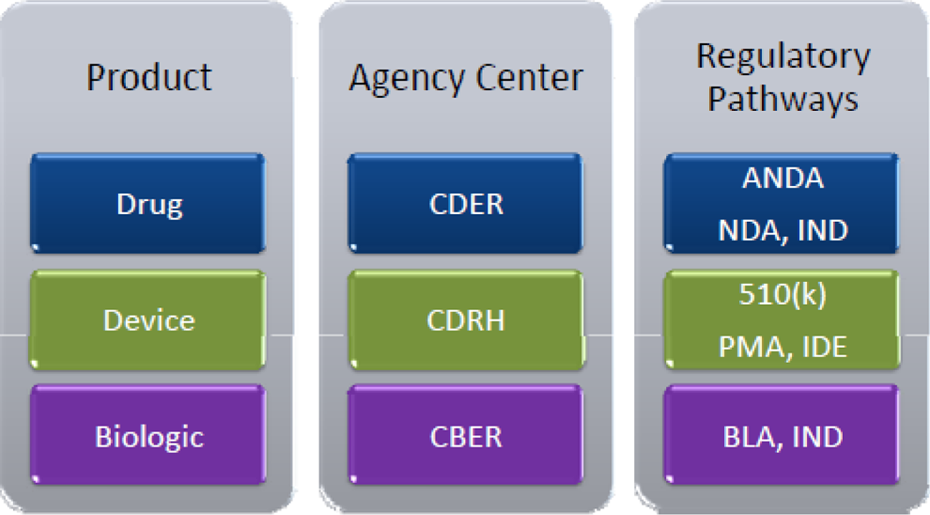
Jurisdictional assignments and regulatory pathways for combination products.
In 1991, the FDA issued 3 intercenter agreements, which provided information on the way that many products were assigned to the CDER, CBER, and CDRH at the time that those documents were written. An intercenter agreement is “an agreement between two or more FDA centers that clarifies product jurisdictional issues by describing the allocation of responsibility for categories of products or specific products.” 12 For many years, these documents provided useful guidance on explaining how various categories of combination and single-entity medical products were classified and assigned. Since the intercenter agreements were written in 1991, the body of jurisdictional decisions on combination products has grown over time. New products have been classified and assigned that are not specifically covered by the intercenter agreements, because of their specific characteristics or use. One example of a deviation from the classical intercenter agreement was in October 2006, when the FDA transferred primary responsibility for the regulation of heparin catheter lock-flush solution products from the CDER to the CDRH. Prior to the mid-1990s, heparin catheter lock-flush solution products were regulated under the drug provisions of the Food, Drug, and Cosmetic Act, with the CDER serving as the lead FDA review component. 13 However, based on several recent jurisdictional determinations by the FDA for specific products, applications for catheter lock-flush solutions containing an anticoagulant such as heparin are now assigned to the CDRH and regulated under the device provisions of the act. The transfer was based on the FDA’s determination that the PMOA for these heparin catheter lock-flush solution products is that of the device part of the combination. Instead of independently relying on the Agency’s intercenter agreements as the Agency’s most current and complete jurisdictional statements, the FDA suggests referring to the numerous issued combination product guidance documents and many jurisdictional determinations on the OCP’s website. 2
Because combination products comprise more than one type of regulated product (biologic, device, or drug), combination products may have multiple modes of action. The PMOA is defined by the FDA as “single mode of action of a combination product that provides the most important therapeutic action of the combination product. The most important therapeutic action is the mode of action expected to make the greatest contribution to the overall intended therapeutic effects of the combination product.” 14
Classification and jurisdiction assignments can be made informally or formally. Informal assignment requests can be made by directly e-mailing the OCP. Companies may request a formal agency determination of a combination product’s regulatory identity or classification of a product as a drug, device, biologic product, or combination product, by submitting a request for designation (RFD). 2 In response to this request, the lead FDA center of will regulate the product if it is a non-combination product, or a jurisdictional assignment for premarket review and regulation will be made if it is considered a combination product. There is no form required for an RFD, but the information provided must be limited to 15 pages or fewer. 15 The RFD gives a sponsor the opportunity to make a recommendation to the FDA on the assignment of the product to a lead center. The FDA has 60 days to respond to an RFD, and if it fails to respond within this period, the sponsor’s recommendation for the classification or assignment of the product will become the designated classification or assignment. To further decrease ambiguity and increase transparency about the jurisdictional process, the FDA has issued guidance on how to write an RFD, along with other draft guidance documents on how products are classified as drugs and devices and on the meaning of “chemical action” in the definition of a device.
Recent Trends in OCP Activity: Results From Fiscal Year 2012
In the last 3 years, there has been a steady decrease in the number of formal combination product assignment requests. Of the 23 combination products requests made to OCP in fiscal year (FY) 2012, most were assigned to the CDER 16 (Figure 3).
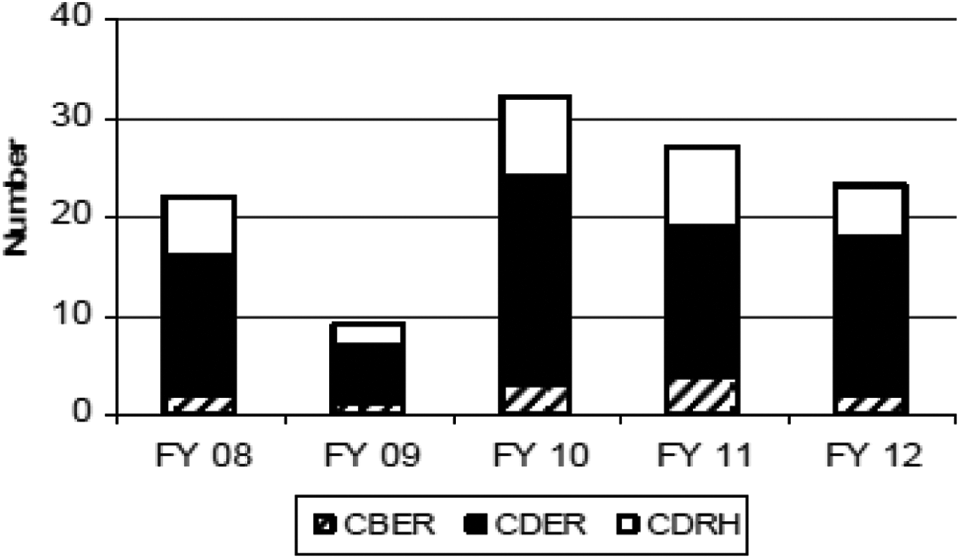
Combination product assignment requests made to the Office of Combination Products between fiscal year 2008 and 2012.
Eighteen of these requests were for drug/device combinations, 5 for biologic/device combinations, and 0 for drug/device/biologic combinations. Of the 10 noncombination products, 4 were classified as drugs, 2 as devices, and 4 as biologics. 16 The OCP also provided informal jurisdictional assistance, responding to approximately 270 inquiries in FY 2012.
Of the 266 combination product premarket submissions received in FY 2012, 39 were to the CBER as the lead center, 117 to the CDER, and 110 to the CDRH, based on the PMOA. 16 However, as new technologies emerge and existing technologies mature, the development of combination products will continue to raise unique technological, scientific, and regulatory challenges when their corresponding drug, device, and biologic components are combined to create a new product.
The FDA has jurisdiction over a variety of medical products. However, the review criteria and approval processes differ greatly across product types. For this reason, the FDA established a process called an intercenter consult request: “a review activity when a reviewer in a lead center reviewing the combination product application requests advice from a reviewer in another Center on a specific question or issue raised in the review of the submission.” 12 The consultative review will be used to aid the requesting reviewer in making appropriate regulatory/scientific decisions. After a complete review of the areas specified by the requesting FDA center is performed, a formal memorandum is generated that includes a brief summary of the portion of the submission that was reviewed, recommendations for action (as necessary), and comments and/or any requests for information to be conveyed to the sponsor. 12 The number of intercenter consultation requests on combination products increased for 4 consecutive years 16 (FY 2009–2012; Figure 4). The number of intercenter consultation requests increased from 530 in FY 2011 to 660 in FY 2012 primarily due to the increase in requests from the CDER (from 220 to 350). The majority of consults resulted in requests for more training on classifications, consults, and advice in collaborating with multiple centers for combination product applications.
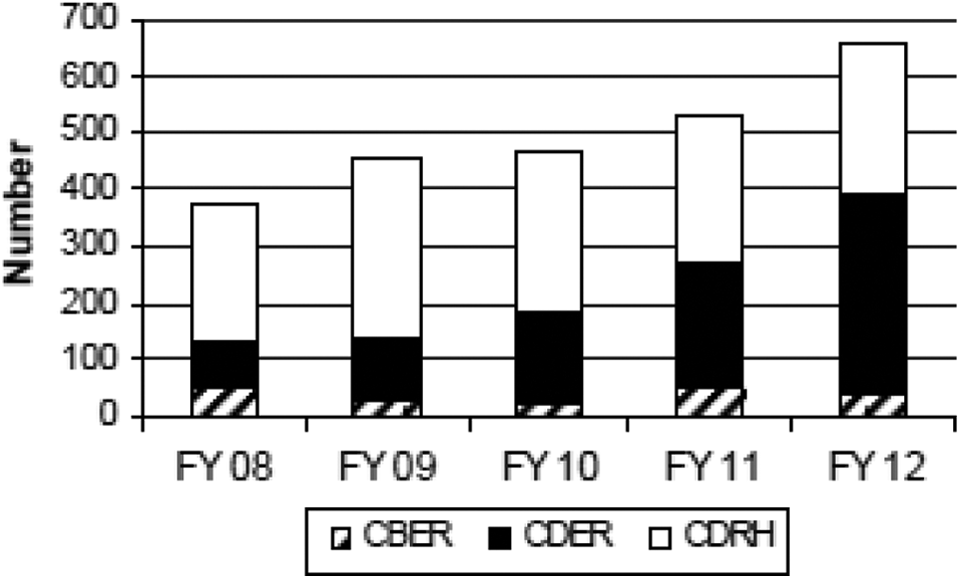
Intercenter consultation requests for combination products.
These recent trends in OCP activity suggest that as the basis for agency jurisdictional decision making becomes further clarified through guidance, the need for formal RFDs and informal inquiries covering specific products may decrease, which should conserve resources for both industry and the Agency.
EU Regulatory Landscape
The rapidly evolving combination products space has become a focus for the FDA, and because of the contribution in advancing medical care, these innovative products have elicited significant interest worldwide. BCC Research estimates that the market value for global drug/device combination products will increase from $18.5 billion in 2011 to $30.5 billion by 2017. 17 This section explore international regulatory challenges and summarizes the main legislative changes of the EU Medical Device Directive that will affect combination product oversight.
As in the United States, regulatory pathways for combination products in the EU are determined by the PMOA. However, there is no single agency determination process for the PMOA, and it is not possible to obtain an EU-wide ruling on products. However, in the absence of an equivalent to the FDA OCP, there is opportunity for applicants to meet with the EMA Innovation Task Force to discuss regulatory, technical, and scientific issues arising from the development of combination products. These meetings are free of charge, and they are intended to facilitate the informal exchange of information and for the task force to provide guidance on jurisdictional classification early in the development process. 18 The type of classification procedures is product dependent, and determinations are made on a case-by-case basis, to either a single-entity product or a combination product meeting the essential requirements of both.
However, due to a lack of central review and product assignment, the diversity by which combination products may be viewed among the various health authorities in the EU can sometimes create additional regulatory burden and complexity for innovators. The term combination product is reserved for describing fixed-dose combination medicinal products only.
In cases where the PMOA of the combination product may be a device, it is recommended to consult with the notified body early in the development process to gain clear direction on the appropriate regulatory pathway. Discussing classification of combination products with the notified body early and throughout the lifetime of the device is critical, since the products may be regulated under more than one directive. The application for notified body consultation should include the following
19
: A clear rationale for the device classification Evidence supporting the PMOA Explanation of the role of the ancillary medicinal substance Clinical data that relate to the product or include data to securely bridge to literature
Following receipt of the consultation application, the notified body must consult one of the medicine’s competent authorities designated by the member states (or the EMA) before making regulatory decisions on product classifications. The competent authority must issue an opinion concerning the device within 210 days after receipt of a valid documentation. Competent authorities may not necessarily be in agreement with the classification decision made by the notified body.
Hurdles in Developing Combination Products
Differences in the regulatory framework ordinarily associated with each component can raise questions for all aspects of combination product development and management. To address these concerns, new methodologies may need to be developed for evaluation of preclinical safety, manufacturing, labeling, clinical trial design, or postmarket safety. This section explores the challenges in developing combination products with a focus on drug/biologic delivery systems, preclinical and clinical combination product data requirements, manufacturing and quality control, and human factors testing.
Preclinical and Clinical Combination Product Data Requirements
Given the diversity in the types of combination products and global diversity of regulations, a “one size fits all” approach to combination product data requirements is not feasible. For combination product development, scientific/technical issues will reflect the combination product itself as well as its constituent parts. When combining products such as biologics and devices—which typically are developed separately under different regulatory paradigms—certain critical technical issues (eg, the potential for drug/biologic/device interactions) may not be readily noticeable on the outset. New scientific and technical issues may emerge later in development when the drug and the device are combined or used together, as in drug-eluting stents and drug-delivery systems. Likewise, the science and technology of the combination product also need to be taken into consideration while addressing clinical development questions concerning trial design, sample size, statistical methods, clinical endpoints, evidentiary requirements, and appropriate indications/claims. Furthermore, because of the scope, innovation, and complexity of combination products, there is no distinct developmental or regulatory paradigm appropriate for all combination products.
Designing and executing a clinical trial to support market authorization presents unique challenges for combination products. The critical regulatory strategy considerations may be new to many device and drug developers pursuing market authorization of combination products. Although the requirements are not uniformly or consistently applicable for all types of drug/device combination products, the currently available combination product and clinical guidance documents on the FDA website are a good starting point for considering a development strategy for a combination product. These principles will most likely need to be adapted to fully address the relevant preclinical and clinical development questions for a specific combination product as a whole. Since the scientific and technical issues raised will be product dependent, the Agency recommends that developers consider the specific issues with its constituents and propose an approach that appropriately addresses these issues to streamline the overlapping aspects of development and to minimize duplication of regulatory or developmental efforts. 20 The FDA encourages innovators to engage in early discussion with the Agency around these and other combination product concerns.
Human Factors Testing
For combination products that include a device constituent part, it may be necessary to evaluate the human factors of the device and instructions for use of the combination product. Such studies would evaluate how users operate the product in realistic operating conditions. In many cases, these studies include an assessment of all components and accessories necessary to operate and properly maintain the device—for example, controls, displays, software, logic of operation, labels, instructions, analysis of critical tasks, use error hazard, and risk analysis. The Agency recommends that human factors evaluations be conducted early in the combination product development process to identify design features that may need modification before initiating the key studies to establish the safety and effectiveness of the combination product.
Manufacturing and Quality Control Requirements
Because the devices combine 2 or more products that on their own might be regulated, combination products are subject to careful scrutiny in regards to their manufacturing. Pharmaceutical and biologic products are largely governed by a set of drug quality regulations under current good manufacturing practice (cGMP; 21 CFR 210-11 and 600-680, respectively), while medical devices are manufactured under quality systems regulation (QSR; 21 CFR 820), and blood- and tissue-based products are regulated under 21 CFR 1271. 21 Each constituent part of a combination product retains it regulatory status (eg, as a drug or device) once it is combined. Therefore, the cGMP requirements that apply to each constituent part continue to apply when it is combined with others to make combination products. 21 The FDA issued the final rule for cGMP requirements for combination products in January 2013. In developing the proposed rule, the Agency reviewed the drug cGMPs and QSR. Specific provisions from the drug cGMPs and QSR point out what a firm would need to satisfy in addition to complying with the other of these two sets of cGMP requirements to demonstrate compliance with both these sets of requirements. 21,22 The content of the medical device regulations tends to be less prescriptive and subject to interpretation based on the intended use of the medical device in question. Coupled with the biologic or pharmaceutical regulations, this could result in inconsistent or differing application of the various cGMP requirements applicable to the constituent parts, which can ultimately affect product safety and the public health. In addition, the absence of clear cGMP requirements could lead some manufacturers to develop and document manufacturing practices that are redundant and overly burdensome. However, for combination products that are produced as a single entity or copackaged (21 CFR 3.2.e.1 and 3.2.e.2), both sets of cGMP regulations can be applicable during and after combining the constituent parts together.
In October 2004, the FDA first addressed the cGMP requirements for combination products via a draft guidance document entitled “Current Good Manufacturing Practices for Combination Products.” This guidance provided key cGMP practice provisions to consider during and after joining copackaged and single-entity combination products as defined in 21 CFR 3.2.e.1 and 3.2.e.2. 23 The cGMP final rule was signed into law and became effective on July 22, 2013. This legislation, emerging from the cGMP draft guidance and the proposed rule issued on September 23, 2009, addressed how to satisfy these cGMP requirements for combination products in a manner that ensures manufacture of a safe and effective product while avoiding duplication of regulatory requirements. 24 This rule provided unified standards for appropriate product design, testing, and control regardless of which center took the lead on regulating the product and without much change to existing cGMP practices and systems. 25
Since the FDA recognizes that there is significant overlap among some aspects of the cGMP regulations for drugs and devices, the Agency is offering a streamlined approach to development that gives manufacturers the autonomy and regulatory flexibility to select the best cGMP method—either the drug cGMPs (at 21 CFR 210 and 211) or device quality system regulation (at 21 CFR 820) rather than both—to use for a particular product. Manufacturers can satisfy combination product cGMP requirements by either demonstrating compliance with all applicable regulations on a separate basis or implementing any one of the following options
25
: Drug cGMPs supplemented with 6 elements of the device QSRs—management responsibility, design control, purchasing control, corrective and preventive action, installation, servicing Device QSRs supplemented with 8 elements of the drug cGMPs—testing of components, calculation of yield, tamper evidence packaging, expiration dating, testing and release, stability testing, special testing, reserve samples
It is important to note that following one of these two options may not necessarily be sufficient to develop the combination product compliant in countries outside the United States, mainly due to additional or different quality standards. Furthermore, a medical device constituent part of a combination product may need to comply with electrical and wireless safety standards, machinery standards, reduction of hazardous substance or conflict mineral regulations, or personal protective and hygiene standards, which represents a challenge for industry.
In addition to issuing the cGMP final rule in July 2013, the OCP is implementing a variety of other mechanisms to provide clarity around cGMP regulatory requirements and increase consistency among agency centers. These efforts include the draft of a cGMP FDA guidance for combination products, implementation of training efforts, and improved collaboration and consultation with manufacturers to address issues in a timely manner. Current FDA thought on combination product development and production is often found directly in category-specific guidance, such as “Technical Considerations for Pen, Jet, and Related Injectors Intended for Use with Drugs and Biological Products.” 26
Discussion
During the November 2013 DIA workshop, discussions took place focusing on the evolving regulatory landscape of combination products and the key challenges facing combination product developers. Speakers from the FDA and the drug and device industries participated in the meeting and took part in presentations and panels. Before the workshop sessions, a presentation of collected industry feedback on the challenges of combination product development was given and discussed with the meeting participants. Industry’s concerns on the concepts reflected many of the regulatory, jurisdictional, and technical issues previously mentioned in other informal discussions among the FDA, global regulators, and industry. Included in Table 2 are challenges faced by combination product developers and recommendations for information to include in current or a subsequent regulations.
Challenges faced by combination product developers, with corresponding recommendations.
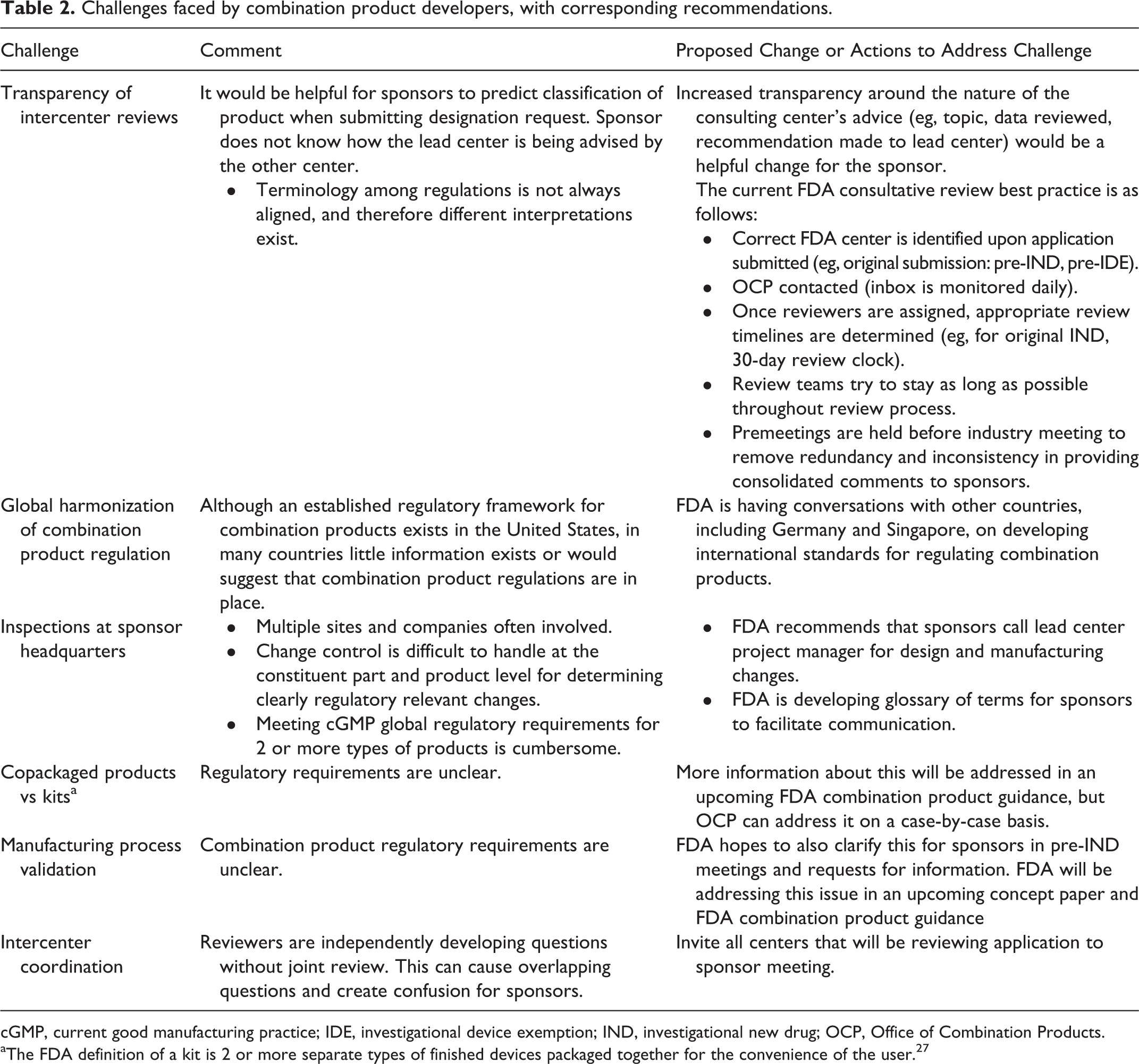
cGMP, current good manufacturing practice; IDE, investigational device exemption; IND, investigational new drug; OCP, Office of Combination Products.
aThe FDA definition of a kit is 2 or more separate types of finished devices packaged together for the convenience of the user. 27
Conclusion
The advent of newly emerging medical products combining drugs, devices, and biologics is expected to provide new opportunities in bridging device and drug capabilities and synergies while bringing highly sophisticated combination products to the forefront. The emergence of these high-value combination products has also triggered new regulatory, strategic, and technological challenges that indicate a departure from the traditional drug delivery device development paradigm. While progress has been made at clarifying the issues that arise most frequently, health authorities and innovators continue to struggle with complex regulatory and technical issues encompassing the development combination products. Ongoing collaboration and transparency among regulators, combination product developers, and other stakeholders is essential to streamlining the global combination product development and review process to ensure the continued availability of high-quality new products that are being used in a way that is safe and effective.
Footnotes
Declaration of Conflicting Interests
The author(s) declared no potential conflicts of interest with respect to the research, authorship, and/or publication of this article.
Funding
The author(s) received no financial support for the research, authorship, and/or publication of this article.