






Abstract
Background:
The aim was to analyze safety data associated with the maternal use of antiepileptic drugs in pregnancy and to assess the risk of cleft lip and/or palate (CL/P) as an outcome in the neonate. A parallel objective was to assess the completeness of the safety information concerning pregnancy exposures in the Summary of Product Characteristics (SmPCs) and the Patient Information (PI) in the USA and the UK.
Methods:
We analyzed individual case safety reports of CL/P associated with antiepileptic drugs in the FDA Adverse Event Reporting System. For the antiepileptic drugs with signals (EB05 ≥ 2), we reviewed Drug Analysis Prints for CL/P cases in the UK Medicines and Healthcare products Regulatory Agency (MHRA). We performed descriptive analyses of relevant SmPCs and PIs in the UK and the USA using a checklist of recommendations collected from the literature.
Results:
In total 817 CL/P reports were identified for 12 antiepileptic drugs in the FDA Adverse Event Reporting System. Ten of the 12 antiepileptic drugs were associated with 156 CL/P cases in the MHRA Sentinel. Safety information concerning pregnancy was found to be more comprehensive in UK SmPCs than in the US equivalents.
Conclusions:
There is statistical disproportionality in individual case safety reports indicative of an increased risk of CL/P with 12 antiepileptic drugs studied. More studies are required to explore the association between in utero exposure to antiepileptic drugs and the risk of CL/P. There are inconsistencies between the UK and US safety labels. CL/P associated with antiepileptic drugs is an important topic and requires providing inclusive, unbiased, up-to-date information to prescribers and women of childbearing age.
Keywords
Background
Cleft lip and palate are congenital malformations that occur in the embryonic and early fetal stages. These malformations represent the most common congenital deformities of the head and neck. 1 CL/P affects 1 in about every 700 newborns worldwide. 2 Patients with this deformity require short- and long-term care as well as medical, and often surgical, follow-up from practitioners in multiple specialties. 3 The etiology of CL/P is unknown but it has been hypothesized that it may be due to a combination of genetic and exogenous factors. 3 One well-documented cause is the maternal use of certain medicinal products such as anticonvulsants. Causal associations have been established between antiepileptic drugs (AEDs), including valproic acid, phenytoin, phenobarbital, carbamazepine, and topiramate and an increased risk of CL/P. 4,5
Epilepsy is one of the most common diseases that require continuous drug treatment during pregnancy. 6 Epilepsy affects more than 1 million women of childbearing potential in the USA. 6 Over the past 2 decades, the number of AEDs available on the market has increased. Several AEDs have indications for use that extend beyond epilepsy, including the treatment of psychiatric diseases, generalized anxiety disorder, migraine prophylaxis, and management of neuropathic pain. 7 In the USA, the prescription rate of AEDs has been reported at >4 million per annum for women of childbearing potential (14-55 years). 8
Pregnant women are usually excluded from clinical trials because of ethical concerns. As a direct result, when a medicine is authorized for marketing, the safety information on the use of the product in human pregnancy is very limited, as the outcomes of exposures are very limited in number or entirely absent. Thus, safety information provided to prescribers and patients at the time of authorization is based, at least initially, on nonclinical reproductive toxicology studies. It is recognized that even significant fetal malformations, such as those that occurred with thalidomide, do not invariably appear in all animal species, 9 nor do they always translate from animals to humans. Knowledge of the teratogenic potential of medicines is gained via postmarketing monitoring of accidental exposures to medicines at various time points during gestation. This form of surveillance is essential for the early detection of medication-induced fetal adverse effects. 10 As a result, safety data related to the teratogenicity of AEDs in the literature tends to be equivocal because of different methodological approaches. Generally any studies conducted are not sufficiently powered to provide statistically based conclusions. 4 Consequently prescribers and patients with epilepsy face challenges when considering the best treatment option because of the lack of comprehensive safety information.
In this study, our initial aim was to identify AEDs with individual case safety reports that were associated with CL/P in 2 large, postmarketing safety databases maintained by regulatory authorities. Second, we evaluated the completeness of safety information in approved prescribing information in 2 countries. Our aim was to highlight the potential for optimizing maternal epilepsy management by the provision of important, and wherever possible, current information on pregnancy exposures and outcomes to prescribers and patients. It is our view that the presentation of consistent, clear, and current evidence to prescribers and patients will help to inform decisions about the management of epilepsy during pregnancy. Over time, we are hopeful that this will help to maintain a positive benefit-risk assessment by avoiding harms to the fetus.
Methods
We conducted this study according to the process in Figure 1.
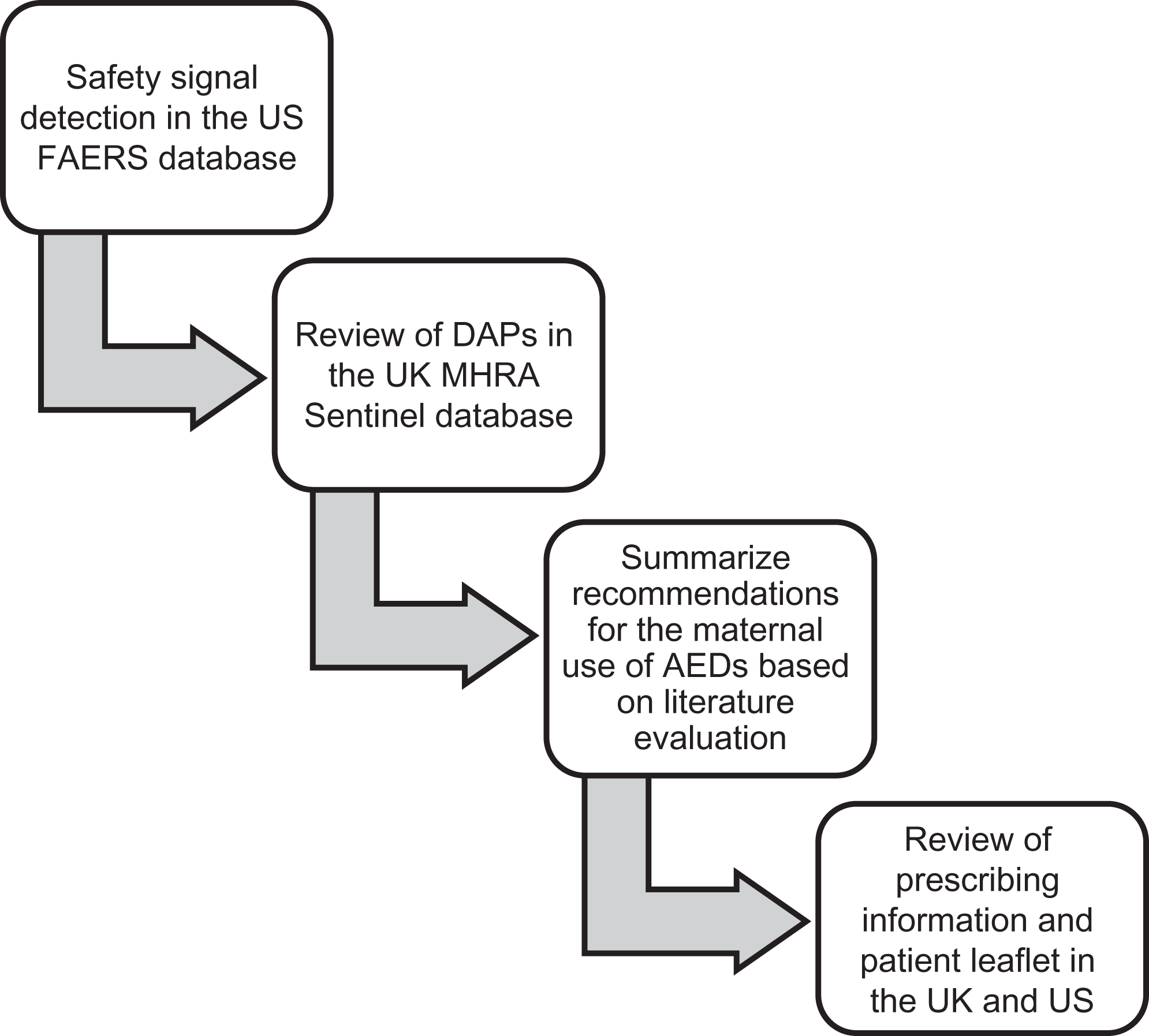
Process for safety signal detection and assessment of the prescribing information for anticonvulsants used in pregnancy and evaluation of the risk of cleft lip and/or palate.
Selection of Terms in the Medical Dictionary for Regulatory Activities (MedDRA)
We extracted the following preferred terms from MedDRA, version 19.0: cleft lip, cleft palate, cleft lip, and palate.
Safety Signal Detection Using the FAERS Database
The FDA Adverse Event Reporting System (FAERS) database includes postmarketing adverse events reported to FDA. FAERS receive reports from 2 principal sources comprising pharmaceutical companies and health care providers and consumers who can submit adverse event reports to the FDA’s MedWatch program. 11
Empirical evidence was produced by conducting a cumulative search in March 2016 in the public release version of the FAERS database 11 using Empirica Signal software (Oracle, version 7.3; Novartis Pharma AG). A disproportionality analysis was computed in a data mining run using the Multi-Gamma Poisson Shrinker. 11 Initially, the information was aggregated into a 2 × 2 table. The ratio of observed to expected counts of individual drug-event combinations was calculated across all of the drugs and events reported in the database. 12 The computations produced values for the empirical Bayes geometric mean (EBGM) and the 90% confidence interval (CI) from 5% to 95%, EB05 and EB95, respectively. Extraction of data was performed using the Anatomical Therapeutic Chemical (ATC) level 3 codes for anticonvulsant drugs combined with selected preferred terms from MedDRA. Only individual case safety reports (ICSRs) where the AEDs were causally suspected (S) were included for the period of the research (from product launch to 1Q2016). The disproportionality threshold of EB05 ≥2 was applied for this extract of ICSRs associated with AEDs. In the literature EB05 ≥2 is considered to be an observation of disproportional reporting 12 and it indicates that the observed drug-event combination occurs in the dataset twice as frequently as expected. These values suggest a statistical association between the drug and event. Further investigations were conducted to determine any causal association, including verifying CL/P reports in the Medicines and Healthcare products Regulatory Agency (MHRA) data set and a review of the literature.
Review of Drug Analysis Prints (DAPs) in MHRA Sentinel Database
Based on the AEDs identified with observations of disproportional reporting in the US-based FAERS database, we conducted a manual review of DAPs to identify the number of CL/P reports in MHRA Sentinel. 13 DAPs contain cumulative counts of all suspected adverse reactions reported to the MHRA via the UK Yellow Card Scheme. The MHRA collects information on suspected adverse drug reactions (ADRs) via this scheme. The Yellow Card system was set up in 1964 and from its inception has received reports of suspected ADRs directly from health care professionals and, more recently, from patients. Health care professionals have been advised to report ADRs to the Yellow Card Scheme even if there is only a suspicion on an association; that is, no facts or evidence is required to prove that a medicine may have caused the reaction. It is a statutory requirement that pharmaceutical companies report suspected ADRs to the MHRA, whereas reporting by health care professionals and members of the public is voluntary. It is widely recognized that not all ADRs are reported. 13
Data were extracted from the publicly available MHRA web resources known as Drug Analysis Prints. 14 A record was kept for each AED of the number of ICSRs for the selected adverse event terms, total number of reports of CL/P, and the total number of ICSRs in the MedDRA System Organ Class of congenital disorders. It is important to note that all ICSRs for each event of interest were reported only when the drug was prescribed as a single ingredient and not as a component of combination therapy. 14
Descriptive Analysis of Prescribing Information
We reviewed the literature in PubMed (from 2000 to 2016) using relevant keywords and phrases such as maternal epilepsy, epilepsy during pregnancy, and management of women with epilepsy. The manufacturer’s recommendations provided concerning the maternal use of AEDs from literature were evaluated using an 8-item checklist to assess the content of the UK SmPC and US PI. 6 –8,15 The results of this analysis are shown in Table 1. A binary scoring system was adopted, based on the presence (= 1) or absence (= 0) of each item in the checklist. The percentage of the total available information was calculated for each approved item of labeling. Figure 3 provides the results of this evaluation.
Management of Epilepsy During Pregnancy.

Abbreviations: AEDs, antiepileptic drugs; MCM, major congenital malformation.
A single reviewer analyzed the content of relevant sections of each reference safety information documents. The evaluation was inclusive of safety information provided in the indication, use in pregnancy, warnings and precautions, drug-drug interactions, and contraindication sections of the texts. In addition to the binary scoring system, specific information concerning the risk of CL/P was assessed in the pregnancy section of each reference text. The results of this assessment are presented in the discussion. The same reviewer, using the same checklist, then assessed the text of each patient information leaflet (PIL, or pack insert) for both the UK and the US. No scoring was applied to the PILs. Information gaps were identified and they are described in the next section.
For the 10 AEDs, reference information was obtained from the USA prescribing information and PILs were obtained from the Drugs@FDA database. 16 The UK was used as a reference source for the European Union because English is the common language with the US, thus obviating any requirement for translation. Approved SmPCs and PILs were extracted from the UK electronic Medicines Compendium (eMC). 17 Information on both of these websites is regularly updated, and the eMC provides the full document history, with changes recorded by date. We reviewed the most recent label in both websites for each product irrespective of the manufacturer. The last search for this information was performed in March 2016. This article does not contain any studies with human or animal subjects performed by any of the authors.
Results
Disproportionality Analysis Scores From FAERS
The results of the disproportionality analyses are presented in Figure 2 alongside the counts of ICSRs. Twelve AEDs were statistically associated with the occurrence of CL/P in this database. Topiramate followed by primidone, phenobarbital, lamotrigine, and carbamazepine had higher EBGM values than valproic acid, which has a well-documented association with causing congenital anomalies. While mephenytoin had the highest EBGM score of 49.7 (90% CI, EB05-EB95; 4.4-137.2), this was for only 4 ICSRs. It is recognized that the disproportionality statistic tends to be unreliable when calculated for low numbers of reports. 18 In contrast, there were 3 medicinal products, namely, topiramate, lamotrigine, and valproic acid, that were associated with >100 ICSRs and a relatively high EBGM (>6).
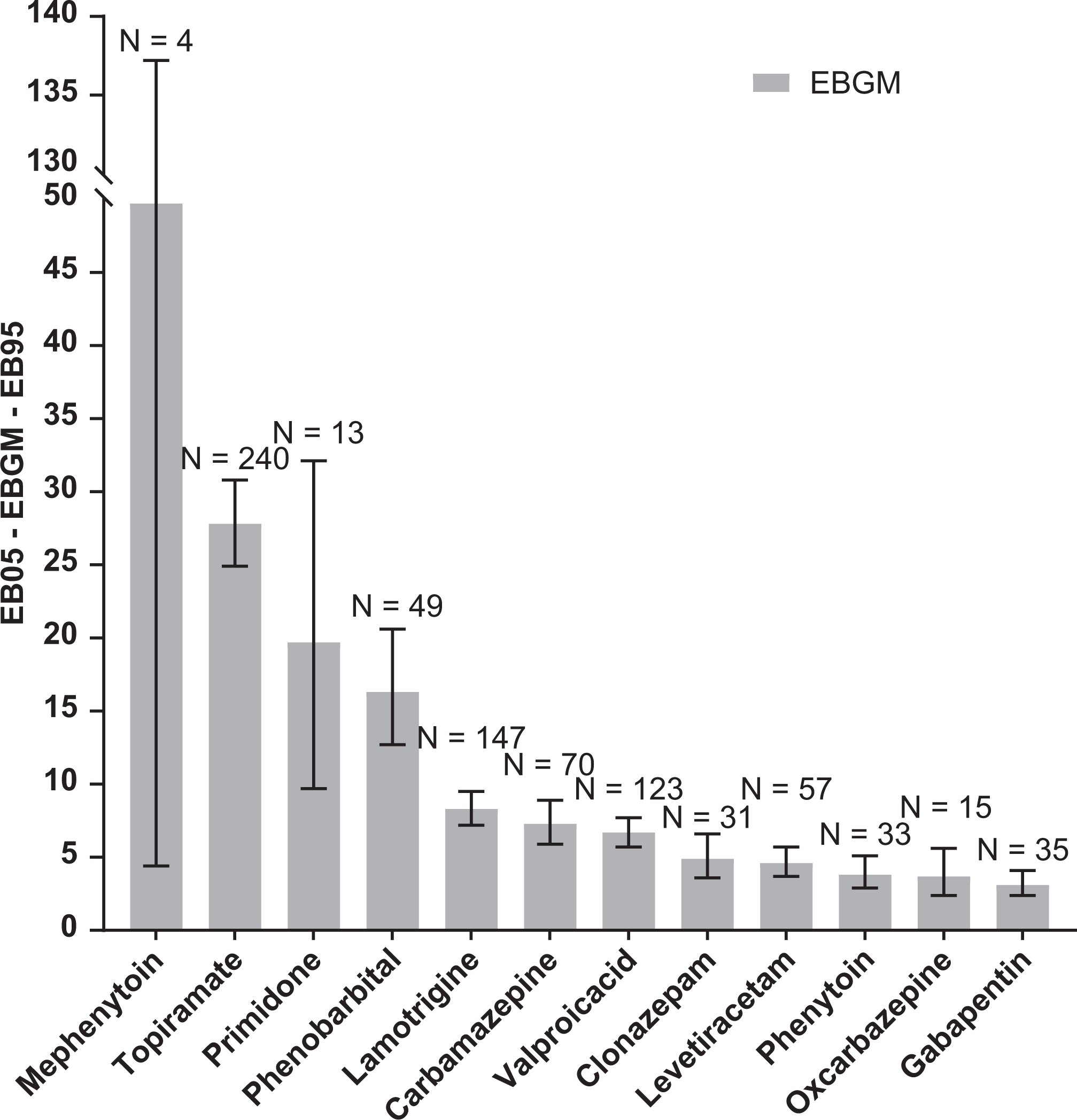
Antiepileptic medicines associated with risk of cleft lip and/or palate in the FAERS database with EB05 ≥2.
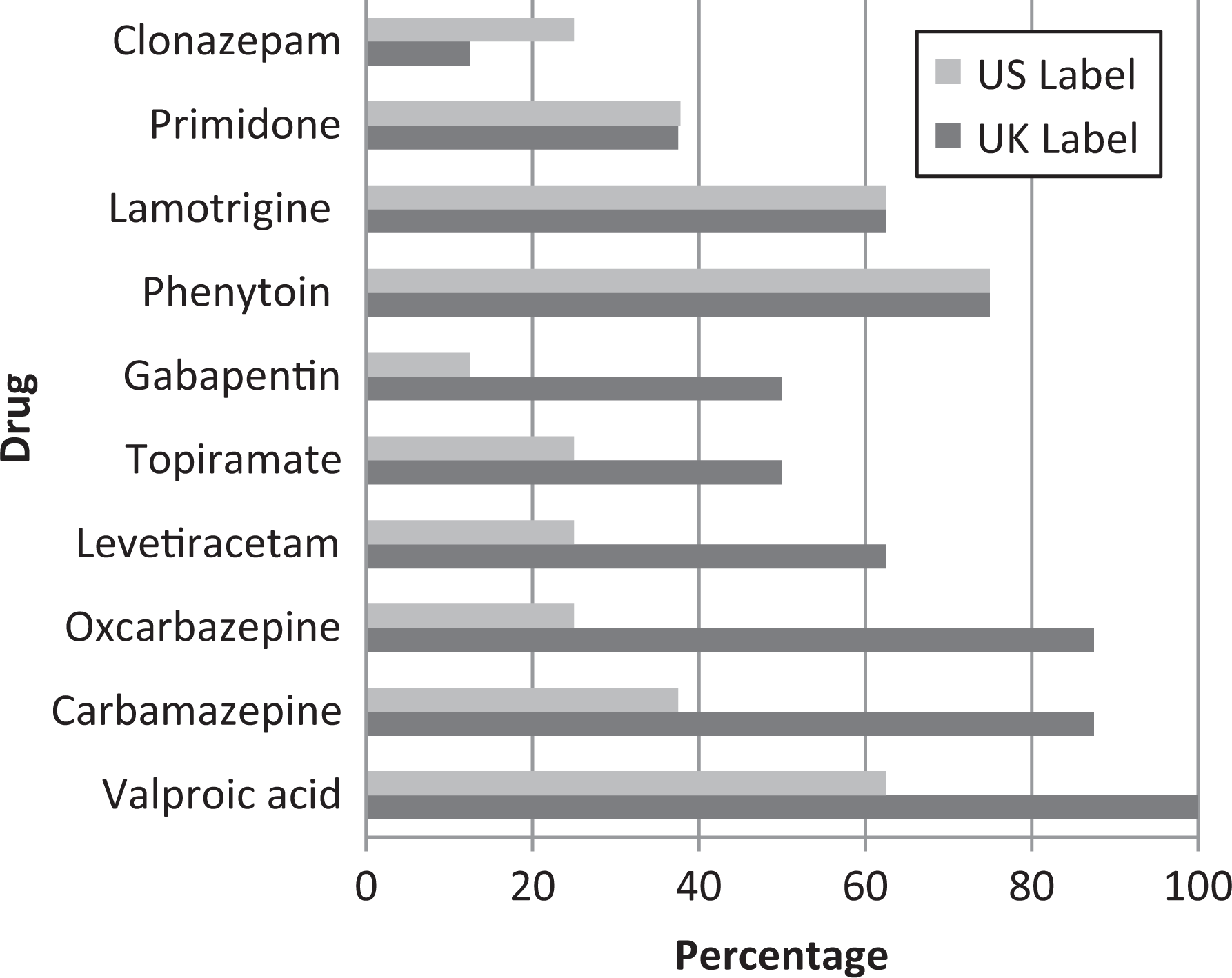
Summary of the completeness of the information presented within the prescribing information between UK and the US.
Drug Analysis Prints for AEDs From MHRA
Ten of the 12 AEDs identified in FAERS were reported in the MHRA DAPs with 156 case reports of drug-associated CL/P. There were no ICSRs, including CL/P for oxcarbazepine and mephenytoin in Sentinel. Mephenytoin was excluded from further research because there were no reports of CL/P recorded in Sentinel and because of the limitation previously described for the disproportionality statistic generated from FAERS.
Valproate, phenytoin, phenobarbital, and primidone had the highest number of ICSRs describing CL/P. We recorded the total number of ICSRs in the Congenital Disorders System Organ Class in MedDRA to show the overall teratogenic profile of each drug; valproic acid followed by carbamazepine and lamotrigine has the highest number of reports of congenital anomalies. Table 2 shows CL/P reports on Sentinel.
The Number of Case Reports for Cleft Lip and/or Palate Associated With Antiepileptic Medicines Reported to the MHRA in the United Kingdom.

Abbreviation: MHRA, Medicines and Healthcare products Regulatory Agency.
Evaluation of Prescribing Information for AEDs
Figure 3 shows a summary of the completeness of the information presented within the prescribing information between UK and the US. Phenobarbital was excluded from further analysis because there was no PI in the Drug@FDA website at the time of this research.
In general, the UK SmPCs that were evaluated included more information on safety in pregnancy than the US prescribing information. Notably, the safety information content for valproate was more inclusive in the UK 19 than in the US. 20 It is unclear why for carbamazepine, which has a well-documented safety profile, the information appears to be incomplete in the US PI. 21,22 The FDA has begun to address the potential gaps in labeling by the introduction of the ANDA guidance, which obliges generic manufacturers to align labeling for new generics with the approved label for the reference listed drug (RLD). 23 As recently as July 2016 the FDA provided further guidance to applicants, in order to extend the recommendations to include scenarios where the RLD has been withdrawn. 24 In the light of the guidance provided by the European Commission 25 on the content of SmPCs, it is also difficult to comprehend the gaps in the information content of the UK SmPC for clonazepam. 26,27
The risk of CL/P is described in the approved labeling for valproate, topiramate, carbamazepine, and phenytoin in both the UK and the USA. 19 –22,28 –31 Broadly, the statements reviewed were consistent with literature. 4,5 However, there were some notable differences in the recommendations provided in the UK and US for certain products. Illustrative examples of these discrepancies are provided below.
Topiramate
The UK SmPC 30 includes a statement that reads, “Contraindicated in pregnancy and in women of childbearing potential if a highly effective method of contraception is not used for use in migraine prophylaxis.” In the US, this guidance was not present in the prescribing information despite migraine being an approved indication. 31
Phenytoin
The US PIL for phenytoin 28 includes a warning concerning the management of epilepsy in pregnancy: “If you take [phenytoin] during pregnancy, your baby is at risk for serious birth defects,” and “If you take [phenytoin] during pregnancy, your baby is also at risk for bleeding problems right after birth.” 28 This information is not present on the UK PIL for phenytoin.
Carbamazepine
Studies have shown that in utero exposure to AEDs, especially polytherapy including valproate, increases the risk of congenital malformation up to 3-fold. 8 The SmPC for carbamazepine in the UK 21 advises that “the risk of MCM [major congenital malformation] to [carbamazepine] as poly-therapy may be higher in poly-therapy combinations that include valproate.” A second recommendation states, “In order to prevent bleeding disorders in the offspring, it has also been recommended that vitamin K1 be given to the mother during the last weeks of pregnancy as well as to the neonate.” Neither of these 2 important recommendations are present in the US PI. 22
Primidone
According to the literature, primidone is teratogenic 5 and maternal exposure to primidone is associated with an increased risk of cleft palate and congenital heart diseases. 32 There is evidence that maternal exposure to primidone may increase the risk of major congenital malformations, and the product can delay the development of the fetus. 5,32 Again, there are essential differences between the UK and US labeling. On the primidone UK label 33 it is stated that “[primidone] is suspected to have caused serious birth defects, congenital abnormalities including cleft palate” and also “treatment with folic acid although controversial, should be considered.” But on the primidone US label, 34 only the class risk of ADEs after exposure is specified following this statement: “The effects of [primidone] in human pregnancy and nursing infants are unknown.” Again with primidone, the UK PIL 35 recommends that women with epilepsy should use an effective contraceptive method, because of increased risks to the fetus and reduced folic acid levels in maternal blood. In contrast a US PIL for primidone 34 did not provide any of the information for patients as specified immediately above.
Information about the impact of AEDs on hormonal contraception, use of effective contraceptive methods, and the importance of planning pregnancy is not always provided to patients, despite the impact of pregnancy on epilepsy and seizure control and the potential teratogenic effects of AEDs on the fetus. 36 According to the literature, approximately 75% women with epilepsy of childbearing age were prescribed a category D or X (according to FDA’s Pregnancy and Lactation Labeling Rule [PLLR]) AED and were not on contraception, despite the risk of having a baby with a congenital anomaly. 36 Additionally, among the 26% of this population prescribed a contraceptive, 53% were using a product with potential drug-drug interaction with AEDs, which could of course reduce the efficacy of the contraceptive. 36
Lamotrigine
According to the literature, lamotrigine is associated with drug-drug interactions with estrogen-containing oral contraceptives. 37 Lamotrigine also has folate antagonist properties that, it has been hypothesized, may induce major malformations in the fetus after in utero exposure. 38 It was determined that the safety information about exposure to lamotrigine during pregnancy differs between the US and the UK. The US-approved label includes the statement “there are no adequate and well-controlled studies in pregnant women.” 39 In contrast, the text within the lamotrigine UK SmPC 40 includes detailed information: “A large amount of data on pregnant women exposed to [lamotrigine] monotherapy during the first trimester of pregnancy (more than 8700) do not suggest a substantial increase in the risk for major congenital malformations, including oral clefts.” In addition, there is a recommendation for pregnant women to supplement their normal intake of folic acid. In the UK PIL for lamotrigine, 41 there is reference to a potential risk of birth defects, including CL/P when used in the first trimester. Information is provided concerning the impact of pregnancy on the effectiveness of lamotrigine, and there is a recommendation concerning the intake of extra folic acid before and during pregnancy. On the US equivalent, 39 these recommendations are not present and the following text is present: “It is not known if [lamotrigine] will harm your unborn baby.”
Findings in the literature for human maternal exposure to lamotrigine monotherapy and the risk of MCM and CL/P vary between different pregnancy registries. 42 In 2012, a systematic review of the major pharmacoepidemiologic studies, including registries, was performed. 42 The range of risk of major malformations in general following in utero exposure to lamotrigine was from 2.0% to 5.6% and the risk of CL/P ranged from 0.1% to 0.4%. 37,38,42 –46 New data from the UK and Ireland epilepsy and pregnancy registry were released in 2014. 43 Analyses of these data revealed that among 2,089 first-trimester exposures to lamotrigine monotherapy, there were 49 instances of MCM, with 2 (0.1%) reports of CL/P. 43
Levetiracetam
Results of the nonclinical studies for levetiracetam are consistent with the safety information presented from the animal studies that are reported in the US and UK labeling, including “increased incidences of minor fetal skeletal abnormalities.” 47,48 However, planning pregnancy is recommended in the UK SmPC, 48 as well as avoidance of polytherapy and avoiding sudden discontinuation of the drug. None of these 3 pieces of information are present in the US PI. 47 A systematic review of the safety of levetiracetam in pregnancy revealed an MCM rate of 2.2%. 49 Among 1213 monotherapy exposures to levetiracetam from different pregnancy registries, 27 outcomes with MCM were reported (95% CI of 1.53-3.22) with a single case of CL/P.
There are a very few human studies of the safety of levetiracetam during pregnancy. Consequently, our view is that the safety warnings about the maternal use of levetiracetam in both the UK and FDA labels are incomplete for both prescribers and patients. 47,48,50
Gabapentin
In the UK SmPC, 51 it is recommended to use an effective method of contraception, to avoid polytherapy, to plan pregnancy, and to avoid the sudden discontinuation of the drug. In contrast, these recommendations do not appear in the US PI. 51,52 A systematic review of the safety of gabapentin in pregnancy revealed a rate of 1.7% MCM (5 ICSRs), with no reports of CL/P among 294 congenital anomalies. 53 The sample size of these studies was insufficient to draw firm conclusions about teratogenic effects and specifically concerning the risk of CL/P. 53 –55 Despite the evident gaps in the data, the UK PIL for gabapentin 56 included a reference to planning pregnancy and recommended the use of an effective contraceptive method as the risk to the fetus was unknown. This information was not present in the US PIL. 52
Oxcarbazepine
A systemic literature review of the safety of oxcarbazepine in pregnancy reported a rate of 2.0% MCM (8 case reports) among 414 exposed fetuses. 57 The same study revealed a 3.3% rate of congenital anomaly from the European registry of antiepileptic drugs and pregnancy. According to this study, the prevalence of congenital anomaly including CL/P was not higher than the background rate. 57 The information is accurately reflected in both the UK and US labels. 58,59
In the UK SmPC for oxcarbazepine, recommendations for management of a maternal epilepsy include drug dose adjustments, monotherapy, use of folic acid prophylaxis during the pregnancy, avoidance of sudden discontinuation of the drug, and the risk of bleeding disorder for mother and neonate during delivery and the use of prophylactic vitamin K1. 58 These 6 pieces of information or specific recommendations are not provided in the US PI. 59
Clonazepam
Clonazepam is a benzodiazepine that is indicated for treatment of epilepsy, panic attacks, and anxiety. 60 There are of course substantial published data related to the teratogenic effects of benzodiazepine in general and increase risk of MCM including CL/P. 61 However, limited data were available in literature about specific risk of CL/P and clonazepam. 60
The US PI 27 for clonazepam includes the statement that “a similar pattern of malformations (cleft palate, open eyelid, fused sternebrae and limb defects) was observed in a low, non-dose-related incidence in exposed litters from all dosage groups.” This document also recommends, “Because use of these drugs is rarely a matter of urgency in the treatment of panic disorder, their use during the first trimester should almost always be avoided.” In addition, general recommendations and concerns about the use of AEDs is present. Panic disorder is not an approved indication for clonazepam in the UK. 26 Compelling data about the risk of CL/P were published in 2005. 62
Valproate
In February 2016, there was a publication informing stakeholders about the high teratogenic potential of valproate, with the implementation of additional risk minimization methods and a requirement for the communication of this information. 63 The MHRA introduced 4 types of resources to communicate the safety risk to women of childbearing potential, including a booklet for health care professionals, a consultation checklist, as well as a medication guide, and a card to be given to patients. This, in our view, constitutes an optimization of the risk minimization measures for the prescriber and patient. We consider it essential to provide this information and advice prior to conception, ideally with follow-up via postpartum education. The introduction of these measures followed the initiation of a referral procedure across the European Union (according to Article 31 of Directive 2001/83/EC). This led to the full evaluation of safety data related to pregnancy exposures, and a regulatory decision to strengthen warnings on the use of valproate-containing medicines in women and girls. 64 The safety review was first initiated by the French national competent authority, ANSM (Agence Nationale de Sécurité du Médicament et des Produits de Santé or French Agency for the Safety of Health Products), following an analysis of malformations linked to the drug. 65 The European Medicines Agency’s (EMA’s) Pharmacovigilance Risk Assessment Committee (PRAC) held its first public hearing to discuss the safety of the use of valproate during pregnancy commencing on September 26, 2017. 66 Patients residing in the European Union have been invited to speak about their experiences with valproate during this PRAC-initiated public safety review. The hearing is part of a broader plan to determine the adequacy of current warnings, precautions, and prescribing restrictions concerning adverse outcomes in babies born to women who take valproate during pregnancy. 65
Discussion
In this research, we set out to identify all AEDs that were statistically associated with the risk of CL/P in the MHRA UK Sentinel and US FAERS postmarketing adverse event reporting databases. Relatively high numbers of CL/P safety case reports were present in both databases for valproic acid, phenytoin, phenobarbital, primidone, carbamazepine, topiramate, and lamotrigine. We also conducted a descriptive study based on a structured qualitative assessment of the product labeling in the UK and US. This was performed to understand the completeness and currency of the information provided. Even where data are available concerning real-world use, such as from spontaneous reports, disease or drug registries, and pharmacoepidemiologic studies, there are still inconsistencies in the information provided via the approved prescribing information. Further to this, it is notable that there are important differences in the information content presented to prescribers in the UK and US.
The safety profile of human medicinal products during gestation can only be evaluated in the postmarketing period because of practical and ethical limitations in the development phase. Effective postmarketing surveillance systems are essential to enable the capture, collation, and evaluation of information on pregnancy exposures and outcomes. There is a need to improve the communication of the safety profiles of medicines used in pregnancy. A potential solution to enhance the existing system would be to encourage prescribers and patients to report exposures to a central authority via transfer of electronic health records, with appropriate data security measures. By centralizing the repository for these data, followed by expert scientific evaluation, detailed and consistent information about the exposures and outcomes of human medicines taken during pregnancy could be provided to stakeholders.
Although it is recognized that there are existing disease registries for epilepsy, and pregnancy registries for AEDs, there is still a need to improve the structure and conduct of postmarketing surveillance in this domain. Ideally, centers for data collection and collation should work in tandem. It would be possible to broaden existing networks to improve and extend the evidence base for the provision of information about pregnancy exposures and outcomes. This would take time, effort, and careful planning to optimize the effort and harmonize data collection.
Conclusion
Improving the communication of safety information to stakeholders should be considered by sharing verified data, by constructing globally consistent, clear and appropriate recommendations in a timely, transparent, unbiased, and evidence-based manner.
Limitations
The primary limitation of spontaneous reporting schemes such as the UK Yellow Card system and the FDA MedWatch scheme is the significant level of underreporting. ADR reporting rates may be influenced by the seriousness of reactions, by the ease of recognition of the ADR, by the extent of use of a particular drug, and by the level of publicity about the medicinal product. Spontaneous reporting systems cannot be used to determine incidence of a particular ADR as denominator data are not available and causality cannot always be established.
During our literature review, we concluded that pregnancy registries usually report the overall risk of congenital anomalies rather than a specific type of malformation such as CL/P; therefore we discussed congenital malformations in general to describe the teratogenic potential of a particular drug. Another limitation of reviewing data from different registries is the heterogeneity of their designs and the variety of patient populations included, which makes it difficult to draw firm scientific conclusions.
The relevant regulatory authorities approved all of the prescribing information available to us; therefore, we did not assess the compliance of the information content. However, we did assess the completeness of the safety information provided in the approved prescribing information and pack inserts against the evidence in the literature.
Because the FDA’s PLLR applies only in the US, we did not consider the assigned PLLR categories in this study; only the content of the text was evaluated.
Footnotes
Acknowledgments
The authors would like to thank Jeremy Parker, Severina Jacinto-Sanders, Hans-Juergen Pfannkuche, and Fatemeh Asadzadeh for scientific discussions and Christiane Michel, Michael Petrin, and Vikas Vaishnavi for signal detection input.
Declaration of Conflicting Interests
The authors declared the following potential conflicts of interest with respect to the research, authorship, and/or publication of this article. B.R. is a PhD candidate in the Department of Clinical Research at the University of Basel and Patient Safety in Novartis Pharma. She receives her PhD salary from Novartis.
D.J.L. is an employee of Novartis and holds shares in Novartis and GlaxoSmithKline.
B.-I.B. and H.-F.Z. have no conflicts of interest.
Funding
No financial support of the research, authorship, and/or publication of this article was declared.
