







Abstract
Objective:
The objective of this study is to assess public attitudes toward pharmaceutical companies’ secondary uses of patient records and public preferences regarding consent approaches.
Method:
3000 responses to an online survey were collected from adults in Japan. The questionnaire included 32 items related to (1) awareness of “clinical trials”; (2) awareness of the processes of drug development, such as cost, time, and the number of candidate substances in a new drug; (3) knowledge of the laws and regulations for use of patient records in Japan; (4) assessment of the public benefit of the secondary use of patient records; (5) preferences for consent for the secondary use of patient records; and (6) basic characteristics of the respondents.
Results:
The public benefit from secondary use of records by academic institutions for scientific research was rated highest. All of the activities by pharmaceutical companies were rated higher than those by governmental institutions and other for-profit companies. Regarding consent approaches, 37.9% preferred an “opt-in” approach for new drug development by pharmaceutical companies, 79.7% of whom would change their preference to an “opt-out” approach under specific conditions, such as ensuring intended uses only.
Conclusion:
Our respondents consider the “public benefit” as dependent on the relative distance from “promoting public health” when assessing the secondary purpose of patient record use. Pharmaceutical companies should include the beneficial purposes when using patient records with “opt-out” approach. Policy makers should pay more attention to the purposes of use when developing personal information protection policies.
Introduction
Background and Significance
Patient records are collected through the health care service in increasing quantities. These records—referred to as big data or real-world data 1 —have substantial value across a range of secondary uses, including research, marketing, public health, and health care quality. They also have commercial value for a variety of companies, 2 including pharmaceutical companies, which have a high expectation of access to patient records for secondary uses.
Generally, people are willing to allow use of their patient records by commercial organizations, especially pharmaceutical companies, because the activities of pharmaceutical companies have the potential to contribute to the public good. 3 However, it remains unclear which areas of their activities can contribute to the public good and how the public evaluates the public benefit of secondary uses for these activities, in comparison to other for-profit companies’ activities. To address this, we attempt to clarify what the public categorizes as “contributing to the public benefit” in this context.
In addition, the issue of consent remains controversial. There is considerable debate regarding whether an opt-out approach—patient records are used unless the person from whom the records originate explicitly objects and users announce the relevant information for patients through websites, pamphlets, posters, or letters to guarantee the opportunity to object—for secondary uses of patient records should be introduced. 4,5 A legal framework sometimes forbids pharmaceutical companies from accessing patient records without obtaining opt-in consent—patient records are used only after a required process of providing the relevant information to a patient, thereby ensuring that the person has adequately understood the material facts and has explicitly decided or refused to share their patient records without having been subjected to coercion, undue influence, or deception. For example, in Japan, the Act on Personal Information Protection does not allow an exemption for secondary uses of patient records for drug development by pharmaceutical companies without obtaining opt-in consent. 6 Even if there is no binding rule, some institutions have changed their consent policies from opt-out to opt-in approaches in response to an increasing need for opt-in research permission at the population level. 7 However, an opt-out approach is ethically acceptable in some types of research, such as those using biobanks or databases, even if the researchers are working on drug development for pharmaceutical companies. 8 There is a need to investigate the conditions under which the public finds opt-out policies vs opt-in approaches for secondary uses of patient records for pharmaceutical companies’ activities acceptable.
Objective
The objective of this study is to clarify public attitudes toward secondary uses of patient records for pharmaceutical companies’ activities. In addition, we investigated public preferences regarding consent approaches for secondary uses of patient records.
Materials and Methods
Study Design
We collected 3,000 responses to an anonymous, quantitative, and self-administered online questionnaire from two anonymous panels of the Mitsubishi Research Institute, Inc. (MRI): one panel consisted of 30,000 adults who use Internet, ranging in age from 20 to 69 years and live in Japan, and the other panel consisted of 15,000 adults who use Internet and range in age from 50 to 89 years and live in Japan. We adjusted the ratio of male to female participants and the percentage of participants in each age range to match national demographics. MRI created web pages for recruiting voluntary participants from the panels, collected responses, and sent us the dataset including each response without any information that could help identify the participants directly. The survey web page remained open to participants of each age group and sex until the desired number of responses (ie, 3000 responses) was collected. The questionnaire was designed to elicit an online reply after each potential respondent had read an explanation of the purpose of the study. The data collection period was August 4-5, 2017. Only full answers were counted for analysis. Descriptive statistics were used to analyze the results.
As previous studies have shown that the users’ purpose and affiliations were the primary driver of public acceptability of access to health data, 3 we created 3 subgroups among the respondents to evaluate their attitudes toward different secondary user purposes. We also adjusted the ratio of male to female participants and the percentage of participants in each subgroup. Group 1 (G1) was asked about secondary use of patient records by information technology (IT) companies and insurance companies for product development (n=1000). Group 2 (G2) was asked about secondary use of patient records by pharmaceutical companies for drug development (n=1000). Group 3 (G3) was asked about secondary use of patient records by academic institutions for the purpose of scientific research (n=1000).
Questions
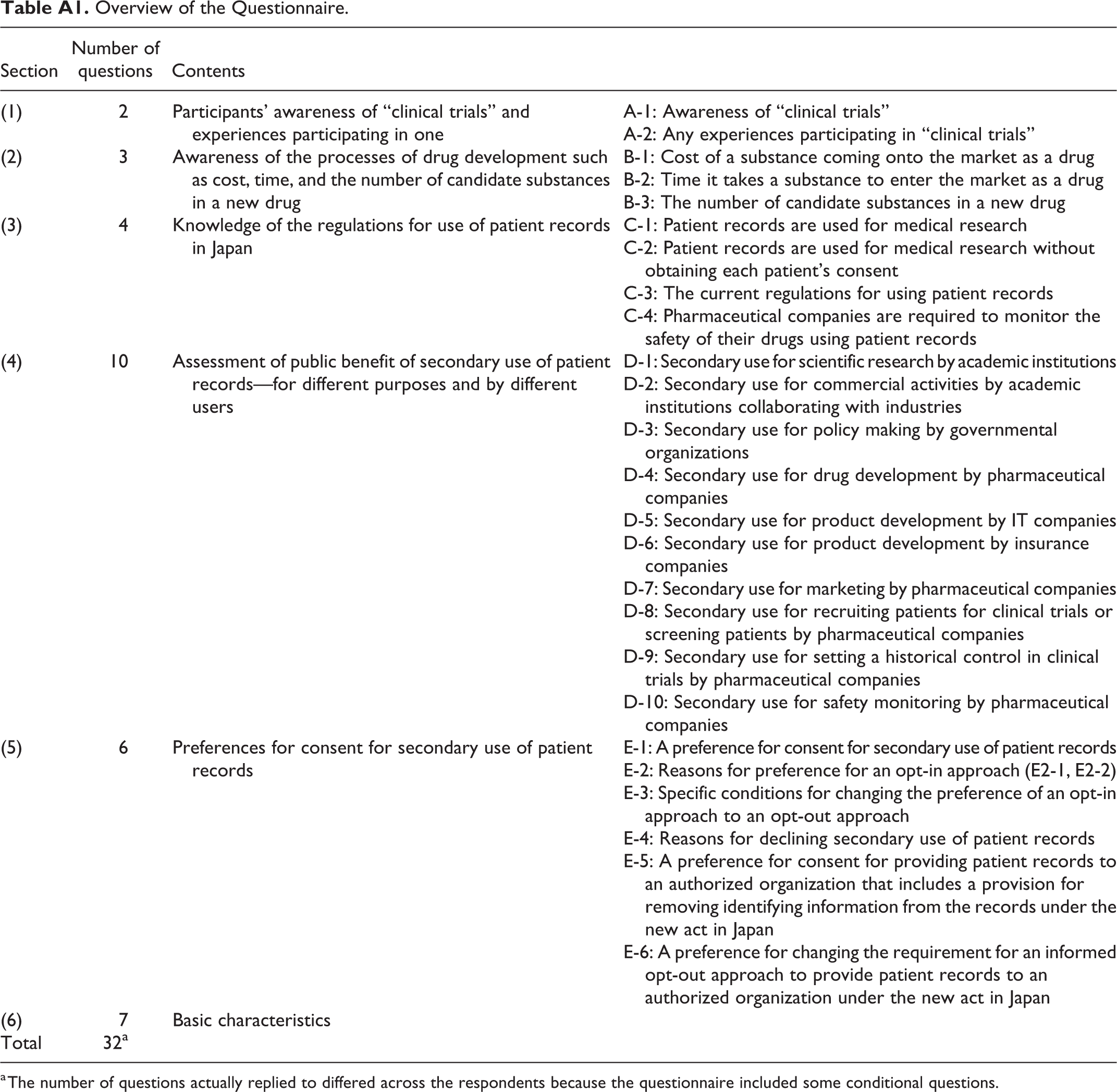
We developed a questionnaire to investigate public attitudes toward secondary use of patient records for different purposes and by different users, including academic institutions, IT companies and insurance companies, and pharmaceutical companies Table A1. We developed the survey items referring to the previous study. 3 The questionnaire consisted of 6 sections: (1) awareness of “clinical trials”; (2) awareness of the processes of drug development, such as cost, time, and the number of candidate substances in a new drug; (3) knowledge of the laws and regulations for use of patient records in Japan; (4) assessment of the public benefit of the secondary use of patient records; (5) preferences for consent for the secondary use of patient records; and (6) basic characteristics of the respondents. The total number of questions to which the respondents could reply was 32: two in section 1, three in section 2, four in section 3, ten in section 4, six in section 5, and seven in section 6. The number of question responses differed because the questionnaire included some conditional questions.
Ethics Approval
Ethical Guidelines for Medical and Health Research Involving Human Subjects in Japan 9 requires an ethics review by an ethics review committee for “Medical and Health Research Involving Human Subjects,” which is defined as follows: an activity involving human subjects (including specimens and information acquired from them) to be carried out for the purpose of obtaining knowledge contributing to maintain and promote people’s good health or to recover from injury and disease and improve quality of life for patients, through understanding the cause of diseases (including the frequency and distribution of various health-related incidents and factors affecting them) and their pathology and through improving measures to prevent injury and disease as well as diagnostic and treatment measures in medical care or through verifying those measures’ validity. An Internet survey of people’s attitudes toward ethical, legal, and social issues does not meet the definition above because of the purpose of the study. Therefore, an ethics review was not included as a part of our study.
Results
Respondents’ Characteristics and Knowledge
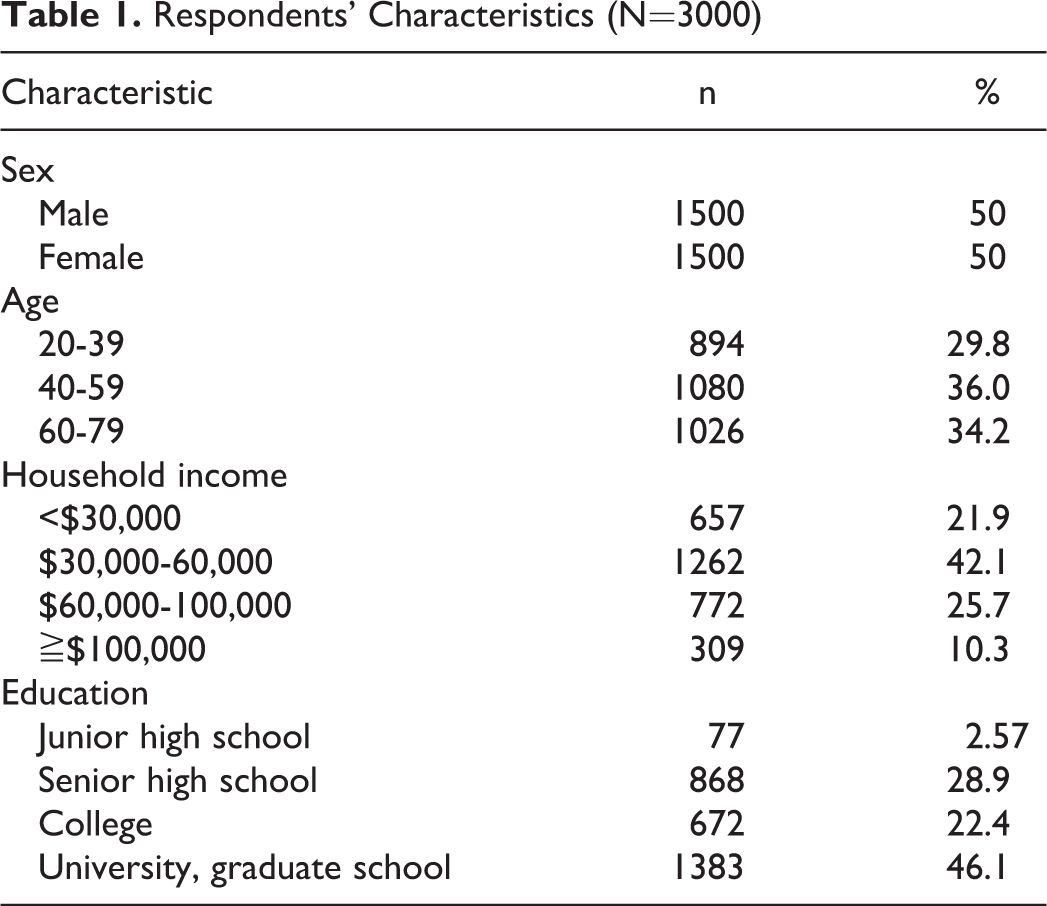
The respondents’ characteristics are shown in Table 1. The average age was 50.2 years. On average, the respondents had a higher educational status compared to the Comprehensive Survey of Living Conditions in Japan, which found that 48.5% of Japanese had only a high-school-level education.
Respondents’ Characteristics (N=3000)
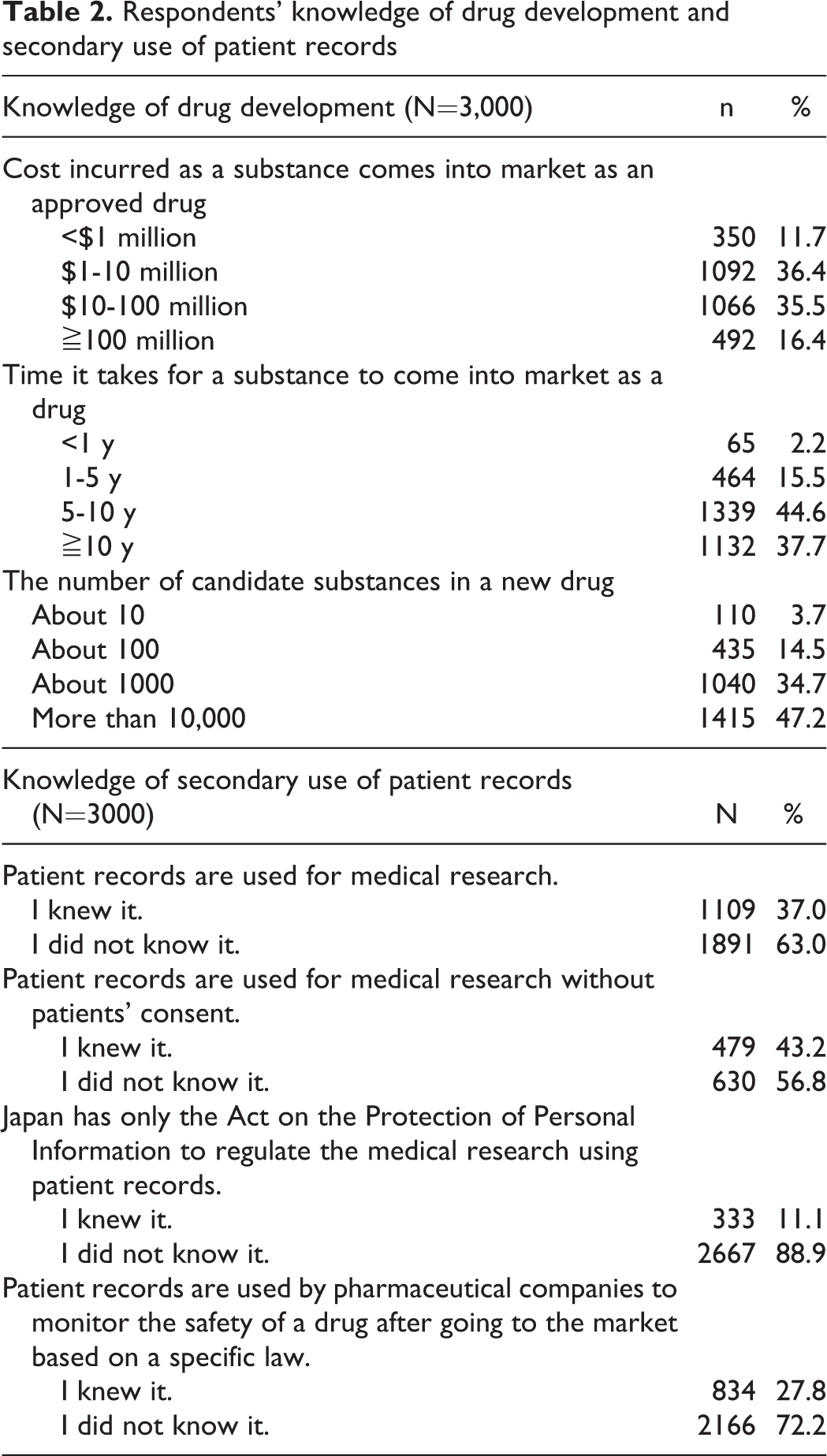
The results regarding the respondents’ knowledge of drug development and secondary use of patient records are shown in Table 2. For drug development, the respondents knew less about costs related to the time it takes for a substance to come into market as a drug. Less than half of the respondents knew the current legal and regulatory situation of secondary use of patient records.
Respondents’ knowledge of drug development and secondary use of patient records
Assessment of the Public Benefit of the Secondary Use of Patient Records
The respondents were asked to assess the public benefit of the secondary use of patient records (Figure 1; N=3000). The public benefit of the secondary use of patient records by academic institutions for scientific research received the highest rating, and all of the activities by pharmaceutical companies were rated higher than activities by governmental institutions. The public benefit of pharmaceutical companies’ activities was rated higher than those of IT companies and insurance companies.
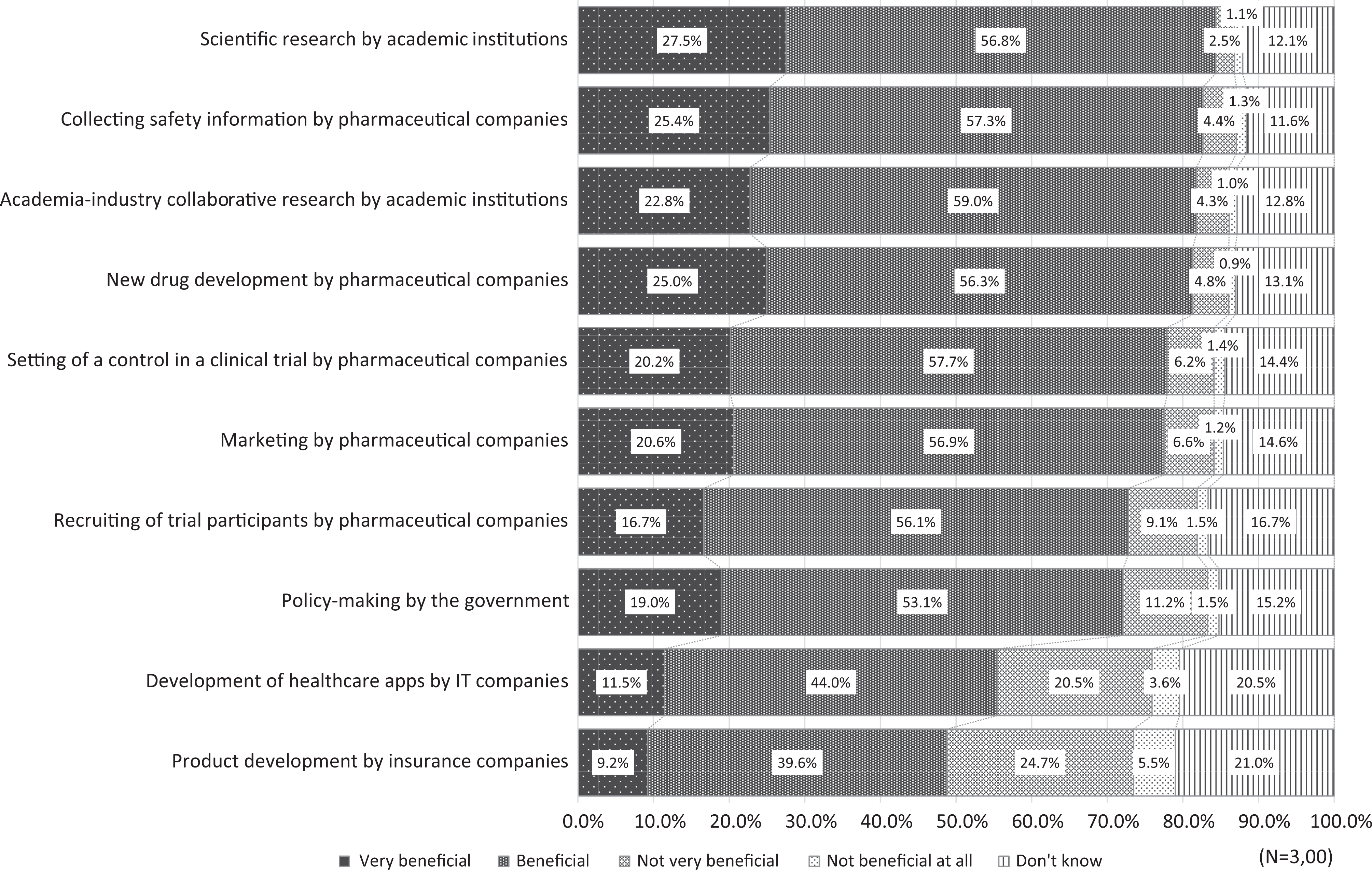
Assessment of public benefit of the secondary use of patient records. The respondents assessed the public benefit of the secondary use of patient records. The public benefit of the secondary use of patient records by academic institutions for scientific research received the highest rating, and The public benefit of pharmaceutical companies’ activities was rated higher than those of information technology companies and insurance companies.
Preferences Regarding Consent for the Secondary Use of Patient Records
The respondents’ preferences regarding consent for secondary use are shown in Figure 2. About 40% of respondents in all subgroups preferred an “opt-out” approach, in which patient records are used unless the person from whom the records originate explicitly objects, and users announce the relevant information for patients through websites, pamphlets, posters, or letters to guarantee the opportunity to object. Another 40% preferred an “opt-in” approach, in which patient records are used only after a required process of providing the relevant information to a patient, thereby ensuring that the person has adequately understood the material facts and has explicitly decided or refused to share their patient records without having been subjected to coercion, undue influence, or deception.
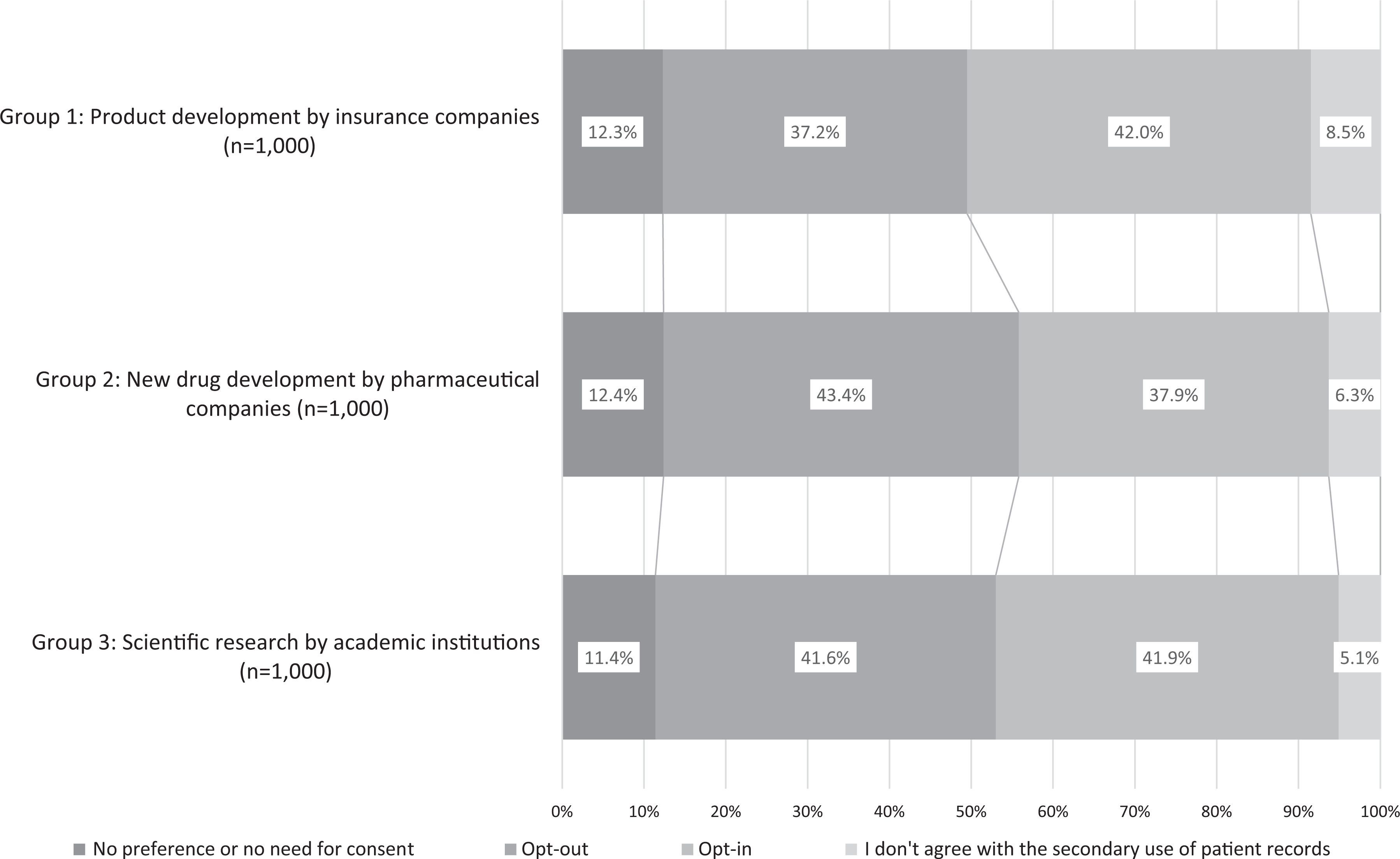
Preferences regarding consent for the secondary use of patient records. The respondents in 3 subgroups showed their preferences regarding consent for secondary use of patient records. They were asked whether the organizations should seek to obtain patient consent in using patient records for the activities in the subgroups.
The black bar indicated the percentage of the respondents who had no preference of consent for the secondary use of patient records or answered that patient records could be used without any patient consent.
The dark-gray bar, “opt-out,” showed the percentage of the respondents preferring that patient records be used unless the person from whom the records originate explicitly objects and users announce the relevant information for patients through websites, pamphlets, posters, or letters to guarantee the opportunity to object. The organizations should stop using his or her record when a patient objects to the secondary use of his or her record.
The light-gray bar, “opt-in,” showed the percentage of the respondents preferring that patient records be used only after a required process of providing the relevant information to a patient, thereby ensuring that the person has adequately understood the material facts and has explicitly decided or refused to share his or her patient records without having been subjected to coercion, undue influence, or deception. The organizations will not be able to use patient records unless patients agree with the secondary use of their records. Patients usually show their will by providing written informed consent.
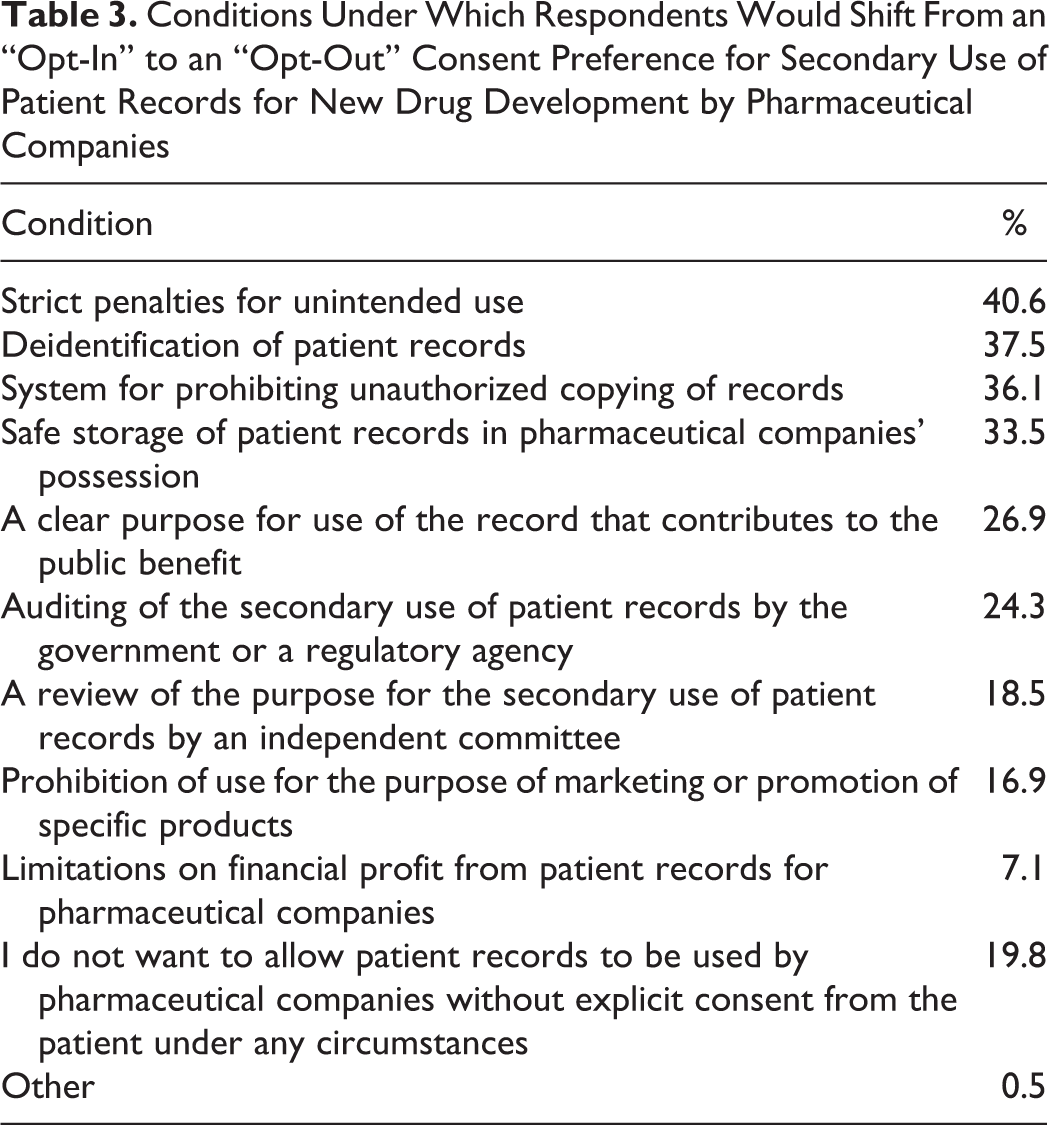
Conditions Under Which Respondents Would Shift From an “Opt-In” to an “Opt-Out” Consent Preference for Secondary Use of Patient Records for Drug Development
The respondents who preferred an “opt-in” approach for secondary use of patient records for drug development (n=379) stated that they would change their preference to an “opt-out” approach under specific conditions, including strict penalties for unintended use, deidentification, a system for prohibiting unauthorized copying of records, and secured storage (Table 3). The most preferred condition was to set strict penalties for unintended uses—uses beyond drug development purposes—of patient records. About 80% responded that they would be likely to change their preference of “opt-in” to “opt-out” if other conditions were met, whereas 19.8% said they would not accept an “opt-out” consent option for secondary use of patient records for drug development under any conditions.
Conditions Under Which Respondents Would Shift From an “Opt-In” to an “Opt-Out” Consent Preference for Secondary Use of Patient Records for New Drug Development by Pharmaceutical Companies
Discussion
Our study showed that respondents strongly supported the secondary use of patient records for scientific research by universities and for pharmaceutical companies’ activities, including safety monitoring and new drug development. This study uncovered two key findings: the public more strongly supports the secondary use of patient records for pharmaceutical companies’ activities compared to those of IT or insurance companies, which received only modest support, and the public would be more accepting of secondary use with an opt-out consent approach under specific conditions, such as strict penalties for unintended uses, irreversible deidentification of patient records, and others.
The Public Strongly Supports the Secondary Use of Patient Records for Pharmaceutical Companies’ Activities
The respondents support the secondary use of patient records for pharmaceutical companies’ activities as well as for academic institutions’ activities. On the other hand, the public benefit of secondary use for the corporate activities of IT and insurance companies is rated lower than for those of pharmaceutical companies. In our survey, we compared 3 activities of for-profit companies: new drug development by pharmaceutical companies, the development of apps for self-health management by IT companies, and product development by insurance companies. All activities are related to public health. However, their respective distance from the goal—promoting public health—is different. Some pharmaceutical company research activities can have the same goal as that of scientific research in an academic institution, namely, promoting public health. Scientific research is conducted to contribute to public health through new and generalizable medical knowledge. Through research activities such as clinical trials, new drug development, and safety monitoring for adverse reactions, a pharmaceutical company can promote public health in ways similar to those of academic institutions. On the other hand, unlike a pharmaceutical company, IT and insurance companies do not directly contribute to public health. It is possible to argue that new drugs can directly improve people’s health conditions, whereas apps and insurance products cannot. At best, they might improve people’s health conditions only in some indirect way.
As shown in previous studies, 8 the purpose of commercial access to patient records affects the level of support from the public. In addition to the types of organizations requesting secondary use of patient records, more detailed purposes—for instance, whether the use is safety monitoring or drug development—are essential for the assessment of public benefit. These results, as shown above, suggest that the public assesses the benefit of the secondary use of patient records based on a somewhat detailed understanding of the purposes of use, not on the types of organizations.
The Public Would Consider Accepting an Opt-Out Approach for the Secondary Use of Patient Records Based on Specific Conditions
When people are asked about their preferences regarding consent for secondary use of patient records, they generally seem to prefer opt-in approaches. Previous studies showed the majority (86.7%) preferred to be asked for permission prior to transmission of their electronic health record to medical researchers. 10 Similar to previous studies, 10,11 our study also showed that people strongly preferred an opt-in approach, regardless of the purposes of use.
Respondents’ preferences for consent, however, may be likely to change if specific conditions are met. In our survey, about 80% of people agreed to alter their preference from “opt-in” to “opt-out” for drug development if specific conditions are given, such as (1) assuring intended uses only, (2) assuring strict personal information protection, (3) developing appropriate procedures to handle patient records, and (4) estimating the commercial benefit from the utilization of those records. First, regarding “assuring intended uses,” respondents feel that there should be strict penalties for unintended uses by pharmaceutical companies, requirements that the user have clear public benefits in mind when the records are used for secondary purposes, and a prohibition of secondary use for sales promotion. Second, according to respondents’ opinions, the conditions regarding “strict personal information protection” should involve regulatory deidentification of patient records, a protection system to prevent unintended uses of those records by pharmaceutical companies, and secure data storage of records in the possession of pharmaceutical companies. Third, for “appropriate procedures to handle patient records,” respondents tended to consider audits of governmental or regulatory authorities necessary, and to have an independent committee review the purposes for the utilization of data. Finally, for “estimating the commercial benefit from the utilization of patient records,” respondents tended to think that even if such benefit was expected, the amount for pharmaceutical companies should be limited. We conclude that the public, as represented by the respondents to our survey, is not inflexibly attached to an opt-in approach for the secondary use of patient records by pharmaceutical companies.
Among these limiting conditions, the people who preferred an opt-in approach were particularly concerned about unintended uses and assurance of personal information protection when records are used by pharmaceutical companies. The Act on the Protection of Personal Information in Japan sets a penalty for unintended uses. In addition, the Act requires security control actions for patient record users. Although legal requirements have already covered the major public concerns for secondary uses, unfortunately, people are not familiar with these strictures. This could stem from a lack of public relations activities designed to inform the public regarding the secondary use of patient records, or the reason may be a complicated legal framework in Japan. Stakeholders, such as government agencies and medical institutions, should publicize the current legal framework and personal information protection policies more widely and in a manner that is understandable by the public.
When policy makers discuss the privacy issues of managing patient records and policies for secondary use, they often end up focusing on consent policies with the belief that these issues are the only element that needs to be considered. Our study showed that members of the public place substantial emphasis on the purposes behind the secondary use of patient records, even though patients more strongly preferred the secondary use of electronic health records with their prior consent. 12 The results of our study suggest that policy makers need to pay more attention to the purposes of secondary use and not merely the users’ affiliations or consent policies, when developing a personal information protection policy. In addition, our survey, a percentage of the respondents accepted only “opt-in” for secondary use of patient records; some even refused secondary use entirely. Policy makers and secondary users should take those preferences into consideration when devising personal information protection policies.
Limitations
This study has two notable limitations. First, there are important differences that may limit the generalizability of the findings to the Japanese public. In particular, the respondents have a higher educational level than the national average, with more than half of them having college or postgraduate education. In addition, they are all Internet users.
Second, the results reflect only the current situation in Japan. Public attitudes may differ depending on other legal frameworks or policies in other countries. Changes to Japan’s overarching policies or publicity about significant abuses of secondary use could alter public acceptance of and tolerance for existing practices of records protection and use.
Conclusion
Our respondents focused on specific secondary uses of patient records by users of that information, rather than secondary users themselves. Respondents may consider “public benefit” as dependent on the relative distance from the ultimate goal—promoting public health—when assessing the secondary purpose of patient record use. Pharmaceutical companies should affirm their purposes when using patient records with an “opt-out” option for purposes that benefit the public, including collecting adverse drug reaction data and the development of new drugs. To promote the secondary use of patient records, stakeholders, including governmental agencies and medical institutions, should inform the public of the current legal framework and personal information protection policies more widely. Policy makers need to pay more attention to the purposes of secondary use, rather than the user’s affiliation or strict consent policy, when developing personal information protection policies.
Supplemental Material
Supplemental Material, 170721CIN_______________(2) - Public Attitudes Toward the Secondary Uses of Patient Records for Pharmaceutical Companies’ Activities in Japan
Supplemental Material, 170721CIN_______________(2) for Public Attitudes Toward the Secondary Uses of Patient Records for Pharmaceutical Companies’ Activities in Japan by Haruka Nakada, Yusuke Inoue, Keiichiro Yamamoto, Kenji Matsui, Tsunakuni Ikka and Shimon Tashiro in Therapeutic Innovation & Regulatory Science
Footnotes
Appendix
Overview of the Questionnaire.
| Section | Number of questions | Contents | |
|---|---|---|---|
| (1) | 2 | Participants’ awareness of “clinical trials” and experiences participating in one | A-1: Awareness of “clinical trials” A-2: Any experiences participating in “clinical trials” |
| (2) | 3 | Awareness of the processes of drug development such as cost, time, and the number of candidate substances in a new drug | B-1: Cost of a substance coming onto the market as a drug B-2: Time it takes a substance to enter the market as a drug B-3: The number of candidate substances in a new drug |
| (3) | 4 | Knowledge of the regulations for use of patient records in Japan | C-1: Patient records are used for medical research C-2: Patient records are used for medical research without obtaining each patient’s consent C-3: The current regulations for using patient records C-4: Pharmaceutical companies are required to monitor the safety of their drugs using patient records |
| (4) | 10 | Assessment of public benefit of secondary use of patient records—for different purposes and by different users | D-1: Secondary use for scientific research by academic institutions D-2: Secondary use for commercial activities by academic institutions collaborating with industries D-3: Secondary use for policy making by governmental organizations D-4: Secondary use for drug development by pharmaceutical companies D-5: Secondary use for product development by IT companies D-6: Secondary use for product development by insurance companies D-7: Secondary use for marketing by pharmaceutical companies D-8: Secondary use for recruiting patients for clinical trials or screening patients by pharmaceutical companies D-9: Secondary use for setting a historical control in clinical trials by pharmaceutical companies D-10: Secondary use for safety monitoring by pharmaceutical companies |
| (5) | 6 | Preferences for consent for secondary use of patient records | E-1: A preference for consent for secondary use of patient records E-2: Reasons for preference for an opt-in approach (E2-1, E2-2) E-3: Specific conditions for changing the preference of an opt-in approach to an opt-out approach E-4: Reasons for declining secondary use of patient records E-5: A preference for consent for providing patient records to an authorized organization that includes a provision for removing identifying information from the records under the new act in Japan E-6: A preference for changing the requirement for an informed opt-out approach to provide patient records to an authorized organization under the new act in Japan |
| (6) | 7 | Basic characteristics | |
| Total | 32a | ||
a The number of questions actually replied to differed across the respondents because the questionnaire included some conditional questions.
Declaration of Conflicting Interests
No potential conflicts were declared.
Funding
This research was supported by a governmental grant of AMED (no. JP18lk0201059s0303).

Supplemental Material
Supplemental material for this article is available online.
References
Supplementary Material
Please find the following supplemental material available below.
For Open Access articles published under a Creative Commons License, all supplemental material carries the same license as the article it is associated with.
For non-Open Access articles published, all supplemental material carries a non-exclusive license, and permission requests for re-use of supplemental material or any part of supplemental material shall be sent directly to the copyright owner as specified in the copyright notice associated with the article.
