






Abstract
There is growing evidence indicating that “green exercise” offers benefits for health and well-being, both in the short and long term. This study explores the psychological benefits of hiking in nature among people living in urban areas. A total of 181 hikers participating in 10 group guided hiking routes in mountain areas were enrolled in this study. With an ex post facto design, a statistically significant increase was observed after hiking in dominance and self-efficacy, both with large effect sizes (Cohen’s d = .8) and in affective valence and social bonding, with very large effect sizes (d = 1.8 and d = 2.3, respectively). Likewise, a large reduction in stress was observed (d = −.8). No significant trends were observed for fatigue, attention, or arousal. Gender, education level, economic income, loneliness, and region of residence appeared to be related to interindividual variability in outcomes. It is concluded that green exercise can improve psychological health, and some personal and environmental associated factors to these benefits should be considered.
Introduction
The relationship between regular physical activity and improved physiological well-being is well established, including benefits such as the prevention of cardiovascular diseases, diabetes, multiple types of cancer, hypertension, obesity, and osteoporosis (Warburton, 2006). In addition to this broad spectrum of direct benefits on health, various studies (Muñoz Pinto et al., 2025; White et al., 2024) suggest that physical activity is also related to well-being, improved mood, self-efficacy, social connection, and a reduction in symptoms of depression and anxiety. After confirming the established relationship between physical activity and both physical and mental health (Penedo & Dahn, 2005), recent years have seen an increased interest in understanding the influence of factors such as the type of physical activity and the environment in which it takes place on the impact on psychological health (Wicks et al., 2022).
One factor that may be linked to the benefits associated with physical activity is the environment in which it is performed—specifically, natural vs. built environments (e.g., streets or buildings). Studies such as Pretty et al. (2005) suggest that “green exercise,” or exercise performed in natural outdoor environments, may offer additional mental health benefits compared to exercise in urban (Menardo et al., 2019) or indoor environments (Coon et al., 2011). Moreover, studies like Pasanen et al. (2014) have consistently found short-term positive effects of green exercise compared to urban environments, exploring whether these benefits are also evident in daily life, resulting from repeated contact with nature.
In a meta-analytic study reporting 24 studies, Brito et al. (2022) concluded that nature synergizes the effects of exercise contributing to an increase in the psychological benefits. Particularly, they found that green exercise, compared with indoor exercise, increased cognitive performance, positive affect, and vigor, and reduced stress, fatigue, and anxiety. The psychological benefits identified in the literature include stress relief, increased positive mood, improved daily living skills, reduced mental fatigue, enhanced concentration, reduced aggression (Brymer et al., 2014), increased energy, better attention, and greater satisfaction, enjoyment, and intention to repeat the activity (Twohig-Bennett & Jones, 2018). Moreover, spending time with social contacts during green exercise promotes positive psychosocial outcomes, and research shows that in community-based green exercise programs, social interaction and group participation enhance adherence and engagement in the activity (Carter et al., 2025).
These findings can be explained by several psychological theories that describe how exposure to natural environments enhances well-being. Central to these theories are the concepts of restorative environments—settings that facilitate recovery from cognitive and emotional fatigue—and restorative benefits, which include improvements in attention, mood, and stress regulation. Attention Restoration Theory (ART) by Kaplan and Kaplan (1989) proposes that natural environments help restore cognitive resources by gently engaging involuntary attention through “soft fascination,” allowing directed attention to rest and improving mental relief from cognitively demanding tasks. Similarly, Stress Recovery Theory (SRT) by Ulrich et al. (1991) suggests that exposure to natural settings promotes physiological and emotional recovery by reducing stress responses; by fostering feelings of safety and positive affect, these settings help replace negative emotions and support adaptive functioning (Wang et al., 2025). For example, the study by Twohig-Bennett and Jones (2018) proposes several hypotheses to explain the relationship between nature, health, and well-being. Firstly, green and natural areas promote health due to the opportunities for physical activity they offer. Secondly, green and public spaces have been associated with social interaction, which can contribute to improved well-being. And thirdly, exposure to sunlight—a source of vitamin D—is believed to counteract Seasonal Affective Disorder (SAD; Rosenthal et al., 1984). These mechanisms illustrate how restorative environments interact with behavioral and social factors to produce the psychological benefits observed in green exercise, including improved mood, reduced stress, enhanced concentration, and greater engagement with physical activity.
This study focuses on the practice of hiking, with the aim of studying the benefits that the natural environment may offer to mental health. Specifically, it explores the associations between hiking and affective, cognitive, and social outcomes. This activity was chosen because it is affordable and convenient for most people, considered accessible in terms of required skills and equipment, as well as individuals’ ability to choose the difficulty of the terrain and their walking pace (Mitten et al., 2016). It is also relevant to distinguish between hikers and guides, since their experiences and psychological outcomes may differ. Guides often focus on leadership, group management and safety, and logistics, which can increase responsibility and stress, potentially reducing the restorative benefits associated with green exercise (Mackenzie & Kerr, 2012). In contrast, regular hikers may engage more freely with the environment and derive greater emotional and cognitive restoration. Differentiating these roles thus allows a more accurate assessment of hiking’s psychological effects.
Interest in research into enhancing the benefits of exercise and physical activity on mental health through practice in natural environments has grown in parallel with a rethinking of the healthcare model, which is now more focused on promotion and prevention. At a time of demedicalization and its replacement by other approaches, social prescribing, and within it, the so-called “green prescription,” is gaining relevance. Green prescription can be defined as a nature-based health intervention, usually addressed to people with a defined need to supplement conventional medical treatments (Robinson & Breed, 2019).
The study mainly focuses on people living in urban areas near Barcelona primarily because of the accessibility of hiking opportunities for this population. Additionally, by living in large cities, urban residents are exposed to environmental stressors such as traffic-related air pollution, noise, and urban heat, as well as higher levels of psychological stress compared to less urbanized settings. As most urban residents are not regularly exposed to natural spaces, green environments can help mitigate these stressors by promoting psychological restoration, stress reduction, social contact, and a reduced exposure to temperature and pollutants—proposed as possible mechanisms for health benefits of green spaces (Nieuwenhuijsen et al., 2014). Consequently, city dwellers may experience greater benefits from green exercise compared to residents in less urbanized settings, since the contrast between stressful urban environments and restorative natural settings may amplify positive effects on mental health and well-being (Chen et al., 2025).
The present study focuses on the general urban population, aiming to explore the short-term affective (activation, affective valence, dominance), cognitive (attention, fatigue, self-efficacy, stress), and social (social bonding) benefits of participating in a single hiking session, assessed through an ecological momentary assessment.
Recent evidence suggests that the psychological benefits derived from exposure to nature are not uniform but depend on individual and contextual conditions. For example, Bratman et al. (2021) described that individual-level factors—such as personality traits, prior experiences with nature, familiarity with environments, baseline anxiety, and affective responsiveness—can contribute to differences in the impact of nature exposure on well-being by shaping how individuals perceive, emotionally process, and respond to natural settings. Demographic factors, including age, gender, race/ethnicity, and socioeconomic status, may also play a role by shaping life experiences, expectations, and patterns of interaction with natural environments. Furthermore, sociocultural variables, such as variations in access to and safety within natural environments, further contribute to variation in the extent and magnitude of psychological benefits derived from the frequency and quality of exposure to nature.
These findings emphasize the role of individual characteristics and environmental conditions in driving variability in psychological effects, and support the need to consider variables that may shape their magnitude. In this line, the present study examines in an exploratory way both personal (such as gender, education, income, social identity) and environmental factors (temperature, route duration and difficulty, biome type, area of residence) related to differences in affective, cognitive, and social outcomes of hiking. These factors were selected because prior studies indicate they can affect the ways people experience and benefit from contact with nature. Personal characteristics, such as gender and social identity, can shape emotional responses and social interactions during green exercise (Breunig et al., 2008; Glassman et al., 2024), while socioeconomic status may affect access to natural environments and baseline stress levels (Zhang & Luo, 2024). Minority populations often face reduced access to natural spaces, but when they do, the contrast with urban stressors may enhance the restorative benefits (Klompmaker et al., 2023). Environmental conditions can impact mood, comfort, stress recovery, and the overall restorative potential of the experience (Laezza et al., 2025). From the perspective of the “green prescription” (Robinson & Breed, 2019) discussed earlier, identifying both individual and environmental factors associated with the psychological response to exercise in the natural environment is highly relevant, since it allows a strategic design of routes aimed at improving emotional well-being, taking into account the contextual and personal aspects that might affect their effectivity in well-being and mental health promotion.
Method
Participants
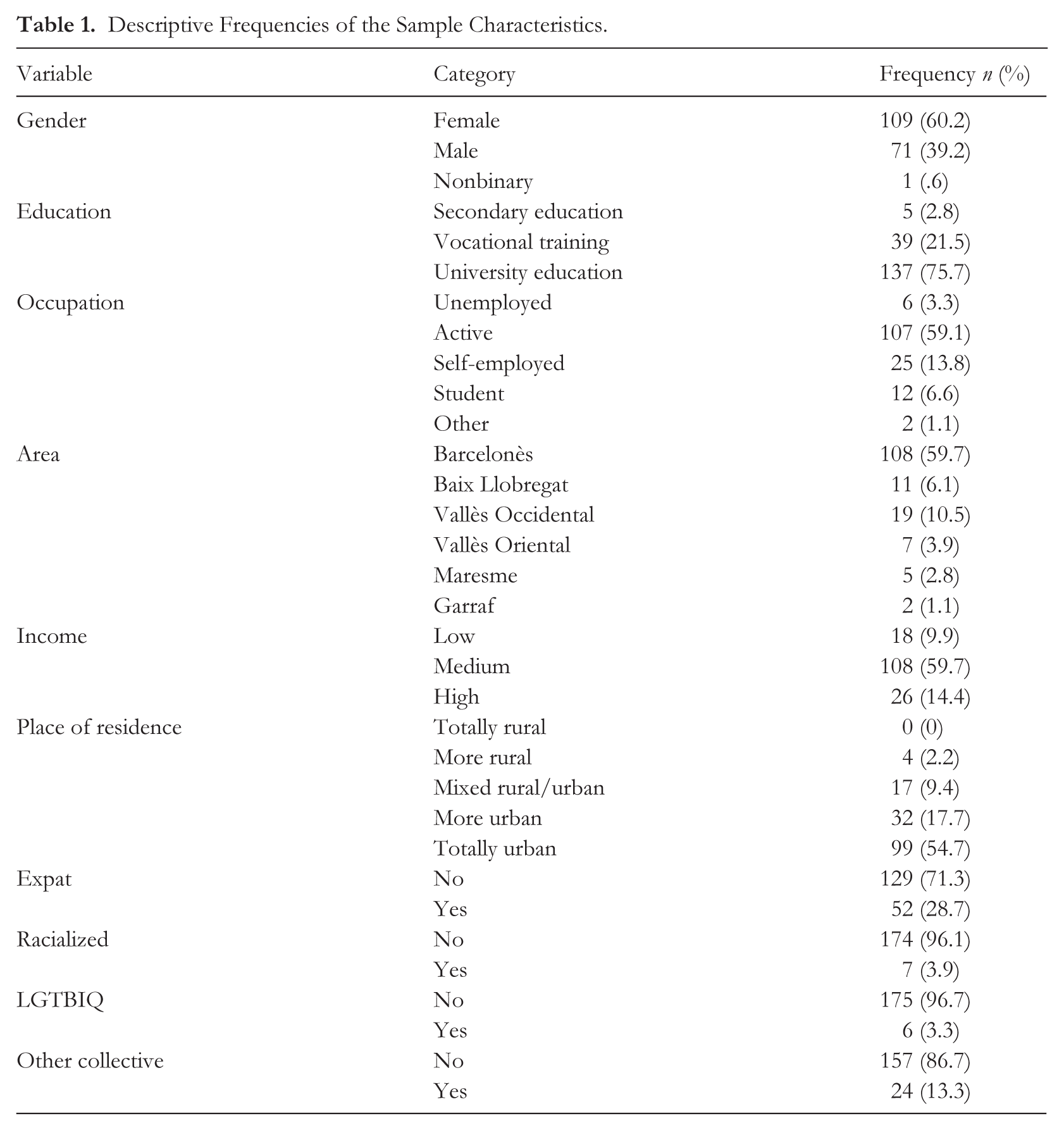
The study sample was composed of a total of 181 participants (see Table 1), all of them Barcelona’s metropolitan dwellers recruited from a total of roughly 900 participants in 10 commercial guided hiking routes (see Supplemental Material S2), of which 164 were hikers and 17 were mountain guides. Of this sample, 109 were women (60% of the sample). Participants’ ages range from 19 to 50 years old, with an average age of 35.44 (SD = 7.2). All participants voluntarily agreed to participate in the research. Confidentiality and anonymity were guaranteed in accordance with the European Union General Data Protection Regulation (GDPR 95/46/EC).
Descriptive Frequencies of the Sample Characteristics.
Instruments
Data were collected through a form consisting of 30 items. It measured participants’ affective, cognitive, and social bonding outcomes of hiking in the short term, as well as personal and situational associated factors of the activity. Two versions of the form were developed: one in Spanish and one in English (Supplemental Material S1). The form included sociodemographic variables (gender, age, education level occupation, area of residence, income level, “greenness” of the housing context, and the belonging to specific minorities—racialized, LGTBIQ, expatriate status) as well as the participant role in the hiking (hiker or guide).
The affective, cognitive, and social outcomes were measured with single-item scales that reflected the change experienced during the hiking. This evaluation approach reduced survey completion time and minimized participant burden, simplifying data collection and enhancing participation in the study. Stress was the only outcome also evaluated as a predictor variable, as described below.
Affective outcomes were registered through valence, activation, and dominance, which were measured using the Self-Assessment Manikin (SAM) test (Bradley & Lang, 1994). All three dimensions were measured on a five-point Likert scale ranging from −2 to +2. For valence, −2 = “Worsened a lot”; −1 = “Some Worsening”; 0 = “No change”; +1 = “Some improvement”; and +2 = “Improved a lot.” For activation and dominance, (−2 = “Decreased a lot”; −1 = “Some Decrease”; 0 = “No change”; +1 = “Some Increase”; and +2 = “Increased a lot”).
Cognitive outcomes were registered through self-efficacy, stress, perceived fatigue, and attention. All except attention were measured on a five-point Likert scale ranging from −2 to +2, (−2 = “Decreased a lot”; −1 = “Some Decrease”; 0 = “No change”; +1 = “Some Increase”; and +2 = “Increased a lot”). For attention −2 = “Worsened a lot”; −1 = “Some Worsening”; 0 = “No change”; +1 = “Some improvement”; and +2 = “Improved a lot.”
Social outcome was registered through social bonding, which was measured on a five-point Likert scale ranging from −2 to +2 (−2 = “Worsened a lot”; −1 = “Some Worsening”; 0 = “No change”; +1 = “Some improvement”; and +2 = “Improved a lot”).
The questionnaire also included measures of three psychological factors—loneliness, perceived stress, and distress symptoms—assessed with respect to participants’ experiences over the previous two weeks. These factors were included as potential psychological factors associated with mental health outcomes of hiking.
Loneliness was assessed with the Loneliness Short Scale (Hughes et al., 2004). This scale measures three dimensions of loneliness—relational connectedness, social connectedness, and self-perceived isolation—with a total of three items. The scale uses three response categories: Hardly ever / Some of the time / Often. The scores range from 3 to 9, scoring 3–5 as “not lonely” and 6–9 as “lonely.” The original USA version showed an internal consistency of Cronbach’s α = .72 (Hughes et al., 2004), with α = .77 in the current sample.
Perceived stress was measured using the Perceived Stress Scale short four-item version (PSS-4; Cohen et al., 1983). This is an ultra-brief self-report measure to assess the degree to which situations in one’s life are appraised as stressful. It consists of four items assessing the frequency of stress-related thoughts and feelings experienced over the last month. The scale uses Likert-type answers from 0 to 4 (0 = “Never,” 1 = = “Almost Never,” 2 = = “Sometimes,” 3 = = “Fairly Often,” 4 = = “Very Often”). The scores range from 0 to 16, where higher scores are correlated to more stress. The original Spanish validation showed an internal consistency of Cronbach’s α = .73 (Sanabria-Mazo et al., 2024), with α = .82 in the current study.
Psychological distress was measured with the Patient Health Questionnaire (PHQ-4; Löwe et al., 2010; Sanabria-Mazo et al., 2023). This is an ultra-brief self-report screening instrument that measures depressive and anxiety symptoms. It combines the two items of PHQ-2 (Patient Health Questionnaire-2) which correspond to the symptoms of the Diagnostic and Statistical Manual of Mental Disorders-IV (DSM-IV) diagnostic criteria for major depressive disorder, and the two items of GAD-2 (Generalized Anxiety Disorder Scale-2) to the symptoms of generalized anxiety disorder. This scale consists of four items with a four-point Likert-type format (0 = = “Not at all,” 1 = = “Several days,” 2 = = “More than half the days,” 3 = = “Nearly every day”). The scores range from 0 to 12. The Spanish validation showed an internal consistency of Cronbach’s α = .86 (Sanabria-Mazo et al., 2023), with α = .77 in this study.
Design and Procedure
This study used an ex post facto design, since it was based on recruitment for the study of participants in scheduled commercial hiking routes. The outcome variables under study were measured as changes perceived at the end of each hike compared to the beginning using an ecological momentary assessment (EMA) approach, which involves collection of real-time data on subjects’ behavior and experiences in their natural environments (Shiffman et al., 2007).
The guide was asked to allow the researcher to administer the questionnaires in person during the hikes using a QR code system, to ensure both recruitment and data collection. The first author of the study participated in all 10 hikes, distributing the QR codes (see Supplemental Material S1) both physically and digitally to the participants at the end of each route, at the same time, for recruitment purposes. All participants were told to complete the questionnaire within 30 minutes after the QR codes were delivered. Participants were asked whether they were hikers or serving as guides. Although this distinction was an original aim of the study, the very small number of guides limited their representativeness. Therefore, no inferential analyses were conducted for this comparison, and the variable is reported here for descriptive purposes only.
The questionnaire, which took three minutes on average to complete, was available in two language versions (Spanish and English) to minimize potential language-related barriers. Among the total sample (N = 181), 172 participants completed the Spanish version and nine completed the English version. All respondents who used the English version were expats, whereas the Spanish version was completed by both expats and non-expatriate participants. In total, 52 participants were identified as expatriates and were given access to either language version accordingly.
The 10 routes chosen for the study (see Supplemental Material S2) were selected based on the diversity of both the intrinsic characteristics of the hiking routes (e.g., distance, difficulty, slope) and the biomes in which they took place. This diversity was included to ensure that the observed psychological benefits of hiking were not specific to a single route or environment but generalizable across different hiking experiences. Although the study was not designed to formally compare the benefits of individual routes, the inclusion of diverse route characteristics allows for consideration of how these features may shape the psychological outcomes. Eight of the routes included between 13 and 31 participants, ensuring representation across the diverse routes; however, two routes included four participants each due to limited interest in participation.
For logistical purposes, participants travelled by bus from Barcelona city in the morning to reach the hiking routes, which took place across various regions of Catalonia.
Data Analysis
Data were analyzed using IBM-SPSS Statistics v.29.0 for Windows. An Exploratory Factor Analysis was conducted on the Loneliness Scale, PHQ-4, and PSS-4 questionnaires to evaluate their structural validity, along with a calculation of their internal consistency using Cronbach’s α (see Supplemental Material S3). T-tests for mean comparison were carried out to assess the changes during hike routes of the outcome of psychological variables and the effect sizes using Cohen’s d; the effect size was considered very small when d = .01, small when d = .20, medium when d = .50, large when d = .80, very large when d = 1.20, and huge when d = 2.0 (Sawilowsky, 2009). Finally, a correlation analysis was conducted between the situational/personal factors associated with the psychological outcomes. The evaluation of outcomes carried out at the end of the excursion is not expressed in absolute terms regarding the present moment but rather in relative terms of the change experienced along the route. Since, on the response scale, the “No change” option is equivalent to 0, the t-tests evaluated the significance and magnitude of the deviation of the mean sample response from the value 0.
Results
Affective, Cognitive, and Social Effects of guided hiking
Participants showed generally positive or increased changes in psychological outcomes (see Table 2). The mean changes scores for the affective dimensions were as follows: valence (M = +1.39; SD = .64; CI 95% [+1.29; +1.48]), activation (M = +.18; SD = 1.24; CI 95% [.00; +.36]) and dominance (M = +.67; SD = .89; CI 95% [+.54; +.81]). For the cognitive ones they were: self-efficacy (M = +.73; SD = .86; CI 95% [+.60; +.86]), stress (M = −.94; SD = 1.12; CI 95% [−.77; −1.10]), fatigue (M = −.05; SD = 1.19; CI 95% [−.22; +.12]) and attention (M = +.42; SD = .89; CI 95% [+.29; +.55). Bonding, the social dimension, was (M = +1.33; SD = .71; CI 95% [+1.22; +1.43]).
Descriptive Statistics, One-Sample T-Tests and Effect Sizes for Outcome Psychological Measures.
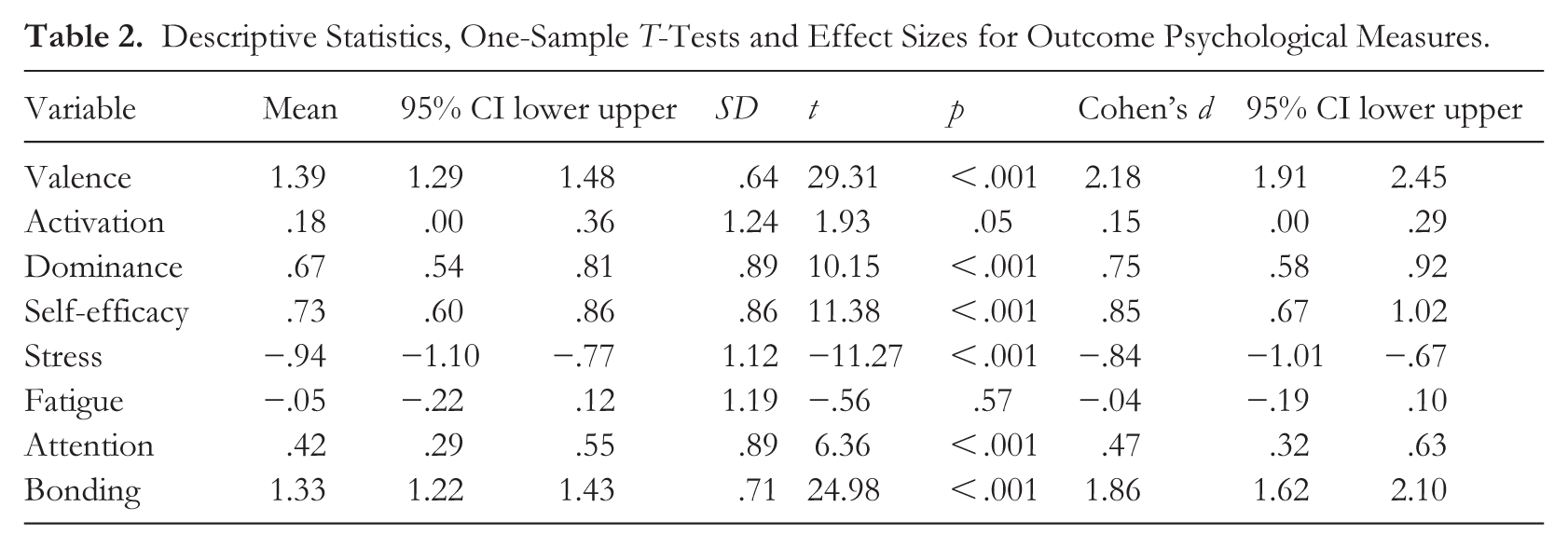
One-sample t-tests (test value = 0) indicated that all variables, except for fatigue, differed significantly from zero: valence (t = 29.31; p < .001), activation (t = 1.93; p = .05), dominance (t = 10.15; p < .001), self-efficacy (t = 11.38; p < .001), stress (t = −11.27; p < .001); attention (t = 6.36), and bonding (t = 24.98; p < .001). Since the outcome variables are expressed in terms of perceived pre-post change, this means that in the sample as a whole, valence was positioned at an intermediate point between “increase” and “much increase,” activation at “increase,” dominance, self-efficacy, attention, and bonding between “no change” and “increase,” fatigue at “no change,” and stress very close to “reduction.”
Cohen’s d was calculated. The results showed huge effect sizes for valence (d = 2.18) and bonding (d = 1.86), and large effect sizes for self-efficacy (d = .85), stress (d = −.84), and dominance (d = .75). Attention showed a moderate effect size (d = .47), whereas activation (d = .15) and fatigue (d = −.04) had small or minor effects.
Relationship Between Personal and Situational Variables, and Psychological Outcomes
The correlation analysis (see Table 3) revealed significant associations between certain sociodemographic dimensions and outcome variables. Gender was negatively correlated with valence (r = −.18, p < .05) and self-efficacy (r = −.20, p < .01), and positively associated with stress (r = .23, p < .01). The education variable was negatively related to activation (r = −.16, p < .05) and bonding (r = −.16, p < .05). Expatriate status showed negative associations with attention (r = −.20, p < .01) and bonding (r = −.15, p < .05). Affiliation with a racialized group was negatively correlated with self-efficacy (r = −.20, p < .01), while identifying as LGBTQ+ was negatively associated with valence (r = −.16, p < .05). Belonging to other minority identities was negatively correlated with fatigue (r = −.15, p < .05). Additionally, significant negative correlations were observed between loneliness scores and valence (r = −.19, p < .05) and dominance (r = −.18, p < .05).
Pearson Correlations Between Personal Factors and Psychological Outcomes.
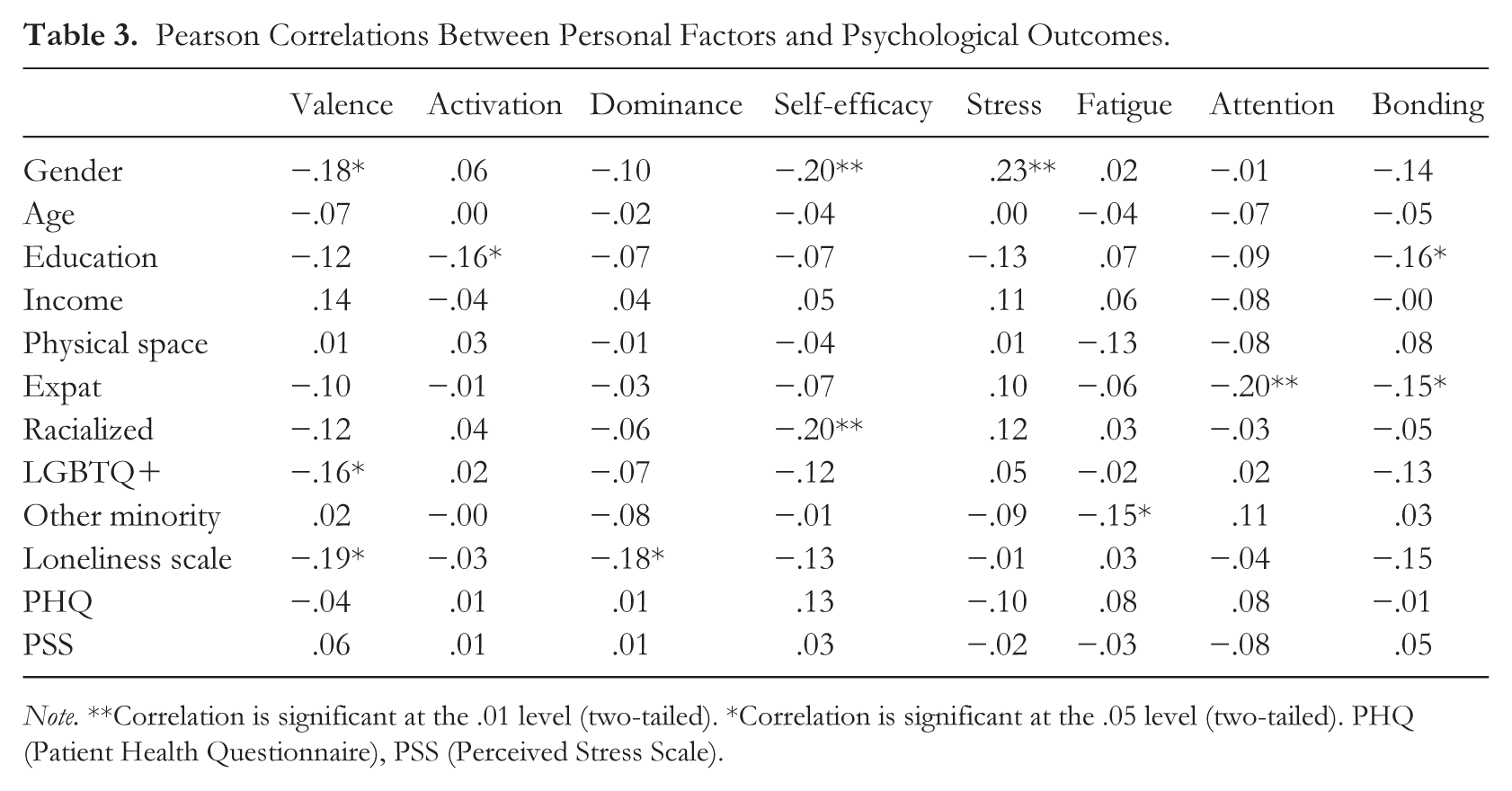
Note. **Correlation is significant at the .01 level (two-tailed). *Correlation is significant at the .05 level (two-tailed). PHQ (Patient Health Questionnaire), PSS (Perceived Stress Scale).
Significant relationships were identified between certain environmental factors and the outcome variables (see Table 4). Route duration was negatively correlated with attention (r = −.16, p < .05), while minimum temperature showed a negative relationship with valence (r = −.15, p < .05).
Pearson Correlations Between Environmental and Psychological Outcomes and Associated Factors.
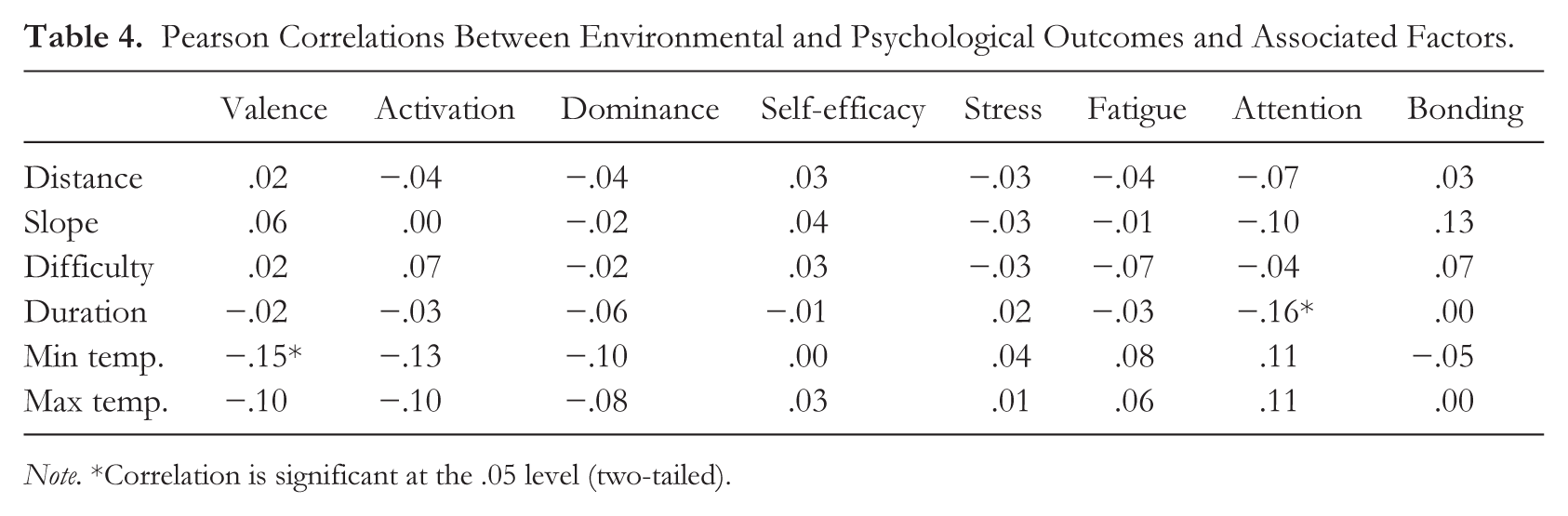
Note. *Correlation is significant at the .05 level (two-tailed).
Effect of Green Exercise According to Place of Residence
A series of one-way ANOVAs were conducted to examine differences in self-efficacy, fatigue, and dominance psychological outcomes, across six of Barcelona’s metropolitan areas (“comarques,” according to the Catalonia administrative division): Barcelonès, Baix Llobregat, Maresme, Vallès Occidental, Vallès Oriental, and Garraf. Statistically significant differences were observed across areas only for these three variables (see Supplemental Material S4). Self-efficacy differed significantly between groups (F(5, 146) = 3.46, p = .006, η p 2 = .11), indicating a medium effect size. Fatigue also showed a significant main effect, (F(5, 146) = 4.32, p = .001, η p 2 = .13), reflecting a medium to large effect size. Dominance differed significantly across areas as well, (F(5, 146) = 2.88, p = .02, η p 2 = .09), indicating a medium effect size. Bonferroni-adjusted post hoc comparisons indicated that participants in Vallès Occidental reported significantly higher self-efficacy (p = .03, η p 2 = .11), fatigue (p = .001, η p 2 = .13), and dominance (p = .02, η p 2 = .09) compared to those in Barcelonès.
Discussion
This study explored the benefits of green exercise in a sample of hikers from urban areas of the Barcelona metropolitan area, Spain, in the short term, with a focus on affective, cognitive, and social outcomes. The variables analyzed included affective valence, activation level, dominance, self-efficacy, stress, fatigue, attention, and social bonding. Additionally, personal and environmental factors associated with the activity outcomes were analyzed.
Regarding the short-term effects of hiking, immediate benefits were observed following hiking experiences. Affective valence, activation, dominance, self-efficacy, attention, and bonding were all increased, while a reduction of perceived stress was observed, aligning with previous literature on the psychological benefits of green exercise (Brymer et al., 2014; Twohig-Bennett & Jones, 2018). The effect sizes confirmed huge effects for valence and bonding, large for self-efficacy and stress, and a moderate effect for dominance (d = .75), indicating strong positive impacts of the hiking activity on psychological outcomes. Although there was an increase in attention, the effect size was small, and very small for activation. Contrary to expectations, there were no observed changes during hiking in fatigue, suggesting that while participants experienced improved affect and reduced stress, these changes were not necessarily mediated by physical exhaustion. The minimal impact on fatigue is especially relevant, reinforcing that moderately difficult and/or lasting guided hiking does not lead to exhaustion which may improve its acceptability and accessibility.
The correlation analyses suggest that some sociodemographic variables seem to be related to observed changes in psychological outcomes. Significant findings include a relationship between gender with several key variables: males reported higher stress and lower valence and self-efficacy after hiking compared to females and nonbinary participants. Moreover, some trends were observed among minority participants. LGTBQ+ individuals reported lower valence experiencing a worse change in mood, whereas racialized participants reported a reduced improvement in self-efficacy to engage in hiking. However, these groups were very small (nonbinary = 1; LGTBIQ+ = 6; racialized = 7), so no firm conclusions can be drawn from these participants regarding the effects of hiking for these social identity groups. Additionally, expatriate status showed negative associations with improvements in attention and bonding. This result suggests that expat individuals may perceive a lower social familiarity or shared cultural context within the local group, which may affect their ability to engage fully in the activity, impacting attention and bonding. Also, since group interaction occurred primarily in Catalan and Spanish, language barriers might have made participation cognitively demanding or socially isolating, thus lowering attention and bonding.
Negative correlations between education level with activation and bonding suggest a link between higher education with lesser improvements in activation and social connection. Moreover, negative association between trait loneliness with valence and dominance links participants with higher loneliness scores perceiving both lower valence and dominance levels. These findings suggest that greater perceived loneliness is associated with weaker emotional benefits from the activity.
The correlation analyses between environmental factors and the outcome variables showed that some characteristics such as route difficulty, distance, or slope did not show significant correlations with psychological benefits of hiking. Contrarily, a small negative relation between route duration and attention was found, linking an increased hike duration with a lower attention increase. Temperature, particularly minimum temperature, showed a negative correlation with improvement in affective valence, linking colder weather with a reduction of positive emotional experience during the hike.
Area of residence also emerged as a significant factor accounting for interindividual variability. ANOVA analyses revealed that self-efficacy, fatigue, and dominance varied depending on the region. Participants from Vallès Occidental reported significantly higher changes in self-efficacy, fatigue, and dominance compared to those from Barcelonès. These regional disparities may be attributed to more frequent nature exposure, environmental familiarity, or better physical conditioning in less dense and/or urbanized regions, which highlights the relevance of social context in nature-based activities.
In summary, all these findings suggest that environmental factors, such as temperature during hikes or the area of residence of the hikers, as well as personal aspects, such as gender, education, expatriate, and social identity, are also linked to differences in hiking outcomes. The results of this study are strongly in line with the literature which suggests that practicing hiking at least once a week helps relieve stress, boosts mood, and improves life skills, as stated by Brymer et al. (2014). It increases energy, attention, satisfaction, and enjoyment (Twohig-Bennett & Jones, 2018), enhances social contact and psychosocial well-being (McAuley, 1994), and highlights temperature as a potential mechanism in the health benefits of green spaces (Nieuwenhuijsen et al., 2014).
Several limitations were encountered. The age range of participants was limited to 19–50 years due to insurance policies, excluding adolescents and older adults. With only 17 mountain guides compared to 164 hikers, comparison between these groups was not feasible due to poor representativeness of the guides. The original intent to also study mid- and long-term effects could not be fulfilled due to logistical challenges, restricting short-term benefits only, making it difficult to determine whether the benefits of hiking are transferred to participants’ daily lives. Furthermore, the dynamics of the activity prevented a longitudinal pre-post assessment, potentially leading to recall bias, which should be addressed in future research. Additionally, the study employed an ex post facto design with ecological momentary assessment (EMA) in natural settings, without experimental manipulation or randomization; therefore, causal inferences cannot be drawn, limiting the ability to establish cause–effect relationships between green exercise and the observed outcomes. Even though 10 different routes were included, assuring heterogeneity in intrinsic characteristics of the guided hikes (in terms of difficulty or duration) and diversity in the biomes, this study does not encompass the full range of variability of these possible environmental variables, which limits the generalizability of the results. Additionally, some minority groups were represented by very small numbers in the sample (e.g., nonbinary = 1; LGTBIQ+ = 6; racialized = 7), preventing significant statistical analyses and limiting the ability to draw conclusions about the effects of hiking for these minority groups. Consequently, the results primarily reflect the experiences of most of the population, highlighting the need for future research with larger samples.
Given the above limitations, we suggest complementing this type of study with data collection employing ecological momentary assessment to evaluate medium-term effects and determine whether weekly hiking benefits transfer to daily life. Expanding the age range to include adolescents and older adults is also suggested to explore age-specific effects. Future studies should analyze the effects of hikes with different difficulty levels to examine how route characteristics impact the variables studied. Replicating this methodology in urban environments would allow for comparisons between natural vs. urban outdoor effects. Additionally, it should be noted that some psychological variables—self-efficacy, fatigue, stress, attention, and engagement—were assessed using single-item scales. While this approach facilitates application in naturalistic contexts and reduces the burden on participants, it may entail lower precision and reliability in measuring the constructs. Future research should consider using validated multi-item instruments to strengthen internal consistency and the comparability of results.
It can be concluded that “green exercise”—physical activity in natural outdoor settings, such as hiking—seems to provide significant mental health benefits for people living in urban environments. These include stress reduction, increased emotional dominance, increased perceived self-efficacy for hiking, stronger social bonds, marked improvement in mood and attention, and slight activation. These short-term benefits seem to be related to situational factors (like temperature and area of residence) and personal characteristics (such as identity or education). The study revealed that personal factors such as gender, racial and sexual identity, expatriate status, education level, and baseline loneliness relate to variations in perceived benefits. These differences indicate that even though hiking benefits most people, it may not do so uniformly. It seems to emerge from the results of this study that these personal and environmental variables must be considered in order to optimize the impact of interventions that include “green exercise” or “green prescription” (Robinson & Breed, 2019) as a tool for health improvement of people. In summary, hiking is an accessible and low-cost viable intervention to introduce individuals to physical activity while offering the added advantage of nature exposure, contributing to overall psychological well-being.
As well as the one presented in this study, a substantial part of the research on the psychological effects of engaging in activities in the natural environment has been carried out with the general population, within the framework of health promotion. This body of evidence complements that obtained in clinical populations (Tomasi et al., 2020), which has led to considering its potential as a therapeutic tool per se or as an adjunct to therapies endorsed in clinical practice guidelines (Hinde et al., 2021). In this sense, this study, by simultaneously comparing a total of eight affective, cognitive, and social outcomes, has made it possible to identify the therapeutic potential of the practice of one of the most characteristic representatives of green exercise, hiking, which seems to stand out specifically in its immediate effects on mood (affective valence), stress, and social bonding.
Supplementary Material
Please find the following supplemental material available below.
For Open Access articles published under a Creative Commons License, all supplemental material carries the same license as the article it is associated with.
For non-Open Access articles published, all supplemental material carries a non-exclusive license, and permission requests for re-use of supplemental material or any part of supplemental material shall be sent directly to the copyright owner as specified in the copyright notice associated with the article.
