






Abstract
Voluntary simplicity is a lifestyle characterised by a voluntary reduction in consumption for personal, social and/or environmental reasons. It may be oriented towards a search for balance or personal meaning (independent self) or towards social change related to environmental awareness or community aspects (interdependent self). Using a multidimensional perspective of self-construal, we experimentally analyse social perceptions surrounding self-construal of those who practise voluntary simplicity compared to a materialistic consumption style and a normative control group. We conducted the first study in Chile (n = 234) and the second in Spain (n = 230), subsequently performing a pooled analysis (n = 464). Those who practise voluntary simplicity were perceived as more interdependent in terms of Self-Construal and Inclusion of Others in the Self compared to those who pursue materialistic consumption but more independent than those who adopt a normative consumption lifestyle.
Introduction
The consumption of goods and services is a central feature of society that has permeated various spaces of social interaction (Boujbel & d’Astous, 2012; Shaw & Newholm, 2002; Zamwel et al., 2014). Through consumption, individuals gain access to products and experiences that function as symbols of belonging or differentiation within social groups, whether forced or voluntarily (Boujbel & d’Astous, 2012; Etzioni, 1998; Zamwel et al., 2014). Most people engage in high levels of consumption, especially in societies with a high gross domestic product, although it also occurs in less wealthy societies (Alexander & Ussher, 2012). Faced with this general trend, it is particularly interesting to study those who distance themselves from the average consumption of the population, adopting lifestyles based on a voluntary reduction of consumption (Aidar & Daniels, 2024; Rebouças & Soares, 2021).
Voluntary simplicity is a lifestyle characterised by the voluntary reduction of consumption for personal, environmental and/or social motivations, and not due to external impositions (e.g., poverty, political pressures, etc.; Boujbel & d’Astous, 2012; Etzioni, 1998; McDonald et al., 2006). It differs from other lifestyles that seek to reduce consumption (e.g., frugalism) in terms of its motivations and its orientation towards change (e.g., environmental motivation and orientation towards others; Muiños et al., 2015; Rebouças & Soares, 2021; Wilson & Bellezza, 2022). Our interest in voluntary simplicity is based on three aspects. Firstly, it challenges the usual behavioural logics of capitalist society (Aidar & Daniels, 2024; Rebouças & Soares, 2021). Secondly, it is associated with relevant psychosocial variables such as subjective well-being (Balderjahn et al., 2020; Boujbel & d’Astous, 2012; Rich et al., 2017) through the pursuit of satisfaction not linked to material goods, the search for personal and community growth, and the reorganisation of priorities (Rebouças & Soares, 2021). Thirdly, it offers an alternative for the future development of society in the face of advancing climate change and economic tensions by reducing consumption (Alexander & Ussher, 2012). The adoption of voluntary simplicity could transform economic and social logics (Heikkinen, 2018), reduce our carbon footprint (Blackburn et al., 2023) and promote the goal of more responsible consumption (United Nations Department of Economic and Social Affairs, 2023).
Underlying Motivations for Voluntary Simplicity
The main motivations for voluntary simplicity have been grouped into three categories: personal, environmental and social. The personal perspective is framed within the search for an inner space of development. According to Elgin and Mitchell (1977), there are five fundamental values: material simplicity; a preference for living and working in environments on a more human scale; self-determination; environmental awareness; and personal growth, the latter focused on detaching from external factors to foster internal development.
From the perspective of orientation towards others, environmental and social awareness are particularly important factors (McDonald et al., 2006; Shaw & Newholm, 2002; Zamwel et al., 2014). Environmental awareness reflects a growing concern about the impact of consumption on the environment, which would motivate the adoption of this lifestyle (Hook et al., 2023; McDonald et al., 2006). Meanwhile, social orientation aims to generate changes in the local environment or in social macrostructures, either by strengthening community ties (Craig-Lees & Hill, 2002; McDonald et al., 2006) or by engaging in protest activities against the consumption system (Aidar & Daniels, 2024; Zamwel et al., 2014).
Given that there are both individual and social motivations to adopt voluntary simplicity, we consider it relevant to analyse whether those who practise it are perceived socially as individuals with an independent or interdependent orientation.
Self-Construal Theory
Self-construal theory analyses how people define themselves and construct the meaning of their relationships with others (Markus & Kitayama, 1991). People with an independent orientation focus on individual expression, autonomy and the pursuit of personal goals. Those with an interdependent orientation tend to maintain harmony with others, an attachment to social norms and detachment from their personal desires (Markus & Kitayama, 1991). Self-construal has been linked to a series of psychosocial variables: life satisfaction (Krys et al., 2021), environmental values (Duff et al., 2022) and motivational trends (Yang, 2018).
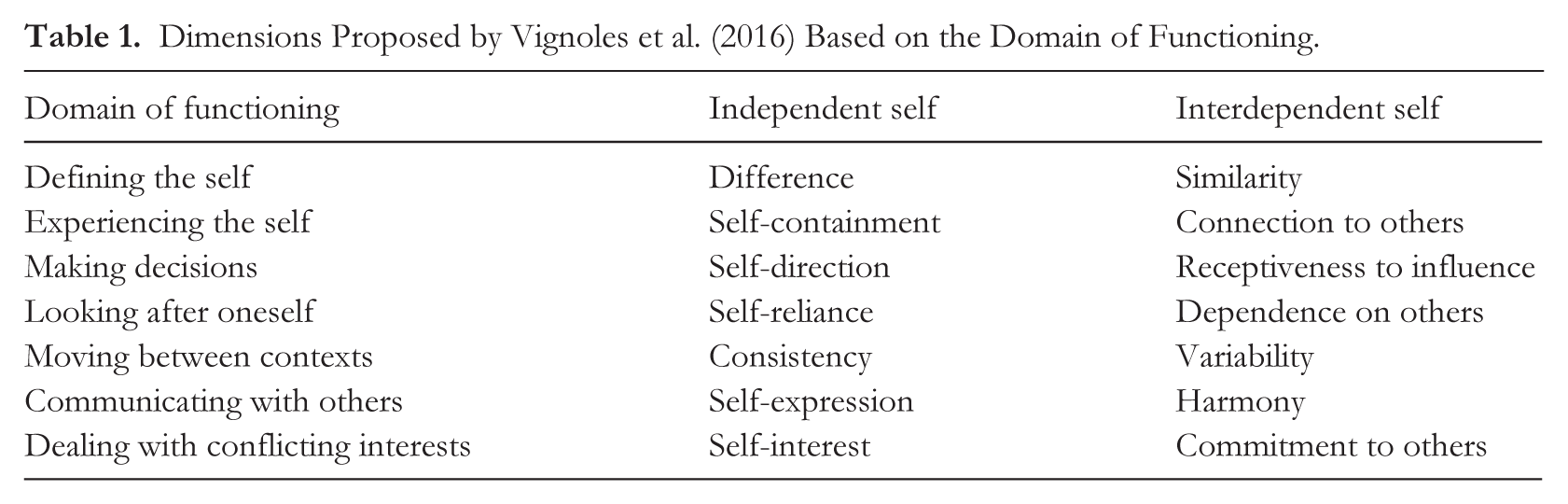
There is debate about the dimensions that make up self-construal and its measurement (Matsumoto, 1999). Some have approached its study from the two original dichotomous dimensions (Gudykunst et al., 1996; Singelis, 1994) while others have suggested that self-construal should be understood from more than two dimensions that comprise the individual, with each person tending, in each dimension, to be more interdependent or independent (Smith et al., 2013; Vignoles et al., 2016). In particular, Vignoles et al. (2016) have outlined seven dimensions of self-construal (see Table 1), indicating that differences may be due to social and economic changes. This proposal shows that there are ways of being independent and interdependent prevalent in different cultural contexts and that they differ in various dimensions, in contrast to the original proposal that suggests a bipolar understanding of the cultural framework. At the same time, this model can highlight cultural differences in specific forms of independence and interdependence. For example, Latin American cultures tend to emphasise self-interest more, while European and Anglo-Saxon cultures highlight commitment to others to a greater extent (Vignoles et al., 2016).
Dimensions Proposed by Vignoles et al. (2016) Based on the Domain of Functioning.
Voluntary Simplicity and Self-Construal
Self-construal has been linked to sustainable behaviours, such as the reduction of consumption, since it may be a variable of interest in behavioural changes (Komatsu et al., 2022). The discussion about whether individuals who practise voluntary simplicity have a more social or personal orientation raises the question of what type of self-construal others perceive in these individuals. One might expect that those who practise voluntary simplicity would perceive themselves with aspects of an interdependent self, given that previous studies show a primary orientation towards commitment to others (Chang, 2021; Elgin & Mitchell, 1977). At the same time, we might also expect a more independent perception of the self since the lifestyle is linked to self-determination and movements focused on independence (Elgin & Mitchell, 1977; McDonald et al., 2006).
In relation to the dimensions proposed by Vignoles et al. (2016), it is possible to link a more independent self-construal in the dimension of Self-reliance (vs. Dependence on others). People who practise voluntary simplicity tend to distance themselves from being reliant on others, becoming characterised by self-determination, the active pursuit of personal growth and distance from the normative practices of society (Craig-Lees & Hill, 2002; Elgin & Mitchell, 1977). In the dimension of Self-interest (vs. Commitment to others), they may present aspects of an interdependent self to the extent that they show inclinations towards environmental awareness and concern for family and community aspects (McDonald et al., 2006; Shaw & Newholm, 2002).
Given that two fundamental dimensions of voluntary simplicity are oriented towards others (i.e., environmental and social), one would expect voluntary simplicity to be associated with an interdependent self when assessed from a dichotomous perspective of self-construal. Additionally, the literature describes voluntary simplicity as a movement with a primarily social orientation, focused on changing structures and the cultural system (Aidar & Daniels, 2024; Zamwel et al., 2014).
Research Aim
This research utilises an experimental design to examine external perceptions of self-construal for individuals who practise voluntary simplicity, with the aim of determining whether other people tend to perceive such individuals as being more independent or interdependent in the different dimensions.
Two samples from different cultural backgrounds were considered: Chile and Spain. The inclusion of these two samples was based on (a) the feasibility of the study and (b) cultural differences in self-construal. In terms of feasibility, the collaboration of the research team, composed of researchers from both countries, facilitated data collection in both contexts. Furthermore, previous research has shown differences between Mediterranean and Anglo-Saxon cultures, as well as between these two and Latin American cultures (Uskul et al., 2023; Vignoles et al., 2016). Hence, sample collection in these two countries would allow us to explore potential context-specific differences in normative independence and interdependence.
The first study was conducted with a Chilean sample, evaluating the dimensions of Self-reliance (vs. Dependence on others) and Self-interest (vs. Commitment to others; Uskul et al., 2023; Vignoles et al., 2016; Yang, 2018). The Inclusion of Others in the Self Scale (Aron et al., 1992; Gächter et al., 2015; Uskul et al., 2023) was used to assess the general perception of self-construal.
The second study aimed to replicate the previous one using a Spanish sample, while also adding the additional dimension of decision-making (Self-direction vs. Receptiveness to influence; Uskul et al., 2023; Vignoles et al., 2016; Yang, 2018). The inclusion of this dimension is due to the fact that, when analysing the data from Study 1, we realised that this new information could enrich our research question, given that individuals involved in voluntary simplicity exhibit characteristics that distinguish them from society’s normative practices (Aidar & Daniels, 2024; Craig-Lees & Hill, 2002).
Lastly, a combined analysis (Curran & Hussong, 2009) was carried out to increase the statistical power of the main analyses and identify the effect of the country on manipulation.
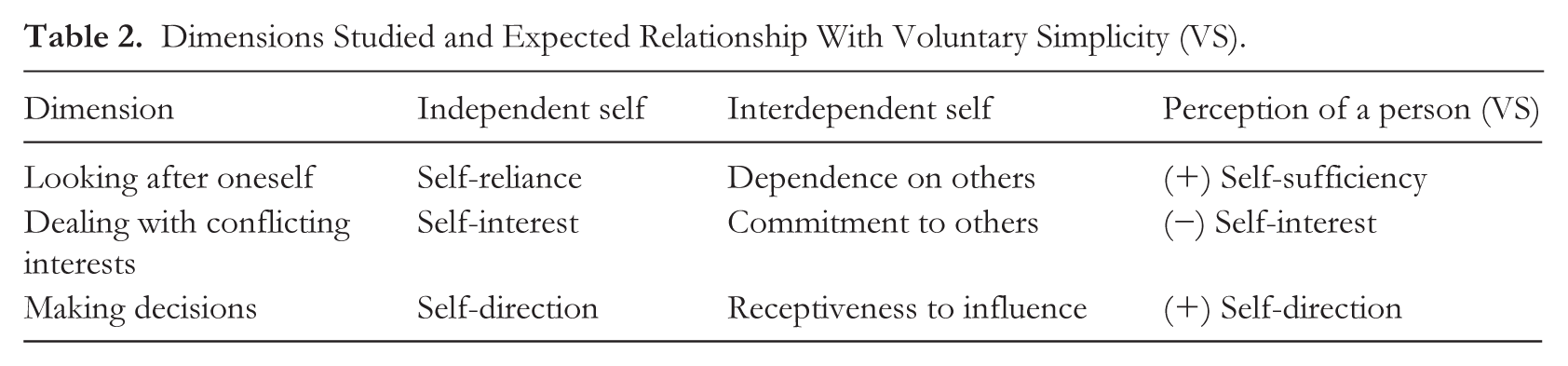
Table 2 shows the dimensions of self-construal studied in the research and the expected relationship with perceptions of an individual who engages in voluntary simplicity.
Dimensions Studied and Expected Relationship With Voluntary Simplicity (VS).
The databases, code and materials used in the various studies are available in the Open Science Framework (OSF) under the ‘Files’ tab: https://osf.io/h52as/?view_only=b5fab8ff7f1d407f9fc3a51b2f1e5aed.
Study 1
For Study 1, we recorded three hypotheses: (https://osf.io/a4qky/?view_only=9233e296a916482c9b261d7806244301):
Furthermore, a control group was added to see the extent to which the experimental groups differ from this one.
Method
Participants
A total of 357 people participated in the research, of whom n = 234 (55% women, 45% men) were included in the final study, having completed at least 75% of the questionnaire that includes the measures of the dependent variables. This implies a dropout rate of 34.45%, which is common in studies distributed online via an open link (Busse & Fuchs, 2014). The sample was collected in Chile. The age of the participants ranged from 19 to 80 years old (M = 37.45, SD = 14.69).
Procedure
The participants were recruited through the snowball method via social media, sharing a link to the Qualtrics questionnaire with an estimated duration of seven minutes. After accepting the informed consent, the participants were randomly assigned to one of the experimental conditions and then responded to the statements included in the questionnaire. Data collection took place during April and May 2024.
Experimental Manipulation
To manipulate lifestyle (Voluntary Simplicity vs. Materialistic vs. Control), we used scenarios previously developed and used by Moreno-Bella et al. (2024), which included manipulation controls to corroborate their effectiveness. In the voluntary simplicity condition, a person with a simple lifestyle is described who prefers to travel in a sustainable way and voluntarily reduce their consumption (e.g., ‘Leads a simple lifestyle. Enjoys simplicity and practicality in their home, so they have just the right furniture needed to live comfortably.’). In the materialistic condition, a person is described who enjoys opulence and has a taste for shopping, acquiring exclusive products and appreciating the accumulation of goods (e.g., ‘Enjoys abundance and elegance in their home, so they have refined furniture and numerous décor items. Likes to buy a lot of clothes and accessories.’). In the control condition, a person with a normative lifestyle is described, with their main characteristic being acquiring products in a manner similar to most people. (e.g., ‘Enjoys the style they like in their home, so they have the furniture that most people usually have in Chile. Also usually buys clothes and accessories in a similar way to others . . .’). The gender of the person included in the experimental scenarios was controlled by randomly assigning names (Antonio or Maria) to the individuals described in each condition (see Appendix A in the OSF).
Instruments
Self-Construal Scale
The Spanish version of the dimensions that make up the Self-construal scale (Uskul et al., 2023; Vignoles et al., 2016; Yang, 2018) was used: Self-reliance vs. Dependence (e.g., ‘Tries to avoid being reliant on others’, α = .80) and Self-interest vs. Commitment (e.g., ‘Usually prioritises others over himself/herself’, α = .76), each with six items. The original scale, oriented towards the personal self, was adapted to refer to the self of the individuals described in each experimental condition. The answers ranged from 1 (‘Does not describe them at all’) to 5 (‘Describes them exactly’), including as intermediate response options 1½, 2½, 3½, 4½. The items for the interdependent self were reversed for the analysis (see Appendix B) so that high scores corresponded to a more independent self (self-interest, self-reliance).
Inclusion of Others in the Self Scale
The adaptation into Spanish of the Inclusion of Others in the Self Scale (Aron et al., 1992; Gächter et al., 2015; Uskul et al., 2023) was used with a single item about ‘others in general’. The original scale, oriented towards the personal self, was adapted to refer to the experimental conditions (e.g., ‘Choose the figure that best describes the person’s relationship with others in general’). The response ranged from 1 (‘Less inclusion’) to 7 (‘Greater inclusion in the self’) (see Appendix C).
Sociodemographic Data
As for the participants themselves, we collected information about their political orientation (1 = ‘extreme left’, 10 = ‘extreme right’), their subjective social status (1 = ‘lowest rung’, 10 = ‘highest rung’; Adler et al., 2000; see Appendix D), their age and gender: ‘Man’ (1), ‘Woman’ (2) or ‘Other’ (3).
Data Analysis
To test our hypotheses, we conducted three analyses of variance (ANOVA) where we included lifestyle (Voluntary Simplicity vs. Materialistic vs. Control) as the independent factor or variable. As a dependent variable, in the first ANOVA, we included Self-reliance (vs. Dependence on others); in the second ANOVA, we included Self-interest (vs. Commitment to others); and in the third ANOVA, we included Inclusion of Others in the Self. Moreover, to conduct a robustness analysis, we performed the same three analyses but included as covariates (ANCOVA) the target’s gender, as well as the participants’ gender, subjective social class, political ideology and age variables.
Results and Discussion
Three analyses of variance (ANOVA) were conducted showing significant differences between the three experimental conditions (Voluntary Simplicity vs. Materialistic vs. Control) in Self-reliance (vs. Dependence on others) F(2, 230) = 18.81, p < .001, η2 = .14 (Figure 1a), Self-interest (vs. Commitment to others) F(2, 231) = 44.99, p < .001, η2 = .28 (Figure 1b) and Inclusion of Others in the Self F(2, 222) = 44.50, p < .001, η2 = .28 (Figure 1c). 1 A Tukey post hoc analysis was conducted for each of the scales. As we can see in Table 3, for Self-reliance, we found differences between the control condition and the other two experimental conditions; for Self-interest, we found differences between the materialism condition and the other two experimental conditions; and for Inclusion of Others in the Self, we found differences between all the experimental conditions.
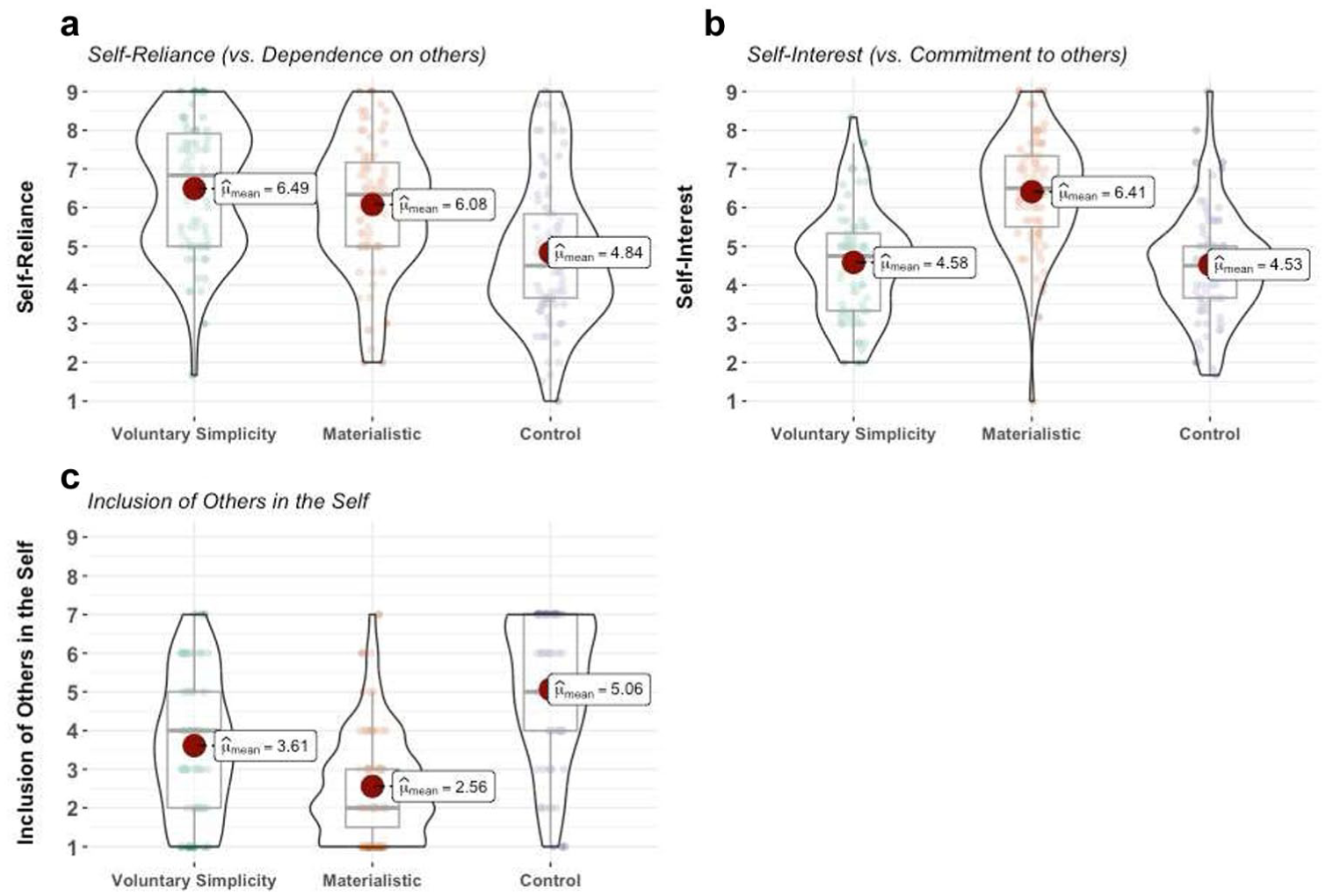
Comparison of experimental conditions in each dimension of Study 1: (a) Self-Reliance (vs. Dependence on others); (b) Self-Interest (vs. Commitment to others); and (c) Inclusion of Others in the Self.
Tukey’s Post Hoc Analysis of Study 1.
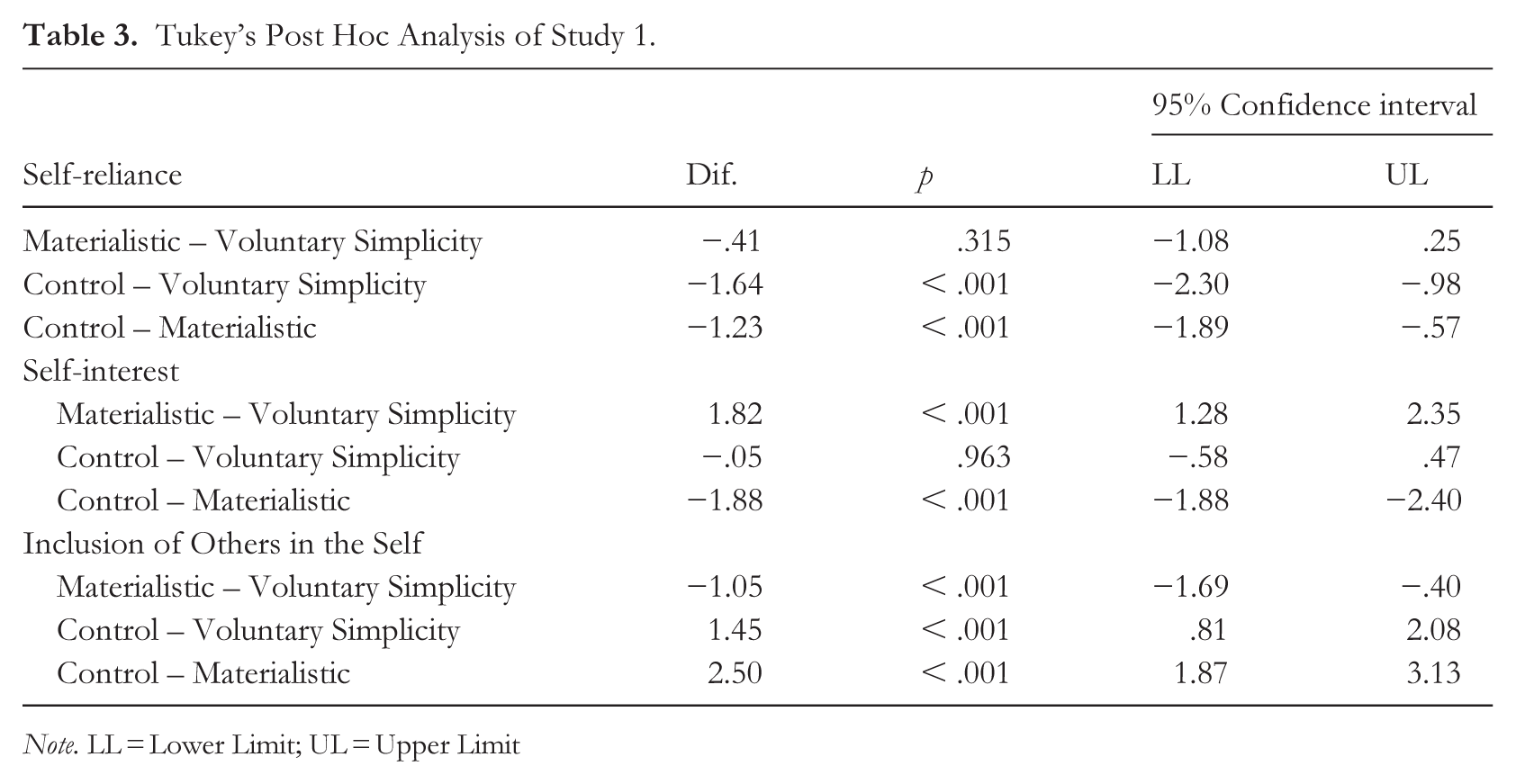
Note. LL = Lower Limit; UL = Upper Limit
Finally, an analysis of covariance (ANCOVA) was conducted, including the participants’ subjective social status, political orientation, age and gender as covariates, as well as the gender of the person evaluated (Man/Woman). 2 The effect of the experimental condition in Self-reliance (vs. Dependence on others), F(2, 213) = 17.05, p < .001, η2 = .14, was replicated, as it was for Self-interest (vs. Commitment to others), F(2, 214) = 45.04, p < .001, η2 = .29, and Inclusion of Others in the Self, F(2, 212) = 46.66, p < .001, η2 = .29.
The results do not allow us to confirm Hypothesis 1 (H1) regarding the dimension of Self-reliance (vs. Dependence on others) due to the absence of significant differences between the condition of voluntary simplicity and materialism. For the dimension of Self-interest (vs. Commitment to others), Hypothesis (H2) is confirmed, regarding a greater perception of interdependence in the voluntary simplicity condition compared to the materialistic condition. Finally, Hypothesis 3 (H3) is confirmed with a perception of greater general interdependence in the voluntary simplicity condition compared to the materialistic condition.
Study 1 provides initial results on external perceptions of self-construal in relation to voluntary simplicity. Study 2 was designed with the aim of exploring this relationship in greater depth and examining the possibility of generalising these findings in a different cultural context.
The second study, conducted with a sample of participants in Spain, would allow us to examine differences in perceived self-construal as described in the previous study. By exploring this phenomenon in a different cultural context, the aim was to expand our understanding of the relationship between voluntary simplicity and self-construal, while also allowing us to evaluate the scope of the initial results. Finally, a new study would enable us to overcome the dropout rate limitation.
Study 2
We recorded four hypotheses (https://osf.io/5kq7u/?view_only=0986e9dbdc234321b11bf3077647dfed) regarding differences in participants’ perception of self-construal according to their experimental condition. An additional dimension of Self-direction (vs. Receptiveness to influence) was included, as indicated in the research objectives.
Method
Participants
The study included n = 230 participants (65% women, 34% men, and 1% other). The sample was collected in the city of Granada. The age of the participants ranged from 18 to 30 years old (M = 21.10, SD = 2.12).
Procedure
The participants were recruited in the libraries of a university campus and completed the questionnaire on a tablet provided by the research team. The questionnaire followed the same steps as Study 1. Data collection was conducted in June 2024. At the end, participants could register their email for the chance to win €50.
Experimental Manipulation
The participants were randomly assigned to one of three experimental conditions: voluntary simplicity, materialism or control, using the conditions of Study 1 with adjustments for the country (see Appendix A).
Instruments
Self-Construal Scale
The same scale as in Study 1 (Uskul et al., 2023; Vignoles et al., 2016; Yang, 2018) was used to evaluate Self-reliance vs. Dependence (e.g., ‘Tries to avoid being reliant on others’, α = .87), Self-interest vs. Commitment (e.g., ‘Usually prioritises others before themselves’, α = .77) and Self-direction vs. Receptiveness (‘Often seeks their family’s opinion before deciding’, α = .85). The answers ranged from 1 (‘Does not describe them at all’) to 5 (‘Describes them exactly’), as in Study 1.
Inclusion of Others in the Self Scale
The same scale was used as in Study 1 (Aron et al., 1992; Gächter et al., 2015; Uskul et al., 2023).
Sociodemographic Data
The survey asked about the same sociodemographic data as in Study 1.
Data Analysis
To test Hypotheses 1, 2 and 4, we conducted the same three analyses proposed in Study 1. To examine Hypothesis 3, as with the other hypotheses, we performed an ANOVA including lifestyle (Voluntary Simplicity vs. Materialistic vs. Control) as the independent variable and, on this occasion, Self-direction (vs. Receptiveness to influence) as the dependent variable. To test robustness, we performed the same three analyses but included as covariates (ANCOVA) the target’s gender, as well as the participants’ gender, subjective social class, political ideology and age variables.
Results and Discussion
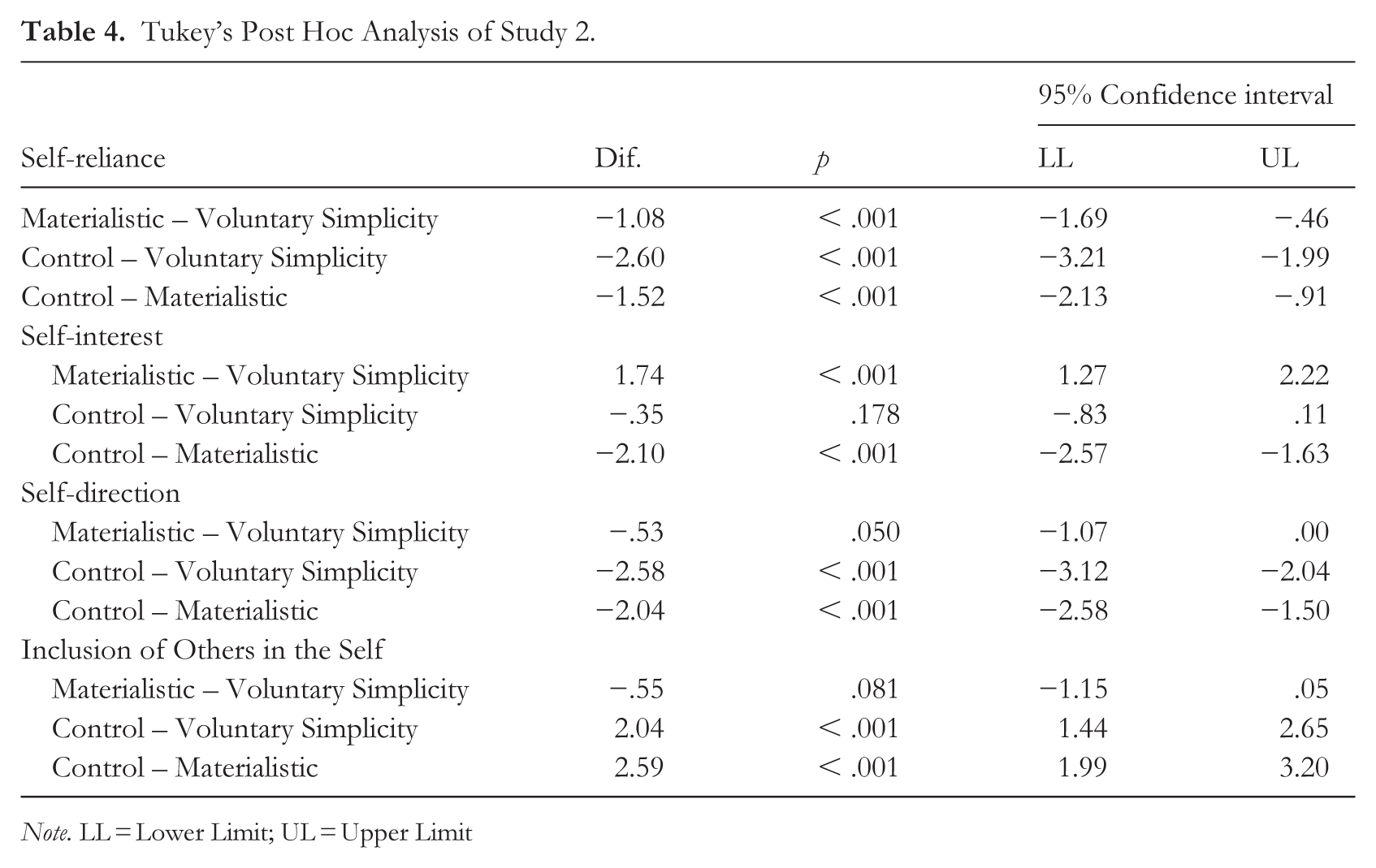
The four analyses of variance (ANOVA) show significant differences between groups (Voluntary Simplicity vs. Materialistic vs. Control) in Self-reliance (vs. Dependence on others), F(2, 227) = 50.59, F(2, 227) = 63.11, p < .001, η2 = .35 (Figure 2a), Self-interest (vs. Commitment to others) F(2, 227) = 63.11, p < .001, η2 = .35 (Figure 2b), Self-direction (vs. Receptiveness to influence), F(2, 227) = 71, p < .001, η2 = .38 (Figure 2c), and Inclusion of Others in the Self, F(2, 227) = 57.29, p < .001, η2 = .28 (Figure 2d). 3 Table 4 shows the post hoc analyses conducted. We can see that for Self-reliance and Self-direction, there are differences between all the experimental conditions; for Self-interest, the materialism condition differs from the other two; for Inclusion of the Other in the Self, differences are found between the control condition and the other two experimental conditions.
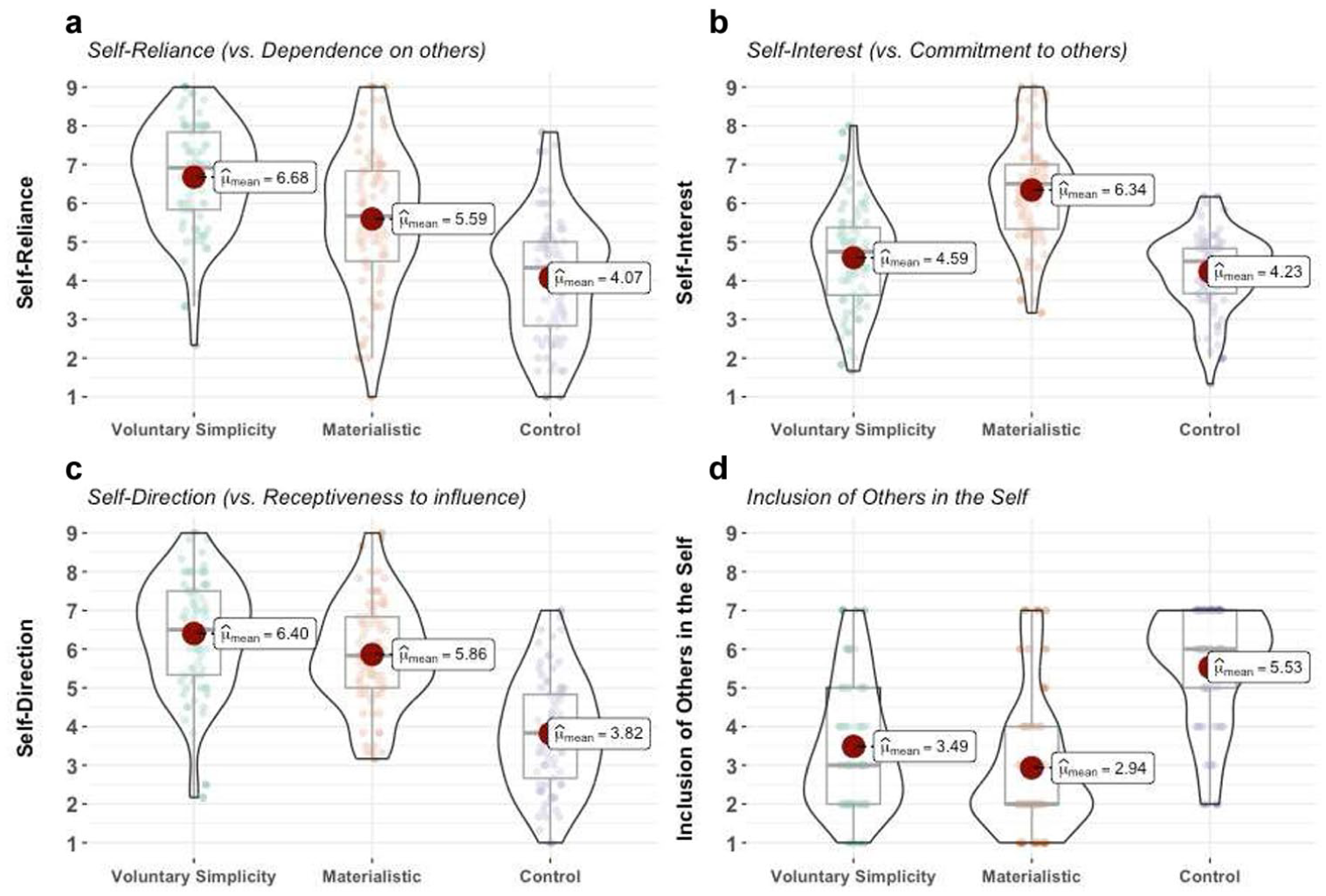
Comparison of experimental conditions in each dimension of Study 2: (a) Self-Reliance (vs. Dependence on others); (b) Self-Interest (vs. Commitment to others); (c) Self-Direction (vs. Receptiveness to influence); and (d) Inclusion of Others in the Self.
Tukey’s Post Hoc Analysis of Study 2.
Note. LL = Lower Limit; UL = Upper Limit
Finally, an analysis of variance with covariates (ANCOVA) was conducted, including as covariates the gender of the target individual evaluated (Male/Female), subjective social status, political orientation, age and gender. 4 The effect of the experimental condition for Self-Sufficiency (vs. Reliance on others), F(2, 222) = 50.57, p < .001, η2 = .32, was replicated, as it was for Self-Interest (vs. Commitment to others), F(2, 222) = 61.93, p < .001, η2 = .35, Self-Direction (vs. Receptiveness to influence), F(2, 222) = 71.33, p < .001, η2 = .39, and Inclusion of Others in the Self, F(2, 222) = 59.13, p < .001, η2 = .34.
The results confirm the hypotheses (H1a and H1b) for the dimension of Self-reliance (vs. Dependence on others). For the dimension of Self-interest (vs. Commitment to others), the differences between groups are confirmed (H2a), but no significant differences are found compared to the control group (H2b). For the Self-direction dimension (vs. Receptiveness to influence), both hypotheses (H3a and H3b) are confirmed, showing a greater perception of self-direction in the voluntary simplicity condition. Lastly, for Inclusion of Others in the Self, no significant differences are found with the materialistic group (H4a), and the control group is perceived to display greater interdependence (H4b), so the hypotheses are not corroborated.
Pooled Analysis of Studies 1 and 2
Given that both studies shared identical design and measurements, a combined analysis was conducted (Curran & Hussong, 2009) to increase statistical power and obtain a more robust estimation of the expected effects. We consolidated the data from both studies into a single database (n = 464, 60% women, 39% men, and 1% other; M = 37.45 years old and SD = 14.69). We controlled for heterogeneity between the studies by generating a variable to classify the study conducted in Chile or Spain. Appendix E presents the descriptive analyses by experimental condition of the combined study.
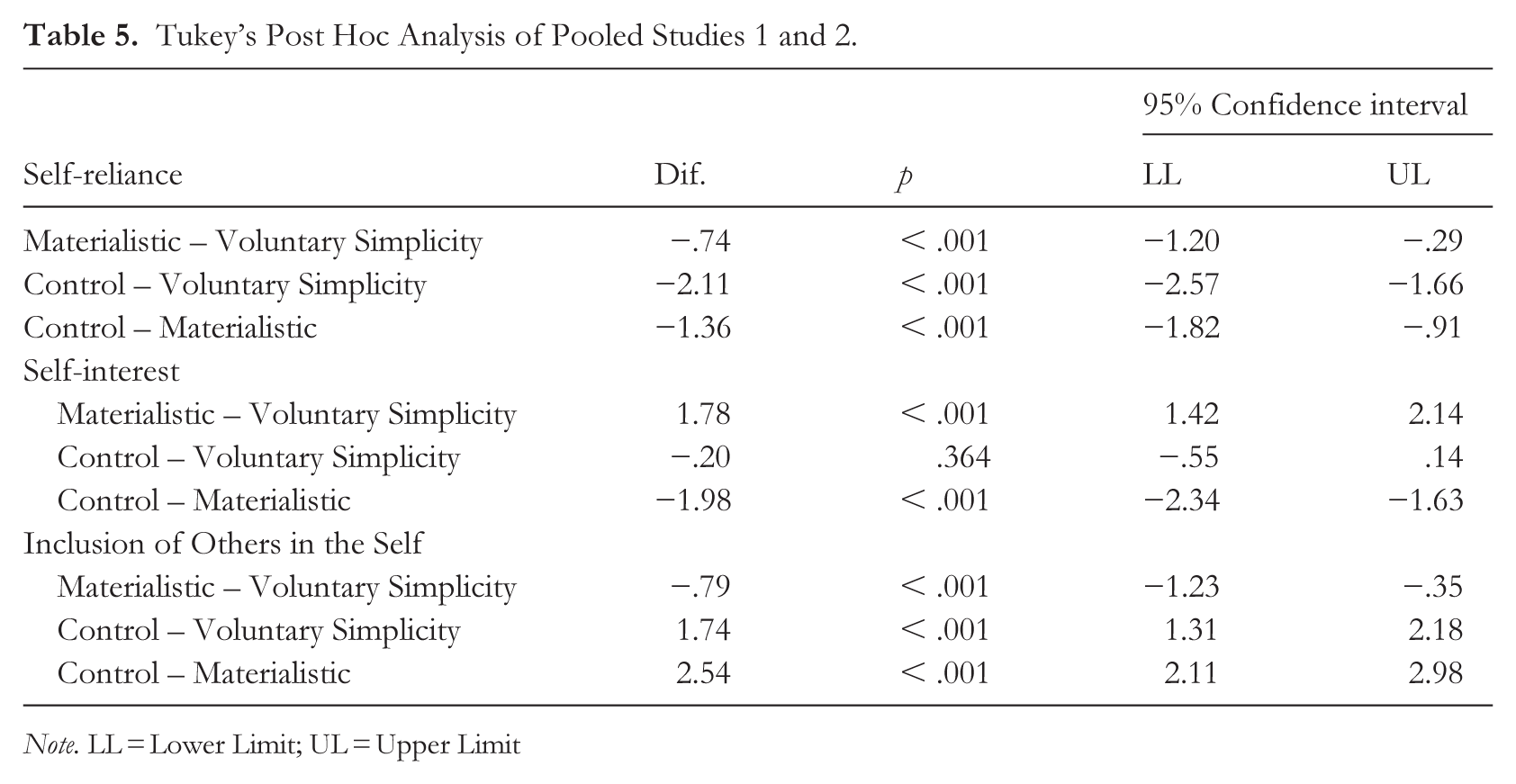
As for the main results, the three analyses of variances (ANOVA) show significant differences between the groups in terms of Self-reliance (vs. Dependence on others), F(2, 460) = 61.84, p < .001, η2 = .21 (Figure 3a), Self-interest (vs. Commitment to others), F(2, 461) = 105.4, p < .001, η2 = .31 (Figure 3b), and Inclusion of Others in the Self, F(2, 452) = 99.1, p < .001, η2 = .20 (Figure 3c). A Tukey post hoc analysis was conducted for each dimension (Table 5).
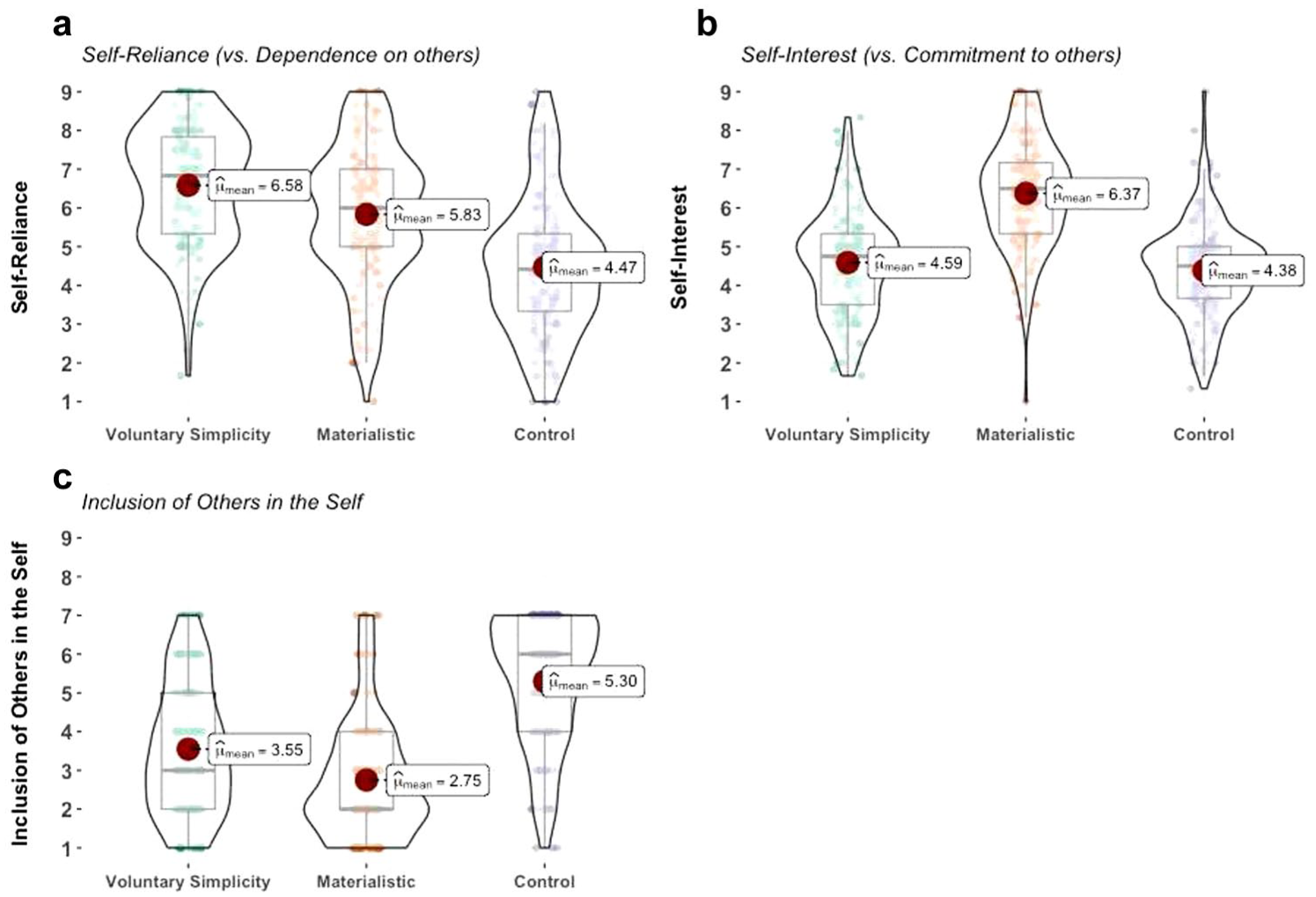
Comparison of experimental conditions in each dimension of the combined analysis: (a) Self-Reliance (vs. Dependence on others); (b) Self-Interest (vs. Commitment to others); and (c) Inclusion of Others in the Self.
Tukey’s Post Hoc Analysis of Pooled Studies 1 and 2.
Note. LL = Lower Limit; UL = Upper Limit
We also examined whether the country moderated these results by creating two dummy variables: ‘Control’ (VS = 0, Materialism = 0, Control = 1) and ‘Materialism’ (VS = 0, Control = 0, Materialism = 1), using voluntary simplicity as the reference group. A moderation analysis was conducted with the country as a moderating variable. No interaction effects were found between the country and experimental conditions for Self-interest: Materialism × Country (B = –.08, SE = .30, p = .804); Control × Country (B = –.30, SE = .30, p = .320); or for Inclusion of Others in the Self: Materialism × Country (B = .50, SE = .37, p = .182); Control × Country (B = .59, SE = .37, p = .111). Regarding Self-reliance, there was no interaction effect for Materialism × Country (B = –.67, SE = .39, p = .083), but there was for Control × Country (B = –.96, SE = .38, p = .012). In Chile, the control variable had no significant effect (B = –.69, SE = .60, p = .254), whereas it did in Spain (B = –1.65, SE = .60, p = .006), suggesting that in Chile, the control group is perceived to be as self-sufficient as the other groups, while in Spain, people who choose VS are perceived as being more self-sufficient.
Regarding the Self-interest dimension (vs. Commitment to others), the effect of Hypothesis 2 (H2) in Study 1 is replicated. As for Hypotheses 2 (H2a and H2b) from Study 2, the results are also replicated. Lastly, looking at the Inclusion of Others in the Self, the results show a significant difference between the materialism and voluntary simplicity conditions. These results replicate those obtained in Study 1 under Hypothesis 3 (H3) and in Study 2 under Hypothesis 4 (H4b).
General Discussion
This research examined the relationship between voluntary simplicity and perceived self-construal, analysing whether a personal or other-oriented perspective is perceived.
In relation to the dimension of Self-interest (vs. Commitment to others), the results indicate that participants perceive a greater orientation towards commitment to others in the voluntary simplicity condition than in participants assigned to the materialistic condition. This shows that the condition of voluntary simplicity is associated with greater perceived interdependence in this dimension. However, in the Inclusion of Others in the Self scale, the results were mixed. Study 1 showed greater perceived interdependence in the voluntary simplicity condition compared to the materialistic one, but less than the control condition. Study 2 maintained a difference with the control condition but not with the materialistic one. The combined analysis revealed a significant difference between both conditions, analogous to the results of Study 1.
The results partially contrast with the literature that presents voluntary simplicity as a lifestyle oriented towards others, linked to environmental awareness and the development of family and community ties (Craig-Lees & Hill, 2002; Hook et al., 2023; McDonald et al., 2006). These results can be explained by the fact that, in the experimental scenario, commitment to others in environmental or social domains is not explicitly declared; rather, individual behaviours are described. Another possibility is that although those who practise voluntary simplicity demonstrate a concern for others, this motivation may not be perceived by the rest of the population.
Regarding the other two dimensions, Study 1 does not show significant differences in the Self-reliance dimension (vs. Dependence on others) when comparing the VS condition with the materialistic condition, but it does when comparing the VS condition with the control condition. Study 2, on the other hand, shows that participants assigned to the voluntary simplicity condition exhibit a greater sense of self-reliance compared to both conditions. The combined analysis shows a significant difference between groups, but with an interaction effect indicating that the country moderated these effects: in Chile, the control group (normative consumption) was perceived as being just as self-reliant as the SV and materialistic groups. This could be explained by characteristics of Latin American cultures. Although traditionally defined as interdependent, these cultures promote independence through self-reliance, with less inclination to rely on others (Krys et al., 2022). In contexts with limited access to basic services (health, education, security), people develop the need to rely on themselves, with self-reliance being socially valued. However, these differences could also be attributed to specific demographic characteristics of the samples. Future studies should delve deeper into these matters.
Regarding the dimension of Self-direction (vs. Receptiveness to influence), the results obtained in Study 2 confirm a greater perception of self-independence in the voluntary simplicity condition. These findings support the proposition that voluntary simplicity is associated with self-determination, personal growth and distancing from habitual practices in society (Aidar & Daniels, 2024; Craig-Lees & Hill, 2002; Elgin & Mitchell, 1977).
Within the limitations of the study, it is important to consider the possible variability of the instruments used depending on the cultural context of the samples. While an adaptation of the instruments was used, the conceptual differences between Chile and Spain could have influenced the interpretation of the statements in the instruments used. Additionally, the description of the control condition in the experimental design could have activated a reference to the social group to which the participants belonged, introducing potential bias. Despite controlling for participants’ subjective social status, there is a recognised need to explore methodological alternatives to minimise this type of bias in future research.
This work provides an initial exploration of how those who practise voluntary simplicity are perceived, contributing to discussions surrounding the potential for social growth. Understanding these perceptions is crucial for designing strategies that promote these practices among the population. Future research should examine whether behaviours of voluntary simplicity are perceived as less disruptive than other forms of social change (e.g., anti-capitalism, radical activism), explore other dimensions of self-construal related to this lifestyle, analyse perceptions of specific practices and evaluate their impact as a strategy for social change, considering both social perception and the behaviours of their practitioners.
Furthermore, it is important to analyse the political impact of voluntary simplicity. In a global context of high consumption and proximity to the point of ‘no return’ in terms of the climate, we must urgently debate alternatives to the dominant model (Avelino et al., 2024; Schlosberg & Coles, 2016). Movements such as degrowth (Hickel et al., 2022) point to the need for institutional changes, new forms of political organisation and transformations in lifestyles (Krpan et al., 2025). Voluntary simplicity could offer an alternative to consumerism (Alexander, 2012) and be an integral part of broader political movements seeking social transformation. Given that the studies conducted do not allow us to reach conclusions about its political potential, future research should examine these implications.
In conclusion, this study offers an initial exploration of social perceptions surrounding voluntary simplicity. Future investigations could delve deeper into the underlying psychological mechanisms and sociopolitical implications.