






Abstract
Many university students in China are suffering from mental health problems, and the need for preventative well-being trainings has been recognised. Given limited resources, innovative approaches are needed to increase university students’ well-being skills. The present case study aims to explore the change in Chinese university students’ psychological flexibility, well-being, and study-related burnout during an ACT-based online course and explore the differences in the changes between wellbeing initial well-being profiles. In addition, the objective is to explore how students themselves reflect the effects of the course. An online ACT-based course was offered to two Chinese universities in 2024. The study applied a mixed methods approach combining paired t-tests, mixed ANOVA and inductive content analysis. The data were collected through pre- and post-questionnaires (n = 35) and students’ reflective journals. Quantitative results revealed significant increases in students’ scores on psychological flexibility and a decrease in burnout. In addition, the study suggests that students with low initial well-being benefit from the course more. Students’ reflections included several different benefits from the course related to well-being and studying.
Introduction
Youth mental health is a worldwide public health concern (WHO, 2022). In the Chinese context, university students can be considered a risk group for mental challenges compared to general population (Li et al., 2022). According to a meta-analysis, almost 30% of Chinese students experience depression (Gao et al., 2020) and during the pandemic, over 40% of Chinese college students reported anxiety symptoms (Fu et al., 2021). Li et al. (2022) points out that lack of trained counsellors and unwillingness to seek help due to cultural acceptance of mental health problems are big challenges in delivering mental health services. In addition, Chinese university students can often have high self-expectations of academic achievement, which causes stress and low levels of wellbeing (Ling et al., 2022; Poots & Cassidy, 2020), which can lead to declining university engagement and academic achievement (Yu et al., 2018). One reason also for increase of stress can be the difficulties to transfer to the labour market after graduation due to the over supply of graduates (Ma & Bennett, 2021). Although in China many universities have offered compulsory courses to promote mental health, many universities in China are still facing a lack of high-quality and effective mental health programs (Li et al., 2022) and thus, preventative solutions are needed.
Growing body of literature recognises psychological flexibility, rooted in Acceptance and Commitment Therapy (ACT), as a clear influencer of university students’ wellbeing and academic outcomes (Caimano et al., 2024; Howell & Passmore, 2019). Review studies have shown that successful ACT-based interventions fostering psychological flexibility have been carried out in many countries with very promising results on student wellbeing. (HSu et al., 2023). However, there is little data on ACT interventions in China, especially in university context (Zhao et al., 2022). Some very recent studies have shown that ACT-based intervention can have positive effects on college students’ mental health in China ((Zhou et al., 2025)(Zhou et al., 2025)) but it is evident that more research is needed. This mixed-method case study aims to pilot an online ACT-based wellbeing and study skills course and examine students’ experiences of the intervention in the Chinese university context.
Theoretical Framework
Wellbeing is a complex concept with many definitions which typically consider not only the presence of positive aspects but also the absence of negative symptoms. The dual-continual model of wellbeing distinguishes between hedonic and eudaimonic dimensions, emphasizing both the absence of mental health problems and the presence of positive wellbeing (Keyes et al., 2008). From a hedonic perspective, wellbeing highlights the subjective experience of positive emotions, such as pleasure and happiness, and the absence of negative emotions. In contrast, the eudaimonic perspective focuses on psychological functioning and living a meaningful life. Mental wellbeing therefore integrates both hedonic aspects, such as experiencing positive emotions and eudaimonic aspects related to optimal functioning (Ryan & Deci, 2001). Based on this. A widely used model of wellbeing distinguishes three components: emotional, psychological, and social wellbeing (Keyes, 2002; Lamers et al., 2011). Emotional wellbeing refers to an individual’s perception of happiness and life satisfaction, reflecting the hedonic perspective (Keyes et al., 2008; Lamers et al., 2011). Eudaimonic perspectives include psychological wellbeing which refers to positive psychological functioning (Ryff, 1989) and social wellbeing, which involves evaluating one’s situation and functioning within society, such as feeling socially integrated and perceiving oneself as part of the community (Keyes, 1998).
Furthermore, wellbeing is a culturally embedded concept, defined and practiced differently across cultural communities. Individuals from collectivistic and individualistic societies often hold distinct emotional perceptions of wellbeing (Cheng et al., 2016). Psychological research is most often developed within Western contexts in terms of origin, concepts, and methods, may therefore reflect a strong Western cultural bias (Bond, 2012). For example, in Chinese culture, individuals are taught to prioritize the wellbeing of the community over personal happiness. Compared to their Western counterparts, Chinese students are more likely to internalize their emotions and rely on themselves when coping with stress (Magnusdottir & Thornicroft, 2022). This community aspect of wellbeing can also result to family pressure and high academic expectations which can lead to burnout (Liu et al., 2023).
Study-Related Burnout
In higher education contexts, study-related burnout can occur after prolonged stress and can be defined though three components: exhaustion, cynicism and inadequacy (Salmela-Aro & Read, 2017; Schaufeli et al., 2002). Thus, study-related burnout occurs when students feel strong emotional tiredness, develop a cynical and disconnected attitude towards their studies, and experience inadequacy as a student (Hernesniemi et al., 2017; Salmela-Aro & Read, 2017; Schaufeli et al., 2002).
Study-related burnout has been studied in the higher education context in countries with different education systems, policies, and cultural backgrounds (Hernesniemi et al., 2017; Salmela-Aro & Read, 2017; Schaufeli et al., 2002) and in Chinese universities where the prevalence and severity of study-related burnout have been quite high (Liu et al., 2023). The negative outcomes of study-related burnout can be seen in decreasing academic achievement (Madigan & Curran, 2021), reduced student engagement (Schaufeli et al., 2002), and a higher likelihood of withdrawal intentions (Williams et al., 2018). Thus, addressing study-related burnout is crucial for improving students’ overall wellbeing and academic performance (Liu et al., 2023).
Psychological Flexibility in Fostering Wellbeing and Burnout
The research has shown that psychological flexibility is one essential factor fostering wellbeing and lowering study-related burnout. Psychological flexibility is defined as the ability to accept one’s thoughts and feelings, to be connect to the present moment and acting toward chosen values (Hayes et al., 2006). The concept of psychological flexibility is rooted in Acceptance and Commitment Therapy (ACT) (Hayes, 2004) and is developed through six core interconnected processes (Hayes et al., 2006). Acceptance refers to the willingness to experience the full range of feelings and emotions with openness and curiosity and acknowledging them as a natural part of life (Hayes et al., 2013). Cognitive defusion is the process of stepping back from one’s thoughts and observing them as passing mental events, rather than as absolute truths. By creating distance from thoughts, individuals reduce their impact rather than being dominated by them (Hayes et al., 2012).
Being present involves directing attention to the here and now, engaging fully with the current moment instead of becoming entangled in past or future worries (Hayes et al., 2006). Self-as-context refers to the perspective from which one can be aware of inner experiences without being constrained by them. (Hayes et al. 2006, 2013). Values are meaningful life directions which serve as a compass for long-term goals, helping individuals orient their actions toward what matters most to them (Hayes et al., 2006). Committed action means working toward meaningful goals even in the face of obstacles (Hayes, 2004).
Previous studies have explored the relationships between psychological flexibility, wellbeing and burnout and the evidence suggest that psychological flexibility has a positive association with mental health and wellbeing (Asikainen & Katajavuori, 2023; Hailikari et al., 2022; Hayes, 2019; Kämper et al., 2025; Katajavuori et al., 2023), and a negative relationship with burnout and stress (Asikainen & Katajavuori, 2023; Räihä et al., 2024a) both among university students and employees. In China, research on psychological flexibility and its relations to burnout and wellbeing is still scarce. A recent study has however shown that college students with high psychological flexibility have higher scores on wellbeing than students with low psychological flexibility (Bi & Li, 2021).
ACT-based interventions have proven to be successful in improving student wellbeing, mental health and studying (see reviews: Howell & Passmore, 2019; Hsu et al., 2023) In recent years, a few ACT interventions have also been implemented in Chinese universities. A recent study by Xu et al. (2018) showed that ACT-based intervention was more effective in reducing anxiety and depression than a routine mental health teaching. Zhou, Wen, Han, et al. (2025) also found improvements in college students’ wellbeing measured with multiple aspects during online intervention but no differences to the control group was found. The differences in the results can also reflect individual differences in intervention effects. Thus, more ïnedividual analysis would be needed to better understand how ACT-based interventions can benefit university students.
Aims of the Study
The aim of this case study is to analyse the Chinese university students’ experiences of an online ACT-based course. The research questions of this study are: 1. How are psychological flexibility, study-related burnout and wellbeing related and how they change during the course? 2. How do changes in psychological flexibility, wellbeing, and study-related burnout differ between students representing different wellbeing score groups? 3. How did students experience the benefits of the course?
Based on prior studies (Howell & Passmore, 2019; Hsu et al., 2023), it is hypothesized that students report increases in their psychological flexibility, overall wellbeing and decreases in the level of study-related burnout. In addition, we expect the initial level of wellbeing to influence students’ experiences of the effects of the course (Pots et al., 2016). It is also expected that students report some benefit from the course and that different students would experience the intervention course differently (Katajavuori et al., 2023; Ruuska et al., 2025).
Methods
This research was conducted among Chinese University students in March-April 2024, An optional 8-week course was conducted in MOOC platform. Participants were recruited from Beijing Normal University and Shanghai Jiao Tong University through the schools’ social platforms and emails, but registration was open to any student. The course was advertised as a course to improve wellbeing and studying through learning wellbeing and studying skills, not as a course to solve mental health issues as such. Students reported some reasons for attending the course which included for example wanting to better understand personal meaning beyond external expectations in studying and life, learning self-acceptance, learning time management, self-regulation skills and more effective studying as well as learning practical strategies for dealing with negative emotions and academic demands. An Ethical statement from University of Helsinki Ethical Review Board in Humanities and Social and Behavioral Sciences (Statement 87/2023) was received for the study. A total of 93 signed up for this course. Out of those 93 many did not engage in the course, and a total of 52 participants answered the first set of questionnaires which was part of the first week assignments. Out of them, 35 students completed the course and answered the questionnaires in the last week as well as gave a consent for participating in the research. Of these students, 27 came from Beijing Normal University and the rest of the participants came from different universities including Shanghai Jiao Tong University, Ningbo Institute of Technology, Sichuan University and Thammasat University. We compared students who answered the first questionnaire only to students who complete the course and found that they did not differ according to wellbeing, burnout or psychological flexibility (p ≥ 0.8). Altogether 34 gave a permission to use their learning journals in the study.
The online course aimed to help students to practice psychological flexibility and study skills (Asikainen & Katajavuori, 2021). Two optional online meetings were provided at the beginning and in the middle of the course. The course was structured into seven modules (see Figure 1) in which students completed individual exercises and participated in group discussions about their experiences. At the end of the course, students wrote a 2-3 page reflective journal to reflect on the effects of course on their studying and wellbeing. Description of the course. Modified from Asikainen & Katajavuori (2021)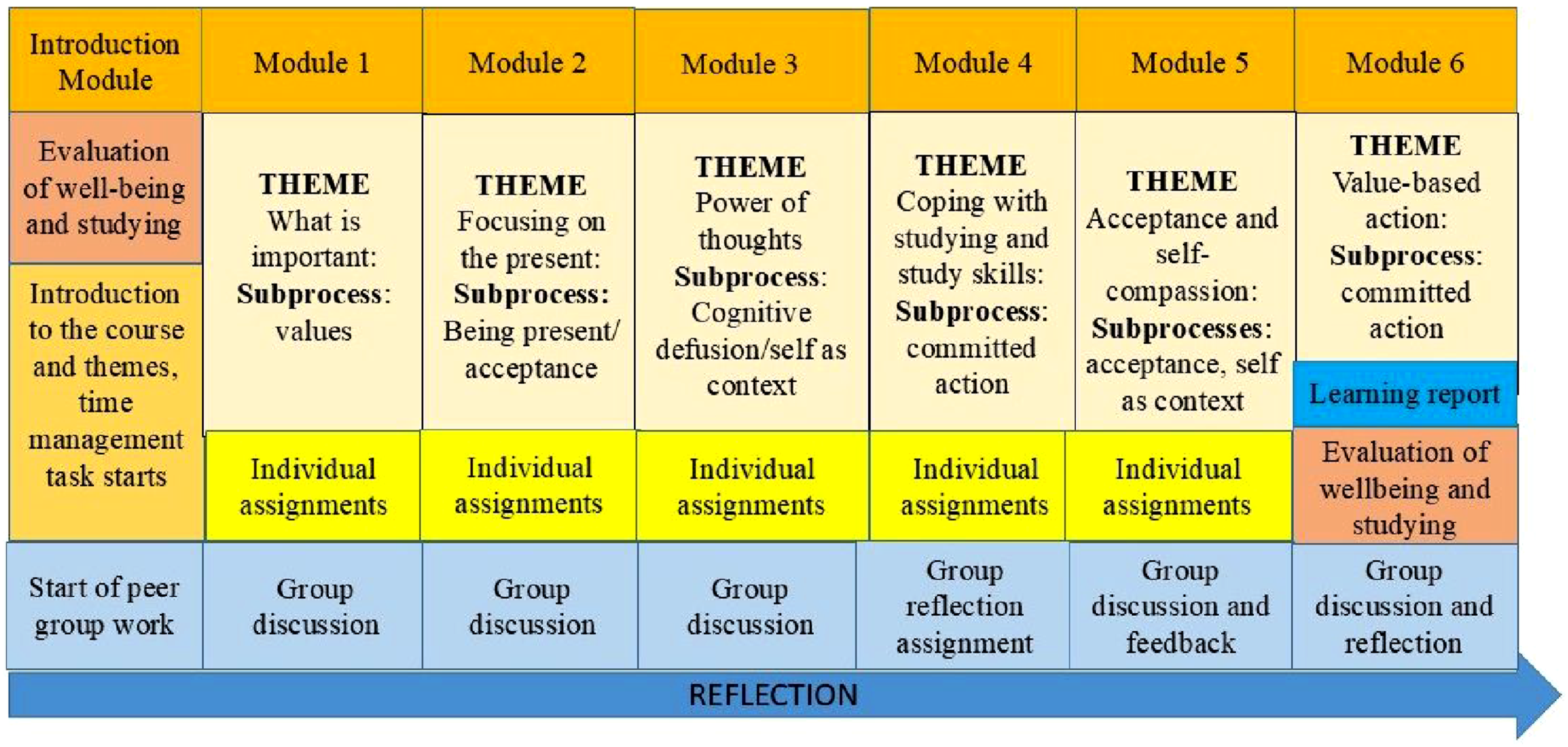
Measures
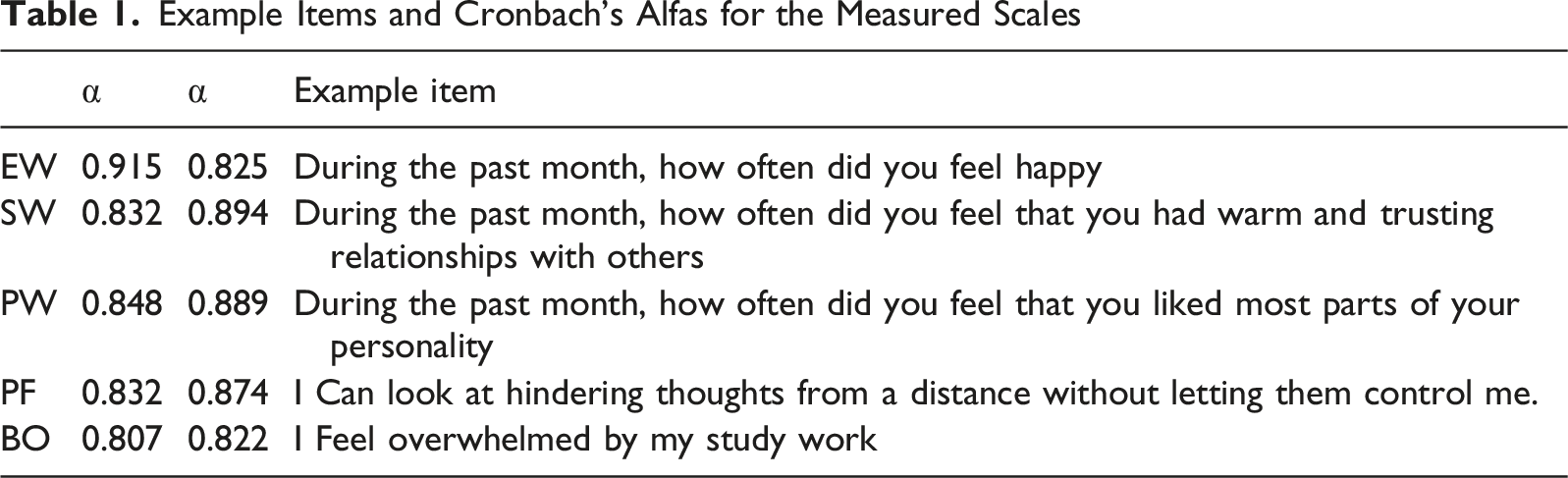
Participants responded to the questionnaires in the first week (time 1) and last week (time 2). Students’ psychological flexibility was measured with the Psy-flex questionnaire (Gloster et al., 2021) with six Likert type questions representing each psychological flexibility process (Time 1 α = 0.83; Time 2 α = 0.87). It has also been found reliable in the Chinese context (Fang et al., 2024). Burnout was measured with the School burnout questionnaire (SBI, Salmela-Aro et al., 2009) which was modified to a Chinese university context (Hernesniemi et al., 2017). The likert type scale ranged from 1 = Strongly disagree to 5 = strongly agree (Time 1 α = 0.81; Time 2 α = 0.82).
Example Items and Cronbach’s Alfas for the Measured Scales
Students’ experiences of the course were analysed by exploring the students’ final reflective journals (2-3 pages) where reflected on their experiences of how the course affected their studying and wellbeing by questions like: “What were the most insightful things for you during the course?”, “What kind of an impact did the course have on your study skills”, and “If you feel like the course did not affect your studying, what do you think was the cause for this?”
Data Analysis
A mixed methods approach was employed in this research (Hanson et al., 2005). The reliability of the questionnaires was measured with Cronbach’s alphas and sum scales were formulated from the items measuring psychological flexibility, overall wellbeing as well as emotional, psychological and social wellbeing and level of study-related burnout. Relationships between these scales were analysed with Pearson correlation analysis and changes in the measures were analysed with paired sample t-test. In addition, three score groups were calculated based on the overall initial wellbeing using the mean + 1 standard deviation principle. These groups before and after scores on psychological flexibility, burnout and wellbeing measures were analyzed with mixed ANOVA. Furthermore, the final reflective journals were analysed by using an inductive content analysis method (Elo & Kyngäs, 2008). The analysis focused on patterns and insights of students experiences emerging directly from the data. First, the reports were read through several times to make sense of the data. Second, “meaning units” relevant to the research question were identified and labelled to create categories (Vears & Gillam, 2022) by using Atlas. ti 23. Multiple categories may be applied to a single text segment (Thomas, 2003). Third, categories were grouped and refined by looking closely into subcategories, combining categories with similar meanings (Thomas, 2003). Finally, final categories were defined.
Results
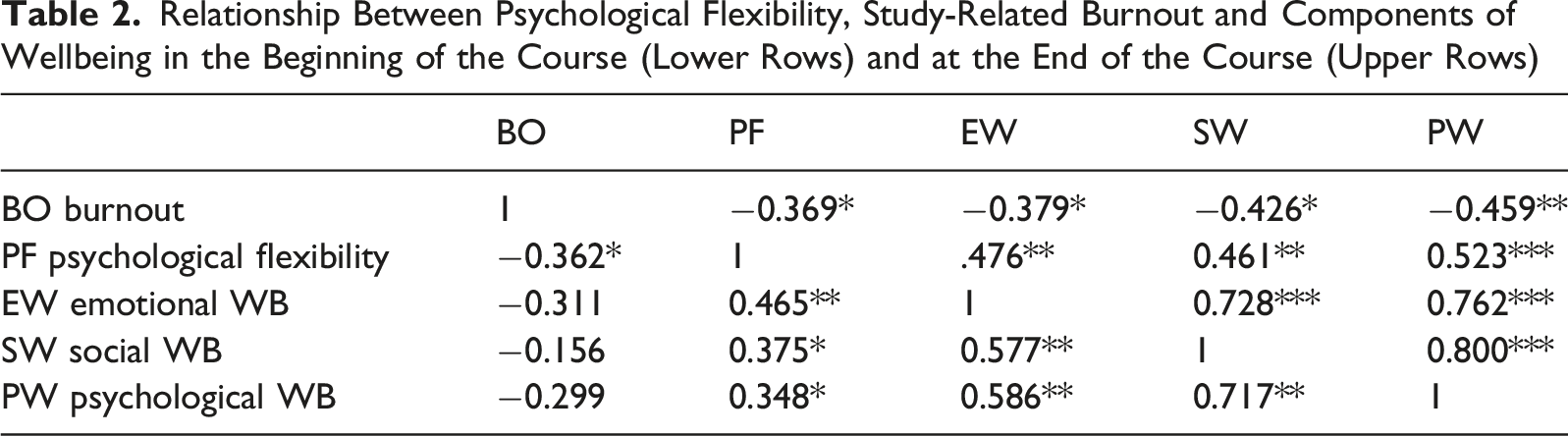
Relationship Between Psychological Flexibility, Study-Related Burnout and Components of Wellbeing in the Beginning of the Course (Lower Rows) and at the End of the Course (Upper Rows)
The Changes During the Course
The Paired T-test Results of Psychological Flexibility, Well-Being, and Level of Burnout at the Beginning and End of the Course
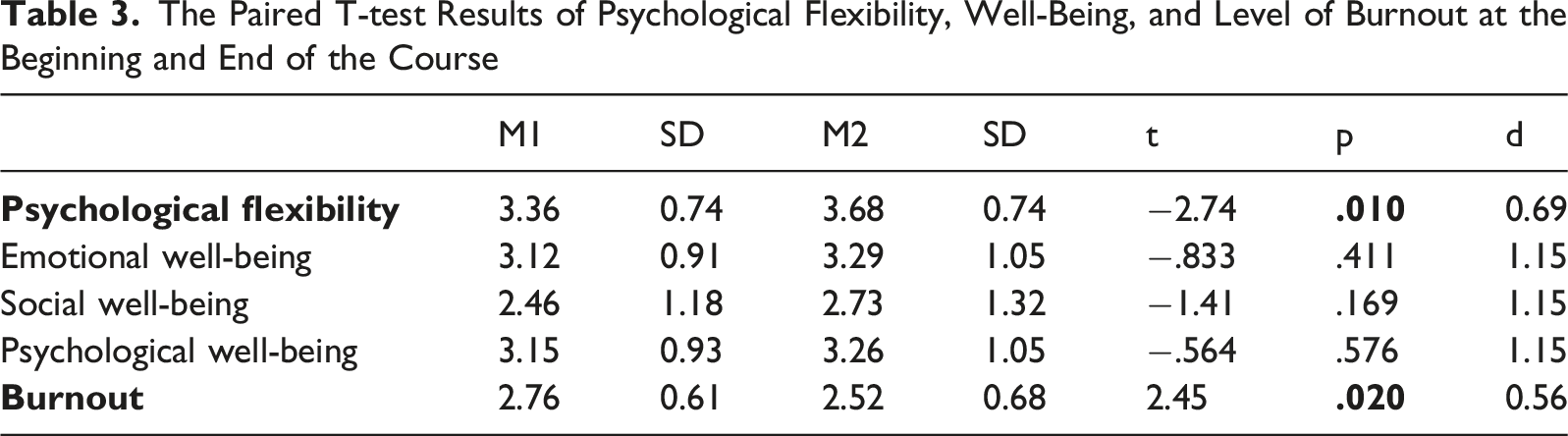
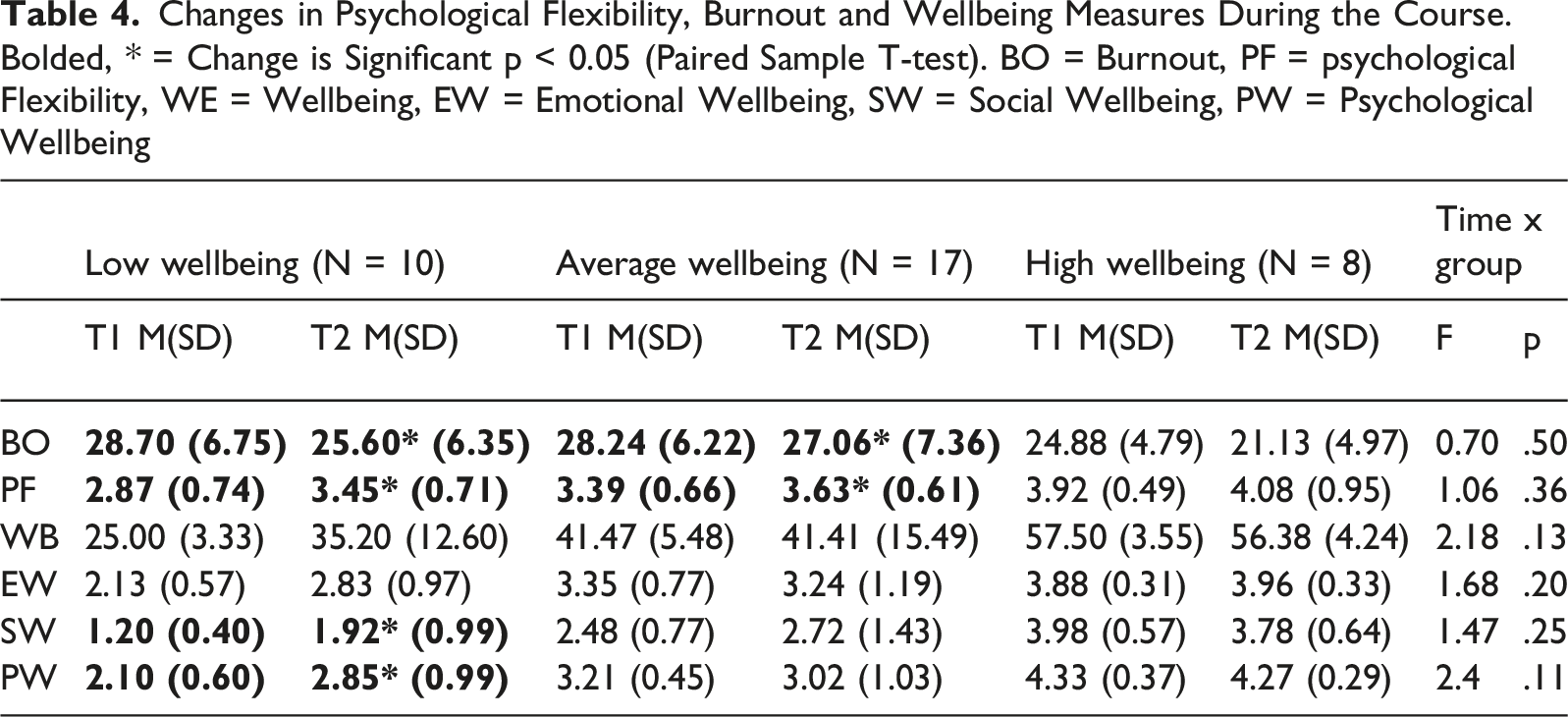
Changes in Psychological Flexibility, Burnout and Wellbeing Measures During the Course. Bolded, * = Change is Significant p < 0.05 (Paired Sample T-test). BO = Burnout, PF = psychological Flexibility, WE = Wellbeing, EW = Emotional Wellbeing, SW = Social Wellbeing, PW = Psychological Wellbeing
Students’ Experiences and Reflection on the Course
The Categories Describing Students’ Experience of the Course (34)
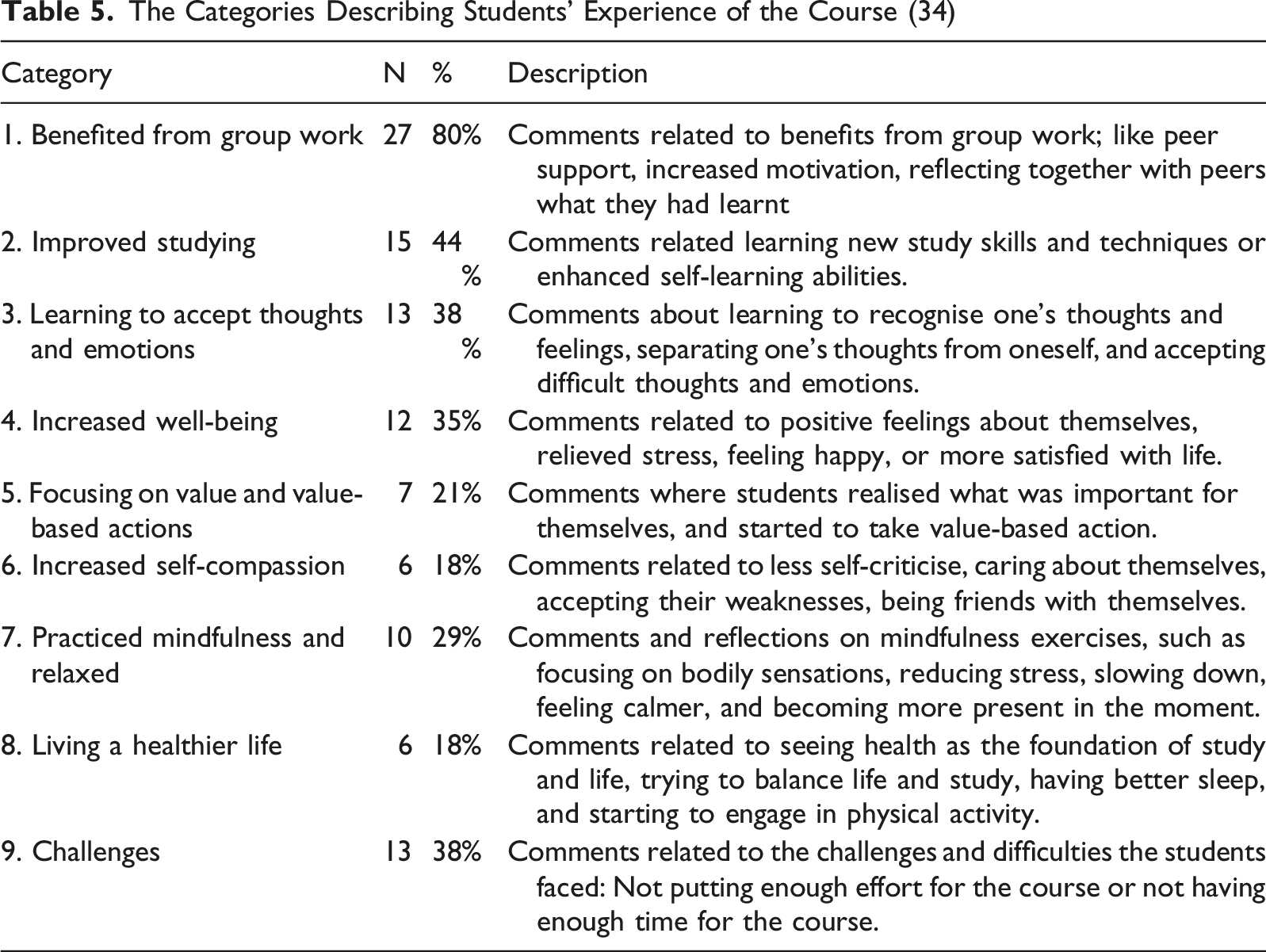
One of the most frequently reported themes was the benefit of group work. Students emphasized how peer discussions supported their motivation in their studies and deepened their learning. In addition, they emphasized that reflecting with other students gave them support and made them more motivated. Following quote represents the category: “Group discussions have promoted and reinforced my learning… through group discussions, I could transform what I've learned into action and ideas that can be put into practice through reflection, facilitating the application of what I have learnt in my study and life.”
Students also described how the course enhanced their studying. They emphasized, for example, improvement of time management skills in enhancing their studies, other study skills and the ability to manage academic demands. Reflecting on these changes, one participant explained: “The course has had a substantial impact on my study skills. I have become more organized, focused, and disciplined in managing my study sessions”
Importantly, students highlighted also how the course helped them in emotional regulation. The students experienced that they were more capable of opening up to difficult emotions and accepting them. They reported also being able to recognize difficult emotions and feelings better and differentiate them for oneself as the following quote shows: “What inspired me the most was learning to deal with my thoughts. I learned that by changing my attitude toward my thoughts, I could enhance my wellbeing. The goal isn’t to eliminate unpleasant or negative thoughts but to see them simply as thoughts. They are created by us, but they do not define who we are. “
In addition to emotional regulation, many students experienced an overall increase in wellbeing and satisfaction with life. They reported that positive feelings about themselves have increased and, for example, feelings of stress have decreased. Following quote describes the category: “Through practicing mindfulness, self-compassion, defusion, and self as context, my wellbeing has improved… The cycle of learning and practicing has strengthened my belief that through a shift in mindset and consistent daily practices, wellbeing is achievable for everyone”
Experiences related to values and value-based actions were also mentioned by the students. Students experienced that they learned to recognise what was important and meaningful for themselves. In addition, they reported taking more value-based actions in their studies and life: “By paying attention to my mental state and values, I learned how to keep an open mind in study and life, and also, how to make decisions in a way that is consistent with my values. This has been crucial for achieving wellbeing.”
Students also reported increased self-compassion towards themselves and caring more about oneself. The experiences also reflected being good enough student and accepting own weaknesses and failures.: “The most inspiring part of this course for me was learning how to be kind to myself. I used to be overly critical, beating myself up over even the smallest mistakes and feeling frustrated with myself… This course taught me how to speak to myself more positively. I felt myself calmed down, and I discovered that there was no need to be so harsh on myself.”
Students’ experiences of present moment awareness emphasized the benefits of mindfulness exercises comprising focusing on bodily sensations and slowing down on reducing stress and feeling calmer in studies. They also noticed that they had become more present in their lives: “What inspired me the most was the section about relaxation and focus. Before taking the course, I was often in a tense state and couldn’t relax, …After learning about mindfulness, I learned to bring myself back to the present and focus on the here and now.”
While most students reported positive changes, some faced challenges in fully engaging with the course. The reasons for the challenges were experiences of not putting enough effort for the course or not having enough time for the course.
Discussion
The aim of this case study was to explore how Chinese university students experienced the wellbeing and study skills course. The results suggested significant improvements in participants’ psychological flexibility and burnout at the general level. These improvements are consistent with the results of previous studies among university students (Ma et al., 2022; Hsu et al., 2023). The results also reflect the studies done with Chinese college students which showed that ACT-based interventions have decreased psychological distress and increased psychological flexibility (Zhou, Wen, Han, et al., 2025; Zhou, Wen, Han, et al., 2025). Furthermore, the group-level analysis showed that there were no changes in emotional, psychological, or social wellbeing. This is contradictory to earlier research (Hsu et al., 2023). One reason for that could be that there can be more individual level variance in the changes in wellbeing (Kämper et al., 2025). The results showed that the low wellbeing group experienced most differences in their wellbeing and psychological flexibility compared to the other groups. This suggests that initial wellbeing may have an impact on how interventions are received (Pots et al., 2016). Earlier studies have also shown that students with higher baseline levels in depression showed significantly more improvements in their wellbeing in an online ACT intervention (Zhao et al., 2022). However, studies have also shown that the initial burnout risk does not affect the experienced changes in wellbeing or benefits of the course (Räihä et al., 2024b; Ruuska et al., 2025).
Students’ reports partly reflected the quantitative results emphasising positive changes in psychological flexibility. The students’ reports emphasised learning to recognise and accept difficult thoughts, more accepting thoughts about themselves and value recognition and value-based actions. These changes in students’ different psychological flexibility processes have also been found in previous studies (e.g. Katajavuori et al., 2023; Räihä et al., 2024c). In addition, most students experienced the course exercises and activities positively, and every student reported that they benefited from the course to varying degrees and in several different ways. To our knowledge, the present study is the first qualitative study that describes students’ experiences in an online ACT-based course in China but similar findings has also been found in earlier studies (Kämper et al., 2025; Ruuska et al., 2025).
A central finding was that most students reported benefitting from group work. In the present study, group discussion is a required and important part of this intervention to foster learning (Asikainen & Katajavuori, 2021) unlike in the previous Chinese study (Zhao et al., 2022), Similar findings on the benefits of peer support to wellbeing and studying has also been found in Western countries (Kämper et al., 2025; Ruuska et al., 2025). Group work can provide opportunities for active engagement, which has been shown to increase student participation and involve peer connection (Tlhoaele et al., 2014). In addition, peer support can enhance social wellbeing and normalise struggles showing that others have similar issues (Parmar et al., 2025). Although in China it has been also found that some students don’t like groupwork so much (Xu, 2024), experiences of it were very positive in this course.
The qualitative results also showed that the course impacted students’ studying skills and improved their studying overall. The students reported improvement of time management and other study skills, and the ability to manage academic demands. It has been found in earlier studies that psychological flexibility skills are positively related to academic progression in studies (Asikainen et al., 2018; Hailikari et al., 2022) and better coping skills (Asikainen & Katajavuori, 2023). Furthermore, earlier studies have also found the improvement in time management skill during the course in Western countries (Asikainen et al., 2024; Räihä et al., 2024a). Thus, it seems that a course improving both psychological flexibility and study skills can be beneficial to both wellbeing and study skills.
Limitations
This study has several limitations that should be taken into account. First, the study had a small sample size which influences the results of the study. There was a big dropout rate from the registered students, some of them just registered to the course and did not show up. But a fairly large number of students started the course but dropped out in the beginning of the course. One possible explanation is that internet-based interventions often show high attrition rates (Josephine et al., 2017). However, we analysed the difference between the dropped-out students who answered to the first set of questionnaires to the ones who completed the course and found no differences in between them, so at least we cannot aspect that the dropped-out students differed from the students completing the course very much. In addition, the sample size was quite small for the grouping analyses done in the study. However, it brought important information of the differences in individual effects of the course but due to the small sample size the results must be interpreted with caution. Nevertheless, the study was intended as a case study and the mixed method results brought depth to the results.
In addition, a big limitation was that we had no control group for comparison and no follow-up measurement to assess long-term changes, and therefore, cannot say anything about the effect of the course on quantitative level. However, we used a mixed-methods design which combined quantitative self-report measures with rich qualitative data which is an established approach for investigating complex human experiences and understanding how participants perceive and make sense of an intervention. The mixed methods can provide a more nuanced and comprehensive understanding of students’ experiences than either strand alone, particularly in exploratory contexts where controlled comparisons may not yet be feasible (Lund, 2012). For future research, adopting a longitudinal design that tracks students’ changes over time could provide valuable insights into the course’s long-term effectiveness and the ways in which students experience changes in their wellbeing after the course ends. Additionally, incorporating a control-group design with a larger number of participants would be important for evaluating the effectiveness of the course more rigorously.
Thirdly, the data in this study were based on student self-reports, which are not always fully reliable. In this course, students were assessed on a pass/fail basis depending on whether they completed the exercises, rather than being graded on their final reports or psychological measures. We acknowledge that collecting just self-report data can have different limitations such as socially desirable answers. However, self-report instruments remain a core and widely accepted method for assessing subjective experiences, particularly in studies of wellbeing, psychological processes, and educational interventions, where internal states and perceptions are central outcomes of interest. They provide direct access to participants’ own evaluations of their thoughts, emotions, and perceived changes information that cannot readily be captured through physiological or behavioural proxies alone. Moreover, in exploratory and pilot research settings, self-report data are often the most feasible option for capturing preliminary signals of change and informing future measurement strategies (Pekrun, 2020). Future research could consider using also objective measures of wellbeing. In addition, the inclusion of students from mainly Beijing Normal University represents a limitation in terms of sample diversity and generalisability. This institution is located in major metropolitan area and may differ from other universities in China with respect to student demographics, academic culture, and access to wellbeing resources, which could have influenced students’ experiences of the course. However, as this study was designed as a pilot, the primary aim was to explore feasibility and students’ experiences within specific institutional contexts rather than to provide nationally representative findings.
Conclusions
The observed improvements in psychological flexibility and reductions in burnout suggest that the ACT-based course could be a valuable resource for universities in China. In the Chinese context, psychological flexibility skills may be particularly beneficial, as societal and academic pressures tend to be high (Poots & Cassidy, 2020). The Chinese higher education context can also present distinct cultural aspects increasing students’ mental health risk such as increasing employment uncertainty or stigma surrounding mental health help-seeking. Of course, psychological flexibility cannot remove these external stressors, but it can offer students an alternative way of relating to difficult thoughts and emotions, supporting more adaptive coping in the presence of ongoing challenges. Early interventions such as this one can offer accessible support to a broad range of students, including those who might need help but are hesitant to seek it. For higher education institutions, this type of online course is relatively easy to implement and does not require significant additional resources. The positive outcomes indicate that exercises and courses based on ACT and psychological flexibility skills could be effectively integrated into university mental health education programs to support student wellbeing and prevent academic burnout. Such initiatives could also help address the shortage of mental health resources and reduce the stigma associated with seeking psychological support.
Footnotes

Ethical Considerations
This study was reviewed and approved by the University of Helsinki Research Ethics Committee in the Humanities and Social and Behavioural Sciences (statement no. 87/2023).
Consent to Participate
Participation in the study was voluntary, and all participants provided informed consent prior to data collection. Participants were informed about the aims of the study, the confidentiality of the data, and their right to withdraw from the study at any time without consequences. All data were pseudonymised before analysis and handled in accordance with the University of Helsinki ethical guidelines and the EU General Data Protection Regulation (GDPR).
Funding
The authors received no financial support for the research, authorship, and/or publication of this article.
Declaration of Conflicting Interests
The authors declared no potential conflicts of interest with respect to the research, authorship, and/or publication of this article.
Data Availability Statement
The data that support the findings of this study are available from the corresponding author, [HA], upon reasonable request.