







Abstract
This article is an ethnographic study of the proliferating small-scale self-care centres, such as yoga and meditation, that have mushroomed in Dharamshala in recent years. These centres are worthy of academic attention as they have created a market amidst the presence of transnational centres. Unlike transnational guru ashrams that are located in isolated areas and anchored in particular traditions—spiritual, meditative and yogic, the small-scale self-care centres are often located within the busy residential areas of McLeod Ganj, making it difficult to differentiate between mundane spaces and specialised ashrams. The article explores the constitution of these small-scale self-care centres, their topography, ambience, arrangements of the self-care centres and offerings, including programmes and events. In exploring the landscape—social, cultural and political-economic—in which self-care centres are evolving, it also examines how risks and vulnerabilities implicit in political-economic transformations provide an opportunity for these small-scale self-care centres to thrive. One may attribute expansive cultural markets, practices and centres to the increasing disposable income of the elite middle classes in India, as well as the rising preference for alternative, homemade remedies and regimens. This article, instead, explores how an expanding market is developing based on the demand of the non-elite middle-class population that has found several opportunities as well as vulnerabilities in the growing neoliberal market. The gap between aspirations to consume global brands and the absence of resources has been optimised by the growing small-scale self-care centres in Dharamshala, thereby turning yog to udyog.
Introduction
Yog udyog hai, (Yoga is business) says a respondent, who, like many others, runs a self-care centre in McLeod Ganj, Dharamshala. For this respondent, yoga is not only a sacred pursuit but also an industry. He believes yoga has become essential for everyone, especially for people living in metropolitan cities and working in the new economic sector. Among tourists as well, there is a growing demand for guided training in yoga and meditation, which also provides a reliable source of income for practitioners like him. This respondent manages a website for his centre, operates a homestay, runs a kitchen and caters to varied needs, including food and lodging for his clients.
This ethnographic vignette points to the larger shift in India’s wellness landscape, wherein the conditions created by the post-reform political economy have catapulted self-care into a thriving industry. Supplementing this, India has witnessed the rise of prominent spiritual gurus (Ikegame, 2012, p. 47) such as Baba Ramdev (Alter, 2021; Chakrabarti, 2012; Gooptu, 2016), Sri Sri Ravi Shankar (Avdeeff, 2004; Gooptu, 2016; Jacobs, 2016) and Jaggi Vasudev (Waghorne, 2014), who command enormous followings. These gurus’ influence is not only limited to their global outreach or the scale of their institutions but also their widespread fan following on social media platforms, including well-established brands, products as well as media broadcasts and televised discourses. 1 An attractive wellness market has developed around the paraphernalia such as self-care products, services, props, equipment and artefacts.
In Dharamshala, several transnational guru organisations, such as the Iyengar Yoga Centre or the Osho Ashram, attract a good number of clients. Contrary to these transnational guru organisations—old and new, the post-reform period has also witnessed the rise of modest self-care centres. Interestingly, these small-scale self-care centres do not emerge from any spiritual guru lineage—wherein knowledge and spiritual authority are passed down through an established chain of gurus and their disciples within an established tradition (Alter, 2004). In fact, the small-scale centres do not have much religious affiliation. This analysis, therefore, refrains from straight-jacketing these self-care centres around binaries such as religious/non-religious, sacred/secular and so on. Instead, it traverses between budget-friendly and premium self-care centres that have mushroomed in recent years to understand the expansiveness of self-care in post-reform India. By ‘budget-friendly’, it refers to smaller, low-cost self-care centres that offer affordable services. In contrast, premium self-care centres are higher-end establishments that offer curated wellness experiences, often targeting international tourists or urban elites, with more elaborate infrastructure, specialised staff and upscale accommodation.
These small centres may not be as popular as the spiritual gurus or lack infrastructural facilities and expertise like established guru organisations that are helmed around charismatic spiritual gurus having a global presence. Despite these shortcomings, small-scale self-care centres have successfully optimised the opportunities and established a thriving cultural market in response to the contemporary life conditions catapulted by the shift in the political economy in the post-1991 period in India (Upadhyay & Jha, 2023). While scholarship on wellness tourism has taken into account transnational guru-led centres, small-scale, budget centres in small towns have remained less explored. In the course of this article, an attempt is made to explore how these small-scale centres become sites of negotiating neoliberal pressures and cultivate practices of self-care for a happy, healthy and prosperous life. In charting the ethnographic details and engagement, the article not only maps the business practices of these centres but also explores how self-care is articulated, practised and experienced in the post-reform political economy. In situating self-care within the social, cultural and political-economic landscape, it explains how risks and vulnerabilities implicit in political-economic transformations provide an opportunity for these small-scale self-care centres to thrive.
Fieldwork for this study was conducted over 7 months between April 2018 and August 2022, interrupted by COVID-19 lockdowns. Prior to the pandemic, ethnographic observations and semi-structured interviews were conducted with clients during the fieldwork and service providers of 25 self-care yoga, meditation, spa and rejuvenation, reiki and healing and massage centres, spread across the town of upper and lower Dharamshala. However, during the pandemic, digital content analysis of self-care centre websites was undertaken. The visual material enriched the data, as images captured economic, social and cultural practices that helped to understand the contexts in which they were produced and interpreted (Rose, 2001, p. 37).
The ethnographic study situates itself in the framework of neoliberal governmentality (Foucault, 1988; Rose, 1999), which asserts that individuals become responsibilised (Trnka & Trundle, 2014, 2017) subjects who take onus upon themselves for their well-being in all aspects, amid shifting market conditions. In this context, self-care is positioned not merely as pampering of the self, but as a way to manage the stress and precarities in everyday life. Supplementing this, the political economy of self-care is used as a lens to understand how the deteriorating state support pushes individuals working in the private sector towards various coping mechanisms and strategies, which, in turn, gives rise to a thriving cultural market. Intertwined, these frameworks illuminate how self-care centres in Dharamshala emerge as a byproduct of the intersection of opportunities and vulnerabilities, wherein clients as well as service-providers become entrepreneurial subjects in response to structural vulnerabilities.
This article proceeds in four parts. The first section discusses the political economy of self-care and the logics of neoliberal governmentality that shape contemporary subjectivities in post-reform India. The second section maps the landscape of small-scale self-care centres vis-à-vis transnational guru organisations and how the former have carved a space for themselves through market logic, understanding of consumer demands and the credo of jugaad (Jauregui, 2014; Mankekar, 2013). Third, the article focuses on the sites, centres, programmes, ambience and arrangements that emphasise the organisational dimensions of these centres. The final section analyses how the programmes offered by the centres attempt to replicate the neoliberal market templates through—services, amenities and customer satisfaction in response to the emerging demands of urbanites channelled into coping strategies.
Contextualising Self-care: Political Economy and Neoliberal Governmentality
Existing scholarly discussions on neoliberalism in India have examined reforms through governance logics, rise of consumerism and the new middle-class (Brosius, 2010; Mathur, 2010; Radhakrishnan, 2011; Srivastava, 2014). Self-care and its interlinkages with the economic reforms have not been read much together under the discourses of neoliberalism in India. Rather, a watertight framework of neoliberalism has been applied to varied situations, processes and problems in post-reform India that fails to attend to the social and non-economic character of the political economic transformations and how it shapes the life of ordinary Indian citizens. To address this gap, this article discusses self-care not as a personal choice but as embedded in transformations that have taken place in the market, state and the idea of subjectivity in post-reform India.
The creation of a self-responsible, neoliberal individual has been widely discussed in scholarship; however, the incumbent risks and vulnerabilities that induce an individual towards solutions in the market require further exploration. Beck (1992), in his now classic work, Risk Society, dismantled the positive aura around modernisation and brought to the fore instability in long-established formal structures and institutional ways of working (Mythen, 2020, p. 9). Beck and Beck-Gernsheim (2002, p. 24) succinctly put it, the individual has to take ‘responsibility for personal misfortunes and unanticipated events’. They are made to feel that they are ‘not passive reflections of circumstances but active shapers of their own lives, within varying degrees of limitation’ (Beck & Beck-Gernsheim, 2002, p. 24). Therefore, the ideas of being a neoliberal enterprising individual who is self-dependent and self-responsible are not only lofty but also precarious, as the emergence of the risk society also coincides with the preoccupation with the self (Giddens, 1991; Taylor, 2001).
Rimke (2000, p. 73) explains that self-help techniques that have emerged in recent times are an apparatus of political programmes of democratic systems. Hence, the state does not impose regulations upon individuals through direct surveillance and checks, but rather does so through an assemblage of technologies (Rose, 1999, p. 217). Instead of directly focusing on governmentality or regulatory apparatuses employed by the modern state to control individuals, Rimke (2000) asserts that the desires and aspirations of self-regulating individuals are regulated by the state and the market. The individualised selves are made responsible for all that happens to them. In the Indian context, this shift produces self-dependent individuals presented with challenges in their everyday lives that are deeply rooted in the neoliberal political-economic systems. In light of the dwindling state support and depreciating institutions, these self-dependent individuals look towards solutions in the growing cultural economy. It is within this broader restructuring that economic reforms must be situated.
The economic reforms since the 1990s have undoubtedly increased opportunities, but have also exposed individuals to insecurities. The rapidly changing templates at work in the new labour market—pressure to learn new skills, maintain and upgrade skills, contractual nature of jobs and associated insecurities expose people to varied challenges, including stress and anxieties in their everyday life. This shift changes the nature, discourse and intensity of risks and precarity from the organisation, from the ‘economic system to an individual’ (Trnka & Trundle, 2017). In doing so, modes of domination and coercion transmute to self-responsibility and accountability. What was once addressed as coercive workplace discipline gets replaced by notions of personal responsibility, wherein individuals must focus on self-improvement and optimisation to remain employable. Such systems have produced the ‘precariat’ (Standing, 2011) who face insecurities in jobs, work templates, career paths, workplace conditions and so on (Frase, 2013; Standing, 2012). This chronic insecurity not only alienates the labour but also gives rise to anxiety and stress about the future, which is full of ‘unknown unknowns’ (Standing, 2011, p. 146). This constant insecurity of slipping into the lower, disadvantaged rungs becomes the new normal. The neoliberal subject problematised, in this way, agrees to a range of normalising, therapeutic training measures to empower themselves, enhance self-esteem, optimise skills (Dean, 2010, p. 197; Rose, 1992; Trnka & Trundle, 2014, 2017) to survive the ordeals of the job market. Datta and Chakraborty (2017) further discuss that the choices of aggressive individualism, digitisation and quantification of everyday life are made to control and regulate one’s life. In such framings, a self-responsible neoliberal ‘atomised’ self (Sennett, 1998) emerges that is induced to think that the solutions for all maladies lie in the market. Consumption practices become a mechanism that helps provide therapeutic support for survival. Datta and Chakraborty (2017, p. 462) assert that ‘to escape the pressure and insecurity of neoliberal work and life conditions, subjects surround themselves with brands, leisure services and self-care activities, which are infused with neoliberal reasons’. Seemingly, consumption choices—wearing beads and precious stones for positive energy, or decorating a house with certain cultural artefacts like a laughing Buddha, bamboo shoots, windchimes signal how risks are being handled individually and not through state support. These signal a departure from the ways in which self-care has been discussed in post-reform India.
One may attribute expansive cultural markets, practices and centres to the increasing disposable income of the elite middle classes in India, as well as the rising preference for alternative, homemade remedies and regimens. However, an expanding consumer market is simultaneously developing based on the demand of the non-elite middle-class population that has been navigating precarities, vulnerabilities and aspirational pressures through these budget centres that become affordable ways to self-care for the non-elite middle class (Upadhyay & Jha, 2023).
The case of Dharamshala illuminates this shift. Here, the small-scale self-care centres (without spiritual lineage) have leveraged the post-liberalisation moment to establish themselves within India’s expanding self-care economy. Unlike the aesthetic, high-end wellness centres in Chennai, as discussed by Annavarapu (2018) in her ethnographic work which shows how wellness consumption is shaped by aspirations as well as the consumption patterns of the urban middle class, the self-care centres in Dharamshala not only illuminate the expansion of neoliberal logic in small cities but also demonstrate that affordable self-care centres are in demand among the non-elite sections. These centres occupy an in-between space—neither elite retreats nor traditional institutions, disrupting and redefining self-care practices in post-reform India.
In this sense, self-care centres become a part of Scott’s (1999, p. 807) cultural economy comprising ‘those sectors in modern capitalism that cater to consumer demands for amusement, ornamentation, self-affirmation, social display and so on…’. They become sites for coping with the uncertainties of the market. The cultural economy, thus, emerges as a ‘support system’ providing a ‘balm effect’ for people living and working in neoliberal economies to heal, soothe, rejuvenate and optimise themselves, in order to remain performing as ‘good employees’ and ‘good citizens’. As illustrated in Figure 1, cultural economy is embedded in the neoliberal economy. It comes to the rescue of those who bear the repercussions of working under neoliberal systems. In short, the perils of working under neoliberal systems are balanced by the services provided in the cultural economy. The cultural market presents self-care as a tool of capitalist forces to harness its employees—keeping them enterprising and self-accountable. Thus, self-care becomes simultaneously a response to and product of neoliberal political economy—both resisting and reinforcing its demands.
A Conceptual Model of Self-care Embedded in Neoliberal Cultural Economies.
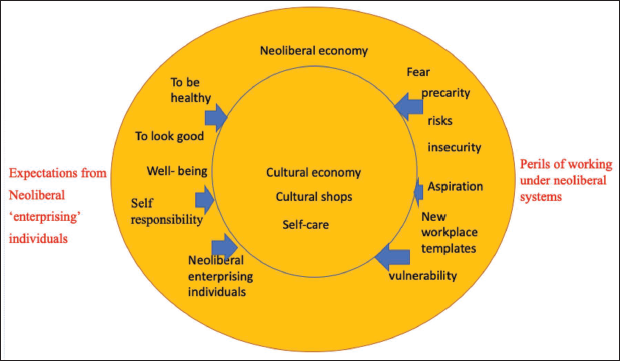
To understand how the economic and cultural logic shape self-care practices, the following section maps the wellness terrain in Dharamshala. It explores how small-scale self-care centres, despite lacking a guru-lineage, have crafted a holistic space that caters to the needs and aspirations of their clients. Their emergence reflects recent developments in the landscape of self-care practices in post-reform India, where affordable centres become sites to cope with the precarities and vulnerabilities of the flexible labour market.
Mapping the Wellness Landscape: From Transnational Guru Organisations to Small-scale Self-care Centres in Dharamshala
The trajectory of Dharamshala’s wellness landscape is closely intertwined with its sociopolitical transformation following the arrival of Tibetan migrants, along with their revered leader, His Holiness the Dalai Lama, in the late 1950s. This event not only reshaped the cultural identity of the region but also gradually positioned Dharamshala as an international spiritual destination on the world map. Foreign tourists gradually started visiting the town. Gradually, monasteries and nunneries such as the Namgyal Monastery, 2 the Gyuto Monastery, 3 the Thosamling nunnery 4 and so on were built in McLeod Ganj. In 1972, the first centre called Tushita Meditation Centres, 5 was established, marking the beginning of institutionalised spiritual tourism in Dharamkot, a village near McLeod Ganj.
In subsequent years, popular transnational Hindu spiritual and yoga gurus of those times opened their centres and retreats, namely Chinmaya Tapovan Mission, 6 Vipassana Meditation, 7 Iyengar Yoga 8 and Osho Nisarga Ashram 9 anchored around the teachings of the guru, who often belonged to particular spiritual and yogic traditions. These centres have sprawling properties with manicured gardens overlooking the Dhauladhar range, and are visited by initiates throughout the year. These centres have distinct boundaries and can be distinctly demarcated. These ashrams have well-designed spaces for residence, dining, meditation and prayer halls with designated office-cum-visitor information centres and libraries. They offer courses and programmes in spiritual wellness, yoga and the study of Vedanta and Tibetan Buddhism. The initiates are assisted by staff who look after lodging, food, laundry services and other services and basic amenities for the people who visit and attend courses and programmes. The amenities and services offered by these centres may vary—from being offered satvik food (a diet considered pure, commonly associated with yogic and Ayurvedic traditions) to grand rooms and cottages. Their attendees follow prescribed schedules and follow the strict guidelines of the guru organisation.
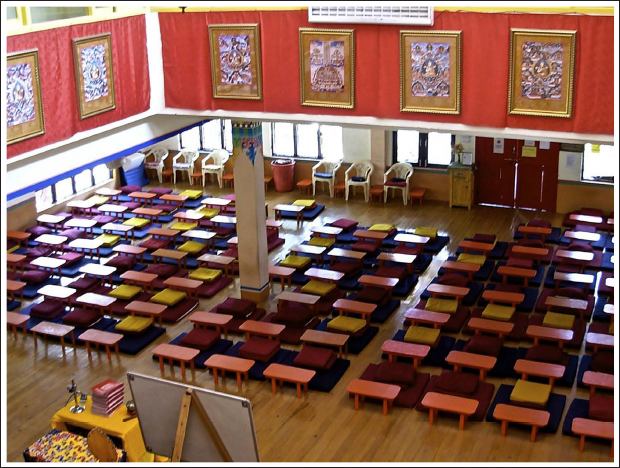
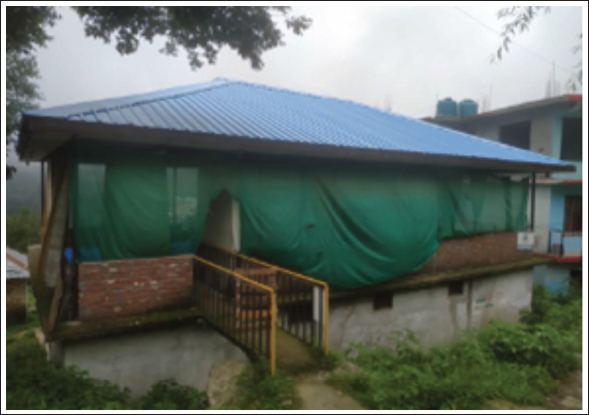
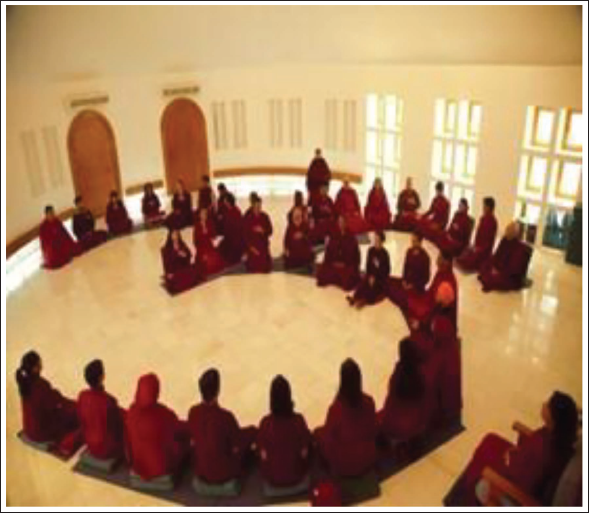
Amidst these transnational centres, one can see a large number of small-scale self-care centres that have grown in Dharamshala. Unlike transnational guru ashrams that are located in isolated areas and anchored in particular traditions—spiritual, meditative and yogic, the small-scale self-care centres have a humble background. They are often located within the busy residential areas of McLeod Ganj, making it difficult to differentiate between mundane spaces and specialised ashrams (Figure 5). These centres do not have a curated ambience, like those in transnational guru organisations or yoga and meditation centres of the metropolitan cities. Instead, they utilise existing resources that are available to them, which helps them operate without much cost. The building, property as well as locations of these centres are low profile and appear rudimentary. Their programmes, amenities and services—food and lodge—are affordable and pocket-friendly, which makes them accessible to the non-elite middle-class population navigating precarities and vulnerabilities. A detailed comparison highlights the contrasts between the transnational 10 guru organisations and the varied self-care centres. 11 For instance, the meditation halls of Tushita Centre (Figure 2) 12 and Osho Ashram 13 are opulent and spacious. The ambience exudes warmth and calmness. The ambience looks colour-coordinated, such as in Osho Nisarga, where the initiates are clad in maroon robes. The hall at Tushita is beautifully decorated with Thangka paintings, and the floor cushions are colour-coordinated. On the other hand, the yoga and meditation hall at Upper Bhagsunag (Figure 3) presents itself as a space that has come up utilising frugal material but definitely with innovative ideas. The centre (Figure 5) has paintings of a Hindu deity, a Buddhist, and Kundalini Chakras on an unplastered wall. The wall may not create an ambience like that of an Osho or a Tushita, but it definitely presents a prudent yet creative way of running a self-care centre. Similarly, the buildings of the transnational centres are grand and flaunt the scenic beauty in which they are located. For instance, the Osho Nisarga Ashram (Figure 4) 14 flaunts the snow-capped Dhauladhar mountains in the backdrop. Their property is spread over several acres, wherein the initiates involve themselves in organic farming and self-cooking. Whereas a yoga centre (Figure 3), operating in upper Bhagsunag on the rooftop, explains that even though the property is not grand, many yoga and meditation enthusiasts are attracted to the idea of performing yoga in the open, surrounded by nature.
Tushita Meditation Centre, Dharamshala.
A Yoga Centre in Upper Bhagsunag, McLeod Ganj.
Osho Nisarga Ashram, Dharamshala.
A Centre in Upper Bhagsunag, McLeod Ganj.
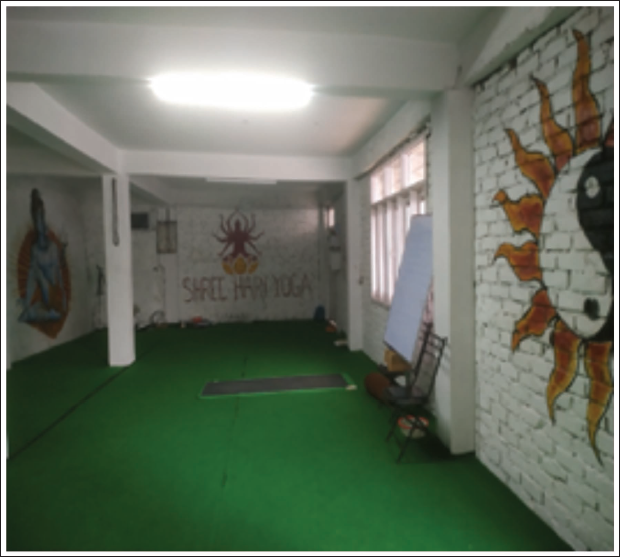
These contrasts illustrate the difference not just in scale and grandeur but also in the neoliberal logic that is attached to them. These emerging self-care centres stand nowhere in comparison to transnational centres. Yet, they have carved a space for themselves and are visited by tourists and wellness enthusiasts. The peculiarity of these small-scale centres lies in the nature of their demands and motivations that are deep-seated in the social, economic and political spheres. As said, the leanings of individuals towards these self-care centres are anchored in risks, vulnerabilities and requirements to avail services that could act as a tranquiliser. In response to these systemic precarities, a comprehensive cultural market has developed in Dharamshala that caters to personalised therapeutic consumption—illustrating how neoliberal logics of responsibilisation increasingly shape both wellness infrastructures and the subjectivities of those who seek them. The local economy in Dharamshala reflects this shift wherein, among all mundane works—such as tour and travel, hiking and trekking, food stalls and homestays, selling culture has become one of the prominent ways to earn a livelihood. Wellness, in this sense, is not just a personal or spiritual pursuit but also a commodified experience, marketed as part of an aspirational lifestyle. To illustrate this in detail, the next section examines the services offered by these small-scale self-care centres that are part of this commodified experience in the expanding cultural economy.
The ‘Walmart’ of Self-care
In the previous discussions, it has been established how the precarities and vulnerabilities under the neoliberal regime concomitantly increase the demand for therapeutic consumption that can offer a ‘balm effect’. This section discusses how the emerging small-scale self-care centres in Dharamshala cater to these demands. The wellness landscape in Dharamshala can be best understood as what may be termed a Walmart of self-care—a highly accessible marketplace offering diverse, budget-friendly, tailor-made customisable services designed for urban professionals and wellness enthusiasts. The term emerged during an interview with Sanjay (name changed), the owner of a reputed yoga centre in Dharamshala. For Sanjay, Walmart here refers to a huge market that offers a wide range of products and services to varied customers at reasonable, pocket-friendly rates. Dharamshala appears like a Walmart, where every customer can find something as per their taste and paying capacity. From a variety of yoga, meditation, rejuvenation, healing and massage therapies offered in these self-care centres in Dharamshala, services are carefully packaged to suit time constraints as well as aspirations. Sanjay says that these self-care centres are a ‘one-stop shop’ that caters to varied choices keeping in mind the neoliberal tenets of time and efficiency. He further explains that many clients wish to engage in activities that are non-religious, but they definitely look for a ‘scientific’ rationale behind yoga, meditation and so on. He is also aware that people demand convenience, promptness and flexibility, and look for instant, quick-fix solutions to their everyday concerns. In this context, his usage of the term ‘Walmart’ is appropriate as yoga seems less about a journey into spirituality but a physical activity laced in affordability and convenience in an expanding cultural economy.
This logic reflects in the marketing strategies adopted by the local centres in McLeod Ganj. A prominent yoga centre advertises its ‘yoga vacation’ with the tagline ‘retreat to restore your well-being’. 15 Such advertisements bring to the fore not only the services, offerings and hospitality, such as basic amenities, food, lodging facilities, programme details, tariffs and so on, but also have a branding logic. They promise to take care of an individual by providing the desired services—providing a fully catered vacation in nature’s lap where they are free to curate and self-guide their retreat. Notably, the service providers are aware that the prospective clients work under pressure and follow a highly structured life and, therefore, providing clients the freedom to design and self-guide their retreat aims at therapeutic appeal.
The service providers in Dharamshala explain that, increasingly, clients demand a comprehensive retreat package that balances rest with self-improvement. Many want to engage at their own pace in their own choice of activities in pursuit of leading a slow-paced life for some time. Time is a defining feature of neoliberal systems, where being slow-paced, unproductive or unable to keep up with the changing templates at the workplace requires justification. Thus, clients often demand to utilise their vacation to learn new skills or activities that are not just rejuvenating but also growth-oriented. Keeping up with these demands towards self-actualisation and self-perfection, service providers curate wellness packages. In doing so, the yoga market has properly aligned with the production of neoliberal subjects. The centres focus on creating an experience that helps clients recover from their stressful lives. They tap into the demands of modern clients that are not hedonistic, that is, not only seeking pleasure but also adding meaning to their lives by ‘doing meaningful things’. A holistic market has come up that offers a wide range of services to choose from: whether one wants to experience the rustic environment or a high-end resort; the level of immersion that one wants to have through postural yoga or exercise-based yoga and so on. Owing to this breadth of choices and configurable intensity levels, a Walmart of yoga has developed that comfortably accommodates the urban population that demands self-care services in forms that align with neoliberal tenets of self-responsibility.
In making these promises, modern yoga has evolved into a flexible form, curated according to the demands of customers. Jain (2021) calls it neoliberal yoga, wherein state power is deployed to manufacture individuals who are suitable for market economies. The ‘self-care’ market has witnessed an unprecedented rise and ‘became a way to signal a consumer’s willingness to own up to their responsibility for their well-being, and yoga was widely sold as an effective path to get there’ (Jain, 2021, p. 54). Perhaps neoliberalism has succeeded in not only producing commodities suited to people but also individuals whom it prefers. The Walmart of yoga highlights the varied programmes on offer in these self-care centres, and the spaces where these practices take place definitely need exploration. The following sub-sections discuss the sites, ambience and anchorage of these budget centres that qualify Dharamshala’s self-care landscape as the Walmart of yoga.
Sites and Agencies
In exploring the cultural dimension of the economy, Scott and Urry (1994, p. 64) assert that ‘the economy is increasingly culturally inflected and… culture is more and more economically inflected such that the boundaries between the two become more and more blurred and the economy and culture no longer function regarding one another as system and environment’. In the scholarship of the cultural economy of tourism, the wider concerns remain around cultural consumption, the impact of culture on tourist flow (Herrero-Prieto & Gomez-Vega, 2017), regional development (Girard & Nijkamp, 2009) as well as branding and marketing strategies and state policies (Servillo et al., 2012). Thus, the larger concern is to promote cultural heritage and legacy to attract tourists. In a very limiting understanding, cultural tourism often negates the political economic factors, local dynamics, and the spaces where these developments take place. In doing so, it bypasses the larger concerns of the transformation of a place into a haphazard urban space (Singh et al., 2022) as well as the strategies and methods of the local population to leverage their existing resources.
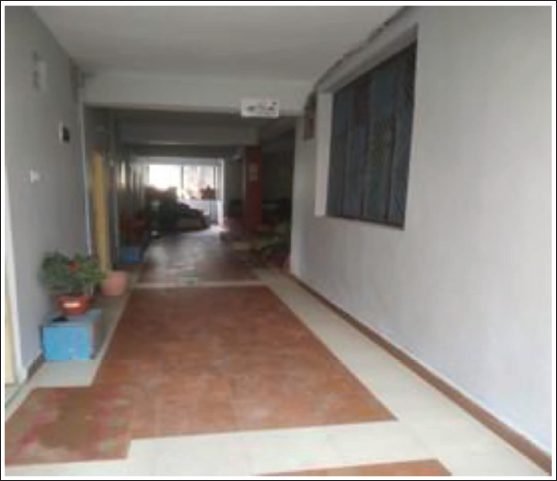
The emergence of small-scale self-care centres spread across the geography of McLeod Ganj helps address these overlooked dimensions. As discussed, the landscape of these centres highlights how a full-fledged economy has organically mushroomed across the geography of Dharamshala through improvisation and as a response to the demands of the wellness market. Several centres are located on isolated hills in these localities and can be reached through trekking and walking (Jha & Singh, 2023). As shown above, the ambience may not be grand, but it is definitely taken care of. In the absence of resources, these self-care centres have created temporary halls in makeshift arrangements that are utilised for varied purposes. In the morning, the space is used as a yoga hall, while in the evening a sit-out area for discussion. In between, it is for many other things. Most of these centres operate from residential buildings, often making it difficult to distinguish them from their surroundings. The location of a yoga centre (Figure 6) is one of such cases that blends seamlessly with its surroundings. The unacquainted would not be able to locate this centre amongst other ordinary-looking spaces. 16 Another prominent centre (Figure 8) situated right next to the Bhagsu naala (stormwater drain) that flows in Bhagsunag—demonstrates how local landscapes, constraints and improvisation intersect in shaping the presence of yoga enterprises in Dharamshala. In all, these sites blur the distinction between commercial and domestic space, which is an attempt towards remaining competitive through minimal costs and maximum jugaad.
A Yoga Centre in McLeod Ganj.
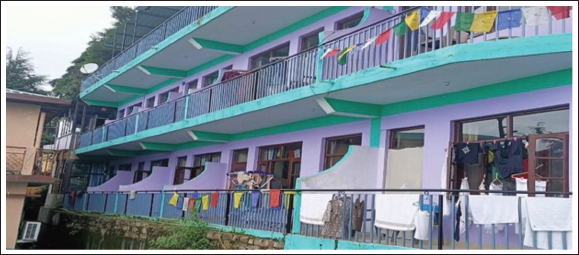
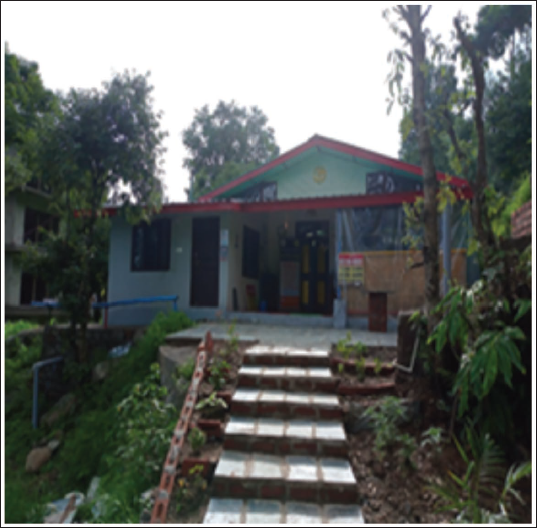
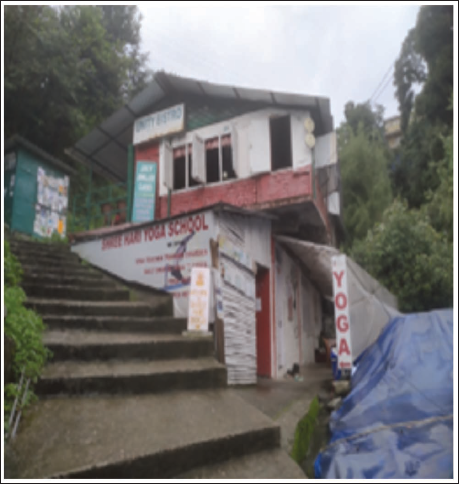
Many self-care centres in Bhagsunag and McLeod Ganj (Figures 5, 6, 7 17 and 8) provide services such as yoga and meditation classes, retreats, yoga teachers’ training and yoga at home. Those on retreat are also taken on local sightseeing trips to tourist attractions. They also provide in-house lodging facilities in the form of standard rooms, deluxe suites and studio apartments, which are well-furnished with modern facilities. They also provide hospitality through in-house cafes and dhabas. These centres represent a dense ecosystem of services that is entwined with the broader logic of the wellness market—offering tailor-made, flexible and personalised services for customers seeking a balance of relaxation and self-improvement within neoliberal temporalities.
Yoga Centre in Upper Bhagsunag.
Yoga Centre in Upper Bhagsunag.
Ambience and Arrangement
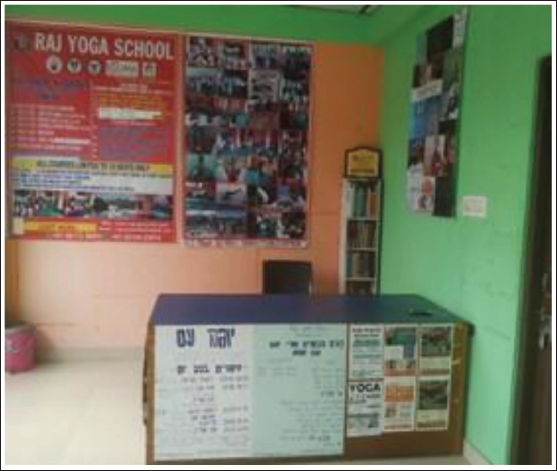
The self-care centres in Dharamshala break the imagination of self-care centres being plush, high-end and well-trained service centres. Instead, these are humble spaces confined to a few rooms or sometimes only a multipurpose hall. These spaces reflect a hybrid of personal and professional space, blurring the demarcations. Located in the Bhagsunag and Dharamkot areas of McLeod Ganj, they can be comfortably labelled as informal yet organised spaces. For instance, both a massage centre (Figure 9) and a yoga centre (Figure 10) operate from one room inside a residential building. A makeshift desk, right outside the room, at both centres, acts as an office space while certification posters and advertisements displayed behind the help desk (Figure 10) detail courses, their affiliation, and timings, along with photographs of clients performing yogic asanas in the yoga school, signal professionalism, legitimacy and authenticity at the same time. These signages illustrate to the clients that, despite being low-cost, the services offered are authentic and recognised by certified bodies.
A Massage Centre in McLeod Ganj.
Yoga School.
A Yoga Centre in Upper Bhagsunag, McLeod Ganj.
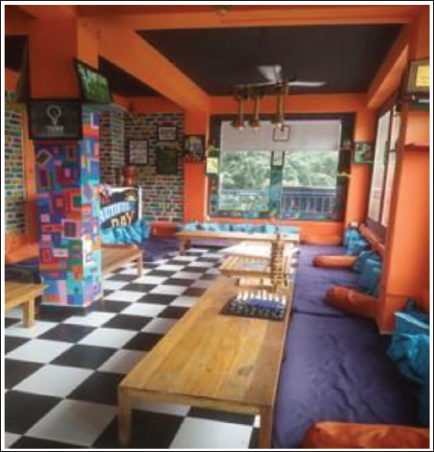
A Yoga Centre in Upper Bhagsunag, McLeod Ganj.
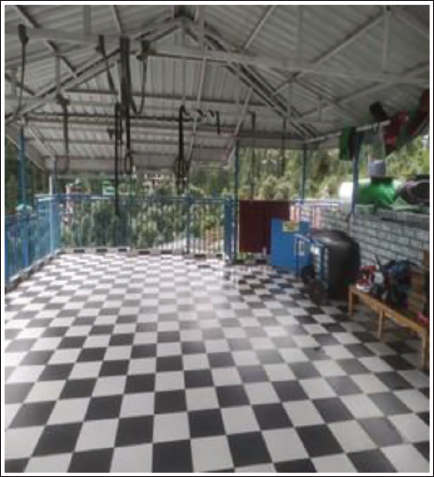
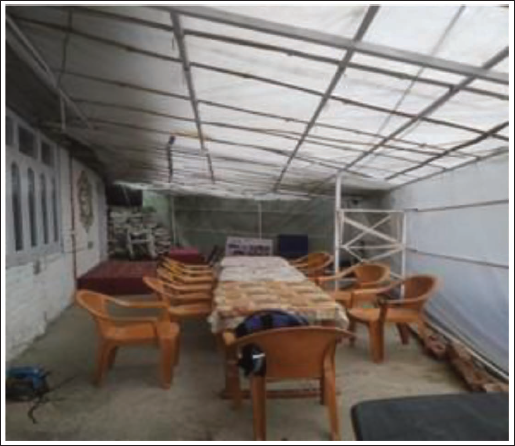
In another case, a holistic yoga centre (Figures 11 and 12) with a panoramic view of the Dhauladhar in upper Bhagsunag has been designed keeping in mind the taste and preferences of urbanites. 18 Here, pop colours, abstract designs on the pillars, fancy ceiling lamps and low-floor seating with board games create a hybrid space catering to clients who seek wellness services in their own comfort. In contrast to the centre in Figures 11 and 12, other centres employ a more restrained use of space due to the absence of resources. In Figure 13, the humble seating space right outside the yoga room in the verandah covered with plastic sheets supported by iron rods and bamboo sticks acts as a waiting area. Similarly, a centre (Figure 14) located in a remote location in upper Dharamkot converts its simplicity and isolation into its unique selling point—‘yoga in the wilderness’. These sites attract customers seeking harmony with nature, solitude and minimalism.
Seating Outside the Yoga Hall.
A Yoga Centre in Upper Bhagsunag.
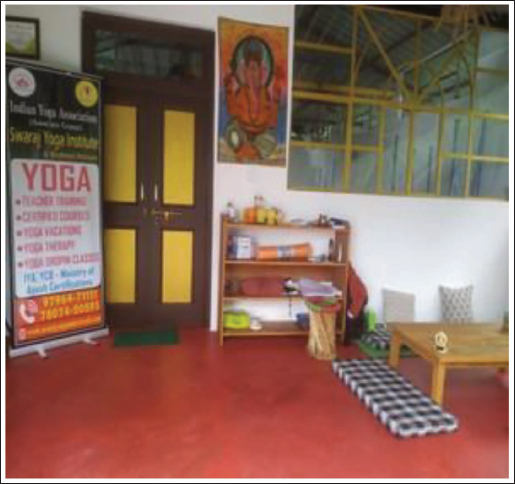
Across these discussions, a shared pattern emerges: centres have limited resources, yet are mindfully designed to align with the expectations of customers—whether through display of certificates on the wall, hybrid spaces or centres situated in natural surroundings and so on. These centres reveal how self-care centres in Dharamshala improvise innovatively, using minimal resources to remain competitive in the expanding cultural economy where they have created and curated a space for varied clientele. There are niche spaces for niche clients who demand a neat and sanitised space, and there are sober, improvised spaces for ‘budget customers’—Dharamshala offers spaces at both ends of the spectrum. Together, these sites illustrate how in the post-reform period in India, wellness infrastructures are driven by market logic and strategies interwoven with aspirations and neoliberal temporalities.
Anchorage
As discussed above, owners of these small-scale centres are more like service providers than a guru figure. This becomes evident not only through their professional practices but also through their demeanour. They dress casually and engage with clients and the local community members, like others. One may not find any cultivated aura or halo around these service providers. Several respondents explained that the evolving modern practices in the tradition of yoga are bereft of the guru-shishya parampara (teacher and disciple). In current times, one can learn yoga without ever having a guru (Goldberg & Singleton, 2014, p. 4). This change resonates with the larger shift from religiosity to spirituality, which emphasises equality in relations and does not accord a higher place to an individual. Goldberg and Singleton (2017, p. 7) assert that ‘guru here is the lifestyle coach, personal trainer and alternative health practitioner who may offer spiritual advice but is authorised by essentially non-mystical, rational-scientific knowledge’. In conjunction with this, Karina (name changed), a yoga instructor who often visits Dharamshala, explained that ‘yoga, its meaning and its purpose have changed over time and are in tandem with the current demands. In ancient times, the end goal was to attain samadhi; no one desires that today. People have duties and responsibilities towards their families’. 19 According to her, programmes are now designed to fit into busy lives—short courses, stress relief and optimisation techniques or workplace efficiency sessions—rather than long-term discipleship. In her view, there is no guru-shishya parampara because there is no selfless motive. She says, ‘the guru-shishya bond of earlier times is replaced by short-lived, transactional exchanges where providers seek income and clients seek immediate benefits.’ 19 She further says ‘People have desires and aspirations in life that they do not want to let go of. In fact, the present generation does not believe in ‘letting go of one, to attain the other; it believes in having it all’. 19 In alignment with Karina’s observations; Purohit, a local resident critiqued the modern form of yoga that has gripped the cultural economy in Dharamshala—‘what is going on in the market here is the concept of wellness. These are distractions from the traditions of yog which were learned under the guidance of gurus…’. 20 Purohit’s concerns are based on his long association with the evolving market in Dharamshala. He states, ‘the business-minded people have tried to enforce yog in all dimensions. Resultantly, every other person is doing yog(a), and more than half of them are ‘doing it wrong’. His observation explains the diluted forms of yoga that shape the landscape of the cultural economy in Dharamshala. The modern forms of self-care practices place comfort, convenience and cost-effectiveness at the centre. In line with these demands, self-care practices, such as ‘yoga, have been sold as a form of exercise’ (Beaman, 2016) without engaging with specific religious traditions and practices. Purohit’s observation also brings to the fore the tension between tradition, authenticity and market demands. In order to elucidate Karina’s and Purohit’s reflections on the commodification of yoga, the discussion on programmes and offerings will unpack how self-care is packaged and sold, laced with neoliberal logic.
Programmes, Offerings and the Logic of Neoliberal Wellness
Building on the previous section, the programmes and services offered in self-care centres in Dharamshala reveal the various methods and strategies employed to attract customers. Just as these centres mould the physical spaces to suit the requirements of customers, similarly, they also employ marketing strategies that align with customers’ aspirations, demands and neoliberal temporalities. With a significant proportion of business coming through online pre-bookings, the websites become the sites of ‘first impression’. Websites act as digital storefronts that sell a promise to the customers—of the best services, professionals and experience. It discusses the courses on offer, the duration of these courses, along with the fees and the syllabus. These websites often elaborate on the benefits one could receive out of doing certain asanas or practices. For instance, naturopathy detox and shat karma (detox practice) advertisements provide information about the procedures along with benefits, time taken to conduct them and the fees. Services such as Abhyang (ayurvedic oil massage) or Ayurahara (cooking ayurvedic meals) emphasise weight loss, stress relief and lifestyle enhancement. Similarly, another website advertises courses on Hatha, Ashtanga, Vinyasa, pranayama, meditation, yoga Nidra and restorative yoga, respectively, along with details on their benefits, level of immersion and the fee. Similarly, ayurvedic practices of shat karma or the Ayurahara have been converted into attractive packages 21 with scientific rationale and measurable outcomes attached to them, such as weight loss, stress relief, glowing skin, improved concentration and so on. The language used is promising, laced with finite gains and scientific rhetoric. This helps target customers who might be hard-pressed for time and who require details on the procedures to be conducted and the benefits to be attained. Their offerings are customisable based on the requirement and the immersion level of the clients. 22 In doing so, digital platforms are used as sites to not only advertise the programmes but also to establish an image of customisable, accessible and customer-centric services. These are different from the transnational centres that follow rigid schedules and standardised formats. By promising accessibility, flexibility, optimisation and personalisation, these small-scale self-care centres reflect how self-care and wellness are being seen as an individualised act wherein clients become the self-responsible individual responsible for their well-being, while the service providers shuffle between multiple roles to survive precarious market conditions. This resonates well with Lavrence and Lozanski’s (2014) work on the Canadian multinational athletics apparel brand, Lululemon. Their brand manifesto ‘life is full of setbacks; success is determined by how you handle setbacks’ (Lavrence & Lozanski, 2014, p. 88) holds only the buyer/consumer responsible for the choices made. We witness similar interpretations in the case of Dharamshala, which asserts that well-being is a choice that is managed by the self. Thus, the seemingly commercial aspects of these programmes and offerings are embedded in the shift in the political economy and how it has reshaped one’s life in contemporary India. These self-care centres in a small town like Dharamshala also participate in producing neoliberal subjects that are self-responsible and enterprising, thereby orienting itself with global capitalism.
Entrepreneurial Subjects and Coping Mechanisms
In interacting with the market, owners and service providers negotiate with uncertainties of the market, which, though different, are mutually reinforcing. Service providers deal with the fluctuations in the market through the credo of jugaad, thereby embracing entrepreneurial subjectivity. They manage multiple roles: instructor, host, property manager/broker, hydroponic farmer and healer, to mitigate risks and ensure a perennial flow of income. For the clients, self-care practices are geared towards strategies to survive the ordeals of the market and navigate structural pressures. As Karina explains, yoga is now considered a mechanism to deal with worldly pressures rather than as a pathway to renunciation. A naturopathy detox promises weight loss, balance energies, reduce anxieties and so on—that fits into the rising aspirations of self-improvement and efficiency. Self-care thus becomes an individualised response of clients towards the risks of everyday life. Thus, service providers and clients are interlinked by the shared logic of neoliberal self-responsibilisation, wherein both engage with the cultural market in their own ways. While precarious neoliberal markets create demand for self-care, livelihoods thrive on the continuation of that demand. The cultural economy in Dharamshala demonstrates how precarity and vulnerability become valuable resources in the demanding cultural economy in the post-reform period in India: a customer who must heal and cope and the service provider who must keep up with the changing demands of the market. This also ensures the end product of security to both—a rejuvenated neoliberal enterprising individual, in the client and a relatively stable livelihood option for the service provider in the volatile market.
Conclusion
Yog udyog hai, a casual statement made, actually provides a rich insight into the rising self-care practices and their interlinkages with the political economy in post-reform India. Practices of self-care are not mere indulgences or personal choices, but activities geared towards self-preservation. The small-scale centres become sites of neoliberal governmentality and the political economy of self-care, wherein clients who are self-responsibilised individuals deal with their risks and insecurities as well as ever-growing aspirations by turning self-care practices into ‘technologies of the self’ (Foucault, 1988). In this process, self-care thus becomes a therapy as well as a business.
In foregrounding small-scale self-care centres alongside transnational guru organisations, this article develops the idea of a political economy of self-care. This perspective insists that self-care practices are inseparable from the broader political-economic transformations of liberalisation, welfare retrenchment, and precarious service work. It also clears the assumption that self-care economies are driven by the demands of the elite. In fact, it establishes that they are sustained through ordinary, non-elite markets, wherein flexibility and affordability become the driving forces.
The political economy of self-care also encourages us to rethink how vulnerability itself becomes a commodity under the new market system. It also nudges one to think that even though these self-care centres assist individuals in managing stress, burnout, anxiety and uncertainties, they have normalised risks, vulnerabilities and precarities. The proliferation of self-care centres and the increasing use of affordable self-care practices highlight two important interrelated issues: diminishing state support and the expansion of the market (Upadhyay & Jha, 2023). In this way, self-care is turned into a strategy of survival and a form of neoliberal governmentality wherein the diminishing role of the state is simultaneously coupled with the subtle creation of space for the market to operate and provide those services that the state fails to provide (Upadhyay & Jha, 2023). Further, the scope of this study is not limited to Dharamshala–McLeod Ganj but must be explored in other small towns/centres that hold the potential to enrich the dominant neoliberal discourse around self-care. Finally, the article demonstrates that Dharamshala’s ‘Walmart of self-care’ is not just a metaphor but an insight into how post-reform India transforms self-care into an industry, livelihood and technology of the self, all at once. Self-care here is not merely an escape from the pressures of neoliberal life but a mode of living through them, producing subjects who must continuously recalibrate themselves in order to endure. It establishes that in post-reform India, self-care is not just a lifestyle but a mode of survival and livelihood—where yog has become udyog.
Footnotes
Acknowledgement
The author is extremely thankful to Dr Surya Prakash Upadhyay and Dr Uttam Singh for reading the draft and offering valuable comments. The author is very thankful to her respondents (the service providers/owners of self-care centres, as well as Mr Prem Sagar in McLeod Ganj, Dharamshala). This work was unimaginable without their cooperation and help.
Data Availability Statement
This article is based on ethnographic research methods, and informal verbal consent of all participants (service providers/owners of self-care centres) was sought and received. All the data used in this article, if required, could be provided to the concerned authorities. The data taken from the websites of the service providers have been cited appropriately.
Declaration of Conflict of Interests
The author declared no potential conflicts of interest with respect to the research, authorship and/or publication of this article.
Funding
The author disclosed receipt of the following financial support for the research, authorship, and/or publication of this article: Research for this ethnographic article was conducted as part of the doctoral thesis of the author at the Indian Institute of Technology, Mandi, Himachal Pradesh. The author received a fellowship during the PhD tenure from UGC as a JRF-SRF fellow. No other source of funding was received for this work.
