







Abstract
Sustainability Marketing (SM) is an innovative as well as a provocative area of research in the 21st century owing to the intensified competitive pressure in the business environment. Sustainability is conceptualized to constitute economic, social and environmental dimensions. These are originally premised on the Triple Bottom Line (TBL) approach. The present study examines these elements by acknowledging the nexus between marketing and sustainability to reveal the antecedents and consequences pertaining to SM. This study investigates the feasibility of joint application of sustainability and marketing along with a blueprint of SM’s effect on corporate reputation (CR) and consumers’ purchase intentions (PI). Four hundred and forty respondents from North India were surveyed through email. Structural Equation Modelling (SEM) was employed to examine SM’s effect on CR and PI through sustainability advertising (SA). The study implies that if the practitioners believe in sustainability and want to reap the benefits of favourable CR, they must adopt SA strategies for positioning the firm’s sustainability efforts in the desired way.
Keywords
Introduction
The concept of sustainability has been established as a key imperative in the contemporary business environment. Various researchers posit that in the upcoming era, the competitiveness and survival of firms will be extensively dependent on how they respond to the sustainability issues (Epstein & Buhovac, 2014; Hussain et al., 2016). Sustainable development pertains to meeting the demands of the current generation without jeopardizing the ability of future generations to fulfil their own needs (Alameeri et al., 2017; WCED, 1987). The essence of sustainability is based on the concept of Triple Bottom Line (TBL; Elkington, 2002; Hammer & Pivo, 2017). This model entails social and environmental activities that steer improved economic performance while avoiding such activities that fall outside this intersection (Scarsi & Cepolina, 2016). The environmental, social and economic pillars of sustainability are also referred to as the three Ps—planet, people and profit (Molamohamadi & Ismail, 2013).
The term ‘sustainability’ is often confused with ‘environmental conservation’ (Peattie, 1995) and ‘Corporate Social Responsibility’ (CSR) (Montiel, 2008), which restricts the comprehensiveness of the sustainability concept (Obermiller et al., 2008). This theoretical fragmentation hinders the potential of the overall holistic concept to effectively address the sustainability issue (Thomas, 2018). Moreover, this lack of accord poses a condition of confusion for academics and practitioners; therefore, an insightful research on the sustainability subject is required (Kordestani et al., 2015). Nonetheless, these aspects are internally consistent as ecological prosperity prompts increased social equity and also escalates stakeholders’ interest or economic strength (Berkes et al., 2000). However, in the previous studies, these three elements are studied individually rather than as a consolidated concept (Martinez & del Bosque, 2014; Ottman et al., 2006; Thomas, 2018). Therefore, the present study is concerned with understanding how companies can reconcile the need of being socially and ecologically sustainable and also confirm with the demands of a market-based system where the major measurements of organisational success comprise growth and profit—in other words, maintaining the firm’s economic sustainability. Usually, the social and environmental sustainability initiatives tend to be the product of more economically sustainable and mature companies only. Hence, economic sustainability is recognized as the most elusive dimension of the TBL approach. Nevertheless, maximum marketing studies related to sustainability pertain to environmental marketing, social marketing, and also CSR. Here, the inclusion of economic sustainability is desirable to avoid the devastating consequences pertaining to the premature death of businesses as a result of economic failure. Henceforth, the economic dimension that can align with social and ecological sustainability needs to be examined under the common umbrella.
In addition, there is growing recognition among firms regarding the significance of the sustainability approach for enhancing their marketing responsiveness. Therefore, an increasing number of firms are now gravitating towards SM. For marketers, the liaison between sustainability and marketing seems to be non-contentious, so they strive to influence the consumers’ purchase intention (PI) by offering sustainable products and by communicating sustainability knowledge through tools like sustainability advertising (SA). Evidently, there is a dearth of literature interpreting the comprehensive picture of sustainability and its integration with the marketing objectives. Hence, there is a dire need to narrow this gap by re-joining the fragmented aspects of this concept into a holistic perspective. This may help in effectively explaining the factors and effects of SM to attain the firm’s sustainability goals. For achieving this objective, the integration of Theory of Planned Behaviour (TPB) and Signalling Theory is required. This study endeavours to pursue a research framework with constituents from both these theories, which eventually lead to gaining higher PI.
To summarize, this study intends to examine and elucidate the important mechanism at the convergence of sustainability and marketing with its effect on corporate reputation (CR) and PI via SA strategies. Based on a structural equation model (SEM), the present study provides implications that if practitioners believe in sustainability and want to reap the benefits of favourable CR, they must adopt SA strategies for positioning firm’s sustainability efforts in the most effective way. Given the lack of literature on the association between SM and PI, results of this paper are likely to address this research gap. Further, the findings of this paper would also offer valuable insights for marketing professionals to incorporate SM practices for improving the firm’s CR and gaining the desired PI. The present research also furnishes much-needed empirical support to favour the argument that the improvement of the three facets of sustainability can be done simultaneously (Rao & Holt, 2005).
Thus, this paper attempts to answer the following research questions:
RQ1: Does the company’s SM initiatives enhance its worth in terms of its reputation in consumers’ mind-sets leading towards enhancement of the consumer’s purchase intent thereto? RQ2: Does there exists any interface relationship between SM and SA, thereby exploring the plausibility of enhancing the consumer’s PI by improvising the company’s communication efforts and communication value through SA?
In the following sections, the theoretical framework and research hypotheses are provided, the analysis of the relationships among the research variables is given, and finally, the findings and implications are discussed.
Theoretical Framework
Sustainability Marketing
Sustainability has readily entered the vernacular of marketing discipline nowadays (Charter et al., 2006) and is deliberated as a critical guide in augmenting the marketability of a firm’s products (Mutumi & Simatele, 2017). Sustainability concern in conjunction with a firm’s marketing strategy has recently captured unprecedented attention from various researchers and practitioners (Kumar & Christodoulopoulou 2014; Leonidou et al., 2013; Mick et al., 2012). Unfortunately, empirical insights related to reinforcing the incorporation of sustainability into a firm’s marketing strategy are still lacking (Kumar et al., 2013).
Past studies explored the sustainability concept under various labels, namely green marketing, greener marketing, environmental marketing, social marketing, societal marketing and sustainable marketing, and most of them have explored the impacts of these approaches in context of consumer response behaviour (Charter, 1992; Coddington, 1992; Dam & Apeldoorn, 1996; Ottman, 1993; Peattie, 1995; Peattie & Crane, 2005). Sustainability marketing emerged as an umbrella concept after the consolidation of all these sub-concepts. Although marketing is considered as an antithesis to sustainability (Lim, 2016), there is enough potential in marketing’s ability to affect sustainable lifestyles and offer sustainable products to customers (Peattie & Peattie, 2009).
Sustainability Advertising
Advertising in integration with sustainability came to be applied in practice (Kilbourne, 1997) due to the increasing consumers’ sustainability awareness and the growing role of advertisements in stimulating consumer’s PI. Furthermore, SA not only promotes products and services but also potentially maintains the social equity and ecological well-being in the long run. As per the Signalling Theory, firms need to adopt SA initiatives for effectively communicating their sustainability commitment to customers (Connelly et al., 2011). Therefore, SA is considered fundamental in increasing the effectiveness of a sustainability programme.
The extant literature premises state that SA may serve as a critical linkage between SM and favourable CR building for further improving organisational performance (Fombrun & Shanley, 1990) through higher customer loyalty and PI (Bhattacharya & Sen, 2003). Signitzer and Prexl (2008) claimed that without effective communication, sustainable CR cannot be developed and maintained. Moreover, consistent communication through advertisements is a prerequisite for maintaining favourable word of mouth among consumers (Richins, 1983). Researchers have stated that the foundation of successful CSR and environmental programmes basically rests on a company’s ability to successfully communicate and promote the programme in society, which plays a crucial role in building a favourable CR and PI (Ansar, 2013; Sen et al., 2006).
Corporate Reputation
CR is the net worth index of a firm, and it is considered as a key distinctive capability that lays the foundation of corporate success (Yadav et al., 2018). With a focus on building CR, theories such as Institutional Theory (Rao, 1994) and Resource-based View (RBV) Theory (Roberts & Dowling, 2002) are often applied at different stages of reputation building.
Besides, CR influences the behaviour of different stakeholders towards a firm by drawing the attention of customers, employees and investors, and by motivating the suppliers (Chun, 2005). There is growing evidence that many firms are mindful of building and maintaining a good CR and how it influences the consumers’ PI (Mahon & Wartick, 2003). Favourable CR aids rapid market penetration and builds long-term customer relationships (Andreassen & Lindestad, 1998). Thus, sustainability-oriented CR minimizes the customers’ uncertainties regarding the product’s performance (Ramasamy & Yeung, 2008) and favourably influences PI towards the firm’s products (Drumwright, 1994).
Purchase Intention
PI is a key element of cognitive behaviour specifying the possibility and way in which a consumer intends to buy a specific product or brand (Dodds et al., 1991). Apparently, it is the most crucial predictor of consumer purchase behaviour (Morwitz & Schmittlein, 1992). As per the TPB (Ajzen, 1985) and the Theory of Reasoned Action (TRA) (Fishbein & Ajzen, 1975), it is regarded as a significant antecedent to consumers’ purchase decision (Permatasari & Laydi, 2018).
This study particularly draws upon the TPB and Signalling Theory. TPB is based on the assumption that individual performance of a specific behaviour is determined by three components: attitude, subjective norm and perceived behavioural control. Collectively, these variables form the behavioural intention that eventually influences the consumer behaviour (Ajzen, 2002). TPB has been validated in the context of green PI and in predicting socially significant behaviours. It has been pointed out by many researchers that implementation of CSR activities by a corporation can result in the improvement of consumers’ PI (Huang et al., 2014) and, similarly, a positive correlation exists between green marketing initiatives and customers’ PI (Taufique & Vaithianathan, 2018; Verma & Chandra, 2017; Yazdanpanah & Forouzani, 2015). Furthermore, the association between the economic sustainability of a firm and the PI of the consumers is also explored by past researchers (Irfan et al., 2018; Jamil et al., 2017). Therefore, in this paper, the cumulative impact of all these sustainability elements (economic, social and environmental) on PI is measured within the similar premises of TPB.
Further, this paper also uses the Signalling Theory, which is oriented towards solving the information asymmetries existing or arising between customers and firms in order to reduce purchase uncertainty. Signals are those observable features that the business communicates to customers primarily regarding the product or service quality and the promise of consumer satisfaction. These may be complex, unobservable or even hidden attributes of the firm’s product being offered (Spence, 1973). Researchers have stated that foundation of successful CSR and environmental programmes basically rests on a company’s ability to communicate and promote the programme in society, which plays a crucial role in building a favourable CR and PI (Ansar, 2013; Sen et al., 2006). Apparently, the key medium to promote sustainability-related activities is through marketing communication, of which advertising is an important tool. Pertaining to the Signalling Theory, firms need to adopt SA initiatives for effective communication of their sustainability commitment to the stakeholders (Connelly et al., 2011). SA plays a key role in improving the effectiveness of a sustainability programme (Epstein & Roy, 2001), so it becomes essential to include the construct of SA into the study’s hypothetical framework. Hence, the effect of SA on CR needs to be verified, as advertising may act as a strong interface between SM and CR building, which would lead to enhanced PI.
Based on the theoretical discussion of both the theories, it is quite convincing that attitude formation is the primary antecedent in the formation of any intention. At the same time, a firm’s sustainability efforts primarily encapsulate ecological, social and economic patterns designed for a larger role rather than for marketing itself. Nevertheless, to enhance its reputation and to convince the consumer towards the corporate’s sustainability efforts, a cue or a signal is required. Herein, such signals are provided in the form of marketing communication, which catalyses the consumer’s orientation towards the firm’s sustainability initiatives. These signals also act as a critical agent in the formation of consumer’s attitude, which is a fundamental constituent of TPB. This further leads to favourable CR and eventually to deriving the benefits of better PI. Hence, a comprehensive view of the model is actually the interaction of the variables of both the theories with its summative effect upon PI, which of course is the key driver of firm’s initiatives.
Conceptual Development and Hypothesis Formulation
Sustainability Marketing and Purchase Intention
TPB stated that a firm’s SM efforts seek to enhance consumers’ sustainability consciousness and hence increase their PI in favour of the firm’s products. More specifically, consumers tend to have a more affirmative attitude towards firms that are actively engaged in CSR activities (Kolkailah et al., 2012) and, hence, they make more responsible purchase decisions (Huang et al., 2014). In a similar vein, consumers holding a favourable attitude towards environment conservation tend to buy and consume green products (Loudon & Bitta, 1988), indicating a positive association between environmental marketing and PI.
Recent studies indicate that consumers’ awareness about a firm’s SM practices is expected to build a favourable consumer attitude and a positive CR, which eventually increases the likelihood of purchase (Tollin & Christensen, 2017). Therefore, SM is notably influential in building and maintaining an attractive CR.
In addition, SA is now considered to be a fundamental part of the corporation’s SM strategy. Some researchers argue that a firm and its stakeholders may not have the same opinion regarding the firm’s sustainability efforts owing to a communication gap (Karmasin, 2002). Thus, in the absence of effective SA, the sustainability-oriented corporate efforts cannot be effectively communicated to the stakeholders (Signitzer & Prexl, 2008). When all the three aspects of sustainability are integrated with the marketing mix, the firm can effectively convey the sustainability information through SA. Thus, firms endorse their sustainable products and strategies through SA to deliver sustainability-related information to consumers and improve PI. This leads to the formulation of following hypotheses.
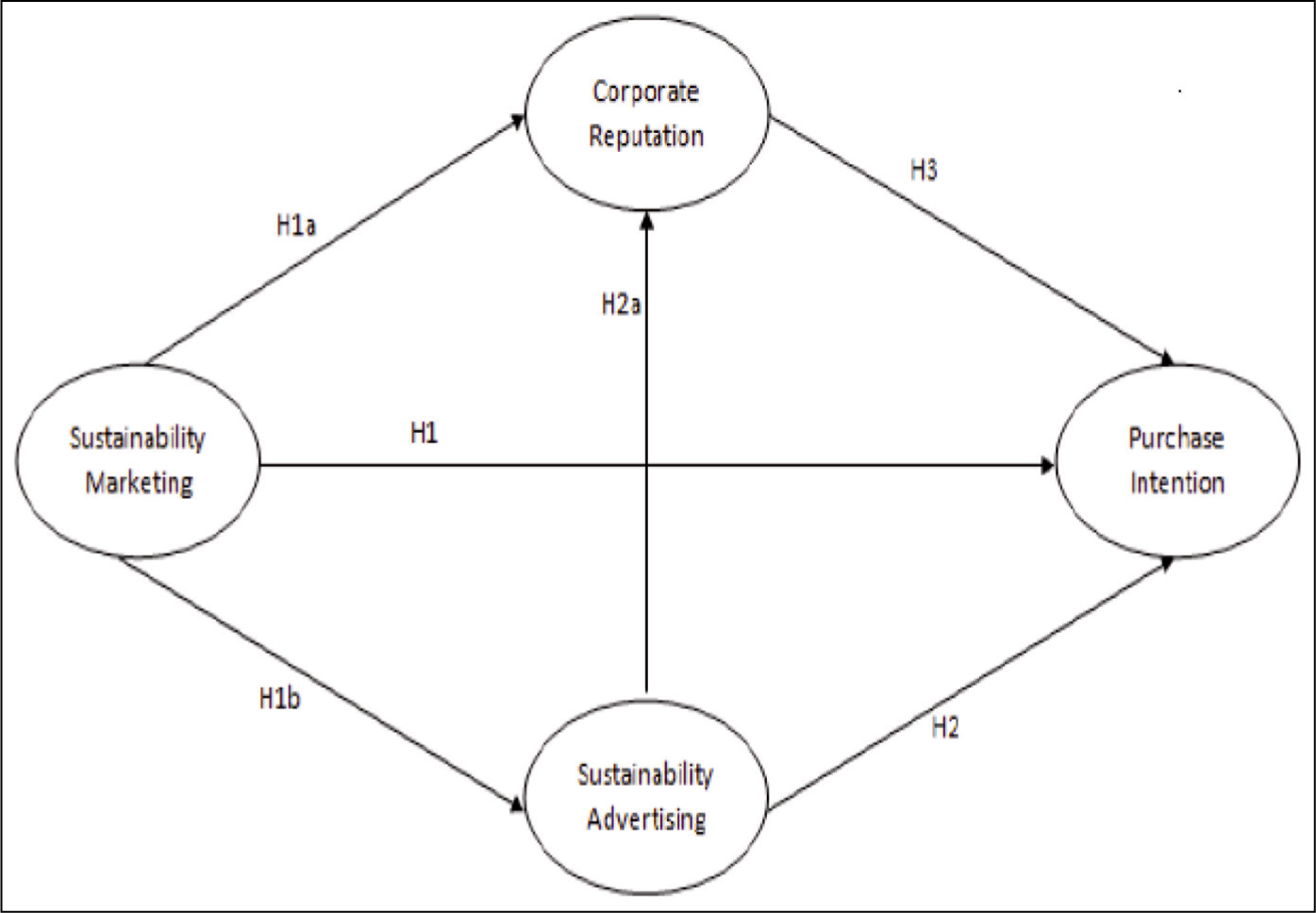
H1: SM positively influences consumers’ PI.
H1a: SM positively influences CR.
H1b: SM positively influences SA.
Sustainability Advertising and Purchase Intentions
Sustainability has emerged as a significant issue in advertisements as consumers’ purchase decisions are mainly dependent on social and environmental criteria these days (Pirsch et al., 2007). Sustainability-related communication is the key performance driver of an effective sustainability programme (Epstein & Roy, 2001), and a product’s commercial success is based on effective communication of the brand image among consumers. This would specifically enhance consumers’ knowledge regarding sustainable products and assist them in making informed purchase decisions (Akehurst et al., 2012). Therefore, SA can help in enhancing motivation for purchasing sustainable products.
Moreover, the Signalling Theory states that SA is extremely useful in the CR-building process owing to its ability to improve corporate image attractiveness, which further enhances the overall company performance. Therefore, the marketers should focus on sustainability in their strategies, products and advertisements for enhancing CR and increasing PI (Mendleson, 1994). Hence, the given hypotheses are formulated.
H2: SA positively influences consumers’ PI.
H2a: SA positively influences CR.
Corporate Reputation and Purchase Intentions
Several marketing researchers have recognized the critical role of CR in consumers’ purchase behaviour (Barich & Kotler, 1991), and consumer behavioural intentions significantly indicate the consumer’s actual purchase decision (Zeithaml et al., 1996). Past studies indicate that companies with favourable reputations benefit from building trustful relationships with customers, which in turn positively affect customer commitment and PI (Keh & Xie, 2009). In the present business scenario, the diminishing boundaries between firms and stakeholders have increased the importance of building a strong CR for the organisation’s commercial success (Worcester, 2009). Hence, the under given hypothesis is developed.
H3: CR positively influences consumers’ PI.
Despite the growing body of literature, there is a paucity of empirical research that investigates the influence of SM on CR, which eventually influences the PI. Furthermore, a wide gap still exists in the empirical testing and application of the relationship among SM, SA, CR and PI. The present study endeavours to expand the existing research by addressing this gap indicated by the prior studies (Jahdi & Acikdilli, 2009; Smith, 2003). In this regard, the following model (see Figure 1) is proposed.
Methodology
An email-based survey was conducted to collect data from respondents selected through a snowball sampling technique. This is a widely employed non-probability sampling method and it is also used in other similar studies related to sustainability and sustainable development (Chugh et al., 2016; Eldho Babu et al., 2018; Yadav et al., 2016). The respondents in this study were adult (18 years or older) consumers as they are usually engaged in making thoughtful purchase decisions out of the many available choices and are therefore assumed to be more considerate towards sustainability while making purchases.
A total of 500 copies of structured questionnaires were provided to the prospective respondents, and 440 questionnaires with valid and complete responses were received back. First of all, an initial set of respondents were chosen out of the people who knew about sustainability or who actually consume the sustainable product options available in market. Further, a subsequent set of respondents was selected through references given by the initial respondents. The study was carried out in the union territory of Chandigarh along with the National Capital Region of India that comprises Delhi, Gurugram and Noida. The constructs in the questionnaire were measured with multi-item scales adopted from the previous literature. The responses were measured on a validated five-point Likert scale (1: strongly disagree to 5: strongly agree).
Data Analysis and Results
Path Analysis: Structural Equation Modelling Measures Validation
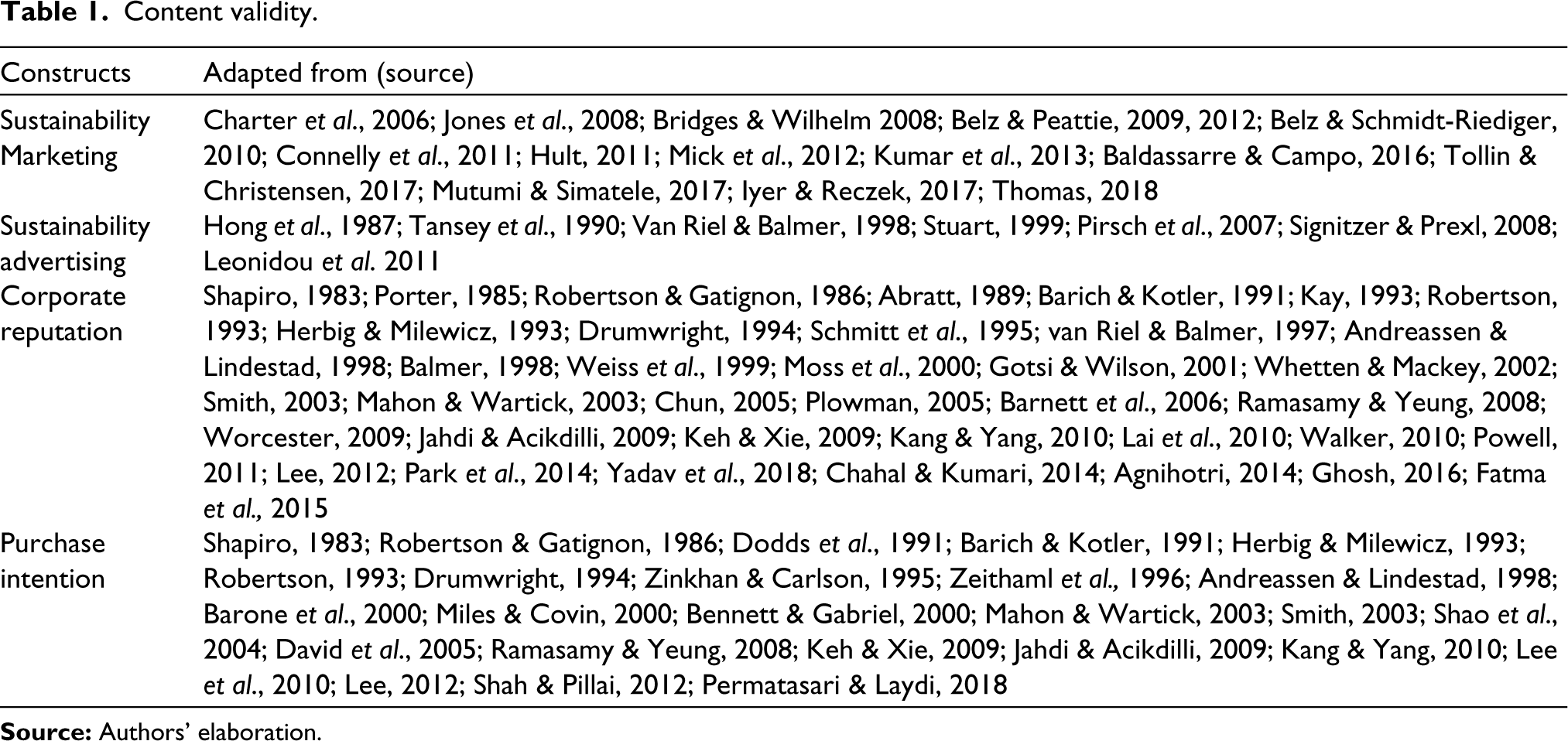
Content validation is essential before the application of the Structural Equation Modelling (SEM) as it ensures the degree to which the items completely and correctly represent the constructs’ theoretical content. This is guaranteed by the detailed and insightful review of past studies.
Content Validity
The scale development is based on previous studies related to SM practices and consumers’ responses concerning various other constructs that affect consumers’ PI. The constructs and items in the study are adopted from prior literature and are modified to ensure their fitness for achieving the objective of present study.
Common Method Bias Test
For data collection, the questionnaire method was employed in order to eliminate the impact of common method bias. This bias can have an effect on the relationship existing between the constructs (Podsakoff et al., 2003). For this, Harman’s one-factor test was used for identifying any available chance of error during construct formatting. After employing Exploratory Factor Analysis (EFA), four factors were extracted with their respective measurement items that explained 72% of the total variance. The first factor showed around 28% of the variance, which signifies that the common method variance is absent in the study.
Assessment of the Fitness of Measurement Model: A Confirmatory Factor Analysis
For ascertaining the model’s internal consistency, the Confirmatory Factor Analysis (CFA) technique is applied. The goodness of fit criteria used for the measurement as well as structural model is as follows: chi-square/degree of freedom, Comparative Fit Index (CFI), Tucker-Lewis Index (TLI), Incremental Fit Index (IFI), Root Mean Square Error of Approximation (RMSEA) and Root Mean Square Residual (RMR).
All these indices are within acceptable limits (see Table 2).
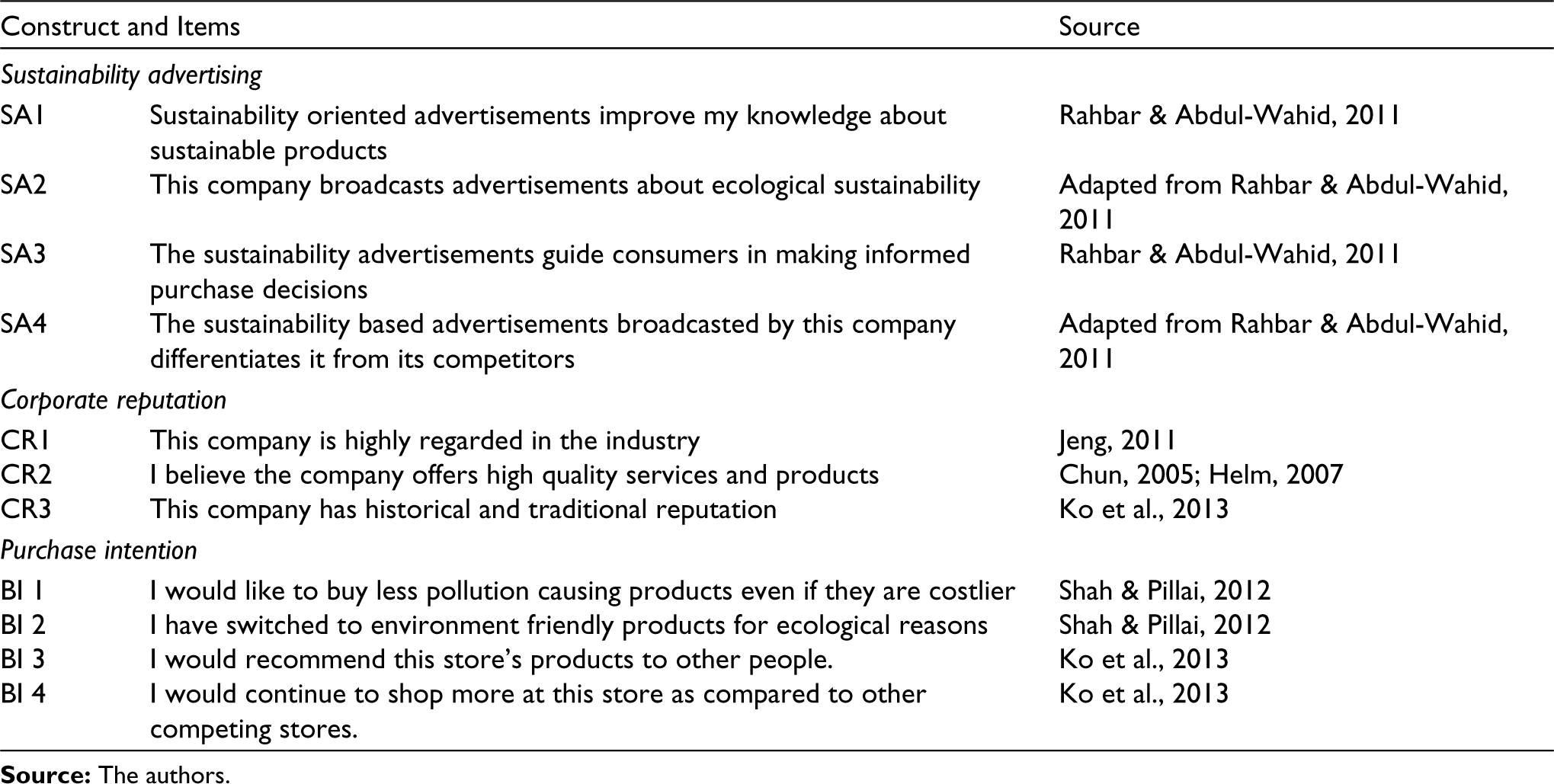
Content validity.
Model fit Indices.

The CMIN/DF is reported as 3.432, which is below the acceptable limit (less than or equal to 5; Hoyle, 1995). The values of other indices (CFI, TLI and IFI) are also within the recommended range. Furthermore, the indices measuring badness of fit of the model, that is, RMSEA and RMR, are found to be within the recommended range. Moreover, the factor loadings are also above the threshold level (0.7; Malhotra & Dash, 2010). Therefore, overall fitness of the proposed model is confirmed.
Measurement Model Validation
Subsequently, the scale validity is ensured by using convergent and discriminant validity as measurement yardsticks. Furthermore, the reliability of the scale is ascertained by calculating each construct’s Composite Reliability (CR). For checking the individual item’s reliability, Cronbach’s α is used. However, for testing the construct or latent variables’ reliability, composite reliability is used. In this model, the coefficients of Cronbach’s α in case of all constructs are higher than 0.6 (recommended threshold limit; Nunnally & Bernstein, 1994).
Table 2 represents the reliability of each construct that was ascertained with the help of Cronbach’s α. The Cronbach α value all constructs are higher than 0.76, which means the absence of any reliability issue in the model. In addition, the factor loadings are more than 0.50, and the CR is also higher than 0.70. Hence, all these measures are relevant and can be used for further SEM analysis.
In order to assess the scale’s convergent validity, CR and Average Variance Extracted (AVE) are used. By convergent validity it is meant that the items of a determined scale converge on one construct only (Casalo et al., 2008). The criteria for ensuring convergent validity are AVE > 0.5, CR > 0.7 and CR > AVE (Malhotra & Dash, 2010). The results of all indices are found to be satisfactory (see Table 3).
Measurement model results.

Further, for ensuring the discriminant validity, the maximum shared variance (MSV) and average shared variance (ASV) must be lower than the AVE. As per the results, both conditions are found to be satisfactory (see Table 3). Hence, it is confirmed that every construct of the scale is significantly different from the other (Casalo et al., 2008), which thereby confirms the scale’s validity and reliability.
Assessment of Structural Path Model
After the measurement model validation, the analysis of path model is done with the help of the AMOS maximum likelihood estimation method (version 18). SEM is employed for testing the proposed hypotheses and assessing the causal relationships among variables.
Therefore, a CFA with four constructs is performed. The values of all the indices measuring goodness-of-fit of the model are within the recommended range (see Table 4), which indicates that the model is moderately acceptable.
Goodness-of-fit result of model.

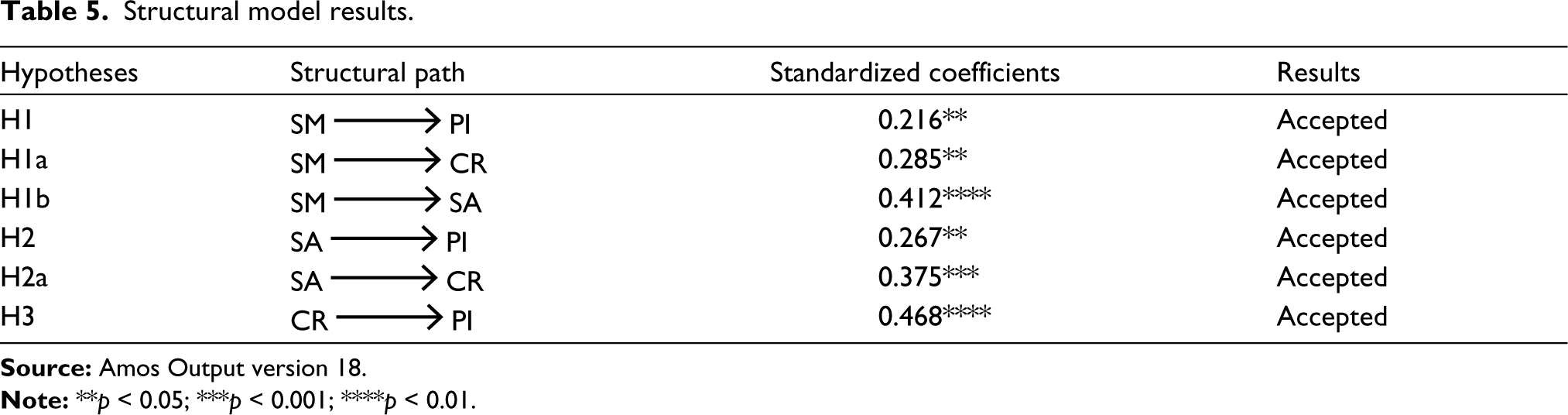
Finally, for testing the hypothetical framework, the validated measurement scale is subjected to analyse the structural model. The coefficients of the structural model are shown in Table 5. The level of significance in case of all the proposed relationships is 1% and 5%.
Structural model results.
Hence, it statistically validates a significant relationship among all constructs of the given model.
Interpretation of Results
As per the results of statistical analysis, it is quite evident that model used in the current study achieved significant predictive power by the exogenous constructs. The coefficient of determination (R2) came out to be 0.48, 0.32 and 0.56 for the constructs CR, SA and PI, respectively. These values of R2 are considered sufficient in social sciences (Hair et al., 2011) and so they validate the conceptual model. The findings divulge that SM (independent variable) has a significant effect on SA (dependent variable; Path coefficient = 0.412; p<0.01). More comprehensively, this reflects the substantial role of appropriate communication strategy in order to accomplish the purpose of SM, and this is possible only with the development of advertising strategies in consistence with the firm’s overall SM objectives. Hence, H1b is accepted. The relationship between SM and consumers’ PI came out to be significant (Path coefficient = 0.216; p<0.05), hence H1 is accepted. As far as the relationship between SM and CR is concerned, the beta value is 0.285 (p<0.05) and the relationship is significant, hence H1a is accepted. Moreover, the relationship between SA and CR is also significant (Path coefficient = 0.375; p<0.001), which indicates that CR is highly influenced by the sustainability focussed advertising efforts of a firm, as mere SM ideology cannot significantly build the sustainability-oriented CR in the eyes of consumers unless the firm’s advertising strategies are developed on the lines of sustainability. It indicates an essential role of SA in the form of a key interface as the firm’s SM efforts need to be communicated to consumers through an appropriate marketing communication tool. that is, in this case, advertising. Hence H2a is also accepted. Likewise, a significant relationship is observed in case of CR and PI (Path coefficient = 0.468; p<0.01). Hence, H3 is also accepted.
Conclusion and Discussion
The present study extends the research stream on SM in general and analyses the role of SA at the interface of SM and CR in particular. This study boosts the understanding of how SM efforts of a firm affect its CR and also the overall organizational success by enhancing consumers’ PI. The previous studies focussed on the sustainability dimensions separately (Gong et al., 2016; Kaur & Sharma, 2018) instead of on a single multidimensional concept (Connelly et al., 2011; Martinez & del Bosque, 2014). However, in the present study, the multidimensionality of sustainability concept is looked at and all three aspects are contemplated as being interwoven rather than solitary elements. In addition, the study investigated the comprehensive effect of sustainability dimensions clubbed with the marketing strategy, and the findings suggest a significant relationship between SM orientation and PI with regard to all the three aspects of sustainability. Nevertheless, economic prosperity is the foremost objective of any business organisation, but in the current business environment, companies that put social and environmental sustainability at the centre, while still remaining profitable, prove to be the most sustainable ones. Herein, the relational dynamics that is pertinent in this study is that while economic prosperity helps in achievement of the other two goals of sustainability, there is also a plausible effect in the form of profitability along with the positive CR building due to the ecological and social initiatives taken. Therefore, a dyadic relationship exists between the three Ps of sustainability, and the comprehensive examination of these dimensions through the lens of CR and its effect on the company’s worth is of utmost significance. It is imperative to mention here that without the economic prosperity of the company, it will be nearly impossible to attain the goals of sustainability.
The proposed model demonstrated good fit of the data as reported in the findings. The empirical evidence supports all the proposed hypotheses in the study. Through SEM, this study proposes and validates an integrative structural model assimilating the significant role of SM and its impact on CR and PI. Owing to this significant impact, this study enhances the current understanding of SM initiatives both theoretically and practically. Such an understanding of SM effectiveness may help consumers to strongly rely on the company as well as its products, ultimately improving PI, which helps the firm in accomplishing superior business performance (Ko et al., 2013).
The challenge here was to examine how SM efforts can be better communicated through SA for increasing consumers’ PI. The analysis and results reveal that the relationship between SM efforts and desired results greatly depends upon the positioning strategy, which is heavily dependent upon the marketing communication elements. Thus, the inclusion of an SA construct proved effective in yielding positive effect on CR (as depicted in the model) leading to a higher degree of PI, which was not possible otherwise. In other words, CR that is strongly affected by SA increases consumer’s PI regarding the firm’s products. The results reveal that majority of the respondents believed that SA increases their knowledge about sustainable goods and also aids in making better purchase decisions. Thus, the relationship between SM and PI through SA is a significant one as SA acts as key interface between SM initiatives and PI. However, there can also be some instances in the marketing communication field where the SA efforts of a firm may fail to enhance purchase behaviour owing to low credibility of the sustainability advertisements among consumers (Kilbourne, 1997). Therefore, firms need to indulge in open communication with their customers through SA initiatives in order to furnish sufficient information to them and also convey the idea that firms have high willingness to interact with the customers for their sustainable growth. This would also promote a perceived sense of closeness between customers and the organisation. Henceforth, to reap the essential benefits of SM, it is better to resort to the significant practices of marketing communication, especially SA. This will not only make consumers aware about the firm’s sustainability initiatives but will also steer and orient their positive inclination towards the firm.
Implications
Theoretical Implications
From the theoretical viewpoint, a detailed review of the past literature indicates that the scope of sustainability has widened from mere conservation to a holistic concept over many years. In this study, a theoretical model has been developed where SM efforts of a firm are investigated in terms of the CR and consumer PI through SA strategies. The literature has suggested that sustainability issues have increased due to overconsumption or irresponsible buying behaviour of consumers. As a result, consumers have become more conscious about their choice of products that are particularly sustainable (de Medeiros & Ribeiro, 2017). Therefore, in order to face the interdependent economic, social, and ecological issues that presently confront mankind, the field of sustainability should definitely blend (Peattie & Belz, 2010).
The theoretical model in the present study is based on the framework of TPB and Signalling Theory. Although the individual effect of each sustainability element has been found to increase PI (Hast et al., 2015; Huang et al., 2014; Irfan et al., 2018; Jamil et al., 2017; Lee et al., 2017; Taufique & Vaithianathan, 2018; Verma & Chandra, 2017), the present study incorporates the comprehensive concept of SM as an antecedent underlying PI. Moreover, the research is among the first studies that empirically validate the measurement of SM efforts of a firm with consumer PI. Several firms failed to attain the sustainability goal as they focussed on its individual aspects, which lead to tarnishing of their brand image among consumers (Park & Kim, 2016). Since previous works have focused more on the environmental aspect of sustainability (Ahmed et al., 2018; Ismail, 2018; Kotler, 2011), more rigorous research is needed with regard to non-environmental elements of sustainability (Iyer & Reczek, 2017).
The findings provide important contributions to the nascent literature regarding the relationship between the comprehensive aspect of SM and CR. Moreover, it furthers our understanding in the context of the role of SA in enhancing CR. These results suggest that the areas of SM, CR, and PI are strongly interrelated; therefore, these concepts can be managed in an integrated manner. Henceforth, SM as a business function has proven to have a strong effect on CR and PI. Specifically, this study implies that when firms engage in SM initiatives, they tend to improve their CR and PI through SA strategies.
Managerial Implications
This study provides useful implications for marketers to incorporate SM concepts into the strategic marketing intent of the firm (Camino, 2007). Taking into account the substantial threat posed by anthropogenic activities to the planet and society, firms have initiated intense efforts on the lines of sustainability (Hammer & Pivo, 2017). In fact, in today’s globalized era marked by intense competition, it has become extremely untenable for companies to overlook sustainability initiatives and thrive. Indeed, it is extremely essential for firms to reconfigure their marketing efforts primarily on the lines of sustainability in order to survive in the intensive competition. For the success of corporate SM, companies need to integrate ecological and social dimensions of sustainability to its value proposition and to make them an integral part of their overall marketing strategy (Dibb et al., 1996). In fact, companies have to rethink their existing marketing strategies to cut down the negative impact on society and the planet (Charter et al., 2006) and position themselves as conservers of economy, society and environment.
Specifically, marketing managers can expect a collaborated effect of SM on CR, which successively contributes to positive PI (Martinez & del Bosque, 2014). Considering the present competitive business environment, firms are encouraged to manage not only the economic prosperity but also the corporate personality including CR, brand value and customer loyalty as per the sustainability agenda (Worcester, 2009).
The results also provide the basic foil to the advertisers, marketing managers and digital media professionals to set right directions while making strategic decisions related to designing of advertisements for their valuable brands. Firms must resort to strengthening their marketing strategies by integrating sustainability in their advertising campaigns for better communication of their sense of responsibility to the audiences, which will increase CR and PI (Hami et al., 2015). However, mere use of SA will not be effective unless it is designed in a manner that conveys the message to customers and impacts their attitudes and PIs.
As far as the socially driven consequences of these managerial practices of sustainability are concerned, it is noteworthy that social inclusion and social equity is only possible through the equitable economic inclusion of all the ends of the society. This study hence provides a caveat for the practitioners that unless and until the practitioners and society at large are made aware of sustainability benefits via SA as a communication strategy, it will not be possible to reap the enhanced benefits of SM practices. Hence, the findings very precisely imply that in order to realize the benefits of sustainability in the form of favourable reputation and desirable profitability, marketing managers must assume SA strategies for positioning the corporate in a way they desire.
Limitations and Future Scope
For further refinement of the results, the present study must be evaluated on the basis of its limitations that also give directions for potential avenues to consider for research in the future.
The present study focuses on consumers of a limited area of North India, so the findings cannot be generalized to other regions. Furthermore, some relevant content from the literature may have been overlooked or left out during the reviewing process, leading to incomplete results. In addition, the present study concentrates only on the consumer view of the corporation, so the results cannot be generalized to other stakeholders; thus, a subsequent step may be to examine SM effectiveness with regard to various other stakeholders such as investors and employees to explore the relationship between SM and other stakeholders’ reactions.
Since, there is a paucity of research related to the consumer perspective of sustainability concept, further in-depth study is definitely required to add to the pool of the literature. For this reason, a detailed review of the prior literature available on SM is given in this study, which will help the researchers in further exploration of this field. Moreover, the scale used in this research is refined and reliable, so it can be employed in further research on a similar subject in other geographical regions or in case of other stakeholders (Martinez & del Bosque, 2014). Techniques such as time-series analysis, meta-analyses and qualitative methods can be used in future research to get better insights (Iyer & Reczek, 2017). In addition, mediators like corporate identity and corporate image can also be added by future researchers to enhance the results of the present study.
Footnotes
Declaration of Conflicting Interests
The authors declared no potential conflicts of interest with respect to the research, authorship and/or publication of this article.
Funding
The authors received no financial support for the research, authorship, and/or publication of this article.
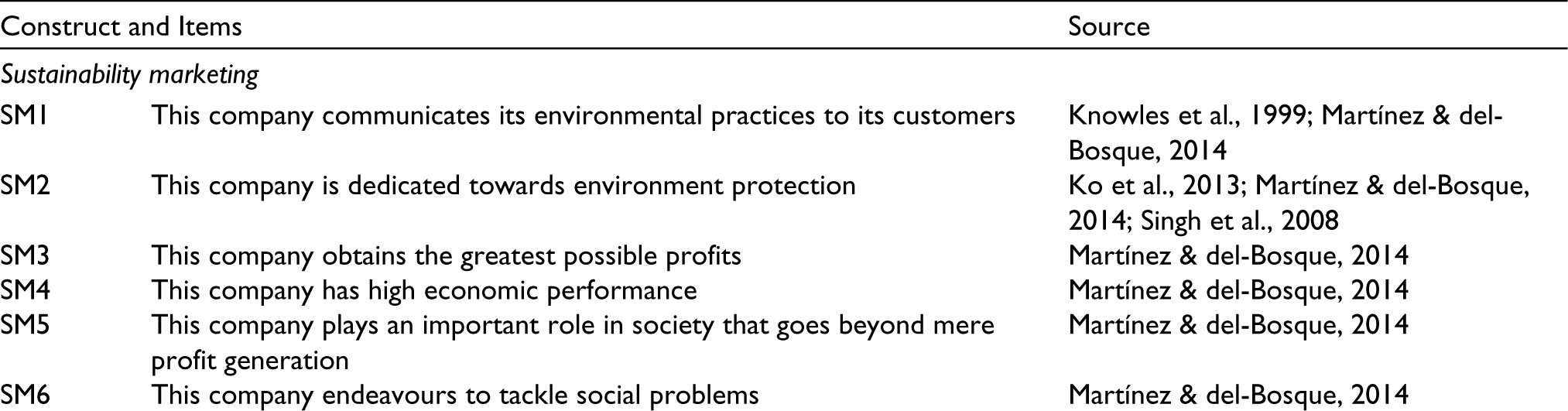
Measures of the Constructs
| Construct and Items | Source | |
| Sustainability marketing | ||
| SM1 | This company communicates its environmental practices to its customers | Knowles et al., 1999; Martinez & del-Bosque, 2014 |
| SM2 | This company is dedicated towards environment protection | Ko et al., 2013; Martinez & del-Bosque, 2014; Singh et al., 2008 |
| SM3 | This company obtains the greatest possible profits | Martinez & del-Bosque, 2014 |
| SM4 | This company has high economic performance | Martinez & del-Bosque, 2014 |
| SM5 | This company plays an important role in society that goes beyond mere profit generation | Martinez & del-Bosque, 2014 |
| SM6 | This company endeavours to tackle social problems | Martinez & del-Bosque, 2014 |
| Sustainability advertising | ||
| SA1 | Sustainability oriented advertisements improve my knowledge about sustainable products | Rahbar & Abdul-Wahid, 2011 |
| SA2 | This company broadcasts advertisements about ecological sustainability | Adapted from Rahbar & Abdul-Wahid, 2011 |
| SA3 | The sustainability advertisements guide consumers in making informed purchase decisions | Rahbar & Abdul-Wahid, 2011 |
| SA4 | The sustainability based advertisements broadcasted by this company differentiates it from its competitors | Adapted from Rahbar & Abdul-Wahid, 2011 |
| Corporate reputation | ||
| CR1 | This company is highly regarded in the industry | Jeng, 2011 |
| CR2 | I believe the company offers high quality services and products | Chun, 2005; Helm, 2007 |
| CR3 | This company has historical and traditional reputation | Ko et al., 2013 |
| Purchase intention | ||
| BI 1 | I would like to buy less pollution causing products even if they are costlier | Shah & Pillai, 2012 |
| BI 2 | I have switched to environment friendly products for ecological reasons | Shah & Pillai, 2012 |
| BI 3 | I would recommend this store’s products to other people. | Ko et al., 2013 |
| BI 4 | I would continue to shop more at this store as compared to other competing stores. | Ko et al., 2013 |