







Abstract
It is well established that organizational structure is critical to the performance of organizations. For performing arts organizations, especially from developing countries such as India, mere survival is a struggle and sustainability becomes a vital goal before the achievement of mission. Our emergent conceptual framework, based on a grounded theory study of six theatre organizations, sheds light on aspects of organizational structure that have contributed to organizational sustainability. Theatre organizations in India are highly dependent on a small core group, often comprising founders or founding families, and rely on strong personal networks in the arts sector. They are supported by membership that is flexible and project-oriented, and organizational boundaries are relatively porous. An exploration of performing arts in the Indian context offers valuable points of comparison to the nature of organizational structures of arts organizations in the West, as evidenced by Western literature.
Keywords
Introduction
According to Hendon (1985), the term arts includes ‘the activities of artists and craftsmen, consumers, and institutions such as performing arts groups, arts education and production, theatres, museums, orchestras, and other on-going permanent arts organisations’ (p. 124). The arts can primarily be categorised as the performing arts and the visual arts. Performing arts refer to forms such as theatre, dance, orchestra and opera, as distinguished from the visual arts such as painting, sculpture and photography that deal with physical art objects. In performing arts, the presence of the artist is essential to each performance. The expression of the art is through the voice, face or body of the artist, creating a product that is intangible. The arts are part of the cultural industry, which includes goods and services that have symbolic value as differentiated from utilitarian value. The cultural industry includes films and television, literature, galleries, performing arts, music, and even fashion and architecture (Grodach, 2016). Throsby (2010) highlights the need for input of human creativity and presence of intellectual property attributable to the creator, in defining cultural goods and services. The uniqueness of the performing arts as a product can be understood in terms of their intangibility, need for creativity and originality, lack of utilitarian value and high subject-ivity in audience experience (Hirschman, 1983).
In their seminal work, Baumol and Bowen (1965) explored the economic reasons behind the strained financial conditions in the performing arts. They commented on the limited scope for technological advancement and productivity improvements in the performing arts as compared to other industries that benefit from use of technology.
The output per man hour of a violinist playing a Schubert quartet in a standard concert hall is relatively fixed, and it is fairly difficult to reduce the number of actors necessary for a performance of Henry IV, Part II. (Baumol & Bowen, 1965, p. 500)
Due to the human intensive nature of production in the performing arts, Baumol and Bowen (1965) predicted the conditions for survival of the performing arts to become more difficult with the passage of time. With a relatively fixed level of human input and low substitutability with technology in creation of a performance, the performing arts were expected to face continually rising costs. This problem was described as the ‘cost disease’ in the performing arts by Baumol and Bowen (1965). They suggested that the performing arts would be unable to survive without external support. Nevertheless, the performing arts have continued to survive, in both non-profit and commercial forms, receiving varying levels of support from governments across the world.
In recent decades, the study of management of arts and cultural organizations such as theatres, operas and museums has emerged as an academic discipline in its own right. The presence of dedicated scientific journals, conferences and arts management training programmes evince this development (Evrard & Colbert, 2000). The arts have been increasingly viewed as an ‘investment’ to achieve desired ends by governments in recent decades. This phenomenon has been described as the ‘instrumentality’ of public policy towards the arts sector (Belfiore, 2004; Boorsma & Chiaravalloti, 2010), and necessitates that arts management assume an even more significant role in ensuring sustainability and creative freedom of the arts. Moreover, learning from arts management and business management is increasingly perceived as a two-way road, where research and practice from both disciplines contribute to each other (Evrard & Colbert, 2000). However, growing arts management research has been largely concentrated in the Western world. In a vast majority of the developing world, arts management is yet to emerge from nascence, both as an area of research and professional practice. Given the challenges faced by the performing arts in the developed world, it may not be difficult to fathom the lack of public support in developing countries. This is especially true for countries where governments are grappling with more pressing concerns such as poverty, illiteracy and poor health, to the effect that the preservation and promotion of the arts take a backseat. The unique nature of the performing arts as a product and the limited public support brings to the fore the issue of sustainability in performing arts organizations. Sustainability in the context of this paper refers to the ability of organizations to engage in artistic work while being financially viable.
In India, many forms of theatre, dance and music are performed across the country in auditoriums and cultural venues; in private events such as at schools, colleges and business firms; in community gatherings often during festivals and on special occasions; and on the streets and in public spaces during rallies and other events. Theatre performances have even been arranged for the armed forces in far flung cantonment areas. Children and adults often learn and practise the performing arts as a creative hobby or recreational activity. The universality of the performing arts in our lives is overwhelming, yet little is spoken and written on how the performing arts are managed to have such a ubiquitous presence.
The first author of this paper trained in a traditional Indian dance form as a child and later quit a career in financial services to take up dancing professionally. The author’s association with a prominent performing arts organization implied involvement in both artistic and managerial roles in productions, performances and teaching. For the author, management in the arts was experienced to be very different from management in the corporate sector. There was limited relevance of management concepts and practices that helped businesses to be successful. Management in the arts was constantly in a state of flux. Artists, who spent time and effort comparable to that in corporate jobs and based on specialised skill and training, were compensated poorly. Understanding what goes into the functioning and management of such organizations is the motivation of the authors behind this research.
A FICCI-EY (2016) report estimates the size of the Indian performing arts industry (including live theatrical presentations, concerts, opera, dance and other stage productions as well as activities of individual artists, groups, companies, circuses, orchestras and bands) at Rs. 275 billion in 2018, indicating that a large number of individuals and organizations are engaged in the performing arts. Interestingly, central public expenditure on arts and culture in India as a percentage of GDP in 2017–2018 was a paltry 0.015 per cent, 1 compared to public cultural expenditures ranging from 0.11 per cent to 1.50 per cent of the GDP in several European countries during 2012–2016 (Compendium of Cultural Policies and Trends, 2018). The authors seek to understand how performing arts organizations have continued to survive and possibly thrive in the Indian context. As part of a larger study that seeks to answer this question, this paper exposes distinctive aspects of organizational structures in the Indian performing arts.
Literature Review
Arts organizations are driven by the multiple logics of arts and commerce as against business organizations where profit maximization is the primary objective. Accordingly, they may have multiple objectives including those related to artistic quality, social engagement and organizational efficiency (Harvey, 1999). Performance measurement and evaluation is also done on the multiple objectives of the organization (Bakhshi & Throsby, 2012; Turbide & Laurin, 2009). Price (2017) articulates the comparison between the business leader and the artistic leader in the tendency of the former to develop neat solutions to problems versus the latter who problematises issues and articulates contradiction. These peculiarities make the management of performing arts organizations an interesting area of study. While the neglect of modern management functions and practices in arts and cultural organizations has been pointed out by Raduški (2017), there also exists a contradictory view that ‘business language, vocabularies, and tools commonly used in the private sector are insidiously taking roots in arts organizations’ (Abdullah et al., 2018, p. 174). The management of performing arts organizations needs to be cognizant of the tension between artistic excellence and financial feasibility. In managing these tensions and multiple imperatives, organizational structure and design play an important role.
Organizational structure is defined as ‘the pattern of relationships among positions in the organization and among members of the organization’ (Mullins, 2007, p, 596). The structure defines these relationships and directs them towards the achievement of organizational goals. Kushner and Poole (1996) consider organizational structure to be a ‘framework for social interaction and information and resource flow, and as a policy area in which managers manipulate design to coordinate activity and achieve strategic purpose’ (p. 120). It is an extensively researched concept and its significance to organizational performance is well established (Boyle, 2007; McMillan, 2002; Sine et al., 2006). However, research on the organizational structure of arts organizations is far less common.
Arts organizations have been described as project-oriented organizations (Raduški, 2017; Sedita, 2008), such that the organizational roles, members and relationships are organized around artistic productions and performances. According to Castañer and Campos (2002), performing arts organizations do not have a strong functional differentiation between employees. Social structures are often established without creating different units, especially in smaller arts organizations (Kushner & Poole, 1996). The operational core, which espouses artistic values as against commercial ones, forms a significantly large part of the organization (Castañer & Campos, 2002). Within the operational core, the leadership of arts organizations has been studied by researchers. Dual leadership has been commonly observed, characterized by the dual roles of the artistic director, fulfilling the artistic vision and creating innovative works of art; and the managing director, responsible for the economic sustenance, financial and administrative decisions (Järvinen et al., 2015; Kleppe, 2018; Reynolds et al., 2017). Shared leadership between the dual leaders in performing arts organizations is suitable to the hybrid nature of the organizations that are balancing dual and often conflicting artistic and financial imperatives (Cray et al., 2007).
The multiple imperatives that organizations in the arts face are also reflected in the multiple stakeholder demands that have to be met (Chutia & Sarma, 2016). From public and private funding organizations, patrons, audiences and expert reviewers to artistic and managerial employees, volunteers and board of directors—expectations of many have to be met. The essential interaction with these stakeholders has led to the characterization of these organizations as complex open systems built on the relationships with their stakeholders (Elias, 2017; Jung, 2017). The relationships with stakeholders and an open systems approach become essential, especially since many of the stakeholder ties are not based on economic exchange. For instance, in the case of volunteers, Bussell and Forbes (2007) point out that the time and commitment of volunteering partners of arts organizations are dependent upon social rewards and emotional ties with the organization. Strong linkages between the paid staff and volunteers also strengthen the structure of arts organization (Kushner & Poole, 1996). With the presence of volunteers and intermittent workers, management of discontinuity (Evrard & Colbert, 2000) also becomes an important issue in structuring organizations. The relationship between arts organizations and other entities as being born out of necessity and built on trust, characterizes the rise of networks in the arts (McCarthy, 2006). The connections with the community (Thibodeau & Rüling, 2015) and the organization as an open system (Jung & Vakharia, 2019) highlight the essential interplay of the arts organization with its environment. According to Jung and Vakharia (2019),
Due to these multiple bottom lines and their obligation to serve the community, arts and cultural organizations can benefit from having organizational structures that are open and less hierarchical, where programming can be done based on multiple inputs and with the community’s needs and interests in mind. (p. 261)
Even though arts organizations have multiple bottom lines and try to evaluate performance on multiple objectives, for many organizations, survival itself is a challenge and thus precedes the achievement of other objectives. Schiuma and Lerro (2017) suggest that,
Despite the relevance that arts and cultural organisations can potentially play to sustain local and global wealth creation dynamics, currently they are facing critical challenges for their growth and even survival. (p. 3)
Schiuma and Lerro (2017) believe that business models suited to the characteristics of the arts and cultural sector have not been sufficiently explored. Carlucci (2018) articulates the need for tailor-made business models in cultural organizations to ensure survival and financial feasibility without compromising artistic integrity. The challenge for survival can be attributed to various reasons such as declining public support, increasing availability of technology-enabled media and entertainment, and increasing costs in the performing arts. We explore these issues of survival of performing arts organizations under the broader term of sustainability. The literature on sustainability commonly focuses on the economic, social and environmental aspects of sustainability (Thomas & Kai, 2002)—part of the notable triple bottom line framework (Elkington, 1997). Sustainability, however, is a complex concept (Sinha, 2012) and has also been researched at the level of organizations, often using related terms such as viability and success, longevity and continuity, and organizational growth (Moldavanova & Goerdel, 2018; Weerawardena et al., 2010).
This paper is concerned with sustainability at the level of organizations. It focuses on the ability of performing arts organizations to continually engage in artistic productions and performances, and at the same time achieve financial viability. The objective of our research is to empirically understand how performing arts organizations are structured to achieve sustainability. The objective can be divided into two parts. The first is to understand the nature of organizational structures in the performing arts. The second is to analyze the role of these structures in helping organizations achieve long-term sustainability.
Our research is set in the context of Indian performing arts. Arts management research emerging from India has been largely limited to a few isolated case studies of a single organization (Caust, 2015; Larouche & Brunet, 2015; Meyrick, 2009; Ross, 2017) or non-academic research reports by industry bodies and institutions (FICCI-EY, 2016; IFA, 2010). Such research, while creating awareness of the context, often fails to create an in-depth analytical understanding of the issues and challenges facing the particular region (Lim, 2016). Arts practice and management are strongly embedded in the socio-cultural context (Mathew, 2014; Sharma, 2015). Khanwalkar (2014) particularly refers to the complexities inherent in the Indian context by suggesting that countries like India ‘are vast heterocosms of multiple identities, (hence) the context of art becomes heterogeneous and open to difference’ (p. 77). Application of West-based research to Indian performing arts organizations is therefore questionable. While our empirical research does not claim to offer results that are generalisable, it certainly expands upon our limited understanding of organizational structures in the Indian performing arts. Moreover, the extant literature on organizational studies in the arts does not elucidate the role of organizational structures in overcoming the challenges of balancing multiple imperatives and achieving artistic and economic viability in performing arts organizations. We seek to contribute to this area.
Methodology
Grounded theory research, based on an inquiry into six Indian theatre organizations, forms the basis of the findings and conceptual framework presented in this paper. A pilot study that was conducted to better understand the context also guides the methodological choices for this research. The following sections explain the evolution of the research design and techniques used for data collection and analysis.
Pilot Study
Acknowledging the lack of arts management research in India, we first conducted a pilot study of performing arts organizations. The pilot study was undertaken after a review of the literature from the wider fields of arts management, cultural policy and non-profit sector research on the arts. A majority of the literature stemmed from Western countries, particularly Europe and North America. At this stage, the focus of the research was to explore the question of sustainability of performing arts in India. The pilot study was based on eight semi-structured interviews with leading artists and managers of dance and theatre organizations and independent performing arts experts (Respondents 1–8), based on snowball and convenience sampling. The pilot study was extremely useful in narrowing the focus of the study, both in terms of defining the research question and of defining the universe from which the sample would be obtained.
Respondent 6 from the pilot study expressed that conditions for the performing arts in India are significantly different from those in the West, and it was not easy to earn a living from being a professional performing artist.
Now when I look at Broadway or West End…in a small area you have something like 20–30 theatres who are doing 5 shows a week, plus on weekends, matinee and evening (shows). These are tickets which even allowing for purchasing power parity are costing anywhere from 5,000–8,000 Indian rupees per head and they are able to sustain this. And we, with a country with at least as many centuries of performing arts behind us, we have theatre in 30 different languages, we are nowhere near this money…. Many people are therefore able to live complete livelihoods based on this industry (in the West). The only way an artist here (India) makes money is by taking classes! (Respondent 6)
Similar views from other respondents indicated the need to employ inductive research methods that are not biased by pre-existing theories. Many of the theoretical concepts from the literature that were used in the pilot study interviews were not found relevant to the Indian context. In some cases, the interpretation of the concepts was significantly different. For instance, many respondents indicated use of arts practices based on traditional Indian systems of teaching and learning. Social and historical underpinnings were observed not just in the works of art but also in management practices. We narrowed the focus of the research from performing arts to theatre, due to the distinct characteristics of dance, theatre and music within the performing arts. Theatre—encompassing physical movement, language and music—was found to be sufficiently wide in scope and was selected for the study.
I don’t see the government investing that much in the performing arts. All the well known artists, like you have your Pandit Ravi Shankar or a Zakir Hussain, the government will call them, pay them a good cheque and they’ll do an event or a festival. These were the names that have always been there, now their gharanas have started going forward. So that’s the classical scene of music, which has been patronized by the government big time…theatre has not been given that (support). (Respondent 1)
Another view that was revealed through the pilot study was the lack of support by the government. Respondents expressed that public support existed for highly reputed individual artists, especially in Indian classical art forms. But the support to organizations in the performing arts, and especially theatre, was lacking. We shifted the focus of the research to theatre organizations rather than individual artists after the pilot study primarily due to our interest in exploring how the performing arts sustain beyond the work of individual artists. The usage of the word ‘organization’ in the Indian performing arts can be problematised, due to the absence of board of directors, dedicated theatre spaces and stable positions of managers and artists like in the West. Many artists identify themselves as being part of ‘groups’ rather than organizations. While many arts practitioners are independent and work on a freelance basis, a large number of non-individual entities also exist. These entities range from small, formal and informal groups to larger organizations and institutions. Though these entities vary in terms of size, structure, legal status and formal systems of work, they will be referred to as organizations in this paper. While independent performing artists would also be required to ‘manage’ their work, the scope of management is broader in the collective pursuit of work under an organization. The organization can lend continuity to the artistic work beyond the existence of its individual members.
Many Indian performing arts organizations, though lacking a formal structure, are highly respected for the quality of their artistic work and have performed extensively. The structure of these organizations that supported artistic excellence and also ensured financial viability was intriguing. It was clear that qualitative research was to be undertaken, given the exploratory nature of the research question. The structural aspects of organizations in the performing arts were particularly of interest, given the difficult conditions for Indian theatre organizations. The methodological choice of constructivist grounded theory was made after the pilot study based on philosophical assumptions that were found appropriate to the study.
Constructivist Grounded Theory
The research was designed with an understanding of the tenets of qualitative research (Miles & Huberman, 1994) and the grounded theory methodology (Charmaz, 2006; Glaser & Strauss, 2017; Locke, 2000; Strauss & Corbin, 1998). Grounded theory is a well-established qualitative research methodology that follows an inductive approach towards theory building; it was originally developed by Barney Glaser and Anselm Strauss in the 1960s. It was developed at a time when verification based on deductive reasoning and quantitative testing methods was the norm in research, and there was insufficient focus on generating new theory (Glaser & Strauss, 2017). Grounded theory offers a codified procedure of data analysis towards understanding real-world phenomena through theoretical contributions that emerge closely from data. It helps overcome the risks of qualitative research being regarded as unsystematic and impressionistic, and at the same time allows the researcher to enter the field with an open mind (Charmaz, 2006). The need to situate the findings in real-world processes, develop theory following an inductive approach, and yet have systemized methods of data analysis and theory generation, led to the choice of the grounded theory methodology. While several versions of grounded theory have been proposed by researchers based on both philosophical assumptions and methods of analysis, the current study closely follows the constructivist grounded theory approach of Charmaz (2006).
The constructivist paradigm assumes that reality is socially constructed by people based on their own experiences. There are multiple subjective realities that exist. The constructivist grounded theory was a departure from the positivist philosophical stance proposed by Glaser (Glaser & Strauss, 2017) that was considered unsuitable for many areas in the social sciences. At the same time, it does away with the rigid and prescriptive analytical procedures proposed by Strauss and Corbin (1998). Several reasons support the choice of constructivist grounded theory for this research. The severe lack of arts management research in India required that the research be closely grounded in personal experiences of the respondents and their view of the realities of performing arts organizations. There was also a need to understand how resources are secured, roles of members are defined and work is organized. A social constructivist paradigm was hence adjudged appropriate to provide rich and detailed accounts from the experiences of participants working in performing arts organizations. The constructivist grounded theory also takes into account the essential role of the researcher in the construction of knowledge. The first author of this paper comes from a performing arts background and we recognize that our findings are based on the unique interactions between the researcher and the participants.
Sampling
A multi-case sample was adjudged to be most suitable to obtain rich data and conduct cross-case analysis. A case in the study was broadly defined as a theatre organization and was further narrowed down based on two properties. The first property considered the operational objectives. Based on the pilot study, various types of organizations in theatre had been identified as theatre and acting schools (primary objective of imparting training); self-interest theatre groups (primary objective of practicing theatre confined to a small set of members); theatre venues (primary objective of providing a space for theatre practitioners and audiences); theatre producers (primary objective of coordinating the script, direction, financing and performance); and performing theatre organizations (primary objective of bringing artists together and performing plays). A case in the study was specifically defined as an organization involved in producing and performing plays, excluding those involved only in the allied areas of performance. This implied that writing or script selection, rehearsals, performances and interaction with an external audience were essential elements of any case chosen to be a part of the study. Organizations that were running exclusively as training institutes, self-interest groups or theatre spaces without an active performance culture and interaction with an external audience were excluded, since these could not be termed as performing arts organizations.
The second property narrowed down the cases based on a reputational case selection (Miles & Huberman, 1994) since the research objective was to understand organizational structures contributing to sustainability. A list of theatre organizations with a long-standing reputation and a minimum period of two decades of continuous work was compiled. The list was created based on opinions of theatre experts, analysis of news and media reports, and a history of iconic plays and performances. The list contained organizations varying on several dimensions such as region (North, South, East, West or Central India and urban, semi-urban or rural orientation in performances), legal status (for-profit or non-profit), language of artistic work and art form. To identify common patterns across organizations and achieve wide applicability of results, maximum variation was sought in the cases (Miles & Huberman, 1994). Theoretical sampling (Charmaz, 2006), which involves simultaneous data collection, coding and analysis, was used to select the cases. The analysis and findings from the initial cases guided the selection of further cases for comparison. Organizations that could expand our understanding of the preliminary theoretical categories and their properties were selected. With every new case added, codes and categories were developed further through validation, modification and contradiction. The field work was carried out in and around four Indian cities (from North, South and Central India), integrating theatre practice in four languages and three legal structures (society, sole proprietorship and association of persons), and catering to urban, semi-urban and rural audiences. The diversity in the cases helped in understanding the different properties of the theoretical categories.
Data Collection
The main instrument used for data collection was the semi-structured interview. Since the problem required a deep understanding of contextual aspects of each case and experiences of respondents, semi-structured interviews were considered most suitable to produce rich descriptive accounts of the structure of the organizations and of the nature, roles and relationships between their members. Respondents included artistic directors, managers, actors, production teams and, in some cases, ex-members. The interviews were conducted in the natural settings of the theatre organizations, including rehearsal spaces, performance venues and offices of respondents.
A total of 35 in-depth interviews with an average duration of 47 minutes were conducted across six organizations. All interviews were audio-recorded and transcribed for further analysis by the first author. Written consent was obtained from the interviewees, and they were assured anonymity at an individual and organizational level; the current paper uses anonymized notated references for each case. Opportunities were sought for direct observation of rehearsals, workshops, meetings and performances, and field notes were taken. On average, three full days were spent in the field with each organization.
Data Analysis
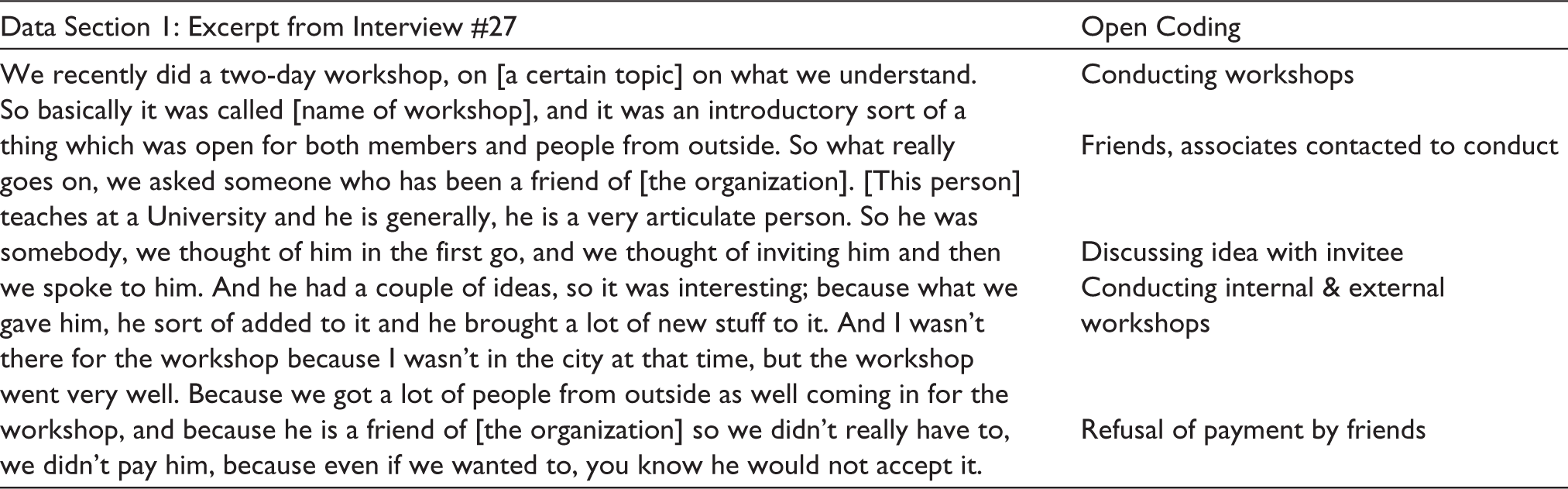
The transcripts were analyzed using multiple levels of coding (Charmaz, 2006). Open coding was the first level of analytic understanding of the data. It involved assigning descriptive labels to small segments of data to allocate meaning. There was a conscious attempt to immerse in the data and keep the process spontaneous. Examination of the text, breaking down ideas and constant comparison between pieces of data were constantly done. An illustration of open coding done for an interview excerpt is given in Table 1.
Illustration of Open Coding.
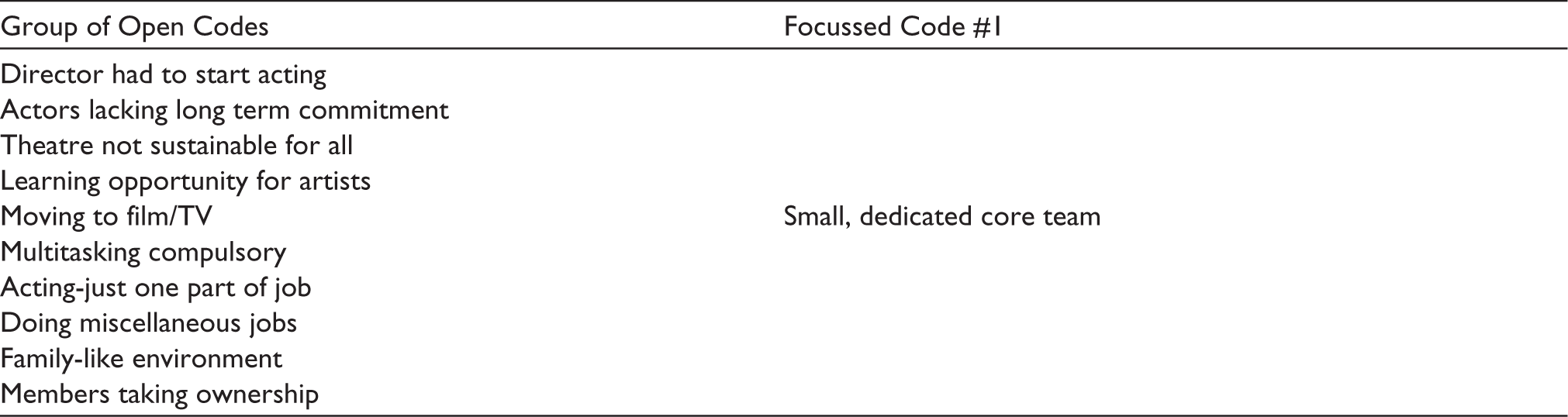
Focussed coding involved synthesising of initial codes and grouping them together to indicate themes and patterns from the data based on conceptual similarity. Constant comparison method was used by comparing different pieces of data and codes across incidents, respondents and cases. A higher level of conceptual abstraction was gained through developing focussed codes. An illustration of focussed coding based on a grouping of initial codes is given in Table 2.
Illustration of Focussed Coding.
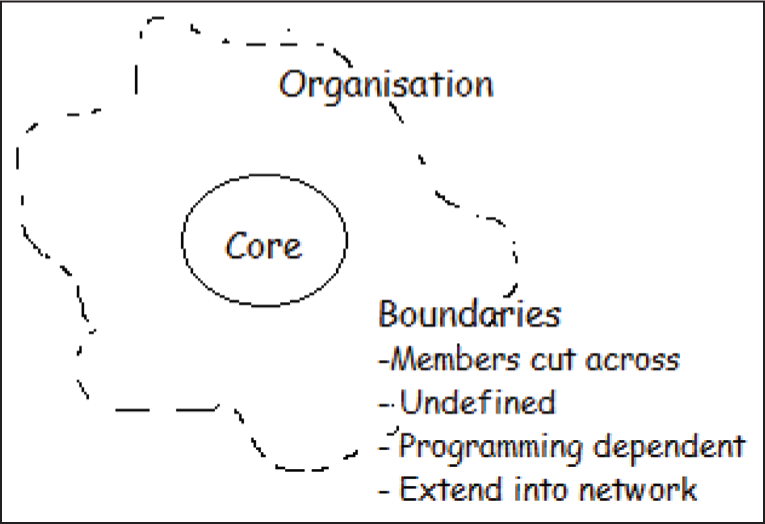
Axial coding is the third level of coding, and it helped relate categories to their properties. The focussed codes with high analytic power were put in relation to each other. This analysis helped in development and synthesis of higher level categories described by their different dimensions or properties (Charmaz, 2006; Glaser & Strauss, 2017). The properties explain the types, reasons, processes, outcomes and conditions of the category. We also used comparative tables to understand applicability of categories across cases. An illustration of axial coding where the category of boundaries was described through several dimensions is given in Figure 1.
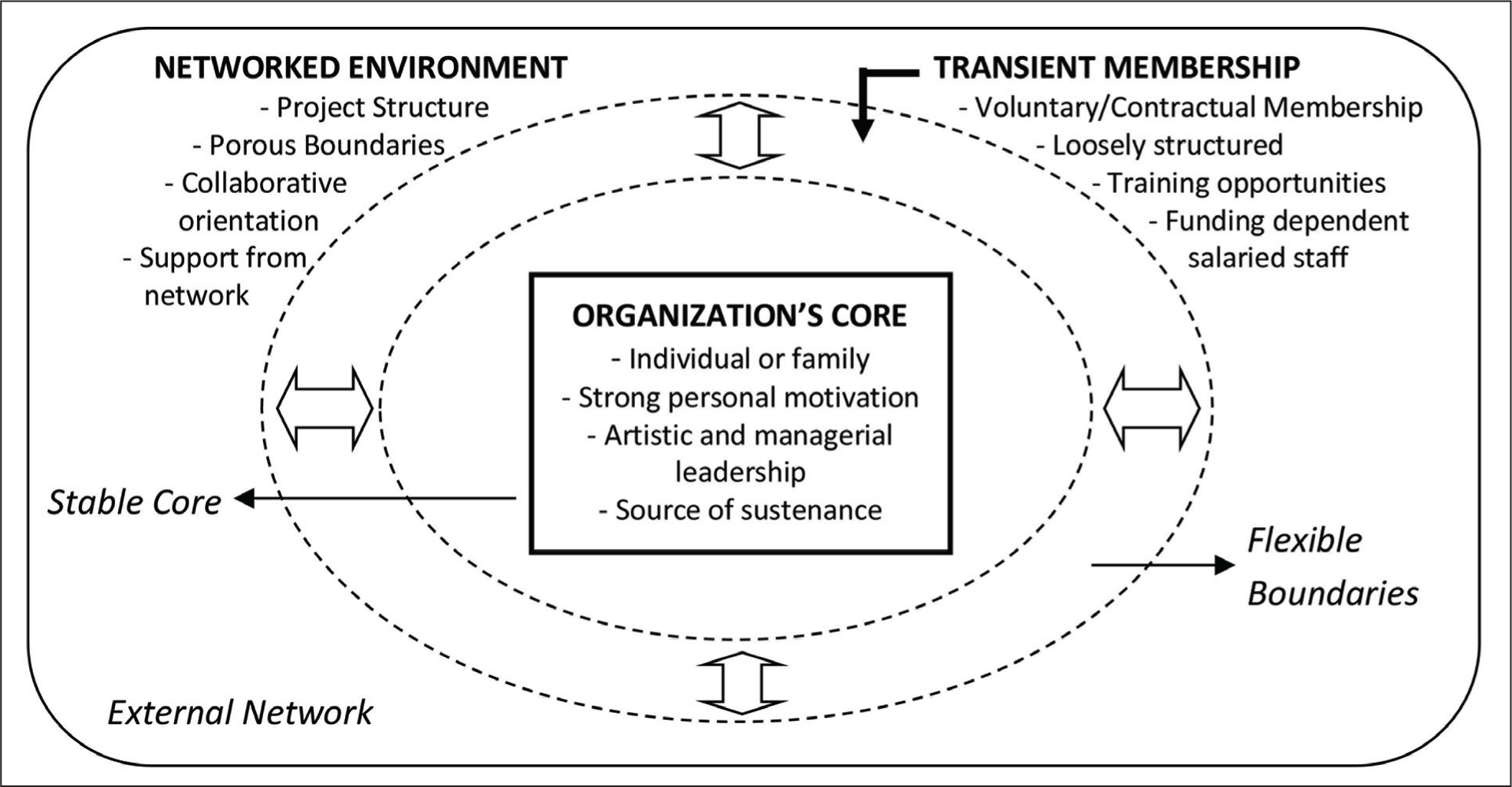
Theoretical coding was used to integrate the analysis. The various categories along with their dimensions and interrelationships helped build a coherent framework. This final framework connects various categories, but also delimits the theory by comparison, reduction and elimination to help achieve parsimony. Memos were made to note down thoughts or ideas related to theoretical categories and were utilized extensively in the later stages of coding and analysis. The categories with maximum explanatory power were assimilated in the final conceptual framework (Figure 2). A brief outline of each of the six organizations precedes the findings and conceptual framework described in the following section.
Case Outlines
Organization Alpha is based in North India and was established more than four decades ago. Known for their original productions set in the Indian context and having travelled extensively across the globe with some of their most prominent productions, Alpha is one of the few organizations with a dedicated space, handcrafted by its founders, for rehearsals and performances. The organization seeks to do creative productions, encourage artists and promote learning of the arts through a wide variety of programming.
Organization Beta is based in North India and has a history of social and political theatre spanning more than four decades; it has been instrumental in taking theatre to the masses. With many original plays to its credit, Beta is a name that stands out in breaking the hegemony of proscenium theatre and tackling issues that have widespread social significance. At the same time, it provides entertainment to the people by creating inroads for art and bringing it to those with little exposure to it.
Organization Gamma is based in North India and was established almost three decades ago. With a view to providing healthy entertainment to the people, Gamma has largely performed original content that is often based on historical Indian characters and events, subtly raising issues that are relevant to contemporary society with liberal doses of humour. Working on an extremely active performance schedule, Gamma has done a large number of public and sponsored performances in several languages.
Organization Delta is based in South India and was established more than two decades ago. Identifying itself as an amateur English theatre group, its members come together at regular intervals to create theatre productions and promote a culture of theatre among adults and children through many small-scale events and a few annual events that attract wide participation. Delta has contributed to creating a culture of theatre in the city by providing opportunities to a large number of theatre enthusiasts and professionals.
Organization Zeta is based in South India. Practicing a folk theatre form from the region for more than four decades, Zeta was conceptualized as a common platform for folk artists and to promote growth and quality in the art form. Performing largely to a regional audience, Zeta has trained a large number of artists, and it continues to perform both traditional stories and original contemporary content through its repertory. Balancing art training, formal education and a very active performance culture has been the forte of Zeta.
Organization Kappa is based in Central India and was established almost three decades ago. Kappa has performed a large number of plays on both commercial and non-profit bases. Modern Indian content has increasingly been used to create these plays. The founders of Kappa have balanced their film and television commitments with those in theatre and continue to perform plays that are liked and appreciated by Indian and international audiences.
Findings
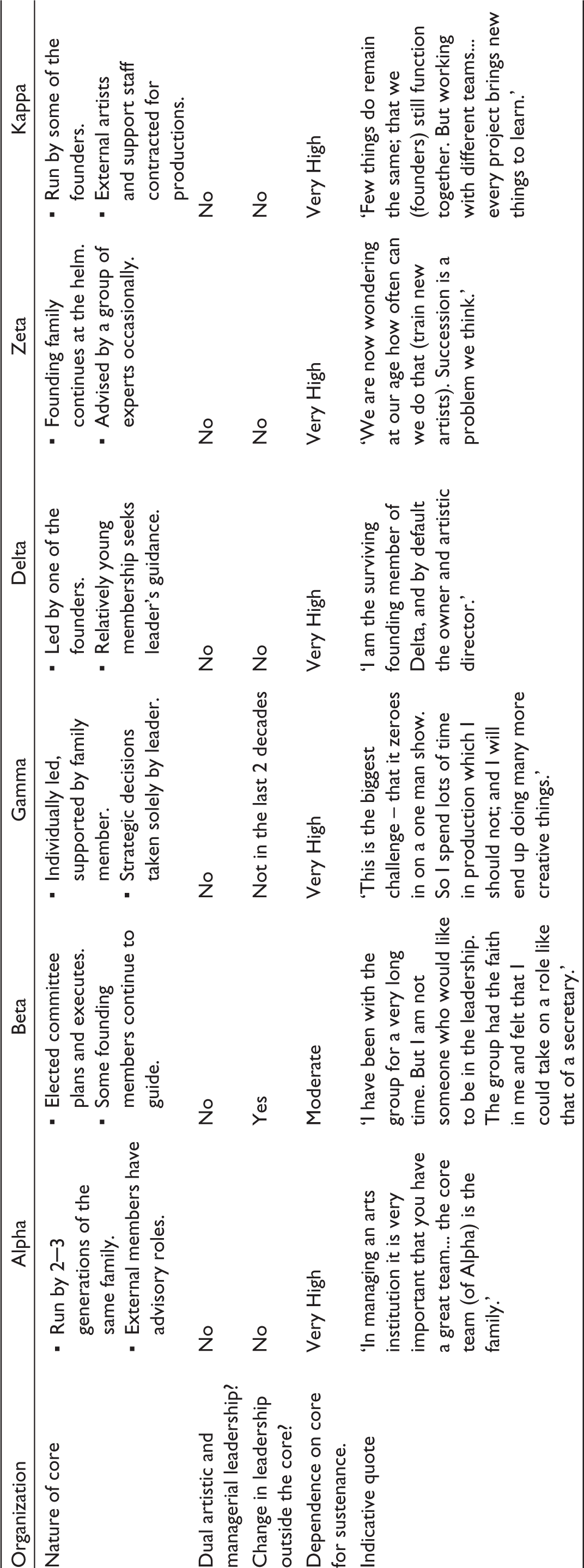
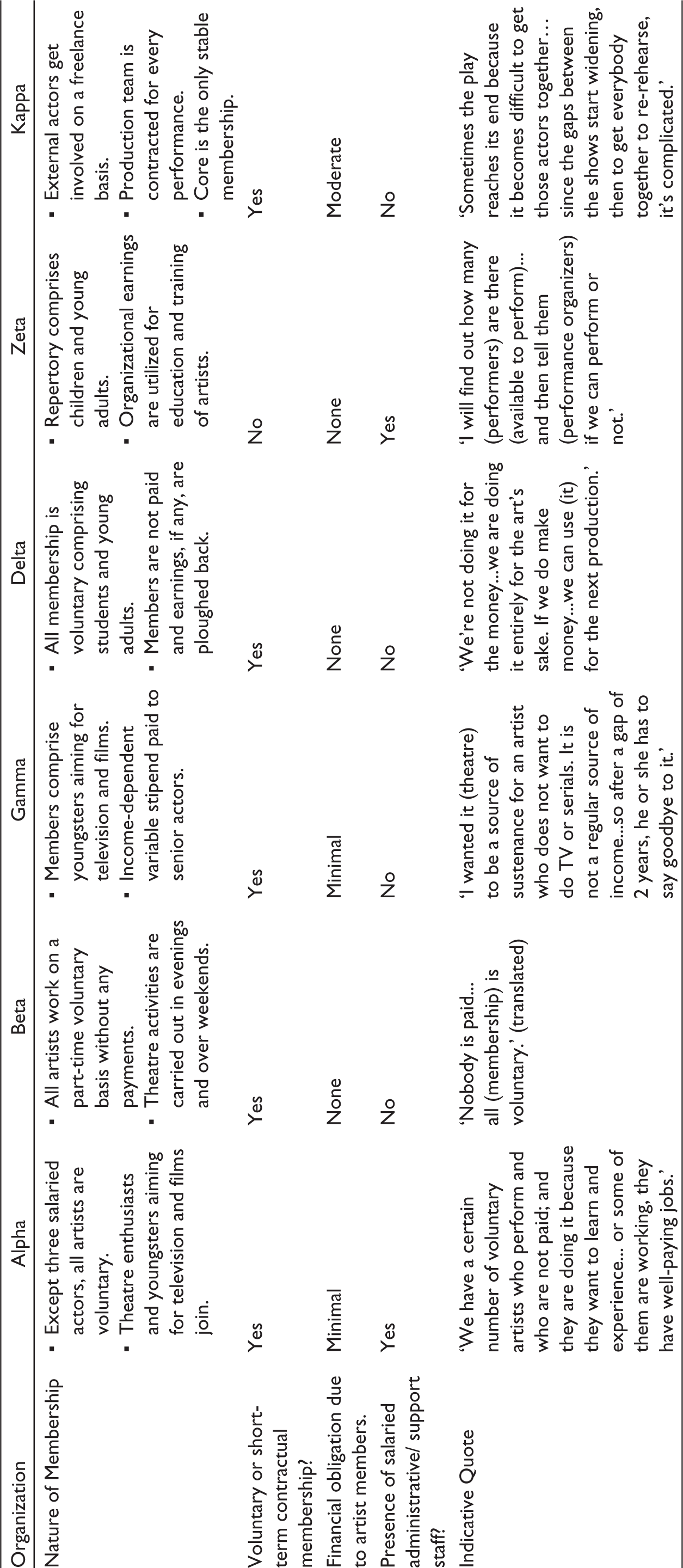
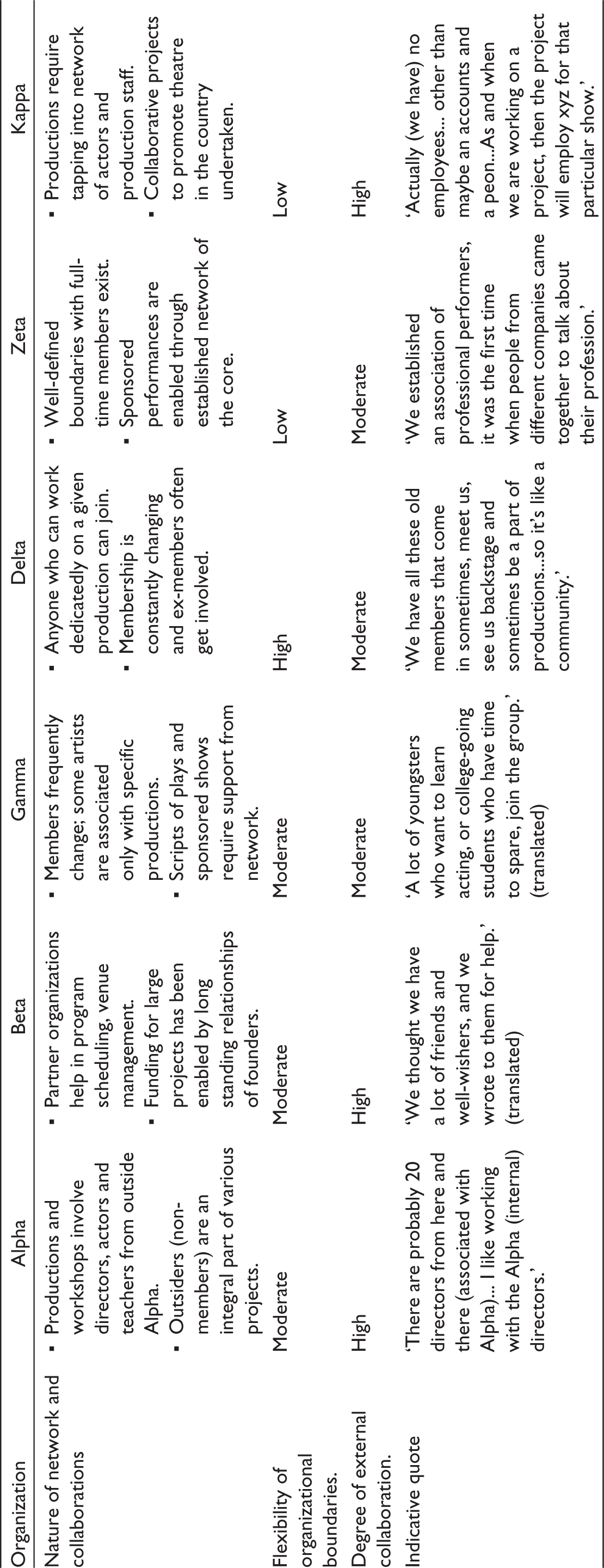
The findings are presented in a discussional format supported by Tables 3–5, which provide a brief explanation and selective quotes from each case, offering vivid descriptions from the world of the participants.
Organization’s Core.
Transient Membership.
Networked Environment.
Organization’s Core
At the centre of every theatre organization is an individual or a small team (one–five members in the studied cases) as the leadership and the driving force behind the organization. This individual or team usually includes the founder(s), responsible for the organization’s conception and with a strong ideological motivation or personal interest in theatre. This small group of people has been termed as the ‘core’. The core is extremely essential, if not indispensable, to the functioning of the organization. Key decisions (such as selection of plays, actors and performance schedules) are taken, and some important roles (such as direction and financial management) are assumed almost entirely by the core.
The core is either an individual (Gamma and Delta) or comprises members of the immediate family (Alpha and Zeta) or close friends (Kappa). Family members often provide support to the founder for key functions of the organization that cannot be handled by other members. A strong and clearly demarcated core is absent or diluted only when the very ideological foundations of the organization’s work demand a democratic leadership; even in this case, the members look up to the founding members for guidance and inspiration.
The core is in some cases financially dependent on their earnings from the organization (Alpha and Gamma). However, in none of the cases, irrespective of legal structure or profit status of the organization, is theatre seen as a means of financial benefit by the core—there are always stronger reasons relating to ideology, tradition or culture, and passion for the arts—that lead to the involvement of the core in theatre. Invariably, in each of the organizations, the core has staked personal resources, such as physical space and money, or sacrificed lucrative opportunities, for the formation or continued existence of the organization.
The core not only possesses artistic vision and excellence that enables continuity of the organization but also has strong administrative capacity. Artistic leaders forming the core assume all managerial responsibilities in each of the six cases. Core members expressed the need for artists to undertake management roles in arts organizations, believing that arts organizations could not be run with business models or professional managers. An artistic director (Gamma) who believed that specialized managers would be helpful for artists to focus on creative work; simultaneously expressed that there were no incentives for managers to take up careers in live performing arts. Literature has oft discussed dual leadership involving artistic and managing directors in performing arts organizations (Järvinen et al., 2015; Reynolds et al., 2017). However, dual artistic and managerial leadership was found absent in our empirical study. Multiple leadership, wherever present, generated from members of a family in most cases and was not divided based on artistic and managerial ability. Given that all six organizations are well-reputed and have been practicing for multiple decades, it is a significant finding that dual leadership structures have not been employed and artistic leaders simultaneously assume managerial roles. Lack of awareness of the discipline of arts management and deficiency of specialized arts management training may be the reason behind the belief that specialized managers in the arts are unbefitting. Another aspect was the continued vesting of leadership in the same individual artists, families or group of friends. Board of Directors-led organizational governance and leadership selection was absent, implying that artistic leaders continually lead their organizations for decades together and the identity of the organization is closely tied to that of its core.
The core hence emerges as the primary reason behind the continued sustenance of the organization. A strong dependence on the core and the core’s resilience allows the organization to tide through times of adversity. The extreme dependence on the core implied that without it, the organization’s existence could be under threat, since other pillars of support did not exist. Hence, we posit that,
Proposition 1: Theatre organizations are run by a small core, often comprising individuals or families and driven by personal interest unrelated to monetary benefit. The core represents both artistic and managerial leadership; sustenance of the organization is dependent on the continued presence of the core.
Transient Membership
Apart from the core, the remaining artistic membership of the organization is relatively transient in nature. A number of artists join on a voluntary basis with an objective to get involved in theatre, either to build a career as an artist or to pursue a hobby. These artists are not dependent (Beta, Delta and Kappa) or only partially dependent (Alpha, Gamma and Zeta) on their earnings from the organization for a living, and they receive little to no income for their work. Some artists join with a view to train themselves to pursue more lucrative opportunities in film and television in the future. Several artists are part of the organization on a contractual basis (both legal and trust-based) for short periods for specific performances or productions; even when they continue for longer periods, their involvement in theatre is only on a part-time basis. As a result of the voluntary and contractual membership of artists, the organization is loosely structured with constantly changing membership. The size and membership expands or contracts depending on the intensity and frequency of productions and performances.
Apart from the core, the members are also required to multi-task on a range of activities. Since there are no distinct arts managers involved, production-related tasks are often delegated by the core to the artist members. Members are expected to be involved in arranging sets, properties and costumes; marketing and promotional activities; backstage work; venue management; and lights and sound management. All these jobs are an essential part of their work, even though their aim is to develop artistic skills, to the extent that in several organizations (Beta, Gamma and Delta), well-executed production tasks are a means to get opportunities as an artist.
As far as non-artistic membership is concerned, salaried members in areas such as accounts and administration were associated on an ongoing basis with some organizations (Alpha, Zeta and Kappa). Organizations that employed salaried support staff are either for-profit, own income-generating fixed assets or have access to significant donor funds. The support staff in these cases is mainly involved in maintenance of fixed assets and managing complex accounting for donations. Organizations that have sustained solely on earned income from performances have artists performing all production and support activities.
Arts organizations have been researched as part of the non-profit sector (Baumol & Bowen, 1965; Hansmann, 1981) receiving public support, since the arts are considered to be merit goods with potential to create positive externalities (Peacock, 1994; Throsby, 2010). However, government bodies for the arts and culture in India have been mired in bureaucracy (IFA, 2010), leading to erratic support and significant procedural delays. The corporate sector is also not forthcoming in supporting the arts (FICCI-EY, 2016). In this uncertain environment of arts funding, organizations have relied on earned income for sustenance. In a voluntary or production-specific contractual membership, members seek opportunities to train and perform without expectation of payment or are paid for short periods. This creates little to nil financial burden on the organization and, in turn, provides opportunities for young artistic talent to develop.
Our study extends the concept of the transient membership to for-profit theatre organizations, where freelance production-specific cast ensure that payments to actors and support staff become variable costs. Theatre organizations, by providing opportunities to young voluntary artists and through contractual arrangements for productions, ensure that a majority of the costs arise only with respect to programming that has earning potential. Hence, we posit that:
Proposition 2: The artistic membership of theatre organizations is largely transient—it is either voluntary or contracted on a production-specific basis. Salaried support staff is employed where fixed earning assets or significant external funding exists. Artistic members benefit from training and their role extends into production and managerial tasks.
Networked Environment
The transient membership allows the organizations to have flexibility in their size and scale of activity. Artists come together to work on specific theatrical productions and disperse on completion. Such a flexible structure based on active productions can be likened to a project-based organization where teams come together for specific projects and are temporally bound to achieve specific project-oriented goals.
However, the association and disassociation of artists with organizations is not a one-time production-dependent phenomenon since performances are held at different locations for months or often years together—either at regular intervals or through occasional production revivals. Furthermore, the project structure is not only with respect to artists but across multiple dimensions of functioning. None of the organizations studied had permanent staff for lighting, sound, design, and creation of sets and properties. Either the artists associated with the production are trained to perform these functions or external professional help is contracted.
Theatre organizations often collaborate with external playwrights and directors to write or direct plays. In some cases, these collaborations have a narrow scope and are limited to joint workshops or artist exchange programs. Such collaborations allow the organization to foster exchange of ideas to develop creative abilities and techniques, and to receive external perspectives on their work.
The core of the organization is usually a strong link to the external network of artists, playwrights, sound, light and stage experts, intellectuals, subject experts, theatre enthusiasts and other theatre organizations. Collaboration for different projects and productions is carried out within this network. Multiple teams are often working within an organization simultaneously, the common element in each team being the organization’s core. Accordingly, the organization’s boundaries are relatively porous to absorb people from the network and are constantly changing with new productions and projects such as theatre workshops, festivals and artistic training. The network provides a pool of artists and professionals to feed the different project teams. The network also provides collaborative support from external directors, playwrights, intellectuals and other organizations.
Theatre organizations hence operate within a close social network, often based on interpersonal ties developed by the core and inter-organizational ties with other theatre organizations. The networks involve local ties and also cut across regions to provide collaborative opportunities to expand audience reach and perform in other cities and regions. To enable effective utilization of these networks, the organizations studied had a collaborative rather than competitive orientation towards other organizations and artists. Even in the development of new productions, there was no deliberation or comparison with other organizations doing similar work or performing for common audiences.
Given the turbulent environments in which organizations operate, the increasing importance of organizational fluidity, marked by the presence of networks, temporary project teams and blurred boundaries, has been discussed by Schreyögg and Sydow (2010). We argue that such fluidity has been an inherent feature of theatre organizations that create unique products (Hirschman, 1983) and operate in uncertain environments. The project-based structure of arts organizations allows for management of discontinuity and can create learning for business organizations that are operating in increasingly volatile and complex environments. The presence of networks and interdependent relationships in the arts (Jackson & Oliver, 2003; Moldavanova & Goerdel, 2018) supports the project-based structure that pools both artistic and non-artistic membership. Our study evinces presence of similar networks and interdependencies in the case of Indian theatre organizations.
The organizational structure is lean—comprising primarily the core, with strong dependence on external collaborations—and flexible to easily absorb external members into projects. Such a structure relies on a pool of artists, professionals and collaborators sourced from the networked environment. The underlying spirit of the theatre organizations’ work focuses on collaboration within their networks. Hence, we posit that:
Proposition 3: A project-based structure and transient membership implies that organizational boundaries of theatre organizations are flexible and porous. The organizations have a collaborative orientation and operate within a broader network of theatre enthusiasts and professionals that provides members for different projects.
Conceptual Framework
A framework of organizational structure emerges from the various categories and propositions developed through our research. Figure 2 captures this conceptual framework. The core lies at the centre of this structure since it provides the basis for the organization’s existence as well as sustainability—both in its relatively stable nature and its motives that are beyond financial benefit. The core, personally invested in the organization’s continuation and success, provides it the required support—whether in artistic creation, collaboration, management or provision of financial resources.
Moving outwards, the core is supported by members that are usually loosely bound to the organization. These transient members may be volunteers or paid members associated for specific projects or productions. While this transient membership does not directly contribute to the long-term survival of the organization, their presence is crucial to the ongoing artistic productions. While most of the transient membership has interest in the artistic work of the organization, absence of distinct managerial and production staff in many cases leads to active involvement of artistic members in administrative and support functions. Opportunities for training, performance and alignment of artistic interests, rather than salaries or financial benefits, often create strong ties of the transient membership to the organization.
In order to support a heavily core-dependent and transient membership structure, the organizations have boundaries that are porous to absorb and release members based on organizational requirements. The boundaries of the organization are also flexible and continuously changing based on needs of ongoing productions and projects. Changing requirements of membership and support from the environment are availed through strong networks that exist, often through personal contacts of the core. The networked environment comprising various artists, production staff and other theatre groups supports the continued existence of the organization.
Conclusion
Several aspects of the structure of theatre organizations to ensure long-term sustainability have been described in this paper. Since the organization is highly dependent on a small core group taking up both managerial and artistic responsibility, the core is key to its continuous survival. Theatre organizations in India are still not institutionalized with boards and independent structures to eliminate dependence on founder-leaders, a feature common in Western arts organizations, and succession continues to be a concern. The absence of dual-management structures in the organizations studied is a profound insight marking a departure from extant literature on arts organization and leadership, and it may be a result of the constrained resources and lack of arts management training in India.
The core is supported by members with an impermanent, either voluntary or contractual association with the organization. The lean and fluid structure of Indian arts organizations is inadequate in isolation and has to be supported by strong personal and industry networks. These networks offer support not just for artistic collaboration but also for sourcing artists and staff for different projects that would be extremely challenging to execute with the small number of core members. The organizations in this study benefit from such short-term associations with limited monetary obligations since the associations are often based on non-monetary benefits in the form of training and experience. Non-artistic staff is contracted in some organizations for projects with earning potential, whereas artist members help with production work in others.
The transient membership for different productions and performances also highlights the project-oriented structure of theatre organizations. The nature of work of theatre organizations essentially involves creation of new and innovative productions alongside sporadic performance schedules for existing productions based on available opportunities. A project orientation suits the nature of work and allows the organization to function with limited resources. The organization hence works with a collaborative orientation within a networked environment of theatre organizations, artists and other interested groups, which reaffirms the network-dependent existence of arts and cultural organizations from extant literature.
Theoretical Contributions and Directions for Future Research
The research highlights the three aspects of organization’s core, transient membership and networked environment that are critical to the sustainability of performing arts organizations based on our empirical study. The findings are presented through a conceptual framework that shows how the three themes combine to form an open and lean, yet effective, structure of performing art organizations in India. While variation among the researched organizations in terms of art form, language, region of operation and legal structure meant that business models and organizational designs were unique, the qualitative research led to emergence of common themes related to the organizational structure that were relevant across cases. The resultant propositions based on a grounded theory study offer insights into organizations that have been structured to survive in challenging environments and the conceptual framework offers a lucid view of their organizational structure.
The study contributes to arts management research by offering reasons to selectively question or support theories from the extant literature. For instance, it questions the dual leadership structures that have been widely researched in arts management literature (Järvinen et al., 2015; Kleppe, 2018; Reynolds et al., 2017), while it supports findings on organizations as open systems (Jung, 2017) working in a closely networked environment. The research also has applicability to management of organizations in the cultural and creative industries such as gaming, design and architecture, which rely on innovation, and even the broader business sector. Business management is no longer focussed solely on scientific methods and efficiency. Creativity, that has historically been a pursuit of the artist, is becoming an essential skill for the business manager (An & Youn, 2018; Carlucci & Schiuma, 2018). Arts organizations are adept at creating innovative and original artistic work with constrained resources and under conflicting imperatives. The porous boundaries allow these organizations to seek support from transient members and strong networks. Unlike many other cultural industries and business organizations, the work of performing arts organizations is performed live in front of an audience and must be recreated for every performance. Sustainability is ensured even with limited human and capital resources to bind the organization together. Business organizations can surely look to artist-led and -managed organizations to rethink their own organizational models. Future research can focus on comparative studies in the business and the arts sectors, especially in industries where creativity is critical to performance, and can enable exchange of knowledge between the two sectors.
This exploratory study may also contribute to an understanding of other contexts with similar socio-cultural and political underpinnings. Broadening the scope of the study to other countries where art forms are distinct from those in the West and public support to the arts is scarce (Caust, 2015) would be useful in establishing the applicability of findings in different cultural contexts.
Another potential area of research is voluntarism in the Indian arts sector. While voluntarism in the arts is also common in Western arts organizations and especially in non-profits (Bussell & Forbes, 2007; Kushner & Poole, 1996), in India it appears to be strongly linked to the ancient Gurukul system. The guru–shishya (teacher– student) tradition, based on a non-monetary exchange and strong personal relationship between the student and the teacher, continues to be prevalent in several arts organizations in India and is an exciting area for future research.
Limitations
The purposive and theoretical sampling led to the inclusion of a variety of theatre organizations. Since the question explored structural aspects that helped sustain the organizations, long-standing and reputed theatre organizations were selected. However, an inclusion of organizations that have not been able to sustain would have allowed a more holistic view on the question of sustainability of organizations. The unavailability of data and difficulty in access of leaders and members of organizations that have ceased to exist restricted such inclusion and is the first limitation of the study.
An attempt was made to include successful theatre organizations from different parts of the country. The participating organizations are from the North, South and Central India, and they include both for-profit and non-profit organizations. The audiences range from rural, semi-urban and urban areas for different organizations. However the empirical study does not include performing arts organizations from the East and West parts of India which are also rich in theatre arts. This is the second limitation of the study. The exclusion was due to constraints of time and costs that are typically involved in undertaking field visits for elaborate data collection for a grounded theory study.
Triangulation of data was achieved by speaking to leaders and multiple members with a relatively stable association with the organizations. However there was limited interaction with other actors in the network—the transient members such as playwrights, lights and sounds experts, and other artists who were associated only temporarily with projects. While the organizational leaders and members were most relevant to understand structural aspects, an external perspective may have been useful, given the open structure and networked environment of the organizations. The research does not present the perspective of external stakeholders on structural aspects and is the third limitation of the study.
Managerial Implications
India has an immense and diverse arts and cultural heritage. This heritage needs to be supported by management practices that are contextualized to the arts and cultural sector as well as the socio-cultural and political context of India. This study is one of the early research contributions in the area of performing arts management originating from India. The findings from this research are based on an empirical study of six Indian theatre organizations. These organizations are based in different regions of the country and perform for urban, semi-urban and rural audiences. Moreover, they bring together practise of theatre in varied languages, art forms and genres under different legal structures. While the methodological choice and inductive nature of the study do not lead us to claiming generalisability, our findings and conceptual framework can surely enhance understanding of Indian performing arts organizations. The findings may even be applicable to other developing countries where, unlike the developed countries of the West, institutionalisation and public support is lacking, and the arts face conditions and challenges similar to those in India.
Theatre practitioners involved in management of performing arts organizations can evaluate their own organizations against our findings based on a study of well-reputed and long-running organizations. In an industry where survival is a challenge for organizations, our research provides rich descriptions as well as a succinct conceptual framework to understand how organizations have managed with limited resources and lean structures. Arts practitioners can develop strong ties with other individuals and organizations, and rely on their networks to support their artistic work. This becomes especially important where artists are responsible for management, and specialized arts managers are neither available nor feasible. Artists can focus on creating mutual benefits and non-monetary exchange with actors from their network, based on artistic experience, education and opportunities for creative expression. The research findings are particularly significant for performing artists who are starting their own organizations. Artists who are passionate and devoted to their art, often do not find the opportunity to focus on the managerial aspects that are necessary for sustaining an arts organization. Further, it is unlikely that artists setting up their own performing arts organizations have the resources to hire specialised managerial talent, especially when long-established organizations are artist-led and managed. An artist with an entrepreneurial intention will do well to concentrate not just on artistic activity but also on designing a lean and flexible organization and on building a strong network to support its work, based on the findings of this study. Finally, the research contributes as a repository of knowledge for arts practitioners in a context where there is extremely limited research and documentation (IFA, 2010) on the arts sector in India.
Footnotes
Declaration of Conflicting Interests
The authors declared no potential conflicts of interest with respect to the research, authorship and/or publication of this article.
Funding
The authors received no financial support for the research, authorship, and/or publication of this article.