







Abstract
Compliance to legal requirements and standards prescribed by international certification bodies and/or foreign buyers in the readymade garments (RMG) industry in Bangladesh is a burning issue regarding a safer working environment for employees. The present study examines the mediating effects of job satisfaction and organizational attraction on the relationship between the compliance and turnover intention. Research questions, hypotheses and research objectives are developed from the premises of job demands–resources (JD-R) theory, social exchange theory, social identity theory and prior empirical findings. Data are collected from 444 workers of the RMG industry through a multi-item survey instrument. We analyse the collected data using covariate-based structural equation modelling though AMOS (version 20). Results show that all of the direct influences except that of compliance on turnover intention are significant. The findings confirm that compliance acts as a distal antecedent of employee turnover intention through its mediating influences via job satisfaction and organizational attraction. The study sheds light on the significance of maintaining the provisions of compliance by the RMG in Bangladesh. It makes robust empirical and theoretical contributions to the extant literature. First, it supplements the inadequate documentation in RMG and other clothing industries. Unlike other studies on compliance in the RMG sector, this study measures compliance from the perspective of both the employer and the employees. Second, the study also makes a complementary contribution to the organizational attraction research by focusing on current employees rather than prospective employees. Finally, a little pursuit is evident in using theory and empirical proof together in the RMG industry. Hence, it aims to validate the theoretical account of the JD-R theory, social identity theory and social exchange theory in the context of a developing country.
Introduction
The readymade garments (RMG) industry of Bangladesh has registered a phenomenal growth in the recent past. With nearly $30 billion in export earning in FY2017-2018 from this sector, Bangladesh became the second-largest garments exporting country in the world (WTO, 2018). As a single sector, it employs more than four million people, mostly women and contributes to 84 percent of the total export earnings of the country. However, the industry sometimes draws the attention of the media because of mishaps and/or unfair labour practices, which damage the reputation of the industry and impairs the country image. The collapse of Rana Plaza and the fire in Tazreen Fashions were two major catastrophes in recent past that took nearly 1250 lives. Due to such incidents, Bangladesh government, international NGOs and, most importantly, retailers have become especially concerned about the social and physical compliance in the sector including labour rights, working environment, occupational safety and building safety of the garments factories.
Compliance to the legal requirements and codes of conduct recommended by government agencies, international certification bodies and retailers is to ensure safer working environment and fair labour practices in the industry, which has a positive impact on the bottom line. Baral (2010), in his comparative study, observed that compliant garment factories earned higher profits than their non-complainant counterparts. Shadat, Rahman, Rahman and Hawlader (2016) viewed compliance as one of the critical success factors of the competitiveness and sustainable development of the RMG industry in Bangladesh. However, there is a misconception about the benefits of compliance among the owners of the garments factories in Bangladesh. Many of them view compliance as a cost factor and are reluctant to initiate measures to comply with the requirements of the government and other certification bodies. Alam, Azim and Alias (2017) reveal that a significant challenge for the HR people in implementing compliance in the garment factories of Bangladesh is the lack of top management support. Therefore, the issue of compliance in the RMG sector and its impact on the stakeholders is an essential area of research. So far a good number of studies have been conducted on compliance in the RMG sector in Bangladesh. However, most of them are mainly descriptive studies related to the working conditions and the level of compliance in the industry (Mohibullah, Takebira, Moni, & Rahman, 2018). A few studies have focused on the impact of compliance on profitability (e.g., Baral, 2010) or challenges to Human Resources Managers to ensure compliances (e.g., Alam et al., 2017). A few studies also observed the relationship between a particular aspect of compliance, largely HR issues and job satisfaction and/or employee wellbeing (Ahmed & Hossain, 2009). However, surprisingly there is no study to investigate the relationship between compliance in its totality and employee attitudes and behaviors including job satisfaction, organizational attraction, turnover intention etc. This study is an attempt to fill up this research gap.
According to the job demands-resources (JD-R) model (Demerouti, Bakker, Nachreiner, & Schaufeli, 2001), employees tend to maintain a balance between job demands and job resources. In the case of imbalance in this relationship, employees react in the form of dissatisfaction and ultimately quit the job. Compliance to the legal requirements and codes of conducts prescribed by certification bodies plays a vital role in striking the balance between job demands and job resources. Compliant organizations offer a better working environment and the employees feel satisfied and get attracted to their organization. They, as a matter of social exchange (Blau, 1964), in turn, feel more obliged to the employer to continue their job with the organization. Thus, the broad compliance issues can be rendered as a social exchange price for buffering the effects of job demand-resource relationship so that the workplace eventually keeps the workers satisfied and attracted and prevents them from quitting the job. Based on this theoretical foundation, the present study attempts to address the following research questions.
RQ1: Does compliance influence the turnover intention and organizational attraction in the RMG industry in Bangladesh?
RQ2: Does job satisfaction mediate the association between (a) compliance and organizational attraction and (b) compliance and turnover intention in the RMG industry in Bangladesh?
RQ3: Is organizational attraction a significant predictor of employees’ turnover intention?
The present study is an attempt to contribute to the existing literature under different pretexts. First, it supplements the inadequate documentation on RMG and other clothing industries. Notably, compliance in the RMG sector is a burning issue both for the buyers’ satisfaction and also for keeping the workers satisfied, engaged and aligned with the organization. Second, although many studies have been carried out on the effects of organizational attractions for attracting and recruiting talents (Frasca & Edwards, 2017; Ran, Koo, & Kwon, 2016; Yu & Davis, 2017), interestingly, very little is on the predictors and outcomes for the existing employees of firms. Therefore, it addresses the inadequacy of the literature, particularly for an empirical relevance. Finally, a little pursuit is evident in using theory and empirical proof together in the RMG industry. Hence, it aims to validate the theoretical accounts of the JD-R theory (Adil & Baig, 2018; Bakker, Demerouti, & Sanz-Vergel, 2014), social identity theory (Tajfel & Turner, 1986) and social exchange theory (Blau, 1964) in the context of an Eastern setting.
Literature Review and Development of Hypotheses
Compliance
Compliance is primarily conceptualized as the voluntary code of conduct designed by the concerned parties. Mohibullah et al. (2018) defined compliance as the ability to comply with the stipulated order, a set of rules or request. Compliance in the RMG sector commonly includes following the labour rights and facilities as to the buyer’s code of conduct and ILO conventions as well as abiding by the labour and industry laws enacted by RMG-producing countries. However, Alam et al. (2017) and Baral (2010) advanced the idea of incorporating physical compliance and environmental compliance which are seemingly the primary causes of the historical disasters in the RMG industry in Bangladesh. Alam et al. (2017) described compliance as consisting of four major aspects: social compliance, environmental compliance, occupational compliance and physical compliance. Social compliance represents benefits, health and hygiene, safety and human rights, etc. Environmental compliance entails complying with environmental issues and protecting the planet. Occupational compliance relates to products’ quality, aesthetics, reliability and other specifications. Finally, physical compliance covers the facilities and structures of the factory and the premises where the garments are produced.
Job Satisfaction
Job satisfaction implies a pleasurable or positive emotional state of mind (Bellou & Andronikidis, 2017; Locke, 1976; Wen, Gu, & Wen, 2019) or an affective response (Cotton & Tuttle, 1986) of the employees to the job as a whole. The way the job is offered and designed characterizes the magnitude of job satisfaction. It is perceived as an outcome of individual and work-related characteristics and is also studied as a predictor of many work-related attitudes and behaviours (Ciunova-Shuleska & Palamidovska-Sterjadovska, 2019; Tuzun, Çetin, & Basım, 2017). A good number of studies have identified factors such as job, pay, promotions, recognition, working conditions, organizational policy, reward system, organizational image, etc. as major antecedents of job satisfaction (Bellou, 2010; Locke, 1976; Manish, Hemang, Ashish, & Sandeep, 2018; Yousef, 2017).
Organizational Attraction
Organizational attraction (OA) is the degree to which an individual would personally seek an organization as an employer and would recommend the organization as an employer (Newburry, Gardberg, & Belkin, 2006). OA as a research topic warrants attention because of three reasons (Perez, Walton, Cooper, & Pacheco, 2014). First, OA has the potential to improve the quantity and quality of job applicants. Second, OA, as an antecedent to post-entry person-organization (P-O) fit, which is positively correlated to preferred organizational outcomes such as improved productivity and reduced absenteeism or turnover (Kristof-Brown, Zimmerman, & Johnson, 2005). Finally, OA is essential because it signals to primary stakeholders that an organization is doing the right things.
Interactional psychologists opine that employees or workers feel emotional alignments and attractions to the place wherein the working environment fulfil their perceived expectations (Diener, Larsen, & Emmons, 1984). Organizational attractions to retain the prevailing talents need an idealized match between supplementary fit and complementary fit (Van Hoye & Turban, 2015). Another relevant factor for creating organizational attractions among the employees is to strengthen the external image or the reputation of the organization (Nolan & Harold, 2010). While scrutinizing their organizational attraction, the insiders judge both how their roles are treated by the organization as well as the outsiders’ reflection on the organization’s reputation or prestige (Helm, 2012). Thus, organizational attraction is manifested as the positive mental schema of an organization’s characteristics, related benefits, firm’s performance and social reflections which justify the fulfillment of the employees’ perceived desire as they intend to work or continue to work in it (Highhouse, Lievens, & Sinar, 2016; Newburry et al., 2006; Reis, Braga, & Trullen, 2017).
Turnover Intention
Turnover refers to quitting the job – either deliberately or forcefully. Turnover intention turns out to be the primary antecedent of employee turnover and a surrogate to actual turnover (Rubel, Kee, Quah, & Rimi, 2017). Employee turnover occupies a key focus in the organizational setting because it impacts employers, employees and workplaces in general (Ghosh & Gurunathan, 2015). It includes both financial and non-financial costs for the firms. It is desirable to arrange any form of leverage that discourages the turnover motive among the retained talent (Biswas, 2010). Studies have explored many exogenous (such as ethical climate, role overload, injustice, workplace incivility) and endogenous factors (such as intention to quit, deviant behaviour, dissatisfaction) impacting the mental health of the employees (Rubel et al., 2017; Sharma, Schuster, Ba, & Singh, 2016; Vui-Yee & Yen-Hwa, 2019). Holding these in check is likely to improve the employees’ mental health and consequently counteract the deliberate turnover intention.
Hypotheses Development
Linking Compliance and Turnover Intention
Theoretically, the JD-R model (Demerouti et al., 2001) provides a credible account of the relationship between compliance and turnover intention. According to the theory, employees try to balance between the job demands and the job resources in order to sustain stress and prevent job burnout. Job demands include work overload, job insecurity, heavy lifting, long working hours, etc. which are common issues of compliance. On the other hand, job resources include feedback, social support, authority, etc. In the case of imbalance between job demands and job resources, employees react by taking a break, switching tasks or, in the extreme situation, by quitting the job.
Social exchange theory (Blau, 1964) and reci-procity norm (Gouldner, 1960) provide an excellent explanation to different perspectives of employee–organization relation-ship. They view that the employee–organization link is a social exchange relationship where the organization offers employees benefits and social rewards in exchange for loyalty and work effort. Based on the norm of reciprocity (Gouldner, 1960), when employees perceive that the organization takes care of them, they usually reciprocate with positive attitudes (e.g., job satisfaction) and favourable work behaviours (e.g., citizenship behaviour, task performance, etc.) (Eisenberger, Huntington, Hutchison, & Sowa, 1986). Firms’ allegiance to the social, environmental, physical and occupational compliance let the employees sense how much they are cared for, served and protected (Alam et al., 2017). As a result, it maintains their relationship with the firms and turns them into loyal employees and attracted to the organization (Reis et al., 2017; Yu, 2014). Hence, we can predict a negative relationship between compliance and turnover intention of RMG employees.
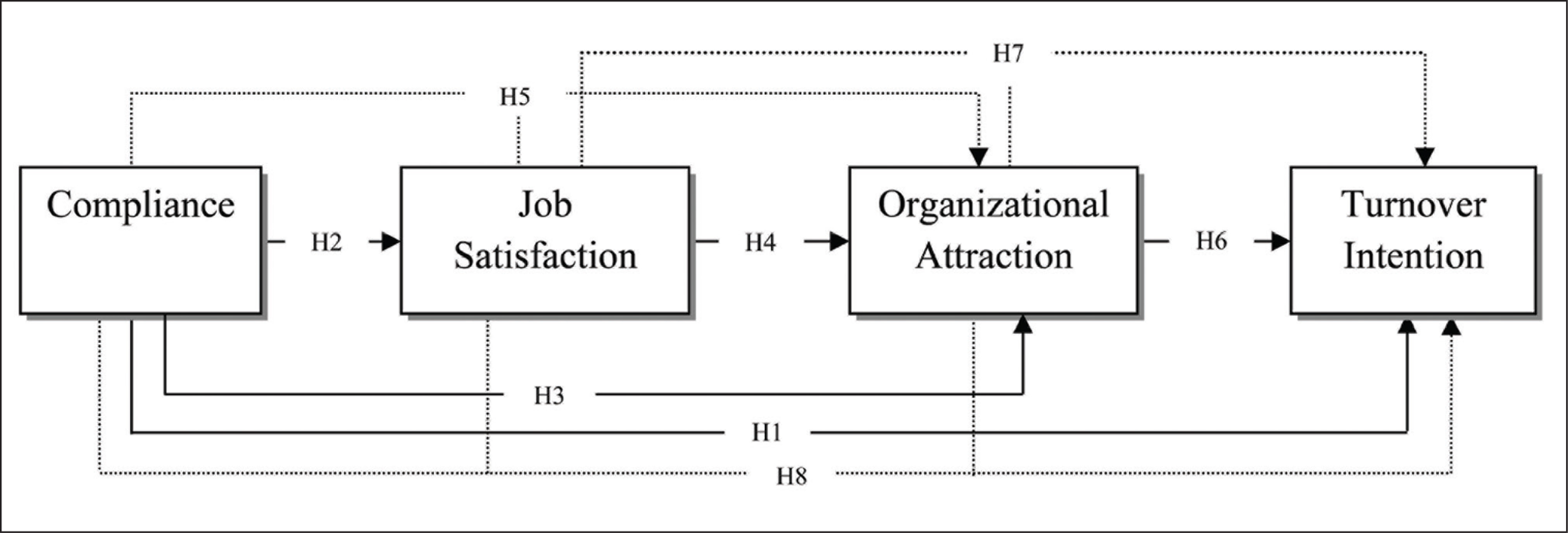
H1. Compliance in RMG industry has a negative influence on employee turnover intention
Linking Job Satisfaction with Compliance and Organizational Attraction
Compliance to the standards set by government agencies, international certification bodies and the retailers in the garments sector ensures a safer, congenial and fulfilling workplace for the employees, which evokes employees’ positive evaluation regarding their exertions on attaining corporate goals. According to the tenets of JD-R theory, compliance to the codes of conduct helps individual employees to balance between their job demands and job resources, which in turn reduces strain and increases job satisfaction. Theoretically, it may be noted that, activation of enacted compliance issues rejuvenates employees’ emotional state of mind and affective response (Manish et al., 2018). The extant empirical results revitalize the theoretical emphasis on the fact that a rational treatment of the employees result in a satisfying job experience (Sharma et al., 2016; Yousef, 2017).
Social identity theory suggests that a person’s self-concept depends on how his/her group (organization) is evaluated by others. When an organization is viewed in a positive light, this reflects favourably on the individuals within it who receive positive outcomes such as appreciation and approval from others (Barber, 1998). In line with this theory, Turban, Campion and Eyring (1995) revealed that a positive image of an organization is likely to increase organizational attraction of the potential as well as current employees. Helm (2012) observed a significant positive relationship between the external reputation of an organization and job satisfaction and pride in membership of its employees. Compliant garments factories in Bangladesh are viewed as rule-abiding entities and are accorded higher status by the public in general and by the buyers in particular.
In the RMG context, where discrimination, deprivation and workplace violations are common phenomena, compliances with health and safety (Manish et al., 2018), fire safety (Wadud & Huda, 2017), social, environmental, occupational and physical standards (Alam et al., 2017; Shadat et al., 2016) are likely to enhance job satisfaction and organizational attraction of the employees. Therefore, the following hypotheses are proposed:
H2. Compliance in the RMG industry has a significant influence on job satisfaction. H3. Compliance in the RMG industry has a significant influence on Organizational Attraction.
Even though organizational attraction is associated with both pre- and post-employment stages, it is mainly studied as a construct related to the pre-employment perception of the prospective employees. However, OA is also perceived to be an outcome of post-employment person-organization fit (Kristof-Brown et al., 2005; Newburry et al., 2006) and it has a causal relationship with many job-related attitudes and behaviour such as job satisfaction, productivity, absenteeism, turnover intention, etc. An employee will be attracted to an organization as long as he/she finds that the organization has the ability to satisfy his/her needs. In addition, the theory of work adjustment explains the ‘person-organization’ fit in terms of a congruence between the working environment and individual desire. The theory predicts that such congruence is a potential antecedent of OA. There is empirical support that congruence between individuals and environments is related to work outcomes such as tenure and satisfaction (Bretz & Judge, 1994).
In other words, these theories envisage a relationship between job satisfaction and organizational attraction. Thus, we expect that employees’ job satisfaction will warrant a positive organizational attraction.
H4. Job satisfaction reserves an impact on organizational attraction.
The previous section elaborated on compliance-job satisfaction and compliance-organizational attraction relationships. However, because of the immediate effect of overall working environment on the level of job satisfaction, we may consider compliance as a proximal antecedent of job satisfaction. In line with the JD-R theoretical lens, the imbalance between job demand and job resources generates strain, which is the primary focus of a person to get rid of (Bakker et al., 2014). Compliance to the social, occupational, physical and environmental standards in the workplace ensure a more pleasant job atmosphere for the employees and make them satisfied. On the other hand, a satisfied employee is expected to feel a subjective fit with the organization (Dawis & Lofquist, 1984), which, in turn, leads to organizational attraction. Thus, we hypothesize the mediating role of job satisfaction in the compliance- organizational attraction relationship.
H5. Job satisfaction mediates the relationship between compliance and organizational attraction.
Linking Organizational Attraction with Job Satisfaction and Turnover Intention
The theoretical underpinnings of the social exchange and JD-R theories contend that when employees are valued and recognized duly in proportion to their efforts, they feel attracted to the organization and tend to continue working in it (Knapp, Smith, & Sprinkle, 2017; Rubel et al., 2017). Organizational attraction or perceived prestige and image is employees’ self-belief, which is also shaped by the stakeholders outside the landscape (Akgunduz & Bardakoglu, 2017). JD-R theory posits that employees strive to retain and protect the resources they care most. In order to protect their self-image perceived by the outsider coupled with an attraction to the organization, employees incline to stay and contribute to the firm with a higher level of enthusiasm and involvement (Kim, Lee, Lee, & Kim, 2010). Therefore, we propose the following hypothesis:
H6. Organizational attraction has a negative influence on turnover intention.
In line with the social exchange theory, it is well documented that job satisfaction has a negative relationship with turnover intention. Satisfied employees, in an interactive relationship, are likely to pay back for the values given to them in the form of favourable attitudes and behaviours including loyalty and intention to continue their membership in the organization (Blau, 1964; Gouldner, 1960). However, the underlying mechanism of this link between job satisfaction and turnover intention may be explored in terms of the former’s role in the cognitive and mental framework of the employees. Satisfied employees, because of their perceived fit with the organization, develop an emotional attachment with the organization and they feel attracted to it. Also, the rational gain in terms of pay and other benefits (which may be a cause of satisfaction) may make the organization attractive to the employees (Haque, Uddin, Easmin, & Sohel, 2019). In both cases, employees will have more conviction to stay in the organization. Thus, we may postulate that job satisfaction creates organizational attraction which results in the reduction of turnover intention. In other words, organizational attraction buffers (mediates) the negative impact of job satisfaction on turnover intention. Accordingly, we propose the following hypothesis:
H7. Organizational attraction will mediate the effect of job satisfaction on turnover intention.
Finally, drawing on the understanding of social exchange theory and JD-R theory, the present study posits that organizational compliance increases employee’s job satisfaction. A satisfied employee naturally has a positive attraction toward the organization, which gives rise to a decline in turnover intention. Simply, it can be considered that compliance increases job satisfaction, which causes to cease intention to quit through developing an attraction for the organization. Thus, the following hypothesis is developed:
H8. There is a mediated mediation effect of job satisfaction and organizational attraction on the impact of compliance on turnover intention.
Based on pertinent empirical observations, theoretical narratives and proposed hypotheses, the following conceptual research framework (Figure 1) is developed for empirical testing in the context of the RMG industry in Bangladesh.
Hypothetical Model
Methodology
Data Collection Procedure and Sample Characteristics
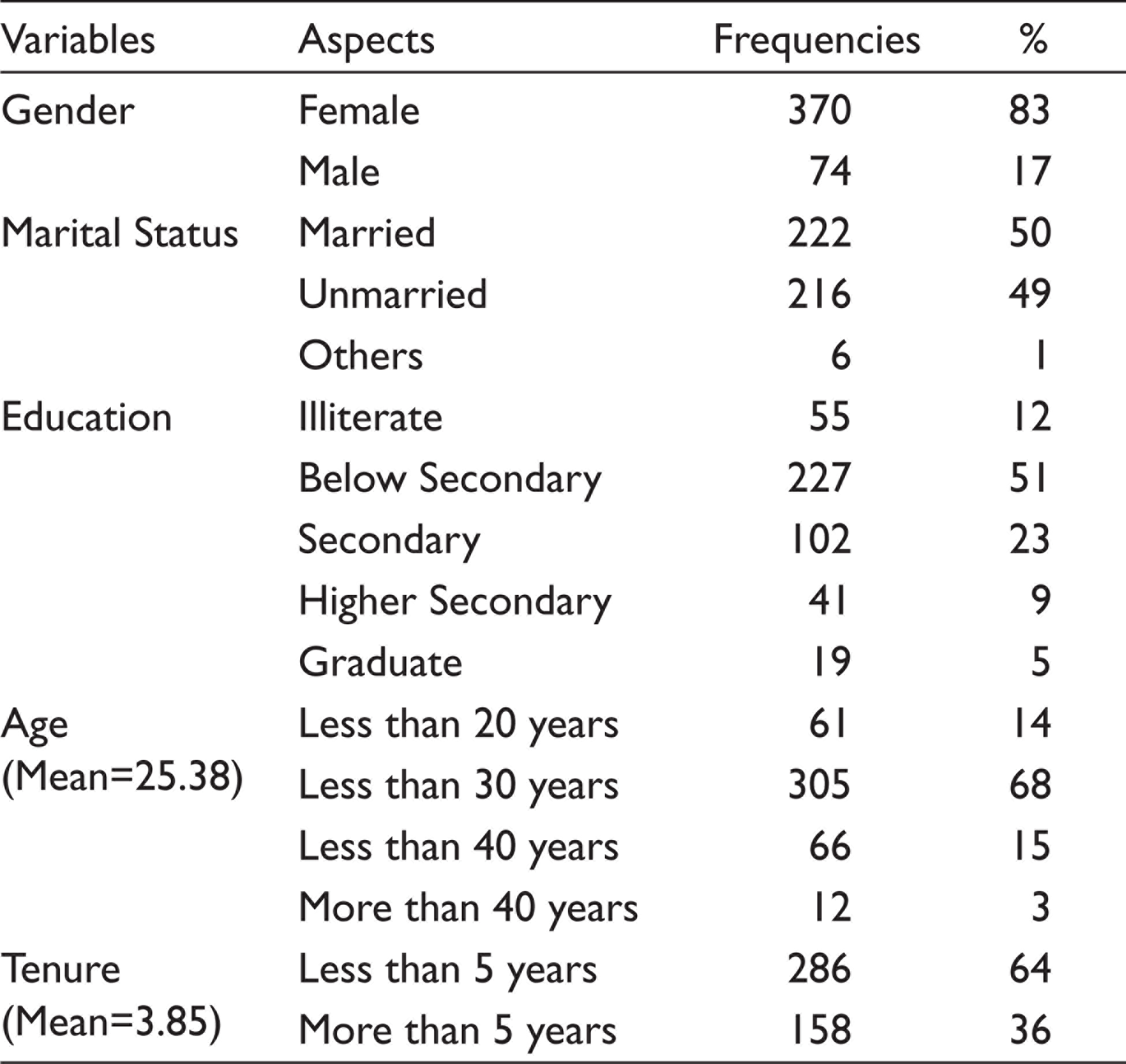
The present study used replies from the operative workers of RMG factories located in the export processing zone in Chittagong, the port city of Bangladesh. A self-administered survey questionnaire was used to collect the data. Designated research assistants helped the illiterate/low literate respondents to fill up the questionnaires. Around 700 survey questionnaires were distributed of which only 444 usable replies were used in this study. The study yields a 68.43 percent response rate which is reasonably high compared to prior studies in similar contexts (Mahmood, Uddin, & Luo, 2019; Uddin, Mahmood, & Fan, 2019). Table 1 demonstrates the informants’ demographic profile. RMG industry in Bangladesh is a female-dominated workplace, which is also reflected in our survey responses.
Estimates of the Demographic Variables (n=444)
Measurement Tools
We split the questionnaire into three sections. In Section 1, we introduced the study’s purpose and procedure to the respondents. To ensure anonymity of the responses, the respondents were never asked to disclose their names at any stage of data collection. Section 2 comprised all measurement scales along with their items. Each item was measured with a 5-point Likert scale ranging from strongly agree (5) to strongly disagree (1). In Section 3, the informants were requested to report their demographic profile.
The present study is a perceptual study and it mostly used measurement scales that are applied and validated in prior studies with an exception of the measurement of compliance. To measure job satisfaction, we used the 3-item scale developed by Valentine and Fleischman (2008), while turnover intention was measured through the 5-item scale developed by Kuvaas (2006). Organizational attractiveness was measured with the 3-item scale developed by Smither, Reilly, Millsap, At, and Stoffey (1993). We developed a 24-item compliance construct based on the idea of Alam et al. (2017) considering the compliance audit checklist used by different audit authorities. It included 14 items related to employment conditions (e.g., I am not scared of losing my job anytime, etc.) 4 items related to health and safety (e.g., There is a regular health check-up of workers in my organization, etc.) and 6 items related to physical facilities (e.g., There are adequate fire exits in my workplace, etc.). The original questionnaire was developed in English. However, to make it comprehensible to the respondents, it was translated into Bangla. The back-translation procedure was adopted for the translation.
Result
Measurement Model Evaluation
The measurement model is evaluated from multiple perspectives through the use of CFA, constructs’ reliability, convergent validity, discriminant validity and items’ cross-loading in the construct. First, Table 2 demonstrates that a six-factor model [chi-square/degree of freedom ratio (χ2/df=1.803), root mean square of approximation (RMSEA=0.043), Goodness of Fit Index (GFI=0.907), Normed Fit Index (NFI=0.943), Tucker-Lewis Index (TLI=0.970), Comparative Fit Index (CFI=0.973)] yields a better model fit than other alternative models.
Measurement Model Fit Indices
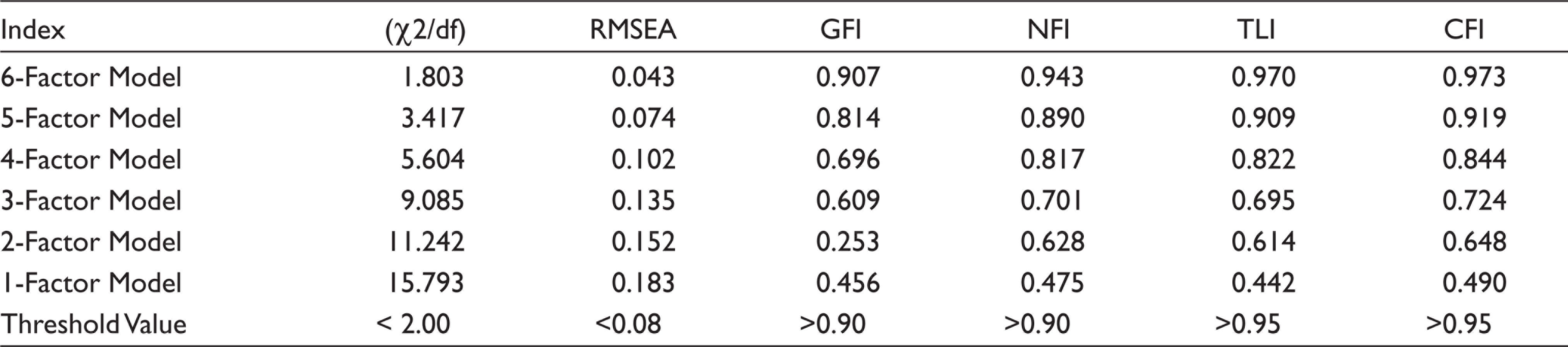
3 Factor model (Factor 2 split into TI and JS
4 Factor model (Factor 2 split into TI, OA and JS
5 Factor model (Factor 1 split into EC (Economic compliance) and others and TI, OA, JS)
6 Factor model (EC, physical facility, health safety, TI, OA, JS)
Second, Table 3 exhibits the cross-loading of the items and the item’s skewness and kurtosis (<4). The cross-loading reveals that all items are highly loaded to their own construct compared to the others’.
Cross-loading of the Items to their Measures
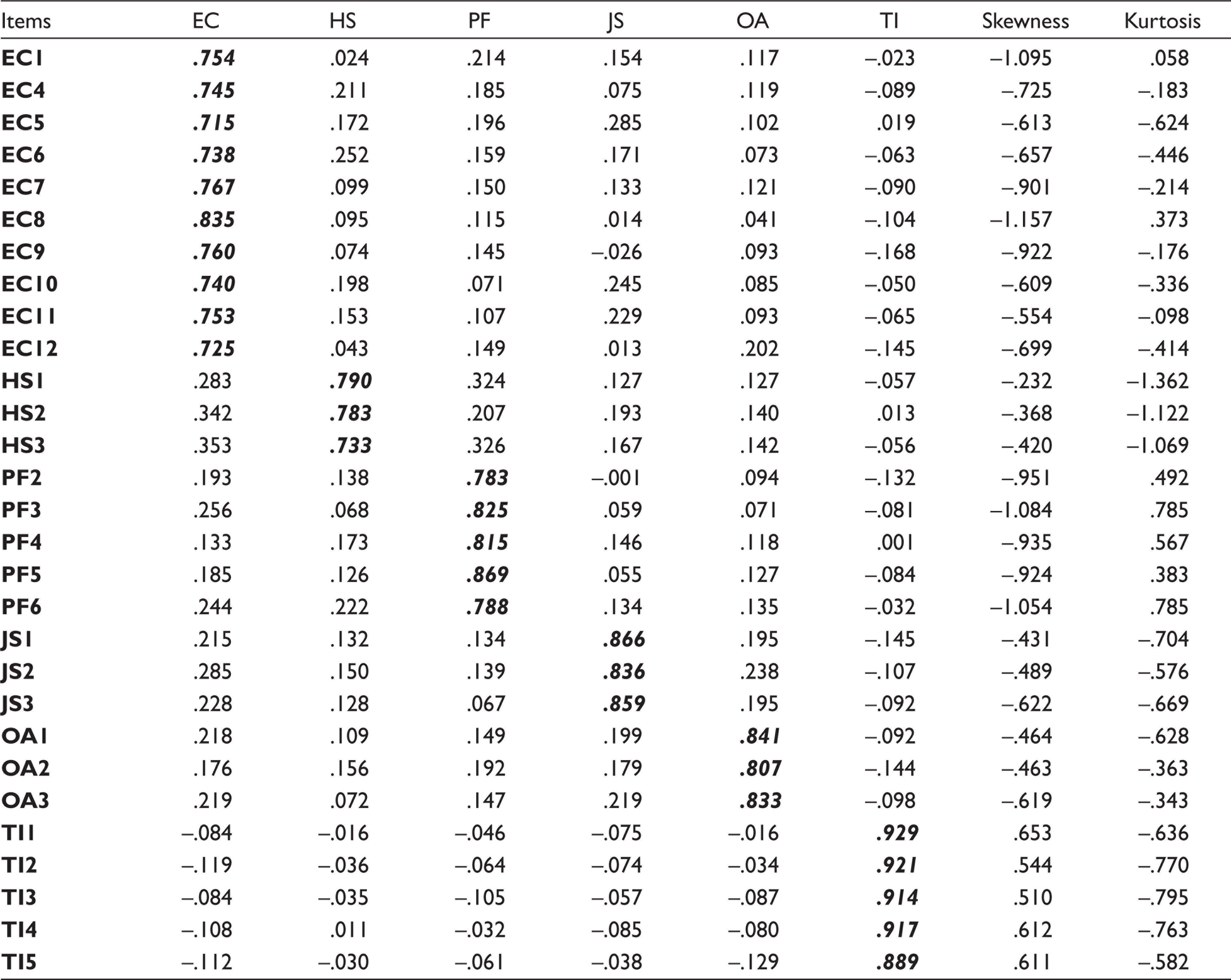
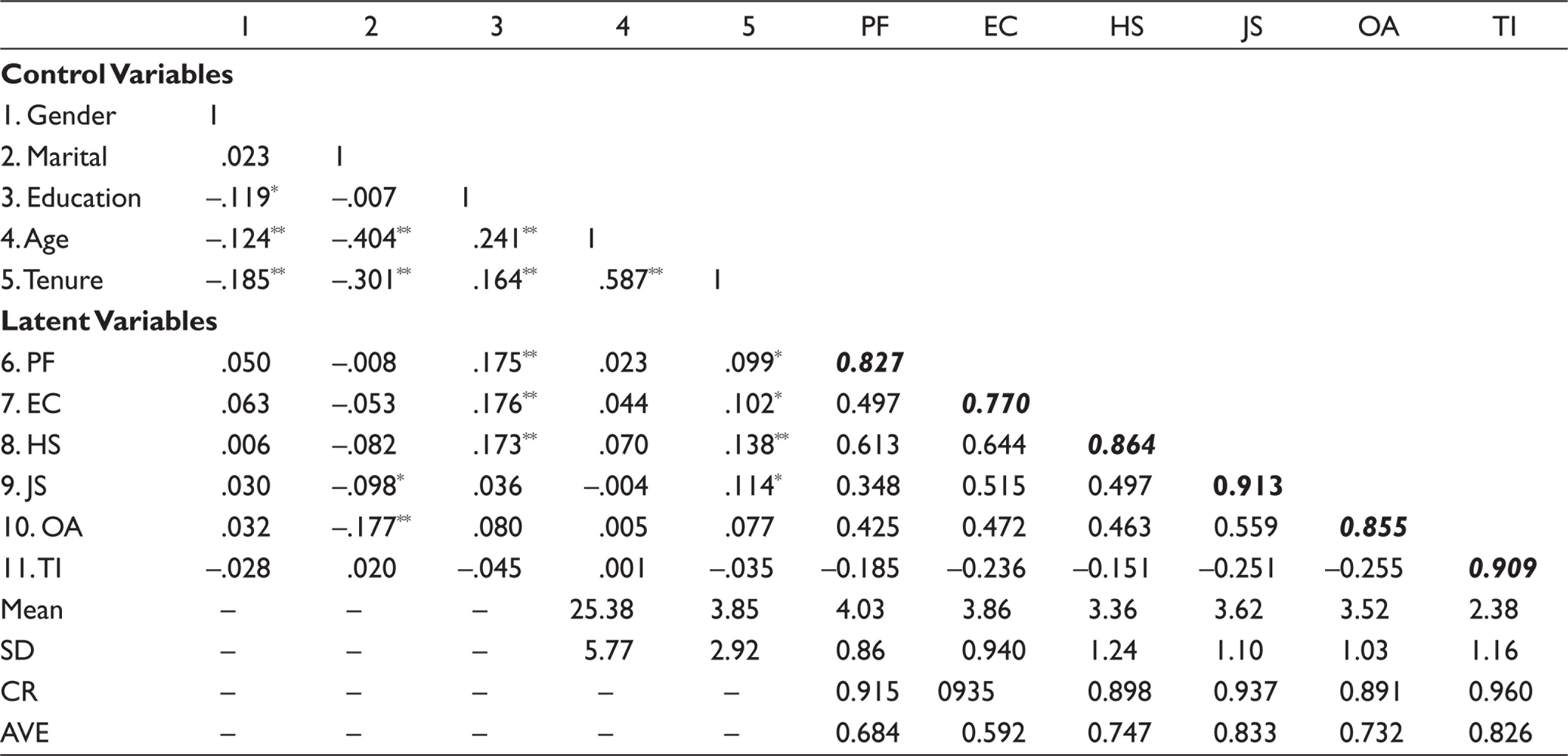
Table 4 highlights that the minimum average variance extracted (AVE) in this study is 0.592 (>0.50) and the lowest composite reliability of any measurement tool is 0.892 (Hair Jr, Hult, Ringle, & Sarstedt, 2014). The square root of AVE of a given measurement tool must be higher than the same construct’s correlation with other survey measures (Frolova & Mahmood, 2019; Uddin, Mahmood et al., 2019; Uddin, Priyankara, & Mahmood, 2019). Table 4 also displays that the square root of any construct’s AVE (EC: AVE=0.770) is higher than its correlation with other constructs. Eventually, the minimum threshold result against all criteria is achieved (Mahmood et al., 2019).
Reliability and Validity of the Survey Measures
Structural Model and Hypotheses Testing
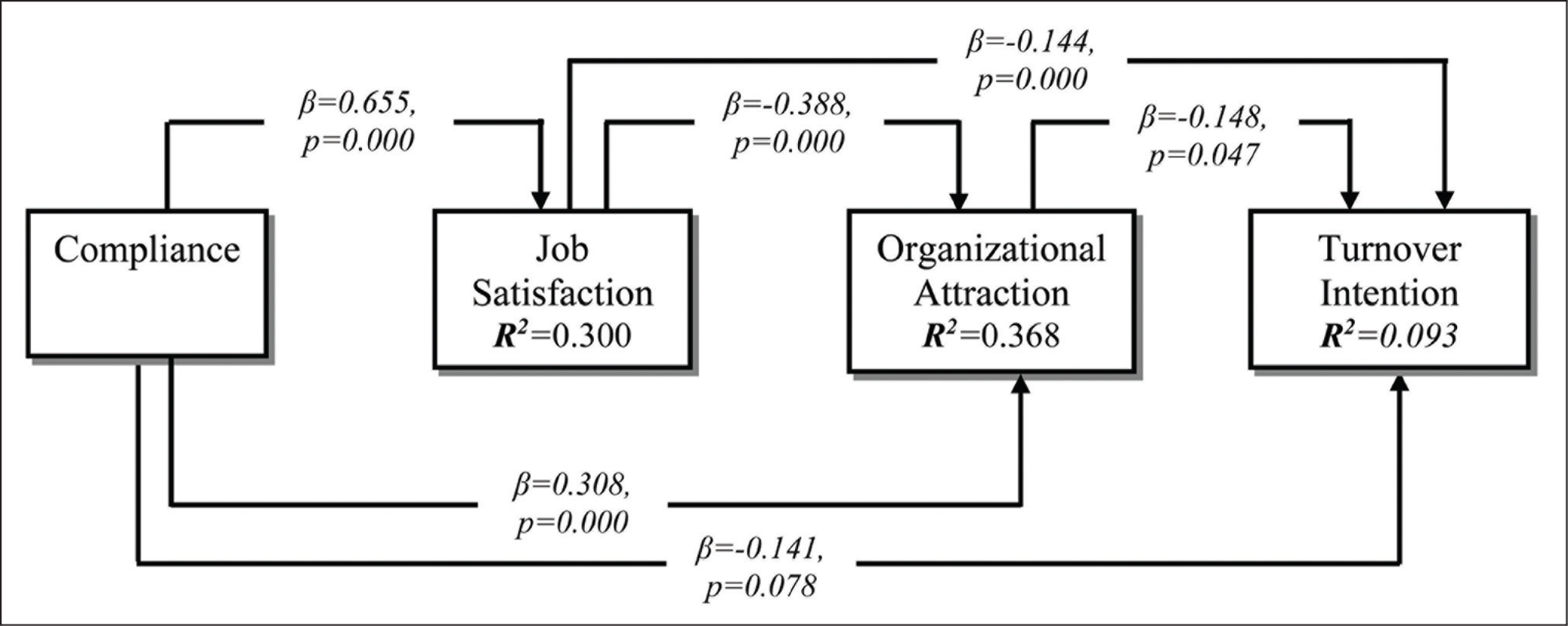
In addition to path estimates (β), the present study also examined the model fit index and coefficient of determination (R2) to evaluate the structural model. Figure 2 highlights the β value, significance level along with their corresponding p-value and R2 value. Whereas β value signifies the strength of the effect of an independent variable on dependent variables, R2 estimate shows the overall predictive power of the entire structural model.
Figure 2 demonstrates that compliance is a significant direct predictor of job satisfaction (β=0.655, p<0.000) and organizational attractiveness (β=0.308, p<0.000), whereas job satisfaction displays significant positive influence on organizational attractiveness (β=0.388, p<0.000). However, it represents an insignificant negative impact on turnover intention (β=-0.141, p<0.078). Additionally, organizational attractiveness registers significant negative effect on turnover intention (β=-0.148, p<0.028).
The hypothesized relationships are displayed in two parts. First, we examine the hypotheses which are aimed to measure the direct influence of exogenous variables on endogenous variables. Then, we examine the indirect effects of the mediator on the observed relationships between independent and dependent variables. Initially, we hypothesized that there is a negative influence of compliance on employees’ turnover intention (H1). However, the estimates (β=-0.141, p<0.078) do not support this hypothesis (see Figure 2). In H2 we proposed that compliance warrants a significant influence on job satisfaction. The calculated result predicted the relationship (β=0.655, p<0.000). Therefore, H2 is supported. The potential impact of compliance on organizational attractiveness is envisioned in H3. The measured results report a significant influence (β=0.308, p<0.000) accordingly. In H4, we hypothesized that job satisfaction accounted for a significant impact on organizational attractiveness. The estimates validate the hypothesis (β=0.388, p<0.000). Hence, H4 is also supported. In H6, we predicted a negative effect of organizational attractiveness on turnover intention. The result underscores the relationship (β=-0.148, p<0.047).
Path Estimates in the Structured Model
The essence of the mediating effect is contingent on a few premises (Mahmood et al., 2019). First, the independent variable must have a significant direct effect (c) on the dependent variable before running the mediating effect (Baron & Kenny, 1986). Second, the direct effect (a) of the independent variable on mediating variable and also the effect (b) of mediating variable on the dependent variable must be significant after using the mediating variable. Finally, the direct effect (c/) must either disappear (full mediation) or significantly reduce (partial mediation) after adding the mediating variable (Baron & Kenny, 1986; Uddin, Mahmood, et al., 2019). Table 5 reports the relationships.
Mediated Result
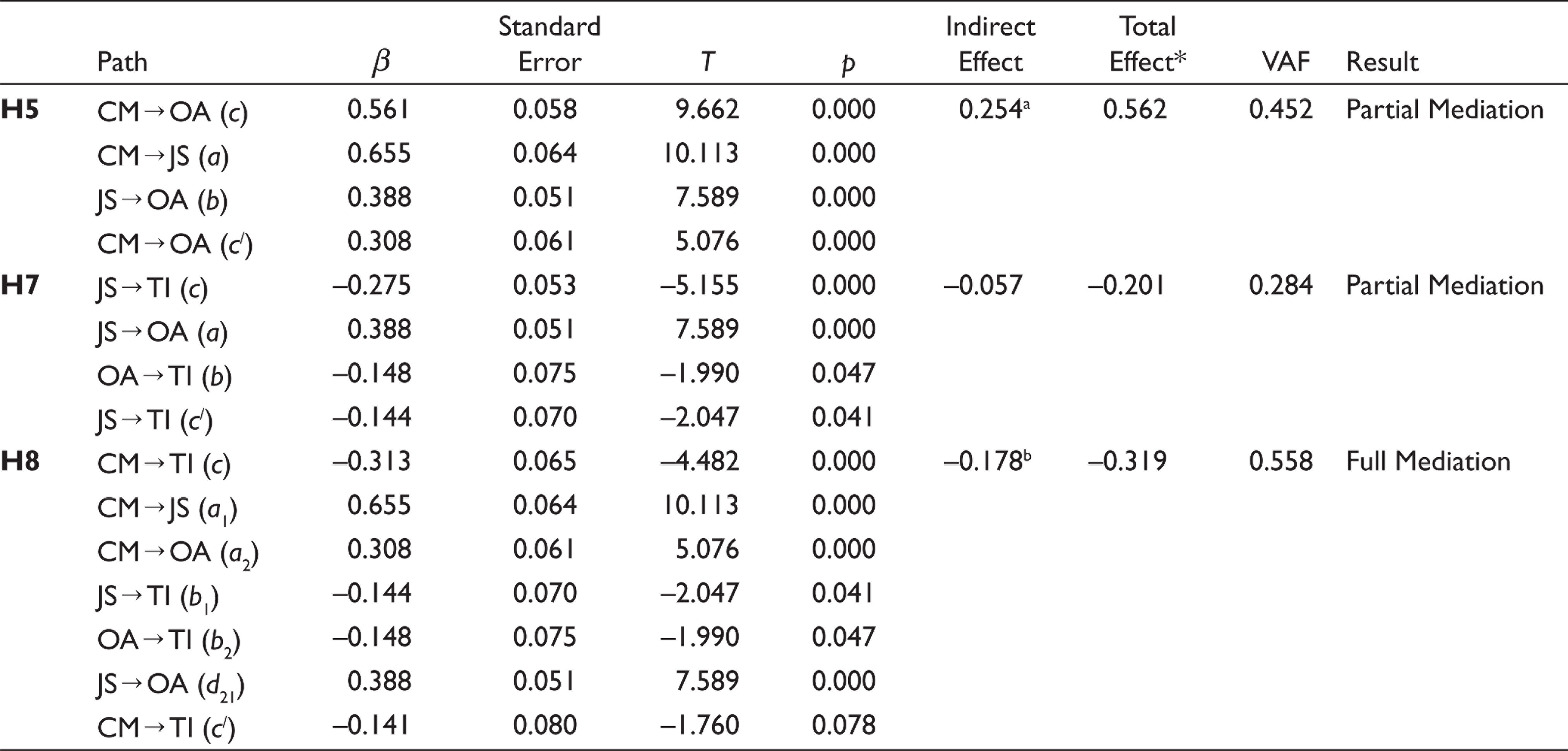
Following the H5’s proposition, Table 5 depicts direct effects before mediator (βc=0.561, p<0.000) and after adding mediator (βc/=0.308, p<0.000), indirect effect (a × b =0.254) and total effect (0.562). Even though the direct effect after adding mediator variable (job satisfaction) is significant, the strength of the prediction of direct effect is significantly reduced from βc=0.561 to βc/=0.308. Furthermore, the variance accounted for (VAF: 0.452) indicates a partial mediation (0.20≤0.452≤0.80). Thus, H5 is supported to the effect that job satisfaction partially mediates the effect of compliance on organizational attraction.
Similarly, H7 estimates report that direct effect (c) before using a mediator variable is significant at (-0.275 (βc), p<0.000). However, after using the mediating variable, the effect (βc/) is significantly reduced to -0.144. Hence, H7 is supported, that is, the organizational attraction mediates (partially) the influence of job satisfaction on turnover intention. Finally, H8 also posited that βc before running mediating variable was 0.313 (p<0.078). βc/ after running the mediator variable demonstrated is -0.141, which displays the insignificance of the direct effect of compliance. Hence the full mediated mediation effect of job satisfaction and organizational attraction on the relationship between compliance and turnover intention is maintained. Thus, H8 is supported.
Discussion
This study explored the impact of compliance with the legal requirements and standards prescribed by international certification bodies and/or international buyers in the RMG industry in Bangladesh on the attitudes and behaviours of the employees. Particular focus was on job satisfaction, organizational attraction and turnover intention. An integrated framework was developed to examine the potential confounding effect of job satisfaction and organizational attraction on compliance–turnover intention relationship. In line with the social exchange theory, the findings demonstrate that compliance by RMG firms creates a sense of job satisfaction in terms of safety, security and need fulfilment, which eventually enhances the employees’ positive evaluation of the job. Prior studies have observed that when an organization maintains provisions of compliance concerning employees’ occupational health and safety, physical structure of the building, environmental issues, labour rights and fire safety, its employees’ job satisfaction tends to increase (Alam et al., 2017; Manish et al., 2018; Wadud & Huda, 2017). The study of Sarker and Afroze (2014) also endorses our propositions, as they found that proper human resources practices improved job satisfaction among the workers of the RMG industry in Bangladesh.
The findings also show that job satisfaction has a significant impact on organizational attraction (β=0.424, p<0.000). It validates Murray’s (1938) need-press theory, which says that an employee will be attracted to an organization that can satisfy his/her needs. The job satisfaction-organization attraction link is also explained in ‘person-organization’ fit in terms of congruence between the working environment and individual desire in line with the theory of work adjustment (Dawis & Lofquist, 1984).
The use of job satisfaction as a mediator variable strengthens the predictive power of compliance issues to facilitate organizational attraction. The result reports a partial mediation effect, which highlights that job satisfaction partially mediates the association between compliance and organizational attraction. In fact, those RMG firms that maintain compliance and get approval from the accreditation bodies as a secured place of work are accorded a higher level of reputation by the public in general and by international buyers in particular. Given the social identity theory (Tajfel & Turner, 1986), it raises an employee’s self-concept because of his/her sense of association with an organization that receives a positive evaluation by others. Turban, Moake, Wu, & Cheung, 2016) reveal that a positive image of an organization is likely to increase organizational attraction of the potential as well as current employees.
Moreover, in JD-R theory, tension arising out of perceived inequity exists in the employees’ mind to make a proper balance between their resources and job demand (Bakker et al., 2014). Thus, the uncertainty related to perceived inequity inhibiting the release of individual resources against the job demand declines because of organizational compliance practices. Thus, the sense of job satisfaction due to compliance is likely to facilitate organizational attraction (Vigoda-Gadot & Ben-Zion, 2004). The study revealed that organizational attraction acted as a mediator between job satisfaction and employees’ turnover intention. The direct effect was significant before running the mediating variable. However, the direct influence of job satisfaction, after using organizational attraction as a mediator, entirely disappeared, which sheds light on the contribution of organizational attraction as a mediator in reducing the turnover intention among the employees in the RMG sector.
Following the essence of social exchange theory (Blau, 1964), it can be stressed that when employees find themselves cared and well-treated by their organization, they feel attracted to their organization and tend to reciprocate by staying rather than quitting. Vigoda-Gadot and Ben-Zion (2004) reported a similar finding of the mediation effect of perceived organizational image on the impact of work-related factors including job satisfaction and intention to leave among army officers. Being a powerful element of work-related antecedents, organizational attraction builds a robust linkage with its exogenous (job satisfaction) and endogenous variables and prevents the employees to leave the firm.
Finally, the study observed a spiral effect of compliance on turnover intention through job satisfaction and organizational attraction. The self-developed positive image toward the organization, due to the organizations’ compliance, gives employees a sense of satisfaction with the job which leads to a long-lasting organizational attraction, and which, in consequence, offsets the intention to quit. Thus, a satisfied employee holds and reflects a positive psychological interface with the organization that eliminates the employees’ intention to leave the firm.
Conclusion
The study attempted to examine the potential confounding effect of job satisfaction and organizational attraction on compliance–turnover intention relationship in the context of RMG industry in Bangladesh. It was confirmed that compliance acts as a distal antecedent of employee turnover intention through its spiral effect via job satisfaction and organizational attraction. The study shed light on the significance of maintaining the provisions of compliances in the RMG industry in Bangladesh. In fact, the workers in the RMG industry in Bangladesh represent a marginal segment of the population with very low levels of income, education and awareness. They do not demand a highly rewarding work environment; merely a secured workplace with adequate pay and safety measures are likely to keep them happy. Compliance by their firms to the workplace standards set by international accreditation bodies will provide them with the minimum means of living to keep them satisfied and attracted to their organization. In turn, they will reciprocate with a higher sense of loyalty to their organization.
Moreover, compliance is not only related to ensuring a safe and congenial workplace but also it is a prerequisite for the buyers based in the USA and EU market. However, most of the RMG owners in Bangladesh are found less enthusiastic about ensuring compliance in their organizations as it is considered to be a cost factor (Alam et al. (2017). The present study is entirely centred on the employees’ attitudinal outcomes driven by compliance. Thus, the findings will provide powerful insights to the RMG owners and managers, policymakers and regulatory bodies responsible for ensuring compliance.
This study fills the research gap under different pretexts. First, it is a pioneering attempt to measure compliance from the employees’ perspective, that is, if the employees in the factories perceive that their organization is ‘‘compliant’’ or ‘‘not compliant’’. In most of the studies, compliance is used as a dichotomous variable, that is, the factory is either ‘compliant’ or ‘not compliant’ based on the certification from the accreditation bodies. However, it is conceivable that the employees are the most authentic source of information regarding the overall working environment of the organization. Second, the study is based on a comprehensive view of compliance including its significant aspects, viz., employment condition, health and safety and physical facilities and its impact on employee job satisfaction, organizational attraction and turnover intention. Third, the study also makes a complementary contribution to organizational attraction research. Organizational attraction is mainly studied from the perspective of prospective employees rather than the current employees of the organization (Frasca & Edwards, 2017; Ran et al., 2016; Yu & Davis, 2017). The present study shows a robust relationship between job satisfaction and organizational attraction and between organizational attraction and turnover intention. Thus, it implies that organizational attraction is also an important antecedent of employee retention. Finally, the study validates the theoretical account of the JD-R theory (Bakker et al., 2014), social identity theory (Tajfel & Turner, 1986), social exchange theory (Blau, 1964) and a few other need-based theories of organizational behaviour in the context of an Eastern setting.
Footnotes
Declaration of Conflicting Interests
The authors declared no potential conflicts of interest with respect to the research, authorship and/or publication of this article.
Funding
The authors received no financial support for the research, authorship, and/or publication of this article.