







Abstract
This study introduces a theoretical framework of women’s labour force participation (LFP) decision as a manifestation of two opposing forces—the labour market’s ‘push’ in favour of, and social institutions’ ‘pull’ away from participation. The socioculturally diverse southwestern Indian state of Kerala is chosen as the ideal setting to test this framework. Using data from two rounds of the Kerala Migration Survey (KMS)—2013 and 2018—the study finds that higher levels of education reduce the likelihood that women participate in the labour force. This article also addresses the impact of a shock to migration—the Nitaqat system—on women’s LFP and finds evidence that long-standing social norms that prevent women’s LFP can change under economic crises such as the Nitaqat system that caused a large-scale return migration of Muslim emigrants from the Gulf countries. We find that prior to the migration shock, in the Muslim-dominated Malabar region, the strong social norms of the Sunni Muslims permeates across religions, which discourages women's LFP. Due to the return migration of predominantly Muslim men prompted by the Nitaqat system, we find evidence of a more favorable attitude towards women's labor force participation (LFP) in the Malabar region. By studying women’s LFP in Kerala, which has a significant proportion of Hindus, Christians and Muslims, the article finds support for LFP decisions as influenced by categorical identity affiliations.
Introduction
‘Choice takes place within certain social structures, themselves the outcome of previous choices and structures’.—Nancy Folbre, Who pays for the kids? Gender and the structures of constraint, 1994
‘Women have to stay at home and look after the family’s needs. Some of these girls who are earning their own income are becoming too free to the point where they are not paying attention to their husbands anymore. When some girls get freedom, they don’t know where to stop’.—Interview excerpt from Naila Kabeer, ‘Women, wages and intra-household power relations in urban Bangladesh’, 1997
The development of the feminization U-shape hypothesis was known to have preordained that women’s non-participation in the labour force would be an outcome of a shift from an agrarian to a non-agrarian economy. In the later stages of economic development, the gender gap would be non-existent. Yet, nearly 30 years since Goldin’s (1994) seminal work, the gender gap in labour force participation (LFP) rates in India remains as high as 50% as of 2022 (World Bank, 2023).
In India, female LFP has been declining despite economic growth. This puzzling observation has been rationalized as women’s choice to specialize in status production (Eswaran et al., 2013), home production (Afridi et al., 2018) or as a contribution towards reproductive economy (Rangarajan, 2011). When modelled as a choice, the gender gap in LFP rates appears less concerning as it discounts the role of society in preventing women from participating in the labour market, since ‘choice’ implies individual agency in decision-making. Indeed, the decision to participate in the labour force must be a choice in principle. In practice, this choice is muddled by social norms and becomes a ‘collective choice’ rather than an individual one. Despite decades of research being devoted to the study of female LFP, extant literature that recognizes LFP as a gendered phenomenon is scant. We believe that to study ‘female’ LFP is to entirely disregard the role of society in influencing employment decisions. The issue of LFP is not an issue of sex but of gender. At the most fundamental level, socially assigned roles explain these differences. Socially assigned roles are indeed gendered—society expects women to contribute to the home production process but does not provide the same space to the men of the household. As a result, women’s participation in the labour force involves compromising their predetermined responsibilities within a household, often recognized as a contribution to the household head’s (often men’s) production process (Sen, 1985). This study analyses women’s LFP in the context of households of heterosexual couples, since gender roles are most well defined in such cases. Studying the role of gender and ascribed identity affiliations such as caste and religion in understanding women’s LFP decisions warrants considerable variability in identity groupings and social settings. Since household dynamics are crucial to decisions relating to women’s LFP, variability within households concerning the head of the household is also desirable. The southwestern Indian state of Kerala has a large proportion of female-headed households, a significant population of Hindus, Christians and Muslims and varying social settings. In the Malabar region, Muslims constitute the second largest religious group after the Hindus. In the Travancore and Cochin regions, Christians constitute the second religious group after the Hindus. 1
The purpose of this study is to understand how social norms affect women’s LFP through institutions such as religion, caste/denomination/sect within religion and the household. The article, therefore, develops a formal framework of social institutions wherein religious groups define and intensify or moderate gender norms that are further streamlined by the respective castes (Hindus), denominations (Christians) or sects (Muslims) to which households belong. The decision to conform to or deviate from these norms, which manifests in women’s LFP, lies with the household—more specifically, the male patriarch. This is examined within the context of the southwestern Indian state of Kerala since it has a large proportion of all three religious groups and a unique history of religious schisms, conversions and syncretism.
The household to which the woman belongs is perhaps most fundamental to her decisions concerning the labour market. Broadly, the composition of the household and one’s roles in it, the intra-household power dynamics, the economic position of the household, and the membership of the household in various social institutions all contribute to this choice. Here, LFP represents a choice that outweighs multiple factors that likely keep a woman from working outside the household, that is, these factors ‘pull’ women away from the labour force.
Using data from the Kerala Migration Surveys 2013 and 2018, the study finds that the higher the educational qualification of the woman, the less likely it is that she will participate in the labour force. For Muslims, the opposite is true, and female-headed households are incidental to Muslim men’s migration to Gulf countries. In male-headed Muslim households, commitment mechanisms can be reinforced by the presence of the male and the fear of dilution of religious norms and values, as a result of Muslim women’s participation in economic activities is much lower when decision-making power rests in the hands of the male patriarch.
The study finds that the same factors that kept Muslim women from joining the labour market in 2013 enable their participation in 2018. We find that there are economic underpinnings to this result and attribute it to the economic crisis of the Gulf countries and employment policies in favour of their citizens, which culminated in a large-scale reverse migration of predominantly Muslim men to their homeland in northern Kerala. The Gulf crisis and the implementation of the Nitaqat system led to Muslim households being more favourable to women’s participation in the labour force. Although this observed change in attitudes was seen among Muslim households, it did not translate into higher LFP among Muslim women in 2018. This change in attitudes should have been accompanied by a conducive economic environment with respect to employment opportunities for this to materialize. The excess supply of labour following return migration led to an increased unemployment rate among the Muslim community overall. The study, therefore, highlights how even long-standing gender roles may evolve as a result of economic shocks to society. This study, therefore, not only links the role of social institutions to the formation of gender roles within a household but also provides a framework for testing the evolution of gender roles in response to external shocks.
This article is organized as follows. The second section provides a brief review of the extant literature on female LFP, the third section develops a conceptualization of the woman’s decision to participate in the labour force and the fourth section substantiates the choice of Kerala to study the role of identity in LFP by presenting the history of its identity groups. The fifth section describes the data, while the sixth section elaborates on the methodology. The seventh section analyses the results, and the article concludes with a discussion in the eighth section.
Brief Review of Literature
A large body of literature has been dedicated to the study of LFP. Women’s decision to participate or withdraw from the labour force has especially spurred scholarly interest due to women’s consequential role in the household. This so-called household–market trade-off makes the study of female LFP appealing to both microeconomists and macroeconomists alike. The latter relates to the feminization U-shape hypothesis, first proposed in Goldin (1994), according to which at the initial stages of economic development, female LFP falls since most of the jobs that require high skills are dominated by men who are at that point more educated than women. As more women get educated due to economic development, they are able to acquire more skills through education and become qualified enough to make a shift from traditional occupations such as agriculture 2 to non-agricultural sectors. Studies such as Çağatay and Özler (1995), Durand (1975), Fatima and Sultana (2009), Gaddis and Klasen, (2012), Goldin (1994), Klasen and Pieters (2012), Mammen and Paxson (2000), Pampel and Tanaka (1986), Roncolato (2016), Tam (2011) and Tansel (2001) have focused on this U-shape hypothesis.
In India, there has been considerable work on testing the U-shape relationship. However, Indian literature finds evidence only for a decline in female LFP, despite steady economic growth (Bhalla & Kaur, 2011; Chaudhary & Verick, 2014; Das et al., 2015; Kapsos et al., 2014; Klasen & Pieters, 2012, 2015; Sorsa et al., 2015). Much of the recent literature has been exploring plausible reasons for this decline (Afridi et al., 2018; Deininger et al., 2022; Lahoti & Swaminathan, 2016; Mehrotra & Parida, 2017; Naidu, 2016; Sarkar et al., 2019) mostly from a macroeconomic standpoint, with the intra-household considerations being reduced to standard household-level controls that haven’t changed much since Killingsworth and Heckman (1986). This standardization becomes possible only because cultural contexts are overlooked 3 by the very manner in which these variables are treated—as mere controls. This article tries to demonstrate that the intra-household variables that have so far been treated by literature as mere controls are indeed capable of explaining the decision-making process pertaining to women’s LFP at the household level, highlighting issues of influence of social institutions that reinforce identity-based roles and responsibilities.
Although the focus of the extant literature has largely been on the macroeconomic trends in FLFP, it is worth highlighting that some studies have placed the household at the centre of women’s LFP decisions. Cameron et al. (2001) use a collective model of household decision-making to explain the LFP of women and how its relation to education can vary according to cultural contexts. By studying Asian countries, which are seldom represented in LFP literature that is predominantly based on developed countries, Cameron et al. (2001) establish the importance of a culture-specific understanding of women’s LFP decisions as opposed to the generalizability of LFP relations as in extant literature. Furthermore, Dessing (2002) deserves credit for an economic theorization of female LFP that is inclusive of gender roles within the household. Dessing (2002) refers to the male member as a primary worker and the female member or the spouse of the primary worker as a secondary worker. In his model, the primary worker is a full-time worker, that is, one whose hours of work are unaffected by changes in wages or the earnings of their spouses. On the other hand, the secondary worker is faced with trade-offs between the private and public domains. When a secondary worker chooses to join the labour market, they are obligated to manage both domains, 4 which often forces their withdrawal from the labour force. In such situations, a secondary worker’s decision to join the labour force is purely driven by necessity, as in the case of extreme poverty. Moreover, the secondary workers also have low bargaining power within the household. 5 However, according to Behrman et al. (1999), bargaining power can also be high in cases where the women choose not to participate in the labour market despite being educated or skilled, and they are more effective in home production, that is, their children’s education or investment in human capital than men. 6 This is modelled as a choice within an individual’s utility-maximization framework which assumes that women get lower returns in productive activities outside the household relative to the activities within.
‘Choice’ for a woman within a household is often a misnomer since it is essentially driven by socially assigned roles (Xiao & Asadullah, 2020) or even internalized sexism, as shown in Contreras and Plaza (2010), that favours men’s participation over women’s participation in activities outside the household. Hicks et al. (2015) studied household time allocation among US immigrants and how it is divided on the basis of gender. The study finds that in those households in which the grammar structure of their native language has clear gender distinctions, the time allocation is also starkly demarcated based on gender. Here, language is seen to reflect cultural norms that traverse geographical boundaries and exposure to Western culture (Gay et al., 2018). Norms also reflect in people’s attitudes towards activities that defy traditional gender roles, such as women’s participation in the labour force. These attitudes are also transmitted from one generation to another (Farré & Vella, 2013). Bredtmann et al. (2020) establish that cultural transmission can also occur through cross-cultural marriages. The study shows a high correlation between native US women’s LFP and the culture of their mother-in-law’s country of origin. Alesina et al. (2013), on the other hand, attribute the development of gender roles to the agricultural technologies that were historically used in a region. A region traditionally marked by the use of a plough in agriculture as opposed to other implements had more pronounced labour divisions on the lines of gender. Such ancestry is found to influence people’s beliefs about gender equality for posterity.
In the absence of a clear understanding of the role of social institutions in moulding people’s attitudes and beliefs, the study of women’s participation in the labour force would treat such decisions as mechanical and utility-maximizing, rather than a socially motivated or influenced one. The choice of India, and further, Kerala, as a context for study, is a conscious one since its society is characterized by variability within and between identity groups—whether it is religion, gender or hierarchical sub-classifications within religion.
We find that the role of social institutions in women’s decision to participate in the labour force in specific sociocultural contexts remains unexplored in the extant literature. We aim to fill that gap by not only incorporating social institutions in a meaningful way but also treating them as fundamental to the decisions concerning women’s LFP. Moreover, this frame can be used to understand LFP issues among men and other genders which become particularly relevant in a world of gender fluidity that we live in today. The study also contributes to the extant literature on women’s LFP and social norms by studying whether an economic crisis can alter attitudes and favourable propensity towards women’s LFP.
Identities, Institutions and LFP
An individual’s identification ‘with’ a group of people is called collective identity, and identification ‘apart’ from others is called personal identity. More recently, Burke (2020) defines social identities as ‘Identities (that) tell us who we are and they announce to others who we are’. In other words, they regulate individual behaviour through codes of conduct that are further regulated by identity-based roles rooted in society. Folbre (1994) asserts that for women, collective or social identities dominate their personal identities in a manner that gender identities not only define the nature of their interactions with others in society but also define who they are as individuals. The social identity frame of understanding women’s LFP that we have chosen for our study is in line with Folbre’s (1994) affirmation.
Labour market opportunity is determined largely by the market wage, is commensurate with an individual’s skills or experience and, in principle, does not discriminate on the basis of gender. While opportunities are equitable, the choice can be biased in favour of men whose gender roles enable LFP. For women, gender roles as defined by social institutions such as the household, their caste and the religious grouping play a crucial role in defining and guiding their decision to participate in the labour force.
The complex nature of identities makes it rather challenging to categorically attribute certain identity affiliations to decisions relating to the labour market. To simplify this complex process, we develop a conceptualization of this decision, as shown in Figure 1.
Identity is the medium through which roles and responsibilities are defined in society. Society is marked by norms of conduct for each of these identities. Caste and religious institutions define social mores and ensure that there is no deviation from socially ascribed roles and responsibilities. These institutions are divided by their own beliefs and treat these roles with varying degrees of strictness. Gender roles are a case in point. Although gender roles are defined in rather similar ways by all caste and religious groups, the cost of deviation from such roles and responsibilities differs based on affiliations. Therefore, the social cost of deciding to work is distinct for Shia Muslim women vis-à-vis Hindu Brahmin women. This is further affected by the dominant culture of the region they are located in. For instance, in a predominantly Sunni Muslim region, the social norms reflect Sunni Muslim culture.
Conceptualization of labor market and social institutions as opposing forces affecting women’s LFP.
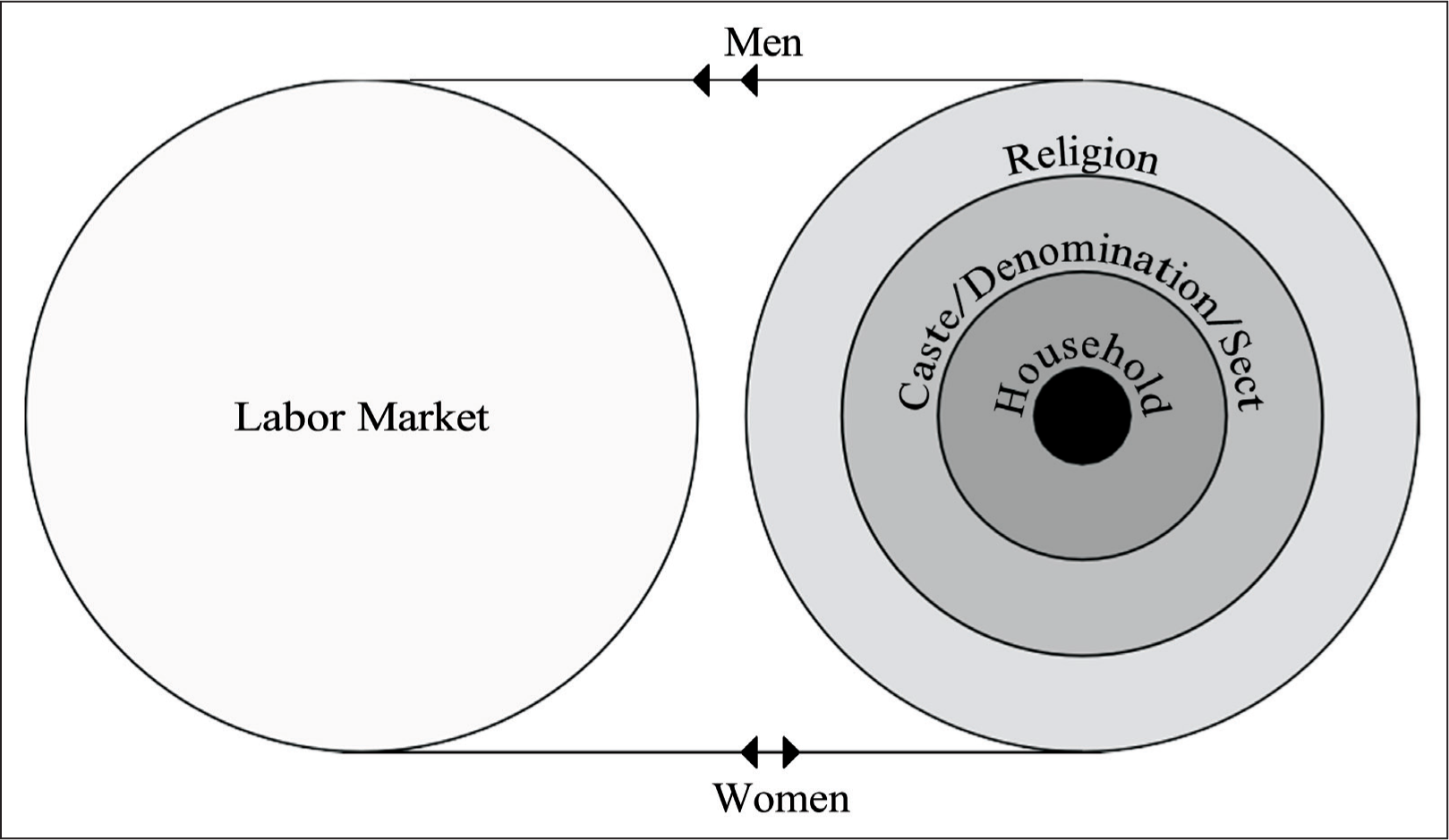
In a patriarchal Indian household, power is typically assumed by the male members of the household. Understanding the power dynamics at the household level is crucial for the comprehension of gender roles within it, and further, decisions pertaining to the labour market. Since gender roles define a woman’s duty to be confined to the household and a man’s role to be outside of the household, the decision of a woman to join the labour market involves a violation of the socially assigned roles.
As shown in Figure 1, there are two opposing institutions affecting women’s LFP—the labour market that is assumed to be unbiased and the social institutions that define gender roles which naturally enable men’s participation and curtail women’s participation in the labour force. Each of the concentric circles represents social institutions moving from broader to more specific. 7 The outermost circle represents religious institutions which encompass castes/denominations/sects, depending on the religious affiliation, that is, among religious groups, individuals are further affiliated to specific castes for Hindus, denominations for Christians and sects for Muslims. 8 The innermost circle forms the core of institutions that actually operate under the social norms laid out by the first two layers of institutions. Within this innermost core—household—lies the discretion to relax or reinforce norms defining gender roles that ultimately influence a woman’s decision to participate in the labour force. The characteristics of the household, such as the intra-household power relations, household size and composition, marital status of the woman, household economic position and education of the woman, affect women’s LFP. In principle, higher educational attainment manifests in a greater likelihood of LFP because the labour market attracts opportunities based on qualifications, skills and experience. Thus, the labour market exerts a gender-neutral pull towards participation. However, when viewed within the context of social institutions, and specifically the household, higher educational attainment may prevent rather than encourage such participation, which is a direct outcome of male backlash. This is why education is studied within the context of a household and treated as an intra-household variable. The three institutions—religion, caste/denomination/sect and household—and individual characteristics defining the institution of a household together affect the LFP decisions of a woman depending on how strong the pull is from social institutions in relation to the push from labour market opportunities. For men, on the other hand, gender roles entail a push in favour of LFP which is further strengthened by labour market opportunities as is depicted in Figure 1.
Using the framework developed here, we contend that gender roles do not exist in a vacuum but are constructed. The acknowledgement of this provides reason to believe gender roles are likely to be affected by shocks to the social system. If such shocks are in fact observed, the same framework helps comprehend how these gender roles evolve over time and that in turn may have implications for women’s LFP.
Given the intricacies of the model, the study requires a social setting that has considerable diversity in terms of group affiliations—religion, caste/denomination/sect—and regions. Furthermore, the study can do justice to its conceptualization only if there is adequate variation in power relations, that is, the data should have a sufficient proportion of female-headed households as well. The southwestern state of Kerala in India offers a unique sociocultural setting to test this relationship.
A Brief History of Identity in Kerala
The state of Kerala has a history of maritime trade that is distinct from the rest of the Indian subcontinent. Natural conditions, such as the monsoon winds, are said to have enabled seafaring expeditions to and from the region. Trade with the Romans, Dutch, Portuguese and Arabs at different times in its history also meant the diffusion of their culture, which happened through marriages and religious conversion. The spread of Christianity took place predominantly in the southern region 9 of Kerala, known as Travancore, while conversions to Islam 10 were common in the northern region known as Malabar. The Muslims in Kerala are predominantly of the Sunni sect (Miller, 1987). 11 Christianity in Kerala is marked by countless schisms from their initial Roman factions and forced conversions during the advent of trade with the Portuguese. These sects, many of which are native to Kerala, follow their own rites and practice endogamy through claims of purity based on the caste from which they had converted. The Hindus, Muslims and Christians lived in harmony, their religious practices characterized by syncretism 12 , and familial privilege that transcended religious barriers. 13 This harmony, however, did not permeate within the religious groups. Kerala was rife with caste discrimination that even surpassed untouchability. 14
An extraordinary feature of Kerala’s caste system was the absence of two major occupation-based clans or Varnas from its hierarchy—the Kshatriyas or the warrior clan and the Vaisyas or traders and merchants. With only Brahmins at the peak of the caste hierarchy, and the Shudras at the bottom, the latter started filling up occupations that were hitherto reserved for the Kshatriyas and Vaisyas. These occupational classes permeated the traditional social hierarchy to the point of making such class affiliations indistinguishable from their assumed caste identities. Titles conferred by the kings soon became synonymous with caste groups, making way for an effortless movement up the social hierarchy for some groups, 15 while the others were left to carry the burden of their Shudra identity. Soon, the adoption of titles to claim allegiance to a social group, 16 much different from their original Shudra caste, further obscured the Varna order. In short, Kerala society can be characterized as ‘a madhouse of caste’, 17 a marriage of cultures 18 and a muddle of identities. 19
Another noteworthy feature of Kerala society is the practice of matrilineage among some of its castes and classes, with the Nairs being the most prominent among them. The Nair woman is conferred inheritance and sexual rights through the matrilineal system of Marumakkatayam. This system ensured legal heirship through a man’s sister’s children, not that of the man (Lekha, 2023). Kerala also has the highest sex ratio in the whole country, the highest literacy rate (Census, 2011) and is ranked highest among Indian states based on Human Development Indicators.
Data
Since women’s LFP is modelled as a decision that entails accounting for institutional factors and characteristics specific to households as an institution, it necessitates the use of data that exhibit diverse identities. This study uses data from two rounds of the Kerala Migration Survey (KMS) 2013 and 2018 (Rajan, 2013, 2018). The survey conducted by K. C. Zachariah and S. Irudhaya Rajan since 1998 collects data on international migration, household characteristics, demographics and the financial position of households in Kerala. In 1998, the sample size was 10,000 rural and urban households, which increased to 15,000 by the seventh round in 2018. The sampling method used is a stratified multistage random sampling method that covers all 14 districts in Kerala.
These data are particularly suited for a study of identity due to the detailed information collected on religion, castes within Hindus, denominations within Christians and sects within Muslims, the details of which are shown in Figure 2. For Hindus, the KMS has nine different caste categories, including ‘Others’ where the respondents specify their caste affiliations. These groups were clubbed together based on whether they belonged to the Scheduled Caste (SC), Scheduled Tribe (ST) or Other Backward Classes (OBC), which is consistent with of the Indian reservation or affirmative action policy.
Social Identity Groups: Caste, Denominations and Sects.
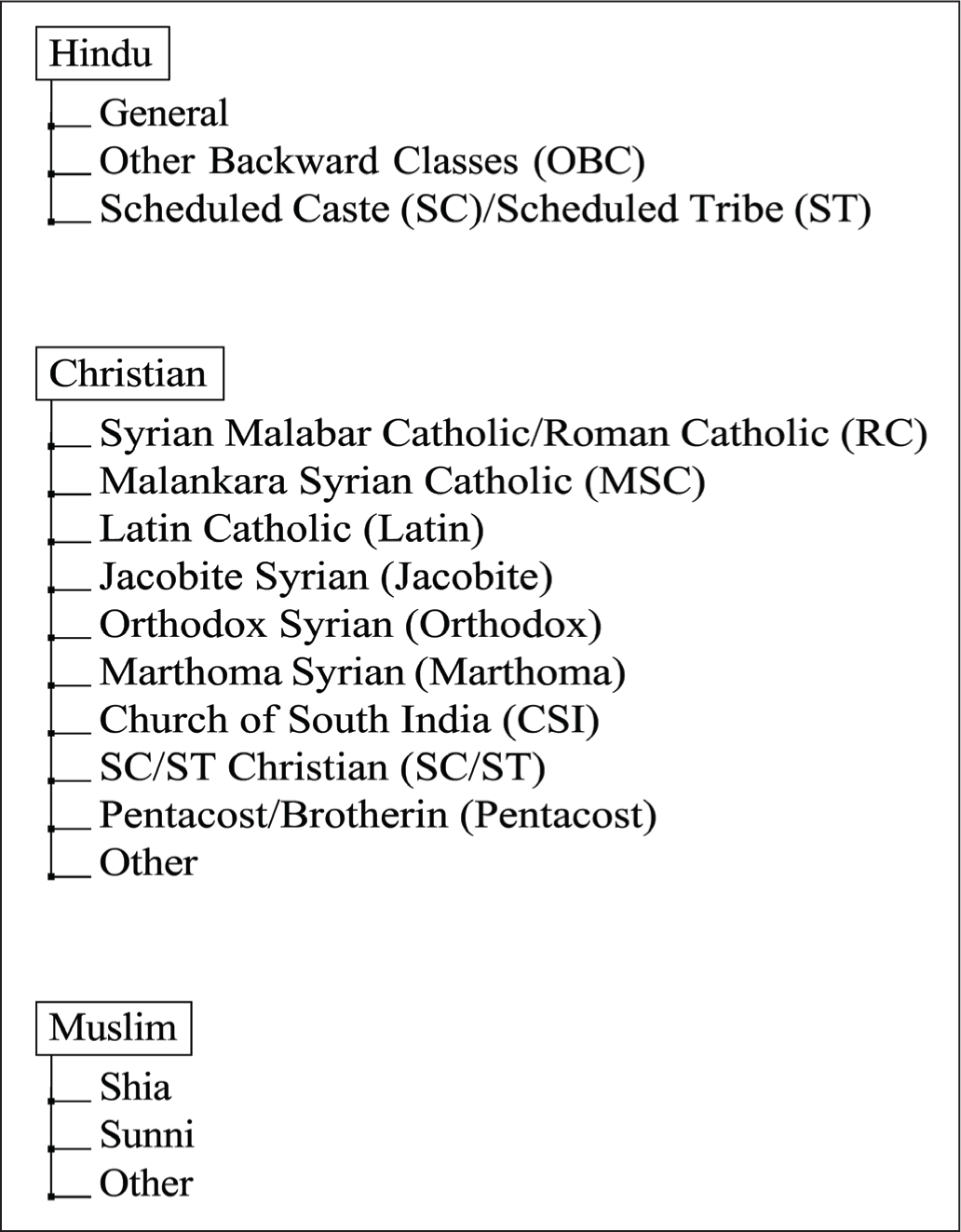
With reference to the identity model developed in Figure 1, religion and the various castes, denominations and sects within these religions included in the data represent institutions. The predominant culture is reflected in the regions considered—Malabar, Travancore and Cochin—of which the Malabar region in northern Kerala is Muslim-dominated, and the Travancore region in South Kerala has a large proportion of Christians. 20
The primary variable of interest is the participation of women in the labour force. Each adult female in a household is treated as a unit of analysis with their own estimations of LFP. Power relations are measured based on whether the woman is the head of the household or the spouse of the head. Household composition pertains to the number of children aged 0–5 years and 5–15 years, the number of elderly people in the household (aged 65 and above), and the number of adult females (15–65 years). As for marital status, a married woman is tied down by the responsibility to care for the family, that is, her role is restricted to the household, and an unmarried woman has fewer responsibilities. In the case of a widow, the demise of her spouse does not translate into freedom from restraint which is aggravated by the social stigma associated with being a widow (Chen & Drèze, 1992). The magnitude of stigma is dependent on cultural factors that the model already accounts for. In the case of a divorced or separated woman, social stigma is rife, but the freedom of choice is greater due to at least a partial severance of patriarchal ties. Another important factor is the household’s economic position which is measured by the log of household income (lnHHInc), and the occupation of the household head. In a situation of absolute penury, the economic position will weigh in more than any other factor and will reflect in LFP by the women in the household.
Higher education not only reflects qualification and eligibility for skilled employment but is detrimental to women’s LFP in households that are highly patriarchal.
Using these variables, we test our propositions using a probit specification as detailed in the following section.
Methodology
We use a probit specification to estimate the following model:
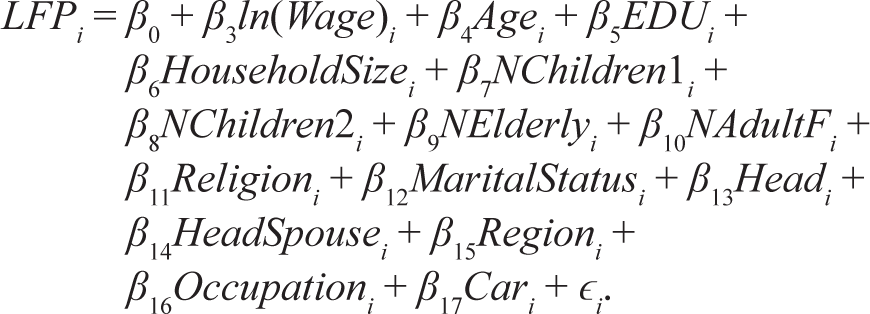
The dependent variable represents female LFP. It takes the value of 1 if the woman is working and 0 otherwise. The independent variables include Agei, which serves as a proxy for experience, EDUi, which is a categorical variable as defined in Appendix A.2 and Table A1. The variable log of wage (ln(Wage) i ) is calculated using Heckman’s (1979) correction method for selection bias. Since there are missing values for wages corresponding to adult women who do not participate in the labour force, we use the Heckman (1979) two-stage estimator. 21 Household characteristics are measured by HouseholdSizei, NChildren1 i , NChildren2 i , NElderlyi and NAdultFi, which measure the size of the household, the number of children aged 0–5 years and 5–15 years, the number of elderly and the number of adult females in the household, respectively. Religion is a categorical variable that is either Hindu, Christian or Muslim; MaritalStatusi is also a categorical variable that includes unmarried, married, widowed and separated/divorced. Headi and HeadSpousei are binary variables that take a value of 1 if the woman is the head of the household or the spouse of the head, and a value of 0 if she is not. The state of Kerala is divided into three regions—Travancore, Cochin and Malabar, the former kingdoms that existed before they were unified into a single state. The variable Regioni represents these regions. Occupationi is the occupation of the household head and is constructed based on the National Classification of Occupations 2015. 22 The model also includes Cari, which represents the household ownership of a car. The same model is used for sub-samples such as Hindu, Christian and Muslim women for 2013 and 2018.
We use a probit specification to estimate the model for LFP since it is standard in the literature. The probit model assumes that the latent variables are normally distributed, which makes it more suitable for LFP studies. In addition, the underlying model for the Heckman selection equation is also probit.
Results and Discussion
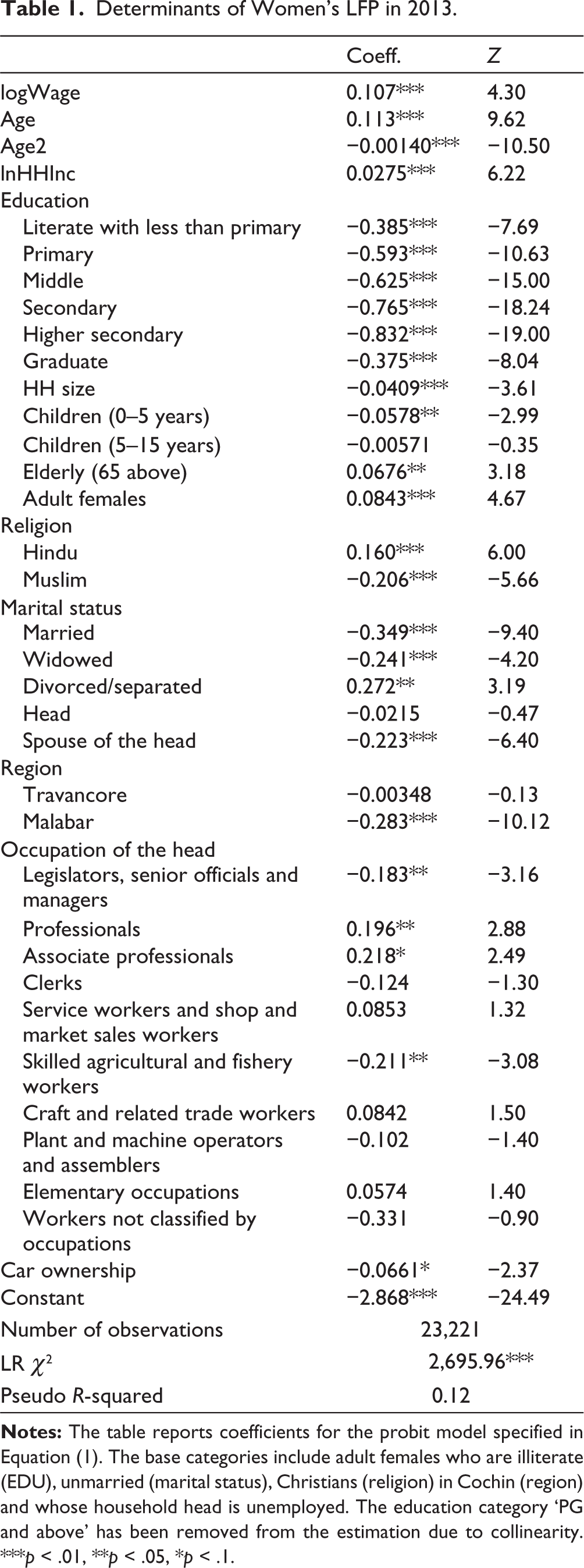
We look at the determinants of women's LFP in Kerala in 2013, and specifically in Hindu, Christian, and Muslim households in Tables 1-4 respectively. The same exercise is carried out for 2018 in Tables 5-8 respectively. We further explore women's LFP in non return emigrant households (REM) and REM households as shown in Tables 9 and 10. Furthermore, Tables 11 shows Muslim women's participation rates in emigrant households in 2013 and REM households in 2018. Table 12 compares LFP rates among men and women in 2013 and 2018. Our analysis establishes that regardless of the time period or sub-sample considered, intra-household factors and identity affiliations are important in explaining women’s LFP decisions. This further strengthens our claim about the importance of social institutions in women’s LFP. Furthermore, this corroborates the conjecture that for women, the pull from social institutions is far greater than the push from labour markets towards participation.
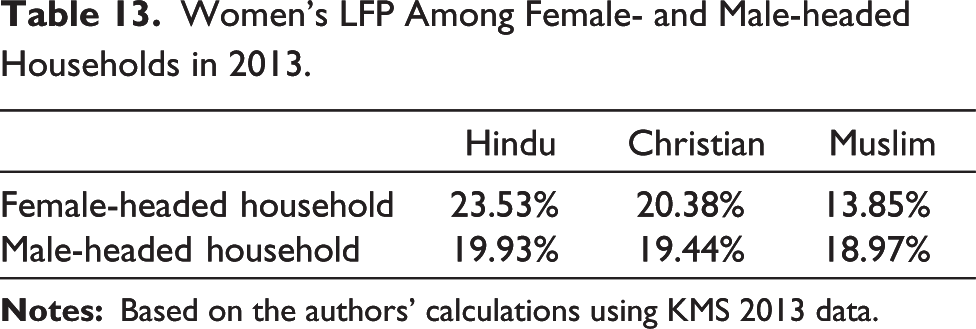
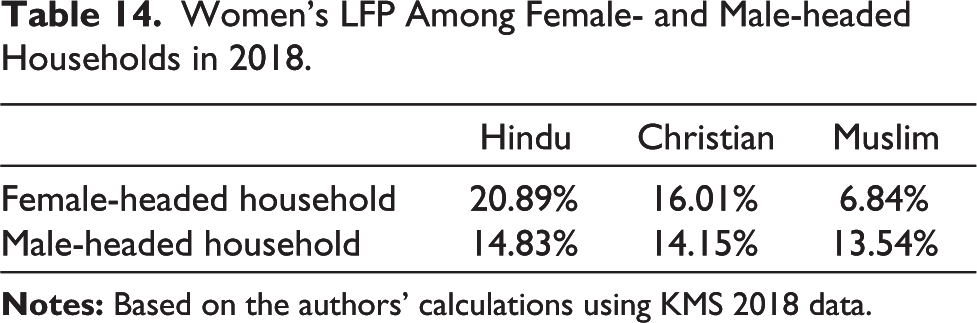
Table 1 indicates that in the 2013 sample, women respond positively to a rise in wages in the labour market, and to the rising income of the household head by participating in the labour force. Education, however, does not ensure participation in the labour force. In fact, the slope coefficients indicate that the greater the education, the less likely a woman will participate in the labour force. Although it is difficult to categorically state the reasons for this phenomenon, the statistical significance of the coefficients warrants some discussion of potential causal mechanisms. This could be pointing towards intra-household power dynamics. Even in the most seemingly progressive of societies, 23 patriarchy exists and power is exercised in rather discreet ways. The most discreet of settings to exercise male dominance is the household. Male dominance can be exercised in myriad ways, but it can be retained only as long as a woman remains subordinate to her male counterpart. Perhaps the greatest threat to a man’s power is an educated or empowered woman since it not only opens up opportunities for the latter but reduces dependence on the man, both financially and otherwise, and no power relation can exist in the absence of dependence. When it does come to that point, the only power that can be used is the ‘power to punish’, which serves the purpose of ‘balancing’ the formerly lopsided power relations. One plausible explanation is that the fear of violence resulting from ‘male backlash’ could be preventing women’s LFP. In other words, the greater the woman’s educational attainment, the lower would be her subordination to her male counterpart, and therefore, the more likely she is to face male backlash, and the greater the chances of her non-participation in the labour force (refer to Molm, 1989, for a detailed discussion corroborated by experimental evidence). Koenig et al. (2003) and Luke and Munshi (2011) find evidence for financially independent women facing greater violence from their spouses in India and Bangladesh, respectively. The non-participation of women in the labour force may also be due to higher education serving the purpose of securing marriages to more wealthy families (Chatterjee et al., 2018). Another explanation for non-participation despite higher education levels could be ‘status production’, which is studied by Eswaran et al. (2013) through the time allocation of married women in rural areas. Yet another reason for this could be that educated women in households with children are likely to be more productive in ‘home production’ than in the labour market because they are able to devote time and energy to the children’s human capital. Afridi et al. (2018) discuss this phenomenon among married women in rural India through a utility-maximization model. Since our sample includes women of all marital statuses residing in areas that cannot be regarded as rural, we cannot directly attribute it to women’s greater productivity in home production. In fact, even though this decision can be shown through a utility-maximization model, the magnitude of the pull factors pertaining to one’s household is often larger due to gender roles and institutions that keep this in place. In a more conservative set-up, like that of Muslims, a female head would most likely exist because of the absence of the male head. In Kerala, a large proportion of Muslim men (nearly 42% of migrants) migrate to the Gulf countries (Rajan, 2023; Rajan & Zachariah, 2020); therefore, a female household head is incidental to such migration. It is also observed in Tables 13 and 14 that Muslim women are likely to participate more in the labour market in the presence of a male household head in relation to femaleheaded households. A stronger commitment mechanism in the presence of a male head and, consequently, a higher cost of deviation from religious values, makes it easier for Muslim men to trust women, and therefore, ‘allow’ them to take up labour market opportunities. 24 Here, a ‘patriarchal bargain’ is instituted whereby ‘patriarchal structures create gender-asymmetries in endowments, risks and constraints which penalize autonomous behaviour for women but also offer them provision and protection if they remain within its parameters’ (Kabeer, 1997).
Household composition is also crucial for women’s LFP. With more children in the household, women are less likely to participate in the labour force. This is because women are the primary caregivers, and an increase in the number of children increases the burden on women. It could also be the case that women choose to stay at home and focus on their children’s educational outcomes, as was found in Afridi et al.’s (2018) study. However, if there is a large number of elderly people in the household, this may translate into either more dependents or more people to take care of the children, and affects LFP in opposite ways. A larger number of women (female adults) in the household allows women to join the labour market since the household work is divided either amongst these women or is fully taken care of by some female members of the household, thus enabling the remaining to work.
The only marital status that is favourable to women working is that of a divorcee or a separated woman whose estimated coefficients are positive in almost all 2013 sub-samples (see Tables 2–4). There are two plausible explanations for this observation: (a) the lack of influence of the male patriarchs on the lives of the divorced or separated women provides them with the freedom to work, and/or (b) divorced/separated women have no option but to work in order to financially secure themselves and their families.
In general, we observe that the occupation of the household head is not significant for women’s LFP except for a few occupational categories. It is noteworthy that only in households where the heads are professionals or associate professionals, the woman is likely to participate in the labour force.
In Table 2, only Hindu households are included, with the addition of the variable Caste to the existing model. It is observed that as one moves up the caste hierarchy, it is less likely that the women in the household are engaged in ‘gainful’ employment. Clearly, women in ‘upper caste’ households participate less in the labour market because of ‘status production’, and this finding is in line with that of Eswaran et al. (2013). All other variables affect LFP in ways that are similar to Table 1.
Determinants of Women’s LFP in 2013.
Determinants of LFP Among Hindu Women in 2013.
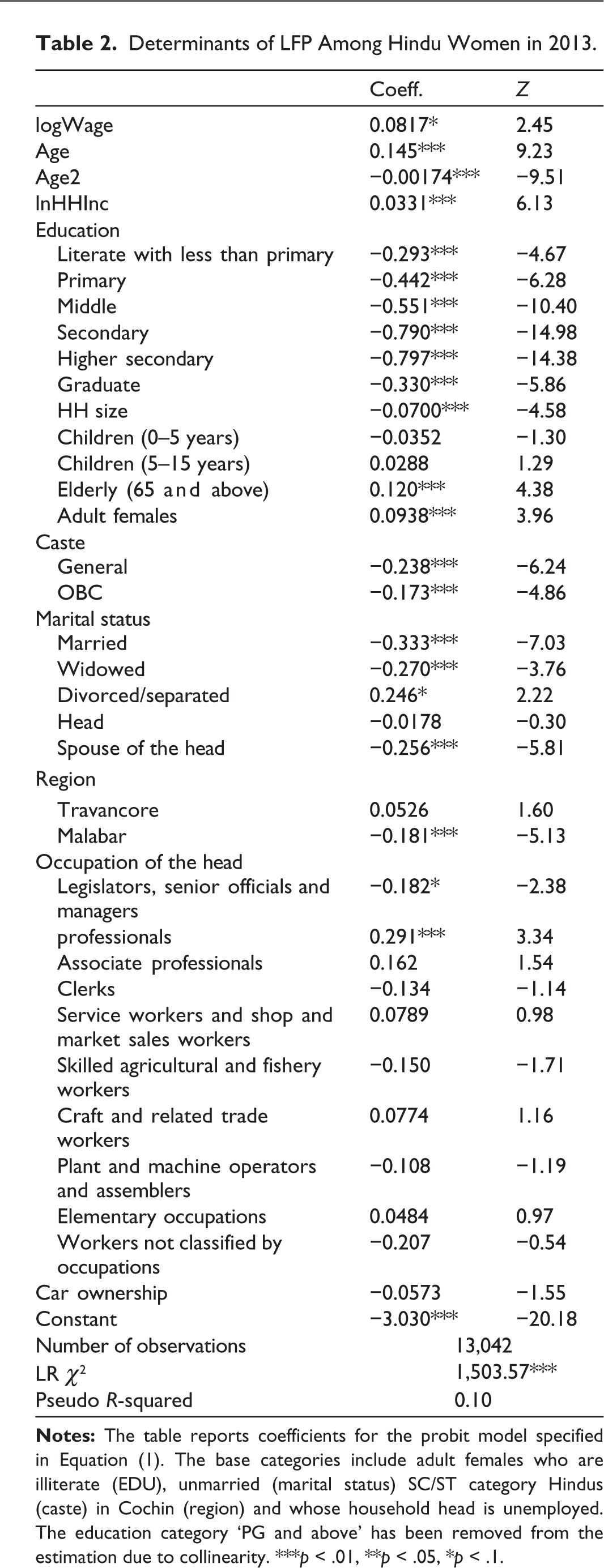
Among Christians, as represented in Table 3, women’s LFP is enabled by a higher wage and greater experience (Age). As observed earlier, education also curtails participation for Christians. It is interesting to observe that women belonging to the CSI are the only Christian denomination that is more likely to participate in the labour market, compared to the base category—SC/ST Christians. CSI and SC/ST among Christians in Kerala are socio-economically disadvantaged, and therefore, behave in ways that are similar to Hindu SCs and STs, which form the base category in Table 2. This provides further evidence for ‘status production’ among Christians.
Determinants of LFP Among Christian Women in 2013.
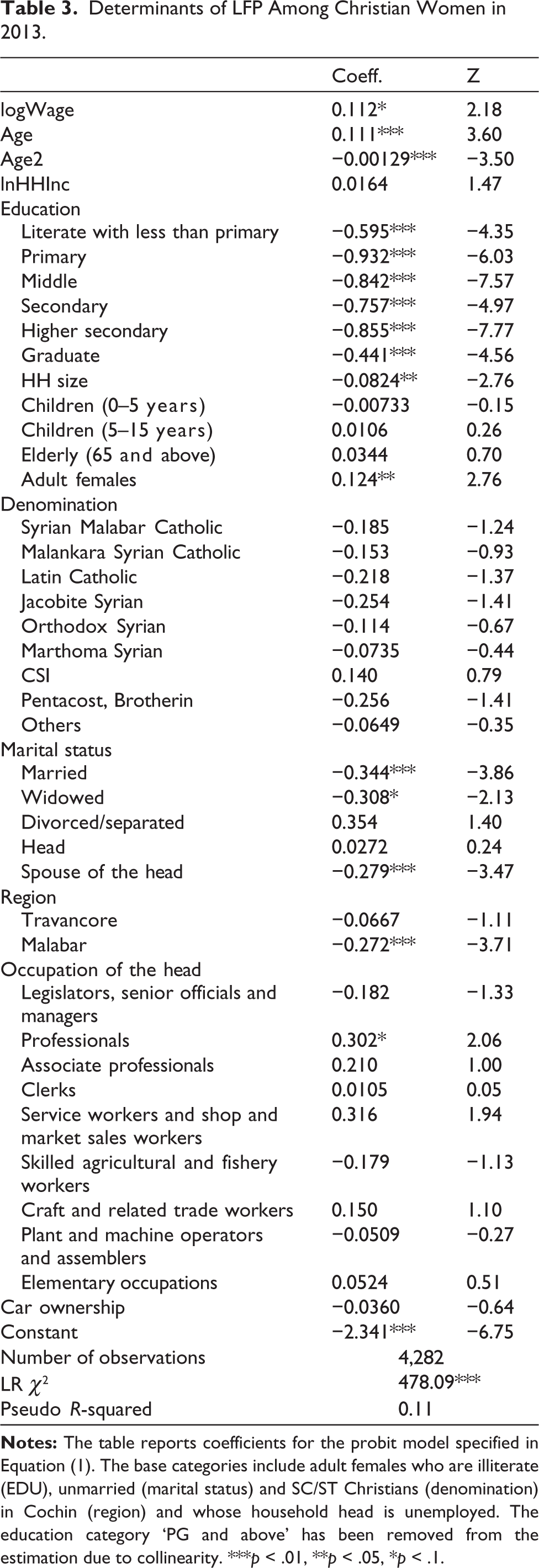
For Muslim women, the only factor in favour of their participation in the labour market that is statistically significant is the market wage. Household-level factors are mostly in favour of non-participation. A Muslim woman from a Muslim-dominated region like Malabar is also less likely to work, as seen in Table 4.
Determinants of LFP Among Muslim Women in 2013.
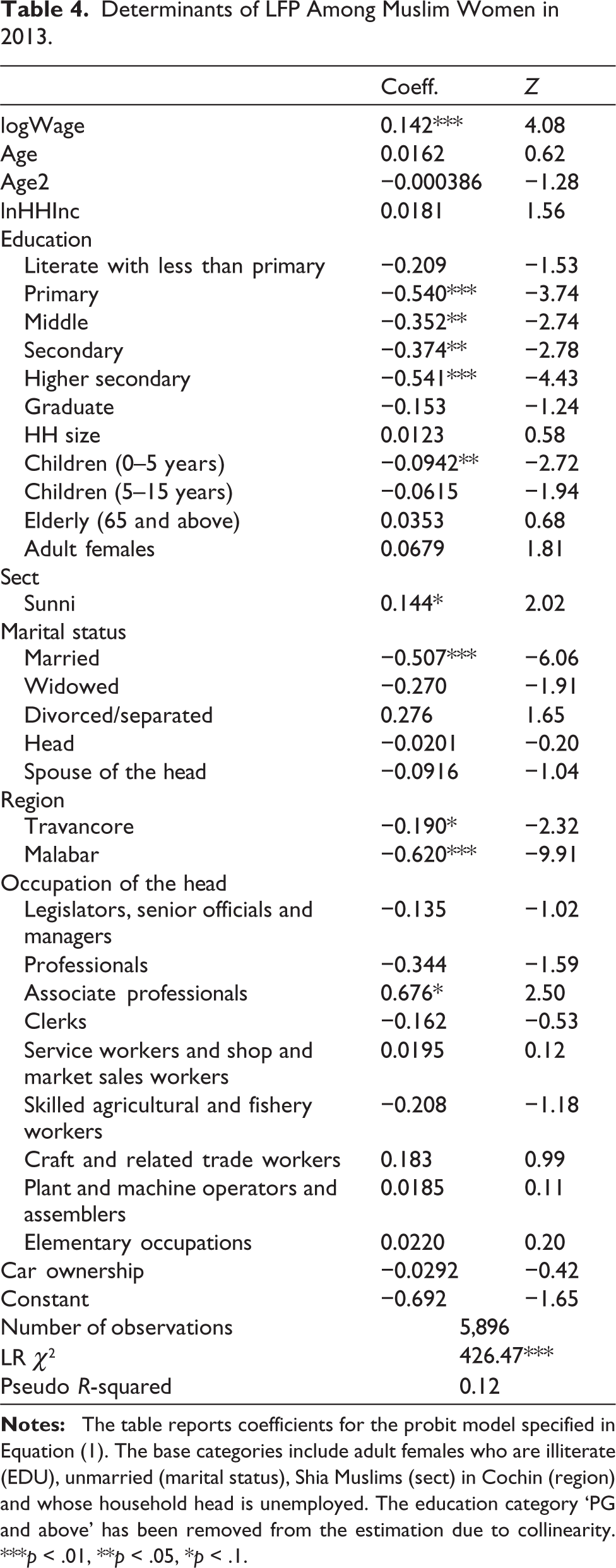
We see that in 2013, the dominant culture of the region affects women’s LFP, especially in Malabar, where the social norms of the Sunni Muslim sect seem to permeate other religious groups. In addition, for all women, regardless of their social group, education does not materialize into participation.
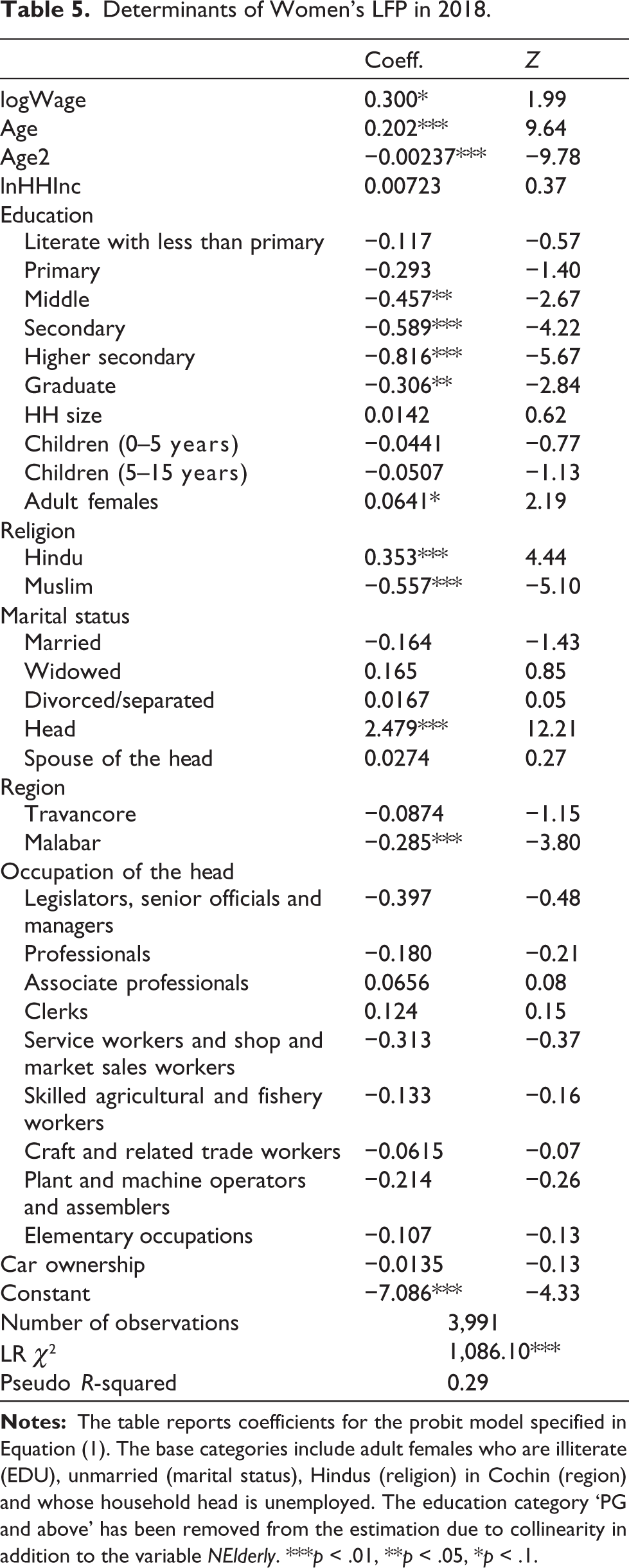
Table 5 shows that not all the variables that affected LFP in 2013 are significant in 2018. Age, education above the primary level, the head of the household, religious affiliation and the Malabar region are the only significant variables. Coefficients for educational classifications have a negative sign and have only changed in magnitude since 2013. For Hindu women, the coefficient is positive, which means that this group is more likely to participate in the labour force vis-à-vis the base category of Christian women. For Muslims, this coefficient is negative.
Determinants of Women’s LFP in 2018.
Within the sample of Hindu women, the slope coefficients for education continue to be negative in 2018. Table 6 reveals that in 2018, there is a flip in the signs of the variables that proxy power relations in a household. The variables head (Head) and spouse of the head (HeadSpouse) are positive, with the former also being highly significant. However, there continues to be evidence in favour of status production.
Determinants of LFP Among Hindu Women in 2018.
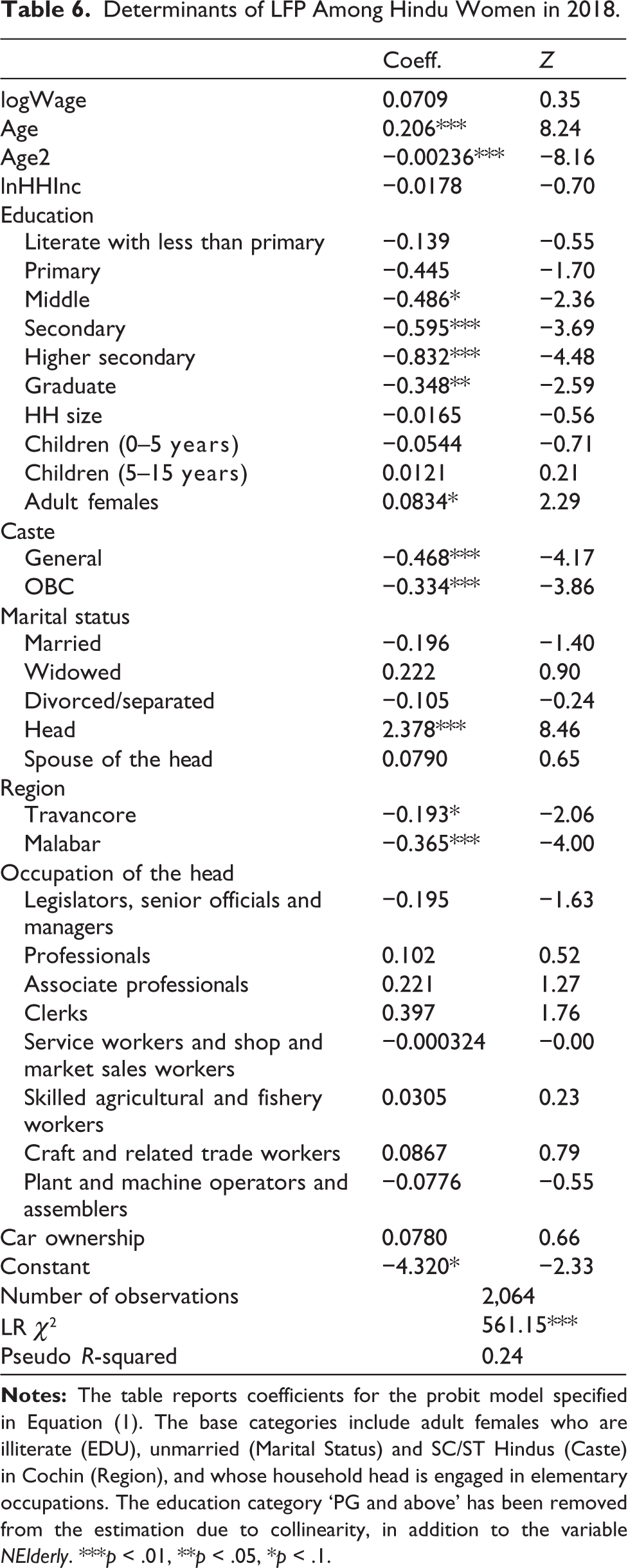
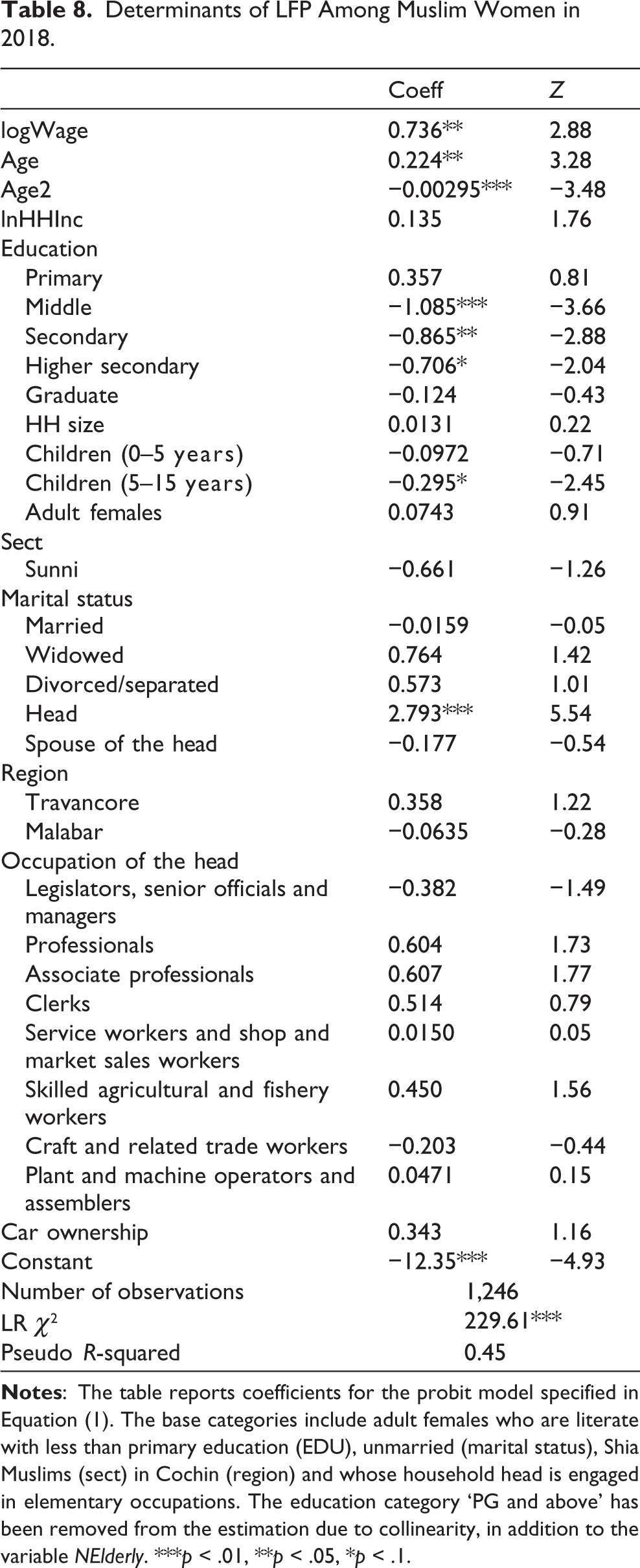
Table 7 shows that among Christian women, the only factor that is relevant for LFP is whether or not the woman is the household head.
Determinants of LFP among Christian Women in 2018.
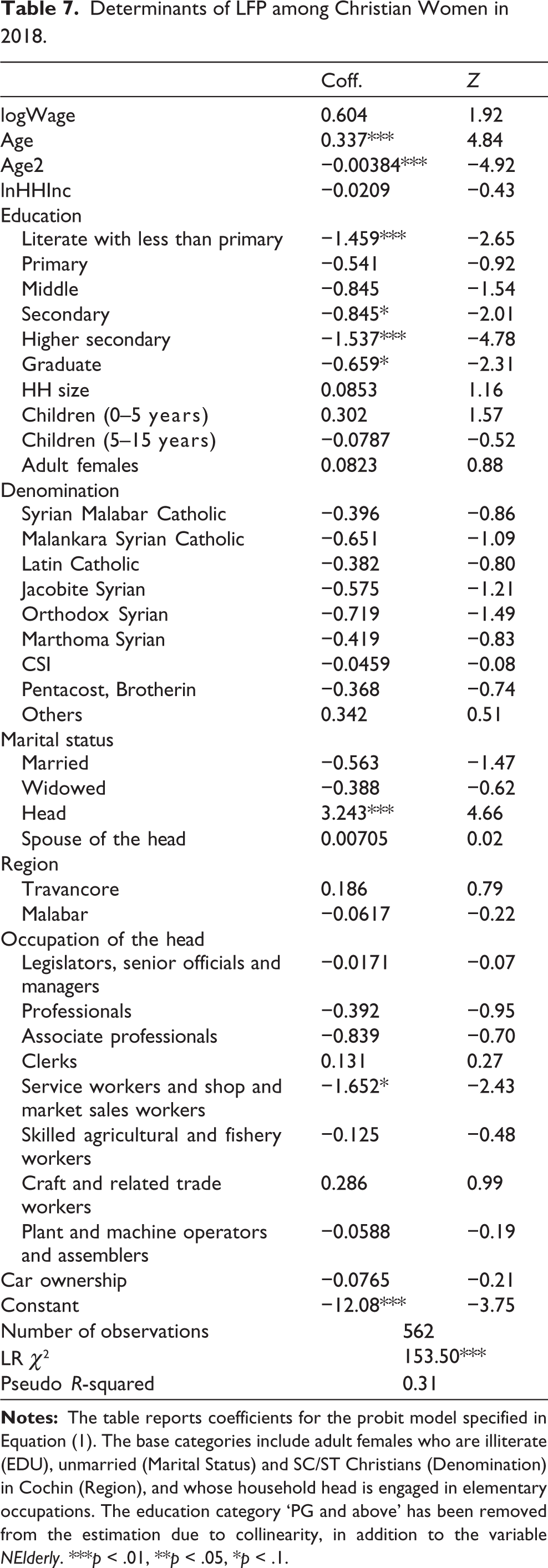
By 2018, Muslim women showed a greater tendency to participate in the labour force, as demonstrated in Table 8. Educational attainment at the primary level is more conducive to LFP than in 2013, and in comparison with other religious groups. In 2013, we had seen a strong negative propensity of all categories of educated women towards LFP. A large body of literature, including Afridi et al. (2018), explains this phenomenon by attributing it to educated women’s higher productivity at home. If the productivity argument were true, we would have seen a similar negative propensity to continue in 2018 for educated women at all education levels. The insignificance and the flip in sign by 2018 points are likely to be influenced by an external shock. Previously, we saw that being the household head mattered only for Christian women, although not significantly, but by 2018, being the household head significantly favours women’s LFP among all religious groups. LFP is also no longer affected by the sociocultural stigma associated with marital status for Muslims. Participation is also supported by household heads belonging to an overwhelming majority of occupational categories. A large portion of these findings may be attributed to economic changes in the Gulf countries. There is a direct link between such changes and return emigration to Kerala, especially for Muslim households.
Determinants of LFP Among Muslim Women in 2018.
The Nitaqat system was a step towards ‘Saudization’, which warranted the reservation of jobs for Saudi nationals, with neighbouring countries such as the United Arab Emirates following suit. Although it first came into being in the 1950s (Wynbrandt, 2010), Nitaqat came to be implemented vigorously only by the end of 2013. Added to this was the ongoing economic crisis owing to a continuous fall in oil prices. Since nearly 90% of the migrants from Kerala settle in Gulf countries (Rajan & Zachariah, 2020), its effect was felt throughout the state. It is also worth noting that during the two periods, among households identified by religious affiliations, Muslim households constituted the largest proportion of return emigrants (REMs). Moreover, the Muslim-dominated district of Malappuram surpasses other districts in all return-migration indicators (Rajan & Zachariah, 2020). According to Rajan and Zachariah (2020), 11 out of 14 districts in Kerala were seen to have negative growth rates in migrant population to the Gulf countries during the period spanning 2013–2018. Fifty per cent of the migrants returned to three districts, namely Malappuram, Kollam and Kozhikode (Rajan & Zachariah, 2020). 25 The economic impact on Muslim households has, without a doubt, permeated long-standing cultural influences that kept Muslim women from participating in the labour force. This is apparent from Table 8, where the factors that kept Muslim women from participating in the labour force in 2013, either do not affect or enable such participation by 2018.
Since the Gulf countries and the Malabar region represent a predominantly Muslim society, the social norms are influenced by the dominant religious faith. Most of the migrants to Gulf countries are Muslim men from the Malabar region, and therefore, the oil crisis and the Nitaqat system are likely to have impacted the Muslims most, which in turn prompted their return. This economic crisis impacted REM Muslim households’ livelihoods which may have led Muslim men to be more favourable to women working. In principle, allowing Muslim women to work signifies a favourable propensity towards women’s LFP.
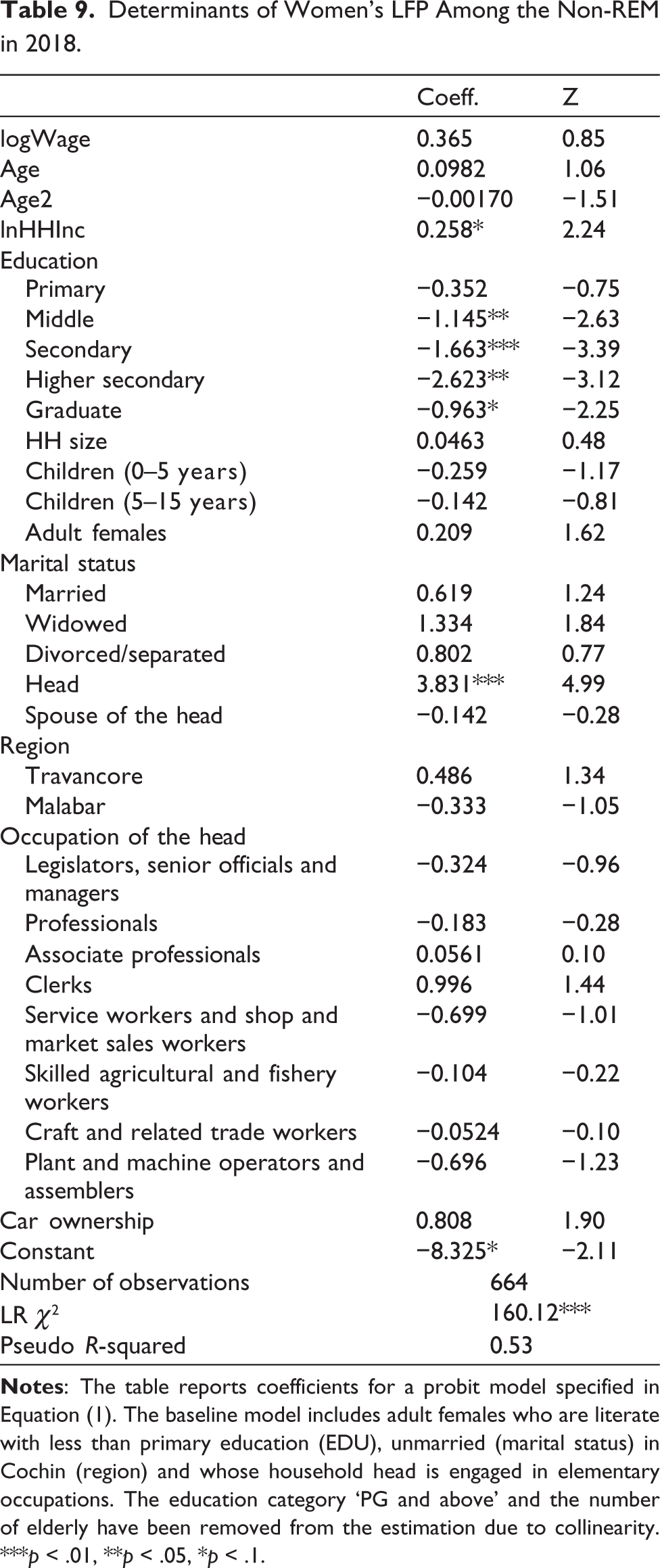
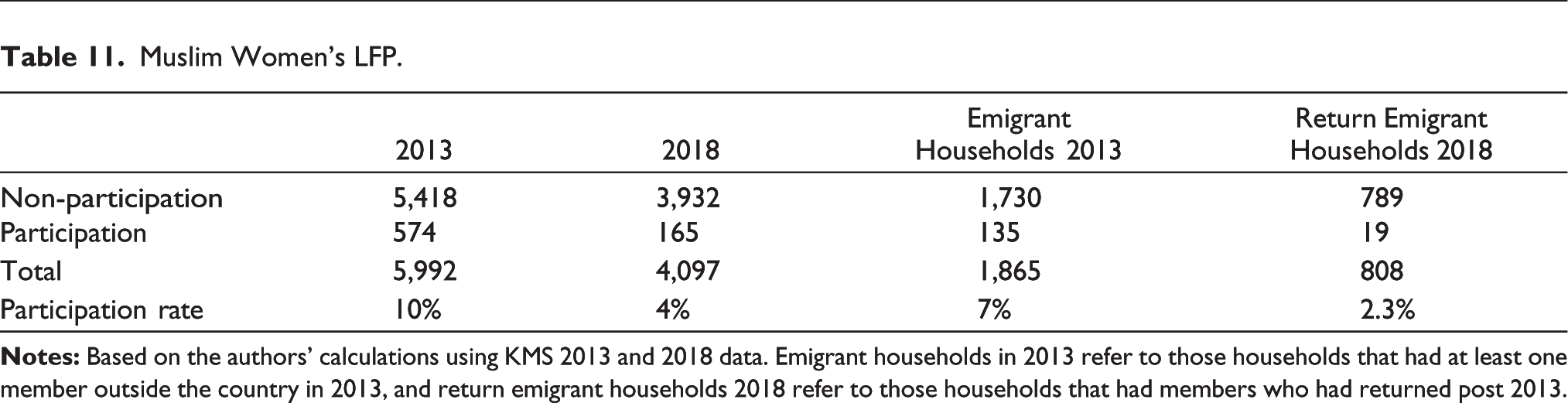
We know from Tables 9 and 10 that the enablers of Muslim women’s LFP are different for non-REM and REM households. Education clearly discourages women in non-REM households, as is seen in Table 9, whereas from Table 10, we observe that the negative effect on women’s LFP is either not significant or marginal for the REM households. For REM households as in Table 10, we see that most household heads are in favour of Muslim women’s participation, regardless of their occupation, as opposed to non-REM households’ propensity to discourage women’s LFP across most occupational categories. The positive coefficient for market wage (logWage) among REM households also points to favourable propensity towards LFP. Thus, the change in attitudes of Muslim men in favour of women’s LFP was confined to those households that had REMs as members, but it did not translate into actual participation in the labour force. This finding is in line with Miyata and Yamada’s (2016) study, which finds that a change in the attitude of women towards participation does not translate to actual participation in a predominantly Muslim country like Egypt. However, Muslim women’s non-participation in the labour force in Kerala could be attributed to the lack of employment opportunities as well. Table 11 shows that the women’s participation rate fell considerably—by 6%—in 2018. We also observe a 4.7% fall in their participation among REM households that had at least one member returning post-2013. A plausible explanation for this observation is the nature and supply of jobs or labour market opportunities in Kerala.
Determinants of Women’s LFP Among the Non-REM in 2018.
Determinants of Women’s LFP Among REM in 2018.
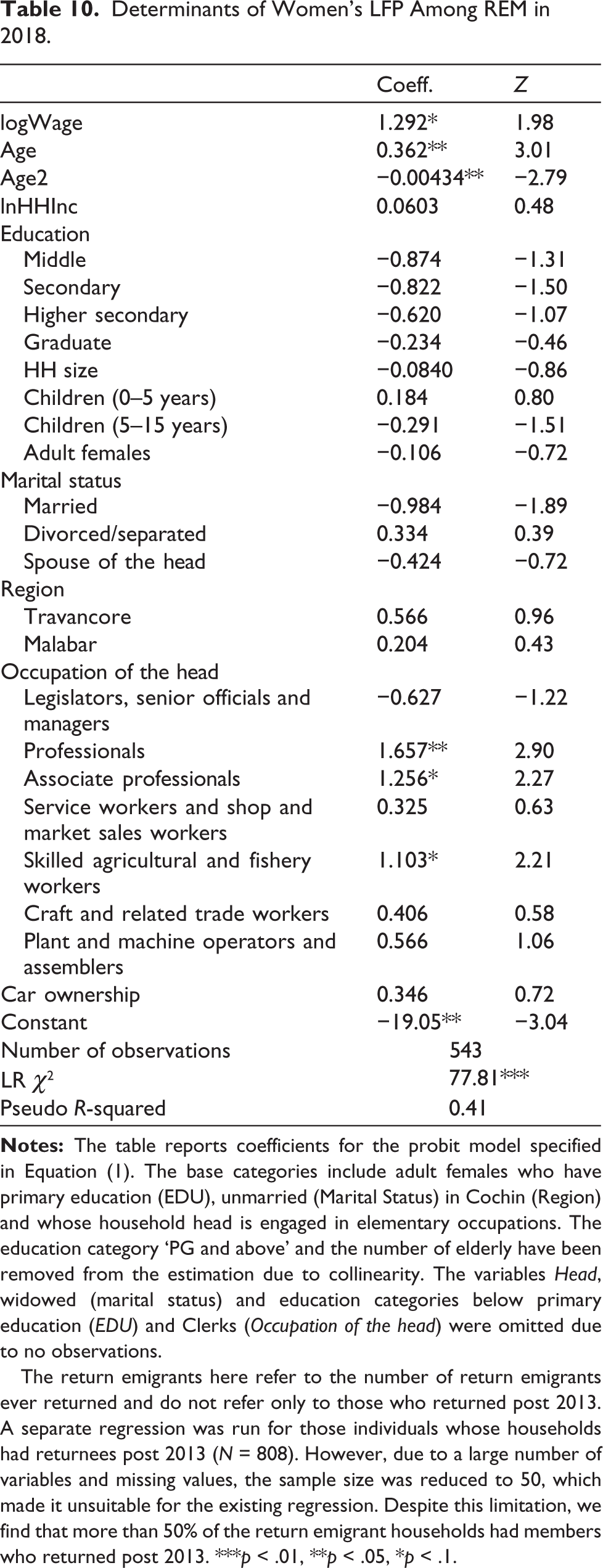
The return emigrants here refer to the number of return emigrants ever returned and do not refer only to those who returned post 2013. A separate regression was run for those individuals whose households had returnees post 2013 (N = 808). However, due to a large number of variables and missing values, the sample size was reduced to 50, which made it unsuitable for the existing regression. Despite this limitation, we find that more than 50% of the return emigrant households had members who returned post 2013. ***p < .01, **p < .05, *p < .1.
Muslim Women’s LFP.
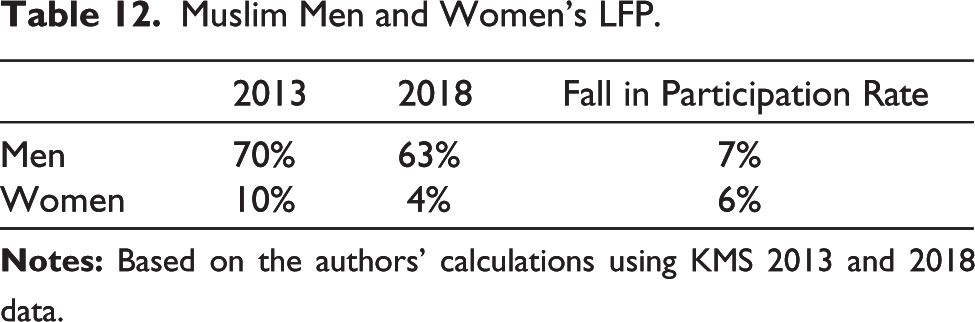
Return migration from Gulf countries essentially increased the demand for jobs in Kerala, putting pressure on the labour market. With an excess supply of labour vis-à-vis its demand, the LFP rate fell by nearly the same proportion for Muslim men and women as observed in Table 12. This is in line with our assumption that the market does not discriminate on the basis of gender. The role of gender becomes salient in the decision to participate in the labour force. This is clear when we observe the gender gap in participation rates among Muslim men and women, which is about 60% and remains the same for 2013 and 2018.
Muslim Men and Women’s LFP.
Women’s LFP Among Female- and Male-headed Households in 2013.
Women’s LFP Among Female- and Male-headed Households in 2018.
Conclusion
This study reveals that who you are, and where you are from, can be of consequence for what you end up doing. This is especially the case for women, whose identities cannot be severed from those of their households. This link is strong for Muslim women compared to other religious groups. For a Muslim woman in a region dominated by Muslims, cultural persistence is far more substantial. Put simply, every aspect of a woman’s identity adds up and manifests in their behaviour and actions. In the context of this article, the action entails, to some extent, breaking away from socio-cultural norms that define a woman’s role to be limited to the household. The study’s focus on social identities—identification with, rather than apart from others—is, therefore, a deliberate one. If the aim of the study was to understand the LFP of men, our approach would have been different. In treating men and women as distinct identity groups that serve distinct social purposes, this study does justice to the fact that the factors that affect people’s decision to join the labour force are unique to their gender identity, as defined by the social institutions. We refer to three important institutions highlighted throughout the study that shape expectations about individual behaviour—(a) religion, (b) caste/denomination/sect within religion, and (c) households that are affiliated with one of these broad groups. The household is especially important because its characteristics are what determine a woman’s LFP decision. These characteristics include the economic position of the household, power dynamics which are intra-household characteristics, and gender roles that are defined both within a household and outside it. This study shows that factors (social institutions) that pull women away from the labour force are generally stronger than the gender-neutral push towards the labour market in the form of opportunities in line with qualifications and experience.
The study uses LFP in Kerala in 2013 and 2018 as a means to discuss issues concerning a woman’s identity. Women hardly fit in the neoclassical framework that deems all individuals to be utility and welfare-maximizing, let alone the definition of a rational Homo Economicus. To understand a woman’s decision-making behaviour, we must know that collective identity surpasses personal identity. If women were utility-maximizing individuals, they would never succumb to their gender roles. The fact that their ‘individual’ choice and well-being do not always go together (Sen, 1970, 1977) is recognized here. In fact, women’s decision to join the labour force or refrain from such participation represents an individual choice for collective well-being. Commitments to family enable the pursuit of collective well-being. Deviation from these ‘commitments’ can be different based on religious affiliation. The scarcity of economic resources can sometimes upend social institutions that restrict women’s choices and give rise to a more equal society. But for this to materialize, there must be a rise in labour market opportunities to accommodate the increase in the potential supply of women workers. Thus, there seems to be hope that social institutions that curtail women’s participation and empowerment are not cast in stone and even if they are, they could fall apart due to economic pressure. To quote from Agarwal (1997), ‘social norms are not immutable and are themselves subject to bargaining and change, even if the time horizon for changing some types of norms may be a long one’.
Footnotes
Acknowledgements
We thank Dr S. Irudaya Rajan for providing us access to the Kerala Migration Survey (KMS) data. We are also thankful to Dr Kunal Sen for his comments and suggestions.
Declaration of Conflicting Interests
The authors declared no potential conflicts of interest with respect to the research, authorship and/or publication of this article.
Funding
The authors received no financial support for the research, authorship and/or publication of this article.