






Abstract
In an increasingly digital corporate landscape, information systems (IS) integration has become central to realizing the synergies anticipated in mergers and acquisitions (M&A). While the complexity of IS integration in M&A contexts is widely acknowledged, prior research remains fragmented across disciplines, methods and thematic perspectives, limiting cumulative insight. This study aims to address this fragmentation leveraging bibliometric techniques to examine 207 peer-reviewed publications on IS integration in M&A indexed in Scopus between 1984 and 2024. The findings highlight how IS integration has evolved over time, pivoting from being initially framed primarily as a technical challenge into a multi-dimensional process shaped by organizational structures, human agency and strategic intent. The analysis further reveals that scholarly output has been dominated by contributions from the USA, China and several European countries, while also indicating a gradual broadening of geographic engagement, including increased contributions from emerging economies such as India. Recent research increasingly focuses on the role of digital platforms, data-driven architectures and artificial intelligence, alongside the continued influence of people and culture in determining post-merger outcomes. The review also exposes areas that remain underexplored, including aspects such as decision-making dynamics, human–technology interactions and the mechanisms through which value erosion occurs in delayed or failed integrations. By consolidating dispersed research streams, this study extends prior qualitative reviews and provides a structured basis for more cumulative theoretical and empirical inquiry into IS integration in an M&A.
Keywords
Introduction
Over the past several decades, enterprises have increasingly relied on mergers and acquisitions (M&A) to pursue forward-looking change, scale expansion and operational transformation. Through such transactions, firms seek to generate shareholder value by realizing synergies and accelerating growth (Lessambo, 2021). Alongside financial and organizational integration, information systems (IS) have increasingly become critical for shaping post-merger outcomes, influencing coordination, decision-making and value realization across merged entities. Following a peak of nearly $5t in global deal value in 2021 (Morgan Stanley, 2022), M&A activity entered a period of slowdown before regaining momentum in 2025. This renewed activity has been supported by improving corporate confidence, portfolio realignment and the growing incorporation of artificial intelligence into deal strategy and post-merger execution (EY, 2025). M&A remains an important mechanism for competitive positioning and strategic change. Nevertheless, success rates remain modest, with IS integration frequently identified as a decisive factor shaping post-merger performance. Prior studies suggest that approximately 50%–60% of expected merger synergies are linked to information technology integration (Sarrazin & West, 2011), while challenges related to IS integration consistently rank among the leading causes of deal failure (Hedman & Sarker, 2015), contributing to as many as 70%–90% of unsuccessful mergers (Kenny, 2020). As organizations become increasingly digital, IS integration has moved to the centre of post-merger value creation, encompassing concerns such as operational coherence, organizational agility and customer experience.
The complexity of IS integration has further deepened amid technological disruption, global economic volatility and heightened environmental, social and governance priorities (Eulerich et al., 2022). As Toppenberg and Henningsson (2013, p. 1) observe, ‘In a world where organizations are becoming from top to bottom dependent on their information systems, IS is playing a continuously more important role in the realization of value from M&A’. Despite this recognition, research on IS in M&A remains dispersed across various methodological approaches and analytical perspectives. Existing studies variously emphasize technological architectures, governance mechanisms, organizational processes or human dimensions, often in isolation. As a result, it remains difficult to consolidate insights, identify dominant lines of inquiry or trace the intellectual development of the field. The literature does not offer a cohesive view of how IS integration in M&A drives overall value creation or where future research should focus.
To address this fragmentation, we apply bibliometric techniques
1
to systematically map and synthesize past research on IS integration in M&A. Bibliometric methods enable a structured evaluation of how knowledge in a domain evolves (Acedo & Casillas, 2005; Nerur et al., 2006; White & McCain, 1998). As Aria and Cuccurullo (2017, p. 14) note, such approaches are particularly well suited to fragmented and interdisciplinary fields, as they support the consolidation of cumulative and coherent bodies of knowledge. Accordingly, this study addresses three research questions regarding IS integration in M&A:
RQ1: How has research in this area evolved across authors and regions over time? RQ2: How have the dominant research themes changed over time? RQ3: What future research opportunities emerge from the existing body of work?
To address these questions, the analysis draws on a data set of 207 Scopus-indexed journal articles published between 1984 and 2024. By examining core ideas, shifting thematic emphases and emerging topics, the study brings together insights from multiple disciplinary traditions and establishes a foundation for cumulative research on IS integration in M&A.
In subsequent sections, we proceed by first describing the research design, data sources and analytical techniques employed (‘Methodology’ section). The article then presents the key findings (‘Results’ section), identified research gaps and future directions (‘Research Gaps and Potential Research Areas’ section), followed by implications and limitations (‘Discussion’ section) before moving to the ‘Conclusion’ section.
Methodology
Research covering IS in M&A over 40 years has spread across various fields in research and has resulted in the fragmentation of concepts and inconsistency of research results. This dispersion limits knowledge transfer and masks synergies between perspectives. A bibliometric analysis will offer a methodical and repeatable means of unravelling these obscure relationships and tracing the intellectual, thematic and collaborative framework of the field. The methodology will enable us to handle a large quantity of data, following a quantitative model, and detect new trends in the research environment as time passes (Donthu et al., 2021; Xu et al., 2018).
Bibliometric techniques are well suited for mapping accumulated research and tracking the evolution of both established and fragmented fields over time (Aria & Cuccurullo, 2017; Moral-Munoz et al., 2020). They help identify conceptual linkages and thematic shifts (van Eck & Waltman, 2010; Zupic & Čater, 2015). Donthu et al. (2021, p. 1) opine: ‘bibliometric studies that are well done can build firm foundations for advancing a field in novel and meaningful ways—it enables and empowers scholars to (1) gain a one-stop overview, (2) identify knowledge gaps, (3) derive novel ideas for investigation, and (4) position their intended contributions to the field’.
Database and Tools
The data set was created using Scopus to identify relevant publications in IS and management research. While Web of Science (WoS) is known for its bibliometric precision, Scopus offers broader disciplinary and geographical inclusion, particularly in social sciences and management domains that underpin IS integration in M&A (Mongeon & Paul-Hus, 2016). Its extensive bibliographic metadata and coverage of diverse publication types make Scopus especially suitable for broad bibliometric studies (Visser et al., 2021). Furthermore, we adopted Scopus as a reliable and global database for research evaluation and science mapping since it is a curated and quality resource for information (Baas et al., 2020). Following guidance from prior bibliometric research, this study relies on a single source database to avoid the complexities of cross-database integration and to maintain consistency in data preparation and analysis (Donthu et al., 2021). Biblioshiny as a front end for bibliometrix R package was leveraged for the core analyses (Aria & Cuccurullo, 2017). The data set was processed to carry out performance and science mapping across authors, citations, keywords, countries and institutions. VOSviewer was used to visualize and validate bibliometric networks (van Eck & Waltman, 2010). It supports map creation and interpretation wherein node size indicates frequency, link thickness reflects association strength and colours distinguish thematic clusters (Baker et al., 2020).
Method
Consistent with Donthu et al. (2021), we employed a broad, conceptually grounded search term to capture the full scope of IS integration literature within the M&A context. In this study, the terms IT and IS are used interchangeably. While IT generally refers to the technological infrastructure, including hardware and software, IS encompasses the broader socio-technical system that includes people, processes and organizational context (Orlikowski & Iacono, 2001). However, with M&A in context, the two are inseparable, since, without technological integration, the information and process systems that it facilitates cannot be enabled. Thus, for analytical clarity and to reflect the integrated nature of post-merger system consolidation, this study treats IT and IS as overlapping constructs representing the technological and organizational dimensions of digital integration. Our query, therefore, uses IS and information technology keywords to filter the documents from Scopus. Since we predominantly consider organizations coming together in some form, the terms ‘takeover’ and ‘corporate retracting’ have also been added to the search criteria. The search query that we used in the title, keys and abstract of the different papers was as follows:
((‘Information Technolog*’ OR ‘Information System*’) AND (‘mergers & acquisition*’ OR ‘*mergers*’ OR ‘corporat* restructur*’ OR ‘takeover*’))
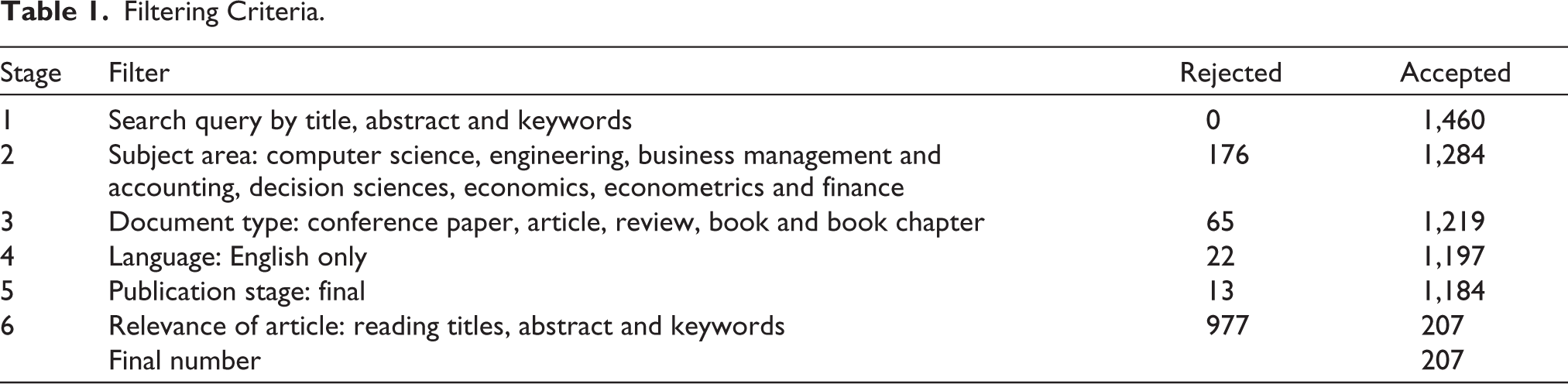
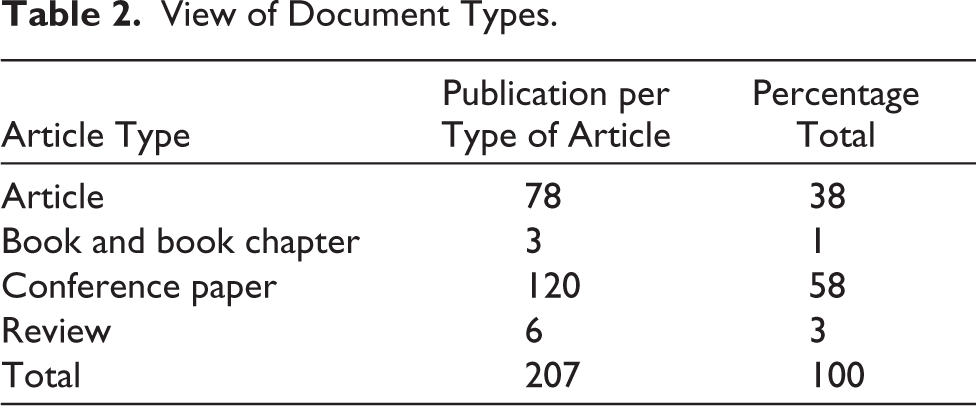
Records indexed in Scopus up to December 2024 were screened against the criteria presented in Table 1, resulting in the final data set used for analysis. The criteria resulted in 1,460 articles, with the first document from 1984, making this study an analysis of four decades of progress in the area. Table 2 provides a view of the number of publications against each of the document types. After applying objective filters (as described in Table 1, Stages 2–5), the remaining 1,184 documents were subjected to a relevance examining reviewing the titles, abstracts and keywords. This was aimed at ensuring that only studies explicitly addressing IS or IT integration within the context of M&A were included. Articles focusing on unrelated domains such as healthcare information systems, education technologies, data acquisition methods or generic corporate performance were excluded, as they did not directly contribute to understanding IS integration in M&A. This qualitative screening step aligns with recommended bibliometric protocols emphasizing conceptual relevance over mere keyword overlap to enhance validity and focus (Donthu et al., 2021; Zupic & Čater, 2015). Consequently, 207 documents were retained as thematically pertinent to the research domain.
Filtering Criteria.
View of Document Types.
Study Coverage
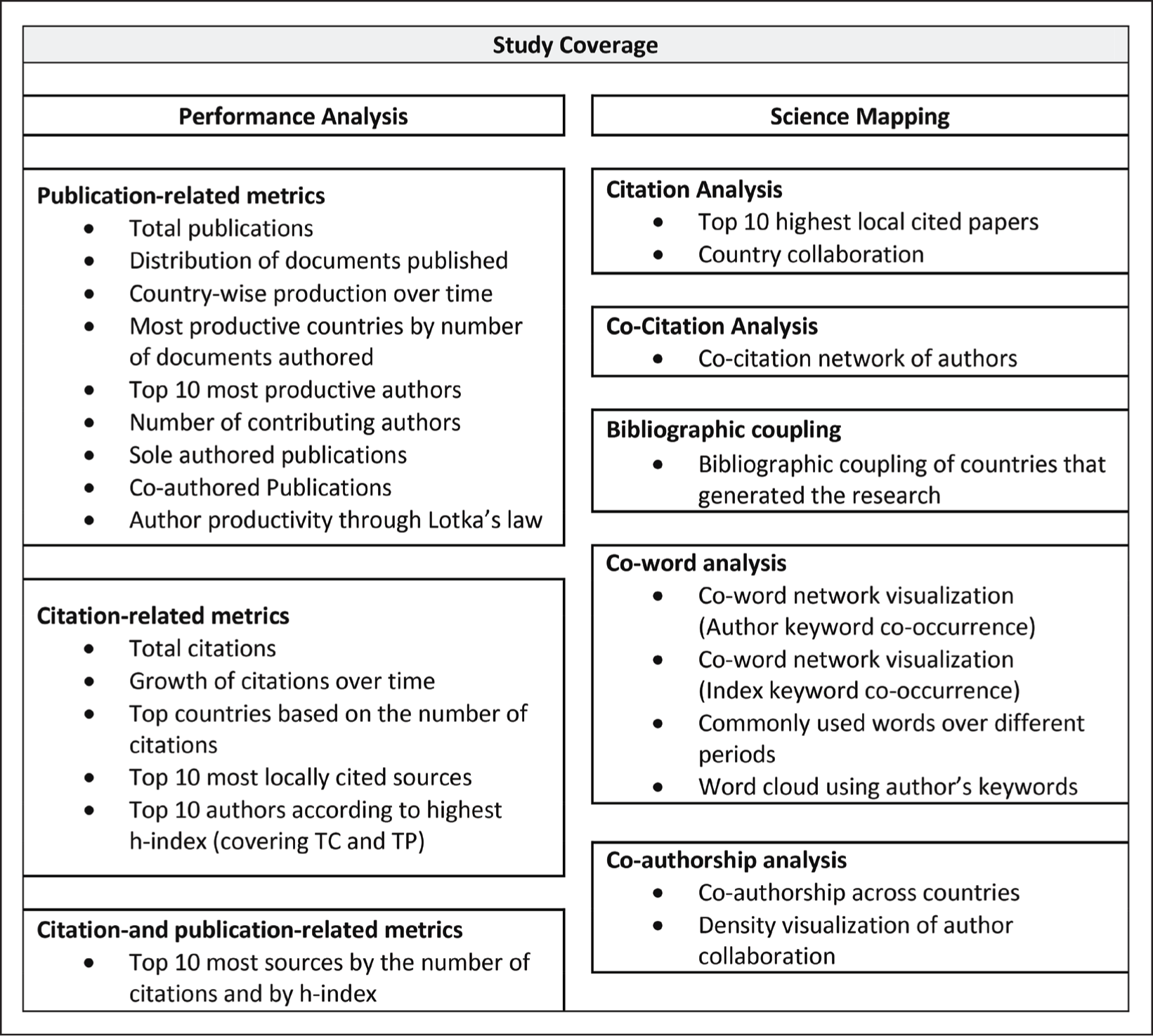
The analysis adopts two complementary bibliometric perspectives. As Donthu et al. (2021, p. 3) explain, ‘performance analysis accounts for the contributions of research constituents, whereas science mapping focuses on the relationships between research constituents’. The scope and the study coverage have been summarized in Figure 1.
Summary of the Study Coverage.
Performance analysis demonstrates the performance across aspects such as authors, countries, institutions and journals, thereby providing an understanding of how the subject has evolved over time. This analysis is descriptive, reflecting the standard approach in bibliometric studies (Donthu et al., 2021). Aspects like citation are also reviewed as part of performance analysis and demonstrate impact and influence on the subject.
In this study, science mapping is used to examine relational patterns among authors, concepts and publications in the literature (Baker et al., 2021). Building on established bibliometric execution, science mapping typically draws on citation-based, keyword-based and collaboration-based techniques to analyse the structure of a research field (Donthu et al., 2021). Accordingly, this study employs co-citation, bibliographic coupling and keyword co-occurrence analyses to capture intellectual linkages among publications and trace shifts in research focus over the past four decades of IS integration research in M&A.
Taken together, these analytical layers offer a coherent, multi-perspective view of the literature by connecting who contributes to the field, what themes are emphasized and how knowledge is structured and developed. In doing so, the approach helps address the fragmentation that has historically constrained cumulative knowledge development and actionable insight in this domain.
Results
IS in M&A Research over Four Decades
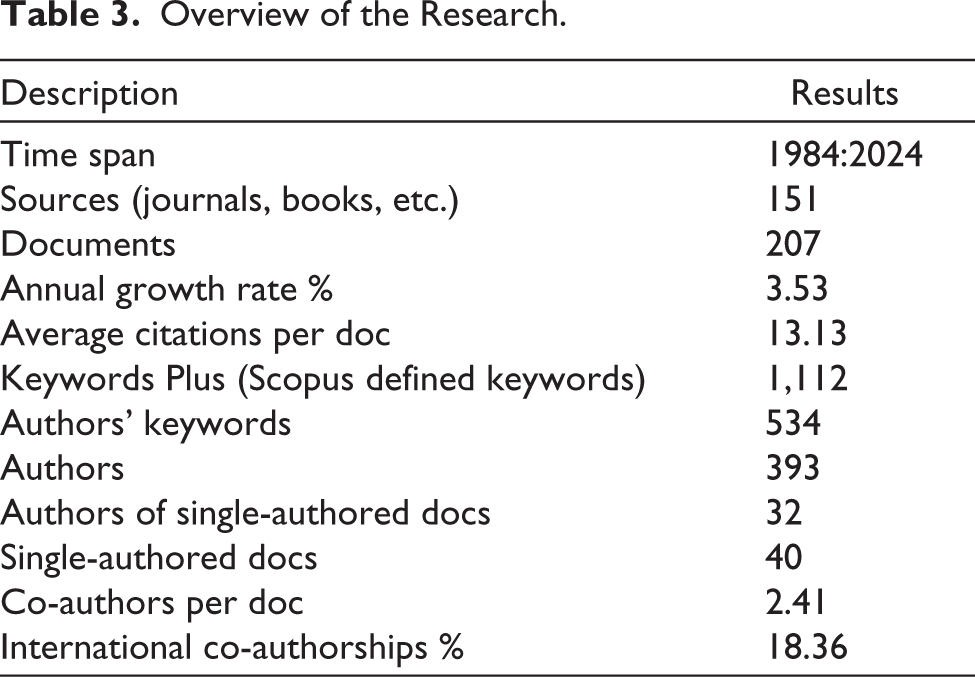
Over the past 40+ years, there have been 1,144 documents from 647 sources covering aspects of IS in M&A. Table 3 summarizes the entire data set. The first paper that met the criteria is from 1982, and over the past period, there have been significant contributions to this area. Figure 2 shows how the research has developed over the past four decades
Overview of the Research.
Distribution of Documents Published.
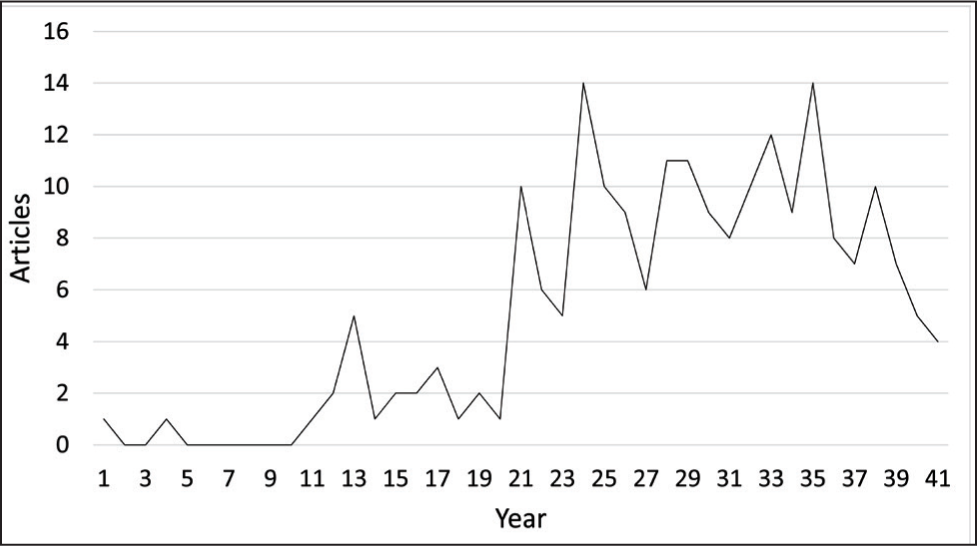
Figure 2 shows a spurt in research between 2007 and 2008, which corresponds to the world financial crisis of 2007–2008, which led to extensive negative effect on financial institutions worldwide, including the bankruptcy at Lehman Brothers in 2008.
However, post this period, there was a spate of M&A. As per Reddy et al., ‘We found, however, that after the crisis period, emerging market countries have taken advantage of the attractive asset prices in developed countries and increased their foreign acquisitions’ (2014, p. 1).
The Main Contributors
Table 4 lists the 10 authors with most publications covering IS integration in M&A. Henningsson stands out as someone who has done extensive research in the area and has 22 publications. He is followed by Vieru, who has seven articles, while Alantra, Lace and Rivard have six articles each.
Prominent Contributors in IS M&A Research.
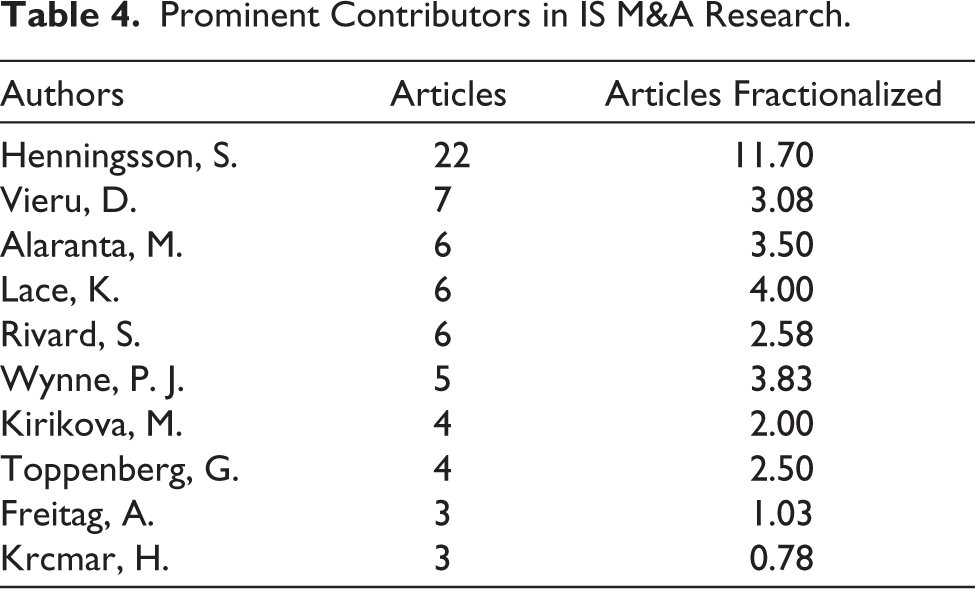
Henningsson’s work (2005–2018) offers comprehensive insights into IS integration in M&A, addressing topics such as integration models, enterprise architecture maturity, platform ecosystems and post-merger strategy development. While being foundational, the introduction of emerging technologies, evolving organizational dynamics, new operating models, etc., provides opportunities to build on this research.
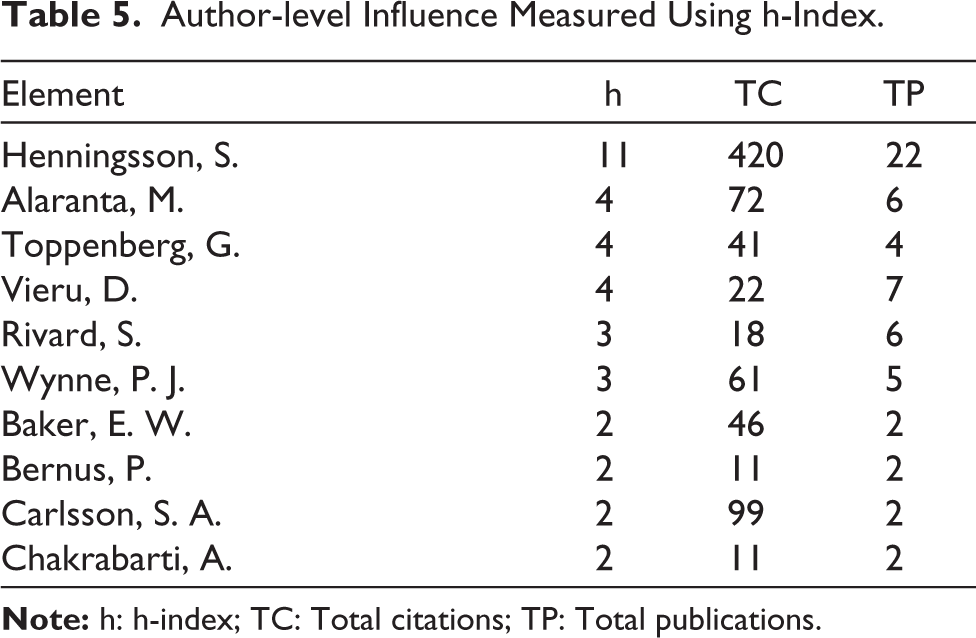
Table 5 highlights the 10 most influential authors as indicated by their h-index values. Henningsson ranks the highest, followed by Alaranta, Toppenberg and Vieru.
Author-level Influence Measured Using h-Index.
While we have 393 scholars who have contributed to this area, most of the authors have written only one paper. Table 6 presents author contributions in reference to Lotka’s law, whereby ‘the proportion of all contributors who contribute a single item should be just over 60 percent’ (Lotka, 1926, p. 5). The bibliometric analysis indicates that author productivity is not consistent to Lotka’s law, since almost 90% of contributors have authored a single article only.
Contributions with Respect to Lotka’s Law.
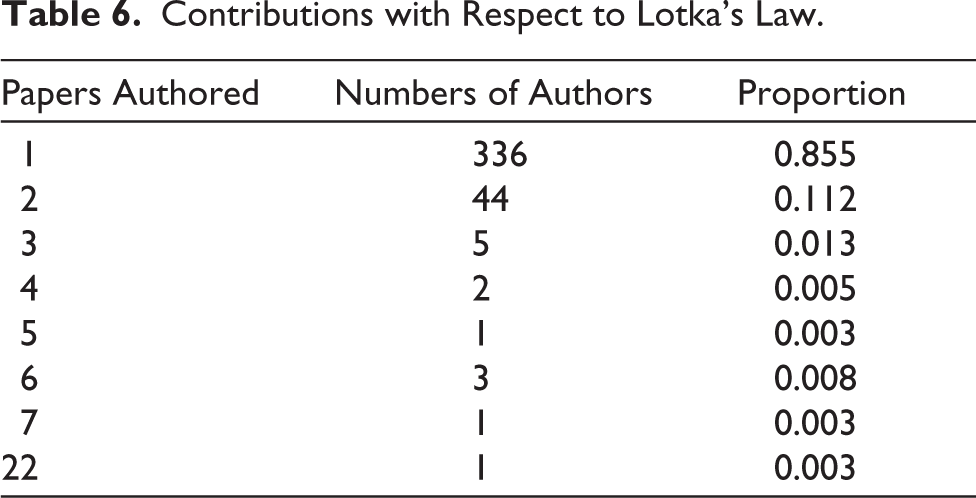
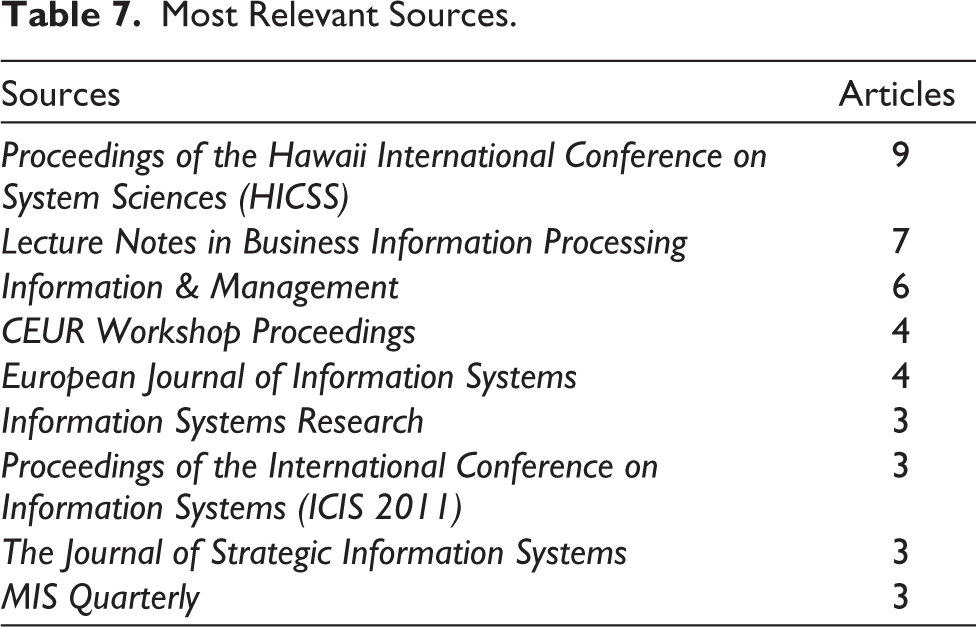
Despite the topic’s relevance, sustained scholarly engagement remains low, with only 3% of the contributors authoring more than two articles, highlighting a clear need for further research. Also, Table 7 shows that publications in the analysed data set are concentrated in a small number of channels led by HICSS.
Most Relevant Sources.
Institutional Affiliations and Journals
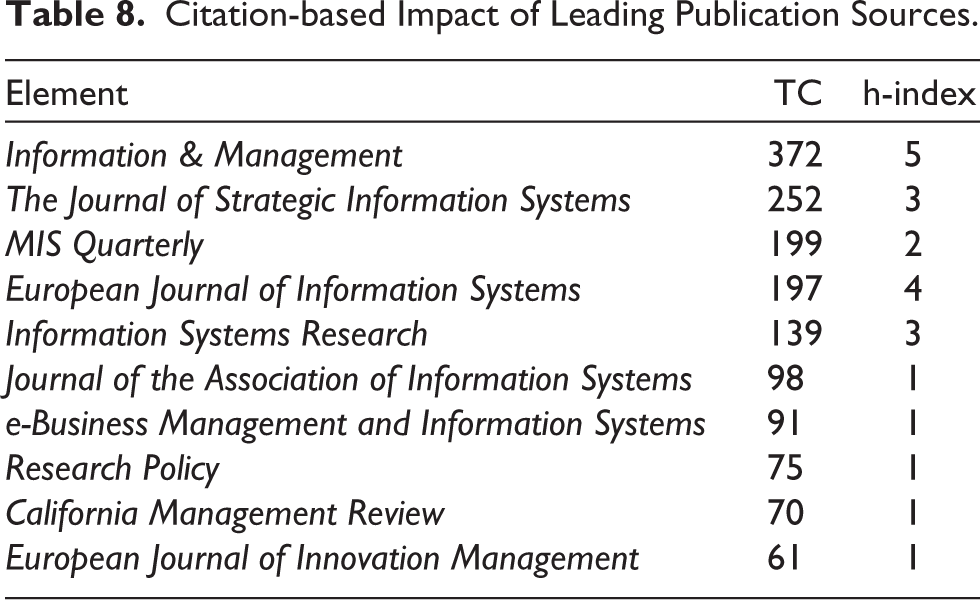
Based on citation counts within the analysed data set, Information & Management demonstrates the strongest citation footprint (372), with the Journal of Strategic Information Systems (252) being next, followed by MIS Quarterly (199). It also exhibits the highest h-index among the outlets considered (Table 8).
Citation-based Impact of Leading Publication Sources.
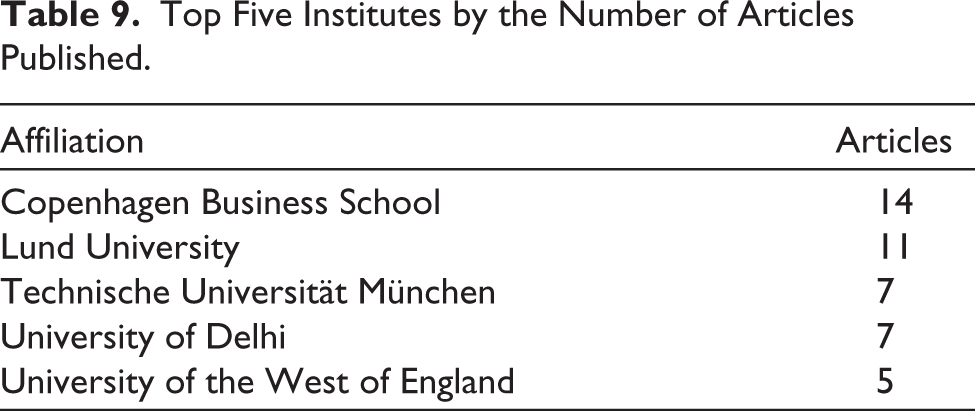
Copenhagen Business School and Lund University are the leading contributors to IS integration research in M&A (Table 9), primarily due to the extensive work of Henningsson during his tenure at both institutions. Technische Universität München and the University of Delhi rank third, each contributing seven publications to this field.
Top Five Institutes by the Number of Articles Published.
Analysis Based on Words
An analysis of titles, abstracts, author keywords and index keywords was conducted to identify the most frequently referenced industries and theories across the 1,124 documents analysed. Table 9 presents the 10 most-cited sectors and the 10 most prominent theoretical perspectives in the dataset.
Software, IT and technology top the list of industries, followed by the banking and telecommunications industries in the top 10 list. As per Kooli and Lock Son,
In the technology industry, we can expect the execution of conventional consolidations of hardware and software companies, and a new wave of vertical consolidations where technology companies such as the FANGS will acquire companies or merge with companies to create synergies through the acquisition of new proprietary technologies and knowledge of their competitors. (2021, p. 111)
Studies of IS integration in M&A are informed by diverse theoretical lenses spanning organizational and strategic research. With reference to theories, the resource-based theory has a higher degree of reference, while from a sector perspective, IT and telecom sectors seem to have a wide representation in the journals (Table 10).
Top 10 Industries and 10 Leading Theories Ranked by Word Frequency.
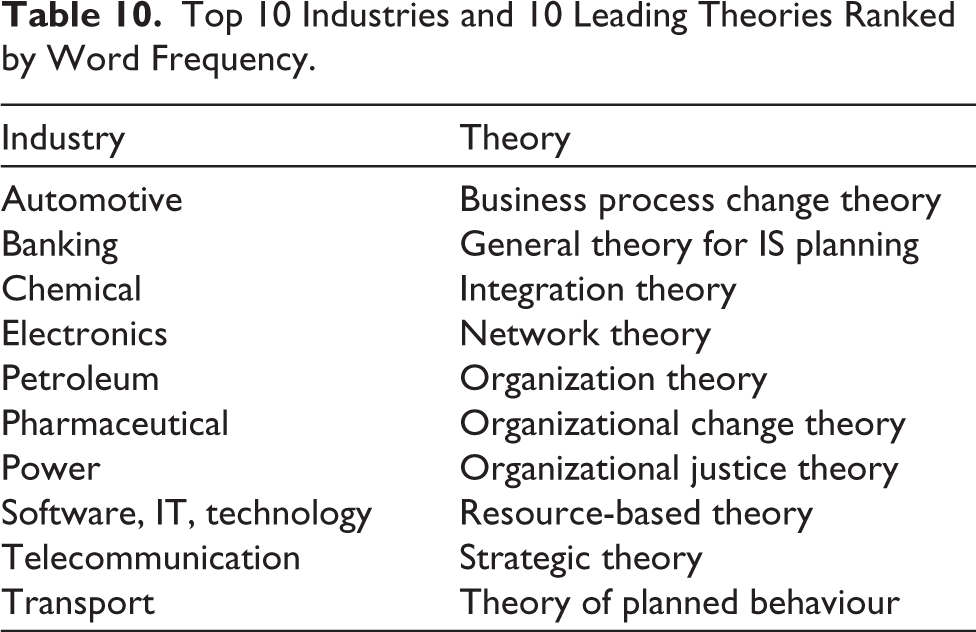
The business process change theory and the general theory for IS planning provide insights into aligning IS capabilities with evolving business processes and strategic objectives during post-merger integration. The network theory and the integration theory focus on structural and relational processes that allow interoperability within the complex organizational and technology networks. The organization theory and organizational change theory articulate the adaptive, socio-technical nature of integration, highlighting how structural alignment and cultural aspects influence IS outcomes. Complementing these, the organizational justice theory deals with the fairness in the system and process change, which may influence user acceptance and integration success. Resource-based and strategic theories justify how successful IS integration capabilities become a source of competitive advantage and synergy realization. Finally, the theory of planned behaviour provides a useful perspective for examining behavioural responses to IS adoption and change during M&A (Ajzen, 1991). In summary, these overarching theories present a multi-level perspective covering strategic, organizational and behavioural perspectives in highlighting the complexities associated with IS integration.
Keyword Analysis
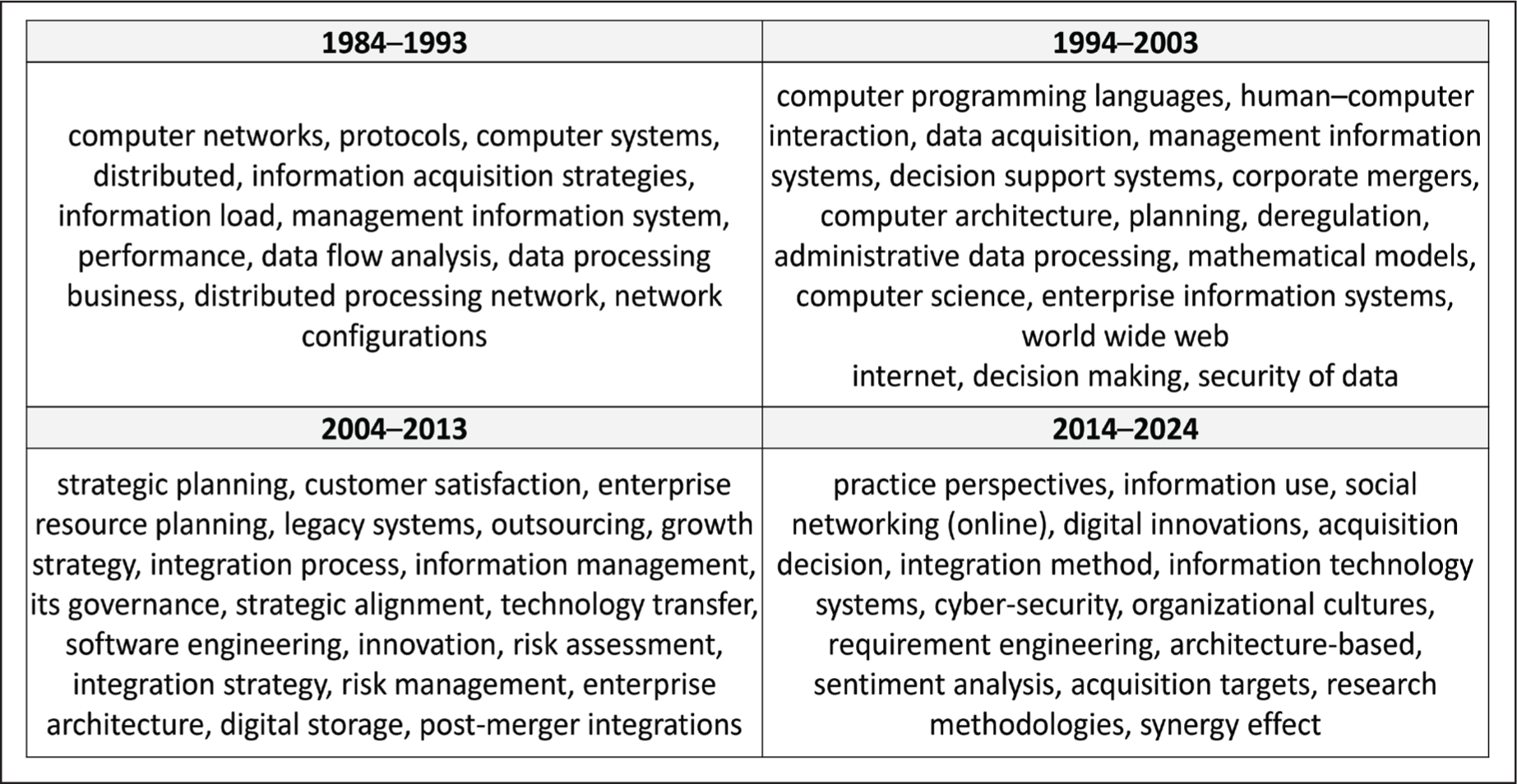
The longitudinal keyword analysis (Figure 3) shows how IS in M&A have evolved over time. With four decades of information available, four distinct periods were created starting in 1984, each covering a decade, and the terms were distributed based upon their frequency over the period. Terms that matched the original search terms were removed to avoid duplication.
Commonly Used Words over Different Periods.
1984–1993: Foundational and Operational Focus
The first decade reflects a foundational phase, which was characterized by operational and infrastructural themes. Keywords such as management information systems, data processing, distributed systems and computer networks dominated this period, indicating a focus on system-level functionalities and infrastructure development.
1994–2003: Internet Emergence and Security Awareness
The second decade marks a noticeable shift in the literature, reflecting the growing influence of the World Wide Web. Terms such as internet, computer architecture, programming and computer science become prevalent. Importantly, this period also introduces data security as a growing concern, reflecting the exposure of enterprise systems to external threats. The focus remained on technology.
2004–2013: Integration, Outsourcing and Legacy Systems
This decade shows the emergence of more mature themes such as integration and outsourcing, indicating a shift towards external service partnerships and system consolidation. As Lei and Hitt (1995) note, restructuring during M&A often catalyses complex organizational shifts, making outsourcing an attractive alternative to internal capability development. Legacy systems highlighted the challenge of integrating outdated infrastructures with modern platforms and post-merger integration surfaces as a term, highlighting the strategic importance of IS post-acquisition. The increased occurrence of risk also suggests heightened awareness around the vulnerabilities of IS integration.
2014–2024: Digital Transformation and Human-centric Concerns
The most recent period is dominated by themes of digitalization and innovation. Digital, the most frequently occurring keyword, suggests the shift towards Big Data, automation and analytics, aligning with broader trends in improving customer experience and operational efficiency. As Margiono (2021) observes, digital transformation can be either offensive, driven by M&A and portfolio strategies, or defensive, emphasizing organic capability growth.
Cybersecurity emerges as a specialized field as a response to complex cyber threats. At the same time, words such as human resource management, organizational culture, sentiment analysis and change management indicate a tilt towards the human and cultural aspects for integration success. Edwards and Edwards (2015) have highlighted that staff integration strongly influences M&A outcomes, stressing the significance of people and culture while executing technological integration.
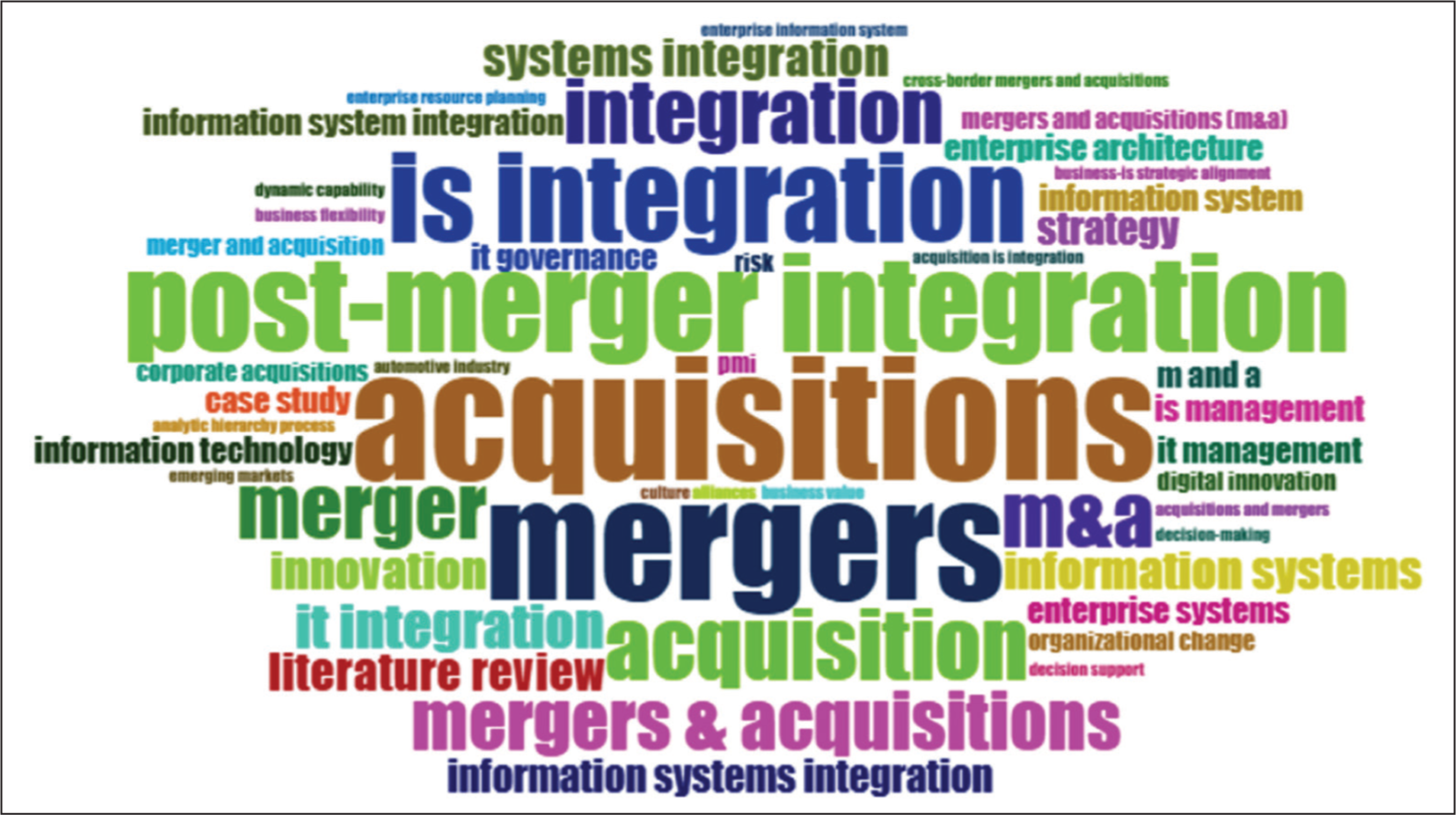
The word cloud generated through Biblioshiny (Figure 4) visually highlights dominant themes, with terms such as knowledge management, post-merger integration, organizational change, IT integration, enterprise architecture and innovation standing out prominently. These reflect the established themes and emerging priorities in IS M&A research.
Word Cloud Using Authors’ Keywords.
Country Analysis
Country scientific production was assessed by the number of author appearances based on country affiliations. When a publication includes authors from multiple countries, each country receives one count.
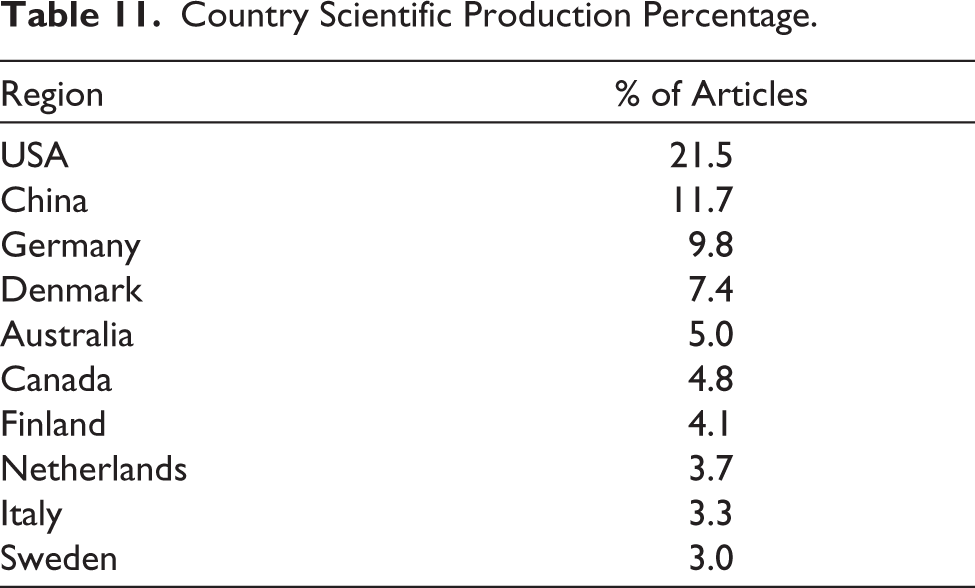
The USA and China are distinguished by the largest scientific production (Table 11) followed by Germany and Denmark. These top four nations account for over half of the total publications, indicating a concentration of scholarly activity in advanced economies with strong academic–industry linkages. The dominance of the USA reflects its long-standing leadership in IS and M&A research, supported by mature research ecosystems and corporate data availability. China’s rapid rise, particularly after 2005, signals its increasing engagement with digital transformation and international M&A activities driven by globalization and state-backed innovation policies.
Country Scientific Production Percentage.
A country-level bibliographic coupling analysis (Kessler, 1963) was conducted to reveal intellectual proximity among nations. Using a minimum threshold of five documents per country, the resulting network (Figure 5) identifies 16 countries grouped into five clusters, suggesting multiple regional research communities. The results indicate that research output remains focused within a limited region, with the USA, China and Europe, particularly Germany, Denmark and the UK accounting for most publications.
Bibliographic Coupling of Countries That Generated the Research.
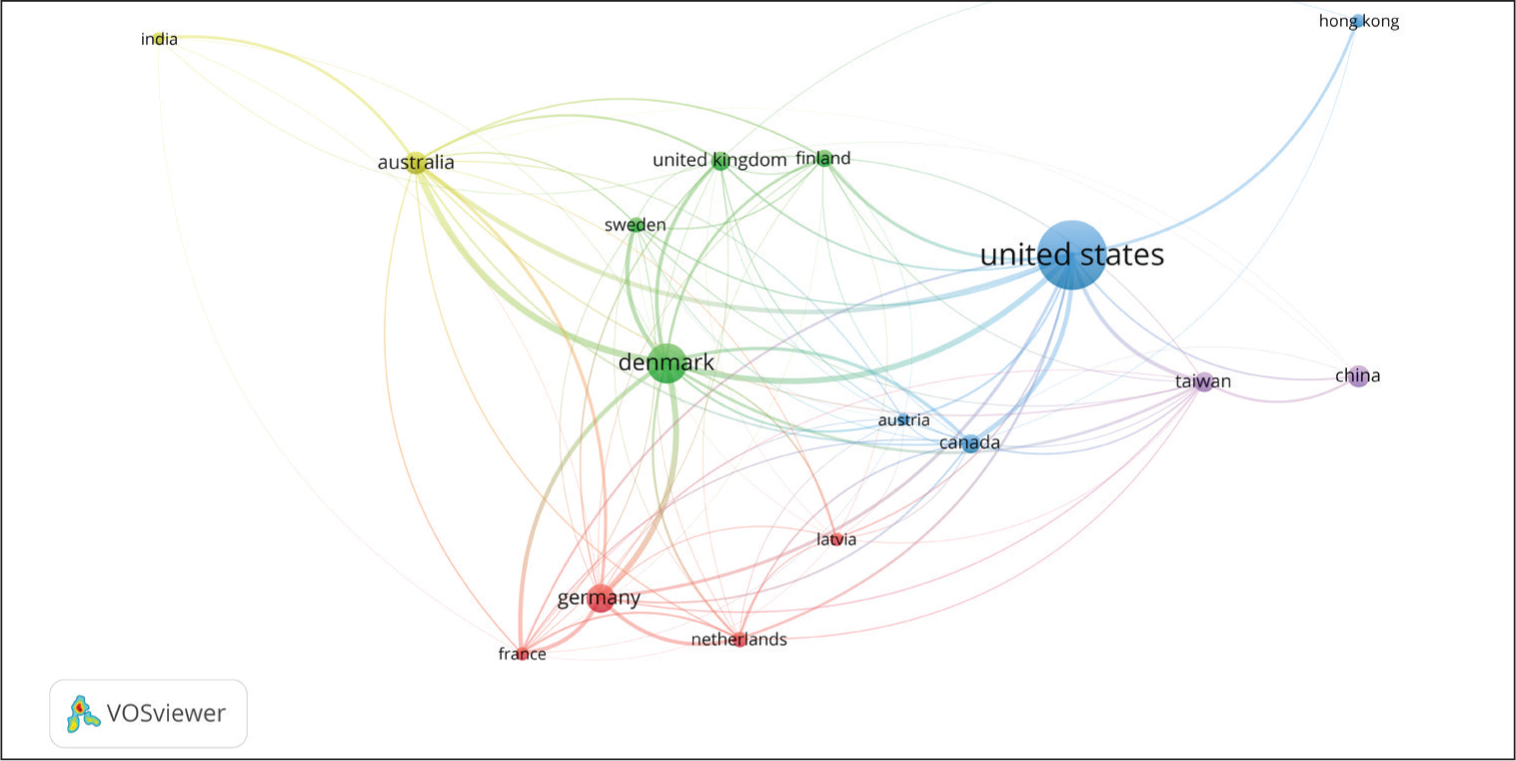
Figure 6 illustrates country-level research trends over time. Output from the USA rises steadily from the 1990s, while China shows rapid growth after 2005, indicating stronger engagement with IS-related M&A research. Countries from Europe, including Germany, Finland and the Netherlands, also contribute consistently, often in areas related to technology integration and innovation management.
Country-wise Production over Time.
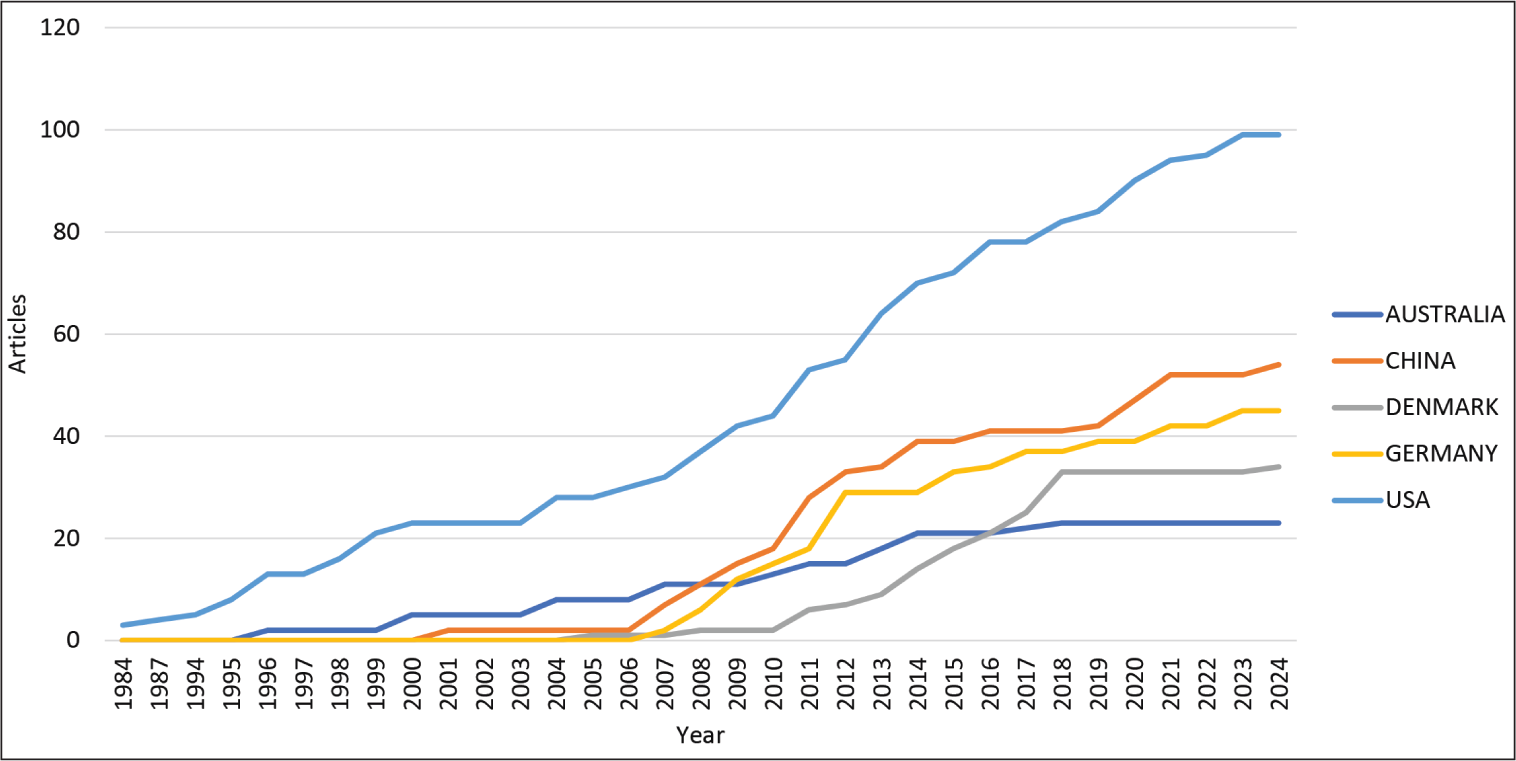
Figure 7 depicts the network of country collaborations, revealing dense interconnections among the USA, Denmark, Australia and Austria, indicating strong transnational research partnerships supported by collaborative funding and cross-institutional projects. By contrast, Canada shows a higher proportion of single-country publications, indicating a stronger domestic focus.
Country Collaboration.
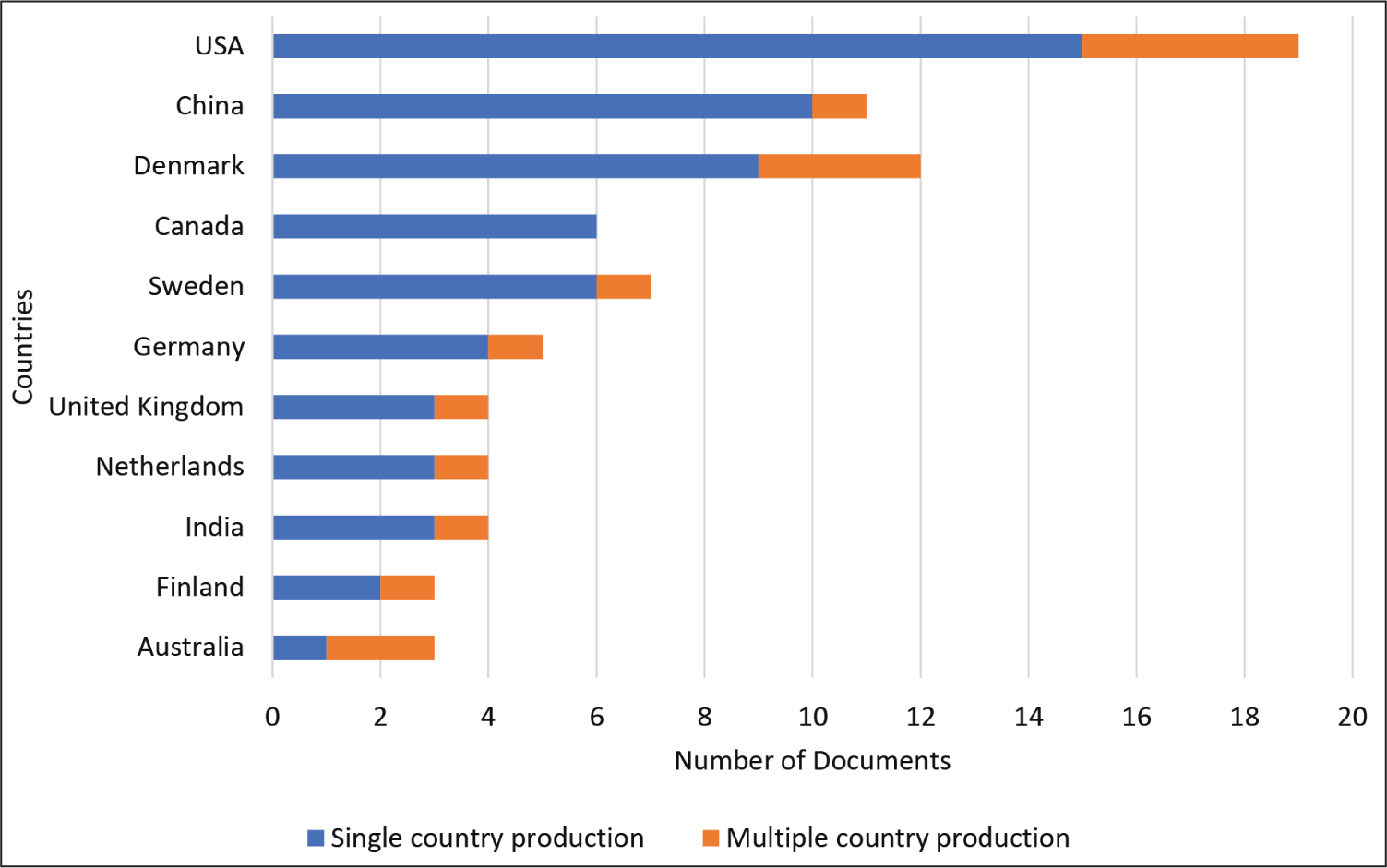
Overall, the country-level analysis reveals that the study in this area is geographically concentrated yet globally expanding. Advanced economies remain at the core of research production and collaboration, with nations such as China and India, increasing their contribution and shaping the future research agenda. These evolving patterns signal a gradual international diffusion of expertise and contextual diversity, enhancing the field’s potential for theoretical integration and global applicability.
Citation Analysis
Citation analysis (Figure 8) reveals the intellectual influence and knowledge diffusion within the IS M&A research domain.
Citations by Country.
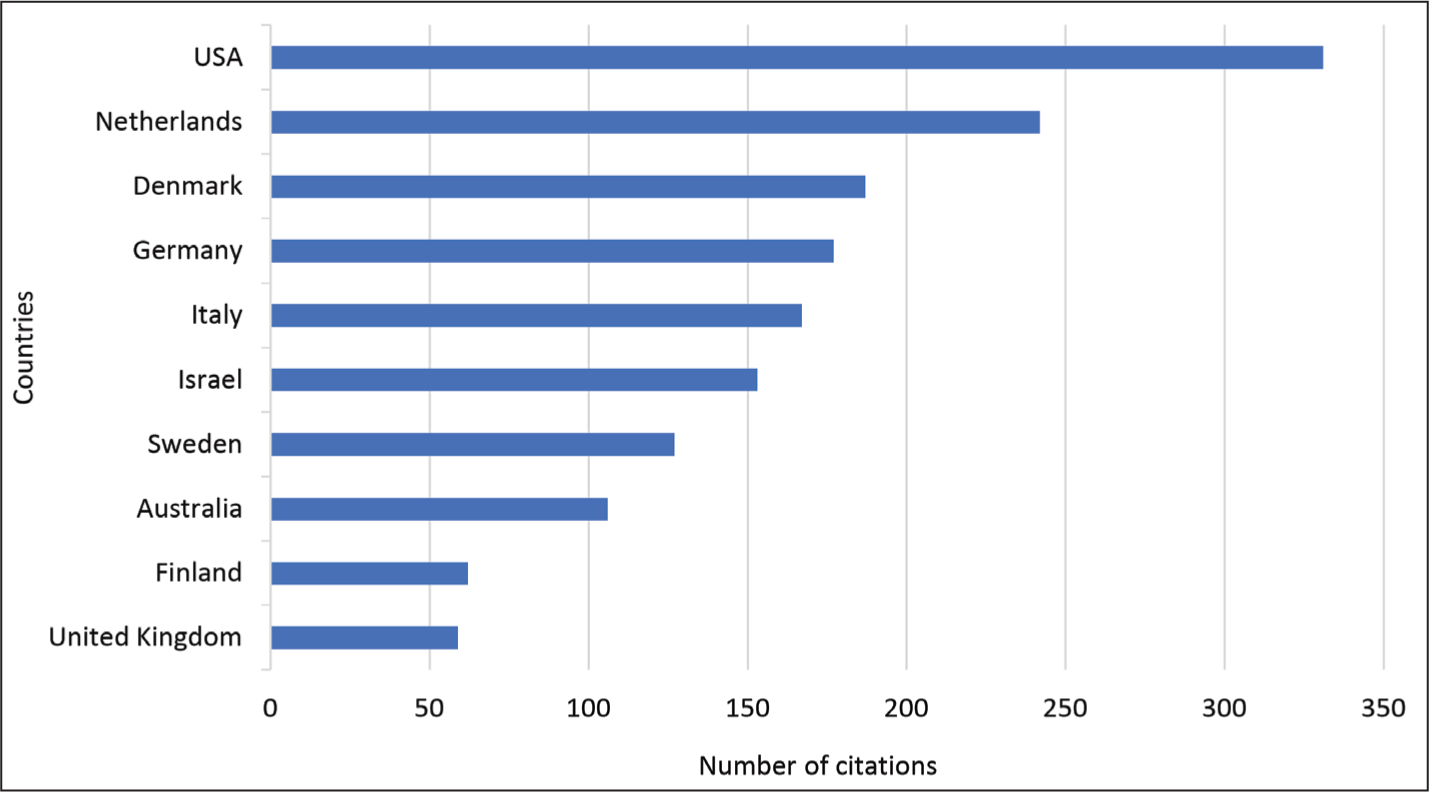
The USA leads in total citations, reflecting its long-standing research base and influence in shaping theoretical and empirical directions. The Netherlands and Denmark follow, underscoring strong traditions in IS research and collaboration. Although China is the second-largest contributor by publication volume (Figure 6), it does not yet appear among the top 10 most-cited countries, indicating a time-lag effect typical of emerging research hubs whose output is recent and still diffusing through the citation network.
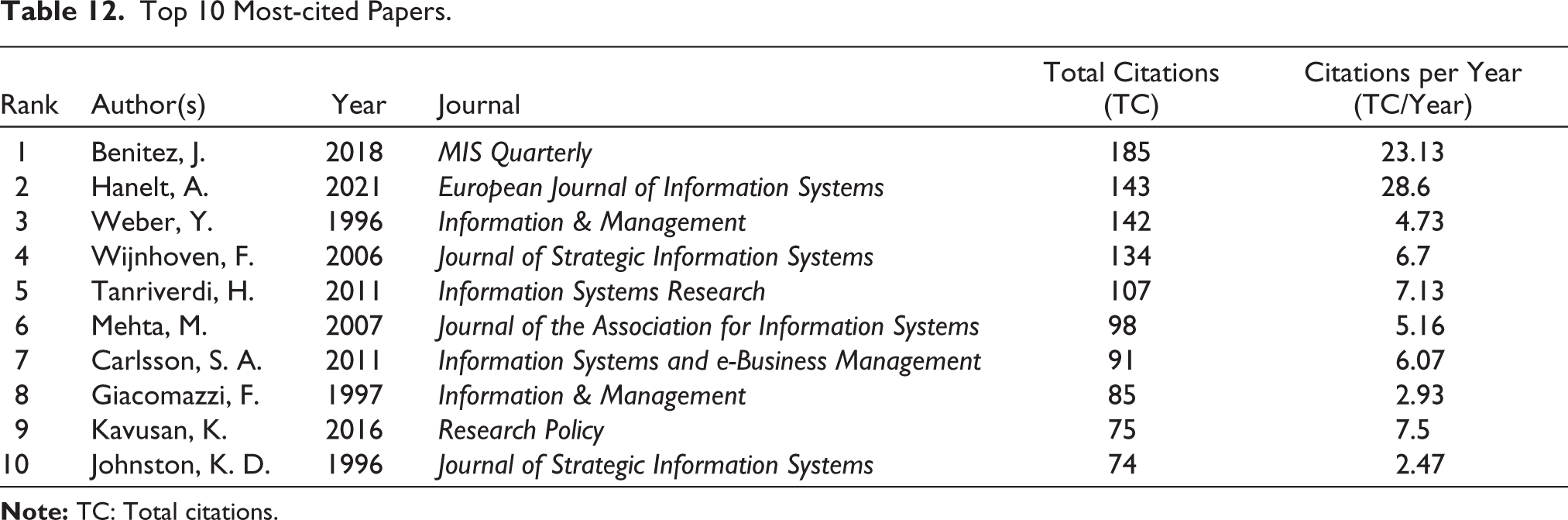
At the article level, Benitez et al.’s (2018) paper in MIS Quarterly stands out as the most-cited work, emphasizing the constructive role of IT infrastructure elasticity in the success of M&A. Overall, the most influential studies (Table 12) converge on themes of technological alignment, organizational integration and strategic synergy, signalling that impactful scholarship in IS M&A lies at the intersection of technology, organization and strategy.
Top 10 Most-cited Papers.
Co-citation Analysis
Co-citation and clustering are used in this study to examine relationships among research entities such as authors, institutions, countries, keywords and journals.
Co-citation analysis captures how publications are intellectually connected by examining how often pairs of studies are cited together over time (Surwase et al., 2011). When the same works are repeatedly co-cited, they begin to cluster around shared ideas or research concerns, revealing the thematic structure of the field. In a co-citation network, these connections indicate how studies are positioned relative to one another within the broader knowledge landscape. Importantly, co-citation analysis does more than highlight influential publications. It also helps surface coherent research streams and thematic groupings, offering insights into how scholarly conversations in IS integration and M&A have formed and evolved (Donthu et al., 2021).
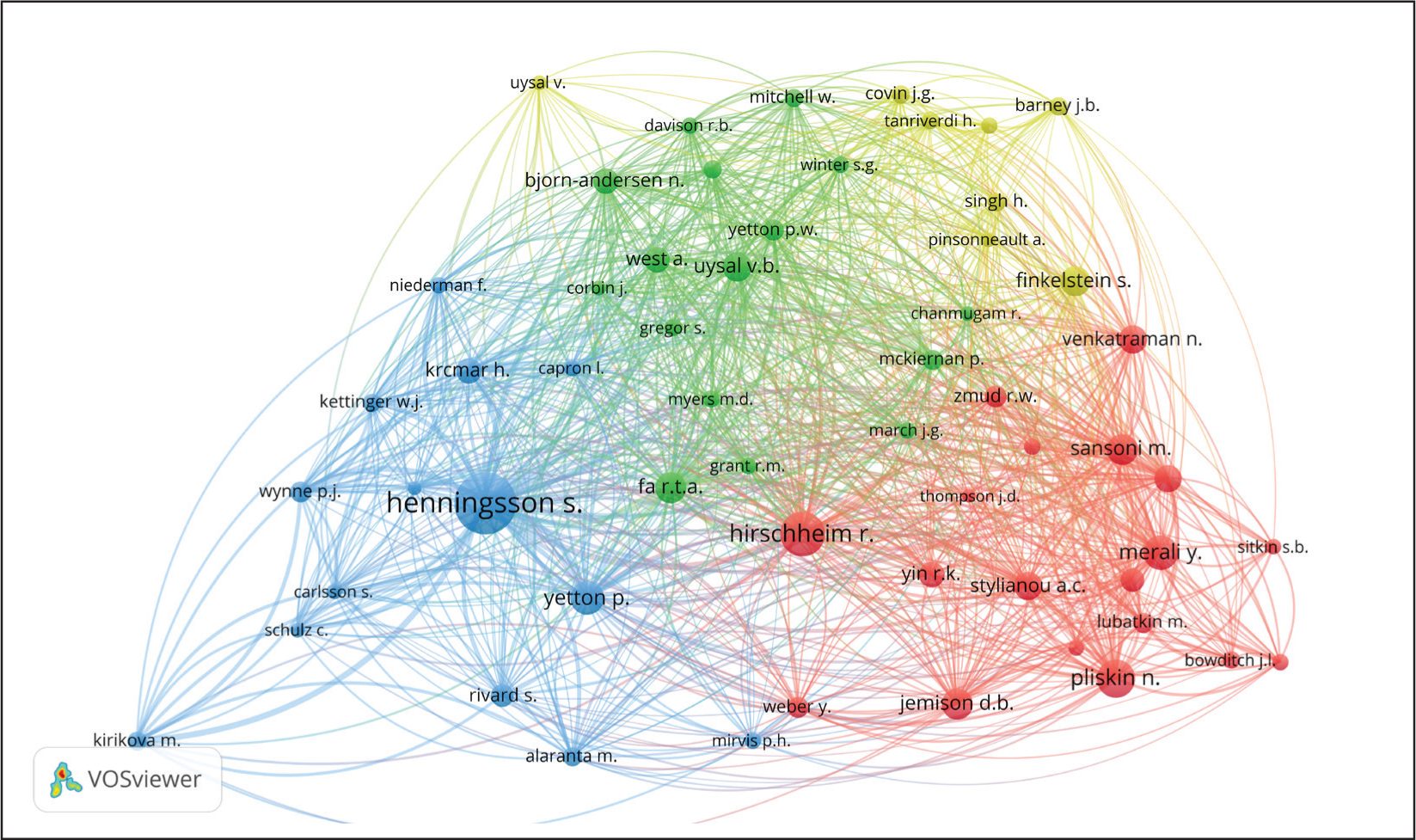
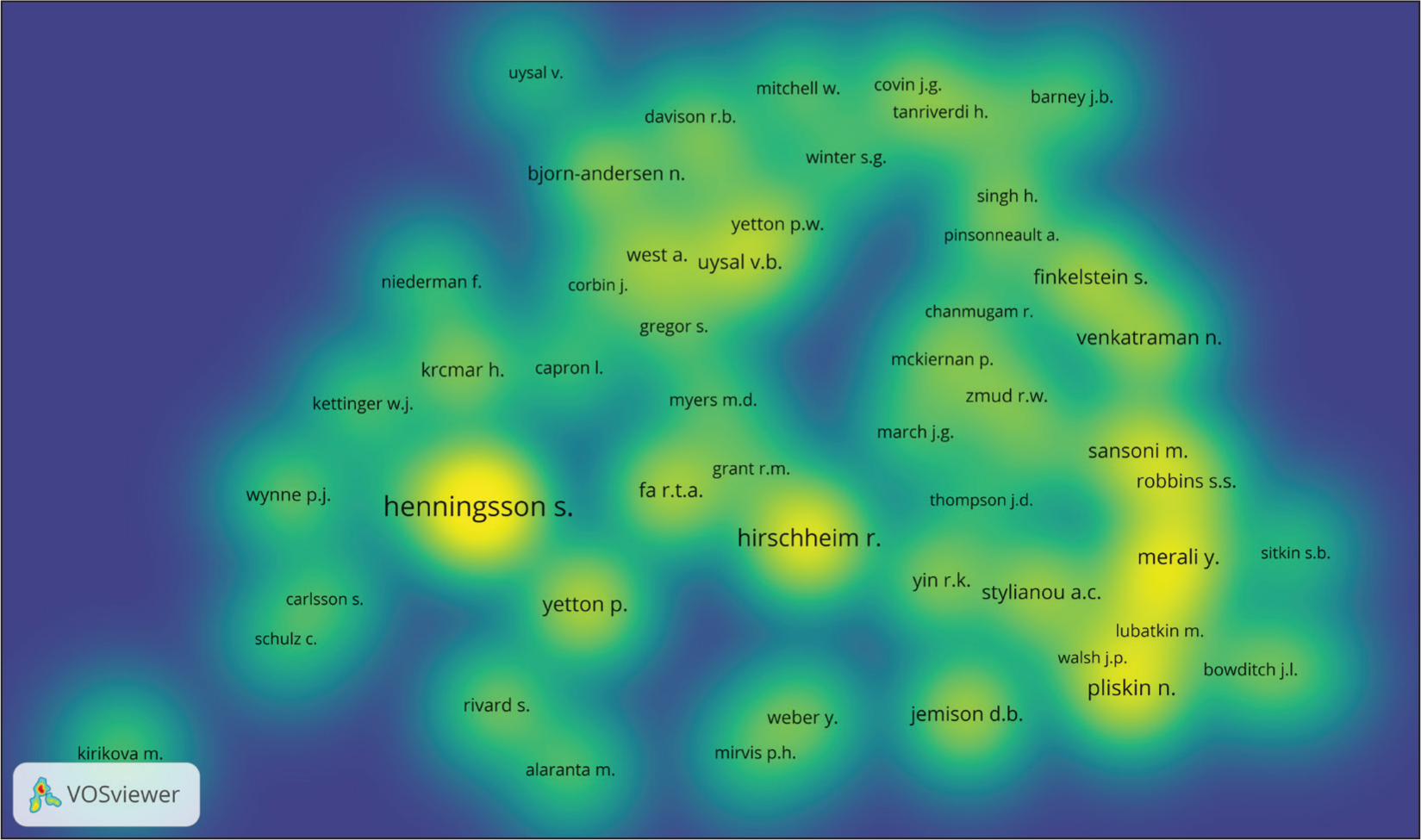
The analysis considers 20 as the threshold for the number of citations. The visualization reveals five clusters encompassing 57 authors, connected by 1,524 relationships with a total association strength of 24,813. Based on this analysis, the three clusters have 24, 17 and 16 authors, respectively. The first four clusters represent most of the co-citation activity (Figure 9).
Co-citation Network of Authors.
Author Collaboration
Author collaboration is an essential aspect of research, as it shows how the authors have collaborated in the given area of research. Author collaboration brings opportunities for a broader sample to be reviewed beyond geographical boundaries, making the studies richer. The study reveals a collaboration between authors (Figures 10 and 11); however, the collaboration is more localized. Researchers from the same institute have collaborated more strongly; for example, Henningsson and Wyne belong to Copenhagen Business School; Rivard and Vieru are both from Canada.
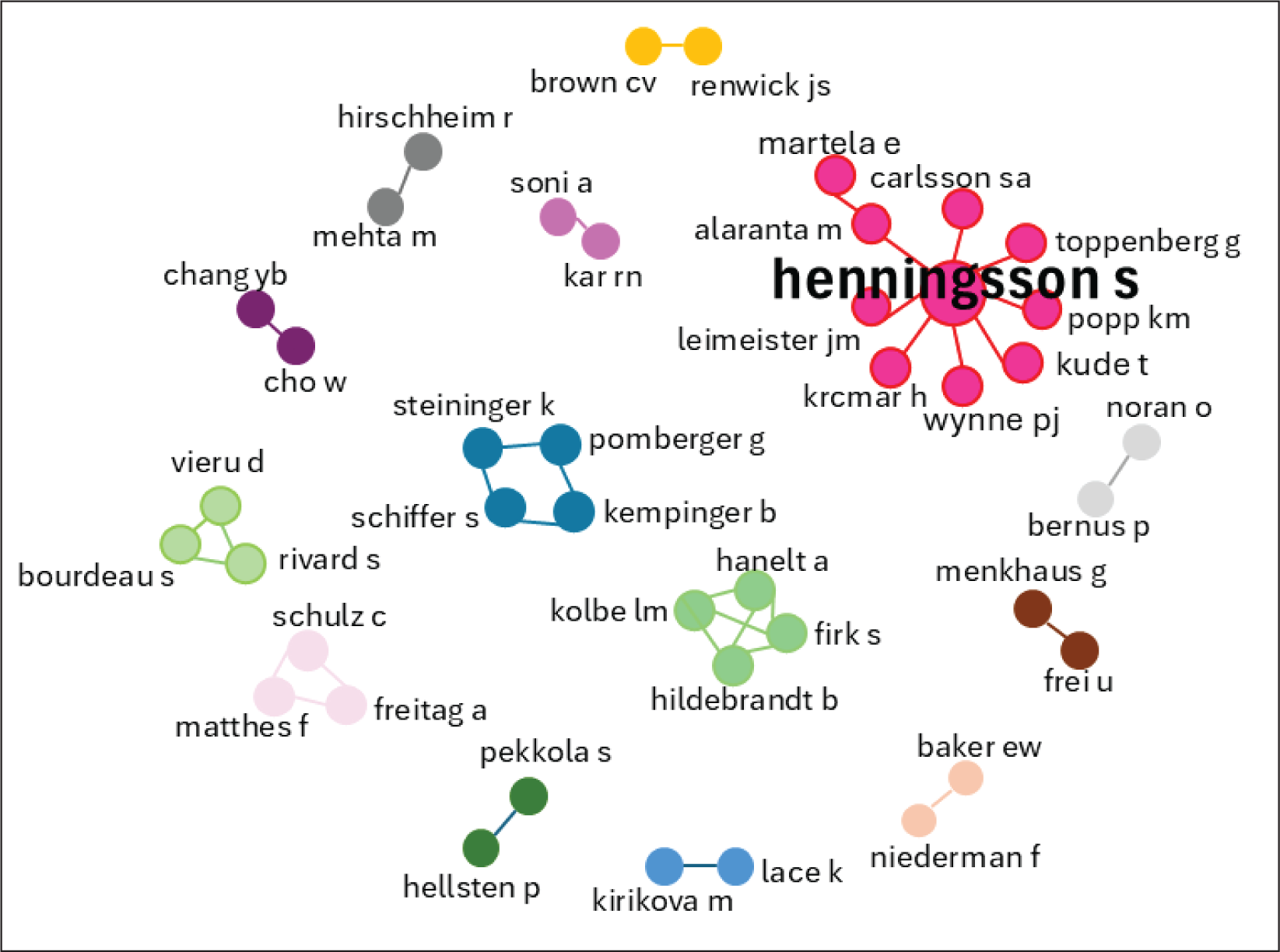
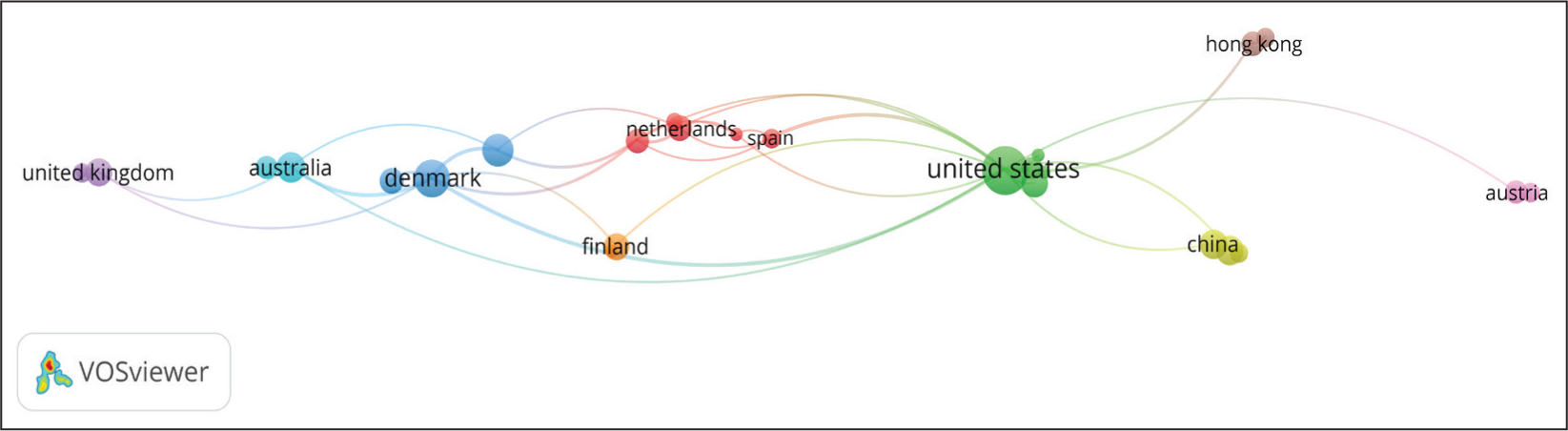
There has been cross-continent collaboration as well, as seen in Figure 12. Most of the collaboration has taken place between North America and Europe. South Asian countries and China are now active, as seen in the growing trend over the past decade (Figure 12), and we can expect that cross-country collaboration will increase with time.
Co-authorship Across Countries Using VOSviewer.
Co-word Analysis
We used co-word analysis leveraging both author-provided and Scopus-indexed keywords (Keyword Plus) to identify thematic structures and emerging trends in IS integration within M&A. Co-word analysis offers a significant advantage in capturing terms from the most recent publications, thereby enhancing the relevance of thematic insights.
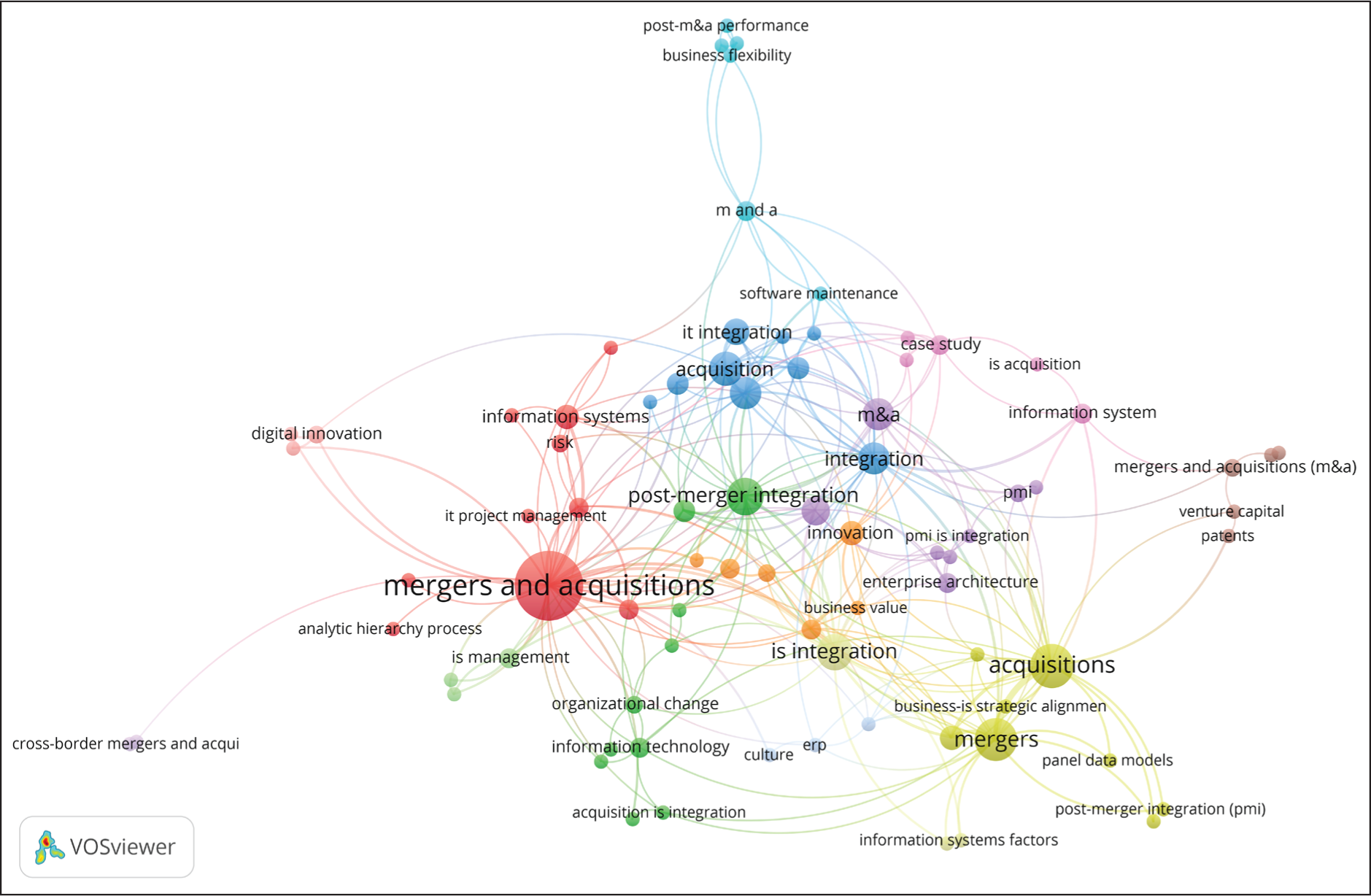
Figures 13 and 14 illustrate co-occurrence networks based on author and index keywords, respectively. The author keyword analysis, with a minimum occurrence threshold of two, yielded 81 terms across 14 thematic groups, containing 270 links and 392 as link strength. The index keyword analysis, being more comprehensive, produced 226 terms in 13 clusters, with 2,336 links and a total strength of 4,052.
Co-word Network Visualization (Author Keyword Co-occurrence).
Co-word Network Visualization (Index Keyword Co-occurrence).
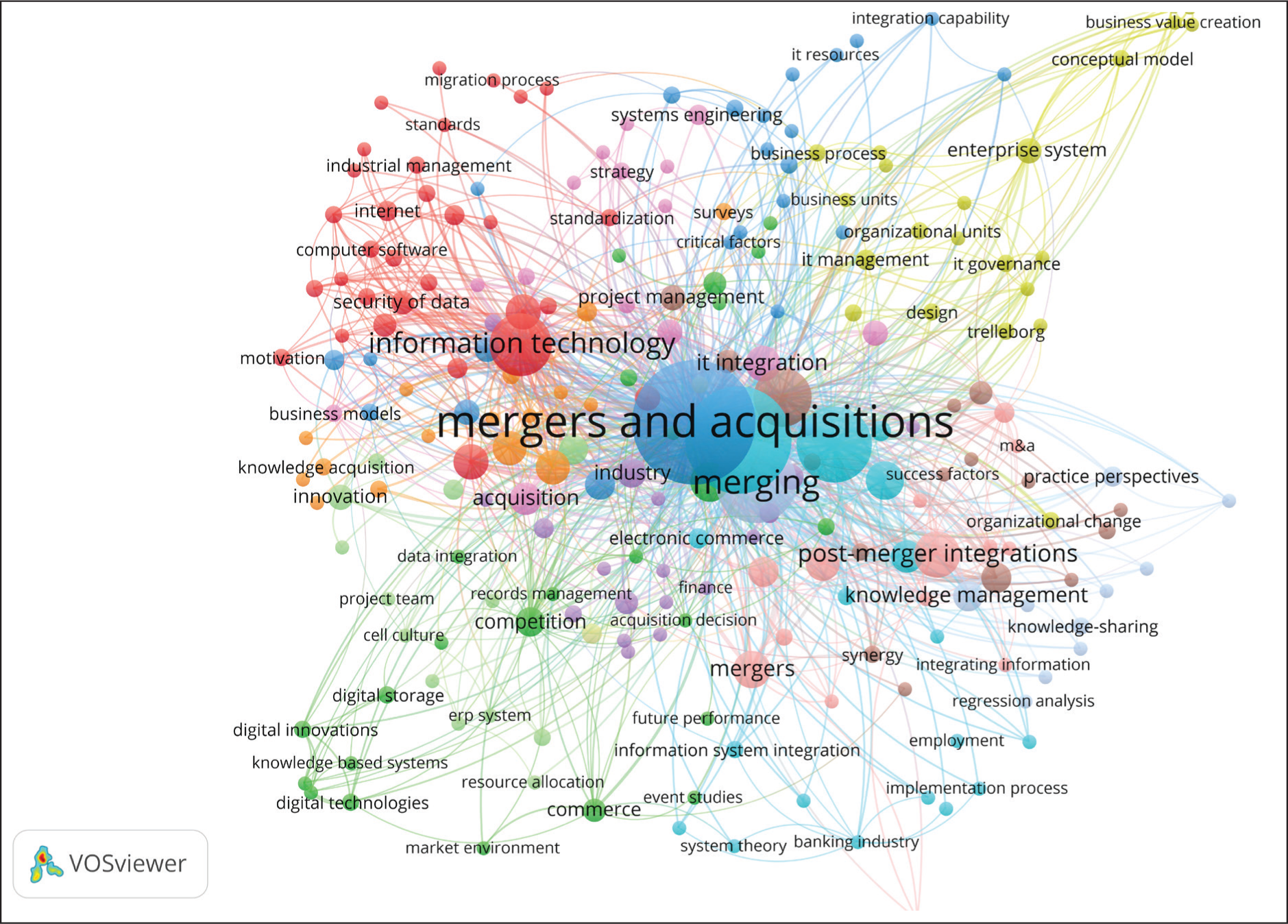
Recent trends in author keywords highlight innovation, information security, IS integration, risk and case study as dominant themes. Index keywords from Scopus reveal focal areas such as enterprise architecture, post-merger integration, public–private partnerships, HR management, social networking, data mining and cloud computing.
The analysis reveals five core thematic domains (a) IS integration and post-merger integration, (b) technology (e.g., data security, cloud, enterprise architecture, analytics); (c) people and organizational management (e.g., HR, ERP); (d) social dimensions and (e) risk management. Together, these interrelated themes capture the multidimensional character of IS integration and direct future research directions, consistent with prior keyword-based literature classification approaches that structure fragmented domains into coherent thematic areas (Kevork & Vrechopoulos, 2009).
Research Gaps and Potential Research Areas
Despite four decades of research on IS integration in M&A, our bibliometric analysis reveals weak conceptual linkages across technological, organizational and human dimensions, indicating limited integration across research streams. The following subsections therefore identify key gaps and outline priorities for future inquiry.
Industry-specific Variations and Comparative Contexts
Over time there have been multiple studies covering manufacturing, finance and telecom industries. However, these studies seem to have been carried in isolation, and a cross-industry view is not visible. Furthermore, there are limited studies focused on high-tech and service industries, which have larger reliance on IS and in the current context would be embracing new digital architectures and business-operating models. This limits theory generalization and practical relevance (Toppenberg & Henningsson, 2013). Future studies should therefore adopt comparative, industry-sensitive use cases to explore how factors such as digital maturity, regulatory mandates and data management practices define IS integration. Research could also examine how agile integration models, ecosystem interdependencies and platform-based architectures redefine post-merger operating models (Lim et al., 2024; Toppenberg, 2015).
Decision-making Dynamics and Governance Mechanisms
Decision-making around IS integration in M&A remains a critical yet underexplored construct. This has implications on time, cost as well as long-term strategy. Although decisions around application consolidation, architecture, process redesign and people profoundly affect integration outcomes, the literature rarely explicates how such decisions are prioritized, coordinated or governed across organizational layers (Mehta & Hirschheim, 2004), specially in an IS context. Future research should investigate decision hierarchies, accountability structures and the impact decision-making has on the M&A outcome. Integrating governance perspectives (Eulerich et al., 2022) with emerging insights on AI-enabled decision-making (Marzi et al., 2025) could yield richer models of post-merger IS governance and control.
Socio-technical and Human Dimensions of Integration
Past studies have highlighted the technology aspects on IS integration in detail. However, the bibliometric clusters reveal weak linkages between IS integration and cultural or behavioural themes, revealing a major theoretical gap. Organizational culture, user adaptation and employee engagement significantly influence IS adoption and synergy realization (Brown et al., 2016), yet empirical research in the context of IS integration remains limited. Future studies could examine digital readiness, sensemaking, knowledge transition and change management aspects that facilitate socio-technical alignment (Abakumov et al., 2015), including an understanding of how digital tools and processes facilitate collaboration and learning during the integration, driving the people integration beyond technical convergence.
Negative Outcomes and Risk of Value Erosion
Research on IS in M&A has predominantly focused on the positive aspects of the integration, including the value that is derived through the successful integration. However, situations where integration failure results in ‘IS antagonism’, where systems conflict and duplicate functions generate inefficiencies (Henningsson & Kettinger, 2016; Onderdelinden et al., 2022) remain underrepresented. Failures provide major learning to avoid the same mistakes, and hence, future research should focus on identifying early warning indicators, exploring trade-offs between integration speed and complexity and developing diagnostic tools for assessing integration risk. Dynamic capability frameworks (Ferreira et al., 2014; Huacac, 2025) may offer useful theoretical lenses for understanding how firms recover from or prevent IS-induced value erosion.
Emerging Trends and Theoretical Integration
The bibliometric analysis highlights the rise of keywords such as digital M&A, platforms and AI-driven integration, which is in line with the fast-paced introduction of new technologies, advanced automation and self-executing autonomous workflows, and these aspects would demand looking at IS integration from a different lens. The implications could result in faster integration, cost savings, business agility and alignment with strategic goals. Research should examine how digital capabilities, AI and analytics reshape traditional integration sequencing across the M&A lifecycle and influence performance outcomes. Moreover, cross-sectoral contexts call for comparative investigations into how new regulation, data protections aspects, sustainability concerns and ecosystem dependence redefine integration strategies.
Future studies can help develop a better understanding on aspects like how dynamic IS capabilities impact the relationship between integration speed and performance or how ecosystem dependencies influence the choice between ‘big bang’ verses ‘phased’ IS integration. Advancing these questions will help address the current fragmentation in research and strengthen the linkage between IS, organizational strategy and post-merger value creation.
Discussion
The literature review and bibliometric analysis collectively offer an integrated perspective of how IS integration in M&A has evolved over four decades, capturing the conceptual foundations and practical relevance. Over time, the field has moved from treating IS integration as a purely technology initiative to understanding it as a complex socio-technical and strategic endeavour for the merged entity. This perspective emphasizes that integration decisions shape and are shaped by interactions among stakeholders, organizational processes and technology infrastructures (Eulerich et al., 2022; Ferreira et al., 2014).
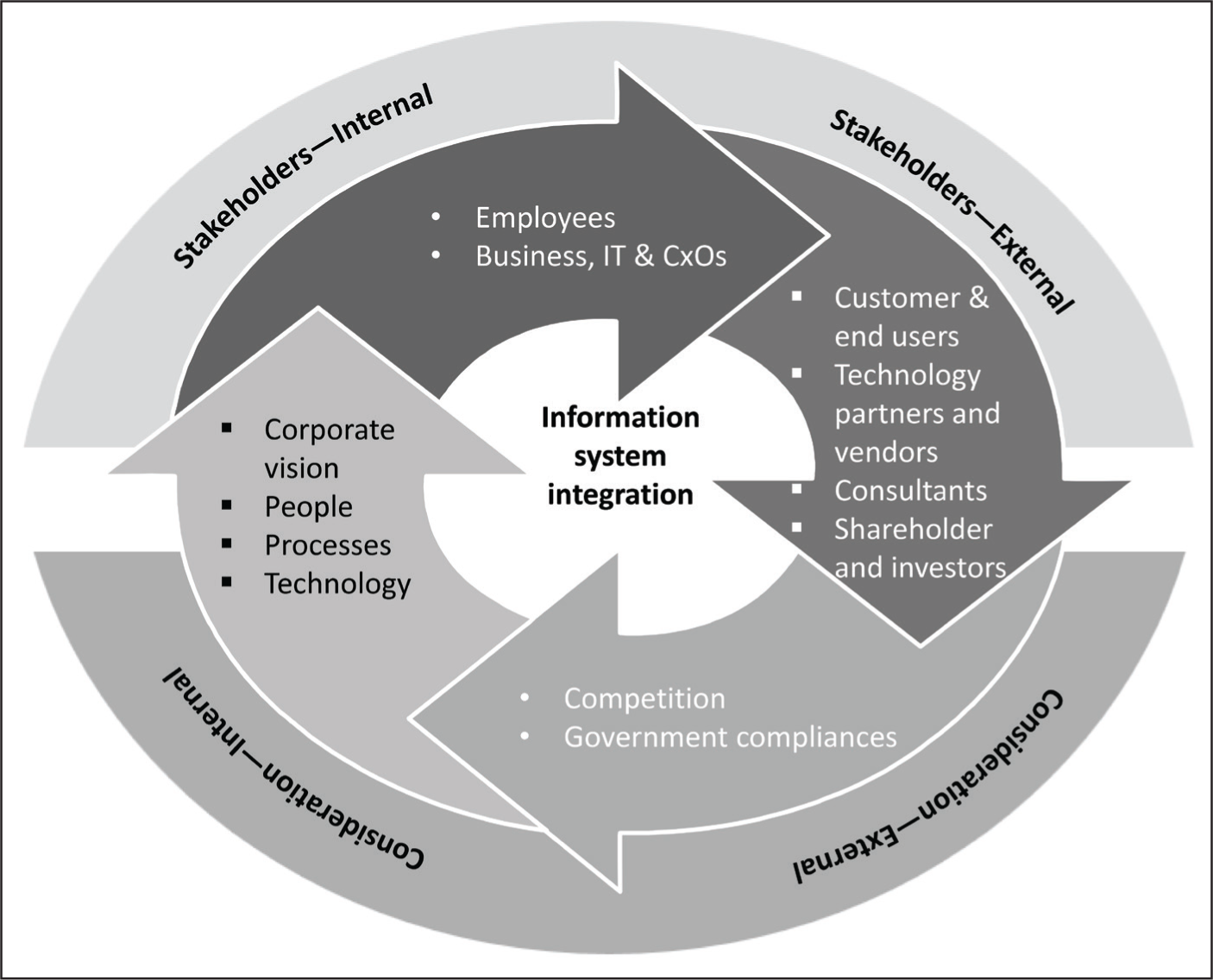
The discussion below interprets these insights through the framework presented in Figure 15, which brings together the stakeholder roles alongside IS integration considerations. Leveraging the framework, we argue how bibliometric patterns strengthen, critically review and expand the current treatment of IS in a M&A, highlighting the importance of such connections to scholarship and practice.
Stakeholders and Strategic Considerations in an IS Integration.
Synergizing Stakeholders and IS Considerations in M&A
As reflected in Figure 15, integration of IS in M&A requires engagement across several stakeholders, involving a combination of interdependent internal and external considerations. The bibliometric evidence shows an evolution from an early emphasis on ‘system consolidation’ and ‘data migration’ to contemporary focus areas such as ‘digital M&A’, ‘platform integration’, ‘IT flexibility’ and ‘organizational agility’ (Oludapo et al., 2024). This gradual transition indicates that IS integration is no longer treated as a post-merger clean-up activity but as a core driver of strategic renewal and capability development (Huacac, 2025).
This pattern aligns with the dynamic capability perspective, which views IS integration as a way for merged organizations to spot opportunities, allocate resources and adapt their capabilities to change (Teece et al., 1997). More recent studies suggest that IS integration also supports adaptability and innovation, especially through modular system designs and platform-based coordination (Lim et al., 2024; Öztürk et al., 2024).
Further, terms such as agility, ecosystems and governance exhibited frequent co-occurrence, suggesting that post-merger IS integration is now closely tied to strategic responsiveness rather than being confined to operational consolidation (Marzi et al., 2025).
The stakeholder-consideration framework therefore stresses the complexity in IS integration, requiring focused coordination across multiple elements and deep strategic ability. The following subsections elaborate how these two dimensions converge in practice.
Stakeholders
M&A involves a wide variety of stakeholders, which include groups internal to the organization as well as those which are external. These stakeholders come with different needs and expectations, and the individual requirements need to be well understood and catered to for integration success.
Internal Stakeholders
Employees, including executive leadership, and teams across functions are central to IS integration, as they are the first to experience the operational and cultural impact. The bibliometric analysis suggests that themes around knowledge transfer, employee engagement and leadership alignment have been gaining ground, reflecting a shift towards socio-technical alignment frameworks (Ferreira et al., 2014; Henningsson & Yetton, 2011). These findings reinforce that integration outcomes depend on how effectively internal stakeholders co-create and adopt processes and systems and internalize the merged entity’s strategic intent (Eulerich et al., 2022), which is way beyond technology harmonization alone.
Executive leadership provides direction, aligning IT initiatives with corporate vision and synergy goals, while middle managers and project teams operationalize this alignment through communication, change management and process harmonization. Emergence of clusters around ‘communication’, ‘change management’ and ‘organizational learning’ indicate a growing recognition of human factors as critical elements of post-merger performance aligning with the socio-technical systems theory and extending it to the digital M&A context (Oludapo et al., 2024).
External Stakeholders
Customers, technology partners, consultants and investors shape integration outcomes through their expectations and influence. Bibliometric data and literature review have a wide coverage on the use of external partners to support IS integration. This reinforces the practical reality that external actors, especially technology vendors and consultants, are integral to integration design and execution (Huacac, 2025). Furthermore, customers drive decisions on ‘what, when, and how’ systems are integrated, ensuring service continuity and user experience, while shareholders and investors assess integration progress through the lens of value realization and risk control (Marzi et al., 2025).
The bibliometric evidence supports this stakeholder interdependence by highlighting a cross-disciplinary fusion of themes, which includes governance, risk management, change management and strategic IT alignment. Thus, IS integration in M&A gets deeply embedded within the broader M&A governance framework, shifting the view of IT from a support function to a deliberate forward-looking mechanism for controlling and coordinating activities in the merged organization (Lim et al., 2024).
Considerations for IS Integration
Just like we have internal and external stakeholders, our analysis has identified considerations to be internal as well as external. These need to be evaluated adequately for integration effectiveness. While this dual categorization remains consistent with earlier frameworks (e.g., Alaranta & Henningsson, 2008), our findings suggest a conceptual broadening of these dimensions.
Internal considerations include corporate vision, people and culture alignment, process unification and system consolidation. A clearly articulated corporate vision lays the IS strategy and defines the level of IS integration required to realize synergy goals. The rising prominence of terms such as ‘strategic alignment’ and ‘digital transformation’ indicates that IS integration is now conceived as an enabler of strategic transformation rather than a reactive necessity (Ferreira et al., 2014; Oludapo et al., 2024).
The people dimension echoes the socio-technical interdependencies inherent to mergers. Bibliometric co-word analyses show increasing focus on ‘culture’, ‘employee trust’ and ‘organizational learning’, highlighting that integration success hinges on cultural compatibility and absorptive capacity (Eulerich et al., 2022).
Process considerations hold importance as organizations may have different processes for the same activity, and hence, M&A may demand workflow standardization and change management. However, the trend towards process agility enabling parallel system operation and modular deployment reveals that firms increasingly value flexibility over rigid standardization (Lim et al., 2024).
Finally, technological focus in IS integration has expanded beyond legacy in-house and on-prem systems to considerations around cloud migration, API connectivity, cyber security, as-a-service models and data analytics platforms, reflecting the shift towards digital-first architectures (Marzi et al., 2025; Öztürk et al., 2024). From a dynamic capabilities’ standpoint, this technological flexibility is key to supporting adaptation and innovation following a merger (Huacac, 2025), opening more opportunities for innovation for the merged entity.
External considerations include the competitive marketplace, local and global regulatory compliances along with ecosystem dependencies. The bibliometric trends show a strong coupling of IS integration and governance mechanisms, suggesting that enterprises view compliance not merely as a constraint but also as a design principle embedded into integration architectures (Eulerich et al., 2022). Furthermore, sector-specific studies particularly in regulated industries such as telecom and finance indicate that data sovereignty and cybersecurity concerns increasingly shape integration sequencing (Marzi et al., 2025).
Stakeholder-consideration Synergy
Our bibliometric findings indicate that stakeholders and IS considerations are deeply intertwined. Executive leadership defines the corporate vision and risk appetite, while mid-level executives and project teams translate the vision into process and technology choices, while customers and investors provide external feedback loops that shape integration priorities (Huacac, 2025).
This interaction aligns with the multi-level alignment model of post-merger IS integration (Henningsson & Yetton, 2011) and expands it by incorporating agility, ecosystem dependencies and digital governance as emerging dimensions (Lim et al., 2024; Öztürk et al., 2024). Bibliometric mapping highlights clusters around digital ecosystems, capability orchestration and integration strategy, indicating that firms increasingly use integration to strategically redefine themselves rather than merely consolidate (Marzi et al., 2025), treating IS integration M&A as an opportunity for innovation and ushering business agility.
The framework in Figure 15 encapsulates this synergy, depicting how stakeholder engagement and IS considerations converge to influence integration outcomes. It emphasizes that effective IS integration is not merely about application consolidation but about larger strategic alignment and stakeholder engagement. Successful integration thus depends on a delicate balance between vision and adaptability, between technological consolidation and innovation agility (Oludapo et al., 2024).
Theoretical and Practical Implications
Our analysis shows the field of research addresses theoretical domains, including IS, strategy and organizational studies, but these are mostly independent developments. The above fragmentation has hampered cumulative theorization and limited the ability of practitioners to provide actionable guidance. The literature review contained in the study deconstructs the patterns of bibliometrics by presenting the interpretation of literature based on both developed and emerging trends, thereby shifting the form of study to an explanation of IS integration as a socio-technical subject driven by governance, timing and contingency of situation. Such an interpretive perspective is consistent with the methodological advice on how to translate bibliometric clusters into constructs, mechanism and research propositions (Lim et al., 2024; Marzi et al., 2025; Öztürk et al., 2024).
These changing themes indicate a shift from IS for operational efficiency to IS for strategic flexibility. Based on this, we propose IS to be looked through three lenses, namely dynamic capabilities, social technical alignment and governance mechanisms.
The dynamic capabilities approach outlines how the enterprises feel, grasp and re-architecture the technological and organizational assets with the aim of generating post-merger advantage (Ferreira et al., 2014; Huacac, 2025). The socio-technical alignment lens focuses on the interdependencies between human and technology that define the integration performance, which are culture, learning and trust, as the mediators of realization of synergy (Eulerich et al., 2022). The governance system view integrates the concept of control, risk and compliance balancing in environments of multi-stakeholder total control (Marzi et al., 2025). Collectively, the views support earlier conceptualizations in the explanation of why outcomes of integration differ in situations and the role that stakeholder coordination, time and industry-specific considerations play in the value creation for the merged entity. In this case, IS integration is not only a functional process but also a multi-dimensional ability that ties strategy, structure and systems.
From a theoretical standpoint, this study pushes existing frameworks on post-merger integration further by showing that IS integration is central to strategic renewal, rather than being limited to a technical function. It combines dynamic capabilities with socio-technical and governance perspectives to show that effective IS integration depends on cultural alignment, robust data governance and regulatory compliance. This integrated view positions IS integration as a key mechanism for organizational transformation, connecting technology architecture with leadership intent, stakeholder behaviour and adaptive learning (Lim et al., 2024; Öztürk et al., 2024).
From a practical viewpoint, the results offer practitioners and policymakers practical advice. The significance of timing and sequencing is supported by bibliometric data that show that early IT engagement in the due diligence process increases the synergy realization after the close (Oludapo et al., 2024). Sectoral differences also matter as technology-focused industries prefer the use of modular API-based integration architecture that supports agility. Regulated sectors such as finance and telecommunication follow a compliance-first strategy (Eulerich et al., 2022). The stakeholder-consideration framework helps a practitioner to recognize the possible areas of value loss, culture mismatch, failures of data governance and delayed stakeholder expectations. The identification of these points of interaction makes leaders able to craft out integration road maps that not only make technical sense but also drive long-term strategic goals. IS integration in M&A is therefore a multi-dimensional strategic initiative that has managerial implications across technology, organizational processes and human dynamics.
In summary, the theoretical synthesis and practical recommendations offered by this study show that IS integration in M&A is a strategic balancing act requiring alignment across technology, organizational processes and human factors. By combining bibliometric evidence with conceptual reasoning, the study moves beyond simply describing data to explaining why observed patterns matter. This provides both scholars and practitioners with a more integrated perspective on IS integration as a powerful lever for post-merger success and long-term digital transformation.
While the discussion above highlights the study’s theoretical and practical influences, it is also necessary to acknowledge the methodological boundaries that shape this study. The next section outlines the key limitations of this research.
Limitations
Although the bibliometric analysis provides valuable insights into how IS integration research in M&A has developed and is structured, some limitations need to be noted. As Wallin (2005) cautions,
it is tempting to substitute these quantitative estimates with definitive, undifferentiated statements about scientific quality. However, a true assessment of scientific quality is not obtained just by analysing the publications’ citation impact but ought also to include peer review of the societal effects of research. (p. 11)
First, bibliometric indicators such as co-citation patterns, while useful in identifying intellectual structures, may underrepresent emerging research, since recently published articles often have limited citation counts. Second, the ‘index keywords’ automatically generated by Scopus, though generally accurate, at times bring up peripheral documents that contain the main search terms but are thematically misaligned with IS integration in M&A, thereby diluting the effectiveness. Third, keyword ambiguity also poses challenges; for example, terms such as ‘acquisition’ may appear in different contexts (e.g., knowledge acquisition or customer acquisition), thereby requiring interpretive caution. Fourth, the analysis relies solely on publications indexed in Scopus. While Scopus was chosen for its comprehensive bibliographic metadata and a wide coverage of publication outlets (Visser et al., 2021), research could be broadened by including data from WoS.
Beyond these limitations, the study offers a strong, factual point of view that covered four decades of academic literature. The possible effects of these limitations are reduced with the wide scope of the data set and the methodological rigour used. Notably, the results present a strong background to the more specific, qualitative or mixed-method studies, which could contribute to the advancement of the theoretical and practical insights into IS in M&A.
Conclusion
In the present-day business environment, M&A continues to remain the key lever for firms to pursue growth and competitive advantages. The role of IS in M&A has also been evolving as there is massive reliance on digitization, automation and autonomy in running businesses. IS has moved beyond pure operational benefits but is also contributing to business agility and data-driven decision-making. Emerging technologies, new operating models, the inclusion of AI and cybersecurity, among others, are key considerations that need to be dealt with to achieve the synergies of the M&A and have sustainable growth.
We studied the changing trend over 40 years of research in the field and argue that the evolving business landscape requires IS in M&A to be evaluated beyond a technology-only initiative. Rather the domain has a much wider implication for enterprises engaged in the M&A and the impact cuts across different organizational functions. Hence, IS integration in M&A needs to be planned for carefully keeping in perspective the challenges and opportunities available in the evolving business landscape. Considering the wide implication of this subject on the industry, we have also identified research gaps and emerging themes, which calls for deeper research on how emerging technologies, people dynamics, changing business models and agile architectures reshape the boundaries of post-merger IS integration.
Footnotes
AI Use Declaration
We have used the following AI tools in the preparation of the article:
Copilot: For improving representation Grammarly: For grammar validation Turnitin: For similarity check
Declaration of Conflicting Interests
The authors declared no potential conflicts of interest with respect to the research, authorship and/or publication of this article.
Funding
The authors received no financial support for the research, authorship and/or publication of this article.