






Abstract
In recent years, land grabbing has become widespread in Latin America, following similar trends in Africa. Multilateral agencies have sought to explain this phenomenon by arguing that these investments in land are driven by the rich endowments of natural resources of the countries in the region. This article argues that this explanation is insufficient: the rich endowment of natural resources in Latin America cannot explain the rising transfer of land to foreign investors, as if it were a natural curse. By contrast, the deepening of development models based almost exclusively on the exploitation of these resources seems to be the key, such that the role of states becomes essential to the explanation. In fact, the emergence of many self-proclaimed ‘progressive’ or ‘left’ governments in the region has not reversed the established structural dependency, based on an extractivist development model, but has deepened it.
Introduction
After the 2008 global crisis, concerns emerged about a phenomenon that had first manifested itself in many African countries: ‘land grabbing’. This phenomenon refers to the acquisition, whether by purchase or lease, of large expanses of land by foreign investors, state or private. In Latin America, concerns about land grabbing grew around 2010, with a regional report prepared by the Food and Agriculture Organization (FAO) (Borras et al. 2011). Land grabbing in Latin America is a new tendency in an already highly concentrated land tenure structure, established since colonial times.
The process of land grabbing in Latin America has some features that differentiate it from most experiences elsewhere, including Africa (Borras et al. 2012). A remarkable difference is that ‘flex crop’ production—that is, production of crops that have multiple and flexible uses, like fuel and human or animal food—was established in Latin America since the late 1990s, thus predating African land grabs for such crops. The emergence of many self-proclaimed ‘progressive’ or ‘left’ governments in the region has not reversed the structural dependency on natural resource extraction, but in fact it has deepened it. Although such governments have introduced some variations to the extractivist development model, such as a greater role for the state, they are deepening processes variously termed as ‘new extractivism’ (Gudynas 2009), ‘commodities consensus’ (Svampa 2013), ‘post-neoliberalism’ (Sanmartino 2010) or ‘rentier populism’ (Arenas 2010). What these authors indicate is that this export-led development model has become the funding basis for many of the social policies implemented by these governments, such that, instead of questioning the external integration of Latin American countries as primary commodity producers, they have deepened these relationships with the justification that the new extractivism is a necessary condition for development and poverty reduction.
In explaining the new land grabs, some authors have classified countries in quite simplistic ways, such as, ‘land grabber countries, poor in natural resources’ and ‘land grabbed countries, rich in natural resources’ (Deininger and Byerlee 2011). On this basis, they have argued that foreign land investments would only be directed to countries that are rich in natural resources, particularly fertile land and water. The present article assesses whether this explanation is sufficient to understand the ‘direction’ of the current land grabbing in Latin America. Our hypothesis is that the rich endowment of natural resources in Latin America cannot explain the increasing transfer of land to foreign investors, as it presents the problem as a ‘natural curse’, to which policy should only stand aside. On the contrary, the deepening of development models based almost exclusively on the exploitation of natural resources seems to be the key to understand land grabbing, which in turn raises essential questions as to the role of the state.
This article will first present a brief overview of the different development models in Latin America and the characteristics of agrarian structures in some countries. Then the main causes of land grabbing worldwide will be presented, followed by a discussion of the ‘direction’ of land grabbing, and, finally, by an assessment of the explanatory variables discussed.
Agrarian Structure and Development in Latin America
The economic history of Latin America, from its insertion in the capitalist world market to the present day, presents certain continuities which are repeated in every stage of its development. These continuities characterize the ‘fundamental features of the development’ of the countries of the region. These continuities are: (i) the dependence on raw materials and the exploitation of natural resources; (ii) the existence of a high proportion of surplus labour (first in the countryside and later in the cities); (iii) the limited relevance of the internal market; and (iv) a very high concentration of wealth and income (Ocampo 2004).
The earlier assessment implies that all the countries considered in this study share some fundamental characteristics that have not changed over time. These relatively fixed facts, across countries and time, constitute what in the early 1970s became known as ‘dependence’, in the seminal work of some local scholars (Cardoso & Faletto 1986; Dos Santos 1998; Gunder Frank 1979; Marini 1973). The region has a dependent relationship within the global capitalist system, which is expressed in various ways, including the aforementioned characteristics (Osorio 2004, 2012). This dependent condition was later conceived in a global schema by the world-systems approach (Wallerstein 1995).
However, despite the continuities, it is possible to identify stages, each with its own peculiarities. Broadly speaking, most of the scholars agree that there are three distinguishable stages in the long twentieth century: (i) the agricultural export stage, from the late nineteenth century until 1930; (ii) the import-substitution industrialization stage, also known as state-led industrialization, from the 1930s until the late 1970s; and (iii) the neoliberal stage, from late 1970s until the present (Basualdo 2007; Graciarena 1976; Ocampo 2004; Osorio 2008; Pinto 2008; Valenzuela Feijóo 1990). 1
In this sense, every country we are considering stands within the same pattern of reproduction of capital. Overall, we can establish that this general pattern is based on exploiting static comparative advantages. The recent neoliberal reforms, undertaken in varying degrees and with different timing in each country, but in all cases guided by trade liberalization and general opening to the global market, fostered a process of global market integration that undermined domestic mediations. This made it difficult for non-competitive activities, by international standards, to survive, even if they were relevant in terms of employment or sovereignty. Thus, a triple process of concentration of production, centralization of property and increased foreign ownership occurred. This means that production is largely controlled by fewer foreign firms, while it also tends to be oriented towards external markets, thereby becoming also more dependent on global demand.
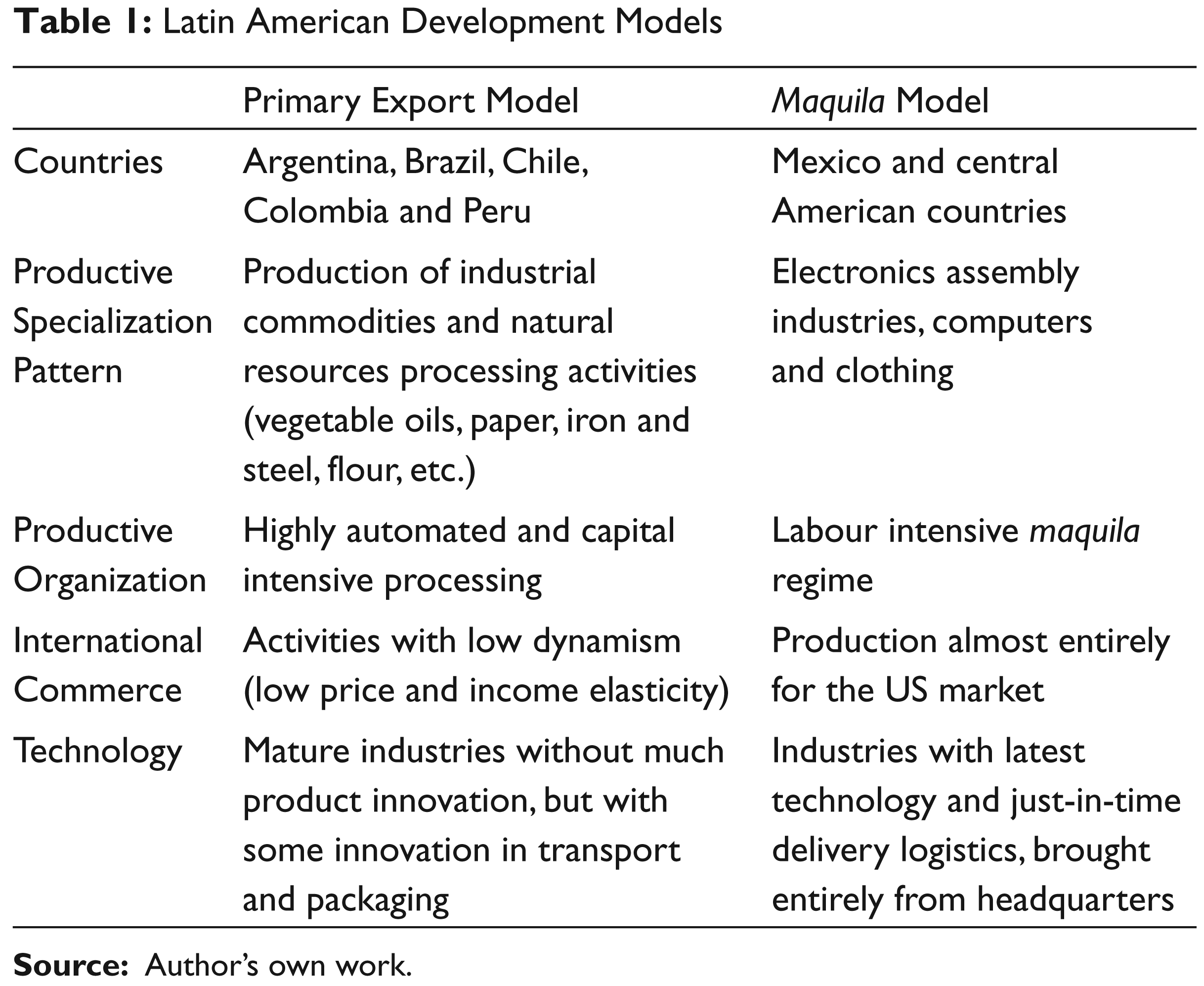
Although the whole region followed in the same direction, static comparative advantages have differed in each case, resulting in two major variants of global market integration (Katz 2000; Katz & Stumpo 2001). On the one hand, South America appears to have shifted towards natural resource processing activities, those which produce mainly industrial commodities such as vegetable oils, pulp and paper, iron and steel and fish meal, oriented towards European, North American and Chinese markets. On the other hand, Central America and Mexico have tended towards electronics assembly industries, computers and clothing, primarily destined for the US market.
The first variant, which here is called the primary export model, focuses on the intensive use of natural resources, resulting in highly automated factories, with a high capital and low labour production function. They are mature industries that do not require many engineering efforts. The leading agents in this case include large foreign business groups and some state-owned enterprises, such as Cargill, Bunge and Born and PDVSA and Petrobras.
The maquiladora is the second variant. It consists mainly in assembly factories, where imported intermediate inputs are gathered and assembled by the highly intensive use of labour. The newest technology can be found in the maquila model, providing sophisticated logistics and quality controls, precisely because production is destined for the US market. Transnational corporations are the main factors in this process. 2 The main differences between the two models are shown in Table 1.
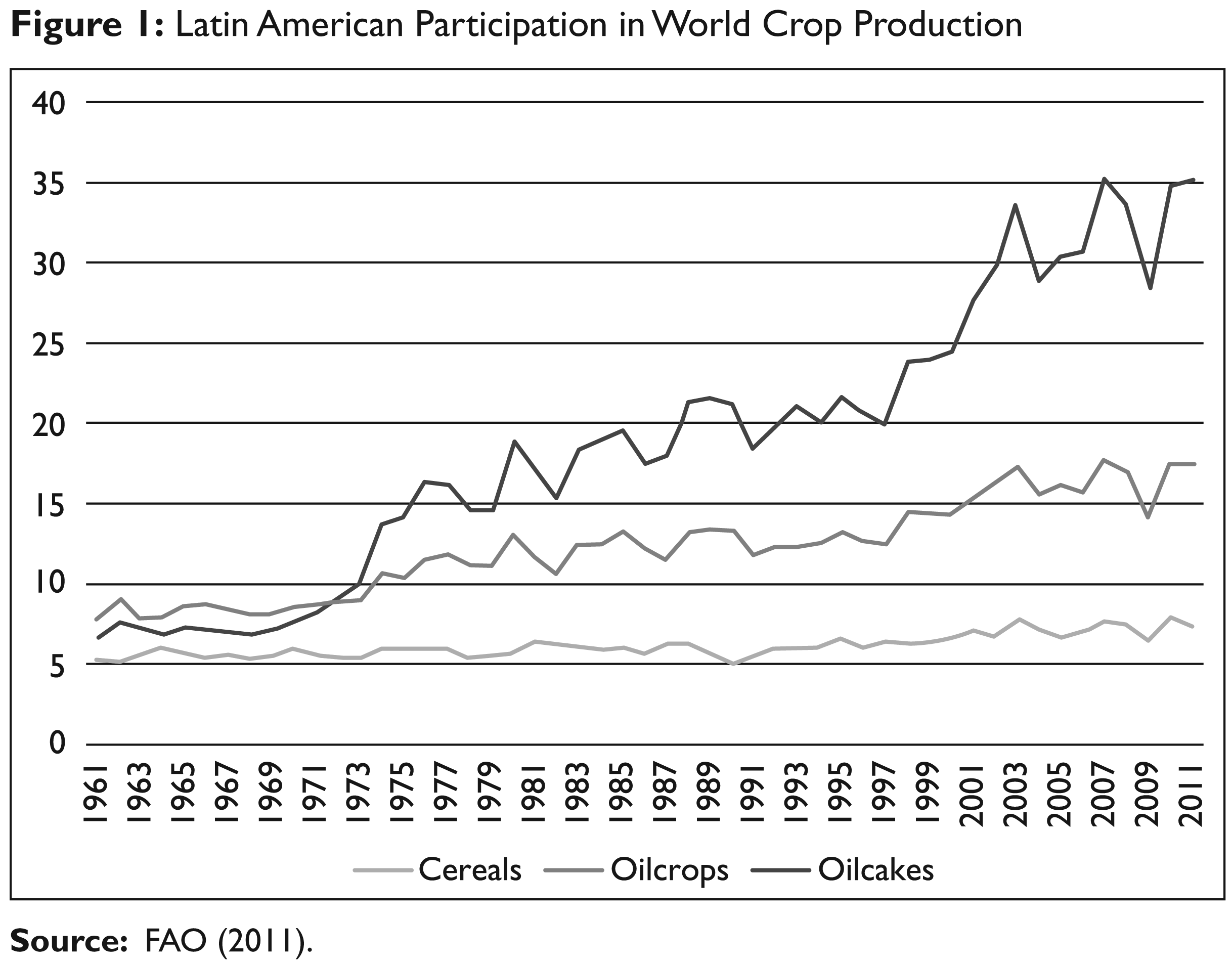
It follows that the primary exporting model countries have been the ones mainly affected by the changes in the structure of land tenure since the 2000s. Since the beginning of the 1980s, Latin American countries, mainly the South American ones, began to specialize in the export of food and raw materials, as a result of market liberalization. Figure 1 shows the increasing participation of Latin America in world production of selected crops over 50 years, until 2011 when it produced 35 per cent of total oilcakes, 17 per cent of oil crops and 7 per cent of cereals.
Latin American Development Models
The agrarian structure of Latin America has been characterized by high land concentration, ever since colonial times. The land colonization mode based on rewards to military personnel rather than the one that was carried out in the United States (a system based on the delivery of small parcels to immigrants) marked a history of inequality in the subcontinent which remains until today. However, since the advent of neoliberalism and the implementation of structural reforms, this trend has been deepened. Table 2 shows the number of farms by scale of size in four selected Latin American countries and the change that occurred between agricultural censuses conducted in each country. 3
As is evident, a strong concentration of land occurred between the 1980s and 2000s, in all countries. The fall in the total number of farm units ranges from 3.5 per cent in Paraguay to 21.4 per cent in Argentina. Moreover, as farm units below 100 ha declined in all countries, a decline ranging from 10 to 30 per cent, the number of large farms increased significantly, such that in the Uruguayan case, for instance, farm units above 10,000 ha more than doubled.
Land Tenure Structure for Selected Latin American Countries
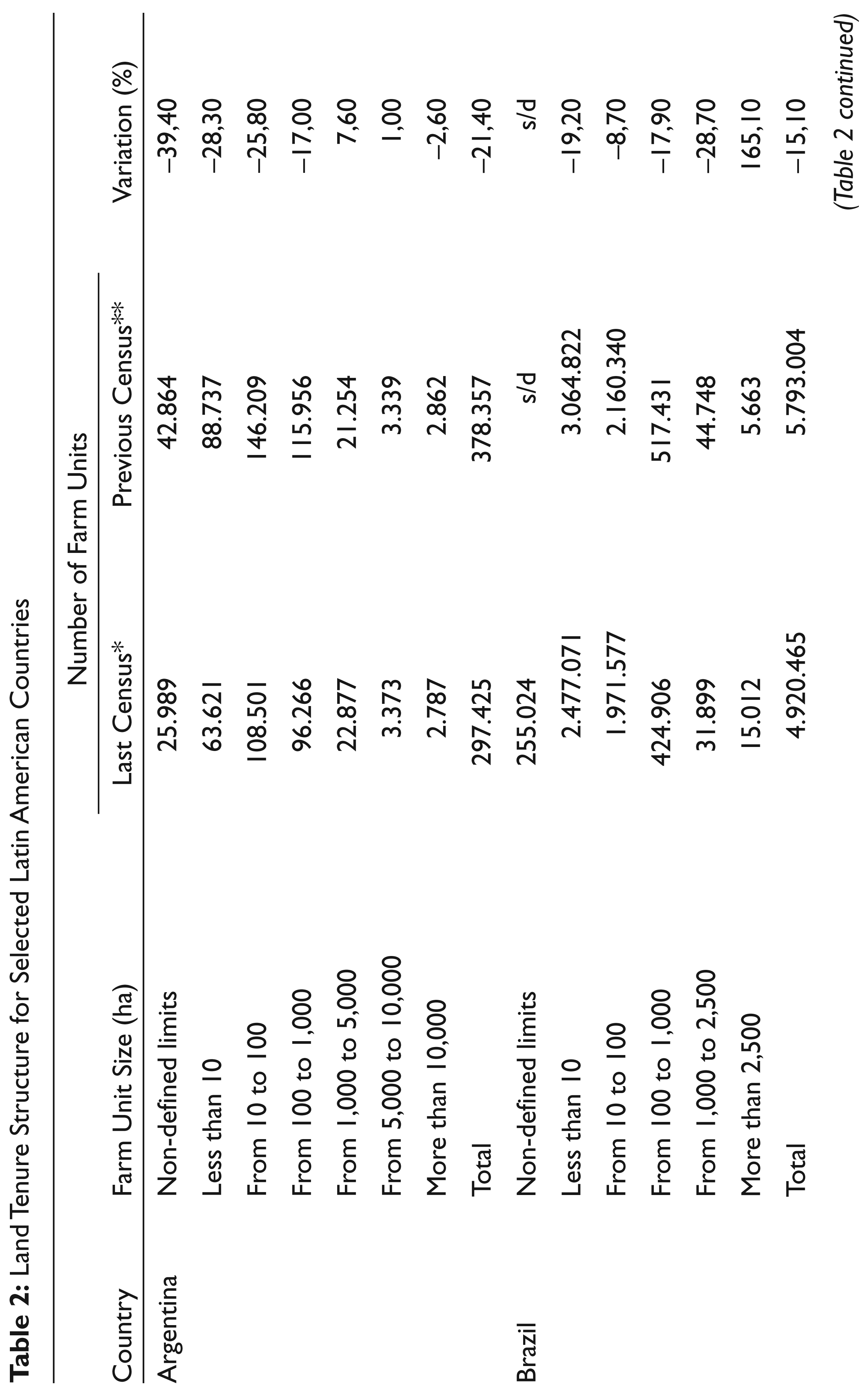

**The previous census year corresponds to those used by Neiman et al. (2001).
In recent years, the escalating prices of raw materials have been favourable for producers in some countries in Latin America. However, the reasons for the price changes have multiple origins, including partly the higher demand by China and India, which will increasingly become unstable as the global economic slowdown ensues. Thus, there is no reason to believe that the favourable conditions of recent years will continue (Puyana & Costantino 2012). Since the food price increases, which began in the 2000s, the concentration of land in Latin America has acquired a novel feature: land grabbing by foreign investors. In the next section, we will show the drivers that have caused this phenomenon at the global level and the reasons why these investments are targeting Latin America.
The Drivers of Land Grabbing
Scholars usually group the explanatory drivers of land grabbing in two groups: those based on economic choices and those related to public policy.
Among the first group, it is often argued that it is the rise in the prices of food and raw materials experienced in the 2000s which has made investment in agriculture increasingly profitable. According to Cotula (2012), these investments include the entire agricultural value chain, from the direct control of the land to the provision of services or the production of fertilizers. Another driver that could be considered primarily economic is the financialization of agriculture, whereby land has become an investment option not only for agribusiness companies but also by financial operators interested in increasing returns and reducing risks (Cotula 2012; High Level Panel of Experts [HLPE] 2011). The reasons for this financialization are related, on the one hand, to the increase in land values, due to the increase in food prices mentioned earlier, and, on the other hand, to the search for portfolio risk reduction after the 2008 crisis. Land is seen, in this sense, as a safe asset with higher expected returns. 4 The GRAIN organization has released a list of land investments in pension funds from public and private high-income countries, such as, the United States, Denmark, New Zealand, Switzerland, Germany and the United Kingdom, showing the enormous dynamism of this activity (GRAIN 2012).
Among the second group of drivers, related to public policy, the action of some governments, such as China and Saudi Arabia, is considered to be relevant in response to the problem of food security in the face of food price volatility. In this regard, the governments of some countries support land investments abroad (either directly from public finance or through private investments) to ensure the supply of commodities such as soybean, palm, rice, wheat and sugar (Borras et al. 2011; Cotula 2012; HLPE 2011). In addition to food security, public policies to support investment in overseas land may also be motivated by considerations about business opportunities (such as, China’s ‘going global’ strategy to create business opportunities outside the country) or geopolitics (such as, Chinese investment in Southeast Asia or Libyan investments in sub-Saharan Africa; Cotula 2012). A final political strategy that has a great influence on the global land grab is the mandatory requirement set by the European Union to replace 5 per cent of the fossil fuels used for transportation with bio fuels, by 2020 (BBC 2012; Swinnen et al. 2006).
These are the main explanatory factors found in the literature to explain why the problem of land grabbing arose. Strikingly, they all refer to the incentives presented to land grabbers (governments and companies) as they make investment at the global level, but they cannot distinguish why investors target the land of certain countries and not others (and why governments or individuals in recipient countries also adopt the strategy of the counterpart). The factors listed above refer to the underlying causes of the land grabbing phenomenon itself, but do not explain why such land is grabbed in Ethiopia, Sierra Leone and Argentina and not in Canada, the USA and South Africa. Despite the importance of this question, there is very little research on it.
The Reasons for the Land Grabbing ‘Direction’
As noted earlier, the purpose of this article is not only to investigate the causes that explain why the phenomenon of land grabbing arose (which is already very well explained in the literature) or its impact on recipient countries but also the reasons that explain why investors choose certain countries, and not others, to acquire land. That is, we will try to explain the land grabbing ‘direction’.
Natural Resources: The Sole Explanatory Factor?
According to Deininger and Byerlee (2011), in their paper for the World Bank, countries that attract the interest of investors are those where there is abundant land. They argue that land grabbing is oriented to countries with adequate available land (as in many Latin American countries), and proceed that if in these cases property rights are secure, markets function well, and areas of high social or environmental value are effectively protected (possibly using market mechanisms such as payments for environmental services), the role of the public sector will be primarily regulatory.
The use of ‘natural resource endowment’ as the sole explanatory variable of some economic and political phenomena originates in a classic discussion on whether these resources are a ‘curse’ or a ‘blessing’ for the country that owns them. The positions regarding the role of natural resources are diverse; we summarize those we consider to be most important.
First, the neoclassical theory of trade, the Heckscher–Ohlin model, states that countries have comparative advantages in those goods whose production is intensive in the factors that are relatively abundant in each country. Therefore, it will be efficient and beneficial to specialize in the production of these goods. In the same vein, one can find some Economic Commission for Latin America and the Caribbean (ECLAC) studies which insist on the potential of the natural resource-based networks as platforms for development (Marin et al. 2009; Pérez 2010). These are the theories underlying the explanations that hold land grabbing to be positive for a country’s development, based solely on the abundance of suitable land for the production of goods (in this case, agricultural goods; De Schutter 2009; Deininger & Byerlee 2011; Swinnen et al. 2006).
Second, there is a huge literature that holds that a country’s abundant natural resource endowment is necessarily a curse to its growth (Gylfason 2004; Sachs & Warner 2001). The argument is that these countries tend to grow at lower rates than resource-poor countries, as the ‘natural capital’ expels foreign capital, social capital, human capital, physical capital and financial capital. Moreover, these countries encourage corruption and diminish political freedoms. This is the ‘neoclassical’ version of the problem known as ‘Dutch disease’, whereby a country that experiences a price boom in some of its abundant resources will see its exchange rate appreciate by capital inflows which will decrease the returns of other tradable sectors, whose production will no longer be viable. These theories are the underlying explanations of land grabbing as a negative feature for a country’s development, and they also explain this grabbing as a direct result of natural resource abundance (Sauer & Pereira Leite 2011).
Finally, the structural approach denies the previous two: natural resources, in themselves, are neither a curse nor a blessing for the country that has them (CEPAL 2012; Palma 2005; Puyana & Thorp 1998; Sinnott & Nash 2010), as is demonstrated by the examples of developed economies rich in natural resources such as Australia, Denmark, Finland and New Zealand. This means that natural resources do not necessarily represent a curse but can serve as a basis for structural change. This is, in fact, a matter of economic policy. But to change the production structure it is also necessary to challenge the region’s integration into the world economy. This would modify both the orientation of financial flows to the region, as well as the fate and direction of international trade (Borón 2008; Dos Santos 1998).
The latter position on the role of natural resources for the country’s development will be the basis for the hypothesis of this work: the land grabbing ‘curse’ (or ‘blessing’) is not a necessary consequence of being a land (natural resources) rich country; the role of the state and the power of economic forces (landlords, financial groups, etc.) in these countries is essential to understand this phenomenon. The interactions between the economic orientation and the exercise of political power within the states are what give the green light to land grabbing. So, what other factors, besides the abundance of natural resources, could explain land grabbing in Latin America?
Other Factors that could Explain the Land Grabbing ‘Direction’
Although few, there are some studies that focus on why investors are directed to certain countries to acquire land.
Lavers (2012) explains land grabbing in Ethiopia as a result of the specific role played by the government to achieve political and economic objectives. Visser and Spoor (2011) found that the factors that explain land investment in post-Soviet Eurasian countries (Russia, Ukraine and Kazakhstan) include the low prices of land (10 to 15 times lower than in Argentina and Brazil), the existence of infrastructure, and the expectation that climate change will render northern lands agriculturally viable. Similarly, Hall (2012) notes that many South African producers are buying up land in other African countries financed by foreign funds, and yet they do not go to any country. They go where there is cheap land, water, labour and favourable tax conditions in order to export to markets that seem more lucrative (limited by the constraints of the funders).
In this regard, many of these studies point out the importance of both domestic producers and the receptor states in the process of land grabbing. Cotula (2012) notes that the role of domestic producers, not only as land grabbers but as intermediaries and strategic partners for foreign investors, is the continuation of a longer-term process in which national elites have played the role of land ‘concentrators’.
Regarding the role of the state, Oxfam (2013) suggests that land investors seem to choose countries with ‘poor governance’ (understood as poor state capacity to govern and decide policies), in order to maximize profits and minimize paperwork and formalities. The study measures governance through four indicators: voice and accountability, regulatory quality, rule of law and control of corruption. The result was that 78 per cent of the countries in which there were land deals between 2000 and 2011 showed scores below average in these four key indicators. In fact, in many cases, the amount of available land for investment did not appear to be a significant factor in investment decisions. According to the article, weak governance allows land grabbing because it helps investors to set aside rules and regulations that are costly and time-consuming.
Criticizing such studies that claim political instability and corruption as the explaining factors of land grabbing, Borras et al. (2012) point out that studies about African countries have treated states as ‘victims’ of the grabbing process conducted by powerful governments and foreign firms. Instead, the authors argue that states perform a contradictory task, driving capital accumulation while, at the same time, trying to maintain a minimum level of political legitimacy (for example, in the case of Argentina, this attempt to maintain legitimacy was made through the enactment of the Land Act). This contradictory role allows us to understand some reformist concessions when they occur.
In any case, we believe that weakness or corruption of states are not the factors that explain the direction of land grabbing, but are manifestations of a phenomenon that is prior in logical terms. This is what Güell (1973) calls the ‘antecedent variable’, which refers to the existence of previous factors to both dependent and independent variables; in this case the relation between the two first variables takes place only thanks to the priority of a third one. The next section presents the results of an exploratory exercise that will help us to outline an explanatory hypothesis of our problem.
Differences between Land Grabbed and Land Grabber Countries: An Exploratory Exercise
As we have mentioned in the introduction to the problem, land grabbing is a not very long-standing social phenomenon in the countries; 5 therefore, most investigations are exploratory and refer mainly to case studies (as discussed previously). One problem with these approaches is that explanations of a phenomenon for a particular case may not be generalized for all other cases. That is why we decided to conduct an exploratory test assessing whether the variables mentioned by the literature make a difference between land grabbed and land grabbing countries. If this were so, these variables could give us a first approximation to the hypotheses regarding the factors that explain the direction of land grabbing to Latin America.
The explanatory dimensions used in many of these studies relate to (i) the existence of natural resources in land grabbed countries (Deininger 1999; Deininger & Byerlee 2011; Hall 2012); (ii) the existence of infrastructure in these countries (Visser & Spoor 2011); and (iii) weak institutional and governance conditions (Oxfam 2013). We add a fourth dimension which refers to the countries’ pattern of growth (GDP, external integration and sectoral distribution), reflecting our hypothesis about the deepening of a development model based on the natural resource exploitation. 6 The variables selected for each dimension shown in Table 3. 7
Dimensions and Variables in Land Grabbing
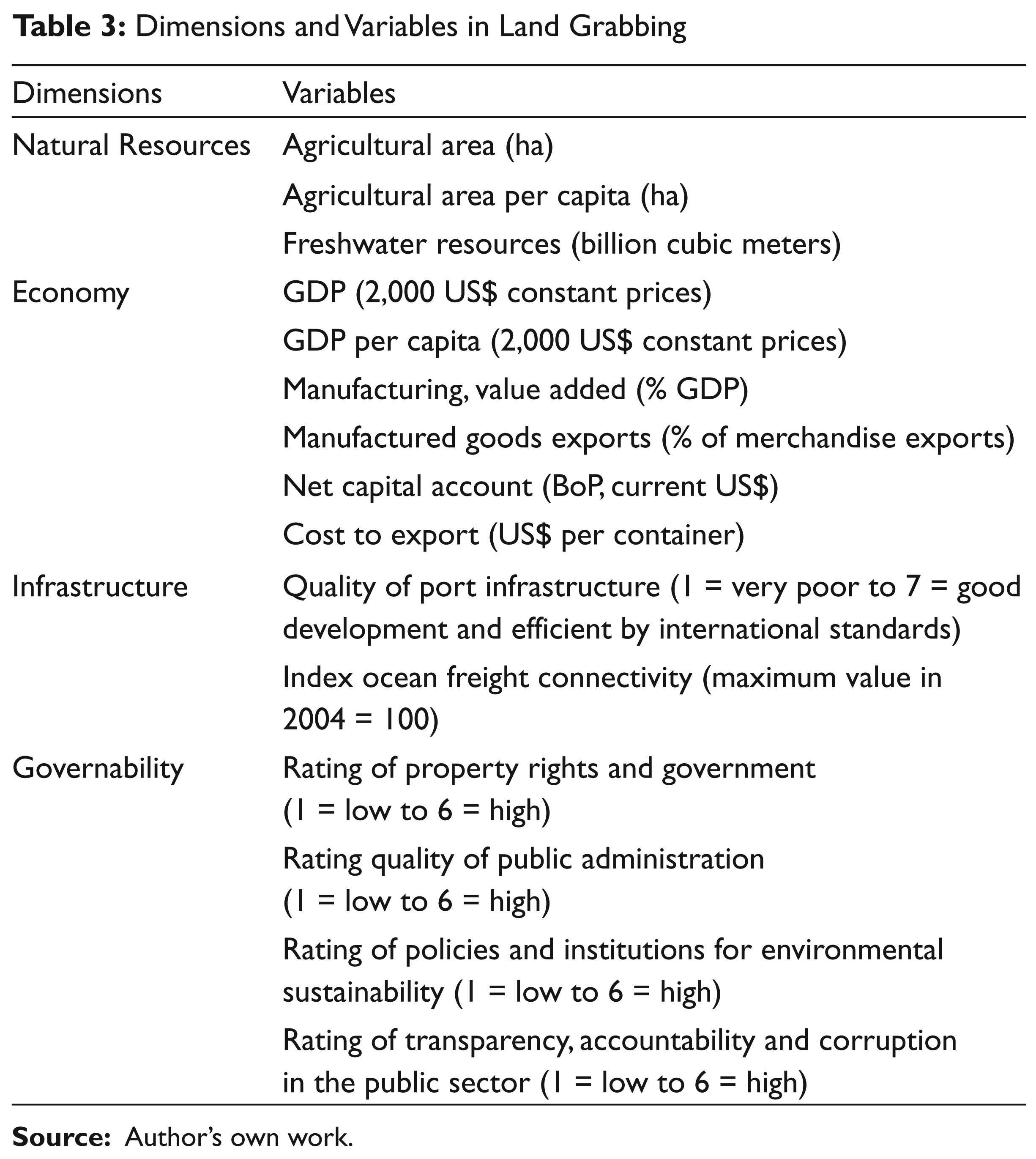
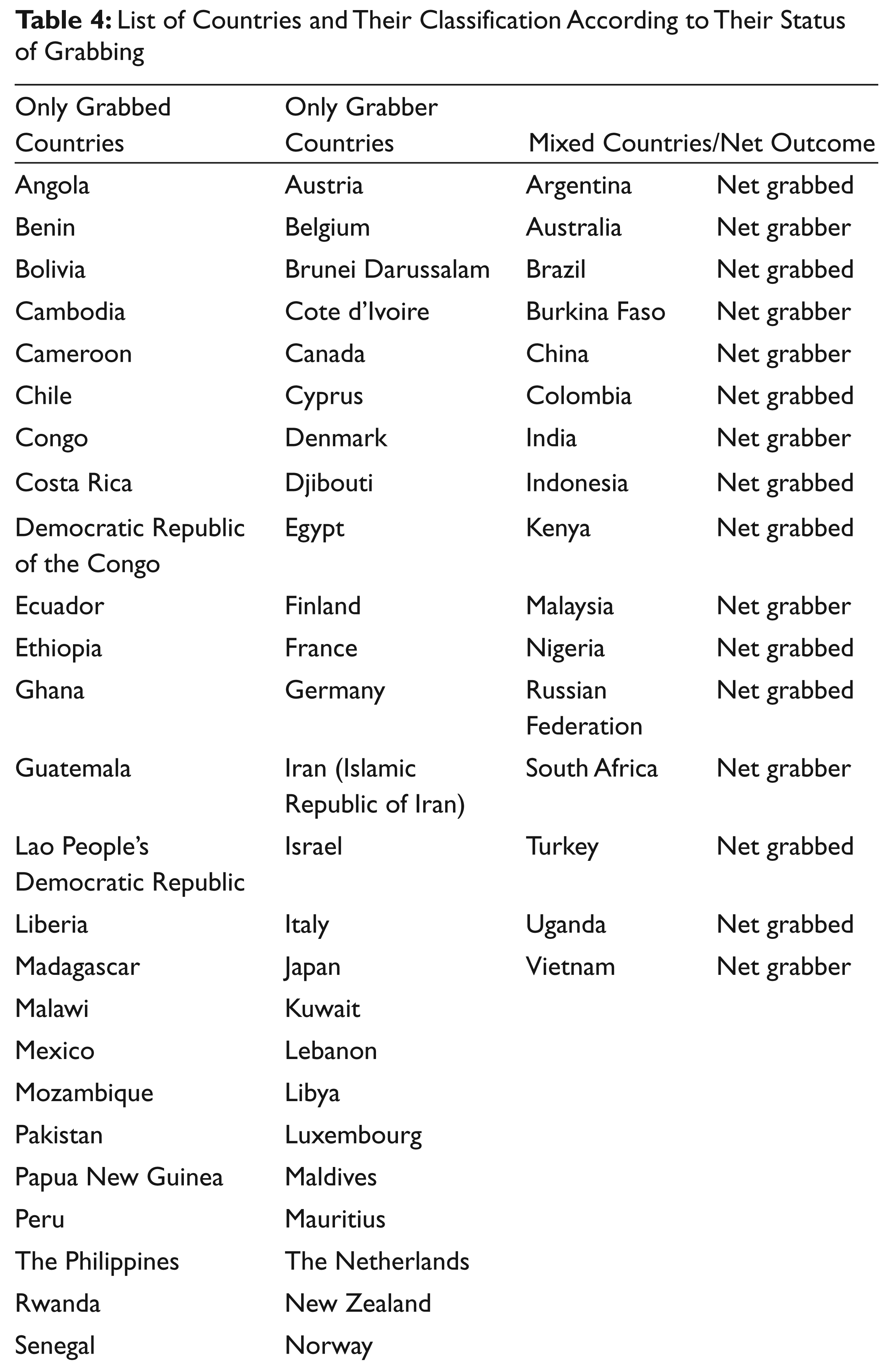
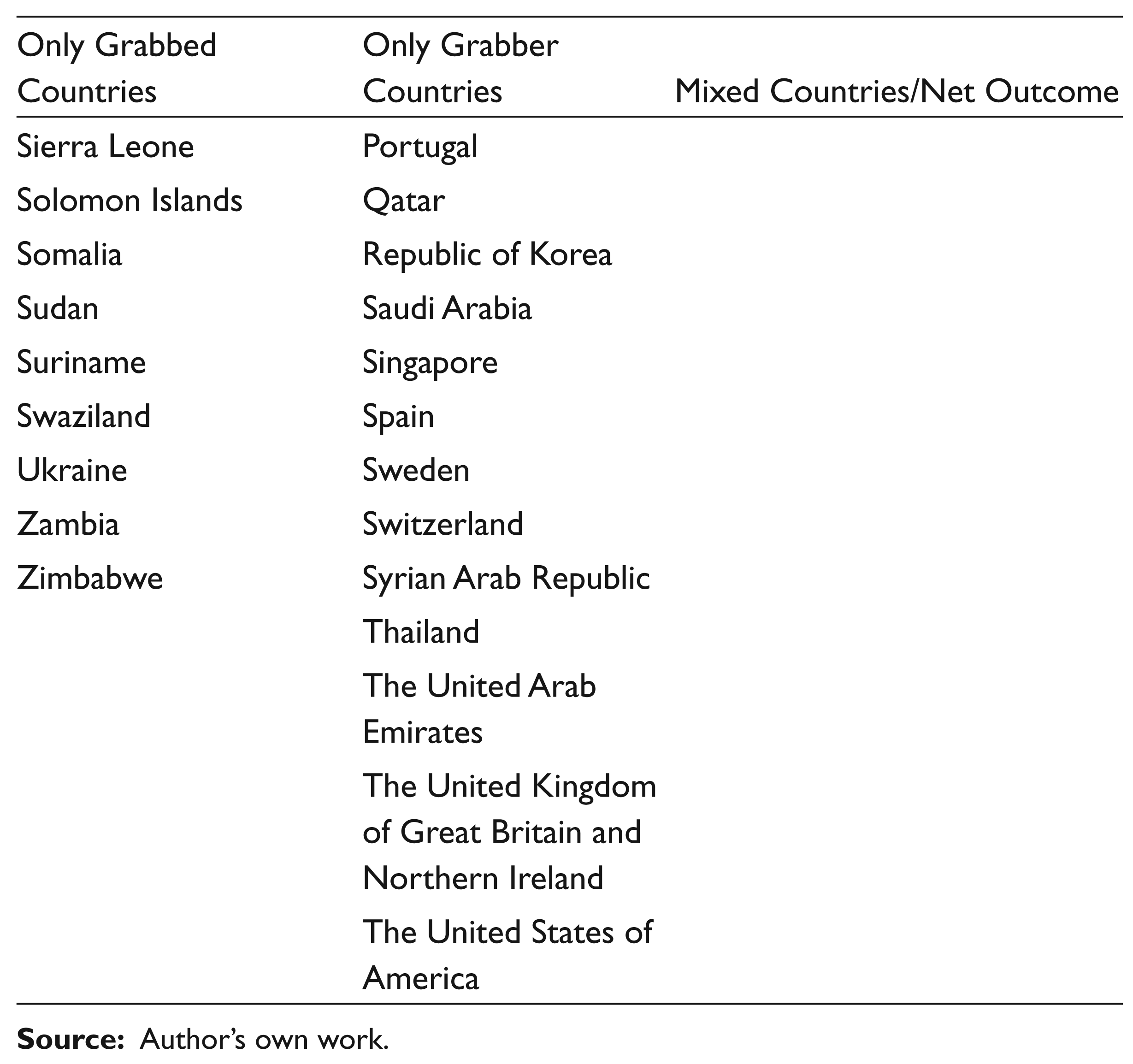
Taking advantage of the online database on land grabbing ‘Land matrix’, we built our own base including the variables mentioned in Table 3. 8 In order to analyze the database, we have clustered countries into three groups: only land grabbed countries (those that are grabbed but do not hoard land in other countries); only land grabber countries (those that are hoarders but not grabbed by other countries); and countries we call ‘mixed’ (those that are grabbing as well as being grabbed). The list of countries within the three groups is in Table 4, where we also include whether mixed countries are net grabbed or grabbers (indicated by the difference, positive or negative, respectively, between the land captured by other countries and the land captured by them in other countries).
List of Countries and Their Classification According to Their Status of Grabbing
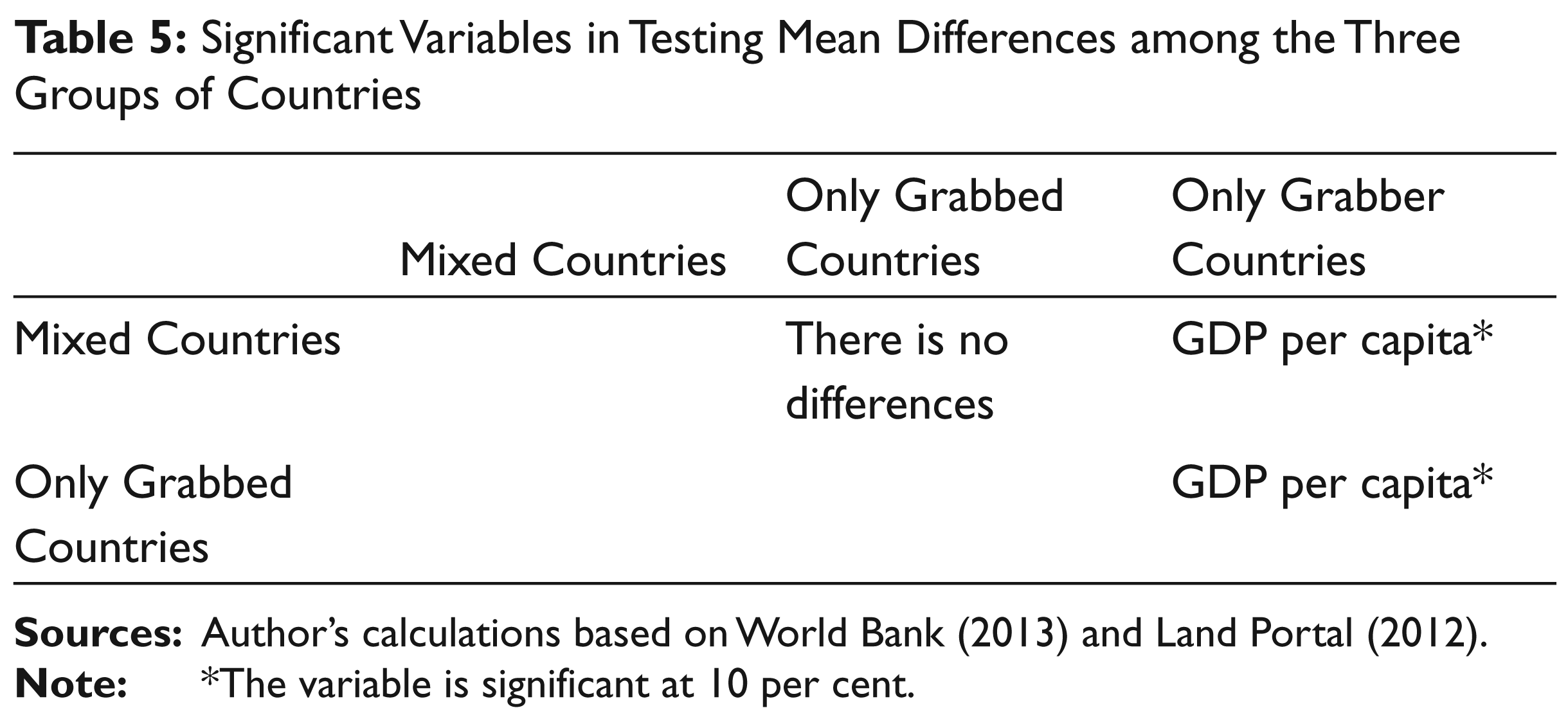
To analyze which is the difference between different groups of countries we perform several hypothesis tests of mean differences for each of the selected variables (Table 3) comparing in pairs between the three groups. The result, as shown in Table 5, is that the only variable that shows a statistically meaningful difference between the three groups of countries is GDP per capita. That is, at least in general terms, the abundance of natural resources does not appear to be significantly related to a difference between grabbed and grabber countries, as also holds for infrastructure and institutional issues. Therefore, these variables suggested by the World Bank and other case studies (see section ‘The Reasons for the Land Grabbing ‘Direction’’) do not appear adequate to explain the direction of land grabbing. As we can see here, the relative wealth of the countries would be the exception.
Significant Variables in Testing Mean Differences among the Three Groups of Countries
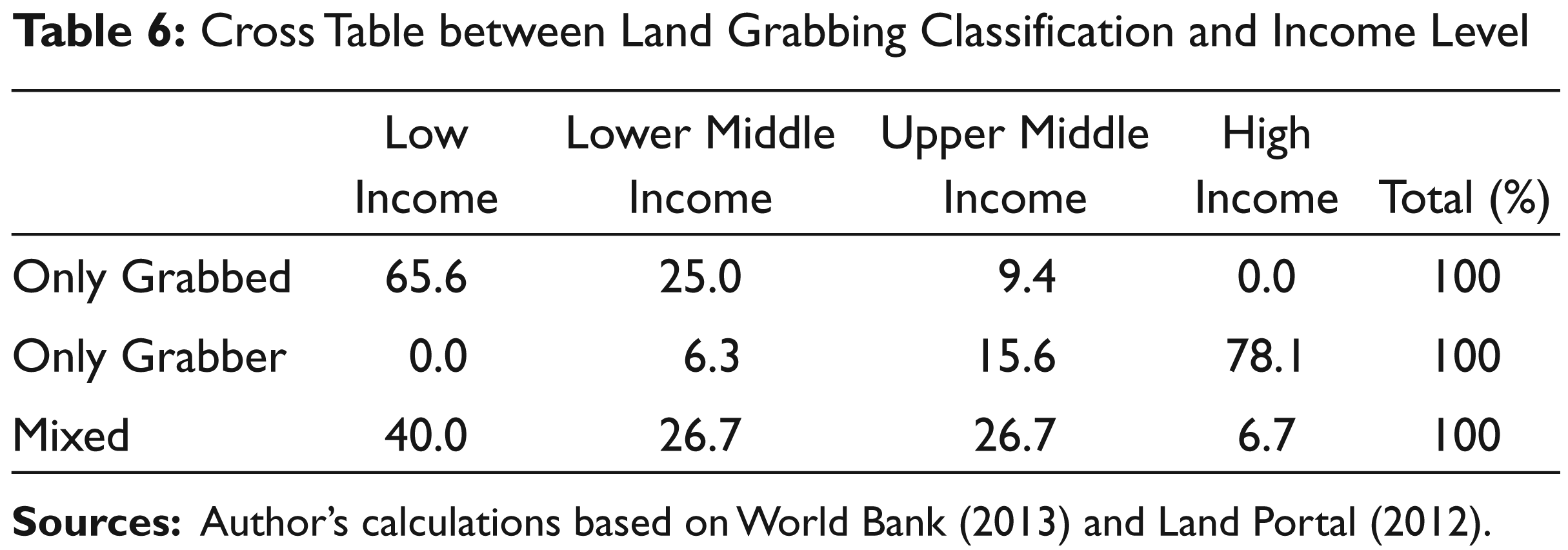
Further analysis of this variable is needed. Table 6 crosses the land grabbing classification of countries with the classification of countries according to income level (World Bank): ‘low-income’ (less than US$ 975 per capita), ‘lower middle income’ (between US$ 976 and 3,855 per capita), ‘upper middle income’ (between US$ 3,856 and 11,905 per capita) and ‘high income’ (more than US$ 11,906 per capita).
As can be seen, the difference between groups of countries according to income level is significant: from the total of countries that are only grabbed, 90.5 per cent are low-income and lower middle-income countries; on the contrary, 93.7 per cent of the only grabber countries are upper-middle and high-income countries. Meanwhile, mixed countries are slightly dispersed according to income level, but still 66.7 per cent of them are low-income and lower middle-income countries. This coincides with the findings shown in Table 4 for which there is no significant difference between countries that are only grabbed and mixed (not just on GDP but also any other variable).
Cross Table between Land Grabbing Classification and Income Level
Finally, given the substantial dispersion observed within the groups with regard to the agricultural area (the standard deviation of this variable within each group was much larger than the average), we decided to perform a new test, but this time stratifying the groups of countries according to this variable into four groups: countries with ‘very low’ agricultural area (less than 1 million hectares), countries with ‘low’ agricultural area (between 1 million and 10 million hectares), countries with ‘middle’ agricultural area (between 10 million and 100 million hectares) and countries with ‘high’ agricultural land (100 million hectares).
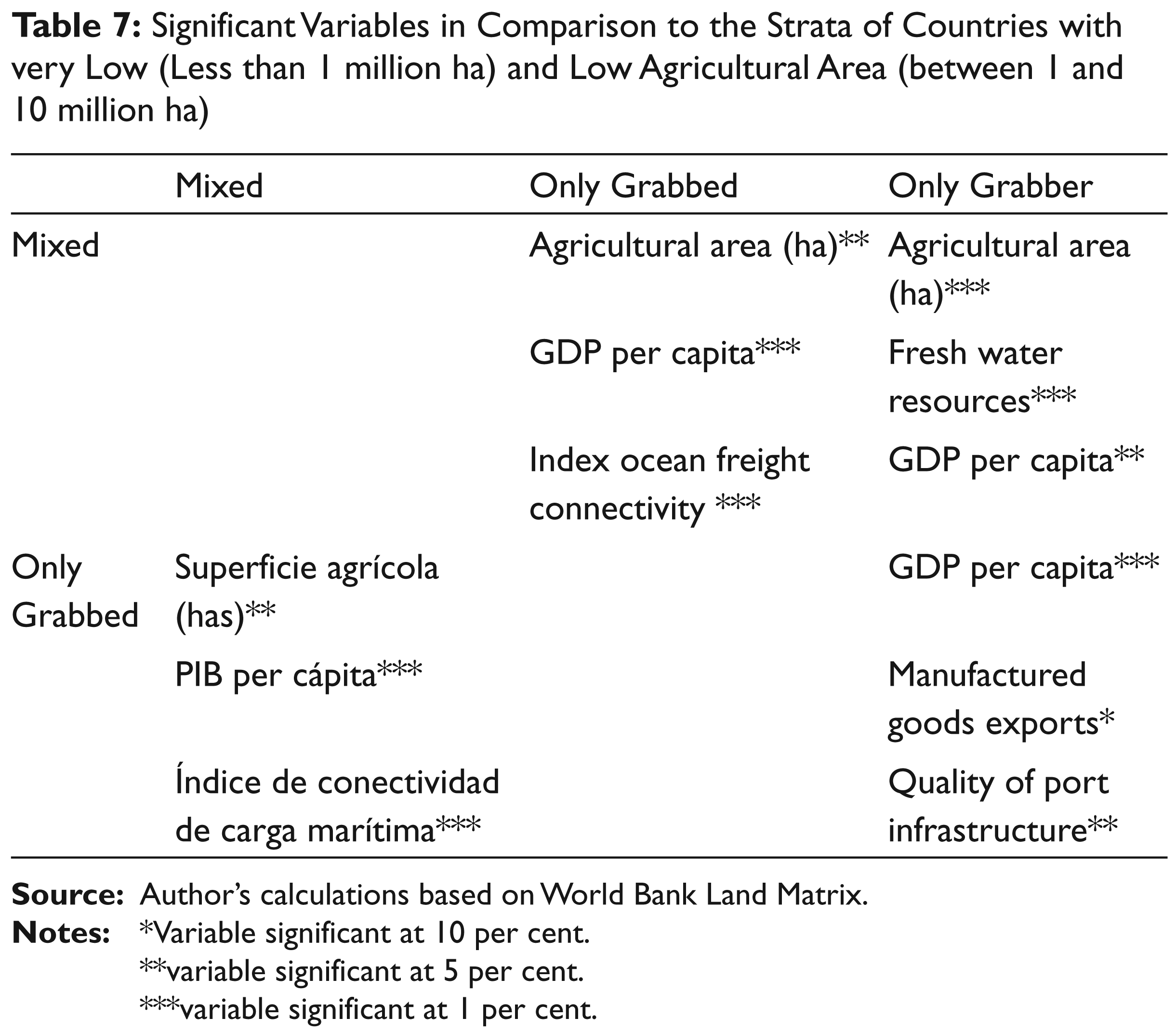
The first important result obtained from this stratification is shown in Table 7. The comparisons made in the first two layers (very low and low agricultural area) shows that there are more significant variables, besides GDP per capita, that account for the differences between countries: variables related to countries’ natural resource endowments (agricultural land and water), economic structure (manufactured exports) and the countries’ infrastructure (connectivity index or sea port infrastructure quality). This means that the World Bank’s claim that land grabbing occurs in those countries with abundant natural resources seems to be right only for these strata.
Significant Variables in Comparison to the Strata of Countries with very Low (Less than 1 million ha) and Low Agricultural Area (between 1 and 10 million ha)
**variable significant at 5 per cent.
***variable significant at 1 per cent.
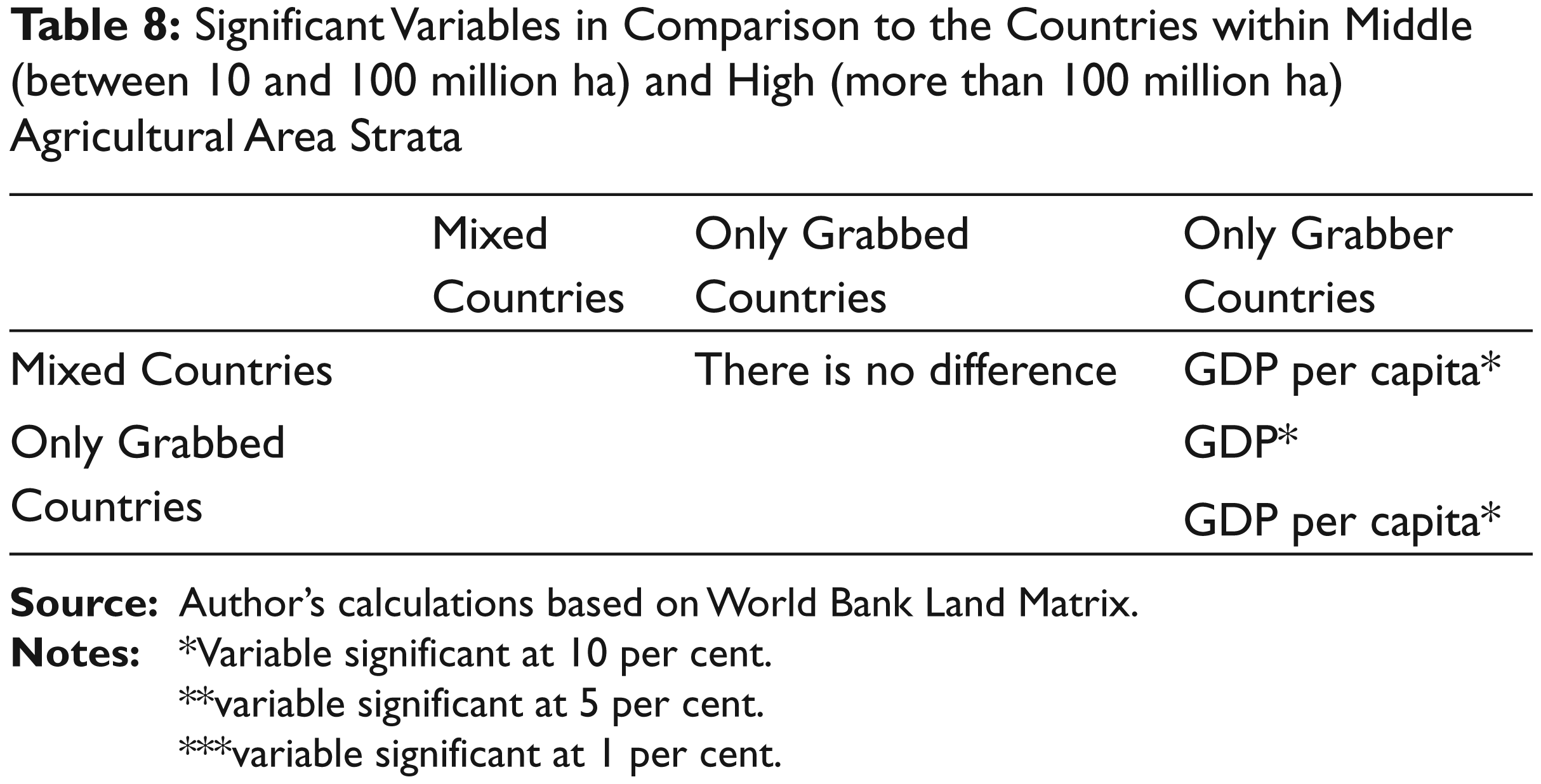
But let us have a look at what happens in the comparison of countries belonging to the higher strata of agricultural area. Table 8 shows the significant variables in the comparison between groups of countries for the major agricultural area strata (high and very high). Notice that in this case the results coincide with the first comparison made (the entire unstratified database): the only variable that makes a significant difference between countries is GDP per capita, and in this case also the total GDP.
In summary, when comparing countries with lower agricultural area we find that there are many differences between countries, not only in terms of GDP per capita, but also in terms of natural resource endowment and infrastructure. Now, with increasing agricultural area these differences are blurred, while GDP per capita is the only significant difference between grabbed and grabber countries. In short, it seems that the explanations presented by the World Bank as generalizable are only valid for the group of countries with less agricultural area; in other countries, the existence of agricultural land seems insufficient to explain land grabbing. In fact, most of the case studies are African countries that have, on average, lesser agricultural land than Latin American countries. That is, the explanation offered by the World Bank seems to have a serious error of sampling bias.
Significant Variables in Comparison to the Countries within Middle (between 10 and 100 million ha) and High (more than 100 million ha) Agricultural Area Strata
**variable significant at 5 per cent.
***variable significant at 1 per cent.
The finding that income level makes a fundamental difference between grabbed and grabber countries sheds some light on the issue of the direction of land grabbing in Latin America. While as an explanatory variable it is still very general, it may be pointing the way towards an explanation: both the level-l and form (structure) of the GDP of the countries in question are part of the development model or pattern of accumulation. A pattern of accumulation refers to a specific operating mode of capitalist accumulation acquired over a period of time and specific place (Osorio 2008; Valenzuela Feijóo 1990). This is the ‘footprint’ that capital leaves in the process of accumulation: the sectors it touches, the intensity of production, the distribution of results, the fit into global trade and finance, etc. Changes in the accumulation pattern may be correlated to changes in the social structure and the economic, political, and ideological relationships between different social subjects. ‘In this regard, the policy variable identification is critical to properly understanding the dynamics of a given pattern of accumulation’ (Valenzuela Feijóo 1990: 64, our translation). The pattern of accumulation is the visible result of the interaction between the intentions of the capitalists and the constraints imposed by their own competence and their dispute with the popular sectors (Briones 1988).
In this sense, according to some scholars (Gudynas 2013; Osorio 2010; Svampa 2013), the twenty-first century has marked the deepening of a pattern of accumulation begun decades ago in Latin America, adopting new features, such as economic ‘re-primarization’ and the heavy weight of activities that generate little value in the economic structures, as well as a greater role for the state in extractive activities and surplus appropriation (a condition of possibility for the co-existence of this pattern of accumulation with progressive governments). ECLAC speaks of a perverse path dependence, where the increase in world prices is tied to a primarized production structure, exacerbating the latter to encourage investment in the same sectors (CEPAL 2012). Moreover, it maintains other typical features of the previous stage, such as permissive legislation, the ‘legal certainty’ regarding the management and ownership of natural resources, and the acceptance of the diverse governments (progressive and non-progressive) of role of Latin American in the world as a supplier of raw materials, dependent on what the core countries dictate.
Concluding Remarks
Latin America has been characterized since the early years of the colonial era as one of the most unequal regions in the world; in particular, this inequality has been largely determined by the concentration of land. The mode of colonization, together with certain policies implemented at the regional level after independence which strengthened this land distribution pattern, has preserved the concentrated agrarian structure of subcontinent into the new millennium. Within this context, the rise in the world prices of raw materials and food in the 2000s gave a new hue to land concentration in Latin America: the great wave of investments in land by foreign companies and states.
The primary objective of this article was to question the ‘curse’ that Latin American countries are destined to have, due to their relatively abundant natural resource endowment. In particular, we focused on the issue of foreign land grabbing which began to be a problem in Latin America since the mid-2000s but was already widespread in Africa.
Is the claim of multilateral agencies true, that Latin America must resign itself to being a supplier of raw materials for industrial countries? Should we expect as inevitable that investors of these countries take ownership of our natural resources just because of the promise of development and an accumulation momentum? As we have seen, the association between ‘relative abundance of natural resources’ and ‘land grabbed country’ does not seem to have empirical support. Land grabbing is not directed resource-rich countries, but to countries where governments encourage an extractivist development model that requires large foreign capital to sustain accumulation. It would be a rather uncritical reaffirmation by the governments of our role in the world, a return to the late nineteenth-century export model, this time with a discursive turn (and only in some areas, material) to the left of the political spectrum.