







Abstract
This article is dedicated to Professor Sam Moyo, whose work on radical land reform in Zimbabwe within a neoliberal environment has engaged our attention and illuminated the subject of our own research, the agrarian question in post-land reform Kerala.
In Kerala, the experiment of democratic decentralization is now nearly two decades old. The present article focuses on one of its weakest links, the failure to generate sustainable livelihood opportunities, in either industry or agriculture. The crisis in agriculture is best seen as part of a larger process of structural transformation of the Kerala economy which has blocked agrarian transition and requires thorough overhauling of the social organization of production for overcoming the present impasse. Even though local governments have a major role in resolving the agrarian question, it presupposes greater involvement of higher tiers of government and deeper cooperation among different tiers.
Keywords
Introduction
We consider it a great privilege to contribute to this issue of Agrarian South dedicated to the memory of Professor Sam Moyo, one of the most brilliant academics that the African continent has gifted to the world. Needless to say, his contributions in the field of land and agrarian issues in the contemporary world, particularly in the global South, are enormously enlightening and constitute compulsory reading for those who research agrarian issues. His academic erudition, combined with his practical involvement in the land reforms in Zimbabwe, made him the most authoritative and vocal defender of the Zimbabwean land reforms, which the agents of the former colonial masters have tried to discredit. He defended the land reforms in Zimbabwe from a strong scientific conviction and painstaking empirical analysis. His studies on the theme convincingly illustrate that, even in the contemporary neoliberal environment, radical land reforms have a progressive and redistributive role, although constraints are still imposed by local and international capital, the deregulated market, and the unequal world trade system. This is a point that has engaged our attention and illuminated the subject of our own research on the agrarian question in post-land reform Kerala.
The experiment of democratic decentralization in Kerala, one of the most comprehensive programmes of participatory local-level planning in India, perhaps globally too, is now nearly two decades old. Not surprisingly, the literature on this experiment in its various dimensions is growing. The present study is an attempt to illuminate one of the weakest, but overwhelmingly important, links of the democratization project in Kerala, that is, its failure in the goods producing sectors. Particularly noteworthy is the failure of Local Governments (LGs) in agriculture generally, given that the design of decentralization identified it primarily as an LG subject, best governed at the lowest level of government. In spite of earnest efforts at decentralization, the LGs have not been able to make a mark in the agricultural sector. It is true that there have been some success stories and model projects that provide useful lessons and deserve attention, but the larger picture of LG intervention in agriculture has been rather lacklustre.
The share of agriculture in the State Domestic Product (SDP) and employment has been declining almost incessantly over the past four decades. Production and area under cultivation of food products have been registering absolute and unabated decline since the mid-1970s. The state also has had the ignominy of farmer suicides. In this context, can the overall and generalized process of agrarian crisis, which commenced much earlier than the decentralization experiment, be attributed to the LGs? The literature on the crisis in the agricultural sector provides some useful insights into the question. The studies have indicated a host of apparent and immediate causes, such as the decline in area and yield, labour shortages, high wages and absentee landlordism. The symptoms identified are manifestations of a deeper problem that needs to be located within the framework of the agrarian question as a whole.
Apparently, the decline of agriculture does not appear to have bogged down the process of structural transformation of the economy. On the contrary, the dependence of the regional economy on agriculture appears to have declined over time. The general process of accumulation and development of the regional economy has possibly bypassed the primary sector. Therefore, it may not be wrong to say that the state bypassed the agrarian question. Yet, it has done so without resolving it. The agrarian questions of labour, poor peasants, gender, environment and food security remain unresolved and virulent. The agrarian question has worsened in some of its manifestations, such as livelihood security of peasants and workers, particularly women; the growing gap between food production and the demand for food; environmental crisis caused by the changes in land use patterns, especially large scale conversion of wetlands; the adverse impact of decline in agriculture on the rest of the rural economy; and the absurdity of the emerging land use patterns, as reflected in the inability to use land in production.
What can the LGs do in resolving the agrarian question? Notably, the history of state policy in agriculture has been one of conspicuous failures. Many major intervention measures in Kerala, such as one of the most radical land reforms in the country, the introduction of green revolution technology, the spread of high-yielding varieties, group farming and, finally, the decentralization strategy, have all failed to stem the decline of agriculture. Obviously, resolution of the agrarian question in the state presupposes a deeper understanding of its impasse. The aim of this article is to interrogate the social organization of production to see why it fails to make use of land, labour and knowledge in production, compared to the past. This is not meant to glorify the past of Kerala’s agriculture, which in its social content was highly oppressive and draconian, to say the least. The pre-capitalist social relations of the region, referred to in the literature as Jathi-Janmi-Naduvazhi Medhavitham (caste-landlord-chieftain domination), were overthrown, as they fettered the development of the productive forces. But, ironically, social organization of production evolved to the point of making agriculture now almost impossible in the state. The impasse in agriculture is manifested in chronic unemployment and underemployment of land as a means of production, in spite of the growing gap between domestic production and demand for agricultural products. People hold on to land not for cultivation, but for its capacity as a relatively secure asset: the means of production function of land is losing its importance vis-à-vis its asset function. On the other hand, what we see is the desertion of agricultural labourers from the sector. The inability to attract labour, use machines and improve technology is also linked to the social aspect of agriculture. We see the need for a thorough overhaul of the social organization of production for bringing land back to production and overcoming the agrarian crisis. The LGs will have a great deal to contribute in addressing the agrarian question; but as we argue, there are many aspects of the question that go beyond the reach of local people and the lower tier of government. Resolution of the agrarian crisis in the state will require greater involvement of, and cooperation among, different tiers of government.
The article is organized into five sections. The second section, which follows this introduction, makes a detailed presentation of the problem, the conceptual framework and the methodology. The third section gives a brief description of the post-land reform agrarian relations of the region, which helps in unravelling the contemporary crisis. The fourth section is devoted to an analysis of our village survey data, focusing mainly on production relations, on the one hand, and the economics of cultivation, on the other. The fifth section is a critique of local development plans pertaining mainly to the agricultural and related sectors. It also brings together important conclusions and the policy recommendations of the study.
The Agrarian Question in Kerala
The Kerala economy, while showing an admirable performance at present in terms of overall growth, is characterized by a general stagnation in agriculture, associated with a substantial deceleration in area under cultivation and production of food crops. 1 The share of agriculture and allied activities in SDP fell from around 22 per cent in 1999–2000 to a mere 8.83 per cent in 2013–2014. The share of the primary sector declined from 29 to 9.17 per cent in the same period. Correspondingly, the share of the tertiary sector has increased significantly, by 20 per cent, from about 51 to nearly 70.89 per cent. The growth in the contribution of the secondary sector was marginal. The status of agriculture as a major employment provider has also been declining at a quick pace. 2 Thus, what we are witnessing now is a structural change in the Kerala economy, which is characterized by a substantial decline of agriculture in terms of both income and employment, and the emergence of the services sector as the mainstay of the economy.
The total area under food crops in the 1970s was around two million hectares (ha). Presently, it is in the region of 1.3 million ha. There has been a steady decline in the cultivation area of paddy from the middle of the 1970s; after reaching a peak of 0.88 million ha in 1974–1975, at present (2013–2014) it is just nearly 0.2 million ha. The decline in paddy area at an annual rate of roughly 20,000 ha in the last three decades is surprising. This decline has been all pervasive, and all the regions in the state have experienced the slide. The present production of rice is around 0.57million tonnes (2013–2014) as against a peak of 1.4 million tonnes in 1972–1973. It is so inadequate that it cannot meet even one-fifth of the state’s requirement.
Crops such as coconut and tapioca, which are very important in the life of the people of the state, have also recorded sharp decline in area and production in recent years. Some of the labour-intensive crops, such as pulses, sugarcane, sesamum, ragi and some millet, which used to be among the principal crops of the state, have become almost extinct. It should be noted that it is not the labour-intensive crops alone that are being replaced. Cashew, for example, which needs very little labour, is also facing a continuous decline in its area and production. A much more serious problem has been the decline of area under, and production of, vegetables.
The crisis is not just a relative decline of agriculture; it is more severe, as reflected in the absolute decline in the employment, production and income generated in the sector, the worsening of the food security situation and the growing indebtedness and misery of peasants and agricultural labourers (Mohanakumar & Sharma, 2006; Nair & Menon, 2009). Large-scale conversion and filling-up of wet land, mainly paddy land, is leading to an ecosystem crisis. The decline of agriculture tends to knock down allied activities, such as animal husbandry, poultry, village industries and the rural economy in general. The indiscriminate impact of the crisis, reaching every region, as well as crops, underlines the need to search for general factors for the crisis, instead of confining the analysis to crop- or region-specific issues.
The literature has indicated a host of apparent and immediate causes, such as decline in area and stagnation in yield, technological backwardness, absence of mechanization, labour shortage, high wages, instability in product prices and environmental degeneration (Kannan & Pushpangadan, 1988, 1990). There have also been some attempts to link the crisis conceptually to the overall transformation of the economy. The ‘Dutch disease’ argument, for instance, attributes the crisis to the ‘resource movement’ and ‘spending effect’ caused by the migration-remittances boom commenced in the 1970s. The ‘Dutch disease syndrome’ is argued to have pushed up the wages, as well as the prices, of non-tradable inputs including land (Balakrishnan, 1999; Harilal & Joseph, 2003). The movement of labour to non-agricultural activities, and opportunities outside the state, has resulted in considerable increases in real agricultural wages compared to other states (Baby, 1996; Jose, 1974). An explanation of the crisis cannot brush aside the impact of the ‘spending effect’ on the ratio between the prices of tradable agricultural products, on the one hand, and non-tradable inputs, on the other, which is predicted to worsen because remittances-induced spending will continue to put pressure on non-tradable prices (Harilal & Joseph, 2003). Those who produce tradable commodities in Kerala are at a definite disadvantage; they will have to work with high input (non-tradable) prices, but cannot increase the output price.
The migration-remittances boom is also seen to have played a major role in boosting the asset function of land at the expense of its means of production function (Harilal, 2008). High and increasing land prices may be attractive for those who value the asset function, especially the speculators, but not for those who wish to buy land for agricultural activities. The returns from agriculture may not be high enough to offset the interest cost on capital invested in buying land. Those who own and operate land for their livelihood may find it attractive to alienate land because of uncertainties in agriculture, on the one hand and the attraction of land prices, on the other (Harilal, 2009, 2008). According to Namboodiripad (1984), the high price of land (which is the capitalized form of capitalist ground rent that retains in it all earlier forms of pre-capitalist rent) is a hindrance to the development of agriculture (see also Patnaik, 1990). Needless to say, the ground rent argument, raised by early writers, including Marx and Kautsky, assumes importance in the context of Kerala, which is witnessing speculative investment in land and also the ‘financialization’ of the land market.
An important limitation of the literature is its inability to connect the crisis to the social organization of production. It was the redundancy and repressiveness of the pre-capitalist agrarian relations of the region, known as Jathi-Janmi-Naduvazhi Medhavitham, that blocked not only the development of the productive forces in agriculture, but the very modernization of Kerala society, which led to massive popular mobilization against it. The decline of the old system and introduction of radical land reforms might have led scholars to take production relations for granted. As a result, there have not been many efforts to study and characterize the nature of agrarian relations in the post-land reform period and to see how they influence production and growth. There were, of course, some major studies on land reforms focussing on its comparative merit, as well as limitations (Herring, 1983; Mannathukkaren, 2011; Radhakrishnan, 1989; Raj & Tharakan, 1983). An important redistributive gap indicated is the exclusion of the plantation sector from reforms, especially land ceilings (Raman, 1997). The main argument in this genre is regarding the exclusion of ‘actual tillers’ of the soil, who belonged to the most deprived castes in the state (Devika, 2010; Krishnaji, 2007). The intermediary tenants, many of whom have become absentee landowners, had only a secondary interest in farming (Eswaran, 1990). The re-emergence of leasing should be understood in this background.
Since the focus of the studies was on redistributive lapses of land reforms, they did not choose to address the question of agricultural production. There is hardly any study which gives a clear picture on production relations in agriculture, let alone its dynamics over time, or its impact on production. Who owns and tills the land in Kerala now? Who is gaining or losing land in the state? Why the capitalist development of agriculture is eluding the state, in spite of land reforms and the overthrow of pre-capitalist barriers? Why, contrary to the expectation of capital accumulation, de-accumulation is taking place in the sector? How is agriculture linked structurally to the rest of the sectors? Incidentally, these questions are not unfamiliar to the literature on agrarian political economy.
It needs to be emphasized here that the exact specification of the agrarian question posed here will depend substantially on its temporal and spatial context. 3 During the early phase of the literature on the agrarian question in industrial countries, an important concern was the development of capitalism in agriculture. It corresponds broadly with the problematic of ‘production’ in Bernstein (1996). 4 It was oriented towards identifying and analysing different possible ways of capitalist development and the phasing out of pre-capitalist production relations. It is the same question that was central to the people’s movement against the Jathi-Janmi-Naduvazhi Medhavitham in Kerala. The Kerala movement, however, was not narrowly oriented to the question of ‘production’; it was also a movement against colonialism and for national liberation. Nonetheless, in this study we revisit the ‘production’ question, because in spite of the downfall of the pre-capitalist regime, the development of capitalism in the sector (agrarian transition) remains almost stunted in Kerala.
The scope of the agrarian question appears to have widened later, from the development of agriculture to facilitating the overall capitalist transformation of the economy. This is the problematic Bernstein refers to as ‘accumulation’. With the above shift, agriculture was expected to produce surplus—that is, over and above its reproduction requirements—and transfer it to facilitate capital accumulation and development elsewhere in the economy. A more important concern, as revealed by early writings on the subject, is that of class alliances and conflicts, the problematic of ‘politics’. The Kerala story reveals an interesting picture of class/caste alignment and realignment during and after the struggle against the pre-capitalist regime, and for land reforms, which in our opinion had a critical role in the state’s agrarian transition. In the contemporary world, characterized as it is by neoliberal globalization, the agrarian question appears to acquire many new and apparently disparate dimensions (Akram-Lodhi & Kay, 2010b; Moyo, Praveen & Paris, 2013).
The role of agriculture in facilitating the overall capitalist transformation was discussed in the early literature, quite understandably in a nation-state-centric framework (McMichael, 1997). The linkages and balances between sectors and regions within the nation had overwhelming importance then than now. The global division of labour opens the possibility of breaking the structural balances and limits within nations. 5 Agriculture, for instance need not be the source of surplus for accumulation, raw materials or demand for capitalist transformation in the rest of the sectors. In other words, globalization opens up the possibility of bypassing the agrarian question. In our opinion this perhaps is what is happening in the recent story of structural transformation of the Kerala economy. In spite of the agrarian crisis, the regional economy has been able to carry on the process of structural transformation. A few decades ago, everyday life of most people and regions in Kerala moved in and around agriculture. In today’s Kerala, even in rural areas agriculture is a highly marginalized activity, with low and rapidly declining dependence of the rest of the sectors. Kerala has bypassed the agrarian question. But bypassing agriculture is no guarantee that accumulation and capitalist development of the region would progress without problems. Global integration, even as it breaks internal linkages and sectoral balances of regional/national economies, is increasing its influence, which need not be benign, on the development dynamics of its constituent regions/nations.
The possibilities opened up by globalization have prompted scholars to speak in terms of the ‘end of agrarian question’ (Bernstein, 1996; Byres, 2002). The redundancy argument, however, is being challenged by scholars (Moyo et al., 2013), who draw attention to the emergence and accentuation of several new agrarian questions. The agrarian question in Kerala is far from dead. On the contrary, even though the agrarian question is, by and large, bypassed, it remains unresolved. Underdevelopment of agriculture is aggravating questions of food and livelihood security, ecology and gender. Development of capitalism in agriculture is stunted. The radical land reforms in the state had removed the pre-capitalist fetters on the development of the forces of production. Wage labour relations and production for market have come to dominate agriculture in the state. Yet, what is happening in the sector is ‘deaccumulation’, not accumulation of capital; not concentration or centralization, but dilution, scattering and desertion. Land is put to disuse or to uses other than agriculture. In the place of fetters erected by pre-capitalist social relations, new barriers appear to have arisen. What are they? How are they ensuring the stunting of the capitalist development of agriculture in the state? These are the questions that we take up for analysis in the paper. The focus of the paper, however, is on the question of production, because we consider it to be an important initial step in understanding other agrarian questions.
Limitations of secondary data sources were a major constraint for studies in the area. Data from secondary sources, such as the National Sample Survey Organization (NSSO), can be put together to build a picture of the distribution of land according to size, classes of ownership or operational holdings. However, it is difficult to connect the data on distribution to farming practices, economics of farming or labour relations. The present study, therefore, is based primarily on a survey of nine villages drawn from the midland region of the state, focusing exclusively on non-plantation agriculture. 6 The village studies combine field visits, unstructured interviews of key informants, survey of cultivator and labour households using structured questionnaires and analysis of LG plans and related records.
Land Relations in Contemporary Kerala
It is widely acknowledged that the fairly successful implementation of the land reforms in Kerala has resulted in significant changes in the agrarian structure and society of the state. It is estimated that about 1.25 million tenants benefitted by land rights and, among them, one million completely landless tenants acquired land ownership through the transfer of rights. 7 The 1.25 million tenants above acquired ownership rights on about 1.9 million hectares of land that earlier were held under lease. Of these, about 1.75 million acres of land were leased in from large landholders in the upper strata of society and the various temples, trusts and royal households. Thus, a significant portion of the state’s land (the state had only five million acres of land under cultivation at the time) was transferred to the people lower down, as a result of the land reform measures. In addition, the hutment dwellers who acquired rights over their small plots amounted to about 350,000, according to the Land Reforms Survey of 1966–1967. They must have gained ownership rights over a total of 0.03 million acres of land. The surplus land of about 0.077 million acres (out of a total surplus land of about 0.10 million acres taken over by government) was distributed to about 0.17 million landless families. Thus, there has been considerable decline in land concentration and substantial distributional effect by way of increased number of ownership holdings in post-land reform Kerala.
Another offshoot of the land reforms was the increase in the number of wage labourers in agriculture, constituting a process of proletarianization in agriculture. As the system of attached labour was coming undone, there was significant growth in the number of wage labourers in agriculture, rising from 1.12 million in 1951 to a phenomenal 1.35 million in 1961, and a very high 1.91 million by 1971. The period from the 1960s to the 1970s witnessed rapid growth of trade unions among agricultural workers. 8 The enhanced collective bargaining strength of the workers contributed significantly to the increases in real wage rates of agricultural labourers in Kerala, in the 1960s and the 1970s (Jose, 1974). Besides, the conferment of full ownership right to agricultural labourers over their hutment dwellings (kudikidappu lands) enhanced the reserve price of their labour, as the ownership of small holdings offered them permanent and settled habitation. Labourers became free from feudal bonds and free to sell their labour power to the buyer of choice.
An important question is how the land reforms helped agricultural production. Although the process of land reforms was going on for a long period, its major component, the tenancy reform, was effectively completed by 1970–1971. The evictions of tenants were considerably reduced during the communist government of 1957–1959, and in many parts of the state the tenants stopped paying rent, becoming de facto owners of the leased-in land during the 1960s. During the entire period of the 1960s and up to the mid-1970s, agricultural production, particularly of rice and coconut, and the area under cultivation were growing at a reasonably rapid rate. There was an increase of nearly 25 per cent in the gross income from land (estimated at constant prices) between 1960–1961 and 1970–1971. The contribution of the primary sector to the net SDP was also growing up to 1974–1975. However, after this period, there has been a general decline in agriculture (excluding plantation crops which showed varying trends), particularly food crop agriculture, which is the theme of the present study.
Our reading of the history of agrarian relations entails some important lessons, which are valuable in understanding the agrarian crisis (Harilal & Eswaran, 2015). Land which is fast losing its significance as a means of production, hence being relegated to increasing disuse and also misuse, had until recently a pre-eminent role in production. Land was the principal means of production of the region, which therefore was put to use quite intensely, and agriculture was the main source of income and livelihood of the people. But the feudal edifice of prosperity in Kerala was built on unfreedoms, and extreme forms of exploitation of the tenants and the landless agricultural labourers, who were virtually agristic slaves. In Travancore and Kochi regions, the spread of cash crop cultivation, growth of trade, integration into the world system, development of land and credit markets and the pro-tenant/pro-cultivator changes in land relations effected since the second half of the nineteenth century, together with the emergence and spread of peasant proprietorship, state patronage of investment in plantation and reclamation of swampy land in Kuttanadu and Kole areas, were conducive to the development of capitalist production in agriculture. However, the penetration of capital into agriculture, by which production became more market oriented and profit driven, was based on pre-capitalist relations of labour. The source of surplus and accumulation remained rooted in the unfreedoms of the poor tenants and the agristic slaves.
The land reforms did give a final and decisive blow to the pre-capitalist modes of exploitation of labour in agriculture. Those who worked on land as attached serfs became free wage labourers. One immediate outcome of the freedom of labour was the conspicuous and sustained increase in wages, which happened in spite of a major increase in the number of agricultural labourers. Another important outcome of land reforms, which is yet to be acknowledged properly, is the freedom of mobility that it had established. Those who were forced to work on the land until then used their freedom of mobility to protest, by walking away from agriculture. The period since land reforms witnessed a process of desertion of agriculture by workers, and their migration into occupations other than agriculture, within the village and in faraway places. It is an interesting tale of labour geography, wherein workers combined spatial mobility in the struggle for liberation from exploitation in the present with memories of servitude of the past. 9
There is yet another dimension to the spatiality of agrarian transition in Kerala. Under pre-capitalist relations, concentration of land in the hands of big landlord families was a mechanism of aggregation of farm power vis-à-vis input suppliers and traders of agricultural products. Inputs were predominantly locally sourced. Product markets were sparsely integrated with external sources, within or outside India. They were highly segmented because of product differentiation (predominance of local varieties) and costs and delays in transportation. In such segmented markets, the land lords, who controlled most of the marketed surplus, and were endowed with physical and financial resources to keep stocks, had better control over the market compared to today’s atomised farming units selling undifferentiated products in globally integrated markets to big monopsonic buyers. Similarly, the landlords used to coordinate common farming tasks, such as upkeep of infrastructure (annual repair of village tanks and irrigation channels, making of bunds, dewatering, etc.) and observance of customs and practices related to farming. There existed a system of micro (local) governance of farming practices including those related to land and water management. The overthrow of the traditional arrangements broke such continuities required in farming, without replacing them with democratic alternatives visualized by the architects of the land reforms in the state.
Land Relations and Economics of Paddy Cultivation
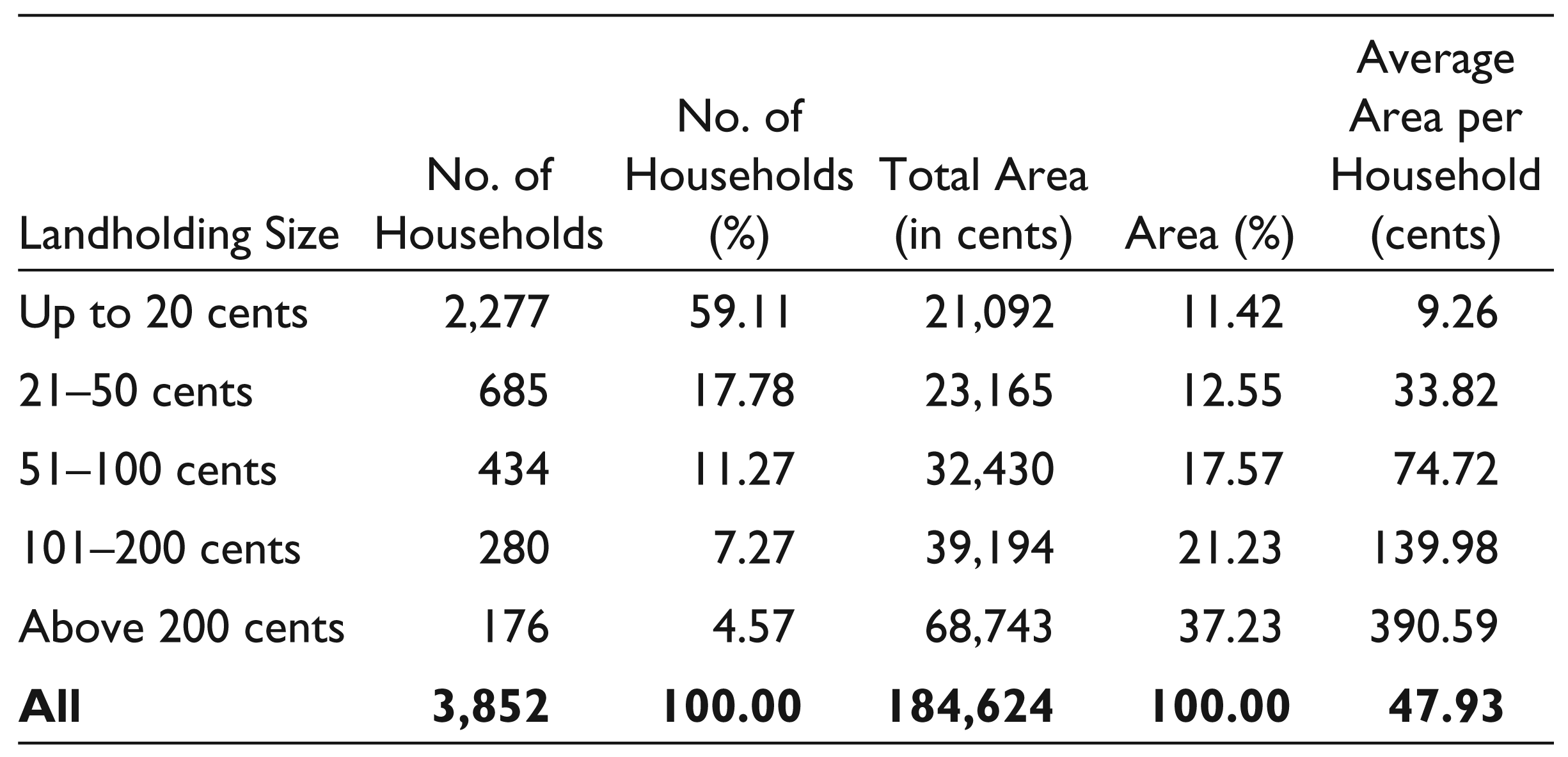
The main purpose of our analysis of the village study data is to identify the relationship between production, on the one hand, and social organization of production, on the other. Before getting into the details of costs and returns, it will be useful to set the background of land relations in the selected villages. The broad setting of the history of agrarian relations and the land reforms of the more recent past are generally applicable to the selected villages. The size class distribution of land holdings presented in Table 1 highlights the preponderance of small holdings and the problem of parcelization seen in the villages. Although smallholder agriculture is a widely noted phenomenon (Reddy & Mishra, 2010; Viswanathan, Thapa, Routray & Ahmad, 2012), it is particularly pronounced in Kerala. 10 Land reforms, family partition and the rise in land prices, along with other possible factors, would have contributed to the preponderance of small holdings. The preponderance of small holdings is an important attribute of the phenomenon of atomization of farming, which, in our opinion, is central to the understanding of the contemporary agrarian relations of the region. Atomization of farming, however, has another important dimension to it, that is, the inability of atomistic units to come together for collective action, especially because of hostile neoliberal policies. Atomization puts farmers at a disadvantage vis-à-vis other more organized and larger actors in the relevant commodity chains, such as traders, processors, retailers and suppliers of inputs and credit. Furthermore, atomization is a barrier for organizing cooperative labour processes, which are needed for efficient agriculture in many areas.
Size Class Distribution of Landholdings
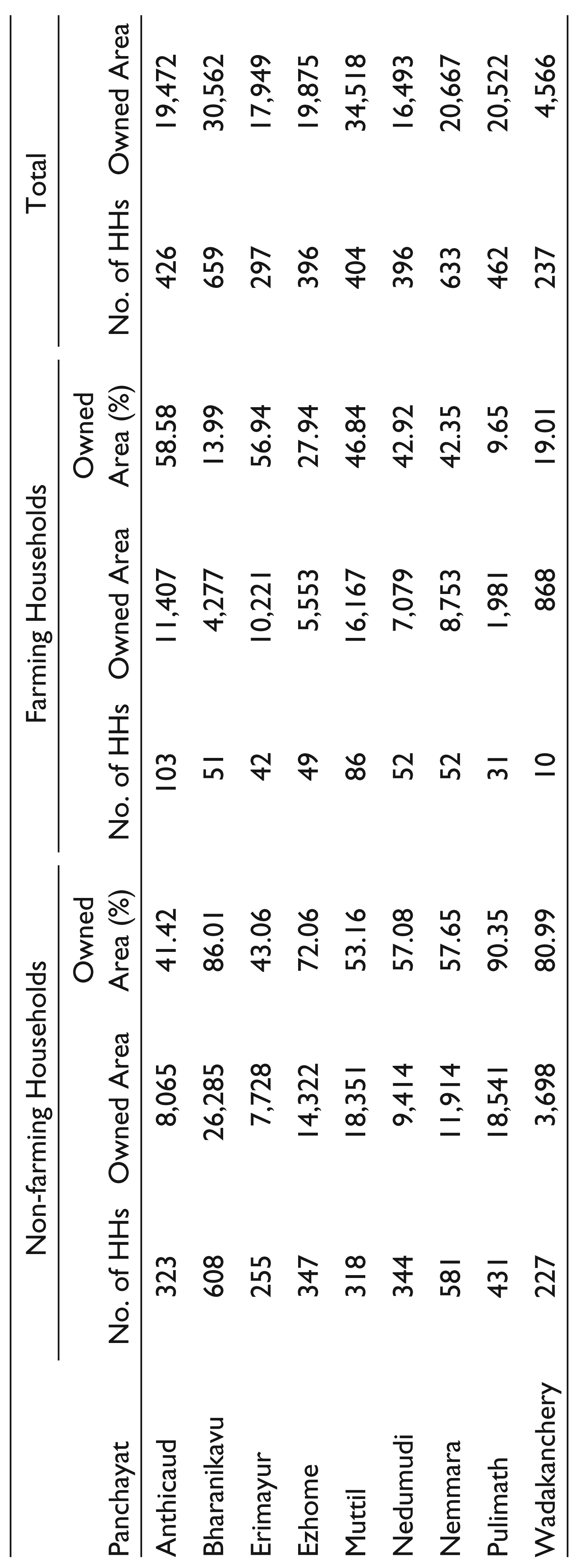
The distribution of land among farming and non-farming households brings out yet another critical dimension of land relations in Kerala (Table 2). There is a clear divorce between ownership of land and interest in cultivation. Except in two villages farming households own less land compared to non-farming households. 11 This is a clear indication of the growing contradiction between means of production and asset functions of land. People in Kerala invest and possess land not so much for using it as a means of production in agriculture as they do it as an asset for its assured value appreciation. Another piece of evidence for the growing contradiction between the two functions of land is the rise of land prices and the pressure of speculation in the land market. This as we discuss subsequently is reflected in the costs and returns of farming. What happens on the margin in the land market is important. Crop failures and other uncertainties and consequent indebtedness may force cultivators to alienate their land; but on account of high land prices it is difficult for peasants to buy land for cultivation. Therefore, lands alienated by peasants are likely to be bought by those who value the asset function of land than the means of production function. Aggregation of land for farming is next to impossible.
Distribution of Land: Farming and Non-farming Households (2012)
Another aspect of production relations that shows up in the costs and returns of farming is the predominance of wage labour relations. The dominance of hired labour and wage labour relations deserves special mention in the context of preponderance of small holdings. As we shall see in some detail later, even the smallest size class of landholdings use more hired labour (65 per cent) than family labour (Harilal & Eswaran, 2015). Yet another characteristic feature of agriculture in Kerala is the near complete orientation of production for the market. In paddy production, retention for consumption is negligible. Even the smallholders sell their produce in the market and meet their consumption requirements by buying from the market, or the public distribution system. Local producers do not have any control over the product markets in the neighbourhood, which are deeply integrated with national or even global markets. 12 It need not surprise us that atomization of farming and globalization of markets occur simultaneously. Neoliberal policy favours national, regional and global integration of markets, but resists efforts to aggregate farm power. One more important aspect of land relations we wish to underline is the return of leasing.
The overall average cost of paddy cultivation excluding family labour cost (Cost A) works out to ₹14,484 per acre, and when the family labour cost is imputed (Cost B), it is ₹17,407 per acre (Table 3). At cost A (that is, without family labour) the net income works out to ₹12,095 per acre, while at Cost B (with imputed value of family labour) the net income works out to ₹9,172 per acre. However, a qualification needs to be added here. The gross income shown here includes the value of straw, which is not an assured income in all the places. Without straw value, a reasonable operating profit is also realized in the sample crop even when the cost of family labour is imputed. A few factors favoured the paddy cultivators during the year. First, it was a normal year without any crop damages and, second, the procurement price of paddy offered by the state government was attractive during the year, which was considerably above the market price. The procurement was fairly effective in the major paddy producing areas of Palakkad (Erimayur and Nemmara Panchayaths in our sample), Kole (Anthicaud in the sample) and Kuttanadu (Nedumudi).
However, if we add the interest on land value in the cost of own cultivation, instead of rent in the context of lease cultivation, the net income turns out to be negative, that is a loss of nearly ₹12,000 per acre at the overall level, and that is substantially higher in a majority of panchayaths where land prices are very high. The rent or interest on the land value being the opportunity cost of land, such a calculation is reasonable and it could be a factor that farmers may consider in their calculations on cultivation, especially in taking decisions on buying land for augmenting farm size. Notably, this is a phenomenon observed across almost all crops in Kerala, and, in fact, more acutely in the case of crops grown on garden land, where the land prices are relatively high (Harilal & Eswaran, 2015). Even though there exists difference of opinion among scholars on the treatment of land prices in computing costs (George, 1988), the data show how rising land prices tend to overwhelm other parameters.
Cost and Returns of Paddy Cultivation (₹/acre)
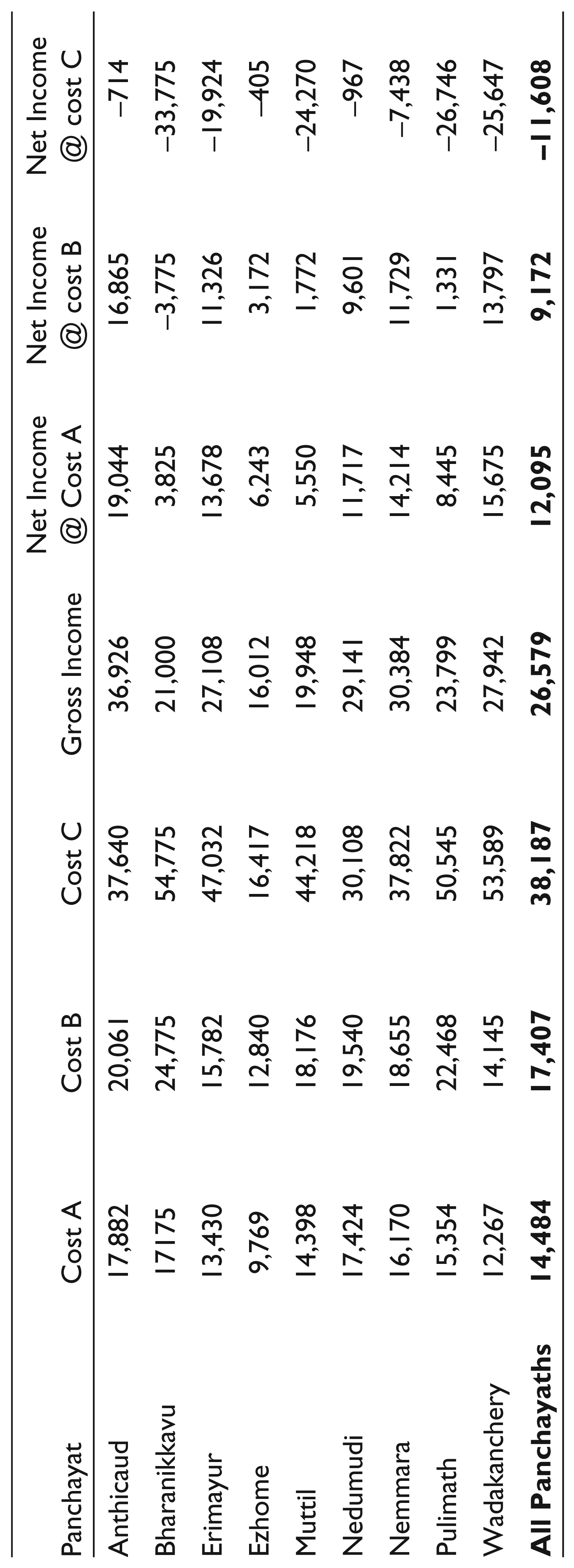
The cost and income data across the panchayaths indicate that, in general, the incomes are higher in the major paddy producing areas, such as Kuttanadu, Kole and Palakkad. The variations in incomes are more substantial than the variations in costs. That is, in some of the villages, even while incomes and productivity are significantly less, the costs remain almost on par with the better endowed villages. The incomes after deducting the paid out costs (Cost A) and imputed value of family labour (Cost B) are also higher in those major paddy areas.
The variations in the net incomes of different villages are indicative of the differences in productivity, cultivation practices and the level of mechanization. The higher net incomes (net of Cost B) are reported from villages (like Anthicaud, Nemmara, Wadakanchery and Nedumudi) where productivity is higher. Those are villages where the level of mechanization is also relatively higher. The low levels of net income per acre in a majority of villages, and the fact that seven out of nine villages are single cropped areas, make it clear that a large majority of cultivators cannot make a living by depending on agriculture alone, as a huge majority of cultivators are smallholders. The net incomes of farmers in small size classes are ridiculously insignificant, and even the relatively larger holders cannot make a living by agriculture alone. Incomes from other sources are important for them. If agricultural income alone is taken, many of the households fall below poverty-level income. Larger land holdings are required to make a living from paddy cultivation. But acquisition of more land is constrained by various factors, the chief among them remaining the high price of land.
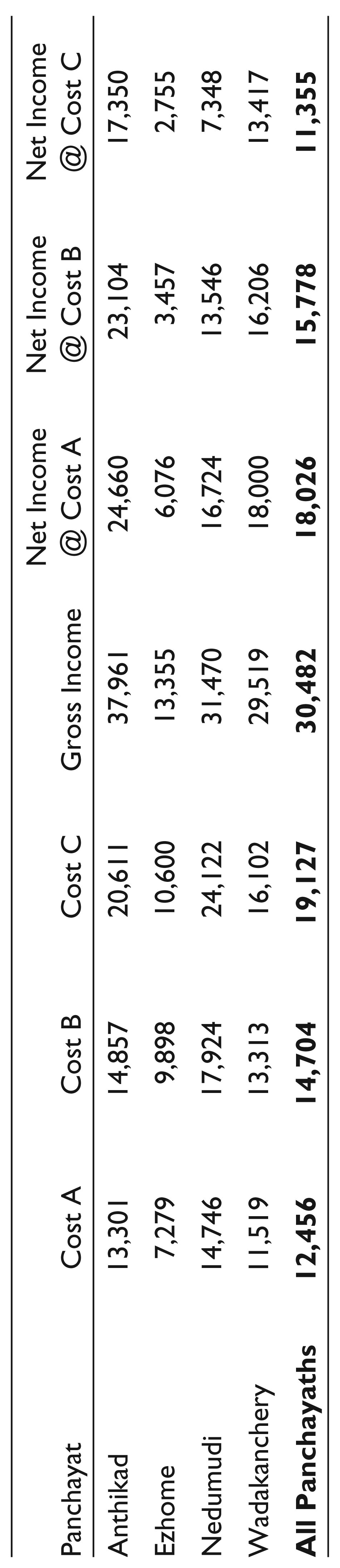
It is interesting to note that the returns are found much more attractive in the case of lease cultivation (Table 4). The survey data on the costs and returns in lease cultivation in four panchayaths (of course, with small numbers of samples) show that costs are significantly less and incomes are more than that in own cultivation discussed above. The Cost A and Cost B (that is, without and with family labour, respectively) at ₹12,456 and ₹14,704 per acre, respectively, are less by ₹2,000 and ₹2,700, respectively, than the Cost A and Cost B in own cultivation. The Cost C (₹19,127 per acre), which includes the rent paid to the land owner, is substantially lower than the Cost C (₹38,187) in own cultivation, which included interest on land price. This is because the rent is considerably less than the interest on land price, which is very high in the context of high land prices. The average rent was found in the region of ₹4,500, while the interest on land price was in the region of ₹20,000 per acre. The gross income of ₹30,482 per acre in lease cultivation is nearly ₹4,000 higher than that of own cultivation. This is the result of a higher productivity (20 quintals per acre) in lease cultivation, compared to the productivity (18 quintals per acre) in own cultivation. The net income at Cost A (when the family labour is not considered) works out to a little above ₹18,000. The net income after paying rent (that is, after deducting Cost C) is also positive in all the villages, although it is not very attractive in two villages (Ezhome and Nedumudi).
Cost and Returns of Paddy Lease-cultivation (₹acre)
The variations in gross incomes realized by farmers across the villages are also influenced by the farmgate prices received by the farmers, which may vary significantly. In areas where government procured paddy, the procurement price was uniform, and most of the farmers in those areas benefitted from the procurement price of ₹1,500 per quintal, which was substantially higher than the market price. The market price varied from ₹800 to ₹1,500 a quintal during the year. But the government procurement scheme was not operational in all places; it was restricted to major paddy producing areas. In our sample, the government procured paddy from five panchayaths, Anthicaud, Erimayur, Nemmara, Wadakanchery and Nedumudi. Nearly 30 per cent of the farmers had to depend on market prices, which ranged between ₹900 and ₹1,200 per quintal.
Although the cost of production per unit of land is found higher in major paddy producing regions, the unit cost of produce is, in general, lower in such areas, whether with or without adding family labour cost. The panchayaths of Wadakanchery, Anthicaud and Nemmara, with relatively lower costs per unit of produce (₹731, ₹817 and ₹825 per quintal of paddy, respectively), reported better productivity (Harilal & Eswaran, 2015). Nedumudi, a major paddy area, is an exception in this, where a higher unit cost is reported (₹1,066 per quintal). This is due to the lower productivity reported there. The panchayaths of Bharanikkavu and Pulimath which reported higher unit costs (₹1,430 and ₹1,129 per quintal, respectively) are areas where paddy cultivation is declining due to higher costs and relatively lower productivity. The averages of nine villages show that the cost per quintal of paddy is ₹888, without considering family labour and ₹1,093 with family labour cost, both significantly lower than the procurement price of ₹1,500 per quintal. However, with the reported market price in the range of ₹900–1,200 per quintal, cultivation may not be attractive. Moreover, in case there is no procurement, the chances are that the market price could be kept still lower by the trading lobby, which would make paddy cultivation a loss. Hence, the case for public procurement is strong and its wider coverage is also important.
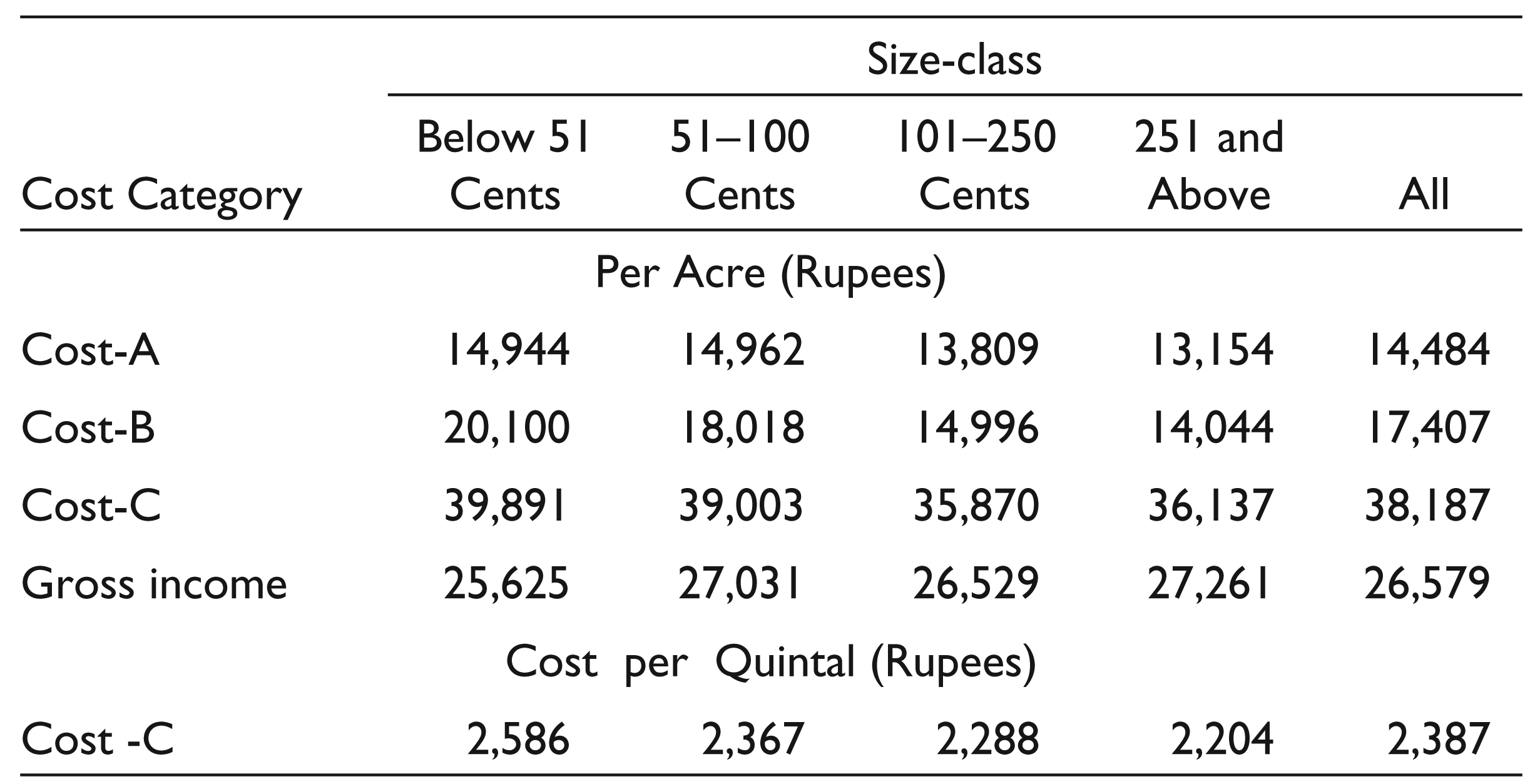
When the costs are computed separately for various size classes, it is found that the smaller holdings in general incur a higher cost per unit of land and per unit of produce (Table 5). The pattern is found invariably the same in all the Panchayaths, except Ezhome (see Harilal & Eswaran, 2015, Table A.5). The two lowest size-classes, that is, up to 50 cents (half an acre) and up to 100 cents (one acre), in general have a higher cost of production when Cost A and Cost B are considered. The unit cost of produce also is higher for the small size-classes, below one acre compared to the larger size-classes in most of the panchayaths. The higher cost per unit of land and the higher cost per unit of produce in the smaller sized farms, perhaps, indicate the lower scale advantage and lower efficiency of small farms.
A look at the net incomes received by various size classes shows that, in general, the smaller size classes realize a lower net income per unit of land compared to the larger size classes. This is natural, as the cultivation costs per unit of land of smaller size classes are higher than that in the larger sized farms. As can be seen, the net incomes of the two lower size classes (₹10,681 and ₹12,069), after deducting Cost A, are lower than that received by the two higher classes (₹12,720 and ₹14,107). When the cost of family labour (Cost B) is also deducted, the net incomes of two lower size classes are considerably reduced (₹5,525 and ₹9,013), compared to two top classes (₹11,533 and ₹13,217, respectively). The differences in net incomes between the lower classes and higher classes widen when the family labour cost is accounted, as the smaller farms employ more family labour than the larger farms. As is expected, the net incomes after deducting the Cost C (that is, cost including the interest on land value) are negative in all the classes (Harilal & Eswaran, 2015, Table A.6). The differences in losses across the classes are related to the differences in net incomes and the varying land prices in different locations and villages.
Cost of Cultivation and Income (₹/acre)
Labour Costs and Mechanization
A break-up of the costs according to various input components shows that manual labour is the single largest component among the inputs. The overall average shows that 45 per cent of the total cost is incurred on hiring labour for farm work (Harilal & Eswaran, 2015). The imputed value of family labour is 17 per cent, and with it, the total manual labour cost works out to 62 per cent of total cost. Although there are differences in this composition across the villages, manual labour remains the largest component everywhere. The physical quantity of manual labour in agriculture is on the decline. But cost-wise, its share is still the highest. The cost of machine labour is, presently, only 15 per cent of total cost. However, the progress in mechanization is very slow, although its need is felt more acutely now in the context of labour shortage and high cost of labour. In most of the paddy areas, tillage is the only mechanized activity. The use of combine harvester is found only in major paddy producing areas, such as Kole, Palakkad and Kuttanadu. But in these areas, the combine harvesters are not uniformly used in all the fields, due to infrastructural problems. The transplanters are used only in a very few places. In garden lands, mechanization is almost absent in the state.
A look at the details of manual labour employment in paddy cultivation reveals certain important features. As is known in the context of Kerala, the share of hired labour in total manual labour is generally very high. At the overall level, 83 per cent of labour is contributed by hired workers and the remaining 17 per cent by family labour (Harilal & Eswaran, 2015). A similar pattern holds true in all the panchayaths, with some panchayaths recording still higher share of hired labour. A disaggregation by size class of the composition shows that, in general, the share of family labour is higher in smaller holdings than in larger holdings. As farm size increases, the share of family labour declines. This, of course, is an expected behaviour and widely seen elsewhere as well, but what is more striking is the substantial share of hired labour in farming, even in small holdings, including the tiny ones below half an acre in size. However, it should be mentioned here that the preference for non-agricultural activities and the shortage of family labour to undertake farm work are the major reasons for this behaviour.
There are considerable variations in manual labour use across the classes, with the lower size-classes, in general, having higher manual labour input per unit of land (Harilal & Eswaran, 2015). The difficulty in using machines in small, isolated and remote farms is a reason for this. Lack of scale advantage for small farms is certainly another major reason. It is also likely that as much family labour as possible is employed by small farmers in their attempts to maximize production. These could be the reasons for higher costs in small farms.
Our evidence shows that atomization of farming is making agriculture unviable in the state. Smaller farms have a clear disadvantage over larger ones in cost of production per unit of output, as well as area, productivity and net income. They are also less amenable to mechanization. The average size of holdings is grossly inadequate to earn a livelihood from agriculture. Furthermore, those who earn their livelihood from farming, or, for that matter, anyone interested in it, find it difficult to enhance the farm size, because of high and rising land prices. High and rising land prices attract people who are not interested in farming into the land market, displacing genuine farming interests from land. Conversion of agricultural land for non-agricultural purposes, or even fallowing, makes neighbouring areas less suitable for agriculture, a problem which is acute in paddy areas. Lease-land farming is found to be more efficient compared to direct cultivation by owners measured in terms of costs, productivity and net income. That collective action, an antidote to atomization, is a source of strength for farming is clear from the experience of farmers’ associations, Kudumbashree units (women self-help groups), collective efforts at mechanization and public procurement of paddy, to which we shall return in the next section.
Democratic Decentralization and Agriculture
The picture emerging from the analysis of land relations, costs and returns is quite sharp and unmistakable. It clearly delineates factors responsible for the stunting of the capitalist development of agriculture in Kerala. The main question that needs to be addressed now is the ability of LGs in addressing the identified factors that constrain the development of agriculture. The LGs have a major role in facilitating the development of agriculture, yet a perusal of their planned efforts amply proves that the LGs, left to themselves, are ill-equipped in addressing and overcoming the factors responsible for the observed stunting of capitalist development. Many of the barriers to development are beyond the reach and powers of the local people and the LGs. The resolution of the agrarian question will require greater cooperation among different tiers of government.
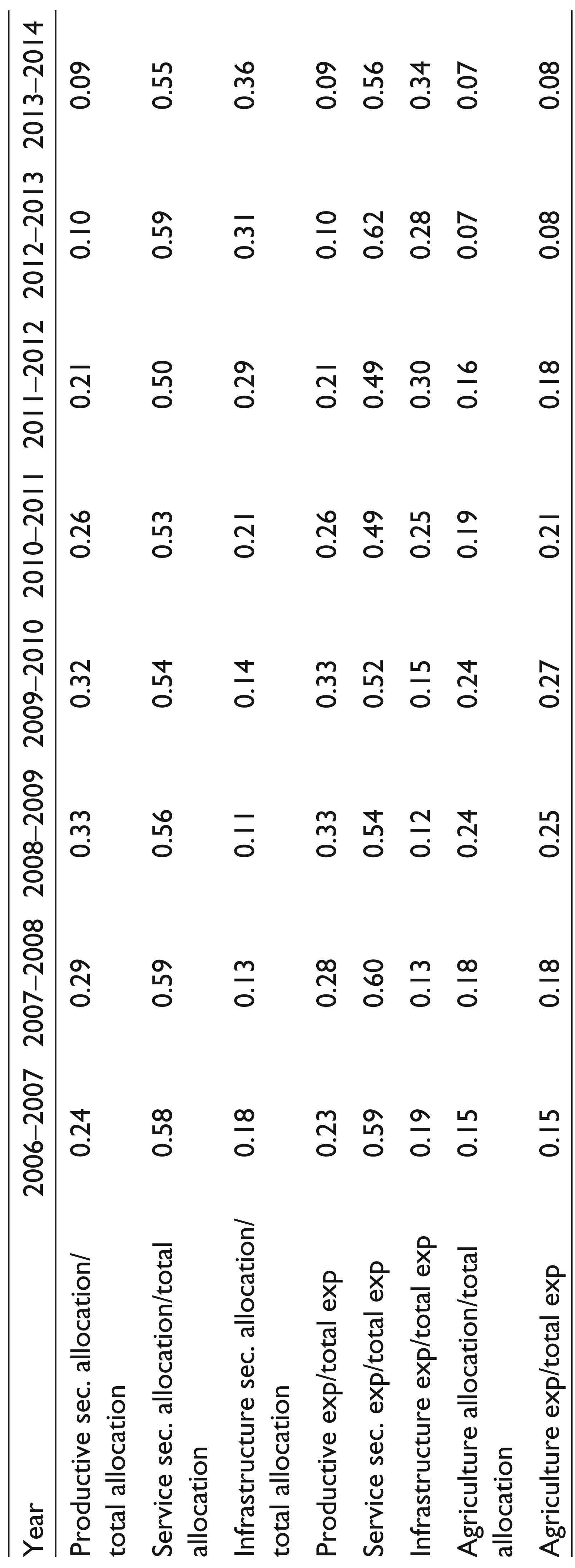
As we have already noted the design of decentralization in the state attaches pride of place to agriculture and allied sectors. Moreover, even though the grant-in-aid plan devolved to the LGs was generally free of conditions, the state government has insisted on a minimum percentage of the grant to be used in the goods producing sectors, which comprises mainly of agriculture and allied sectors. 13 In contrast, there are upper limits proposed for allocation of grant-in-aid to infrastructure and services. As the guidelines from above suggest, the LGs in general show a preference for projects related to infrastructure and services. As our focus group discussions in the villages and perusal of grama sabha (village assembly) records suggest, this revealed preference in allocation is a reflection of popular demand. For instance, the introduction of democratic decentralization has resulted in an unprecedented expansion of rural/local road networks in the state. It is also reflected in the remarkable improvement in the quality of village roads. In our opinion, this is a reflection of the growing importance of the asset function of land. People want every piece of land to be connected by road and power lines to enhance the real estate value. It is also obvious that the virtual ‘violence’ of roads we see in rural Kerala does not augur well for agriculture, because roads very often cut irrigation and drainage channels, convert agricultural land into roads and facilitate conversion of land for non-agricultural purposes.
The data presented in Table 6 are self-explanatory and support our hypothesis regarding the bias against the goods producing sectors. Interestingly, the liberalization of guidelines from above at the beginning of the Twelfth Five-Year Plan appears to have worsened the problem; there has been a marked fall in plan allocation as well as expenditure in the goods producing sectors, especially agriculture. Our micro-level enquiry reveals some more disturbing pieces of evidence. Even the fund allocated to the agricultural sector is diverted to construction of roads and other civil works on the pretext of expanding agricultural infrastructure.
Plan Allocation and Expenditure Across Development Sectors of LGs (%), 2006–2014
Coming to the content of the agricultural development programmes in the LG plans, in
general, the surveyed panchayaths have the following typology of schemes: subsidized fertilizer distribution for paddy (and occasionally for
vegetable cultivation in garden lands); subsidized seed distribution for paddy (occasionally for
vegetables and plantains); subsidized tractor tillage; financial support to padasekhara samitis
(farmers’ associations) to buy agricultural machineries, such as
threshing machines and tractors—which is quite often limited to some
panchayaths and not budgeted every year; financial support for Kudumbashree units for
lease land cultivation of paddy and vegetables; financial support to farmers for buying sprayers—which is
occasional; support for making bunds and dewatering (pumping) in places, such
as Kuttanad and Kol; infrastructural support, such as for building farm roads, culverts
and small bridges; watershed schemes—which are very limited in
extent; financial support to bring fallow land under paddy
cultivation—which is occasional and limited to some panchayaths;
and provision of production bonus for paddy
cultivators.
In the above programmes, such schemes as subsidized fertilizer distribution for paddy, pumping and dewatering support, as subsidized seed distribution are prominent and implemented regularly every year. The programmes that need huge investments in machineries, such as the purchase of combine harvesters or tractors, find no place in the panchayat budgets. Such investments occasionally come from the higher tiers of government, or collaborative efforts. Infrastructural development, such as farm roads, culverts and strengthening of outer bunds are always taken up, but such schemes never match with the requirement. The budgetary constraints are always a problem in panchayath-level schemes for land and water management. However, the resources constraint cannot be explained independently of the growing asset function of land and the pressure of real estate interests. In many cases, farm roads and canal roads are used as an excuse for diverting funds for non-agricultural purposes. In Bharanikkavu, for instance, canals do not bring water to the farms, but provide road connectivity and facilitate conversion of paddy land to other uses.
Most of the schemes presently handled by the panchayaths were in place earlier, implemented through various government departments. There is conspicuous rarity of new and innovative ideas; instead stereotype schemes dominate. Yet, what is encouraging is the presence of limited but highly promising programmes of local origin with potential for emulation. The mechanization-cum-labour programme of Wadakanchery Bloc Panchayat, which is slowly spreading into other areas, is a good example. Even in the case of stereotypical projects, decentralization has some advantages. First, the local-level specificities are addressed to a large extent in the local-level planning process. Second, the role of panchayaths in the implementation of programmes has enhanced the efficiency and accountability of implementation considerably.
There have been some experiments initiated by the panchayaths in the field of agricultural production. The programme to expand a second paddy crop in Nedumudi panchayath, promotion of vegetable cultivation in Anthicaud panchayath, and attempts to bring fallow paddy lands under cultivation in Anthicaud, are some such experiments. In all these cases the panchayaths took initiatives to encourage padasekhara samitis and Kudumbashree units to take up the production programmes. The landless Kudumbasree members were helped in getting lands on lease, provided small support in cash and kind, such as free seeds and fertilizers for vegetable cultivation. In Nedumudi, even a substantial support of ₹5,000 per acre was provided in one year to paddy cultivators for undertaking a second crop of paddy. However, such attempts have been occasional successes depending on the quality of leadership in the local areas. They are not growing into sustainable models of income-generating activities of the participants. They find it difficult to transcend the amateur/demonstration stage, for want of sustained institutionalization.
It is possible now to return to the question set in the beginning regarding the LG capabilities to address the main constraints encountering agriculture. The growing contradiction between means of production and asset functions of land is, perhaps, the main stumbling block facing agriculture in the state. The continuous rise in land prices, and its impact on returns net of Cost C and the transfer of land from farming to non-farming households/purposes discussed in the previous section are the signs of the worsening contradiction. A possible way out of the crisis is the separation of the two functions, because it is not easy to do away with the asset function of land. Those who hold on to land as an asset in Kerala need not be the rich alone. Yet, it is important to ensure, by way of regulation and even legislation, that land is put to use in agricultural production. Those who own land for its asset function, and do not want to use it as a means of production, will have to be encouraged or mandated to allow its use in production by others. Making leasing legal is one way of handling the problem. A detailed discussion of the suitability of alternative leasing arrangements, although important, is beyond the scope of this article. Suffice it to note that leasing can lead to familiar problems attached, such as unfair rent or unsustainable use of land, necessitating collective action and regulation. It calls for an overhauling of land use, land relations and land governance in the state. Obviously, LGs will have an important role in implementing and governing such a land regime. But it is clear that legislative, as well as administrative, initiatives will have to flow from the higher tiers of government. Yet another means of separating the two functions of land is prohibiting conversion of agricultural land for non-agricultural purposes.
A further important factor identified as constraining agriculture in the state is the growing contradiction between the atomization of farming and globalization of agriculture. We have seen the limits to agriculture set by the preponderance of small holdings and parcelization of land. It is causing clear disadvantages to smallholders in costs, mechanization, productivity and net returns. The issue here is not just the absence of scale advantages in farming. A more important problem is the disadvantage that the atomized farming units, which enjoy hardly any strength of collective action, face in their dealings with more organized players in the input, output and credit markets. Atomized farming units run into the might of monopolies and monopsonistic players in most markets they enter. More than the preponderance of small holdings, it is their inabilities to aggregate their strength through collective action that ails agriculture in most countries. Agarwal (2010) suggests promoting collectivities as the solution to the problem. 14 Aggregation of farmers’ power and their collective action can start at the local level mediated by LGs and a host of other local-level institutions, such as farmers’ cooperatives, SHGs and peasant and workers unions. But such collective action at the local level cannot be led to its logical conclusion without the help of higher tiers of government. Notably, the neoliberal policy environment tends to operate in the opposite direction, wherein all such popular collective action is discouraged to ensure free markets. In our opinion, the neoliberal state does not resolve, but adds to, the contradiction between the atomization of farming and globalization of agriculture.
A programme worth citing here, to reinforce the argument, is the state-level paddy procurement programme. Our study of costs and returns shows how farm viability is critically dependent on such collective action in the area of marketing. It is the same lesson that we draw from vegetable cultivation programmes of the LGs. Wherever the programme is supported by organized marketing, such as the intervention by the Vegetable and Fruits Promotion Council of Kerala (VFPCK), the farmers get better prices and the projects produce commendable results. There is a need to organize large post-harvesting and marketing initiatives; but it would not be feasible without the active involvement of higher tiers of government. Needless to say, such programmes are best designed, coordinated and implemented with the help of lower tiers of government and, most importantly, by the participation of the people. Similarly, the responsibility of agricultural research and extension cannot be left to the small and micro farms. The role of the higher tiers of government is important here, too.
The pre-capitalist conditions of exploitation of labour and accumulation are no more present in Kerala. Kerala agriculture cannot expect a low wage regime and, therefore, cannot compete with other sources of cheap supply of products produced by unfree labour. Kerala can have only a high wage and highly mechanized agriculture. It requires viable models of mechanization of farm work, on the one hand, and proper rewarding and protection of the rights and dignity of farm labour, on the other. Models, such as the Harithasena (green army, a labour collective) of Wadakanchery, are promising. But, again, inter-tier cooperation of governments is critical in deciding the viability of such programmes. Harithasena now owns a large number of tractors, planting machines, harvesters and other farm machinery, the investment required for which would not come from a village panchayath or even a block panchayath. Moreover, considering the capacity accumulated in machinery and trained workers, its service area cannot be limited to a village or two. Therefore, the project requires horizontal and vertical cooperation among governments, as well as institutional innovation, most of which are beyond the reach of any LG taken in isolation. 15
Conclusion
In this study we have outlined the social aspects of production that make agriculture nearly impossible in Kerala. Agriculture is in deep crisis because the architecture of social relations push capital, land and labour away from its fold. Winning land, labour and capital back to agriculture is not an easy task. But it is not impossible. It requires an overhauling of the agrarian/land relations in the state. The fate of agriculture cannot be left to the discretion of individual landowners. As the speculative price spiral in the land market and the ascendency of the asset function of land at the expense of its means of production function show, what is individually wise need not be collectively so.
The challenge is to move from the impossibility of agriculture to its immense possibilities by being collectively wise. The private property right over land will have to be limited to ensure the primacy of production and other socially desired goals. Agriculture, by its nature, requires cooperative labour processes within farms and cooperation across farms. Farm power needs to be aggregated to make agriculture viable. This is particularly true in the contemporary age of national and global integration of markets and the heightening of scale and market power at post-harvesting stages, down to retailing. But aggregation of the power of atomized farms, and successful cooperation among the farmers, will require state support. The local governments are better positioned to enable cooperation among farms and aggregation of their strength. The LGs, however, cannot do it alone. They will need proactive involvement and cooperation of higher tiers of governments, which quite obviously presupposes a clear movement away from the current neoliberal regime.
Needless to say, the transformation of the social organization of production we visualize depends on politics, not only local but of higher levels too. Democratic decentralization is no guarantee for the rise of such politics; but it opens up scenarios and, hence, opportunities to realize the need for it.