







Abstract
Jobseekers, considered as long-term unemployed in Lapland, are under the risk of social exclusion. This group of people is lacking ways for identifying the advantages of relevant networking opportunities in the society with respect to access to the labour market. In particular, this article explores the opportunities for facilitating and enhancing public services in customers’ demands and promoting employment services during the transition of the target group via establishing social enterprise (SE)/cooperatives (coops). The research focuses on the concept of coproduction and network theory for supporting social innovation in the Arctic city. The objective of this explorative research is to analyze the combine recourses of coproduction and network modelling for achieving the necessary sociopolitical determinants for SE/coop to function as an alternative instrument for employment in Lapland. This research article suggests a sustainable social network model for identifying collective social beliefs and values for hindering long-term unemployment by operating SE/coops successfully in the sparsely populated Arctic region.
Introduction
The increasing unemployment rate has called into question the traditional welfare regime in Finland and other European countries. The unemployment rate is one of the best indicators that there are crises in the welfare state. The welfare regime has been based on a high degree of labour market participation for both genders that has guaranteed the financing of public services and the well-being of citizens. Nowadays, this regime is at risk because of people’s exclusion from the labour market, which is partly responsible for the situation in which the state can no longer guarantee well-being without high taxation.
In the beginning of 1980, the unemployment rate in Finland was 5.3 per cent; nowadays, it is over 9.4 per cent (April 2015). This trend has accelerated a discussion on the need to seek new ways of producing and delivering certain services to the citizens. It also requires the voluntary will of citizens to solve and satisfy their problems and needs together with public-, private-and third-sector organizations. At the same time, this promotes a kind of thinking in which every citizen has value to contribute to his/her own well-being as well as that of other people.
Thus, unemployment among immigrants is higher at a rate which is double that of local people, many of them in Rovaniemi are long-term unemployed people (LTU). Rovaniemi is the administrative capital and commercial centre of Finland’s northernmost province, Lapland. It is more famous as the official home town of Santa Claus. Long-term unemployed is a person who has been continuously unemployed during the survey time for 12 months or longer.
According to previous studies (Yeasmin, 2016), it is very hard for immigrants to be self-employed via established businesses in Rovaniemi. A lack of understanding of the risks involved in entrepreneurship and economic fluctuations hinders the establishment of businesses among LTU in Rovaniemi.
Focus group of this research is LTU locals and immigrants. According to the Finnish Labour Force Survey (December 2016), immigrants and some middle-aged local people and youths are at risk of LTU in Rovaniemi. The impact of LTU is extremely negative. It causes high levels of stress and serious illnesses. The LTUs’ also have high rates of suicidal tendencies. The physical and psychological consequences of unemployment affect family and social life. The LTU causes social exclusion (Shephard, 2006) and increases the number of criminal offences (Verbruggen, Blokland & Van der Geest, 2012). Therefore, tackling LTU by promoting active participation in the labour market and other programmes is the potential reasoning of this research.
In the present research, we try to demonstrate how social enterprises (SEs) could be one way for target groups to gain access to the labour market; SEs could make employment easier and provide for wider participation of disabled people and LTU groups. Under the SE system, work is supported by the labour market and operating facilities are provided, people play the role of employees rather than a purely entrepreneurial role, and the SE provides an opportunity for basic social security to the employees. The preliminary study surveyed the possibilities for coop activities in the light of current knowledge.
In this research, the focus is on the transformation of the welfare regime in which public-sector professionals have to give up their traditional role of producing and delivering services and adopt a new role of partner-and companionship with other actors to solve citizens’ problems and meet their needs. The article suggests a theory of coproduction and network combined could support establishing SEs in Rovaniemi, Arctic Lapland, by studying and comparing the best practices from Aberdeen, Scotland and Gothenburg, Sweden, where coproduction-oriented network approach is applied to analyze enhancing sustainable and positive changes of the society. The objective of this research is to determine the necessary conditions for SEs or a form of coop activity to function as an alternative instrument for employment. Although, the idea of the SE is currently spreading across the European Union (EU), only a few countries and cities in the EU (Gothenburg & Aberdeen) are running SEs/coops successfully. On the contrary, eastern Asian countries are rapidly finding success with the SE concept (Defourney & Shin-Yung, 2011).
In Rovaniemi, there is a need for a sustainable model for SEs/coops because of the city’s geographic remoteness and the need to tackle the social exclusion of LTU citizens and immigrants. On the other hand, this exploratory research assesses the opportunities for facilitating and enhancing public services in customers’ demands and promoting employment services during the transition of the group of the research. The construction of personalized services needs to be more diversified.
Two experimental pop-up coops named ‘X’ and ‘Y’ were created in Rovaniemi to observe the activities of coops and collect concrete data for this explorative research. The goal is to find how to launch an SE with focus group and see how the members of coops worked under this pop-up method. In particular, the research is conducted to observe what kind of work opportunities services, and products is available in Rovaniemi for such a societal entity or coop. This research focuses on possible supporting factors for coops. Any coop can explore the possibility to evaluate the social services in cooperation with decision makers and public sectors, for example, city council and professionals. Use of public procurement based on social criteria is one way to create a demand for the services produced by SEs. The study is thus a combination of ethnographic and action research.
Literature Review
There are multiple paradigms (Bacq & Janssen, 2011) and ideas concerning social entrepreneurship, but there is no single, unifying definition of social entrepreneurship (Choi & Majumdar, 2014; Hill, Kothari & Shea, 2010).
According to Finnish law (1351/2003) (Finlex, 2003), a SE must employ at least 30 per cent of its workforce from the pool of disabled and LTU people. The SE must pay all its employees for their productivity regardless of their profession, complying with the relevant collective agreement concerning salaries for the fully able-bodied. Where there is no collective agreement, it must pay normal and reasonable wages (Finlex, 2003).
A SE also has the opportunity to serve as a coop from which other companies and individuals can hire staff. A coop can function as an employment bank in Finland. A coop is engaged primarily in business activities and can employ a staff of its own, engage in sub-contracting work, work for hire and employ workers directly for a client company. A coop integrates primarily people who are in a weak position into the labour market.
The concept of coops is related to community development strategy, since a coop can increase interaction between diverse segments and populations of a community. It also provides information to community members so that they can realize a return on their social investments (Fairbairn, 2004; Green & Haines, 2002; Putnam, 2000; Tolbert, Irwin, Lyson & Nucci, 2002; Zeuli & Radel, 2005). Some coops are established to meet their own needs, and some are established to meet the collective needs of the community. A coop is an independent association of people uniting to meet common sociocultural and economic needs. It is an example of a mutually and democratically controlled enterprise.
In accordance with the law of Finland (421/2013) (Finlex, 2013), the purpose of coop activities is to support the economic and business community of Lapland to engage in an economic activity in such a way that members use the services offered by the coop, or services that the coop arranges through a subsidiary or otherwise. Members of the coop and other owners of units and shares are not personally liable for the obligations of the coop. The coop is a separate legal entity which is established through registration.
The concept of public procurement signifies the acquirement of goods and different services by the government, local municipal governments or public sector organizations (Brammer & Walker, 2011; Uyarra & Flanagan, 2010). The lack of a conceptual background and familiarity with public procurement has been the subject of substantial academic research (Brulhart & Trionfetti, 2004; Trionfetti, 2000). Integrating procurement activities with broader social benefits could make public procurement practice sustainable (Preuss, 2009) by local municipal governments taking the initiative to address the challenges of SEs and coops and acting as major procurers of goods and services from SEs.
Coproduction and Network Theory
Before constructing a network, identifying the advantages of relevant networking opportunities and modelling whether a direct and indirect access to social capital is needed are correlated in network theory (Lin, 1999). Social networks between organizations facilitate greater access of information, services and products (Rauch, 2001), which is named as material relation (Kamann, 1998) (Figure 1).
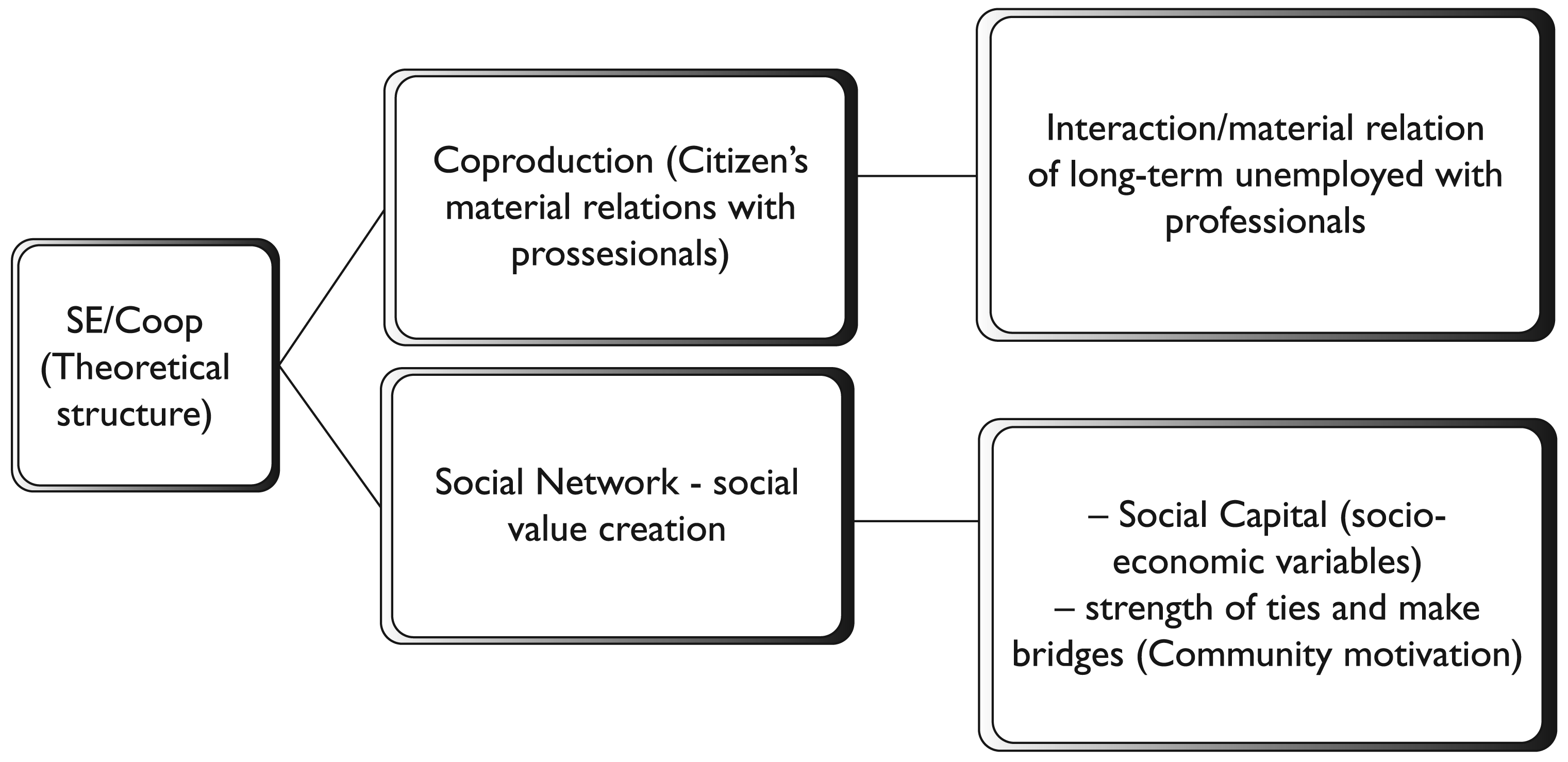
Exchange of material goods, services, processes, strategy formulation, information and goal settings between network actors is the material relation of doing business. The material relation between public service agents and citizens is referred coproduction. Local governments increasingly design processes and strategies in which both service providers and citizens coproduce deferent services in diverse policy fields, for example, education, transport, energy, security, housing, urban planning and social and healthcare services (Bovaird & Löffler, 2012). Similar practices of coproduction and social networking were found in Scotland and Sweden. The insights of collaborative approach of networks, process and organizations are functioning in the context of the meta-institution of the government between citizens and social institutions (public and private institutions and professionals) (Blake, 2001; Warwick, 1981). Further, coproduction of public services is a manifestation of capability and willingness between citizens and professionals to cooperate through SE/coop with a target to affect in coproduction process and its outcome (Dekker, Torenvlied, Lelieveldt & Volker, 2010).
Methods and Materials
In this article, the application of ethnographic approaches is examined. The study is based on participant observation and semi-structured interviews of the members of a temporary and experimental SE in a temporary space. This is done by studying 5 days of research-driven events in public places in Rovaniemi. The whole process was conceptualized and observed by the authors to get a genuine understanding of the research questions (Figure 2). The participants got all necessary supports, such as funding for investments, premises, materials and all necessary equipments. Those two experimental SEs/coops lacked only official status as legal entities. It is thus qualitative exploratory research aimed at establishing a sustainable model for SEs/coops in Arctic Rovaniemi.
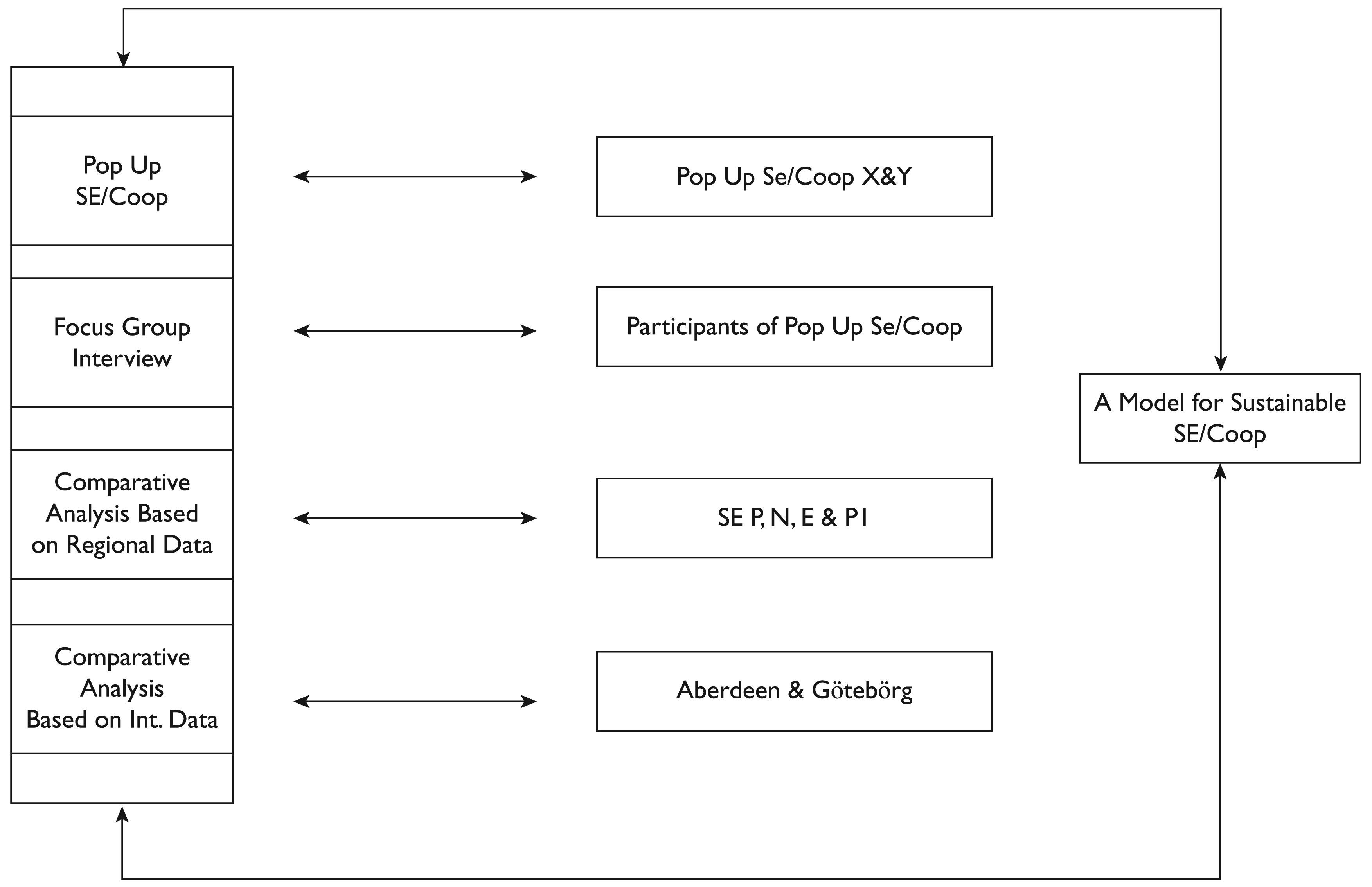
The SE members have learned about SEs/coops in four information sessions. In these information sessions, knowledge about different theories and the results of previous studies on coops/SEs, some ideas about a trial workshop, contacts with relevant authorities and expectations and hopes for an SE/coop was provided, since the group had no experience with or knowledge about SEs/coops. Four sessions were organized to plan the first workshop. Each of the sessions dealt with different themes related to schedule, budget, accessories, transport, marketing, policies for account holding and so forth.
The group members had enough time to plan this experimental pop-up SE/coop. Key aspects of the pop-up SE that were of particular importance are the location, the timing and the design of the pop-up SE in relation to the challenges facing the private and public sectors and opportunities for research. In all the stages of research, the role as facilitators was examined rather than discreet researchers, highlighting the tensions that occur in navigating the multidimensional roles of active participants and observers, and the corresponding expectations of each research goal with impact factors, public engagement criteria and partner expectations.
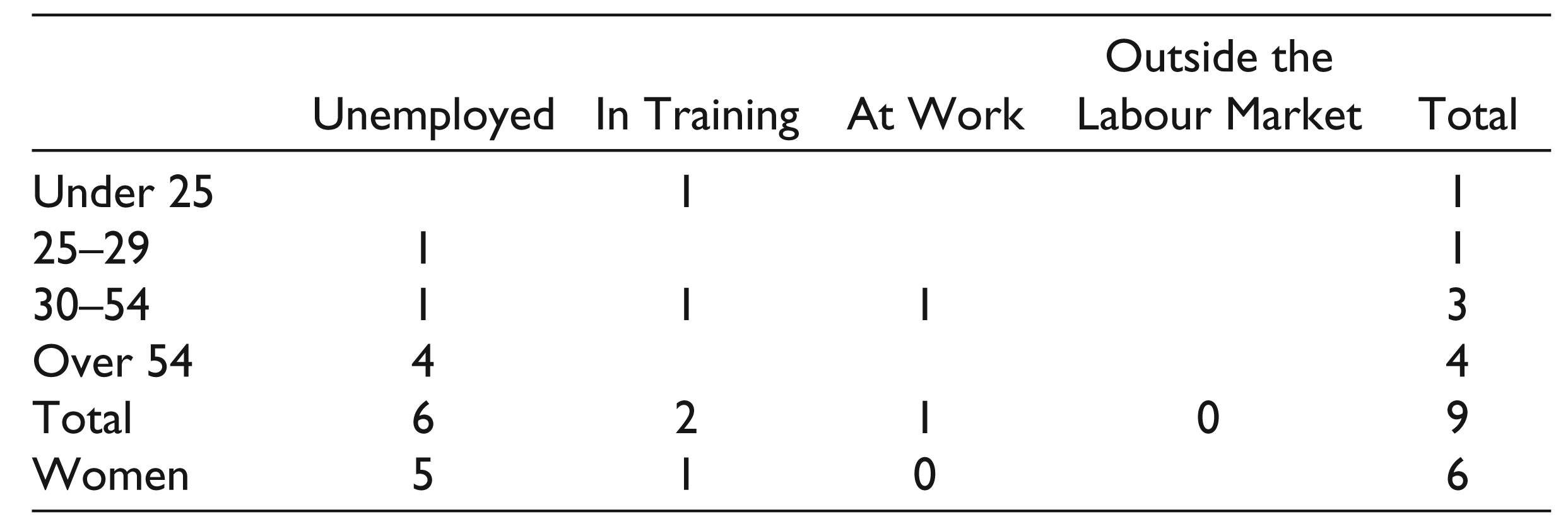
Most of the participants had knowledge about entrepreneurship; however, they did not have any prior knowledge of SEs. Experimental pop-up SEs/coops differed content-wise from each other. One is ‘X’ which ran for 5 days. Among the participants were both immigrants (six total, including four from Russia, one from Pakistan, and one from Afghanistan) and locals (three altogether). They were from various age groups. Two group interview sessions of focus groups were organized at the end of each experimental week. The first focus group interview was arranged after the first workshop, and the second was organized after the second experimental workshop to find out the results of the workshop and evaluate the reflections of the interviewees. Research data from the participants in the group interviews were collected by recording the interviews and taking notes (see Table 1).
Age Groups of the Participants in the ‘X’ Pop-up
Discussion
In the first case study, the participants of coop X had budgetary constraints on the allocation of their resources. They tried to develop viable markets with their limited investment and find out whether there was any demand for their services from social sectors. Measuring social demands was challenging for them. It was a multidirectional accountability process where the SE members focused on satisfying and identifying their stakeholders by not focusing on economic output. Nonetheless, they were involved in the production of goods on a continuous basis for 5 working days.
Model SE members received tasks depending only on stakeholders’ needs; but the tasks did not correspond to the members’ professional skills or their educational backgrounds. Only individual people and families hired them during their pop-up period for some tasks with low wages. They played the role of employees more than that of entrepreneurs in their SE. The jobs lasted 3–4 hours a day, and the hourly wage was negotiable but it was not more than US$855 per hour (including taxes and membership fees to SE) which is pretty less than the minimum salary scale established by the Finnish authorities.
The purpose and activity of the coop were to involve into public service delivery by designing and implementing the services and creating a sustainable network between social sectors and actors. The case study X failed to measure the strength of ties and make bridges with the public sector, entrepreneurs and communities in Rovaniemi as according to their expectation. They were not even successful in achieving economic sustainability through commercial activities (e.g., by selling their home-made products).
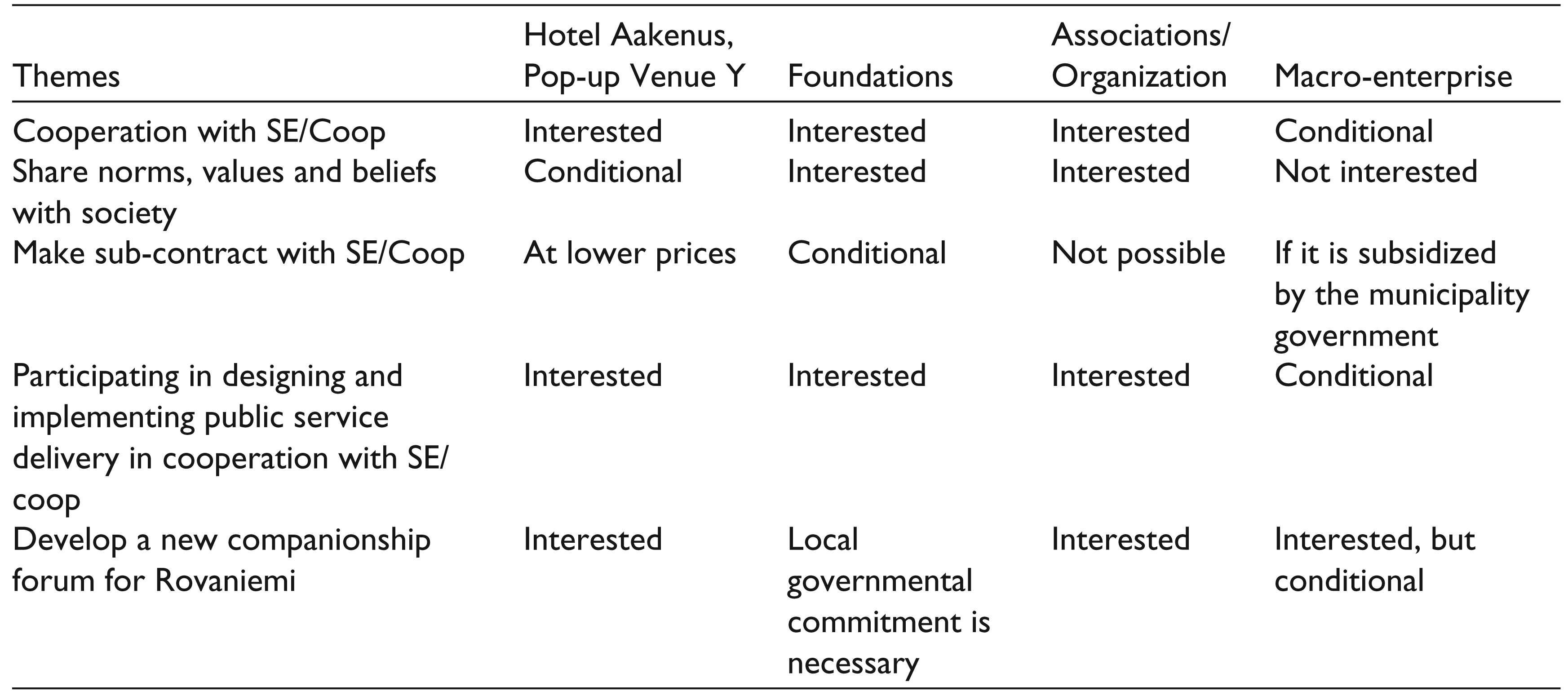
In the second case study, the goal of coop ‘Y’ was to cooperate with enterprises; since, case study number one had failed to attract potential customers of the SE/coop. Thus, Y’s workshop venue was organized in cooperation with a tourist hotel named Aakenus for 5 days. The aim was to enhance partnership for sub-contract and provide innovative services to private entrepreneurs and companies which could be the first step for companionship (Table 2). SE/coop ‘Y’ was successful to build network with the private enterprise. This sort of opportunity can provide specialized services tailored by the SE/coop.
The Initiative to Develop Companionship by the Participants
The SE/coop ‘Y’ looked for hidden jobs from the hotel Aakenus. The goal was also to find a new and sustainable approach to see whether a SE can help protect the mission of tourist companies in Rovaniemi and deliver a profit to them by doing their hidden work.
The focus was to find an opportunity to see whether a holding company can let an SE/coop to take over their small-scale tasks, e.g. cleaning hotel rooms, decorating a meeting room, sewing curtains and tablecloths, painting walls, and so forth. A holding company could serve as a centre point to support the services of an SE/coop. It was essential to find whether an SE/coop could provide services that would enable them to stay focused on their mission. Managing growth is expensive for an SE/coop. Thus, shared services with a holding company could provide more opportunities and lower the threshold for the SE/coop.
Comparative Study Based on the Regional Level
There are different conceptions of the SE/coop from country-to-country and city-to-city. There are different treatment groups (Kroeger & Weber, 2014) in various socio-economic and cultural situations in Europe. This comparative study focuses on two big cities (Gothenburg and Aberdeen) where SEs/coops have been running successfully for 15 years, and two small and sparsely populated cities of the Finnish Arctic where the idea of SEs/coops is new in the business community.
In an SE/coop, there is a significant level of economic risk among the founder members. Sometimes, they need to invest money in marketing, bookkeeping, materials for the office, renting office space and so forth. The financial viability of an SE depends on the efforts of its members.
This year an SE named ‘P1’ (city of Ranua) and one named ‘N’ in Rovaniemi closed due to the lack of adequate resources, market orientation, public subsidies, networks, partner organizations, managerial support and constraints on profit distribution. A minimum amount of paid work is required to derive the basic activities of an SE/coop.
In Ranua, the coop ‘P’ and the ‘E’ coop in Kemi started operations at the beginning of the year 2015. The risk factors of these newly established coops were analyzed on the basis of the other two coops which recently closed down their operations. In this part of comparative research, the focus was on the governance of the existing and terminated SEs/coops to ensure the legitimate part and governance priorities which are allocated, including the competing needs of the various stakeholders (Peattie & Morley, 2008). The goal of assessing risk factors is to measure the standard and sustainable policies and strategies for SE/coop governance and compare them with standard or similar measurements of peer organizations. The requirement is to explore the performance levels and risk ratio of new SEs/coops in the Rovaniemi area to get a better understanding of the qualities of a sustainable SE/coop. On the other hand, the SE/coop should manage risks by identifying risk events, assessing risk impacts and monitoring risks (Figure 3).
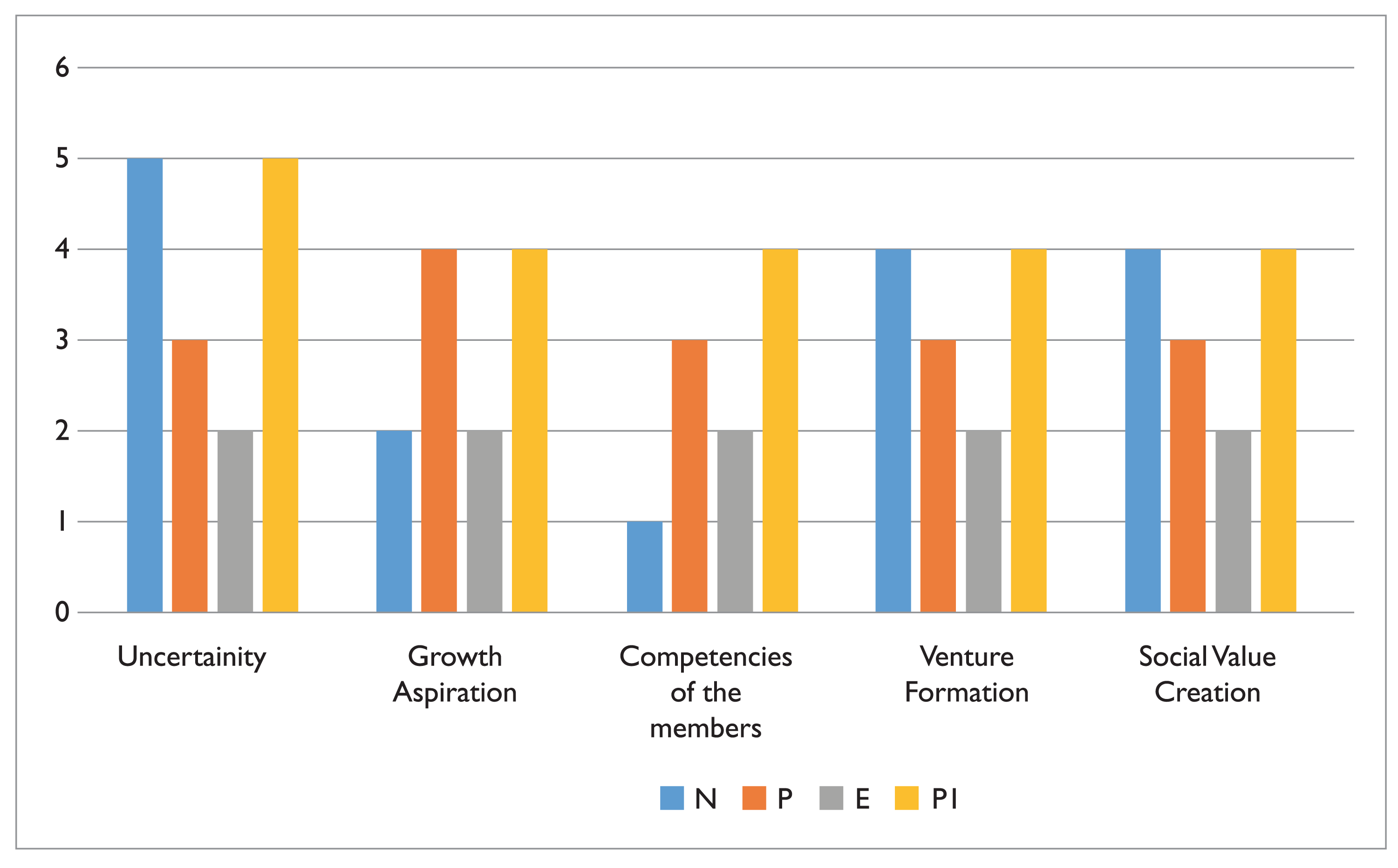
Relevant literature was reviewed to examine the conceptual perceptions of risk management. The objective of this analysis is to assess the future feasibility of the two existing SEs/coops by monitoring the factors of two terminated SEs that can cause risks for these existing SEs/coops. According to the analysis, the uncertainty levels of the existing and terminated SE do not differ greatly. The uncertainty levels of the existing SEs are not at a satisfactory level. There are uncertainties concerning funding and marketing; about the motivation of the members of the SE; the workers’ lack of ability to work with the team and the lack of active participation of the public sector, enterprises and stakeholders.
The growth aspiration of the ‘E’ SE is much better than that of the other existing SE ‘P’ because it is supported and influenced by other organizations that give aspirations to ‘E’. However, in P, only one member is active and others are inactive. The organizational influences are not adequate for the growth of P. The strategic risk-taking propensity of E is at a satisfactory level. The SE has growth potential although it is sometimes neglected. E’ seems to be active, since knowledge and competencies of the governing bodies are better utilized.
On the other hand, P lacks governance and strategic visions for long-term planning on the correlation of risk control. Members lack motivation since they do not have enough social support and strong network for getting sufficient job contract from different social and individual stakeholders. Development of an SE/coop depends much on the performance of the governing board, members’ motivation and the board’s experience. Only one member is actively handling all the risks of the SE in ‘P’. SE ‘E’, on the other hand, has a strategy for venture formation, since their executive board is formed every year and they have rules and regulations concerning applications for funding.
The social network of E is comparatively stronger and they have managed regular financial support through networking. Social value creation depends mostly on public authorities, who are responsible for the socio-economic and environmental well-being impacts of procuring public services (Dayson, 2013). The coproduction theory aims to facilitate the growth of SEs/coops with a social aspect. ‘P’ and ‘E’ are trying to create social value by identifying local needs and determinations of schemes. ‘E’ has identified a broader range of promoters than ‘P’. On the contrary, the market size is smaller in Ranua than in Kemi which also effect in this regards. The networks and opportunities to collaborate with the public sector are better for E than for P. Strategic knowledge over community development is significant for social value creation and for broadening societal impact (Korsgaard & Anderson, 2011).
In some cases, even if the professional competencies of the members are at a satisfactory level, it is hard to operate an SE/coop without any financial support. However, the competencies to solve social problems with the support of local stakeholders and the ability to respond to their demands and motivations are similarly evolved (Peattie & Morley, 2008). This research suggests that the success of an SE/coop depends on a strong network with stakeholders and social/community demands than on the competencies of the members of the SE/coop.
According to this assessment, the practices of ‘E’ have surviving capacity in Arctic perspective. However, mapping the activities of an SE and eco-systems is not an easy task. There are three dimensions of an SE. These are as follows: (i) the social dimension, (ii) the entrepreneurial dimension and (iii) the governance dimension. A full-time leader is needed to run an SE successfully. ‘E’ has a full-time worker who is paid by the SE. A leader is needed to develop the SE and manage new opportunities and risks. ‘E’ is able to maintain a standard strategy because it has a leader. An SE is established for business purposes or to get access to the labour market, which is not a voluntary sector, and it is hard to run an SE for a long time on a voluntary basis. Volunteer-driven SEs/coops generally lose their inspiration for work in the long run. Thus, the analysis says that ‘E’ SE has chance to continue its activities since it has recruited a person to take care of the SE/coop with the support of city corporation and other stakeholders.
Comparative Study Based on the European Level
The comparative international study is based on Aberdeen, Scotland and Gothenburg, Sweden. These comparative models of SEs/coops reveal that it is anti-competitive to promote local suppliers directly. The EU public procurement and coproduction theory also supports the idea of promoting local employment and economy by giving contracts and subcontracts to SEs. Most of the SEs in Aberdeen are successfully operating their social charities as a welfare paradigm by combining network and coproduction theory. SE/coop maintains a material relationship with public service organization and other social institution and foundations, communities as well as trusts.
The strength of ties between SE/coop and social institution varies on level, frequency and reciprocity of their relationship. Economic sustainability of the SEs´ mostly stands on ‘coproduction’ system. In the process, one segment of SE/coop subsidies another and it is seen as a development method between citizens and public organizations. It is an initiative of social innovation which is considered as a process between involved stakeholders within and outside the organization where citizens involve as coimplementer of public policy with a focus to develop a new frame to achieve legitimacy (Voorberg, Bekkers & Tummers, 2014). Some SEs in Aberdeen focus on both the business and the social aims of the organization, keeping both in the forefront of their aims and objectives. Their social aim is to provide a variety of consequential employment, training and learning opportunities, and social activities to LTU adults with the purpose of integrating them into the society. Some of the SEs works with people who have learning disabilities and need additional support to get access to the labour market.
Similar practices are available in Gothenburg, where there are dozens of coops operating successfully. In those, typically, the coop will begin to explore through an internship or wage-subsidized work according to their ability. Through small steps the coop offers its employees or members tasks with more responsibility. Similarly, the municipality commits to purchase services from the coop. In this phase of study, some influential factors were identified for a successful coproduction and networking. Public organizations need to have some capabilities, positive attitudes and positive administrative culture for establishing coproduction relations. On the other hand, SE/coop has to prove the following: (i) there are new outcomes of this new innovation; and (ii) the LTU citizens have capacities, resources and experiences for working as a co-implementer and network partner with public organization.
Results
In the interview with the members of experimental SEs, it was considered that without any reforms in corporate governance, it is not possible to improve the SE/coop sector in Rovaniemi. It is apparent that it is difficult to run an SE for LTU people without any support from the public sector, such as municipalities and community facilitation. After the group interview, some opportunities, strengths, weaknesses and challenges in running a SE/coop were explored.
The majority of the target group participants have reported that administrative, financial and other support is needed for the early stages (the first 2 years) of an SE’s life cycle. It has also expected that the public sector would offer to buy services, products and projects from SEs. The city could buy services from a SE or coop such as catering, childcare, cleaning, clothing care, social work, transaction assistance, transport services, work clothing maintenance, event arrangements and property maintenance. Discussions with the target group reveal that public procurement is an evolving process. Supplies would be a suitable field for local government practice; the local government could purchase amenities provided by LTU people. The public sector and local government could be assisted by coops or SEs by outsourcing public services to them. This could reduce and help control public operating expenditures.
The city of Rovaniemi could make cost-effective, immediate and long-term service contracts with SEs or coops. The target group has concurred the idea that a coop can both do business and receive donations and bequests. According to the observations, a SE or coop must cooperate with both commercial and non-profit-making entities. Both can acquire the products and services of a SE at lower prices. A SE/coop, as well as the main implementer, can operate as a subcontractor, depending on the position and level of skill of its members.
Some of the participants–specifically those who take part in the whole process–faced the problem of a lack of permanent office premises for the SE. The municipality could allocate a permanent place for an SE, since it is an SE. It is a moral and ethical issue to support LTU so that they can operate a SE/coop successfully and be involved with the shared norms, values and beliefs of society. It also came up with the idea that for a new SE/coop, the marketing of their products and themselves is an important issue, so it would be easier if some existing umbrella organizations, companies and regional governmental bodies advertise small-scale SEs/coops on their web pages.
Some of the interviewees are very concerned about effective leadership of the SE. They also propose that units of the municipality could take responsibility for managing SEs/coops or could recruit advisors for professional guidance in this respect. Rovaniemi municipality could play a key role in instituting a sustainable procurement process by prioritizing contracts with SEs/coops, which is the easiest and most cost-effective way of implementing immediate action rather than a lengthy tendering process. The procurement process could simplify the tender process by reducing the burden of documentation and encourage subcontracting systems between principal contractors and SEs/coops.
In addition, the participants agreed that coops may engage in legitimate business as well as receive donations and bequests. According to the observations, SEs/coops need to collaborate with various non-profit and for-profit partners (Figure 4) who can purchase services from SEs at cheaper rates. SEs/coops can work both as principal contractors and subcontractors based on their situation and experience since with an SE/coop it is a question of outcomes and not only income.
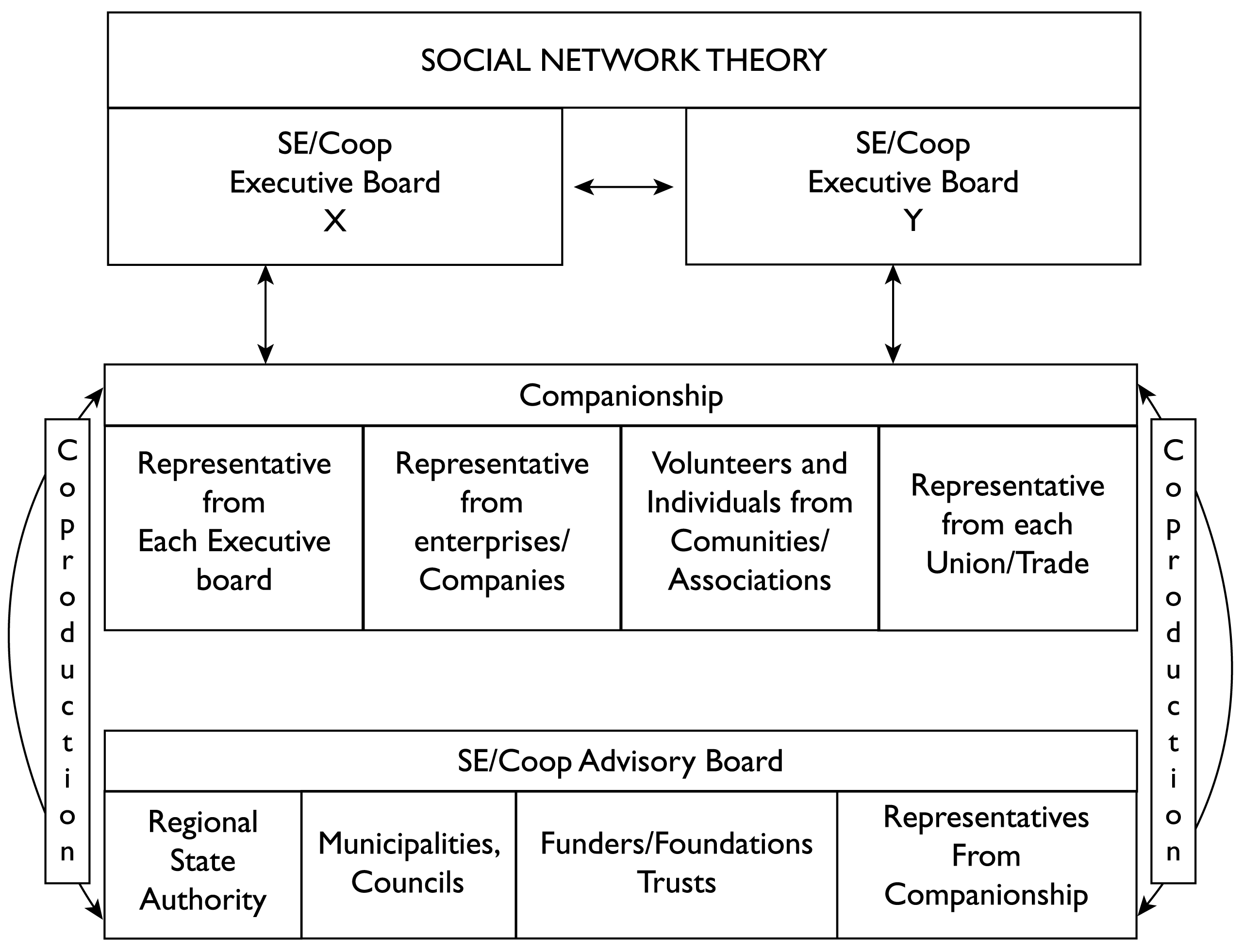
An advisory board with representatives from various sectors could play a key role in helping SEs to achieve their mission. The advisory board could meet once a year, and it could be the supreme governance body for the SE/coop rather than trustees or an executive board. An advisory board can generate more persistent earnings and greater cooperation between the SE/coop and other sectors necessary for the survival of an SE in Rovaniemi. They can give recommendations and feedback on activities, fund-raising and technical issues of the SE (Figure 4).
Limitations
This study has some limitations. It focuses on one specific group of people with a specific purpose, which makes it limited. The research is based on a small-sized Arctic city which is geographically isolated, sparsely populated and where the market size is small. Insufficient availability of networks and opportunities to collaborate with others make this research area special. Economic practices, the acquisition of sites, the inability to find funding and the lack of expertise may make the results of the research inapplicable to other cities and other research areas. However, the study paves the way for the creation of an Arctic coop model and ways to prepare for increasing immigration.
Conclusions
Employment makes a significant contribution to human well-being and strengthening the municipal and national economies. Enabling unemployed people to find jobs requires cooperation among many actors.
Working under a network and learning together has been another focal point of this pre-feasibility study, as well as possible follow-up measures supporting this idea. Cooperation with public-, private-and third-sector actors is a prerequisite for the generation of new entrepreneurship and the development of industries.
The sustainable social network model is based on data from four caselets and interview which can back SE/coop up to fulfil both their social aims and business. Every single data describes about the necessity of companionship which Rovaniemi lacks for. The cooperation between public with macro-and third-sector companies is more advanced in Lapland. All social actors have some responsibility to support social activities to integrate LTU into the society. On the contrary, there is a possibility to collapse welfare regime of the country. Thus, there is a need for more initiatives for small-scale cooperation with small communities, enterprises, associations and individuals. All common goals should indicate to increase coproduction to promote employment opportunity for discriminated group (LTU). The SE is a new ideology in the Rovaniemi perspective. Preliminary survey is needed for the city.
The comparative lack of research in this field in Rovaniemi has prompted this study to attempt to better understand the scale, scope and nature of SEs/coops. There is also a lack of practical knowledge about SEs/coops among local inhabitants of the city. According to previous research, an SE/coop has a safe environment to learn entrepreneurship; however, in Rovaniemi, educated SEs/coop entrepreneurs have so far been limited in number. Both organizations and individuals need more information and motivation to know about the aims and objectives of the coops/SEs. The operating environment for entrepreneurship is changing. This research shows the creation of social value which depends on target user, thus the executive body of a SE/coop should identify the relative value and collective beliefs of the region. Members need more information and motivation to learn from contributors and their experiences. SE education will help LTU people using their skills to find right answers to social problems. City Council should ensure that coproduction runs on a shared understanding and social network is used effectively to support the vision, strategic priorities and reinforcement of service ideas of public procurement while also achieving best value. The Council can maximize the opportunities for using local suppliers (SE/coop) within its strategy.
Footnotes
Acknowledgements
Authors would like to express their sincere gratitude to the European Social Fund and Rovaniemi Municipality for supporting the project where both authors took part in 2015–16 and this article is the modified and the scientific version of the WORK project and materials are available at