







Abstract
This qualitative study examines the effectiveness of an organization-wide healing intervention that aimed to fortify an uncertain relationship that existed between the new management and existing employees in a post-acquisition scenario. There was an inherent tension in the relationship, because the sociocultural sensibilities were at variance, with the acquiring management team being from the developed western part of India while the employees were from an emerging economy state from eastern India. From the content analysis of interviews of respondents at various organizational levels, this study identified enablers facilitating the healing process at the individual and collective levels. In fact, three types of enablers of organizational healing were identified: Leadership-linked, social and cultural. This study’s key finding is that these enablers elicit mid-level healing outcomes, which in the long run are likely to result in improved organizational outcomes.
Keywords
Introduction
Organizational healing is the process of repairing and restoring the social relationships of an organization after any crisis. The foundational healing ideas are rooted in care, respect for human dignity and nurturing social relationships (Powley, 2012, 2013; Powley & Piderit, 2008).
Healing interventions can provide support in handling various traumas. In the present work, our focus is to discuss an example of the trauma caused by actions initiated by management (such as the introduction of new business models, downsizing, mergers, acquisitions or technological upgrades). Such changes not only impact systems and processes but also affect live entities—employees. This journey, forced by management action to an unknown territory, creates a perception of instability and instils doubts about the future, leading to emotional and psychological stress (Erwin & Garman, 2010; Madsen et al., 2005; Vakola & Nikolaou, 2005). The present work is qualitative and based on an intervention conducted at Dhamra port (situated on the east coast of India). Based on the observations during the field visit and discussions with participants, we developed propositions juxtaposed with the extant literature that showcases how healing interventions assist employees at the individual, group and organizational levels. The study also identifies specific management initiatives that complemented the healing intervention. We then identify a few enablers of organizational healing from these discussions.
This article is organized as follows: The next section introduces the concept of organizational healing in brief. The third section introduces the intervention site, the on-site challenges and how the existing organizational culture influenced the selection of healing intervention. The fourth section discusses research methodology and the creation of categories and themes from the interview data. The fifth section brings out the intervention findings at two levels—intra-personal and inter-personal, and also highlights some specific management initiatives that complemented healing interventions. In the sixth section, we discuss the individual and collective benefits that emerge out of the intervention findings, along with the benefits of some management interventions. In the seventh section, we identify and discuss a few unusual and idiosyncratic findings of this case. Proceeding from this discussion, in the seventh section, we identify three kinds of healing enablers leadership-linked, social and cultural. In this section, we also propose that these enablers are likely to bring about mid-level healing outcomes (such as positivity, enhanced trust levels, fraternal feelings), which in the long run are likely to result in improved organizational outcomes (positive work climate, enhanced indebtedness towards the organization). The eighth section discusses the theoretical and managerial implications of the present study. Finally, the article concludes with direction for future research.
Organizational Healing
Powley and Piderit (2008) define organizational healing as the process of repairing and restoring the social relationships of an organization after any crisis. Organizational crises are sudden incidents during which routine processes are suspended, and social interactions and relationships are negatively affected. Darics and Clifton (2023) point out that like individuals, organizations can also experience trauma and this trauma can affect their functional ability. They further emphasize that it is important to address the trauma because if left unaddressed, it can perpetuate mistrust on organizational values, policies and leadership.
Cremers and Janssen (2023) highlight that the process of organizational healing is inherently social in nature. Powley (2013) says that the healing process materializes through live functional entities—employees and their relationships. Livne-Tarandach et al. (2021) point out that the process of healing is ongoing in nature and is a journey to reduce suffering within organizations.
Cremers and Janssen (2023) highlight that apart from contributions from a concerned top management, the process of healing also includes empathetic involvement of employees. Powley (2013) stresses that the process of healing necessarily involves supporting troubled colleagues. Therefore, in his opinion, the process is equally essential, as is the final goal—restoring organizational processes.
Cremers and Janssen (2023) further highlight that the process of healing is about sharing experiences—experiences of trauma as well as the process of recovery. Mias deKlerk (2007) highlights that this process of sharing stories brings employees together and they find comfort in the fact that they are not alone.
It may be seen that the discussions on healing have been focused on understanding healing as a process and its after effects. To the best of our knowledge, there has been no qualitative study that has studied an on-ground intervention and used its outcomes to understand the enablers of organizational healing.
Dhamra Port: The Research Site and Intervention
We intend to undertake a qualitative approach in the present study in which theory would emerge out of various observations. Welch et al. (2022) recommend that such an approach (the inductive approach, as Eisenhardt [2021] calls it) gets strengthened when the context is explained in detail. In the present paragraph we discuss the context and highlight the reasons that led to the introduction of a pro-employee healing intervention.
An Indian company, originally based on India’s west coast, had taken over a private port, situated at the east coast of India, from a joint venture between two Indian conglomerates.
Challenges Observed After the Acquisition of Dhamra Port
The acquiring team reports that after the port takeover, there were significant sociocultural (language/food/festivals) differences between the new management team and the workers. In addition to these social challenges, the work cultures of the two companies were quite different. There were industrial relation (IR) issues because of land-acquisition and local-worker-employment issues. The IR issues were exacerbated by politically affiliated unions that used to pitch ‘outsider’ (management) against the ‘local’ (worker). Due to the influence of these unions, discipline issues such as late arrivals and early leaving were frequent.
Dhamra port is in a highly remote and isolated location. En-masse replacement of the entire labour force was not an option because port operations were labour-intensive, and the labour force came primarily from nearby villages. Further, the new management team did not want to create an antagonistic relationship by bringing labourers from outside. During the initial days, the Human Resources (HR) and IR team of new management tried to win over employees through rewards. However, as the HR head of new management mentioned, ‘somewhere, I could see that this approach is not working over here’.
In such a scenario, senior management planned an intervention that provided value-based thinking for employees and supervisors to facilitate sociocultural changes.
Need for Healing Intervention: The Immediate Cause
There was a mob violence incident inside the port premises on 15th August 2017. A heap of coal slid down, and 10 to 15 people came under that heap. Two persons succumbed to their injuries, leading to unrest, mob violence and port area ransacking.
How Existing Culture and Values Influenced the Choice of Intervention
The acquiring group already had some unique programs for the middle and senior management levels conducted at their parent location, in western India. These pro-employee programs were meant to relax employees and introduce them to a more inclusive approach. As these programs were an accepted part of the organizational training routine, there was a trust in the efficacy of such initiatives. Therefore, the management team approached a non-governmental organization, the Art of Living Foundation (AOL), to develop a customized program for employees at the functional level. The program was designed to combine physical exercises, breathing exercises, meditation and discussions to lead a better life quality.
Research Methodology
Darics and Clifton (2023) point out that the exact extant of the trauma is often not immediately visible and therefore healing process must involve ‘micro level analysis’ and ‘close attention to detail in communication’ (p. 177). These details often emerge when the experiences are carefully listened to, and significant words and phrases are noted. This observation by Darics and Clifton (2023) is a recommendation to deploy qualitative methods (recording and carefully interpreting the responses of respondents), while we endeavour to identify healing enablers.
Eisenhardt mentions that qualitative methods work best when the ‘researchers don’t have a preconception of what relationships they’re going to see. They may have a guess about the constructs but are fundamentally going in open-minded’ (Gehman et al., 2018, p. 4)
In the present study, we discuss a unique instance (what Eisenhardt mentions as the exemplar case. Refer: Eisenhardt, 2021; Gehman et al., 2018). This case is a unique study because it combines a few unique initiatives by the top leadership team such as focus of healing initiative on bottom of pyramid workers, including not only on-roll workers but also contract workers, conducting outreach and developmental initiatives not only within organization but also outside organization, such as the larger adjoining village community, and involving family members and larger community in the healing initiative.
Data Collection
Primary data was collected by semi-structured interviews and focused group discussions with recipients of interventions, supervisors of recipients, senior management officials and intervention planners. Interviews were conducted with 41 respondents. There were 15 direct recipients of interventions, 10 heads of departments and 16 line-managers. The interviewees were from various departments (operations, engineering, purchase, HR, IRs, Howe India, dredging, environment, port operations, stores, admin) and of various ages. The interviews were one-to-one, open-ended and semi-structured to adapt to various roles and perspectives of employees, as recommended by Eisenhardt (2021) and Eisenhardt and Graebner (2007). Open-ended questions helped in developing better trust levels so that various employees could confidentially share their feelings.
The interviews lasted from 20 minutes to 40 minutes. Efforts were taken not to influence the respondents by using specific words or leading questions. Secondary data sources in the form of presentations, and website data, were mainly used to get information about the acquiring company and port location. The responses given by respondents were on the efficacy of the intervention, observed changes in energy levels, time management, attitude and identification with organizational objectives. Multiple sources (recipient, peer, supervisor, senior management and secondary data) were used to provide multiple perspectives, to triangulate existing information and enhance data credibility.
Data Analysis
For the data analysis, we have applied Gioia’s methodology (Gioia & Chittipeddi, 1991; Gioia et al., 2013), which is an approach for conducting grounded-theory-based interpretive research. The Gioia method involves a systematic presentation of the experiences of organizational respondents—called first-order analysis. This systematic analysis involves the identification of similarities and differences among emerging categories. From the systematic analysis of the first order inputs, concepts, themes and dimensions emerge that help translate subjective inputs into more generalizable theory inputs. This is called the second-order analysis and from this analysis a scientific theorizing emerges. The grounded theory is then generated by showing the dynamic relationships among the emerging concepts. Gioia says that adherence to participant input is the key for maintaining objectivity and avoiding researcher bias. He states (Gehman et al., 2018). ‘We try to retain informants’ terms’ (p. 4) and ‘I go out of my way to give voice to the informants’ (p. 8).
Extant literature (Graneheim & Lundman, 2004; Kondracki et al., 2002) recommends that in the case of textual data (such as open-ended surveys), content analysis is to be carried out so that theoretical insights can emerge from the data. Content analysis involves a systematic process of condensing and classifying data to allow the phenomena to emerge. The condensation process involves compressing the text (say, interview replies, responses to open-ended survey questions) while maintaining the essence. The classification process goes from specific to general. The first level codes (open codes) reflect the direct meaning of the words. However, the literature recommends that it is also essential to focus on latent textual data meanings during content analysis. There is often an underlying phenomenon in textual data, which emerges after careful analysis of the observations. These latent meanings are brought out in more abstract categories and themes at various levels. Graneheim and Lundman (2004) and Kondracki et al. (2002) highlight two advantages of systematic content analysis. First is that data classification into various categories and themes is not subjective or random but follows a process. Constructs operating at similar levels are brought together and distinguished from those operating at different levels. The second advantage is that a systematic analysis reduces individual prejudices and assumptions and traces how a general conclusion was arrived at from specific observations.
In the present work, each interview was transcribed verbatim, and these transcripts were the basis for carrying out the content analysis process. The codification process was mostly manual, and for better data filtering and sorting facilities, MS excel worksheets were used. However, deciding categories and themes and combining similar categories was a manual exercise. Figure 1 shows a schema of the classification process.
Schema of the Classification Process.

The responses that contained a single idea formed one meaning-unit. 1 As Graneheim and Lundman (2004) recommended, the meaning units were then further condensed to minimize the number of words, taking care to maintain the essence. These condensed meaning units were then labelled and formed the first level of classification—Open Codes. Keywords or phrases were retained during open coding to maintain authenticity.
Categories and open codes were then studied alongside, and efforts were made to gauge the unsaid—latent content. Urquhart (2001) emphasizes the importance of this stage because the process of abstraction of latent information begins at this stage, and the foundation for generating new insights from data is laid. Categories from which a common inherent idea emerged were brought together and distinguished from other categories with different latent ideas. Thus, first-level themes emerged. Similar Level-1 themes were combined to form a second-level theme. As we moved from open codes to second-level themes, abstractness increased. Figure 2 shows various Level-3 themes formed after combining Level-2 themes.
Various Level-3 Themes.
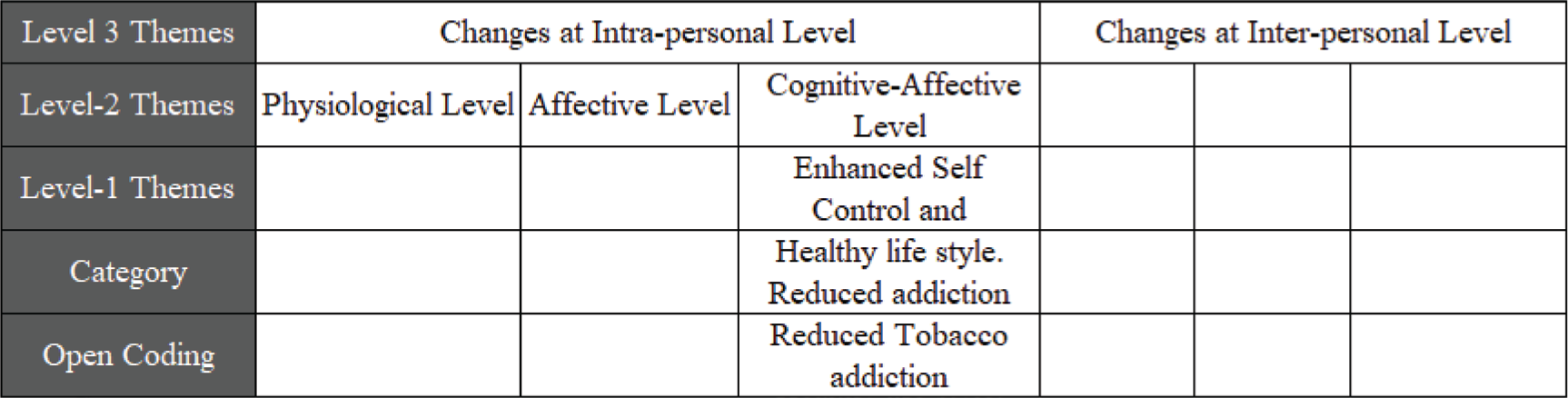
The process of identification of themes was often iterative. The classification process was done multiple times to avoid fatigue and retain creativity. This was ensured by considering only 10–15 responses in one sitting. It is important to note that not all categories necessarily have sub-categories. Sometimes both open codes and categories have the same description.
Discussion of Codification Process with More Than One Researcher
In order to enhance the validity and reliability of the findings, Graneheim and Lundman (2004) recommend that the content analysis should be done by two or more researchers independently, and then their findings should be compared. In the present work, the first author, second author and one fellow PhD colleague collaborated on classifying and interpreting emergent themes. The classification process was done multiple times, and various perspectives and insights were discussed. In many cases, the researchers agreed on the emerging insights, and in a few cases, the interpretations were different. In such cases, the final call was taken after discussing the merits of each case. This process helped in reducing the subjectivity and bias of a single researcher. This process reduced alternative explanations of various phenomenon and thus enhanced the generalizability of the emergent theory.
Findings
The healing intervention at Dhamra was a blend of meditation, breathing techniques, motivational and good-conduct sessions, and group games. The intervention resources were given pointers to cover issues such as alcoholism, tobacco usage, wife-beating, theft and pilferage unobtrusively. The focus of this intervention was not to impart skill-based training but to enhance positivity and help develop an inclusive viewpoint.
One of the course instructors mentioned: ‘First target was to appeal to genuine goodness of every person’. The lead HR manager mentioned the inclusive nature of the intervention. ‘We did not go for any religious ritual. We had many participants of various religious backgrounds. The entire program was local language (Odiya) based’.
Eisenhardt (1989) recommends that quotations from interviews be cited in a qualitative study. The interviews were transcribed, from which important quotes were noted and the process of developing first order and second-order themes proceeded as per the Gioia methodology, that has been described above.
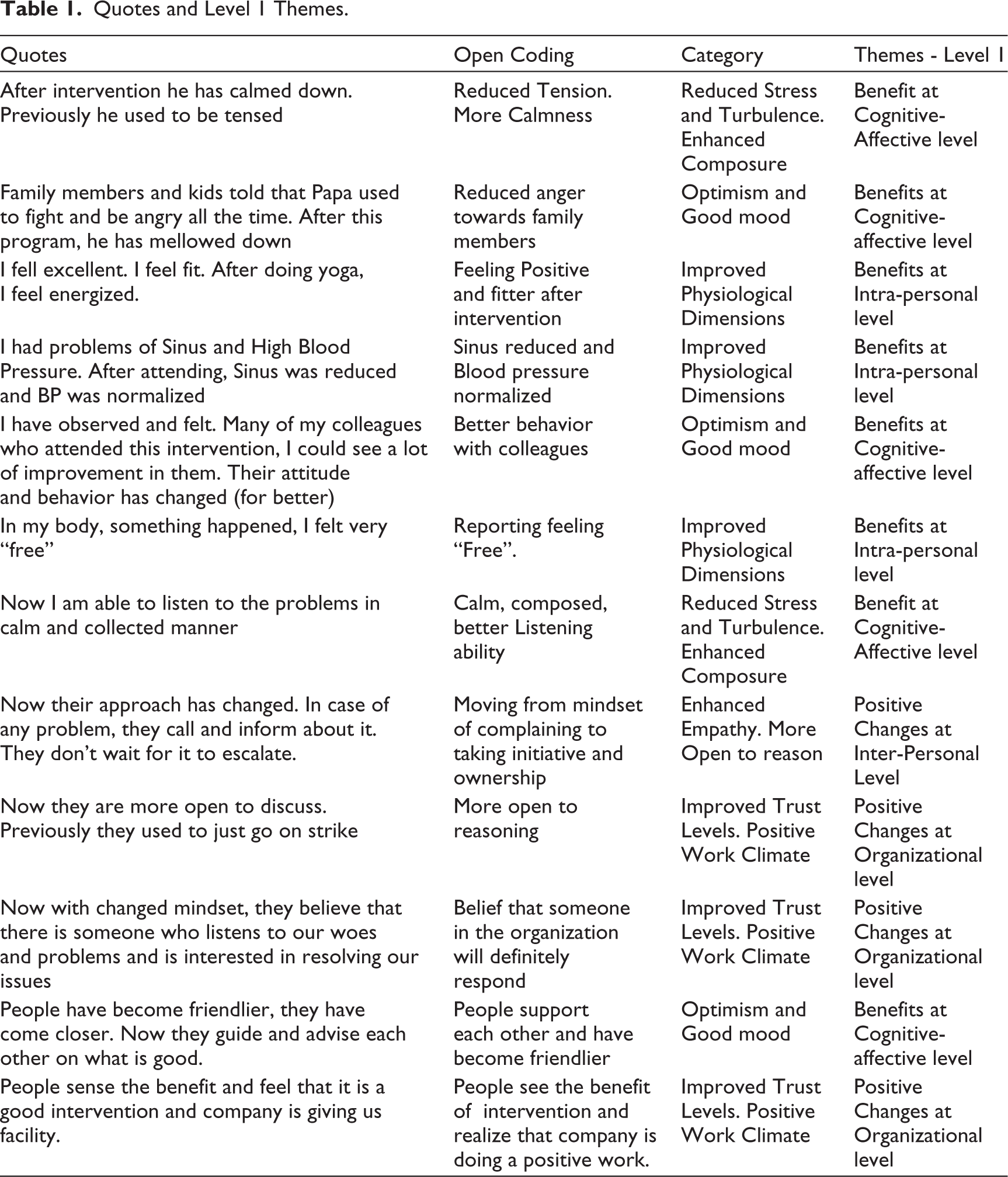
From the available interview content, important quotes were identified. Table 1 shows a sample process of how Level-1 themes emerged from quotes. The coding process starts with quotes that are very specific. As we move towards right, generalization and abstraction increases. Similar quotes are identified into categories and similar categories give rise to first order themes.
Quotes and Level 1 Themes.
First Order and Second-Order Themes for Benefits at Intra-Personal Level.
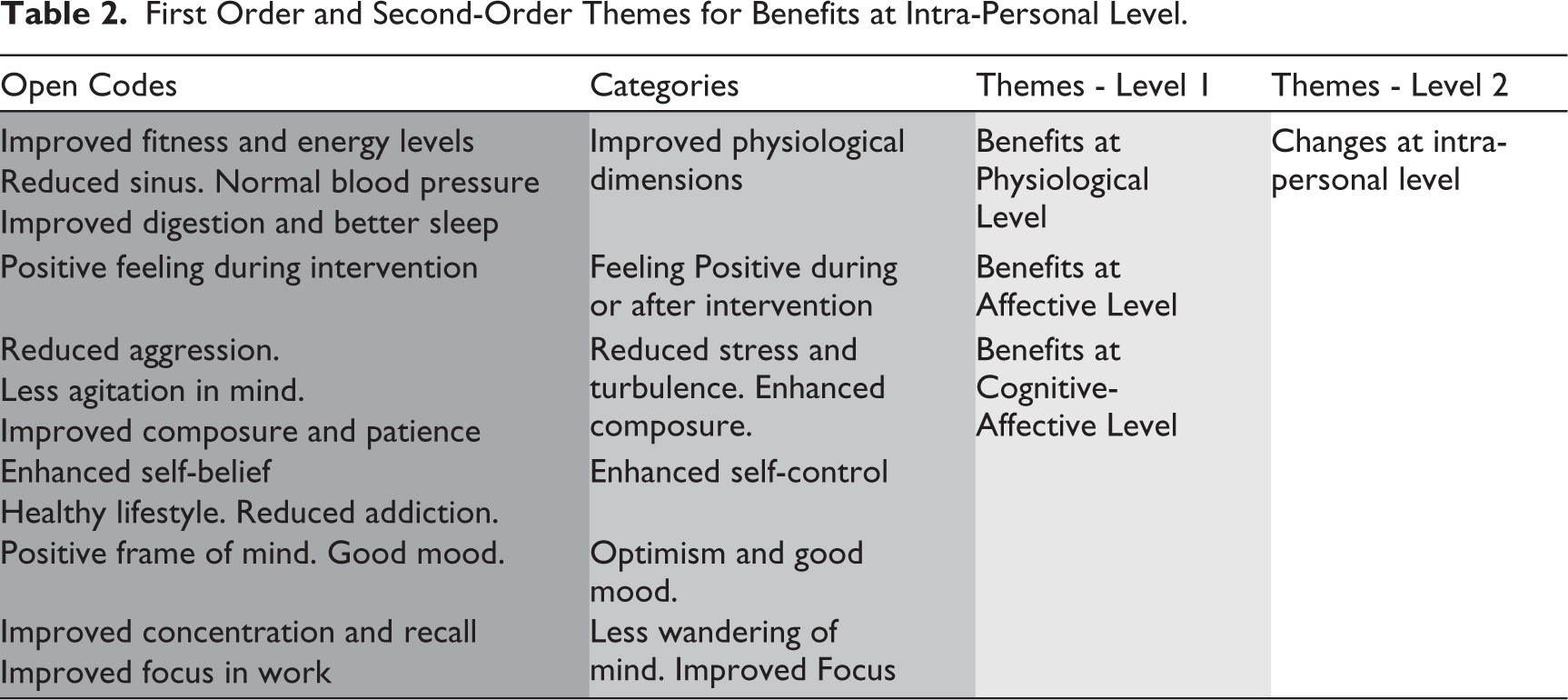
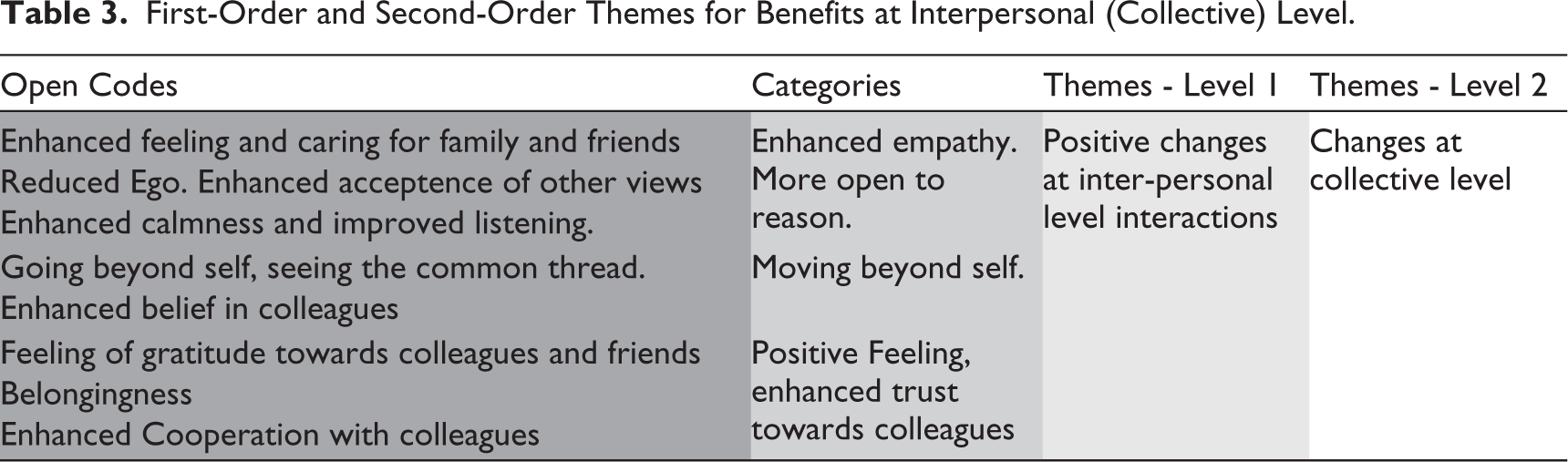
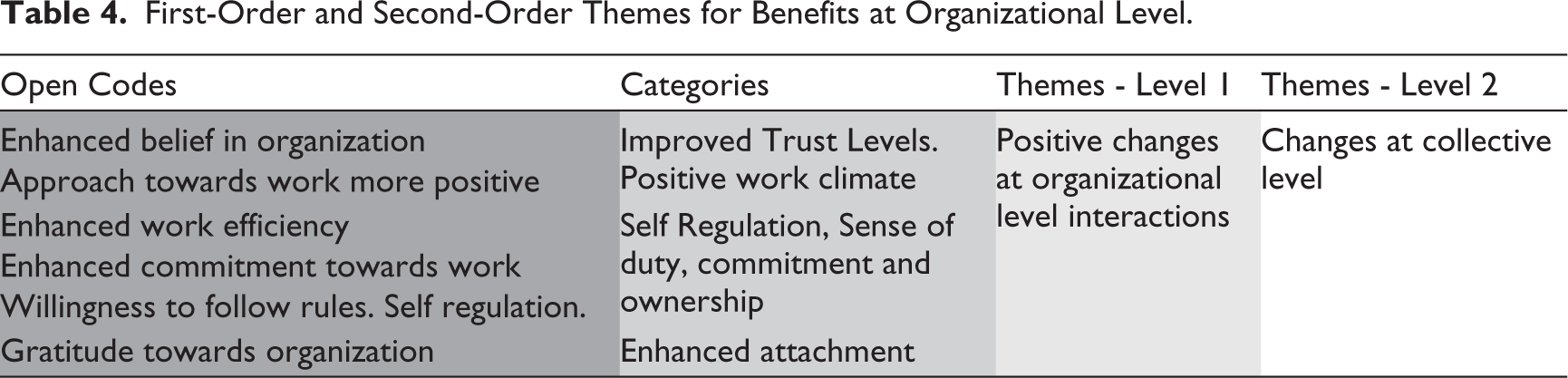
As the detailed and iterative content analysis of the first level themes were, latent themes (most generic) emerged. These themes were at individual and collective levels. Table 2 shows the development of themes at the intra-personal level, Table 3 is a compilation of benefits received at the interpersonal level and Table 4 is a compilation of benefits received at the organizational level.
First-Order and Second-Order Themes for Benefits at Interpersonal (Collective) Level.
First-Order and Second-Order Themes for Benefits at Organizational Level.
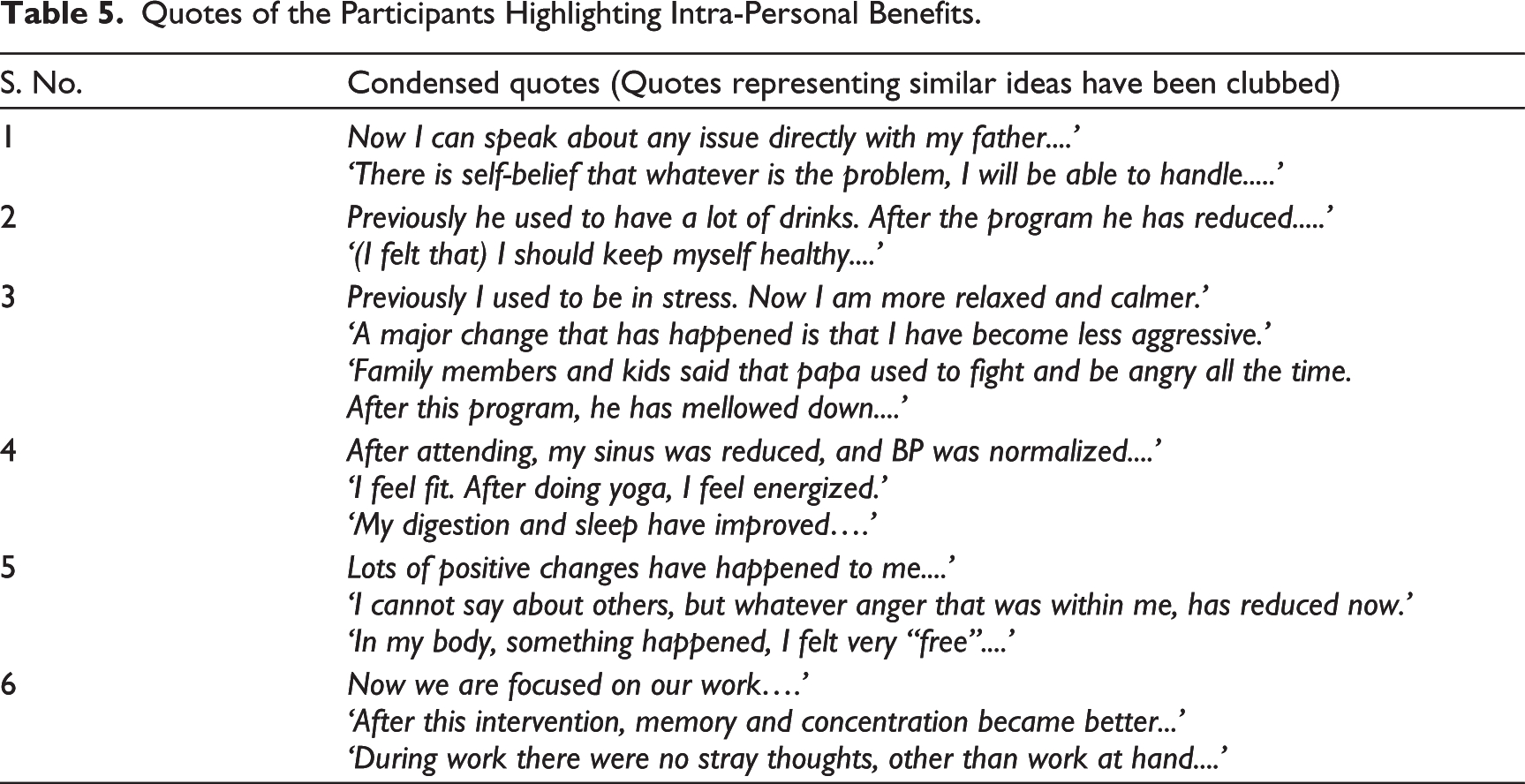
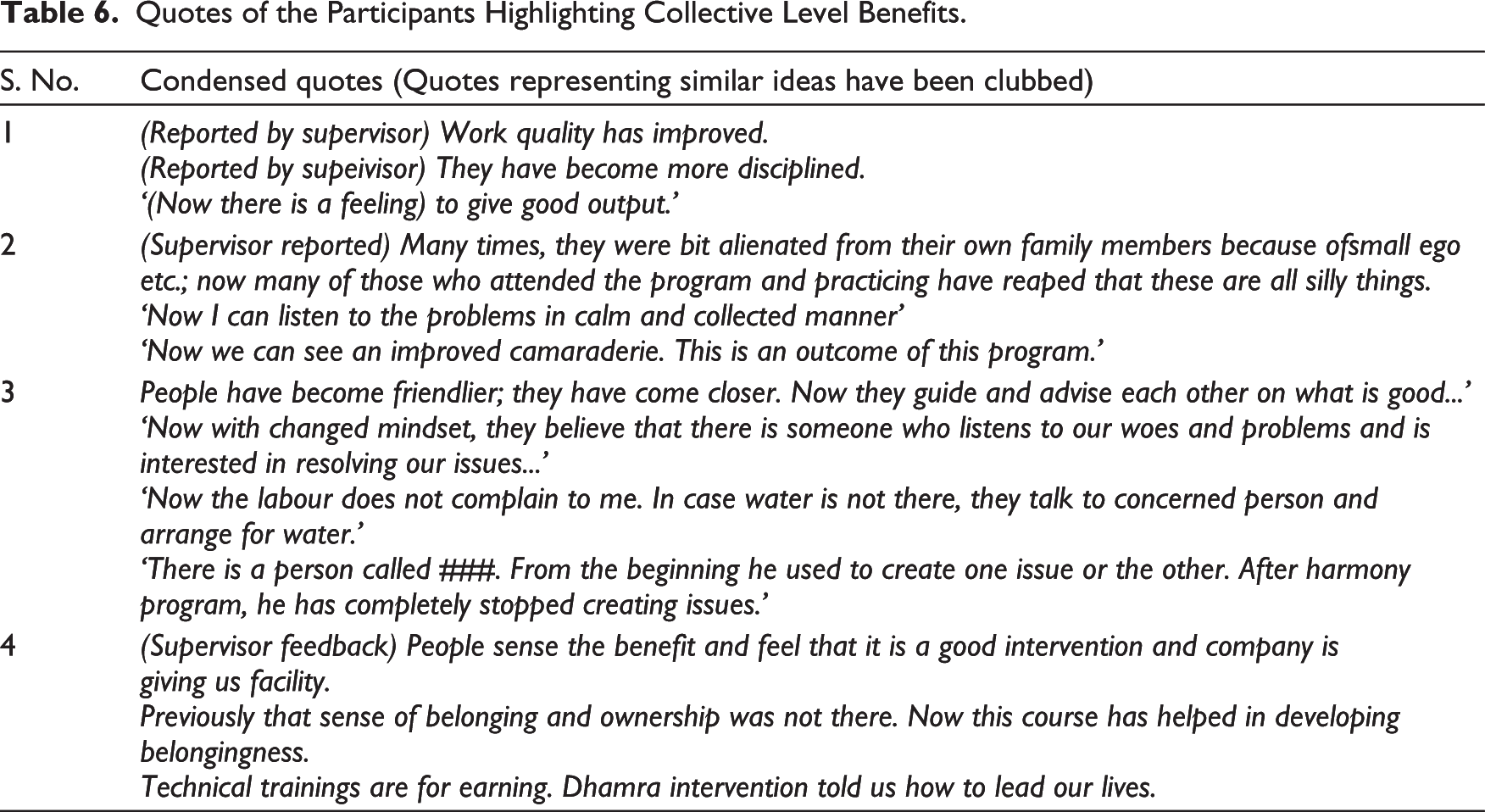
In line with the recommendation by Eisenhardt (1989), some representative quotes that highlight intervention benefits have been indicated in the following tables: Table 5 contains quotes highlighting benefits at the intra-personal (individual) level. Table 6 contains quotes highlighting benefits at the collective level. Detailed discussion on these codes has been done in the next session.
Quotes of the Participants Highlighting Intra-Personal Benefits.
Quotes of the Participants Highlighting Collective Level Benefits.
We now proceed to discuss some of the salient benefits of healing intervention and, from these results, will proceed to identify key healing enablers.
Individual-Level Benefit: Healing Intervention Leads to Physiological Benefits
One typical response from nearly every recipient was about improved energy levels. Multiple respondents shared their experiences of being energetic or rejuvenated after healing interventions such as meditation or physical exercises. This perceived physiological benefit had multiple benefits. First, the benefit of the organization-led initiative was accepted and acknowledged, which served in healing and bridging the gaps between workers and employees. Second, as Ryan and Frederick (1997) highlighted, physiological benefits led to a feeling of well-being and self-confidence.
Individual-Level Benefit: Healing Intervention Leads to Improved Self-Connection and Enhanced Self-Belief
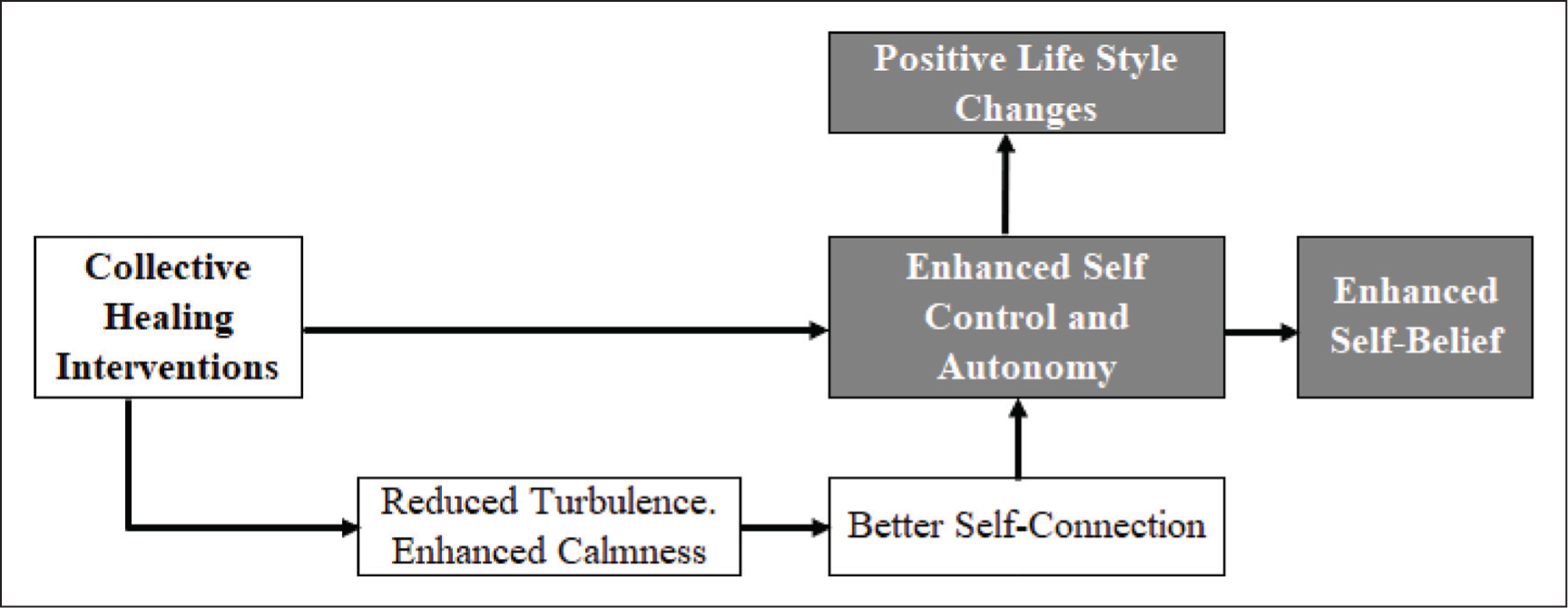
Dhamra respondents report increased assertiveness. Some other respondents also report positive lifestyle changes. These benefits can be traced to the calming influence of collective interventions. Relaxation techniques and physical exercises energize the body and reduce the fluctuations of the mind. Aurobindo (1992) explains that when one observes within as a detached observer, the psychological scars at the subconscious levels are steadily brought out at the conscious level. As this process of ‘witnessing’ happens, it leads to acceptance, which initiates psychological healing. The process of meditation encourages introspection and exploration within.
Ranganathananda (2000) says that once the confusions of ‘within’ subside, an individual is better prepared to study the ‘without’ and is better equipped to respond to them. With reduced distractions and increased clarity of goals, persons trained in such interventions become more focused, more involved in their work and achieve results. Second, as individuals explore within, they realize that healing resources are within themselves (Ramsundarsingh, 2019). This realization, coupled with improved physiological benefits, enhances an individual’s self-belief. Based on the above discussion following proposition can be made: (refer to Figure 3)
Proposition 1: Healing interventions enhance self-belief mediated by improved connection to self.
Healing Interventions Enhance Self-Belief Mediated by Enhanced Self-Connection.
Individual-Level Benefit: Healing Intervention Leads to Enhanced Concentration and Recall
After the Dhamra intervention, many participants reported that their focus and memory recall had improved. As discussed, healing intervention brings calmness and enhances self-control. Anger, frustration and a general attention deficit take the focus away from the task at hand to unconnected thoughts leading to severe consequences. At the workplace, the consequences of reduced attention can affect the quantity and quality of work output. Based on the above discussion, the following proposition can be stated:
Proposition 2: Healing interventions enhance concentration and recall mediated by reduced turbulence.
Collective Level Benefit: Healing Interventions Lead to the Formation of a Like-Minded Group
Human society was shaped alongside ideas of cooperation and adherence to agreed norms. Human beings are aware of the importance of social connections, and they have an innate desire to form social bonds and establish mutually fulfilling relationships. They value the opportunity to feel interconnected to others in a mutually supportive community involved in meaningful activities (Cantor & Sanderson, 2003; Duchon & Plowman, 2005; Hawkley & Cacioppo, 2010).
When individuals undergo a collective practice, it gives rise to a social network of persons who share similar values, and the group thus formed gives them a collective social identity. In contrast, people who perceive that they are not included in a particular social group feel lonely and marginalized (Diener et al., 1999; May et al., 2004).
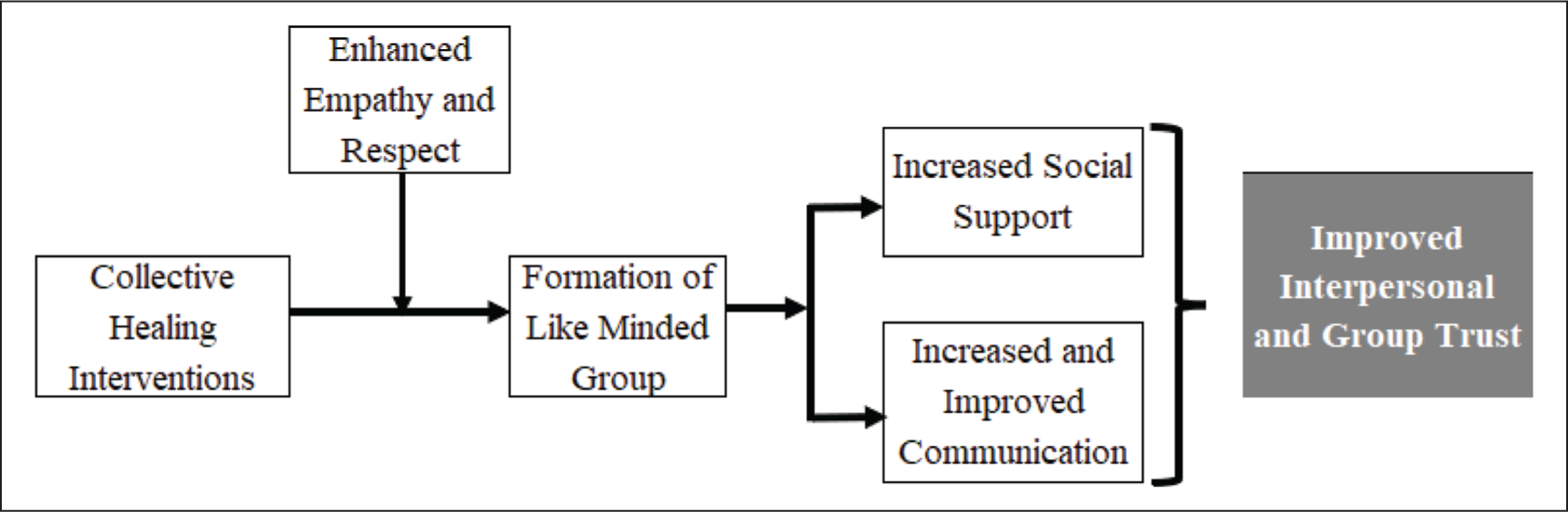
Wandersman and Florin (2000) point out that community events enhance camaraderie and felt-responsibility and reduce feelings of isolation and loneliness. Dutton and Heaphy (2003) highlight the importance of sharing stories and personal experiences. They mention that these everyday experiences bring people together and pave the way to forming high-quality connections. Nahapiet and Ghoshal (1998) say that social capital resides in relationships, and relationships are created through exchange. Collective interventions enhance this exchange, creating new social connections and strengthening existing connections. While work-related relationships exist in an organization, healing intervention at the workplace gives rise to a new relationship based on a shared positive experience. This new development positively impacts workplace relations and enhances interpersonal and group-level. Based on the above discussion, the following proposition can be stated: (refer to Figure 4)
Proposition 3: Healing interventions improve interpersonal and group level trust levels.
Healing Interventions Lead to Improved Trust Levels.
Collective Level Benefit: Healing Interventions Enhance Positive Work Climate
Folkman and Moskowitz (2000) as well as Gross et al. (2011) state that positive events in the workplace (encouragement from seniors and colleagues, pro-social behaviours) not only attenuate the effects of negative experiences but also provide respite from chronic stressful work characteristics. The Broaden and Build Theory by Fredrickson (2001, 2004) states that moments of psychological respite give rise to positive emotions, and these positive emotions result in the replenishment of thought-action resources, which further assist a person in subsequent trying times. When an organization arranges for collective interventions that provide relaxation, the individual benefits of such a step are recognized and valued by the recipients.
Eisenberger et al. (1986) point out that any favour specific to the recipient’s need is valued more than a favour that benefits the entire group. The benefits of collective interventions (designed to provide mental peace and relaxation) are perceived, and irrespective of any motive that can be attributed to management, a personal level benefit is experienced and acknowledged. After such a positive personal experience, heartfelt and positive word-of-mouth messages spread in the working group and larger social circles (township families). Recipients recounted this experience at Dhamra as follows:
I felt, after all, exercise can only benefit. There is no harm. At least I am doing some physical exercise.
One HR Manager reported: ‘To my surprise, one of the persons who were very much actively involved in creating the ruckus completed the entire session’.
At this juncture, we propose that employees usually perceive that skill-based training is primarily for the organization’s benefit. On the other hand, in the case of healing interventions, the benefits are felt personally, and therefore employees value this investment more and are more indebted to the organization.
Proposition 4: Interventions focused on employee welfare create more indebtedness than skill-based interventions.
Eisenberger et al. (2001) discuss the idea of felt-obligation. They point out that if the employees perceive that the organization stands by them and is concerned with their welfare, then a positive emotional bond to the organization would be established. Felt-obligation is reflected in some of the following quotes:
Now I feel more committed to work, which was not the case earlier. Whatever work is asked, I am able to do it quickly.
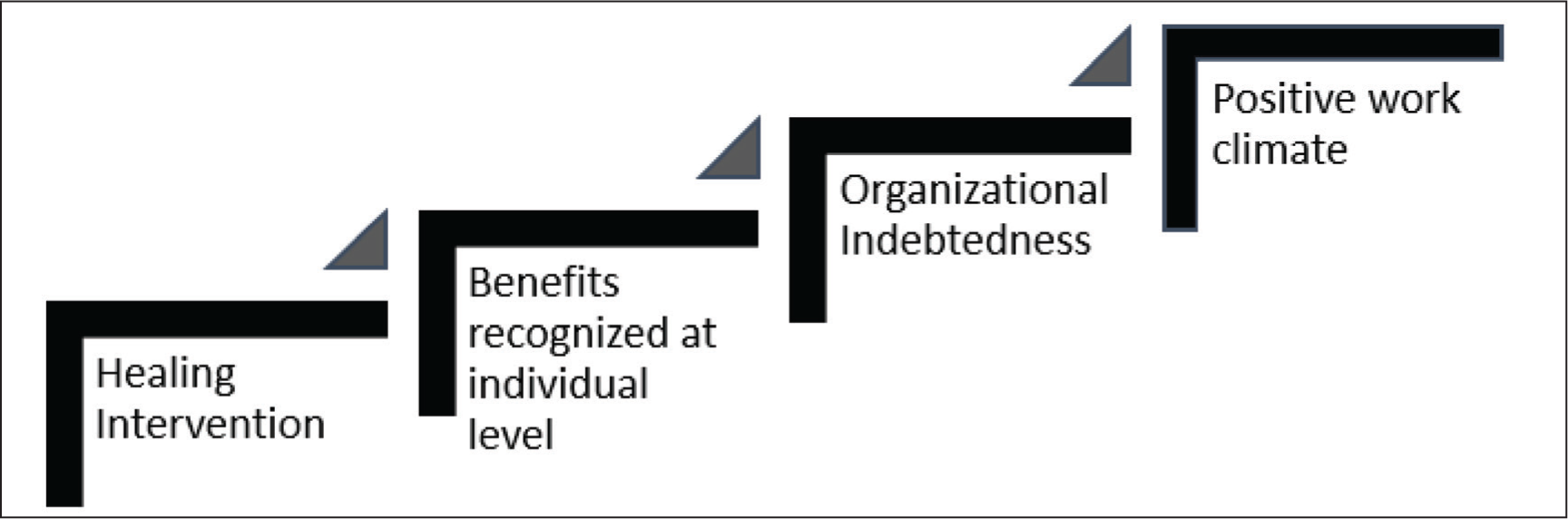
This felt-obligation or indebtedness, in turn, reduces cynicism and endears the organization to an individual. When employees have a positive mindset, they are more likely to be motivated into creative action. In such an invigorating environment, a person can find positive meaning in subsequent events. Fredrickson (2004) says that finding positive meaning in events triggers positive emotions. Based on the discussion till now, the following proposition can be stated: (refer to Figure 5)
Proposition 5: Interventions focusing on employee welfare enhance organizational indebtedness leading to a positive work climate.
Healing Interventions Lead to a Positive Work Climate.
Collective Level Benefit: Healing Interventions Enhance Positive Behaviours at the Interpersonal Level and Positive Attitude at the Collective Level
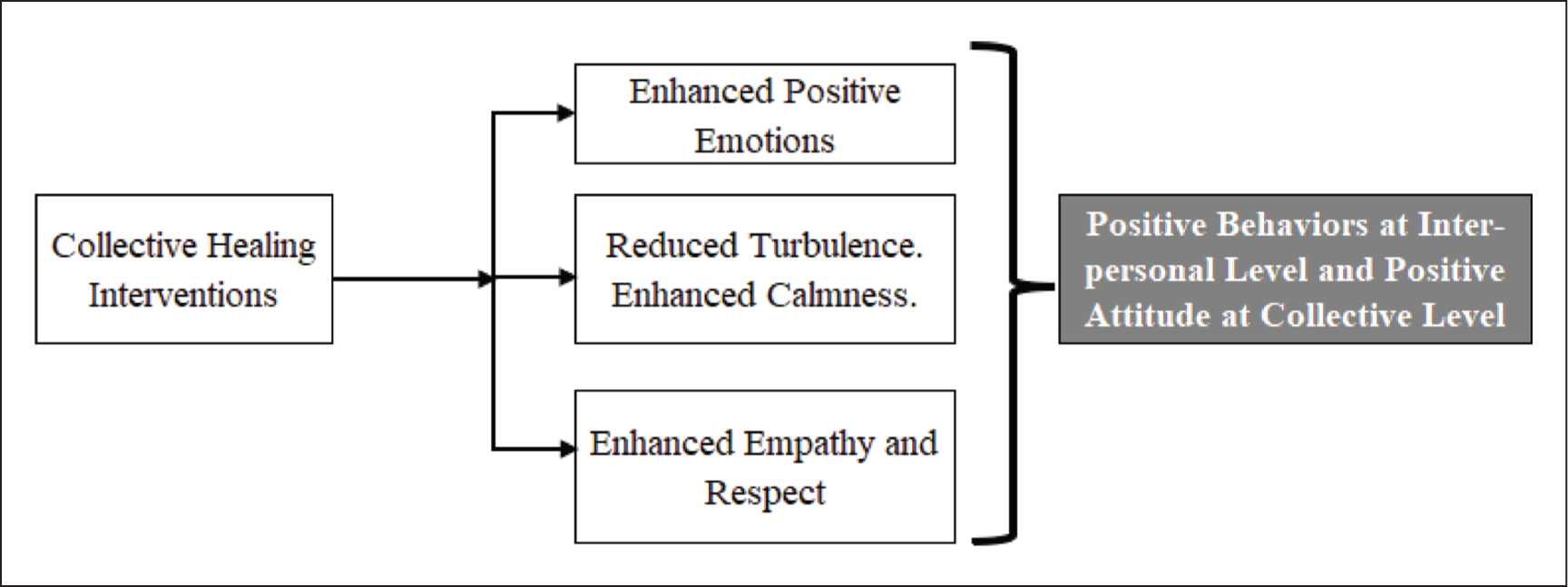
While healing interventions have to be designed to provide enhanced energy and relaxation at the individual level, they should also include a pedagogical component that recommends a greater acceptance of the ‘other’. If we go through the benefits at the intra-personal level, we find that many recipients have reported reduced agitation of mind and improved composure. At the interpersonal level, such a change brings about greater accommodation, improved interpersonal interactions and greater respect for coexistence. One of the first reflections of such changes is visible in small voluntary behaviours that are in control of an individual. We discussed that collective interventions helped develop positive emotions in the previous sections. Rosenhan et al. (1974) and Clark and Isen (1982) conducted a series of social experiments that show that improved interpersonal behaviour is likely to be exhibited when a person is in a positive mood state. Lilius et al. (2008) point out that when employees experience compassion, they also develop positive emotions for their colleagues and organization. Figure 6 shows how healing interventions are likely to bring about positive interpersonal behaviour and a positive attitude towards work. Based on the above discussion, the following proposition can be stated:
Proposition 6: Collective healing interventions result in positive interpersonal behaviours and a positive attitude towards work.
Healing Interventions Enhance Positive Behaviours and Positive Attitude.
Specific Initiatives Taken by Management to Enhance Trust Levels
Eisenberger et al. (2001) caution that employees’ interpretation of organizational motives behind any support initiative is a significant factor in accepting or rejecting that initiative. Indiscriminate praise given to all employees or other easily penetrable facades of disingenuous approval or symbolic benefits is identified by employees and reduces the trust and emotional bond with the organization. However, if the employees are convinced that management intent is genuine, they respond positively. Eisenberger et al. (2001) and Pawar (2008) point out that employees seek to return the healthy behaviour shown by the organization (norm of reciprocity). Randall et al. (1999) point out that an organization that cares about its employees, treats them fairly and is concerned with their overall well-being, is recognized and has low turnover rates.
In the Dhamra intervention, management took steps to showcase that the intent is non-manipulative and is for the greater good. During this intervention, the workers were allowed to have training during office hours. At Dhamra, some workers were initially apprehensive that this intervention would isolate and identify some specific workers. However, the intervention planners included all employees, whether on-roll, associate or contract workers, and there were no efforts to segregate any employee or a specific group. One facilitator said, ‘The first phase was most challenging, but it also set a positive tone. Word spread that the program is genuinely helpful, and more people should participate’. In total, 14 out of 16 line-managers at Dhamra reported that their subordinates feel indebted towards the organization post-intervention. All sixteen line-managers agreed that organizing such interventions showed that the company cares about the employee’s well-being. In Dhamra intervention, many recipients reported an enhanced connection towards the organization. In the Dhamra intervention, management took steps to showcase that the intent is non-manipulative, and the intervention has been planned for the greater good.
Unusual Findings Emerging from Within-Case Analysis
Eisenhardt (1989, 2021) emphasizes the importance of identifying unusual or idiosyncratic themes in a within-case analysis. In our opinion, one of the major strengths of the qualitative process is the ability to observe and record facts that go beyond existing literature and insights of researcher.
In the present case, while we were observing the context, or doing the interviews, we noted a few additional and unusual findings. These are mentioned below:
Alongside the main healing intervention, several initiatives were taken for the larger social community that resulted in developing higher trust levels and a positive social environment. First, as a part of trust-building initiatives, the new management took a call to build a temple in the township and kept a local priest there. During our interviews, a few employees shared their views on this initiative in the Odiya language. One employee mentioned that (because of the temple) his parents had a nice hygienic place to listen to spiritual music, meet their friends and spend quality time. Another person informed us that the community appreciated this initiative, as this was a long-felt requirement. Second, the new management started a volleyball tournament in the surrounding village—an action that produced substantial positive effect. In subsequent years, the people from the adjoining village and nearby areas also sent their teams. Families and friends used to gather to watch these matches. This development came as a welcome surprise to the management, who steadily increased the prize money. Senior managers used to felicitate the winning teams, and the employees cherished this recognition (players mainly were blue-collared workers and their family members). Third, the new management started supporting the villagers for medical requirements (Dhamra is an upcoming port, and not all medical facilities are available). For this purpose, vehicles were arranged at designated times. Fourth, top HR officials made it a practice to visit nearby villages and spend some time with the retired persons, elders and family members.
Fifth, another interesting feature came out of our interviews. In our industrial experience,
2
usually, there is unease between the training department and the supervisors in an operating environment. While the training department wants the annual training targets to be fulfilled (long-run thinking), the immediate supervisors are often unwilling to release their subordinates because on-date assignments have to be completed (short-run thinking). However, during the interviews, a counter-intuitive insight emerged. In this case, the supervisors and senior officers were more forthcoming to allow their subordinates to undergo the healing intervention, even at the cost of operational inconvenience. The reason was that most of these seniors had already undergone an organizational healing intervention in their parent location (situated in western India) earlier. That experience was so fulfilling that these senior officers were inclined to allow their subordinates to undergo a similar positive experience. Based on the above discussion, the following proposition can be stated:
Proposition 7: The supervisor’s personal experience of a healing intervention will favourably moderate the recommendation of a similar intervention for the subordinate.
Summarizing the Enablers of Healing
Based on the Dhamra intervention and associated insights, we now identify some of the enablers of organizational healing. The first prominent enabler relates to the leadership dimension. The present study shows that the new management was empathetic and willing to take several initiatives to improve employees’ well-being. The following quote from the interviews exemplifies this enabler: Now with changed mindset, they believe that there is someone who listens to our woes and problems and is interested in resolving our issues.
The management at Dhamra also showed that it is action-oriented and went beyond mere intentions. The management allowed employees to undergo intervention during office hours (investment of time), hired an external consultant to provide specific healing intervention (investment of money and resources), allowed not only direct employees but also all contract labourers to undergo healing intervention (investment of money). The management was willing to go beyond spoken words and deployed resources for healing intervention.
Another aspect that emerged was a broad agreement among senior and middle management about adopting healing intervention as an organizational initiative. This broad agreement on organization-wide healing among middle management gave these interventions legitimacy and ensured that ground-level implementation went ahead without any problems. In addition, due to their own positive experiences in the past, supervisors were willing to release their team members for training. This aspect was explained earlier in the section on unusual findings.
As healing intervention progressed, an informal group developed within the organization that supported seniors and peers. This fraternal approach towards colleagues created a positive work culture and further assisted healing. The following two quotes from the interviews exemplifies this enabler: (Quote 1) You feel that all are related and close. (Quote 2) People have become friendlier; they have come closer. Now they guide and advise each other on what is good. The supportive mindset was recognized and appreciated by the employees and the larger social community. The following quote from the interviews exemplifies the indebtedness felt by the employees: People sense the benefit and feel that it is a good intervention and the company is giving us facility.
While the above two enablers were on expected lines, the third healing enabler emerged because of some of the unusual initiatives by the Dhamra management. The Social Enabler was about investing and involving social resources in the healing process. The management took initiatives such as building a temple, starting a volleyball tournament and developing community-wide goodwill. Senior HR officials’ unofficial social meetings and visits were also significantly instrumental in improving relations.
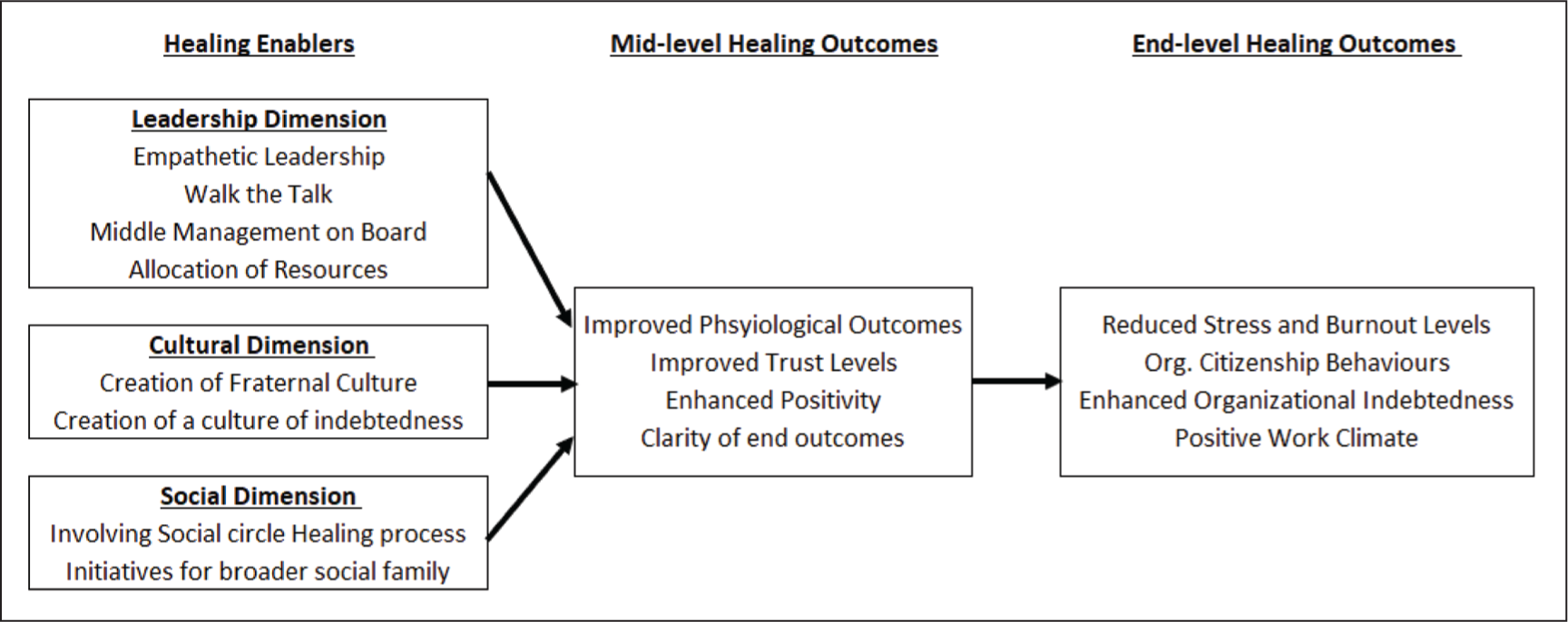
Based on the above discussion, we identify broadly three kinds of enablers: Leadership-linked, cultural and social. We propose that these enablers are likely to bring about mid-level healing outcomes such as positivity, enhanced trust levels, fraternal feelings and in the long run, are likely to result in improved positivity, indebtedness towards the organization and a positive work climate (Refer Figure 7).
Proposition 8: The organizational healing enablers bring about mid-level healing outcomes (improved physiological outcomes, improved trust levels, enhanced positivity, reduced turbulence and enhanced clarity) and long run healing outcomes (reduced stress, enhanced organizational citizenship behaviour).
Healing Enablers and Mid-Level and End-Level Healing Outcomes.
Conclusion
The present study at Dhamra port of India, brings out various benefits of a healing intervention at individual and collective levels. We have tried to show various inter-linkages by subjecting individual benefits to group and organizational analysis level. These benefits and inter-linkages emerged after analysing the recipients’ responses and studying some specific management actions that complemented the intervention. Based on the insights in handling the crisis at Dhamra port, we have put forward seven propositions that state: healing interventions enhance self-belief and improve concentration (propositions related to individual-level), healing interventions improve interpersonal and group trust levels, interventions focusing on employee welfare enhance organizational indebtedness, healing interventions result in positive interpersonal behaviours as well as a positive attitude towards work (propositions related to group level), Interventions focused on employee welfare create more indebtedness as compared to skill-based interventions, supervisor’s personal experience of intervention will favourably moderate the recommendation of a similar intervention for the subordinates (general propositions). One of the propositions (Proposition 7) emerges out of unusual and idiosyncratic facets of this case. This observation has contributed to identifying an unusual healing enabler—social dimension, which emphasizes investment not only in employees but on the larger social community of employees.
From the entire exercise of content analysis, we have identified healing enablers and have also postulated that these enablers would contribute to mid-run and long-run positive individual, interpersonal and organizational outcomes.
The present study contributes to literature in multiple ways. This study examines the efficacy of an organization-wide healing intervention that was introduced to bring about positive industrial relations in a post-acquisition scenario and thereby contributes to change management and conflict-resolution literature. In the present study, the acquiring management was from a different geographical region, and the cultural sensibilities of the existing employees were very different from that of the management team—resulting in significant mistrust between management and workers. The study discusses the healing intervention that assuaged fears and insecurity and rebuilt trust at interpersonal and organizational levels. The second contribution of this study is to identify the importance of management actions related to the larger social community—employees’ families and adjoining community. These actions rebuilt trust and positivity, contributing to a positive work climate. The third contribution of this study is to identify healing enablers after studying the complete contextual background at Dhamra port. This is perhaps the first qualitative study that attempts to identify the enablers of organizational-level healing process.
We also observed that senior officers at Dhamra, who had themselves undergone an organizational healing intervention, were more forthcoming in permitting their subordinates to undergo a similar positive experience, even at the cost of operational inconvenience. This insight can have significant managerial implication in planning contextual training.
The present study examines the efficacy of an organization-wide healing intervention in a post-acquisition scenario and thereby contributes to change management and conflict-resolution literature. The study also highlights the importance of management actions related to employees’ families and adjoining community in rebuilding trust and positivity.
The present study is what Eisenhardt (2021) calls an exemplar case. The purpose of the study was to highlight the unique pro-employee initiatives undertaken by an organization. However, since the study discusses only one organization, therefore it could have implications that are more ‘idiosyncratic to the case’ (Gehman et al., 2018, p. 4). Therefore, one limitation of the present study is that the outcomes might not be generalizable.
The models proposed in this article are exploratory, and the first research implication will be to empirically test the propositions of this study. The second implication would be to check the moderating influence of individual and job characteristics on various propositions. As the present study was based on a single organization, the third research avenue could be to do a multi-case qualitative study that focuses on unique pro-employee initiatives and then ratify or critique the propositions of the present study.
Footnotes
Declaration of Conflicting Interests
The authors declared no potential conflicts of interest with respect to the research, authorship and/or publication of this article.
Funding
The authors received no financial support for the research, authorship and/or publication of this article.