







Abstract
When the global pandemic disrupted conventional academic support systems worldwide, The Third Degree (TTD), an innovative Malaysian academic entrepreneurial service provider, emerged with a novel solution. To understand TTD’s innovative strategies, this case study examines the transition by establishing a borderless research ecosystem that now encompasses Asia, Africa and Europe. To aim at unearthing the lived experiences of stakeholders, the study is grounded on an interpretive approach with subjectivist epistemology and relativist ontology. Using the Gioia methodology, TTD’s notable trajectory is investigated through semistructured questionnaires and in-depth interviews with sixteen participants. The unanticipated findings of this research reveal six interconnected dimensions that not only characterize TTD’s innovative transition but challenge prevailing assumptions about academic entrepreneurship in emerging economies. The findings led to the proposal of a novel model, the Academic Entrepreneurship Amalgam Model for Emerging Economies, revealing surprising mechanisms for knowledge transfer and knowledge creation. Notably, it elucidates how digital platforms and virtual communities can effectively bridge geographical and institutional barriers that have historically impeded academic entrepreneurship in developing countries. With over 4,200 students engaged, 126 webinars conducted, and 12 MoUs signed, TTD’s approach offers valuable insights for academic entrepreneurs, universities and policymakers seeking to navigate the complex landscape of research commercialization while maintaining academic integrity.
Keywords
Introduction
‘Entrepreneurship’ and ‘innovation’ are core mobilizers in the achievement of the United Nations’ 17 Sustainable Development Goals, especially in promoting economic growth and equality. The development of dynamic entrepreneurship is a critical tool to create jobs and remedy socioeconomic inequalities through the collaboration of public, private and third-sector actors helping entrepreneurs (Wagner et al., 2021). In this political context, universities have emerged as important institutions, transforming from their former roles as places for teaching and occasional research to knowledge-economy centres. This transformation is particularly evident in how universities leverage knowledge spillovers (Agarwal et al., 2010) to enhance stakeholder engagement at multiple levels. By fostering strong ties with government and industry partners, universities have become instrumental in driving economic development through their integrated approach to research, education and innovation (Crawley et al., 2020). This evolution reflects a growing recognition that the continuous translation of research outcomes into commercially viable products and services is increasingly crucial for institutional and societal sustainability.
The success of research commercialization depends on multiple interconnected factors. These include robust collaboration networks, adequate research funding, supportive regulatory frameworks, entrepreneurial culture, research infrastructure, researcher competency and motivation, effective leadership, technological suitability, intellectual property protection and efficient technology transfer offices. To navigate this complex landscape, universities are adopting structured approaches such as the 7MWwBP model (Poteralska & Walasik, 2022), which provides a systematic framework for the commercialization process in R&D. The development of appropriate strategies and the cultivation of mutual trust among stakeholders, particularly between business schools and industry partners, have become essential for successful research commercialization (Siegel & Wright, 2015).
Academic entrepreneurs serve as critical liaisons in the knowledge commercialization process, functioning as boundary-spanning agents between academic research and commercial applications (Ertugrul et al., 2024; Perkmann et al., 2021; Plantec et al., 2023). Their role is particularly vital as scientific advancement accelerates, creating new opportunities for knowledge transfer and commercialization. Entrepreneurship, as described by the knowledge spillover theory (KST), explains this process, phenomenally noting that knowledge created in one place can be leveraged in another, filling the bridge between knowledge creation and its commercialization (Agarwal et al., 2010; Audretsch et al., 2021). External entrepreneurs are often better positioned to commercialize academic research than university faculty because academics often lack the time, business know-how, or the desire necessary to turn the fruits of their work into commercially viable products (Berggren, 2017). This metaphor illustrates the dual nature of scientific entrepreneurship: academic researchers pursue their normal path, but commercializing science necessitates new skills and interests. Academic entrepreneurship is an evolving concept defined in a spectrum of levels, ranging from those that support pure scientific research of value to society to those that further scientific research applications of value to various sectors (such as industry, public policy and social economy), representing an evolutionary process from classical to an entrepreneurship university (Neves & Brito, 2020).
Research collaboration frequently trumps commercialization, as seen by studies that indicate scholars primarily collaborate with industry to progress their disciplines and obtain new insights rather than for financial gain (Shaikh et al., 2023). In addition to financial gains, the advantages of this type of involvement include improved research resources, networking and learning opportunities and better exposure in the academic world. The dissemination of academic information and research excellence coexist and support one another in this entwined model, which results from the intricate interaction between knowledge production and commercialization (Brundin et al., 2008). It is essential to comprehend this phenomenon as academic institutions are increasingly concentrated on moving technology and information from the academic to the commercial sphere, aided by technology transfer offices and incubators that assist in turning research concepts into successful ventures. Even though academic commercialization is growing in popularity, many questions remain about how academics engage with the industry and manage the commercialization process (Palo-Oja & Kivijärvi, 2015). Much of the present research has focused on university spin-offs and technology transfer strategies, with little emphasis on the lived experiences and strategic approaches of academic entrepreneurs, especially in emerging nations. To close these gaps, this paper examines a unique case of academic entrepreneurship in Malaysia, focusing on how academic entrepreneurs create and capture value while balancing their academic and commercial objectives.
This study examines how academic entrepreneurs navigate the dual demands of scholarly pursuit and commercial engagement in an emerging economy context; investigates the processes and mechanisms through which academic entrepreneurs create and capture value through knowledge commercialization; analyses the role of institutional support structures and networks in facilitating academic entrepreneurship; and explores how academic entrepreneurs contribute to a broader societal impact beyond commercial outcomes. This study adds to theory and practice in several ways. Primarily, it views the academic entrepreneurship processes in emerging economies by providing a broad understanding of academic entrepreneurship beyond conventional Western contexts. This geographical and contextual expansion is crucial for developing more inclusive theoretical frameworks that account for diverse institutional environments. Second, by adopting a detailed case research approach, this study provides rich insights into the practices and strategies employed by academic entrepreneurs. These comprehensions may provide value to both scholars studying academic entrepreneurship and practitioners seeking to enhance the effectiveness of their commercialization efforts. Third, this study contributes to policy discussions by highlighting ways in which support networks and institutional frameworks can be improved to encourage successful academic entrepreneurship. The findings will be useful to governments and universities in emerging economies trying to enhance innovation ecosystems. Lastly, this case enhances our knowledge of how academic entrepreneurship supports societal goals while upholding academic integrity in both business and society. The undisputable growing emphasis on the role of universities in addressing societal issues and enhancing sustainable development is particularly significant.
Theoretical Underpinnings
The study is underpinned by three interrelated concepts: academic entrepreneurship, innovation models and KST. In combination, these concepts offer a perspective to examine the conversion of scholarly information into useful commercial and societal products for the future.
Academic Entrepreneurship: Conceptual Evolution
The academic entrepreneur is an unusual career path that blends scientific knowledge with commercial pursuits. This hybrid role embodies the intersection of academic pursuits and commercial enterprise, where individuals combine entrepreneurial mindsets and methodologies with their academic training, research endeavours and scholarly networks to establish autonomous businesses that produce long-term economic value (Carayannis, 2020). An academic entrepreneur operates as a boundary-spanning agent who simultaneously engages in both entrepreneurial and scientific activities (Guindalini et al., 2021). The dual role (Figure 1) involves generating revenue and profit through self-employment while maintaining active engagement in academic education and research (Plantec et al., 2023). This role duality is possible with the operation of a range of sources, such as intellectual capital (from patents, ideas and technologies), entrepreneurial capital (from business acumen and market knowledge) (Neves & Brito, 2020), and social capital (from networks both inside and outside of academia) (Aromaa et al., 2024). In times of increased globalization, their success is more closely linked to their capacity to recognize and seek out new solutions in a world that is becoming more digitalized yet adjusts to societal changes (Siegel & Wright, 2015).
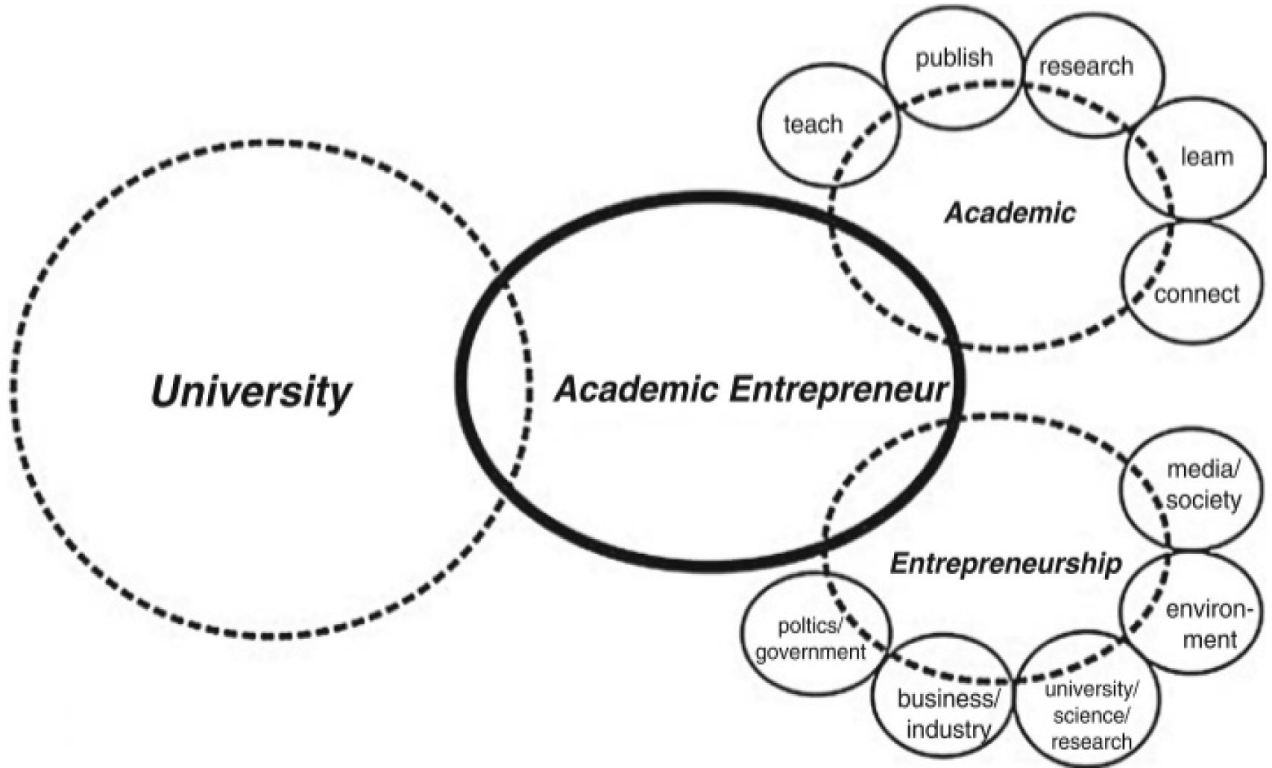
Academic entrepreneurship is a complex phenomenon that includes both business and scholarly endeavours and takes the form of several knowledge-valuation channels (Palo-Oja & Kivijärvi, 2015). This double focus allows academic entrepreneurs to retain scholarly production through research publications and academic contributions while also pursuing economic options, such as patent commercialization and technology licencing (Ertugrul et al., 2024). This is the reason the dichotomy of academic entrepreneurship is at the crucial nexus of knowledge creation in academic institutions and knowledge application in business and society. With the emergence of innovative research, technological developments and collaborative initiatives originating within academic institutions, the primary manifestation of academic entrepreneurship occurs through university spin-offs and start-ups (Sheriff & Muffatto, 2019). These initiatives are a planned institutional reaction to the profound changes in scientific research and knowledge production that have occurred in recent years (Carayannis, 2020). The fundamental purpose of academic entrepreneurship ventures extends beyond mere commercialization to establish sustainable bridges between academic knowledge production and market-driven innovation ecosystems (Matrosov et al., 2022). They act as channels for converting scholarly findings into solutions ready for the market while preserving ties to their academic roots. These entrepreneurs fulfil a crucial role in satisfying society’s evolving demands for novel products, services and solutions and maintaining the rigour and integrity of academic research (Perkmann et al., 2021; Siegel & Wright, 2015). Their success depends on effectively balancing academic excellence with commercial viability, creating value through knowledge transfer while contributing to both scholarly advancement and economic development (Guindalini et al., 2021; Neves & Brito, 2020; Plantec et al., 2023; Yao et al., 2022).
Academic Entrepreneurship and Innovation Models
Academic entrepreneurship has transitioned with various business and societal factors, with innovation as the fulcrum (Figure 2; Carayannis, 2020):
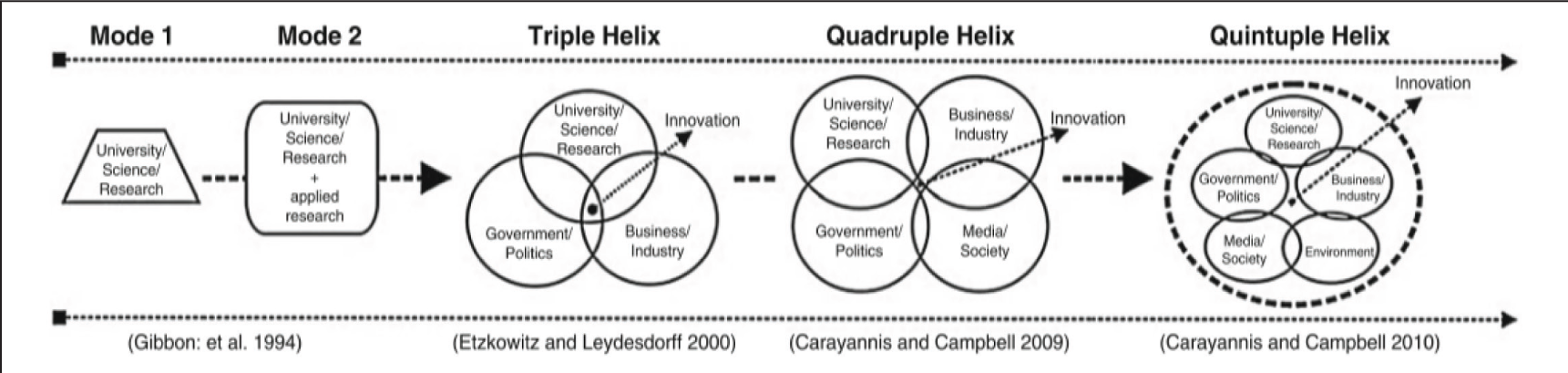
Mode 1: The conventional linear paradigm in which knowledge is mainly produced inside academic hierarchies and disciplinary boundaries (Loorbach & Wittmayer, 2024) is primarily the role of academicians.
Mode 2: A move towards a more context-driven, multidisciplinary knowledge production was observed in this mode. It is distinguished by application-oriented knowledge development, organizational diversity, social accountability and improved quality control methods along with the primal role of knowledge production (Loorbach & Wittmayer, 2024).
The triple helix model: This model emphasizes the dynamic interactions between university–industry–government forming trilateral networks for knowledge production, knowledge commercialization and knowledge exchange with innovation as the fulcrum (Etzkowitz & Leydesdorff, 2000).
The quadruple helix model: The model offers a four-fold extension from the previous model and builds on the role of civil society in innovation processes by integrating media and culture-based public interaction (Cai & Lattu, 2022).
The quintuple helix model: The model emphasizes sustainable development in knowledge creation and innovation by incorporating all the previous elements with environmental factors (Carayannis & Campbell, 2010).
Knowledge Spillover and Value Creation
One of the most important frameworks for comprehending how scholarly knowledge becomes commercially valuable is the KST of entrepreneurship, which explains how knowledge produced in one setting can be used in a setting pertinent to academic entrepreneurship. The theory highlights the process of turning research outcomes into commercial applications (Agarwal et al., 2010; Audretsch et al., 2021). This spillover process is facilitated by academic entrepreneurs using a variety of strategies, including direct commercialization through patents and licencing (Aydemir et al., 2021), cooperative research with industry partners (Yao et al., 2022), consulting and advisory services spin-off company formation (Bathelt et al., 2010) and knowledge transfer through instruction and training. The success of academic entrepreneurship depends on milestone achievements throughout this process (Matrosov et al., 2022), which includes the initial identification of commercially viable research, development of appropriate business models, securing necessary resources and support, establishing market connections and scaling the enterprise while maintaining academic integrity.
According to these combined theoretical frameworks, successful academic entrepreneurship requires the integration of multiple knowledge domains, a balance between academic and commercial goals, the effective use of institutional support structures, a strong cross-sector network relationship and alignment with broader societal needs. This theoretical framework informs the analysis of how academic entrepreneurs create both commercial and societal value while navigating complex institutional contexts. The junction of these frameworks provides a powerful analytical prism through which this case ensues.
Method
This study adopts an interpretive approach grounded in subjectivist epistemology and relativist ontology (Rashid et al., 2019) to understand the complex value co-creation process in academic entrepreneurship. The method of comprehensive inquiry will provide the know-how of actors’ comprehension of their dual activities of entrepreneurship and research commercialization in the academic and business domains through their lived experiences.
The Third Degree (TTD), an academic entrepreneurial service provider in Malaysia, was the subject of our single case study design. The selection of TTD was theoretically driven, based on the following descriptives: (a) a bridge between academic and commercial spheres exemplifies a crucial intermediary role in knowledge transfer between universities and industry (Fini et al., 2022); (b) a substantial influencer on the academic environment of the Global South filling essential gaps in knowledge democratization and research capacity creation, which is crucial in light of the growing emphasis on universities as catalysts for economic growth (Neves & Brito, 2020). (c) a web of network of both internal and external stakeholders, spanning multiple countries and institutions, illustrating how academic entrepreneurship’ evolution in an increasingly globalized knowledge economy draws parallel to the ‘quadruple helix’ model of university–industry–government linkages as outlined by Carayannis and Campbell (2010).
The study was conducted in two phases: field phase and reporting phase.
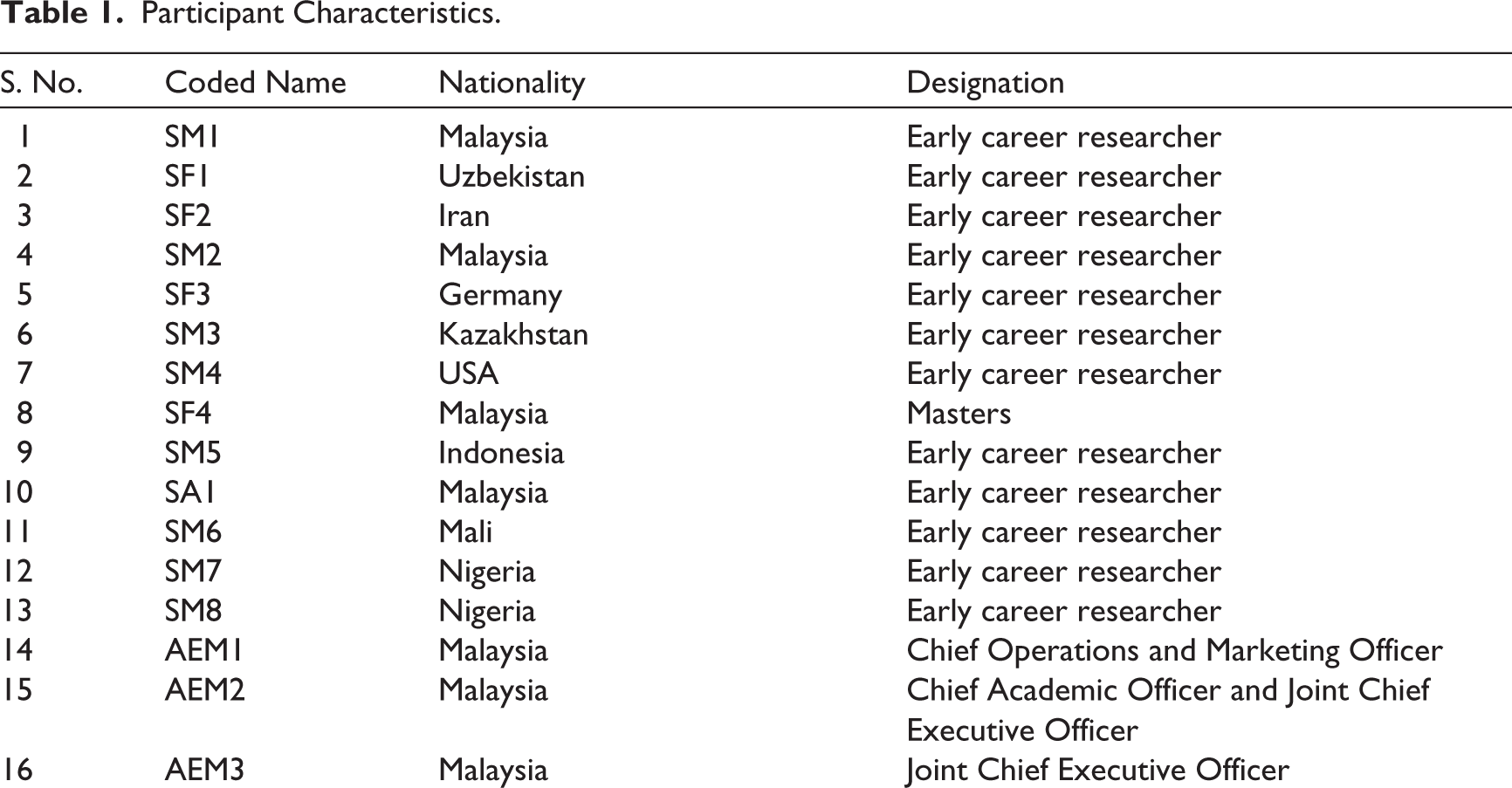
Field phase: Semi-structured questionnaires were administered to external TTD stakeholders, and interviews were conducted with internal stakeholders. Participants were selected using purposive sampling to ensure representation across geographic regions (spanning Asia, Africa and Europe), from various academic levels (masters and doctoral candidates), and organizational roles (students, administrators and advisers). The break-up of participants was research students (n = 13), organizational leadership (n = 2) and advisory board (n = 1). Following their informed consent, a questionnaire with 16 open-ended questions (Supplementary Annexure I) was prepared using the Qualtrics software (Qualtrics, Provo, UT, 2020). The questionnaire link was sent to their email addresses, and responses were obtained. The participant characteristics of the focus group and the online interview are summarized in Table 1. To anonymize the participants, the names were re-coded in three characters. The first character to show what type of participant they are with ‘S’ for student participants and ‘AE’ for entrepreneurship stakeholders. The second character stands for the gender of the participants, that is, ‘M’ for male and ‘F’ for female. The third character represents the number of the participant in 1, 2, 3…, as was interviewed in serial order. The second column describes the location they were present at the time of data collection. The third column provides the participants’ designations. We had a criterion that the research students should have used TTD services for at least the last year. We considered the service-usage tenure of the research students as an important criterion because their lived experiences will be resourceful to the study. The key questions that framed the questionnaire centred on their experiences with TTD as an academic entrepreneur, how they benefitted from the knowledge production and transfer and the usefulness of the support systems. To ensure that the participants’ responses were bias-free, no leading questions were posed to them. We stopped the administration as soon as we saw that the answers reached their saturation point.
Participant Characteristics.
Each interview session lasted 60–90 minutes and was recorded with participants’ permission. The interviews were transcribed within 24 hours of their completion to ensure accuracy. The interview method focused on three major aspects: participants’ experiences with TTD, the benefits of research commercialization, and their thoughts on the entrepreneurial ecosystem dynamics. Data were collected during March and April 2024 using comprehensive questionnaires (Supplementary Annexure I). The study reached theoretical saturation with 16 individuals (n = 16), as indicated by the appearance of recurring themes in the data, showing adequate sampling to meet the research objectives.
Data from TTD documentaries, such as brochures, online seminar series recordings and performance reports that were accessible to the first author, also provided valuable information to the study. This triangulation of data sources enhanced the reliability and validity of our findings while providing multiple perspectives on the phenomenon under study.
Reporting phase: Grounded theory was used to examine the responses because this was an interpretive qualitative investigation (Lim, 2024). By coding the participants’ expressed thoughts, grounded theory eases the discovery of patterns or themes in the qualitative data. Sub-themes highlight significant sides associated with the study question and indicate trends found in the dataset. Major themes were created by thoughtfully combining these sub-themes. Most of the substance of the transcripts is accurately reflected in the themes that the authors selected, categorized and analysed. Each author listed the themes along with statements and the merged description under each dimension (Supplementary Annexure II) is provided.
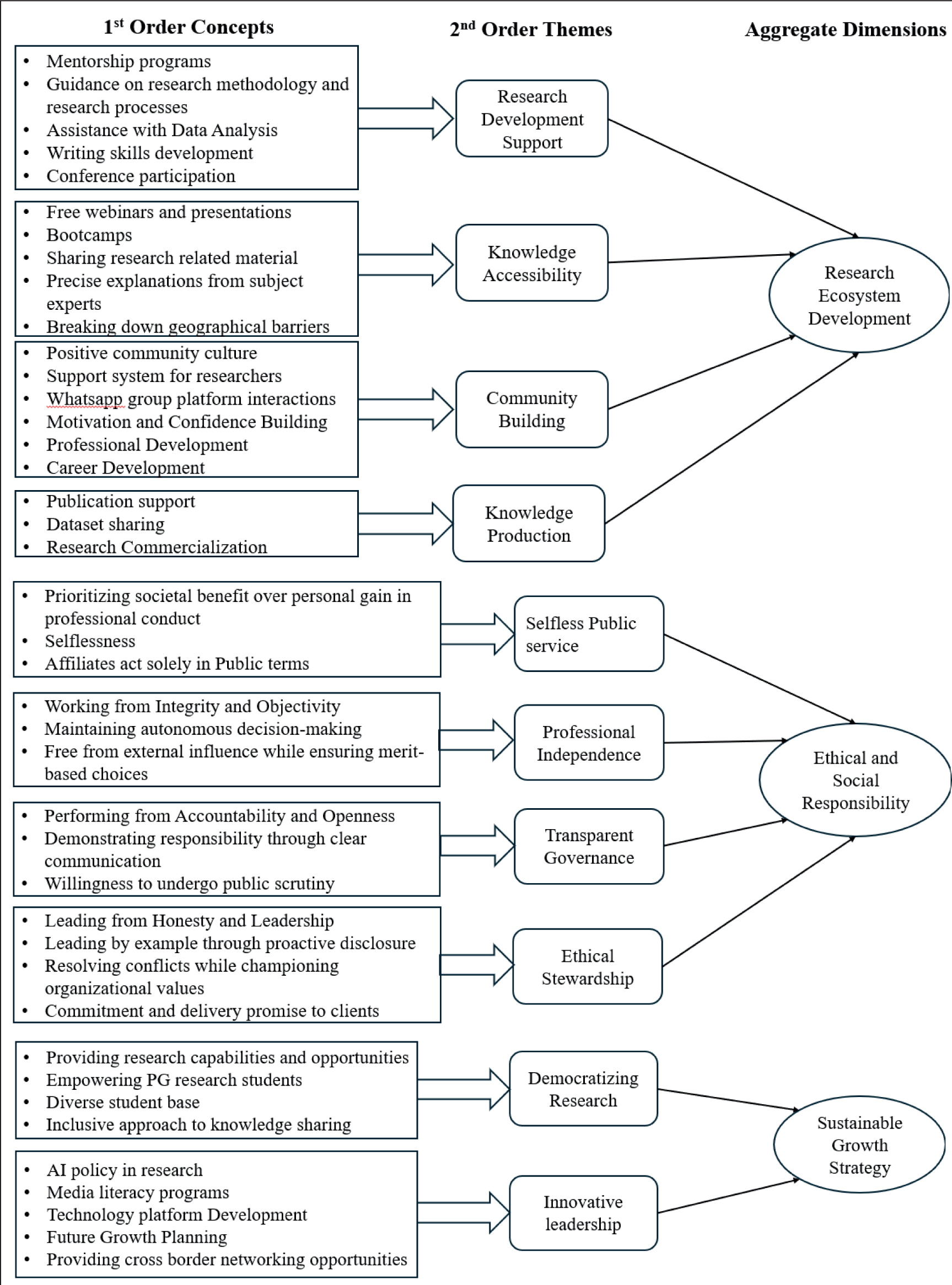
The analysis followed a systematic three-stage approach to qualitative data analysis based on the Gioia method (Lim, 2024). In the first stage, first-order analysis was performed by coding interview transcripts to find the initial concepts. This was carefully done by highlighting the response phrases with different colours by both authors separately while preserving the participants’ original terminology (Charmaz & Thornberg, 2021). As part of the second-order analysis, patterns were drawn by clubbing the first-order codes framed by both authors to develop theoretical categories and were later integrated with the existing literature (Gioia, 2021; Lim, 2024). Finally, at the combined dimension development stage, all the theoretical categories were synthesized to develop predominant themes, and a coherent data structure was shaped that captured the relationships between first-order concepts and second-order themes (Mishra & Dey, 2022). This thorough investigative approach confirmed both the protection of participants’ lived experiences and the development of theoretically meaningful insights.
The combination of an interpretive approach, qualitative methods and systematic analysis enabled deep insights into the processes and challenges of academic entrepreneurship in an emerging economy context (Mishra & Dey, 2021). This research design provided a strong framework for researching academic entrepreneurship while supporting methodological rigour and ethical standards.
Findings
The synergistic analysis of participant responses received through questionnaires and the CEO’s interview transcripts reveals TTD’s overarching approach to academic entrepreneurship that can be understood through three aggregate dimensions. A diagrammatic representation is summarized in Figure 3.
Data Structure Following Gioia Methodology.
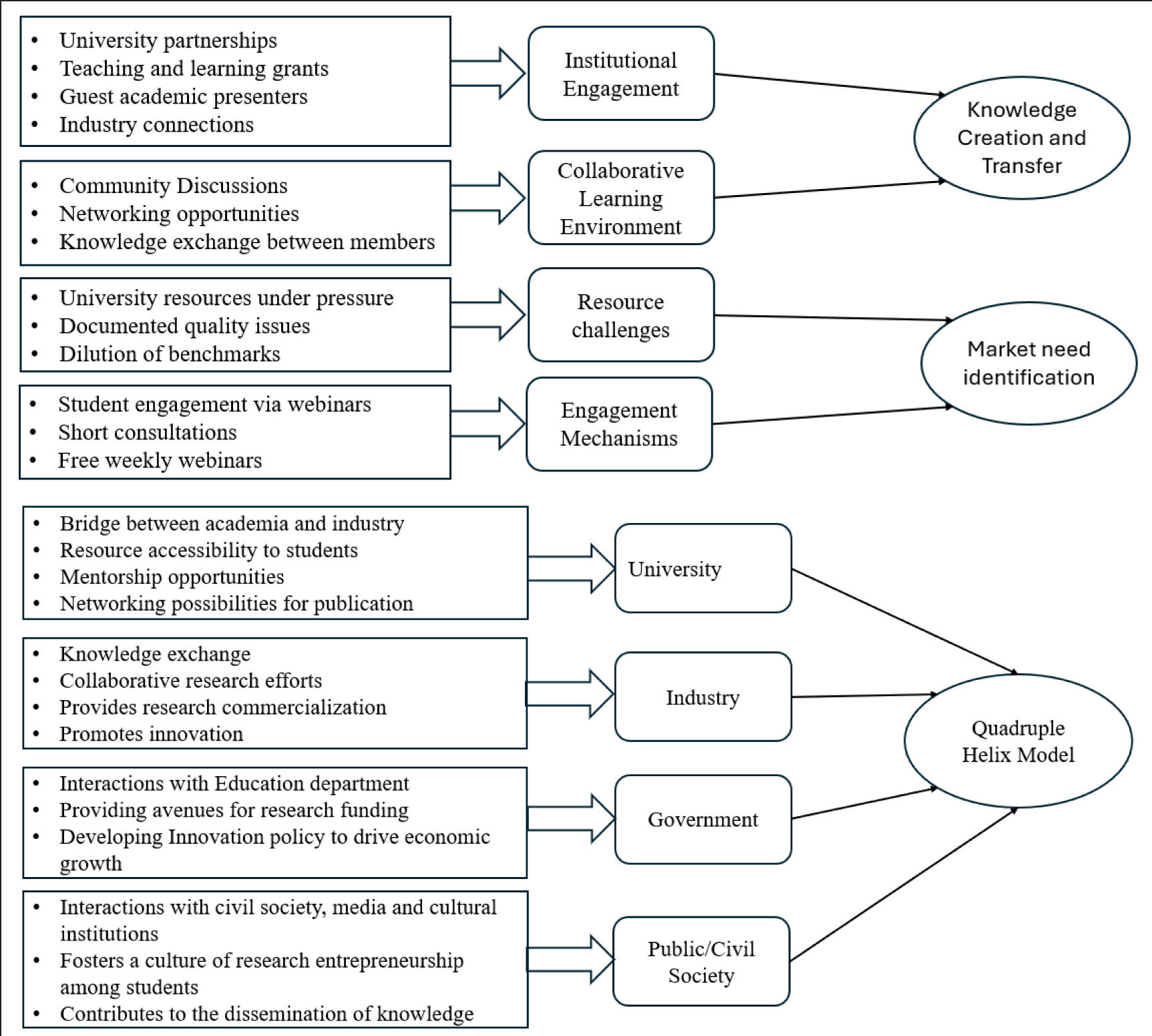
Dimension 1: Research Ecosystem Development
TTD’s strategy marks a significant advance in research support, expanding beyond traditional institutional boundaries to offer a more inclusive, accessible and successful environment for postgraduate research growth and recent inclusions of doctoral students among the emerging economies. This dimension includes both the technical and social components of research, resulting in a comprehensive support system that strengthens research abilities while establishing a sustainable community of practice. The remarkable engagement metrics on the TTD and the good outcomes reported by participants reflect the ecosystem’s success, implying that the integrated method efficiently serves the complicated needs of modern research candidates while advancing knowledge creation and dissemination.
The four elements synergize to bring together the research and education industries that combine for a stronger research ecosystem. The combination of direct research support and knowledge accessibility ensures that researchers not only have access to the resources but also the ability to effectively use them. The community aspect provides the social infrastructure needed for long-term participation and mutual support, but the emphasis on knowledge production guarantees that the ecosystem contributes to a larger academic and practical knowledge base.
Research Development Support
This basic component focused on developing direct research skills and capabilities. TTD’s mentorship programmes provide researchers with personalized support to navigate their academic careers. The organization provides specialized aid with research methodology and processes to ensure that researchers create strong approaches to their investigations. This is supplemented by comprehensive assistance with data analysis, which answers a major technical requirement in research. Writing skills development programmes help researchers in efficiently communicating their findings, while conference participation possibilities allow them to connect with larger academic communities.
Knowledge Accessibility
TTD’s research ecosystem development exemplifies KST’s core principle of knowledge spillover through multiple channels to democratize access to knowledge. The organization’s free webinars (so far, 126 webinars conducted) and presentations demonstrate that knowledge created in academic institutions spills over to benefit broader stakeholders regardless of their geographic or institutional location. By sharing research-related materials, TTD ensures that researchers have access to essential resources. Subject matter experts (73 keynote speakers, experts and paid engagements) provide precise explanations, making complex concepts more accessible. Notably, the organization’s focus on breaking down geographical barriers has enabled researchers (4,217 students engaged) from the Global South to access resources typically concentrated in more established research institutions.
Community-building
The social infrastructure of the research ecosystem is built through community growth in a rapid yet steady manner. TTD has maintained a positive community culture that encourages collaboration and mutual aid. Their WhatsApp group network, which has approximately 400 members as of January 2025, serves as a major hub for researcher contacts providing real-time information exchange and peer help. This kind of informal knowledge transfer mechanism that KST identifies as crucial for innovation. TTD prioritizes motivation and confidence building while emphasizing the emotional and psychological aspects of research processes by providing support through professional development programmes and career development that are distributed throughout the student group to ensure that they use their academic ability to advance their careers.
Knowledge Production
The final element of knowledge production focuses on tangible research outputs for which TTD provides comprehensive publication support by helping researchers navigate the complex process of academic publishing. The methods employed by TTD towards knowledge production help bridge the gap between academic findings and practical applications, thereby creating avenues for new academic ideas and research impact beyond academia. This is clear from TTD facilitating dataset sharing, promoting collaboration (12 MoUs signed), conducting webinars with journal editors and research validation to ensure the pursuit of research candidates’ academic knowledge.
Dimension 2: Ethical and Social Responsibility
Selfless Public Service
TTD affiliates prioritize the public interest over corporate and personal gain in all their acts and decisions, which include selflessness and require partners to refrain from obtaining financial or other rewards for themselves, their family or colleagues. Their service should be solely motivated by advancing the public benefit.
Professional Independence
TTD partners support rigorous professional independence by avoiding external commitments or influences on their judgement. The affiliates are to exuberate the concepts of integrity and objectivity and ensure that all choices, including appointments, contracts and rewards, are made exclusively on merit rather than external pressures or personal relationships.
Transparent Governance
TTD partners perform without being influenced by external pressures and stand accountable for their decisions and actions to the public by maintaining openness, honesty and transparency in their governance within and beyond TTD.
Ethical Stewardship
TTD partners pledge to demonstrate ethical leadership and the highest levels of honesty in their roles. This combines the principles of honesty and leadership, requiring them to proactively declare any private interests that may interfere with their public duties, resolve conflicts of interest in favour of public gain, and set an example for others by their behaviour and decision-making.
Dimension 3: Sustainable Growth Strategy
TTD has acquired a complete approach to research support based on the following characteristics. The organization’s ability to integrate institutional engagement with collaborative learning while supporting innovative leadership displays a deep awareness of the complex ecosystem needed for effective research support and development.
Democratizing Research
Through the study, a complete approach to democratizing research inside academic institutions by offering strong research skills and opportunities has appeared. This groundwork for scholarly endeavour by empowering postgraduate research students gives them the agency and resources they should perform meaningful research. The inclusive approach to knowledge sharing ensures that research findings and methods are accessible and valuable to the entire academic community, eliminating traditional barriers to research participation and fostering a more equitable research ecosystem. A diverse student group brings various perspectives and experiences to the research environment, thereby encouraging the quality and breadth of academic inquiry.
Innovative Leadership
TTD exhibits progressive leadership by focusing on new issues like the introduction of AI policy in research that tackles current challenges in academic integrity and research methods. The introduction of media literacy programmes into the postgraduate programmes demonstrates an identification of the changing research needs in the digital age. The organization’s investment in technological platform development and strategic planning for future expansion reveals its dedication to long-term sustainability and influence.
Dimension 4: Knowledge Creation and Transfer
TTD has established a strong knowledge-sharing community via WhatsApp groups, networking possibilities and regular chats. The association has effectively worked with official institutions through university collaborations, teaching grants and guest academic speeches, adding support to this dimension that combines institutional engagement and a collaborative learning environment. This integration includes industrial links, which eases knowledge transfer between academia and practice.
Institutional Engagement
TTD has established strong links with institutions (including a recent pilot project with St. Augustine University in Tanzania), resulting in formal relationships that improve research capacities. Teaching and learning grants provide the organization with resources to develop novel educational content and research support tools. Guest academic lecturers contribute various experiences and viewpoints to the community, while industry ties help to bridge the gap between academic research and practical applications. This multifaceted institutional involvement provides a solid framework for knowledge generation and dissemination.
A Collaborative Learning Environment
The organization promotes knowledge exchange by organizing structured community talks that stimulate peer learning and assistance. Networking options allow researchers to establish professional relationships (47 academics are professionally onboard) and collaborate across geographical and institutional boundaries. The emphasis on knowledge exchange among members fosters an active learning community in which experiences and expertise are freely shared, thereby increasing the collective knowledge base of all participants.
Dimension 5: Market Need Identification
Resource Challenges
The theme addresses fundamental issues in the current academic landscape, particularly the pressure on university resources that affects the quality of research support. TTD has identified documented quality issues in research training and support across institutions, especially in the Global South. The dilution of academic benchmarks presents another critical challenge that TTD seeks to address through its interventions and support systems.
Engagement Mechanisms
To fulfil recognized market needs, TTD has used various interaction tactics. Student participation in webinars provides scalable access to experience and information. Short consultations provide tailored support for specific research issues, while free weekly webinars maintain consistent, accessible learning opportunities. These approaches are intended to overcome resource constraints and ensure consistent, high-quality research support.
Dimension 6: Quadruple Helix Model
University
TTD uses the institutions’ knowledge and skills to help students with their educational and career goals. TTD acts as a liaison between academia and industry, connecting postgraduate research students with resources, mentorship and networking opportunities.
Industry
TTD encourages industrial innovation by connecting research students with industry professionals and resources. TTD works with industry partners to promote knowledge exchange and collaborative research.
Government
TTD may interface with the respective government bodies responsible for education, research funding and innovation policy. It is consistent with government programmes aimed at encouraging entrepreneurship, boosting knowledge exchange and stimulating economic growth through innovation.
Public/Civil Society
TTD incorporates the public component into its relationships with civil society, the media and cultural organizations. It develops an innovative and entrepreneurial culture among research students, helps disseminate knowledge to the public and encourages engagement with societal issues and values.
The interplay of these helixes is evident in TTD’s integrated approach: when organizing research workshops, TTD typically brings tighter academic experts (university), industry practitioners (industry), policy considerations (government) and the community perspectives (civil society) into its dynamic knowledge exchange environment, exemplifying the quadruple helix model in action. This integrated approach has resulted in tangible outcomes such as research commercialization projects. Policy contributions and enhanced research capacity building across the Global South. The market demand identification drives the development of engagement methods, institutional relationships facilitate knowledge generation and transfer, and innovative leadership ensures long-term growth. This integrated approach has allowed TTD to have a substantial impact on the research support area, as indicated by engagement metrics and expanding institutional relationships. Most importantly, these dimensions interact to form a self-reinforcing ecosystem in which gains in one area benefit the others. For example, strong institutional engagement improves the collaborative learning environment, which draws new partnerships and allows for novel ways to support research. This systemic approach distinguishes TTD’s model and contributes to its effectiveness in supporting research development globally. The organization’s approach aligns with the quadruple helix model of innovation, involving interactions between academia, industry, government and civil society, while maintaining its independence and unique position in the research ecosystem. Table 2 in Annexure II provides the dimensions, related themes and respondents verbatim.
Discussion
This case makes several substantial theoretical contributions and has important practical consequences for academic entrepreneurship in emerging economies. Our findings contribute to our understanding of how academic entrepreneurship occurs at the nexus of knowledge generation and commercialization.
Theoretical Contributions
First, this study contributes to the KST of entrepreneurship by illustrating how academic entrepreneurs can effectively support knowledge transfer in developing economic environments. Although previous research has primarily focused on Western institutional contexts, our findings reveal unexpected mechanisms for knowledge spillover in the Global South environments. The study shows how digital platforms and virtual communities can effectively bridge geographical and institutional barriers, allowing information to flow across industrialized and underdeveloped countries. Second, our findings add to the continuing conversation about innovation models by providing empirical evidence for the practical application of the quadruple helix model in an emerging market scenario. The TTD exemplifies the way academic entrepreneurs can combine university, industry, government and civil society elements while remaining independent and flexible. This contributes to existing theoretical frameworks by demonstrating how these interactions might be arranged in ways that maintain autonomy while encouraging collaboration. Third, this study advances our understanding of ethical issues in academic entrepreneurship by highlighting how organizations might reconcile commercial goals with social responsibility. The case offers a framework for understanding how academic entrepreneurs preserve their independence as professionals while encouraging open governance and moral stewardship, which support the concepts of social entrepreneurship and responsible innovation.
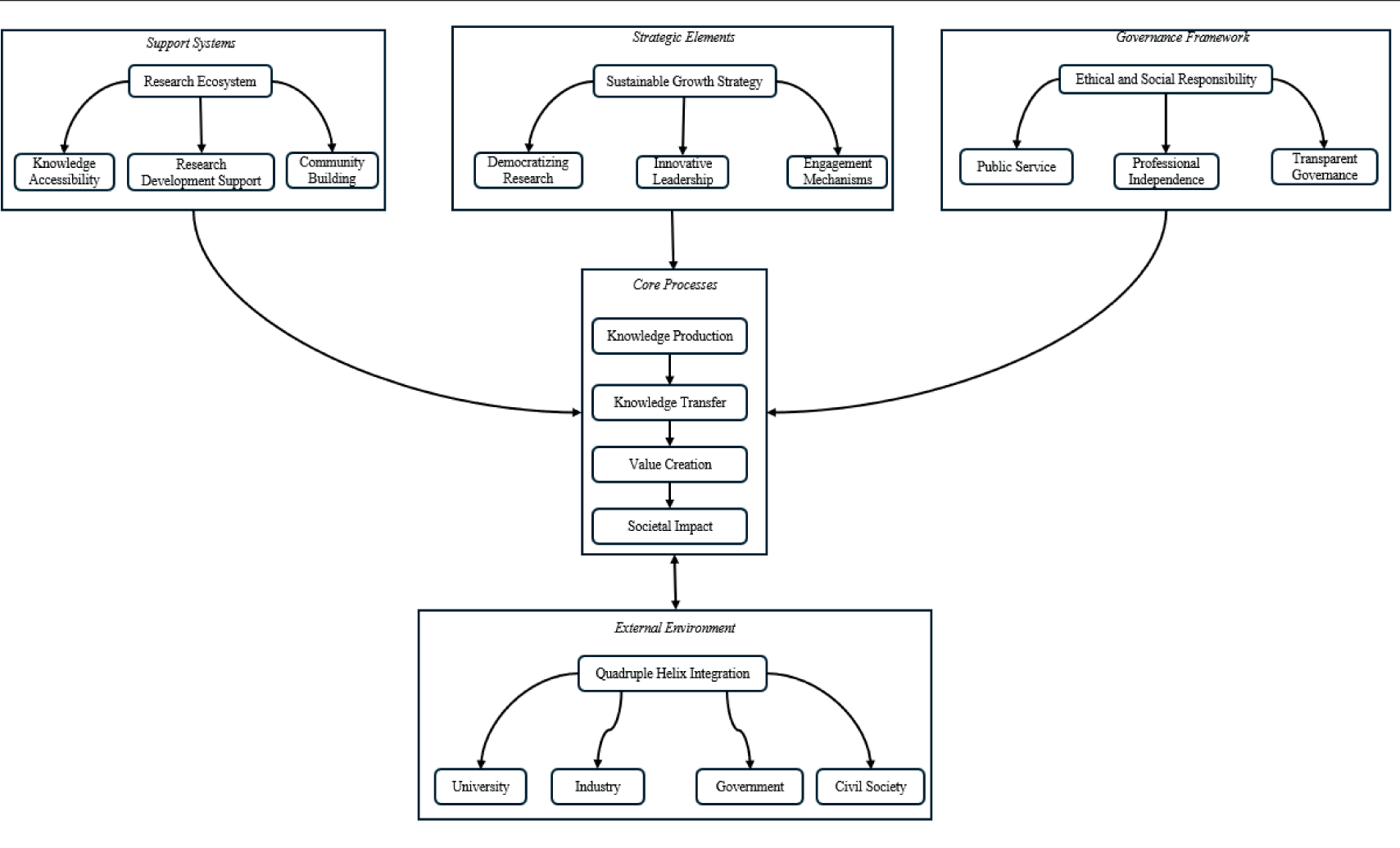
The Academic Entrepreneurship Amalgam Model for Emerging Economies (AEAMEE) (Figure 4) proposes a comprehensive framework that illustrates the dynamic interplay of numerous elements needed for effective academic entrepreneurial activities. At its core, the AEAMEE depicts how knowledge generation flows across information transfer processes to generate economic and societal value within the context of a quadruple helix framework and brings together stakeholders from academia, industry, government and civil society. This core process is supported by three fundamental pillars: a strong research support system that includes knowledge accessibility and community-building; strategic elements of a sustainable growth strategy such as research democratization, innovative leadership and engagement mechanisms; and a governance framework of ethical and social responsibility comprising public service, professional independence and transparency. The cyclical nature of AEAMEE underlines the dynamic nature and responsiveness to changing economic conditions with the integration of operational, strategic and ethical elements, which provide a holistic view of how academic entrepreneurship functions effectively while retaining social responsibility and long-term prosperity in developing nations.
Academic Entrepreneurship Amalgam Model for Emerging Economies.
Practical Implications
The example case stages a paradigm for academic entrepreneurs, universities and governments who seek to establish long-term research support networks that yield practical results. TTD’s experience establishing engagement strategies, particularly through digital platforms and virtual communities, can provide valuable insights for organizations looking to democratize research access and assistance. The emphasis on free weekly webinars, virtual consultations and community-building exemplifies excellent ways to increase impact without sacrificing quality. Our findings emphasize the necessity of flexible partnerships with external organizations to supplement institutional research assistance. This study proves how institutions can profit from alliances that broaden their reach and improve research support capabilities while maintaining academic standards. This case study highlights how universities can effectively collaborate with private sector partners to improve research commercialization while preserving academic integrity. For policymakers, particularly in emerging nations, the study sheds light on how supportive regulatory regimes might promote academic entrepreneurship while maintaining independence. TTD’s ability to operate across many jurisdictions while maintaining ethical standards and professional independence gives politicians valuable lessons about how to foster innovation while ensuring accountability. The paper also proposes practical solutions for overcoming resource limits in research support, particularly in the Global South context. The effective deployment of digital engagement mechanisms, paired with community-building initiatives, serves as a model for organizations looking to overcome resource constraints while still providing high-quality research support. These findings are especially important in the post-pandemic period, as digital transformation has accelerated and the demand for accessible, high-quality research support has grown. This study reveals how academic entrepreneurs can use technology and community-building to produce long-term impact while filling crucial holes in the global research ecosystem.
Limitations
The case methodology of studying one organization is thought to be unique, meaning that their implications are not generally applicable to other circumstances like the one being investigated. Second, the case study results are thought to be less objective and more ‘impressionistic’ (Gioia, 2021). Therefore, there arises a question of generalizability rather than a question of transferability. Third, the fact that the research had been theory-driven research itself provides a stance of prior knowledge and existing terms, hence fundamentally impacting the grounded approach.
Future Directions
This study explored the narratives of the stakeholders and could be validated by conducting qualitative methods of inquiry. Future research could explore quantitative measures of the impact of academic entrepreneurship on regional development, compare different national approaches to research commercialization and develop more targeted strategies for overcoming the specific barriers identified in this study. Academic entrepreneurs can more successfully navigate and impact the environment to foster innovation and entrepreneurship in academic settings by utilizing CSM (critical sensemaking). Academic entrepreneurs must navigate established norms, values and institutions while operating within complex institutional contexts (Mills et al., 2023). There are opportunities to promote the internationalization and monetization of research by looking at how CSM might be integrated into institutional operations. To account for the impact of institutional structuration and agency, future research should concentrate on how scholarly findings are transformed into goods that can be sold in various international marketplaces. Future research might look at how academics and entrepreneurs can use narrative power and personal agency to negotiate and change institutional norms to promote collaboration and commercialization in a variety of international contexts. To foster innovation and global economic growth, such insights will be essential for creating strategies that make efficient use of academic knowledge in a variety of cultural and economic situations.
Conclusion
The impact of academic entrepreneurship is dynamic. The case study highlighted how, in the context of a Malaysian organization—The Third Degree—the organization has been able to exhibit results that reflect the key themes of academic entrepreneurship: democratization of research and knowledge accessibility, by offering access to key skills development tools and processes to a broad audience of postgraduate stakeholders; creating an interdisciplinary and collaborative research environment, by focusing on skills rather than content, highlighting the value of interdisciplinarity and the importance of collaboration over competition; commercialization of research and innovation by advising and advocating for research candidates opportunities to commercialize their research, and by being a thought leader in practising this; using adaptive strategies to overcome challenges in research commercialization by demonstrating opportunities and industry best practices; and creating an educational impact and societal contribution, as not only evidence by the interview discussion and, the metrics presented.
Footnotes
Acknowledgements
We thank Farell Tan (CEO, The Third Degree) for the assistance in data acquisition and in providing the necessary documents for the study. We owe our thanks to Dr Vighneswaran N Vithiatharan, Chairman, International Academic Advisory Board for his insights. We thank The Third Degree Community for their constant trust and wish them well.
Declaration of Conflicting Interests
The authors declared no potential conflicts of interest with respect to the research, authorship and/or publication of this case.
Ethical Approval and Informed Consent Statements
No ethical approval or IRB is required since knowledge is not disseminated in established educational settings or classroom settings.
Funding
The authors received no financial support for the research, authorship and/or publication of this case.