







Abstract
Organizational citizenship behaviour (OCB) is essential for organizational sustainability. Despite the numerous studies in this domain, there is a lack of comprehensive and objective reviews of the extant literature, constraining both theoretical understanding and practical application. Therefore, the primary aim of this study is to provide an extensive and rigorous review of OCB, analyse the thematic progression of research and identify future avenues. The study uses the SPAR-4-SLR framework, which has enhanced the credibility of the present research. This study employs both bibliometric and content analyses. While bibliometric analysis offers quantitative insights, content analysis provides qualitative insights into the thematic content of the literature. The co-citation analysis revealed five significant themes, namely ‘Organizational Identification and OCB’, ‘Social Exchange Theory (SET) and OCB’, ‘Dimensionality and OCB’, ‘Workplace Deviant Behaviours and OCB’ and ‘Leadership and OCB’. Content analysis was employed to examine and analyse the most relevant papers under each cluster. The results provide a thematic understanding of the progression and advancement of OCB research throughout the years. This nuanced exploration not only synthesizes key insights from past studies but also highlights potential pathways for future research, contributing to a deeper understanding of the dynamic and multifaceted nature of OCB. With its practical and theoretical implications, the article demonstrates the significance of OCB and offers several promising insights.
Keywords
Introduction
An effective and successful organization needs ‘innovative and spontaneous behaviours’ from employees that go beyond their defined job structure (Katz, 1964). Later, Bateman and Organ (1983) termed it as organizational citizenship behaviour (OCB) and defined OCB as a set of discretionary behaviours that an employee exhibits at the workplace, which are beyond the recognized formal reward system of the organization and that generally lead to organizational effectiveness (Organ, 1988). However, they are not completely unrewarded (Thomas et al., 2017; Van Dyne & LePine, 1998). Therefore, Organ (1997, p. 91) redefined it as ‘a contribution to the maintenance and enhancement of the social and psychological context that supports task performance’. Over time, it was refined (Graham, 1991; LePine et al., 2002; Van Dyne et al., 1994) and referred to by different names, such as extra-role behaviour (Van Dyne & LePine, 1998) and pro-social behaviour (Brief & Motowidlo, 1986). But the fundamental characteristics of such behaviours remain the same—discretionary in nature, arising out of genuine goodwill and enhancing the social and psychological work environment (Nurjanah et al., 2020; Vigoda-Gadot, 2006; Wang et al., 2005). It has been the subject of interest in psychology, human resource management, education, marketing, environmental science and other domains. Figure 1 depicts the development timeline from its start to the present time.
Evolution of OCB Research.
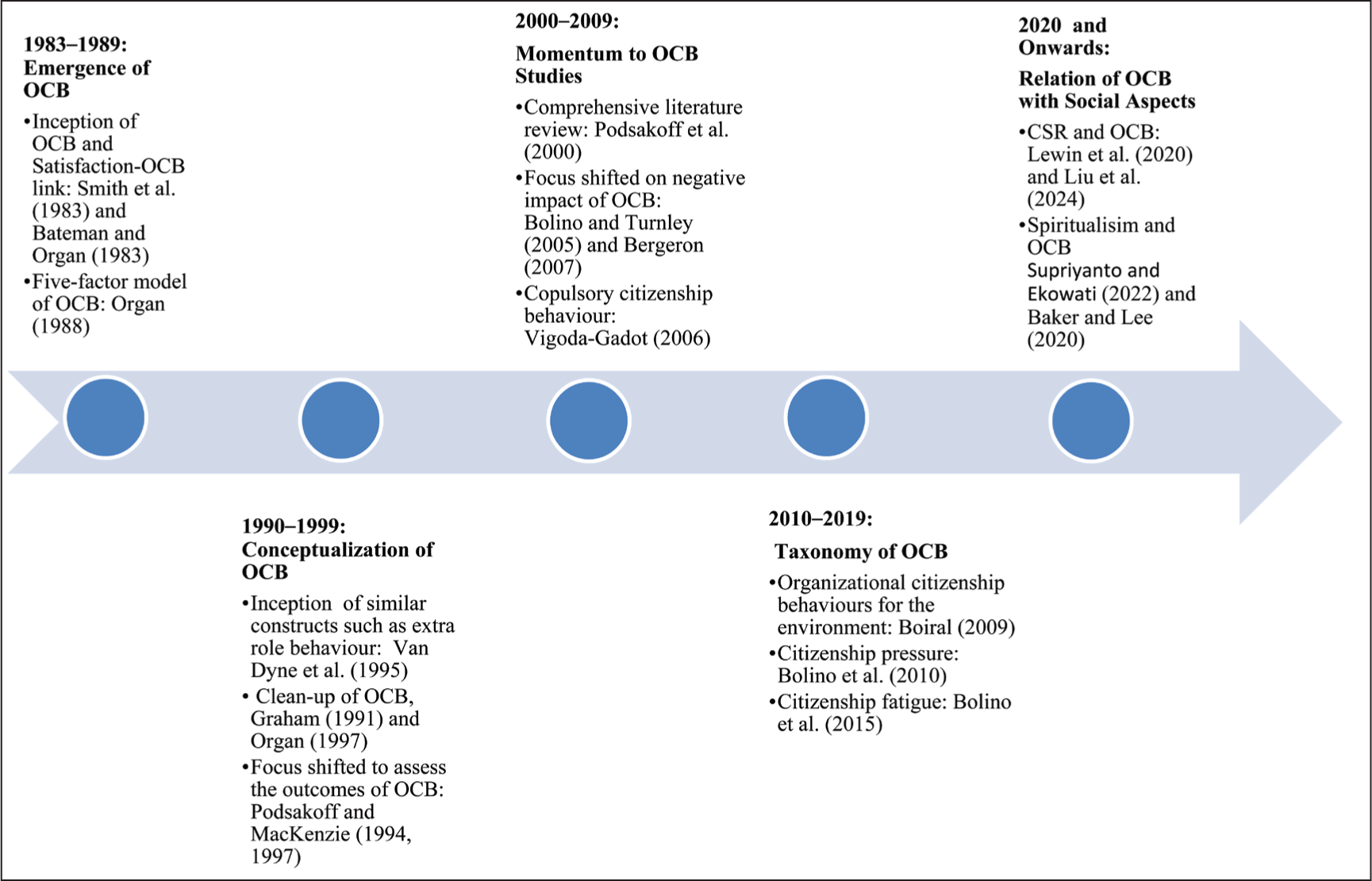
OCB has evolved significantly, which depicts the widespread acceptability of its importance. Indeed, it is considered a prototypical positive behaviour (Bolino et al., 2013) that enhances the organization’s effectiveness (Mahembe & Engelbrecht, 2014; Walz & Niehoff, 2000). It increases productivity (Podsakoff et al., 2000), improves job performance (Nijhawan et al., 2023; Qalati et al., 2022), reduces labour turnover (Podsakoff et al., 2009; Wang et al., 2017), among other benefits. It is also useful in meeting environmental concerns (Boiral, 2009; Sulphey et al., 2024). However, it also led to certain negative outcomes such as exhaustion, work–family conflict and stress (Bergeron, 2007; Bolino & Turnley, 2005; Bolino et al., 2013; Potipiroon & Faerman, 2020).
OCB is crucial for sustainable growth in business, especially in a highly dynamic environment that continuously challenges organizational competency (Yaylaci, 2016). Unprecedented events such as the economic crisis of 2008–2009, COVID-19 and Industrial Revolution 4.0 necessitate the organization to be proactive to remain competitive. Achieving this requires a workforce that transcends the formal role and exhibits innovative and spontaneous behaviours to support organizational resilience and adaptability. The importance of OCB in organizations can be understood by the fact that simple search for OCB in the business and management area in the Scopus database produced over 3,000 research articles as of July 2024, with approximately 1,500 of these published in the last five years. Therefore, it is important to comprehend the extant literature in this domain to find the emerging trends, focal areas and impact of OCB studies in a clear and vivid manner.
Nevertheless, researchers have conducted a literature review and meta-analyses to grasp the evolution of OCB. Some focused on exploring the nature of OCB (LePine et al, 2002; Van Dyne et al., 1994;), others comprehended the antecedents (Organ & Ryan, 1995; Podsakoff et al., 2000), while some examined the consequences (Podsakoff & MacKenzie, 1997; Podsakoff et al., 2000, 2009). However, over time, a rich insight has accumulated into the domain that warrants a comprehensive review to ensure that critical contributions by scholars are not overlooked. Therefore, the present study conducted a systematic literature review (SLR) with the help of bibliometric analysis. SLR advances the knowledge in the domain by building on prior extant literature. It provides depth as well as breadth and enhances reliability, validity and quality (Xiao & Watson, 2019). Several studies have conducted bibliometric analysis to map the landscape of OCB (Guiling et al., 2022; Yaylaci, 2016). However, their limitations in geographic scope or temporal coverage fail to provide a comprehensive overview of the field. Yaylaci (2016) performed a bibliometric study, focusing exclusively on studies conducted in Turkey. Similarly, Guiling et al. (2022) performed a bibliometric analysis, specifically examining the period from 2000 to 2019. Furthermore, both studies relied on bibliometric analysis. It provides a quantitative analysis but lacks interpretation (Lim & Kumar, 2024). Resultantly, the present study conducted the bibliometric analysis followed by content analysis. Content analysis serves to synthesize the quantitative outputs of the bibliometric analysis, facilitating the identification of critical gaps, influential networks and emerging themes (Klarin, 2024). Additionally, the present study used the Scientific Procedures and Rationales for Systematic Literature Reviews (SPAR-4-SLR) protocol, which ensures transparent, meticulous and rational SLR (Paul et al., 2021). The foremost objective is to map the global scientific research on OCB. This fundamental objective can be further divided into subordinate objectives (Öztürk et al., 2024).
RO1: Mapping the theme in the OCB domain.
RO2: Finding the most influential papers in the OCB domain.
RO2: Providing key insights and future research directions.
Research Methodology
The review methodology has utilized the SPAR-4-SLR protocol, created by Paul et al. (2021). It reduces arbitrariness, promotes accountability and ensures research integrity. The described methodology is specifically designed for conducting SLR to comprehensively achieve two core objectives: (a) providing a justified state-of-the-art overview and agenda-setting for the research domain, grounded in logical and pragmatic rationales and (b) ensuring transparent reporting through structured stages and sub-stages, adhering to rigorous methodological standards (Paul et al., 2021). Figure 2 presents the SPAR-4-SLR protocol adopted for the present study. The protocol consists of three primary stages, namely assembling, arranging and assessing.
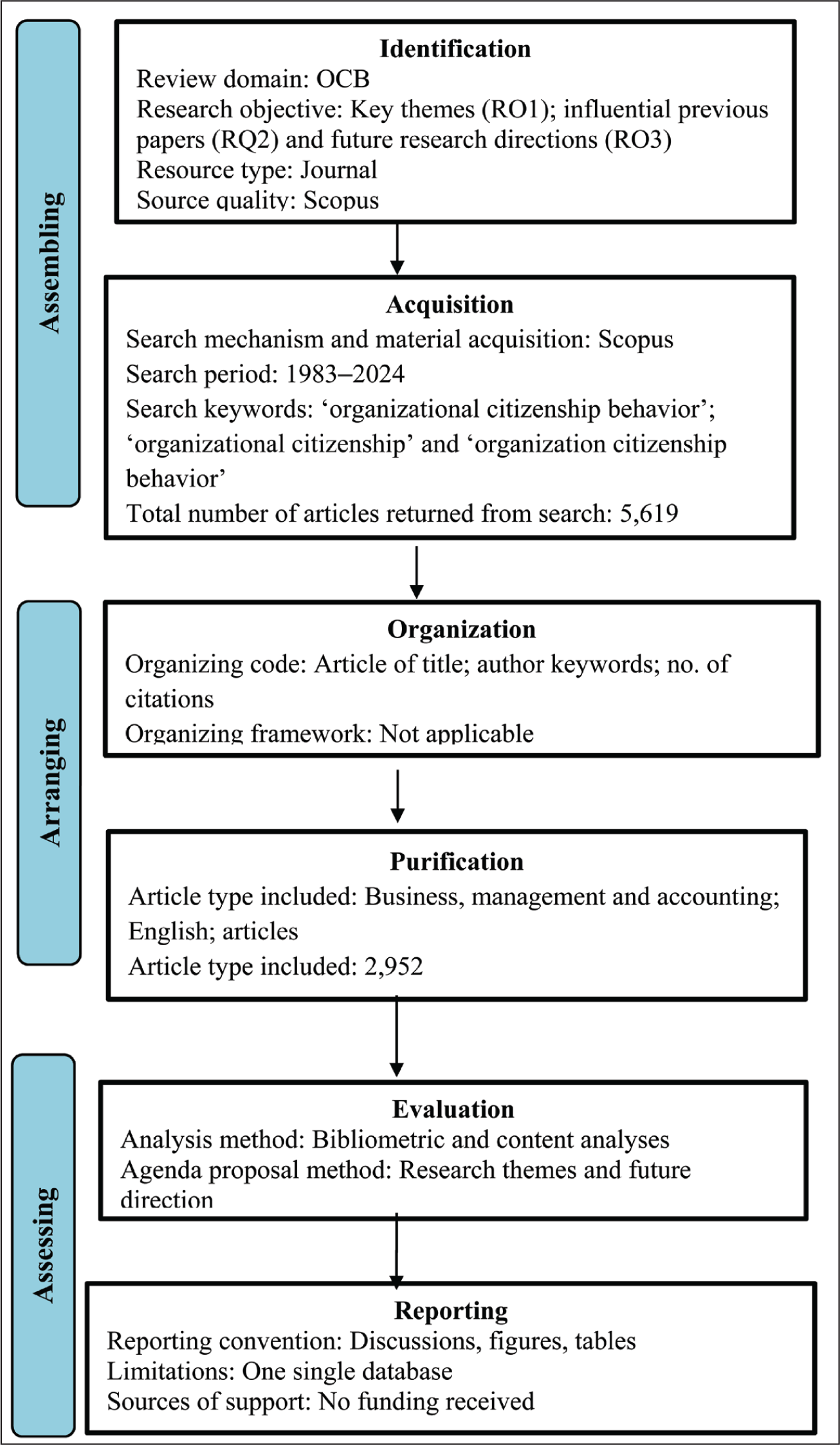
Stage 1 of the assembling involves two sub-steps: identification and acquisition. For identification, the focus of the present study is on OCB. To gather the data on OCB, the Scopus database has been used. The rationale behind using this database is its widespread acceptance in management studies and comprehensive coverage of the literature (Mongeon & Paul-Hus, 2016; Pham-Duc et al., 2022). The research questions involve finding key research domains, the contributions of existing studies and future directions. During the acquisition stage, data were obtained for the period spanning from 1983 to 11 July 2024. A total of 5,619 articles were retrieved using the following keywords: ‘organization citizenship behavior’, ‘organizational citizenship’ and ‘organizational citizenship behavior’.
The arranging step involves organization and purification. During organizing, bibliometric data for the articles were coded based on the article title, author keywords and the number of citations. Concerning purification, the following inclusion criteria have been applied: (a) business, management and accounting area, (b) articles published in journals and (c) are in English. Resultantly, a total of 2,952 suitable papers were selected for the analysis.
The last stage of assessing encompasses evaluation and reporting. For evaluation, the present study used a two-tier analysis consisting of bibliometric and content analysis. While Bibliometric analysis is a valuable method for examining the evolution of research domains by analysing their social, intellectual and conceptual structures (Donthu et al., 2021), the content analysis approach assesses, documents and examines patterns, providing an objective assessment of the research content (Ye, 2019). The agenda proposal method utilized thematic analysis to suggest future research directions. Reporting conventions included discussions and the use of visual aids like figures and tables, with limitations discussed at the conclusion of the article.
Descriptive Analysis
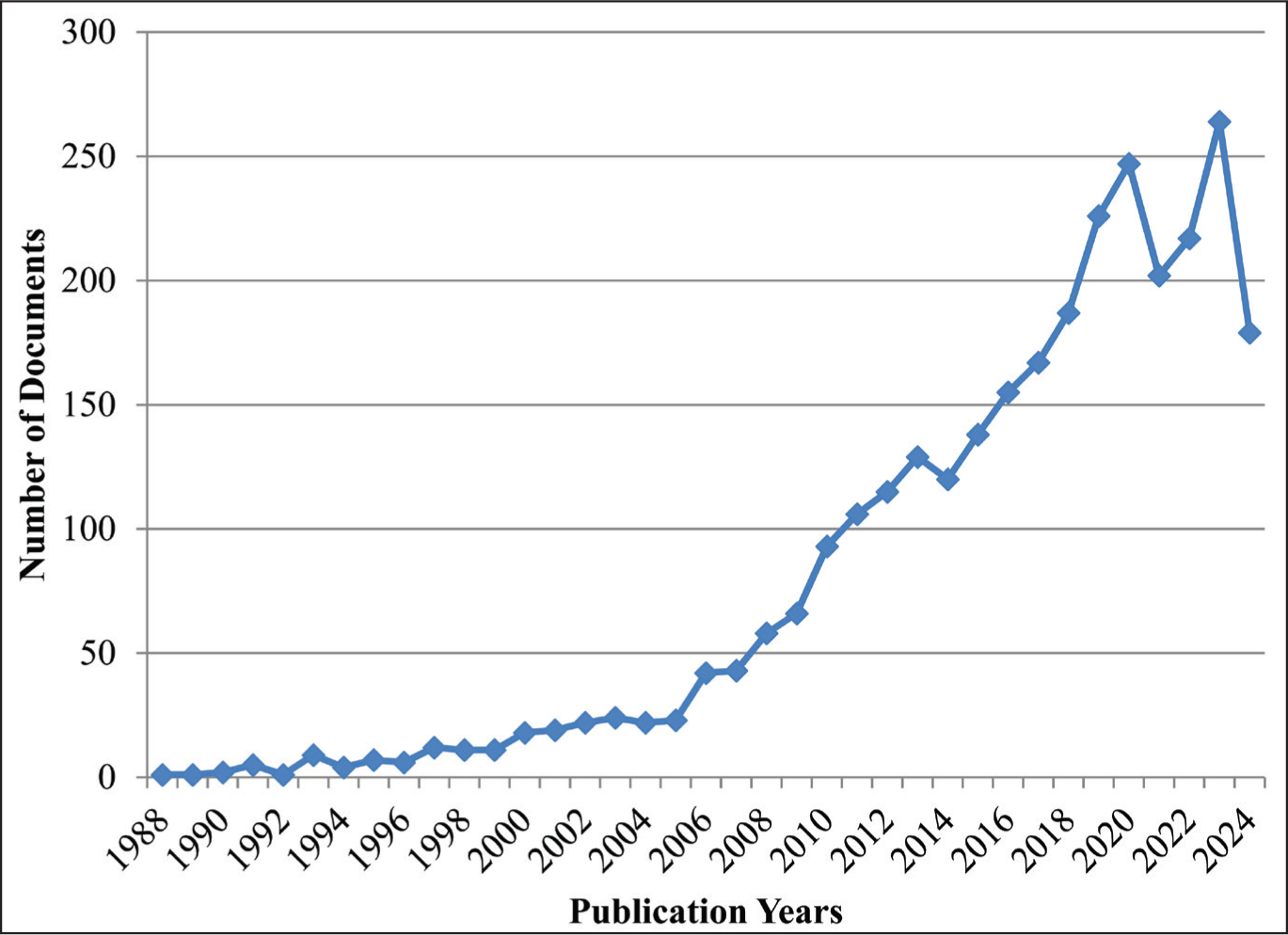
An analysis was conducted on a set of 2,952 publications, which collectively contain 240,675 cited references. Based on the statistics, this field has a substantial volume of scholarly work and citations. Figure 3 illustrates the temporal pattern of research publications on OCB. The study in this field has gained substantial momentum since 2008. The surge in the research underscores the diverse perspectives and expanding dimensions within the field. Initially, the emphasis was on exploring the predictors (Organ & Ryan, 1995; Williams & Anderson, 1991,), but over time, attention shifted towards examining the outcomes associated with OCB (Podsakoff et al., 2009; Podsakoff & MacKenzie, 1994). As the topic emerged, studies began to uncover challenges related to OCB (Bolino & Turnley, 2005; Bolino et al., 2010). Over time, new concepts emerged from the broader domain of OCB such as CCB (Vigoda-Gadot, 2006, 2007), organizational citizenship behaviours for the environment (Boiral, 2009) and citizenship ambivalence (Kelemen et al., 2022). The literature is still primarily focusing on unearthing the predictors of OCB and their mediating/moderating role (Hesse & Mikkelson, 2024; Lewin et al., 2020; Mahembe & Engelbrecht, 2014; Nurjanah et al., 2020; Pattnaik & Sahoo, 2023; Yen et al., 2024). A notable advancement in OCB research is its application to environmental concerns, expanding the scope of the field beyond traditional organizational settings (Boiral, 2009; Sulphey et al., 2024). Furthermore, contemporary concepts, such as emotional intelligence (Carmeli & Josman, 2006; Liu et al., 2024; Miao et al., 2020), artificial intelligence (Waqar & Bektas, 2023) and spiritual intelligence (Supriyanto & Ekowati, 2022; Swami et al., 2024), have been lately associated with OCB as mediators/moderators.
Bibliometric Analysis
Bibliometric analysis is a widely recognized and accepted analytical method for conducting SLR, particularly in the fields of business and management (Donthu et al., 2021; Öztürk et al., 2024; Paul et al., 2021). This technique is adept at handling, organizing, analysing and reporting complex bibliometric data (Lim & Kumar, 2024). Its foundational components include performance analysis and science mapping. Performance analysis evaluates the scientific output of a domain by assessing metrics such as publications and citations (Öztürk et al., 2024). Science mapping visualizes relationships and collaboration networks among scientific items, elucidating the intellectual, social and conceptual frameworks of a field while tracking its evolutionary dynamics (Öztürk et al., 2024).
In this study, performance analysis was employed to identify highly cited papers within the domain of OCB. Science mapping was conducted using co-citation analysis to uncover thematic clusters. The bibliometric software VOSviewer (version 1.6.20) was utilized for its robust capabilities in scientific mapping and widespread acceptance in bibliometric research (Donthu et al., 2021; Klarin, 2024).
Citation Analysis
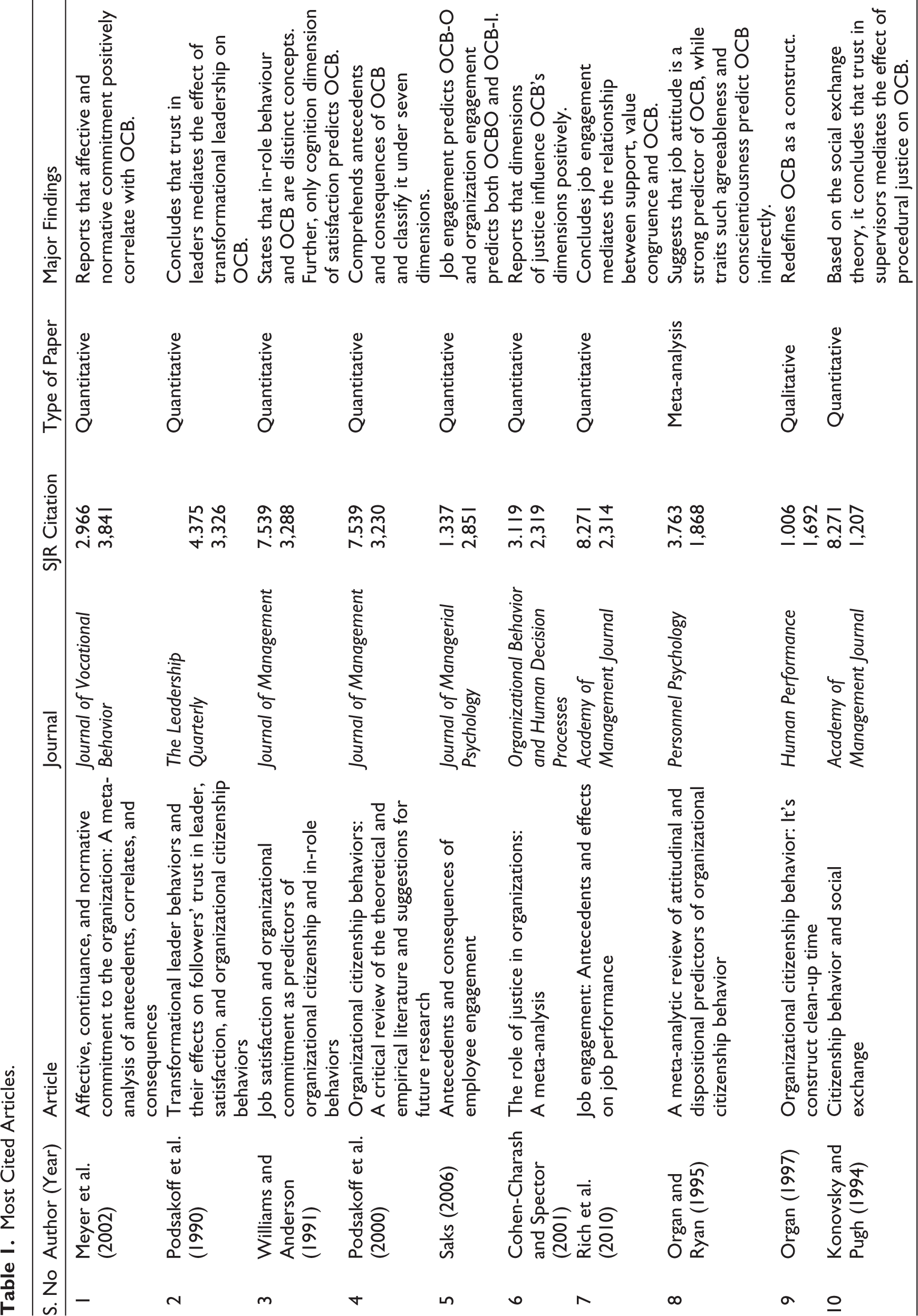
Citation analysis is a fundamental method used in performance analysis (Öztürk et al., 2024). It is a predominant approach for evaluating the significance of an author, journal or publication, as it allows quick recognition of significant works in the selected field (Donthu et al, 2021; Suban, 2023). The present evaluated the highly cited papers. Table 1 classifies the top 10 articles with the highest number of citations in the OCB domain. These highly cited works predominantly comprise foundational and classical studies on OCB (e.g., Organ, 1997; Podsakoff et al., 2000; Williams & Anderson, 1991). The central theme across these articles is the identification of predictors of OCB. Additionally, most of the papers are based on the tenets of social exchange (Cohen-Charash & Spector, 2001; Podsakoff et al., 1990; Saks, 2006). Attitudinal factors such as satisfaction, leadership, commitment and perceptions of fairness emerge as significant predictors of OCB. Furthermore, constructs such as fairness and leadership influence OCB indirectly through mediating mechanisms of organizational justice and trust, respectively. Moreover, more than half of these articles are quantitative in nature. It is also notable that the majority of the studies are based in the Western context.
Most Cited Articles.
Co-citation Analysis
Co-citation analysis examines the relationships among co-cited publications to elucidate the development of foundational knowledge in a research field, where clusters of cited publications represent common themes (Öztürk et al., 2024). A threshold constraint of 40 citations was established to ensure that sufficient references were considered. As a result, 200 papers were included, out of a total of 146,011 cited references. Mapping the co-citation analysis resulted in five clusters. Furthermore, the content analysis method was used to discuss and analyse the most influential articles within each cluster. It resulted in the identification of core themes and emerging trajectories in the field.
Cluster 1: Organizational Identification (OI) and OCB
Table 2 displays the categorization of papers pertaining to organizational identity and its significance in forecasting OCB. According to Ashforth and Mael (1989), individuals who highly identify with their organization indulge in activities that would support and promote the organization. It creates a valuable feeling among individuals. Expanding on this idea, Dutton et al. (1994) argued that employees who strongly identify with their firm are more likely to engage in OCB. Moreover, OI promotes the synchronization of employees’ behaviours with the interests and behaviours that are advantageous to the organization. Morrison (1996) put up a model that states that human resources management practices, such as selection, socialization, rewards and job description, play a crucial role in creating a relationship between employees and employers. This relationship is influenced by aspects such as identification, social exchange and empowerment, ultimately resulting in the manifestation of OCB. Riketta (2005) conducted a meta-analysis and found that OI is a robust predictor of OCB, even surpassing the predictive power of affective commitment. In 2009, Boiral proposed the concept that OCB might have a significant impact on addressing the environmental issues faced by a company.
OI and OCB.

Cluster 2: SET and OCB
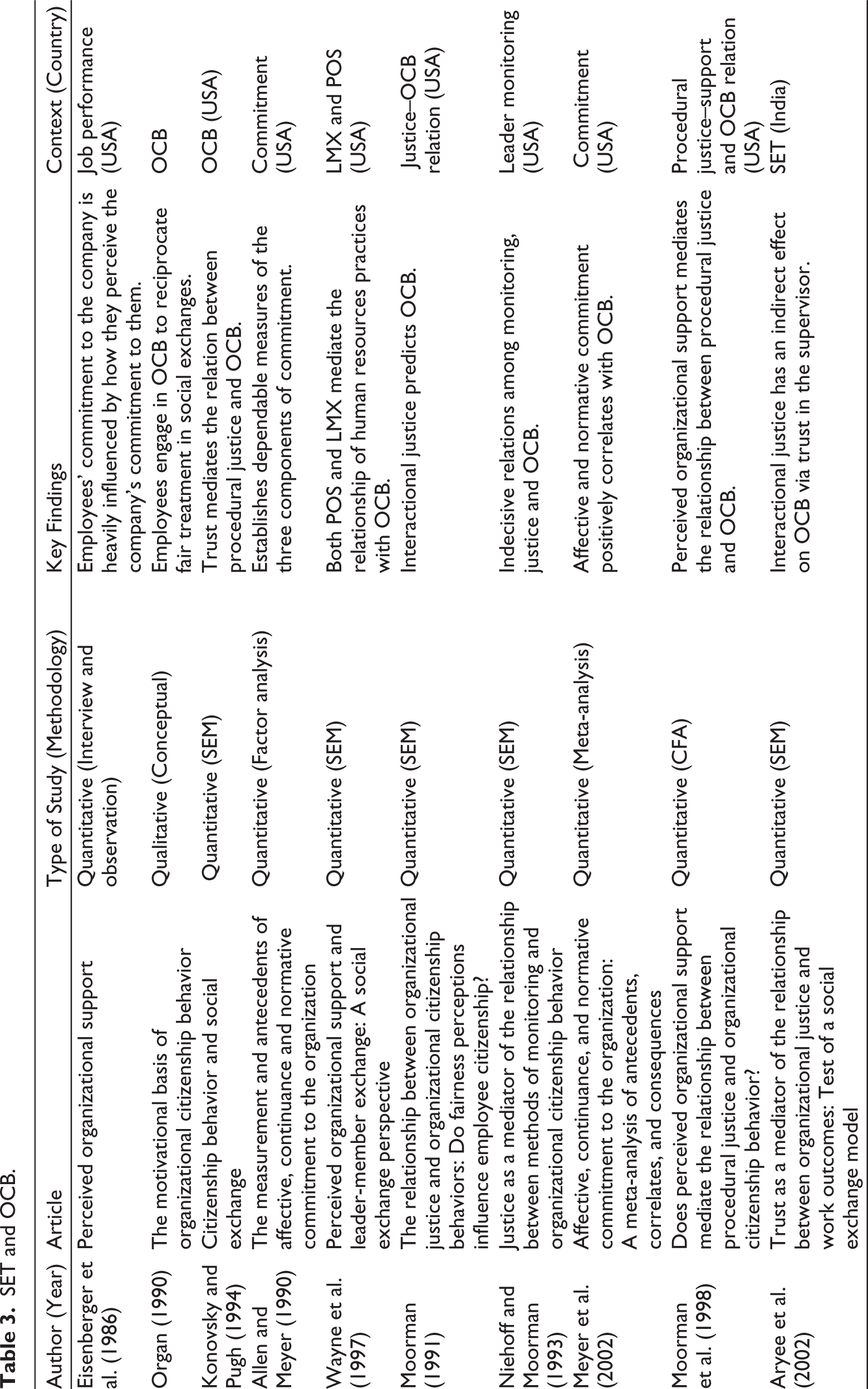
Table 3 displays the categorization of articles in Cluster 2. SET is a widely recognized and extensively studied theory in the OCB domain. The relationship between predictors such as commitment, fairness, support and justice with OCB is rooted in SET. Organ (1990) and Moorman (1991) posit that employees’ participation in OCBs is the outcome of perceived fairness in social exchanges. According to Eisenberger et al. (1986), employees with a strong exchange philosophy would reciprocate with higher commitment in exchange for perceived organizational support. Konovsky and Pugh (1994) argue that social exchange deals with long-term exchanges that are built on socio-emotional interactions, and they examined the social exchange model of OCB. Their research uncovered that trust acts as a mediator in the connection between procedural justice and OCB. Building on Konovsky and Pugh’s work, Wayne et al. (1997) discovered that both perceived organizational support and leader–member exchange (LMX) contribute to the formation of a positive exchange relationship that benefits OCB. Moorman et al. (1998) found that perceived organizational support mediates the relationship between procedural justice and OCB. Meyer et al. (2002) concluded that affective and normative commitments are indicators of OCB.
SET and OCB.
Cluster 3: Dimensionality and OCB
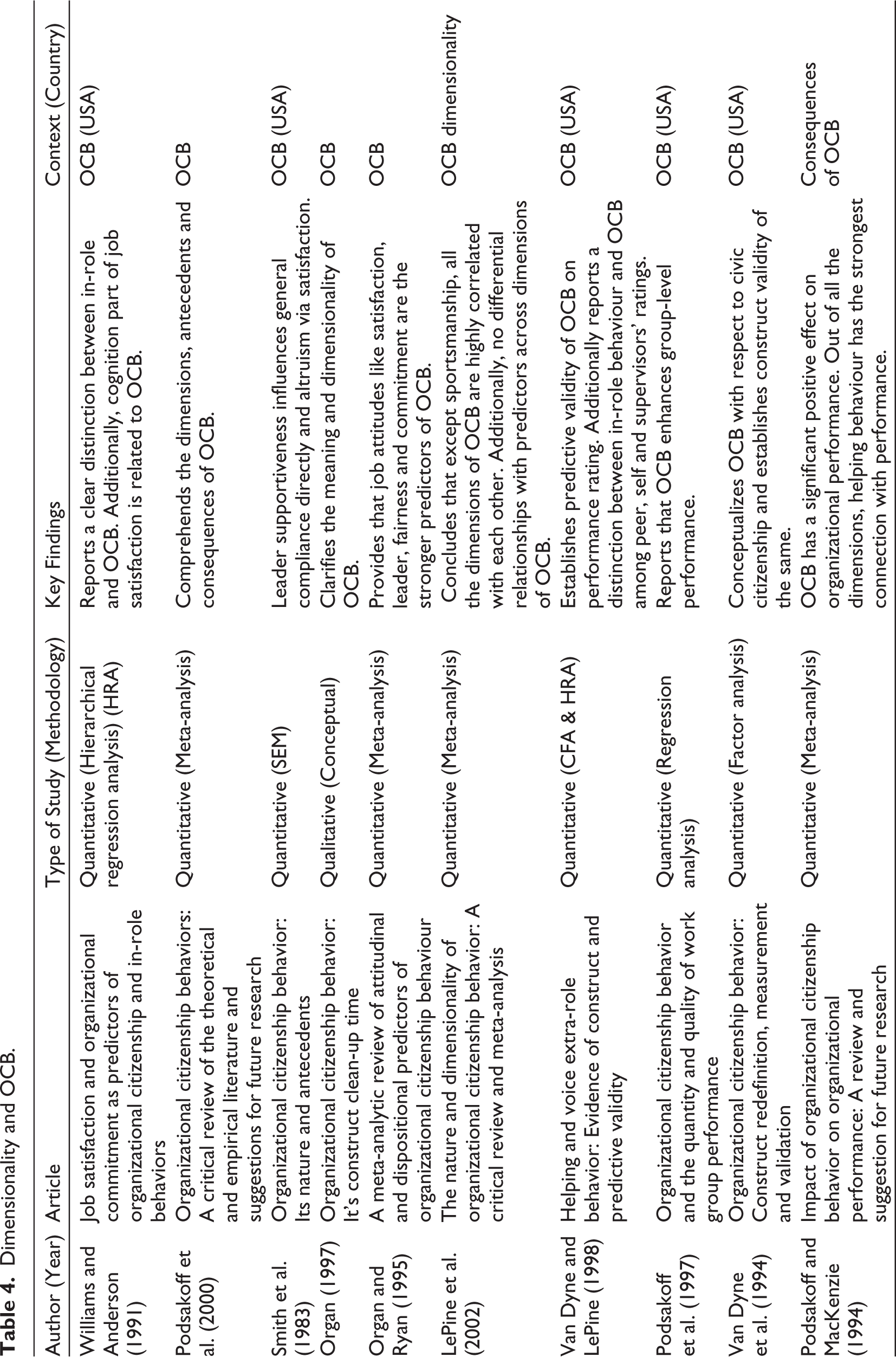
This cluster focuses on dimensionality and OCB. The review of this cluster, as indicated in Table 4, also highlights some influential predictors of OCB such as job attitudes like commitment and job satisfaction. Smith et al. (1983) identified two distinct classes of OCB: altruism and general compliance. They discovered that job satisfaction affects the altruism dimension of OCB, while neuroticism indirectly influences OCB through its effects on satisfaction. According to Williams and Anderson (1991), OCB can be classified into two dimensions: OCB-individual, which refers to OCB directed towards individuals, and OCB-organization, which refers to OCB directed towards the organization. Moreover, job cognition positively affects these dimensions. Van Dyne et al. (1994), extending political philosophy to OCB, theorized and empirically established three significant OCB categories: participation, loyalty and obedience. In addition, participation is further classified into social, advocacy and functional participation. OCB, being multidimensional, has been found by Van Dyne et al. (1994) to have a diverse mediating role in the interaction between job attitude (job satisfaction), dispositional (cynicism) and the different dimensions of OCB. With the help of a longitudinal study, Van Dyne and LePine (1998) revealed three important findings. First, there is a clear differentiation between in-role behaviour and OCB. Second, there is a similar conceptualization of helping and voice dimensions of OCB as rated by peer, self and supervisor ratings. Last, OCB has a positive influence on employees’ performance. Podsakoff et al. (2000) conducted a comprehensive literature review on OCB to bring out the dimensions of OCB and its antecedents and consequences. According to LePine et al. (2002), the dimensions of OCB, namely, altruism, conscientiousness, civic virtue and courtesy, are highly correlated with each other. Additionally, the dimensions exhibit a proportional association with job attitudes, such as satisfaction and commitment.
Dimensionality and OCB.
Cluster 4: Workplace Deviant Behaviours (WDB) and OCB
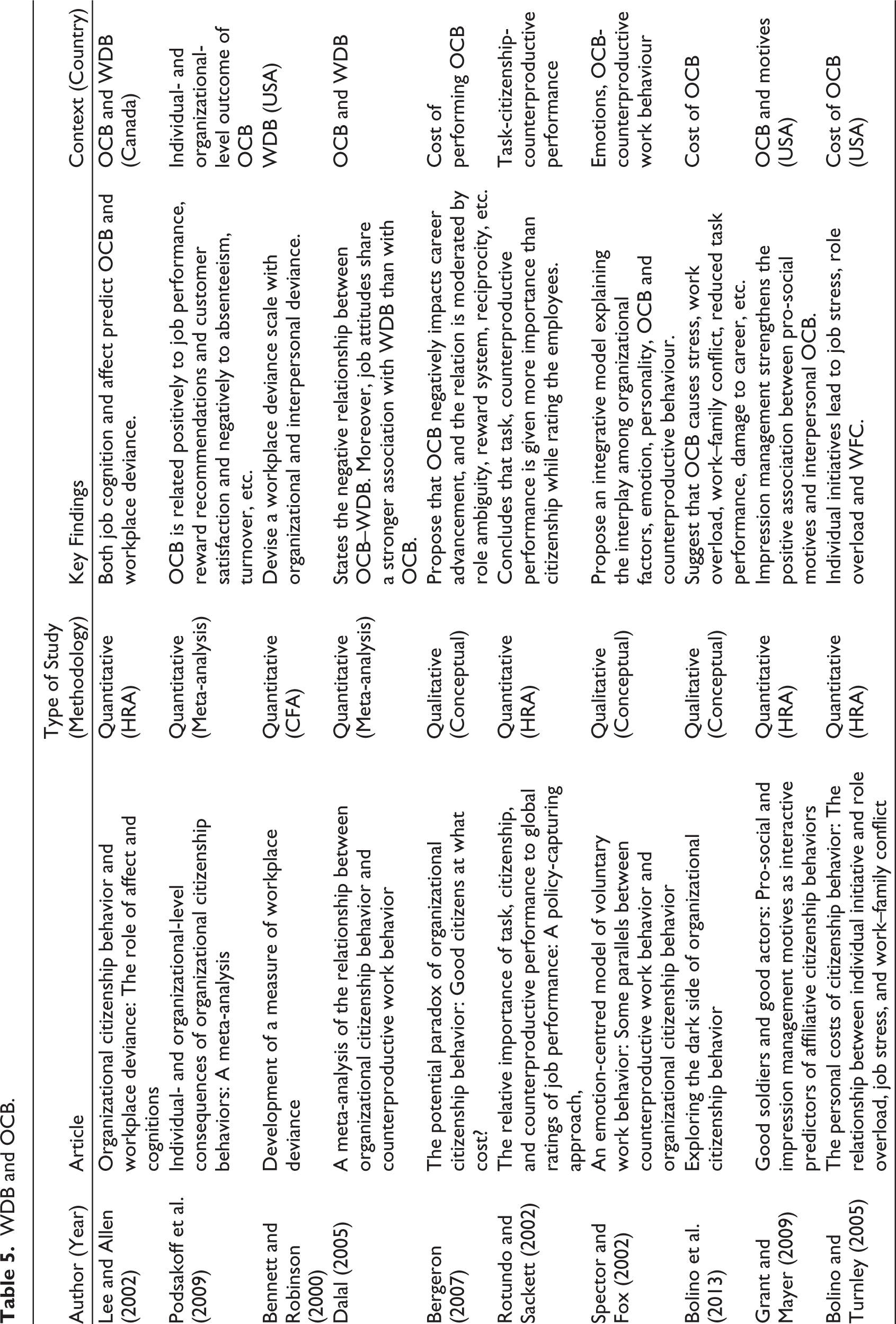
As illustrated in Table 5, this cluster centres on WDB and OCB. Additionally, it also discusses the adverse effects of partaking in OCB. According to Bolino and Turnley (2005), OCB can result in stress and work–family conflict. Furthermore, Bergeron (2007) argued that engaging in OCB depletes the time and energy allocated for task performance. This impedes the employees’ advancement, performance evaluations and rewards. Grant and Mayer (2009) suggest that employees may simply act to be good soldiers. Expanding on the same, Bolino et al. (2013) proposed that OCB may be motivated by impression management. Furthermore, they suggest that OCB has a detrimental impact on employees’ well-being. In their study, Spector and Fox (2002) developed a model elaborating that emotion might significantly influence employees’ decisions to engage in either OCB or deviant behaviours. According to a study by Lee and Allen (2002), there is a correlation between negative emotions, WDB and OCBI. Dalal (2005) states that both OCB and WDB are part of employees’ behaviour and are distinct from WDB. Dalal conducted a meta-analysis that uncovered a moderate negative connection between OCB and deviant workplace behaviours. Rotundo and Sackett (2002) discovered that while evaluating an employee, greater emphasis is placed on deviant workplace conduct than OCB.
WDB and OCB.
Cluster 5: Leadership and OCB
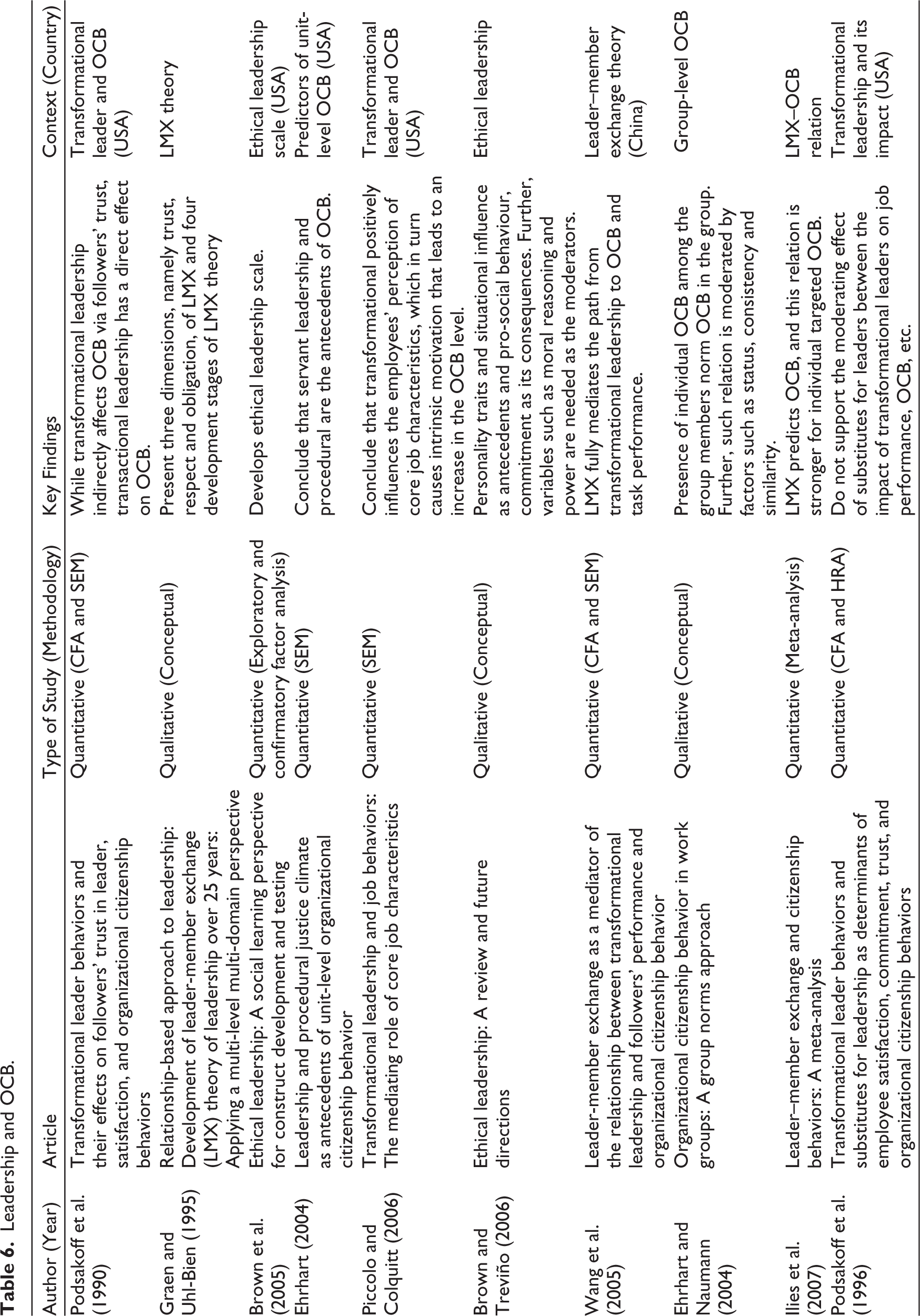
Table 6 illustrates the classification of articles in Cluster 5, emphasizing the relationship between leadership style and OCB. Various styles of leadership have proven to be crucial in manifesting OCB among employees. Transformational leadership (Piccolo & Colquitt 2006), LMX (Ilies et al., 2007) and ethical leadership (Brown & Treviño, 2006; Brown et al., 2005) are among the most widely accepted styles. Podsakoff et al. (1990) discovered that transformational leaders build trust in their followers, which consequently promotes OCBs among them. In a very interesting study by Podsakoff et al. (1996), it was found that transformational leadership contributes the most towards OCB, along with other substitutes of leadership style. Graen and Uhl-Bien (1995) define LMX as a leadership approach that results in long-term commitment from employees. The degree or strength of dedication is contingent upon the quality of LMX. Wang et al. (2005) base their articles on similar reasoning and suggest that transformational leadership fosters and cultivates high-quality LMX. The empirical investigation conducted by them found that LMX serves as a mediator in the relationship between transformational leadership and OCB. In addition, Ilies et al. (2007) conducted a meta-analysis and discovered that LMX has a more pronounced impact on OCB-individual than on OCB-organization. In a study conducted by Ehrhart (2004), the impact of servant leadership, which combines elements of transformational and ethical leadership, on OCB was examined. The study found that justice partially mediates the relationship between servant leadership and the dimensions of OCB.
Leadership and OCB.
Discussions and Future Directions
The publication trend indicates an increase in scholarly interest in the OCB domain across the research community, reflecting its growing importance and diverse perspectives within the field. Further, the emergence of keywords such as corporate social responsibility, sustainability and ethics with OCB opens promising new avenues, particularly given the increasing emphasis on ethics and environmental concerns. Exploring the interaction and influence is poised to yield significant theoretical and practical insights. The interaction of constructs such as emotional and artificial intelligence with OCB sets the stage for important future avenues. Emotional intelligence is crucial in managing employees’ emotions, modifying their behaviour and alleviating negative outcomes for employees (Cheung et al., 2022; Liu et al., 2024; Prasad et al. 2024). Similarly, the use of artificial intelligence and automation would help in fostering creative behaviour (Waqar & Bektas, 2023). Therefore, exploring the interaction between emotional intelligence, artificial intelligence and OCB would further enhance the understanding of OCB and broaden the research domain.
Most of the research on OCB is of empirical or conceptual nature. However, to validate the earlier conclusions and enhance the generalizability of results, there is a clear need for more longitudinal investigations. The analysis also reveals a predominant Western, especially U.S.-centric, influence in OCB literature (Guiling et al., 2022). Nevertheless, cultural variations significantly shape OCB (Paine & Organ, 2000; Suharnomo & Hashim, 2019). Therefore, future studies should focus on cross-cultural research to deepen the understanding of OCB across diverse cultural settings. The content analysis of each cluster produced under co-citation offers several future research avenues and practical insights as well.
Cluster 1 (OI) summarizes that OI is the strongest predictor (Riketta, 2005). Right recruitment and selection would ensure OCB (Morrison, 1996). Therefore, branding itself as an OCB-induced organization would ensure that organization attracts the right talent that also identifies with citizenship behaviours. Future studies can delve deeper into employer branding to enhance OCB. Since psychological empowerment leads to autonomy and self-control among employees (Spreitzer, 1995), future studies can delve deeper into identifying the interaction between psychological empowerment, OI and OCB. Further, according to Ashforth and Mael (1989), OI among employees does not necessarily require coherence between employees’ and organization’s values and structure. Hence, the further exploration of OI among a diversified workforce could yield great insights. Another important future avenue this cluster offers is the applicability of OCB for achieving its environmental goal (Boiral, 2009). In the light of increased environmental concerns from organizations, future studies should explore the unique challenges and drivers of implementing OCB in the environment.
Cluster 2 (SET) concludes that SET is pivotal in explaining the phenomenon of OCB. Considering the importance of socio-emotional exchange in reaping long-term benefits in the form of OCB (Konovsky & Pugh, 1994), future studies should explore the interaction between the emotional intelligence of management and employees’ OCB. Further, ensuring that employees’ expected beliefs and expectations from their employers are met with actuality builds loyalty and a sense of fairness and commitment among employees that are the bases for social exchange (Eisenberger et al.,, 1986; Wayne et al., 1997). Therefore, future research can delve into its practical applications and examine the impact of employees’ psychological contracts on OCB.
Cluster 3 (Dimensionality) concludes that the research on OCB has focused less on its construct validity (Podsakoff et al., 2000). The analysis of the cluster clearly indicates a lack of dimensional consensus and clarity. Further adding to the trouble is the fact that jobs are defined in such an abstract and generalized manner that there exists no clear demarcation between OCB and in-role jobs (Organ, 1997; Podsakoff et al., 2000). In contemporary work environments characterized by job enrichment, a flattened structure and decentralization, there is a need for a clearer and more efficient conceptual model on OCB to avoid confusion, uncertainty and pressure. Therefore, researchers should be encouraged to integrate the different studies more effectively to establish the construct OCB as distinct from in-role job with clear dimensions. Also, studies have concluded that different predictors affect dimensions differently and each dimension produces different outcomes. Future studies should provide more fine-grained research on the dimensions of OCB by delving deeper into dimension-wise predictors and outcomes.
Cluster 4 (WDB) states that WDB and OCB are adaptive behavioural responses to the workplace interaction (Dalal, 2005). The elimination of one does not necessarily imply the enhancement of the other. Therefore, future research should investigate strategies that not only foster OCB but also alleviate WDB. Since both share somewhat the same predictors (Dalal, 2005), future studies should investigate the intensity of these predictors in predicting OCB and WDB. The role of motives and emotions in determining whether an employee will indulge in OCB or WDB (Spector & Fox, 2002; Grant & Mayer, 2009) merits further investigation to gain a deeper understanding of the underlying dynamics. The kind and magnitude of emotions and motives are significantly influenced by personality traits (Spector & Fox, 2002). Therefore, it is important to explore the trajectory of personality, emotions/motives and OCB. Additionally, the primary cause of the negative effect of OCB lies in the fact that it consumes individuals’ resources (e.g., time, efforts and energy). Freeing up the resources might be helpful in mitigating negative effects such as exhaustion, stress and work–family conflict. Hence, exploring the effect of technological advancement like artificial intelligence may yield promising insights.
Cluster 5 (Leadership) summarizes that leadership is strongly associated with OCB. Leaders represent the organization to employees. Leaders are a connecting point between employees and the organization, its policy, culture, efforts, etc. A good leadership style can be helpful in buffering the negative effects of OCB and strengthening the positive effects on OCB. Therefore, future studies can delve deeper into leadership strategies to enhance OCB. This includes examining the mediating/moderating effect of various leadership styles in predicting OCB. Future studies should carry out qualitative studies such as case studies and longitudinal studies to strengthen the comprehension of leadership-OCB dynamics.
Theoretical Implications
The present study makes several significant theoretical contributions. It is the first scholarly effort to provide a comprehensive set of ideas for additional research aimed at expanding this corpus of knowledge. Through a meticulous and comprehensive synthesis of the OCB literature, this study improves the theoretical understanding by collating all the scholarly work within this domain. Following the rigorous parameters recommended by Paul et al. (2021) for SLR has enhanced the quality, integrity and relevance of the literature under examination, providing a robust foundation for the subsequent theoretical analysis. Further, bibliometric analysis quantitatively contributed to the completion of an otherwise fragmented theoretical framework; while content analysis helped in extracting valuable insights from it. Moreover, the structured approach in organizing and presenting the findings through tabulations and comprehensive discussions facilitate a synthesized overview of the examined literature on OCB, offering a nuanced understanding of key insights derived from the reviewed articles. Additionally, the analysis of temporal publication patterns in the OCB domain elucidates the evolution of OCB and its linkage with multiple factors. The expansion of OCB into emerging areas such as corporate social responsibility, emotional intelligence, environmental sustainability and artificial intelligence presents several theoretical, conceptual and empirical research opportunities. These opportunities would be crucial for understanding the development of a new paradigm and the advancement of existing theories within the broad domain of OCB. The present article enriches the theoretical discourse by elucidating the thematic evolution within the OCB field. The analysis of key clusters further illuminates the thematic progression within the OCB domain, setting the stage for future research endeavours. This study serves as a reference point for researchers intending to proceed with a future study on OCB.
Practical Implications
To sustain and grow competitively, organizations heavily expect employees’ OCB (Vigoda-Gadot, 2006). However, OCB is a complex phenomenon involving employees’ discretion, free-will and is formally unrewarded, thus making it difficult to promote OCB in an organization. Consequently, it is important to understand the development and trends in OCB to adopt a proactive approach and enhance OCB in the workplace. The present study enhances the body of knowledge by compiling relevant academic work on OCB, thereby supporting management in developing more informed policies and decision-making processes. The future directions above give managers and decision-makers a variety of practical insights while framing policies and strategies.
Conclusions and Limitations
Overall, the findings of the present study offer a thorough analysis of the evolution, trends in development, prominent clusters and potential areas for further research in this domain. While it has made valuable contributions to the field of literature, it is important to acknowledge certain methodological shortcomings. The current study solely uses the Scopus database. Subsequent studies in the same field can expand their scope by incorporating publications from additional databases, such as the Web of Science. Moreover, this study exclusively incorporates English-written literature. Therefore, future research endeavours can explore the literature available in different languages. While bibliometrics is an objective and replicable tool for analysing books, a qualitative approach offers a deeper comprehension of the issue. Hence, employing an alternative study methodology, such as a meta-analysis, can comprehensively encompass the published literature and assess the practices of OCB. Furthermore, the study relied on co-citation analysis, which provides key themes within the domain. However, as this approach is based on highly cited papers, it may sometimes lead to the exclusion of more recent publications. Therefore, future research could employ a combination of bibliographic coupling or other methods to further strengthen the findings.
Footnotes
Declaration of Conflicting Interests
The authors declared no potential conflicts of interest with respect to the research, authorship and/or publication of this article.
Funding
The authors received no financial support for the research, authorship and/or publication of this article.