







Abstract
This article looks at the relationship between five sub-dimensions of transformational leadership (idealised influence attributed, idealised influence behaviour, inspirational motivation, intellectual stimulation and individualised consideration), follower’s karma-yoga and follower’s perceived group cohesiveness. Data were collected in a research and development organisation in India, from 771 employees (561 male and 210 female) with minimum 5 years of work experience in that organisation. Partial least squares structural equation modelling PLS-SEM analysis shows that four sub-dimensions of transformational leadership—idealised influence attributed, idealised influence behaviour, inspirational motivation, and intellectual stimulation—are positively related to follower’s perceived group cohesiveness. In addition, this relationship is partially mediated by the follower’s karma-yoga. Focusing on increasing the frequency of idealised influence attributed, idealised influence behaviour, inspirational motivation and intellectual stimulation of managers will result in making the employees more karma-yoga oriented; both these will result in increasing the follower’s perceived group cohesiveness in the organisation, making the work environment more harmonious and productive.
Keywords
Supervisor’s behaviour has a direct influence on follower’s behaviour; they affect the followers’ organisational citizenship behaviour—OCB (Rafferty & Restubog, 2011), perceived cohesion and even their tendency to gossip (Decoster et al., 2013). The leadership behaviours of the supervisor affect the followers’ self-perceived empowerment (Van Winkle et al., 2014), motivation and work performance (Stollberger et al., 2019). Though there are a huge number of studies that focus on the relationship between the supervisor’s leadership and followers’ behaviours, very few studies have focused on the individual’s perceived group cohesiveness—PGC (Bollen & Hoyle, 1990). PGC explains the individual’s sense of belonging to a particular group (Bollen & Hoyle, 1990). There is not much research that has captured the effect of the supervisor’s leadership behaviour on the follower’s PGC. This is vital to study because, first, it is important to understand the individual’s sense of belongingness to a group as it affects the objective group cohesiveness strongly (Bollen & Hoyle, 1990) and other group dynamics.
Second, the leaders’ transformational behaviour has an impact on the follower’s self-concept (Shamir et al., 1993); thus, there is scope to check if the supervisor’s transformational leadership (TL) behaviours affect the follower’s PGC. The four sub-dimensions/behaviours of TL are idealised influence (behaviour and attributed), inspirational motivation (IM), intellectual stimulation (IS) and individualised consideration—IC (Bass & Avolio, 1996). Third, each sub-dimensions’ relationship with the PGC is considered for this study because each sub-dimension has a different impact on other variables and is underdeveloped (Avolio et al., 2009; van Knippenberg & Sitkin, 2013). Fourth, each sub-dimension has a different impact on the outcome variables via different mediators (Avolio et al., 2009; van Knippenberg & Sitkin, 2013). So, in this study, the sub-dimension’s impact on PGC through karma-yoga (KY) is considered.
The effective, prominent and influential style of leadership is TL (Ciulla, 1995; Smith, 1995). Burn’s says “leaders and followers raise one another to higher levels of motivation and morality” (p. 20). In the Indian context, excellence towards KY is considered as the highest point of moral development for an individual. KY is a selfless action and discharge of duties without any expectation in return (Krishnan, 2008; Mulla & Krishnan, 2006; Rastogi & Patil, 2015). This selfless aspect of KY is in line with the Burns’ transforming leadership. and it is also empirically proven that the transformational leaders’ behaviour enhances the follower’s KY and their sense of oneness with others (Krishnan, 2008). Effective leaders sharpen the follower’s self-concept (Horstmeier et al., 2017), and KY is one aspect that transforms individuals’ identity towards collective orientation (Mulla et al., 2018). Thus, the variable “KY” is considered as the mediating variable. Since individuals high on KY display oneness with others, their perception towards their groups also changes. and they tend to perceive their group to be more cohesive. This study is the first kind to explore these aspects and understand the process involved.
Theory and Hypotheses
Transformational Leadership
“Leaders can shape and alter and elevate the motives and values and goals of followers through the vital teaching role of leadership”—this is transforming leadership (Burns, 1978, p. 425). TL is a process where the leaders and followers raise each other to higher levels of motivation and morality (Burns, 1978). Bass (1985) built on this concept and described it in terms of its impact on the followers. The four behavioural components introduced by Bass and Avolio (1996) are as follows:
Idealised influence attributed (IIA) is the intensity to which the leaders are admired by the followers. Burns (1978, p. 244) terms it as heroic leadership. The belief of followers on leaders is based on their personage alone, aside from their tested capacities, experience or stand on issues. The bond between them is an affective and emotional one. The short-run psychic dependency and gratification unite them. Moreover, this emotional part of TL steers the followers towards superordinate goals.
Idealised influence behaviour (IIB) displays the leader’s conviction, take stands and bond with the followers emotionally (Judge & Piccolo, 2004). The leader’s behaviour reflects the sense of purpose and mission, which sends a strong message to the followers (Avolio et al., 1995).
Inspirational motivation (IM) is where the leader provides a strong vision, inspires the followers through articulation and instils confidence in the followers to attain a larger goal, which would not have happened otherwise (Avolio et al., 1995).
IS is where the leader challenges the follower’s assumption, encouraging them to think deeply, questioning their norms and figuring out better solutions and perspectives for the problems (Avolio et al., 1995).
IC is where the leaders understand the wants and needs of the followers through personal interaction. The leader acts as a mentor, keeps the communication open and celebrates the individual’s contribution and hence the followers are intrinsically motivated (Avolio et al., 1995).
By articulating vision, the leaders can inspire the followers towards higher commitment and progress towards the group goal (Podsakoff et al., 1996). This style brings a sense of collective identity (Jung & Sosik, 2002) and improves followers’ organisational identification (Buil et al., 2019; Zhu et al., 2012).
Perceived Group Cohesiveness
Perceived group cohesion is an individual-level variable, defined as “an individual’s sense of belonging to a particular group and his or her feelings of morale associated with membership in the group” (Bollen & Hoyle, 1990). As the group member apprises about his or her relationship with the group, it is vital to capture and understand the PGC. Two aspects were taken into account when group member apprises about his or her belongingness with the group: (a) accumulated information on the group’s experience as a whole and (b) the accumulated information about his or her experience with the group. This gives a clear understanding of the individual’s judgement of their closeness with the group, along with their personal feeling of morale association with the group (Bollen & Hoyle, 1990).
When the individuals are high on perceived group cohesion, they tend to feel and display stronger bonds with the group (Bollen & Hoyle, 1990). There exists a positive relationship between the individual’s sense of belongingness to a group and their feeling of moral association with the group. This is the reason that when the groups are cohesive, the group members tend to conform to the group norms and holds uniformity (Hogg, 1992). The individual-level PGC reveals the role of the group in the lives of the group members (Bollen & Hoyle, 1990).
Transformational Leadership and Perceived Group Cohesiveness
The leaders’ transformational behaviour has an impact on the follower’s self-concept (Shamir et al., 1993), and each sub-dimension has a different impact on other variables with different intensities (Avolio et al., 2009; van Knippenberg & Sitkin, 2013).
Studies have shown the positive impact of the leader’s charisma on the followers’ intrinsic motivation (Bono & Judge, 2003), trust (Podsakoff et al., 1990) and employees’ cooperation (De Cremer & van Knippenberg, 2002). It was found that all these outcome variables were positively impacted by the leader’s charisma.
Idealised influence attributed (IIA) is the degree to which the leader behaves in an admirable manner that causes followers to identify with the leader (Judge & Piccolo, 2004). According to Conger and Kanungo (1998, p. 15), this sub-dimension has a strong relationship with outcome variables as it is “clearly more influential” among the other sub-dimensions. When the leader behaves in an admirable manner, the followers personally identify themselves with their leader. The followers leave behind their self-interest for the mission and vision articulated by the leader, show emotional attachment with the leader, internalise the leaders’ values and goals and demonstrate a strong personal commitment to the values or goals (Shamir et al., 1993). When the followers admire their leader to the extent that they identify themselves with the leader, they will also be proud to be a part of the group the leader leads. So, they tend to perceive that their group is cohesive.
A leader’s idealised influence behaviour (IIB), such as displaying conviction, taking stands and bonding with the followers at an emotional level (Judge & Piccolo, 2004), reduces the followers’ anxiety and enhances their workplace outcome and organisational commitment (Parr et al., 2013). The followers tend to personally sacrifice for the collective good when they see their leader as charismatic, and this enhances the group members’ cooperation (De Cremer & van Knippenberg, 2002; Yorges et al., 1999) Thus, as a result of their appeal, charismatic leaders are believed to have the ability to shift group members’ focus from self-interest to collective interest (Bass, 1985; Burns, 1978; Shamir et al., 1993).
When leaders display IM behaviour, their articulation of vision instils confidence and transcends the follower’s self-interest for the larger good of the group (Avolio & Bass, 2004; Burns, 1978; Khattak et al., 2020; Shamir et al., 1998), and the positive affect of leaders is contagious to their followers (Erez et al., 2008). When the followers understand the meaning and purpose of the work they do, it develops their positive perception towards work (Arnold et al., 2007; Sofarelli & Brown, 1998).
When leaders exhibit IS and challenge the assumption and norms of the followers, the followers tend to think deeply and become creative (Avoilio & Bass, 2004; Burns, 1978). IS enhances the followers’ interpersonal help behaviours and prevents the occurrence of work-related problems. It also enhances the followers’ altruism and courtesy (Podsakoff et al., 2000). When followers exhibit a cooperative, helping and problem-solving behaviour in the group, they tend to perceive their group to be cohesive.
Finally, when the leaders give IC by respecting the followers’ needs and want, and helping them to address that, this makes the followers intrinsically motivated, feel empowered and build trust (Avolio & Bass, 2004; Burns, 1978; Walumbwa & Hartnell, 2011). By displaying this behaviour, leaders reduce the followers’ anxiety and enhance their organisational commitment (Parr et al., 2013).
Karma-yoga
KY says, “To action alone hast thou a right and never at all to its fruits; let not the fruits of action be thy motive; neither let there be in thee any attachment to inaction”. This is a verse from Gita on KY (Radhakrishnan, 1948/1993; Tilak, 1915/2000, p. 895). Bhagavad Gita is the scripture inspired by Indians for generations (Vivekananda, 1972) and KY is one of the paths specified for achieving the ultimate goal of human life. So, to achieve the high point in moral development, one has to attain excellence in KY. The dimensions of KY as outlined by Mulla and Krishnan (2006), are duty orientation, equanimity and absence of desire for reward.
Rastogi et al. (2019) defined KY “as a persistent positive mental state that is categorised by absorption and service consciousness”. Absorbed individuals tend to be engrossed in activities at hand, and individuals with service consciousness tend to look after other’s welfare selflessly (Rastogi & Pati, 2015). It is argued by Rastogi and Pati (2015) that the service consciousness dimension of KY explained by them is in line with the duty-orientation dimension of KY by Mulla and Krishnan (2012) and Hannah et al. (2014). Thus, to achieve this, individuals have to discharge their duties with full dedication; dedication in action has to be without a thought about its fruit.
Transformational Leadership and Karma-yoga
Leadership is taking the followers to a higher level of moral development, making them transcend beyond their day-to-day wants, needs and expectations (Burns, 1978, p. 46). Burns (1978) says, transforming leaders not only moved followers up on Maslow’s hierarchy but also moved them to transcend their self-interest. Bass (1998) agrees with Burns (1978) on this aspect of transcending their own self-interest and use this as the major differentiator between authentic TL and pseudo-TL. Transformational leaders not only transcend their self-interest, they also encourage and make their followers transcend their self-interest by changing follower’s self-concept (Shamir et al., 1993). Striving excellence towards KY is the highest point of moral development of an individual in the Indian context. TL enhances individuals’ KY orientation (Mulla & Krishnan, 2012; Mulla et al., 2018).
Individuals high on KY exhibit a high sense of duty or obligation towards others (duty-orientation), they perform actions selflessly and show indifference towards a reward (absence of desire), and they stay undisturbed by trouble or temptation during the action (equanimity) (Mulla & Krishnan, 2006).
The followers identify themselves with their leader when he or she behaves in an admirable way (Judge & Piccolo, 2004). When the leaders exhibit the IIA behaviours, that is, being a role model and leading by example, the followers tend to personally identify themselves with their leaders. Once the followers identify themselves with the leader, the followers leave behind their self-interest for the mission and vision articulated by the leader, show emotional attachment with the leader, internalise the leaders’ values and goals, and demonstrate a strong personal commitment to the values or goals (Shamir et al., 1993). Leaving behind the self-interest for the larger goal is the first step of follower’s action towards selflessness, and they show indifference to rewards, which is a dimension of KY.
The leaders displaying IIB reflect the sense of purpose and mission, which sends a strong message to the followers (Avolio et al., 1995). The display of conviction by the leaders makes the followers believe they stand for their words and actions (Judge & Piccolo, 2004). When the leader himself exhibits duty-oriented behaviour, the followers also follow the steps of their leader (Mulla & Kirshnan, 2009) and become oriented towards KY.
When the roles get cleared for the followers, they tend to own responsibility for their actions, which is a step towards duty-orientation. When the leader sets a clear vision (IM) (Nielsen et al., 2008) and support to develop the required skills, the followers develop the positive perception towards work (Arnold et al., 2007; Sofarelli & Brown, 1998). When the followers are given the required information about the job they are involved in, they stay undisturbed by trouble or temptation during the action (equanimity). When the leader’s articulation inspires the followers, they give their fullest without expecting any external rewards (Bass, 1985), which is the absence of desire, a dimension of KY.
By intellectually stimulating, the leaders challenge the follower’s assumptions and the belief system (Judge & Piccolo, 2004). This makes them think deeply and understand the reason behind the task they do. They become creative. When they get intrinsically motivated and enjoy the process of the work they do, they do not bother about the returns for the effort. They discharge their duty without getting affected by the trouble or temptation in their journey.
During IC, the leaders closely understand and attend to the wants and needs of the followers; this helps the leaders to understand the followers’ potential, which the followers themselves were unaware of. The transforming leaders tap the needs and raise the aspirations and help shape the values—and hence mobilise the potential—of followers (Burns, 1978, p. 455); by seeing these selfless actions of the leaders, the followers tend to identify themselves with the leader. Leaders most effectively “connect with” followers morally and ask sacrifices from followers rather than merely promising them good (Burns, 1978, p. 455).
Transformational Leadership, Karma-yoga and Perceived Group Cohesiveness
Transformational leaders’ behaviour shifts the follower’s self-concept gradually from personal identity to the collective aspect (Shamir et al., 1993). Effective leaders sharpen the follower’s self-concept (Horstmeier et al., 2017), and KY is one aspect that transforms individuals’ identity towards collective orientation (Mulla et al., 2018). So, the impact of each sub-dimension of TL on follower’s PGC could be explained through KY orientation in the Indian context.
Bass (1985) stated that the followers are motivated to transcend self-interest for the teams’ larger good, and this is achieved by the leader’s charismatic appeals and emotional talks. The leader’s charisma is strongly associated with the follower’s effectiveness and their satisfaction with the leaders (Lowe et al., 1996). When the followers see their leader as charismatic, they tend to personally sacrifice for the collective good, and this also enhances the group members’ cooperation (Cremer, 2002; Yorges et al., 1999)
When the leaders’ show IIB towards their followers, it reduces the followers’ anxiety and enhances their workplace outcome and organisational commitment (Parr et al., 2013). As the leaders stand for their actions and words, it instils trust and confidence among the followers. Thus, followers follow their leaders and become duty oriented. Leaders’ behaviour shifts the follower’s self-concept gradually from personal identity to collective aspect (Shamir et al., 1993), and KY is one aspect that transforms individuals’ identity towards the collective aspect of self-concept (Mulla et al., 2018). As the follower’s self-concept has a gradual shift, their perception towards their groups’ cohesiveness also changes and tend to perceive their group a cohesive group.
IM is the degree to which the leader articulates a vision that is appealing and inspiring to followers (Judge & Piccolo, 2004). The leader’s ideology articulation brings in goal clarity, task focus and value congruence (House, 1977). According to Yukl (2013), the leaders, through IM, instil enthusiasm among the followers to work with the group and successfully perform to achieve the group’s goal.
The leader’s IS enhances interpersonal helping behaviours and prevent the occurrence of work-related problems. It also enhances the altruism and courtesy (Podsakoff et al., 2000). The follower’s self-efficacy and their perceived group effectiveness are influenced by the sub-dimensions (Jung & Sosik, 2002). Since these sub-dimensions also influence the followers to be karma-yogic, it enhances the sense of oneness with others and makes the followers identify themselves with their leader and their group.
Krishnan (2008) showed that TL leads to a sense of oneness in the followers through KY. The perception of employees’ oneness with the organisation occurs when a high level of trust exists between the supervisors and subordinates (Khattak et al., 2020). This trust among the followers on their leaders is enhanced when the IC behaviour of the leaders is displayed towards the followers (Avolio & Bass, 2004; Burns, 1978; Walumbwa & Hartnell, 2011). This sense of oneness through IC shifts the followers to be collectivist, thus perceiving they are part of the cohesive group.
Method
Data and Sample
The data for this study were collected from a research and development institute in India. The sample consisted of 771 employees of which 561 were males and 210 were females. The questionnaire was given only to employees with a minimum of 5 years of work experience with this organisation. The sample is from nine major departments of the institute, which had several groups in it. Out of the 771 employees, 600 employees were reporting to male supervisors, and 171 employees were reporting to female supervisors. The average age of the respondents was 45 years. The respondents’ age ranged from 25 years to 59 years. Each member of the sample was requested to answer the questionnaires. The respondents were promised anonymity, which reduced the reluctance in answering the questionnaire.
Measures
TTL was measured by using a modified version of the TL questionnaire (TLQ) of Singh and Krishnan (2007) to measure TL behaviours of the respondent’s supervisor. The scale has 30 items, with 6 items for each factor. The factors are IIA (heroism), IIB (ideology), IM, IS and IC. The TL behaviours of the respondents’ reporting supervisors are recorded in the TLQ. The respondents were asked to give their response on how frequently their reporting supervisor exhibited the TL behaviour by using a 5-point scale (1 = not at all; 2 = once in a while; 3 = sometimes; 4 = fairly often; 5 = frequently, if not always).
KY of the followers was measured using a 6-item scale. The respondents were asked to read the statements about themselves and evaluate the extent to which they agreed with each statement. All responses were recorded using a 8-point scale (1 = not at all; 2 = very little; 3 = somewhat; 4 = much; 5 = very much) (Krishnan, 2007)
Individual’s perceived group cohesiveness was measured using the group environment questionnaire (GEQ) of Carron et al. (1985). The questionnaire was designed to measure the group cohesiveness in a sports environment. We modified this questionnaire to suit our sample. As we are interested to study the PGC, which is an individual-level variable, the questionnaire was self-reported by the respondent, where they agree or disagree with the item, regarding their workgroup, using a 5-point scale (1 = strongly disagree; 2 = disagree; 3 = neither agree nor disagree; 4 = agree; 5 = strongly agree).
Results
Partial least squares structural equation modeling (PLS-SEM) was used to understand the relationship between the sub-dimensions of TL, followers’ KY and PGC. While examining the model, PLS-SEM emphasises on explaining the variance in the dependent variable by minimising the error terms of the dependent variable (Hair et al., 2011). It evaluates the path relationship that maximises the R2 values of the dependent variable (followers’ KY and followers’ PGC). Bentler and Huang (2014), and Dijkstra and Henseler (2015) introduced methods that provide “consistent PLS-SEM” estimations. This was developed with the idea to help the researchers to use PLS-SEM to study structure. The new development in PLS-SEM through partial least square consistent (PLSc) is mainly for the studies that focus on analysing and testing the model structure, that is, mimicking covariance based structural equation modeling (CB-SEM). The results show a strong similarity between CB-SEM and PLS-SEM (using PLSc) results.
Conceptual Model or Path Model
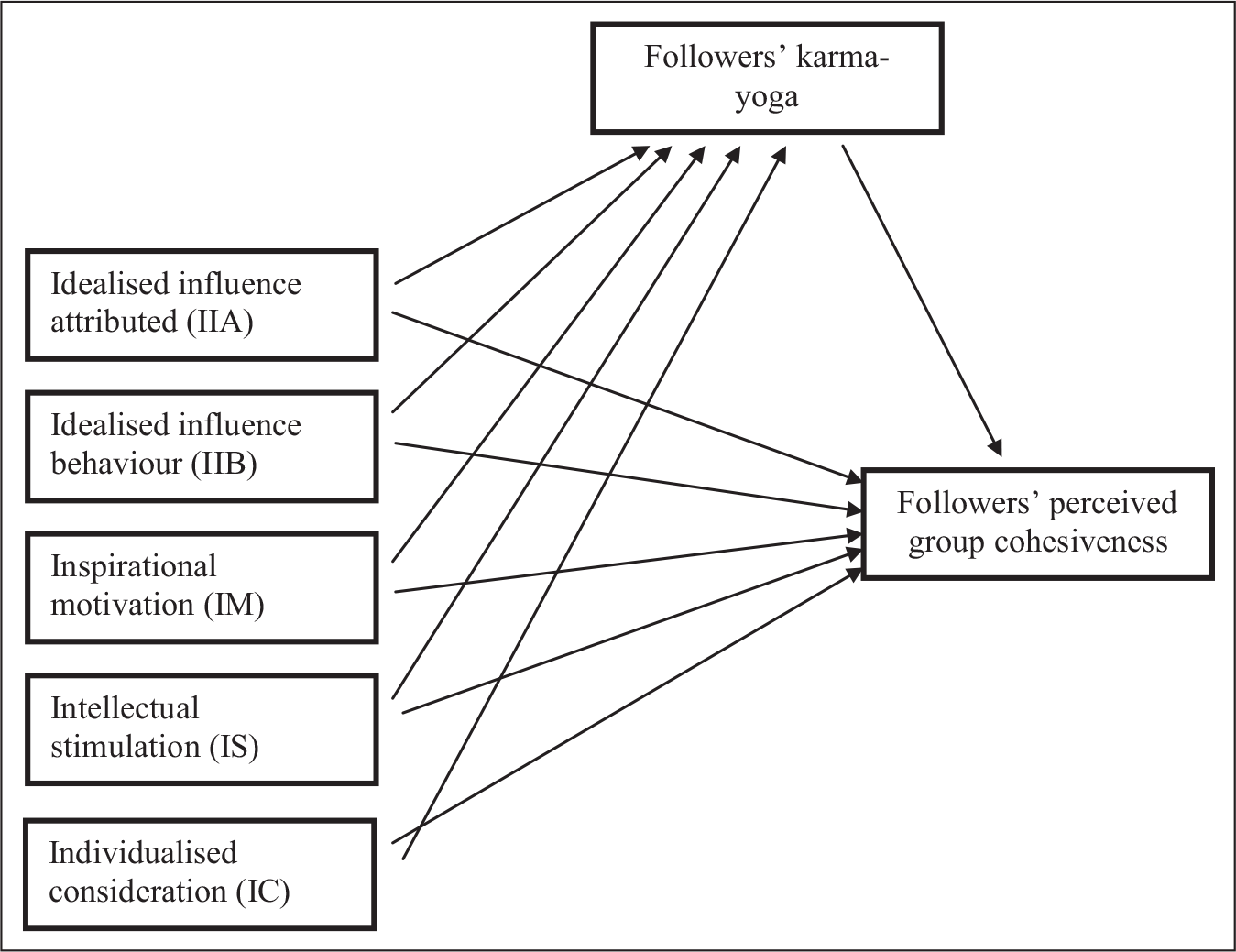
The study’s conceptual model (Figure 1) was developed using SmartPLS Software V3. The constructs involved in the study are IIA, IIB, IM, IS, IC, KY and PGC. As suggested by Henseler et al. (2009), the parameters were calculated by the two-step process, by independently calculating for measurement model and then running the structural model.
Measurement Model Evaluation
This is a reflective model study. The assessment for the reflective model is evaluated through assessing outer loading values for indicator reliability, Cronbach alpha and composite reliability (CR) values for internal consistency, loading and cross-loading values for construct validity, average variance extracted (AVE) value for convergent validity and Fornell–Larcker criterion, cross-loading and heterotrait-monotrait (HTMT) criterion for discriminant validity.
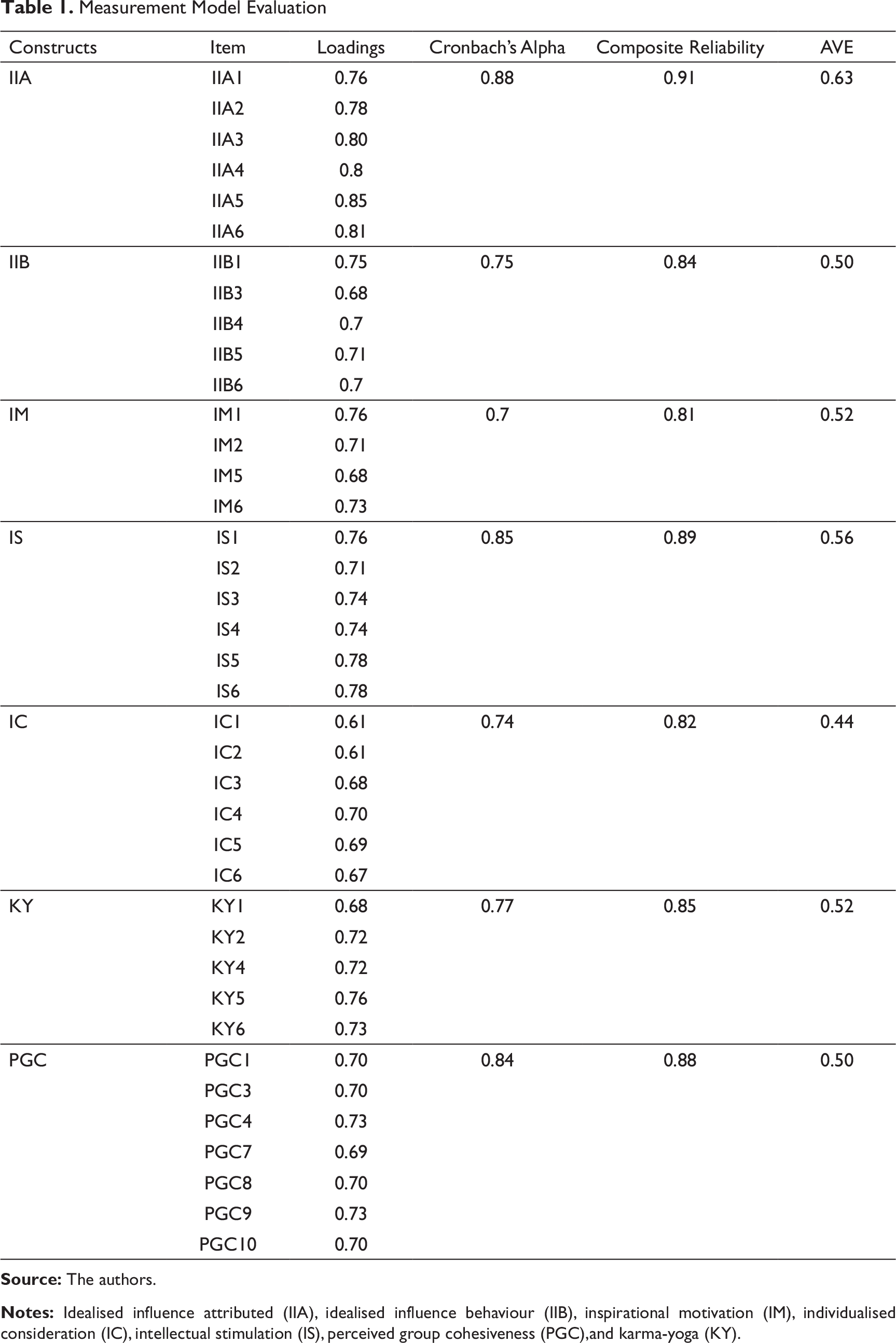
Table 1 presents the summary of outer loading, Cronbach’s alpha, CR and AVE of the measurement model. The values of these parameters are within an acceptable limit and satisfactory (Chin, 1998; Hair et al., 2011; Latan & Ghozali, 2013; Nunnally & Bernstein, 1994). The indicators with outer loading value less than 0.5 were identified and dropped, as the dropping of the items led to an increase in the CR and AVE (Hair et al., 2011; Henseler et al., 2009).
Measurement Model Evaluation
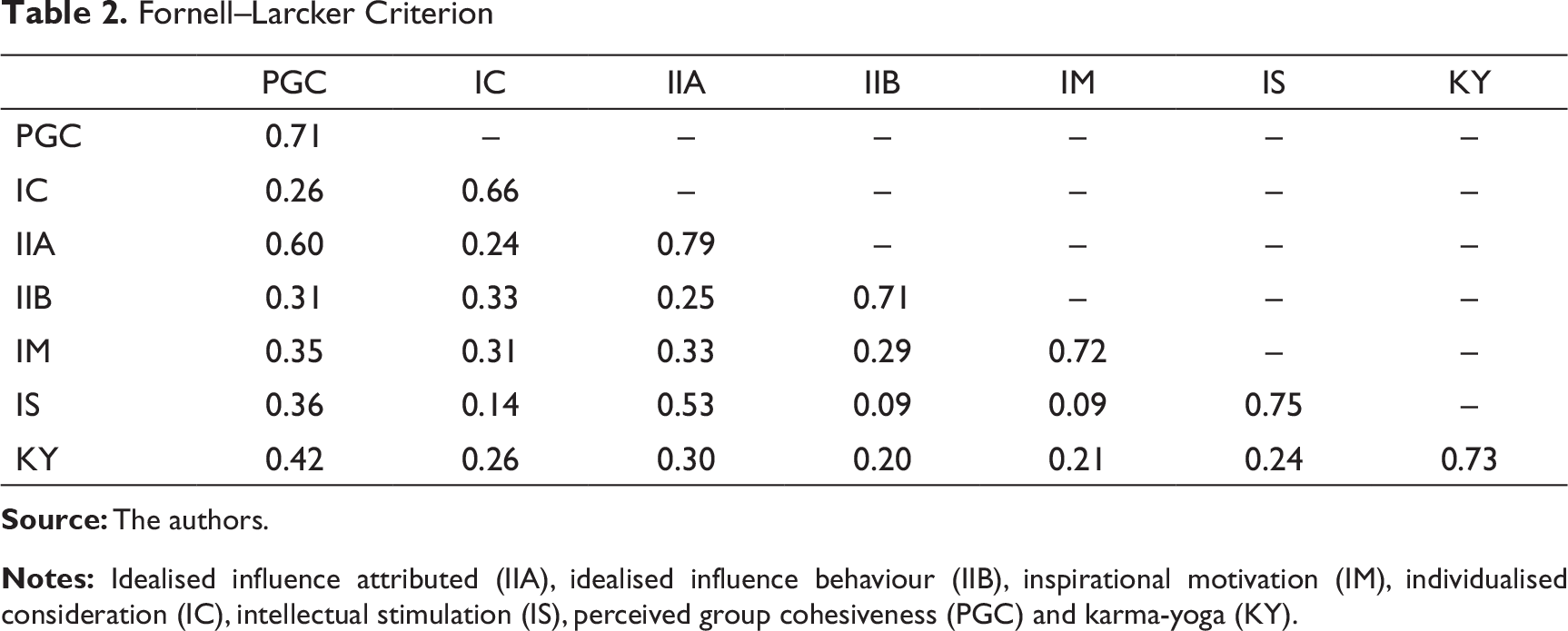
Fornell–Larcker Criterion
HTMT Criterion
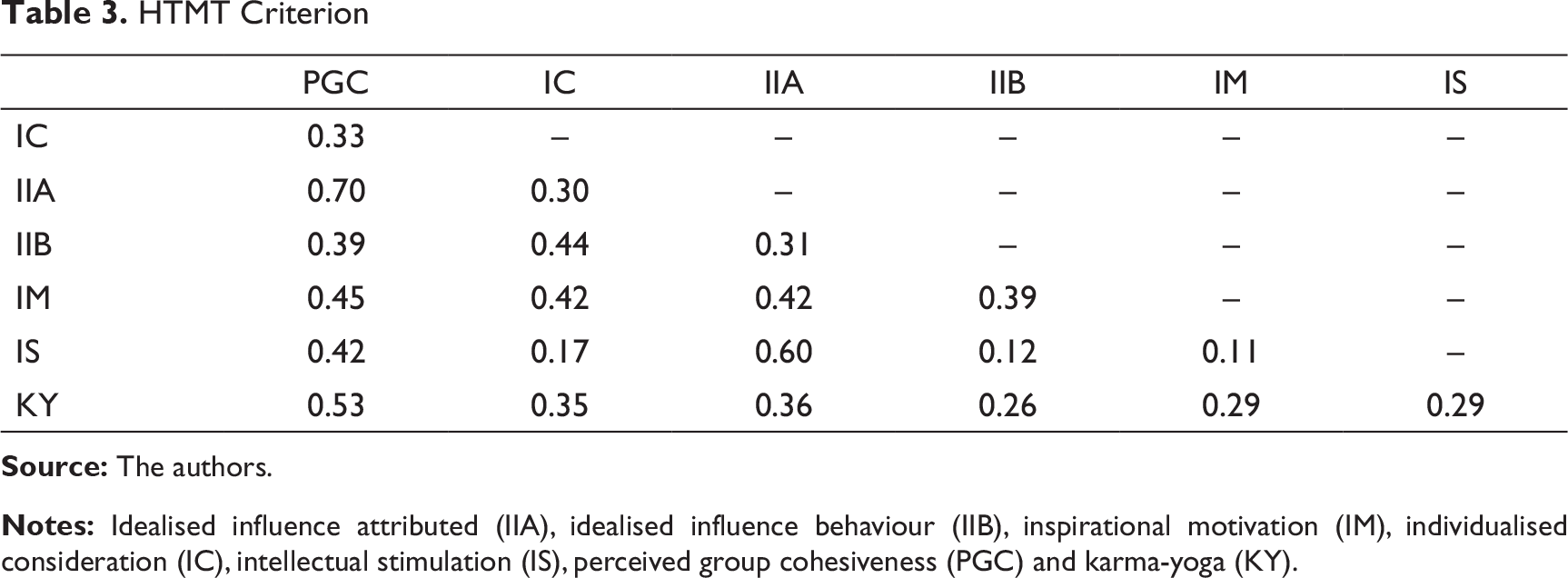
Discriminant validity was assessed by the Fornell–Larcker criterion (Table 2), cross-loadings and HTMT criterion (Table 3). Cross-loadings across constructs were not identified. Moreover, the model satisfied the Fornell–Larcker and HTMT criterion; this exhibits that the discriminant validity is well established.
Structural Model Assessment
Collinearity Assessment
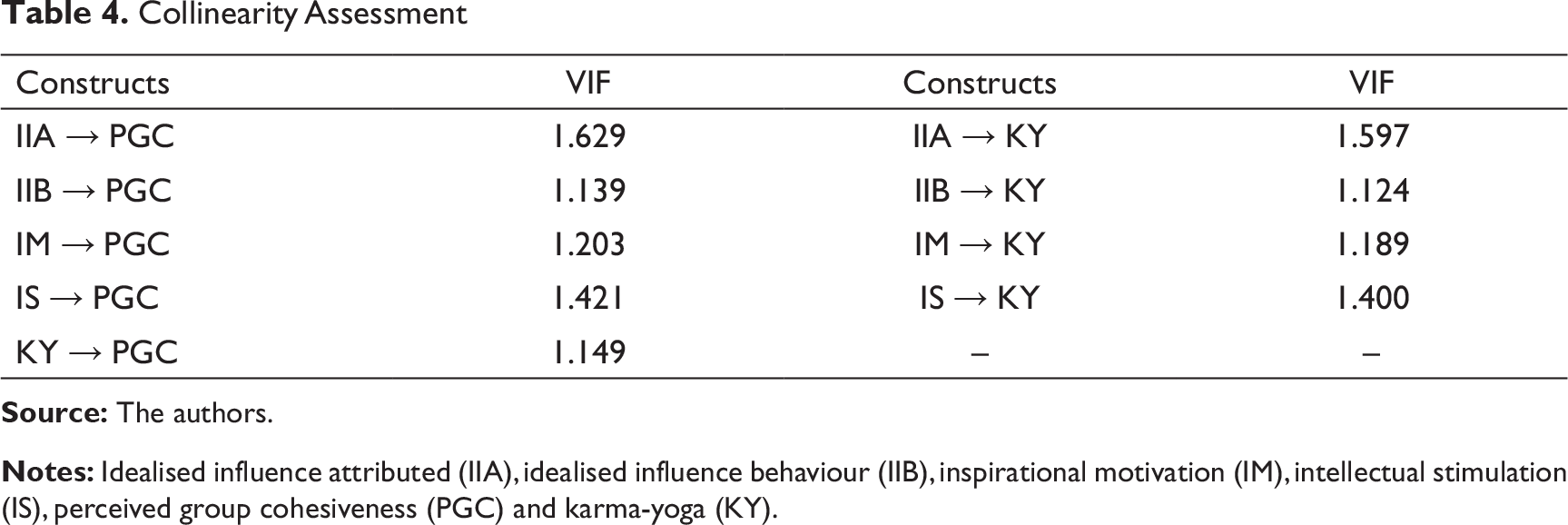
Path Coefficients
The path coefficients (Table 5) of the paths from the constructs of IIA, IIB, IM and IS to follower’s PGC established a positive and statistically significant relationship. Similarly, the paths from the sub-dimensions of TL and followers’ KY to follower’s PGC established a positive and statistically significant relationship.
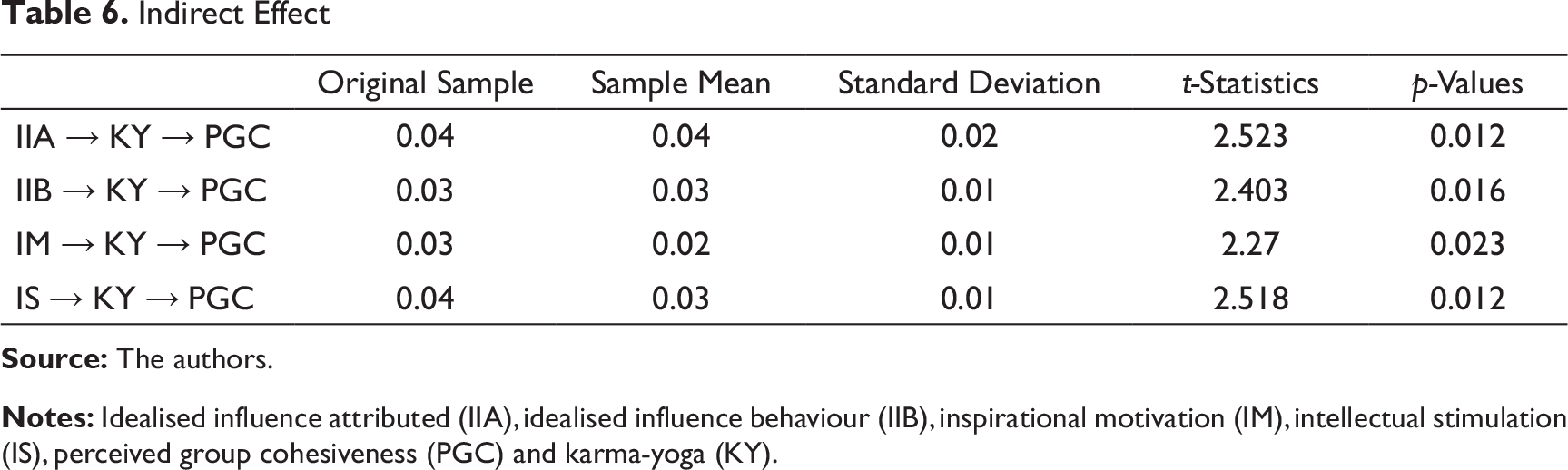
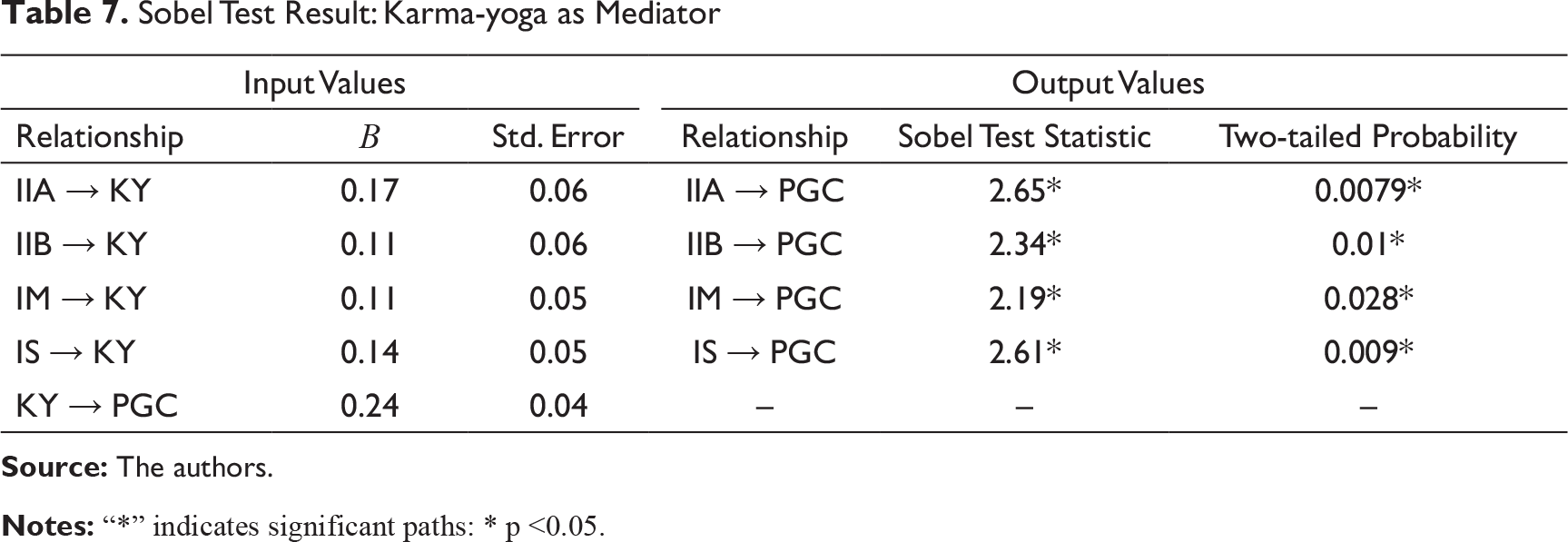
The path model demonstrated that KY mediated the relationship between sub-dimensions of TL and follower’s PGC. The existence of partial mediation is exhibited in Table 6.
Path Coefficients

Indirect Effect
Sobel Test Result: Karma-yoga as Mediator
Discussion
The finding of the study gives an important pointer to organisations and managers. By making socially based values and identities more salient for the followers, the leaders tend to identify with their workgroup and show a willingness to sacrifice their self-interest for the larger good.
Theoretical Implications
A transformational leader’s behaviour transforms the followers towards a better self (Bass, 1985). Most of the studies in the past had aggregated the sub-dimensions of TL and considered the aggregated scores for the analysis and discussions. This did not clearly explain the impact of each behaviour in detail. However, in this study, each sub-dimensions’ impact on the followers was studied.
The crux of TL is transforming followers. Our study contributes to this body of literature as KY is selfless action, and transformational leaders inspire their followers towards selfless action that raises their followers to a higher self.
Additionally, this study focused on a rarely studied individual-level variable—an Individual’s PGC. It gains importance as it affects the group’s dynamics (Bollen & Hoyle, 1990).
This is the first time this type of study has been carried out to understand the relationship between the TL’s sub-dimensions and PGC through KY.
Managerial Implications
The managers must be made aware of the importance of TL and KY through repeated workshops. Training the managers on stressing shared values and ideologies can raise the collective aspects of followers. Constantly training the managers will help focus their energy on encouraging their subordinates to go beyond the transactional needs. This can be achieved by setting their personal goal in line with the group’s interest and by shifting their self-concept from personal to collectivistic.
The followers transcend beyond rewards when they understand the greater meaning in their work. It will be a good idea for organisations to identify people with TL qualities and train them to see their subordinates’ needs and enhance their potential by addressing those needs.
Limitation and Direction for Future Research
The culture of the organisation could have influenced the way the questionnaire was answered, as the respondents were from a research organisation. The generalisability of the findings has to be increased by studying different organisations.
Another major limitation is that the data were collected at the same time. The data could be collected at a different time to get a robust model. Each variable could be measured at a different time. A longitudinal design for understanding the relationship can be an interesting idea for future research.
This study captured only the dyadic relationship; future studies can empirically study the group level and organisation level, and check for their effect on each variable.
Conclusion
Today’s business world runs towards never-ending end results. The result-oriented obsession of organisations deprives the employees of the pleasure of doing their job and enjoying the process involved, thus making the employees deliver mediocracy, take shortcuts and compromise on the quality. Meritocracy can be achieved only when people are a better version of themselves. The employees would give their best happily, only when they transcend their interest and move towards the collective interest. TL plays a crucial role in making followers collectivistic, thus creating a conducive work environment for themselves and their team. Organisational policymakers cannot neglect the importance of supervisors’ leadership behaviour and employees’ KY and perceived group cohesiveness for a better work environment.
Footnotes
Declaration of Conflicting Interests
The authors declared no potential conflicts of interest with respect to the research, authorship and/or publication of this article.
Funding
The authors received no financial support for the research, authorship and/or publication of this article.
