







Abstract
This article is based on a comprehensive investigation of the lived experiences of lesbian, gay, bisexual, transgender, queer, intersexual, and asexual plus (LGBTQIA+) individuals working in diverse fields within the urban Indian context. The study contributes to the mainstream discourse on diversity and inclusion (D&I) from the gender lens. It reveals how organizational policies, societal attitudes, and cultural norms in India influence the identity, family, and peer relationships, educational and workplace environments, support systems, and coping mechanisms of LGBTQIA+ professionals. Utilizing a qualitative research approach, data were obtained from interviews published on the “Feminism in India” website. Thematic analysis revealed seven themes, shedding light on the marginalization and challenges faced by LGBTQIA+ communities, including the exclusion of trans individuals within feminist spaces and inadequate representation in Pride events. This research investigates nascent experiences within social and professional contexts and narrows down the focus to the LGBTQIA+ community in India. In this study, intersectionality theory is integrated to explain how sexual orientation merges with gender, caste, class, and religion to establish workplace inclusion, equity, and belonging. The themes identified in the study reveal that it is the social, personal, and structural relationships that influence the lives of LGBTQIA+ persons in urban India. Organizations and policymakers can only minimize discrimination and support positive development upon understanding these experiences.
Keywords
Introduction
In recent years, diversity and inclusion (D&I) has generated immense interest in industries and professions based on various factors such as ethical and moral conduct, diversity rankings, and the organizational benefits of diversity (Holmes, 2010; Hossain et al., 2020; Pulcher et al., 2022; Tayar, 2017). A diverse environment in which there is growth and development for everyone is essential to attracting and retaining talent, protecting the mental health of the staff, advancing social justice, and ensuring better organizational performance (Clark et al., 2022; Cunningham, 2011; Kotiloglu, 2023; Riley, 2008). Additionally, the United Nations (UN) sustainable development goals (SDGs) identify gender equality as necessary for the socially sustainable development of nations (UN Women, 2018). Consequently, numerous studies in the area of diversity management (DM) emerged, mainly in the Western context (e.g., Le Blanc & Jackson, 2007; Lee, 2020; Tayar, 2017). Though diversity from the gender lens has been explored in the literature, still research on issues and concerns related to lesbian, gay, bisexual, transgender, queer, intersexual, and asexual plus (LGBTQIA+) persons, either self-employed or working in organizations, is scanty. The available literature, however, indicates that LGBTQIA+ people face harsh discrimination and inequalities at the workplace, such as low salaries compared to heterosexual colleagues and fear of disclosing their gender identity and sexual orientation (Cunningham, 2011; Holmes, 2010; Noronha et al., 2022). Additionally, LGBTQIA+ workers have organized to create prominence, support, and advocacy for more inclusive workplaces (Riley, 2008).
India is home to one of the largest LGBTQIA+ communities in the world, with numbers estimated to be around 135 million people. 1 But they face severe discrimination, violence, family rejection, social and cultural exclusion, harassment in educational institutes and workplaces, and job loss (Katta et al., 2020). This leads to concerns related to sexual identity, health, and employment (Bowling et al., 2016; Narrain, 2004). Adding to their challenges, Article 377 of the Indian Penal Code (IPC), which criminalized homosexuality and legitimized discrimination against LGBTQIA+ individuals, was abolished by the Supreme Court of India in 2018, marking a significant milestone in their socio-political-legal struggle and ending this colonial-era law (Baas, 2023). In 2023, a plea legitimizing same-sex marriage was rejected by the Supreme Court of India. 2 Such incidents indicate the long road traversed by the LGBTQIA+ movement in India. Additionally, the country is known for its diversity in gender, caste, religion, language, and region. 3 Various national and international laws forbid the marginalization of different sections of society, but exclusion continues to exist (Thompson et al., 2023). These factors further add to the challenges faced by the LGBTQIA+ community. Despite the challenges, struggles, and resulting losses faced by these communities in India, studies on their life experiences and representation are limited (Banerjee & Rao, 2021; Bowling et al., 2016).
This research explores the multifaceted experiences of LGBTQIA+ individuals in India to contribute novel insights to the scholarly literature on D&I. The objective is to disclose and analyze the interactions of organizational, social, cultural, political, and economic factors to shape the dignity and belongingness of LGBTQIA+ individuals in various professional settings. Specifically, the study seeks to address the following research question: How do organizational policies, societal attitudes, and cultural norms in Indian settings impact the identity, family, peer relationships, educational and workplace environments, support systems, and coping mechanisms of LGBTQIA+ professionals? This inquiry advances our understanding of D&I discussions in India by providing perceptions on the intersectionality of identity and professional life among the LGBTQIA+ community.
This study is crucial for raising awareness about the experiences of LGBTQIA+ individuals in varied professions and driving positive change toward inclusivity and equity. It also answers a call for more studies on this subject area (Noronha et al., 2022). The article includes five sections. Section “Review of Literature” provides an account of the literature on D&I. Section “Research Methodology” provides the details of the methods used for data collection and analysis. Section “Findings and Discussion” communicates the themes emanating from data analysis and discusses it by presenting an integrated framework for supporting LGBTQIA+ inclusivity. The section also discusses theoretical and practical implications.
Review of Literature
Literature intersecting D&I with LGBTQIA+ is relatively recent and includes DM topics such as discrimination, negative consequences of discrimination, policy efforts, and training programs to battle D&I concerns.
LGBTQIA+ people face the highest order of discrimination worldwide. Lawyers in the United States experienced higher “subtle,” “overt,” and “subtle only” discrimination as compared to their heterosexual counterparts (Blanck et al., 2021). Similarly, more than 2000 Chinese workers out of 10,000 surveyed reported adverse treatment at work, with transgender and intersex being more vulnerable (Suen et al., 2021). Discrimination is not limited to current employees and starts before the employee enters the organization. The hiring process demonstrated bias as gay/lesbian applicants in the US received lower scores for “competence,” “social skills,” and “hire-ability” in comparison to heterosexual applicants (Bryant-Lees & Kite, 2021). Haley et al. (2022) reported that LGBTQ+ groups in the US presented inequity in oral health care. Even in positions of authority, gay men who disclosed their identity were expected to downplay the differences and display standard forms of dressing, presentation, and masculinity (Roberts, 2020). Humans do not just promote bias; it is also propagated by software algorithms. Twitter, for instance, misgendered 25% of gay men and 100% of binary as compared to 8% of straight men and 16% of straight women (Fosch-Villaronga et al., 2021).
The discrimination prevents disclosure of sexual identity, forcing such individuals to remain in a closet. In a large-scale survey (10,000 respondents), only 5.1% reported disclosing their sexual orientation at the workplace (Suen et al., 2021). Sports organizations are known explicitly for homophobia (negative attitude toward gay men), which has been identified as a prime issue in German football (Walser et al., 2022), and there are just three known gay athletes (Le Blanc & Jackson, 2007).
Some favorable aspects of LGBTQIA+ have also been displayed. The field of sports is generally considered to be masculine, patriarchal, and homophobic. In such a scenario, women lesbian coaches in the US choose to be open about their sexual identity (LaVoi & Glassford, 2022). This disclosure allowed them to live authentically and contentedly. Similarly, most German football fans supported social and legal rights for the group and favored open gay professional footballer (Walser et al., 2022). Queerness affords valuable employment skills. The US elite bankers display a strong link between queerness and professional success (Kaplan, 2022). They inspire new bank recruits to learn about their identity and experience their human capital.
Organizational diversity is not just the presence of LGBTQIA+ employees in the workforce. Diversity policies and practices may be significant steps to address discrimination and its negative consequences. Recent years have witnessed a shift in the organizational atmosphere toward LGBTQI workers (Egan, 2018). Australia’s social media discourse of the Big 4 accounting firms (Ernst & Young, Deloitte, KPMG, and PwC) shows a noted shift in LGBTQ norms, though actual policy changes are yet to be visible. A survey with nine leaders in outdoor organizations revealed some practices such as “inclusive language,” “gender-neutral gear,” “gender-inclusive facilities,” and “developing LGBTQ+ competency among leaders and participants” (Lundin & Bombaci, 2023). The presence of DM policy in Britain and the usage of inclusive language in Australian organizations shows a positive effect on lesbian/gay earnings and transgender well-being (Perales et al., 2022; Wang et al., 2018). Igboanugo et al. (2022) developed a framework of inclusion comprising “inclusive culture,” “fair management,” “access to network,” “flexible working condition,” and “safe working environment.” Bisexuals acknowledged inclusion initiatives by a health sciences library in the US. Schnell et al. (2023) found that an increase in the frequency of contact with trans people in Canada was linked with a significant increase in active and passive inclusion.
Awareness campaigns, mentorship programs, engaging LGBTQ+ supporters, and collaborations with nonprofit groups in educational institutions can empower patients, healthcare providers, and groups supporting the LGBTQIA+ cause (Haley et al., 2022). According to Pulcher et al. (2020), Italian unions can play an essential part in DM by pushing for inclusion in organizations and protecting them from discrimination. Non-trans allies can play a significant role in positive outcomes (psychological safety, authenticity, and life satisfaction) for transgender workers (Fletcher & Marvell, 2023). Further, trans workers displayed greater work well-being (psychological safety and authenticity), increasing engagement and life satisfaction. In Bangladesh, “gurus” within the transgender community and “coworkers” in the workplace are found to be the drivers of discrimination against transgenders (Fontana, 2020). The author offers four collaborative practices for organizations, including community practices (with gurus), enforcement practices (with police), faith practices (with imams), gaming (training through games, role plays, and discussion), and practices (with workers) to manage diversity.
D&I practices help establish a business case (Pulcher et al., 2022). In the UK, firms adopting diversity policies positively impact innovation, leading to higher performance (Hossain et al., 2020). Similarly, US organizations with sexual orientation diversity and a diversity strategy demonstrated higher performance (Cunningham, 2011; Jin et al., 2024), and displaying corporate citizenship through gender-inclusive policies shows higher stock value (Johnston & Malina, 2008). The reverse of these relationships, that is, organizational performance in combination with inclusion, increases corporate social responsibility (CSR) in the US (Kotiloglu, 2023). However, sustainability accounting and social justice advocates note that business case presentations for diversity may jeopardize the social and moral grounds for diversity (Rhodes, 2017).
The discourse on inclusion and coming up with inclusive practices and policies is not enough, posing further challenges in implementation and tangible impact on employees (Rennstam & Sullivan, 2018). The inclusive policies adopted by sports organizations in England show a reluctant attitude wherein these organizations fail to implement the policies and do enough to convey political gestures and prevent discrimination against LGBTQIA+ participants (Spurdens & Bloyce, 2022). Despite the various Equal Employment law (2003) and business case for diversity, UK organizations need help with issues of organizational commitment such that employees perceive a gap between policy and practices (Colgan et al., 2009). Rankings to evaluate diversity practices are gaining popularity. Outside agencies for diversity rankings are considered more legitimate, but these agencies have a narrow focus and fail to provide directions to small organizations (Tayar, 2017). The rewards should be bestowed only for substantive changes experienced by employees.
Diversity training also advances the LGBTQIA+ cause. A university-wide training session to prevent transphobia propagated by media coverage in the UK lead to reduced bias and increased support for trans students and staff (Krutkowski et al., 2020). A faculty development program for health educators improved their knowledge of queer health issues and showed their intentions to bring changes in teaching and clinical practices (Gisondi et al., 2023). In the UK, the “courageous leader program” in schools helped enhance diversity in leadership and enabled LGBTQIA+ employees to maintain their identities and thrive in their profession (Lee, 2020). Training also found support among Israeli law enforcement officers as they were receptive to this training and wished to help these people (Israel et al., 2017).
In India, the LGBTQIA+ group is underrepresented contributing to diversity issues (Johri et al., 2021). The Universal Declaration of Human Rights (UDHR), and the International Covenant on Economic, Social, and Cultural Rights (ICES) identify the right to health as a fundamental human right. Though India ratifies these declarations and the Indian constitution itself recognizes health as a fundamental right, still Indian LGBTQIA+ patients face severe disparities in hospitals (Arora et al., 2022). Such disparities begin at birth (Philip & Soumyaja, 2019), and the harassment faced by transgender prevents them from acquiring quality education and health facilities and interferes with their employment possibilities. The LGBTQIA+ community in India has unique challenges and opportunities within D&I initiatives that require the formulation of specific policies and procedures.
This research on LGBTQIA+ issues in India features emerging voices and adds new perspectives to the literature on D&I and LGBTQIA+. Focus on these individuals can highlight how involvement in their professional lives affects upcoming opportunities. Through intersectionality theory (Thomas et al., 2021), we depict how the difference in identities due to sexual orientation, socio-economic status, caste, and religion creates different experiences of exclusion and discrimination in the Indian context.
Theoretical Underpinning
Intersectionality, for example, is a useful theoretical framework in DM, as it gives an idea of how race, gender, sexuality, and class dynamics meet to provide each individual with a set of advantages and disadvantages (Crenshaw, 1989). Although intersectionality was first coined in the fight against the struggles of women of color, the term nowadays plays an immense role in the feminist and antiracist discussions. It encourages an understanding of identity by realizing that people’s lives are determined according to gender, class, sexual orientation, ethnicity, and nationality.
Intersectionality theory was used to analyze the D&I attributes in recent academic research. For example, Dennissen et al. (2020) discuss the impacts of structural and political intersectionality on the emergence of single-category diversity networks in organizational settings. Thomas et al. (2021) give significant weightage to intersectionality against the traditional identification approach within organizational settings. Thomas and Macnab (2022) discuss diversity conception changes influenced by intersectionality theory and implications of this change upon educational practices. Goldberg (2023) uses the intersectional theory to assess how different privileges and oppressions in the lives of LGBTQ parents shape perceptions of belonging.
Intersectionality theory further details struggles that LGBTQIA+ individuals face in India along lines of sexual orientation, gender, caste, class, and religion. This makes for an integral component, strengthening the knowledge regarding how several elements of identity impinge on belonging, equity, and inclusion at work. It allows the building of frameworks that are cognizant of the unique attributes of multiple identities and helps in bringing about more inclusive and fair workplaces. The theory will help in underlining the diverse backgrounds that LGBTQIA+ people of India come from and will provide substantial insight into barriers and possibilities concerning D&I at their workplace.
Research Methodology
This study employs an exploratory research design that uses a qualitative approach. The methodology addressed the need for comprehensive research to understand ground-level issues better. It aligns with Strauss and Corbin’s (1997) recommendations for using grounded theory to generate in-depth data and insights that can guide future research. Mason (2005) also supports this methodology and the value of qualitative methods, particularly in under-researched areas. As Patton (2014) emphasized, the sample size and sampling method were carefully selected to ensure the collection of comprehensive, contextually rich data. Aligning with the goals of this study, the methodology provides a solid foundation for discovering new insights into the experiences of LGBTQIA+ individuals in India.
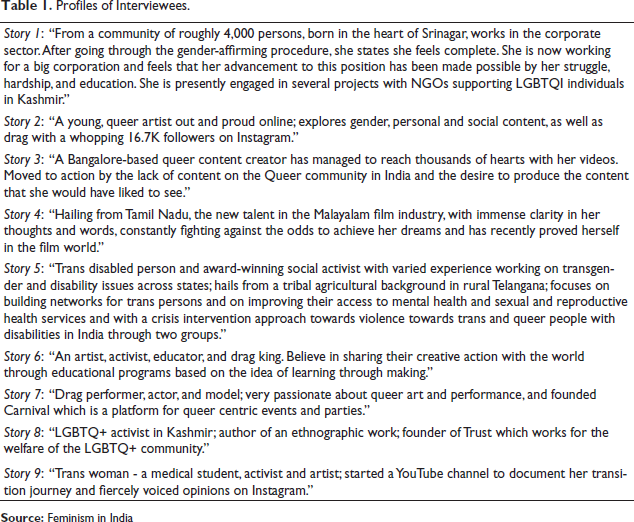
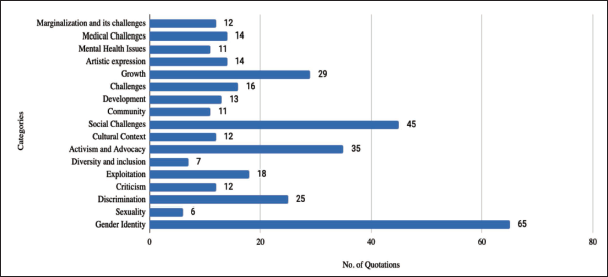
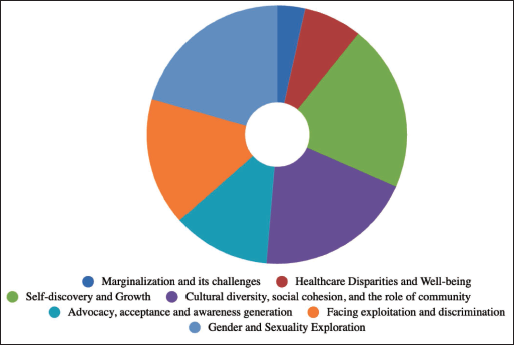
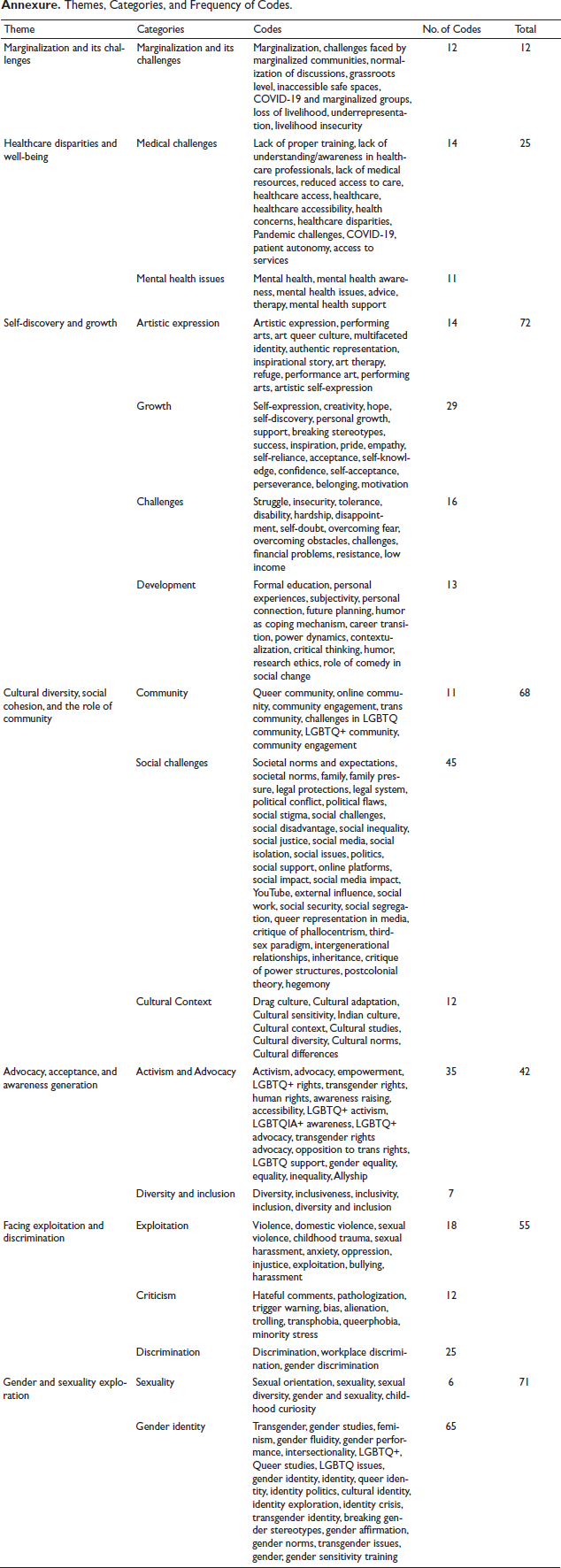
Since the study involved understanding the lived experiences of people from the LGBTQIA+ communities, a phenomenological view was employed. Data for the study was sourced from a website dedicated to gender and inclusivity issues in India known as “Feminism in India.” Permission to analyze all the interviews of LGBTQIA+ persons published on Feminism in India was sought and received through an email. Focusing on these individuals allows a detailed examination of how their active roles and contributions influence their lived experiences in India. In total, nine interviews (see Table 1) were used in the analysis (see Annexure for complete details). These nine interviews were carefully selected to represent diverse experiences within the LGBTQIA+ community. This includes diversity in terms of gender identity, sexual orientation, socio-economic background, religion, and other factors relevant to the intersectionality theory of the study. The analysis, based on Braun and Clarke’s (2006) thematic analysis method, included the following steps: (a) reading and re-reading the interviews to internalize the information provided by the interviewees, (b) identifying keywords/codes in the interviews using line-by-line analysis, (c) combining codes into categories (see Figure 1), (d) combining categories into themes (see Figure 2), and (e) preparing the interpretation of the themes using quotations. The analysis was conducted using the Atlas.ti software. Codes were generated independently by two coauthors and reviewed for corroboration before generating categories and themes to ensure the trustworthiness of the findings. All the interviews were read and re-read by all the authors to ensure consistency in the presentation of the different sections.
Profiles of Interviewees.
Categories.
Themes.
Findings and Discussion
This section presents the results of the thematic analysis. Seven major themes emerged from the analysis. These have been discussed ahead, supported by examples.
Marginalization and Challenges Faced by LGBTQ+ Communities in India
The first theme from the thematic analysis is the “Marginalization and Challenges Faced by LGBTQ+ Communities in India.” This theme encompasses the experiences and difficulties marginalized individuals encounter within the LGBTQ+ community. It underlines the exclusion of trans people within feminist spaces, the limits of Pride events in demonstrating diverse experiences, and the ongoing legal battles and campaigns to contest the status quo. These findings indicate the need for improved intersectionality, inclusivity, and societal change ensuring equal rights and acceptance for all the members of the country. The following quotes support this theme:
Contemporary feminism in India often side-lines trans experiences and lives, particularly when it intersects with caste, class, disability, and religion.
This quote signifies the marginalization of trans people within feminist spaces, emphasizing how their experiences are unseen, especially when multiple intersecting identities come into play.
Even Pride, for example, remains a largely capitalist and gay-dominated space in India.
This quote shows the limitations of Pride events in India, suggesting that they often prioritize gay individuals and fail to fully attend diverse views and struggles of other marginalized LGBTQ+ communities. Capitalist influence within these spaces further extends the exclusionary character of the events.
We have filed a PIL in High Court for implementation of NALSA Judgement, so far many interim judgments have been issued in this regard and also implemented by the concerned authorities.
This quote highlights the constant struggles of activists to encounter the marginalization faced by the LGBTQIA+ community in India. The PIL 4 filed in the High Court seeks to execute the NALSA Judgment, which identifies transgender individuals beyond the established male–female binary.
Healthcare Disparities and Well-being
The second theme is “Healthcare Disparities and Well-being.” This theme involves the challenges confronted by the LGBTQIA+ community in accessing suitable healthcare, affecting their overall well-being. The codes related to this theme include “Medical Challenges,” “Lack of proper training,” “Reduced access to care,” and “Healthcare disparities.” One respondent, a trans woman and medical student, has articulated the community’s apathy toward their plight and solidarity under discrimination,
Paint us in one large brush stroke, I dare you, saffron or otherwise – you forget we’ve gone to war unarmed on the battlegrounds of our skins. We’ve reigned triumphant. We’ve built armor from the carnage. We won’t back down. You attempt to erase our validity by playing identity-identity with your draconian acts; you constantly screw with our existence. You forget we’re war goddesses. We’ll meet you with resistance.
As this quote indicates, people from the community stand to oppose the societal norms to fight for the right, inclusive healthcare service. Another respondent gave an overview of the issues in care that the transgender community faces, “Although they are costly and are accessible to very few of us, it is a bit easier to navigate in private hospitals. Medicines that are needed for trans people (for example, testosterone) aren’t available locally.” This quote underscores the limited availability of gender-affirming healthcare resources in many areas, leaving transgender individuals with few options for accessing necessary treatments. In discussing the difficulties of accessing gender-affirming healthcare services, one of them reflected on the inadequate understanding among healthcare professionals: “Gynaecologists mostly do not understand. I can talk about my disability rather easily to the healthcare professionals, but talking about transness is very, very difficult, which leads to even more (psychological and physical) health issues.” This quote emphasizes the need for increased awareness and education among healthcare providers regarding transgender experiences, ensuring that individuals can receive comprehensive care that addresses their unique needs. The voices collectively shed light on the healthcare disparities faced by the community.
Self-discovery and Growth
The third theme from the thematic analysis is “Self-discovery and Growth.” This theme revolved around the transformative power of artistic expression, the exploration of multifaceted identities, and the significance of authentic representation. The codes associated with this theme include: “Artistic expression,” “Queer culture,” “Authentic representation,” and “Art therapy.” A drag king and performer reflected on the art form of drag and its importance and said: “Drag is an artistic tradition that magnifies what a person is... It started within the queer community by black people in the USA. It’s not just in the club culture, but also in the roots of the trans community.” This quote highlights how drag serves as a means of artistic self-expression and empowerment within the community. The growth and increased representation of drag kings in India indicate a positive shift toward more diverse and inclusive artistic spaces. An aspiring actress shared her inspiring journey of self-discovery and overcoming obstacles by saying: “I always used to have a thought like I am constantly surviving and I am not living.” She found comfort and reason in her artistic pursuits despite limitations. In a nutshell, this theme addressed the community’s evaluation of diverse identities and the transformative impact of artistic expression.
Cultural Diversity, Social Cohesion, and the Role of Community
The fourth theme highlights the critical role that both online and offline communities play in promoting cultural diversity, directing community challenges, and developing unity in society. The following codes are linked to this theme: “Challenges in the LGBTQ community,” “Online community,” “Trans community,” “Community,” and “Queer Community.” The importance of the online queer community signified by a queer artist and content creator who said “The queer community online is extremely supportive, especially when I was not surrounded by support systems around me in real life.” This quote underlines the importance of a feeling of support and connectedness from online networks among those experiencing social isolation in their offline network. It also emphasizes how crucial community involvement is to bring about beneficial change. An LGBTQIA+ community activist brought up the challenges that people frequently face while revealing their families about their sexual orientation, primarily as a result of social pressures said, “Closet is not a place worth living. We have been continuously engaging with the families of LGBTQIA people.” The quote exhibits support, guidance, and representation by community groups and support networks for the individuals and their family. The theme encourages community because it inspires diversity, resolves issues, and accepts people.
Advocacy, Acceptance, and Awareness Generation
This theme epitomizes raising awareness, campaigning, and advocating as key factors in the advancement of equality, acceptance, and tolerance of the LGBTQ+ community. The codes include “Activism,” “Advocacy,” “LGBTQ+ rights,” “Transgender rights,” “Human rights,” “Awareness raising,” “LGBTQ+ activism,” “LGBTQIA+ awareness,” “LGBTQ+ advocacy,” “Transgender rights advocacy,” “Opposition to trans rights,” “LGBTQ support,” “Gender Equality,” “Equality,” “Inequality,” “Allyship.” A story of one transgender resident from Srinagar shared the struggle of the community in Kashmir. The individual showed a steadfast determination to stand up for the rights of his group despite having been personally harassed. This narration underlined the importance of activism and advocacy to challenge the social order, fight prejudice, and advance rights. It also underlined the fact that victimizing and stereotypical narration about transgender people needs to be changed to create more awareness. Further, an interview with a Malayali woman working for a film production company reinforces the notion of inclusive environments and space free of biases. The interviewee felt comforted and safe with the crew.
Facing Exploitation and Discrimination
This theme shows the experiences that are subjected to discrimination, abuse, and brutality because of the gender identity or expression. The codes are “Violence,” “Domestic violence,” “Sexual violence,” “Childhood trauma,” “Sexual harassment,” “Anxiety,” “Oppression,” “Injustice,” “Exploitation,” “Bullying,” “Harassment,” “Hateful comments,” “Pathologisation,” “Trigger warning,” “Bias,” “Alienation,” “Trolling,” “Transphobia,” “Queerphobia,” “Minority stress,” “Discrimination,” “Workplace discrimination,” “Gender discrimination.” One of the people interviewed recalled how, as children, they used to want hair clips embellished with brightly colored stones but were prevented from obtaining them since their mother had short hair. They experienced severe embarrassment due to being made fun of at school for attempting to borrow one. Later in life, they were attacked by a group of men in Delhi. They experienced verbal abuse, bullying, and pathologizing for their gender expression as children in a heteronormative society with rigid gender roles. This left them feeling helpless and puzzled. The need for increased public awareness, acceptance, and action against discrimination is brought to light by this issue.
Gender and Sexuality Exploration
This theme examined how individuals were expressing their sexual orientation and gender identity. The code encompasses “Sexual orientation,” “Sexuality,” “Sexual diversity,” “Gender and sexuality,” “Childhood curiosity,” “Transgender,” “Gender Studies,” “Feminism,” “Gender fluidity,” “Gender performance,” “Intersectionality,” “LGBTQ+,” “Queer studies,” “LGBTQ issues,” “Gender Identity,” “Identity,” “Queer identity,” “Identity politics,” “Cultural identity,” “Identity exploration,” “Identity crisis,” “Transgender identity,” “Breaking Gender Stereotypes,” “Gender affirmation,” “Gender norms,” “Transgender issues,” “Gender,” “Gender sensitivity training.” An Indian lesbian content artist who identifies as queer addressed her experience and the sources of inspiration for her videos. She provides her audience with encouragement and validation through her articles. The discussion included how family expectations and societal norms influenced her educational choices. She felt that pursuing a degree related to the arts could have enabled her to explore her identity further, even though she chose to pursue commerce and hotel management. However, her alternatives were constrained by cultural pressure and a lack of familial support.
Framework for Supporting LGBTQIA+ Inclusivity in Urban India
A framework that depicts various aspects influencing the lives of LGBTQIA+ people in urban India is shown in Figure 3. The “Core Identity” of individuals who identify as LGBTQIA+ lies at the center and represents intersectionality of identities, such as gender, caste, religion, and class. The influencing spheres are represented by the concentric circles. The first circle stands for the immediate social environment and highlights the direct influences on LGBTQIA+ experiences. It includes “Family Dynamics,” “Peer Interactions,” “Workplace Environment,” and “Educational Settings.” Previous research studies show how social settings affect the lives of LGBTQIA+ people (Philip & Soumyaja, 2019; Suen et al., 2021; Wang et al., 2018).
Framework for Supporting Lesbian, Gay, Bisexual, Transgender, Queer, Intersexual, and Asexual Plus (LGBTQIA+) Inclusivity in Urban India.
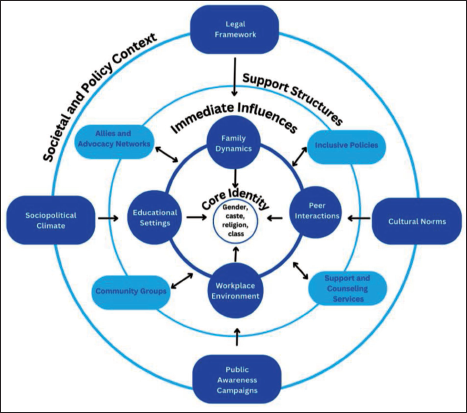
The second layer involves supportive structures interactively interfacing with the immediate social environment. These include “Allies and Advocacy Networks,” “Inclusive Policies,” “Support and Counselling Services,” and “Community Groups.” Researchers confirm that advocates, inclusive policies, and allies are all very significant for enhancing LGBTQIA+ well-being (Fletcher & Marvell, 2023; Perales et al., 2022).
The biggest layer represents the “Sociopolitical Climate,” “Legal Framework,” “Cultural Norms,” and “Public Awareness Campaigns.” All the connecting lines across all layers present a very complex relationship existing among systemic, social, and personal components in impacting LGBTQIA+ citizens’ experience of urban India.
The themes are outlines for the complexity of LGBTQIA+ experiences in urban India by virtue of their relational connections with the layers of the proposed framework. They explain how societal, systemic, and personal factors are related to each other through direct mapping of the topics to the levels of the framework. For example, the theme “Marginalisation and its Challenges” outlined intersectionality and resultant consequences from society, while relating to the “Core Identity” and “Sociopolitical Climate” layers. The link between “Healthcare Disparities and Well-Being” and “Support and Counselling Services” highlights the need to provide inclusive healthcare. It underlines how essential it is for the LGBTQIA+ community to maintain access to qualified healthcare as a vital support system (see Haley et al., 2022). “Self-discovery and Growth” reflects the “Core Identity” circle, showcasing personal agency and expression. It highlights how identity exploration and artistic expression are central to the development of self-identity within the community (see Kaplan, 2022). While “Cultural diversity, social cohesion, and the role of community” ties to “Community Groups,” underlining the importance of supportive networks. “Advocacy, acceptance, and awareness generation” connect with “Public Awareness Campaigns” and “Legal Framework,” indicating the impact of activism on societal and legal changes. This connection demonstrates the significance of legal frameworks and public advocacy in driving societal acceptance and equality (Walser et al., 2022). “Facing exploitation and discrimination” intersects with “Sociopolitical Climate,” revealing systemic challenges. Finally, “Gender and Sexuality Exploration” resonates with “Core Identity” and “Educational Settings,” highlighting the significance of identity exploration.
This integrated approach reveals the complex interplay of personal, social, and systemic elements shaping LGBTQIA+ lives, guiding inclusive and equitable strategies in policy-making and community engagement. The framework highlights the need for inclusive policies that acknowledge differences in core identities. For instance, within the community, the experiences vary according to caste, color, creed, region, religion, and so on. Further, social systems must acknowledge their diverse needs and provide healthcare access with dignity. There is a need for culturally sensitive and locally relevant awareness generation and social acceptance. The way forward is integration between individuals, communities, companies, and policy-makers to create a safe and genuinely inclusive environment.
Implications
Unlike Western literature that indicated few positive experiences of LGBTQIA+ members (see Kaplan, 2022; LaVoi & Glassford, 2022; Walser et al., 2022), we encountered only negative lived experiences in our study. Such results indicate urgent implications for theory and practice, as explained in the following paragraphs.
Theoretical Implications
The study applies intersectionality theory to the experiences of LGBTQIA+ groups in India and the influence of gender on their lives. This approach urges the expansion of theoretical frameworks in fields like psychology, sociology, and organizational studies to better reflect the complex realities of LGBTQIA+ individuals in diverse socio-economic contexts. The LGBTQIA+ framework (Figure 3) indicates LGBTQIA+ experiences embedded into social, political, educational, family, and personal domains. It would be important to discover critical variables in these domains that can be altered to promote the well-being of the LGBTQIA+ community. The extant literature is limited in exploring the lived experiences of diverse individuals. Future research must be grounded in their individual experiences rather than generalizing their collective experiences.
Policy Implications
Our findings underline a crucial need for comprehensive policy reform. Policy implications are a part of the outermost circle of the LGBTQIA+ framework (see Figure 3). Policy-makers should craft laws and build inclusivity in the sociopolitical circles, cultural norms, and awareness programs to recognize and tackle the unique challenges faced by LGBTQIA+ individuals, especially those linked to their intersecting identities. Key areas for intervention include improving healthcare access, promoting diversity within the community, protecting against discrimination, and boosting public awareness. Health-related challenges are a global phenomenon (see Gisondi et al., 2023). It is crucial to arrange training programs and workshops for health professionals to be mindful of LGBTQIA+ healthcare needs. LGBTQIA+ representation in various government programs and bodies sends a strong message of policy support for the community. Collaborating effectively with community leaders and stakeholders is vital to ensure these policies are informed and effective. Policy-makers may collaborate with media houses to prevent the mispresentation of this community. Policy initiatives may also influence the educational environment, depicted in the innermost circle of the framework. The idea of diversity may be included in the curriculum. This will make young students aware about the concept of diversity and ensure inclusivity in their behavior toward LGBTQIA+ people.
Managerial Implications
From an organizational perspective, the study highlights the need for inclusive HR policies and practices. However, for policies to be acceptable, it is vital to create an inclusive culture by employing gender-neutral language and encouraging employees to be their authentic selves at work (Egan, 2018). This also includes comprehensive sensitivity training, D&I programs, and antibullying policies that align with the themes of workplace environment and support networks for a safe space for the LGBTQIA+ employee. Research studies prove that businesses with these types of diversity policies enable economic empowerment for LGBTQIA+ employees (Wang et al., 2018). This would also go a long way toward empowering organizations to extend their inclusivity drive to include community-based activities and support for LGBTQIA+ families, as mirrored in wider social dynamics that this study is interested in. This will improve the workplace environment in the LGBTQIA+ framework (see Figure 3).
Future Research Directions
Based on the results of this study, a number of potential avenues for future research could be considered to further understand LGBTQIA+ experiences in urban India. First, further research might expand this scope by incorporating rural-based respondents, where different sociocultural dynamics shape LGBTQIA+ lives. Examining the intersection of LGBTQIA+ identities with the rural–urban movement could provide an added understanding of the challenges faced during such transitions.
Second, exploring the impact of emerging digital platforms and social media on the scene and activism of LGBTQIA+ people. The increasing role of online communities, examining how digital places aid or impede the growth of support networks, activism, and community building, would be appreciated.
Third, further research could study the long-term effects of inclusive policies and diversity initiatives on LGBTQIA+ people in various professional environments. Longitudinal studies could track the effectiveness of such initiatives in fostering inclusivity and lowering discrimination over time.
Finally, expanding the research to include comparative studies across various regions of India or countries with similar sociopolitical contexts could enrich the insights into how local and global factors affect LGBTQIA+ experiences. These comparative studies would provide a deeper understanding of the similarities and differences in LGBTQIA+ experiences across different cultural contexts.
Conclusion
The study examined the lived experiences of LGBTQIA+ individuals across various fields and professions within the urban Indian context, using thematic analysis of interviews with nine participants. The study focuses on the hardships, discrimination, and obstacles LGBTQIA+ persons in India endure; it also highlights their activism, resilient behavior, and aspirations for a more inclusive society. It uses intersectionality theory to see how the intersection of identities plays a part in shaping inclusion, equity, and feelings of belonging in the workplace. Where such global research has perhaps enhanced our understanding of the experiences of people who identified as LGBTQIA+, there is a need for a more focused approach considering unique Indian social, political, educational, and religious characteristics. It identifies gaps in existing literature on LGBTQIA+ issues in India and underlines areas that need further investigation, focusing on unique challenges and aspirations of this community.
Seven key themes emerge from the analysis. First, “Marginalisation and Challenges Faced by LGBTQ+ Communities in India” discusses the difficulties and struggles of members of the LGBTQ+ community who are marginalized. Second, “Healthcare Disparities and Well-Being” underlines how difficult it is to get good-quality medical care for the members of the LGBTQIA+ community; this is supposed to seriously affect the general well-being of such people. Third, “Self-discovery and Growth” emphasizes the importance of authentic representation, exploration of identities, and the transformative potential of creative practice. Fourth, “Cultural Diversity, Social Cohesion, and the Role of Community” considers the contribution of both physical and virtual communities to the promotion of cultural diversity in solving community problems to ensure social cohesion. Fifth, the importance of activism, advocacy, and awareness-building is highlighted, as is “Advocacy, Acceptance, and Awareness Generation,” to advance inclusivity, equality, and acceptance for the LGBTQ+ community. Sixth, “Facing exploitation and discrimination,” individuals who have experienced abuse, assault, and prejudice due to their gender identity or expression. Seven, “Gender and Sexuality Exploration” investigates the experiences of individuals in understanding and expressing their gender identity and sexuality. Based on these themes, this study presents a framework that illustrates the multilayered factors affecting the lives of LGBTQIA+ individuals in urban India, emphasizing LGBTQIA+ identities with immediate influences, support structures, and societal and policy contexts.
However, this study is not free from limitations. A small sample size sourced from a single platform limits the generalizability of the findings. In addition, the focus on Indian urban settings eliminates the LGBTQIA+ lives in rural areas, which may differ significantly. These limitations aid future research, including big sample sizes, diversity in data sources, and a thorough examination of the intersectionality of LGBTQIA+ identities.
Footnotes
| Theme | Categories | Codes | No. of Codes | Total |
| Marginalization and its challenges | Marginalization and its challenges | Marginalization, challenges faced by marginalized communities, normalization of discussions, grassroots level, inaccessible safe spaces, COVID-19 and marginalized groups, loss of livelihood, underrepresentation, livelihood insecurity | 12 | 12 |
| Healthcare disparities and well-being | Medical challenges | Lack of proper training, lack of understanding/awareness in healthcare professionals, lack of medical resources, reduced access to care, healthcare access, healthcare, healthcare accessibility, health concerns, healthcare disparities, Pandemic challenges, COVID-19, patient autonomy, access to services | 14 | 25 |
| Mental health issues | Mental health, mental health awareness, mental health issues, advice, therapy, mental health support | 11 | ||
| Self-discovery and growth | Artistic expression | Artistic expression, performing arts, art queer culture, multifaceted identity, authentic representation, inspirational story, art therapy, refuge, performance art, performing arts, artistic self-expression | 14 | 72 |
| Growth | Self-expression, creativity, hope, self-discovery, personal growth, support, breaking stereotypes, success, inspiration, pride, empathy, self-reliance, acceptance, self-knowledge, confidence, self-acceptance, perseverance, belonging, motivation | 29 | ||
| Challenges | Struggle, insecurity, tolerance, disability, hardship, disappointment, self-doubt, overcoming fear, overcoming obstacles, challenges, financial problems, resistance, low income | 16 | ||
| Development | Formal education, personal experiences, subjectivity, personal connection, future planning, humor as coping mechanism, career transition, power dynamics, contextualization, critical thinking, humor, research ethics, role of comedy in social change | 13 | ||
| Cultural diversity, social cohesion, and the role of community | Community | Queer community, online community, community engagement, trans community, challenges in LGBTQ community, LGBTQ+ community, community engagement | 11 | 68 |
| Social challenges | Societal norms and expectations, societal norms, family, family pressure, legal protections, legal system, political conflict, political flaws, social stigma, social challenges, social disadvantage, social inequality, social justice, social media, social isolation, social issues, politics, social support, online platforms, social impact, social media impact, YouTube, external influence, social work, social security, social segregation, queer representation in media, critique of phallocentrism, third-sex paradigm, intergenerational relationships, inheritance, critique of power structures, postcolonial theory, hegemony | 45 | ||
| Cultural Context | Drag culture, Cultural adaptation, Cultural sensitivity, Indian culture, Cultural context, Cultural studies, Cultural diversity, Cultural norms, Cultural differences | 12 | ||
| Advocacy, acceptance, and awareness generation | Activism and Advocacy | Activism, advocacy, empowerment, LGBTQ+ rights, transgender rights, human rights, awareness raising, accessibility, LGBTQ+ activism, LGBTQIA+ awareness, LGBTQ+ advocacy, transgender rights advocacy, opposition to trans rights, LGBTQ support, gender equality, equality, inequality, Allyship | 35 | 42 |
| Diversity and inclusion | Diversity, inclusiveness, inclusivity, inclusion, diversity and inclusion | 7 | ||
| Facing exploitation and discrimination | Exploitation | Violence, domestic violence, sexual violence, childhood trauma, sexual harassment, anxiety, oppression, injustice, exploitation, bullying, harassment | 18 | 55 |
| Criticism | Hateful comments, pathologization, trigger warning, bias, alienation, trolling, transphobia, queerphobia, minority stress | 12 | ||
| Discrimination | Discrimination, workplace discrimination, gender discrimination | 25 | ||
| Gender and sexuality exploration | Sexuality | Sexual orientation, sexuality, sexual diversity, gender and sexuality, childhood curiosity | 6 | 71 |
| Gender identity | Transgender, gender studies, feminism, gender fluidity, gender performance, intersectionality, LGBTQ+, Queer studies, LGBTQ issues, gender identity, identity, queer identity, identity politics, cultural identity, identity exploration, identity crisis, transgender identity, breaking gender stereotypes, gender affirmation, gender norms, transgender issues, gender, gender sensitivity training | 65 |
Acknowledgement
We would like to acknowledge Feminism in India for sharing the stories, Yatin Dua for the idea to contact Feminism in India, and the editor and anonymous reviewers for helping us refine the manuscript.
Author Contributions
Ritika Mahajan (Conceptualization, Investigation, Project administration, Supervision, Validation, Writing—Original draft, Editing, and reviewing).
Monika Agrawal (Conceptualization, Investigation, Project administration, Supervision, Validation, Writing—Original draft, Editing, and reviewing).
Monica Sareen (Conceptualization, Investigation, Data curation, Formal analysis, Visualization, Writing—Original draft).
Declaration of Conflicting Interests
The authors declared no potential conflicts of interest with respect to the research, authorship, and/or publication of this article.
Funding
The authors received no financial support for the research, authorship, and/or publication of this article.
