







Abstract
The purpose of this article is to investigate whether consumer values (appearance consciousness, health consciousness, and environmental consciousness), openness to change, and perceived benefits influence purchase intentions and buying behavior of natural personal care products. Furthermore, the article also investigates the moderating role of consumer buying frequency on purchase intention and buying behavior. This article is based on the argument that consumer values (appearance consciousness, health consciousness, and environmental consciousness) are likely to be reflected in purchase intention and buying behavior if consumers are open to change and perceive the benefits of natural personal care products. The theoretical framework is derived from the Stimulus–Organism–Behavior–Consequence framework. The study proposes consumer values act as a stimulus, openness to change and perceived benefits as an organismic internal state, purchase intention as behavior, and buying preferences as a consequence. The study’s findings reveal some interesting insights. First, all three consumer values exhibit a positive influence on openness to change among consumers. However, when it comes to influencing perceived benefits, it is primarily the environmental and appearance consciousness that showed effective influence on perceived benefits. We believe that marketing strategies for natural personal care products should consider consumer values and effectively communicate how natural products enhance appearance and are environment-friendly. Consumers have increasingly become concerned about the harmful effects of conventional personal care products and are willing to adopt safer alternatives. Unlike the organic food industry in natural personal care products, consumers’ health consciousness does not significantly affect the perceived benefits. We also found that purchase frequency substantially moderates the relationship between perceived benefits-purchase intentions and purchase intention-buying behavior. The association is stronger for high purchase frequency than low and medium.
Keywords
Introduction
Personal care products include skin care, hair care, toiletries, oral care, color, deodorants, and cosmetics (Ghazali et al., 2017; Klaschka, 2016a). These products enhance consumers’ appearance, health, and well-being (Shaaban & Alhajri, 2020). Nowadays, consumers have become aware and concerned about personal care products’ side effects and are willing to adopt natural alternatives (Carvalho et al., 2016; Kim & Chung, 2011; Klaschka, 2016b; Kumar et al., 2021a). There are no legal standards or guidelines regarding the use of natural ingredients in natural products (Chambers & Castro, 2018; Moscato & Machin, 2018; Siegrist & Sutterlin, 2017). However, traditional personal care products may contain chemicals that may cause harm such as irritation, infection, and even cancer (Shaaban & Alhajri, 2020). Forest Essential, Lotus Organics, Mama Earth, Khadi Natural, Kama Ayurveda, and Himalayan Organics are popular brands in India that offer natural and chemical-free products. International brands, such as L’Oreal, Procter and Gamble, Unilever, and Avon Products, also cater to this product category in India (The Good Trade, 2020). The booming Indian personal care industry has also seen a rise in homegrown brands with local and natural ingredients suitable for Indian skin types. Companies have utilized India’s century-old organic and ayurvedic knowledge in formulating natural products (Srinivasan, 2020). The market for natural cosmetic products in India amounted to US$ 0.85 billion in 2022 and is expected to grow by 2.90% annually (Statista, 2022). Previous studies on natural personal care products have examined consumer buying behavior (Kooijmans & Flores-Palacios, 2014; Moscato & Machin, 2018). Kumar et al. (2021c) pointed out that despite the multiple benefits of natural products, their acceptance is still low in India. Most researchers have focused on the organic food industry and there are limited studies on the natural personal care industry in the emerging economy context (Kumar et al., 2021a; Singh & Verma, 2017).
This article investigates consumer values encompassing health consciousness, environment consciousness, and appearance consciousness. As reported by prior research, health consciousness motivates individuals to adopt healthier behaviors (Becker et al., 1977; Kumar et al., 2021a). Natural personal care consumers maintain healthy lifestyles by purchasing products that are safer for the skin and chemical-free as compared to consumers with low health consciousness. Similarly, environmental consciousness guides individuals toward purchasing green and environment-friendly products (Paettie, 2001). The personal care industry has seen the usage of harmful chemicals and animal testing. Environment-conscious people are likely to make an effort to purchase natural products. Furthermore, appearance consciousness stimulates individuals to seek products that enhance or transform their image (Kim & Chung, 2011; Kumar et al., 2021a; Paladino, 2005). In the realm of personal care, products catering to appearance-conscious consumers not only satisfy their desire for enhancement but also assure skin-friendly formulations, making natural alternatives an appealing choice.
In previous literature on personal care, various factors such as knowledge, subjective norms, price, and product availability have been extensively examined (Singh & Verma, 2017). However, this article contends that enhanced consciousness, as explored in this study, exerts a profound and thoughtful influence on consumers, thereby contributing significantly to the natural product market’s growth (Thøgersen et al., 2016). Additionally, prior research has identified an intention-behavior gap in consumers’ decision-making process concerning related natural products (Sultan et al., 2020; Tandon et al., 2020a, 2020b). Chekima et al. (2017) have pointed out that despite consumers’ positive inclinations toward natural products, these intentions do not translate into actual purchases. Consequently, a pressing need exists to explore the factors contributing to consumers’ purchase intentions and buying behavior.
The conceptual model of the paper is based on the Stimulus–Organism–Behavior–Consequence (SOBC) framework (Davis & Luthans, 1980). According to Talwar et al. (2021), “the SOBC model explains the relationship between stimuli (S), internal state (O), behavioral response (B), and consequential actions (C).” The study takes consumer values (appearance consciousness, environmental consciousness, and health consciousness) as stimuli, openness to change and perceived benefits as organisms, purchase intentions as behavior, and buying behavior as consequential action. The article examines the consumption preferences of women with increasing purchasing power, who constitute an essential segment in the personal care industry. Pudaruth et al. (2015) reported that woman consumers are concerned about safety, health, environment, and sustainable lifestyle and concluded that women’s lifestyle, self-image, health, and economic conditions are important determinants of purchase intentions of natural products. Tsakiridou et al. (2008) pointed out ecologically savvy woman consumers comprise an important and emerging segment of the natural personal care industry with an ever-growing demand.
The study makes the following contributions to the existing literature. First, this article considers consumer values (appearance consciousness, health consciousness, and environmental consciousness) as antecedents to the formation of openness to change and perceived benefits. Second, the article empirically conceptualizes the behavior of consumers using the SOBC framework. Nowadays, consumers are adopting healthy consumption options, and a comprehensive framework like SOBC provides a sound understanding of consumers’ choices. Third, this article focuses on Indian woman consumers and offers valuable insights into the dynamics of consumer behavior in an emerging economy context. Lastly, the moderating influence of purchase frequency is examined. Thus, the article provides important managerial insights for understanding the factors influencing consumers’ responses to natural personal care products.
Literature Review
The following section provides insight into the SOBC framework adopted for the study and highlights the relationship between the variables. It also justifies considering purchase frequency as a moderating variable. Lastly, the section explains the consideration of demographic variables “age” and “income” as control variables.
Stimulus–Organism–Behavior–Consequence (SOBC)
The study is based on the SOBC framework (Davis & Luthans, 1980) which is derived from stimulus-organism-behavior (Mehrabian & Russel, 1974) and the antecedent-behavior-consequence framework (Skinner, 1963). The SOBC framework states that environmental stimuli (S) influence the internal state or organisms (O), which affect the behavioral response (B) and finally lead to the consequence (C) (Kumar et al., 2021a; Talwar et al., 2021). The SOBC model recognizes the attitudes, inclinations, and decision-making processes and has been applied in different contexts, such as evaluation of reviews, education, and adapting to the environment (Bigne et al., 2020; Kumar et al., 2021a; Talwar et al., 2021; Whelan et al., 2020; Zhai et al., 2019).
Consumer Values (Stimulus)
According to Zeithaml (1988), “Consumer value is considered the consumer’s overall assessment of the utility of a product based on the perception of what is received and what is given.” Schwartz and Blisky (1987) defined value as the belief about the desired end state. We propose that consumers’ value systems are likely to influence behavior toward natural personal care products. The article investigates the influence of appearance consciousness, environmental consciousness, and health consciousness.
Appearance Consciousness
According to Todd (2004), “appearance consciousness refers to the interest of consumers in products that express or alter their image.” Consumption of personal care products satisfies the need for enhancement of one’s appearance. Consumers also desire chemical-free personal care products and hence are more likely to purchase natural products than their conventional counterparts (Kim & Chung, 2011; Tirone, 2007). Thus, appearance-conscious consumers are likely to be more open to change toward natural products than harmful chemical-containing personal care products. Furthermore, appearance consciousness is also expected to enhance the perceived benefits of natural personal care products. Thus, we posit
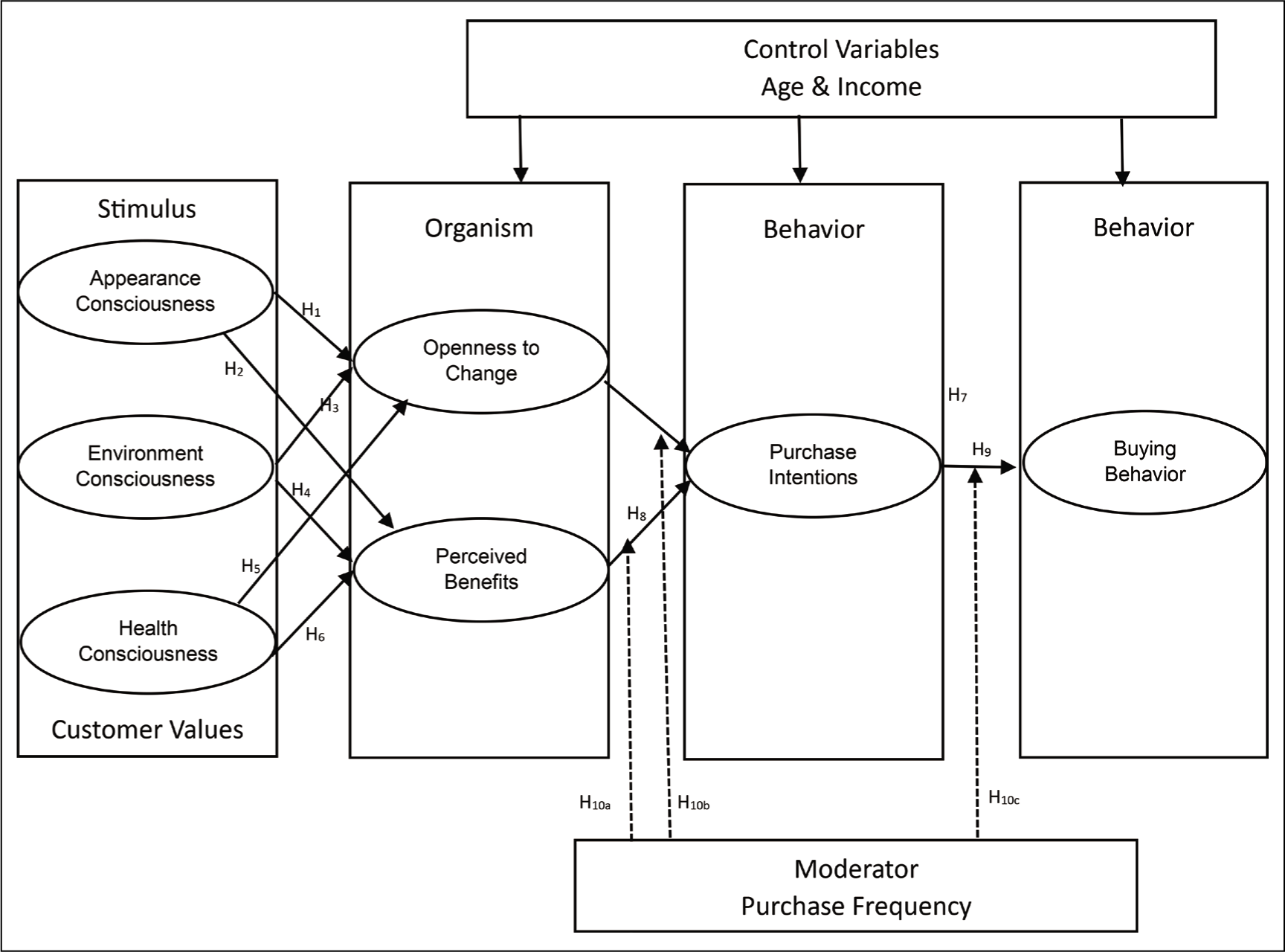
H1: Appearance consciousness positively influences openness to change H2: Appearance consciousness positively influences perceived benefits
Environmental Consciousness
The impact of environmental degradation, high AQI (Air Quality Index) levels, and improper disposal of plastic waste have taken a toll on consumers’ health and overall well-being, as highlighted in the work of Ragavan and Mageh (2013). Environmental consciousness refers to the concern about environment-friendly and natural products (Peattie, 2001). Individuals driven by environmental consciousness actively adapt their consumption behavior to contribute positively to the betterment of the environment, a trend noted by Kim and Chung (2011). The personal care product industry has faced many environment-related concerns like harmful chemicals and animal testing of ingredients. Consumers have become increasingly sensitive to information regarding products, brands, and manufacturing processes that may adversely affect the environment. This heightened consumer awareness about environmental degradation and the United Nations’ sustainable development goals, fostering a growing population of ecologically conscious consumers with a desire to purchase natural products (Singh & Verma, 2017). However, it is worth noting that some prior studies have suggested that merely raising consumer awareness about environmental issues does not necessarily translate into openness to change, perceived benefits, and actual purchase of natural chemical-free products as exemplified by Paladino (2005). However, the authors argue that environmental consciousness is likely to influence openness to change positively and perceived benefits of natural personal care products as environment-conscious consumers actively seek natural products that leave no adverse effect on the environment. Thus, we propose
H3: Environmental consciousness positively influences openness to change H4: Environmental consciousness positively influences perceived benefits
Health Consciousness
Health consciousness refers to consumers’ propensity to associate and take active measures for improving health (Hansen et al., 2018). Previous researchers have studied health consciousness as an egoistic motive for purchasing organic food products (Hansen et al., 2018; Shin & Mattila 2019; Singh & Verma, 2017). Similarly, investigations related to natural products have consistently shown that health-related considerations positively influence consumers’ willingness to make such purchases, as demonstrated in research by Kim and Chung (2011). In light of this existing body of research, we propose that health consciousness will likely enhance openness to change in consumption patterns. It serves as a potent motivator for consuming natural personal products, aligning consumers’ desire for improved health with their purchasing decisions. Furthermore, health consciousness will likely enhance the perceived benefits of natural personal care products. This assertion finds support in previous studies by Newsom et al. (2005) and Kushwah et al. (2019), which highlight the role of health consciousness in enhancing consumers’ perceptions of the benefits offered by such products. Hence, we propose
H5: Health consciousness positively influences openness to change H6: Health consciousness positively influences perceived benefits
Openness to Change and Perceived Benefits (Organism)
According to Harmel and Yeh (2019), “Openness to change refers to the personal value that stimulates and induces a desire to engage in independent actions.” Openness to change results in a positive self-image and influences consumption (Vieira et al., 2013). It is the motivational value of self-direction and significantly influences purchase intention (Hansen et al., 2018). Consumers are motivated to adopt new products due to their openness to change, and previous researchers have also validated this linkage in different contexts (Mainardes et al., 2017). Openness to change is an individual’s value that leads to a self-directed willingness to engage in thoughts, actions, and feelings for new experiences. This motivation subsequently leads to interest and purchase intentions (Kushwah et al., 2019; Michaelidou & Hassan, 2008).
On the other hand, perceived benefits represent the benefits/reasons for purchasing a particular product/service (Elhoushy et al., 2020). Westaby (2005) argued that consumer perception of purchasing a product includes the influence of various factors and a better understanding of the benefits helps decision-making (Gupta & Arora, 2017). Thus, consumers’ perception of perceived benefits is an important determinant of purchase intentions, along with openness to change. The authors argue that consumer values (appearance consciousness, health consciousness, and environmental consciousness) are unlikely to be reflected in purchase intention and buying behavior unless consumers are open to change and perceive the benefits of natural personal care products. Therefore, the following hypotheses are proposed:
H7: Openness to change positively influences purchase intention H8: Perceived benefits positively influence purchase intention
Purchase Intentions (Behavior) and Behavior (Consequence)
According to Martins et al. (2019), purchase intentions are the likelihood of buying a product or service. Individuals with higher buying intentions are more likely to exhibit buying behavior (Foroudi et al., 2018). Purchase intentions are a significant predictor of buying behavior (Ajzen, 1991; Banerji & Singh, 2022; Nedra et al., 2015). Singh and Verma (2017) highlighted a notable discrepancy between consumers’ purchase intentions and their actual buying behavior. They stated that though consumers show favorable purchase intentions toward natural personal care products, the actual number of purchases are relatively low. Thus, there is a need to examine whether the positive purchase intentions of Indian consumers translate to buying behavior.
H9: Purchase intentions positively influence buying behavior
Moderating Role of Purchase Frequency
Purchase frequency measures how often a consumer shops for a particular product. It helps to differentiate between one-time purchasers and repeat purchasers. Previous researchers have argued that consumers’ purchase frequency influences attitudes and purchase intentions, especially in the organic food industry (Kushwah et al., 2019; Talwar, 2021). Purchase frequency is likely to enhance the openness to change; similarly; lower purchase frequency may exacerbate the willingness to try out new products. Thus, the authors speculate the presence of a moderation effect of purchase frequency on the relationship between openness to change and purchase intentions. In this article, we assert that varying levels of purchase frequency (low, medium, and high) could influence the relationship between openness to change and purchase intentions. Similarly, purchase frequency is likely to moderate the relationship between perceived benefits and purchase intentions of natural products. Furthermore, the different levels of purchase frequency are likely to moderate the relationship between purchase intentions and buying behavior.
Thus, the following hypotheses are proposed
H10a: Purchase frequency moderates the association between openness to change and purchase intentions H10b: Purchase frequency moderates the association between perceived benefits and purchase intentions H10c: Purchase frequency moderates the association between purchase intentions and buying behavior
Socio-demographics as Control Variables
Demographic variables age and income are considered as control variables as they may have a confounding effect on openness to change and perceived benefits (Kaur et al., 2021; Kumar et al., 2021; Talwar et al., 2021). Previous studies pointed out that younger household prefer natural products (Singh & Verma, 2017; Van Doorn & Verhoef, 2011) on the contrary Misra et al. (1991) stated that older consumer is willing to use natural product due to health-related aspects. Furthermore, the literature on income related to the purchase of natural products is also contradicting. Few studies argued that high-income households purchase natural products more frequently (Hansen et al., 2018; Hwang, 2016; Voon et al., 2011), whereas some studies pointed out that households in lower-income groups purchase natural products more frequently (Howie, 2004). Thus, the present study takes age and income as control variables (Kaur et al., 2021; Kumar et al., 2021a; Talwar et al., 2021).
Conceptual Model
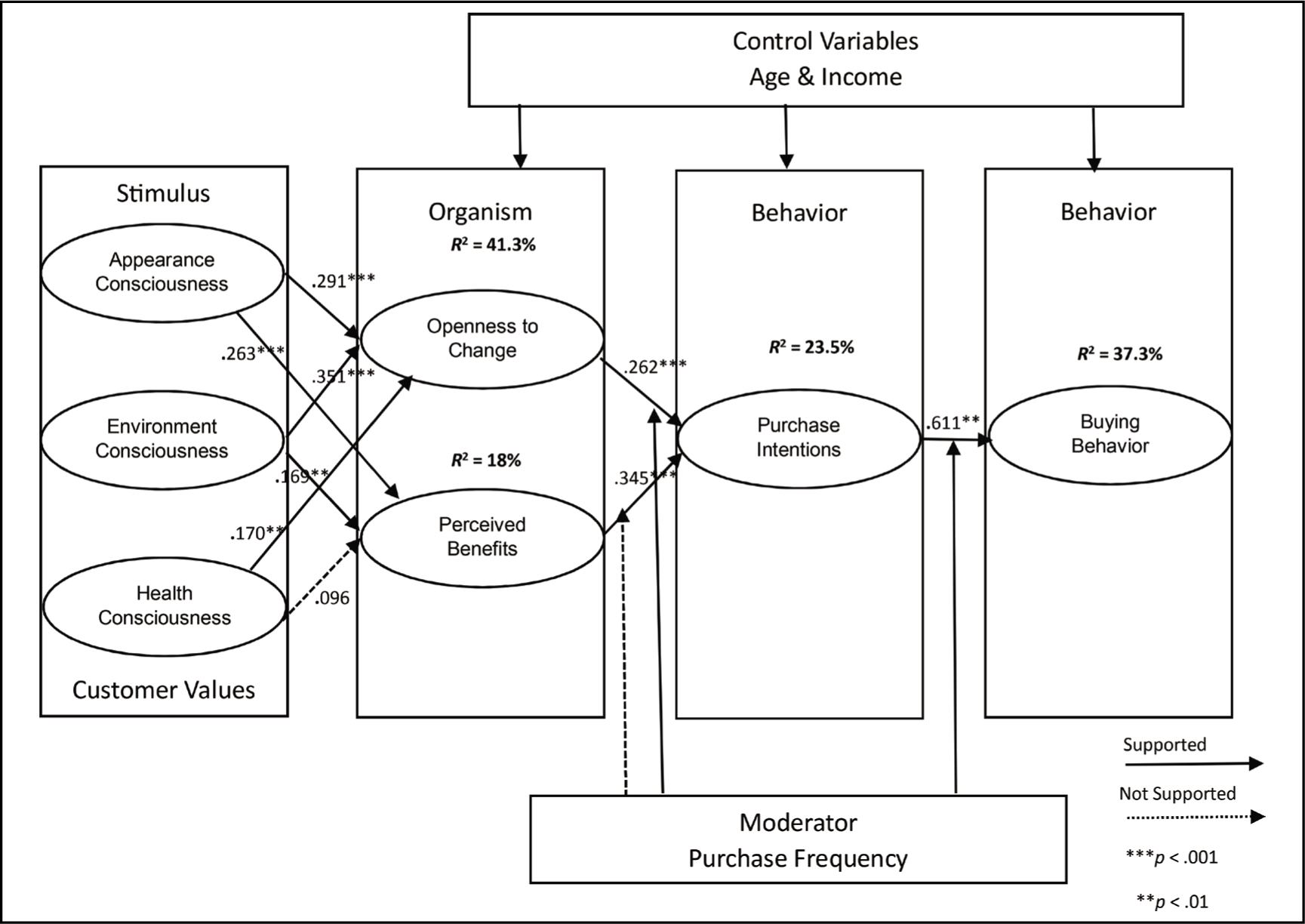
The conceptual framework developed for the study (Figure 1).
Conceptual Model Adopted for the Study.
Data and Methods
Survey Instruments and Measurement Scale
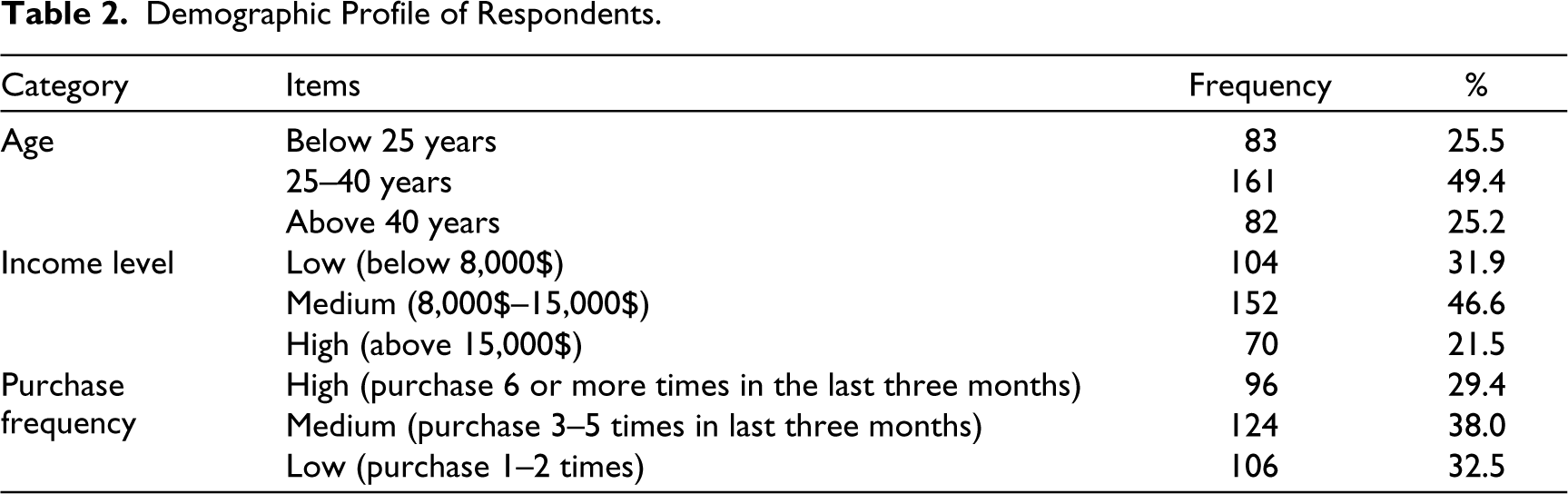
The questionnaire was divided into two sections. The first section was related to demographic characteristics, and the second section included questions related to the measurement items measured on a five-point Likert scale (1—strongly disagree to 5—strongly agree). The questionnaire also had a question related to purchasing frequency, and consumers were categorized into three categories based on purchases made in the last three months: high (6 or more), medium (3 to 5), and low (1 to 2). Table 1 highlights the original scale items and a list of sources. We invited professionals from the educational field and personal care industry to check the clarity of the content of questions. We made minor modifications based on suggestions received from experts. In addition, a pilot study of twenty respondents was conducted to check the face validity of the questionnaire, and the final questionnaire was prepared after incorporating necessary changes (Annexure A).
Data Collection
The data was collected offline (personal interviews) and online (google form link via mail, WhatsApp, and social media). Previous research has explained the consistency of results generated by different data collection modes (Schillewaert & Meulemeester, 2005). However, online research methods yield faster results, mitigate interviewer bias, and are convenient. This combination of online and offline data collection was pertinent to maximize the number of respondents. A total of 410 woman respondents were selected using a convenience sampling approach due to the absence of a list of natural personal product consumers (Pudaruth et al., 2015). The screening of respondents was based on the following criteria:
Female consumers who actively use natural personal care products. A minimum of two purchases of these products within the last six months.
Scale Development for Survey.
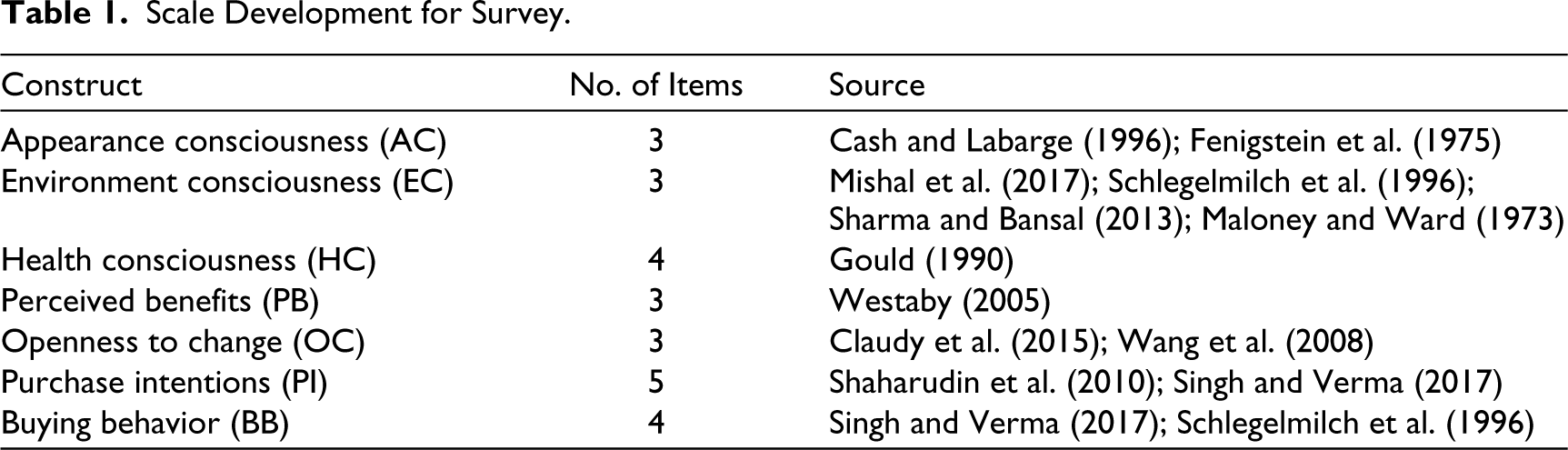
The aforementioned criteria were followed to ensure pertinent and valid participation. The responses were collected from November 2021 to January 2022 in the Delhi-NCR region. A total of 358 filled responses were received out of which 326 complete responses were taken for final analysis. In determining the sample size at least 10 responses per item were collected (Kline, 2011). As the questionnaire consisted of 25 items, a minimum of 250 items were required and 326 complete responses were considered sufficient to conduct the analysis. The demographic profile of respondents is represented in Table 2.
Demographic Profile of Respondents.
Data Analysis and Results
Common Method Bias
Common method bias was tested with Harman’s single-factor test in SPSS. The maximum variance explained was 31.43% which was less than the recommended value of 50% (Podsakoff et al., 2012). Hence, the data was free from issues of common method bias.
Validity and Reliability Analysis
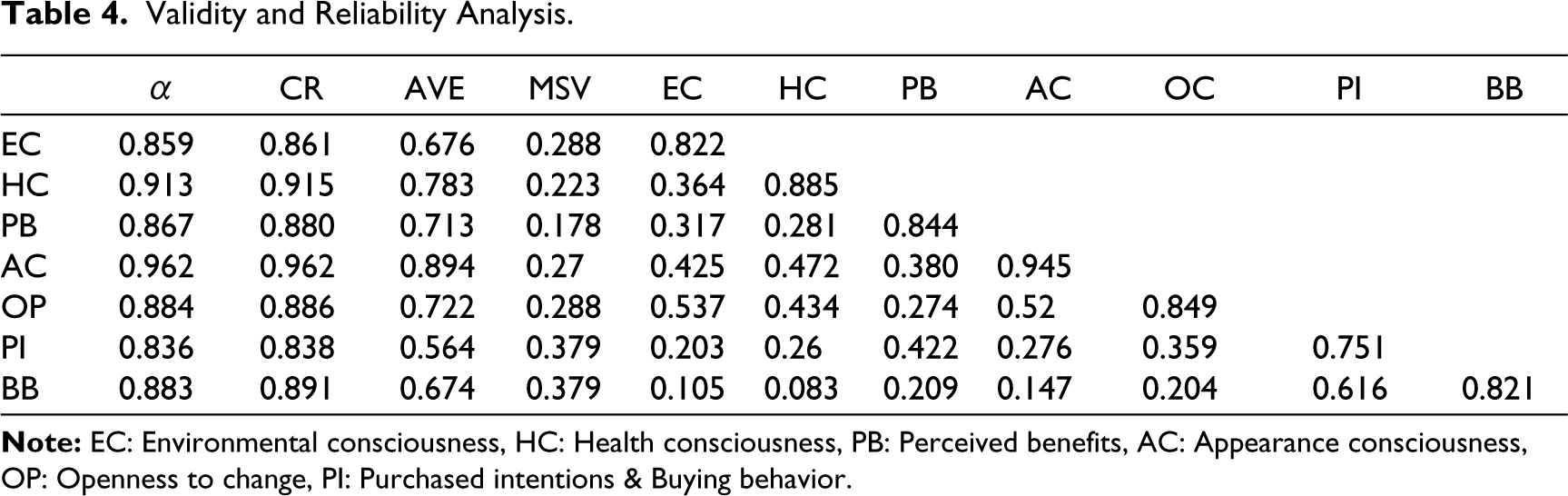
The Structural equation modeling (SEM) technique was used for data analysis and the reliability and validity of the constructs were checked through confirmatory factor analysis (CFA). The model fit values of the measurement model (χ2/df = 2.571, CFI = 0.940, and RMSEA = 0.070) were in the acceptable range (Byrne, 2001; Hair et al., 2014). The Cronbach’s alpha values and composite reliability were above 0.70 (Fornell & Larcker, 1981). Convergent validity was checked through items loading each construct, CR values, and average variance extracted (AVE). One item from health consciousness and one item purchase intention had loadings below 0.50 were safely removed from the model. The values of AVE and CR of study constructs were more than the accepted threshold range of 0.5 and 0.7, and CR > AVE (Anderson & Gerbing, 1988; Hair et al., 2006). Discriminant validity was checked through AVE, inter-construct correlation, and maximum shared variance (MSV). The square root value of AVE of study constructs was greater than inter-correlations among study constructs (Fornell & Larcker, 1981), and MSV < AVE confirmed the discriminant validity of the model. The details regarding item loadings, reliability, and validity are presented in Tables 3 and 4.
Factors Loading and Cronbach’s Alpha Values of Study Measures.
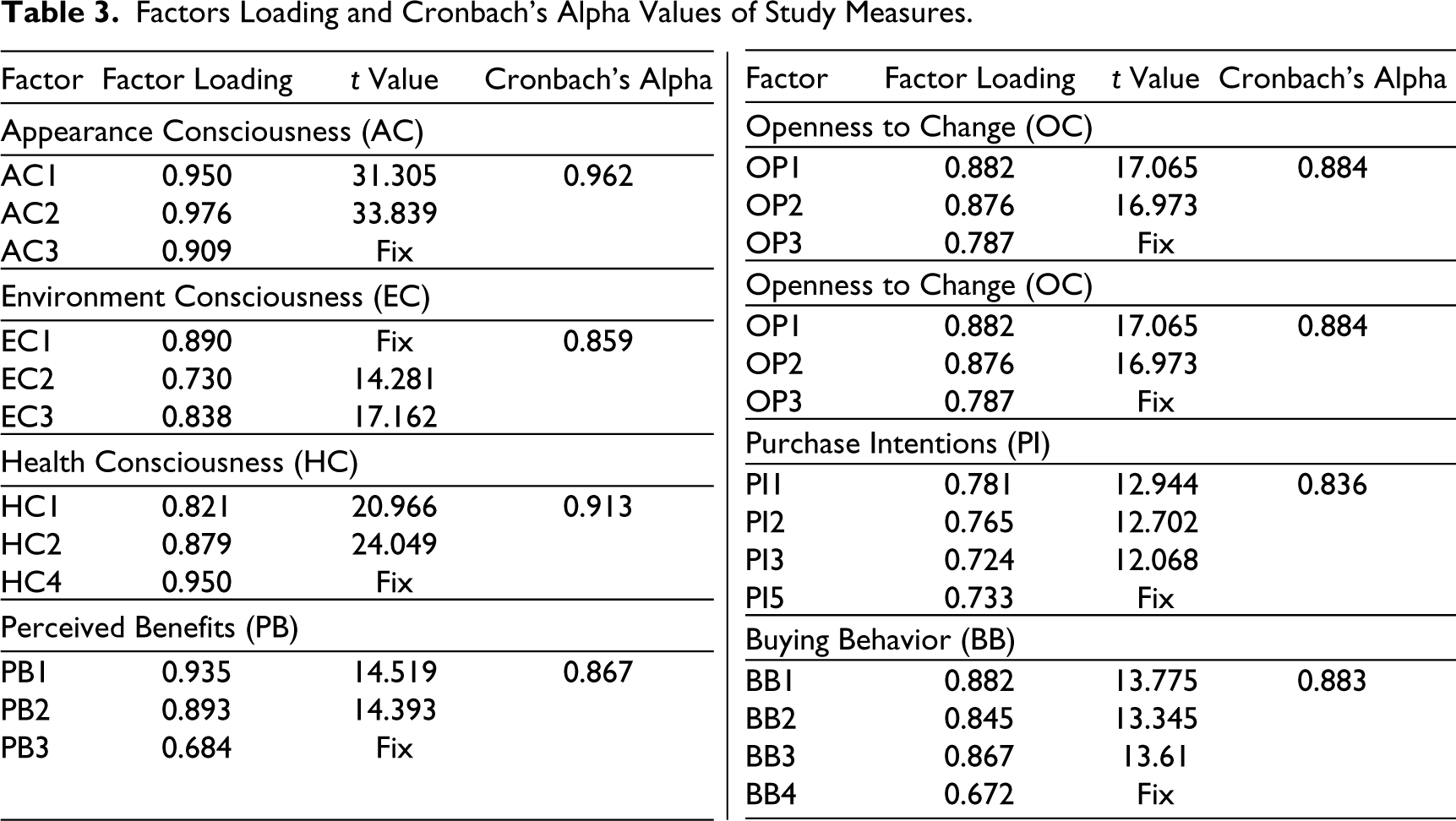
Validity and Reliability Analysis.
Testing of Hypothesis
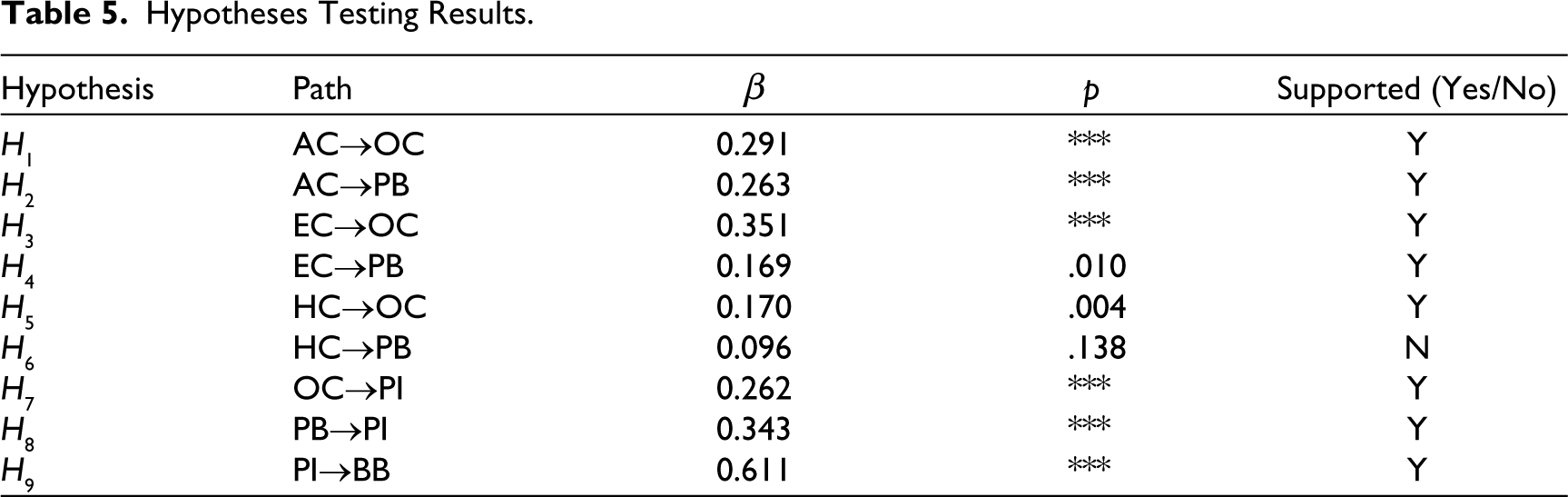
In the second phase of analysis, structural equation modeling (SEM) was used to validate the proposed hypotheses of the study. The results of SEM showed the good model fit results (χ2/df = 2.487, CFI = 0.941, and RMSEA = 0.068). The study results supported most of the hypotheses (Table 5). Appearance consciousness (AC) shared a positive correlation with openness to change (OC) (H1: β = 0.291; p < .001) and perceived benefits (PB) (H2: β = 0.263; p < .001) similarly, environmental consciousness (EC) shared a positive correlation with openness to change (OC) (H3: β = 0.351; p < .001) and perceived benefits (PB) (H4: β = 0.169; p < .05). On the contrary, health consciousness (HC) shared a significant positive correlation with OC (H5: β = 0.170; p < .05) but, no significant relation was found between HC and PB (H6: β = 0.096; p > .05). Furthermore, OC shared a significant positive correlation with purchase intentions (PI) (H7: β = 0.262; p < .001), and PB also shared a significant positive correlation with PI (H7: β = 0.343; p < .001). Finally, PI also shared a significant positive correlation with buying behavior (BB) (H8: β = 0.611; p < .001). The SEM results also explained the variance of different dependent variables used in the model as follows: 18% in perceived benefits (PB), 41.3% in openness to change (OC), 23.5% in purchase intentions (PI), and 37.3% in buying behavior (BB) (see Figure 2 and Table 4).
Hypotheses Testing Results.
Results of Moderation Analysis of Purchase Frequency.

Results of Hypotheses Testing.
Moderation Analysis
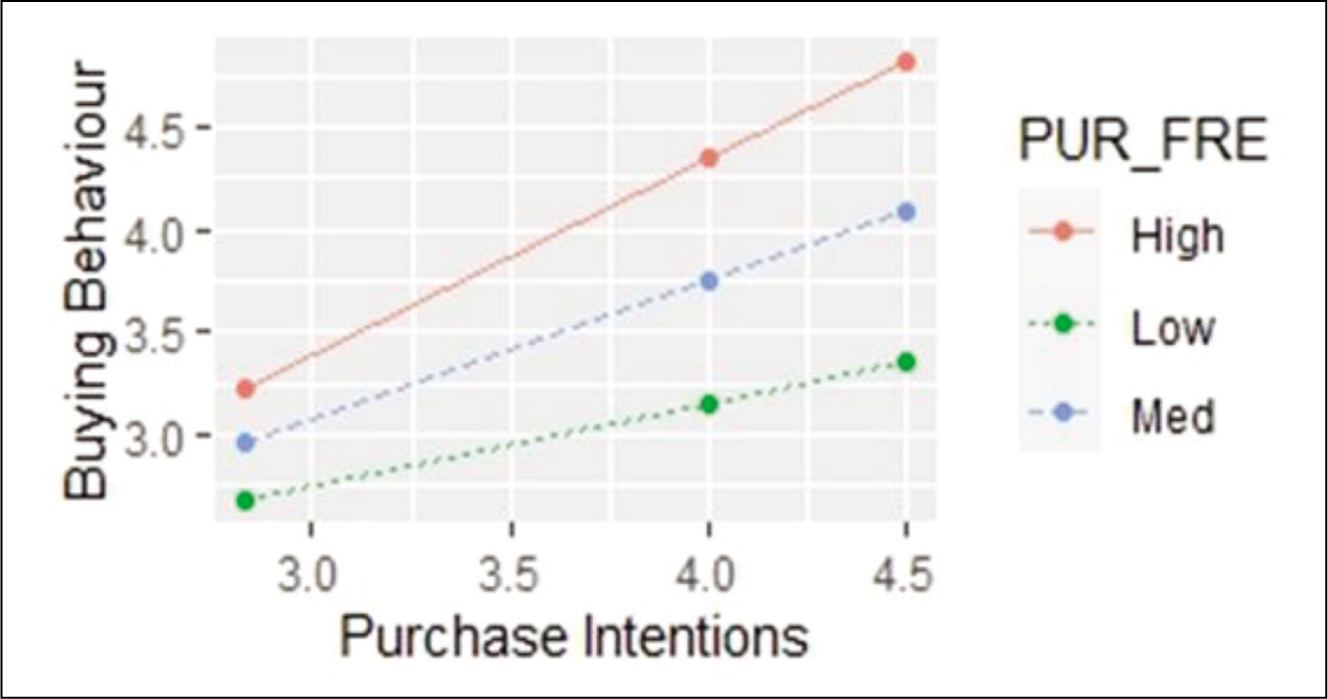
PROCESS macro was performed to investigate the moderation effect of purchase frequency. The results showed that purchase frequency positively moderated the association between perceived benefits with purchase intention and purchase intention with buying behavior (see Table 6 and Figure 2). However, it did not moderate the association between openness and purchase intention. Therefore, H10a and H10c were supported, but H10b was not supported. The results of the moderating effect can be seen in Figures 3 and 4. Figure 3 shows that consumers with the highest perceived benefits were found to have high purchase intentions on high and medium purchase frequency; in contrast, consumers with low purchase frequency show low purchase intention at higher perceived benefits levels.
The Moderating Influence of Purchase Frequency on Purchase Intentions and Perceived Benefits.
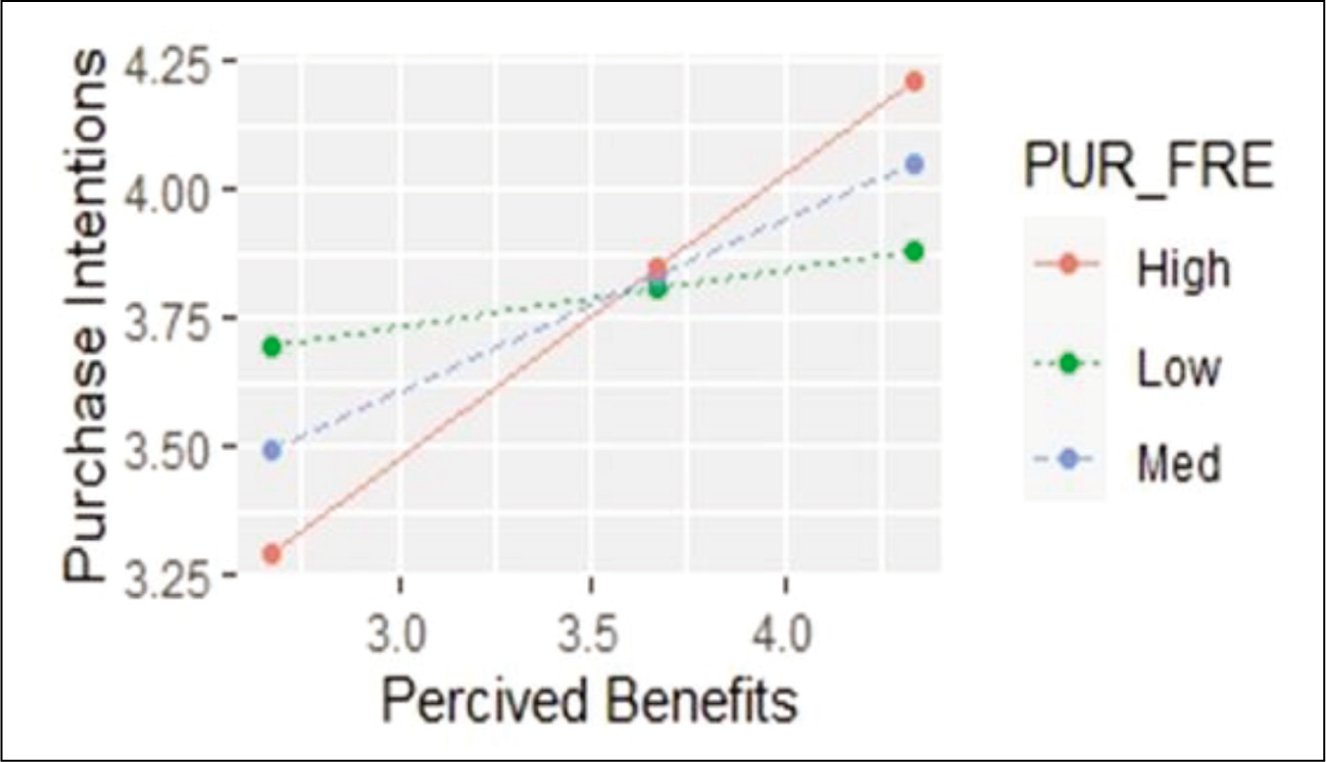
Figure 4 shows that users with high purchase frequency exhibit a sharp increase in buying behavior, which varies with the level of purchase intentions.
Moderating Influence of Purchase Frequency on Purchase Intentions and Buying Behavior.
Control Variables
This article considered demographic variables age and income as control variables and the findings revealed that there was no effect of control variables age and income on the dependent variables namely, openness to change, perceived benefits, purchase intentions, and buying behavior.
Discussion
This article findings reveal that consumers’ appearance-consciousness positively influences openness to change (H1) and perceived benefits (H2). Appearance consciousness refers to the interest of consumers in cosmetic products that express or alter their image. Consumers who desire to look youthful and improve their appearance also want natural and chemical-free products (Kim & Chung, 2011). As natural personal care products are made with fewer chemicals than their conventional counterparts, consumers’ appearance consciousness is positively associated with openness toward change and perceived benefits. These results indicate that appearance-conscious consumers are more inclined toward natural products due to their openness to new experiences and beliefs about the perceived benefits. Similarly, the environmental consciousness of consumers is positively associated with openness to change (H3) and perceived benefits (H4). Environmental consciousness refers to the concern about environment-friendly and natural products (Peattie, 2001). Environmentally conscious consumers change their purchase behavior for the betterment of the environment (Kim & Chung, 2011). Consumers are willing to use natural personal care products due to their openness toward new experiences and their perception that they are contributing to the environment (Paladino, 2005). This study also investigates the influence of health consciousness on openness to change and perceived benefits. The findings of our study revealed that health consciousness is positively associated with openness to change (H5) in consumption patterns that act as motivators for purchasing natural personal care products (Kumar et al., 2021b; Kushwah et al., 2019; Newsom et al., 2005). It serves as a motivator for the consumption of natural personal products, aligning consumer’s desire for improved health with their purchasing decisions. Surprisingly, the findings showed no association between health consciousness and perceived benefits. Previous researchers have studied health consciousness as an egoistic motive for purchasing organic food products (Hansen et al., 2018; Shin & Mattila, 2019; Singh & Verma, 2017). But, for the natural personal care industry where the products are externally applied, the health-related considerations do not influence consumers’ perception of the benefits that will accrue by using natural personal care products. Personal care products like skin care, hair care, oral care, color, deodorants, toiletries, and cosmetics are only externally applied, unlike the organic food industry, which has a greater effect on consumers’ health.
Furthermore, the findings revealed that openness to change and perceived benefits affect consumers’ purchase intentions (H7 & H8) as consumers are motivated to adopt new products. A clear understanding of the benefits helps consumers in making purchase decisions (Claudy et al., 2015; Gupta & Arora, 2017; Kumar et al., 2021a). Consumers with higher perceived benefits have rational reasons to buy natural personal care products (Talwar et al., 2021; Westaby, 2005). These purchase intentions, in the end, are also associated with consumer buying behavior toward natural personal care products (H9). The findings of the study also revealed that purchase frequency significantly moderates the relationship between perceived benefits and purchase intentions (H10b), and purchase intentions to consumer buying behavior (H10c). The present study considers three levels of buying frequency (low, medium, and high) and the moderating effect is stronger for high purchase frequency as compared to low and medium purchase frequency.
Conclusion
This article investigates the antecedents of consumer buying behavior toward natural personal care products. The SOBC framework is used as a conceptual model (Davis & Luthans, 1980) as it theories how the stimuli (appearance consciousness, environmental consciousness, and health consciousness) are associated with internal processes (openness to change and perceived benefits), which are reflected in behavioral intentions. The findings revealed that appearance consciousness, environmental consciousness, and health consciousness are antecedents to openness to change. However, only appearance consciousness and environmental consciousness positively influence the perceived benefits. Finally, intentions to purchase significantly influence consumers’ buying behavior. The study incorporates moderating variables (purchase frequency) and their impact on buying behavior in the SOBC framework. The study attempts to understand the increasing complexity of the behavioral tendencies of consumers. It contributes to the literature on natural personal care products by exploring associations that have not been previously studied.
Theoretical Implications
This article makes a significant contribution to the advancement of theoretical understanding in the area. First, it extends the applicability to the SOBC framework in the area of natural personal care products, thereby enriching the theoretical explanations available for explaining the consumer decision-making process. Second, this article enriches the existing literature by addressing the intention-behavior gap. This aspect has been previously unexplored, to the best of our knowledge, in the context of natural personal care products. This study reveals the importance of consumers’ value systems in shaping their buying behavior, thus providing valuable insights into the underlying factors that influence this phenomenon.
Third, this article delves deeper into the purchase behavior of Indian woman consumers in the context of natural personal care products. Additionally, it investigates the moderating role of buying frequency in shaping the relationships between factors such as openness to change and purchase intentions, perceived benefits and purchase intentions, and purchase intentions and buying behavior. These analyses offer valuable insight into the Indian market. Collectively, the findings presented in this article significantly enhance our academic understanding of consumer behavior in the context of natural personal care products in India.
Managerial Implications
The results of the study provide insights for managers, policymakers, and manufacturers of natural personal care products. Managers should effectively communicate how natural products enhance the appearance of consumers. Furthermore, consumers are motivated to purchase natural products with environment-friendly ingredients (Kooijmans & Flores-Palacios, 2014; Moscato & Machin, 2018). Thus, marketing strategies should communicate how ingredients used in natural personal care products do not harm the environment as consumers have increasingly become concerned about the harmful effects of conventional personal care products and are willing to adopt safer alternatives (Carvalho et al., 2016; Klaschka, 2016b). The benefits of using natural products should be communicated by adding recommendations from a reputed doctor so that health-conscious consumers are open to trying natural products. The findings suggest that openness to change influences purchase intention. Hence, managers should appeal to consumers by offering trials, testing, and free samples. The results also suggested that purchase frequency influences purchase intentions and buying behavior of natural personal care products. Further, personal care products are of daily use so managers should create innovative strategies that reward the consumers for frequent purchases by offering membership or discounts on the next purchase.
Limitations and Future Research
The findings of the article are consistent with the previous research and general belief of the subject matter. As the case for all research, the present article also has some limitations. The first limitation was the use of a convenience sample consisting of woman respondents who actively use natural personal care products and have a history of purchasing these products over the preceding six months, While the use of convenience sampling is widespread in research (Yaghi et al., 2008), but one should be cautious while generalizing the results beyond current study. Future research must be conducted in different countries to validate the results. In this study, appearance consciousness, environmental consciousness, and health consciousness are considered as stimuli; future research may also study the role of government regulations, willingness to pay, price, and promotional offers. The study limits its scope to natural personal care products and generalizing the findings to other industries may require further investigation. Future studies may also explore different product categories and may incorporate comparative analysis. A qualitative approach may also be suitable as behavioral intentions are studied.
Footnotes
Declaration of Conflicting Interests
The authors declared no potential conflicts of interest with respect to the research, authorship, and/or publication of this article.
Funding
The authors received no financial support for the research, authorship, and/or publication of this article.