






Abstract
After the government’s decision to allow foreign direct investment (FDI) in the retail sector, attention has been focused on this sector. This is a red signal for the organised and unorganised players in India as the weapon of private label will be a game changer in the near future. Private labels are not new to the Indian consumers as most of the Indian giants have equipped their stores with it. Private labels in food and grocery have been successful in the Indian market and brands in many more categories have come into the world’s largest consumer market. Private label studies have investigated grocery products, food products and routine consumables like dairy products and staples.
The main objective of the research is to find out the role of psychological factors in purchase behaviour with reference to private label apparels. It further investigates the reliability and validity of the scale designed to measure the psychological factor responsible for private label apparel purchase behaviour.
After review of literature, focus group and expert discussions were conducted to identify psychological factors and their influence on private label brand purchase behaviour. A total of 9 psychological factors were derived after the preliminary study and were included in the questionnaire. The questionnaire was designed using five-point Likert scale and survey was carried out in different organised apparel retail stores in Ahmedabad, Gujarat.
Introduction
Private labels, mostly famous as store brands, are brands developed by retailers. Recent data show that sale of private labels has increased exponentially in the past few year, which has enabled them to be a strong competitive force against the national brands or brands developed by manufacturers (Ailawadi & Keller, 2004; Batra & Sinha, 2000). According to a recent study by ACNielsen (2005), the prices of store brand are on average 31 per cent lower than the prices of national brands. Private labels account for a market share of 17 per cent and are continuing to grow year by year. Private labels were introduced 100 years back in a few product categories, mostly in the category of fastmoving consumer goods (FMCG) (Raju, Sethuraman & Dhar, 1995). Private brands are present virtually in every category of all kinds of organised retail formats (Burt, 2000; Steenkamp & Dekimpe, 1997). Europe is the region with the largest private label share, followed by the North American region and now, Asian countries also have a large share (Bhatt & Rathod, 2012). In an ACNielsen consumer survey in 2005, 56 per cent Indians agreed that private labels are a good option in comparison to national brands. Indian consumers’ value-seeking behaviour is advantageous to private label retailers. Entry of domestic corporate majors and foreign players is fuelling the competition in Indian retail market and this is turning out to be an opportunity for private label growth. Rising overall growth rates in all categories of products exhibits the private label penetration in the Indian retail market.
Organised retail chain stores have also introduced store brands in different product categories for their loyal consumers, which is an attempt to duplicate the more popular manufacturing brands, but are priced lower than them in most cases. The quality of store brands is at par with manufacturer’s brands. Private labels are sold at lower prices than national brands, but they are not often low price alternative to national brands. Store brands are typically, but not always, identified by the name of the sponsoring retailer (Richardson, 1997). Private labels are defined as ‘consumer products produced by, or on behalf of, distributors and sold under the distributor’s own name or trade mark through the distributor’s own outlet’ (Economist Intelligence Unit, 1968, cited in McGoldrick, 1984). A private label brand is also defined as ‘a brand owned by the retailer or a wholesaler for a line or variety of items under exclusive or controlled distribution’ (ACNielsen, 2005). A variety of terms are used in the literature which generally refer to the same phenomenon. The terms include private label brands (Hoch & Banerji, 1993), own brand and own label (Veloutsou, Gioulistanis & Moutinho, 2004), private labels (Richardson, 1997), house brands and distributor brands. In addition, the term retail brand or retailer brand (Burt, 2000) can also refer to the overall brand or name of the retailer.
Private labels deliver benefits to the retailers by increasing profit margin (Vahie & Paswan, 2006); have greater leverage over other brands (Hsu & Lai, 2008); and help in building some level of store loyalty (Baltas, Doyle & Dyson, 1997; Narasimhan & Wilcox, 1998). Store loyalty or brand loyalty improves bargaining power with respect to the national brand manufacturer (Narasimhan & Wilcox, 1998). Price advantage, specifically low price (Ashley, 1998; Hoch & Banerji, 1993), is one of the major factors behind the success of private labels. Product of same quality (Hoch & Banerji, 1993) will lead to the price competition and hence, consumers will go in for a more economic product of the same quality. However, lower price is not the only reason for their success. Saving in terms of advertising costs is an important factor in the success of private labels as it is mostly promoted inside the stores. The valued private label brands always resonate with the customers and persuade them to make a decision in their favour.
The apparel market in India was estimated at US$ 35 billion in 2011 and is expected to grow to US$ 50 billion by 2016, with compound annual growth rate (CAGR) of 7.5 per cent. The organised apparel retail market in India was estimated at US$ 5.5 billion in 2011 and is expected to grow to US$ 8 billion by 2016, at a CAGR of 8.5 per cent (Technopak, 2011). The higher overall growth rate relative to the overall retail market is most likely to show maximum private label penetration in the Indian market, as retailers have an opportunity to introduce private label in the apparel category in India.
A number of researchers have investigated the psychological factors influencing private label purchase over the past decades. However, most of the researches conducted were for food and grocery product category. Even the volume of private label research is less than that of national brand studies. This article investigates the status of private label apparel products in Indian organised retail context.
Literature Review
Various research studies have examined the profile of private brand buyer, that is, they have considered the demographics or socio-economic characteristics as well as the psychographics of consumers. It has been found that national brands and private labels are consumed by buyers with same socio-economic and demographic characteristics (Frank & Boyd, 1965). Others have found that consumers are best classified by their perceptions of private brands and how they differentiate private labels from national brands (Myers, 1967). Since private label buyers are coming from all socio-economic groups, the attitude towards store brand and behavioural factors have been considered important in other studies (Burger & Schott, 1972). It has also been found that demographic and psychographic factors were influencing more on consumer perceptions regarding product qualities and price (Szymanski & Busch, 1987). Factors like economic benefits, utilitarian benefits, hedonic benefit, cost saving, quality orientation, shopping experience and risk perception have been studied in various countries from time to time (Ailawadi, Neslin & Gedenk, 2001; Richardson, Jain & Dick, 1996).
Psychological factors influencing consumer buying behaviour pertaining to economics and quality have been examined most often (Dick, Jain & Richardson, 1995). Store brands are commonly seen as the alternatives with lower price and inferior quality compared to national brands. To confirm this, researchers have investigated how these two factors affect private label purchases. Economic factors such as price consciousness, value consciousness or value for money have been found to have positive relationships with private label purchases, whereas quality factors are negatively related to consumer purchases of private label (Burton, Lichtenstein, Netemeyer & Garretson, 1998; Omar, 1996; Richardson et al., 1996).
Price consciousness is defined as the degree to which a consumer considers price in its negative role as a criterion for purchase (Lichtenstein, Bloch & Black, 1988). Price consciousness as a factor has an impact on store brand as well as national brand purchases and has a positive relation to purchase behaviour. Price perception and quality perception have also been studied for their relative importance on private label purchase behaviour (Richardson et al., 1996). The price gap between private label and national brands has an important positive effect on private label performance in any category (Dhar & Hoch, 1997). Consumer’s perception of price is the prime factor influencing their purchase behaviour (Miranda & Joshi, 2003). Price consciousness plays an important role in decision making and influences private label purchase (Batra & Sinha, 2000). Price-conscious consumers are less loyal towards specific brands and show a stronger variety-seeking behaviour; similarly, private label buyers also exhibit the same behaviour (Garretson & Burton, 1998; Garretson, Fisher & Burton, 2002).
Quality consciousness is a negative factor which stops consumers from using store brands since such brands are perceived to be inferior in quality (Cunningham et al., 1982, cited in Ailawadi et al., 2001; see also Richardson, Dick & Jain, 1994). Quality consciousness of consumers and price consciousness indicate two different segments in the store brand buying behaviour. Quality perception is known as a critical element in consumer purchase decisions (Hoch & Banerji, 1993; Richardson et al., 1996). Consumers are suspicious of the quality of these store brands (Dick et al., 1995). Private label quality is a key element in determining its success (Miranda & Joshi, 2003; Steenkamp & Dekimpe, 1997). The perceived quality of private label brands has been studied as an overall concept in some studies (Sprott & Shimp, 2004). Shannon and Mandhachitara (2005) also state that private label shopping has relation with psychological factors like quality perception, shopping enjoyment and price consciousness. Meanwhile, some other studies say that value for money or value consciousness is negatively related to private label purchase behaviour (Richardson et al., 1996). Psychological factors like value consciousness, impulse purchasing and brand loyalty have a significant relationship with attitude towards private labels (Ailawadi et al., 2001; Joonghathakarnsathit & Tanthayanount, 2002).
There is little evidence to suggest that use of store brands is related to shopping enjoyment. It is thought that innovativeness and variety seeking should be positively associated with deal usage (Montgomery, 1971). There is a positive relationship between shopping enjoyment and promotion use. Store brand buyers are not more likely to enjoy shopping than other consumers (Bellizzi, Krueckeberg, Hamilton & Warren, 1981). It will be positive if innovative consumers view store brands as new and untried (Granzin, 1981). Consumers who enjoy shopping have been found to be influenced more by promotional offers (Kolodinsky, 1990, cited in Ailawadi et al., 2001). Variety seekers easily switch to national brands when the price gap between private brands and national brands is narrowed (Blattberg et al., 1980; Livesey & Lennon, 1978; Putsis & Cotterill, 1999). Private label buyers are likely switchers or variety seekers who do not have a stable, narrow brand selection (Baltas, 1997). Variety seekers are positively associated to store brand consumption because variety seekers use store brands for a change in routine consumption (Ailawadi et al., 2001). Impulsiveness would generally be associated to store brand purchase, that is, store brands can be bought on impulse (Ailawadi et al., 2001).
Consumers who plan their shopping will buy store brands more as compared to national brands. Planning may also play a role in store brand use, with more extensive planners having less favourable attitudes towards store brands than less extensive planners (Omar, 1996). Mavenism is particularly a psychological characteristic of shoppers which makes them attentive to media as a basis for their expertise (Feick & Price, 1987). Mavens consider price and quality of product as highly important factors (Williams & Slama, 1995). There is little chance of a positive or negative relationship between mavenism and store brand purchase behaviour.
Purchase behaviour and store brand loyalty are related to each other (Bawa & Shoemaker, 1987, cited in Ailawadi et al., 2001; also, see Webster, 1965). Consumers who are loyal to a store develop attitudes of trust towards the store and become familiar with private label brand products (Dick et al., 1995). Therefore, store loyalty is positively associated with the store brand use (Dick et al., 1995; Richardson et al., 1996). Perceptions of retailer promotion activity also have been found to correlate positively with store loyalty (Sirohi, McLaughlin & Wittink, 1998). With reference to price, the relationship of store loyalty was found negligible as such people are less price sensitive (Kim, Srinivasan & Wilcox, 1999). Store loyalty is derived by quality-conscious customers if the store offers the same price/quality benefits (Corstjens & Lal, 2000). It is proved that loyal consumers prefer private label brands as store loyalty is perfectly correlated with the consumption of private label brands (Ailawadi et al., 2001). Presence of brand loyalty has a negative effect on the private label attitude which directly influences the percentage of private label products the consumer purchases (Burton et al., 1998; Garretson et al., 2002).
Influence of some other psychological factors on private label purchase behaviour has also been studied in recent time. Quality perception, economic perception, perceived risk, value perception, brand loyalty, shopping enjoyment, store loyalty, other extrinsic cues and the proximity with extrinsic cues have been investigated (Ailawadi et al., 2001; Baltas, 1997; Baltas & Doyle, 1998; Batra & Sinha, 2000; Burton et al., 1998; Dick et al., 1995; Garretson et al., 2002; Omar, 1996; Richardson et al., 1996).
Overall, the review of literature is partially inconclusive regarding the overall importance of consumer psychological factors and, occasionally, provides conflicting evidence regarding the impact of these factors on store brand purchase behaviour. The studies in the past were conducted either in developed countries or considered grocery or food products as base. In Asian countries, very few studies have focused on psychological factors and private label purchase behaviour (Bhatt & Rathod, 2012).
Objectives
The main objective of this study is to examine the role of psychological factors in purchase behaviour with reference to private label apparels. This study further investigates the scale developed for psychological measures of private label apparel purchase behaviour and their interrelationship with reliability and validity. For store managers, it is extremely important to know the consumer attitude development process and buying behaviour. Psychological factors pertaining to store brand perception and attitude development for the apparel products could ease the job of manager to pursue the consumer.
Methodology
The survey method was employed in data collection. A total of 300 respondents were contacted using the mall intercept survey method. Mall intercept studies mostly use non-probability sampling methods, and therefore the results of such a survey ensure that the variability within the population of interest is represented as the survey is conducted in a number of locations and at varying times. Consumers were contacted in their actual buying conditions for the instant as well as probably accurate responses. Therefore, the data were collected from shopping malls located in Ahmedabad city of Gujarat, India. This method is quite common in business and management research as this can ensure a high response rate, whereas probability sampling involves a lot of difficulty and higher costs, and the population in this type of study remains unknown and infinite (Sekaran, 2003).
The target population for this study consisted of active shoppers in departmental stores and hypermarket consumers. A self-administered questionnaire was developed to collect information from the respondents. Though 300 respondents were contacted, only 265 completed questionnaires were returned.
The demographic information of respondents, like gender, age, education and family income, was also collected. Respondents were mostly between the age groups of 20–35 years; the mean age was 29 years with standard deviation of 7.5 years Almost 76 per cent of the respondents were postgraduates and the family income was varying from ₹10,000–₹800,000 (see Table 1).
A structured questionnaire was developed to measure the psychological factors responsible for private label apparel purchase behaviour. The questionnaire consisted of questions concerning psychological factors constructs and demographic information of respondents. Total 25 items were developed to measure the psychological factors. All items were adapted from or developed based on prior research. The items were refined through expert interviews and focus group discussions. The items were measured using five-point Likert scale in which respondents were asked to indicate their level of agreement (1 = strongly disagree to 5 = strongly agree).
Respondents’ Profile
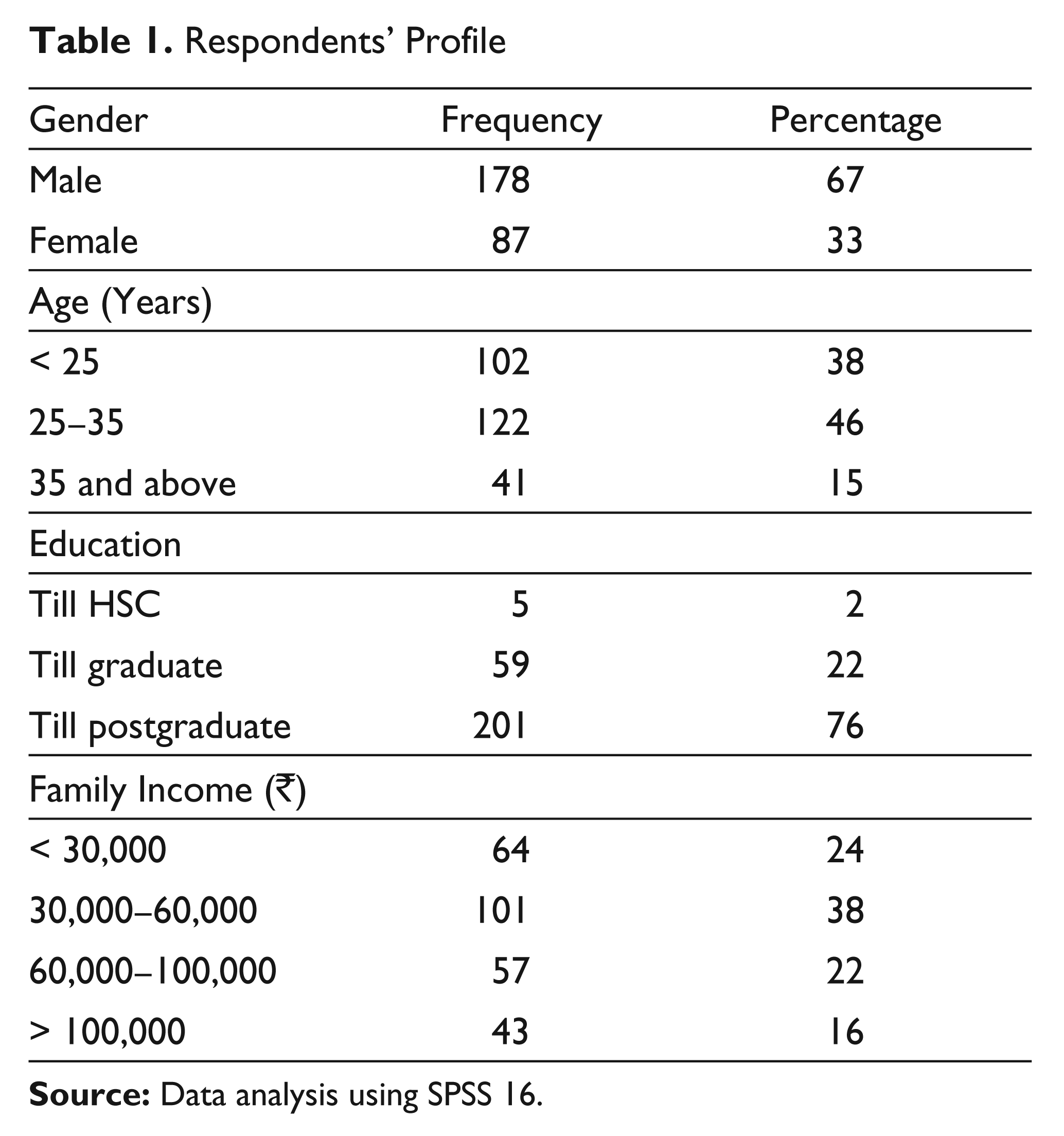
The 25 items of 11 psychological factors, namely, price consciousness, quality consciousness, shopping enjoyment, variety-seeking behaviour, brand loyalty for private brands, store loyalty, value consciousness for private brand apparels, planning, innovativeness, mavenism and impulsiveness were employed. Price perception and quality perception were measured by two items each. Private label brand loyalty, store loyalty and mavenism were measured with three items each. Shopping enjoyment, variety-seeking behaviour, value conscious for private label apparel, planning, innovativeness and impulsiveness were measured with two items each.
Exploratory Factor Analysis
Exploratory factor analysis was conducted using the principal component method and varimix rotation at the initial stage of analysis using SPSS (Hair, Anderson, Babin & Black, 2010; Sekaran, 2003). In this study, the results of Bartlett’s test of sphericity (0.000) and Kaiser–Meyer–Olkin (KMO) (0.629) were found significant, thereby indicating that the data were appropriate for factor analysis. In the analysis, only the factors having latent roots or eigenvalue greater than 1 were considered significant. Total nine factors were extracted during this stage of exploratory factor analysis. All the nine factors together accounted for 69.779 per cent of the total variance. These nine factors were price consciousness, quality consciousness, shopping enjoyment, variety-seeking behaviour, brand loyalty for private label brands, store loyalty, value consciousness for apparels, mavenism and impulsiveness. Two factors, planning and innovativeness, were dropped from further analysis as corresponding items were cross loaded onto the factors. The four items were deleted from further analysis. After deleting the two factors, again, exploratory factor analysis was conducted on 21 items to analyse the factor loading, which gave significant result.
Confirmatory Factor Analysis
In order to validate the measurement scale of the psychological behaviour for private label apparel brands identified in the exploratory factor analysis, further confirmatory factor analysis was conducted (Hair et al., 2010). On a total of 21 measurement items on nine dimensions, confirmatory factor analysis was performed using AMOS. The results of the confirmatory factor analysis are mentioned in Table 2.
All 21 measurement items and nine variables used to measure psychological factors for private label apparel purchase behaviour, developed in the pre-test, were subjected to a confirmatory analysis using AMOS 16 to assess psychometric properties. These properties were overall fit of the measurement model. Several fit indexes like the ratio of chi-square to degrees of freedom, the goodness-of-fit index (GFI), adjusted GFI (AGFI), the normed fit index (NFI), Tucker–Lewis Index (TLI), incremental fit index (IFI), the relative fit index (RFI), comparative fit index (CFI) and root mean square error of approximation (RMSEA) were used to quantify the model fit (Hair et al., 2010).
Model Fit Indexes
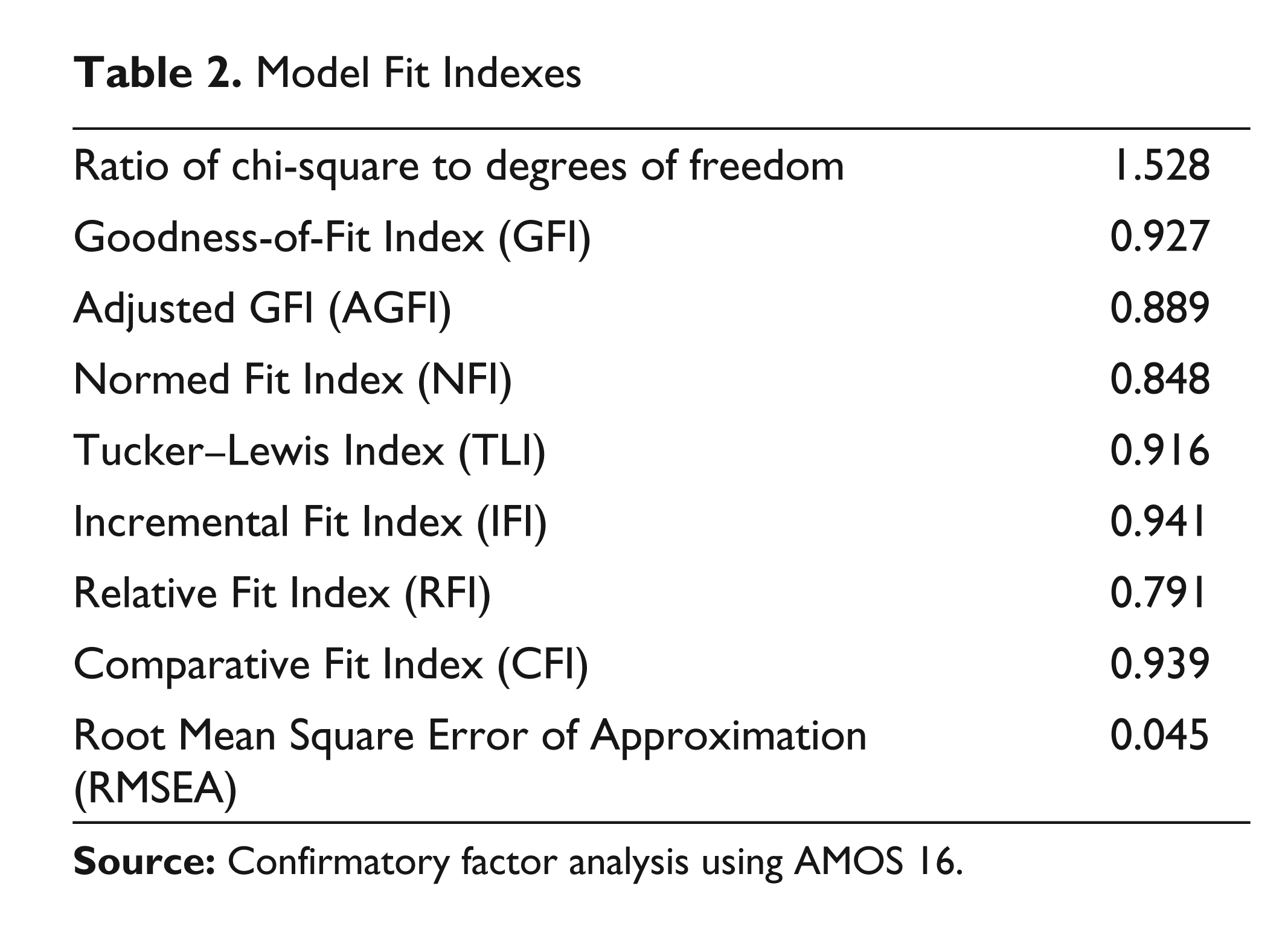
The chi-square associated with model was 233.85 (df = 153, p = 0. 000) and the likelihood ratio chi-square (CMIN/DF ratio)—a value below 2 is preferred—was 1.528, which was as per the recommendations for model fit. The GFI, an absolute fit index, and AGFI, a parsimony fit index, were 0.927 and 0.889 respectively. These values are above the 0.90 guideline for this model; higher values indicate better fit. In case of large sample sizes and deviation from normality, the chi-square statistics provide a highly sensitive statistical test, but not a practical test, of model fit. Considering this, comparative fit index (CFI) and Tucker-Lewis Index (TLI) are recommended as alternatives to chi-square statistics (Hair et al., 2010). Advocated fit levels for these indexes are in the 0.90 region, and for these data, the CFI was 0.939, that is, it exceeds the minimum (> 0.90) for a model of this complexity and sample size. The CFI further represents the improvement of fit of the specified model over a baseline model in which all variables are constrained not to be correlated. The TLI was 0.916, which is also as per the recommendation of the model fit. The NFI, RFI and IFI are other incremental fit indexes, and according to the guidelines, these values must be larger enough (0–1.0), which were found as per the guidelines of the indexes.
For RMSEA, a value of 0.10 or less is considered acceptable. The RMSEA, also known as badness-of-fit index, represents the degree to which lack of fit is due to misspecification of the model tested versus being due to sampling error. The RMSEA, an absolute fit index, was 0.045. This value is quite low and well below the 0.10 guideline for a model with 21 measured variables and adequate sample size.
Using the RMSEA and the CFI satisfies the condition that both a badness-of-fit index and a goodness-of-fit index be evaluated. In addition, other index values also are supportive. Therefore, further model can be examined with its validity and reliability.
Reliability and Validity
The reliability of constructs explains internal consistency, and various measures can be applied to identify the reliability. Cronbach’s alpha is a widely used statistic to measure the reliability of a given scale (Hair et al., 2010; Sekaran, 2003). Overall, the reliability of the scale was 0.829, and as the result was more than 0.7, it shows reliable scale measures. From the values of Cronbach’s alpha, it can be concluded that all the constructs of psychological factors responsible for private label apparel purchase behaviour were found to be highly reliable (Table 3).
Factor loadings are the first thing to look at in examining convergent validity. Convergent validity can be accessed from the measurement model by determining whether each indicator’s estimated maximum likelihood loading on the underlying construct is significant (Hair et al., 2010). According to the literature, all standardised loading estimates should be at least 0.5 and preferably, 0.7 or higher. From Table 3, we can conclude that all the loadings were significant as per the requirement of convergent validity. The lowest loading was 0.520 (impulsiveness construct and IM2 item) and other items of various constructs of psychological factors were either near 0.7 or more. Therefore, it has evidence of convergent validity for all the constructs of psychological measure of private label apparel purchase behaviour.
Convergent Validity
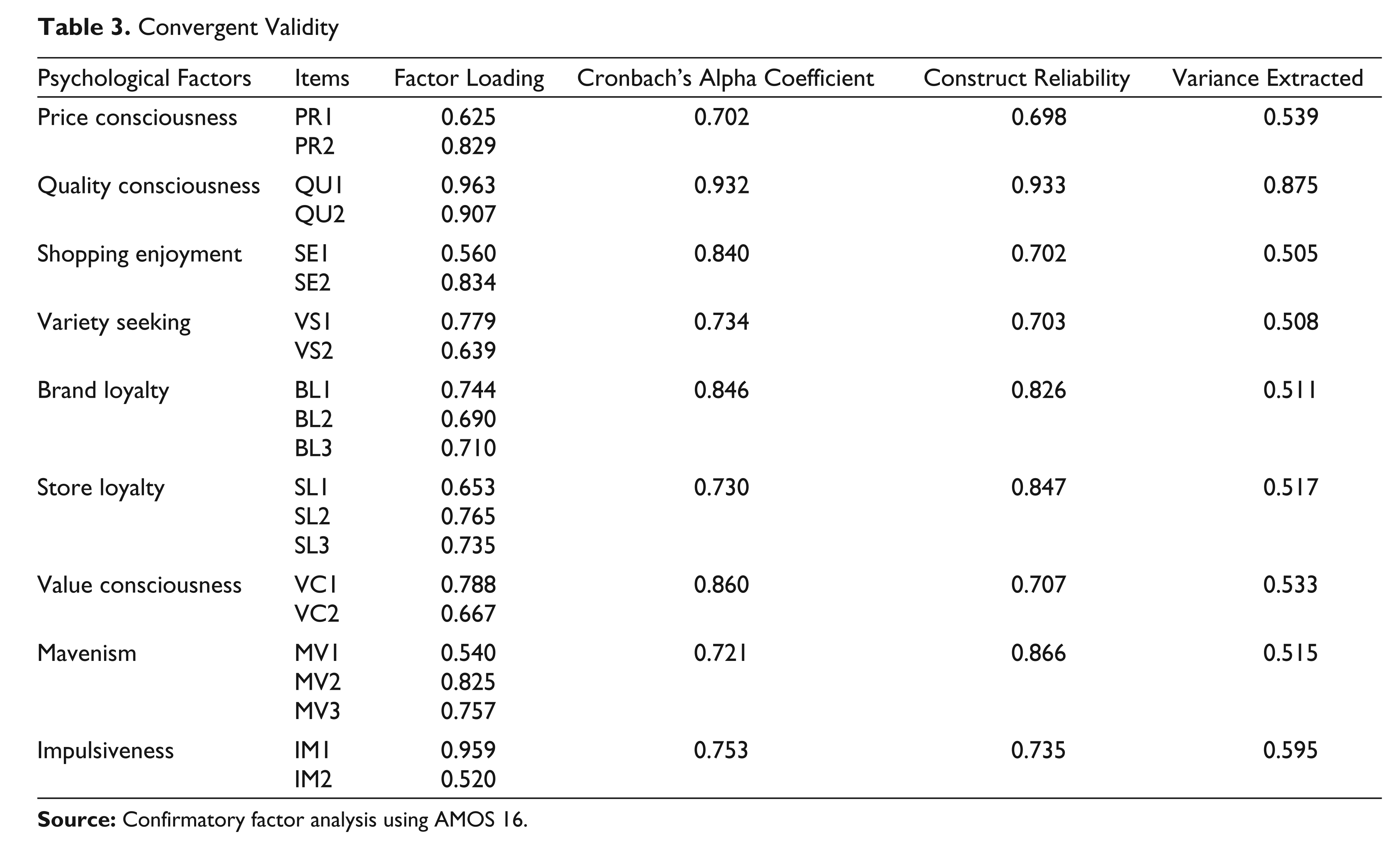
The second measure of convergent validity is construct reliability, which is mentioned as construct reliability coefficient in the Table 3. Construct reliability estimate of 0.7 or higher suggests good reliability, whereas reliability between 0.6 and 0.7 may be acceptable provided that other indicators of a model’s construct validity are good. A high construct reliability indicates that internal consistency exists (Hair et al., 2010). From Table 3, it can be identified that all the composite reliability coefficients are greater than 0.7, except price consciousness which is 0.698 (approximately 0.7), which indicates reliability as well as construct validity of the factors.
The third measure of convergent validity is variance extracted, which can be calculated as the sum of the squared standardised factor loadings divided by the number of items of each construct (Hair et al., 2010). Variance extracted estimates show how variances are measured compared to random measurement error. The average variance extracted of 0.5 or higher indicates adequate convergent validity. If the average variance extracted is found to be less than 0.5, it indicates that, on average, there is more error remaining in the items than there is variance explained by the latent factor structure used in the measure. All variances extracted mentioned in Table 3 were above 0.5, which means more than 50 per cent of the variance for the given items was accounted for by the construct.
The factor loading, construct reliability, the average variance extracted, along with Cronbach’s alpha coefficient measurements, for all psychological factors of private label apparel purchase behaviour are significant and fall in the satisfactory limit. It can be concluded that all the measurement items of constructs were consistent and there were less chances of occurrences of error.
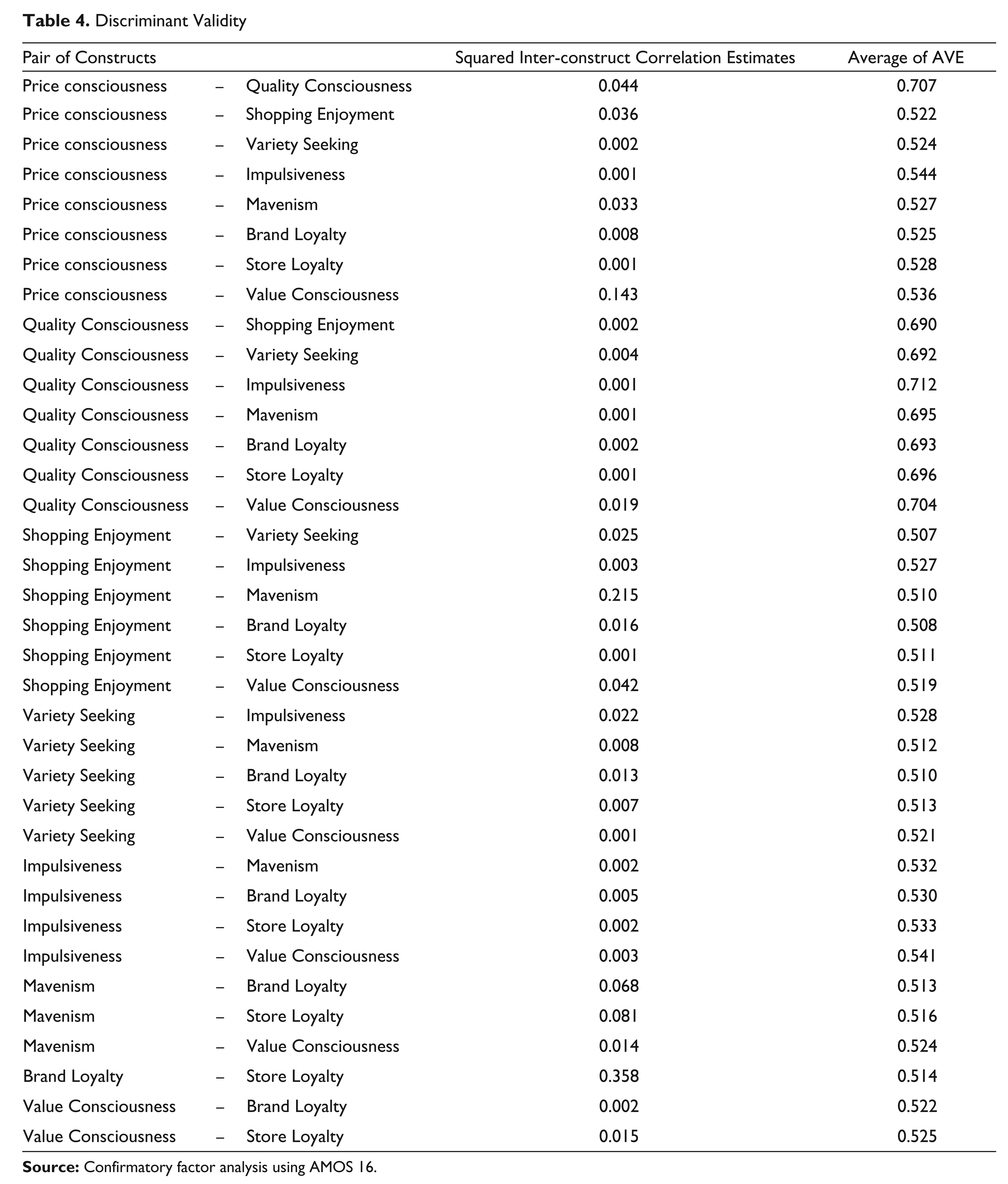
A more rigorous test of discriminant validity assesses whether all constructs average variance extracted estimates should be larger than the corresponding square of inter-construct correlation estimates (Hair et al., 2010). The average variances extracted were compared with the square of correlations of constructs in the table. All the value of square of inter-correlations was lower than corresponding average variances (Table 4). It indicates that the items have more in common with the construct they are associated with than they do with other constructs. Therefore, the psychological factors model developed for private label apparel purchase behaviour demonstrates discriminant validity. Nomological validity is tested by examining whether the correlations between the constructs in the measurement model make sense (Hair et al., 2010). The construct correlations are used to assess this. To demonstrate nomological validity in the psychological factors model, the correlations of construct were observed for its significance. The correlation of the constructs was found positive and significant at 0.05 levels.
Discriminant Validity
Conclusion
As discussed in the article, nine psychological factors have been extracted with the help of exploratory factor analysis. Confirmatory factor analyses successfully validated the items used to measure these nine psychological factors responsible for private label apparel purchase behaviour. Factors like price perception, quality perception for private label apparel, private label brand loyalty, loyalty to store of private label apparel, value consciousness, shopping enjoyment, variety-seeking behaviour, mavenism and impulsiveness were identified as effective psychological factors for private label apparel purchase behaviour.
Despite a growing scenario of private label branding by retailers in Asian countries, there has been little research that has investigated the private label behaviour of consumers. This article contributes in the direction by multi-item measure of psychometric factors and variables related to various constructs. Managers at retail stores will be potentially benefited with these measurements to track changes in the general behaviour of shoppers over a period of time. The empirical research also supports nomological validity, discriminant validity and convergent validity of the psychological measurement scale. Using the scale, retailers can develop a segment which can be a primary target market for the private label apparel products. This study focuses only on the apparel shopper’s behaviour for private labels and not other categories of products. The finding may not apply to the categories other than apparel.
Future Scope
Further research could use longitudinal design to examine the influence of psychological factors on private label attitude or purchase relationships. This could enhance the understanding of the consumer perception impact and attitudes for private label brands. Such longitudinal data would identify a more complete understanding of relationships between private label attitude and private label purchases.
The results of the study suggest that there are several opportunities to researchers in different areas as this study was conducted on apparel products. Further research may address private label attitude by using this scale to examine the influences of consumer psychological factors on private label buyers in different product categories like durable products and grocery products. Research could be done to examine the influences of consumer psychological factors on store brand buying by using data obtained from more retail formats or diverse geographic areas across India. This could increase credibility and generalisation in the empirical findings and scale. There is a need to investigate the interrelationships among factors that influence store brand purchase. These interrelations among variables can provide greater insight for the management of store brand at a strategic level. The results of this study may be used as a platform for future research for both academics and industry researchers who are interested in private label brands.