







Abstract
Satisfaction from job is considered as an important variable for study with respect to sales employees. By virtue of their job profile, sales employees are required to respond to multiple demands from multiple stakeholders both at work and family front which eventually lead to negative outcomes such as stress. This in turn results in lesser satisfaction both in work and family domains. Although job satisfaction gets highlighted across researches (especially in western context), family satisfaction still remains a subject of negligence in sales related researches. The present study aims to validate the Job and Family satisfaction in Indian context by exploratory factor analysis (EFA) and confirmatory factor analysis (CFA) using analysis of moment structures (AMOS) software. The results of the data analysis conform the findings of previous literature. Further, this study explored the impact of demographic variables on job and family satisfaction of sales employees. The study contributed to the sales management literature by identifying the key demographic variables that can have an effect on sales employee's job and family satisfaction. Results indicated that sales employee satisfaction from job is associated with both work (tenure in an organization, hierarchy and annual salary) as well as family related domains (marital status). However, family satisfaction is primarily dependent on family related factors. Implications of these findings are discussed.
Introduction
In past three decades, the work and family connection has been an important field of research due to the changes in the work and employee-related demographics (Jain & Nair, 2016). This, in turn, has accelerated both academic and organisational research to focus on satisfaction that emerge from both the domains, that is, job and family satisfaction, respectively. This becomes more vital when it comes to selling profession as selling is considered one of the most critical functions for any organisation.
Sales employees act as boundary spanners between the organisation and the customers (Weitz & Bradford, 1999) and, therefore, are considered as profit centres for firms (Churchill, Ford, & Walker, 1997). Over the last 30 years considerable research has been done to understand the job satisfaction of sales employees (Pettijohn, Pettijohn, & Taylor, 2002).
Job satisfaction among sales personnel plays a crucial role in ensuring higher productivity, as well as performance (Babakus, Cravens, Johnston, & Moncrief, 1996). In addition, many studies have confirmed the significant level of customer satisfaction resulting because of higher satisfaction of sales employees (Homburg & Stock, 2005; Schetzsle & Drollinger, 2014). Conversely, studies have also validated that employees who are dissatisfied with their jobs are more likely to involve in nonconformity behaviours (Lau, Au, & Ho, 2003) and absenteeism (Hartmann, Rutherford, Feinberg, & Anderson, 2014). In fact, meta-analysis on the effects of ethical climate suggests that job dissatisfaction poses a significant threat to organisations due to its intensifying effects on dysfunctional behaviour (Martin & Cullen, 2006).
Judge, Hanisch, and Drankoski (1995) suggested that it is important for human resource managers to be mindful of factors that affect most employees’ job satisfaction both positively and negatively as it will be fruitful for both the organisation and the employee. In addition, Jaramillo, Grisaffe, Chonko, and Roberts (2009) suggest that care and concern for the welfare of the employees by the management will lead the employees to act in the same way with customers.
Family satisfaction is largely studied as an outcome variable for work/ family conflict (Aryee, Luk, Leung, & Lo, 1999; Kalliath, Kalliath, & Chan, 2017; Karatepe & Uludag, 2008) and work/family enrichment. With work–family conflict, family satisfaction shows a negative relationship (Kossek & Ozeki, 1998), whereas with work–family enrichment, the relation is found to be positive. But its direct relationship with demographic factors has rarely been studied.
Using scarcity hypotheses (Parasuraman & Greenhaus, 2002), work–family studies have proven that if an employee is spending excessive time in the office, his ability to perform his role at home got hampered. Likewise, if an employee has too much burden at home (added responsibilities), his/her responsibilities in the office could be disrupted. Similarly, high-performance demands can make employee stress in the office. The stress at work can then is carried home and create new problems at home (Schneiderman, Ironson, & Siegel, 2005). Likewise, if an employee is experiencing stress at home, his/her performance in the office could be disrupted (Zhang et al., 2012). This indicated that understanding the role of family and the factors that affect the satisfaction is very crucial for overall satisfaction.
Although ‘family’ is an important institution, especially in India, there is insufficient consideration given to the concept of family satisfaction in the management-related studies, which is a critical research gap. Furthermore, there is hardly any research about the family satisfaction of sales employees working in emerging markets like India. Even though customer satisfaction is an indispensable part for any business, but if internal stakeholder, that is, employees, is not content then we cannot gratify our external customers (George, 1986). Hence, both job and family satisfaction are important to understand the overall satisfaction.
Although there are sizable numbers of studies on job and family satisfaction in Western countries, the same is rare to find in a non-Western context. One probable reason could be paucity of validated scales that measure job and family satisfaction in a non-Western context.
Therefore, this research is an attempt to validate the job and family satisfaction measure in an Indian context. Additionally, the study aims to empirically examine the influence of demographic variables on job and family satisfaction of sales employees working in different sectors in Indian organisations.
Literature Review
Job Satisfaction
Job satisfaction is one of the most important attitudinal variables (Judge & Mueller, 2012) studied across organisational behaviour literature. Locke (1976) defined job satisfaction as ‘a pleasant emotional state resulting from a person’s appreciation of his or her job and job experience’. It can also be defined as ‘a positive feeling about a job resulting from an evaluation of its characteristics’ (Robbins & Judge, 2009, p. 83). Studies in Western context have proved that job satisfaction not only positively impacts job performance, work values and high levels of employee motivation but also helps in lowering rates of absenteeism, turnover and burnout (Ngo, 2009). Previous research studies (Lefkowitz, 1994; Tabatabaei & Gharanjiki, 2011; Wayne, Griffin, & Bateman, 1986) showed that job satisfaction is influenced by demographics, organisational reward systems and individual differences such as self-esteem and the need for achievement.
Job Satisfaction and Demographic Variables
Demographic variables are often important determinants of job satisfaction (Ngoo, Tey, & Tan, 2015). One of the major demographic variables studied by researchers with respect to job satisfaction has been gender (Hodson, 2002; Westover, 2010). Women are found to have higher job satisfaction level than men in most of the professions (Roxburgh, 1999). However, in sales it was found that female sales representatives report lower job satisfaction, lower role clarity and greater propensity to leave the organisation (Siguaw & Honeycutt, 1995). Certain studies even suggest no significant gender difference with job satisfaction (Collins & Helen, 2013; Westover, 2009). The following hypothesis concerning relationship variables can be put forward based on the general tendency seen in sales research:
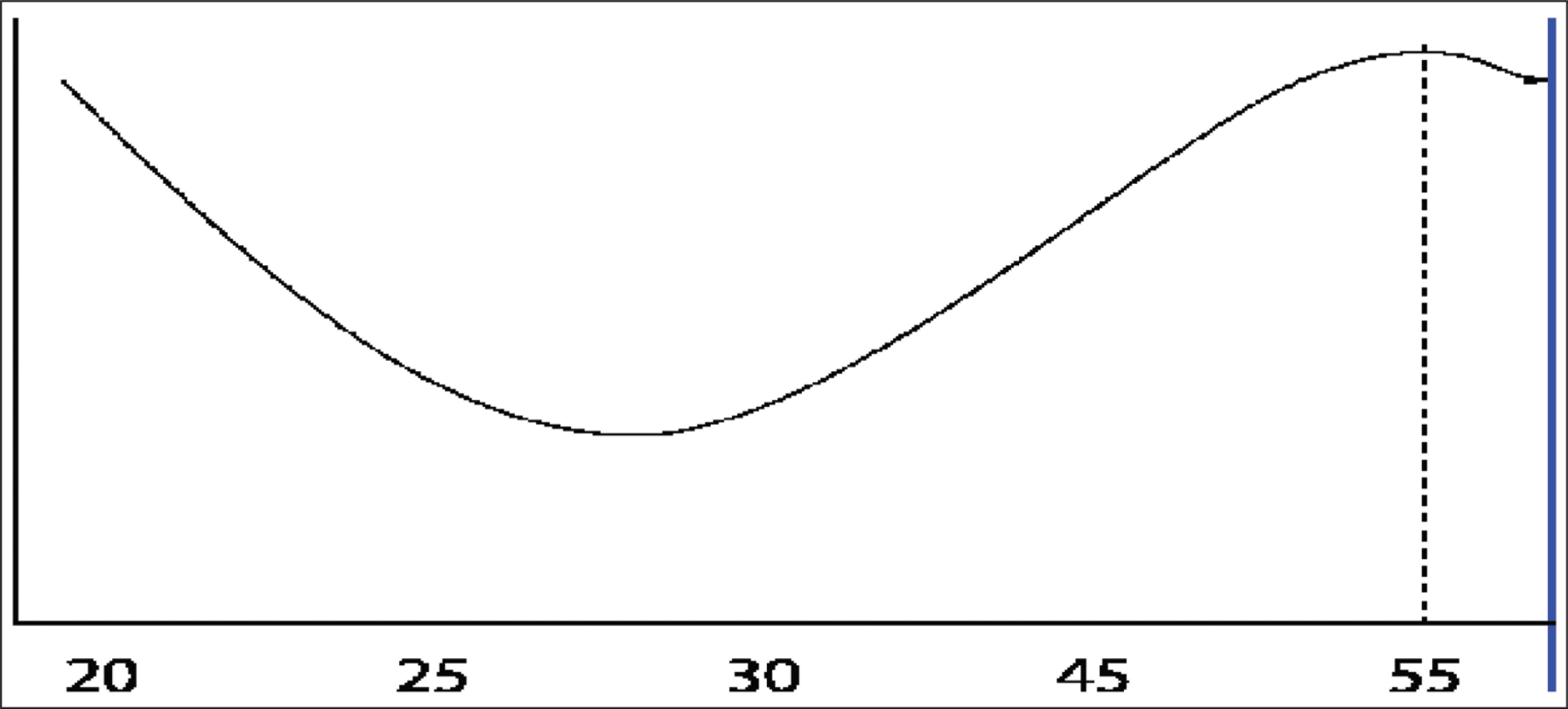
Becker (1960) measured impact of age and tenure on organisation commitment and job satisfaction. The results suggest that age is positively related to job satisfaction (Salami, 2008), that is, older employees have higher levels of job satisfaction as compared to younger employees in a manufacturing environment. This aspect is supported by many research studies (Kalleberg & Loscocco, 1983; Wright & Hamilton, 1978), which indicate that older people switch to jobs that have more desirable characteristics and hence are more satisfied. Hamner and Organ (1978) suggest that when people started their jobs, they have unrealistic assumptions about it and hence the level of job satisfactions is high in the beginning, but when they notice reality it falls. Later with years of experience, people develop accurate expectations, and hence, the level of job satisfaction increases again. After an age because of fear of future, it further tends to move on the lower side (Rao & Narayana, 1997) (refer Figure 1).
Hence, we can hypothesize that:
Weaver (1978) suggested that unmarried employees are less satisfied with their jobs than their married counterparts. This is further supported by Kanter (1977) and Dolton and Makepeace (1987). Hence, it can be hypothesised that:
Long working hours are found to be negatively associated with job satisfaction (Trimpop, Kirkcaldy, Athanasou, & Cooper, 2000). In a cross-cultural study conducted by Spector et al. (2004), working hours were found to be significantly correlated with job dissatisfaction for English-speaking Anglos but not Chinese. However, in a survey conducted across 20 countries, Spector et al. (2007) found no relation between working hours and job satisfaction. It was found that an increase in wage results in increasing job satisfaction (Jones & Sloane, 2009). This is in sync with economic theory that suggests that job satisfaction is positively dependent on salary and negatively dependent on the number of hours worked (Vila & García-Mora, 2005). So it can be hypothesised that:
Marchand (2009) and Hunter (2007) in their respective studies found that tenure is positively related to job satisfaction, that is, those who are new to a job are likely to be less satisfied with the job compared to those who have experiences in doing the job. Veronique and Stephen (2006) in their study with 184 managerial employees, found that managerial levels have a direct positive impact on managerial performance and job satisfaction. So it can be hypothesised that:
The study conducted by Demirel and Erdamar (2009) suggests that the number of children has a significant and negative impact on job satisfaction levels. It is supported by Frey and Eichenberger (1996, p. 188) argument that, ‘having a child instead of remaining childless binds the time and financial resources of the parents for about 20 years, perhaps even for the rest of their lives’. This ultimately enhances time demands of parents, financial resources and psychological capital, and henceforth, will impact job satisfaction negatively. Also it can be inferred that the age of the younger child would also affect an individual’s job satisfaction significantly. So it can be hypothesised that:
Family Satisfaction
Family satisfaction refers to the response to present family functioning as compared with an individual’s inner sense of what is desirable (Olson, 1986). Researchers argue that family satisfaction is an evaluative state and vary substantially over time (Ilies & Judge, 2002; Judge, LePine, & Rich, 2006).
Family Satisfaction and Demographic Variables
Family satisfaction is found to be positively associated with life satisfaction (Carlson & Kacmar, 2000; Karatepe & Baddar, 2006; Salvatore & Munoz Sastre, 2001). Life satisfaction is the satisfaction derived from job and family life (Sekaran, 1983). Also, life satisfaction is increased through involvement in activities within the family domain and receipt of emotional support from family members (Judge, Boudreau, & Bretz, 1994). So inferences with regard to demographic dimensions about family satisfaction can be drawn taking inferences from life satisfaction as a variable.
Tiedje et al. (1990) suggests that women who are low on work–family conflict experience greater satisfaction from their respective work and family roles, that is, the level of family satisfaction is higher in females having lower level of work–family conflict. However, Beutell and Wittig-Berman (1999) found that life satisfaction for males is higher than females. So it can be hypothesised that:
People below 24 years and over 44 years of age have been reported as more satisfied with their families than young adults (Helliwell, 2001). Consequently, it is hypothesised that:
Long working hours have been found to be associated with stress in balancing work and family roles (Major, Klein, & Ehrhart, 2002). The probable reason could be that the time spent at work often comes at the cost of family time (Moen & Chesley, 2008). This, in turn, may affect the satisfaction levels at the family frontier. Thus, we hypothesise that:
The position one occupies in an organisation, that is, the level at which one is placed, tends to affect one’s life satisfaction by underlying towards a sense of power and status. Redman and Snape (2006) indicates that the correlation between power and prestige of the job and life satisfaction is found to be .38. This, in turn, would have an effect on improved family functioning and, henceforth, would affect family satisfaction positively. So it can be hypothesised that:
Organisational tenure has been found to be significantly associated with job satisfaction (Hoath, Schneider, & Starr, 1998). There are indications in the literature that satisfaction in different life domains contributes to overall life satisfaction. In this way, satisfaction with job, home, marriage, and family are all positively associated with general satisfaction (Perrone, Webb, & Blalock, 2005). So using this logic, it can be hypothesised that:
Annual income and economic status are found to be a significant predictor of life satisfaction (Blanchflower & Oswald, 2004; Delhey, 2004). Income is also positively associated with marital quality and stability, children’s health and satisfaction with childcare (Barnett & Hyde, 2001; Haas, 1999). Since all the measures are essential for having satisfaction from family life, it can be hypothesised that:
Marital status is also found to be positively related to life satisfaction (Argyle & Martin, 1991; Daly & Rose, 2007). Thomas, Albrecht, and White (1984) claimed that when both partners are working it leads to high level of risk. In fact, when the spouse is working it leads to enhancement of several role responsibilities, which can negatively impact the overall quality and satisfaction of the marriage (Thomas et al., 1984) and would also affect family satisfaction to a larger extent. So it can be hypothesised that:
Zimmermann and Easterlin (2006) found that there is a positive effect of children on an individual’s satisfaction with family life. This aspect can be supported by the study conducted by Lu, Siu, Spector, and Shi (2009). They established that experiences in the family domain (new parental experiences, spouse support) had a significant positive impact on the positive component, that is, facilitation (enrichment) component of work–family balance. This, in turn, would improve the satisfaction at the family front. So it can be hypothesised that:
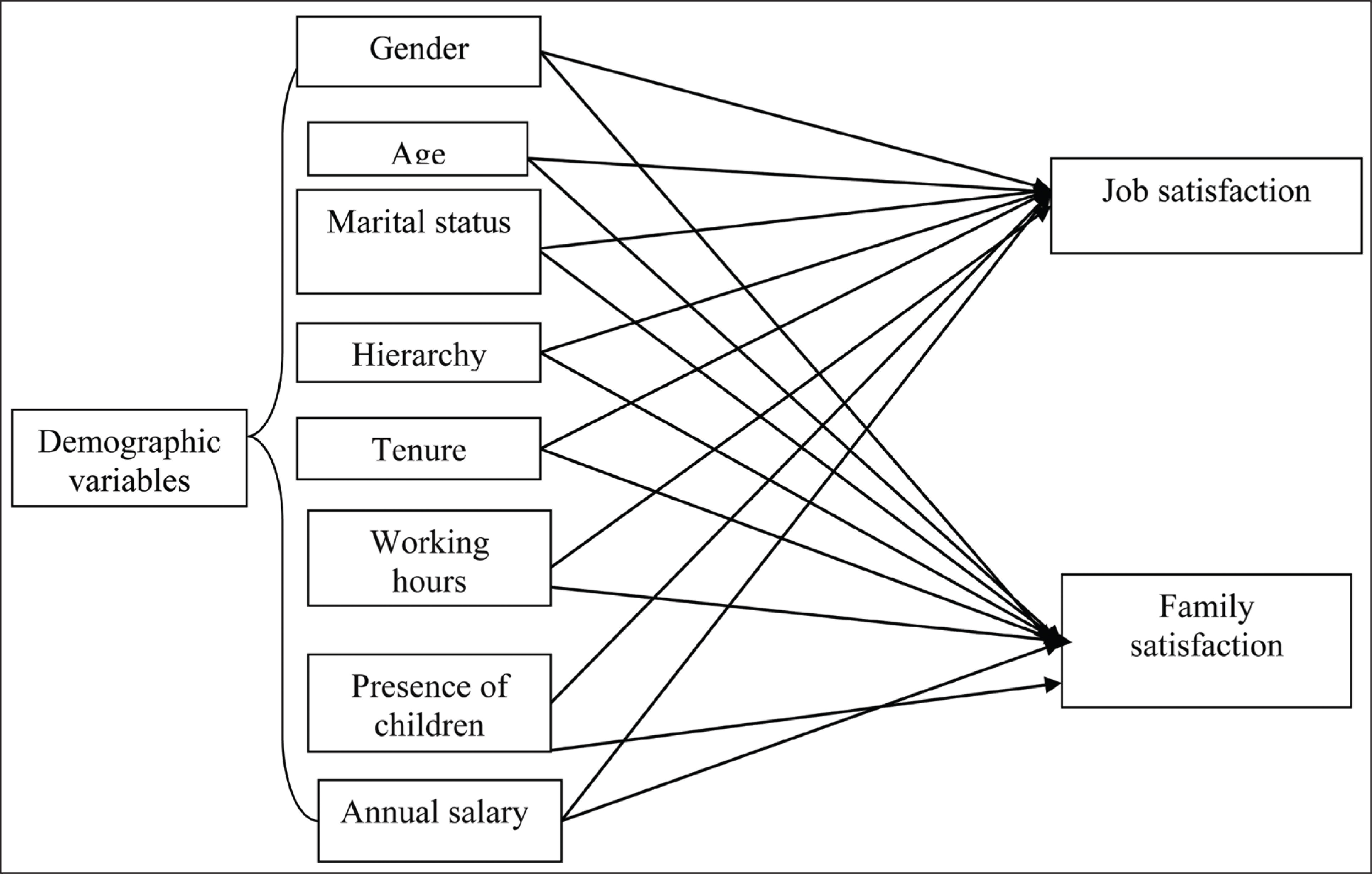
The schema of the relationships examined with respect to demographics is shown in Figure 2.
Methodology
Research Design
The present study is quantitative in nature. A survey method was used to gather information from sales respondents among service and manufacturing segments. This method of data collection is generally adopted to understand opinions, attitudes, perceptions, preferences and behaviours of individuals (Cooper & Schindler, 2000).
Sampling
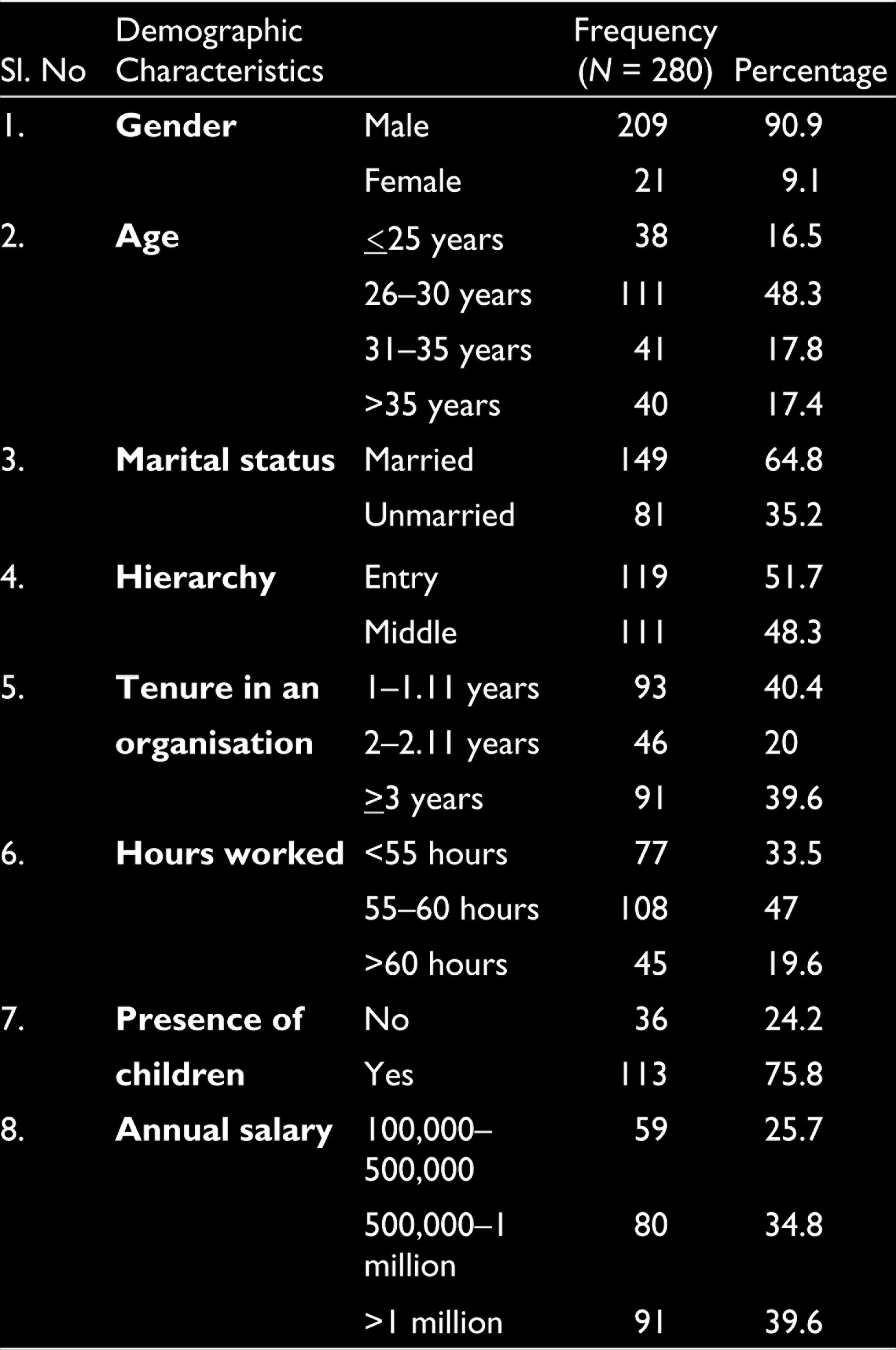
The study adopted a non-probability purposive sampling approach (Leedy & Ormrod, 2005). The sample for the study was sales employees working in different organisations based in Mumbai. The overall sample for the study was 230 sales employees. Of these 230 respondents, only 21 are females and rest 209 are males. This indicated the dominance of males in sales function.
Measures
Standardised self-report questionnaires were used in this study. The questionnaire has two sections. Section 1 concentrates on the demographic outline of the respondent, whereas Section 2 primarily captures the job and family satisfaction of the concerned respondent.
Job Satisfaction Scale
It is an attitudinal variable that reflects how people feel about their job. It is assessed using the 3-item general job satisfaction subscale, which is part of the job diagnostic survey (JDS) (Hackman & Oldham, 1975). However, since the scale has not been extensively used in the Indian context, its validity was tested. The outcomes will be discussed in the next section.
Family Satisfaction Scale
Family satisfaction is assessed using a modified version of Brayfield and Rothe’s (1951) family satisfaction scale (Hennessy, 2007). Certain studies (especially in the Western countries) have used measure modification of this nature (Aryee, Luk, Leung, & Lo, 1999). However, since the scale has not been extensively used in the Indian context, its validity was tested. The outcomes will be discussed in the next section.
Demographic Variables
The demographic details aimed at understanding the characteristics of the participants. The responses to the demographic details will lead to the development of a profile of the participant’s personal and organisational traits.
To a great extent the methodology was based upon the measures of previous researchers who have studied these similar variables.
Data Analysis
To meet the defined objectives, AMOS software (Arbuckle, 2011) version 20.0, which incorporates a structural equation modelling (SEM package) with maximum likelihood (ML) estimation, was used to test the measurement model. Standard statistical procedures like descriptive and inferential statistics, such as frequency, means, exploratory factor analysis (EFA) and confirmatory factor analysis (CFA) (to test the construct validity of family satisfaction scale) was conducted. The following statistical procedures were done to meet the objectives of the study:
Assessing reliability of scales. Assessing construct validity of job satisfaction and family satisfaction scale. One-way analysis of variance (ANOVA) was utilised to determine the role of demographic variables on job satisfaction and family satisfaction. Calculations were done and the significance levels were determined at p < 0.01 and p < 0.05 to reduce Type I error.
The next section presents the results of the analysis undertaken for the study. First, both job and family satisfaction scale were tested for their validity. Later, the inter-correlations were presented, followed by testing the hypotheses using ANOVA.
Results and Discussions
Reliability
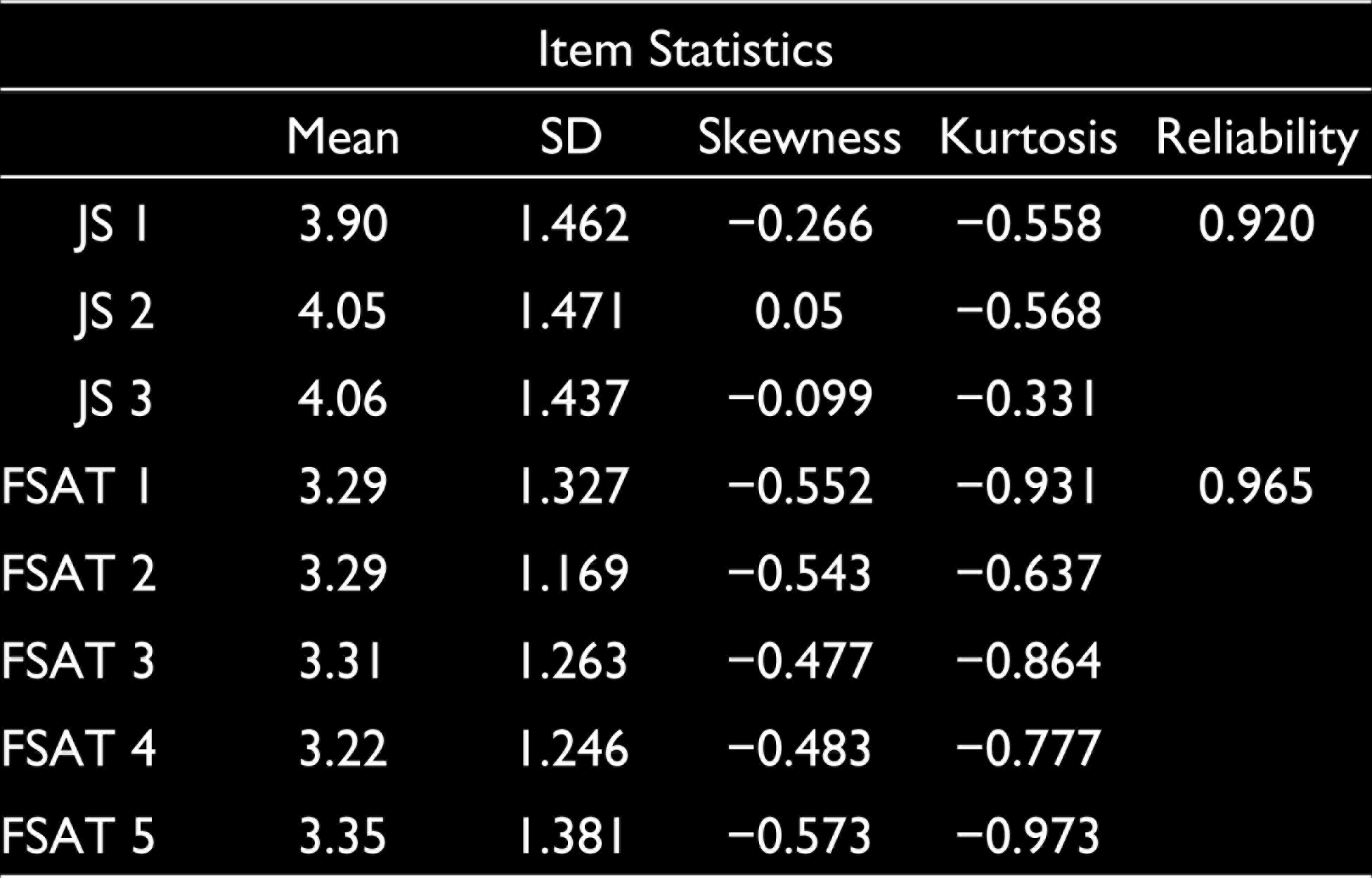
Table 1 denotes the Descriptive Analysis and Internal Consistency Estimates. Skewness and kurtosis for the data are within acceptable ranges, that is, ±2.00 (Garson, 2009). Further, the value of Cronbach’s alpha for both job satisfaction scale and family satisfaction scale was greater than 0.70 (George & Mallery, 2003). Hence, the scales are said to be having excellent internal consistency.
Descriptive Analysis and Internal Consistency Estimates
Validation of Job Satisfaction and Family Satisfaction Scale
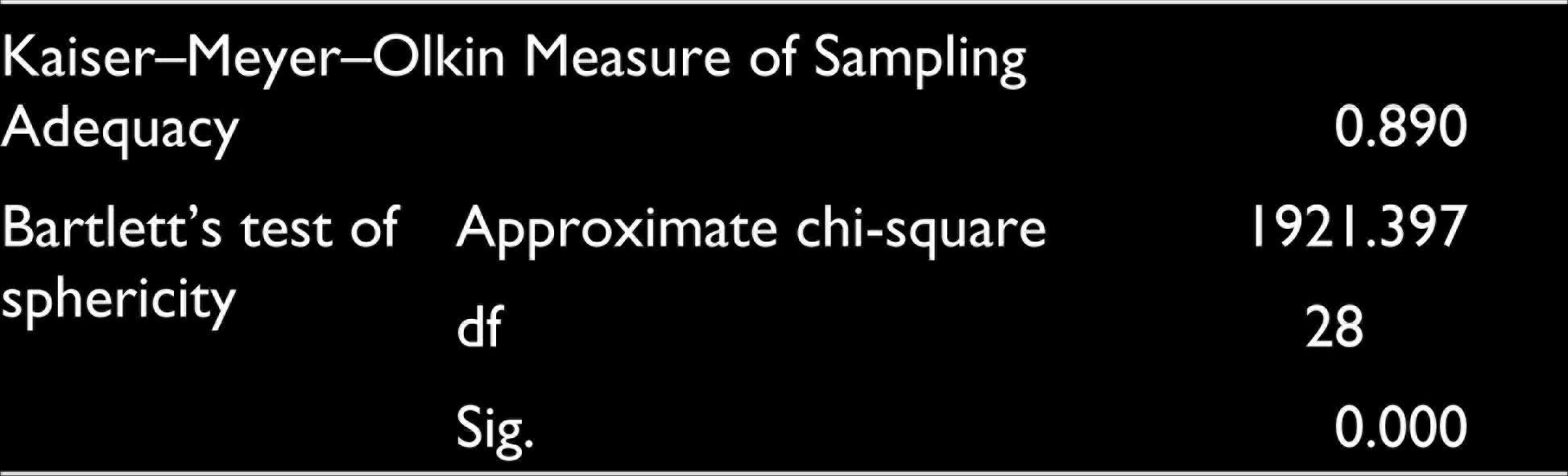
Factor analysis was done to evaluate the fundamental factor structure of job and family satisfaction scales. First, EFA was done to assess the construct validity (Ford, MacCallum, & Tait, 1986). Additionally, for preliminarily assessment of data values, Kaiser–Meyer–Olkin (KMO) and Barlett tests are used. Table 2 conveys the outcomes of the KMO and Bartlett’s test.
Multiple criteria for determining the number of factors to retain were used including eigenvalues greater than 1.0 because they account for the variance of at least a single variable and variance explained of greater than 60 per cent (Hair, Anderson, Tatham, & Black, 1998). Furthermore, only items loaded at 0.6 or higher on the intended factor were retained as they are considered to be appropriate (Hair et al., 1998). All the 8 items were entered in a single analysis. A two-factor solution accounted for 87.20 per cent of the total variance.
KMO and Bartlett’s Test
Component Matrix
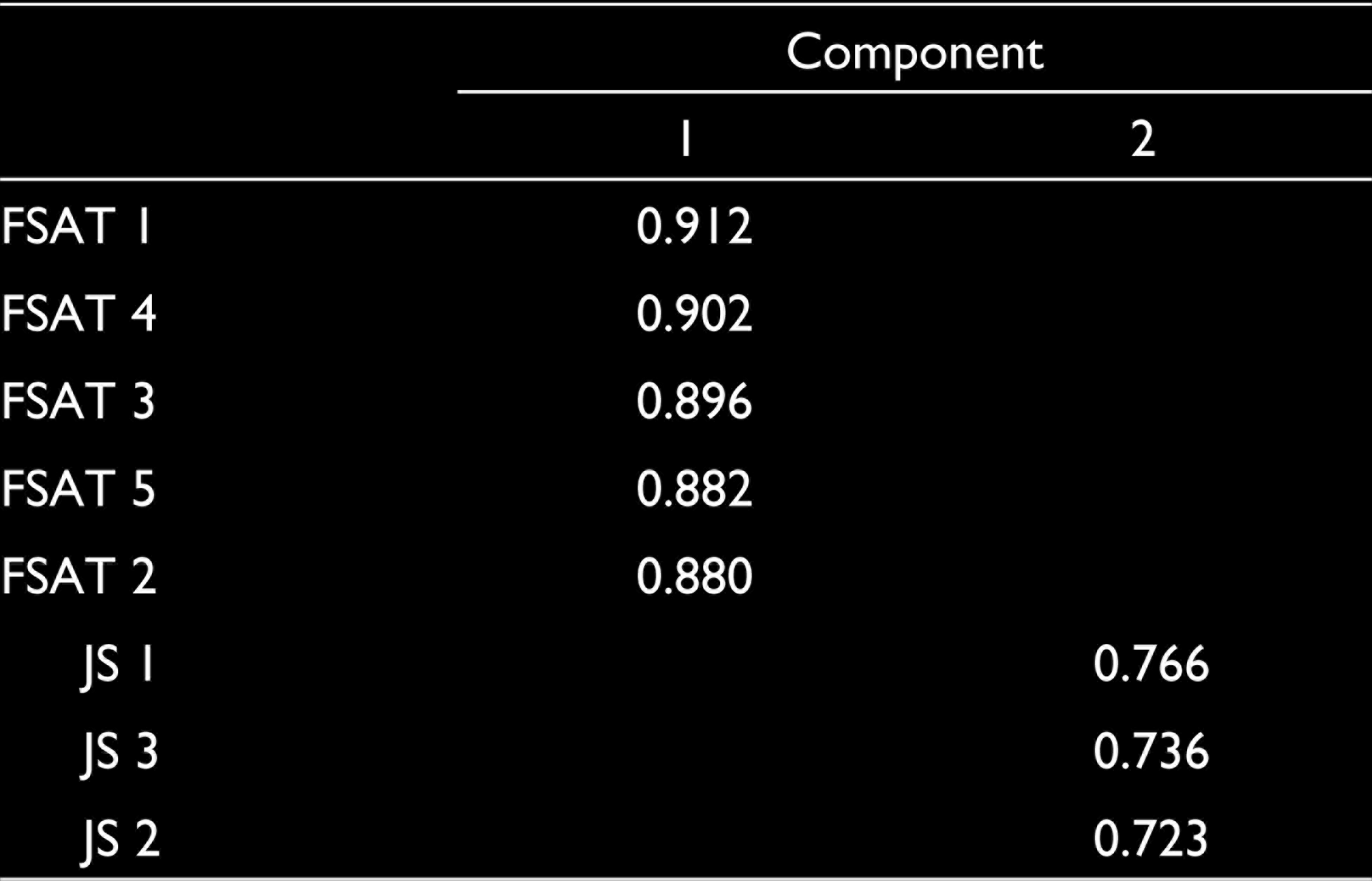
Results of EFA exhibited in Table 3 specify a 2-factor structure for job and family satisfaction. The results of EFA indicated a single factor structure for all the 3 items of job satisfaction with loadings ranging from 0.701 to 0.815, whereas for family satisfaction, a single-factor 5 items with loadings ranging from 0.912 to 0.880 emerge.
To further confirm the findings of EFA, CFA was conducted. Table 4 illustrates the CFA outcome of model fit indices for the Job satisfaction and Family Satisfaction scale. The following values are found for the different indices with regard to job satisfaction. The value of χ2 =15.913, df = 1, CMIN/df = 15.913. The values for other indices like SRMR = 0.015, RMSEA = 0.002, CFI = 0.970, NNFI = 0.911 Hence, the 3-item scale was accepted for the final analysis.
Later, the results of CFA indicate a good fit based on the model indices with regard to family satisfaction (refer Table 4). The value of χ2 = 18.602, df = 6, CMIN/df = 3.100. The other indices also result in appropriate values like SRMR = 0.0387, RMSEA = 0.004, CFI = 0.991, TLI = 0.985. The overall fit values are indicators that the single factor 5-item family satisfaction scale can be used for further analysis. Thus, the single factor structure was established.
Outcomes of Confirmatory Factor Analysis

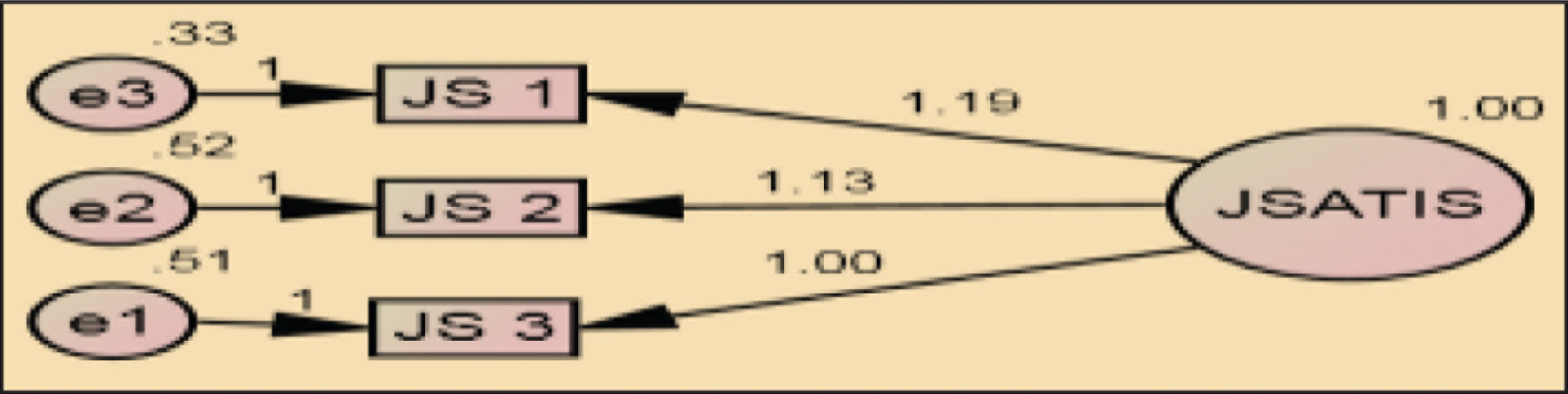
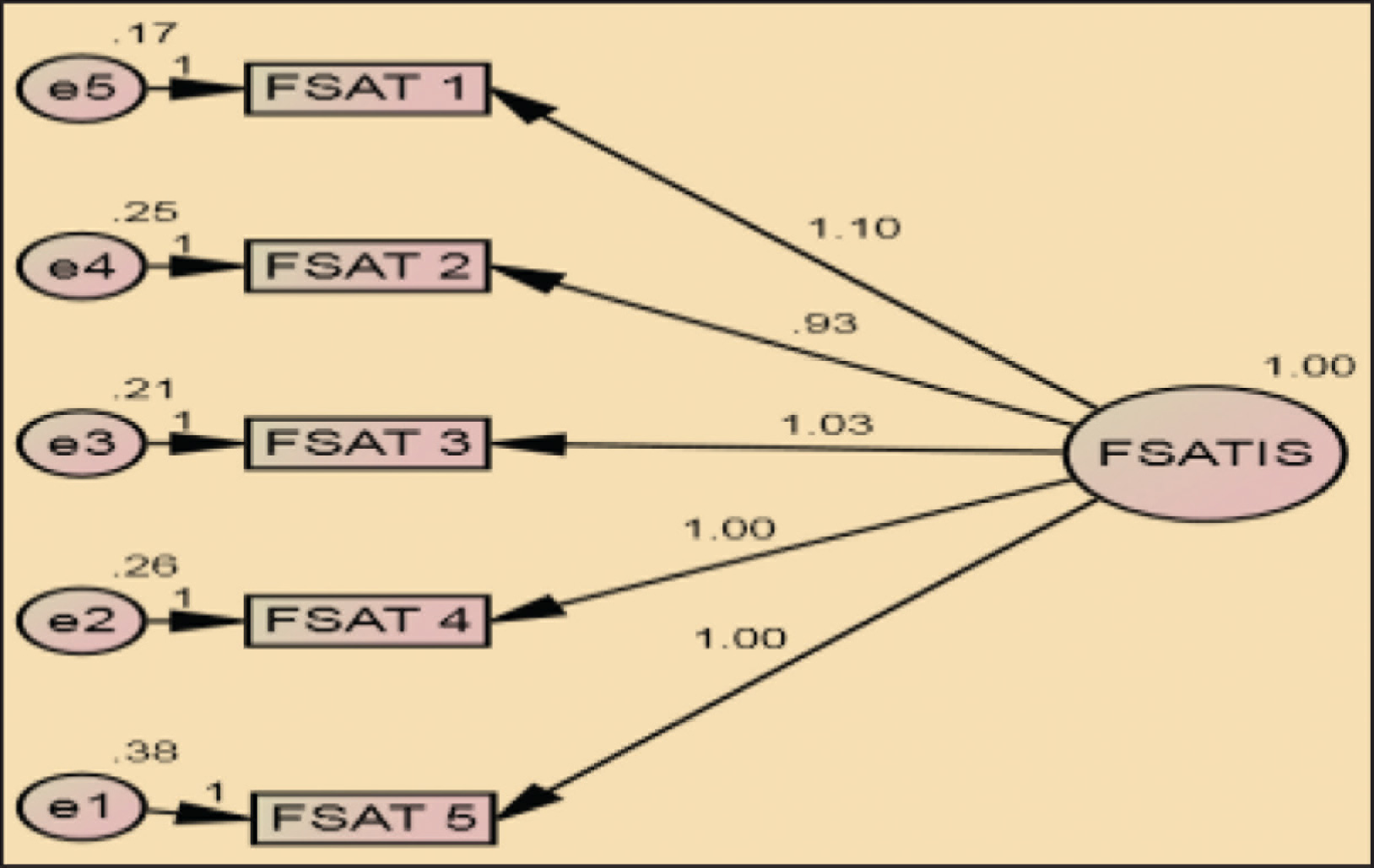
Figures 3 and 4 embody the results of CFA for Job and family satisfaction, respectively, alongside mentioned are the consequent factor loadings. Hence, a single-factor model was established in both the cases.
Table 5 depicts the demographic descriptions of the respondents.
Demographic Descriptions of the Respondents
ANOVA Analysis
ANOVA is a statistical test used to test differences between two or more means. It can be clearly observed from Table 6 that demographic variables (age, marital status, hierarchy, tenure with current organisation and annual salary) affect job satisfaction levels for the sample under study. The significance levels are gauged at 95 per cent confidence levels.
The relationship between gender and job satisfaction is not found to be significant. Gender difference in job satisfaction has been studied by several researchers (Hodson, 2002; Roxburgh, 1999; Westover, 2010). There are many studies that suggest that women have higher job satisfaction level than men (Roxburgh, 1999; Souza-Poza, 2007). This difference lies despite of having relatively lower level jobs, lesser pay, more discrimination and more stress in workplace as compared to their male counterpart (Bielby & Baron, 1986; Loprest, 1992). However there are studies that suggest no significant gender difference with job satisfaction (Collins & Helen, 2013). Hence, it is suggested that job satisfaction is independent of the gender differences.
Age is found to be significantly associated with job satisfaction (F = 6.341, p < 0.05). This aspect is supported by extensive research (Kalleberg & Loscocco, 1983; Salami, 2008) which indicates that sales employee’s on higher side of age switch to jobs which have more desirable characteristics and hence are more satisfied. Hamner and Organ (1978) suggest that when people started their jobs they have unrealistic assumptions about it and hence the level of job satisfactions is high in the beginning but when they notice reality it fall. Later with years of experience people develop accurate expectations and hence the level of job satisfaction increases again (Rao & Narayanan, 1996).
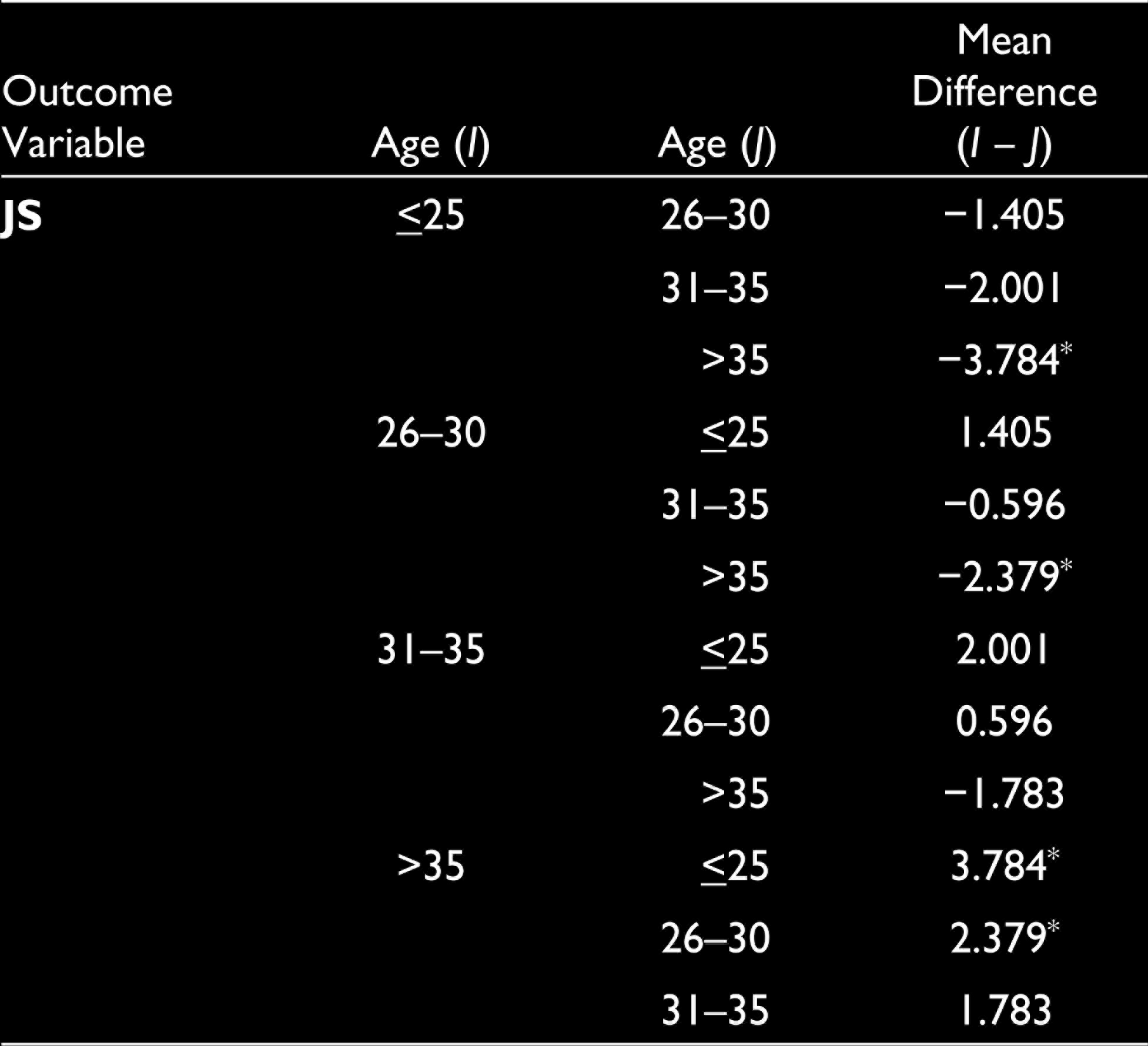
Table 7 reflects the results of Scheffe’s test wherein significance difference between age groups less than 25 and more than 35; and between less than 26–30 and more than 35 years are observed. I refer to a particular age range and J indicates the different age groups. This further confirms the belief that with age the level of job satisfaction increases.
Marital Status has shown significant association with job satisfaction (F = 4.967, p < 0.05). The result is supported by the previous studies (Dolton & Makepeace, 1987; Weaver, 1978). So it can be suggested that unmarried sales employees are less satisfied with their jobs than their married counterparts.
Job Satisfaction and Demographic Variables
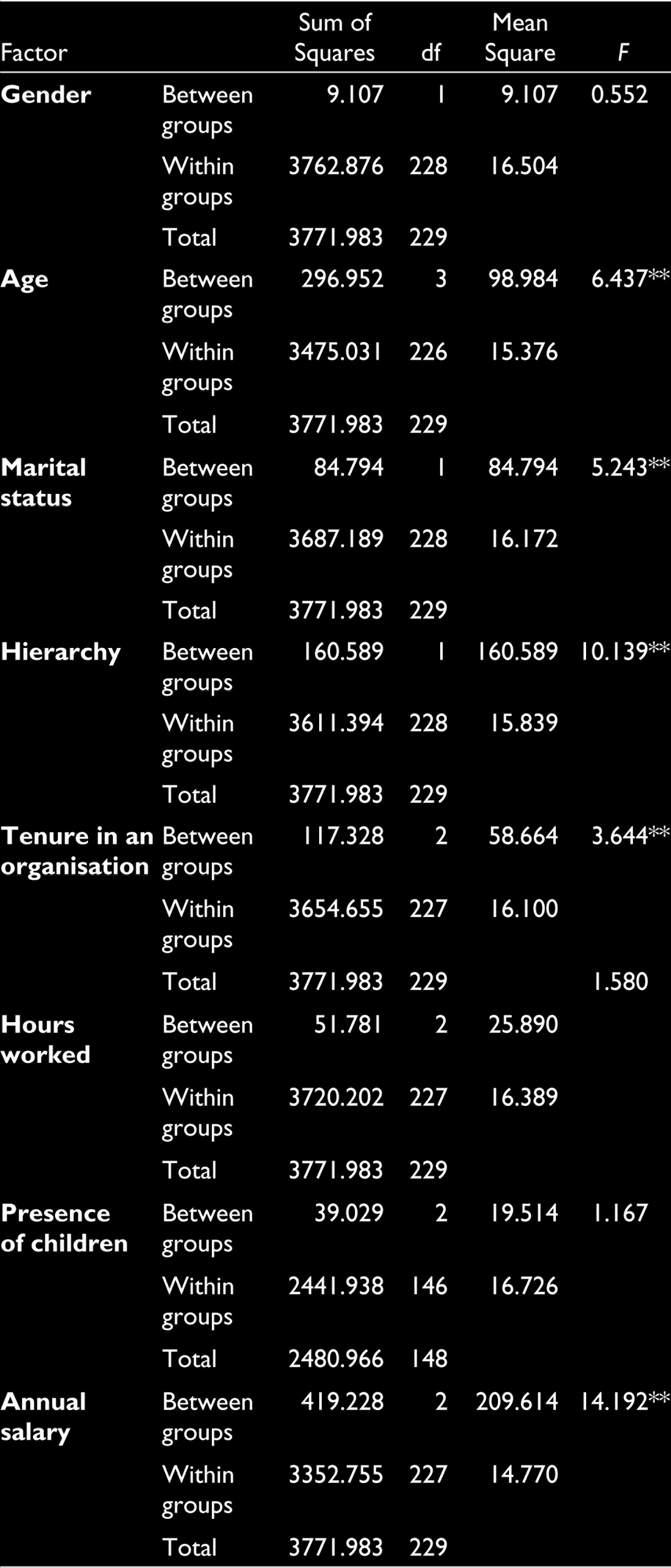
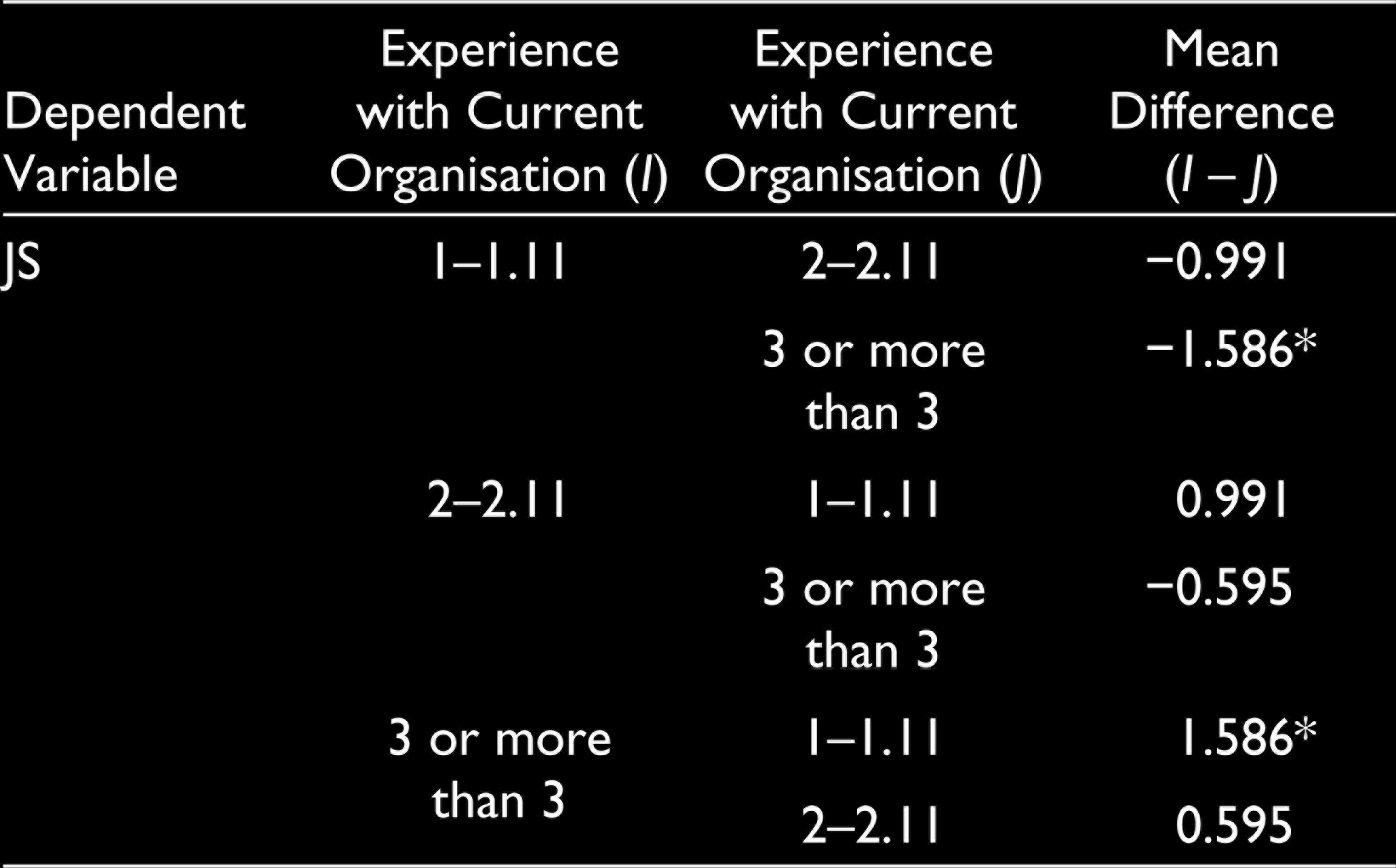
Hierarchy in an organisation, that is, whether an individual is at entry level or at middle level, and tenure in an organisation are found to be significantly associated with job satisfaction (F = 7.758, p < 0.05; F = 3.644; p < 0.05). Similar results are found by Veronique and Stephen (2006), who suggest that managerial levels and tenure have a direct positive impact on managerial performance and job satisfaction. Also, studies by Marchand (2009) and Hunter (2007) had identified that tenure is positively related with job satisfaction, that is, those who are new to a job is found to be less satisfied with the job compared to those who have experiences in doing the job. I in the present context means categorisation of salesperson according to the number of years of experience in the current organisation and J indicates all salespersons with differing experience with current organisation.
Results of Scheffe’s Test for Age
Scheffe’s Test for Tenure in an Organisation
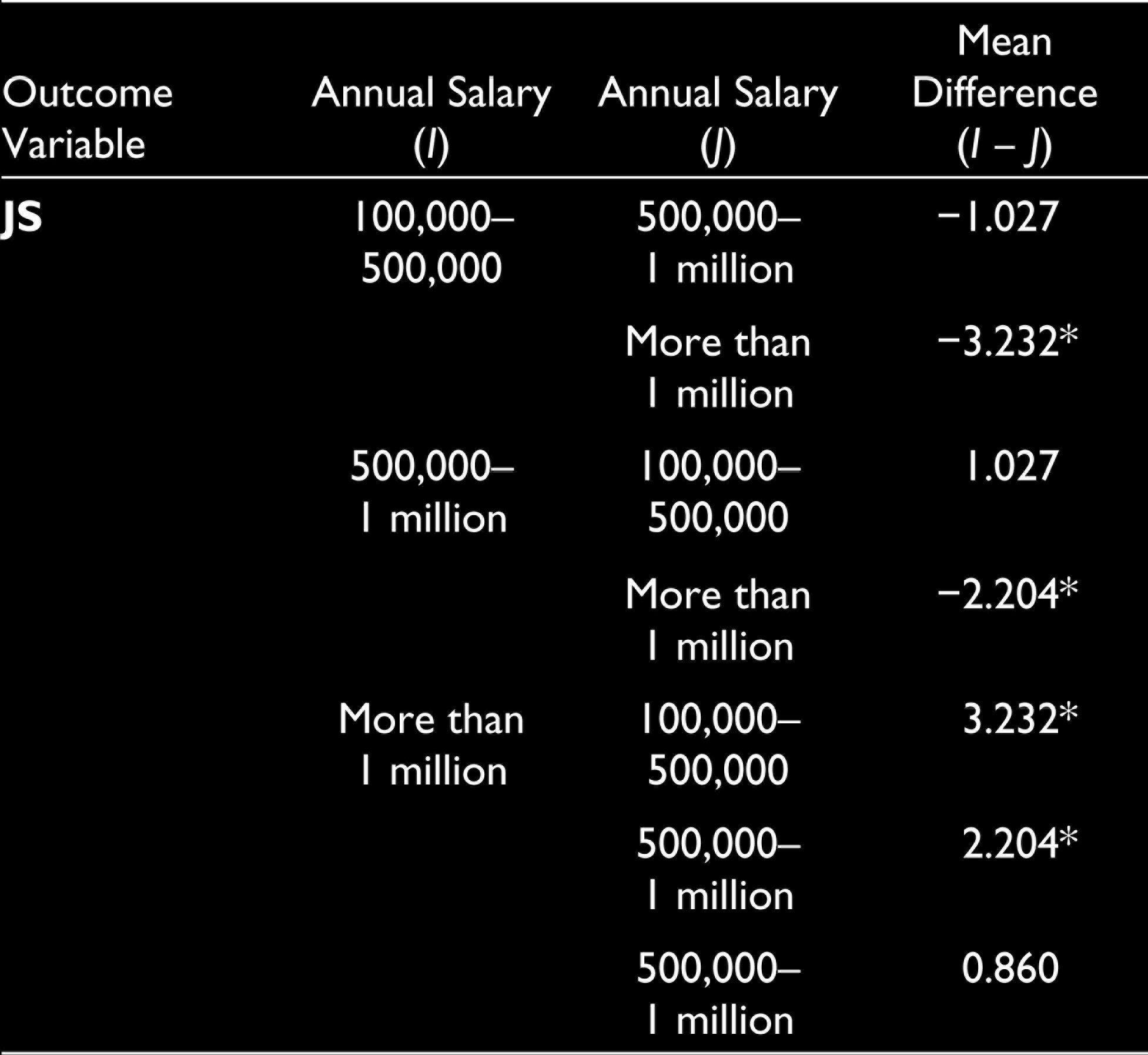
Annual household income is found to be significantly associated with job satisfaction (F = 12.045; p < 0.05). It was supported by few studies wherein it was found that increase in wage results in increasing job satisfaction (Jones & Sloane, 2009; Lydon & Chevalier, 2002). This is in sync with economic theory that suggests job satisfaction is positively dependent on salary (Vila & García-Mora, 2005). Table 9 indicates the results of Scheffe’s test for annual salary, wherein I refer to the category of salesperson according to annual salary and J indicates all categories of salespersons with differing annual salaries. Furthermore, Scheffe’s test suggests that there are significant differences in job satisfaction between employees having lower income levels vis-à-vis employees having higher income levels.
The study conducted by Demirel and Erdamar (2009) suggests that the presence of children has a significant and negative impact on job satisfaction levels. Results are supported by Frey and Eichenberger (1996) argument that responsibility of child not only consumes time of a parent but also enhances the financial liabilities too. Further the timeframe for such demands both time demands and financial resources is long lasting for the parents especially in emerging economies. Moreover, it is widely accepted that demands impact job satisfaction negatively.
Results indicate that these working hours are not found to be significantly associated with job satisfaction. Similar findings were supported by Spector et al. (2004, 2007) wherein they found no relation between working hours and job satisfaction. Furthermore, the sample primarily comprises males since males are primarily seen as bread earners. Hence, in an Indian set up and sales as a profession, the general tendency is to work for longer hours and therefore longer working hours are considered as normal for sales people.
Results of Scheffe’s Test for Annual Salary
Family Satisfaction and Demographic Variables
It can clearly be observed from Table 10 that demographic variables (age, hierarchy, presence of children and annual salary) affect family satisfaction levels for the sample under study.
Family Satisfaction and Demographic Variables
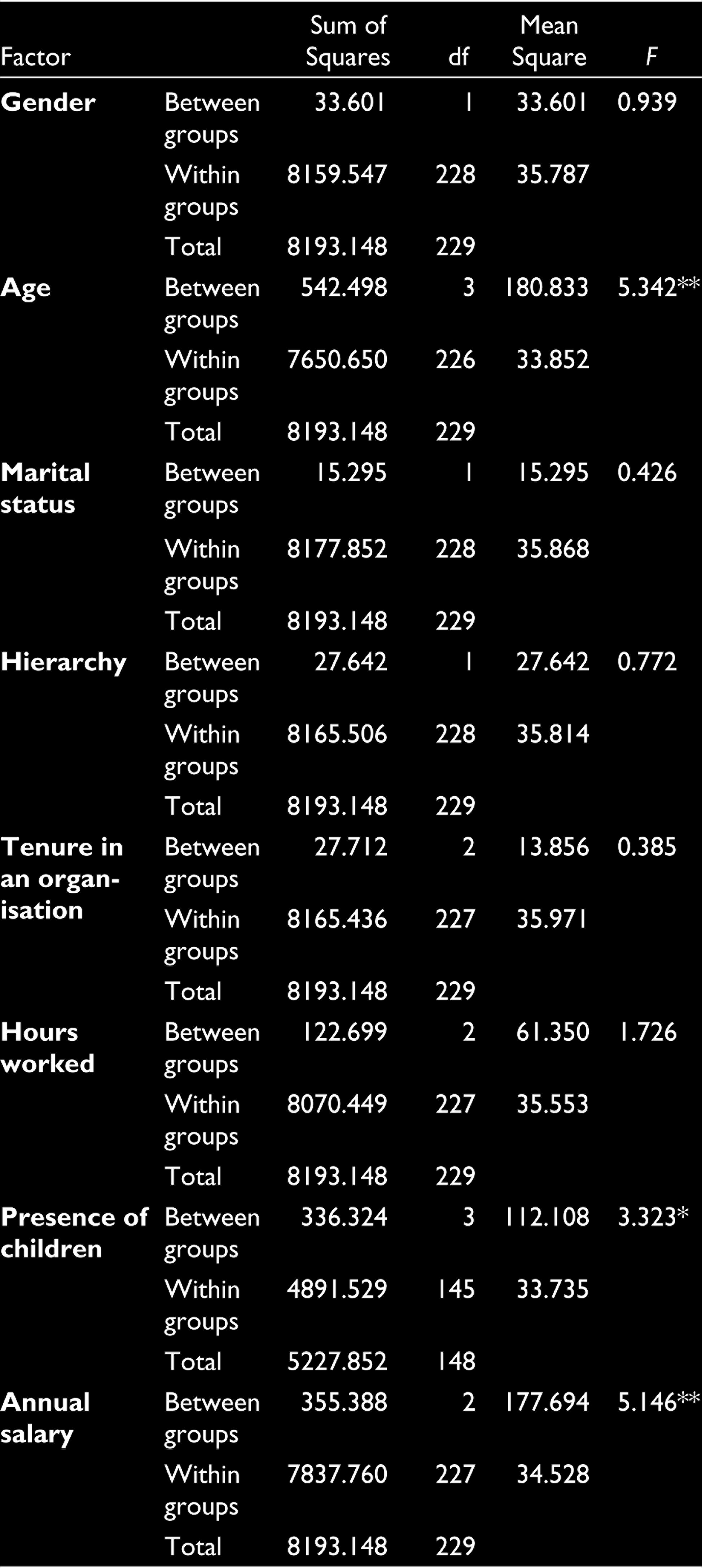
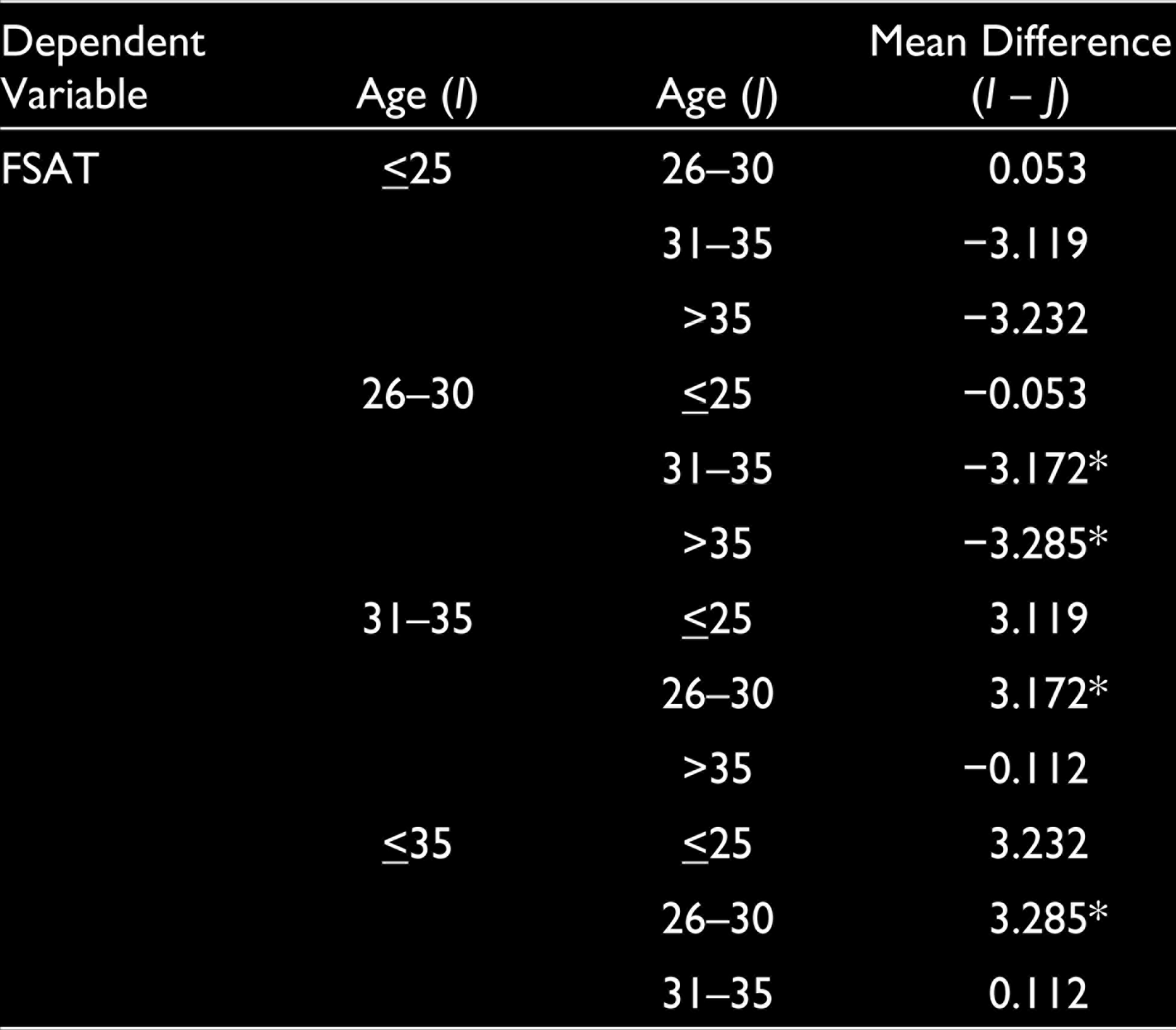
Neither Gender nor Marital status is found to be significantly associated with family satisfaction. This is one of an important finding as it suggests that individuals who are not married are equally satisfied with their family life as do married employees. However, age shows a significant relationship with family satisfaction (F = 5.342; p < 0.05). Table 11 reflects the results of post hoc analysis for age wherein I refer to a particular age range and J indicates the different age groups. The results are in sync with the study conducted by Helliwell (2001) who suggests that people below 24 years and over 44 years of age have been reported as more satisfied with their lives than young adults. Additionally, Table 11 reflects the significant differences between age groups 26–30 and more than 35 and between 26–30 and 31–35.
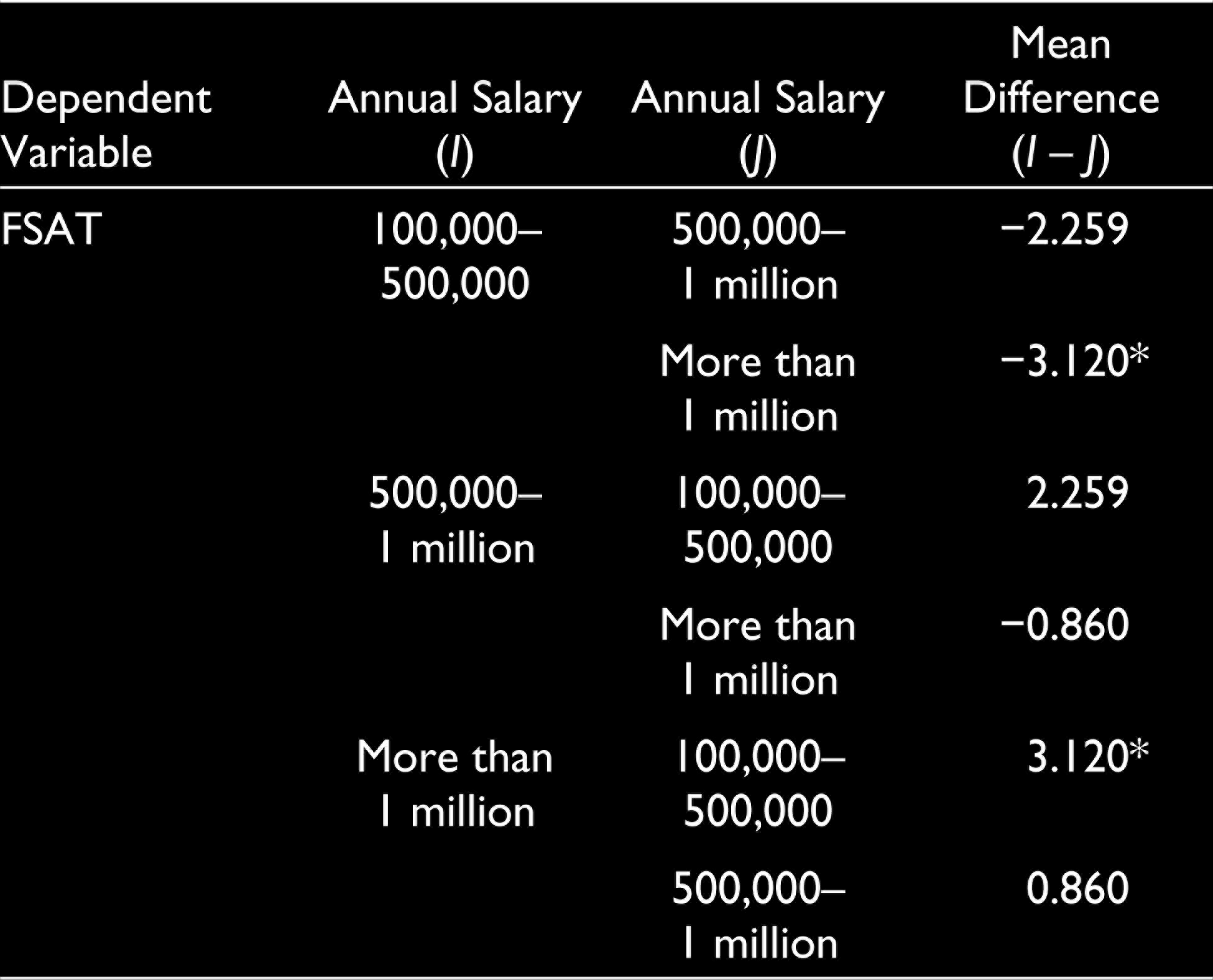
Annual salary is found to be significantly associated with family satisfaction (F = 5.146; p < 0.05). Annual income and economic status are found to be a significant predictor of life satisfaction (Blanchflower & Oswald, 2004; Delhey, 2004) and hence has an impact on family satisfaction. Table 12 indicates the results of Scheffe’s test for annual salary wherein I refer to category of salesperson according to annual salary and J indicates all categories of salespersons with differing annual salaries. The result of post hoc Scheffe’s test (refer to Table 12) indicated that there are significant difference among employees having total household salary 100,000–500,000 and those having more than 1 million. Further presence of children shows relationship with family satisfaction (F = 3.323; p < 0.05).
Results of Post Hoc Analysis for Age
Further hierarchy, experience with the current organisation, working hour’s shows insignificant results with family satisfaction. This inconsistency can be assumed to be because of the fact that the mentioned demographics are from work related domain. So it can be concluded that family satisfaction factors primarily emerge from family domain in an Indian Context for sales employees.
Results of Post Hoc Analysis for Annual Salary
Conclusions
The validation of job and family satisfaction scales was the major objective of the study. The results of the study suggested that both the scales, general job satisfaction subscale, which is part of the JDS (Hackman & Oldham, 1975) and the adapted version of Brayfield and Rothe’s (1951) established by Hennessy (2007) are suitable for assessing job and family satisfaction, respectively, in Indian context.
Additionally, the study also examined the role of individual differences in predicting job and family satisfaction in Indian context. The results suggest that there is a significant relationship of age, marital status, hierarchy, tenure in an organisation, and annual salary with regard to job satisfaction. Such results pointed towards the fact that job satisfaction is affected by both work as well as family related characteristics. However, certain contradictions were observed with regard to working hours and the presence of children. Furthermore, the sample primarily comprises of males as males are primarily seen as bread earners. So it can be inferred that the presence of children and employed spouse largely does not affect a male as they affect a female.
Annual salary, age and presence of children emerged as significant demographic variables associated with family satisfaction. However, contradictory result were observed with regard to marital status. This is one of the important findings as it suggests that individuals who are unmarried are equally satisfied with their family life as do married employees. Further hierarchy, experience with the current organisation, working hour’s shows insignificant results with family satisfaction. This inconsistency can be assumed to be because of the fact that the mentioned demographics are from work related domain. So it can be concluded that family satisfaction factors primarily emerge from family domain.
Limitation of the Study
The most evident limitation is the cross-sectional nature of the study. Additionally, the data were collected from the city of Mumbai only, which posed another limitation.
Implications of the Study
The estimation of a man’s working conditions is reflected in his attitude, of which job satisfaction is the most prominent. Further understanding of job satisfaction of sales employees is very crucial for managers in the current context as it is considered one of the factors that have a significant impact on customer satisfaction. The validation of job satisfaction scale will surely help the managers to assess the levels of satisfaction that one draws from the job.
Since key variables such as age, marital status, hierarchy, duration in an organisation and annual salary impacts job satisfaction, following key implications are important from a managerial standpoint. Hence, managers need to work on improving the satisfaction of younger employees who are joining sales as a profession. There are lots of expectation that these people have from the job, so organisation need to embrace a more flexible approach to in all aspects like recruitment, retention and training. Similarly unmarried employees are seen to have a lower job satisfaction as compared to their married counter parts. So organisations are required to have more empathic response to the needs of unmarried sales employees in terms of HR policies that gives equal weightages to both married as well as unmarried employee’s needs. In addition, the manager’s well as organisational support needs to be conducive for the needs of both younger as well as unmarried employees.
The study is the first attempt to understand family satisfaction of sales employees in Indian context. Further the family satisfaction scale validated in this study will help the organisations to gauge the satisfaction that one draws from family. This will surely support in overall understanding of an individual, as job and family satisfaction constitute overall life satisfaction. Presently, extensive research on family satisfaction is conducted in Western countries, with females as sample. It would be interesting to see the implications of family satisfaction on for male employees too in an Indian context. Also, future research can be done to understand the implications of family satisfaction on organisations.
Footnotes
Declaration of Conflicting Interests
The authors declared no potential conflicts of interest with respect to the research, authorship and/or publication of this article.
Funding
The authors received no financial support for the research, authorship and/or publication of this article.
Questionnaire
This section is concerned with the
This section is concerned with the