







Abstract
This study described the perceived implementation of human resource management (HRM) practices and staff’s demographic profile at private higher education institutions (HEIs) in the Sultanate of Oman. It further explored the relationship of staff profile and HRM dimensions. Purposive sampling was used with a 50 per cent response rate. The instrument is composed of two parts; the first part includes staff profile while second part consists of 10 HRM dimensions clustered in 36 HRM practices.
The findings revealed that all HRM dimensions were often applied and more than half of the respondents were academic staff, expatriates, male, and from affiliated, and college HEI. As to relationship, it was found that staff’s designation and residential status had high significant relationship in most of the HRM dimensions while staff’s HEI affiliation, classification and gender had high significant relationship with two HRM dimensions.
Introduction
The higher education in the Sultanate of Oman started relatively late. The first public university, Sultan Qaboos University was opened in 1986. In 2017 there were 29 private higher education institutions (HEIs) in the Sultanate supervised by Council of Higher Education through Ministry of Higher Education (MoHE). Today, private HEIs in the Sultanate face institutional accreditation by the Oman Academic Accreditation Authority (OAAA). One of the areas that the accrediting body assesses is the condition of employees in HEIs specifically the support services offered to their staff. In fact, it is the only area closely related to the people management aspect of HEI's operations.
Given the significant role of people in the strategic and operational aspect of HEIs, countless empirical investigations were conducted to determine what and how frequent are human resource management (HRM)-related practices implemented at HEIs. In Oman, there is a less state-of the-art study about HRM at HEIs. Thus, this study sought to determine the execution of HRM dimensions and to describe the profile of staff across a number of private HEIs in the Sultanate.
HRM is defined as a strategic and coherent approach to management of the organisation’s most valuable asset which is people, who individually and collectively contribute to the achievement of the organisation’s objectives (Armstrong, 2006). Therefore, the most valuable resource in education of the students is the quality of the people hired for specific assignment (Johnson & Kritsonis, 2007).
Several studies attempted to determine the best HRM practices and explored to link the institution’s performance to the implementation of HRM such as the work of Delaney et al. (1989), Pfeffer (1998), Huselid (1995), Delery and Doty (1996) and Convertino (2008). Organisations have realised that HRM’s ultimate role is ensure that human talent is used effectively and efficiently to accomplish organisational goals (Menon, 2015).
HRM Practices
Aside from HRM practices, many investigations also focused on the link between HRM practices and performance of organisation. Al-Sinawi (2016) investigated the relationship between work performance system (which included staffing, training, involvement, appraisal, compensation, performance, caring) and performance of higher learning institutions in Oman. The instrument was composed of 88 items and was constructed to assess work performance system, mediator variables and institutional performance respectively. With 531 respondents who were general managers, assistant general managers and other high-ranking administrators, Al-Sinawi found that the work performance was significantly and positively related to the institutions’ performance.
Furthermore, using structural equation model technique and a national sample of 269 human resource (HR) professionals from large US manufacturing firms, Green et al. (2006) disclosed that the direct impact of strategic HRM on organisational performance was positive and significant.
Abbas and Ahmed (2011) investigated the HRM practices in University of Punjab, Lahore. The study, which was participated by 150 faculty members, employed a descriptive method and a survey technique. The different HRM categories used in their study were recruitment and selection, orientation, training and development, performance appraisal, compensation and benefits and working environment. It revealed that correlation among all categories of HRM practices were highly significant and strong. Moreover, they found that recruitment and selection had the maximum mean score and the minimum was found to be the performance appraisal. This interprets that the former category was being executed effectively while the latter was not.
Amin et al. (2014) examined the effect of HRM practices on organisational performance of public universities in Malaysia. It was a cross-sectional study participated by 300 employees who responded to a 46-item questionnaire. It was found that recruitment, training, performance appraisal, career planning, employee participation, job definition and compensation had a significant positive impact on university performance. The study implied that if the university is to increase its performance to higher levels, it should emphasise more on job definition, training and employee participation. Likewise, Moideenkutty (2009) studied 87 private companies in Oman and found that high involvement HRM practices had positive relationship with the subjective and quantitative measure of organisational performance. Moideenkutty concluded that organisations which implement highly selective staffing, realistic training, performance management practices and employee empowerment were likely to have higher performance.
On the frequency of implementing HRM practices in private HEIs in the Philippines, Balatbat (2010) investigated how 362 tenured teaching and non-teaching personnel of four private HEIs in the Philippines perceived HRM execution. He used recruitment and placement, training and development, performance appraisal, compensation and benefits, and employee relations as bundles of HRM practices. Using validated and reliable instrument (0.920 Cronbach alpha), Balatbat found that HRM practices were implemented at a great extent in Philippine HEIs.
Exploring more of HRM practices implementation, Teir and Zhang (2016) investigated Palestinian HEIs involving 38 HR department heads and assistants. They found that 61.5% of Palestinian HEIs applied recruitment, selection and termination; 39.5% applied professional training and development; 41.6% applied appraisal and performance metrics and reviews; 38.2% applied human resource systems and technology; 51.6% applied risk management, safety and health; 58.4% implemented salary administration, 58.6% implemented employee relations; and 40.3% implemented retirement. Additionally, Teir and Zhang concluded that the wider picture of HRM in Palestinian higher education is not reflecting to positive hope for effective performance of human resources.
Staff Profile
Most of the HEIs in the Middle East region have affiliations to universities overseas. Academic affiliation is mainly characterised as a local institution’s partnership with foreign institution. These foreign institutions which are considered brands provide academic guidelines to local institutions in pursuit to design effective and efficient study programmes. As a matter of fact, MoHE encourages private HEIs to adopt this setup. In Oman, academic affiliation agreement between local HEIs and foreign universities is subject to quality assurance process under the supervision of MoHE and OAAA (ONA, 2018).
In 2011, the total labour force at private sector in Oman comprised of 1,289,000 people and 13.5% was Omani nationals while 86.4% was expatriates (Bontenbal, 2014). The presence of many foreign workers is common in Middle East countries. Furthermore, 11% of 1,289,000 workers at private sector were female while 89% was male. In academic year 2014–2015, there were 7,017 teaching staff in HEIs in the Sultanate. The percentage of Omani teaching staff in the private and public HEI was less than expatriates. Specifically, Omani teaching staff accounted for 27.4% and 19.9% in the government and private HEIs respectively. (ONA, 2016).
Research Gap
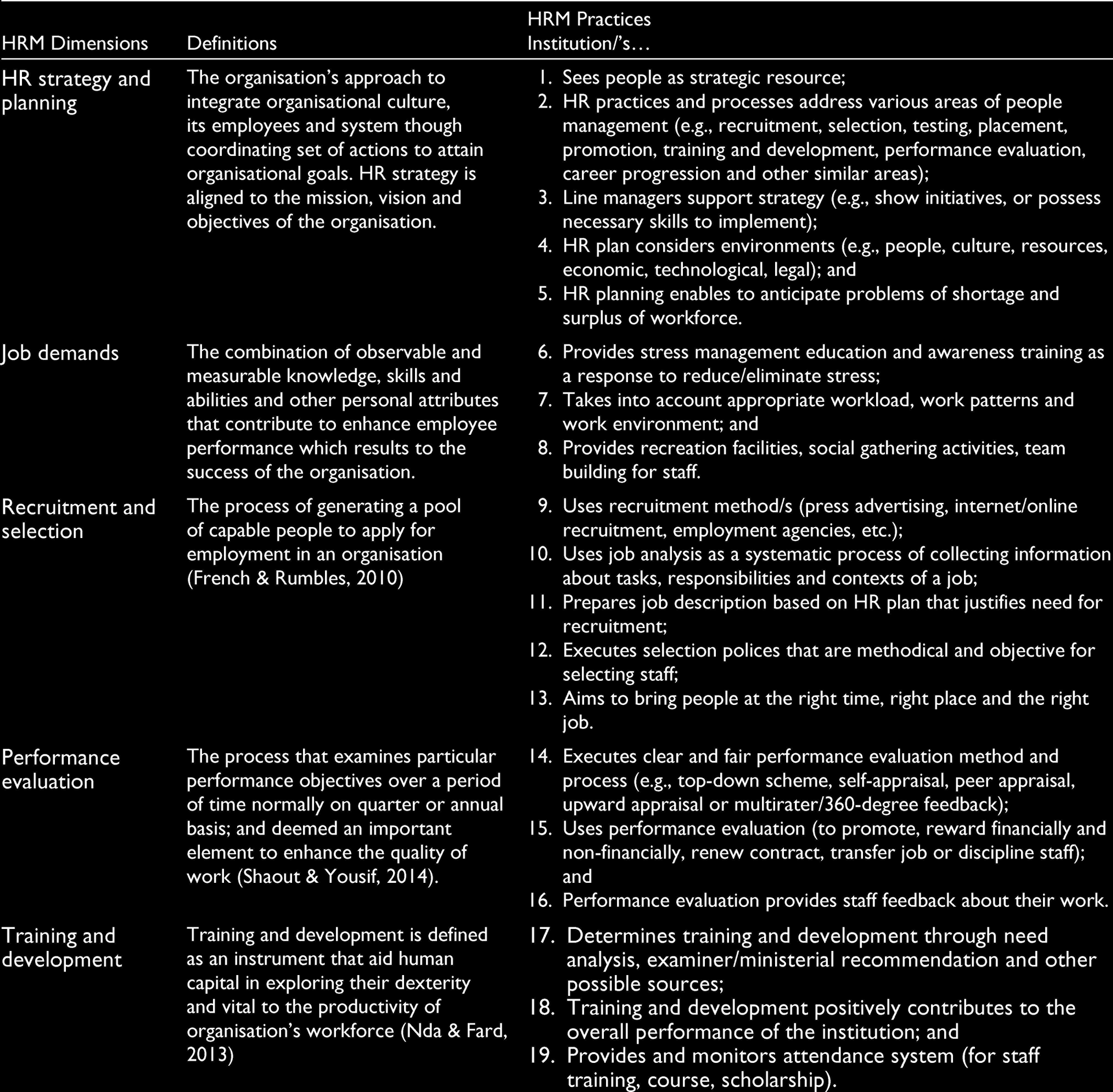
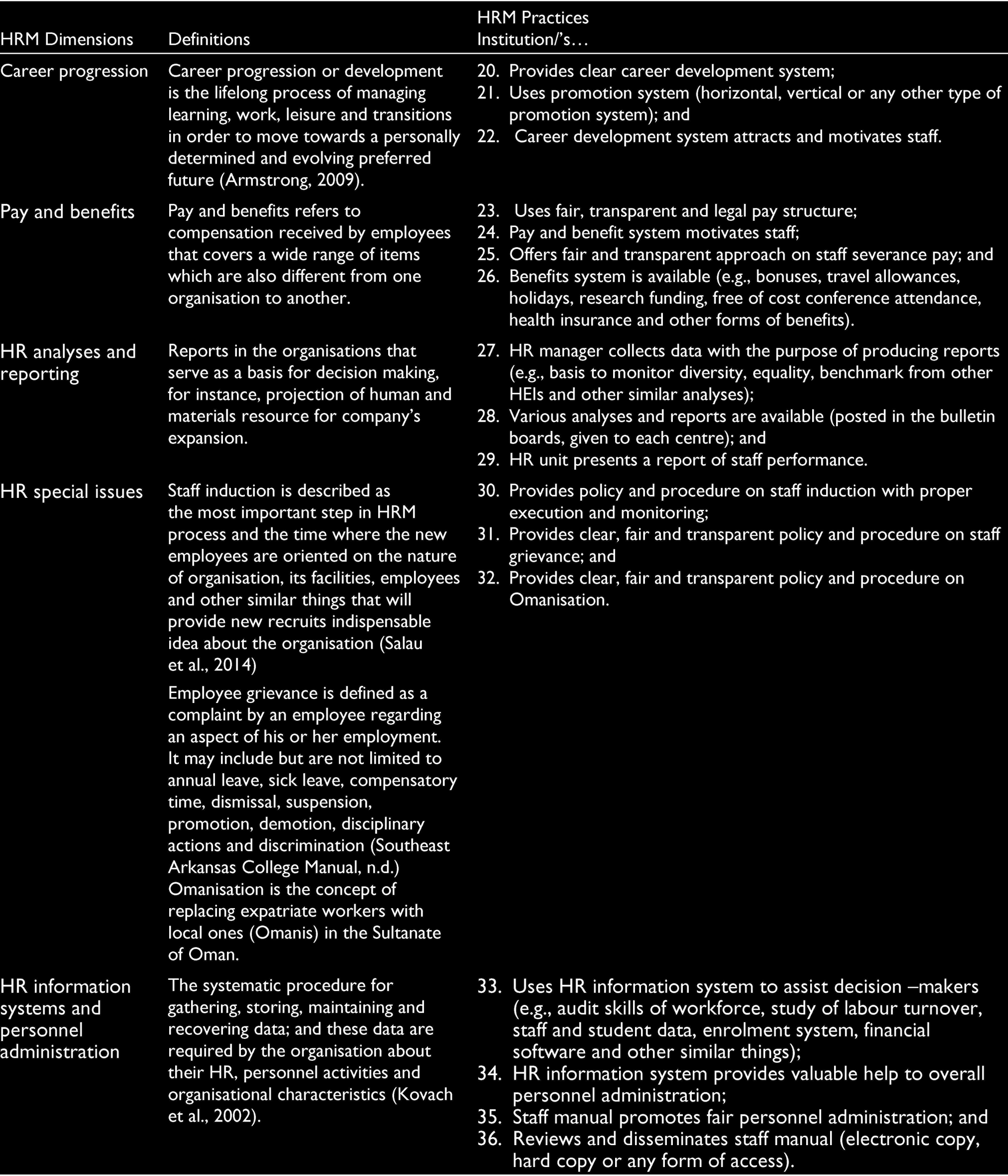
With the review of relevant HRM practices, this study aims to provide empirical investigation that concentrates on the academe. At the time of writing, this is the only HRM investigation that involved a large number of participants from different HEIs. Although there are existing HRM studies across the Sultanate, there is a high degree of variations in terms of the respondents and the research locale. For instance, the study of Aycan et al. (2007) empirically examined the influence of cultural orientations on employee preferences of HRM policies and practices in Oman from 712 employees working in six large Omani organisations. Katou et al. (2010) investigated the association between ethical beliefs, aspects of national culture and national institutions and preferences for specific HRM practices in Oman, they involved 712 respondents from private and public sectors. Moideenkutty et al. (2011) tested the relationship between high involvement HRM practices and organisational performance of 87 private companies. Al-Sinawi’s (2016) study focused on the responses of staff working at the education ministry and not mainly at HEIs. Neither of these studies were conducted at HEI nor used HRM practices in academic setting Thus, it is in this light that this study is conducted. In this study, the 10 HRM dimensions and 36 practices are described in Table 1.
HRM Dimensions and Practices
Objectives of the Study
Based on literary discussions, the objectives of the study were in three-fold. First, to determine the frequency of implementing the HRM dimensions across private HEIs. Second, to describe the profile of staff among private HEIs in the Sultanate of Oman. Lastly, to examine the relationship between staff profile and HRM dimensions.
Scope and Limitation of the Study
This study was limited to six private HEIs in the Sultanate of Oman, and the data was gathered during the first semester of AY 2018–2019. A total of 375 respondents composed of academic and administrative staff participated in the study. The HRM dimensions were based on HRM at HEIs Analytical Framework while the 36 HRM practices were sourced from relevant HRM literature. The demographic profile was composed of staff’s HEI affiliation, HEI classification, designation, residential status and gender.
Methodology
This study utilised a descriptive correlational research design. The instrument was researcher-designed and had undergone internal reliability test using Cronbach alpha and validation procedure recommended by Good and Scates (2015). The reliability test was conducted in a separate HEI participated by a number of respondents. The result of the test was 0.90 which means that the instrument was reliable to use while the validation was ‘good’ as per review by a group of HRM practitioners and researchers. The instrument’s first part contained staff profile such as HEI’s affiliation (affiliated to a foreign university or not), classification (college, university college or university), staff’s employment designation (academic or administrative), staff’s residential status (Omani or expatriate) and staff’s gender (male or female). The second part included 10 HRM dimensions clustered in 36 HRM practices. These 10 dimensions were adopted from HRM at HEIs Analytical Framework which was a modified version of HR Navigator developed by AT Adria. Every dimension had sub-items that made up HRM practices and there was average of four items on each dimension. Each of these items was constructed by the researcher through readings of relevant literature. In total, 36 items on 10 dimensions made up the second part of the questionnaire. Table 1 shows HRM Dimensions, Definitions and Practices
A four-point Likert scaling was used which was interpreted as always (3.01–4.00), often (2.01–3.00), rarely (1.01–2.00) and never (0.01–1.00). A total of 375 staff participated in the study. The staff profile was described using frequency distribution while the relationship was tested through Pearson product-moment correlation coefficient. It was used to measure the strength of a linear association between two variables: in this case, staff profile and HRM dimensions. A value of 0 indicates that there is no association between the two variables. A value greater than 0 indicates a positive association; that is, as the value of one variable increases, so does the value of the other variable. A value less than 0 indicates a negative association; that is, as the value of one variable increases, the value of the other variable decreases (Laerd Statistics, 2018). When using Pearson product-moment correlation coefficient in SPSS, the strength of the relationship is determined by referring to (**) which means highly significant (p < .01) and (*) significant (p < .05).
The researcher started the gathering of data by asking permission from MoHE. After getting the approval, the researcher brought the letter to each dean or vice chancellor of HEIs who then sent the questionnaire (in a form of link) to the staff. The data gathering lasted for two months and follow up was made to maximise the response rate. Of 767 questionnaires sent to HEIs, 375 returned hence a response rate of 50% was achieved, an acceptable rate in such research endeavour (Mugenda & Mugenda, 2003)
Results, Analysis and Discussions
HRM Dimensions and Practices
The following section reveals the implementation of HRM practices as perceived by the respondents. Each table comprises HRM dimensions with several practices, standard deviation, mean and descriptive interpretation. As per obtained standard deviation across the tables, almost all the responses were widely distributed.
HR Strategy and Planning
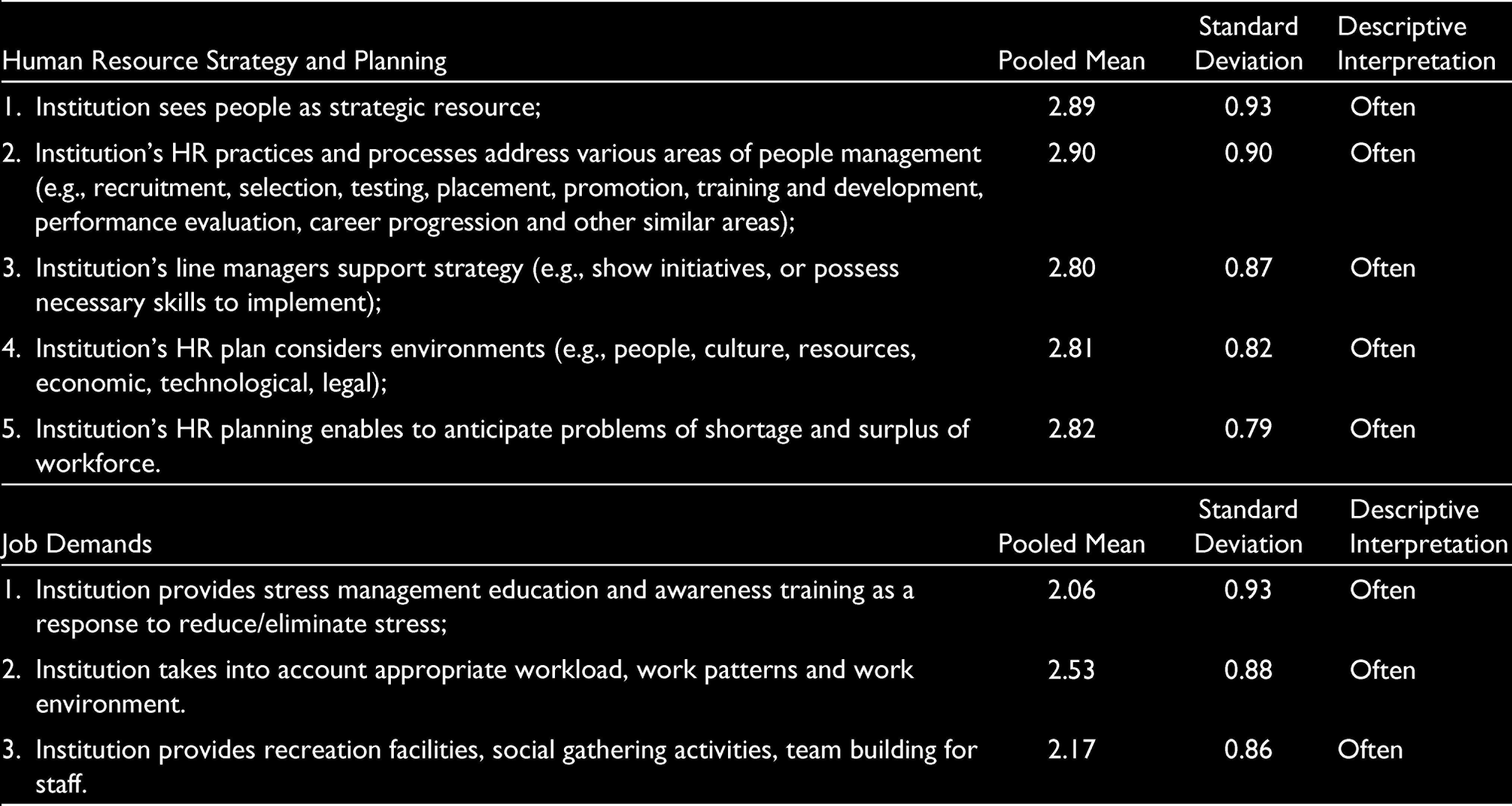
Table 2 reveals the perceived frequency of implementing the five HR strategy and planning related practices. It can be noticed that all practices under HR strategy and planning dimension were rated often applied. This implies that private HEIs take into account of strategic planning as one way of addressing various areas of people management. Hence, private HEIs in Oman support the suggestions of Chun and Evans (2013), that HR strategy should be aligned with institution’s and supported by the governing body and senior management. In addition, this condition is in line with the findings of Bodor (2011) wherein Hungarian higher education immaculately practiced formulation of HR strategy not just as a compliance to local mandate but an avenue to attain institutional goal. It also supports the findings of IRS study in 2013 of which 15% of HR time was taken up with strategic activities such as HR planning, and employee development (Pilbeam & Corbridge, 2010). Therefore, it can be said that HR strategy and planning exists at private HEIs. However, often implementation could not make HEIs complacent, there is a need to ensure that HR strategy and planning related practices are always taken into consideration by the HEIs.
Job Demands
Table 2 also shows three related practices in terms of job demands. All three practices were often applied. The result indicates that private HEIs do have effective mechanism on how to manage stress at work. The finding opposes to a tempus study that working condition is one of the problems of academic staff specifically excessive working hours, political pressure (Dubosc & Kelo, 2011) that working condition is one of the problems of academic staff specifically excessive working hours, political pressure and lack of autonomy among its HEI-members. Probably, there is now major shift on the HRM conditions of HEIs as the said study was conducted about a decade ago.
Human Resource Strategy and Planning and Job Demand Practices
Job Recruitment and Selection
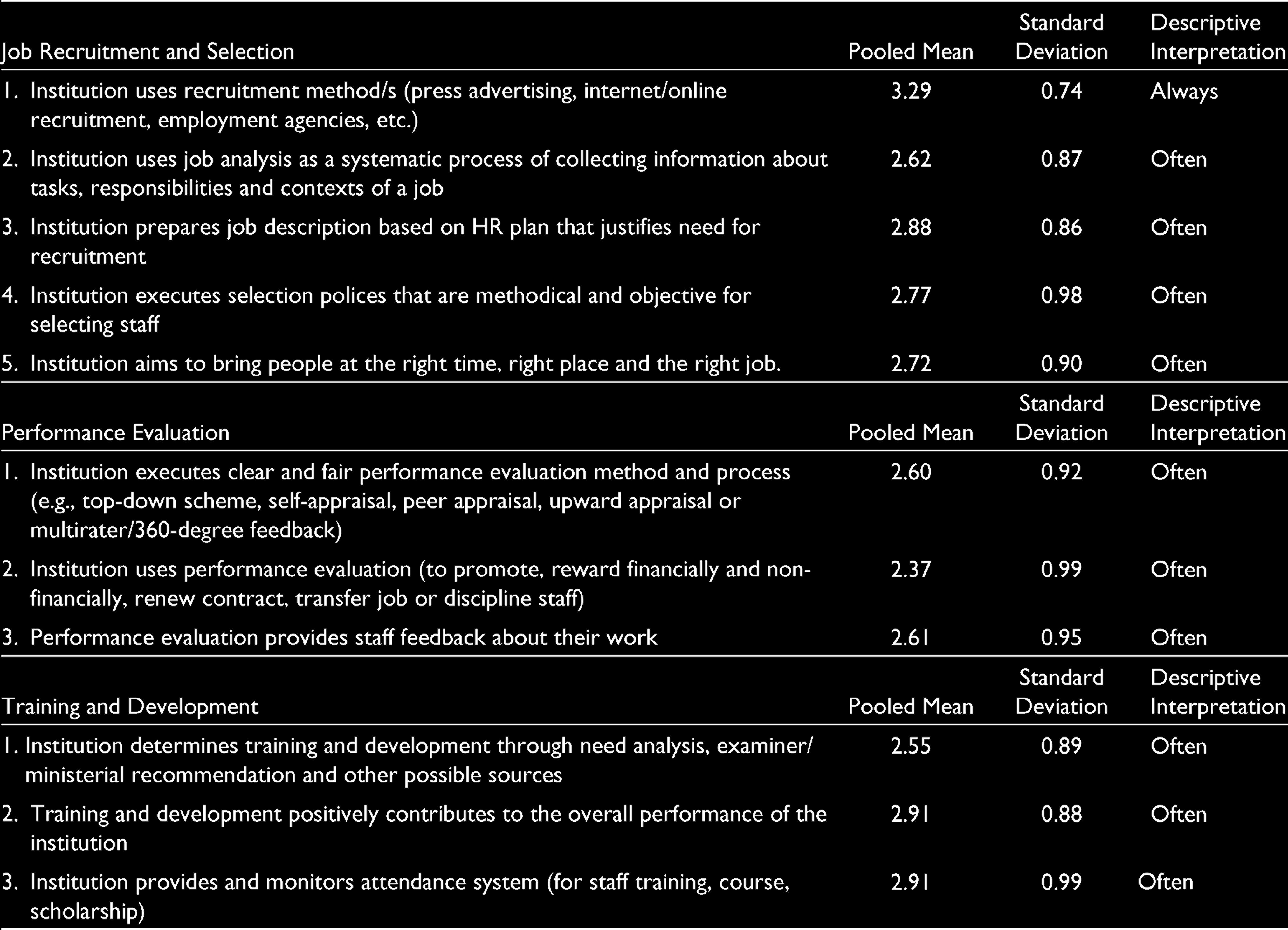
Table 3 discloses job recruitment and selection dimension, four of the practices were rated often applied while one was rated always. These practices cover the use of job analysis, job descriptions and selection policies when hiring people. Ultimately, HEIs often aim to bring the right people at the right job. This implies that there is systematic manner of job recruitment and selection among private institutions. This result contradicts to the finding of Abbas and Ahmed (2011) that internal politics was involved in selection process of employees in academia. This may not be prevalent in Oman. In addition, as most of job recruitment and selection practices were often applied, it would be safe to say that there is diversity among private HEIs. Primarily, diversity is valuing everyone as individual-valuing people as employees, customers and clients (CIPD) Exploring more of job recruitment and selection dimension, one particular practice was rated always applied which is the use of recruitment methods when hiring people. This result supports the findings of CIPD in 2009 which mentioned that 78% of 750 businesses used their own website to recruit, 76% used employment agencies while the use of local press adverts gained 70% (French & Rumbles, 2010). It indicates too that there is prescribed method that HEIs employ in recruitment and selection. Overall, the findings on job recruitment and selection practices imply that private HEIs in the Sultanate have fair and systematic system of recruitment and selection, unlike its neighbour country, Saudi universities’ recruitment and selection process was largely inadequate and needs effective attention (Allui & Sahni, 2016).
Performance Evaluation
Table 3 reveals the results of performance evaluation, all the three practices were rated often applied. The performance evaluation at private HEIs in Oman is often clear and fair, often used to evaluate performance and often provides staff feedback about their work. A similar finding was presented by Abbas and Ahmed (2011) who revealed that performance evaluation was regularly conducted in a university in Pakistan and staff found it somewhat satisfactory; however, they perceived that it was not done properly. On the other hand, staff and faculty at Saudi universities perceived that performance indicators were not shared to them (Allui & Sahni, 2016). As a result, the quality of performance that staff should reach was ambiguous. With the different results about the execution of performance evaluation, HEIs must be reminded that performance evaluation should be designed and used to provide staff positive and constructive ideas on how to improve their work (Dubosc & Kelo, 2011). Therefore, private HEIs in Oman could enhance their staff performance by using clear and fair staff feedback mechanism.
Job Recruitment and Selection, Performance Evaluation and Training and Development Practices
Training and Development
In terms of training and development, Table 3 discloses that all three related practices were rated often applied. Specifically, private HEIs often determine training and development by need analysis and though recommendation from other sources. Also, HEIs often provide and monitor attendance system of its training; and training and development positively contributes to the overall performance of the institutions. This indicates that private HEIs across Oman understand the importance of training and development and they take into consideration of stakeholders such as education ministry and other internal and external sources. Contrary to this finding, Teir and Zhang (2016) found that that most Palestinian HEI did not highly invest in programmes for professional training development. The variations of findings could be attributed to financial capacity of HEIs to support training and development activities. Probably, private HEIs in Oman judiciously allocate more resources to improve their staff performance compared to Palestinian institutions.
Career Progression
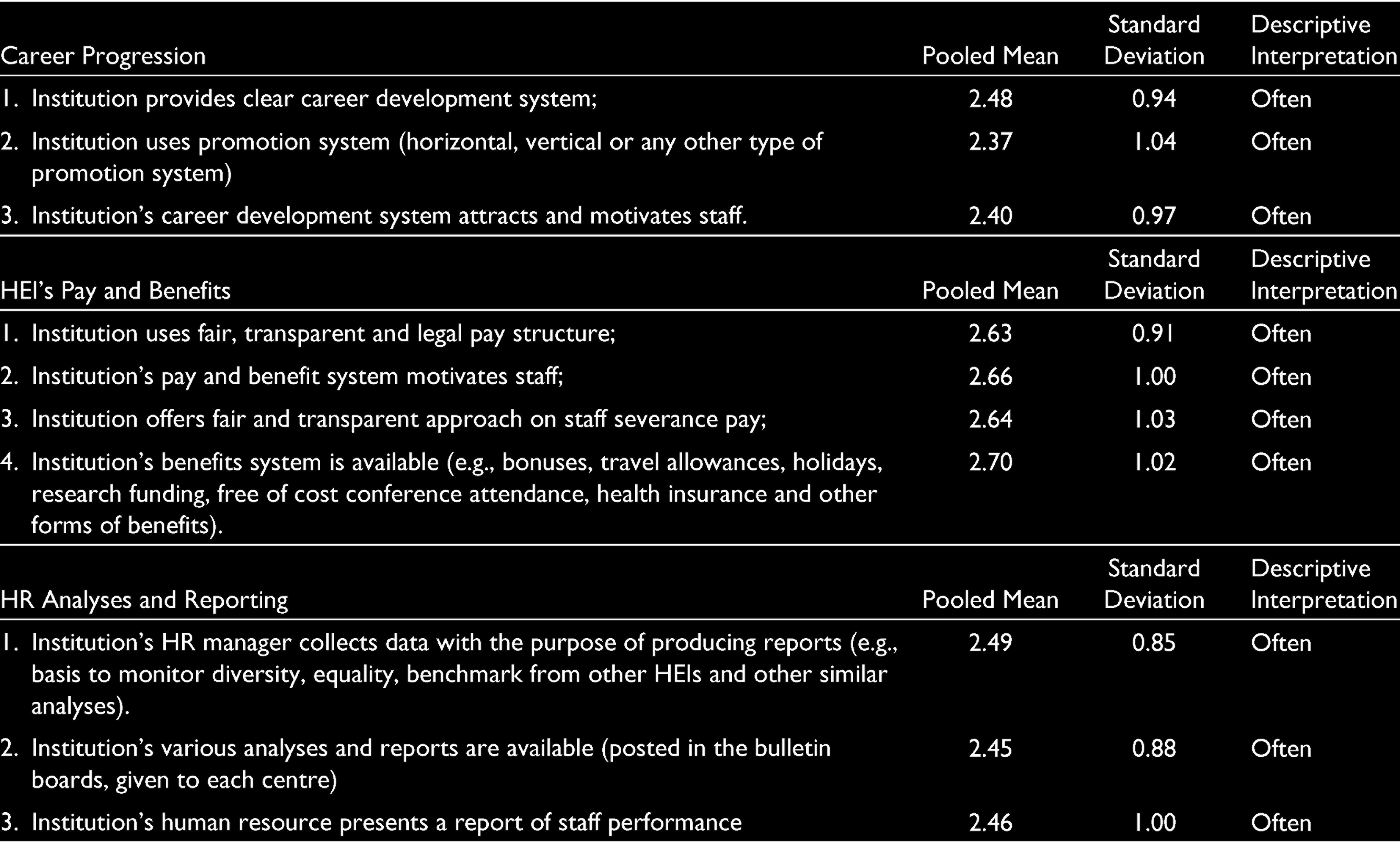
Table 4 shows the frequency of implementing career progression related practices. The results show that all three practices were rated often applied, contradictory to the findings of a tempus study wherein there was lack of progression prospects and insufficient motivation and incentives in its public institutions (Dubosc & Kelo, 2011). Probably, the disparity of results may be due to nature of organisation as the HEIs participated are private and public. This is an important matter that has to take into account, given that career planning contributes to the performance of a university (Amin et al., 2014).
HEI’s Pay and Benefits
When it comes to pay and benefits across private HEIs in Oman, Table 4 shows that all related practices under this dimension were rated often applied. This connotes that private HEIs have appropriate compensation system. This is not surprising since majority of the staff are expatriates; it is commonly observed that foreign workers tend to gain better financial benefits abroad than working locally. As described by Shields et al. (2015) the nature and significance of benefits vary from country to country, role to role, organisation to organisation and person to person. The flock of expatriate workers can be attributed to the financial benefits offered by foreign employers.
Career Progression, HEI’s Pay and Benefits, and HR Analyses and Reporting Practices
HR Analyses and Reporting
As to HR analyses and reporting dimension, Table 4 shows three related practices were rated often applied. Specifically, private HEIs in Oman often produce various analyses and reports, the HR manager at institution often collects data as form of report and often presents a report of staff performance. This result implies that either the HR manager or the institution in general makes use of its data to prepare reports and disseminate it among the staff. A study involving 400 organisations showed that 60% of companies was still stuck building credible operational reports (Bersin by Deloitte Research Team, 2013). With the results, there is a good indication that HEIs in the Sultanate are far better than other organisations. However, the analyses and reports can be best utilised if the execution of HRM practices is on a regular basis than often per se.
HR Special Issues
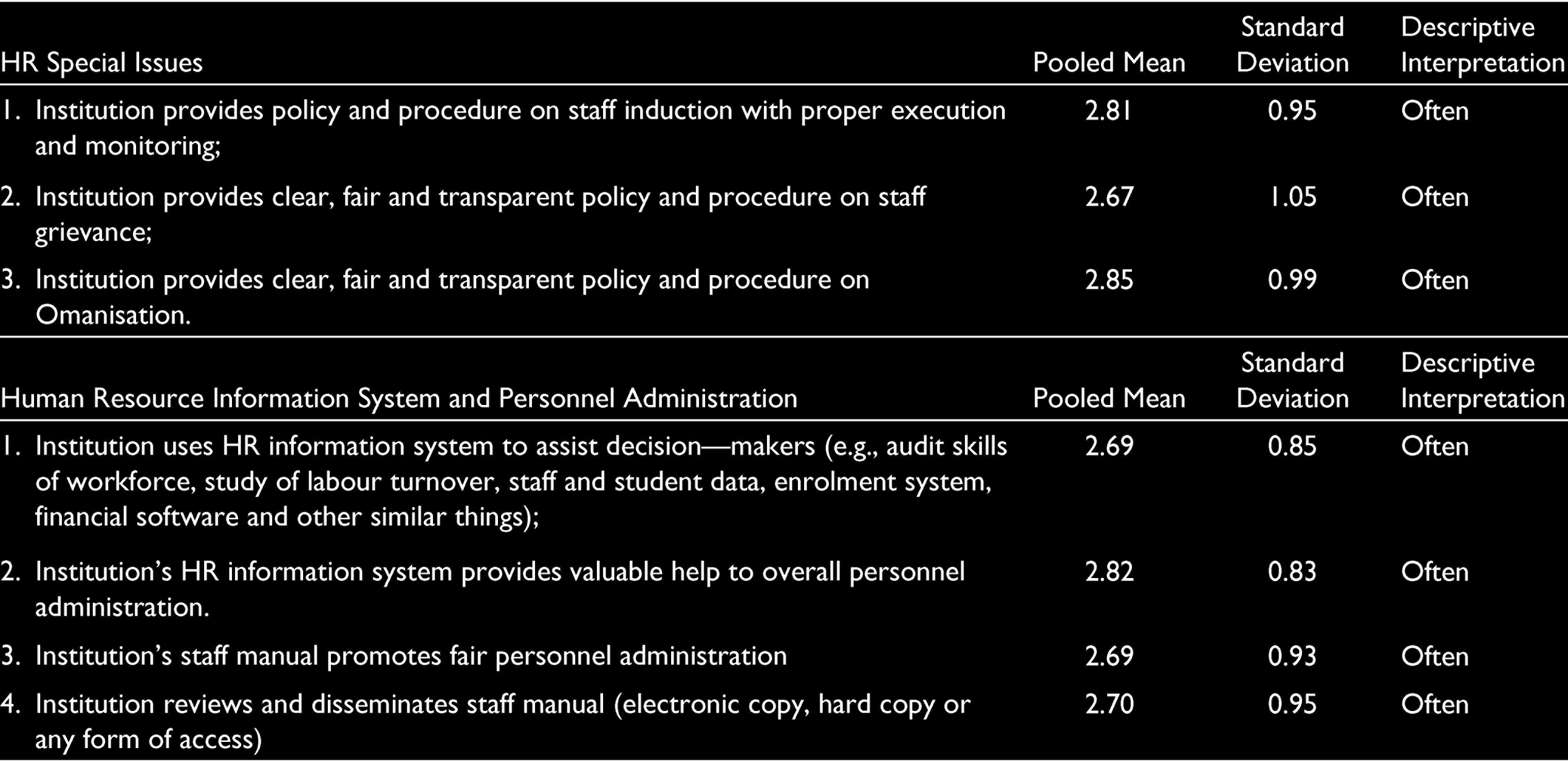
Table 5 shows the last two HR dimensions which are HR special issues and HR information system and personnel administration practices. The HR special issue dimension was composed of three mutually exclusive practices. All the three practices on HR special issues were rated often applied.
Staff induction was often executed and monitored at private HEIs. This practice helps institutions retain their staff. Salau et al. (2014) revealed that induction significantly influenced staff attitude and behaviour towards retention and effectiveness. Moreover, formal staff induction was one of the high-performance work systems (Thompson & Heron, 2005). In terms of staff grievance, it was found that clear, fair and transparent policy and procedures were often applied at private HEIs. This describes that HEIs have system on dealing with grievance, a good indication of diplomacy across the institutions. As to Omanisation, it was found that often, local workers are given opportunities to be part of private HEI. With this finding, there is a huge opportunity that the Omani nationals, will, in the longer term, promote efficiency and effectiveness in both the public and the private sectors (Al-Hamadi et al., 2007).
HR Information System and Personnel Administration
In terms of HR information system and personnel administration practices, Table 5 discloses that four practices were rated often applied. Specifically, private HEIs in Oman often use HR information system to assist decisions and provide help to personnel management. This supports the view of Kundu and Kadian (2012) that HR information system can be used to support strategic decision making, evaluate policies or support daily operating concerns. This implies integration of HR information system on personnel administration at private HEIs in Oman. When it comes to the last two practices under this dimension, the findings reveal that HEIs staff manual aims fair personnel administration and is being reviewed and disseminated to staff. This indicates that basically, there is staff manual available at private HEIs and this is being used in personnel administration. Furthermore, the finding implies that HR information system in general has room for private HEIs’ HRM.
HR Special Issues and HR Information System and Personnel Administration Practices
Summary of HRM Dimensions
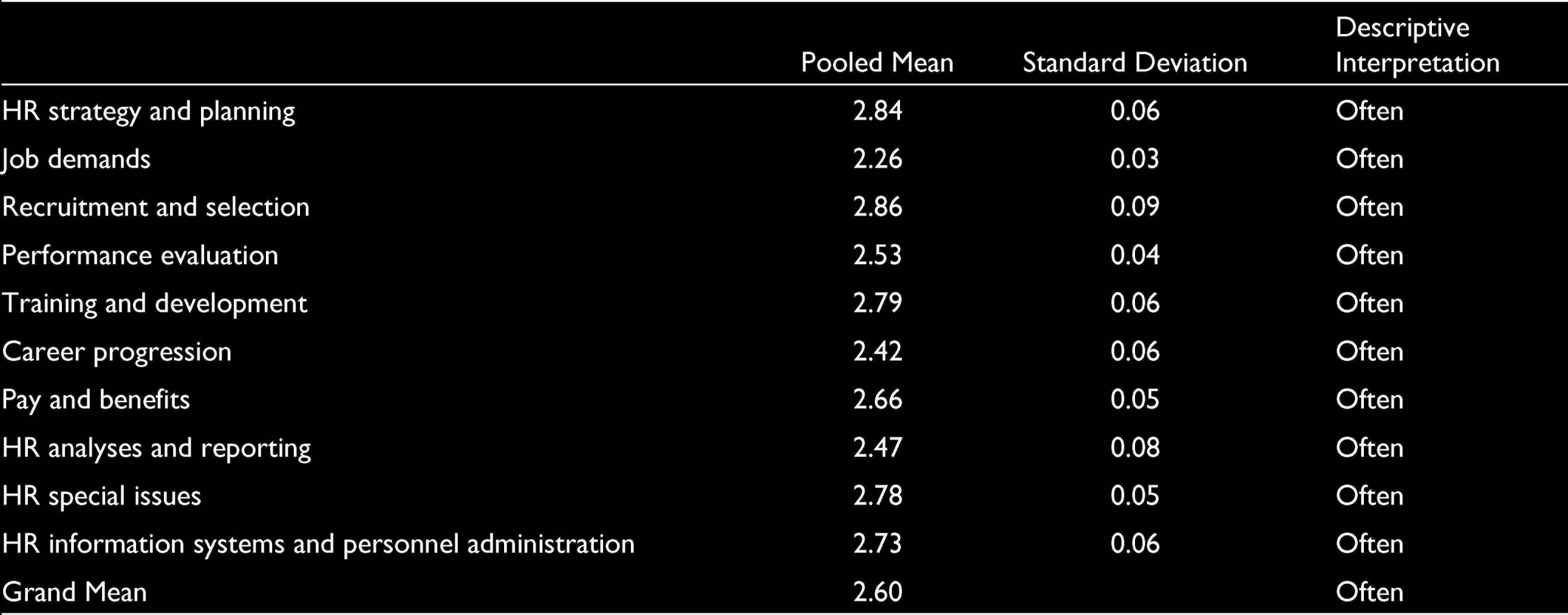
Table 6 discloses the summary of HRM dimensions among the private HEIs in Oman. It shows the pooled mean, standard deviations, descriptive interpretation and grand mean of the 10 HRM dimensions. Overall, it reveals that the execution of HRM dimensions were perceived as often applied at private HEIs in the Sultanate with a grand mean of 2.60. Therefore, there is statistical evidence that private HEIs in Oman execute HRM practices oftentimes. This supports the findings of Jasmine (2018) where the implementation of HRM practices is found to have moderate level at selected colleges in India and to the findings of Balatbat (2010) where employees perceived that HRM practices were implemented at a great extent in the Philippine private institutions.
On the other hand, none of the dimensions were rated always, rarely and never. The finding implies that private HEIs, on average (given the grand mean score), recognised that the ultimate function of HRM is to address and cater the needs of its people. However, often implementation of HRM dimension does not provide guarantee that private HEIs no longer need a room for improvement, there needs to evolve from often to always, so to ensure that HRM practices are taken into account, on a regular basis. In addition, the absence of ‘rare’ and ‘never’ ratings indicates that HRM practices have been in place, there is only a need to improve the execution. In general, the result provides an insight to the management and HR practitioner to exercise these practices as strategic tool for superior performance (Khan, 2010).
Staff Profile
Staff’ HEI Affiliation
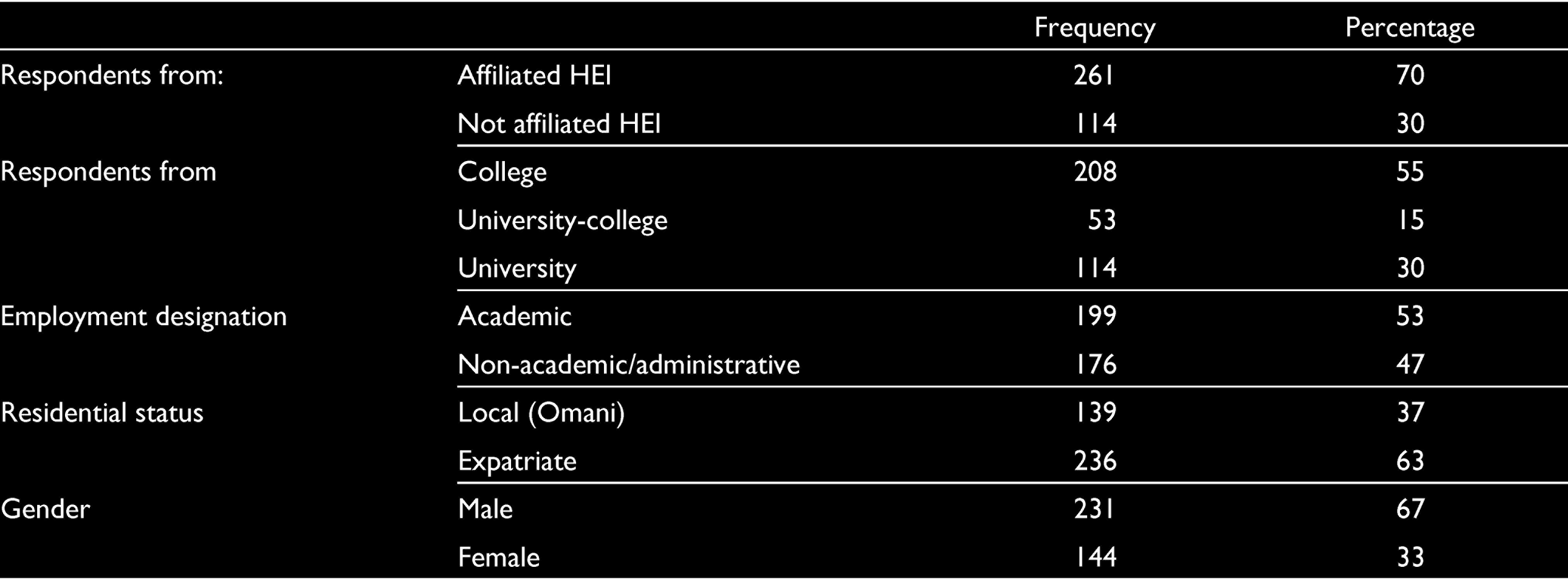
As to respondent’s HEI affiiation, Table 7 discloses that 261 respondents or 70% was from affiliated HEIs while the remaining 114 or 30% was from HEIs that are not affiliated. This means that responses are monopolised by staff who are from affiliated institutions. Probably, it is due to education ministry’s recommendation to make partnership with foreign academic institutions. As a matter of fact, Al’Abri (2016) identified affiliation as the most significant impact of the interaction between the Omani and regional/global contexts with regard to higher education policy. Thus, academic affiliation has been an avenue to promote ‘branded’ education through partnership with foreign HEIs.
HRM Dimensions
Demographic Profile of Respondents (n = 375)
Staff’s HEI Classification
In terms of respondent’s HEI classification, 55% of the respondents were from college while 15% was from university-college. The remaining 30% was from university. This indicates that college is the most common classification of private HEIs in Oman. This distribution is widespread in the Sultanate. Majority of the private HEIs are college while a small portion is a mix of university and university-college (National Centre for Statistics and Information, 2016).
Employment Designation
In terms of employment classification, Table 7 shows that more than half (53%) of the respondents were academic while the rest (47%) were non-academic/ administrative. Primarily, academic staff are those who are teaching in full time otherwise classified as administrative such as administrators, deans, unit managers and faculty heads. This finding implies that almost equal distribution of academic and administrative staff exists among private HEIs. The finding was similar to Balatbat (2010) where 56% of employees in private HEIs in the Philippines were on teaching while the remaining 44% were on non-teaching. Probably, this is a usual setup among private HEIs.
Residential Status
As to residential status, some of the respondents (37%) were Omanis while the majority (63%) were expatriates. Hence, private HEIs are dominated by foreign workers. This finding strengthens the initial result in terms of employment classification, as there were more academic than non-academic. As a consequence, it can be said that majority of academic staff are expatriates. The same goes true in terms of residential status, most of the academic staff are expatriates. Seemingly, there is domination of expatriates in private HEIs. This finding is in line with Bontenbal (2014) who found that expatriates led the employment at private organisations in the Sultanate.
Gender
As to gender, 67% was male while the 33% was female. It denotes that women are underrepresented at private HEIs in Oman. It is similar to the result of Abbas and Ahmed (2011) of which 64% of the staff was male while the remaining was female staff in one of the universities in Pakistan. However, it contradicts to Balatbat (2010) who found that female employees outnumbered male staff in private HEIs in the Philippines. In this case, employment of male and female can be associated with culture or preference.
Relationship of Staff Profile and HRM Dimensions
Table 8 reveals the relationship of staff profile and HRM practices. Specifically, there were 5 staff profile variables and 10 different HRM dimensions that were tested using Pearson product-moment correlation coefficient.
Relationship of Staff Profile and HRM Dimensions

Staff's Affiliation and HRM Practices
In terms of staff’s HEI affiliation, it was found to have positive significant relationship with two HR dimensions which were training and development (0.127*) and pay and benefits (0.226**). HEIs that have no affiliation were more frequent to execute training and development and pay and benefits practices. Specifically, unaffiliated HEIs have more freedom to exercise and execute HR practices in terms of training and development and pay and benefits. Probably, these institutions are not directly influenced by the HR policies of foreign affiliates. As of this writing, there seems to be lack of available study about the relationship of HEI affiliation and training and development and pay and benefits.
Aside from training and development and pay and benefits, no other dimensions were found to have significant relationship with staff’s HEI affiliation.
Staff's Classification and HRM Practices
In terms of classification of staff’s HEI, it was found to have positive and high significant correlation with the training and development (0.206**) and pay and benefits (0.279**). This means that the higher the classification of HEI where staff work, the more frequent HEIs execute HRM practices especially on the areas of training and development and pay and benefits. For instance, a university-HEI tends to implement more HRM practices than that of college or university-college. This further denotes that university-HEI has better system of HRM since the requirement for operating a university-HEI is more arduous. The university designation must be supported by evidence of rigorous standards (ROSQA, ND).
Other than training and development, and pay and benefits, no other dimensions were found to have significant relationship with staff’s HEI classification.
Staff Designation and HRM Practices
As to staff designation, it was found to have high significant relationship with five HRM dimensions. However, the relationship was negative, which implies that the higher non-academic staff there is at HEI, the less frequent execution of HRM practices especially on the areas of HR strategy and planning (–0.152**), performance evaluation (–0.204**), career progression (–0.226**), HR special issues (–0.232**) and HR information system and personnel administration (–0.153**). This means that the non- academic staff do not demand frequent execution of HRM practices the way academic staff ask for implementation. As a result, HRM practices are less frequent to implement if there is high number of non-academic staff. The same may be true to other four HR practices mentioned above. Furthermore, staff designation is seen to have significant and positive relationship with job demand (0.123*) interpreted as the higher academic staff there is, the more frequent of executing job demand related practices.
Recruitment and selection, training and development, pay and benefits and HR analyses and reporting were found to have no relationship at all. The result contradicts to the findings of Balatbat (2010) as he found that staff designation had significant relationship with recruitment and selection in several private HEIs in the Philippines. The disparity of results could be due to the recruitment and selection criteria used by HEIs.
Residential Status and HRM Practices
As to staff residential status, it was found to have high positive significant relationship with all HR dimensions except job demands. This indicates that the more expatriates staff are at HEIs, the more frequent execution of HRM practices in all areas except job demands (–0.046). This further denotes that expatriates could influence frequency of implementing HRM practices except for job demands. With this finding, it manifests that private HEIs in Oman take into account of international HRM of which expatriate employees’ needs are given greater attention (Durai, 2010). Having said this, Omanisation policy in the Sultanate may be affected.
Gender and HRM Practices
As to gender, it was found to have high but negative significant correlation with training and development (–0.184**) and pay and benefits (–0.189**). This indicates that the higher male staff, the less frequent implementation of training and development, and pay and benefits related practices at private HEIs. The finding is in line with Mallillin (2017) that staff’s gender has significant relationship with training and development and compensation/wage salary in several HEIs in the Philippines. Both results indicate that regardless of the location, staff gender and the training and development and pay and benefits have significant relationship.
Apart from training and development and pay and benefits, no other dimensions were found to have relationship with gender.
Conclusion
The private HEIs in the Sultanate of Oman is monopolised by academic staff, expatriates and male staff. Staff across private HEIs perceived that the all HRM dimensions were often applied. Neither always nor never HRM dimension implementation was rated. Therefore, it is concluded that there exists fair people management across private HEIs. There is also statistical evidence that staff designation, and residential status, and the perceived HRM practices have high significant relationship. This leads to conclusion that high number of non-academic staff (who are mostly locals) leads to less frequent implementation of HRM practices. This is verified when it was found that residential status has high significant relationship with most of HRM practices, high number of expatriate workers (who are mostly lecturers) increases frequency of implementing majority of HRM dimensions. These findings affect the Omanisation policy being strictly imposed across private institutions in the Sultanate.
The findings of this study contribute to the present HRM literature in the Sultanate and to a number of stakeholders. For HR professionals, the results can be used as a basis to craft HR policy. For education ministry, the findings serve a window to determine private HEIs’ implementation of HRM practices, which reflects how these institutions manage their human resources. More importantly, the findings provide HEIs a glimpse on how their people perceive the institution’s HRM implementation.
The fact that this study was limited to six private HEIs, future study can be conducted that concerns a bigger number of HEIs, involves public ones, and deals with more HRM dimensions and practices. This is to explore other possible results that may reveal using other set of demographic variables and HRM dimensions.
Footnotes
Declaration of Conflicting Interests
The author declared no potential conflicts of interest with respect to the research, authorship and/or publication of this article.
Funding
The author received no financial support for the research, authorship and/or publication of this article.