







Abstract
The empowerment of non-academic staff in higher education institutions is a significant area of research, given their heightened need for patience and non-violence in social interactions with clients and colleagues. The present study explores the intricate relationship between psychological empowerment and prosocial service behaviour, with an emphasis on the mediating role of non-violent behaviour among staff at the university level. The study surveyed 501 non-academic staff at Indian universities and analysed the data using SPSS AMOS 24. The findings indicate a significant correlation between psychological empowerment and prosocial behaviour among university staff. Additionally, non-violent behaviour fully mediates the relationship between psychological empowerment and prosocial service behaviour, highlighting how empowered individuals are more likely to engage in non-violent behaviours, which in turn creates an environment that supports prosocial service behaviour among staff. The findings offer implications for the development of interventions that are designed to improve psychological empowerment in order to promote non-violent and prosocial service behaviour; thereby comprehending these relationships, it is possible to foster more supportive, productive and harmonious social environments. The article also discusses the limitations and potential avenues for future research.
Introduction
Higher educational institutions (HEIs) in India shape social and economic prosperity. These labour-intensive universities spend most of their funds on human resources. Successful educational institutions rely on competent teachers and non-teaching personnel. Thus, university policies are driven by human resources, both academic and non-academic staff (Owan, 2018; Rajagopal et al., 2024). The contribution of administrative personnel, often known as non-academic or non-teaching staff, at universities is undetectable when assessing performance and grading Pitman (2000). They maintain institutional educational standards while academic personnel teach, research and serve the community. Non-academic professionals, including student welfare workers, secretaries, caretakers and cleaners, undertake complementary tasks like record keeping, safety, student welfare and environmental cleanliness. Non-academics have the institutional knowledge, charisma and desire to achieve universities’ missions, ambitions and goals. Thus, non-academic professional staff are crucial to higher education success (Majekodunmi & Olajide-Arise, 2024). Few studies show that the present environment frequently fails to excite them and assist them in thinking that they contribute to institutional objectives. Some higher education researchers argue that this key group of workers should be empowered (Lau, 2010). It requires behavioural training programmes to introduce theories like social exchange theory (SET) and self-determination theory (SDT), which discuss behaviour and personality and promote psychological empowerment (PE), prosocial behaviour and non-violence.
What drives workers? Money may be the main factor but not forever. Organisations are exploring numerous approaches to reduce financial structure and boost employee enthusiasm, including employee empowerment (Alshemmari, 2023; Pedersen & Nielsen, 2003). Pardo and Lloyd (2003) define empowerment as giving workers a voice in workplace choices and allowing them to make decisions. Empowered employees are more motivated and pleased, reducing workplace tensions and promoting non-violence. Empowered non-teaching staff in Indian higher education institutions are more committed to their institution’s goals and values, which can increase their willingness to engage in prosocial behaviours that support the mission. Institutions offer continuous training and development programmes to build competencies and skills. Providing non-teaching staff with more control and autonomy over decisions that affect their work, and recognising and rewarding prosocial behaviours and contributions to foster a sense of impact and value among staff, encourage supportive and participative leadership styles that empower staff, involve them in decision-making and provide constructive feedback. Ensuring that non-teaching staff jobs and duties match their beliefs and professional aspirations to give their work significance. Valued and respected employees are less prone to fight and more likely to handle difficulties amicably, creating a supportive, non-threatening and non-violent workplace. Physical assault, robbery, intimidation, yelling, threats, interference and sexual and racial harassment are workplace violence. Stress, anxiety, exhaustion, depression, poor job satisfaction and loss of interest and devotion may result from workplace violence. Instead, non-violent action has no universal meaning. ‘Non-violence is beyond non-appearance of violence or brutality’, say many. Non-violence helps people regulate their anger and hate (Asthana, 1990). It also requires self-reflection and resource use. Non-teaching staff are more motivated and engaged when their roles are meaningful, which can lead to job satisfaction, a stronger commitment to their tasks, prosocial service behaviour and the belief that one can perform work tasks well. Prosocial service behaviour includes helping, sharing resources, donating, collaborating and volunteering (Brief & Motowidlo, 1986).
Within the ever-changing realm of non-teaching staff at higher educational institutes, comprehending the nuanced relationship that exists between PE, prosocial service behaviour and non-violent behaviour (NVT) is akin to unravelling the intricate symphony that determines the success of education institutes. Further, the study’s first half explains the theory description, review and hypothesis development and the other half explains data analysis and interpretation, and also continues with discussion and conclusion and implication of the study.
Theoretical Framework
Social Exchange Theory
Proposed by Blau (1964), SET suggests that social behaviour is the result of an exchange process to maximise benefits and minimise costs. SET offers a framework for comprehending the manner in which individuals evaluate the advantages and disadvantages of diverse social interactions. SET provides a clear understanding of the motivations behind these behaviours and the manner in which individuals evaluate their actions in social contexts when it is applied to contexts such as PE, prosocial service behaviour and NVT. PE can be seen as a resource exchanged between the organisation and the employee, promoting prosocial behaviours in return. SET elucidates the process by which individuals balance the benefits of feeling empowered with the expenses associated with assuming new roles or responsibilities in the context of PE. It emphasises the potential for the perceived benefits of assisting others and receiving social approbation to motivate prosocial service behaviour, despite the associated costs. SET demonstrates how individuals select non-violent strategies for non-violent conduct by weighing the costs and the benefits of sustaining positive relationships and averting negative consequences. SET fosters a more harmonious and productive work environment by emphasising the principles of reciprocity, mutual benefit and trust, which in turn encourage employees to engage in positive, cooperative interactions (Kim & Vandenberghe, 2021). Analysing these behaviours through the SET framework provides us with a deeper understanding of the intricate decision-making processes that undergird personal actions and social interactions.
Self-determination Theory
Richard Ryan and Edward Deci (1985) developed self- determination theory (SDT), a comprehensive psychological framework that concentrates on the development of personality and human motivation. It underscores the significance of intrinsic and extrinsic motivations and their correlation with personal development, social behaviour and overall well-being. SDT posits that the optimal functioning and well-being of an individual are facilitated by the fulfilment of three fundamental psychological needs: autonomy, competence and relatedness. This theory can provide insights into how empowerment enhances intrinsic motivation, leading to prosocial behaviours. Through autonomy, competence and relatedness, SDT can be implemented to comprehend PE. A supportive social environment that recognises and appreciates contributions can contribute to the development of sentiments of empowerment. SDT offers a perspective on the motivations behind prosocial behaviours by emphasising the satisfaction of psychological requirements. Ultimately, the intrinsic gratification derived from assisting others is enhanced by the positive impact and effect of individuals being more inclined to engage in prosocial behaviours when their actions are consistent with their values and interests, and their sense of autonomy is supported. People are more likely to help others when they feel valued in their community. When people feel confident in their capacity to handle issues peacefully, they choose non-violent approaches. SDT fosters a workplace culture of cooperation, trust and mutual respect by nurturing an environment that supports these requirements. This approach reduces conflict and promotes constructive, prosocial engagement among employees (Amrutha & Geetha, 2024). Conversely, when society acknowledges their autonomy to conduct themselves in a non-violent manner, they are more inclined to participate in such activities.
Review of Literature
Psychological Empowerment
Empowerment comes from Douglas McGregor’s ‘Theory Y’, which claims that organisations cannot run merely by direction and that intrinsic drive is crucial (Hancer & George, 2003). Theory Y has highlighted the importance of studying empowerment in the workplace; thus, many scholars have examined it. Empowerment allows workers to work autonomously and do what they want without worrying about their bosses (Muguella et al., 2013). Empowerment, which influences service quality, is a system in which all levels of workers, from entry-level to top executives, have authority and responsibility in the decision process. Employee empowerment allows workers to make choices, which may lead to euphoria (Chahal et al., 2022). Employees’ PE impacts whether they feel empowered in their position (Khatoon et al., 2024). The current corpus of knowledge provides multiple empowerment categorisations since empowerment has many varieties and different meanings for organisations (Yadav & Punia, 2016; Girdhar et al., 2025). Sun et al. (2012) and Menon (2001) define empowerment as leadership, structural and motivational. Revitalising leaders’ empowering ways and behaviours has been the leadership emphasis. PE affects employee satisfaction, whereas structural empowerment involves transferring authority and control.
Over the last 20 years, organisational psychology research has shown the importance of PE as a motivator (Llorente-Alonso et al., 2024). Appelbaum et al. (2015), Sun et al. (2012) and Kraimer et al. (1999) define PE as belief in empowerment. It is ‘the feeling that one has control over his or her environment and that his or her values are in line with those of the organization’ (Spreitzer, 1995). Thomas and Velthouse (1990) define ‘psychological empowerment’ as improved task motivation defined by competence, impact, self-determination and meaningfulness. Competence is an employee’s perceived ability to perform work duties using their talents (Dierendonck & Dijkstra, 2012). Influential endeavours that contain considerable change and meaningful breakthrough have also been characterised (Spreitzer & Quinn, 2001). Self-determination is believing one can start and change work habits (Spreitzer, 1995). Self-determination is when employees organise, work and start and finish projects (Krishna, 2007), while meaningfulness is when they evaluate assigned work based on their values and beliefs. Meaningfulness is how much workers value their employment. It impacts efficacy because work must match individual beliefs (Hackman & Oldham, 1980). According to Thomas and Velthouse (1990), these four cognitions are sufficient to understand PE.
In recent years, there has been a surge in research in the discipline of PE, resulting in numerous academics finding a consensus that there is a favourable association between PE and desired behaviours in the workplace. Turnipseed and VandeWaa (2020) reported that PE motivates people to exceed their formal job requirements, resulting in the manifestation of proactive behaviours and improved workplace effectiveness.
Non-violent Behaviour
Workplace violence and bigotry are increasingly serious issues. In the last decade, human resource departments and professional organisations in many nations have understood how crucial it is for workers to display quiet, harmony, unity and socially and morally appropriate conduct (Garg et al., 2025). Managers and academics should focus on employee violence. Violence may be physical or non-physical. In today’s workplace, violent occurrences that harm workers’ health and safety are a major concern. Verbal extremists are hotly debated in the UK. They use freedom of speech to legally criticise democratic norms and national authorities while targeting particular groups as supposed enemies (Orofino, 2024).
Prior to anything else, let us clarify what constitutes aggressive and NVT. According to Richards (2003), violent conduct is ‘incidents where employees are mistreated, intimidated, or attacked in circumstances related to their employment, such as while traveling to and from work, posing an explicit or implicit threat to their safety, wellbeing, or health’. The three dimensions of non-violence proposed by Bhalerao and Kumar (2015) are as follows:
‘Ignore: It indicates that employees disregard violent acts that violate rules, regulations, and norms; Stress: Peer gets stressed over the violent activities by some colleagues, which results in pity and gives aggressor the benefit of the doubt, so this also results in defused violence); and Constructive: Colleagues respond to violence in a pro-social manner via peace and positivity within self, so non-responsiveness leads to defused violent spiral.
According to the Institute of Economics and Peace, worldwide violence cost the world $0.46 trillion in 2012 or 11% of the world’s gross domestic product. It was also reported that India spends a lot of money—up to $186 billion—to limit the harm caused by violence. According to Corney (2008) and Rospenda et al. (2009), workers who experience workplace aggression, such as oppression and harassment, are more likely to experience physical and mental health issues, such as insomnia, high blood pressure, gastrointestinal symptoms, insecurity, crying spells, anger, frustration, weight loss, depression and, in extreme cases, suicide. Authors say, there are primarily two factors that seem to increase the risk of workplace aggressiveness and an increase in violence: the perpetrator’s ongoing unfavourable external assignment and the organisation’s lack of response to workplace violence.
Youth violence is a complex public health problem (Mercy & O’Carroll, 1988; U.S. Department of Health and Human Services, 2001). Several long-term studies have linked violent occurrences in adolescence and early adulthood to early aggressive and antisocial behaviour in children. They found a clear developmental route from early infancy to violence (Reid & Eddy, 1997). Preventative measures should begin in elementary school or earlier to break this cycle of violence (Rivara & Farrington, 1995). Schools are ideal for preventative interventions (Mayer, 1995; Walker et al., 1996). There are various conflict-prevention initiatives for schools.
Prosocial Service Behaviours
In the 1970s, social scientists contrasted ‘prosocial behaviour’ with ‘antisocial behaviour’. Prosocial organisational behaviour is when employees benefit people, groups or other organisations (Brief & Motowidlo, 1986). Bettencourt and Brown (1997) pioneered prosocial organisational behaviour in the service business and established prosocial service behaviour, recognising the importance of service quality in firm success (Kang et al., 2020). Helpful activities towards customers and coworkers are called ‘prosocial service behaviours’ (Bettencourt & Brown, 1997). Prosocial motivation is the desire to help others, the effort to help others and the sacrifice of one’s own interests (Agyeiwaah & Bangwayo-Skeete, 2024; Bansal et al., 2025a; Grant & Shandell, 2022; Kang et al., 2020). Voluntary activities help the organisation and are generally considered part of individual obligations (Brief & Motowidlo, 1986; Punia & Garg, 2012). Further research, including Hoffman and Kelley (1994), suggests that frontline employees’ prosocial service activities may improve the organisation by targeting consumers or coworkers. Katz (1964) described ideal organisational behaviour, including prosocial service conduct. Our research examines three prosocial behaviours intended to benefit the organisation (Hoffman & Kelley, 1994; Organ, 1988). These prosocial actions include role-prescribed, collaboration and extra-role service. A structural equation model is used to study tourists’ prosocial behaviour during the pandemic as a homogeneous group that shares the model’s parameters (Chi et al., 2021; Jeon et al., 2022).
The concept of ‘role-prescribed customer service’ (Brief & Motowidlo, 1986; Katz & Kahn, 1978) pertains to the expected conduct of employees when engaging with consumers. In other words, Brief and Motowidlo (1986) suggest that role-prescribed service behaviours are prosocial service behaviours that employees are expected to exhibit in accordance with workplace norms, job descriptions and performance evaluation criteria. These prosocial behaviours include common decency, exhibiting a comprehensive understanding of products and policies, acknowledging consumers by their name, making pleasantries and thanking clients (Bettencourt & Brown, 1997). Important studies conducted by marketing researchers emphasise the significance of these behaviours in improving customer satisfaction, sales performance, perception of loyalty and service quality (Bitner et al., 1990; George, 1991; Keaveney, 1995). ‘Extra-role customer service’, on the other hand, is when employees go beyond the purview of their formal job requirements to serve customers in a better manner (Bettencourt & Brown, 1997). Service-oriented organi- sational citizenship behaviour is another term for extra-role customer service (Tsaur et al., 2014). In the hospitality setting, for instance, it includes service behaviours such as paying additional attention, delivering superior service throughout the service encounter and displaying greater concern for the interests of the customer (Tsaur et al., 2014). ‘Cooperation’ is the term used to describe the helpful behaviours that employees exhibit towards other members of the organisation (Bettencourt & Brown, 1997). Some examples of these behaviours are helping people who have been absent and training new employees even when it is not their own job task (Eren et al., 2014). Cooperative behaviours may also include assisting someone with work-related problems or helping them with personal problems like family troubles or emotional problems. It may also include helping someone avoid getting in trouble for making mistakes or breaking organisational rules (Brief & Motowidlo, 1986).
PE, NVT and PSB
Service employees who are psychologically empowered are more likely to engage in customer-focused helpful behaviour (Chiang & Hsieh, 2012; Chiang & Jang, 2008; Kim et al., 2013). To put it another way, to encourage role-prescribed prosocial behaviour, there is a need to psychologically empower the employees (Chiang & Jang, 2008). When workers are given autonomy over their work, they are motivated not by external pressure from management but by the intrinsic worth of the work itself (Thomas & Velthouse, 1990). As a result, employees who experience a sense of PE have a greater tendency to be motivated intrinsically rather than by external incentives or repercussions, as has been shown in the motivation literature (Cho & Perry, 2012; Deci & Ryan, 2004). According to Woodman et al. (1993), it may be argued that PE has the potential to enhance employees
When performing in-role tasks, employees who are psychologically motivated by perceptions of meaning and competence often go beyond their formal job requirements (Organ et al., 2005). It really makes sense that psychologically empowered workers are more likely to do their assigned job roles in a responsible and helpful way towards both customers and coworkers. However, modern firms frequently want employees to do more than their formally designated job obligations (Garg et al., 2022; Griffin et al., 2007; Welbourne & Paterson, 2017). The theory proposed by Thomas and Velthouse (1990) places significant emphasis on the concept of intrinsic motivation and its relationship to PE. PE inspires voluntary, extra-role behaviours that are specifically aimed at benefiting the company (Lee & Allen, 2002; Williams & Anderson, 1991). Such actions could include, for example, voluntarily providing proposals for organisational reform or intervening to prevent organisational problems (Richardson et al., 2021).
Employees who experience PE are more likely to be intrinsically motivated, leading to increased engagement in discretionary helpful behaviours (Chiang & Hsieh, 2012; Lee et al., 2006). This is particularly important in the service business, as it plays a crucial role in attaining high levels of customer satisfaction and delivering better service quality. One of the best ways to improve customer service and make customers happy (Chiang & Hsieh, 2012) is to give employees more responsibilities and give them more freedom. PE is critical to achieving high levels of customer satisfaction as well as creative output because it is more likely to induce out-of-role behaviours. For these reasons, individuals who are psychologically empowered not only enjoy the benefits and satisfaction of a job well done (Hackman & Oldham, 1980), but they additionally fulfil higher-level requirements and establish a connection between professional conduct and personal beliefs through engaging in selfless acts of service (Piccolo & Colquitt, 2006). Employees often exhibit a propensity to participate in rigorous extra-role activities due to their conviction that such engagement is an inherent component of their identity, emanating from their belief of self-determination (Gagné & Deci, 2005). Psychologically empowered people participate in these discretionary acts because they see themselves as proactive contributors. Psychologically disadvantaged people may ignore such possibilities. For people who lack PE, it may just be preferable to keep their heads down and refrain from actively engaging in behaviours that carry risks but offer few rewards. Put simply, prior studies have established that PE serves as a substitute for motivation by providing individuals with an autonomous impetus to participate in rigorous extra-role endeavours (Raub & Robert, 2010). Psychologically empowered personnel are more inclined to go beyond and above their tasks and want to help their companies (Bowen & Lawler, 1992). Limited research implies that empowerment and extra-role behaviours may be positively correlated. For instance, in a study by Raub and Robert (2010), the relationship between empowering leader behaviours and challenging extra-role behaviours was found to be mediated by PE.
Studies have shown varying degrees of success in reducing violent and aggressive behaviours, but they have consistently demonstrated significant improvements in prosocial service behaviours, which have been shown to precede and predict reductions in aggression in other studies (Frey et al., 2000; McMahon & Washburn, 2003). These behaviours include empathy (McMahon & Washburn, 2003; Ryan et al., 2004; Washburn, 2002), problem-solving and understanding of anger management skills (Ryan et al., 2004), social competence and peer engagement (Grossman et al., 1997; Taub, 2002), and awareness of others, classroom climate, and self-control (Lillenstein, 2002). This analysis investigates NVT as a potential mediator in this dynamic, positing that PE encourages NVT, which in turn encourages an increase in prosocial service activities. Based on the review, the following hypotheses constructed:
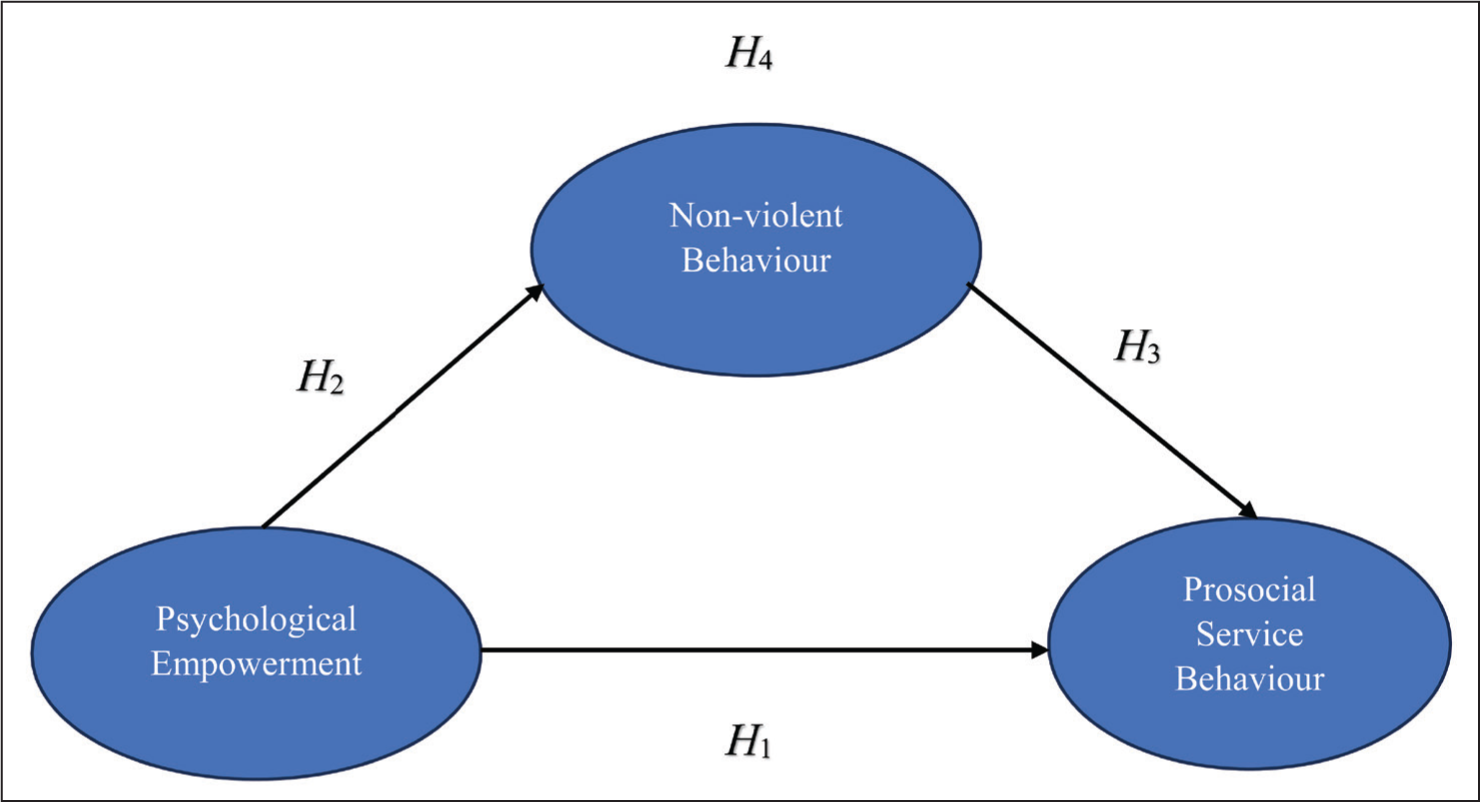
H1: PE has a positive effect on prosocial service behaviour. H2: PE has a positive effect on NVT. H3: NVT has a positive effect on prosocial service behaviour. H4: NVT mediates the relationship between PE and prosocial service behaviour.
Research Methodology
Instrument Development
To frame the study design, researchers developed a research instrument based on a literature review. It consisted of two sections. The first section of the survey had demographic questions, that is, age, gender, marital status, education, job roles, department/units, experience level, work shift and university type. Adapted from previous studies, the second section comprised the statements to measure the study constructs, that is, PE, non-violence behaviour and prosocial service behaviour. These statements were measured using a 5-point Likert scale, with 1 denoting strongly disagree and 5 denoting strongly agree. The hypothetical/proposed research model represents all the variables that will be used in this particular research study. (Dependent variable: Non-violent Behavior; Mediator: Prosocial Service Behavior; Independent variable: Psychological Empowerment) (Figure 1).
Proposed Research Model.
Measures
PE: To measure PE, the study employed a 14-item scale divided into three dimensions: meaning (3 items), competence (3 items), impact (3 items) and self-determination (3 items), adapted from Spreitzer (1995). Sample statements include: ‘My job activities are personally meaningful to me’, ‘I am self-assured about my capabilities to perform my work activities’, ‘I have a great deal of control over what happens in my unit’ and ‘I can decide on my own how to go about doing my work’. The Cronbach’s α scores are 0.707 for meaning, 0.720 for competence, 0.714 for impact, and 0.701 for self-determination, indicating high reliability for each dimension.
NVT: To measure non-violence, a 19-item scale was adapted from Brayfield and Rothe’s (1951), divided into three sub-parts: NVT_stress (7 items), NVT_constructive (4 items) and NVT_ignore (8 items). Sample items involve ‘I inquire if the subordinate is upset due to some reason, if he/she threatens me’, ‘I review if I have been disciplined enough when I see my subordinate’s indiscipline’ and ‘I ignore it if I am refused resources at workplace’. The Cronbach’s α scores are 0.919 for stress, 0.826 for constructive, and 0.930 for ignore.
Prosocial service behaviour: To measure prosocial service behaviour, the study adapted an 18-item scale from Bettencourt and Brown (1997), categorised into three sub-elements: role-prescribed customer service (6 items), extra-role customer service (4 items) and cooperation (8 items). Sample statements include: ‘I voluntarily assist customers even if it means going beyond job requirements’, ‘I adequately complete all expected customer-service behaviours’ and ‘I help other employees who have heavy workloads’. The Cronbach’s α values, indicating the reliability of these dimensions, are 0.901 for role-prescribed customer service, 0.823 for extra-role customer service and 0.938 for cooperation.
Sample
The researchers used convenience random sampling to collect data from Indian universities. This sampling technique increases the probability of covering the majority of interested respondents, as well as the convenience of reaching them (Etikan et al., 2016). All participants independently provided their demographic information, including age, gender, marital status, education, job roles, department/units, experience level, work shift and university type. They also shared their perceptions of PE, non-violence behaviour in the organisation, and their assessment of individuals’ prosocial service behaviour. Within a six-month period, researchers distributed 600 questionnaires to non-academic staff across various Indian universities in both online and offline modes, commencing in February 2024 and concluding in July 2024, and 501 of them returned them, yielding an effective response rate of 83.5%.
The demographic data offer a comprehensive perspective on the workforce’s composition revealed in Table 1, which can be used to improve prosocial service behaviour, PE and non-violent interactions. The overall organisational culture and employee satisfaction can be enhanced by customising strategies to accommodate various demographics, including age, education and tenure. A more effective service delivery and a positive workplace atmosphere can be achieved by cultivating an inclusive environment that caters to the diverse requirements of employees.
Sample Profile.
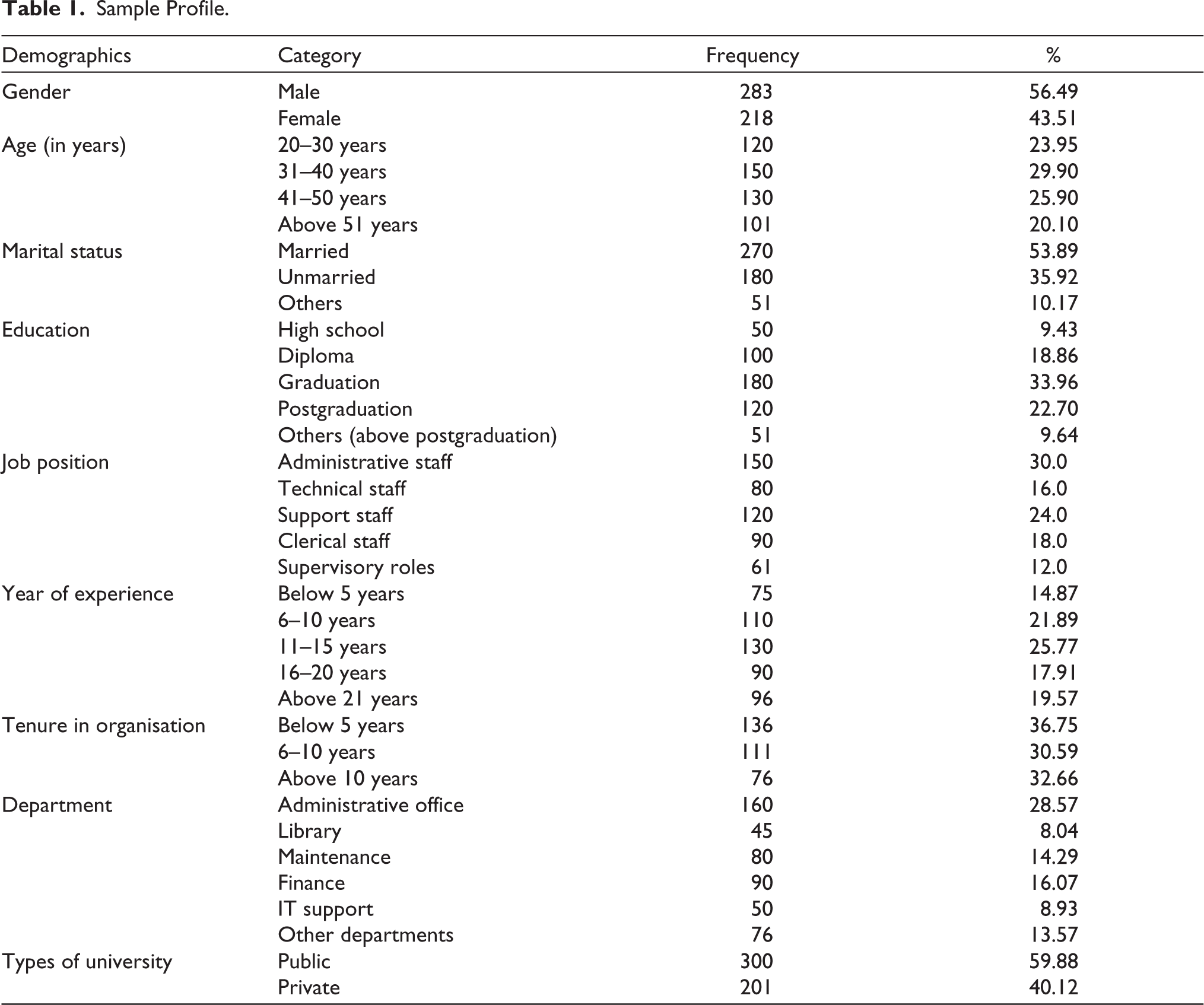
Experiences are significantly influenced by gender dynamics. The assertiveness that males, who constitute 56.49% of the sample, frequently demonstrate has the potential to improve their leadership abilities, but it may also result in tension due to societal pressures. In contrast, females (43.51%) generally exhibit a higher level of emotional intelligence, which provides them with effective tools for stress management and non-violent conflict resolution. Age is an additional significant factor, as the distribution emphasises the disparity in empowerment levels among different life stages. Young adults aged 20–30 (23.95%) exhibit a high degree of adaptability and enthusiasm, which is likely to result in constructive engagement in conflicts. Typically, individuals in the 31–40 age bracket (29.90%) exhibit strong self-determination and resilience, effectively managing workplace stress. In contrast, the 41–50 age group (25.90%) has a wealth of experience but may experience exhaustion, while those over 51 (20.10%) frequently rely on established coping strategies and serve as mentors for their younger colleagues. Empowerment is additionally influenced by marital status. The PE of married individuals (53.89%) is enhanced by the presence of robust support networks. Conversely, individuals who are unmarried (35.92%) and have other statuses (10.17%) may encounter obstacles regarding social support, which could potentially affect their capacity to effectively manage stress. Empowerment and conflict resolution capabilities are significantly correlated with educational attainment. Diploma holders (18.86%) experience moderate empowerment, while high school graduates (9.43%) may feel less empowered. Graduates (33.96%) and postgraduates (22.70%) frequently demonstrate the highest levels of PE, which enables them to resolve conflicts in a more constructive manner. Empowerment levels are also substantially determined by the position one occupies within an organisation. In general, administrative personnel (30.0%) report high PE, which has a positive impact on their conflict management abilities. Conversely, technical and support personnel may encounter inconsistent levels of empowerment, which may influence their participation in prosocial activities. The years of experience in the workforce indicate a trend in which individuals with 6–10 years (21.89%) and 11–15 years (25.77%) of experience exhibit increased empowerment and role modelling. Conversely, those with less than five years (14.87%) may experience difficulty adapting and may require mentoring. Empowerment is similarly influenced by tenure within the organisation; employees who have been with the organisation for less than five years (36.75%) frequently encounter adaptation challenges, whereas those who have been with the organisation for a longer period of time demonstrate more effective conflict resolution strategies and increased PE. Finally, experiences are influenced by the type of university attended. Typically, graduates from public universities (59.88%) have access to more resources that promote empowerment, whereas those from private institutions (40.12%) may have specialised training opportunities, which can result in a variety of experiences.
Analysis and Results
Researchers developed a structural equation model using SPSS AMOS 24.0. This is a specialised tool that includes confirmatory factor analysis (CFA) to measure the model’s fitness to the data and path analysis to validate the study’s assumptions and investigate the relationships between the constructs.
Reliability and Validity
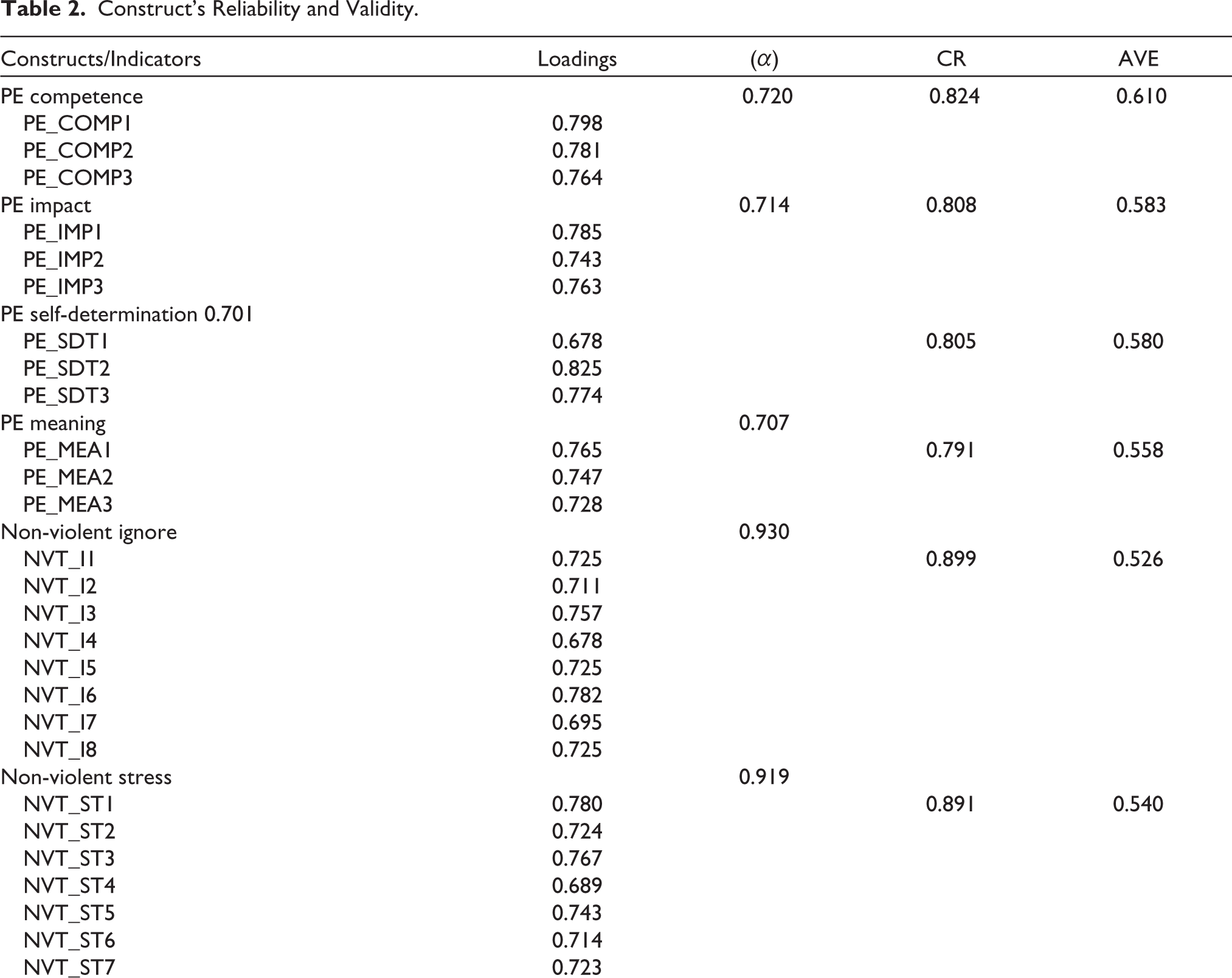
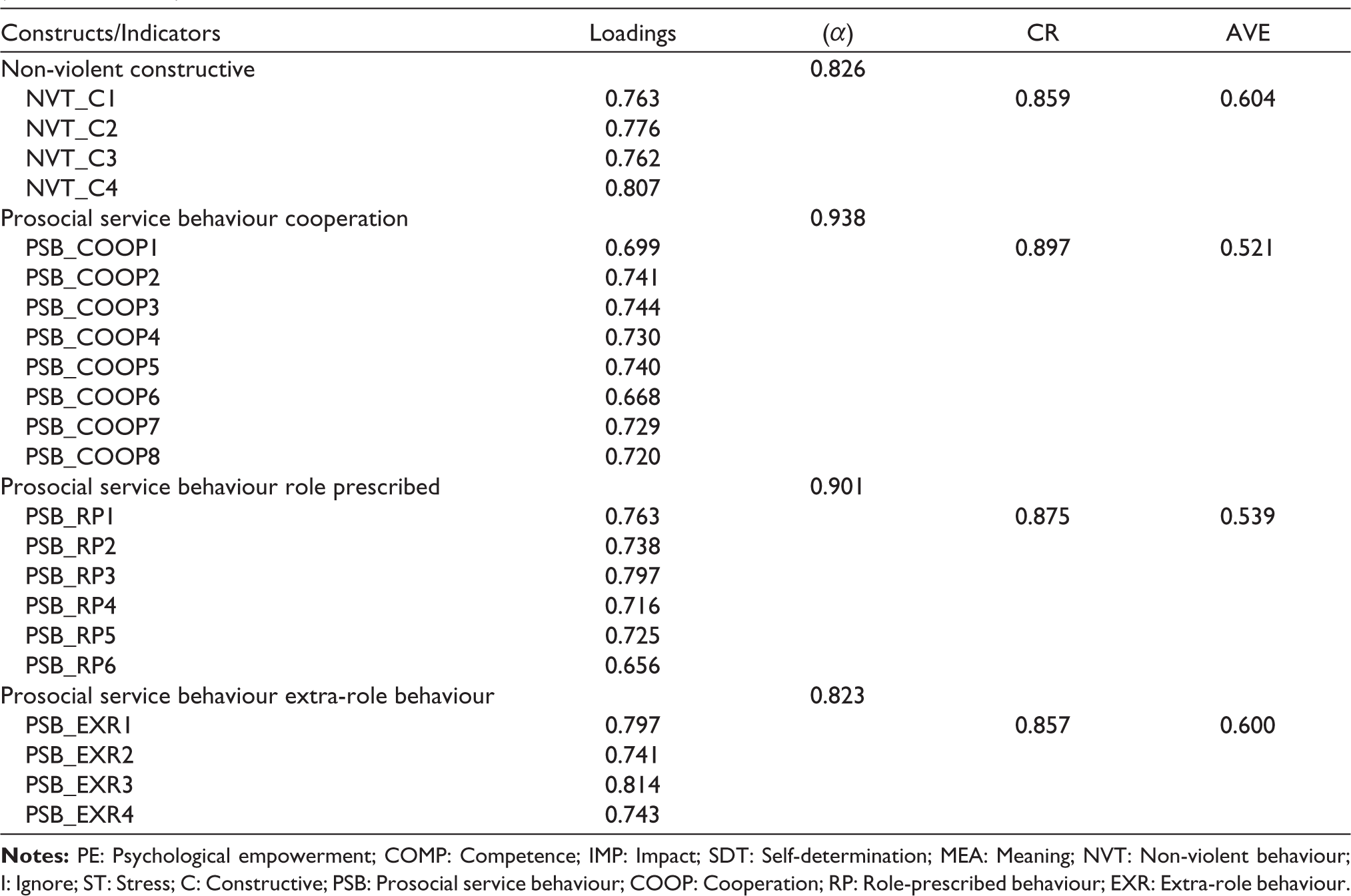
A CFA was performed to check the validity and reliability of the scale and to test the fitness of the measurement model. To begin with, as referred to in Table 2, the CFA results show that the values of all factor loadings range from 0.67 to 0.83, which is higher than the suggested threshold of 0.6 (Chin et al., 1997). Further, to determine the scale’s reliability, researchers used internal consistency measures, that is, composite reliability (CR) and Cronbach’s α. Both the α and CR values, as shown in Table 2, are above the 0.7 benchmark. Therefore, the study established the reliability of the measurement model for each construct. To check the scale validity, researchers measured the convergent and discriminant validity of the measurement model. First, for estimating the convergent validity, the average variance extracted (AVE) was used. The AVE values for each construct (refer to Table 2) were above the recommended value of 0.5. Therefore, the scales used in the study have the required convergent validity.
Construct’s Reliability and Validity.
Discriminant Validity Using the Fornell–Larcker Criterion.
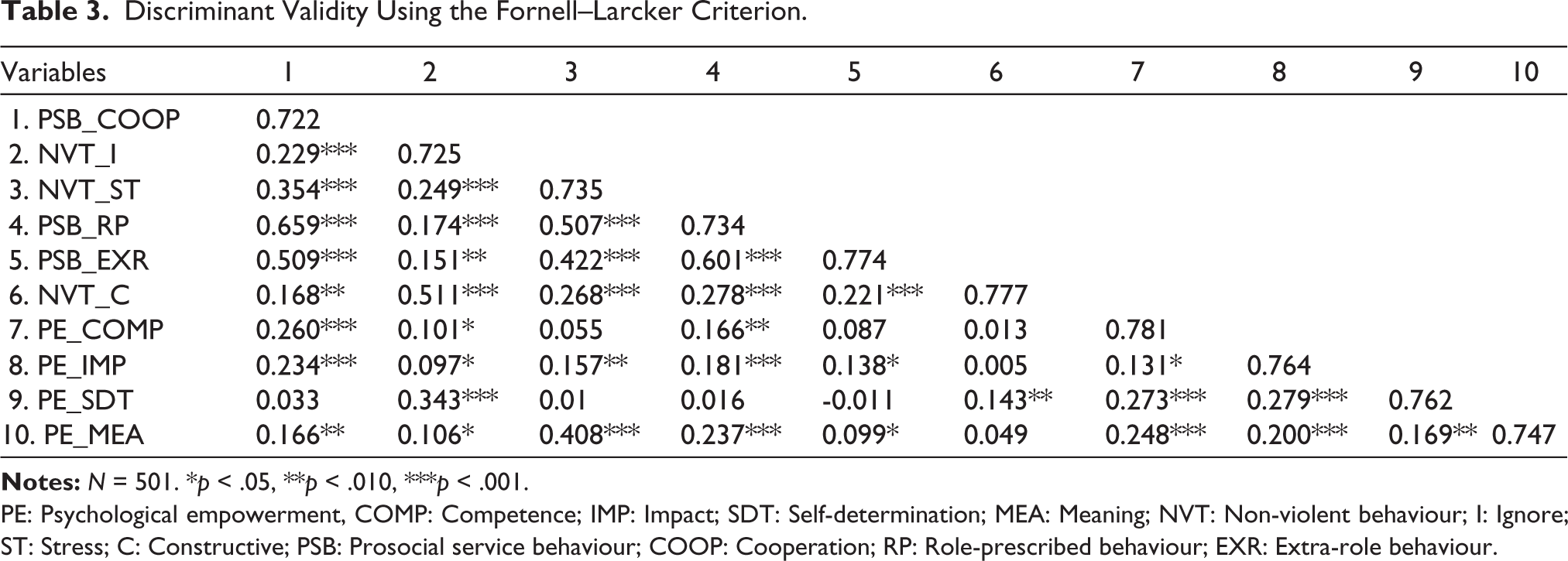
PE: Psychological empowerment, COMP: Competence; IMP: Impact; SDT: Self-determination; MEA: Meaning; NVT: Non-violent behaviour; I: Ignore; ST: Stress; C: Constructive; PSB: Prosocial service behaviour; COOP: Cooperation; RP: Role-prescribed behaviour; EXR: Extra-role behaviour.
Further, the researchers investigated the discriminant validity of the measurement model using the Fornell and Larcker criteria (1981) and the HTMT criterion (Henseler et al., 2015). As per the Fornell and Larcker criterion (1981), the scale is discriminately valid when the square root of AVE for given constructs exceeds its correlation with inter-construct values. Furthermore, HTMT ratios showed that they were below the critical limit of 0.85. The results of the study, as referred to in Tables 3 and 4, demonstrated adequate discriminant validity for all constructs.
Discriminant Validity Using the HTMT Criterion.
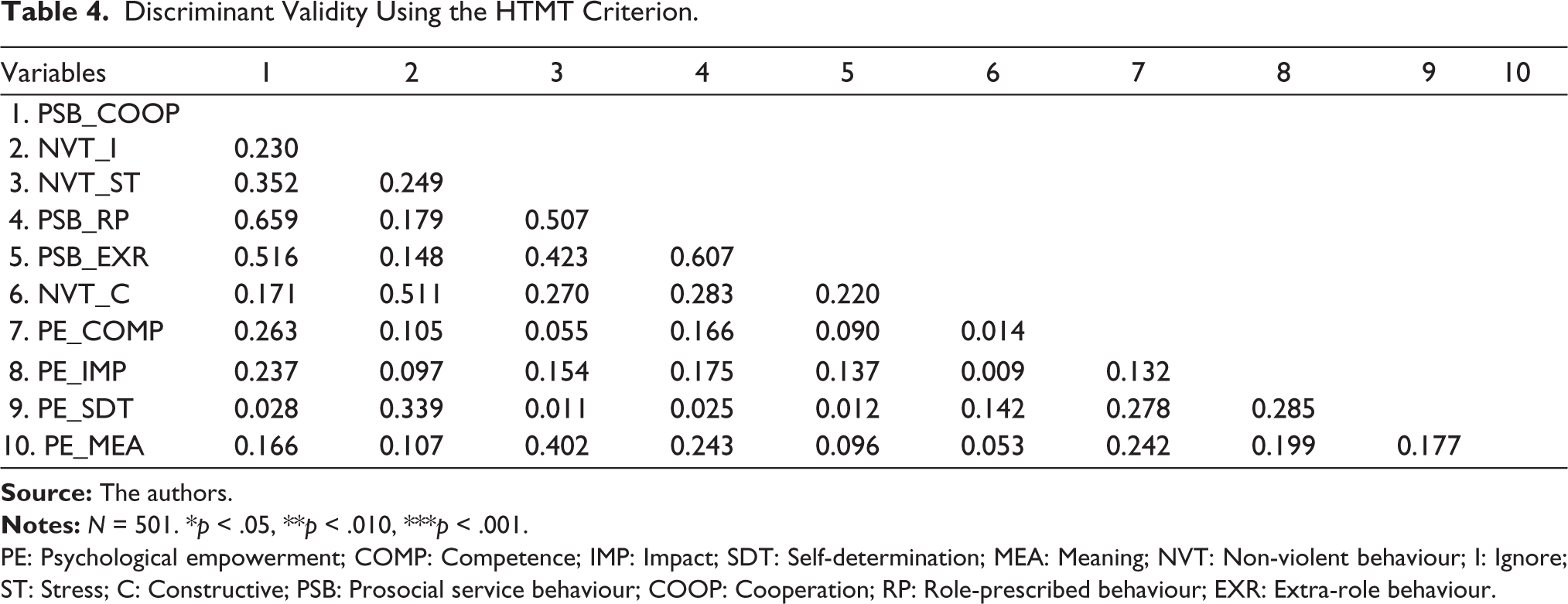
PE: Psychological empowerment; COMP: Competence; IMP: Impact; SDT: Self-determination; MEA: Meaning; NVT: Non-violent behaviour; I: Ignore; ST: Stress; C: Constructive; PSB: Prosocial service behaviour; COOP: Cooperation; RP: Role-prescribed behaviour; EXR: Extra-role behaviour.
Fit Indices of Measurement Model.

Further, to check the quality of the measurement model, various measures of goodness-of-fit were assessed, that is, CMIN/DF, SRMR, CFI, TLI and RMESA, and all values are within their common acceptance level (Hu & Bentler, 1998). The three-factor model (PE, NVT and prosocial service behaviour) yielded a good fit, as seen in Table 5.
Hypothesis Testing
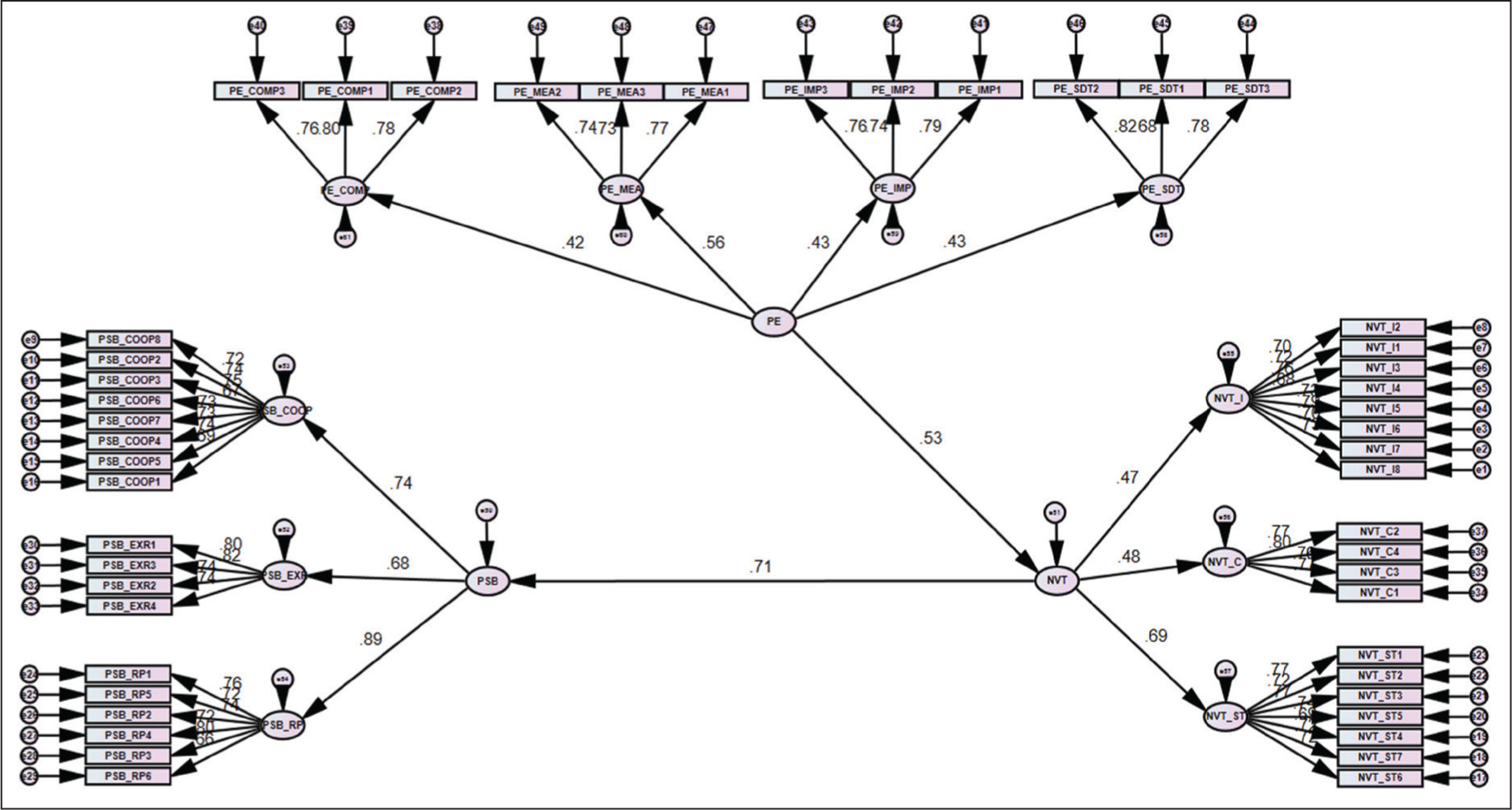
Researchers performed path analysis to conduct hypothesis testing. We further applied the bootstrapping method at 10,000 subsamples in order to examine the significance of path coefficients. The current study intends to investigate four hypotheses. Our first hypothesis (H1) posited that PE has a positive effect on NVT of non-academic staff in Indian universities. The standardised path coefficient for this association is (β = 0.532, p < .05), indicating that NVT is significantly predicted by the PE of employees at work. Therefore, H1 is supported. The second hypothesis (H2) proposes that NVT positively influences the prosocial service behaviour of non-academic staff. The analysis revealed a standardised path coefficient of (β = 0.707, p < .05), demonstrating a significant relationship and supporting H2. Hypothesis 3 was developed to examine the impact of PE on PSB. The results again supported H3 and indicated that PE has a positive and significant relationship with PSB (β = 0.395, p < .001) of non-academic staff. Table 6 reports the results of all three hypotheses.
Structural Model Assessment (Direct Effects).

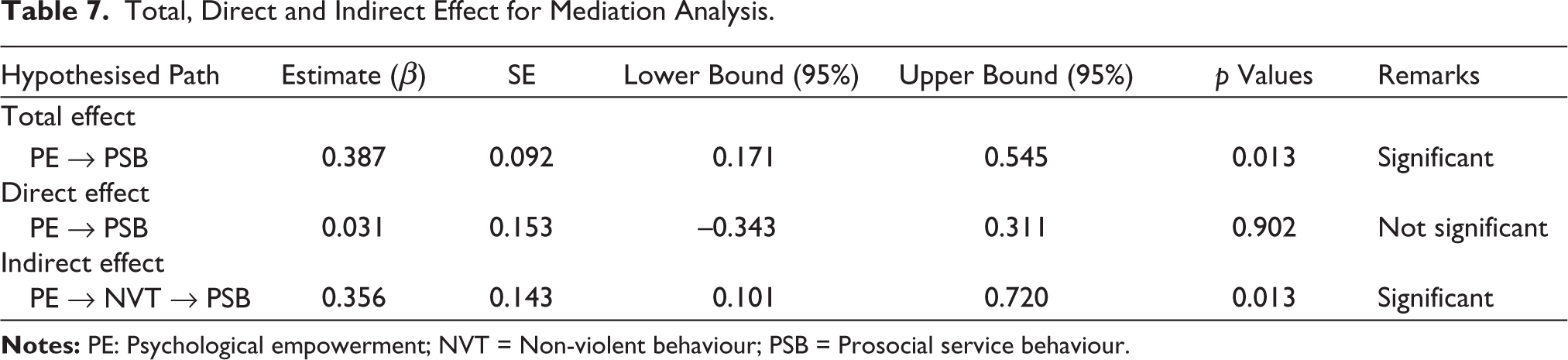
To test the fourth hypothesis (H4), mediation analysis was performed to evaluate the mediating role of NVT in the relationship between PE and PSB. When the mediator was included, the results (refer to Table 7) revealed a significant indirect effect of PE on PSB (β = 0.356, p < .05) alongside a total effect of PE on PSB (β = 0.387, p < .05). However, the direct effect of PE on PSB (β = 0.031, p < .902) was found to be insignificant. Following Baron and Kenny’s (1986) approach, these findings indicate that NVT fully mediates the relationship between PE and PS among non-academic staff in Indian universities. Hence, H4 is also supported. Further, R2 values reflect the model’s explanatory power, implying that it accounts for 28.3% of the variance in NVT and 50% of the variance in PSB.
Total, Direct and Indirect Effect for Mediation Analysis.
The path model as shown in Figure 2 represented the significant path coefficients among the study variables, that is, PE, NVT and PSB.
Path Model.
Discussion
Behaviour among employees, especially non-academic staff, is a chapter of consideration for researchers because they need to maintain patience and be social and empowered. This study explores the interplay between PE and prosocial service behaviour, with an emphasis on the mediating role of NVT among non-academic staff at the university level. Through the utilisation of SPSS AMOS 24, quantitative analyses and theoretical frameworks, we investigate the extent to which empowered individuals, who experience a sense of control and effectiveness, are more inclined to engage in NVTs; consequently, this fosters an environment that is conducive to prosocial behaviour among staff. The results suggest that NVT has full mediation between PE and prosocial service behaviour, underscoring the indirect pathways through which empowerment influences social contributions. The mediating function of NVT is established by the outcomes of bootstrapping. It implies that non-academic workers’ prosocial service behaviour is bolstered by NVT, hence promoting more enrichment.
The increased male workforce may affect teamwork and service. Due to gender difference, communication and conflict resolution strategies might affect PE and peaceful conduct. Inclusivity and diversity in training increase prosocial behaviour for both genders. A different viewpoint on PE and service conduct is shown by numerous age groups. Younger employees may want more growth and be more prosocial. PE tactics may be tailored to different age groups to boost involvement and reduce conflict. Marital status affects mental health and prosociality. Faculty who are married may face different stresses and support networks. Customising support programmes for different marital situations may improve worker well-being and promote non-violent conduct. Educational levels often improve PE and prosocial conduct. Advanced education may encourage peaceful dispute resolution and successful service. Institutions may use their educational credentials to create training programmes that empower personnel and promote healthy behaviour. Job roles affect service behaviour and PE. Administrative and managerial professions may require more leadership and decision-making, which may affect prosocial and non-violent conduct. Understanding these interactions helps design role-specific treatments to decrease disputes and strengthen relationships psychologically. Professionalism may vary between new and veteran teachers. Experience may boost confidence and understanding of institutional standards, promoting non-violent conduct and PE. Maintaining a dynamic and supportive work environment requires combining experience with fresh views. Staff with different tenures may display different PE and service conduct. Newcomers may need special help and training to adhere to the institution’s prosocial and non-violent ideals. Long-term employees may benefit from refresher training to maintain interest and good behaviour. Departmental positions affect service behaviour and PE. PE programmes tailored to each department may improve prosocial behaviour and reduce conflict. The higher number of public university workers may affect corporate culture and service standards. Due to their ideals and viewpoints, public and private university graduates may approach PE and non-violent conduct differently. Understanding these disparities allows for targeted treatments and assistance.
Being the novel study in the field of these three variables, the lack of literature marked a low review over the connection of the mentioned three variables in the study. The new concept makes this article distinct and unparalleled from the rest of the studies, resulting in the research paper being contradictory and remarkable. Additionally, the study shows that non-violent conduct has a mediating influence, which indicates that non-academic staff members grow strongly in their PE and continue to act nonviolently, which contributes to prosocial service behaviour. The current work adds many theoretical insights to the body of research on prosocial service behaviour, NVT and PE. First, earlier researchers have often brought up the problem of the paucity of research on the mentioned variables. In an attempt to close this undesired gap, the current research examines the function of non-violent conduct in one of the key paradigms of PSB and PE. This study uses an empirical research approach to validate some aspects of the behaviouristic model in order to investigate these theoretical assertions. This recommendation is especially significant since it has been implemented in non-Western contexts. The theory was created in a Western setting, and the findings of this research will aid in the model’s acceptability across cultural boundaries. The findings support a strong correlation between PE and prosocial service behaviour.
PE builds community and collaboration. In India, where collectivism and community are prized, empowered non-teaching personnel are more likely to cooperate, encourage colleagues and create a peaceful workplace. Focusing on these characteristics of PE may help Indian higher education institutions develop motivated, engaged and devoted non-teaching personnel who practice prosocial service, creating a good and productive educational environment. The ability to choose and control job activities and procedures. Non-teaching workers feel accountable for their job with autonomy. People are more inclined to accept responsibility for their responsibilities and aid others when they can make choices and handle their duties autonomously. The extent to which a person may influence results and feel like their contributions matter inspires staff to behave in ways that benefit the company and its members. This sensation of making a difference might motivate people to assist others beyond their obligations, creating a cooperative and supportive workplace. Non-teaching personnel at Indian higher education institutions are helpful and courteous, going the extra mile to aid students and teachers. Empowered workers are more proactive and engaged. Empowered non-teaching personnel are more likely to be proactive in meeting student and faculty needs, fostering a good service culture.
Conclusion and Implications
Workplace violence and bigotry are increasingly serious issues. We must promote PE, non-violence and prosocial service to strengthen the workplace. In the past decade, human resource departments and professional organisations in many countries have realised how important it is for employees to exhibit behaviours that promote calmness, peace, unity and a socially and ethically responsible environment to boost confidence and work performance (Bansal et al., 2025b; Garg & Punia, 2025). Victims of workplace violence want workplace culture reforms. Their main complaints include abuse, harsh language and bullying, which increases sadness, mental and physical imbalance and poor self-esteem. It lists the advantages of having people link their work to their own beliefs, practices and behaviours to create a tranquil, behaviouristic workplace. This study also suggests two ways PE may improve prosocial service behaviour. An obvious association exists between the variables. Also solved is the ‘black-box’ of how NVT supports prosocial service. PE may reduce the negative impacts of violence on society, making it important. The inconclusiveness of past studies may be due to a lack of insight into the processes linking objective violent facts to human preferences and behaviours. We believe that people respond differently to violent acts because they perceive the same situations differently. People who live in violent circumstances may feel insecurity differently. It is uncertain whether communities with greater violence have more social capital or because violence makes them more prosocial.
Prosocial conduct among non-teaching personnel may improve student and teacher support, improving the educational experience. PE boosts the institution’s reputation, attracts students and professors and helps personnel build interpersonal and problem-solving abilities. These practices boost work happiness because people find significance in assisting others. Leaders should exhibit empowerment and non-violence and inspire personnel with praise. Giving workers the authority and tools to aid colleagues and students, such as flexible rules. To promote sustainable growth, universities train experts chosen by specified criteria via sustainable educational integration. Young people who want to study social work must be considered for their prosocial inclinations (Nistor et al., 2024). Provide prosocial conduct, empathy, communication and conflict resolution training. Formal initiatives should identify and celebrate workers who regularly display prosocial conduct. Create a friendly, inclusive workplace that promotes assistance, collaboration and respect. Understanding and supporting prosocial conduct may help organisations, particularly higher education institutions, establish a more positive, non-violent, empowered and productive workplace for all stakeholders. Patriarchal culture and elders’ dominance make it difficult for Indian non-academic workers to balance work and life. Such a study is needed.
Footnotes
Data Availability Statement
The data that support the findings of this study are available on request from the corresponding author. The data are not publicly available in order to ensure the privacy of research participants.
Declaration of Conflicting Interests
The authors declared no potential conflicts of interest with respect to the research, authorship and/or publication of this article.
Funding
The authors received no financial support for the research, authorship and/or publication of this article.