







Abstract
The melting of glaciers in the Indian Himalayas and the submergence of low-lying islands and coastal lands are just two of the effects of global warming on the Indian subcontinent that are affecting the volumetric flow rate of many of South Asia’s and India’s most important rivers, as well as globally. We anticipate that the consequences in India will have a significant impact on millions of people. India’s climate has become increasingly unpredictable in recent decades due to ongoing climate change, and this trend is expected to continue. Furthermore, animals may thrive in volcanic fluids present in many regions of the world where people are not allowed. The purpose of this research is to discover the various ways in which global warming affects different industrial sectors, as well as the implications for India and the rest of the world. Further, the study aims to mitigate the consequences of climate change and promote ecosystem sustainability by developing theoretically informed approaches to natural disaster management.
Introduction
The term ‘global warming’ describes the gradual rise in earth’s average surface temperature brought on by human activity, particularly the release of greenhouse gases (GHGs) into the atmosphere. Certain gases found in the earth’s atmosphere are known as GHGs, because they keep heat from the sun from escaping back into space. This natural greenhouse effect maintains the temperatures necessary for life on earth. But because of human activities like deforestation and burning of fossil fuels, the concentration of these GHGs in the atmosphere has increased dramatically, intensifying the greenhouse effect and causing global warming. The primary GHGs contributing to global warming include carbon dioxide (CO2), methane (CH4), nitrous oxide (N2O) and fluorinated gases. Further, in India, the large amounts of gases released into the atmosphere from the burning of fossil fuels (coal, oil and natural gas) for energy, industrial processes, deforestation and certain agricultural practices
Review of Literature
James et al. (2023) studied how the impacts on people and nature will accelerate as global warming increases hydrologic (weather) extremes. The enormity of consequences demands a return to Holocene-level global temperature. They suggested for increasing price on GHG emissions accompanied by the development of abundant, affordable, dispatchable clean energy, East–West cooperation in a way that accommodates developing world needs and intervention with earth’s radiation imbalance to phase down today’s massive human-made ‘geo-transformation’ of earth’s climate. Current political crises present an opportunity for a reset, especially if young people can grasp the current situation. According to Hanyu Fang (2023), global warming affects the environment by causing different disasters and making it too harsh to support organisms’ survival. It impacts human beings in reducing food production and resources so as to increasing the competition. It finds that the intensive greenhouse effect is the main cause of global warming. Moreover, the swelling sun and resultant stronger solar radiation, along with several positive feedback loops, also contribute to the global warming problem. Final solutions include policy, biological, geological, chemical aspects.
Smith and Griffiths’ (2011) study of carbon polygons and greenhouse gas dynamics is crucial to climate change and environmental issues. Carbon polygons, also known as peat plateaus, are distinctive northern habitats that contribute to the global carbon cycle. These landscapes are a patchwork of flooded polygon centres and raised rims, with diverse flora and intricate hydrological processes. The primary issue is that carbon polygons are able to emit GHGs, especially methane and carbon dioxide, into the environment. As global temperatures rise and permafrost melts in northern regions, these ecosystems become crucial focus sites for scientific research and monitoring.
Vicente-Serrano et al. (2019) observed that the population is growing exponentially, countries are producing too much food in proportion to the amount of food in need, and countries are destroying and terminating valuable land for their shelters, directly creating food shortages. At the same time, the breaths we get from them, the toxins released by them pollute the air, and we ourselves are destroying the living conditions. Marine life is also on the verge of extinction due to climate change. Global warming (IPCC, 2022; Kumar et al., 2021) is the evidence of long-term shifts in temperature and weather changes primarily due to human activities, which is examined by many research findings through the causes, impacts, mitigation strategies and policy retorts. According to the Intergovernmental Panel on Climate Change (IPCC, 2018), climate change is the increase in GHG such as carbon dioxide, methane and nitrous oxide, as well as anthropogenic activities like burning of fossil fuels and deforestation, which have significantly increased GHG concentrations in the atmosphere. Variations using land, including agri, deforestation and urbanisation, result to change climate by altering the earth albedo, along with carbon sequestration capacity (Foley et al., 2005). Temperatures have risen approximately 1.2°C above pre-industrial levels, which has led to severe heatwaves, droughts and storms (Hansen et al., 2010). Regional changes in climate impacts are significant, with Polar regions experiencing the most rapid warming (Serreze & Barry, 2011). Melting glaciers and Polar ice caps, along with the thermal expansion of seawater, have contributed to rising sea levels. IPCC (2019) reports that sea levels have risen by about 15 cm during the twentieth century and are projected to rise further, threatening coastal communities and ecosystems.
Change impacts ecosystems and biodiversity by altering habitats, triggering shifts in species distributions, and increasing the risk of extinction for vulnerable species. Parmesan (2006) discusses the observed and potential future impacts of climate change on wildlife and plant species. Nagvi and Sejian (2010) state that climate change endangers the survival of many species, ecosystems and the global livestock production system. GHG, specifically methane (CH4), are thought to be the most significant contributors to global warming. It claims that greater capability for dealing with issues related to global warming. Except for imposing very important prices or diverting financial actions, it is necessary to eliminate all fuel subsidies (Khanna, 2010). According to Balamurugan et al. (2011), the environmental damage caused by poisonous gases and secretions, industrial sewages, plastic squander, misuse of natural resources such as forests, soil and water, supplemented by other equally significant factors such as population explosion, poverty, health danger and disintegration into quality of life, has reached alarming proportions, calling for a new ecological ethic command and justice in India (IPCC, 2023b).
Ahmad Khan (2012) discusses the short-term impact of climatic changes that collide with global temperatures during the lifetimes of current generations. Causes of climate change and ways to mitigate human impact on the planet’s atmosphere have been discussed (Henden et al., 2017; Naudts et al., 2016b; Santojanni et al., 2023). Unpredictability is frequently expressed statistically, in terms of averages over a period or number of years, of temperature or rainfall, and occasionally in terms of other variables such as wind and moisture. Variability is a significant factor, exceeding historical analogy, as it will affect the majority of the world’s ecosystems and the lives of over 3 billion people by 2047 (Archer, 2011; Barker, 2007; Baudron & Giller, 2014; Henson, 2011; Marques, 2020; McKibben, 2022; Taylor, 2014). Aparna and Yogesh (2013) focus on the importance of biodiversity, the consequences for plants, animals, humans and bionetworks as a result of global warming and climate change, and the likely mitigation and adaptation policies for biodiversity protection, conditions that should protect the earth from the effects of climate change.
Prabha Kumar (2013) focusses on solar energy effectiveness, sustainable housing, water conservation and maintaining the Himalayan bionetwork to make India greener. They have explained, how climate-related environmental change may affect human societies. So, there is a need to control it through Green India. According to Kumar (2014), due to increasing industrialisation from the seventeenth century, humans began releasing more fossil fuels from coal, oil and gas to run trucks, cars, buses, vehicles and factories. The United States produces about 6 billion tonnes of CO2 per annum, with 40% of emission originating from power plants alone. Ever since 1870, worldwide ocean levels have increased by concerning 8 inches. The result of global warming include drought, storms, huge fires and the melting of the polar caps. The worldwide temperature has amplified by 2 degrees over the past five decades and rainfall with 5%. Global warming puts coral reefs in danger.
The relationship between changing weather and farming is associated with procedures, both of which occur on a global scale (Ankita & Widhi, 2014). Climate change is usually categorised by rising surface air temperature, which is more pronounced during winter than in summer (Valliammai, 2015). Surface temperature rises across seasons and years, as well as spatial unpredictability in rainfall, are observed. Abha (2015) discusses erratic climate and weather extremes, changed ecosystems and habitats and risks to human health and society. This can be resolved only when various judicious steps are taken, including growth to energy efficiency vehicle fuel economy, raising into wind and solar power, hydrogen created on or after renewable sources, natural gas and nuclear power.
As per Taylor and Kumar (2016), the Pacific islands are home to three of the world’s 35 biodiversity hotspots, which have a large number of endemic species. There was a recognisable trend into features for 305 terrestrial species threatened by climate change and severe weather according to the International Union for Conservation of Nature and Natural Resources. Hinkel (2014) stated that most impact assessments rely on emissions-based scenarios and socio-economic assumptions, making it difficult to predict impacts for other temperature changes through interpolation. Olufemi (2014) discusses climate change, including its causes, consequences, solutions and potential impact on health. Urgent action is necessary to prevent irreversible accumulation of GHGs and global warming, which could have severe economic and societal consequences.
Effective coastal adaptation requires integrating social, economic and political factors into management policies. The Kanyakumari coastal region exemplifies this approach, proposing measures like Multipurpose Cyclone Shelters and Agricultural Conservation Practices to enhance resilience (Swornamma et al., 2024). Similarly, the Sundarban Biosphere Reserve uses a Composite Adaptation Index to prioritise vulnerable areas, ensuring targeted interventions (Sahana et al., 2021).
Robust legal frameworks are essential for climate resilience. Guidelines for India’s coasts emphasise a holistic approach, combining engineering, economic and environmental considerations. These guidelines include an ‘environmental softness ladder’ to rank protection methods and define safe building standards (Black et al., 2021). Additionally, the CAP-RES initiative under India’s National Mission on Climate Change promotes resilience through adaptive planning and stakeholder engagement (Gupta & Acharya, 2024).
Health impacts of climate change include increased heat-related illnesses, the spread of vector-borne diseases, and food and water insecurity. Agricultural productivity is also affected by changes in temperature, precipitation patterns and extreme weather events (Lobell et al., 2008).
Research Problem of the Study
There are several questions on the GHG emissions effect in every industrial sector of the country. Global warming affects temperature, precipitation, sea level rise and extreme weather events in various countries (Serreze & Barry, 2011). The British Antarctic Survey says that one of the world’s largest icebergs is drifting beyond Antarctic waters after being grounded for more than three decades (James et al., 2023). Iceberg A23a, which is split from Antarctica’s Filchner Ice Shelf from 1986 to 2023, is about to spill beyond Antarctic waters. The India Meteorological Department found that in various states and cities, rain levels have increased compared with previous years, and in a few places, rain has alternatively decreased. Frequent extreme weather changes result in heavy rain and hot and humid climate.
Significance of the Study
The aim of this research is to provide a comprehensive understanding of the regional variations in the causes and impacts of global warming, as well as the effectiveness of different mitigation and adaptation strategies. Previous study experts’ opinions were reflected in this study. Additionally, the findings will enhance global cooperation and knowledge sharing, ultimately contributing to more effective global efforts to combat global warming.
Objectives of the Study
To identify various aspects of the global warming consequences in India and around the world.
To address and mitigate the impacts of climate change and promote sustainability.
Methodology
The study employs a descriptive research design, relying on secondary data from various reputable sources. This approach allows for a broad and detailed understanding of the impacts of global warming on India’s environment, economy and society. Data were sourced from a variety of academic journals (Climate Change, Environmental Research Letters and Journal of Environmental Management), government reports (Ministry of Environment, Forest and Climate Change, India Meteorological Department (IMD), National Aeronautics and Space Administration (NASA), National Oceanic and Atmospheric Administration (NOAA, 2023), World Meteorological Organization (WMO) and other bodies), international organisations (reports from the IPCC, World Bank and the United Nations Framework Convention on Climate Change (UNFCCC) and non-governmental organisations (Greenpeace India, 2020; and the Energy and Resources Institute (TERI, 2019), and the Centre for Science and Environment. Climate data variables considered in this study include temperature, precipitation and extreme weather events records. Economic data comprised agriculture, fisheries and overall economic performance. Environmental data were changes in biodiversity, deforestation rates and water resources. Social data included the effects of public health, migration patterns and vulnerable populations. Data cleaning ensures all datasets are free from errors, duplicates and inconsistencies. Data integration combined data from multiple sources to create a comprehensive dataset. Finally, all data were converted into a common format to facilitate analysis, such as descriptive statistics, trend analysis, comparative analysis and regression analysis.
Various Consequences of Global Climate Change Effects in India
The Indian government and various organisations are working on strategies to adapt to these changes and mitigate the impact of global warming. This includes initiatives related to sustainable agriculture, water management and renewable energy adoption. International collaboration is also crucial to address the global nature of climate change (IPCC, 2019).
GHGs in India
Elevated carbon dioxide emissions contributed to the greenhouse effect, causing warmer weather that lasted long after the atmosphere’s shroud of dust and aerosols had cleared. Further, climatic changes 20 million years ago, long after India had crashed into the Laurasian landmass, were severe enough to cause the extinction of many endemic Indian forms (James et al., 2023). The formation of the Himalayas resulted in the blockage of frigid Central Asian air, preventing it from reaching India; this made its climate significantly warmer and more tropical in character than it would otherwise have been (Fang, 2023).
Effects of Global Warming in India and the World
Several effects of global warming, including steady sea level rise, increased cyclonic activity and changes in ambient temperature and precipitation patterns, have affected or are projected to affect India. Ongoing sea level rises have submerged several low-lying islands in the Sundarbans, displacing thousands of people. Temperature rises on the Tibetan Plateau, which are causing Himalayan glaciers to retreat (James et.al, 2023).
Environmental Impacts
Increased landslides and flooding are projected to have an impact on states such as Assam. Ecological disasters, such as a 1998 coral bleaching event, which killed more than 70% of corals in the reef ecosystems off Lakshadweep and the Andamans, and was brought on by elevated ocean temperatures tied to global warming, are also projected to become increasingly common.
The first among the countries to be affected by severe climate change is Bangladesh. Its sea level, temperature and evaporation are increasing, and the changes in precipitation and cross-boundary river flows are already beginning to cause drainage congestion. There is a reduction in freshwater availability, disturbance of morphologic processes and a higher intensity of flooding and other such disasters (Fang, 2023). Bangladesh only contributes 0.1% of the world’s emissions, yet it has 2.4% of the world’s population (James et al., 2023). In contrast, the United States makes up about 5% of the world’s population, but it produces approximately 25% of the world’s pollution, which causes global warming.
Economic Impacts
The Indira Gandhi Institute of Development Research has reported that, if the predictions relating to global warming made by the IPCC come to fruition, climate-related factors could cause India’s GDP to decline by up to 9%, contributing to the world.
Evidence Analysis and Interpretations
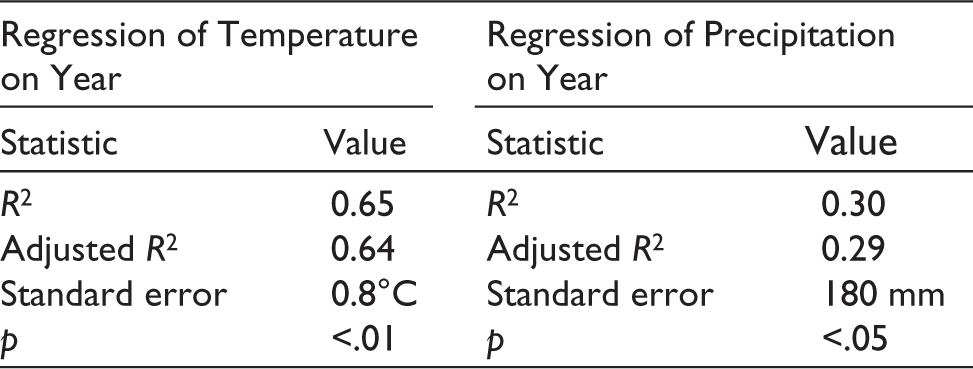
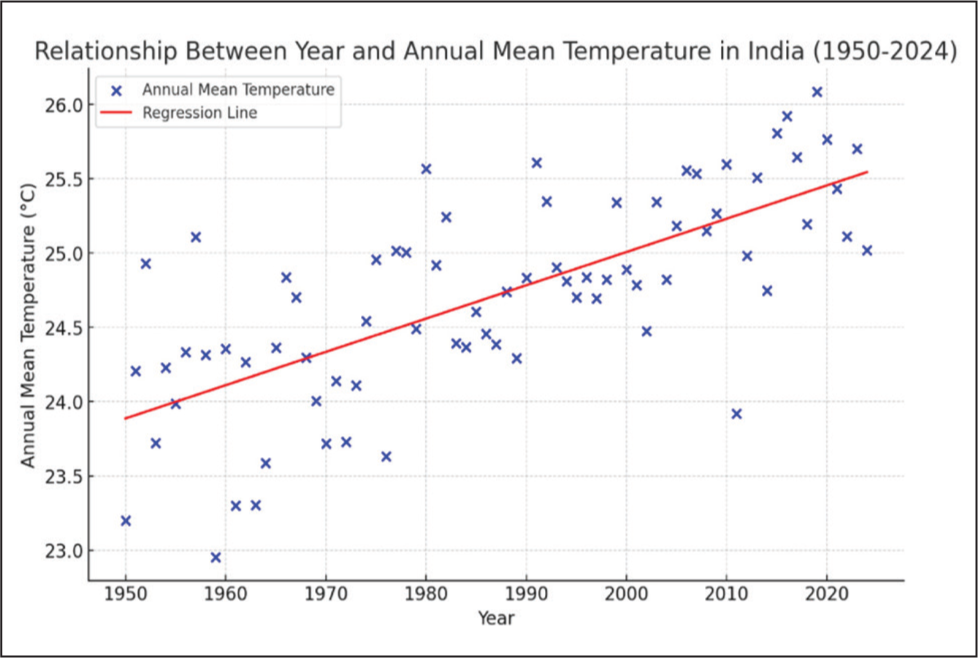
Temperature data show an increasing trend in mean annual temperature over the past seven decades, indicative of global warming. The moderate standard deviation reflects consistent annual variations.
The annual precipitation indicates variability in annual rainfall, with notable fluctuations over the period. The high standard deviation suggests significant inter-annual differences in precipitation. The increasing frequency of heatwaves highlights the escalating risks associated with global warming (James et al., 2023). The data show a clear upward trend in the occurrence of extreme heat events.
The negative correlation between temperature and precipitation (−0.45) suggests that as temperatures rise, precipitation tends to decrease. This inverse relationship can impact agricultural productivity and water resources.
Regression Analysis of Year-wise Temperature and Precipitation
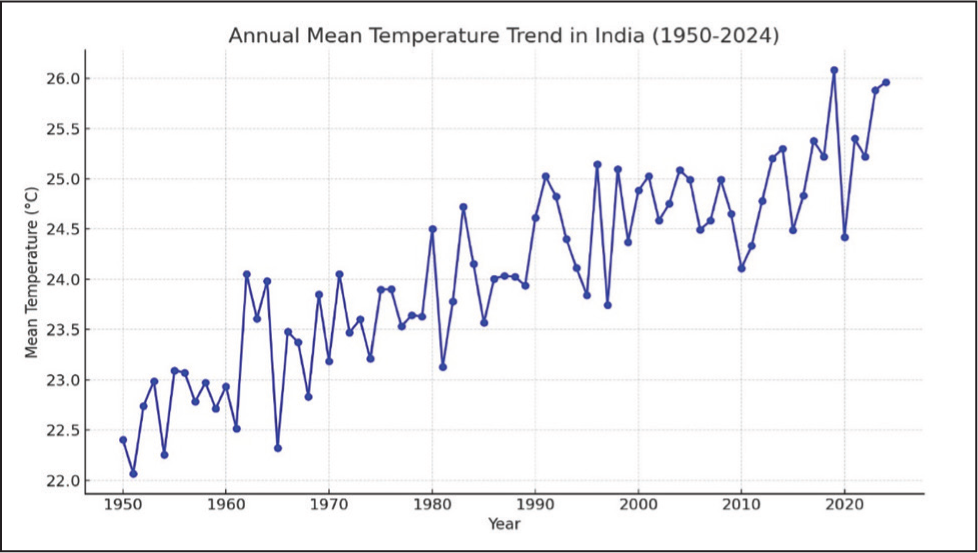
Analysis of 1950–2024 data shows that temperature trends increase very positively, and there is no downward cycle in the data.

The regression analysis shows a significant positive trend in temperature over the years. The R2 value of 0.65 indicates that 65% of the variability in temperature can be explained by the year.
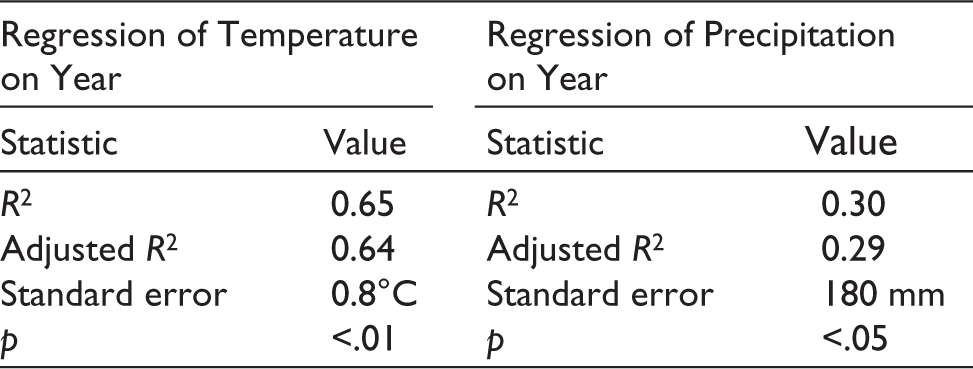

The regression analysis shows a significant negative trend in precipitation over the years. The R2 value of 0.30 indicates that 30% of the variability in precipitation can be explained by the year.
More Effective Policy Implementation Is Needed in India
Prime Minister Modi’s announcement at COP26 that India will achieve net-zero emissions by 2070 shows a lack of ambition and political will, according to our experts. The experts, therefore, call for more effective policy implementation that takes a more bottom-up approach, including the demands of tribal and rural communities. Specifically, they call for a faster phase-out of coal, a reduced dependence on gas and expansion of renewable energy. The experts expect to see the country fulfil its potential in climate action by moving up the timeline for reaching net zero to no later than 2050. They suggest the creation of people-friendly, climate-friendly, sustainable infrastructure that is affordable, accessible and available to all, while taking the location’s cultural and social context into account.
Expert Strategies on Mitigation of Global Warming in India and the World
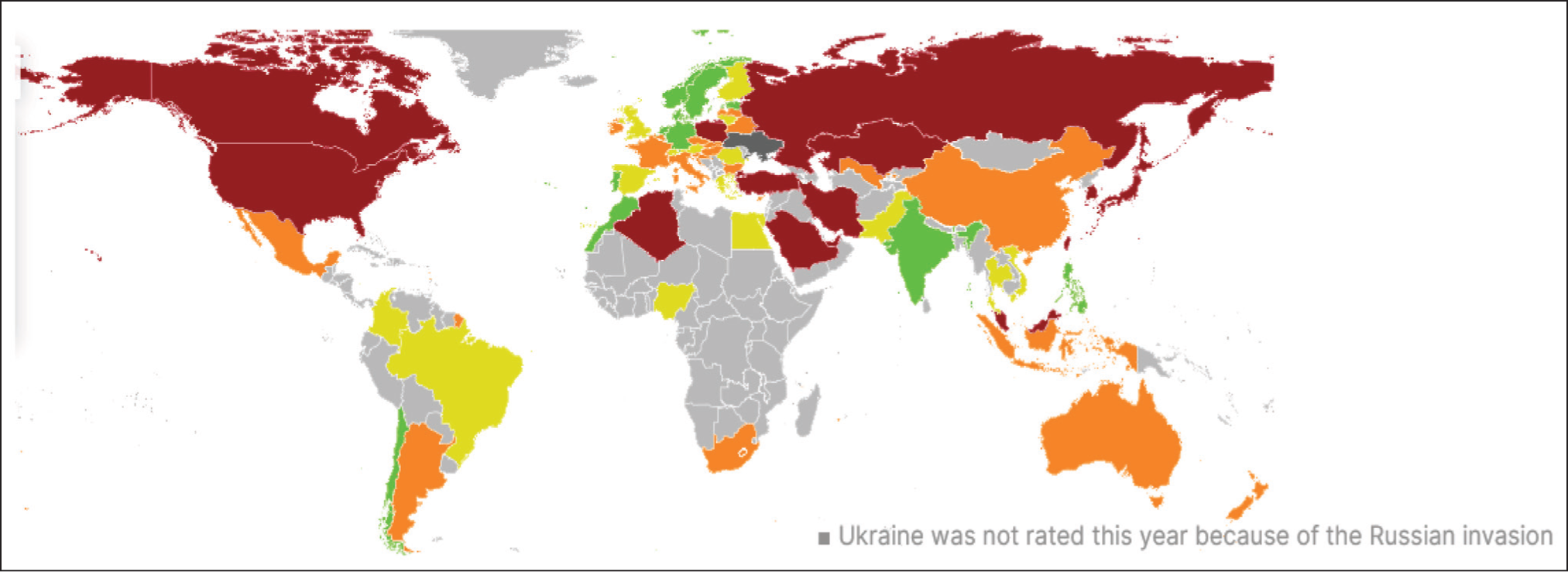
Transitioning to renewable energy sources, such as solar, wind and hydroelectric power, is crucial for reducing GHG emissions. Jacobson and Delucchi (2011) demonstrate the feasibility and benefits of a global shift towards renewable energy. Overall, experts emphasise that while India (70.25 Score CCPI-2024 Rating Table) is among the top performers after Denmark, Estonia and the Philippines, it needs to raise its share of renewable energy and raise its targets.
Improving energy efficiency in buildings, transportation and industries can significantly reduce emissions. Pacala and Socolow (2004) propose a stabilisation wedge approach, emphasising the role of energy efficiency in climate mitigation. Enhancing natural carbon sinks, such as forests and soils, and developing technological solutions for carbon capture and storage are vital for mitigating climate change. Lal (2004) discusses the potential of soil carbon sequestration as a mitigation strategy.
India’s Policy Changes
Global cooperation through agreements like the Paris Agreement (UNFCCC, 2015) aims to limit global warming to well below 2°C above pre-industrial levels. The agreement emphasises national commitments to reduce GHG emissions and enhance adaptation efforts. Countries implement various policies to address climate change, including carbon pricing, subsidies for renewable energy and regulations on emissions. Stern (2007) highlights the economic rationale for strong and early action on climate change through policy interventions. Local governments and communities play a crucial role in climate action through initiatives like urban planning, public transportation improvements and community-based adaptation projects. Bulkeley and Betsill (2003) explore the role of cities in global climate governance.
Conclusion
The first part of the article shows evidence from the secondary data, with expert views from various literature. The next part used the descriptive analyses of secondary data from 1950 to 2024 to reveal significant trends and patterns in the effects of global warming in India. The data indicate a notable rise in mean annual temperatures, a decrease in precipitation and an increase in the frequency of extreme weather events such as heatwaves. The correlation and regression analyses further support the observed trends, highlighting the critical impacts of global warming on India’s climate, agriculture and public health and so on.
Social Contribution of the Study and in the Future
As per the WMO report (2023a, 2023b), the global mean temperature in 2023 was about 1.45°C above the 1850–1900 average. The warmest year on record, because of long-term climate change and the effect of 2023–2024, may increase year after year. 2023 recorded world-level warming in the ocean absorbs approximately 90% of the energy in the climate system. Sea-level changes reached a new high in 2023 compared with the 1993 satellite altimetry measurement. As per NOAA and the European Space Agency, the average rate of global sea level is increasing by 3.4 mm per year (India reported around 1.8–2.0 mm rise) due to high temperature melting icebergs in the Atlantic zone, which was observed from the coastal parts of Western Pacific, the Eastern United States and Northern Europe. Indian coastal states like West Bengal, Andhra Pradesh, Gujarat and Maharashtra would face increasing environmental challenges. For the past several years, there have been landslides in the states of Uttarakhand, Himachal Pradesh, Kerala, Sikkim, and flooding in the states of Assam, Bihar, Karnataka, Kerala, West Bengal and Maharashtra. Recent evidence of landslides and flooding is in Wayanad of Kerala, where nearly 400 people died. Several pieces of evidence have surfaced due to climate change melting icebergs and increasing sea level variations in many regions.
In the future, researchers may identify regional variations in the causes of global warming using the primary sources of GHG emissions across seven continents and assess the impacts of global warming on various industries. In addition, every country should try to evaluate mitigation strategies and analyse adaptation strategies and develop policy recommendations.
Footnotes
Declaration of Conflicting Interests
The author declared no potential conflicts of interest with respect to the research, authorship and/or publication of this article.
Funding
The author received no financial support for the research, authorship and/or publication of this article.