







Abstract
Abstract
The case is about rethinking the business strategy in the gaming industry in India vis-à-vis the world. It discusses the start-up Virtual Infocom (Virtual Information & Communications) and how over the years it has grown into a formidable local and global player. The case is about revamping market strategy and the attributes therein, the prospects and the potential, and envisages to explore as to how the company should, if so, alter their business strategy to be a top brand reckoning in the industry. Virtual Infocom, primarily a training institute, is considering whether to develop games for the market instead of being a secondary player. It unravels the dilemma as to whether it should continue with training or diversify to earn revenues globally to ensure a sustainable competitive advantage in the gaming industry.
Keywords
Introduction to the Case
Arijit, the Founder and CEO of Virtual Infocom (Virtual Information & Communications)—a game design company, had called for a business audit meeting on 16 October 2017. The agenda was a strategic decision whether to overhaul and restructure the entire business wherein the team had to weigh all the pros and cons about the feasibility of revamping their business. The million dollar question ‘To change or go as it is?’ involves a complete restructure incurring huge capital expenses. The four major verticals of game development, web design, animation and advertisement consulting, industrial design, and software development are doing reasonably well and Arijit was optimistic that the training business was surging. He hoped that it is time that it should foray into B2C under a different group company or it should be concentrated on its own competence (Figure 1).
Is the timing right? Does it go with their vision, mission and underlying principles at Virtual Infocom? A puzzled Arijit wanted to narrate their history, the gaming industry data and the players before the board before starting off with discussions of a fresh look forward. Virtual Infocom was into game development for established gaming industry players, and the games prepared by them were having a good clientele and acceptance. Few of the games prepared and sold under their brand has also done well in the recent past, hence the dilemma as to what would be an apt strategy for the company to go ahead with training and manufacturing for others or to establish itself as a brand in the gaming industry; the second one needed a deep understanding of the industry and its players.
Primarily into training, Virtual Infocom also runs an animation and gaming studio. It envisions creating animation games for the Indian consumers and entering the gaming market. Though the company is into game development for B2B, it is different from other players which are into B2C. Virtual Infocom is primarily into training and game development. Though the revenues are northwards, Arijit, the founder and CEO, is in a dilemma as to whether it has the competence to take on the global players in the gaming industry with their existing brand image and its sustainability. On the one hand is the present standing, which was based on the poor adoption of games and on the other hand, a swelling youth population, despite the factors hindering the same were the high cost of gaming support devices, the inadequate presence of superior quality yet affordable smartphones and absence of micropayment arrangement.
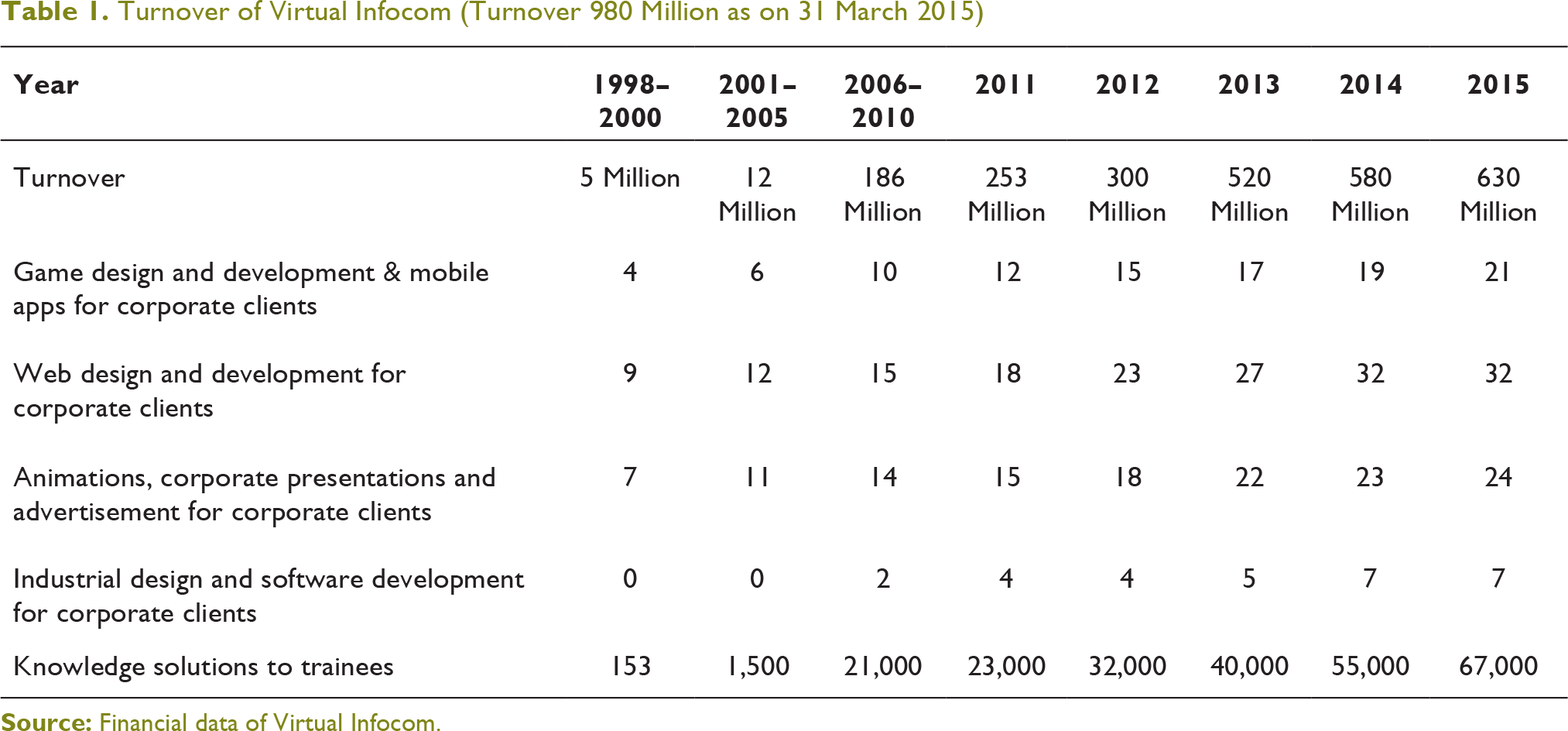
Turnover of Virtual Infocom (Turnover 980 Million as on 31 March 2015)
The current market scenario is upbeat for the gaming industry even in the domestic markets with the swell in the purchase propensity of US $30 US $500 high technology smart gadgets, a rapidly changing technology-based fund transfer and online transaction, in new and engaging forms of digital entertainment. After the success of the mobile game ‘Fight of the Legends’ with more than 3 million installations across the globe, it spelt an opportunity for rethinking the business strategy. The CEO, Arijit, and the team of Virtual Infocom were huddled in a serious strategic meeting wherein they wanted to unlearn and relearn based on the cues from the market and chalk the road forward on how to move ahead with this business opportunity without diluting the brand image. The case study is based on the observational method and in-depth personal interview technique with the protagonist. To support the present business context, secondary data related to the gaming industry in India and the world is also compiled.
History of Virtual Infocom
Starting off in the year 1998, Virtual Infocom has brought in path-breaking novelties in IT solutions, animation and game development, the outcome of a vision which was sown out of the desire to marry art and technology successfully in fashion thus paving the way for making inroads into creativity with the support of IT.
It is this burning desire which shaped Virtual Infocom, the institution that surged in its 19 years post-inception in 1998, to render their expertise as knowledge drivers to 67,000+ individual apprentices covering 135 countries, with a flourishing network of over fourteen centres and affiliates. Virtual Infocom grew steadily under the leadership of Arijit Bhattacharya since 1998 when they started with ₹49 as seed money along with one computer and today it is worth ₹980 million (Figure 1). Along with that it invested in eight start-ups and is growing from one country to five different ones today.
Their future plan is to come up as a producer of VR and superhero movies, and start an adventure park in near future with Indian superheroes.
With 70 per cent of its business coming from the overseas markets from the services that they provide and the rest 30 per cent from the domestic markets, Virtual Infocom strives to be perceived as innovators in the imaginative efficiency space. This, when taken along with the usage of groundbreaking technology for the state-of-the-art products and services for customers, appears to be their competitive advantage resulting in out-of-the-box solutions backed by painstaking and dedicated research. The R&D team works relentlessly for coming up with the next generation gaming designs and thus making it possible for the long-cherished dreams coming true with the mission being implemented successfully for them.
Painting was his passion right from his childhood days, and he wanted to make his passion his profession and business for a meaningful sustenance. Arijit worked in a systematic fashion right from providing tutorials to computer science and engineering students to sharpen his expertise and later utilized the knowledge to set up animation and training institutes through franchise networks since 2004. From humble beginnings then, it has grown to 160+ students in each of the centres on an average as per the records of September 2017. After the success of these trainings, Arijit set his sights on providing animation and gaming services for the reputed game developers. A gaming studio was thus born with a loan of ₹70,000 from his parents as seed capital. This went into turmoil as the global recession of 2008 affected his business plans drastically.
Animation, simulation, mobile applications, game development, Windows phone application, iPhone applications, visual/special effects, ad commercials and short films, android games, mobile gaming, corporate films, etc., form their core competence today with their customized services ushering in delight perspective in the customers as they can get all the solutions that they require under one umbrella. Armed with efficiency in precision solutions on the technology front, they take care of all that their expertise is experienced by the customers leading to enhanced goodwill and brand image. Virtual Infocom comes as an employee-friendly office with the employees given their necessary relaxation, as regards to the work hours provided, they adhere to their targets and fixed deadlines. This resulted in an ownership amongst the employees.
Though initially faced with scarcity of funds, they managed it well, but lack of good human resource, skilled developers and sustaining them to create out-of-the-box games and being at par with the best in the world in this industry still remains a problem. At times, they have to train people and place them in other organizations to co-nurture and surge. Besides there is dearth of educated clients in India regarding game and animation in general. People in India are still in a stage where they need to learn the real fact of animation, the number of people required, time length, cost, etc. ‘There was a time when we had to sell one of our products in games, and the publisher do not want to give the name of ours as a developer, rather they wanted to buy it and put their name. So we wouldn’t be able to get the credits out of it. As we had financial crunch, we had to sell and the credits went to the publisher, not to us. It is fine at critical times, in order to run a firm we need money as to live we need a flow of blood. Now we do a lot of outsourcing job wherein we do sign contract like this’, says Arijit.
The academic development is now taken care of by VIC Associates, the studio of Virtual Infocom having nearly a hundred artists who are well proficient in game design, game development, comics design, mobile applications development, animation, iPhone development besides coming up with a series of innovative animation series, namely ‘Archer Comics’, ‘Banglar Dakat’, ‘Little Tuli’, corporate presentations and so on. Virtual Infocom has also designed India’s first connect game on PC, mobile and online platform with superb compatibility.
Virtual Infocom is essentially a product development company having its product development locally with most of the revenues coming from the global markets. The company has a social face too. It helped 36 families in Rajasthan to learn puppet animation and improved their lifestyle/family income from $37.55 to $2,253.17. In Northeast—converted five villages to become fashion item making sectors—from daily income of $1.62, it became $263.77 per month.
About the Future of Gaming in India
The online gaming industry in India is in an introductory stage at $360 million, poised to rise by 20 per cent to $1 billion by 2021, and online gamers surging to 310 million, a Google KPMG report says. Online game search has witnessed a 117 per cent increase which professes a huge opportunity for developers as per the report ‘Online Gaming in India: 2021’.
On the same line of thought, another empirical research was conducted by renowned market research firm IMRB with a sample size of over 3,000 respondents spread across 16 countries which documented the scope of the online gaming industry in India. The questionnaire was administered to the age group of 16–45 years who have either smartphones or tablets/laptop/PC with Internet connection. This report provided a comprehensive overview of the online gaming industry in India, its prospective growth, the challenges and opportunities for developers which have also demonstrated optimistic market space for online games in days to come.
Consumer trends, the demographics, gaming preferences, usage and spending patterns are also sighted in the report. This comes weeks after market analyst firms IDC and App Annie concluded in a report that the revenue from mobile gaming was 25 per cent higher than that generated from PC and Mac gaming. The report pointed out that China and Japan were the two major markets that drove the growth of mobile games. The Asian continent comprised of more than 60 per cent of gaming revenue in 2016.
The Indian Landscape
The reasons which were acting as a hindrance to imbibing the gaming culture in India are the out-of-the-bound cost of support devices and smartphones, scarce availability of gadgets which were quite high performing ones and non-availability of micropayments set-up in India.
In the present context, however, courtesy availability of good quality smartphones in the ₹15,000–20,000 range, availability of good payment support system and constant urge to engage the people in digital entertainment platforms have acted as a boon to the gaming industry. India was ranked nineteenth in the gaming industry which amounted to over $100 billion in 2016 with mobile gaming accounting for $37 billion in revenues. The projection for the next fiscal was around $523 million which would be an abysmal 1.6 per cent of the market share.
The points in favour of the Indian gaming market was its second popular domain and an equally comparable smartphone user base, thus creating a platform for reaching inflection and speedily catching up with the global mobile game markets.
The Players
India’s venture into the gaming industry was not too new as companies such as Nazara and Indiagames were already founded in 2000, with many following their footsteps such as Ace2three, Games2win, Rummycircle, Maujmobile and Zapak being there which could attract the eyeballs of the venture capitalists and one of them was also taken over by Walt Disney. This was a million dollar deal. Companies such as Octro, Moonfrog Labs are aggressively psychologically segmenting and venturing into India’s affinity to play casino games such as Teen Patti and Rummy. There were strivers too in capturing the imagination of the global audience with games such as Guess Up. However, there was 99Games too which was resonating with Bollywood attractions by designing celebrity simulated games such as Dhoom 3, The Fan, The Sultan which figured into the top ten game ranking by downloads in India. With the growing adaptability and usage of smartphone features by the youth and need for amusement, a new breed of mobile and social gaming companies have come up supported by venture capitalists. The Train Simulator 2016, which reached #4 in the ranks, was a highly successful game.
The Indian railway network simulation was put into vogue in the form of games by the release of Timuz in 2016 which featured an endless runner network.
Language is not the only factor or a major consideration in gaming design for emerging markets. Every country has its distinctive preferences and India too especially.
The easy learning curve and high entertainment value are the pivotal factors for Western studios, still producing most of the top-notch games on Android in India with mainstream favourite Candy Crush Saga, principally driven by young women, and games such as Subway Surfers and Temple Run generating healthy downloads. The strong performance of universal producers does not constrict the opportunities for Indian ones who have the benefit to discover their own country’s cultural habits and activities.
The Challenges
With a user base of 220M of smartphone users and a high mobile Internet population, the challenges remain in its low gaming penetration in India. Only 23.7 million (a paltry 15.8%) of the 150 million mobile gamers are using paid gaming content. The relative figures for mobile gamers are 27.1 per cent for Russia, 35.4 per cent for Brazil and 30.2 per cent in China paying for the gaming content.Monetization is arguably and predominantly one of the biggest challenges since most Indians have so far only adopted free-to-play models even when riddled with ads. Mobile games should represent the app category with the most revenue in India. The average revenue per user (ARPU) of Indian mobile gamers is USD 0.78 billion, far below the global average of USD 26.28 billion, and again the lowest among BRIC markets with Brazil at USD 5.96 billion, Russia at USD 4.90 billion, China at USD 25.17 billion and South Africa at USD 5.13 billion (Figure 2; The Economic Times, 2017).
The Big Gaming Opportunity
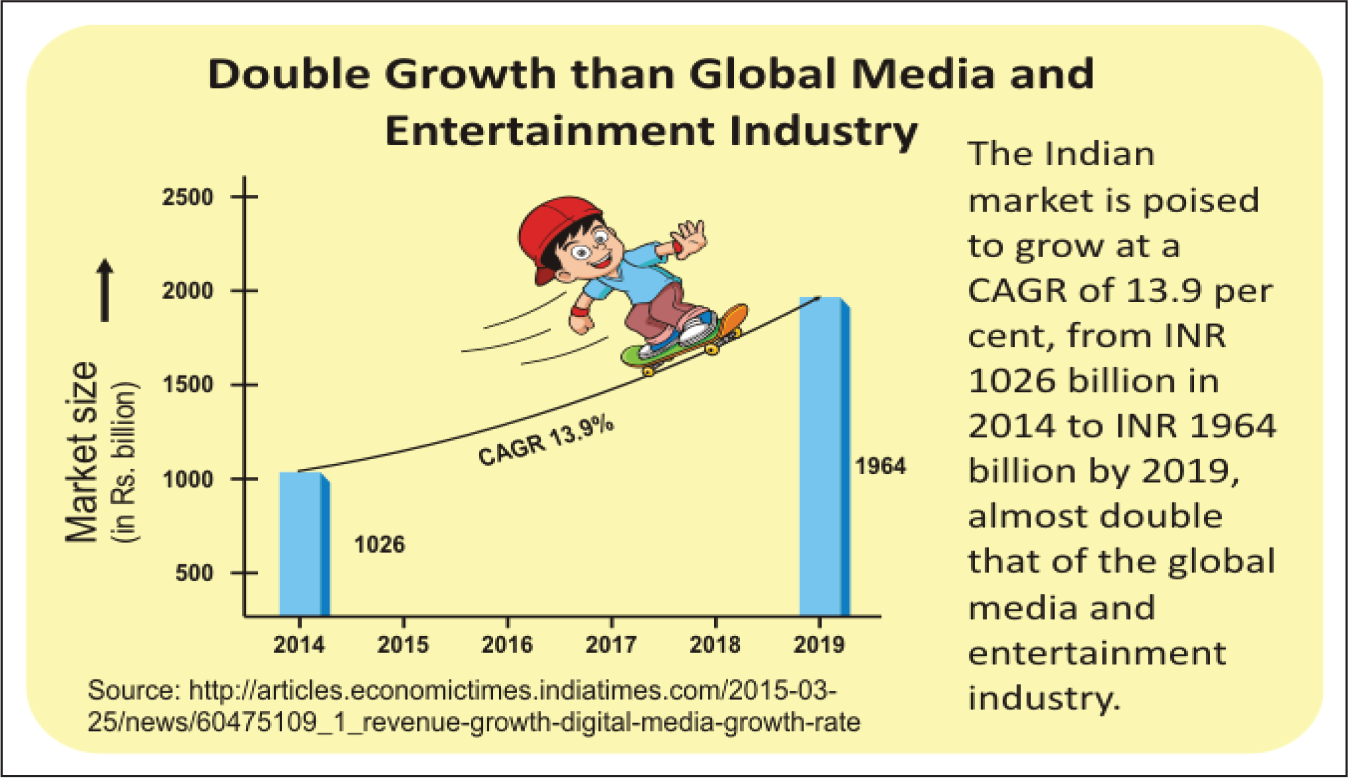
Embracing the smartphones by the expanding middle class will continue to be a substantial growth catalyst, as handset vendors strengthen their focus on lower-tier cities, and as economic prospects improve for India’s large, youthful population, India’s gaming market is poised to soar as well. Surging ahead, app store game downloads for both local and foreign players are anticipated to more than double to 1.6 billion in 2016, and touch 5.3 billion by 2020 (Figure 3). The gaming sector has always has been taken as to be a hit-and-miss affair, very much like the movie business. So, the next question is how to create great gaming companies out of our country? Gaming giants such as Supercell ($10.3 billion), King Digital ($5.8 billion), Zynga ($2.22 billion) and Gamesloft ($699.5 million) are foremost in writing their own playbooks for accomplishment, such as Supercell’s obsessive focus on small teams to King’s application of its grand old desktop gaming learning to mobile gaming to Gameloft’s penchant of quality of games than quantity and leveraging its colossal audience for distribution. Which of these models will be applicable in the Indian context and of these which would be able to scale virally? Nevertheless, the sector promises unique opportunities for Indian businesspersons to create large businesses — be it in the content space or on any other platform, namely distribution, or audience aggregation.
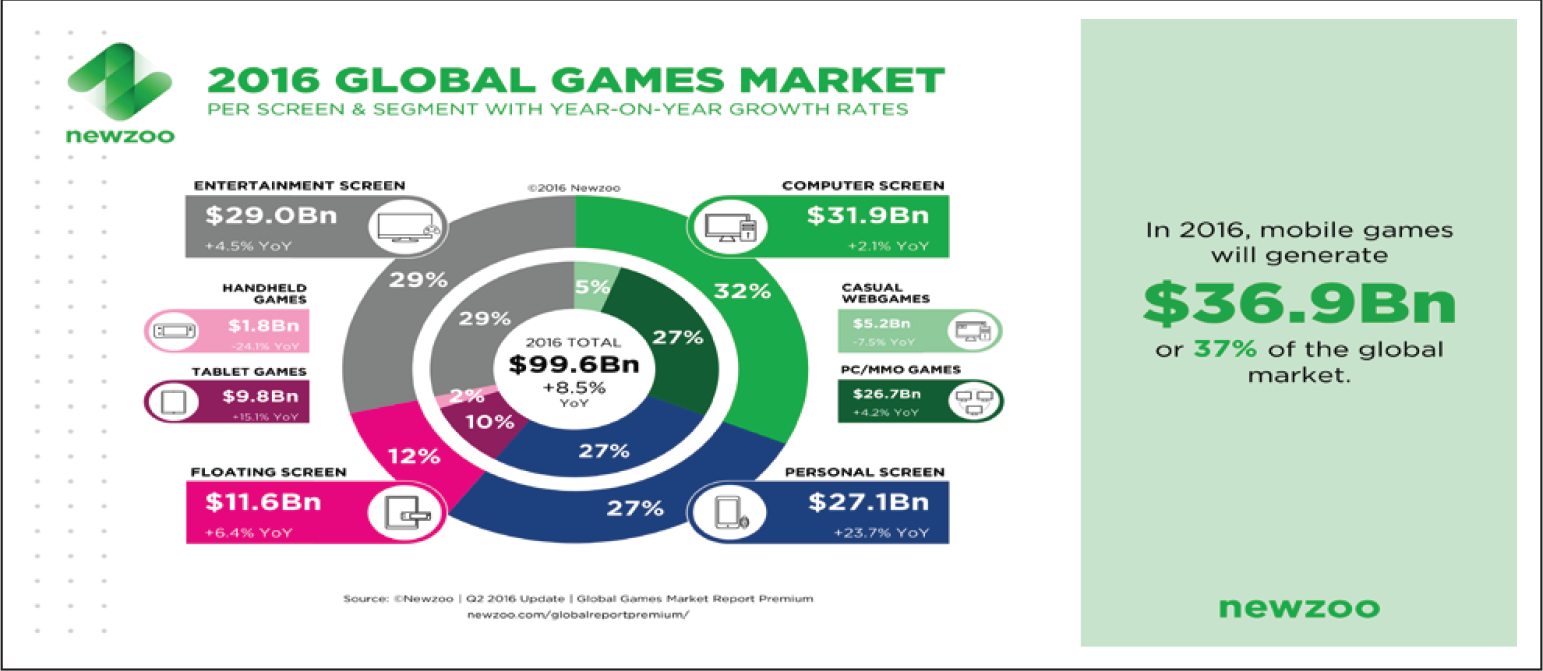
Gaming Industry: India—Strengths
With the second largest youth brigade of the world, as a favour the platform is set for a smooth sail for India to become a leading name in the gaming sector. As on September 2017, the gaming industry in India stands at $890 million with a CAGR estimated to be 14.3 per cent, of which 71 per cent would be gaming on mobile devices (Figure 4).
The growth is catapulted by mounting younger population, high disposable incomes, the institution of new gaming genres and the snowballing number of smartphone and tablet users. Jaydev Mody-owned Delta Corp BSE 2.53 per cent, one of India’s largest gaming and hospitality companies–accomplished the acquisition of Gaussian Network, owner of the nation’s leading poker site Adda52, for a total consideration of ₹2.239 billion in 2016.
Founded by IIT-Delhi alumnus Anuj Gupta, Gaussian Network was touted as India’s biggest online gaming start-up, specializing in rummy, poker, chess, scrabble, golf and pool. In 2016, it posted 30 per cent growth in revenue at ₹471 million. The deal to sell the company was signed last year.
There was a cash purchase of 26% of total shares of Adda 52 for ₹47.3 crore. Later, in lieu of the 74% of the shares left, preference shares were issued with a holding period of 12 months with a total consideration of ₹176.58 crore.
With the completion of the deal, Gaussian Networks has become a 100 per cent subsidiary of Delta, which owns Deltin casinos in Goa and Daman. Post the deal, Adda52 will expand the platform and also enter into live streaming as well as offline activities, Gupta said (The Economic Times).
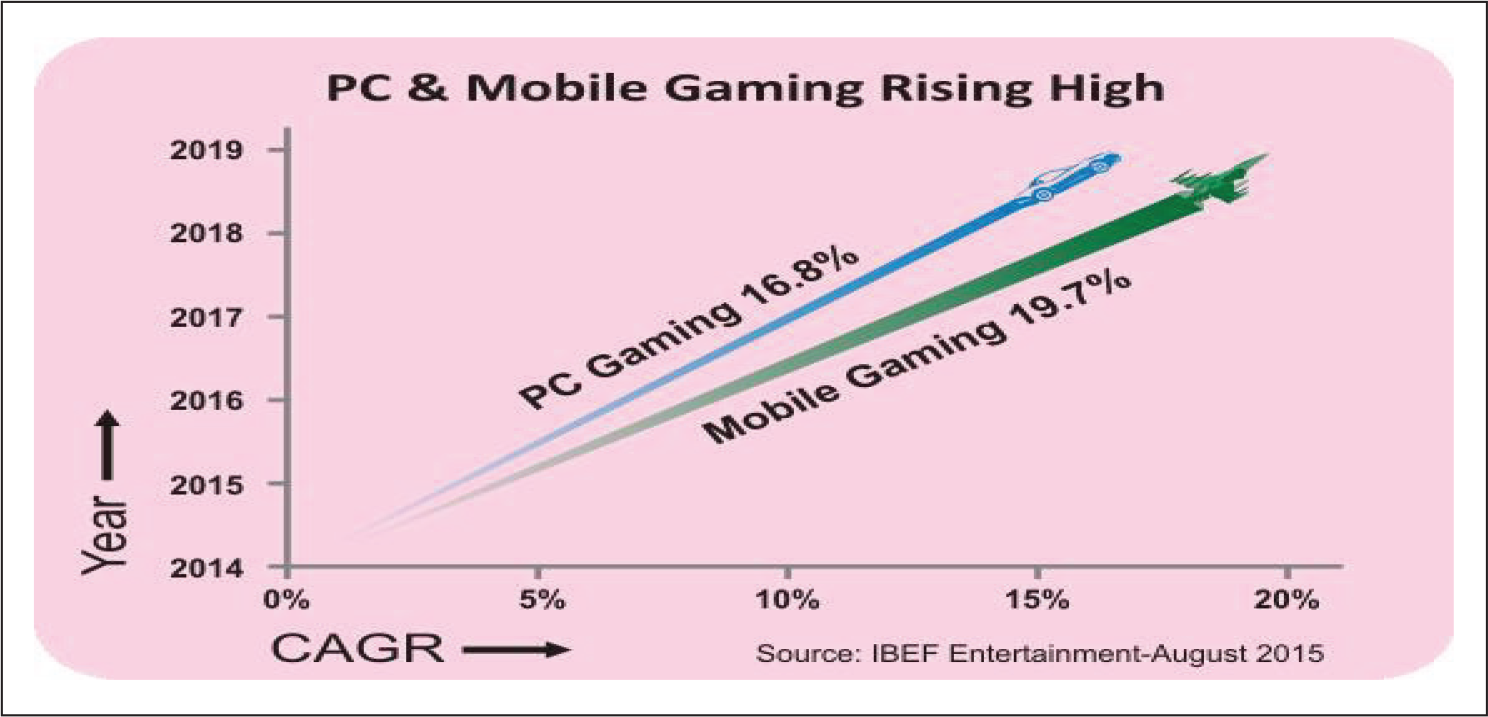
The Animation/VFX industry which was USD 744 million in 2014 has grown at CAGR 16.3 per cent until 2017. The PC gaming segment valued at USD 59.7 million in 2014 and is expected to grow at CAGR of 16.8 per cent to touch USD 130.0 million by 2019 (Figure 5).
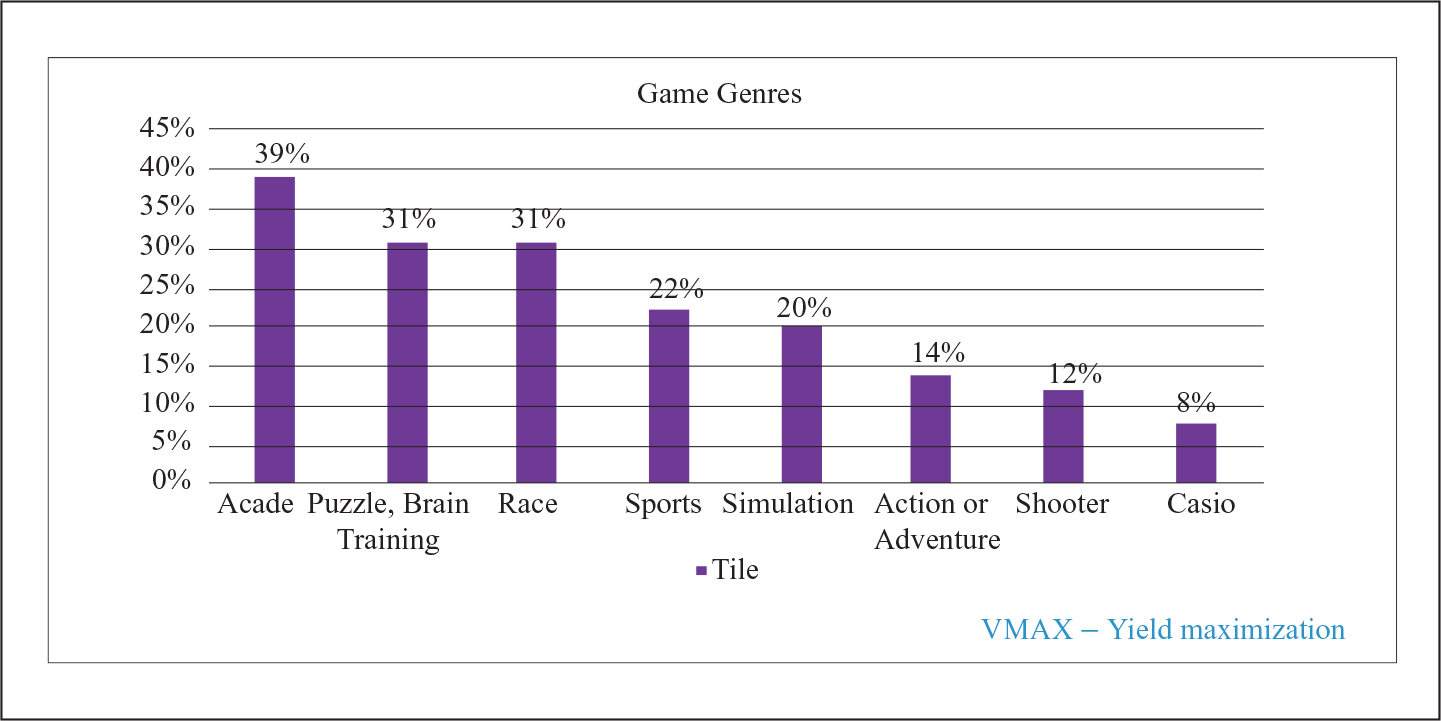
Internet café market is presently anticipated at 3,000 gaming hubs of which 1,500 have six or more systems dedicated to games: 94 per cent are mobile-oriented games with a growing focus on the ‘kids genre’. Arcade style games are one of the most popular ones (56%), followed by a puzzle (28%) and racing games (13%). Kaun Banega Crorepati, T2Ofever.com, IPL, Khel Kabaddi, etc., the famous advertised events are also simulated into games which are of immense curiosity amongst the youth.
Plentiful opportunity is there on the platter with a mounting customer base and e-commerce solutions in place, and the Indian game developer ecosystem will have bountiful opportunity to innovate and provide fascinating content with social and cultural context, which is key to winning the Indian consumer. Indian markets offer the best opportunity for association and development work with experience outsourcing, QA testing and developing products combined with the availability of creative talent, advanced technology and low cost.
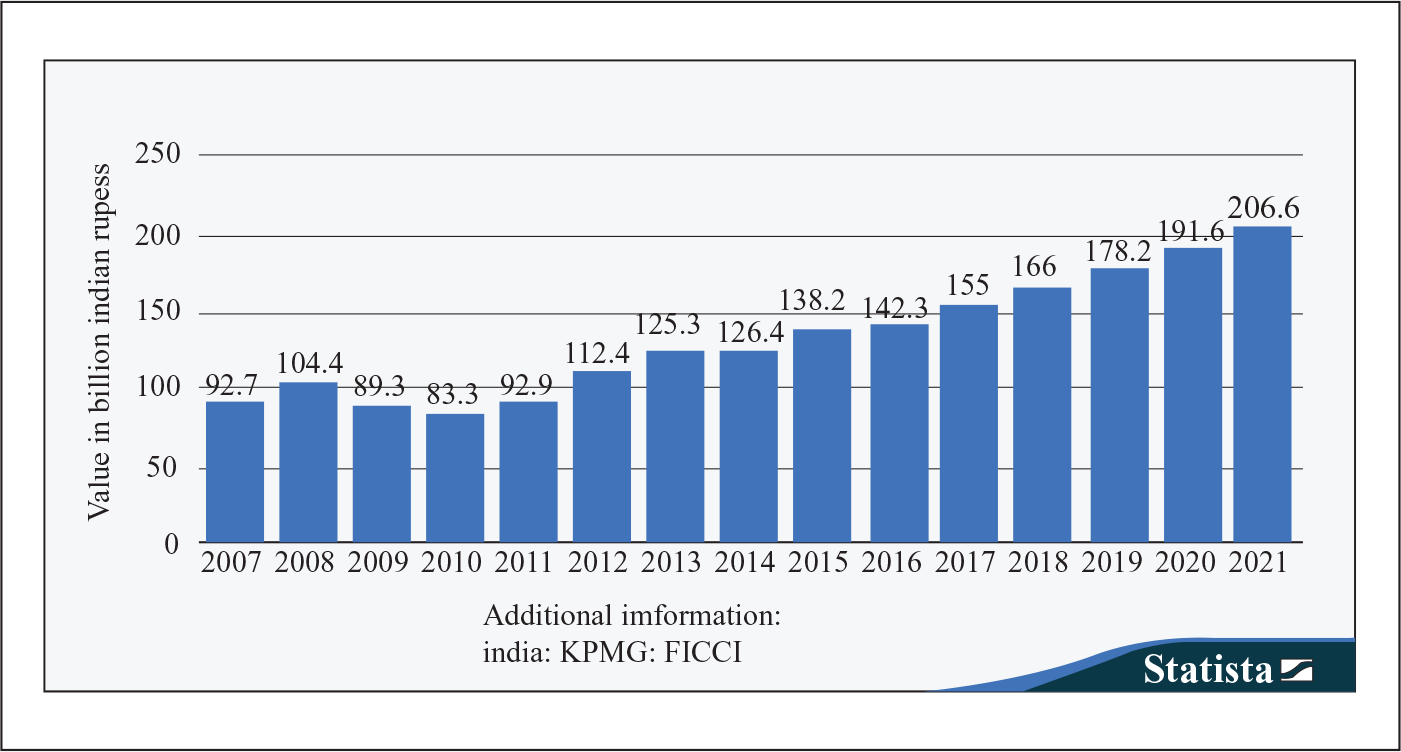
India at the Crossroads
With 70 per cent of Indian population being the youth backed by having the second largest Internet population with huge skills in IT, a creative talent for testing and arts, advanced technology and world class infrastructure, India is poised at an advantageous position. Big development centres such as Microsoft, Disney, Sony, Nvidia, UbiSoft, Zynga, Electronic Arts, Playdom, Digital Chocolate, etc., are paving the way for the best and the preferred set-up requirements for the gaming industry.
India has the world’s largest population who are in their youth, the world’s second-largest Internet population with the availability of creative talent, huge skill set across IT, testing and arts, world-class infrastructure, and advanced technology and existence of big development centres such as Microsoft, Nvidia, UbiSoft, Zynga, Electronic Arts, Disney, Playdom, Sony, Digital Chocolate, etc., paving the way for the best and the preferred set-up requirements for the gaming industry.
The Decision Paradox
Arijit had presented the present situation of the company, the industry and the players nationally and globally to the board. Taking a deep breath, Arijit asked the board members, ‘What do you feel would be suitable for us in such a competitive scenario?’, ‘Would it be right for us to diversify and manufacture games so as to create a sustained brand identity and distinguishing feature as a separate vertical? If so, how to go about with the training business which is surging too?’ Arijit said in a huff. The dilemma is evident, the implications of restructuring the business is also to be weighed and it was tough to establish oneself as a late mover despite the gaming industry is a sunrise industry highly unsaturated and with lots of scopes, but how to connect the dots and move ahead was the million dollar question he was groping to find an answer.
Declaration of Conflicting Interests
The authors declared no potential conflicts of interest with respect to the research, authorship and/or publication of this article.
Funding
The authors received no financial support for the research, authorship and/or publication of this article.
Footnotes
About the Authors
An entrepreneur for over 20 years, Arijit Bhattacharyya is founder of Virtualinfocom, since 1998. He is also the co-Founder of Sportszonein MD-virtualgamedeveloper. Board of Trustee Bong entrepreneurs, VP ELMA, CM TiE. Member CII. He is the creator of India's one of the first 3D games based on mythology and culture. R & D partner & creator of of Virtual Reality solution since 2001. He is creator of India’s one of the first Virtual Reality training institute & lab. For the last several years he has spoken at various national and international platform about Intellectual Property, Innovation, Cyber Security, game development, virtual reality, scale up business, wealth management, startup ecosystem and IP. He can be reached at