







Abstract
Marketing management is one of the practical-oriented subjects in management education, which is very dynamic. In this changing and newly emerging business and marketing ecosystem, the challenge of marketing teaching pedagogy is increasing day by day. In marketing management teaching pedagogical research, there is a scarcity of integrated blended framework consisting of teaching technology and augmented learning exposure in supporting classroom teaching methodology. The study attempts to identify how various factors like theoretical knowledge, practical orientation, teaching technology and augmented learning can impact marketing management education’s learning outcome in the Indian context. Current research has also tried developing and examining a structured framework that may strengthen the classroom teaching environment. This article is based on empirical data of 693 marketing and sales professionals who are mostly alumni from topmost Indian B-schools. Exploratory factor analyses and structural equation modelling, and path analysis are being done to test the conceptual research model. The results of this article demonstrate how contemporary integrated classroom teaching can boost the marketing management learning outcomes with a proper blend of augmented learning exposure, out-of-class exercises and teaching technology in an Indianized way.
Keywords
Introduction
Management education is interpreted as the conjunction point or platform for conveying a set of knowledge or information, skills or abilities, ethics and professional morals to promising management professionals. There must be a proper equilibrium between knowing and doing (or between knowledge and Implementation) to achieve a successful transfer. Management education helps in increasing the potential and performance abilities of the management professionals. In this current scenario, management education and the B-schools are taking the leading role of imparting knowledge, but as many have observed that business management institutions are not able to schooling the requirements of the modern business world (Elmuti, 2004). The condition fronting by the business management institutes is well demonstrated by the words of Paul Valery, a French symbolist writer, who has voiced long ago: The trouble with our times is that the future is not what it used to be. With the changing time frame and complex business situations, the need for management education is also changing very fast. Knowledge or an organized set of information is no simpler to know, but a means to receive a fruitful living. Thus, education is rehabilitated into a sought-after commodity in this competitive marketplace (Datar et al., 2011).
Datar et al. (2011) have thoughtfully deliberated in their amazing book Rethinking the MBA that the practical and applied revelation, the need for outcome-based management education and the technological mixture are becoming an essential requirement the expectation of the potential recruiters. The industry has been hankering about the skills that management graduates should possess. Graduate Management Admission Council has highlighted a few of the aspects that recruiters want from management graduates and by and large, those are Decision Making Ability, Analytical Skill, Problem Solving Skill and Creativity. It has been observed that marketing management is one of the most preferred specializations in Indian business schools because of its vast job market opportunities and higher pay packages. One of the reports published by the Times of India (Jan 12, 2019) has demonstrated that marketing management graduates get higher pay packages. Monster.com has supported this. As one of the popular MBA specialties, marketing management is a highly dynamic field in nature (Erdoğan et al., 2021; Estelami, 2020; Khan, 2017; Rana, 2017; Rana et al., 2017). Marketing management teaching pedagogy is being researched in a diverse way to find and support the most effective method to produce budding efficient marketing managers (Erdoğan et al., 2021; Estelami, 2020; Ferrell & Ferrell, 2020; Khan, 2017; Rana et al., 2020; Shah et al., 2019; Shah et al., 2020). Researchers have established that marketing executives and managers are often vain to comprehend how the suitable strategy is to implement, and they also demonstrate the ineffectiveness in linking with the organization’s general vision and strategic directions (Erdoğan et al., 2021; Estelami, 2020; Khan, 2017). Policy implementation remains an ineffective act with less focus. In this context, marketing education and pedagogy cannot overlook its responsibility to revisit and find out gaps (Naidoo & Wu, 2011).
This current article can be seen as a thoughtful try to find out how to design and achieve the best marketing teaching pedagogy. This article allows us to revisit existing marketing teaching pedagogy in the Indian context from the marketing and sales professionals’ perspective. The research has tried to incorporate various opinions of the marketing and sales professionals who are mostly the alumni of India’s premier business schools to find out the Indianized way to look into marketing management’s pedagogical issues in the Indian context. The findings have profound implications for developing countries where the emphasis is placed on rote-learning or marks rather than on practical skill sets. The findings will also boost the learning outcomes in relation to marketing acumen for producing future high skills in marketing and sales.
Literature Review and Theoretical Framework
Marketing Management is one of the most practical-oriented subjects in management education, which is very dynamic (Borin et al., 2008). He described the ‘hands-on’ and ‘minds-on’ learning are very much essential components in Marketing Management education to enhance the students’ competency in this changing marketing environment. Researchers have emphasized ‘learning by doing’ for better understanding the consumer and marketing processes.
Technology Integration with Augmented Learning and Out-of-Class Exercise in Marketing Education
Eminent researchers have contributed sincerely related to the pedagogical issues to boost up management education as a whole. Some of the researchers have emphasized the management teaching technology and tools such has been mentioned as follows: Audiovisual learning aids are having substantial impacts on learning, and that can engage the students in a better way (Bento, 2011; Nees & Berry, 2013; Rasul et al., 2011). Smart Class is the new addition to the teaching and learning ecosystem that increases the clarity of knowledge projection with relevant educational resources and inputs (Brigham, 2013; Martin et al., 2014; Piccoli et al., 2001; Preston & Mowbray, 2008). Information and communications technology and E-learning are the growing areas of concern, which have been so relevant to connect the knowledge seeker with the appropriate information source more quickly and easily (Bhaumik, 2012; Donnelly & McSweeney, 2008; Pheeraphan, 2013; Seman et al., 2012). In this rapidly growing technology-led teaching and learning environment, higher education moves towards the Interactive learning Module for better engagement and augment learning outcomes (Booth & James, 2001; Lee & Osman, 2012; Mukti & Hwa, 2004). The online digital lecture is increasing the convenience of the students that also promotes the remote learning ethos and value (Drouin et al., 2013; Geith & Vignare, 2019; Grabe & Christopherson, 2008; Hiltz & Turoff, 2005; McMartin et al., 2008; Williams et al., 2012). In this world where the main population portion is occupied by the millennials who are more inclined towards Mobile learning culture, this is a rapidly growing phenomenon (Keengwe & Bhargava, 2014; Korucu & Alkan, 2011; Parsons, 2016; Rajasingham, 2011; Zawacki-Richter, 2009). The change of technology and digitization growth has boosted the management education ecosystem, wherein the teaching and learning process is immensely benefited (Ferrell & Ferrell, 2020; Müller & Wulf, 2020; Tas & Yeloglu, 2018). The application of information technology, the internet contains smart classrooms and the different audiovisual aids positively transformed the knowledge dissemination process. Various researches demonstrated that teaching technology has a significant positive impact on management education (Abdellatif, 2019; Amponsah et al., 2021; Aryani & Siahaan, 2020; Banerjee, 2021; Jain & Chawla, 2021; Lamine et al., 2021; Machumu et al., 2018; Prilop et al., 2021; Riabova & Pogodin, 2021; Shahroom & Hussin, 2018; Wei, 2021). But there is little evidence in explaining how technology can boost classroom teaching with an integrated combination with augmented learning exposes and out of the class activities. This gap has inspired us to formulate the following hypotheses.
H1: In marketing education, teaching technology is significantly related to augmented learning exposure.
H3: In marketing teaching, teaching technology is connected to out-of-class exercise.
H7: Classroom teaching is influenced by teaching technology in marketing education.
Integrated Classroom Teaching in Marketing
Several scholarly research articles have critically emphasized the diverse dimensions of the teaching methodology for the betterment of management education and its positive outcomes related to skill enhancement. In the education teaching methodology domain, the scholars have underlined issues like the Lecture method is the best way to disseminate knowledge (Burkill et al., 2008; Churchill & John, 1958; Griffin & Cashin, 1989; Roy & Banerjee, 2012). Researchers believe that the lecture method is the old schools of thought the learning by doing better way to generate the better learning outcome and also has the power to connect and involve the students (Bauer et al., 2011; Bhattacharya & Chattopadhyay, 2019; Gibbs, 1988; Joyce, 2012; Kolb & Kolb, 2009; Zhao & Jiang, 2009). Some researchers have emphasized outcome-based learning irrespective of any pedagogy(Borin et al., 2008; Davis, 2003; Kaliannan & Chandran, 2012). Another thought of the researchers is that Problem-Based teaching is more superior because this boosts the knowledge’s operation skills and applicability (Anderson & Lawton, 2005; Brownell & Jameson, 2004; Carriger, 2015; Hallinger & Lu, 2011; Roh & Kim, 2015). The Case Study based teaching pedagogy helps long-term retention of knowledge of the concepts and theories learned in class and applies their learning to real business context (Berrell et al., 2001; Christensen & Carlile, 2009; Dixit et al., 2005; Jain, 2005; Mesny, 2013). Critical thinking is another efficient teaching approach to enhance an in-depth understanding of the concepts and theories through application orientation (Athanassiou et al., 2003; Bhattacharya & Chattopadhyay, 2019; Hammer & Green, 2011; Lloyd & Bahr, 2010; Mulnix, 2012). Simulation-based teaching helps the students to understand the logical progression of problem-solving in context to a replicated virtual situation (Grossman et al., 2013; Lu et al., 2014; Salas et al., 2009; Steadman et al., 2006).
Augmented learning exposure has become another significant new section in the teaching methodology research domain related to higher education. Management education is also highly influenced by this new age of teaching and learning. The researchers have brought out the multiple components under the area of augmented learning exposure which can be as follows: Use of research articles and evidence-based literature in management education (Bhattacharya & Chattopadhyay, 2019; Burke & Rau, 2010; Pfeffer & Sutton, 2006; Van Lacum et al., 2014). Experiential learning is a new-age approach that helps in blend knowledge with self-experience (Kayes, 2002; Kolb & Kolb, 2005). Action-based learning improves experimentation habits and learning by self-contribution and participation (Howell, 1994; O’Hara et al., 1996; Reynolds & Vince, 2004). The use of management simulation Games has become one of the popular new-age learning tools to boost decision-making aptitudes (Günther et al., 2011; Korman & Johnston, 2013). Social media headed group, or individual learning is becoming another new-age learning methodology (De Andreav et al., 2012; Kumar & Nanda, 2019; Sobaih et al., 2016; Wankel, 2009) as the teaching and learning process in recent days is changing drastically by keeping a balance with new-age students learning attitude. Many academicians are using augmented exposure as the tools to engage the students for better learning experiences. But how this is helping the classroom teaching and how that is also connected with out of the class activities is not well research area. By observing this aspect, we have formulated the following hypotheses.
H2: In marketing, education augmented learning exposure is significantly related to out-of-class exercise.
H4: In marketing, teaching augmented learning exposure significantly impact the teaching methodology.
H8: Classroom teaching is significantly influenced by augmented learning exposure in marketing education.
Blended Learning in Marketing Education
In this changing and newly emerging business and marketing ecosystem, the challenge of marketing teaching pedagogy is increasing day by day (Madhavaram & Laverie, 2010; Teklehaimanot et al., 2017). In this era, teaching technology and augmented learning exposure is a growing phenomenon in the field of marketing education, and this is also getting its proper outcome with the help of out of class exposure (Chang & Hwang, 2018; Dunleavy & Dede, 2014; Guo, 2011; Kesim & Ozarslan, 2012; Nincarean et al., 2013; Tobias et al., 2014). The article argues that classroom teaching for marketing education needs to be more technology-oriented and augmented learning environment is to be promoted for better teaching and learning experience (Becker, 2007; Chang & Hwang, 2018; Guo, 2011; Herreid & Schiller, 2013; Leese, 2009; Shieh, 2012; Wilson, 2013). Numerous scholars have critically demonstrated that today’s education domain out of the class activity significantly impacts generating high learning outcomes (Rajesh & Reena, 2015; Shi et al., 2002). Out-of-the-class activity blended with technology may boost the classroom teaching experience (Rajesh & Reena, 2015; Wilson, 2013). The researchers have also shown that teaching methodology supported by technology and out of the class activity can increase the horizon of learning with experimentation and enjoyment (Rajesh & Reena, 2015; Wilson, 2013; Zualkernan et al., 2008). But there is a scarcity of integrated investigation on how out-of-the-classroom activities can give a better score in classroom teaching and teaching methodology blended with augmented learning and use of teaching technology. Considering the above-stated arguments, in this article, we have conceptualized the following hypotheses.
H5: In the marketing teaching out of class exercise significantly impacts the teaching methodology.
H9: Classroom teaching is significantly influenced by augmented learning exposure in marketing education.
Impact of Teaching Methodology on Classroom Teaching and Learning Outcomes
Numerous studies demonstrated that there is a synergistic approach between classroom teaching and teaching methodology. Teaching methodology can create a better environment in facilitating the knowledge dissemination process in management education and allows the instructors to engage the students and motivate them to understand the subject matter. This also broadens the horizon of application orientation of the management students. Marketing is one of the highly applied subjects in domain management where the main objective of the course is to develop the skill set of the future managers to address the challenges of today’s volatile, uncertain, complex and ambiguous (VUCA) business ecosystem (Horney et al., 2010; Popova et al., 2018; Sarkar, 2016; Schoemaker et al., 2018). That requires their decision-making ability, analytical skill, problem-solving and creativity (Gersel & Thaning, 2020; Ungaretti et al., 2015). Studies so far in the marketing education domain rightly explore these above-stated issues, but there is a lack of an integrated approach. This has stimulated us to develop the following hypotheses.
H6: In marketing education, the teaching methodology significantly impacts classroom teaching.
H10: Managerial ability of the students is significantly influenced by classroom teaching in marketing schooling.
Based on the hypotheses described above, a conceptual research model is being formulated (see Figure 1) that has tried to unfold how the present-days marketing management teaching and learning ecosystem can be developed to the budding new age managers with a high level of competency to be more industry.
Research Gap
The times that we live in today are in a state of flux thanks to the ever-changing technology and technical enhancements that are happening almost on a daily basis. Technology has invaded almost all areas of our lives and has also crept into the education sector. However, one area which still needs an improvement or instead awaits a transformation is classroom teaching. Age-old practices of classroom teaching in management education still dominate. In India, we still positively focus on the theoretical aspect of things rather than the practical application. And added to this is the fact that the foundations of the theory are mostly either American or European, having very little to do with how Indian consumers act. With the change of the technology, attitude and lifestyle of the Indian youths, the teaching pedagogy in the domain of Marketing Management has to shape-up with the changing market demand. As the student are the core consumers of the management education industry, in rethinking contemporary Marketing Management pedagogy, the dynamism of the management students’ learning attitude and liking has to be investigated. The aforementioned research has sincerely contributed to finding the diverse components unswervingly and indirectly connected to the enhancement of management and higher education. But the researchers have discussed the diverse individual factors in an unintegrated manner. In the existing pieces of literature, there is a lack of integrated framework in explaining how the management education pedagogy can help the budding managers to acquire the skills set to attain the expectation and requirements of the potential recruiter in this changing and competitive marketing environment. In the Marketing Management teaching pedagogical research domain, there is a scarcity of integrated blended framework consisting of teaching technology and augmented learning exposure in supporting classroom teaching methodology. There is a lack of research studies on the management students’ opinion in creating an exciting teaching and learning environment for producing highly competent marketing professionals. The existing literature shows a lack of research on alumni’s opinion-led Marketing Management teaching pedagogical issues in an Indian situation. This gap has motivated us to develop different hypotheses and research objectives. The proposed research model has been conceptualized and constructed and the research objective in this study.
Research Objectives and Conceptual Model
This article focuses on post-graduate Marketing Management teaching in a classroom environment. The study is a thoughtful, honest attempt to identify the various factors involved in theoretical, practical, technological and augmented dimensions of Marketing Management education in the Indian context. Current research has also tried developing and examining a structured framework that may strengthen the classroom teaching environment. The hypotheses-based proposed model (see Figure 1) of the current research demonstrates how these different direct and indirect factors can be instrumental in growing an exciting and comprehensive atmosphere to produce high skilful marketing professionals with enhanced decision-making ability skills, problem-solving skills and creativity. The research model (see Figure 1) of this study has emphasized ‘students learning’ instead of ‘teaching’ to better redesign contemporary and sustainable marketing education pedagogy. In Figure 1, we have conceptualized a hypothesis-based model to capture the marketing and sales professionals’ perspective to revisit and construct systematic marketing management pedagogy in an Indianized way. In our conceptual model, we have explored the interrelationship among teaching technology, augmented learning exposure and class exposure in connection with the marketing education domain.
Proposed Integrated Model of Marketing Teaching Pedagogy and Learning Outcomes
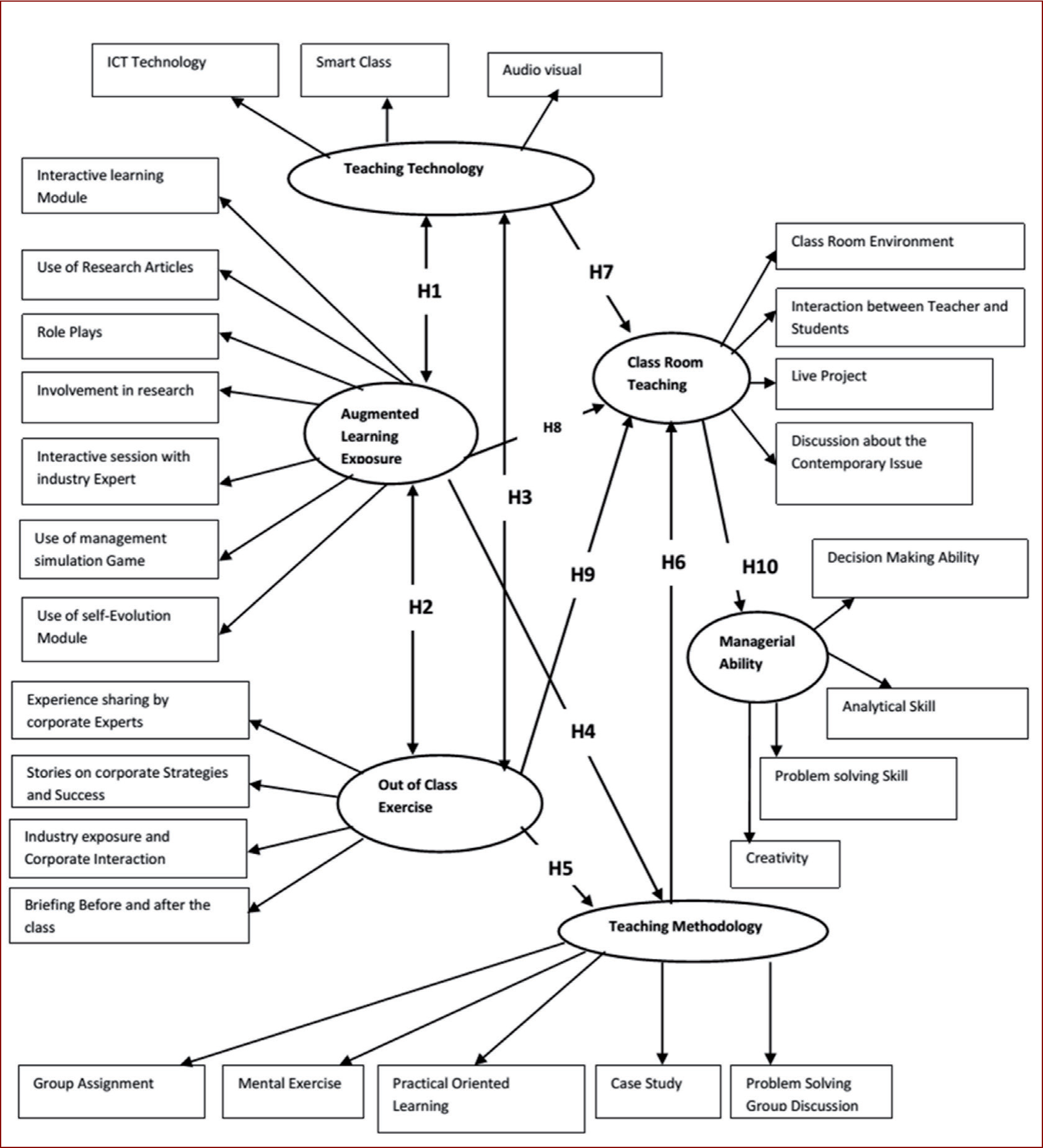
On the one hand, our proposed model also attempted to verify the impacts of augmented learning exposure and out-of-class exposure on teaching methodology. On the other hand, we have tried to measure teaching technology influences, augmented learning exposure, out of the class exposure and teaching methodology on classroom teaching. Finally, our proposed model has attempted to demonstrate the overall contribution of classroom teaching in building managerial ability.
Research Methodology
This study is comprehensively founded on review literature to, directly and indirectly, identify the factors or variables linked to the projected research model. This research is grounded on first hand observed data accumulated from the interaction with marketing and sales professionals who are the alumni of Indian top B-schools. To be more specific, we have considered alumni as students graduating from a business school and having worked for at least two years in the domain of sales and marketing in the industry in this research. A set of responses has been accumulated from the online survey using a list-based sample frame frequently used and is a popular method in online consumer research. To prepare the initial list, we have interacted with the alumni network’s cells and alumni relations cells of the various premier business schools. This stage allowed us to create a curated list of 1475 B-school alumni. Out of the initial list, 735 potential responders were randomly selected (using the random selection module of MS Excel) and were requested to respond to an online structured questionnaire. A Likert scale of five-points (1—strongly disagree to 5—strongly agree) has been used in recording the sample responses. A total of 693 responses (94.28% out of 735 online questionnaire communications) were received in the process of an online survey. A structural equation modelling (SEM) is performed to evaluate the empirical data and validate the proposed research model.
Data Analysis and Results
Reliability and Normality Analysis
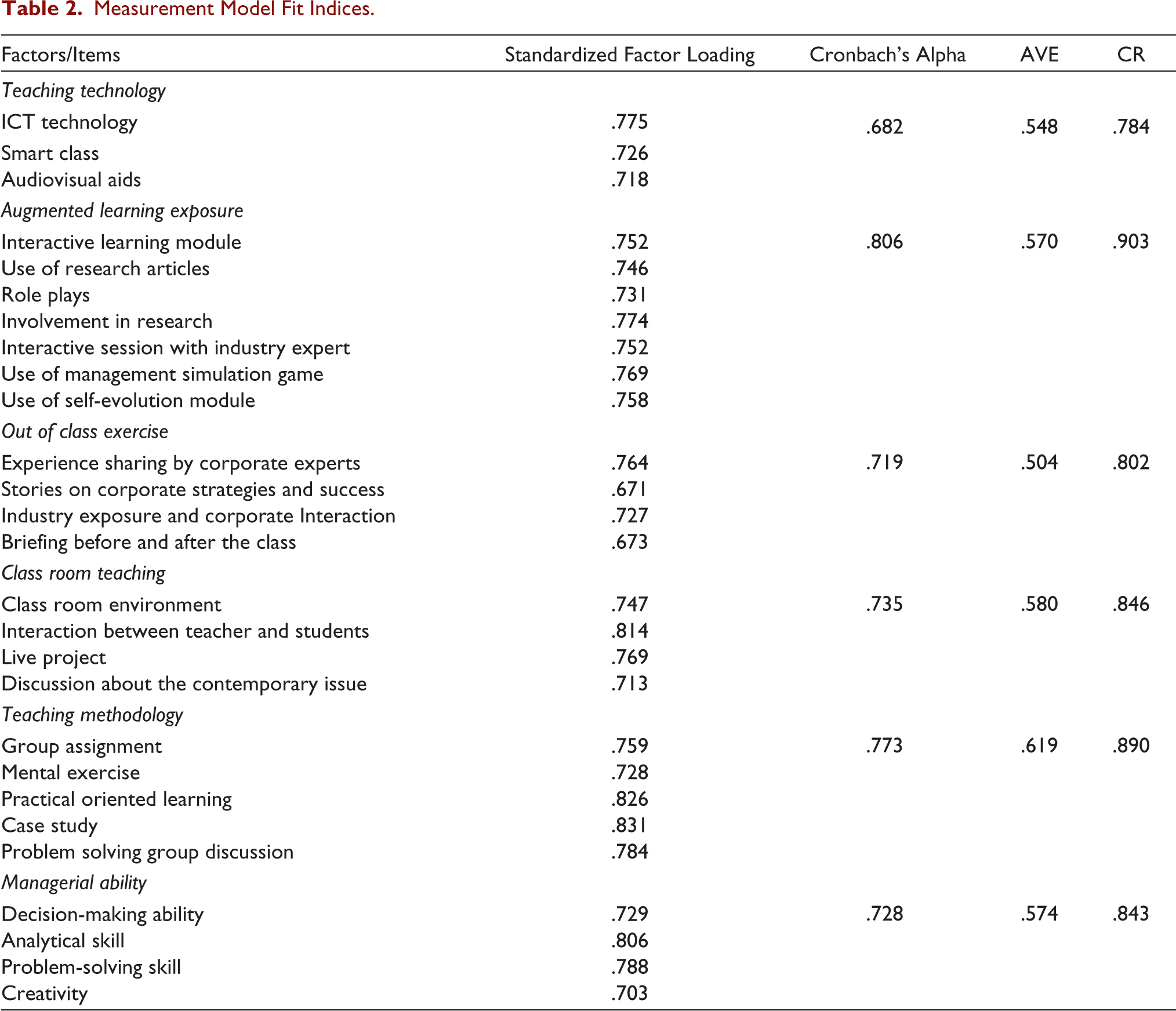
We have done the SEM process with the maximum likelihood estimation technique to do justice with statistical testing that is typically be considered a comparatively robust estimation alternative. From Table 2, this can be viewed that all the value of Cronbach’s alpha coefficients are meeting the minimum required level of .70 in gross this can be said that the reliability of the model is achieved.
Construct Validity
All the factor loadings in this study are having higher value (.50 and above) and which are to be considered as significant at the 0.01 level indicating convergent validity.
From Table 2, it can be said that composite reliability (CR) values are meeting the minimum average (with values .70 and above, which supports the interior constancy of the tested model. The CR of all factors or dimensions is.784 (Teaching Technology), .903 (Augmented Learning Exposure), .802 (Out of Class Exercise), .846 (Class Room Teaching), .890 (Teaching Methodology) and .843 (Managerial Ability).
Model Fit Indices of the Current Research Model
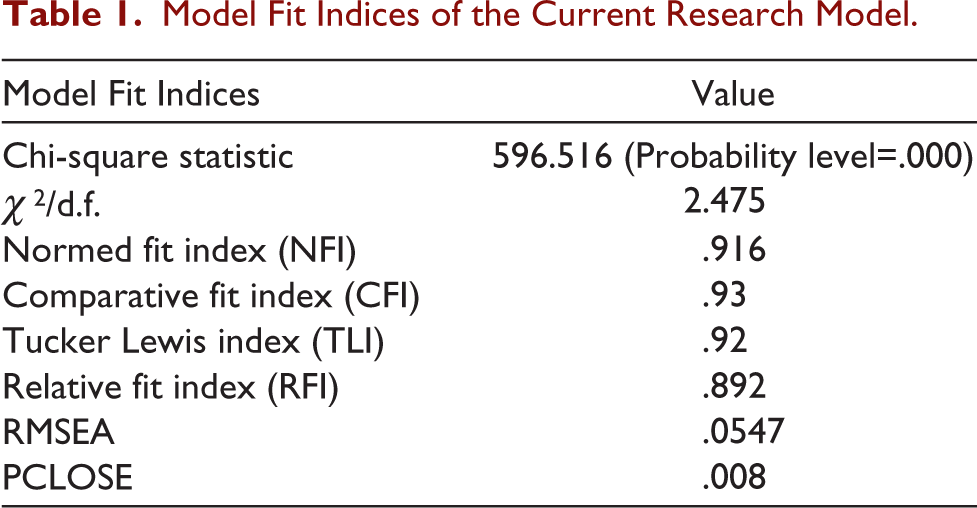
Table 2 also allows us to have the exposure of the different values of average variance extracted (AVE) of all constructs, which are: .548 (Teaching Technology), .570 (Augmented Learning Exposure), .504 (Out of Class Exercise), .580 (Class Room Teaching), .619 (Teaching Methodology) and .574 (Managerial Ability). This can be observed that all the construct maintained the minimum standards of statistical convergent (AVE = 0.50).
Measurement Model Fit Indices
Goodness-of-Fit Indexes for Measurement Model
The model fit indices also provide a reasonable model fit for the structural model.
SEM Procedures
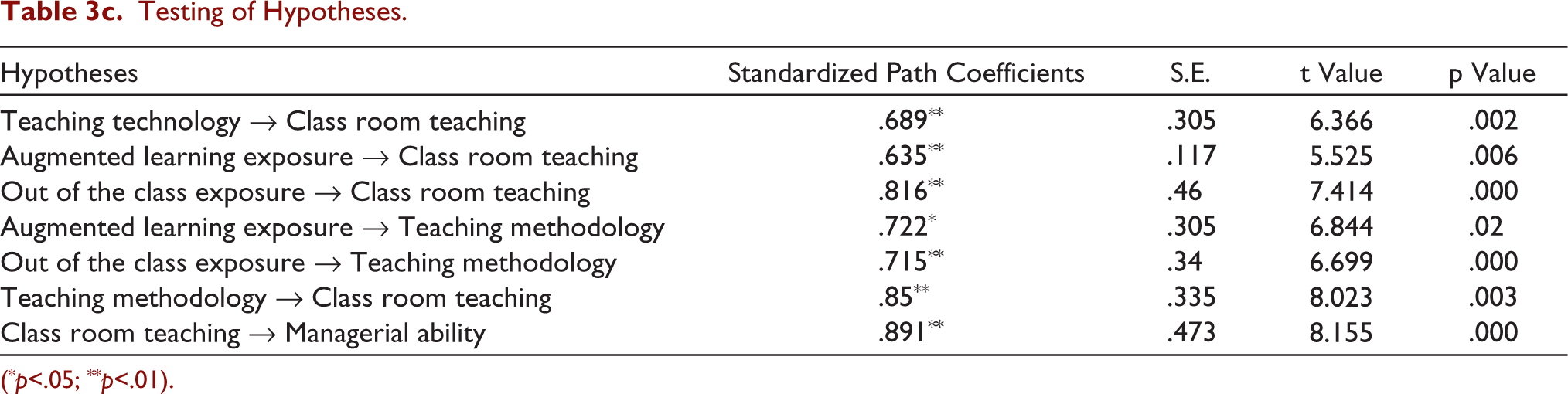
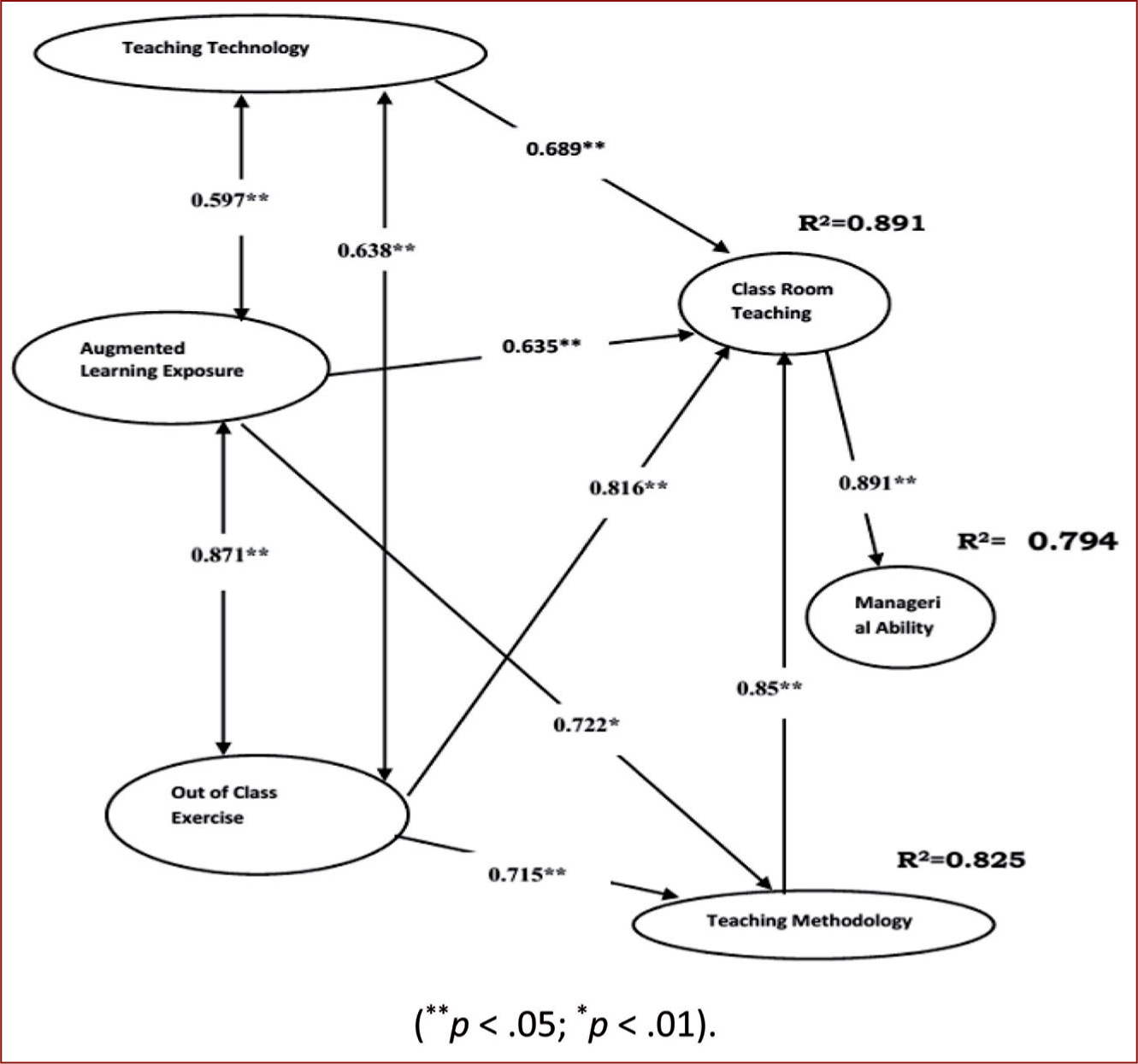
The statistical results shown in Tables 3(a–d) demonstrates that Teaching Technology and Augmented Learning Exposure are having significantly affirmative association (Correlations = .638, Path Coefficient =.263, t = 5.049, p value <.01), this has also been observed that Teaching Technology and Out of the Class Exposure are positively connected to each other (correlations = .758, path coefficient = .282, t = 5.719, p value <.01) and Augmented Learning Exposure and Out of the Class Exposure are positively related (correlations = .871, path coefficient = .312, t = 5.944, p value <.01). The outcome of the SEM has established that Teaching Technology is having a significant positive influence on Class Room Teaching (path coefficient =.689, t = 6.366, p value <.01), Augmented Learning Exposure is having a substantial positive impact on Class Room Teaching (path coefficient =.635, t = 5.525, p value <.01) and Out of the Class Exposure is having a strong positive effect on Class Room Teaching (Path Coefficient =.816, t = 7.414, p value <.01). SEM outcome has demonstrated that Augmented Learning Exposure is having a significant positive influence on the Teaching Methodology (path coefficient =.722, t = 6.844, p value <.05), Out of the Class Exposure is having a substantial positive impact on Teaching Methodology (path coefficient =.715, t = 6.699, p value <.01). Finally, the tested model has strongly depicted Teaching Methodology is having a significant positive influence on the Class Room Teaching (path coefficient =.850, t = 8.023, p value <.01) and Class Room Teaching substantially influences the Managerial Ability of the management students (path coefficient =.891, t = 8.155, p value <.01).
The result summary of the above SEM demonstrates that teaching technology, augmented learning exposure, and out of the class exposure is significantly related to each other. That validates that to develop a cosy marketing management teaching and learning ecosystem teaching technology, augmented learning exposure and out of the class exposure can jointly impact classroom teaching. The SEM model outcome has also guided that if the teaching methodology is blended with augmented learning exposure and out-of-the-class exposure can generate enhanced support to classroom teaching, which eventually contributes to growing with the marketing’s higher managerial ability management graduates.
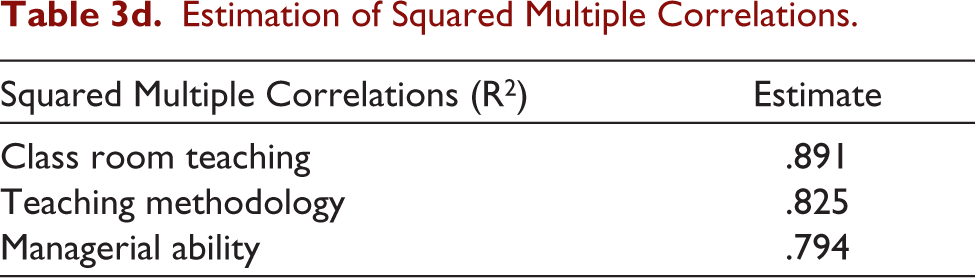
From the empirical evidence, it can be said that teaching technology, augmented learning exposure and out of the class exposure are strongly associated with each other (see Tables 3a and 3b). From the statistical outcome of this article, it can be concluded that Indian alumni favour technology blended learning and cases or experiences given in the Indian context. The results have also demonstrated that augmented learning exposure and outside of class exercise strongly influence the teaching methodology. This is also noticeable because classroom teaching is highly dependent on teaching methodology, teaching technology, class exercise and augment learning exposure (see Table 3c). From Table 3c, this can be said that teaching methodology backed by augmented learning exposure and outside class exercise can boost the classroom teaching method where teaching technology will contribute favourably to make this teaching and learning environment more attractive. Considering the outcome of Tables 3c and 3d standardized model with path coefficients (shown in Figure 2) has critically examined that the classroom teaching process will substantially impact budding marketing professionals’ managerial ability.
Testing of Covariances

(*p<.05; **p<.01).
Testing of Correlations

(*p<.05; **p<.01).
Testing of Hypotheses
(*p<.05; **p<.01).
Estimation of Squared Multiple Correlations
(**p < .05; *p < .01).
Discussion
From the interaction with the marketing and sales professionals, we realized that the principles and theories used in the textbooks are either too Americanized or European in nature, which creates a significant gap in understanding. This is because most of the students in Indian business schools are not exposed to foreign media and culture and therefore find it challenging to comprehend the examples. For example, the concept of equity and equality has different interpretations in the Indian context. An example of the point using religion to sell products is considered perfectly acceptable in the Indian context, but such blatant use of religion in American or European societies may lead to a massive hue and cry in the Caucasian culture. Many alumni have complained to the authors that the ethics that are taught in business schools are not even close to what is practiced in Indian markets. There seems to be an exact requirement for an Indianized marketing management course that brings into focus the Indian way of doing business.
This research has perfectly proved that Teaching Technology, Augmented Learning Exposure and Out-of-the-Class Exercise are strongly connected, showing that today’s management student who learns Marketing Management prefers technology blended learning and cases experiences given in the pure Indian context. The statistical results clearly established that the Augmented Learning Exposure and Outside of Class Exercise strongly influence the Teaching Methodology related to Marketing Management teaching and learning. This research data analysis has significantly established that Teaching Methodology and Teaching Technology positively impact classroom Teaching. Hear, this is clear that teaching methodology backed by augmented learning exposure and outside class exercise can boost the class room teaching method where teaching technology will contribute positively to make this teaching and learning environment more attractive. Technologically updated, out-of-class exercise-oriented augmented learning exposure and blended teaching methodology-based classroom teaching process will substantially impact the budding marketing professionals’ managerial ability backed with decision-making ability, analytical skill, problem-solving skill and creativity.
Implications
This study demonstrates how the different B-schools’ engaged in imparting marketing education must focus on strengthening managerial ability backed by four core skill, namely decision-making ability, analytical skill, problem-solving skill and creativity. This study has unfolded that in the process of nurturing the future marketing managers’ managerial ability, the role of classroom teaching is truly imperative. This changing business ecosystem combined approach is recurred wherein teaching methodology must be blended with teaching technology, augmented learning exposure and out-of-class exercise. This research is based on the voice of alumni of top B-schools, which has highlighted that Indianized viewpoints must be brought into the class discussion to be more market-relevant. This article shows that profound implications for developing countries like India must emphasize the practical skill sets instead of rote-learning or the occidental teaching approach. The study was conducted within India and based on the responses of marketing graduate professionals who are alumni of the topmost B-schools. With the larger sample size, the statistical result may get changed. For better model validation, this study can be replicated in other developed countries or in other developing and underdeveloped countries to make it more generalizable.
Conclusions
In conclusion, this can be firmly said the need of the hour is to integrating teaching technology, augmented learning exposure, and out of the class exposure to boost the overall learning outcome to produce high-impact marketing professionals in Indian. Promising new-age marketing managers will benefit from more outside-of-classroom exposure and augmented learning exposure. So, this is high time that the Indian B-school teachers of the marketing management domain need to develop better skills in connecting out-of-classroom exposure and different ways of augmented learning exposure with classroom teaching. Contemporary Marketing Management teaching pedagogy can be improved with the proper blend of augmented learning exposure, out-of-class exercises, use of advanced technology and Indian examples. This has been observed in this complex and highly digitized situation where all businesses’ challenge is becoming extraordinarily high wherein the practical orientation is becoming so much crucial with the strategic use of online platforms and resources for better and fast knowledge dissemination. So, the marketing management teaching pedagogy must incorporate tools and techniques from the digital and analytical framework for a better learning outcome. This study contributes to the domain of Marketing Management teaching and pedagogical research. This research can be considered one of the significant works that has tried to propose an integrated model that can boost tomorrow’s outcome-based marketing management teaching with comprehensive pedagogical solutions based on the opinions of the marketing and sales professionals who graduated from topmost Indian B-schools. This article has demonstrated that contemporary integrated marketing management teaching pedagogy can be improved with the proper blend of augmented learning exposure, out-of-class exercises, use of advanced technology and Indianized theory. Promising new age marketing managers will be highly benefited from the proposed teaching pedagogical framework in acquiring the knowledge and skills set to fulfil the expectations of the potential recruiters who are in the process of talent acquisitions to optimize their human resource-led competitive advantages for greater marketing sustainability.
Future research can be conducted to capture the responses from other stakeholders of the B-schools to see how the research results differ. A large-scale replication of this study may broaden the understanding of how the marketing management blended pedagogy can be more helpful in standing the managerial abilities of future managers. Future research can also replicate this study in other specialization domains of management education to find out the best pathway to train future managers to be more job fit.
Footnotes
Declaration of Conflicting Interests
The authors declared no potential conflicts of interest with respect to the research, authorship and/or publication of this article.
Funding
The authors received no financial support for the research, authorship and/or publication of this article.