







Abstract
This study sought to investigate the relationship between social media brand engagement and resilience to negative word of mouth (RNWOM) when mediated by brand familiarity. Using stimulus–organism–response (SOR) theory, it is suggested that the dimensions of social media brand engagement act as a stimulus to drive responses like RNWOM directly and indirectly through brand familiarity as an organism. A self-administered questionnaire was used to survey 505 customers in the telecommunications industry in Tanzania, and the data was analyzed using structural equation modelling in AMOS 21. The findings indicate that social media brand engagement dimensions are the drivers of brand familiarity; brand familiarity explains why and how customers develop RNWOM. Therefore, marketers should use social media brand engagement as a strategic tool to build brand familiarity, which can help customers improve their capabilities to resist negative information about brands.
Keywords
Introduction
Negative word of mouth (NWOM) has an undesirable effect on the performance of business firms (Chawdhary & Weber, 2021; Hester, 2021; Torres & Augusto, 2019). These effects include a fall in profitability levels and customers’ switching behaviours, which can miserably tarnish corporate reputations (Amani, 2022a; Elsharnouby et al., 2021). Amid the miserable effects of NWOM, recent statistics indicate that 82% of customers search for negative information about the brand before making buying decisions (Hester, 2021). Levy and Gvili (2015) provide a fair argument that negative information has a greater impact on brand evaluation compared to positive information. Negative messages or information about the brand draws customers’ attention compared to positive messages or information (Hester, 2021). Zarei et al. (2020) confirmed that customers assess brands based on negative messages or information more highly than positive messages or information. Augusto et al. (2019) argue that, in the context of consumer psychology, customers are eager to search for negative information compared to positive information. This is called negativity bias, which means that customers pay a lot of attention to negative information or messages shared on social media and act quickly on them (Elsharnouby et al., 2021).
Overall, due to customers’ great interest in or attention to negative information when evaluating a brand, further statistics indicate that 94% of consumers refuse to patronize a brand due to negative information (Hester, 2021). According to Baber et al. (2016) and Esenyel and Girgen (2019), customers’ growing interest in negative information is due to the increasing use of Web 2.0 technologies that have accelerated the acceptance of social media as digital platforms for reviewing and evaluating different brands, sharing opinions and registering complaints about the brands. Augusto et al. (2019) and Torres and Augusto (2019) argue that the emerging use of social media among customers has put marketers under pressure to adopt different brand-oriented strategies to minimize the adverse effects of NWOM. However, there is a paucity of research that focuses on examining different brand-oriented strategies that can be used by business firms to manage the adverse effects of NWOM (Elsharnouby et al., 2021; Japutra et al., 2018).
Various traditional mass marketing strategies like public relations and advertising have been widely adopted by business firms to respond to NWOM despite a substantial drop in public trust towards these strategies (Elsharnouby et al., 2021). Public relations and advertising produce marketer-generated content that always differs from customer-generated content (Zarei et al., 2020). Almestarihi et al. (2017) and Amani (2022) add that customers believe that marketer-generated content exaggerates the information and thus does not represent the truth and broader picture of the brand. In this view, Augusto et al. (2019) suggest that empowering customers with the ability to resist negative information has been promoted to manage the adverse effects of NWOM. Resilience to negative word of mouth (RNWOM) is the extent to which existing and potential customers do not allow negative information or messages to reduce or negatively affect their trust and perception of the brand (Elsharnouby et al., 2021). It is a form of extra-role behaviour demonstrated by customers through prioritizing brand-specific interests (Ali et al., 2021; Sawaftah et al., 2021). It represents a high level of brand strength, as it empowers customers to uphold their loyalty and commitment to their favourite brand regardless of threats and misfortune from different online platforms (Augusto et al., 2019; Javed et al., 2015).
Despite the strategic role of RNWOM in reducing the impact of negative information in social media, scant literature exists on the drivers of customers’ resistance to negative information (Elsharnouby et al., 2021; Torres & Augusto, 2019). Recent literature suggests that business firms can build internal psychological states that drive customers to increase their intention to resist negative information by making them value co-creators (Javed et al., 2015). According to Amani (2022b) and Javed et al. (2015), engaging customers in building and sustaining the value of the brand as value co-creators can improve various customers’ attitudinal behaviours such as loyalty, commitment, brand defence and so on. In a virtual marketplace with the dominance of social media usage, businesses and firms should empower customers to resist negative information and develop attitudinal behaviours like brand value co-creation (Amani, 2022b; Costanza, 2018). Evidence indicates that when customers are involved in brand value co-creation, they will be willing to protect the brand through various extra-role behaviours, including brand defence (Javed et al., 2015; Sood & Sharma, 2021). According to the Stimulus Organism Response (SOR) theory, when a person is exposed to environmental stimuli, his or her psychological state is stirred up to demonstrate a certain behaviour that is related to the stimuli (Islam et al., 2020; Perez-Vega et al., 2021).
Empirical evidence indicates that Web 2.0 technologies such as social media play an important role in building various extra-role behaviours or value co-creation behaviours (Amani, 2022c). Shaykhzade and Alvandi (2020) posited that social media has transformed the model of interaction and engagement between customers and brands. Esenyel and Girgen (2019) postulate that social circles are expanded through social media while leveraging the frequency and duration of customer interactions. Marketers use online or digital platforms as the most effective way of communicating and strengthening their corporate reputation and building the bond between customers and the brand (Zarei et al., 2020). Due to its effectiveness compared to other traditional mass marketing strategies such as advertising, social media usage is being popularized and promoted by marketers in digital settings as the best approach for promoting brands (Torres & Augusto, 2019). Doss (2015) and Kinyongoh (2019) show that social media marketing is cheaper and gets more responses than traditional mass marketing methods like advertising.
Despite the incomparable advantages over other traditional advertising, recent evidence indicates that social media has brought new challenges to brand managers and marketers (Zarei et al., 2020). In the virtual marketplace, marketers have less control over the message types and content (Chih et al., 2013). In the digital era, business firms may either benefit from customers through brand value co-creation or face counter-branding campaigns from customers and the public in the form of negative information or messages (Azemi et al., 2020; Nguyen & Nguyen, 2021). The emerging use of Web 2.0 technologies, particularly social media, has eliminated limitations that could restrict sharing or disseminating information or messages (Samad et al., 2020). Social media enables creating and sharing or distributing any message or information about the brand that influences the behaviour of customers (Wolny & Mueller, 2013). This circumstantial environment promotes the importance of building resilience towards negative information in digital settings (Elsharnouby et al., 2021). The research domain on resilience to negative information is still in its infancy (Torres & Augusto, 2019); hence, few scholars have examined the antecedents and consequences of RNWOM (Elsharnouby et al., 2021).
A few studies on resilience to negative information or messages recommend the importance of extending studies in this research domain to enrich the theoretical and empirical understanding of the management of negative information in both offline and online settings (Torres & Augusto, 2019). The study by Elsharnouby et al. (2021), which examines the role of information quality, rewards and virtual interactivity on resilience to negative information, recommends more studies on highly interactive industries while considering other dimensions focusing on high customer-brand interaction. Furthermore, Torres and Augusto (2019) discovered that resilience to negative information could be built on products with a high brand personality and a positive attitude. Also, the study acknowledges the paucity of studies on resilience to negative information and recommends further studies that consider the interactive environments of social media and their impact on resilience to negative information. Augusto et al. (2019) developed and tested the conceptual model using identification theory and reported that customer brand identification could influence resilience to negative information in highly interactive sectors such as the airline industry. The study suggests the importance of replicating and retesting the model across different cultural and social contexts to validate the findings.
This study sought to propose and test a conceptual model that investigates social media brand engagement as a stimulus towards building RNWOM as a response via brand familiarity as an organism in the telecommunications industry. The term ‘social media brand engagement’ covers the psychological and physical involvement and interaction of customers in a broader spectrum of activities for making decisions that affect the brand-building process (Gómez et al., 2019). The study theorized that, as much as social media brand engagement influences other attitudinal behaviours like loyalty, it could be used to influence RNWOM. It built a theoretical understanding in the research realm, which suggests that social media promotes brand value co-creation by engaging customers in participative, experiential and interactive ways (Amani & Chao, 2021). The study intends to extend knowledge of RNWOM by employing the SOR theory, which has not been well used to conceptualize and examine the antecedents of resilience to negative information in previous studies. Moreover, the study proposed a model that tested the mediation effects of brand familiarity in the relationship between the dimensions of social media brand engagement and RNWOM.
Literature Review and Hypotheses Development
Stimulus Organism Response (SOR) Theory
The theoretical model of this study was developed with the support of the SOR Theory. The SOR theory was developed by Mehrabian and Russell (1974) in their efforts to theorize the mechanisms that motivate an individual to develop decisions to act behaviourally. The theory proposes that unique attributes of specific environments fuel an individual’s internal psychological state and eventually drive the internal feelings of the individual to behave in a certain manner (Perez-Vega et al., 2021). SOR suggests that the environment surrounding an individual contains attributes that elicit specific psychological states in the minds of the individual, which in turn influence intentions to demonstrate different behaviours (Islam et al., 2020). As noted by Mehrabian and Russell (1974), those attributes of the environment are ‘stimuli’, which build a certain psychological state in the minds of the individual, that is, ‘organism’, and eventually drive the individual to demonstrate behaviour intention, that is, ‘response’. The majority of past studies used SOR theory to examine customers’ responses after being engaged with service providers (Islam et al., 2020; Perez-Vega et al., 2021).
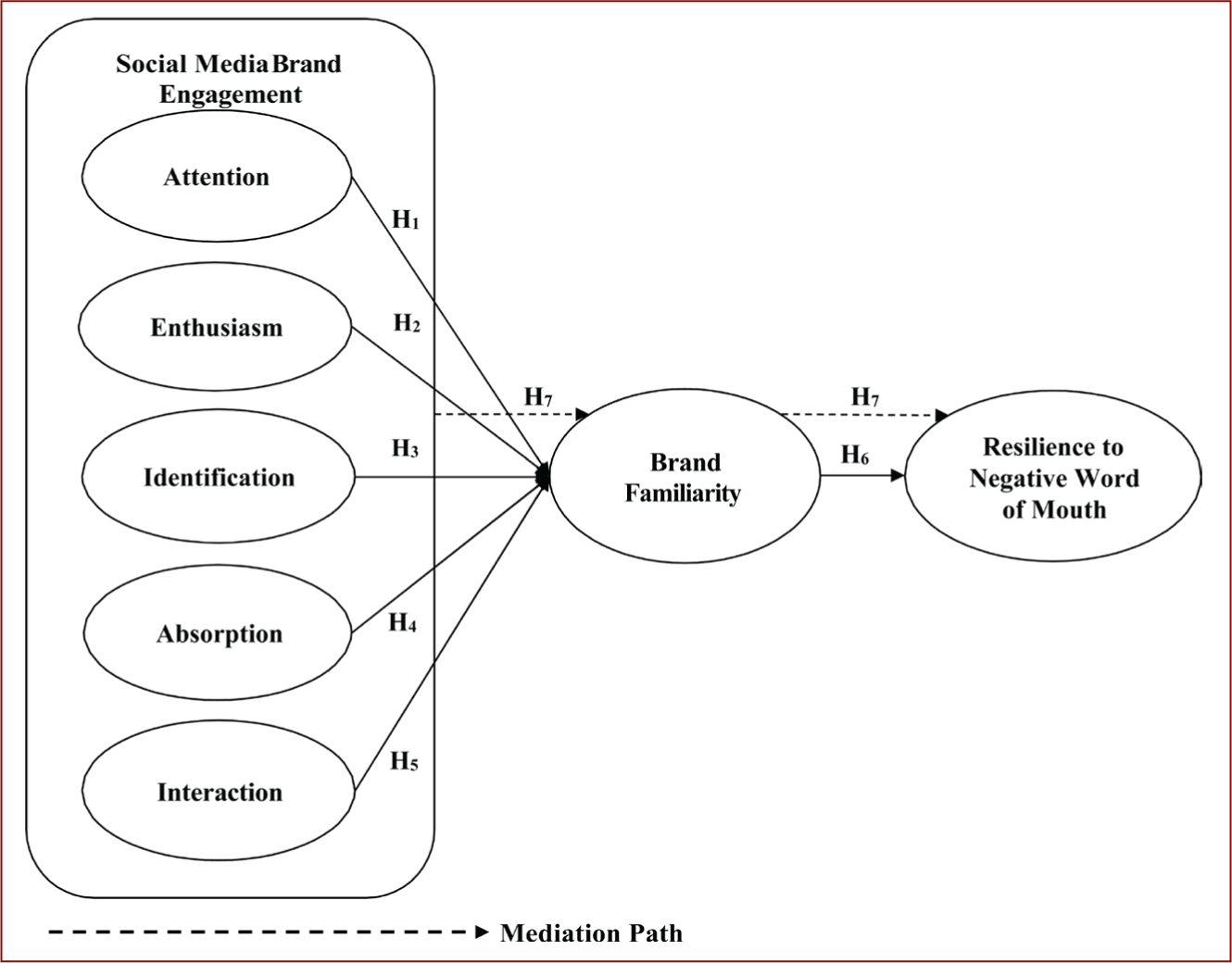
SOR theory suggests three important dimensions: stimulus, organism and response. Stimulus encompasses a collection of attributes that motivate customers’ perceptions and inner states of mind. Islam et al. (2020) argue that a group of attributes act as cues that penetrate the customers’ consciousness and motivate or stimulate different actions or behaviours. In this study, the stimuli include various dimensions of social media brand engagement through which customers are engaged with the brand and shape or reshape their feelings towards the brand. Organisms refer to internal states that intervene in processes that take place between input (stimulus) and output (response) (Islam et al., 2020; Perez-Vega et al., 2021). It involves the process of interpreting or evaluating input to assign specific meaning that can help an individual develop a certain behaviour attributable to input. Organism refers to familiarity, which is information, understanding or knowledge that a customer develops after evaluating various dimensions of social media brand engagement. Furthermore, responses represent or imply specific outcomes due to the individual’s understanding or knowledge developed out of their internal feelings (Amani, 2022c). It is demonstrated through specific responses or behaviours attributable to an organism. In this study, response implies resilience to NWOM, which is a form of behavioural intention of customers to defend their favourite brands by resisting negative information thrown at the brands.
Mediation Role of Brand Familiarity
Brand familiarity is extensively conceptualized in numerous pieces of marketing literature (Acharya, 2021; Morgan et al., 2021; Rhee & Jung, 2019). Brand familiarity is a direct and indirect experience that customers accumulate due to the reflection of brand image and brand identity (Acharya, 2021). Bapat (2017) posits that such experiences about the brand emanate from prior exposure, WOM recommendations, information search, consumption, etc. Brand familiarity is a crucial component in building customers’ purchase intentions since it covers the composition of customers’ brand knowledge within their memory. In the emerging use of Web 2.0 technologies, customers are aware of different advertisements for brands. However, in some cases, they might be unfamiliar with the brands since they were not interested in the ads or the brands were not specifically exposed to them (Morgan et al., 2021). Customers’ knowledge of familiar or unfamiliar brands relies on their understanding and memorable experiences. Customers might become uncertain about the value of unfamiliar brands due to limited information that could help them be certain and make an informed judgement about the brand. Thus, inadequate brand knowledge may fuel cognitive effort when making purchase decisions (Bapat, 2017). It is further suggested that customers with limited knowledge or memory about the brand may have difficulty acquiring information associated with the brand, which would determine the evaluation outcome (Rhee & Jung, 2019).
Numerous empirical studies suggest that familiarity is an important factor in determining customers’ brand evaluations and purchasing decisions, thus enhancing a positive attitude towards a specific brand (Rhee & Jung, 2019). Acharya (2021) and Nepomuceno et al. (2014) noted that brand familiarity reduces customers’ perceived risk in purchase decisions and enhances their self-confidence during the purchase. Brand associations are the most important mechanism that builds brand familiarity during evaluations. Brand associations can be enhanced through customer engagement and facilitating quick and easy access to information about the brand (Low & Lamb, 2000). Strong brand associations can facilitate quick access and processing of information for familiar brands rather than unfamiliar brands through customer engagement. In addition, strong association with a familiar brand stimulates a customer-brand relationship that is expected to stimulate the intention to defend the brand (Amani, 2022a; Javed et al., 2015).
Social Media Brand Engagement
Web 2.0 technologies, particularly social media, have influenced marketers to change traditional metrics for maintaining relationships with customers (Karunasingha & Abeysekera, 2022). Ever-growing competition among brands in the global marketplace has necessitated a drastic shift from conventional metrics to modern metrics for building customer-brand relationships (Chahal et al., 2020). As noted by Di Gangi and Wasko (2016) and Gómez et al. (2019), SOR theory conceptualizes customer engagement as strategic practices that can be used to nurture a strong customer–brand relationship that offers more benefits than conventional metrics. Through social media, customer engagement has been strengthened, which consistently leads to customer–brand relationships (i.e. exchange of values) (Di Gangi & Wasko, 2016; Karunasingha & Abeysekera, 2022). Social media brand engagement can be defined as the physical and psychological involvement, participation or interaction of customers with their brand, which facilitates inclusive brand value co-creation activities (Schivinski et al., 2020). It can also be defined as a forum that provides chances for customers to participate in brand value co-creation through participative, experiential and interactive methods (Di Gangi & Wasko, 2016).
Hollebeek et al. (2014) argue that social media brand engagement leads to attitudinal behaviours such as brand knowledge, brand familiarity, brand loyalty, positive word of mouth and patronage. Kumar and Kaushik (2020) show that different customer engagement strategies, including social media brand engagement, can evoke brand advocacy and the intention to revisit the tourist destination among tourists. Social media brand engagement is a modern metric that adopts a relational-based approach rather than a transactional-based approach in enhancing customer–brand relationships (Amani, 2022d; Perera et al., 2020). Within a relational-based approach, social media brand engagement is perceived as a multi-dimensional variable that evokes a psychological state that manifests itself in the form of customers’ experiences during interaction with the brand (Perera et al., 2020). Therefore, Kumar and Kaushik (2020) suggest that social media brand engagement is constituted of five main dimensions: identification, enthusiasm, attention, absorption and interaction.
Attention
Web 2.0 technologies, particularly social media, have increased customers’ willingness to become more focused on any information shared on social media about their loved brands or competitors’ brands (Kumar & Kaushik, 2020). Theoretically, brand knowledge is developed when customers’ locus of control is invested in the brand. Also, attention is an important driver of a sense of brand possession. It involves customers’ concentration when participating in or discussing the brand on social media platforms (Chahal et al., 2020). Attention motivates customers to concentrate on anything shared or communicated on social media regarding the brand. It can influence customers to engage on various social platforms to share their views, comments, recommendations, etc. about the brand (Di Gangi & Wasko, 2016). Theoretically, attention creates enabling environments for value co-creation as it ensures a quality expressive relationship between the brand and customers. Kumar and Kaushik (2020) suggest that a higher level of attentiveness towards the brand indicates closeness with customers. Through attention, customers develop a higher level of acquaintance with the brand. Therefore, based on the above explanation, this study hypothesized that:
Enthusiasm
Enthusiasm is a mental state that drives customers to demonstrate behaviours such as excitation, infatuation, fanaticism and obsession (Kumar & Kaushik, 2020). It is a form of idealization and obsession that occupies the minds of customers and motivates them to develop an intent to have a long-lasting engagement with the brand. Enthusiasm can elicit behaviour related to possession of an object (Chahal et al., 2020). It can motivate customers to learn about the brand as it involves elements such as preoccupation of the mind. In the context of social media brand engagement, enthusiasm covers the mental state of having a strong desire to engage with the brand and other customers of the brand. A strong emotional state is characterized by physiological stimulation and the need to be engaged or involved with the brand and online brand communities in multiple senses (Amani, 2022d). Within the context of social media brand engagement, enthusiasm motivates customers to provide space in their minds that should be covered by thoughts about the brand, idealization and enactment of the engagement in the way of reciprocity (Di Gangi & Wasko, 2016). Kumar and Kaushik (2020) add that enthusiasm can influence customers to establish a high-quality relationship with their brand through preoccupation with the brand. Moreover, Di Gangi and Wasko (2016) noted that enthusiasm is an affective behaviour that elicits behaviours such as a positive attitude that motivates the customers’ emotional behaviour towards the brand. Therefore, based on the above explanation, this study hypothesized that:
Identification
In the context of social media brand engagement, identification is expected to influence customers to become loyal to the brand, increase purchase intention and minimize switching intention (Josiassen, 2011). It motivates customers to uphold their relationship with the brand by participating in various online discussions to share opinions, ideas, recommendations, etc. (Kumar & Kaushik, 2020). Identification is feelings developed during engagement in which customers feel an emotional attachment to the brand. It cultivates customers’ intent to develop a self-image or self-identity that defines their distinctive characteristics towards the brand. Thus, within the context of social media brand engagement, high identification is the extent to which the brand replicates the distinctive characteristics of the customer (Amani, 2022d; Perera et al., 2020). Identification with the brand fuels an attempt by engaged customers to develop self-expressiveness towards the brand. Self-expressiveness influences customers to defend the brand, as the threat to the brand implies the threat to the self. In this view, identification can motivate customers to develop extra-role behaviours such as word of mouth, intention to stay, fidelity and so on (Chahal et al., 2020). It can also influence value co-creation behaviours, like participation in positive brand-building behaviours. Therefore, based on the above explanation, this study hypothesized that:
Absorption
From a social media brand engagement perspective, absorption indicates customers’ behaviour to have deep concern about the brand. It influences customers to invest significant time and effort when engaging with the brand on social media (Kumar & Kaushik, 2020). The most important benefit that social media has brought to the customer engagement domain is the ability to influence customers to spend sufficient time with the brand (Amani, 2022d; Hollebeek, 2015). It has increased the tendency and frequency of engagement between the brand and customers, which could not be achieved in traditional business practices (Perera et al., 2020). Absorption influences customers to develop very strong self-connections with brands (Kumar & Kaushik, 2020). Absorption influences customers to spend significant time providing recommendations, opinions, and views about their favourite brands. Gómez et al. (2019) noted that customers’ tendency to spend significant time on social media to share opinions and views may increase knowledge about the brand. Therefore, it is hypothesized that:
Interaction
In the ever-growing use of Web 2.0 technologies, mainly social media, customer–brand interaction has been an area of academic interest among scholars (Karunasingha & Abeysekera, 2022). In the context of social media engagement, interaction is perceived as an important mechanism that ensures customer involvement (Gómez et al., 2019). It focuses on how customers exchange views, opinions, etc. about the brand. It is widely accepted that sharing and exchanging views and opinions are important elements in enhancing brand possession and brand knowledge or familiarity (Kumar & Kaushik, 2020). Interaction focuses on ensuring the brand provides room for customers to register their opinions about the brand in a manner that creates a chance for mutual benefits. Altschwager et al. (2018) found that interaction, as an important element of social brand engagement, can enhance word of mouth among students of higher learning institutions. In addition, Gómez et al. (2019) reveal that interaction is very useful in determining brand relationship quality as part of customer value co-creation. Thus, based on this explanation, this study hypothesized that:
Resilience to Negative Word of Mouth
Extant literature in marketing has acknowledged the contribution of word of mouth in determining customer behaviour (Amani, 2022b; Torres & Augusto, 2019). The growing use of social media has accelerated online word- of-mouth recommendations (Ajina, 2019). Despite its contribution to brand management, social media has increased the complexity of the brand management domain (Amani, 2022b; Amani & Chao, 2021). Social media usage exposes brands to negative information beyond the control of marketers (Elsharnouby et al., 2021). In this view, marketers have to invest in empowering their customers to resist negative information that can tarnish the corporate reputation of their brands (Augusto et al., 2019). RNWOM is proposed as a mechanism to reduce the adverse effects of negative information or messages from loyal customers (Torres & Augusto, 2019). Customers who resist negative information express an extra-role behaviour called brand defence (Javed et al., 2015). This means resilience to negative information is the ability of the customer to reject negative information whose content intends to diminish their general view of the chosen brand (Elsharnouby et al., 2021). It is behaviour expressed by loyal customers with the capability to ignore or neglect any negative information that amplifies the brand’s shortcomings. Elsharnouby et al. (2021) and Torres and Augusto (2019) argue that customers with a high level of RNWOM are more likely to tolerate defects and stay loyal even if the brand does not deliver the expected value and experience.
When RNWOM is perceived as extra-role behaviour, customers are categorized as value co-creators who participate in or protect the brand through brand defence (Javed et al., 2015). The tendency to protect the brand through resisting NWOM is considered as customers’ willingness to prioritize the interests of the brand over their own-interests (Elsharnouby et al., 2021). This shows the strength of the relationship between the brand and its customers, motivating customers to stay committed to the brand regardless of its shortcomings or misfortunes. Augusto et al. (2019) and Elsharnouby et al. (2021) argue that RNWOM should be examined in interactive marketing. In contrast, Elsharnouby et al. (2021) argue that how RNWOM is constructed among customers in interactive marketing deserves more scholarly attention. This study, therefore, aimed to complement the scant literature in the marketing domain by examining dimensions of social media brand engagement as antecedents of RNWOM. The study has adopted an interactive marketing approach while building a theoretical base on SOR theory to explore the influence of social media brand engagement on building RNWOM when mediated with brand familiarity. Therefore, based on the above explanations, the study hypothesized that:
Methodology
This study involved customers of five telecommunications companies that own a significant market share in the telecommunications industry in Tanzania. The companies are Vodacom, Halotel, Tigo, Airtel and Tanzania Telecommunication Corporation (TTCL). The study adopted a cross-sectional survey because the population was dispersed, and the aim was not to investigate and trace changes that occurred over time in the subject under investigation. The study also adopted a convenience sampling technique in determining the required sample size. When selecting respondents for a study, the researchers established a criterion that the respondents must have been customers of specific telecommunications companies for at least 5 years. This requirement was established to ensure that the respondents had a strong understanding of the services offered by the telecommunications companies in question. Having this level of experience means that the respondents will have a wealth of knowledge about how the companies interact with their customers and how well they have been able to prevent negative word of mouth about their services over the past 5 years. By using this criterion for selecting respondents, the researchers can gather valuable insights about the customers’ experiences with these telecommunications companies.
The respondents were recruited in populated or crowded areas that included shopping malls and entertainment centres in the Dodoma region, the capital city of Tanzania. The individuals chosen for the sample were those who were most readily available to the researcher. This selection was based on factors such as proximity, schedule and willingness to participate in the study. This method was appropriate because the population for the study could not be easily obtained given the nature of the industry in Tanzania. The researcher uses subjects who are easy to contact and obtain their participation. The sample size was determined by considering other methodological issues, such as the use of multivariate data analysis techniques, that is, structural equation modelling (SEM). Hair et al. (2010), Tabachnick and Fidell (2012) argue that the robustness of the model in SEM can be achieved with a sample size ranging from 150 to 200. However, other scholars like Wolf et al. (2013) suggest that when multivariate data analysis techniques like SEM are used, a sample size of greater than 200 should be considered when the intention is to have robust parameter estimation. Thus, the study had a sample size of 505 respondents to meet this important requirement of the multivariate data analysis method and to follow the advice of several important works on multivariate data analysis.
Measures
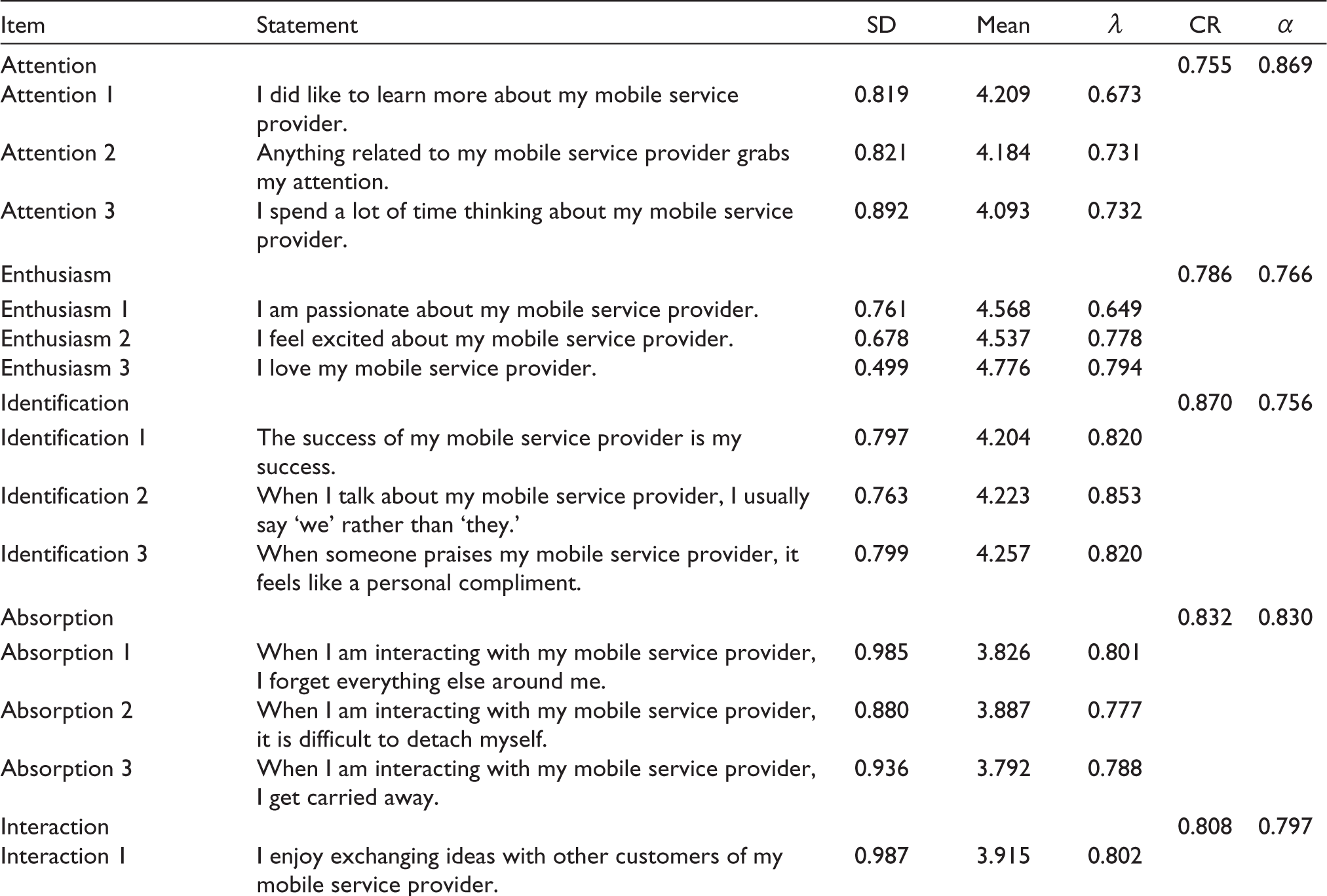
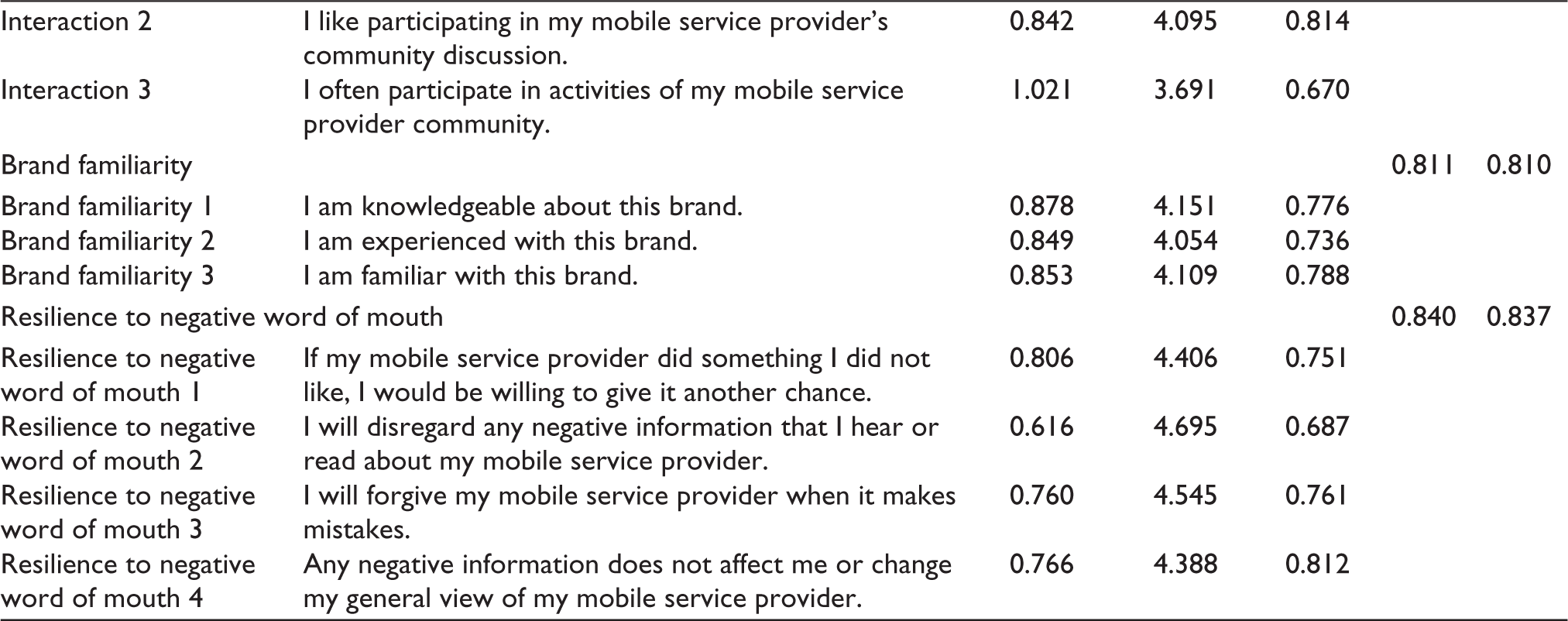
For measuring the variables, the study drew on well-tested and well-established measurement scales from previous studies. The study reconfirmed the reliability and validity of the measurement items as presented in Table 1. All variables were assessed using a Likert scale, which was an anchor from 1-strongly disagree to 5-strongly agree. The study measured social media brand engagement with Kumar and Kaushik’s (2020) 12-item scales, encompassing five dimensions: identification, enthusiasm, attention, absorption and interaction. Furthermore, the study used validated 3-item scales by Acharya (2021) to operationalize or measure brand familiarity. Lastly, the study used 4-item scales by Augusto et al. (2019) and Elsharnouby et al. (2021) to measure resilience to negative word of mouth.
Data Analysis and Results
Common Method Bias
Common method bias occurs when variations in responses are the results of the instrument used in the study instead of the actual predispositions of the respondents that the instrument attempts to uncover. It implies that the instrument used in data collection introduces bias; therefore the results can be inflated or deflated during the estimation of parameters. Podsakoff et al. (2003) suggests procedural and statistical remedies for dealing with common method bias. The study improved scale item clarity; the purpose of the study was clearly explained to respondents, and it removed common scale properties. Apart from procedural remedies, the study adopted statistical remedies, that is, Harman’s one-factor test, to manage CMB. Podsakoff et al. (2003) state that CMB becomes an issue if exploratory factor analysis (EFA) loads all items from specific constructs onto a single factor, indicating the factor accounts for a large amount of shared variance among the variables. The results of EFA suggest that no problematic CMB could be observed in the data because no single factor explained more than 50% of the total variance.
Respondents Characteristics
The study had 505 respondents. Males were 327 (64.8%) and females were 178 (35.2%). Furthermore, the marital status of respondents indicates that married respondents were 307 (60.8%) and single respondents were 198 (39.2%). Finally, age categories of respondents show that 20–30 were 214 (42.4%), 31–40 were 244 (48.3%), 41–50 were 45 (8.9%) and 51–60 were 2 (0.4%).
Measurement Model Analysis
Measurement Model Psychometric Properties
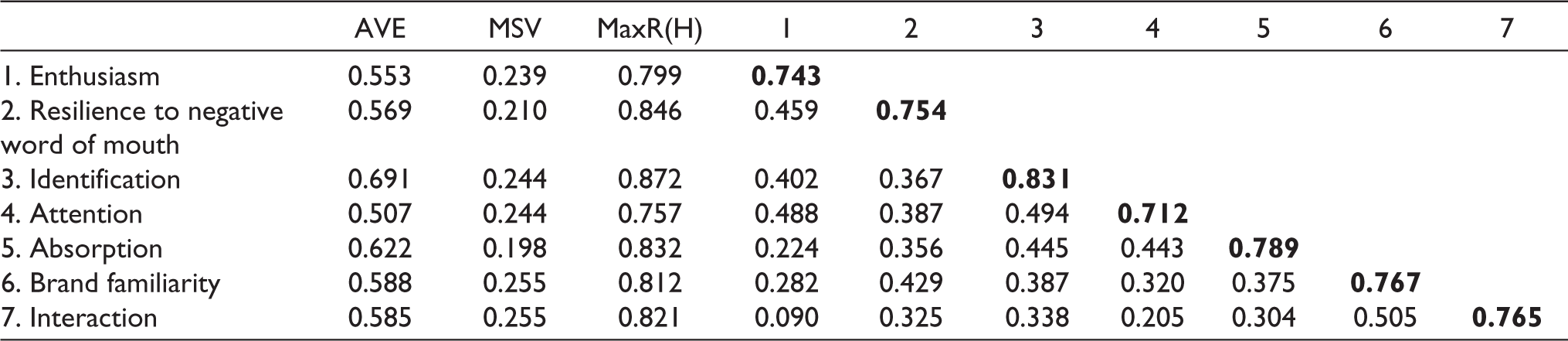
The measurement model’s psychometric properties were checked by assessing reliability and validity issues. A reliability analysis was performed to assess the internal consistency of multiple indicators used to measure each construct. Both composite reliability coefficient and Cronbach alpha coefficient were used to confirm the level of reliability of the multiple indicators of each construct. The aim of using both CR and α is to overcome the weakness of α, which has traditionally been perceived as the only measure of internal consistency and reliability (Cronbach & Shavelson, 2004). CR draws on each indicator’s standardized loadings and measurement errors (Fornell & Larcker, 1981). Thus, confirmatory factor analysis (CFA) findings using AMOS 21 indicate that CR for all variables presented in Table 1 ranges from 0.737 to 0.870, above the acceptable range of 0.7, indicating good reliability (Valentini et al., 2016). In addition, as indicated in Table 1, the value of α for all variables ranges from 0.756 to 0.869, suggesting good internal consistency (Santos & Reynaldo, 2013; Tavakol & Dennick, 2011). Furthermore, the findings presented in Table 2 suggest that the convergent validity was good because the value of average variance extracted (AVE) for all constructs was above 0.5 (Valentini et al., 2016). In addition, the values of factor loadings presented in Table 1 were above 0.6, positively significant and R2 > 0.20, which also implies good convergent validity (Hooper et al., 2008).
Summary of Measurement Model Analysis.
Additionally, criteria suggested by Fornell and Larcker (1981) were adopted to test discriminant validity. It is recommended by Fornell and Larcker (1981) that discriminant validity be confirmed when the value of the square root of AVE is greater than the intercorrelation between the variable and other variables. Overall, findings presented in Table 2 suggest that discriminant validity was achieved because the value of the square root of AVE was greater than the value of inter-construct correlations. Also, the value of each variable’s maximum shared variance (MSV) was less than its AVE value.
Discriminant Validity Using Fornell–Larcker Criterion.
Measurement Model Goodness of Fit
The goodness of fit of the measurement was tested through CFA using AMOS 21. Overall, all goodness-of-fit indices delivered values above the recommended threshold. The value of x2 = 626.826 (p < 0.001, df = 246), x2/df = 2.548, is above the acceptable value of < 3 (Hair et al., 2010). Other goodness of fit indices produced acceptable values as follows: Goodness of fit index (GFI) = 0.920, comparative fit index (CFI) = 0.934, adjusted goodness of fit index (AGFI) = 0.912 and Tucker Lewis index (TLI) = 0.918; all these values are greater than the recommended value of 0.9 (Hooper et al., 2008). In addition, root mean square error of approximation (RMSEA) = 0.054 within the range of 0.8 (McDonald & Ho, 2002), and standardized root mean squared residual (SRMR) = 0.029 within the acceptable range of 0.1 (Schermelleh-Engel et al., 2003). Also, the values of the Parsimony normed fit index (PNFI) = 0.745 and the Parsimony comparative fit index (PCFI) = 0.775 are above the acceptable value of 0.7 (Hooper et al., 2008).
Evaluation of the Structural Model and Hypothesis Testing
An assessment of the structural model was conducted to check for the model’s goodness of fit before testing the proposed hypotheses. The results indicate that goodness-of-fit indices yielded acceptable values to confirm the goodness-of-fit of the structural model. The value of x2 = 629.389 (p < 0.001, df = 251), x2/df = 2.507, is below the standard value of 3 (Hooper et al., 2008). Other goodness of fit indexes produced satisfactory values as follows: GFI = 0.9, CFI = 0.903, AGFI = 0.91 and TLI = 0.920, all above the suggested value of 0.9 (McDonald & Ho, 2002; Schermelleh-Engel et al., 2003). In addition, RMSEA = 0.060 within the range of 0.8 (Hooper et al., 2008) and SRMR = 0.030 within the tolerable range of 0.1 (Hair et al., 2010). Also, the values of PNFI = 0.767 and PCFI = 0.789 are above the acceptable value of 0.7 (Schermelleh-Engel et al., 2003). Subsequent to the good goodness of fit of the structural model, hypotheses testing was conducted. The findings presented in Table 3 and Figure 2 show that ATTEN does not influence BRFM (ß = 0.083, t < 1.96, p > 0.05). Therefore, hypothesis 1 was not supported. Besides, hypothesis 2 was supported because the findings suggest that there is a significant positive relationship between ENTHM and BRFM (ß = 0.229, t > 1.96, p < 0.05). Furthermore, there is a significant relationship between IDENT and BRFM (ß = 0.142, t > 1.96, p < 0.001). These findings support hypothesis 3. In addition, the findings support hypothesis 4 because they show that there is a significant positive relationship between ABSON and BRFM (ß = 0.137, t > 1.96, p < 0.001). The results further indicate that INTER influences BRFM (ß = 0.317, t > 1.96, p < 0.001) and hence support hypothesis 5. Finally, BRFM influences RNWOM (ß = 0.468, t > 1.96, p < 0.001), which supports hypothesis 6.
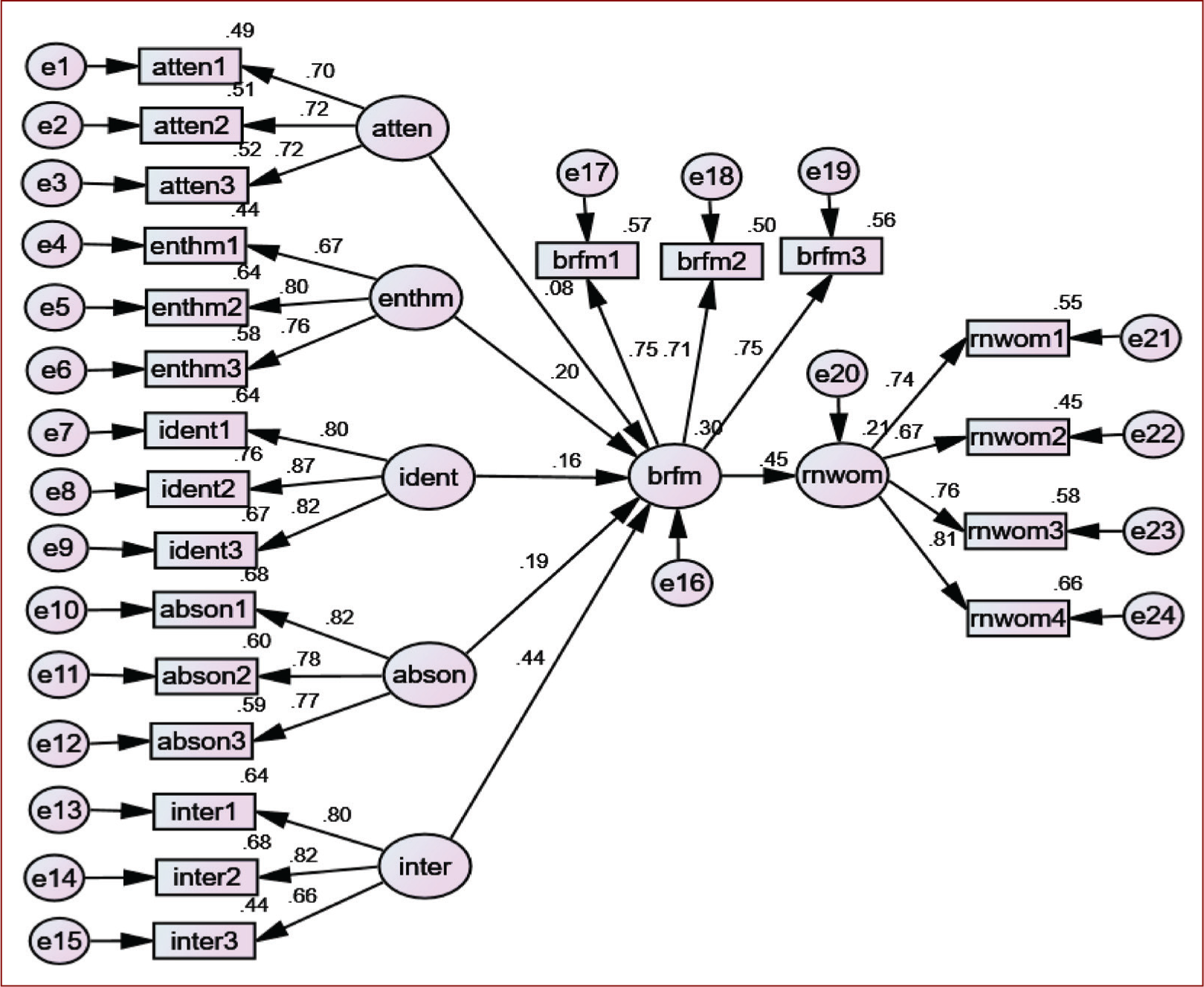
Path Analysis.
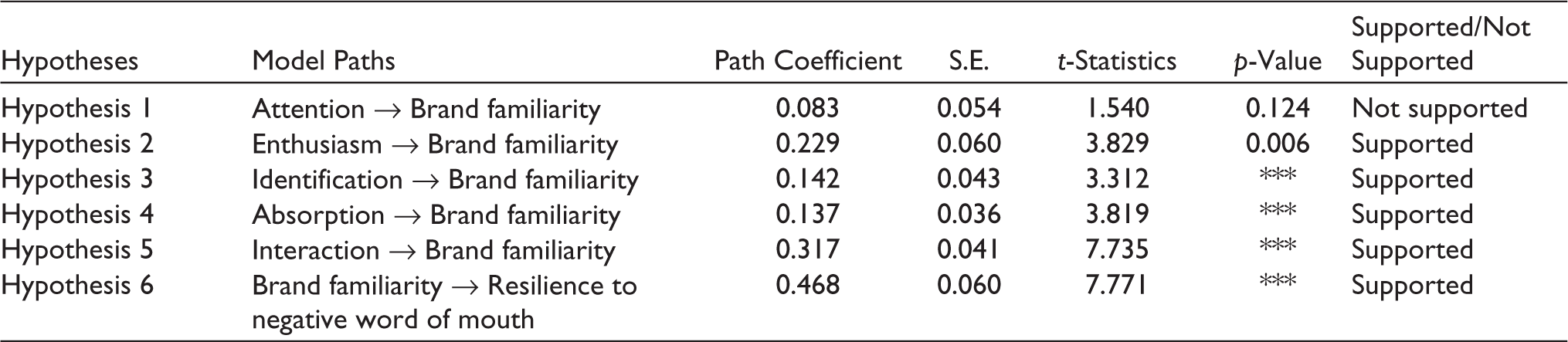
Testing of Mediation Effects
The study tested hypothesis 7, which proposed that brand familiarity mediates the relationship between social media brand engagement and resilience to negative word of mouth by testing mediation effects, using Hayes’ (2018) process procedure for SPSS version 3.4. The average score or composite score of five dimensions of social media brand engagement was computed to get one variable, namely social media brand engagement. The results suggest that brand familiarity mediates the relationship between social media brand engagement and resilience to negative WOM because there is no zero between the bootstrap lower confidence interval (BootLCI) and the bootstrap upper confidence interval (BootUCI). Overall, the findings show that the direct effect of SMBE on resilience to negative WOM was significant (direct effect = 0.508; 95% bootstrap CI from 0.395 to 0.622). Also, the indirect effect between SMBE and resilience to negative WOM through brand familiarity was significant (indirect effect = 0.109; 95% bootstrap CI from 0.045 to 0.177).
Discussion and Conclusion
The study developed and tested a model that sought to establish a relationship between social media brand engagement and RNWOM via brand familiarity. The findings show that all social media brand engagement dimensions except attention develop brand familiarity, finally leading to RNWOM. In the context of brand engagement, social media is very important in enhancing customers’ familiarity with the brand and finally boosting RNWOM in digital environments. It is revealed that customers become familiar with the brand through engagement that empowers them with the capability to resist any NWOM thrown towards the brand. In situations where customers are more interested in negative information before making a purchase (Amani, 2022b), customers who are familiar with the brand are more likely to resist any NWOM about the brand. These findings concur with Elsharnouby et al.’s (2021) finding that brand familiarity helps customers build confidence and trust with the brand, finally leading to RNWOM.
The study failed to confirm the influence of attention on brand familiarity. These specific results for this dimension of social media brand engagement are a surprise because attention is an important element in building brand knowledge (Elsharnouby et al., 2021). Attention provides room for learning and the possibility of spending enough quality time with the brand. Thus, insignificant results imply the importance of undertaking further investigation in cross-cultural settings to validate the findings. Moreover, the findings of the study revealed that engagement in social media builds enthusiasm that promotes the intention to defend the brand through building RNWOM. Enthusiasm demonstrates customers’ feelings of passion towards the brand. Literature on brand love suggests that passion always motivates brand defence among customers (Amani, 2022a; Javed et al., 2015). Overall, enthusiasm creates a strong connection or bond between the brand and customers, and the result is brand familiarity.
Furthermore, the findings revealed that identification is an important stimulus for developing brand familiarity. Identification is an internal psychological state that enhances a sense of self-identity towards a brand. Self-identity cultivates customers’ intention to develop brand self-expressiveness (i.e. I am part of this brand). This feeling of self-expressiveness influences customers to build RNWOM to defend the brand and their self-identities or personalities. The findings by Augusto et al. (2019) show that resilience to negative information is an outcome of customers’ connections with the brand. Also, the findings reveal that absorption, which represents customers’ focus on the brand, can enhance customers’ familiarity with the brand. When customers concentrate and spend time with the brand, their level of brand familiarity increases. Furthermore, the findings show that interactions that build enjoyment and long-lasting engagement cultivate brand familiarity for customers. Interaction, covering the exchange of opinions, ideas and information about the brand, helps customers strengthen their RNWOM. The study by Elsharnouby et al. (2021) shows that information sharing is crucial in building brand knowledge, which eventually enhances RNWOM.
Finally, the study extends knowledge of RNWOM by examining the mediation role of brand familiarity in the relationship between the dimensions of social media brand engagement and RNWOM. The results suggest the existence of partial mediation in the influence of social media brand engagement on RNWOM via brand familiarity. This implies that to strengthen RNWOM, it is important to empower or expose customers to environments that can facilitate brand familiarity, that is, knowledge about the brand. The findings are supported by SOR theory, which suggests that a person can demonstrate different behaviours when he/she is exposed to environmental attributes that cultivate specific psychological states in the mind of the person, finally leading to different behaviours or actions (Islam et al., 2020). Elsharnouby et al. (2021) found that resilience to negative information could be affected by information quality, rewards and virtual interactivity when brand knowledge and brand involvement were used as mediators.
Theoretical Contribution
This study suggests a model that provides a better understanding of building RNWOM in digital settings, therefore offering a conceptual framework for future studies and research. Through SOR theory, the study extends the theoretical understanding of the role of engagement dimensions (stimulus) in empowering customers to resist NWOM (response) via brand familiarity (organism). The study shows that social media brand engagement (stimulus) encourages brand familiarity (organism) and ultimately influences the intention to build RNWOM (response). The study contributed to the theoretical understanding of the antecedents of various brand-consistent behaviours by demonstrating that engagement increases brand familiarity, which influences RNWOM.
Furthermore, the study contributes to the research stream on customer engagement by investigating the antecedents of the customer-brand relationship. The study suggests investing in social media brand engagement and brand familiarity to shape RNWOM as a novel dimension of the customer-brand relationship. The study underlines the theoretical perspective that customers’ engagement through social media can enhance knowledge about the brand among customers. The study supplements previous studies on brand familiarity by introducing social media brand engagement as its antecedent. As noted by Elsharnouby et al. (2021), the study clarifies the role of sharing information, ideas and recommendations through social media as antecedents of brand familiarity. These findings close the existing theoretical gaps and provide more insight into explaining the cardinal role of social media brand engagement in facilitating the sharing of information to build brand familiarity. Finally, this study is among a few endeavours that introduce and examine the mediating role of brand familiarity in the linkage between social media brand engagement and RNWOM. This mediator provides a broader understanding of the customer-brand relationship through the lens of RNWOM.
Managerial Contribution
The study has drawn various managerial insights to inform practitioners, particularly marketers, on strategies to enhance customers’ RNWOM. The first important recommendation of this study is for marketers to enhance the engagement of customers to ensure a long-lasting relationship with the brand. More importantly, approaches to customer engagement should ensure customers get knowledge about or become familiar with the brand. In other words, customer engagement should have mechanisms that induce knowledge in the minds of customers. The study also suggests Web 2.0 technologies as a mechanism that can allow customer engagement in the modern world. The increasing use of Web 2.0 technologies, particularly social media, has provided business firms with an effective and efficient tool for engaging customers as value co-creators in business operations. Thus, marketers need to set up digital platforms that allow customers to take part in co-creating value as co-creators.
It is also recommended that marketers should have mechanisms and strategies to manage NWOM that is transmitted on digital platforms. NWOM on social media is the biggest challenge and threat to business firms in the modern world. Because of the challenges and difficulties in avoiding the spread of NWOM in the emerging use of Web 2.0 technologies, marketers should invest in strategies that can help business firms or brands survive in the digital era. Marketers should have regular reviews and analyses of content posted on social media regarding brands or business firms. Marketers should also participate in various discussions on digital platforms to offer clarifications and detect counter-branding campaigns. In addition, marketers should participate in digital platforms to share information and post digital content that enhances brand familiarity. Overall, this study recommends the digitalization of operations in business firms to ensure customers are engaged as brand value co-creators. Moreover, marketers should create digital content that is congruent with user-generated content, that is, the needs and wants of customers. This means marketers should consider user-generated content as a strategic resource in value co-creation.
Limitations and Further Research
Although this study is among the few to contribute to the theoretical and empirical understanding of the antecedents of RNWOM, numerous limitations exist. The study recommends a comparative study in terms of gender, that is, females versus males, as literature indicates there are differences between these groups in relation to social media usage and attitudinal responses such as word of mouth (Li & Wang, 2018; Sun et al., 2019). This approach could help marketers and scholars devise different strategies to engage each gender based on their preferences to achieve desirable outcomes. It could also be important to extend the proposed model using moderator variables such as technological orientation. This specific recommendation is supported by the fact that social media brand engagement requires an engaged person to be technologically oriented. Also, the model can be modified by considering introducing mediators that form expressive brand relationships, such as brand love. This can extend our understanding of the mediation role of consumers’ affective responses, that is, brand love, in forming attitudinal behaviours such as RNWOM. Finally, to achieve robustness in the findings, the study recommends replication of the study while adopting qualitative approaches to get at the qualitative side of the topic under study.
Footnotes
Declaration of Conflicting Interests
The author declared no potential conflicts of interest with respect to the research, authorship and/or publication of this article.
Funding
The author received no financial support for the research, authorship and/or publication of this article.