







Abstract
This study focuses on the context of diversified challenges Turkey’s tourism industry faces. This study aims to test the validity of the convergence hypothesis from the perspective of destination flexibility by separating the pre-pandemic and post-pandemic periods in Turkey’s 15 top tourist-producing countries. The data collected from the period 2001:1 to 2019:12 for pre-pandemic period and 2022:1 to 2023:8 for the post-pandemic period are tested by performing Hepsag’s stationarity test state that the convergence hypothesis is valid in 14 of the 15 major tourism markets for the pre-pandemic period (the Russian Federation, Germany, Bulgaria, England, Iran, Iraq, Georgia, Ukraine, Azerbaijan, Poland, France, Greece, Romania, Israel and Saudi Arabia). However, for the post-pandemic period, it was determined that the convergence hypothesis was valid only for Iraq, Poland, the Russian Federation and Ukraine. Examining the convergence features of tourism markets provides valuable information for decision-makers of Turkey’s tourism policies for economic balance in the growing cities.
Keywords
Introduction
Due to the fact that the COVID-19 pandemic has been a global phenomenon along with its impacts on the tourism industry, it has resulted in a tremendous crisis and uncertainty (Gupta et al., 2023; Islam et al., 2021; Rana, 2021a; Zhao et al., 2023). The pandemic has affected various sectors, including sub-sectors such as airlines, hotel management and cruise ship tourism, which are closely related to the tourism sector (Huang & Wang, 2023; Leung et al., 2023; Narula et al., 2023). The tourism industry worldwide faces diversified challenges such as economic crises, terrorism crises, technology and innovation, environmental crises, medical crises, etc. (Arya et al., 2024; Gupta & Dutta, 2018; Hjalager & von Gesseneck, 2020; Okasha et al., 2023; Senbeto & Hon, 2020). This pandemic brought a new level of scarcity around the globe, which forced policymakers and travellers to think about strategies related to destination resilience and tourist organizations’ resilience (Anand et al., 2023; Arshad et al., 2023; Cahyanto et al., 2021; Mensah et al., 2022; Prayag, 2020; Schuhbert, 2021) in their tourism practice to attract more visitors to their country. This crisis has brought uncertainty and resilience problems in tourism.
According to the World Travel and Tourism Council (WTTC) data, the tourism industry contributed $8.9 trillion to the world’s gross domestic product (GDP) as of 2019. This amount adds up to 10.4% of the total world GDP. In the same period, the tourism sector has generated employment opportunities for 334 million people, which indicates that 1 out of every 10 people worldwide works in the tourism sector (WTTC, 2021). Therefore, the development of tourism as the sector that provides the most foreign exchange and as a source of export is seen as a crucial objective for many countries, governments or regions (Jalil & Rauf, 2021; Manka, 2022; Tang & Abosedra, 2019; Viana-Lora et al., 2023). This situation has led policymakers to make plans to increase tourist arrivals and abide by competitive strategies (Brida et al., 2020; Jaelani et al., 2020; Haller et al., 2021; Heydari Chianeh et al., 2018; Michopoulou et al., 2019; Xu et al., 2022).
Turkey is one of the largest countries in Europe and the Middle East, with approximately 800,000 km2 located in Southwest Asia and Southeast Europe. Various features of Turkey, such as bridging Asia and Europe through geographical area, and hosting numerous civilizations throughout history, have ensured its rare historical and cultural prosperity. Besides its historical and cultural abundance, the diversity of landmarks and being a peninsula have made Turkey a famous tourist attraction centre (Abbott et al., 2012; Alvarez, 2010). Despite its potential, Turkey’s relatively belated active foreign tourism compared to other countries in the Mediterranean region began to exhibit a significant development with the transition to a free-market economy since the 1980s and the Tourism Encouragement Law No. 2634 in 1982. It is one of the critical sectors contributing to the economy. Following the crisis experienced in 2001, various incentives and support have been given to the tourism sector to improve the tourism infrastructure, diversify the tourism outputs, increase the number of tourist arrivals to the country and boost the per capita expenditures of the tourists.
Turkey, which ranked sixth in hosting the most visitors worldwide, accommodated 51.7 million visitors (of which 45 million were foreigners) as of 2019, an increase of 12% compared to the previous year, according to the Ministry of Culture and Tourism data. Tourism revenues increased by 17%, reaching 34.5 billion USD. Moreover, tourism revenues per capita increased by approximately 3% in 2019, rising from 647 USD to 666 USD (Turkish Republic Ministry of Culture and Tourism, 2020). Upon considering the WTTC report, the tourism and travel industry contributed to Turkey’s GDP, employment and total exports at 11%, 9.3% and 17% as of 2019, respectively (WTTC, 2021).
The effectiveness of policies aimed at increasing tourist arrivals is first analysed by determining the level of convergence in tourism markets, a method developed by Narayan (2006). The convergence hypothesis involves the decline in tourist arrivals to a country from international markets over time. When the studies on the convergence of Turkey’s tourism markets are examined, the literature gap identified is that nonlinearity and structural change are not considered in the analyses. Therefore, this study aims to eliminate the shortcomings of working with heterogeneous sample groups in panel data analysis techniques by using an econometric method that considers nonlinearity and structural change simultaneously and using time-series analysis techniques. The decline in tourist arrivals from international markets indicates that the international tourism markets converge and the implemented policies are effective (Arya et al., 2018; Gite & Navodit Manav, 2014; Narayan, 2006).
To the best of our knowledge, although there are studies investigating the validity of the convergence hypothesis in Turkey’s tourism markets (Coban & Firuzan, 2019; Kocak et al., 2022; Lin et al., 2019), this is the first study ever conducted employing an econometric method that yields results by simultaneously including the nonlinearity and smooth structural change problems that arise in long-span time-series data into the analysis. In addition, the data for 2020 and 2021 were not included in the analysis so the structural breaks in the data of the pandemic period, which deeply affected the tourism sector due to the restrictions imposed, would not affect the reliability of the analysis results. The analysis was conducted separately for two periods, January 2001–December 2019 (pre-pandemic period) and January 2022–August 2023 (post-pandemic period), and the results were interpreted separately. In this respect, it has the advantage of being one of the first studies in the literature. Therefore, the study fills an important gap in the literature. Narayan (2006, 2007) stated that it is important to examine the convergence characteristics of a country’s tourism market from various aspects. First, the convergence of tourism markets provides essential information regarding the effectiveness of the tourism resilience policies to be implemented in the tourism markets where convergence occurs. The improvement in the number of tourist arrivals from the tourism markets in which convergence occurs, along with the total number of tourist arrivals from the international tourism markets, indicates the effectiveness of the policies to be implemented in the converged markets (Hasan et al., 2021; Jucan & Jucan, 2013; Kourtzidis et al., 2018; Ritchie & Jiang, 2019; Verma et al., 2023; Zhao & Serieux, 2019). This also contributes to implementing destination resilience policies to reduce the differences in tourist arrivals from international markets (Rawat et al., 2023; Seshadri et al., 2023; Seyfi & Hall, 2019). Second, policymakers must realize whether the number of tourist arrivals from small-volume tourism markets complies with the convergence hypothesis in determining strategies to increase the number of international tourist arrivals by targeting these small-volume markets. Third, as their incomes increase, people would travel more, and, thus, the differences in the number of tourist arrivals from international markets would decline over time (Ozcan & Erdogan, 2017; Pandey & Joshi, 2021).
Tourism, which contributes directly or indirectly to various countries’ economies, is an important economic activity, especially in developing countries. Tourism in Turkey, one of the leading tourism destinations globally, plays a critical role in its economy since it provides foreign exchange revenues. Therefore, the effectiveness of the implemented/to be implemented tourism policies and strategies is exceptionally crucial. This study aims to analyse the validity of the convergence hypothesis in Turkey’s 15 major tourism markets performing Hepsag’s (2021) unit root test, which allows both smooth structural change and nonlinearity. The study is distinguished in such aspects as the actuality of the data and novelty of the econometric method, which has not been employed in previous studies conducted on the subject, to be employed to determine whether or not the convergence hypothesis is valid.
Based on the above discussion, the current study aims to develop the scope for destination resilience in Turkey’s tourism sector so that visitors are increasing and policies related to tourism resilience in Turkey will be appropriately maintained. As the tourism sector is growing in Turkey, it is essential to evaluate the tourism vulnerability in the context of dynamic changes, considering their impact on destination resilience and the tourism imbalance. Thus, destination resilience can bring new challenges and opportunities for Turkey’s tourism sector, where policies therethrough the lens of new perspectives need to be addressed.
Literature Review
Global Tourism and Economy
With the understanding of its economic importance (such as foreign exchange inflow, employment effect and stimulating the markets), various empirical studies have been conducted on tourism in the literature. It is seen that there are studies examining the tourism–economic growth relationship in general (Brida et al., 2020; Enilov & Wang, 2021; Faeni et al., 2023; Mishra & Rana, 2023; Naseem, 2021; PK & Sanjeev, 2020; Roudi et al., 2019; Rowley & Paul, 2021; Tang & Abosedra, 2016; Yang & Smith, 2023) and analysing tourism demand from various perspectives (Assaf et al., 2019; Mondal & Samaddar, 2021; Mushtaq et al., 2021; Ulucak et al., 2020). Along with the improvements in economics and econometrics theories, the convergence hypothesis, which has been the subject of empirical studies on various macroeconomic indicators, has found application fields in the tourism market courtesy of Narayan (2006). The convergence hypothesis is empirically examined by performing unit root tests. Narayan (2006) analysed the convergence level of 13 major tourism markets in Australia, performing the univariate and panel Lagrange multiplier (L.M.) unit root tests. In his study using the monthly data obtained from 1991 to 2003, the author detected the convergence of 13 major tourism markets in Australia. Upon examining the relevant literature, which began to emerge following Narayan’s (2006) study, it is seen that the studies investigating the convergence hypothesis of tourism markets are categorized into three groups those conducting the time-series analysis method, panel data analysis method, and both analysis methods, simultaneously. Depending on both the methods used and the country or group of countries selected, some studies have obtained findings in support of convergence, while others have concluded that there is no convergence.
Tourism in Turkey: Emerging Country
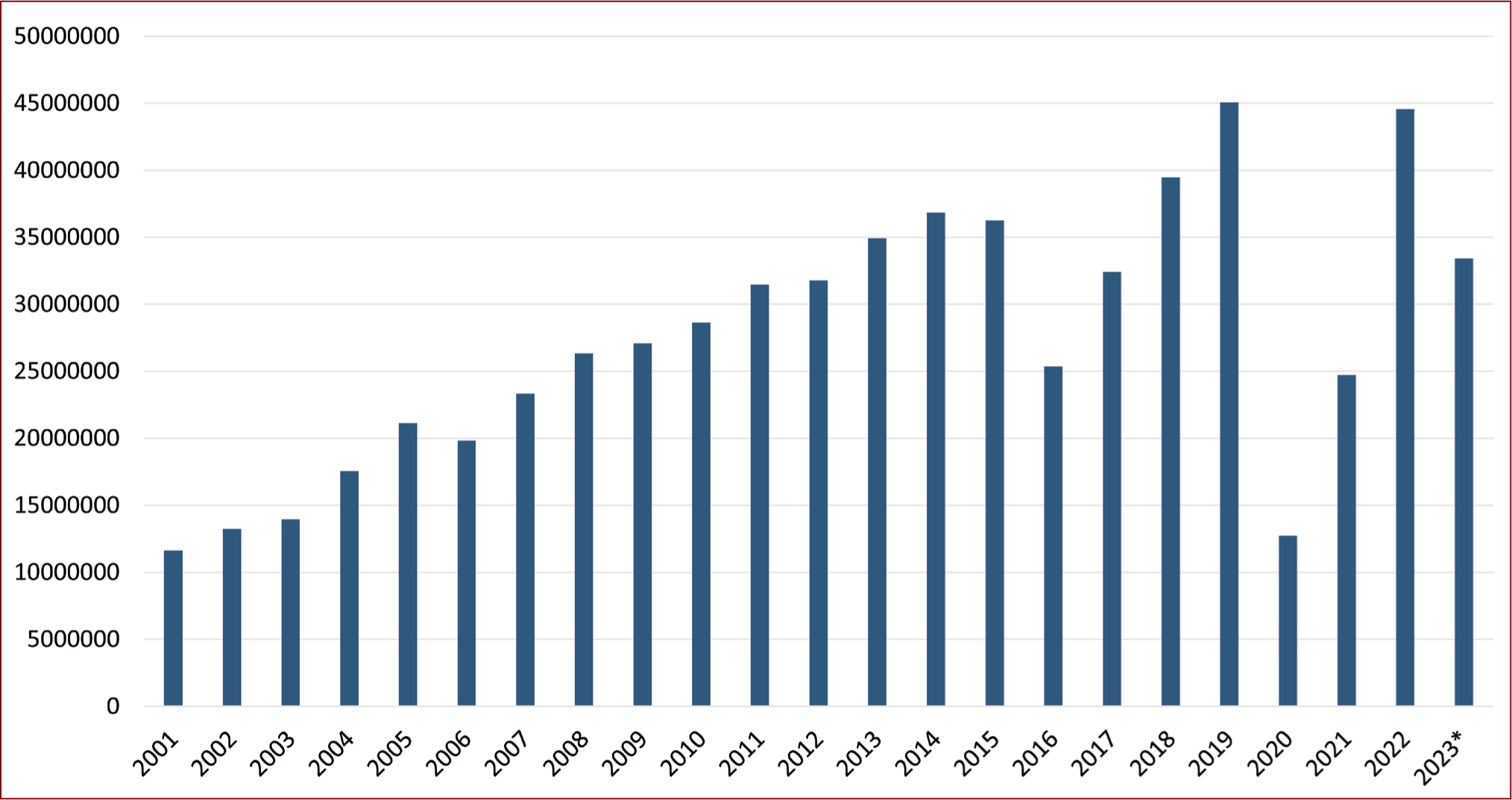
Figure 1 illustrates the number of foreign visitor arrivals to Turkey between 2001:1 and 2023:8. As shown in Figure 1, there has been a continuous increase in foreign visitor arrivals between 2001 and 2014. Although there has been a decline in the number of foreign visitors due to the fluctuations in the Russian economy over the period 2014–2015, the plane crisis with Russia was experienced in November 2015. The terrorist attacks in the country in 2016 showed that the number of visitor arrivals increased again in 2017, 2018 and 2019. In 2020, measures such as travel restrictions and the closing of national borders implemented within the scope of the pandemic led to significant declines in tourist movement in Turkey, as was the case worldwide, during 2020 and 2021. Following the relaxation and complete removal of these measures, tourist mobility has begun to increase once again (Kumar et al., 2023). In light of these figures, it can be claimed that the tourism and travel industry is such a significant industry in the Turkish economy and that Turkey maintains its place among the top 10 tourism destinations in the world in terms of visitor arrivals as of 2019, according to the United Nations World Tourism Organization. The Tourism Strategy of Turkey 2023 Report prepared by the Ministry of Culture and Tourism of the Republic of Turkey has been quite effective regarding these developments in the tourism sector. According to the report, the basic strategy regarding the adoption of a sustainable tourism approach, the more careful use of Turkey’s natural, cultural, historical and geographical assets, and the development of tourism alternatives make Turkey an important international destination among the top five countries in terms of the number of tourist arrivals and tourism revenues in the international market until the year 2023 was considered (Turkish Republic Ministry of Culture and Tourism, 2007).
Studies Supporting the Validity of the Convergence Assumption
In his study, Narayan (2007) indicated that the convergence hypothesis was valid for Fiji’s 8 important tourism markets performing cointegration tests on the data obtained from 1970 to 2003 and unit root tests. Hepsag (2016) investigated the validity of the convergence hypothesis for 20 essential tourism markets in Turkey using the monthly data obtained from 1996–2014. The study, in which the Beaulieu–Miron seasonal unit root test was performed, detected the existence of convergence in the long run in January, March, April, May, July, September and October; the non-existence of convergence in February, June, August and November, and that new strategies should have been developed by examining existing policies. Ozcan and Erdogan (2017) examined whether the convergence hypothesis was valid in 14 essential tourism markets in Turkey performing the L.M. and RALS-LM unit root tests, which consider structural breaks. The study results, which used the monthly data obtained from 1996 to 2012, indicated the existence of convergence for merely 10 tourism markets and the effectiveness of implemented policies and strategies to increase the number of tourist arrivals in these markets. Solarin (2018) examined whether the convergence hypothesis was valid in Taiwan’s 15 tourism markets using the monthly data from 2008 to 2016. The residual augmented least-squares (RALS) method indicated the validity of the convergence hypothesis in those tourism markets. Coban and Firuzan (2019), performing the ADF, L.M. and RALS-LM unit root tests and using the monthly data obtained from 1996 to 2016, investigated the level of convergence of 23 essential tourism markets in Turkey and found strong evidence of convergence in 18 tourism markets. Min et al. (2019) investigated the validity of the convergence hypothesis in Taiwan’s 4 major tourism markets utilizing the data obtained from 2001 to 2013.
Hypothesis Development
Tourism Market-related Policies and Effectiveness of Tourist
Upon considering multiple structural breaks and performing the stationarity test developed by Carrion-i-Silvestre et al. (2005), the study’s authors concluded that the shocks imposed on the related tourism markets were temporary. Therefore, the convergence hypothesis was valid in the four tourism markets of the country. Yucel (2021), using the data for the period 1995–2018, examined whether the shocks to tourist arrivals to the 20 most visited countries were temporary or permanent by performing the second-generation panel unit root tests. The study, in which the situations with and without structural breaks were considered, stated that shocks to the number of tourist arrivals were temporary in the absence of structural breaks, so the convergence hypothesis was valid. Matsuki and Pan (2023) investigated whether the convergence hypothesis holds in South Korea’s ten major tourism markets using monthly data from the period 1995–2019. In their study, which employed a unit root test allowing for multiple structural breaks as suggested by Bahmani-Oskooee et al. (2018), the authors found that the convergence hypothesis was valid for the tourism markets of nine countries. The results obtained from the examined studies lead to the following hypothesis:
Studies Supporting the Invalidity of the Convergence Assumption
Studies that have found the convergence hypothesis to be invalid include Merida et al. (2016), who investigated whether the convergence hypothesis holds in Spain’s 12 major tourism markets using monthly data from the period 2000–2015. They utilized the panel stationarity test developed by Hadri (2000) and the stationarity test accommodating multiple structural breaks developed by Carrion-i-Silvestre et al. (2005). The results of their study indicated that, even in the presence of structural breaks, the convergence hypothesis was not valid, suggesting that tourism policies targeting these markets should be re-evaluated. Lin et al. (2019), using the time-varying factor model developed by Phillips and Sul (2007) and considering structural breaks, examined the validity of the convergence hypothesis in Turkey’s 81 tourism markets. The authors of the study, in which the monthly data obtained over 2001–2015 were utilized, stated that convergence did not occur for all countries. In contrast, the convergence clubs took place in the subgroups of different countries. Pshenichnykh et al. (2020) examined the convergence level of 20 major tourism markets in Russia, performing both the traditional unit root tests (ADF and KPSS) and Lee and Strazicich’s (2003) unit root test with two structural breaks. Using the data obtained from 2010 to 2018, their study concluded that the convergence hypothesis was not valid for Russia’s 12 major tourism markets. Therefore, the policies implemented towards those countries were not thriving. Yalcinkaya and Yazgan (2020) examined the validity of the convergence hypothesis in 97 tourism markets in different parts of the world, constituting almost the entire tourism market of Turkey, using the monthly data obtained over the 1996–2018 period. The results of various unit root tests with the Fourier functions indicated that the convergence hypothesis was not valid for 44 tourism markets out of 97 international tourism markets and the ineffectiveness of the implemented tourism policies and strategies in these tourism markets. Pizzuto and Sciortino (2021) examined the validity of the convergence hypothesis in Italy’s 20 important tourism markets by employing the time-varying factor model developed by Phillips and Sul (2007, 2009). The study results, in which the monthly data obtained from 2008 to 2018 were used, indicated the non-existence of absolute convergence, that mainly Asian countries exhibited heterogeneous behaviours and that the tourism strategy for those countries should have been reviewed. Payne et al. (2023) conducted a study to examine the validity of the convergence hypothesis across regions in Croatia using monthly data from the period 1998–2021. In their research, they employed the approach of Phillips and Sul (2007, 2009) and the convergence test developed by Kong et al. (2019). The authors concluded that the convergence hypothesis was not valid across the regions. Based on these findings, the second hypothesis can be formulated as follows:
Methodology
Context of the Period of the Study
The pandemic, a period unprecedented in recent world history, has adversely affected numerous industries, particularly the tourism market (Islam et al., 2021; Rana, 2021a). The most intense phase, along with the strictest travel restrictions, occurred over the period 2020–2021. Following the development of vaccines and treatment techniques that brought the disease under control, the lifting of restrictions by all countries initiated a recovery in tourism markets. Studies on the convergence of tourism markets, such as those by Payne et al. (2023) and Matsuki and Pan (2023), do not compare pre- and post-pandemic periods to generate policy recommendations. Therefore, this study aims to fill this gap in the literature by comparatively analysing the periods before and after the pandemic.
Data Collection Process
Our econometric analysis aims to test the validity of the convergence hypothesis in Turkey’s 15 major tourism markets. For this purpose, the data to be utilized in the study consist of the monthly data obtained over the period January 2001–December 2019 (the pre-pandemic period) and January 2022–August 2023 (the post-pandemic period) for the countries that constitute 15 major tourism markets, which account for 66% of the tourist arrivals to Turkey as of 2019 and are obtained from the database of the Turkish Statistical Institute. Since the tourism sector is one of the sectors most affected by the measures taken by all countries due to the COVID-19 pandemic, which has affected the whole world since the beginning of 2020, the tourism data obtained over the period 2021–2022 are not statistically significant (Traskevich & Fontanari, 2023). For this reason, the first-period data range of the study was completed as of December 2019, when the pandemic had not yet started to affect tourism markets. The second period analysed is between January 2022 and August 2023, which we can call the post-pandemic period. Turkey’s 15 major tourism markets included in the analysis include the Russian Federation, Germany, Bulgaria, the United Kingdom, Iran, Georgia, Ukraine, Iraq, Azerbaijan, Poland, France, Greece, Romania, Israel and Saudi Arabia. As of 2019, 15.57% of foreign visitor arrivals to Turkey were from the Russian Federation, 11.15% from Germany, 6.02% from Bulgaria, 5.68% from the United Kingdom, 4.66% from Iran, 4.42 % from Georgia, 3.43% from Ukraine, 3.05% from Iraq, 2.1% from Azerbaijan, 1.95% from Poland, 1.94% from France, 1.85% from Greece, 1.69% from Romania, 1.26% from Israel and 1.25% from Saudi Arabia.
Empirical Methodology
In this study, Hepsag’s (2021) unit root and ESTAR-type tests are employed to fill the gap in the convergence of tourism markets literature performed concurrently, considering both nonlinearity and structural breaks. In Hepsag’s (2021) unit root test, structural breaks among different regimes are considered with the logistic smooth transition function, and nonlinearity is considered through the ESTAR model proposed in Kruse (2011). The test was developed as an alternative to Leybourne et al. (1998) and Kruse’s (2011) unit root tests. Hepsag’s (2021) unit root test procedure was established by following the study of Leybourne et al. (1998) and defining the three logistic smooth transition models specified in Equations (1)–(3) (Hepsag, 2021).



where νt denotes the error term, and St (λ, τ) represents the logistic smooth transition function determined according to the sample number T.

where τ denotes the timing of the midpoint of the transition, and the velocity of the transition is determined by the coefficient λ. Assuming that νt represents a zero-mean I(0) process, Model A represents a stationary process around the mean that ranges from the initial value of α1 to the final value of α1 + α2. Model B, similar to Model A, expresses a changing process from the initial value of α1 to the final value of α1 + α2 with the constant slope term. And finally, while Model C ranges from the constant term α1 to α1 + α2, the slope simultaneously ranges from β1 to β1 + β2 at the same transition rate (Hepsag, 2021). In the first stage of Hepsag’s (2021) unit root test, Models A, B and C are estimated by the nonlinear least-squares method, and residuals are obtained.


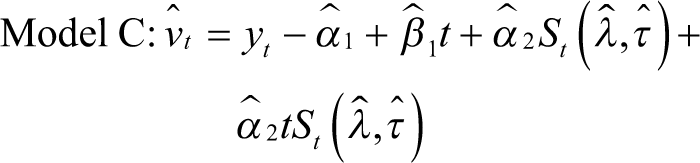
Kruse’s (2011) unit root test is performed in the second stage on these residues. Then, as in Equation (8), the Kruse (2011) ESTAR model is modified to allow a nonzero position parameter c.

νˆt denotes residuals estimated in the first stage. In his study, Kruse (2011) suggested applying a first-order Taylor approximation to Equation (8) and obtaining the auxiliary regression equation specified in Equation (9).

In Hepsag’s (2021) unit root test, the null hypothesis implies the existence of a unit root, whereas the alternative hypothesis implies ESTAR stationarity with a smooth break.
In his seminal work, Narayan (2006) claimed that the convergence of tourism markets could be determined by testing the stationarity of the logarithmic difference between the total number of tourist arrivals to a country and the number of tourist arrivals from a particular source market. The model to be used to determine whether or not the tourism markets converge for Turkey is presented in Equation 10.
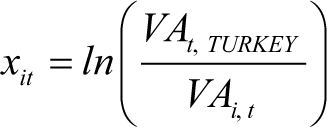
where ln signifies the natural logarithm; VAi, TURKEY and VAi, t denote the total number of international tourist arrivals to Turkey at time t and the number of tourist arrivals to Turkey from the country i at time t, respectively. If the two markets converge, the difference in the number of tourist arrivals should be zero, so the variable xit should follow a stationary process.
Data Analysis and Findings
We conducted our econometric analysis by dividing it into two periods: January 2001 to December 2019 and January 2022 to August 2023. We hypothesize that this division makes our results more reliable in two respects compared to other studies. The first is the exclusion of data with structural breaks due to travel restrictions implemented by all countries during the pandemic years of 2020 and 2021. The second is the opportunity to obtain and compare separate results for the pre-pandemic and post-pandemic periods.
We commence the empirical analysis by indicating the descriptive statistics for each market in Tables 1 and 2. According to the results presented in Table 1, the Jarque–Bera test statistic rejects the null hypothesis of normality in all countries except for the Russian Federation. This result justifies using Hepsag’s (2021) unit root test, an ESTAR-type test.
Summary Statistics (Pre-pandemic Period).
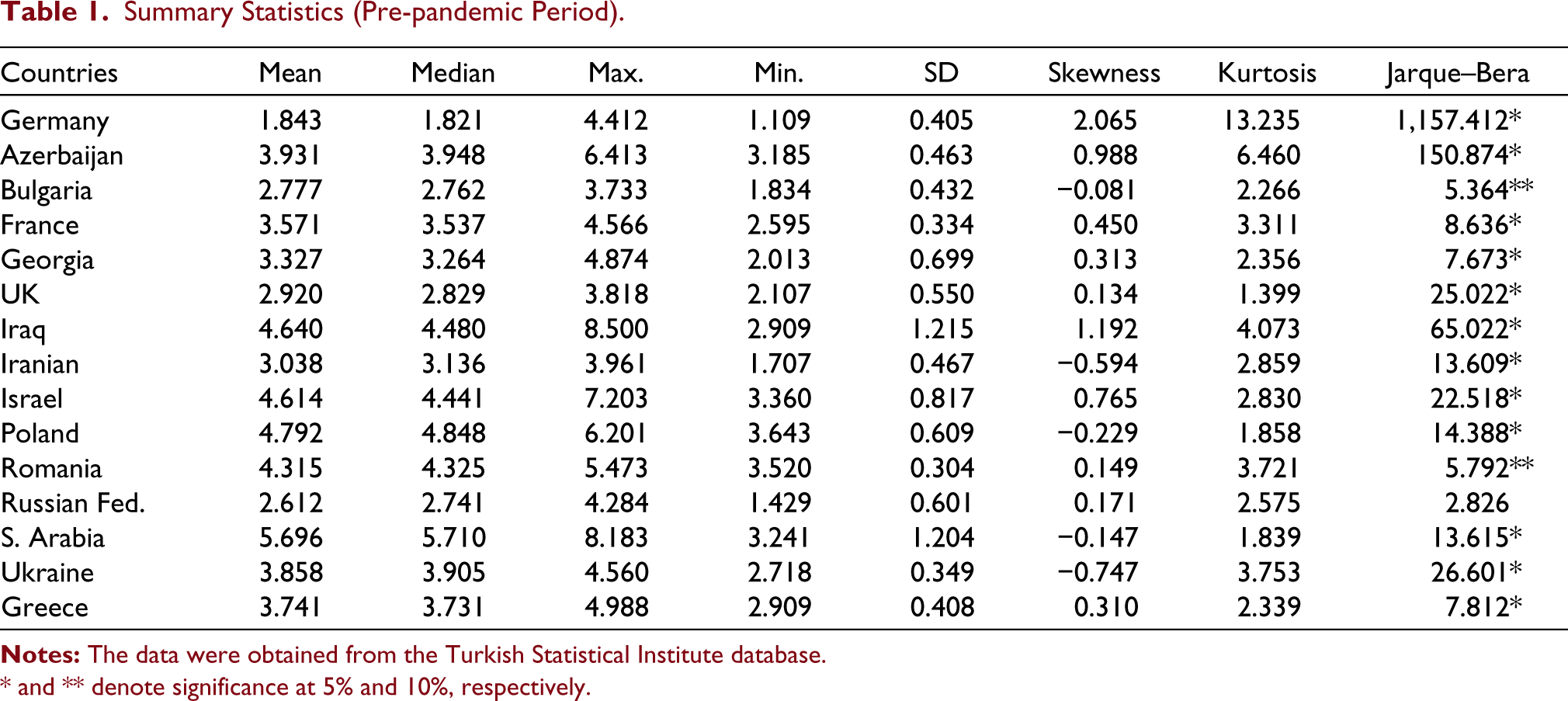
* and ** denote significance at 5% and 10%, respectively.
Summary Statistics (Post-pandemic Period).
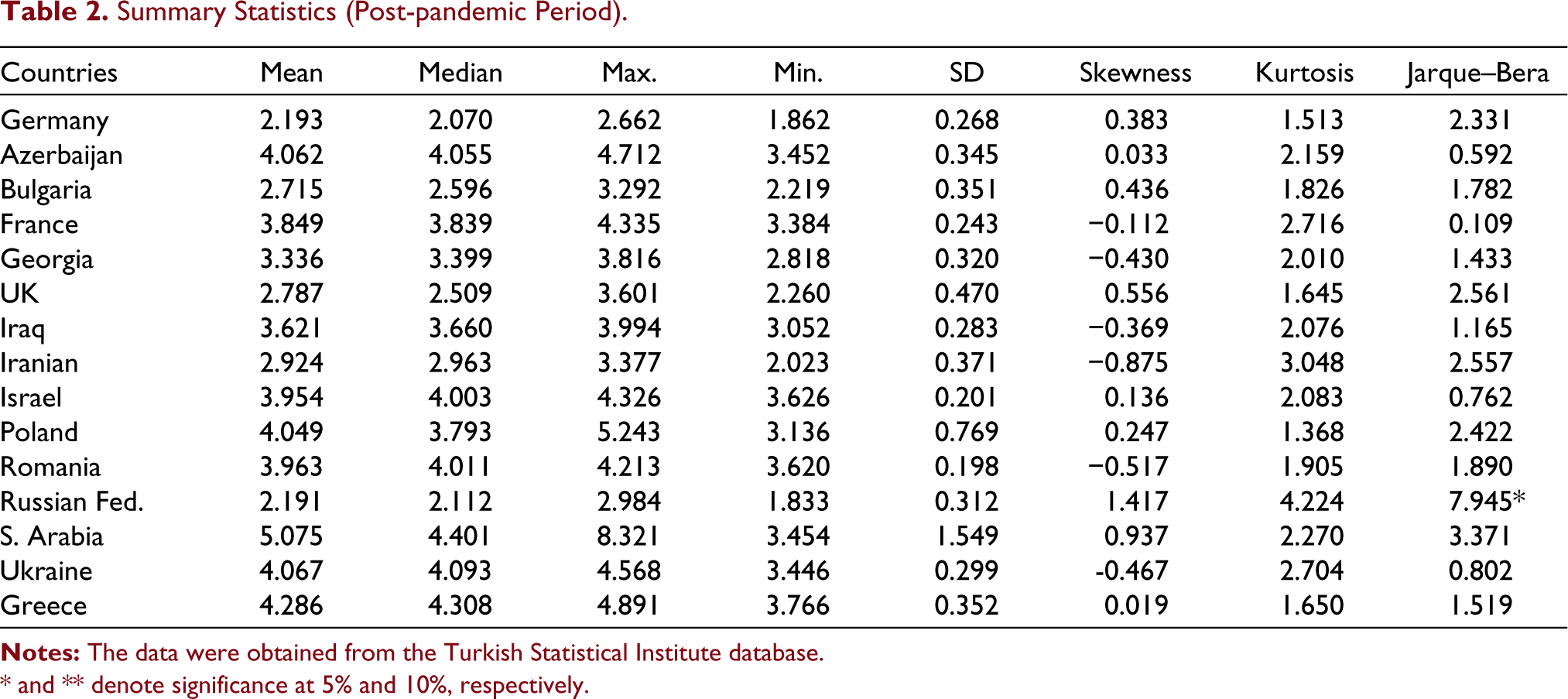
* and ** denote significance at 5% and 10%, respectively.
For comparison purposes, the ADF and KPSS tests, which are conventional unit root tests that do not take into account nonlinearity and structural change, and the Fourier KPSS (FKPSS) test results, which merely consider structural change, are presented in Tables 3 and 4.
Results of Conventional and Fourier KPSS Stationarity Tests (Pre-pandemic Period).
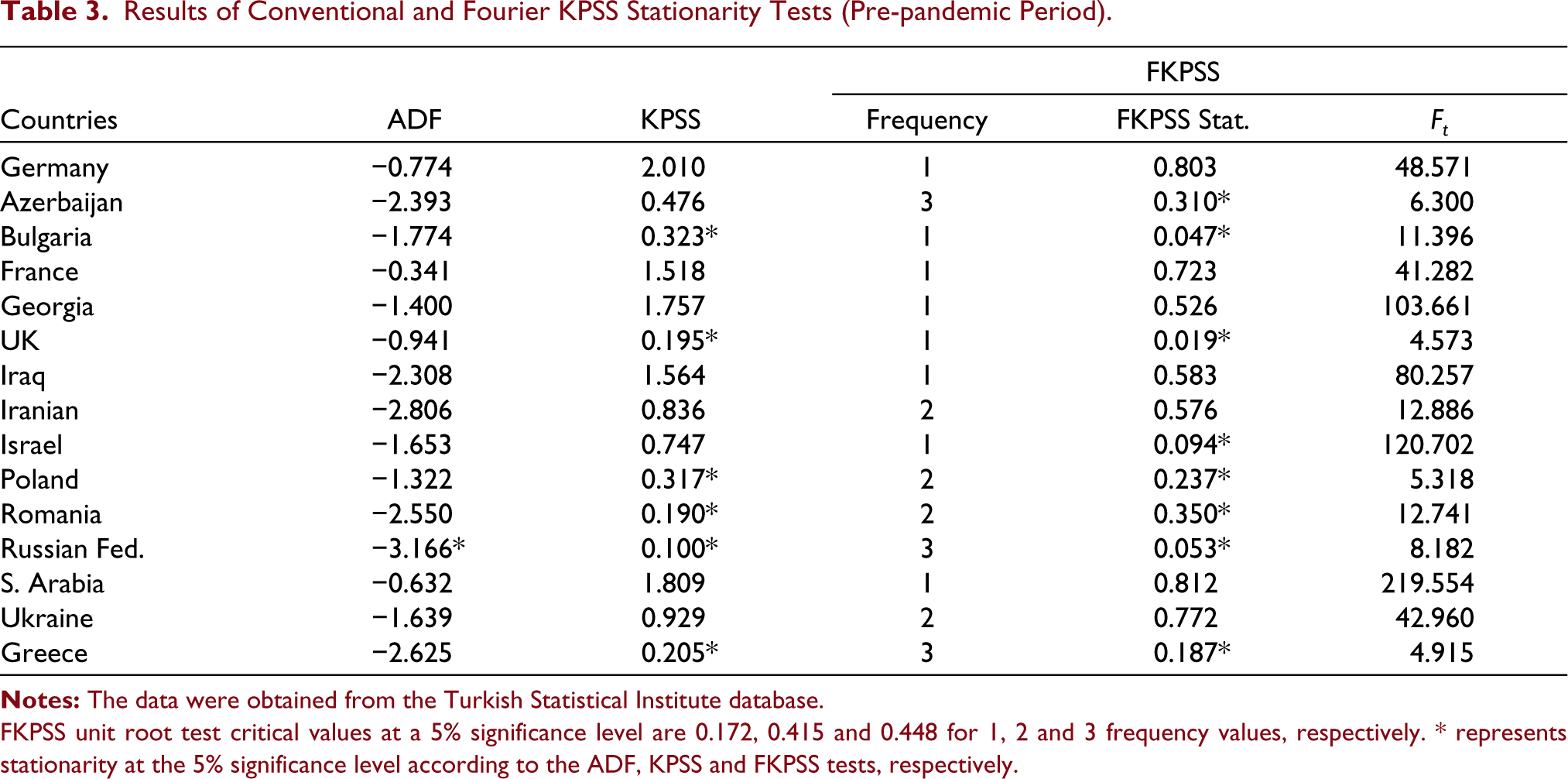
FKPSS unit root test critical values at a 5% significance level are 0.172, 0.415 and 0.448 for 1, 2 and 3 frequency values, respectively. * represents stationarity at the 5% significance level according to the ADF, KPSS and FKPSS tests, respectively.
Results of Conventional and Fourier KPSS Stationarity Tests (Post-pandemic Period).
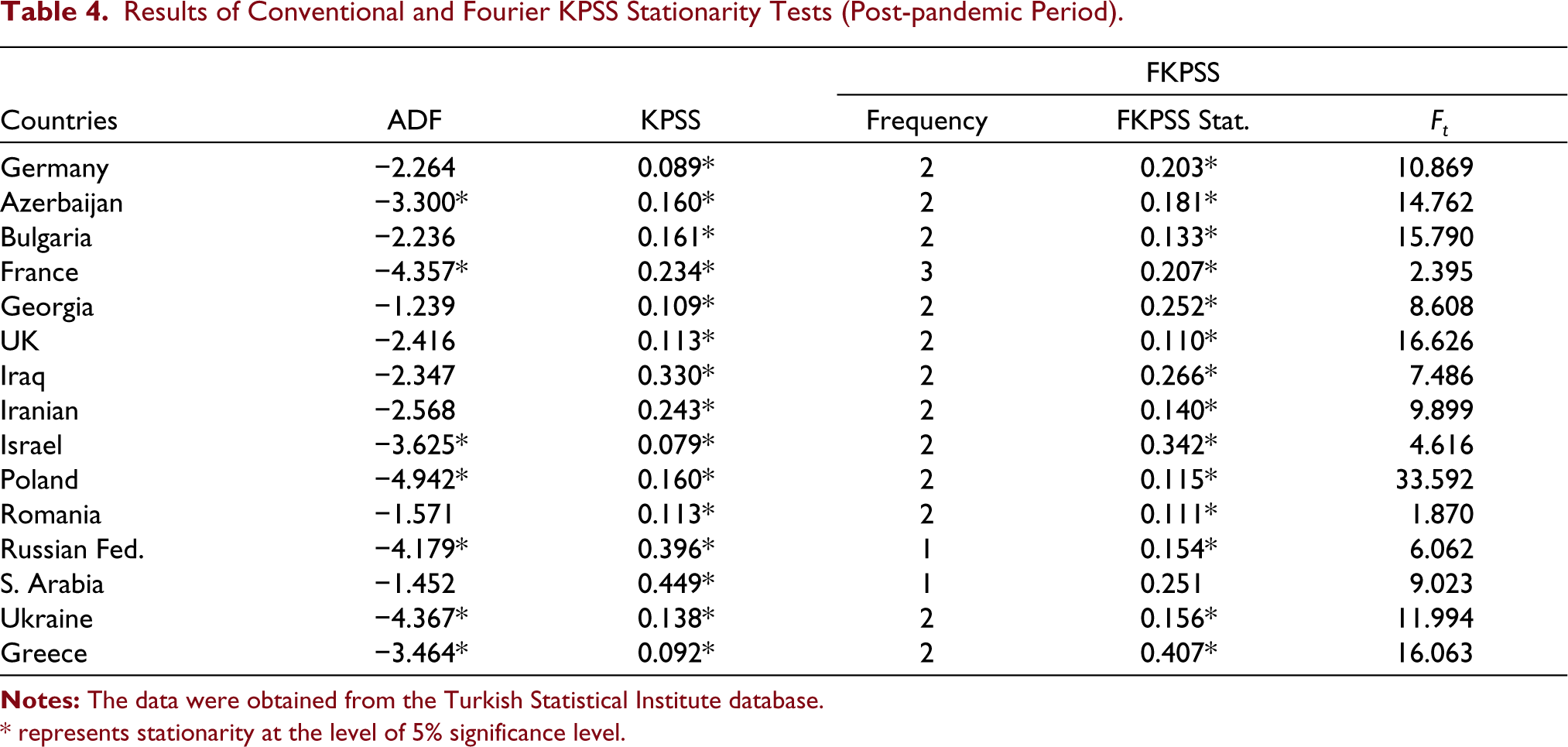
* represents stationarity at the level of 5% significance level.
According to the ADF stationarity test result for the pre-pandemic period, only the Russian Federation’s null hypothesis is rejected and determined to be stationary. According to the ADF test result, the policies that would increase the number of tourist arrivals due to the convergence hypothesis for the Russian Federation could be effective. In contrast, the null hypothesis cannot be rejected in Bulgaria, England, Poland, Romania, the Russian Federation and Greece, and the convergence hypothesis is determined as valid according to the KPSS test results.
However, for the post-pandemic period, according to the ADF stationarity test results, Azerbaijan, France, Israel, Poland, the Russian Federation, Ukraine and Greece were found stationary at level. For the same period according to the KPSS analysis results, it was concluded that the convergence hypothesis is valid in all countries included in the analysis.
According to the FKPSS test results for the pre-pandemic period, the null hypothesis cannot be rejected in Azerbaijan, Bulgaria, England, Israel, Poland, Romania, the Russian Federation and Greece. The convergence hypothesis is valid for these tourism markets. However, FKPSS test results for the post-pandemic period show that the convergence hypothesis is valid in all countries except Saudi Arabia.
It is estimated that the main reason for the difference in results among the ADF, KPSS and FKPSS stationary tests involves the fact that these tests have limitations on nonlinearity and structural change, and these limitations negatively affect their explanatory powers.
Hepsag’s (2021) test results, which may yield more reliable results compared to the ADF, KPSS and FKPSS tests, are presented in Tables 5 and 6 since these limitations do not exist. For the pre-pandemic period, analysis results indicate that the null hypothesis is rejected in all countries except Romania, and the series are ESTAR stationary with a smooth break. Therefore, the convergence hypothesis validates 14 of Turkey’s 15 major tourism markets.
Results of Hepsag’s (2021) Stationarity Test (Pre-pandemic Period).
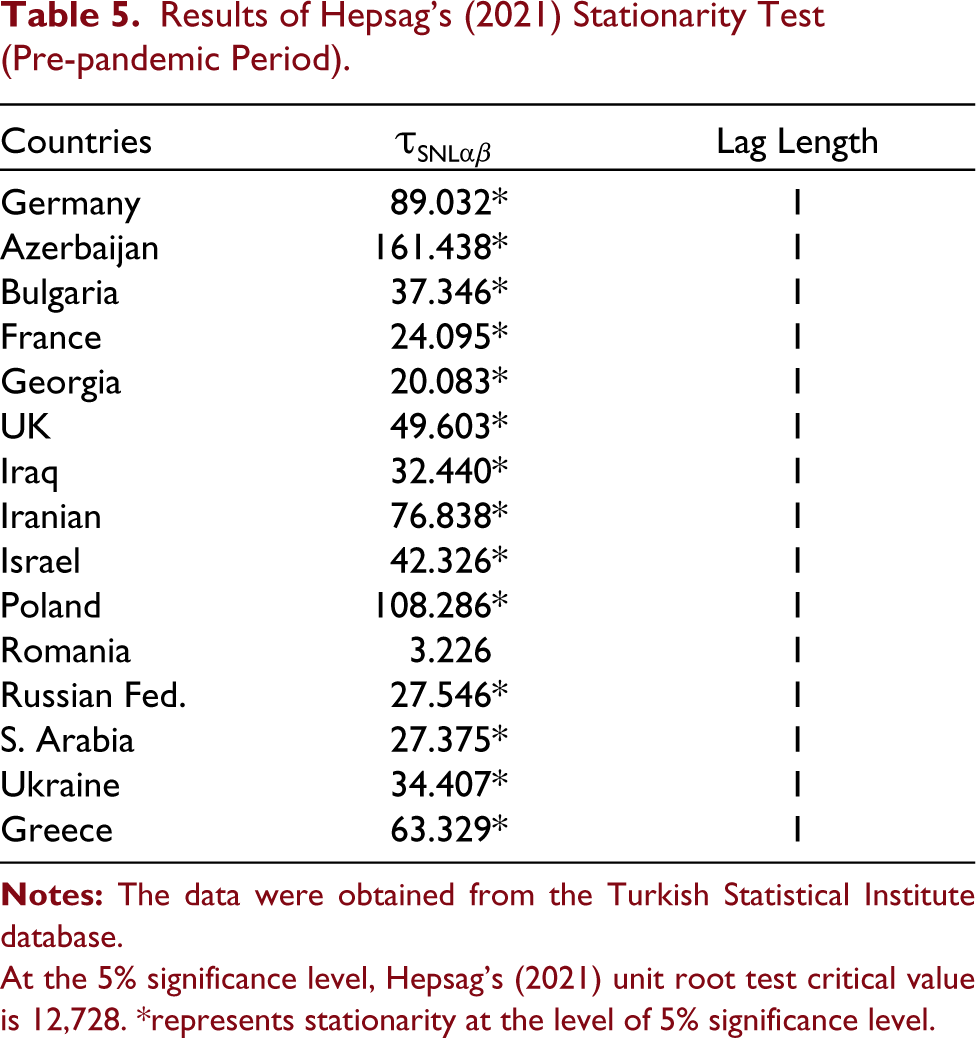
At the 5% significance level, Hepsag’s (2021) unit root test critical value is 12,728. *represents stationarity at the level of 5% significance level.
Results of Hepsag’s (2021) Stationarity Test (Post-pandemic Period).
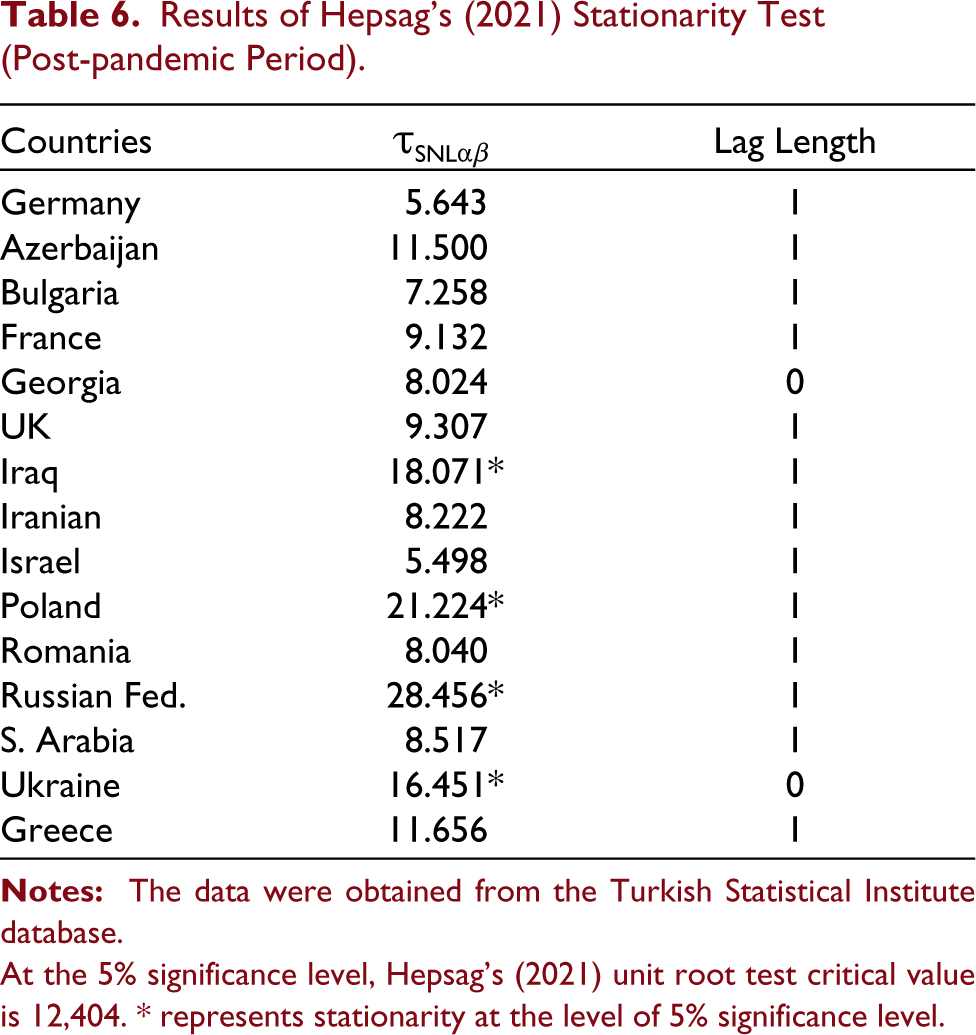
At the 5% significance level, Hepsag’s (2021) unit root test critical value is 12,404. * represents stationarity at the level of 5% significance level.
However, when the Hepsag (2021) test results were examined for the post-pandemic period, it was determined that the convergence hypothesis was valid only for Iraq, Poland, Russia and Ukraine.
Discussion
This study seeks to answer the primary question: ‘For which of Turkey’s 15 major tourism markets the convergence hypothesis is valid, and for which is it not?’ To answer this question, Hepsag’s (2021) unit root test, which takes into account both nonlinearity and smooth structural change, was applied separately for the pre-pandemic and post-pandemic periods. This test gives more reliable results than traditional unit root tests due to its features. According to the results of the ADF stationarity test for the pre-pandemic period, one of the conventional unit root tests is determined that the convergence hypothesis for tourism markets is valid only for the Russian Federation. However, for the post-pandemic period, the convergence hypothesis was found valid in Azerbaijan, France, Israel, Poland, the Russian Federation, Ukraine and Greece.
In contrast, according to the results of the KPSS test, another conventional unit root test, the convergence hypothesis is valid for Bulgaria, the United Kingdom, Poland, Romania, the Russian Federation and Greece for the pre-pandemic period, but it was found to be valid in all countries for the post-pandemic period. According to the Fourier KPSS test, a stationarity test that allows merely structural change, the convergence hypothesis is valid for Azerbaijan, Bulgaria, the United Kingdom, Israel, Poland, Romania, Russian Federation and Greece for the pre-pandemic period but for the post-pandemic period, the convergence hypothesis was found to be valid in all countries except Saudi Arabia. According to Hepsag’s (2021) stationary analysis results, the convergence hypothesis is valid in 14 of Turkey’s 15 major tourism markets for the pre-pandemic period, except Romania. This result indicates that activities that Turkey would implement for the markets in the Russian Federation, Germany, Bulgaria, the United Kingdom, Iran, Iraq, Georgia, Ukraine, Azerbaijan, Poland, France, Greece, Israel and Saudi Arabia lead to a substantial increase in the number of tourists arrivals to Turkey.
However, it has been determined that the convergence hypothesis is valid only for Iraq, Poland, the Russian Federation and Ukraine for the post-pandemic period. As a result of this analysis conducted with the post-pandemic data, the convergence hypothesis was found to be valid in only 4 of Turkey’s 15 largest tourism markets, indicating that the policies to be implemented in the new period should be concentrated in these countries For the post-pandemic period, the most significant difference compared to previous periods is the determination that tourism policies will be effective for four countries (Russia, Ukraine, Iraq and Poland), which accounted for only 24% of tourists to Turkey in 2019. Countries where policies are deemed ineffective, especially Germany, Bulgaria, the United Kingdom, Iran and Georgia, contribute 32% to Turkey’s foreign tourist arrivals. Hence, Turkey needs to identify alternative tourism routes for these markets where current policies (such as advertising, visa facilitation, etc.) are ineffective. Additionally, while determining alternatives, the spending potential of incoming tourists should also be considered. In this regard, markets like India and the People’s Republic of China, with their large young populations and rapid economic growth, should be taken into account.
Theoretical Implication of the Study
The main theoretical contribution of this study to the literature involves the econometric method employed in investigating the convergence hypothesis of tourism markets through the lens of destination resilience put forward by Narayan (2006). Various studies in the literature examining the convergence hypothesis of tourism markets in the context of destination resilience for Turkey have been conducted using either conventional unit root tests or approaches that consider only nonlinearity or only structural breaks.
Normally, studies concentrating on destination resilience can be categorized under three main headings: macro-level, meso-level and micro-level resilience. According to the macro-level resilience approach, the pandemic affects the tourism system, tourism destinations and tourism-dependent communities consisting of components, structures, relationships and stability. According to the meso-level resilience approach, it affects tourism organizations, non-governmental tourism organizations, public institutions, tourism links and value chains (especially supply chains). Consequently, the micro-level resilience approach suggests that the pandemic affects tourism sector employees, tourists and permanent or temporary residents in tourism regions (Bai & Ran, 2022; Prayag, 2020; Yu et al., 2023).
Upon examining the relevant literature regarding the convergence characteristics of Turkey’s destination tourism markets, our study is one of the first to simultaneously include nonlinearity and structural change in the analysis while discussing destination resilience-related policies. In addition, it is the first study to compare pre- and post-pandemic period data as separate periods.
In traditional unit root tests, a constant mean reversion rate is accepted. Thus, for such tests to conclude that yt is stationary, the convergence process must be linear. Datta (2003) claimed that the process might not be linear or have structural changes along with technology and policy shocks (King & Ramlogan-Dobson, 2011). In the real world, various time-series data exhibit nonlinearities, outliers and structural changes in the mean or variance. All these properties, such as random walk that models cannot accurately capture, reduce the explanatory power of conventional unit root tests. Due to the structural change and nonlinearity problems detected in many economic and financial time-series data, it is difficult to determine whether or not these series are stationary at the level. Perron (1989, 1990) and Perron and Vogelsang (1992) stated that structural changes could have caused a stationary time series at the level to exhibit different stationarity. As a result, those breaks would have affected the strength of traditional unit root tests. Appropriate consideration of deviations such as parameter shifts, trend breaks and nonlinearities requires the development of robust unit root tests (Aparicio et al., 2006).
Studies aiming to test convergence hypotheses for destination resilience tourism markets generally prefer to perform conventional unit root tests such as the ADF, Phillips–Perron (P.P.) and KPSS. However, these tests accept the assumption of linearity of the variables, and there are many reasons to question this assumption. Enders and Granger (1998) stated that the explanatory power of conventional unit root tests would decrease in an asymmetric adaptation process. Besides the nonlinearity assumption, the potential impacts of various events (2008 global economic crisis, September 11 terrorist attacks, etc.) on the series are not taken into account in conventional unit root tests due to the use of long-span data in the study, which also leads to a decline in the explanatory power of these tests. In the presence of structural changes and nonlinearity in time-series data, the power of conventional unit root tests that do not allow these two impacts simultaneously would decline. Therefore, according to the ADF test, the probability of rejecting the null hypothesis implying the existence of a unit root would decrease. It would not be possible to distinguish the stationary from the nonstationary process (Hepsag, 2021). In this study, Hepsag’s (2021) stationarity test, which also considers the structural change and nonlinearity problems, is performed to yield more reliable results. Theoretically, it tried to contribute to the literature with policy recommendations based on more reliable econometric results, which can improve destination resilience for visitors planning to visit Turkey in the coming years.
Managerial Implication of the Study
Along with the rapid development in information and communication technologies, destination resilience, or tourism resilience, has been one of the fastest-growing sectors in recent years. Tourism has become the third-largest sector in international exports, following the petroleum and chemical industries. As of 2019, tourism constitutes 7% of global exports and 28% of global service exports. Besides, tourism can affect highly crucial macroeconomic variables such as employment and economic growth. For these reasons, decision-makers of destination tourism take certain measures to maintain a stable and predictable number of tourist arrivals and tourism revenue for destination resilience (Farmaki & Pappas, 2021; Rana, 2021b). Moreover, predicting tourism demand enables systematic planning of tourism activities and adjusting infrastructure and accommodation investments in tourism destinations (Agazade et al., 2021; Yehia et al., 2022).
A country’s tourism market structure affects tourism demand through different channels and dimensions. The tourism resource structure of the destination resilience market can affect the tourism demand encountered by tourism companies, destinations or sectors through the competitiveness and risk structure they might have faced. Market concentration, meaning the arrival of foreign visitors to the country from a small number of countries, not only allows various cost advantages, in turn, competitive advantage, but also causes significant disadvantages. The high concentration rate in resource markets may transform tourism organizations into fragile structures prone to risks in the presence of problems in these markets. As a result of political, economic, military or environmental risks in resource markets, there may be a rapid decline in demand (Agazade, 2021).
Therefore, market diversification should be maintained to cope with the uncertainties and crises that may arise and implement a successful crisis management strategy. Nonetheless, for the market diversification strategy to succeed, it is necessary to be familiar with the markets by which the tourist attraction activities can be fruitful. Such information can be obtained using the convergence hypothesis approach.
The convergence hypothesis, based on neoclassical growth models, claims that the income levels of emerging countries would grow faster than those of rich countries. Thus, the income levels of countries would converge. The convergence hypothesis is then adapted to various variables, especially tourism. Examining the convergence features of tourism markets provides valuable information for decision-makers. Information regarding successful policies implemented in tourism markets is among the significant benefits. Along with the measures to be taken for the markets where the convergence hypothesis is determined, more tourists would depart from that country’s market. Therefore, the total number of tourist arrivals would be increased.
Another crucial information provided for decision-makers regarding the convergence hypothesis in tourism markets involves market diversification. Suppose the number of foreign tourist arrivals from a small source market converges with the total number. In that case, the measures taken to increase the number of tourist arrivals in this market and market diversification will become successful. Otherwise, market diversification may fail, as the measures taken would not boost tourist arrivals. As a result of our empirical analysis, it is concluded that the convergence hypothesis is not valid merely in Romania, which is one of Turkey’s 15 major tourism markets. Therefore, the number of tourist arrivals from those countries and the total number of tourist arrivals can be increased along with the policies to be implemented in the other 14 major tourism markets. One of the most critical managerial results of our analysis involves the validity of the convergence hypothesis for the Russian Federation and Germany, which are among the countries that account for the most number of tourist arrivals to Turkey (both countries account for 27% of the total number of tourist arrivals). In this regard, advertising activities in these countries, market-specific holiday packages, convenience in obtaining visas, etc., would enhance the number of tourist arrivals. Another significant result for the pre-pandemic period that we obtained as a result of our study involves the notion that the policies to be implemented for increasing the number of tourist arrivals in countries such as Saudi Arabia, Israel, Greece, France and Poland, which are relatively more minor markets, can also be effective. In this respect, market diversification for Turkey would be achieved by increasing market shares. However, for the post-pandemic period, the number of countries where Turkey can implement effective policies to ensure market diversity has decreased compared to before the pandemic.
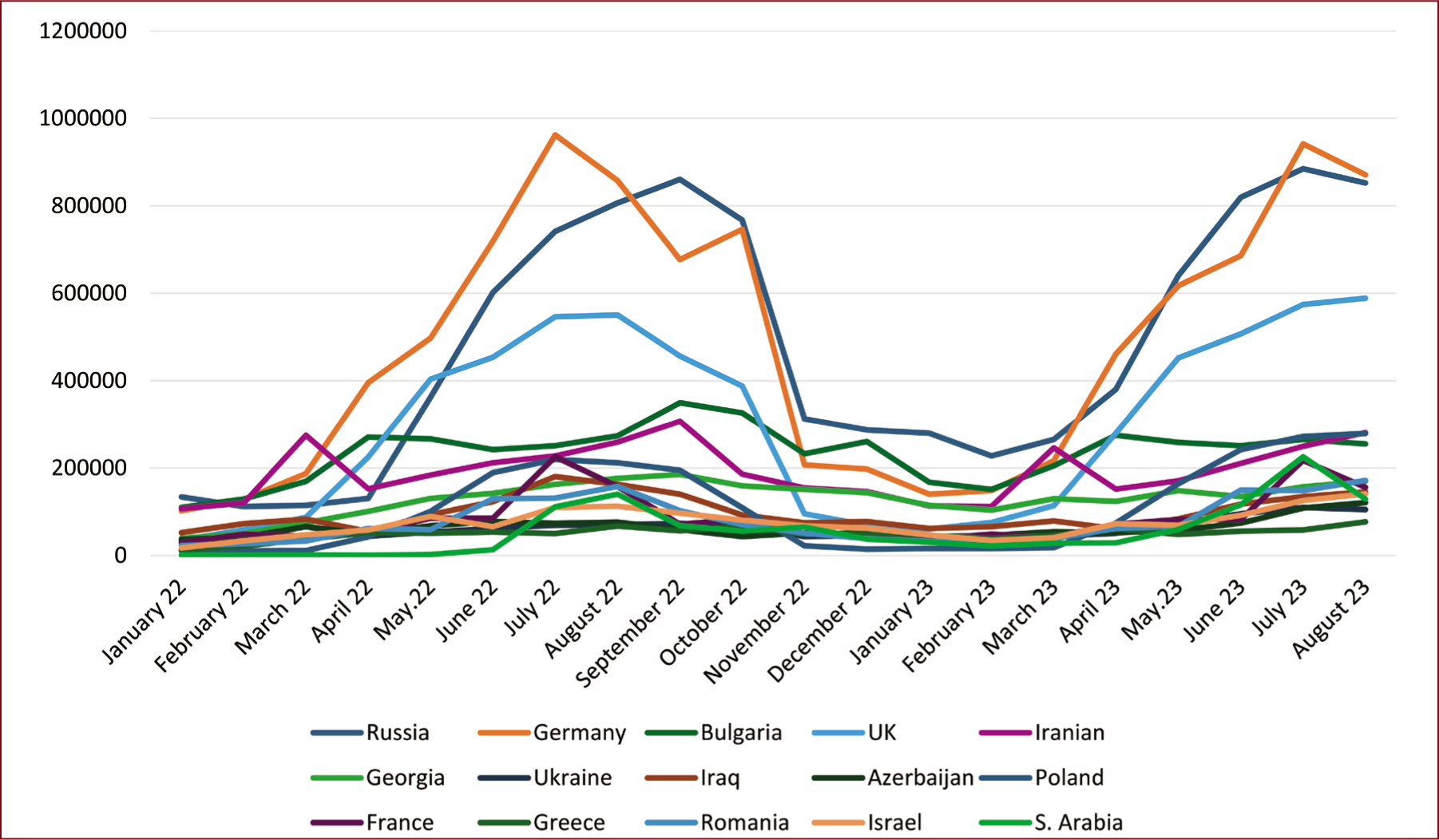
As seen in Figure 2, 77.8% of the tourists coming to Turkey in 2022 came only in the summer period, which can be expressed as between April and October. In the remaining five months of 2022, which we can call the winter period, only 22.2% of the total tourists came. Nonetheless, Turkey’s opportunities for the tourism sector are not limited to the sea, sand and sun. In parallel with the tendency towards sustainable alternative tourism types globally, Turkey’s pursuit of alternative tourism types (health and thermal tourism, highland tourism, winter tourism, mountain and nature tourism, congress and fair tourism, etc.) has intensified. Its attempts to spread tourism throughout the country during the year’s four seasons have gained momentum. Along with the measures taken and the investments made, the tourism sector in Turkey has exhibited quite a considerable performance.
Future Scope and Limitations
Our study differs from the previously conducted studies. It fills an essential gap in the literature since it is the first study that yields results by simultaneously considering structural change and nonlinearity. Moreover, the heterogeneity problem, omitted due to aggregated datasets, is prevented by employing time-series analysis methods instead of panel data analysis methods in the study. The study’s most important limitation involves excluding the number of tourist arrivals as of 2020 and 2021 from the analysis due to the pandemic. In future studies, it will be useful to first analyse current data for 2024 and the following years, when pandemic restrictions are completely repealed, and analyse changes in foreign visitor preferences by country in the new normal period and present policy recommendations.
Conclusion
The main objective of this study is to test the validity of the convergence hypothesis in 15 major tourism markets, which account for 66% of the foreign tourist arrivals to Turkey for the post- and pre-pandemic periods performing Hepsag’s (2021) unit root test that concurrently take into account the nonlinearity with the ESTAR model and the smooth structural change with the logistics smooth transition function. To the best of our knowledge, our study is the first to investigate the convergence hypothesis in Turkey’s tourism markets, performing a stationarity test that considers both structural change and nonlinearity. As a result of the analysis conducted with the data obtained over the pre-pandemic period January 2001–December 2019 and the post-pandemic period January 2022–August 2023 determined that the ADF, KPSS and FKPSS stationarity tests yield mixed results. It is thought that the main reason why conventional unit root tests yield mixed results involves their inability to consider nonlinearity often seen in long-span time-series data and the structural change simultaneously.
According to Hepsag’s (2021) stationarity test results, it is concluded that the convergence hypothesis is valid in all tourism markets except for those in Romania. Therefore, policies that would boost the number of tourist arrivals in the tourism markets, except for those in Romania, included in the analysis may be effective. They would increase the number of tourist arrivals to Turkey. However, analyses conducted for the post-pandemic period have shown that the number of markets where effective policies can be implemented has decreased considerably. These markets are Iraq, Poland, the Russian Federation and Ukraine. The most important result obtained for the post-pandemic period is that the Russian Federation is the only large market where effective policies can be implemented. This shows that the policies to be implemented to increase the number of tourists should be concentrated in this country.
However, the sole focus on structural change in the econometric methods used in both studies, without considering nonlinearities, has led to some contradictoriness in the results. Additionally, differences in the data period and contextual factors (such as the Russia–Ukraine War and military and political problems in the Middle East) have also contributed to these discrepancies. Unlike previous studies, the use of the most current econometric techniques and considering all developments affecting the tourism market data have led to results and policy recommendations that fill an important gap in the literature.
Our analysis results contain important policy implications for the post-pandemic era. Policies such as integration and unique product marketing, promotional activities that can attract international tours, exhibitions and meetings which are to be implemented by policymakers in 4 of the 15 markets that account for the highest number of tourist arrivals to Turkey, including holiday packages specific to these markets, and the number and quality of transportation services, especially air transportation can be effective. Besides, in the markets where the convergence hypothesis is valid, promotional activities should be conducted in business tourism, shopping tourism, health tourism, sports tourism, religious tourism and educational tourism, being the sub-branches of the tourism sector. Policymakers must consider these results in planning to ensure the continuous growth of the tourism industry.
Footnotes
Declaration of Conflicting Interests
The authors declared no potential conflicts of interest with respect to the research, authorship and/or publication of this article.
Funding
The authors received no financial support for the research, authorship and/or publication of this article.