







Abstract
Financial institutions actively consider environmental performance as an important metric for investment evaluation and allocation of financial resources, which is prevalently known as ‘green finance’. The concept of green finance has received global recognition, as illustrated by the growing publications, yet there is a persistent need to synthesize the extant literature in this area to understand how green finance has developed as a distinctive and crucial body of knowledge. The present research aims to systematically review the scholarly articles on the green finance domain published from 1997 to 2024. Using the Scopus database and the SPAR-4-SLR framework, the current research integrates the bibliometric analysis along with a systematic literature review approach. The study discovers seven thematic areas that associate the green finance domain with distinctive knowledge clusters, such as (a) green investments, (b) green economic growth, (c) environmental performance, (d) green innovation, (e) corporate social responsibility, (f) climate risk management and (g) financial development. Such dispersed and multiple themes corroborate the multidimensional outlook of green finance and its universal applicability. Further, the study also describes theme-wise directions of future research to enhance the existing body of knowledge. Finally, the current research enumerates critical implications for academicians, practitioners and policymakers.
Introduction
Climate change postulates a unique challenge and potentially the most significant market failure the global economy has witnessed over several decades (Awawdeh et al., 2021; Qi & Qian, 2023). Given the irreversible effects of climate change, nations have committed to limit the average global temperature rise to below 2°C compared to preindustrial levels (Meo & Karim, 2022). Providing adequate financial resources for ecological investments and projects is recognized as one such policy initiative (Sachs et al., 2019) that assists in achieving sustainable development goals (SDGs). This idea of incorporating an environmental viewpoint into financial decision-making is known as ‘green finance’. Green finance originated from the roots of ‘green economy’, which was first described in ‘The Blue Print of Green Economy’ report (Pearce et al., 1989). Since its inception, green finance has been elucidated by several international agencies. As defined by the G20 Green Finance Study Group (2016), green finance is the ‘financing of investment that provides environmental benefits in the broader context of environmentally sustainable development’. UNEP (2018) defines green finance as a mechanism to increase financial flows from various sectors towards sustainable development. Capital providers and investors are increasingly considering environmental sustainability as an important metric for their financial decision-making and asset allocation (Schoenmaker, 2017). Such growing interest and significance of climate investing justifies the evolution of traditional finance to green finance (Friedman, 2007). The emergence of green finance as a crucial domain can be explained by the need to mobilize private savings to reorient economic activities towards ecological goals. The ‘Action Plan on Sustainable Finance’, published by the European Commission (2018), has played a pivotal role in financing sustainable investments and bolstering green finance on the global front. Cumulatively, investor awareness and regulatory endorsement have jointly developed green finance practices. The volume of investment in green economic activities has grown exponentially at the global level (Liu & Wang, 2023), depicting the stakeholders’ acceptability of ecological considerations in financial decision-making instead of focusing only on monetary gains. Among various green finance instruments, green bonds function as an important channel for financing ecological projects (Cheng et al., 2024). According to the Bloomberg database, the global green bond issuance from government agencies and corporates has reached USD 649.8 billion in 2023, reporting an annual increment of 8.20% from 2022 (USD 597.10 billion). Further, green bond issuance is expected to cross USD 700 billion by the end of 2024 and will continue to rise to reach USD 914 billion by 2030 (S&P Global, 2024). The growing popularity and acceptance of green finance practices underscore the global commitment to sustainability and the mitigation of ecological damage caused by industrialization.
Provided the rising adoption of green finance practices, scholarly academicians and researchers have shown significant interest in this domain and provided theoretical as well as empirical contributions. First, apart from institutional definitions, various scholars have described the concept of green finance using different approaches. Soundarrajan and Vivek (2016) have explained green finance as a paradigm shift in the financial sector towards low-carbon and prosperous economies and thus aim to integrate the financial sector into the transition towards improved environmental performance. According to Sachs et al. (2019), green finance involves novel financial instruments such as green lending, green bonds and carbon market securities that primarily aim to improve environmental conditions. Besides, the other strand of literature has focused on empirical research studies aiming at the nexus between green finance and other important variables, such as green banking (Feng et al., 2022), green innovation (Irfan et al., 2022), regulatory policies of green credit (Lv et al., 2021), green investments (Taghizadeh-Hesary & Yoshino, 2019), the ecological impact of green finance (Meo & Karim, 2022) and the effect of green finance on economic development (Zhou et al., 2022). The extant literature on green finance is largely scattered and has analysed green finance from a unidirectional perspective by associating it with one or other eco-environmental aspects. However, considering the multidimensionality of green finance, it is timely to synthesize the existing research in this field and describe the major research spheres focused on to date. Further, though green finance practices have grown remarkably, several economies are yet to implement the same (Zakari et al., 2023), and thus a comprehensive review of green finance literature assists in developing the future research agenda for these nations. Therefore, the present research purports to review the existing literature on the green finance domain and attempts to answer the following research questions.
RQ1: What are the key publications, journals and authors that have shaped the development of the green finance discipline?
RQ2: What are the major research themes in the domain of green finance stemming from extant literature (such as environmental performance, economic development and climate risk)?
RQ3: What are the prospective research areas in green finance requiring further exploration?
RQ4: Which theoretical frameworks can be utilized to explain to nexus between green finance and allied research areas?
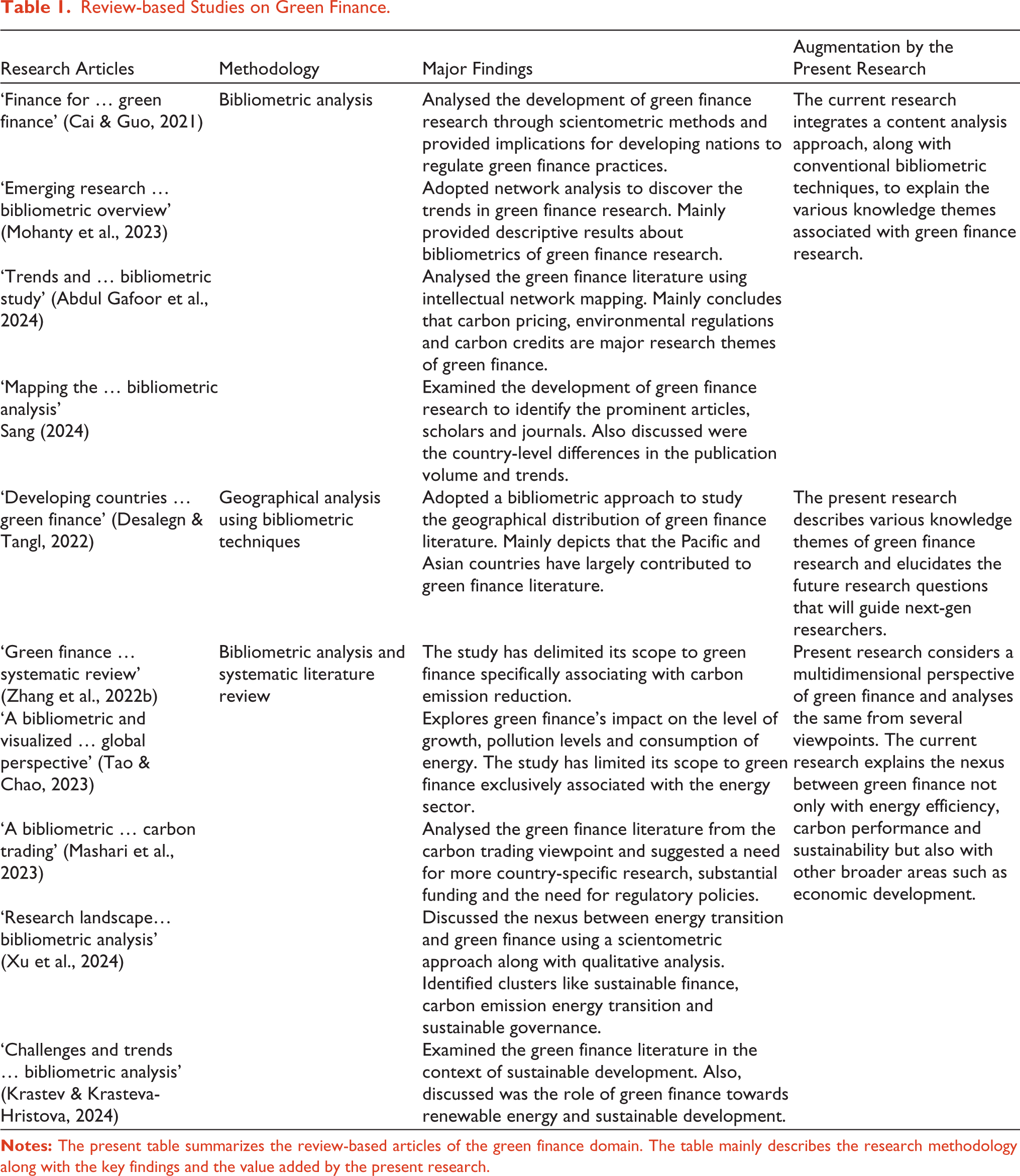
Provided the budding adoption of green finance, several scholars have attempted to analyse the extant green finance literature and comprehend the development of this domain (Agrawal et al., 2024; Sang, 2024; Tao & Chao, 2023; Xu et al., 2024; Zhang et al., 2022b). To better differentiate the present study from the existing ones, the past research studies were critically evaluated based on their (a) methodology and (b) scope. Under the first category, research articles from Cai and Guo (2021), Desalegn and Tangl (2022), Mohanty et al. (2023), Abdul Gafoor et al. (2024) and Sang (2024) have primarily focused on the bibliometric analysis methods and summarized the key performance indicators of green finance research. Though bibliometric analysis belongs to the broader spectrum of review-based research, it pays little attention to critical discussion of the knowledge themes and mainly emphasizes quantitative indicators. On the contrary, the present research, in addition to bibliometric analysis, adopts a mixed-method (quanti-quali) approach and performs a systematic review to explain the various research themes of green finance literature. Further, past studies from Palmaccio et al. (2023) and Sang (2024) have enumerated some future research questions, yet their discussion was fundamentally non-specific, whereas the present study explains a theme-wise research agenda for future studies, which provides a better understanding to the budding researchers. Second, another strand of review-based articles has considered a mixed-method approach but constrained their focus on the nexus between green finance and specific areas and overlooked the multidimensionality of the said topic. The extant studies from Zhang et al. (2022b) (carbon emission), Tao and Chao (2023) (energy efficiency), Mashari et al. (2023) (carbon trading), Agrawal et al. (2024) (circular economy), Xu et al. (energy transition) and Krastev and Krasteva-Hristova (2024) (sustainable development) have analysed the green finance research only from a single perspective, which calls for further probing. Green finance is one of the critical components of the national as well as global financial system and contributes to several economic aspects in addition to environmental sustainability. Thus, the present study considers this holistic perspective and explores the potential association between green finance and other relevant areas, such as economic development, capital market and green innovations. Finally, as against past studies, the current research also explains the fundamental theories and conceptual frameworks under each knowledge cluster that can be applied for conducting research in the recognized directions. To the best of the authors’ knowledge, no past studies have discussed the relevant theoretical models for extending green finance research. Table 1 summarizes the review-based studies conducted on green finance along with their major findings and the value added by the present research. Thus, the current research addresses the limitations of previous review-based studies and provides new insights based on a thorough review of green finance and its emerging themes.
Review-based Studies on Green Finance.
This article is organized as follows: The second section contains the research methodology followed by the performance analysis of green finance research in the third section. The fourth section depicts the results of scientific mapping and thematic literature review and the fifth section portrays the theme-wise future research agenda. Finally, the sixth section concludes the article along with the implications and limitations.
Research Methodology
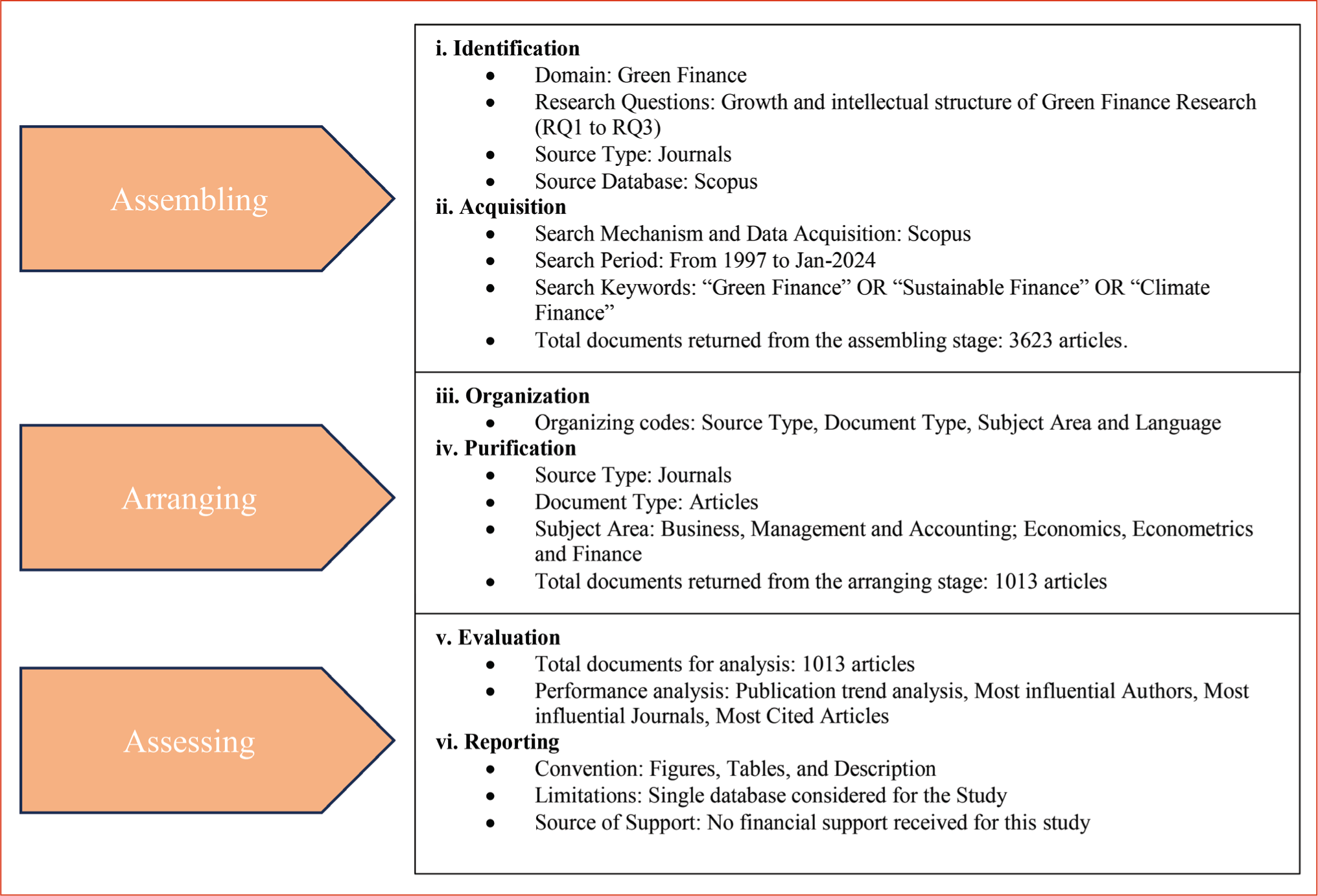
The present study adopts the ‘scientific procedures and rationales for systematic literature reviews’ (SPAR-4-SLR) protocol proposed by Paul et al. (2021). Alternatively, past studies from Mashari et al. (2023), Zhang et al. (2022a) and Sang (2024) have used the ‘preferred reporting items for systematic reviews and meta-analyses’ (PRISMA) developed by Shamseer et al. (2015). However, the PRISMA protocol is primarily restricted to systematic literature reviews (SLRs) in general and provides limited rationales that scholars could adopt to validate their review verdicts. Contrarily, the SPAR-4-SLR exhibits a more detailed framework by categorizing the review process into three broad categories with six subsections, that is, (a) assembling (identification and acquisition); (b) arranging (organization and purification) and (c) assessing (evaluation and reporting). Besides SPAR, research frameworks such as 6W (Callahan, 2014), ADO (Paul & Benito, 2018) and TCCM (Paul & Rosado-Serrano, 2019) are also available. However, the constrained applicability of the existing frameworks to management literature necessitates further probing (Paul et al., 2021). In a similar vein, Rana et al. (2023) have proposed a robust framework—‘POWER’ (Planning, Operationalizing, Writing, Embedding/Evaluating and Reflection)—using a three-dimensional perspective of authors, reviewers and editors of impactful journals on conducting effective SLR. Provided the inclusivity and scientific development approach, the POWER framework appropriately fits the management literature and guides scholars in developing review-based studies (Rana et al., 2023). Though the POWER framework adopts a holistic outlook, the three stages of the SPAR protocol partly corroborate with the operationalizing, writing and evaluating measures of the POWER framework. Figure 1 describes the incorporation of the three-stage process of retrieving articles relevant to this study from the Scopus database.
Performance Analysis of Green Finance Research
Primary Dataset
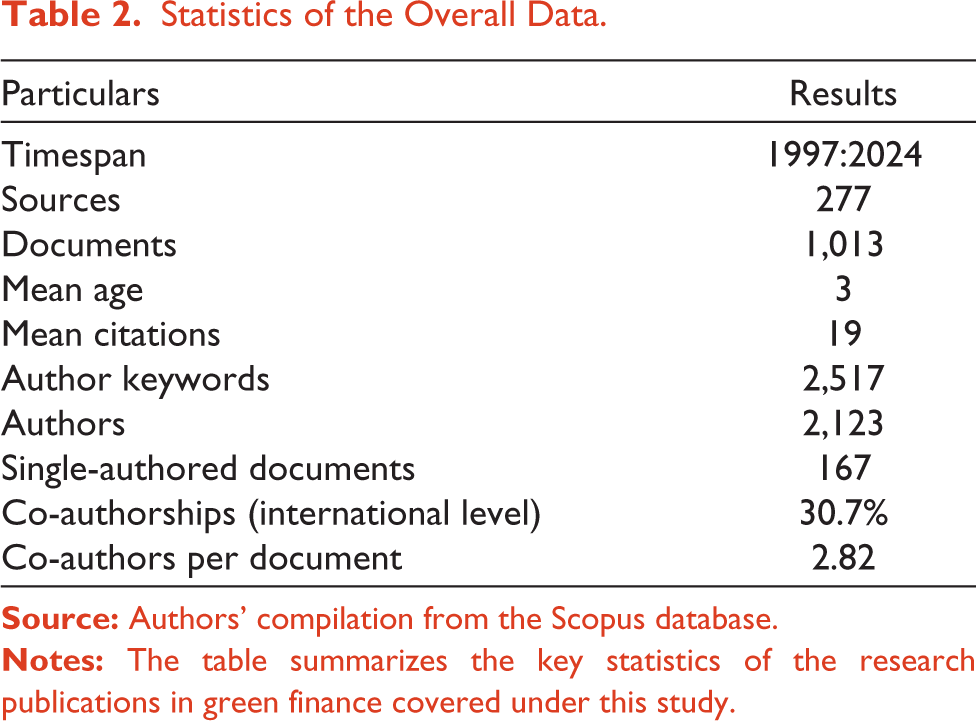
Table 2 provides an overview of the final dataset selected based on the data cleaning criteria and included for further analysis. The data contains a total of 1,013 articles published in 277 journals from the period ranging from 1997 to 2024. With 18.74 citations for each document on average, the research scholars have made a significant impact in their field. The total number of citations received is 51,962. As green finance is at the nascent stage and still evolving, the documents are mostly recent, with an average age of 3 years. Further, the total number of authors is 2,123, with an international collaboration of 30.70%, indicating that the majority of research in green finance is carried out at the country level. Out of the total articles, 167 are single-authored documents (16.48%), and the majority (83.52%) are co-authored documents with an average of 2.82 co-authors in each document.
Statistics of the Overall Data.
Annual Publication Trend
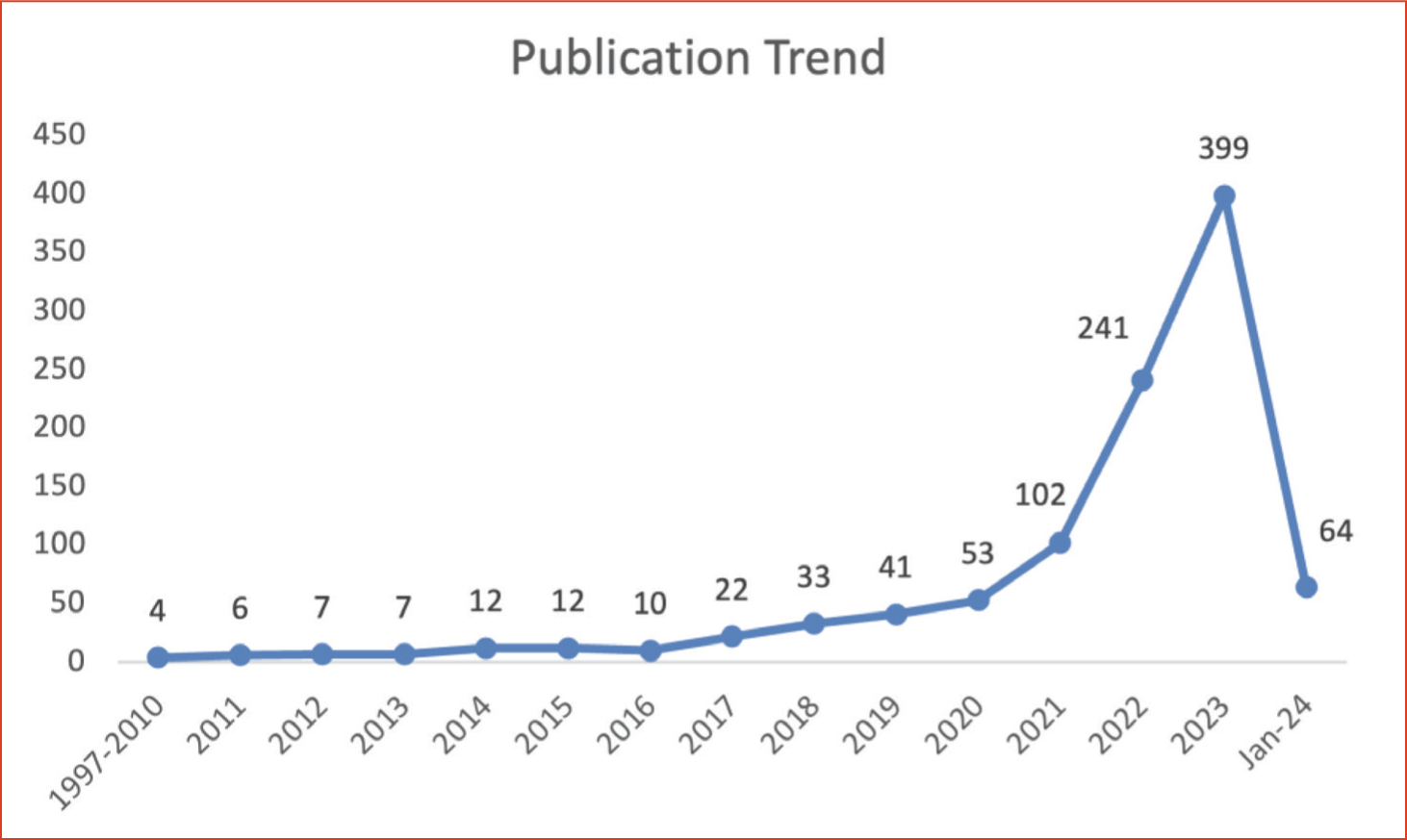
As shown in Figure 2, the yearly output of articles has increased steadily. In the last 3 years (2021–2023), 742 (73.24%) of all the articles were produced. Besides, there has been a consistent increase in the number of publications post-COVID-19 as the pandemic has severely impacted the global energy and environmental outlook (Sadiq et al., 2021). As per S&P Global (2023), green bond sales reached $443.72 billion, indicating the rising importance of green finance in the financial sector and the increasing research contributions in this field. Klioutchnikov and Kliuchnikov (2021) highlighted that due to climate change and increasing emissions, there has been an increase in interest in ecological projects that can help limit the global temperature increase to below 1.5°C.
Influential Authors
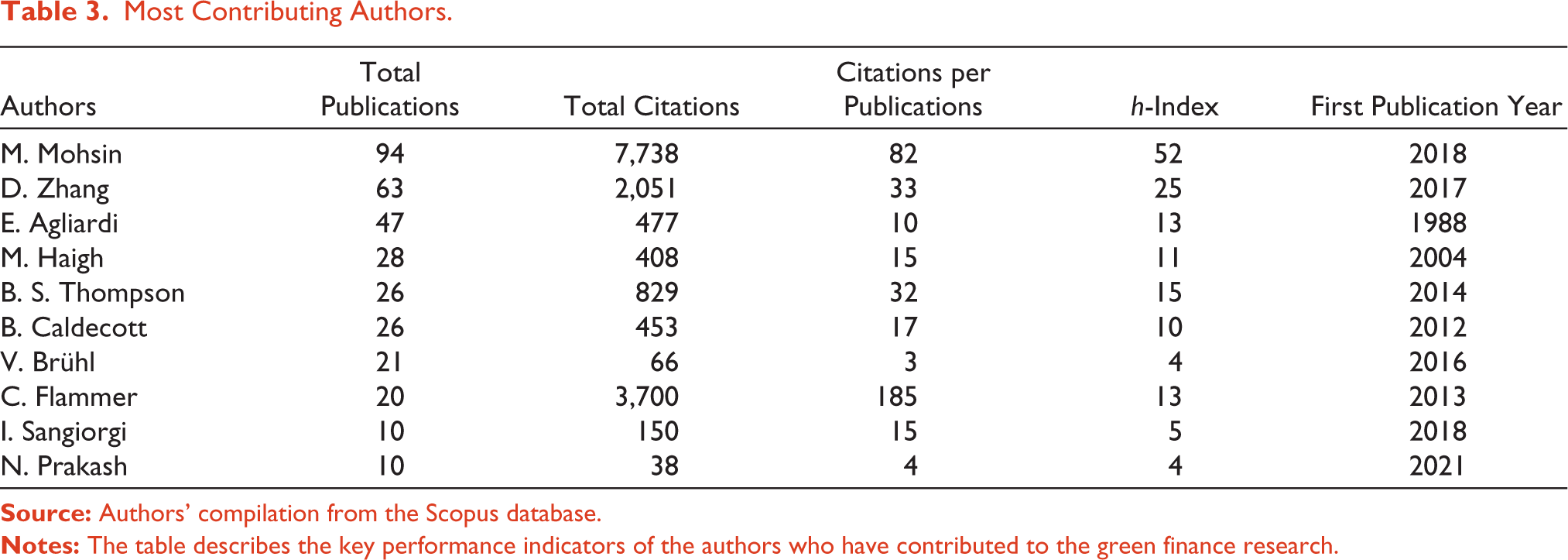
Table 3 describes the most productive authors in the field of green finance according to the total number of publications along with their citation performance. According to the results, the most productive authors in this research field are M. Mohsin, D. Zhang, E. Agliardi and M. Haigh with, 94, 63, 47 and 28 publications, respectively. Provided the authors’ quantitative contribution (based on article count) to the field of study, the number of citations reveals the author’s qualitative impact on other researchers. Based on the total citations received, M. Mohsin, C. Flammer, D. Zhang and B. Thompson are the most influential authors with 7,738, 3,700, 2,051 and 829 citations, respectively. Further, analysing the h-index and citations per article, it is found that C. Flammer and M. Mohsin are the leading authors, respectively.
Most Contributing Authors.
Influential Journals
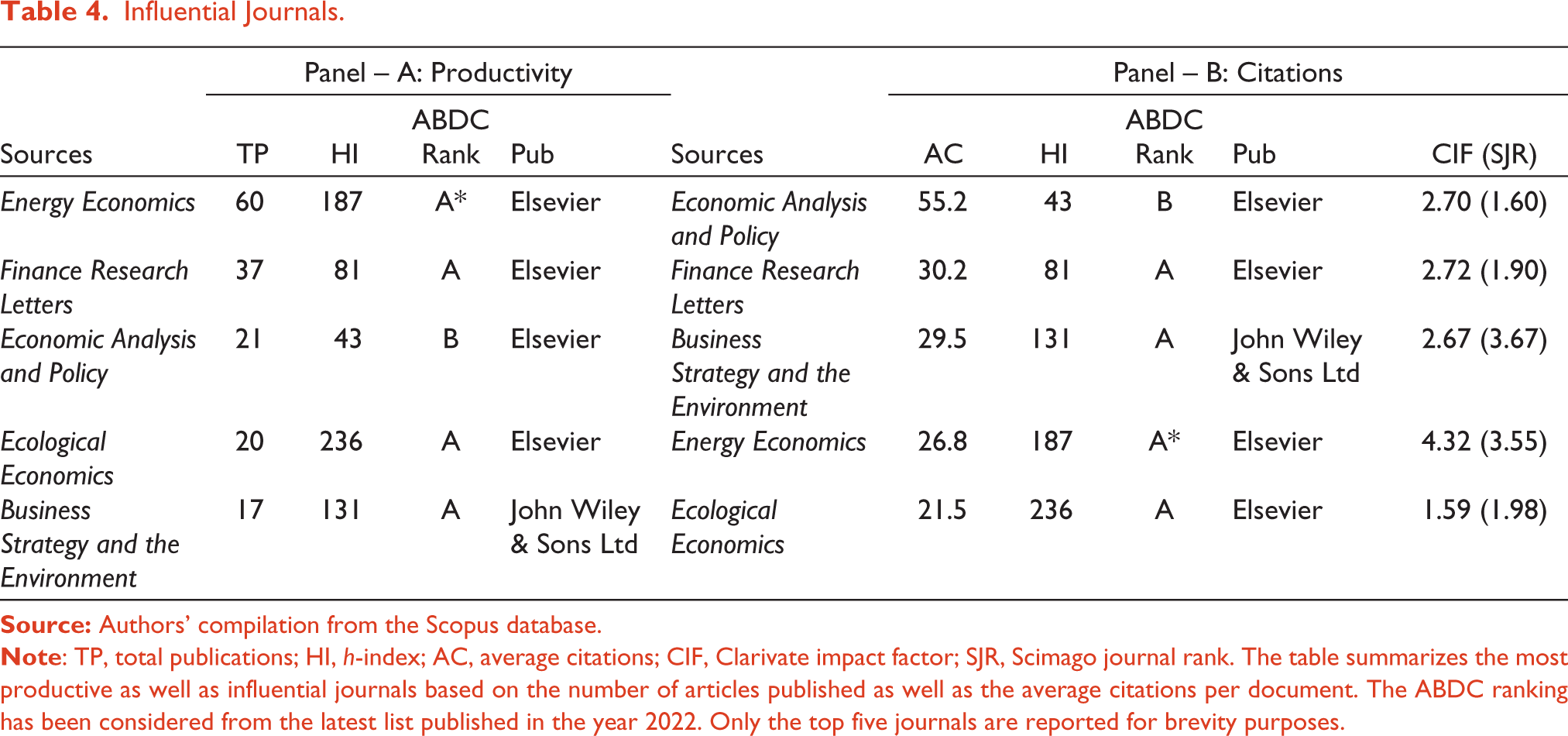
Table 4 shows the summary of the most influential journals based on productivity (panel A) and citation (panel B). It describes the journal production volume along with other relevant metrics such as several publications, citations, h-index, publishers and ABDC ratings. The analysis based on the dataset indicates that the leading journals span across various fields, demonstrating the diverse and interdisciplinary character of green finance research. Based on production volume, the journal ‘Energy Economics’ stands out with the highest number of published articles (60) and has received a significant number of citations (1,772). Further, the average citation scores have been computed to identify the impactful publication sources. The results indicate that ‘Economic Analysis and Policy’ has been ranked as a highly influential journal. Besides, the CIF of the journal has also been included to strengthen the overall conclusion. These journals have influenced the overall domain of green finance with their highly impactful publications, as indicated by the citation scores. It is also worth mentioning that the top four of these journals have been classified as the ‘A’ or ‘A*’ category by the latest ABDC list (year 2022), signifying their high quality.
Influential Journals.
Most Cited Articles
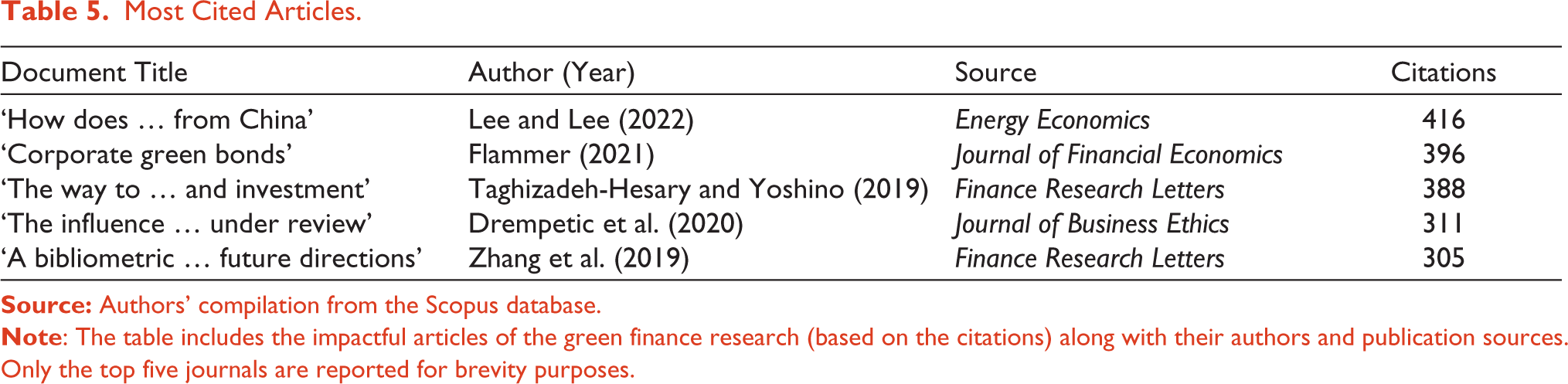
The most important and impactful articles in green finance are summarized in Table 5. The most cited article has been authored by Lee and Lee (2022) with 416 citations, followed by Flammer (2021) (396 citations) and Taghizadeh-Hesary and Yoshino (2019) (388 citations). The research conducted by Lee and Lee (2022) demonstrates the positive impact of green finance on green productivity, especially in economically developed regions with high pollution levels and low environmental engagement. Their findings are complemented by Flammer (2021), signifying that the issuance of corporate green bonds enhances environmental performance and attracts long-term and green investors, reflecting the company’s dedication to environmental sustainability. Taghizadeh-Hesary and Yoshino (2019) have analysed the green credit guarantee schemes and supported that tax incentives to the green energy sector can reduce the green finance risk. The studies conducted by the three previous authors demonstrate the potential of green finance in driving environmental sustainability and encouraging private-sector involvement.
Most Cited Articles.
Scientific Mapping of Green Finance Research
Scientific mapping gives a comprehensive view of the current state of scientific knowledge on a specific topic and provides a bibliography to support the theory discussion (Zhang et al., 2022a). The key advantage of using scientific mapping lies in the identification of key themes (clusters), which provides an overview of past studies and emerging trends for future studies (Raval & Desai, 2024). Further, the use of the triangulation method helps to justify why the different articles are grouped in clusters (Mashari et al., 2023).
Mapping Knowledge Clusters Using Keyword Co-occurrence Analysis
The study used co-occurrence analysis based on keywords, and the results are depicted in Table 6 and Figure 3. The keyword ‘green finance’ emerges as the most prevalent, followed by other notable keywords such as ‘sustainable finance’ (185 times), ‘climate finance’ (120 times), ‘climate change’ (75 times) and ‘green bonds’ (64 times), all of which are significantly represented in the current body of research.
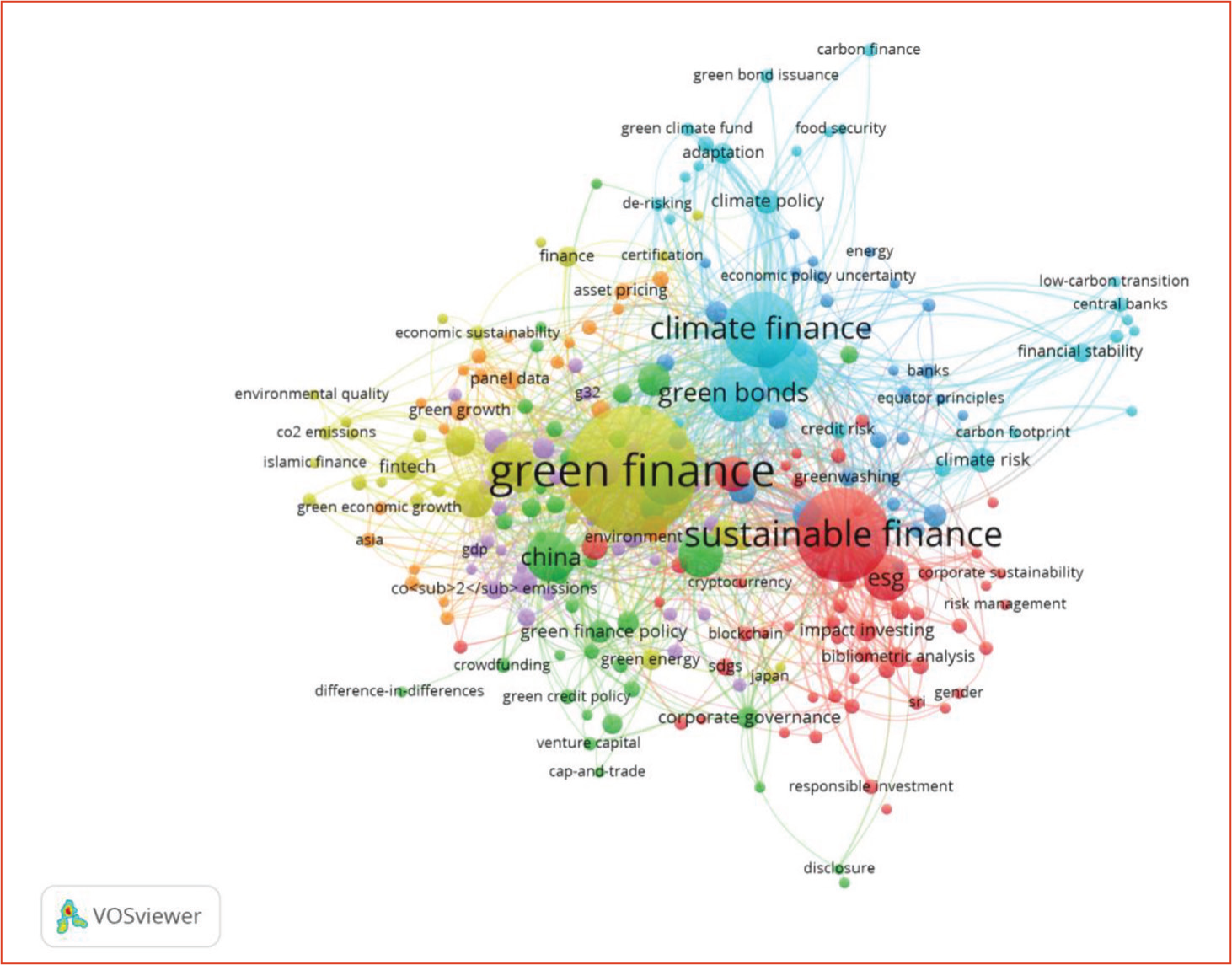
Research Clusters Based on Co-Occurrence Analysis of Keywords.
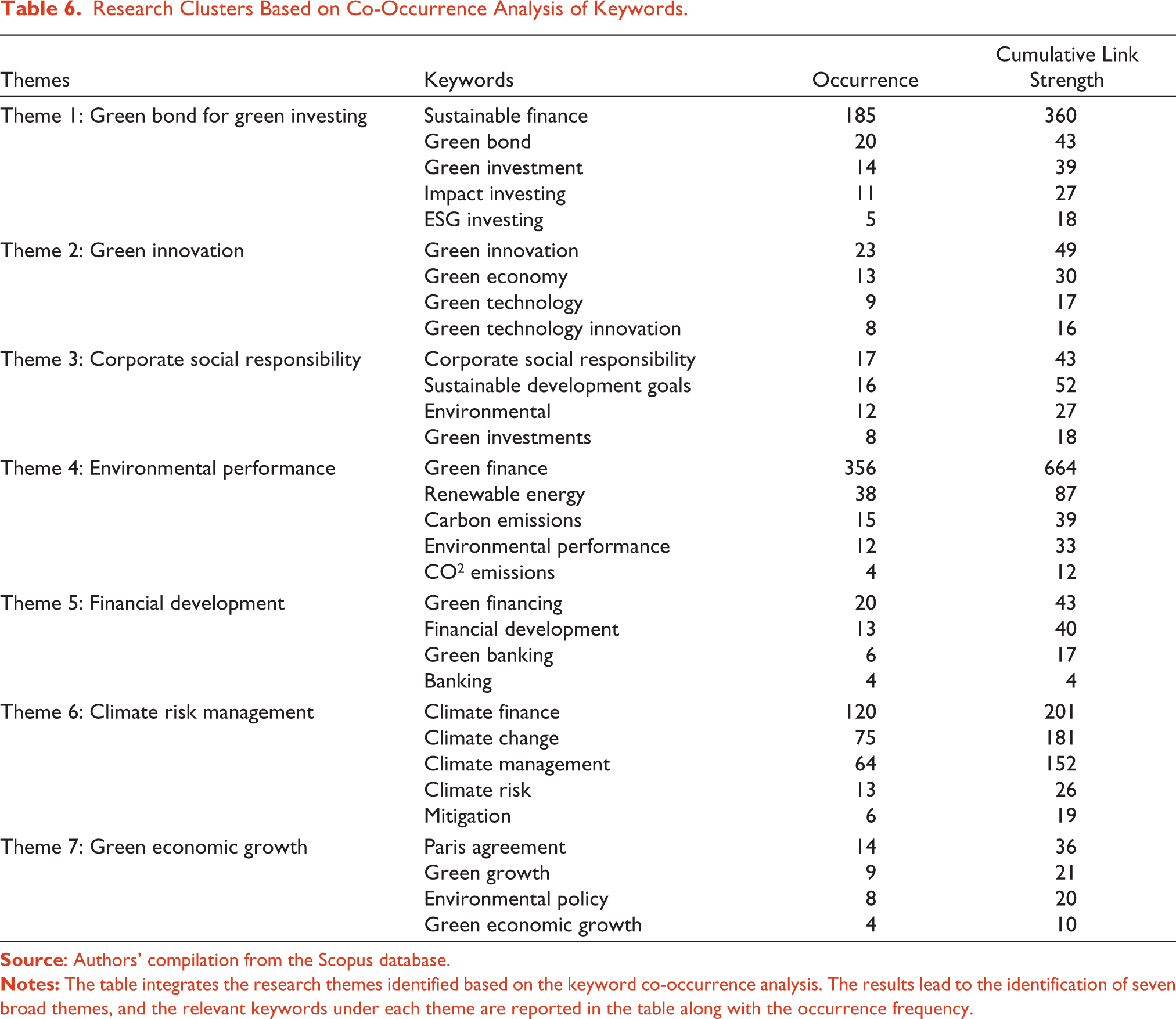
The analysis of keyword co-occurrence yielded seven distinct clusters associated with green finance. The first cluster encompasses Green Bond for Green Investing with the most prominent keywords as ‘sustainable finance’ and is closely associated with other keywords such as ‘green bond’, ‘green investment’, ‘impact investing’ and ‘ESG investing’. The second cluster highlights the Green Innovation, which appears most frequently (23 times). It also shares a close relationship with terms such as ‘green economy’, ‘green finance policy’ and ‘green technology’. Further, the third cluster caters to Corporate Social Responsibility, which associates green finance with critical domains such as ‘sustainable development goals’. The fourth cluster portrays the nexus between green finance and Environmental Performance. This cluster primarily focuses on the role of green finance in promoting renewable energy and the reduction of carbon emissions to improve environmental performance. Further, the fifth cluster integrates Financial Development to illustrate the connection between financial growth and green financing. Being the product of the finance sector, green finance can lead to advancements in digital finance, eco-friendly banking and financial expansion. The sixth cluster associates green finance with Climate Risk Management and collectively discuss the role of climate finance in managing climate risks, promoting green bonds and implementing mitigation strategies to combat climate change. Finally, the seventh cluster reckons the role of green finance in boosting Green Economic Growth, especially in the context of the ‘Paris Agreement’ execution. The main focus of this group is on the role of green finance in promoting green growth, enforcing environmental policies, overseeing carbon markets and attaining carbon neutrality.
Discussion of Knowledge Clusters Using Bibliographic Coupling Analysis
Bibliographic coupling is a scientific mapping method that links publications. A scientific mapping instrument is employed to calculate the total link strength between various documents when a common third research article is cited by two articles (Muchiri et al., 2022). The bibliographic coupling outcomes, which consist of seven distinct clusters, are depicted in Figure 4, while Table 7 outlines the leading publications for each theme.
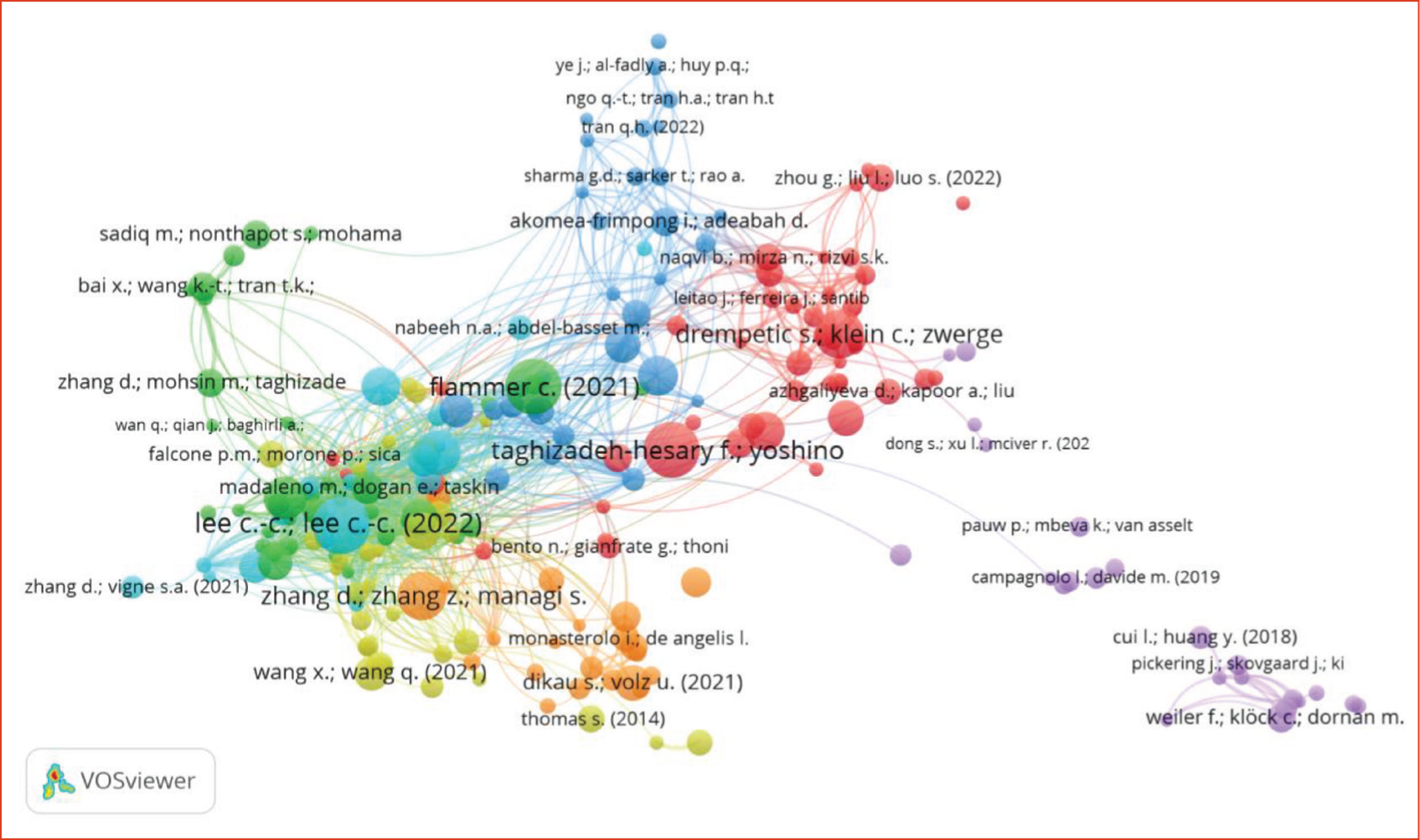
Knowledge Themes Based on Bibliographic Coupling.
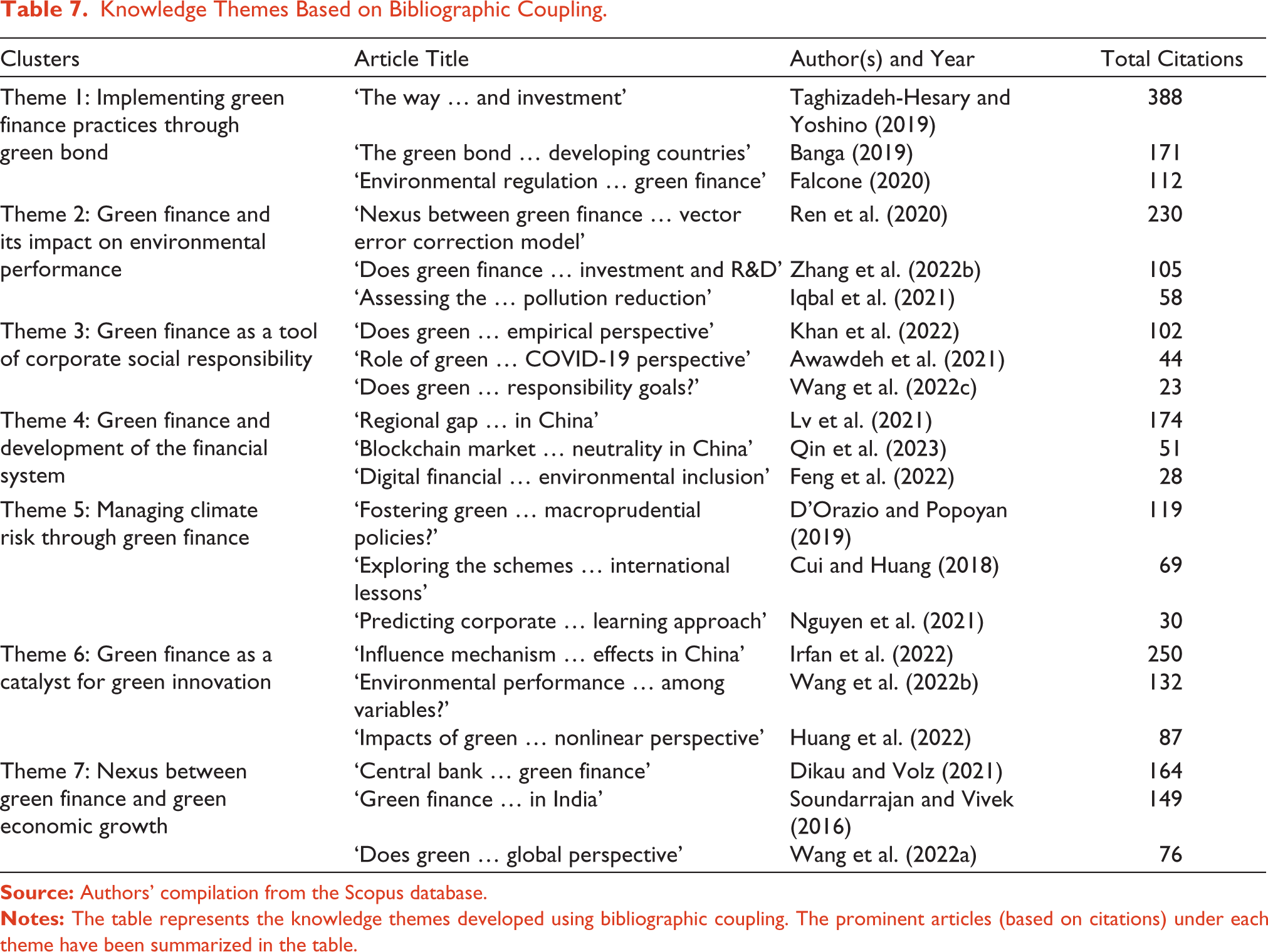
Theme 1: Implementing Green Finance Practices Through Green Bonds
The first cluster primarily focuses on the execution of green finance practices through green bond issues and green investments. There are a total of 47 articles that focus on the trinity of green finance, green bonds and green investment. Research articles from Banga (2019); Taghizadeh-Hesary and Yoshino (2019); Falcone (2020) and Naqvi et al. (2021) have notably contributed to this cluster. Transitioning to a sustainable economy, a topic of global interest, could be expedited by green finance, which Falcone (2020) believes can level the playing field between traditional and green economies and address the inherent complexity and uncertainty. Despite identifying numerous obstacles and proposing possible solutions, Banga (2019) also explores the capacity of green bonds to finance adaptation and mitigation efforts in developing nations. Still, there is some debate over these tools’ effectiveness. Naqvi et al. (2021) found that traditional funds outperform renewable ones, suggesting the need for legislative, governance and regulatory interventions. Barua and Chiesa (2019) also question the effectiveness of Association of Southeast Asian Nations (ASEAN)’s use of green bonds for renewable energy projects, citing potential misuse of proceeds. Although obstacles exist, Maltais and Nykvist (2020) offer a more hopeful perspective, emphasizing the swift expansion of the green bond market in Sweden and its possible impact on sustainability involvement. This implies that, notwithstanding the difficulties, green finance might continue to have a substantial impact on the shift towards a sustainable economy.
Theme 2: Green Finance and Its Impact on Environmental Performance
The second theme underscores the correlation between environmental performance and green finance. A collection of 37 scholarly articles, all centred on the influence of green finance on environmental outcomes, forms this cluster. The most significant contributions to this topic have been made by Ren et al. (2020), Sadiq et al. (2021) and Flammer (2021). Chen et al. (2021) pointed out the environmental damage caused by rapid global economic growth and suggested mitigation strategies through regional financial institutions and city-level efforts. The positive impact of green finance on carbon reduction posits a potential contribution to the ‘corporate social responsibilities (CSR)’ of firms. Ren et al. (2020) highlighted the positive role of green finance in carbon mitigation and environmental protection. Corporate carbon emissions are one of the major sources of environmental degradation (Flammer, 2021), and industries must oblige their social responsibility by transitioning to clean production processes. Better environmental performance can act as a channel through which green finance can contribute to CSR. Lee (2020) has studied the realm of green finance and CSR to explain how green finance contributes to China’s sustainable development and concluded a positive association between them. In a similar vein, Zhang et al. (2022a) have also advocated mainstreaming sustainable bonds and transitioning corporate business models to reap the benefits of green finance and better serve society. However, Iqbal et al. (2021) presented a contrasting view, indicating varying effectiveness of environmental policies across countries, as measured by a green finance index. They emphasized the need for policy improvements in countries with lower scores, such as the UK and India. The intricate relationship between green finance and environmental performance is illuminated by this theme, emphasizing the necessity for policymaking to adopt nuanced and context-specific strategies.
Theme 3: Green Finance as a Tool of Corporate Social Responsibility
Theme 3 mainly revolves around green finance and CSR and is made up of 32 scholarly articles, with notable works from Khan et al. (2022) and Meo and Karim (2022). Wang et al. (2022c) delve into the impact of green financing on improving CSR in the banking industry and uncover its substantial role in meeting CSR objectives and agree with this. The research suggests that the sector should allocate more financial resources to promote CSR attributes. Contradictory to previous findings, Awawdeh et al. (2021), in their study on Egyptian energy companies, offered a unique viewpoint on the correlation between technological innovation and corporate environmental performance. Though technological innovation positively influences environmental performance through green financing, the impact of CSR on environmental performance was found to be negligible. Hence, the influence of green finance, despite its critical contribution to sustainable development and CSR, can differ across various sectors and geographical areas.
Theme 4: Green Finance and Development of Financial System
The fourth theme encompasses 30 articles that primarily focus on the area of financial development and the green finance nexus. Authors such as Falcone (2020), Lv et al. (2021), Wang and Wang (2021) and Qi and Qian (2023) have significantly contributed to this research theme. The expansion of green finance and its impact on financial development has been a topic of interest for many researchers. A study by Lv et al. (2021) has scrutinized the evolution of green finance in China from 2010 to 2019. The research disclosed a marginal rise in the overall development index, albeit not to a significant degree. The findings highlighted a diminishing regional disparity, with the primary source of development being inter-regional gaps. The study offers valuable perspectives for the harmonized advancement of green finance across China’s economic regions. A study by Xiong and Qi (2018) found that financial development in 30 Chinese provinces reduced emissions per capita due to spatial spillover effects and technical and structural effects. They recommend China integrate green finance policy, strengthen interprovincial interaction and establish coordinated development mechanisms. On the contrary, the study conducted by Feng et al. (2022) from 2011 to 2019 on China’s ecological footprint indicates that the progression of digital finance impedes environmental inclusivity. The researchers propose solutions such as mitigating the digital divide, enhancing environmental limitations and bolstering the capacity for digital governance.
Theme 5: Managing Climate Risk Through Green Finance
Theme 5 emphasizes the role of green finance in climate risk management and consists of 24 articles with notable contributions from Betzold and Weiler (2017), Weiler et al. (2018) and Nguyen et al. (2021). The study conducted by Weiler et al. (2018) on bilateral adaptation aid shows that donors prioritize climate change vulnerability, with countries having higher exposure receiving more aid. Nonetheless, due to the incentives provided to donors, less assistance is received by poorer nations, small developing island states and the least developed countries. This follows the study by Betzold and Weiler (2017) study, which revealed that wealthy countries are investing in climate change adaptation aid for developing countries, with the UN Framework Convention prioritizing aid for vulnerable nations. Data analysis from the Organization for Economic Cooperation and Development (OECD) implies that global commitments influence the allocation of bilateral aid by donors. Pickering et al. (2015) studied the impact of aid budgets on climate finance in seven countries. While aid agencies oversee execution, there exists a divergence in policy matters such as the distribution of mitigation and adaptation and geographical regions between environment and finance ministries. This suggests a variety of approaches to climate finance across different nations. On the contrary, Hall (2017) argues that developed states have invested heavily in climate change adaptation over the past decade, with funding from international organizations like the World Bank, UNDP and OECD. However, uncertainties, epistemic ambiguity and strategic ambiguity have impacted delegation and tracking, highlighting the lack of precise adaptation definitions. D’Orazio and Popoyan (2019) investigated the part played by central banks and financial regulators in fostering a low-carbon economy. Their study underscored the existence of a ‘green finance gap’ and emphasized the necessity for macroprudential tools to facilitate green structural transformation.
Theme 6: Green Finance as a Catalyst for Green Innovation
Theme 6 accentuates green finance as a driver for green innovations that improve global ecological performance. The knowledge cluster contains 22 documents with major contributions from Irfan et al. (2022), Lee and Lee (2022), Liu and Wang (2023) and Xu et al. (2023). The study conducted by Irfan et al. (2022) discovered that green finance in China enhances green innovation, especially in pilot zones. This enhancement is shaped by factors such as the industrial structure, economic expansion and investment in research and development. On the other hand, Wang et al. (2022b) emphasized that environmental performance enhances green innovation in non-emerging and high-performing countries, while green finance does the same in emerging and low-green finance countries. In addition to this, a study by Huang et al. (2022) revealed that the policy of China’s Green Finance Pilot Zone (GFPZ) fosters the advancement of high-quality green innovations and curtails the low-quality ones. This is particularly evident in high-polluting industries and non-state-owned enterprises, thereby establishing a connection between green finance and regional green development. Conversely, Liu and Wang (2023) identified a robust correlation between the increase in green patent applications and the Pilot Zones for Green Finance Reform and Innovations (PZGFRI). This trend is particularly noticeable among private enterprises and those not heavily polluting, with the most substantial effect observed in individual applications.
Theme 7: Nexus Between Green Finance and Green Economic Growth
With 23 articles, theme seven focuses on the linkage between green finance and green economic growth. Studies like Zhang et al. (2019), Dikau and Volz (2021), Yang et al. (2021) and Wang et al. (2022b) have substantially contributed to the development of this cluster. Soundarrajan and Vivek (2016) have studied green finance in Indian industries, emphasizing its role as an integral part of low-carbon green growth. They focus on its feasibility in balancing ecological depreciation due to carbon gas assimilation and improving human well-being and social equity. This aligns with the findings of Wang et al. (2022b), which scrutinized the global link between green finance and sustainable development, and corroborates them. Their research demonstrates that green finance exerts a positive influence on sustainable development, thereby endorsing interaction theory. Nonetheless, they underscore the lack of agreement on the trajectory from sustainable development to green finance. This underscores the necessity for governmental and international entities to steer high-quality green investment and risk mitigation. Contrarily, Wang et al. (2021) investigated the effects of order financing on green finance, with a specific emphasis on carbon taxes and the efficiency of clean technologies. They found that order financing, compared to mortgage finance, motivates a larger proportion of businesses to adopt green technologies. However, the availability of order financing is hindered by the risk associated with price volatility. The researchers argue that established clean technologies are easily adopted by businesses, and to mitigate pricing risk, the amount of order financing provided by banks should be limited. They ultimately deduced that green financing is pivotal in advancing the green transition in countries, irrespective of their development status.
Validation of Knowledge Themes: Triangulation
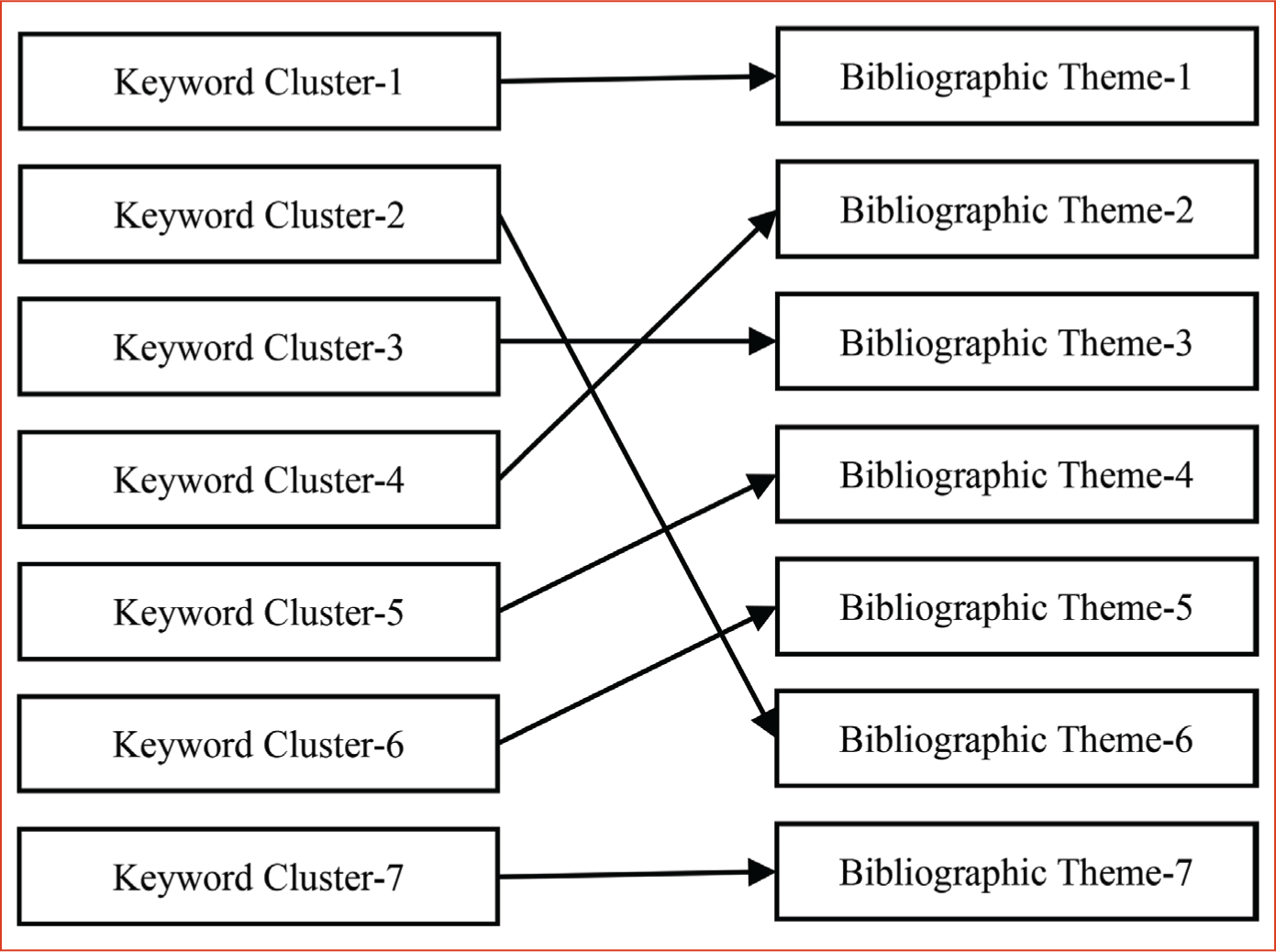
The present study adopts a quantitative as well as a qualitative approach to validate the research themes discovered through the bibliometric analysis. First, quantitatively, the study performs scientific mapping of articles using keyword co-occurrence and bibliographic coupling, and the clusters identified under each method are presented in Figure 5. The results demonstrate successful triangulation as the identified themes are concurrent. Additionally, the study also validates the thematic classification using qualitative methods, that is, expert interviews. Two subject experts were invited for an in-depth interview, and the identified knowledge clusters were discussed with them to obtain their verdict. Both experts have reported their agreement with the identified clusters, which further strengthens the robustness of the thematic analysis.
Emerging Trends in Green Finance
The domain of green finance is continuously evolving and growing, with research contributions constantly enhancing the depth and breadth of this field. Thus, the present research discusses the emerging trends in green finance research, in addition to the seven clusters explained earlier, by reviewing the latest research works published in 2024 to integrate the recent developments. First, the pandemic, COVID-19, has brought a paradigm shift in the green finance market, and research studies have focused on studying the impact of COVID-19 on green bonds. Tsipas et al. (2024) have studied the performance of green bonds during COVID-19, and similar to other financial sectors, it had an adverse effect (short-lived) on the performance of green bonds across the globe. Provided the adverse effect, green finance instruments have still received substantial attention from the international financial markets, especially post-COVID-19 (Bailey, 2024). Another area focused on the contribution of green finance to achieve resilient and sustainable recovery of the industrial and manufacturing sectors. These firms need to reassess their business operations and adopt clean production processes (Meng et al., 2024; Ren & Du, 2024). Second, another important development in the green finance area is the innovative and transformative integration of fintech that is directed to the ‘Green Digital Finance Alliance’ (Geetha & Biju, 2024). The inclusion of financial digitalization synergizes with the green finance discipline and augments the benefits thereof, such as energy efficiency, climate management and sustainable development (Shi & Yang, 2024). Using a cross-country sample, Hossain et al. (2024) have studied the interplay among digital finance, green finance and sustainable prosperity and concluded that green innovations are significantly increased by an increase in fintech services.
Besides COVID-19 and fintech, another important research theme is green finance and environmental, social and governance (ESG) and SDGs in emerging economies. ESG performance and disclosures have gained significant academic as well as policy attention in the recent decade and past studies have analysed the ESG-green finance nexus (Dadabada, 2024; Xiang et al., 2024). Xiang et al. (2024), in their study on green bond issuance and ESG performance, have concluded that firms with green financing demonstrate better ESG performance. These positive effects are further supported by Zhang and Wei (2024) and Gao et al. (2024). Another strand of literature from Dadabada (2024) has analysed the reverse causality between ESG performance and the availability of green finance. Based on the real-world case study analysis, the author has suggested that better ESG performance along with enhanced fintech innovation enhances the firms’ access to green finances. Finally, besides developed economies, green finance has been substantially endorsed in emerging economies, especially in the quest to achieve the SDGs. Several past studies have analysed the contribution of green finance to achieving SDGs in developing nations like India (Bansal et al., 2024), China (Xiao et al., 2024), Nepal (Bhandari et al., 2024), Vietnam (Ngo, 2024) and Sub-Saharan Africa (Nile et al., 2024), among others. Uniformly, the findings have advocated the positive impact of green and climate financing on SDG achievements. Here, past research has identified key SDGs that are directly affected by the national green financing practices, and they are (a) SDG 7: clean and affordable energy; (b) SDG 11: sustainable cities and communities; (c) SDG 12: responsible consumption and production and (d) SDG 13: climate action. Overall, green finance practices in emerging nations significantly contribute to achieving global SDGs.
Directions for Advancing Future Research
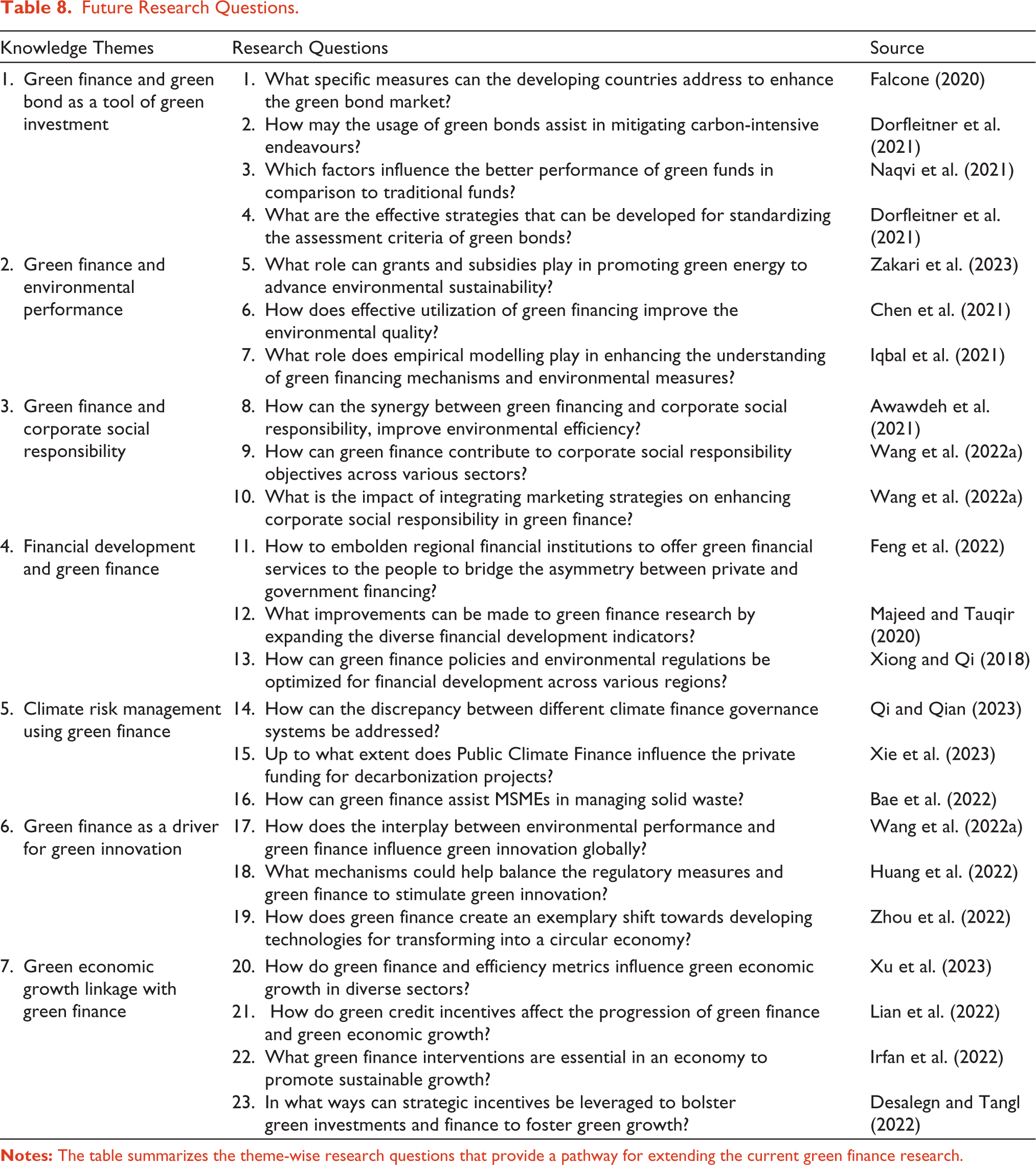
The present investigation conducts a comprehensive analysis of green finance research and examines its evolution as a distinct academic discipline. This section highlights the areas of research that require further exploration (refer to Table 8) to answer RQ3. Further, to answer RQ4, the study identified four prominent conceptual frameworks, namely ‘innovation diffusion theory’, ‘institutional perspective theory’, ‘cost-efficiency perspective theory’ and ‘resource-based perspective theory’, to explain how green finance can be extended in the light of these theories.
Future Research Questions.
Proposal 1: Green Finance Implementation Through Green Bond
Research has shed light on the diverse development and challenges in the green bond market among developing nations (Banga, 2019). Future studies could focus on overcoming these obstacles to enhance the market’s growth using qualitative research methods. Focus group discussions and in-depth interviews with market participants and regulators can provide useful datasets to address the obstacles to green finance development. Post-COVID-19, strategies have been formulated to strengthen the financial system and expand credit for green firms while managing green loan risks (Falcone, 2020). However, in addition to green bonds, other financial instruments such as green equity, green mutual funds and green derivatives have received limited attention. In this context, the conceptual background of ‘Innovation diffusion theory’ can be utilized to describe the perceived benefits of green financial instruments over traditional ones. Scholars can adopt a descriptive research design to understand the investors’ perceptions of the innovative green investment products mentioned above. For the said purposes, a cross-sectional survey approach can be explored to collect data about the investors’ behavioural intention to invest in green securities. Although green finance and green bonds are acknowledged as effective investment instruments, further investigation is necessary to fully comprehend their direct impact on economic progress and to compare their contributions to conventional financial sectors. Future studies should examine the role of green bonds in promoting economic growth using longitudinal research design. Scholars can use the green bond issuance data from the capital markets and assess its impact on economic indicators such as economic growth, interest rate volatility and financial stability. In continuation, a comparison between developed and emerging economies can provide useful insights.
Proposal 2: Green Finance and Environmental Performance
Past studies have noted the significant role of green finance in improving environmental performance (Cheng et al., 2024; Iqbal et al., 2021). However, environmental performance, being a multidimensional construct, requires valid measurement. Future studies should use multiple measures such as carbon emissions, energy efficiency (pollution reduction), ecological ratings (such as ISO 14001), non-carbon pollutants (sulphur dioxide) and global temperature data to study the impact of green financing mechanisms on environmental performance. Further, advanced empirical modelling and longitudinal study designs offer important insights to address these gaps. An interdisciplinary research approach can assist in this context, as higher-order mathematical modelling would be required to process the longitudinal data on green finance and ecological performance. Besides, theories of environmental and geological sciences can also contribute to deriving an accurate measure of environmental performance considering its multidimensionality. Future research should aim to improve these models and designs to foster green finance and environmental performance. Pursuing these research directions can significantly enhance the field of green finance and environmental performance.
Proposal 3: Green Finance as a Tool of Corporate Social Responsibility
Wang et al. (2022a) investigated how green finance can help achieve CSR goals beyond banking and how marketing strategies can improve customer satisfaction, brand image and equity in eco-friendly initiatives. In this regard, ‘institutional perspective theory’ provides critical foundations by combining the effects of regulations, social norms and institutional pressures on green financing practices to achieve higher CSR performance. Future research can be conducted to understand the impact of green financing on the social acceptance of the firm and its reputational brand value. Further, a mediation model can be developed to integrate green financing, social acceptance and consumer buying behaviour towards the products of green companies. Further, CSR activities are largely governed by the legal framework of the nation, vis-à-vis various stakeholders pressurizing institutions to adopt green finance for increased social acceptance. Thus, future researchers can provide empirical evidence on the moderating role of regulatory forces on the green finance and CSR nexus. For the said purposes, the scholars can take cross-country samples comprising CSR-regulated and non-regulated economies and understand how green finance can be applied to achieve CSR objectives. Together, these research directions could offer solutions to pressing environmental challenges and contribute to the advancement of green finance and CSR.
Proposal 4: Green Finance and Financial Development
Past studies emphasized the importance of enhancing the green finance index for cross-country analysis to understand the dynamics of advanced green financial systems (Ren et al., 2020). Future research should focus on developing a comprehensive measure of the green finance performance of different countries similar to other indicators. Country-level datasets on green, social, sustainability and sustainability-linked bonds (GSSB) can be utilized in this context, which is available on ‘Climate Bond Initiative’. 1 Second, provided the role of regional banks and local governments in green finance development (Chen et al., 2021), future studies should deepen this domain to investigate how to utilize these relationships to advance green finance. Scholars can apply the concepts of microfinance to understand the role of regional banks in promoting green finance in rural and financially excluded areas. To address this gap, qualitative research methods focus group discussions and in-depth interviews with self-help groups (SHGs), local government officials and end-users can provide suitable findings. Third, as green finance initiatives also involve explicit and implicit costs (Majeed & Tauqir, 2020), the ‘cost-efficiency perspective theory’ enumerates significant foundations for explaining the economies of sustainable financial sources. Further, various costs associated with novel financial instruments and their impact on the development of the financial system can be understood with the help of the ‘cost-efficiency perspective theory’. A cross-sectional survey design focusing on the supply side of green finance, such as banks and financial institutions, can assist in understanding the cost-benefit analysis of implementing green finance practices.
Proposal 5: Managing Climate Risk Through Green Finance
The effective management of climate risk through green finance requires addressing discrepancies between climate financing and government systems. According to Qi and Qian (2023), resolving these discrepancies can lead to a harmonized and successful climate finance governance. Additionally, Xie et al. (2023) suggest that future research should focus on the impact of public climate finance on private funding for decarbonization projects, providing valuable insights. To address these gaps, a comparative study on public and private green financing can be conducted using a dataset from the capital markets as well as the union budget. Besides, the analysis of short-term and long-term green financing by the public and private sectors can provide essential insights to understand the contribution of each sector towards sustainable funding and development. Furthermore, Bae et al. (2022) emphasize the importance of using diverse datasets, such as statutory corporate reports from government sources, private databases such as Bloomberg and Refinitiv and corporate websites, in studying the relationship between climate finance, climate strategy and financial value. This can offer in-depth insights and guide future research. Finally, D’Orazio and Popoyan (2019) suggest that exploring the management of climate-related financial risks and the use of macroprudential instruments to boost green investments is a critical area for future research.
Proposal 6: Green Finance as a Catalyst for Green Innovation
Green finance’s role in fostering green innovation, especially about environmental performance, is well-recognized. Future studies are needed to examine this relationship in both developing and developed countries, as suggested by Wang et al. (2022a). A cross-country analysis focusing on global unions such as G20 and ASEAN can be a welcomed step in this context. Second, the impact of green finance on green growth through fintech innovation offers another promising research avenue. Fintech innovations such as digital currency, robo-advisory, payment systems and e-banking can be used as potential variables to understand the green finance and innovation nexus. This domain also provides a greater avenue for integrating diverse fields of study, as innovations stem from the science and technology domain and their implementation and acceptance are largely governed by economic, social and regulatory principles. Thus, the association between green finance and green innovations can be better explained by taking a more interdisciplinary approach, which is largely missing in the extant literature. As suggested by Zhou et al. (2022), future work could expand the sample range, refine fintech innovation measurement indicators for green growth and explore more dimensions of green finance’s influence on green growth. Future studies should investigate the impact of digital currencies on economic development within the realm of sustainable finance. The country-level data on Central Bank Digital Currency (CBDC) development can be fetched from the ‘CBDC tracker’, 2 and its relationship with green finance can deepen our comprehension of sustainable finance and its relationship with green innovation.
Proposal 7: Green Finance and Green Economic Growth
It is widely recognized that green finance plays a vital role in advancing sustainable development and business strategies, particularly when Indian banks align with both domestic and international goals. Further research could explore the potential of green finance in promoting sustainable business practices (Soundarrajan & Vivek, 2016). ‘Resource-based perspective theory’ provides imperative underpinnings to explain the nexus between green finance and green economic growth. By adopting green finance practices, monetary resources can be deployed for developing innovative and environmentally sustainable operatives. Thus, a nation can leverage the same to build resource capabilities and earn a competitive advantage. The effects of green credit on bank profits, environmental risks and the real economy have been assessed using machine learning techniques and multinational bank data. Future research could build on this by examining the long-term economic advantages of green credit and the potential for machine learning to improve these assessments (Lian et al., 2022). In addition, the study by Yang et al. (2021) suggests strategies to address data limitations and explore factors influencing green finance and fintech’s role in China’s economic growth, with future research exploring regional differences and their potential to stimulate economic growth. In this context, the case studies about the economic development and green financing of various provinces and states can provide foundational underpinning. Scholars can perform a qualitative analysis of regional case studies to understand the nexus between green finance and green economic growth.
Summary of Key Findings
The major findings of the present research are summarized in this section to enable quick reference to the significant insights of the study.
Key Takeaway 1: First, the study aims to discover the influential authors, journals and articles of green finance research. The bibliometric results report C. Flammer, D. Zhang and F. O. Amadu as the influential authors based on the citation performance. Further, journals like Energy Economics, Finance Research Letters and Economic Analysis and Policy are significant publication titles based on productivity.
Key Takeaway 2: The study adopts keyword co-occurrence and bibliographic coupling to identify and validate major research themes. The analysis revealed seven knowledge clusters associated with green finance: (a) green bonds (b) green innovation, (c) CSR, (d) environmental performance, (e) financial development, (f) climate risk management and (g) green economic growth. Further, recent developments in the green finance domain, such as ESG, digital finance and SDGs, are also discussed.
Key Takeaway 3: Followed by the content analysis of each thematic cluster, the study describes theme-wise research gaps and postulates research questions providing directions for future research. Along with research gaps, the current study also explains theoretical frameworks, research methodologies and potential datasets that can be utilized for addressing the research gaps.
Implications of Study
Theoretical Implications
Provided the growing adoption and nascent research stage of green finance, the present study provides several implications for academicians and policymakers. First, current research studies the growth of green finance literature and provides an array of research questions to be addressed in the future. The study synthesizes the extant green finance literature into various knowledge themes and thereby assists future researchers in clearly understanding the nexus between green finance and other relevant areas, which become a starting point for further probing. Second, as discussed, green finance has linkages with several broad subject areas such as economics, finance, environmental studies and technology. Therefore, more interdisciplinary research should be conducted to analyse the interconnections between the identified themes, and broader implications can be enumerated for various subject areas. Third, the present study adopts a more systematic and structured SPAR-4-SLR approach that avoids the limitations of earlier research frameworks and provides a better understanding of review-based literature.
Practical and Policy Implications
Complementing the theoretical implications provided, the current research study also provides several practical implications for policymakers as well as corporate practitioners. First, as the present study proposes key research themes and research gaps thereof, the public research funding agencies can uncover green finance research areas that require further probing and motivate scholars to carry out research by sponsoring projects in such areas. Second, yet another important area that requires immediate policy intervention is the disclosure of green financing. Policymakers must integrate the green financing reporting framework along with other financial and non-financial disclosures such as ESG reporting. Third, given the significance of the financial system in promoting green finance, a separate policy framework for banks and financial institutions should be enacted, such as ‘green sector lending’ (similar to the priority sector), to channel the necessary amount of credit in these sectors. Further, as the current study suggests, corporate managers must explore additional sources of raising green finance other than bonds to deepen the green finance markets. Financial instruments such as shares, derivatives and convertibles can also be tied up with sustainability objectives and deployed to raise funds from the capital markets. Fifth, following the green finance and climate management nexus, business firms can utilize green financing sources to fund their climate action programmes, which otherwise make it difficult to raise finances from traditional sources. The investors in green projects understand the risk-return profile of such projects and adjust their cost of capital accordingly, which improves corporate investment efficiency. Finally, though traditional funds may perform better in the short run, availing green finance at the corporate and institutional level positively impacts society as a whole in addition to financial gains. This also enhances the public perception and reputation of the business and institutions.
Conclusion and Limitations
The present study aims to comprehensively analyse the extant research on green finance published during 1997 to 2024 using the SPAR-4-SLR framework. The research findings highlight the key performance indicators of bibliometric analysis, such as impactful journals (Energy Economics, Finance Research Letters), authors (C. Flammer, D. Zhang) and articles. The current research enhances the extant review-based literature on green finance by incorporating multidimensional thematic analysis of past research studies using a mixed-method approach. Further, the study also extends the green finance research by identifying novel and underexplored knowledge themes, such as green innovation, CSR, financial development and green economic growth. Following the thematic mapping, the future research questions and gaps under each theme are also discussed, which acts as an ignition point for the budding scholars. The study augments the existing body of knowledge by discussing prominent research gaps such as (a) deepening green finance instruments through green equity, green mutual funds and green loans; (b) developing and implementing standard measures of green finance disclosure and (c) exploring the potential effect of financial digitalization on green finance, among others. The systematic review also discusses theoretical models, methodological processes and potential datasets that can be explored for answering the proposed research questions. Followed by the academic contributions, the study also enumerates important implications for policymakers and practitioners. The findings advocate concrete policy interventions at several key points, such as (a) adoption of green finance for infrastructural financing; (b) enactment of a regulatory framework for the banking and financial sector to promote green finance; and (c) encouraging green finance among private corporations through incentive-linked schemes. Further, corporate managers can adopt green finance to achieve better CSR performance, climate management and increased acceptance among the stakeholders.
The current research, while valuable, does have certain limitations. The primary constraint is the exclusive use of a single database, Scopus, for data extraction. This approach was chosen to prevent duplication of research articles, yet it may limit the dataset and omit some green finance research articles published in journals not covered by Scopus. Future studies could broaden this by incorporating other databases. Second, the present study considers only English articles and excludes the research studies published in another language because of translation constraints. However, future research may address this concern by incorporating non-English articles as well. Third, the study operationalizes the SPAR-4-SLR protocol for the current research; however, the latest research framework—POWER—can be adopted in future SLR-based research. Finally, the current study considers journal articles published in the area of green finance and excludes book chapters and conference proceedings to ensure consistent review quality. Future studies may consider these articles as well to broaden the research.
Footnotes
Declaration of Conflicting Interests
The authors declared no potential conflicts of interest with respect to the research, authorship and/or publication of this article.
Funding
The authors received no financial support for the research, authorship and/or publication of this article.