







Abstract
A rising number of researchers have exhibited their efforts to analyse the effects of personalized advertisements on conventional media channels, web pages and mobile phones. Still, there exists a paucity of studies focusing on their influence on social networking sites. To navigate the crowded landscape of advertising, marketers employ personalized messaging tailored to individual consumers using their personal information. However, there remains a notable dearth of understanding regarding the impacts of personalized advertising within the realm of social networking sites. Filling this gap, the present study proposed and investigated a comprehensive model of personalized advertising, assessing its impact on eliciting favourable responses. Based on responses from 427 respondents, the findings reveal that perceived ad personalization positively influences perceived ad novelty, perceived relevance, advertising value and consumer brand engagement. However, the relationship between perceived personalization and perceived intrusiveness couldn’t be established. Furthermore, the role of privacy concern as moderating variable was noted to be significantly high on the relationship between perceived relevance and consumer attitude. The research provides significant contributions both in theoretical as well as practical aspects in social media marketing domain.
Keywords
Introduction
The emergence of social media has triggered a significant transformation in advertising approaches. Social media usage is one of the most prevalent practices worldwide, and more than five billion people were using social media globally in 2024. The number is expected to increase to over six billion in 2028 (Statista, 2024a). Globally, the average penetration rate was 61.4%. Around 80.8% of the people above the age of 18 years were active on social media. In India, too, more than two-thirds of the population above 18 years used social media (Dean, 2023). Data indicates that Facebook serves as an optimal site for advertising purposes, and 93% of social media promotional firms have selected Facebook as their primary marketing tool (Statista, 2024b). This strategic choice contributed to Facebook achieving earnings of 114.934 billion in 2023 (Tran et al., 2023). Furthermore, numerous organizations, regardless of their size, opt to develop online advertisements on Facebook due to its affordability in comparison to other platforms (Sahli & Zhai, 2024; Tran et al., 2023).
Despite the pervasive saturation of advertisements across various media channels, consumer attention is selectively directed towards only a fraction of them (De Groot, 2022; Rana & Arora, 2022c; Winter et al., 2021). The average individual encounters over 7,000 social media adverts and brand promotions daily. However, out of this vast number, only 90 garnered recognitions, with a mere 20 managing to leave a lasting impression (Romaniuk et al., 2023). In an effort to break free from the crowded advertising landscape, advertisers have worked diligently to develop campaign techniques that can adeptly seize consumers’ attention. Advancements in technology have fortunately empowered marketers by facilitating them to capture users’ digital histories (Arora et al., 2024). Personalized adverts affirm to provide pertinent ads matching specific consumer interests and preferences. These commercials are generated using data gathered from prior online behaviour, such as keywords searched, wish list data, clickstream data, web surfing histories and customer profiles (Chandra et al., 2022; Rana et al., 2023). This progress has enabled practitioners to generate personalized recommendations that are specifically designed to address the distinct requirements of every user (Cheung et al., 2020). A multitude of websites have started serving personalized display advertisements, textual ads and banner adverts on numerous channels such as Facebook, Pinterest, Instagram and Gmail. This strategy is widely employed by multiple ecommerce companies, including Amazon, eBay, Zappos, Shopify, Newsegg and a lot more (Chu et al., 2022; Gironda & Korgaonkar, 2018; Segijn et al., 2021).
Even though personalized advertisements have garnered interest from both marketing practitioners, research on this topic remains limited and equivocal, with inconsistent findings. Few recent research studies like Jing Wu (2024) focus upon data-driven personalized advertising. De Keyzer et al. (2024) explored the role of well-being in consumers’ responses to personalized advertising. Odoom (2022) and Tran et al. (2023) observed that personalized advertisements offer numerous positives to both marketers and prospects. These include heightened consumer delight, better-performing digital banner ads, higher revenue and minimized waste of marketing expenses. Such advancements generate enthusiasm about the major avenues that personalized marketing possibly possesses (Dodoo & Wu, 2019; Shanahan et al., 2019). However, other research indicates that consumers are not yet entirely satisfied with the implementation of personalized advertising. Thus, getting consumers to engage with the technique remains a big challenge for personalized advertising to tackle. A primary issue regarding the deficit of acceptability of personalized ads is consumer privacy concerns, as many individuals remain uncomfortable about the extensive tracking, database collection and commercialization of personal information. Also, the collective impact of multiple personalization factors, namely, advertising novelty, ad value, intrusiveness, relevance and consumer brand engagement, have not been explored by earlier research. Moreover, there is ample evidence indicating that profoundly personalized ad messages give rise to privacy apprehensions, but only a few studies have strived to ascertain the association between perceived ad personalization and consumers’ privacy concerns (Dewasiri et al., 2022; Rana & Arora, 2022a; Shanahan et al., 2019; Wiese & Akareem, 2020).
Thus, the aim of this study is to advance a more comprehensive conception of how consumers view personalized advertising. The study specifically looks at what affects consumers’ views of personalized advertising—whether positive or negative—and how those perceptions impact their behavioural intentions regarding personalized advertising. The study is expected to yield significant contributions for scholars, marketing professionals and consumers alike. For example, considering the increased prevalence of social networking sites, such as Facebook, which have become a critical tool for marketing and personalization strategies, investigating the impact of personalized advertising on customer attitude and purchase intention is a worthwhile endeavour. Additionally, by addressing the aspect of privacy concerns within the social media environment, this study makes a significant contribution by examining the moderating effects of privacy concerns on perceived ad personalization variables and customer attitude. Hence, this study presents a significant advancement in the field by providing marketing firms with guidelines that assist practitioners in understanding the factors that support the creation of personalized ads on social networking sites (SNS).
The study is structured as follows: It commences with a comprehensive examination of the relevant literature on personalized advertising. This is followed by theoretical framework and formulation of hypotheses. The next part explains the results of hypotheses testing. Subsequently, the article delves into discussions and managerial implications, while also presenting the limitations and prospects of the study.
Theoretical Background and Conceptual Framework of Study
The present study employs persuasion theory, often known as the Elaboration Likelihood Model (ELM), developed by Petty and Cacioppo (1986). The ELM has evolved as a widely used prevailing framework for defining personalization effects (De Keyzer et al., 2022; Kobsa et al., 2016). It explains how individuals process convincing communication through two distinct routes: the central route and the peripheral route. The ELM is markedly appropriate for examining personalized advertising as it captures the dual processing mechanisms customers use to assess customized messages. Personalization augments relevance, potentially improving consumer motivation to process the message deeply, thus activating the central route. On the contrary, when personalization feels intrusive, it could trigger avoidance behaviours, impacting the route of processing (Aslam et al., 2021; Petty & Cacioppo, 1986). Numerous former studies including Christian et al. (2021), De Keyzer et al. (2015) and Odoom (2022) have asserted and empirically proven that ad messages that are personalized, in accordance with the preferences and needs of the users, are considered more significant in comparison to generic ones. Consequently, consumers devote greater mental resources and cognitive effort to comprehend the information due to its perceived relevance (Arora et al., 2022; Aslam et al., 2021; Dodoo & Wu, 2019; Wiese & Akareem, 2020). Likewise, Hossain (2019) also noted that when people see tailored ads on social media, they pay more attention to what’s being advertised; this leads them to follow the central route of information processing and develop attitudes toward the products that are more enduring. As the present study pursues to understand how consumers respond to personalized advertising on social media, ELM strongly aligns with the study and offers a lens to examine the interplay between personalized advertising constructs and customer attitude and intentions.
Conceptual Framework of the Study
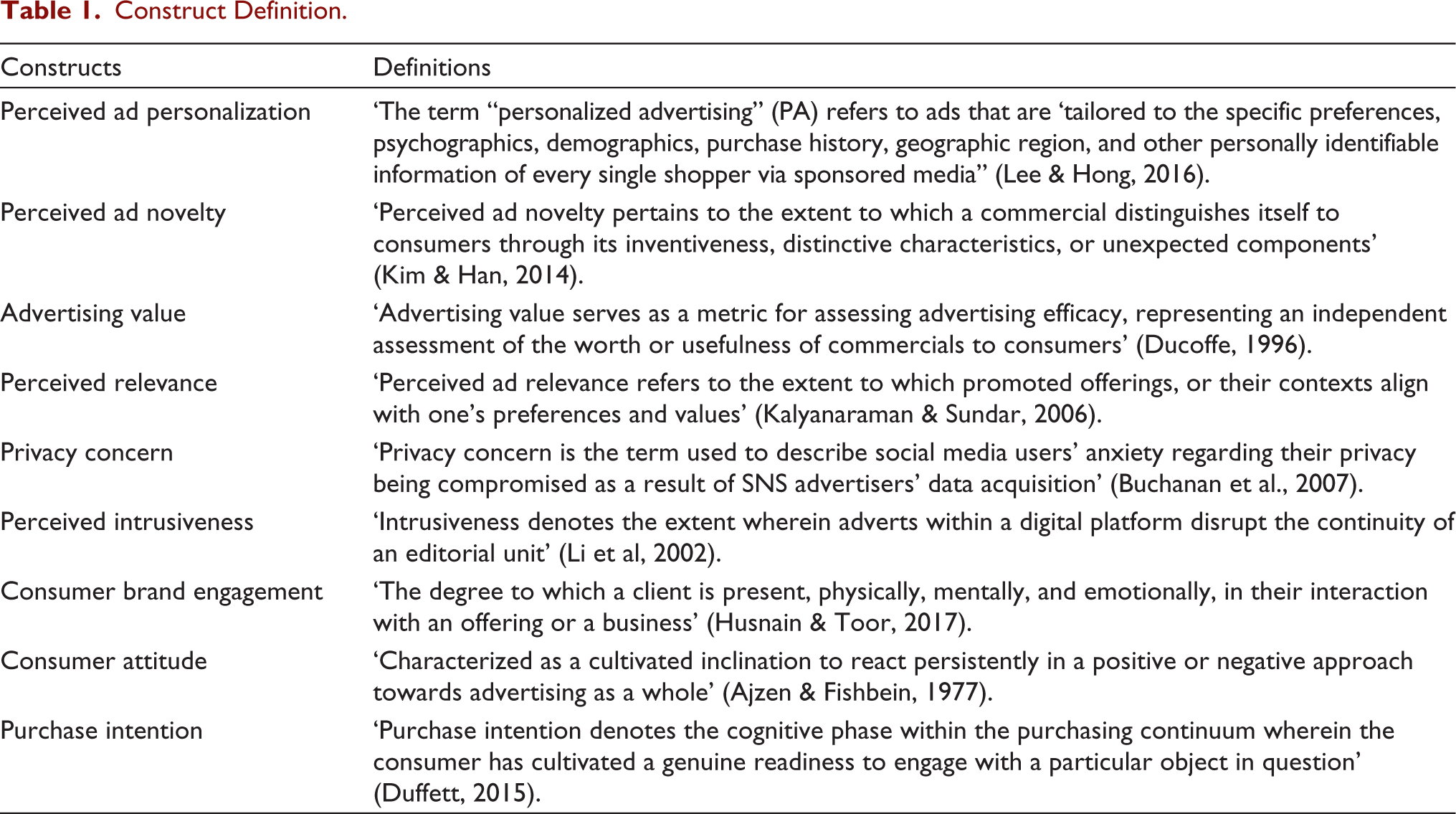
Personalized advertising, also known as individualized marketing, involves delivering targeted advertising messages to each individual customer based on their specific interests and preferences (Romaniuk, 2023). This approach is widely used by various entities to efficiently market and build relationships on social media platforms. The term ‘personalized’ is employed by several studies to refer to either one-to-one marketing or mass customization. Kotler (2011) define personalization as a systematic approach involving targeting, segmentation and positioning. According to Peppers and Rogers (1998), customization is a means of gathering client-specific data and creating solutions that work for them. Marketers leverage social media to acquire a wide range of consumer data, encompassing personal information such as gender, occupation, browsing history, visited websites, watched videos, followed brand pages, status updates and past purchases. This data is then utilized to create customized advertisements. Based on the findings of the meta-analyses conducted by Arghashi and Arsun Yuksel (2023) and Chandra et al. (2022), it is evident that personalized messages exhibit greater effectiveness compared to non-personalized messages. Despite the paucity of studies on perceived personalization within digital platforms, Arora and Agarwal (2019) and Teng et al. (2015) have discovered that leveraging customer data to tailor social media ad content using consumer-specific details raises participation, and these generate more revenue leads. In addition to the benefits provided by personalized advertising, there have been occurrences of adverse responses to this category of advertisements noted across diverse advertising channels (Arora et al., 2023a; Ashraf et al., 2019; Odoom, 2022; Rana, 2024; Täuscher & Laudien, 2018). Therefore, this research endeavour seeks to tackle the less explored aspects of advertising on social media platforms. It aims to examine the implications of the collective impact of multiple ad personalization factors, namely, advertising novelty, ad value, intrusiveness, relevance and consumer brand engagement, on users’ behavioural intentions to social media advertising. In the following section, we develop hypotheses derived from this premise. The key constructs used in the study are defined in Table 1.
Construct Definition.
Formulation of Hypotheses
Perceived Ad Personalization, Perceived Ad Novelty and Customer Attitude
One of the crucial elements of ad design is how the ad has made use of distinctive features. The term ‘novelty’ is used to describe something that is different from what customers had seen before (Rana & Arora, 2023; Wiese & Akareem, 2020). Ads employ novelty by introducing clients to novel features (or content) that may provoke the intended degree of engagement (Arora et al., 2023; De Groot, 2022). According to studies such as Wiese and Akareem (2020) and Zhu et al. (2017), marketing firms employ personalized content to incorporate unique features into their advertisements that helps in differentiating them from the cluttered advertising landscape. Alhidari et al. (2015), Bell et al. (2023) and Kujur and Singh (2017) observed that the ad personalization results create innovative advertisements. Customizing the advertisements based on individual interests and preferences cultivates favourable views towards the advertised brand. Studies such as Chandra et al. (2022), Gironda and Korgaonkar (2018) and Tran et al. (2021) have posited that ads that are personalized to audiences’ interests and preferences tend to be well received by social media users. Cheung et al. (2022) and De Keyzer et al. (2022) have noted that mobile social media and geographically targeted advertising have emerged as novel means for businesses and advertising professionals to engage with consumers through personalized marketing. Also, Arghashi and Arsun Yuksel (2023) and Cheung et al. (2022) discovered that novelty is the most influential feature influencing consumers’ impulse purchases and brand perception. Similarly, Leckie et al. (2022) and Rana and Arora (2022b) confirmed that ad personalization has a favourable impact that leads to increased novelty in ads and enhances impulsive buying behaviour. On the basis of this discussion, the following research hypotheses are proposed:
H1a: Perceived personalization of social media ads positively influences perceived ad novelty. H1b: Perceived ad novelty of social media ads positively influences customer attitude towards social media advertisement.
Perceived Ad Personalization, Advertising Value and Customer Attitude
The assessment of ad efficiency has relied on the notion of advertising value. According to De Groot (2022) and Jung (2017), advertising value pertains to ‘benefit or value of the advertisement’. As per Christian et al. (2021) and Kim and Han (2014), it is an individual assessment of the comparative value or efficacy of advertising to prospects. Earlier research studies including Aydin (2018) and Tran (2017) have demonstrated that the value of Internet advertising is associated with three dimensions—informativeness, hedonic and irritation. These factors subsequently impact individuals’ perception and attitude towards advertising. Aslam et al. (2021) and De Keyzer et al. (2022) discovered that customers highly value advertisements that feature products (or brands) they have previously searched for on different shopping websites. This demonstrates that the process of tailoring the ad content leads to an increase in the worth or effectiveness of advertisements.
Jung (2017) and Segijn et al. (2021) posited that when consumers experience a personalized banner ad or display ad showcasing the product in which they have shown interest, it leads to impulsive buying. Christian et al. (2021) and Kim and Han (2014) noted that there is a favourable correlation between ad customization and ad value. Subsequent studies including Li (2019); Shanahan et al. (2019) and Tran (2017) proposed that ads that are personalized increase the perceived value of the advertised product, which in turn fosters a favourable impression of the brand. From the aforementioned discussions, the following hypotheses are proposed:
H2a: Perceived personalization of social media ads positively influences advertising value. H2b: Advertising value of social media ads positively influences customer attitude towards social media advertisement.
Perceived Ad Personalization, Perceived Relevance and Customer Attitude
Through the utilization of social media platforms, advertisers gain increased ability to personalize and customize the messages and content they post, aligning them with the specific preferences of their customers (Alalwan, 2018; De Keyzer et al., 2022). Certainly, it has been widely observed that clients tend to exhibit loyalty and contentment when they experience a certain degree of customization. Chu et al. (2022) and Jung (2017) defined relevance as the extent to which consumers perceive an item to be closely connected to their own interests or instrumental in accomplishing their individual objectives and principles. In the online domain, researchers such as Aydin (2018), Christian et al. (2021) and Cheung et al. (2022) have illustrated the correlation between the perception of personalized advertisements, advertisement relevance and the eventual purchase of the product. Studies such as De Keyzer et al. (2015), Li (2019) and Maslowska et al. (2016) show that when ads are personalized and relevant to consumers, they have a constructive predominance on consumers’ attitudes towards the advertised product. Arghashi and Arsun Yuksel (2023) and Bell et al. (2023) demonstrated that ad personalization results in ad relevance to consumers, which positively influences consumers’ purchase inclinations.
Based on this discourse, it can be contended that customers will hold a favourable view of personalized advertisement and demonstrate a greater relevance of such ads during their decision-making process. As a result, the ensuing hypotheses are as follows:
H3a: Perceived personalization of social media ads positively influences perceived relevance. H3b: Perceived relevance of social media ads positively influences customer attitude towards social media advertisement.
Perceived Ad Personalization, Perceived Intrusiveness and Customer Attitude
Customers view advertisements as intrusive when these disrupt the consumers’ purposeful actions. Ad content is seen as invasive when a user seeks particular information, and the advertisement appears in the middle (Rana & Arora 2022b). According to the psychological reactance theory (Li et al., 2002), individuals often demonstrate resistance towards persuasive advertisements that infringe upon consumers’ sense of control. Earlier studies such as De Groot (2022), Cheung (2020) and De Keyzer et al. (2022) have suggested that tailored ads on social media channels contribute to unfavourable perceptions regarding the intrusive nature of such ads, subsequently leading to a decline in purchase intent. According to Aslam et al. (2021) and Odoom (2022), tailored ads on social media could be perceived as bothersome or avoided depending on ad length. However, impeding users’ aims or objectives lead to an adverse consumer reaction. Likewise, Arora et al. (2022) and Täuscher and Laudien (2018) demonstrated that invasive ads elicit an unfavourable disposition towards the brand and the hosting platform or the website. Research studies including Chandra et al. (2022) and De Groot (2022) have revealed that customized ads that target individual customers based on the alignment with ad messages and preferences lead to intrusiveness and unfavourable inclinations towards purchases and attitudes. Accordingly, we propose that the following hypotheses:
H4a: Perceived personalization of social media ads positively influences their intrusiveness concern. H4b: Intrusiveness concern of personalized ads on social media negatively influences customer attitude towards social media advertisement.
Perceived Ad Personalization, Consumer Brand Engagement and Customer Attitude
Consumer brand engagement is a wide-ranging notion that includes cognitive, emotive and behavioural aspects (Kujur & Singh, 2017; Van den Broeck et al. (2020). The assertion posits that when consumers encounter personalized advertisements tailored to their preferences, they actively communicate with the organization, thereby elevating the organization’s brand visibility on the social media channel (Cheung et al., 2020; Osei-Frimpong et al., 2022). Consumer brand engagement, as used in the framework of personalized advertising, describes how customers participate with a company more deeply when they see advertisements that are especially catered towards their requirements, as well as tastes, or habits (De Groot, 2022; Tran et al., 2024). While examining the significance of ad personalization on consumer brand engagement, Jung (2017) and Rana and Arora (2022b) revealed that ad personalization significantly enhances consumer engagement and fosters a stronger brand attachment. In other words, successful customized advertisements improve consumer involvement with a brand by cultivating a feeling of connection. Previous research studies including Li (2019) and Van den Broeck et al. (2020) posited that consumer engagement behaviour is contingent on specific attributes: the contextual pertinence of social media ads. Hence, advertisements that align with consumers’ likes and inclinations result in increased levels of engagement and exert a substantial influence on purchasing decisions. Earlier findings by Ashraf et al. (2019), Sharma and Arora (2024), De Groot (2022) and Tran et al. (2021) proposed a favourable association between the extent of ad personalization and the level of consumer brand engagement. As the degree of ad personalization rises, consumers’ curiosity and interaction with the brand also elevate. Consumers are inclined to regard customized advertisements as applicable and precious, culminating in heightened degrees of brand engagement, experience sharing and favourable word-of-mouth (Bell et al., 2023; De Keyzer et al., 2022). As per the above discussion, the hypotheses are as follows:
H5a: Perceived personalization of social media ads positively influences consumer brand engagement. H5b: Consumer brand engagement positively influences consumers’ attitude towards social media advertisement.
Customer Attitude and Purchase Intention
In simple terms, attitude is a person’s assessment of an object. In the realm of digital media, attitude is characterized by a favourable or unfavourable impression towards social media advertisements (Arora et al., 2023b; Vallerand et al., 1992). Ajzen and Fishbein (1977) posited attitude as a parameter indicating consumers’ willingness to engage in a specific behaviour. Aydin (2018) and Teng et al. (2015) have corroborated that tailoring social media commercial to users’ interests and preferences results in personalized ads being perceived as more relevant and exciting compared to generic ads. This personalized approach fosters a favourable attitude among users, leading them to respond positively to the advertisements. Similarly, Wiese and Akareem (2020) demonstrated that the younger demographic’s positive attitude towards Web-based advertising possessed an affirming effect on their purchase decisions. Arora et al. (2021) and Luna-Nevarez and Torres (2015) unveiled that those consumers who have positive attitude towards ads on social media tend to have purchase intentions for products advertised through personalized content. These studies have consistently demonstrated the impact of customer attitudes towards advertisements on their purchase intentions. Consequently, the following hypothesis are posited:
H6: Attitude towards personalized social media advertisement positively influences consumer purchase intentions.
Moderating Role of Privacy Concern
Privacy concern in the digital realm revolves around the access to personal information (Albashrawi & Motiwalla, 2019). Privacy apprehension is triggered when individuals see illegitimate third parties breaching their privacy or when they feel a lack of authority over their confidential data (Hayes et al., 2021; Zhu et al., 2017). De Keyzer et al. (2022), Jung (2017) and Segijn et al. (2021) have noted that personalized ads do not consistently yield favourable outcomes. Messages that excessively focus on self-relevance prompt individuals to scrutinize the messages critically, leading to the emergence of negative attitude at a certain juncture. The findings from Segijn et al. (2021) and Tran et al. (2023) indicate that consumers’ privacy concerns are heightened when marketing agencies utilize their personal information, such as browsing histories and recent purchases, for marketing purposes. As a result, marketers track their behaviour and deliver personalized ad messages, leading to an escalation in consumers’ privacy apprehensions (Arora & Rana, 2023; Aydin, 2018; Odoom, 2022). Studies such as Li (2019) and Wiese and Akareem (2020) revealed that individuals with elevated privacy apprehensions demonstrate reduced inclination towards social media commercials, displaying heightened mistrust and lack of interest towards advertisements on social media channels. Hence, deciphering the moderating role of privacy concern becomes more pertinent in the case of personalized ads on social media. Thus, we postulate the following hypotheses:
H7a: Privacy concern moderates the relationship between perceived relevance and customer attitude towards social media advertisement. H7b: Privacy concern moderates the relationship between perceived intrusiveness and customer attitude towards social media advertisement. H7c: Privacy concern moderates the relationship between consumer brand engagement and customer attitude towards social media advertisement.
Research Methodology
Research Design and Questionnaire Formation
A purposive sampling method was used to get the required data from social media (Facebook) users through a self-administered structured questionnaire. Recipients were requested to assess their responses on a seven-point Likert scale, where a rating of 1 indicated ‘strongly disagree’ and a rating of 7 indicated ‘strongly agree’. The questionnaire was constructed employing validated scales from earlier research. Perceived ad personalization was assessed using four items adopted from Lee and Hong (2016). While perceived ad novelty was assessed using the scale established by Kim and Han (2014), the scale from Ducoffe (1996) was used to measure advertising value. Perceived relevance and perceived intrusiveness were assessed using the scales from Kalyanaraman and Sundar (2006) and Li et al. (2002), respectively. Similarly, scales from Buchanan et al. (2007) and Husnain and Toor (2017) were used to evaluate privacy concern and consumer brand engagement. Lastly, the scale proposed by Duffett (2015) was used to assess the purchase intention. Using the multiple-item approach, every dimension was examined.
A pilot study was carried out to check the study’s credibility and reliability before the exhaustive survey. The researcher conducted a pilot study involving 50 postgraduate and undergraduate students at a reputed university. Insights gathered from the pilot study affirmed the appropriateness of language employed in the questionnaire. respondents also expressed satisfaction with the questionnaire’s length and meaningfulness, deeming it acceptable. Furthermore, all factors measured exhibited a satisfactory Cronbach’s alpha value exceeding 0.70, aligning with the recommended threshold set by Nunnally (1978).
Data Collection
Data was collected at widely recognized places in India—retail outlets, commercial areas, university campuses, colleges and shopping malls—using the mall intercept technique. Instructions were provided to probable respondents to ensure only eligible individuals (i.e., those with a Facebook account) participate in the survey. Following this, a comprehensive definition of ad personalization was presented. Participants were prompted to confirm if they are active users of Facebook and had seen a personalized Facebook advertisement (‘Yes’ or ‘No’). Those that answered negatively were excluded from the analysis. The data collection period spanned from December 2023 to April 2024. A total of 427 usable responses were considered for analysis.
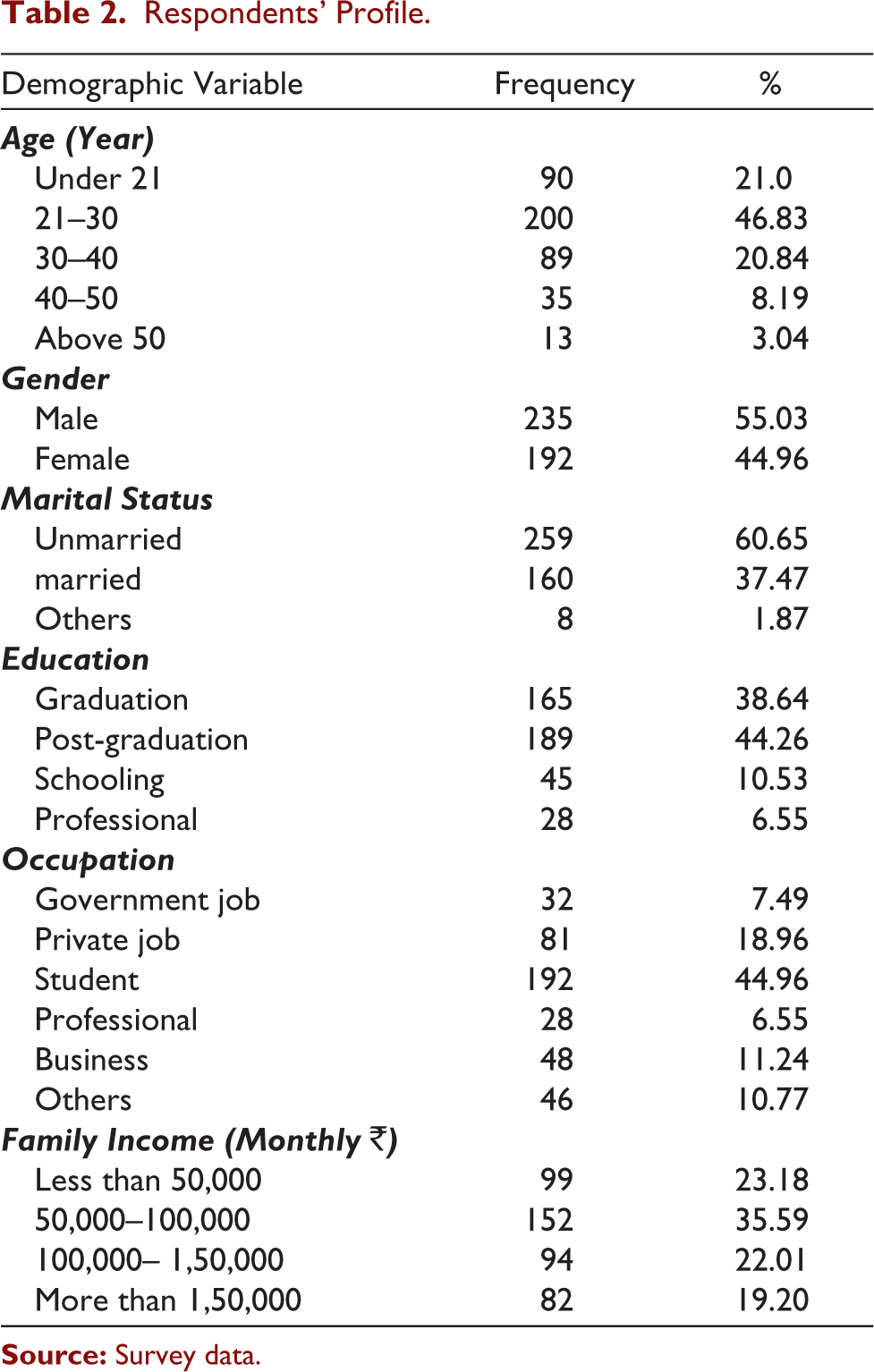
To ensure a representative and unbiased sample, variations were introduced in both the timing of data collection and the selection of locations. Each participant exhibited proficiency in utilizing diverse social media platforms. The sample profile (refer to Table 2) was considered suitable for this research due to its comprehensive portrayal of social networking site users in India.
Respondents’ Profile.
Analysis and Results
The dual-stage structural equation modelling (SEM) approach using AMOS (version 2023) was considered to be a suitable analytical tool in the present study for examining the research hypotheses and testing the proposed model. Initially, the construct reliability and validity of the measurement model was assessed. This was followed by the examination of the model’s fitness and validation of relationship between the indicators and the latent construct by confirmatory factor analysis (CFA). The later phase focused on validating the research hypotheses via a structural model.
Measurement Model Estimation
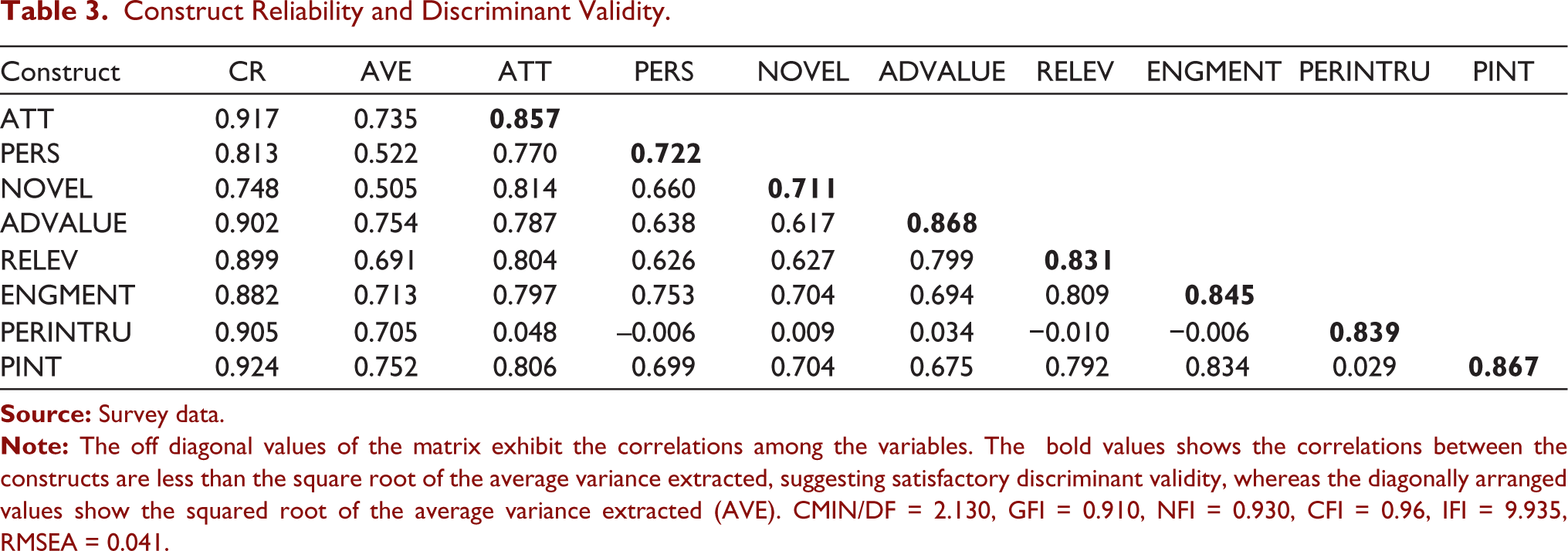
The investigation comprised applying maximum likelihood estimation to examine how closely every construct’s measurement item matched the expected loading for the specified construct. The evaluation of the measurement model involved the application of several widely accepted indices, namely, the Comparative Fit Index (CFI), chi-square/degrees of freedom (CMIN), Goodness-of-Fit Index (GFI), Normed-Fit Index (NFI) and Root Mean Square Error of Approximation (RMSEA). The obtained indices (CMIN/DF = 2.130, GFI = 0.910, NFI = 0.930, CFI = 0.961 and RMSEA = 0.041) confirm that the measurement model adequately fits the observed data, as values are all within the stipulated thresholds. This result highlights the adequate effectiveness of the model in accurately depicting and interpreting the variables that were identified in the research framework.
Construct Reliability and Validity
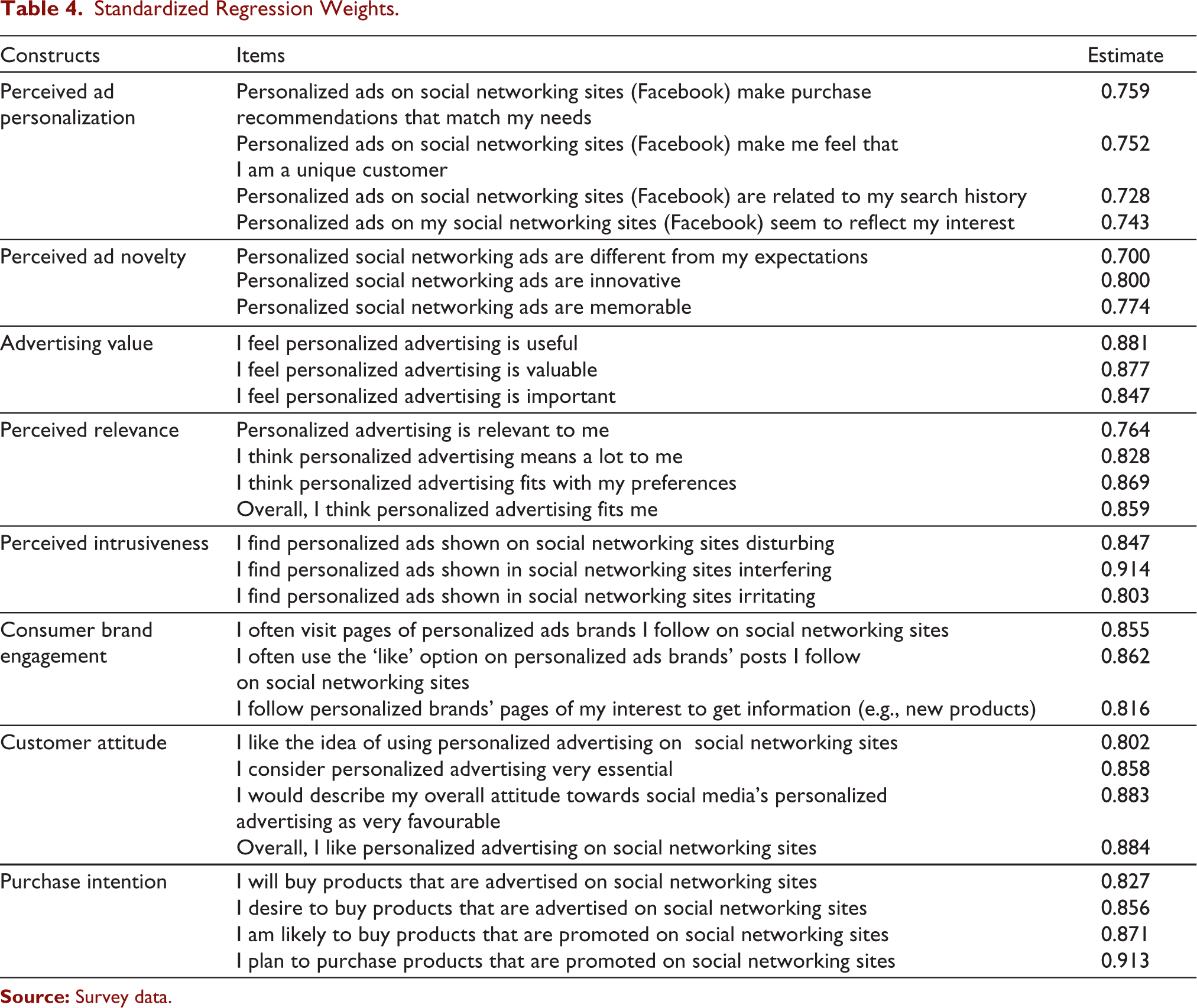
Convergent validity is assessed using three parameters: composite reliability (CR), reliability of measurement items and average variance extracted (AVE) for every construct. CR values for all constructs exceeded 0.70, as illustrated in Table 3. Also, AVE values surpassed the suggested threshold of 0.50. In addition, the Cronbach’s alpha values varied between 0.715 and 0.946, surpassing the threshold value of 0.7, thereby affirming the constructs’ strong reliability as suggested by Nunnally (1978). Table 3 displays the outcomes of the discriminant validity. The off-diagonal values of the matrix exhibit the correlations among the variables; as illustrated in the table, the correlations between the constructs are less than the square root of the average variance extracted, suggesting satisfactory discriminant validity, whereas the diagonally arranged values show the squared root of the average variance extracted (AVE). Additionally, all items in Table 4 exhibit standardized regression weights exceeding the threshold of 0.50, thereby satisfying the established criterion.
Construct Reliability and Discriminant Validity.
Standardized Regression Weights.
Assessment of Structural Model
This phase involved evaluating the study hypotheses and validating the proposed conceptual model through the application of SEM. The results of hypotheses testing are presented in Table 5, and the structured model is presented as Figure 1. H1a and H1b posited that perceived personalization positively influences perceived ad novelty and, consequently, consumer attitudes towards social media ads. The results, supported by significant β values of 0.952 and 0.287, respectively, with p values below .001, validate these hypotheses. Similarly, the findings demonstrate that perceived ad personalization has a significant influence on advertising value, which further positively influences customer attitudes towards social media ads, as indicated by significant β values of 0.876 and 0.237, respectively. The corresponding p value, being less than .001, affirms the acceptance of H2a and H2b. Additionally, the statistical results revealed significant results for the third set of hypotheses, with β values of 0.900 and 0.735, along with a p value of less than .001. This substantiates the support for H3a and H3b, signifying that ad personalization has a positive impact on enhancing perceived relevance. Also, results suggest that the heightened perceived relevance, in turn, contributes to fostering a favourable disposition towards personalized ads.
Structural Model Results.
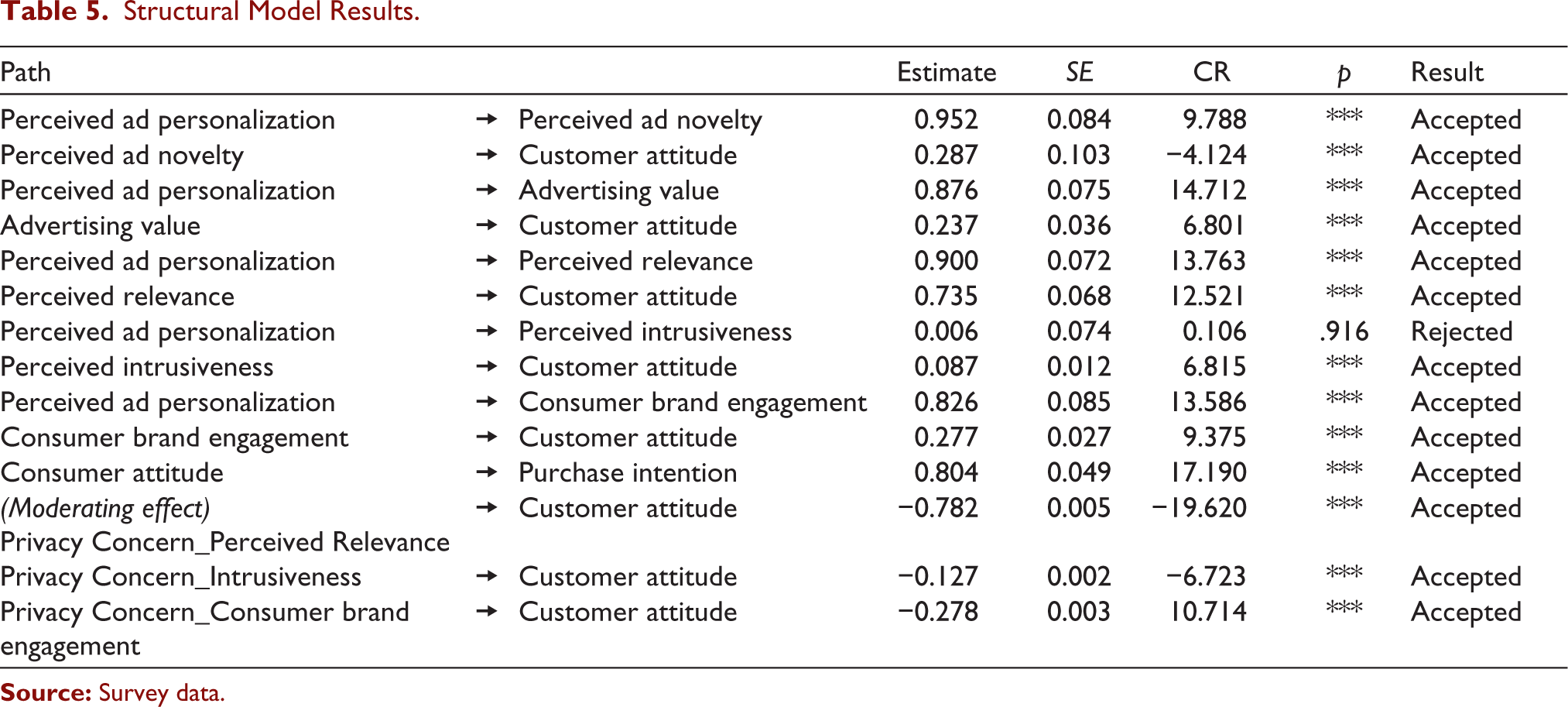
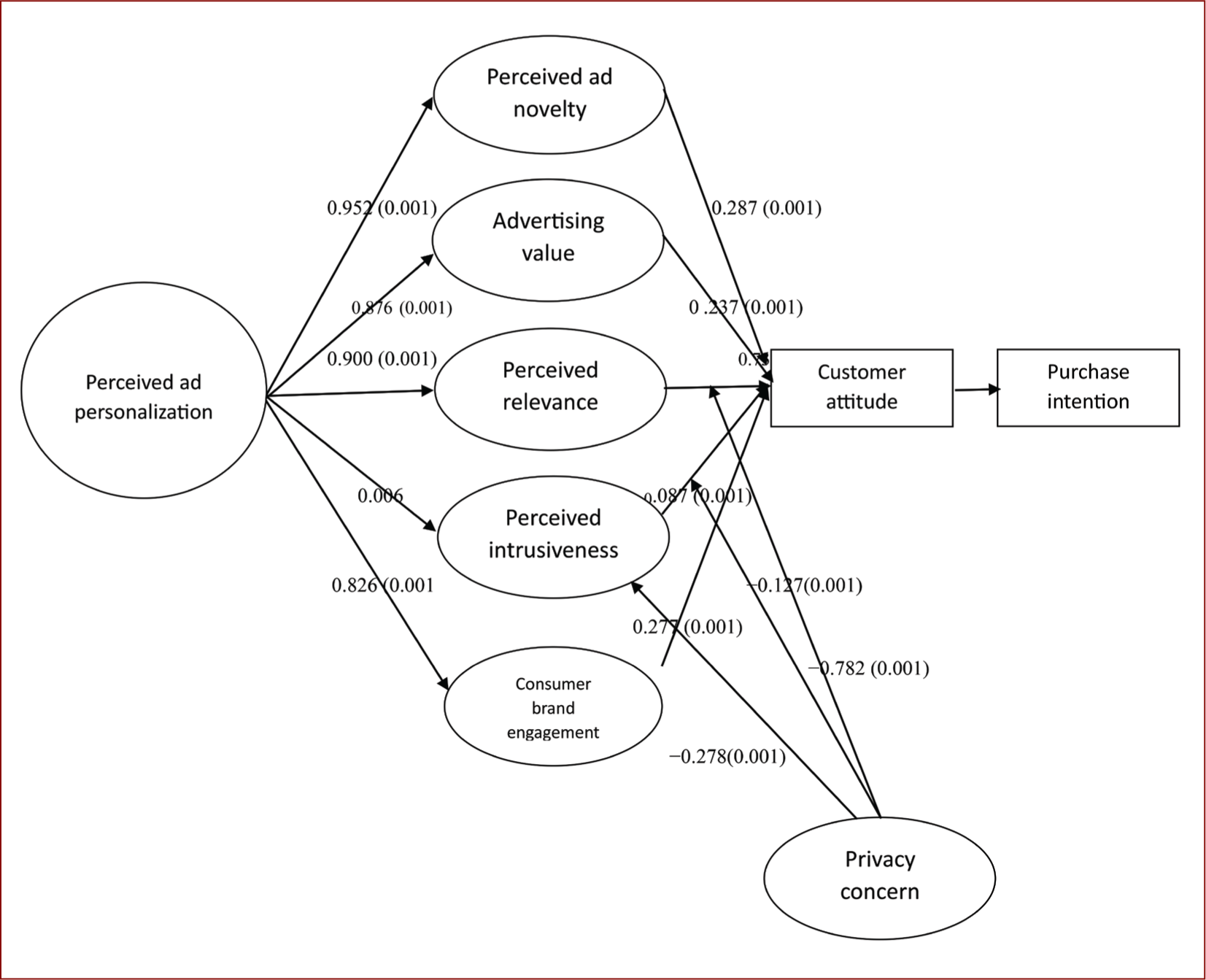
Notably, the formulated H4a is refuted, as evident by a β value of 0.006 and a p value of .916, indicating the insignificance of the relationship between ad personalization and ad intrusiveness. Interestingly, H4b is validated, supported by a β value of 0.087 and a p value below than .001. This suggests that the perceived intrusiveness of social media ads exerts a negative influence on customer attitudes towards social media advertisements. Likewise, with respective β values of 0.826 and 0.277 with p values lower than .001, findings signify a constructive relationship between perceived ad personalization and consumer brand engagement that is further associated with customer attitude towards social media advertisements. Thus, we accept H5a and H5b.
H6 is found to be significant with β = 0.805 and p value less than .001, which demonstrates that consumers’ attitude towards social media ads positively influences purchase intentions of consumers. Accordingly, we accept H6. The result demonstrates that consumers’ disposition towards social media ads significantly impacts their intentions to make a purchase.
Lastly, the results of the moderation analysis of the hypotheses aiming to investigate the moderating impact of privacy concerns on customer attitudes towards social media advertisements (Table 5) affirm that privacy concerns play a negative moderating role in the relationships between variables (perceived relevance β = −0.782, perceived intrusiveness β = −0.127, consumer brand engagement β = −0.278) and customer attitudes towards social media advertising. These findings provide support for H7a, H7b and H7c.
Discussion
From the study findings, it is observed that perceived ad personalization has an association with perceived ad novelty, advertising value, perceived relevance and consumer brand engagement in the formation of customer attitude. Of course, the significance is not equal across the four variables. The study noted that the highest association was with perceived ad novelty, followed by perceived relevance, advertising value and consumer brand intrusiveness. Also, among these variables, perceived relevance has the highest influence on customer attitude.
The results indicate a positive relationship between perceived ad personalization and perceived ad novelty, resulting in enhanced ad worth to consumers. This demonstrates that tailored ads prove to be highly efficacious in shifting customers’ inclination towards purchases when it elicits a sense of novelty, followed by positive disposition towards personalized advertising. These findings align with earlier studies such as Alhidari et al. (2015), Shanahan et al. (2019) and Voorveld et al. (2018). Likewise, perceived ad personalization is positively associated with perceived ad relevance, which further firmly influences customer attitude and purchase intentions. Existing studies such as Arora and Agarwal (2019), Jung (2017) and Lee and Hong (2016) have also observed these results, albeit in varied contexts. This symbolizes that if people recognize personalized ads to be pertinent to their personal choices and interests, their inclination to purchase the products featured in these social media ads is likely to be heightened.
A primary aspect of social media channels is their potential to enable firms in precisely adapting and tailoring the ads and contents centred on their clients’ lifestyle, attributes, requirements and inclinations (Tran et al., 2021, 2023). Presently, organizations have an enhanced capacity to effectively communicate personalized messages to their intended recipients. Therefore, empirical evidence of the current research suggests that social media users perceive adverts as advantageous, practical and fruitful in accordance with their personal preferences and needs. This analysis validates the fundamental assumptions of the elaboration likelihood model, which suggests that tailored ads improve consumers’ memory of the promoted brand and result in potent persuasive impacts (Christian et al., 2021; Segijn et al., 2021; Tran et al., 2021).
The study demonstrates a direct influence of perceived ad personalization on consumer brand engagement and further on customer attitude towards that offer. The findings show that when individuals come across tailored material, it piques their curiosity and captures their attention, ultimately leading to a stronger connection with the business. These findings align with prior research in the sector (Molina-Prados et al., 2022; Wiese et al., 2020). The research also emphasizes the moderating role of privacy concern(s) in determining the relationship between perceived relevance, perceived intrusiveness and consumer brand engagement. The results reflect that consumers who are aware of and are worried about how marketing companies collect their confidential information for marketing reasons are more prone to proactively evade or minimize their exposure to tailored advertisements. Privacy-conscious users demonstrate activities like shutting down of windows or abstaining from interacting with personalized social media ads. Thus, these findings are consistent with some previous research studies (Boateng & Okoe, 2015; Lee & Hong, 2016).
Surprisingly, the study found that the impact of perceived ad personalization is insignificant on perceived intrusiveness. This is contrary to previous research studies including Chu et al. (2022), Odoom (2022) and Tran et al. (2023). This discovery of the present article suggesting that ad personalization does not lead to intrusiveness implies that consumers generally do not perceive personalized advertisements on social networking sites as intrusive and do not actively avoid such ads. This observation may stem from the fact that personalized ads align with consumers’ past interests, showcasing content, brands or products they have previously demonstrated interest in. Consequently, when consumers encounter personalized ads that align with their needs and preferences, they tend to show interest in the ads, whether they appear during goal-seeking behaviour or in their news feed, without perceiving them as intrusive (Aslam et al., 2021; Boateng & Okoe, 2015; Copeland & Zhao, 2020; Hayes et al., 2021).
Similarly, the relationship between consumers’ attitude towards personalized advertisements and intentions to make purchases is substantiated by the study results. This cemented the findings of earlier studies such as Liu et al. (2021) and Wiese et al. (2020). Respondents asserted that perceived ad personalization has the potential to enhance the relevance of advertisements. Their apprehension centred around the idea that, without personalization, they might be subjected to ads that lack any relevance to their interests.
Conclusion
Filling gaps in the extant literature, the present study proposed and tested the comprehensive model to determine how perceived ad personalization on social media platforms impacts customer attitude and purchase intention. The study also investigated the moderating role of privacy concern between perceived relevance, ad intrusiveness and consumer engagement and customer attitude. The results confirm the proposed conceptual model, demonstrating its strong conformity with the data. Out of the seven hypotheses, six were accepted. Furthermore, the results corroborate the deductions made from the ELM theory regarding ad personalization. ELM supports the objective of the study by providing a model that depicts how customer attitude formation is impacted by personalized advertising.
Managerial Implications
From a practical standpoint, marketers can garner valuable understanding into how a personalized advertising strategy contributes to shaping customer purchase intentions. The outcomes of the study model offer strategic and managerial guidance, serving as valuable references for marketing researchers, practitioners and advertisers alike. Thus, current study yields valuable insights into the main aspects that should be prioritized by marketers engaged in delivering personalized adverts on social media platforms. For instance, marketing agencies may deploy personalized forms of communication to remind prospects of a great brand experience, which was formerly posted on social media by the user. This serves as a subliminal method of persuading customers to revisit and rediscover the memories. Marketing professionals could consider delivering precise social media ads or in-app notifications. These communications would present a customized ‘wish list’ tailored to individual purchasing or surfing behaviours. By adopting a personalized advertising strategy, there exists the opportunity for marketers to cultivate favourable sentiments associated with the brand, ultimately enhancing consumer engagement with the brand.
Second, advertisers should capitalize on the growing demand for ad novelty and relevance in content by creating personalized social media ads. Hence, managers must allocate resources towards acquiring artificial intelligence and machine learning frameworks that are capable of adaptive modification in ad content according to user data. This shall enable immediate customization and help in amplifying the novelty of every interaction. Additionally, perceived ad personalization of social media ads enhances perceived relevance of the advertisements. Marketers should utilize cookies to decipher the demographics of their customers and monitor their behaviours, thereby enhancing their understanding of their loyal admirers and followers. This study offers crucial guidance to marketing agencies, emphasizing the importance of transparent disclosure of privacy policies by advertising companies. It underscores the need for clear communication about the control measures available to consumers, enabling them to safeguard their privacy in online channels. Marketers must employ a variety of ad patters, including videos, microblogs, images, calls to action, survey forms and similar alternatives. This diversification enhances interactivity and allows customers to make choices, effectively minimizing the sense of intrusion. Therefore, the current investigation carries substantial implications in both theoretical and managerial domains.
Limitations and Future Scope of Study
While this research effectively elucidated the influence of perceived ad personalization on shaping customer perceptions and behaviours towards social media advertisements, it has a few limitations that might have constrained the scope of this research. Identifying and acknowledging these limitations shall help build a stronger foundation for future research on the subject and augment the comprehensiveness of the findings. For this study, the authors have employed self-reported data; hence, there might be slight chances of variance from real behaviour (Osei-Frimpong et al., 2022; Swart, 2021). To conduct a more insightful investigation into the possible impacts of perceived personalization on consumers’ purchase intentions, future research could explore experimental design(s), which would contribute to a more rigorous and nuanced understanding of the subject. Also, it is imperative to thoroughly examine both customer behaviour and content on different social media networks (Sahli & Zhai, 2024; Sharma & Arora, 2024). For a comprehensive analysis, it may be necessary to utilize advanced tools like Netvizz or the Scheduler R package to collect data from social networking platforms and apply content analysis algorithms. In the future, studies can leverage these methods and techniques to acquire an extensive learning of customer perspectives, engagement and behaviours towards social media advertisements. Moreover, demographic factors including gender, income and age play an important role in behavioural studies (Perannagari & Gupta, 2022; Tran et al., 2023). Hence, it is imperative to examine the moderating influence of these characteristics on the efficacy of individualized advertisements in forthcoming studies.
Footnotes
Declaration of Conflicting Interests
The authors declared no potential conflicts of interest with respect to the research, authorship and/or publication of this article.
Funding
The authors received no financial support for the research, authorship and/or publication of this article.