







Abstract
The purpose of the study was to understand how followers as self-monitors use ingratiation for stronger leader–member exchange (LMX) leading to job satisfaction. The study attempts to show that in an interpersonal setting, the followers will actively attempt to have strong LMX with the leader, and ingratiation will be a useful tool. The research design used concurrent mixed method approach for the triangulation of results. The quantitative study using PROCESS MACRO (model 6) and a sample size of 405 showed serial mediation of ingratiation and LMX. The qualitative study using thematic analysis (sample size = 47) showed that subordinates actively indulge in LMX for stronger bonding with the leader. Triangulation with the qualitative data was added to the methodological rigour in the study. The practical implications of the study lie in looking at the relationship from a followership perspective as to how subordinates, using ingratiation and strong LMX, would enjoy proximity to the leader and greater organizational visibility. The study is unique because first it studies LMX from a subordinate’s perspective’ and second, because it studies self-monitoring which is less researched than other personality dimensions.
Introduction
Studies on the influence of personality characteristics in studying work-related behaviour are mainly around the Big Five factors (Goldberg, 1990; Guion & Gottier, 1965; John, 1990) to the almost exclusion of other personality traits. One such personality characteristic that is less studied is self-monitoring. Self-monitoring is a personality trait that refers to the extent to which individuals are willing and able to engage in the expressive control of their self-presentation in public (Gangestad & Snyder, 2000; Snyder, 1979; Wilmot, 2020). High self-monitors craft their verbal (and non-verbal) self-presentations to engage in information manipulation to present more positive image of them (Fandt & Ferris, 1990) and to tailor expressive behaviour to match social pressures (Caldwell & O’Reilly, 1982). Low self-monitors seem less willing and able to engage in such appearances. They remain true to their internal dispositions and attitudes, displaying behavioural consistency across situations (Charlier, 2020; Westfall, 2020). Gerstner and Day (1997) emphasized the importance of leader–member exchange (LMX) and observed that having a high-quality relationship with one’s supervisor can positively affect the entire work experience, including performance and affective outcomes. These are achieved with ease by high self-monitors (McCauley & Van Velsor, 2004).
Previous studies on LMX have focused on LMX differentiation and its impact on followers’ psychological strain (Diebig et al., 2024), team performance and role engagement (Sobral & Furtado, 2024), job satisfaction and emotional exhaustion (Poetz & Volmer, 2022), job characteristics (Sonnentag & Pundt, 2016) and the effect of LMX on the followers’ well-being (Inceoglu et al., 2018). None of the studies just mentioned focus on LMX from the follower’s perspective. Our study is novel and important because it looks at leadership from the lens of the follower rather than that of the leader.
High-quality LMX is a system of social exchange characterized by mutual trust, respect and reciprocal influence (Dulebohn et al., 2012; Liden & Maslyn, 1998) and is linked to job satisfaction (Ilies et al., 2007).
Leader–member exchange is influenced by culture which is defined as the collective programming of the mind that distinguishes the members of one group or category of people from another (Hofstede, 2001). In the context of LMX, the dimension of power distance seems to matter the most (Botero & van Dyne, 2009; Stander & Rothmann, 2010). As per Hofstede (2011), India is considered a high-power distance culture. It scores 77 out of 100. Employees in high-power distance cultures expect the leader to take action and give orders rather than delegating decision-making authority (Pellegrini & Scandura, 2006). In these cultures, a supervisor is the one who influences the individual work status. This includes pay raises, promotions and work assignments. Consequently, subordinates make all effort to influence and impress the leader. In this endeavour, self-monitoring trait and strategies like ingratiation to impress the leader will play an important role. Therefore, the objective of the study was to understand LMX from a subordinate’s perspective by studying how subordinates as self-monitors use ingratiation to become effective in the social environment comprising of LMX, leading to job satisfaction.
Our research consisted of two parts. Part one (study 1) was a quantitative study and part two (study 2) was a qualitative study. In study 1, we hypothesized that LMX will mediate the relationship between self-monitoring and job satisfaction. Studies have shown that ingratiation is an important form of upward impression management (Ansari & Kapoor, 1987; Ralston, 1985; Shankar et al., 1994). Therefore, we wanted to see if ingratiatory behaviours of subordinates affect the strengthening of LMX for higher job satisfaction. Therefore, we hypothesized that ingratiation along with LMX will serially mediate the relationship between self-monitoring and job satisfaction.
Study 2 was qualitative where semi-structured questions were asked using a survey method. In study 2, we explored the experiences of subordinates who use ingratiation to have strong LMX with their leader. The data gathered were descriptive and analysed thematically. We used concurrent triangulation (Castro et al., 2010) to corroborate finding of study 2 with study 1. The triangulation method not only added to the overall richness of the study, it also helped in overcoming the limitations of common method variance (CMV; which arises in a cross-sectional research study) and added methodological rigour to the study.
The merit of the study lies in: first, studying LMX from the subordinate’s perspective; and second, using the mixed method approach. The result showed that high self-monitors consciously invested in developing more robust bonds with the leader, and ingratiation enabled them to strengthen the LMX. The present research is relevant in furthering the understanding of the mediating role of LMX between self-monitoring and job satisfaction.
Review of Literature
Self-monitoring
According to Snyder (1974), high self-monitors are more embedded in social relationships at work (Sasovova, 2006). High self-monitors tend to be social pragmatists who are chameleon-like in adjusting the public expression of their attitudes and behaviour to fit with the expectations of others. Gangestad and Snyder (2000) suggested that low self-monitors also care about their impressions but only to the extent that the impression is a genuine reflection of the self. Researchers (Day et al., 2002; Kudret et al., 2019) have shown that from among the various outcome variables of self-monitoring, leadership emergence is a significant outcome of subordinates in strengthening the LMX with the leader.
The relationship between self-monitoring and the five-factor model of personality showed that self-monitoring is not significantly related to neuroticism (Chaudhary & Panda, 2019) but is significantly and positively correlated with extra-version (Bono & Vey, 2007) and openness to experience (Wolf et al., 2009). Another study shows weak association with the light triad personality trait of Compassion and no relationship with other components of light triad personality traits like Empathy, Altruism, Presence and Search (Hyanky et al., 2024). Self-monitoring ameliorates workplace ostracism (Wu et al., 2021) and is positively related to emotional labour (Babalola & Nwanzu, 2022). Kim (2020) notes that self-monitoring is closely and positively associated with materialism, appearance management, favourable responses to promotional messages, one’s image via social media and online platforms.
Self-monitoring is presumed to be innate biological drive originating in evolution and reproductive success (Hogan & Warrenfeltz, 2003). At an elementary level, individuals have needs for (a) acceptance and approval; (b) status, power and the control of resources; and (c) predictability and order (Hogan & Warrenfeltz, 2003). These general motive patterns translate into behaviours designed for getting along with other members of the group, getting ahead in terms of achieving status and making sense of the world. These behaviours are also markers of career success and satisfaction at work. Therefore, employees put effort to be in proximity with their leader and enjoy control of resources in their shadow. There are substantial individual differences in how their effort and success are evaluated by others (Hogan & Holland, 2003), and self-monitoring may account for these differences. Therefore, we had two broad research objectives. First, to study LMX from a subordinate’s perspective by focusing on self-monitoring behaviour of subordinates and their use of ingratiation for stronger LMX leading to job satisfaction. Second, to qualitatively explore and understand the experiences of subordinates who use ingratiation to have strong LMX with their leader.
Self-monitoring and Job Satisfaction
Job satisfaction is defined as a positive emotional state that reflects an affective response to job situation (Locke, 1976). The theoretical approaches explaining job satisfaction are the task characteristics approach (Bhuian & Menguc, 2002; Bhuian et al., 1996; Hackman & Oldham, 1975; Hogan & Martell, 1987; Kalra et al., 2023; Reiner & Zhao, 1999; Seers & Graen, 1984; Walsh et al., 1980) and the dispositional approach (Davis-Blake & Pfeffer, 1989; Staw & Ross, 1985). Studies supporting dispositions and their impact on job satisfaction focus on intrinsic motivation (Savery, 1996; Schonfeld, 2000), positive/negative affectivity (Connolly & Viswesvaran, 2000; Simmons et al., 2001), self-esteem (Costa & McCrae, 1994) and need for achievement (Mannheim et al., 1997). Combining the psychoanalytic theory highlighting motive patterns in life and work (Hogan, 1991; Hogan et al., 1985) with the dispositional approaches to job satisfaction (Davis-Blake & Pfeffer, 1989; Staw & Ross, 1985), it can be hypothesized that those individuals who have been able to get along, get ahead and make sense would be more satisfied with their job. Since self-monitoring traits would engage in the above behaviour, self-monitoring behaviour would be positively related to job satisfaction. Therefore, it is hypothesized that
H1: High self-monitoring will be positively related to high job satisfaction.
Mediating Role of Ingratiation Between Self-Monitoring and Job Satisfaction
Given that self-monitoring is associated with a desire to portray images that will improve one’s social status, self-monitoring has been extensively examined as an antecedent of impression management (Barbuto & Moss, 2006; Bolino et al., 2016). During social interactions, individuals consciously and unconsciously attempt to control their image (Schlenker, 1980) to exert the desired effect known as impression management. Ingratiation belongs to a class of influence strategies that aims at satisfying personal and organizational goals (Ansari, 1989, 1990; Ansari & Tandon, 1991; Kipnis et al., 1980). Although ingratiation is applied as an upward, downward or lateral strategy, it is used upward more frequently to influence the superior (Allen et al., 1979; Ansari, 1990; Ansari & Kapoor, 1987; Ralston, 1985; Shankar et al., 1994). Regarding impression-management research, Snyder and Copeland (1989) indicated that high self-monitors are more likely to tailor the image they present to others to serve their interests best. Gangestad and Snyder (2000) have also explained that individuals who are simply sensitive to defensive expressions of behaviour that communicate passivity and submission by the sender are not self-monitors. While these behaviours could be considered an adaptive response to social cues, they are ineffective in eliciting a socially desirable response from others. Therefore, high self-monitors are sensitive to social cues and actively engage in impression management intended to project a favourable image (Gangestad & Snyder, 2000). High self-monitors are also perceived as more capable of using ingratiation tactics, while low self-monitors who attempt to engage in these tactics are perceived as ‘sycophants’ (Turnley & Bolino, 2001). Therefore, it is hypothesized that
H2: Ingratiation mediates the relationship between self-monitoring and job satisfaction.
Mediating Role of LMX Between Self-monitoring and Job Satisfaction
Leader–member exchange theory was introduced during the 1970s and was termed the vertical dyad linkage approach (Dansereau et al., 1975; Graen & Cashman, 1975). The central tenet of LMX theory is that, through different types of exchanges, leaders differentiate how they treat their followers (Dansereau et al., 1975), leading to different quality relationships between the leader and each follower (Zakiy & Ramadhani, 2024). The development of differential relationships between leaders and their direct subordinates in their working team is referred to as LMX differentiation (Henderson et al., 2009; Hogg et al., 2005; Liden et al., 2006).
Employees with high LMX tend to be more satisfied with their jobs, and naturally, they tend to be more attached and have higher commitment to the organization where they work (Lartey et al., 2019). Under high LMX relationship, leaders tend to provide guidance, support and development opportunities to employees, resulting in higher job satisfaction and stronger attachment to the organization (Audenaert et al., 2021; Garg & Dhar, 2017; Utami & Zakiy, 2020; Zakiy, 2024).
A growing research stream aims to understand how followers’ comparative LMX standing in their group influences their behaviours and attitudes (Zhang et al., 2023). Lee et al. (2025) extended the understanding of how and when LMX social comparison influences followers’ work behaviour.
Scholars have attempted to study LMX through the lens of role theory (Graen, 1976; Graen & Scandura, 1987) and social exchange theory (Blau, 1964; Sparrowe & Liden, 1997; Thibaut & Kelley, 1959). Research has shown that for most individuals, the essence of their experience in organizations is tempered by immediate leaders, who are instrumental in socialization (Ferris et al., 2009; Liden et al., 1993), motivation (Rozikan et al., 2024; Scandura et al., 1986; Utami & Zakiy, 2020), mentoring (Scandura & Schriesheim, 1994) and support (Settoon et al., 1996; Tahir et al., 2023; Uhl-Bien & Maslyn, 2003; Zakiy, 2024) of their direct reports. Follower characteristics suggested to influence LMX also include personality factors. Gangestad and Snyder (2000) maintained that self-monitoring is characterized by a status enhancement motive or a desire to achieve and enhance status within social structures. The empirical support for this argument is found in the works of Flynn et al. (2006) and Highhouse et al. (2016). By setting forth these assumptions, self-monitoring theory pro-poses a boundary condition and offers an answer to a fundamental dichotomy in psychology: whether behaviour is a function of the individual’s personality traits or of the environmental context. Self-monitoring theory’s answer to this question is that it will depend on one’s self-monitoring (Gangestad & Snyder, 2000). The behaviour of high self-monitors will be less dependent on personal-ity, attitudes or values, and instead be a function of situational cues that signal desired social image. In contrast, those lower on self-monitoring do not necessarily adjust their behaviours according to environmental cues, which makes their behaviours more of a function of their personality traits, attitudes or values. High self-monitors are embedded in social relationships at work (Sasovova, 2006) and hence will strengthen the LMX quality. Studies found that leadership styles or behaviours impact job satisfaction (de Vries et al., 1998; Dubinsky et al., 1995; Jones et al., 1996; Landeweerd & Boumans, 1994). Wang, Hu and Dong (2015) showed that LMX mediates self-monitoring-performance relationship. Therefore it is hypothesized that
H3: LMX mediates the relationship between self-monitoring and job satisfaction.
Serial Mediation of Ingratiation and LMX in the Relationship Between Self-monitoring and Job Satisfaction
To explain the relationship between self-monitoring and ingratiation with LMX, we used Byrne’s reinforcement attraction paradigm (Byrne, 1971, 1997; Byrne & Rhamey, 1965) and the norm of reciprocity under the social exchange theory. According to the reinforcement attraction paradigm, self-monitors use ingratiation to encourage closer LMX ties. It is similar to the self-fulfilling prophecy, where the positive/negative behaviour in interpersonal relationships leads to subsequent liking/disliking (Curtis & Miller, 1986; Snyder & Swann, 1978). Jufrizen et al. (2023) showed that LMX has a significant effect on performance through work engagement and employee job satisfaction under the norm of reciprocity (Blau, 1964; Graen & Uhl-Bien, 1995; Sparrowe & Liden, 1997); when followers show self-monitoring and ingratiatory behaviour towards the leader, the leader, in return, will show positive behaviour towards followers through involving them in in-group activities. Thus, the serial mediation of ingratiation and LMX will strengthen the effect of self-monitoring on job satisfaction. Therefore, it is hypothesized that
H4: Ingratiation and LMX serially mediate the relationship between self-monitoring and job satisfaction.
Method
The study used a mixed-methods research design. Within mixed methods, the study adopted a convergent parallel design (also referred to as the convergent design), where the quantitative and qualitative studies were conducted independently and simultaneously (Castro et al., 2010; Creswell, 2009). This approach prioritizes both the methods equally and keeps the strands independent during analysis and then mixes the results during the overall interpretation. It is also termed as concurrent triangulation design (Creswell, 2009) because the qualitative and quantitative results in a mixed method study are converged or merged (triangulation) in order to provide a comprehensive analysis of the research problem (Creswell et al., 2003).
Research Design for Study 1
For the quantitative study, a cross-sectional data collection method was used in this work. Self-reported questionnaires were used to measure the constructs, test the hypotheses and infer the associations of relationships among the constructs.
Instruments
In study 1, the following data collection tools (instruments) were used:
Self-monitoring: Self-monitoring was measured through a 13-item scale developed by Lennox and Wolfe (1984). It had two subdimensions: ability to modify self-presentation and sensitivity to expressive behaviour of others. The overall reliability of the scale was 0.75. Leader–member exchange: To measure LMX, the 7-item (single-dimension) LMX scale adapted from Wang et al. (2004) with reliability value 0.92 was used. Ingratiation: Ingratiation was measured using the 22-item scale of Shankar et al. (1998). The scale was composed of dimensions of (a) other enhancement, (b) self-enhancement, (c) opinion conformity, (c) self-degradation, (d) third party directed and (e) instrumental dependency. The overall reliability of the scale was 0.92. Job satisfaction: It was measured using the (single-dimension) 10-item scale developed by Macdonald and Maclntyre (1997). The reliability of the scale was 0.77.
All the scales and items were scored on a 5-point scale (1= strongly disagree, 2 = disagree, 3 = neither agree nor disagree, 4 = agree, 5 = strongly agree).
Sample and Procedure
An online questionnaire was mailed to 650 employees employed in various public and private sector organizations from diverse industry sectors in India using the convenience sampling method. After data cleaning, 405 responses were used. According to Tabachnick and Fidell (2013), a sample size of 300 or more is appropriate for running exploratory factor analysis (EFA). The respondents included 115 females (28.4%) and 290 males (71.6%); 242 respondents had up to 5 years of work experience, 67 had between 5 and 10 years of experience and 96 had above 10 years of work experience.
Results: Study 1
Quantitative Study
Exploratory factor analysis was done using SPSS (version 2024). The measurement model's confirmatory factor analysis (CFA) was carried out using AMOS (version 2024). After initial analysis on SPSS, the following changes were made:
From the scales of self-monitoring, two items were deleted due to poor loading, thus making it an 11-item scale. The reliability was 0.84. From the ingratiation scale, the dimension of self-enhancement was dropped owing to poor loadings. The final scale had 18 out of 22 items, and the reliability was 0.95. For the LMX scale and the job satisfaction scale, no changes were made. The reliability of the LMX scale was 0.90 and that of job satisfaction was 0.89.
Table 1 shows the Kaiser–Meyer–Olkin (KMO) test, Bartlett’s test of sphericity, mean, standard deviation and correlation of all the variables. All the variables show a significant positive correlation.
KMO, Bartlett’s Test of Sphericity, Mean, Standard Deviation, Correlations for Study 1.
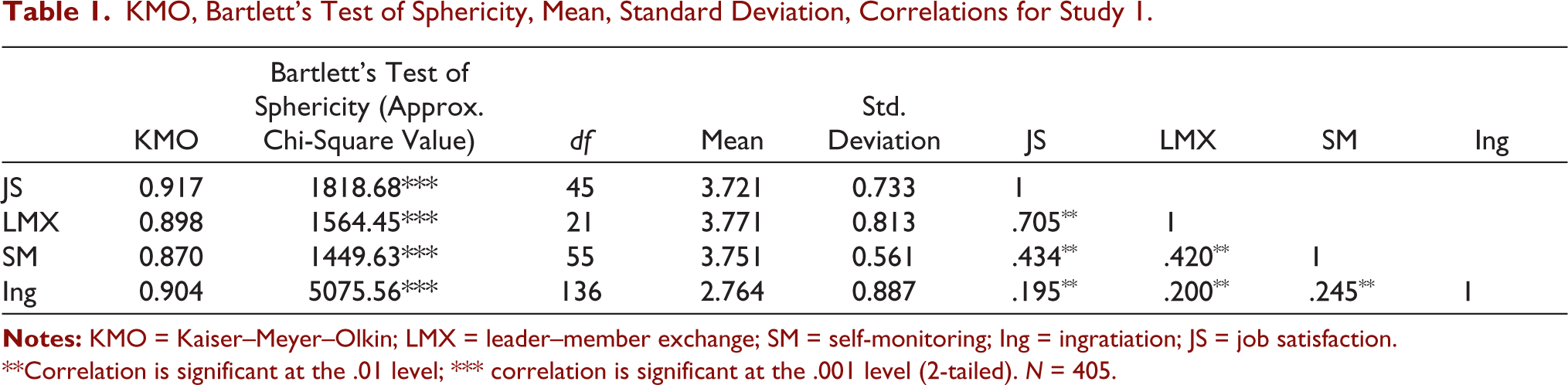
**Correlation is significant at the .01 level; *** correlation is significant at the .001 level (2-tailed). N = 405.
For the indices of the proposed measurement model (refer to Table 2), the CFA values were as follows: c2/df = 2.1147, GFI = 0.811, TLI = 0.902, CFI = 0.902 and RMSEA = 0.053.
The Measurement Model for the Variables.

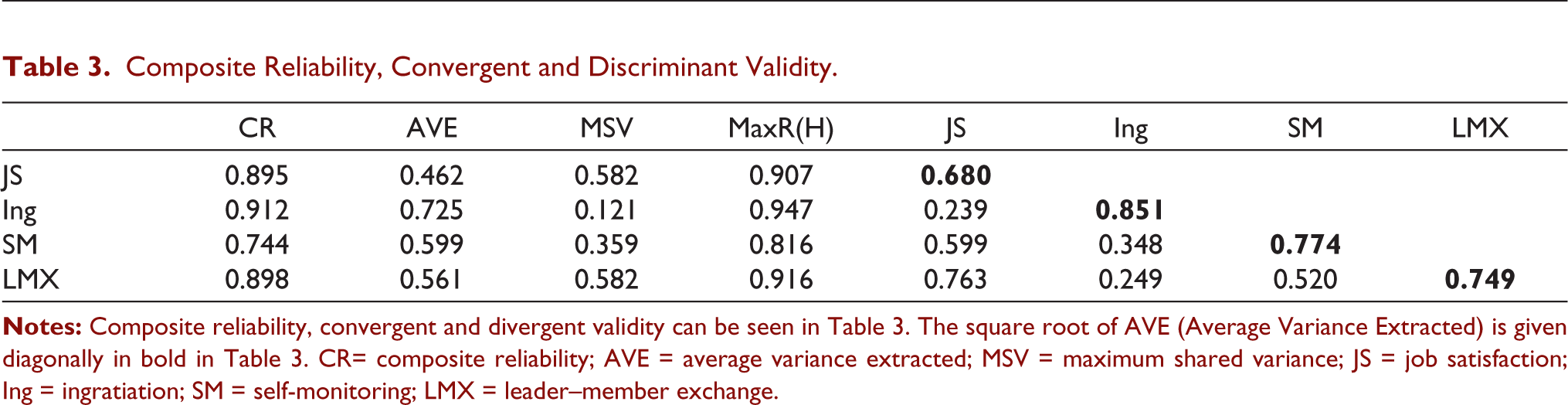
Composite reliability, convergent and divergent validity can be seen in Table 3.
Composite Reliability, Convergent and Discriminant Validity.
Since the study was based on self-reported responses, we checked for CMV. We conducted the Harman single-factor test (Podsakoff et al., 2003). To rule out CMV using Harman’s single-factor test, the percentage of variance extracted by one factor should be below 50% (Podsakoff et al., 2003). In our study, the single factor explained 24.97% of the variance. Therefore, CMV was not a significant concern in our analysis. PROCESS macro (model 6) was used to test the regression paths and mediation relationship between independent and dependent variables. Table 4 shows regression paths. Except for the path between ingratiation and job satisfaction (path a2), all other paths were found to be significant. The total effect was 0.57 (p < .001), and the direct effect was 0.21 (p < .001).
Path Coefficients of the Structural Model.
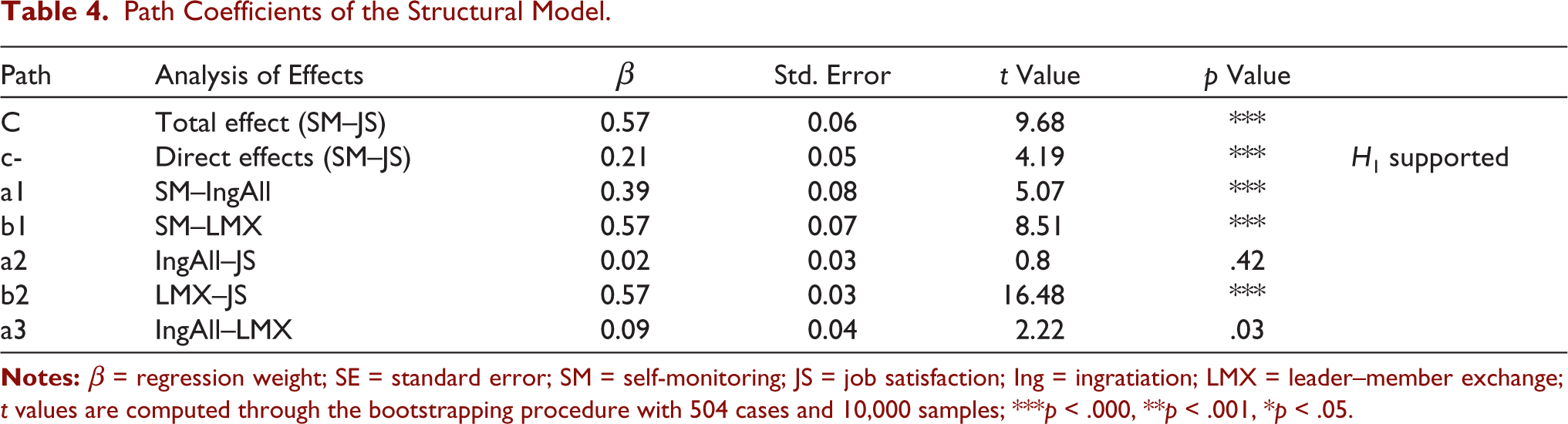
Table 5 shows indirect paths for two-stage serial mediation analysis (Preacher & Hayes, 2004). Figure 1 shows the path of serial mediation.
Serial Mediation Analysis.
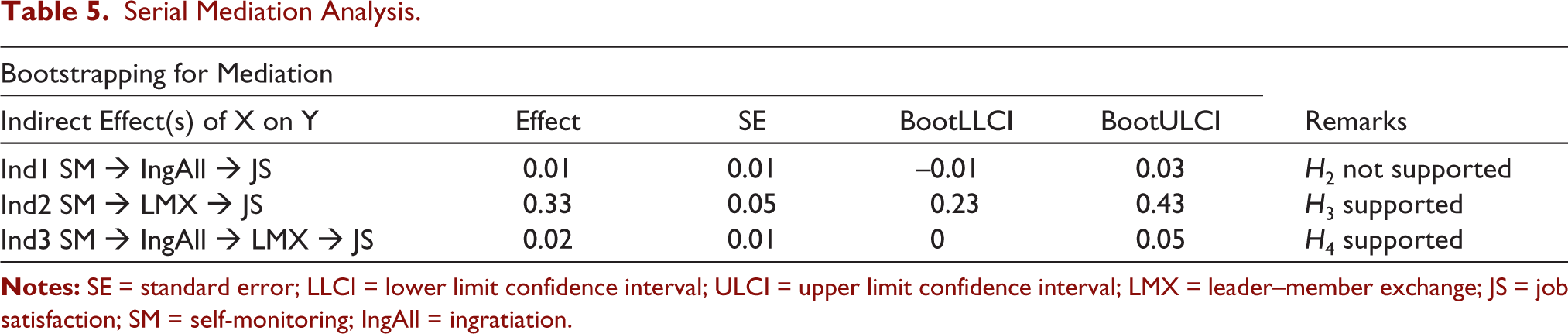
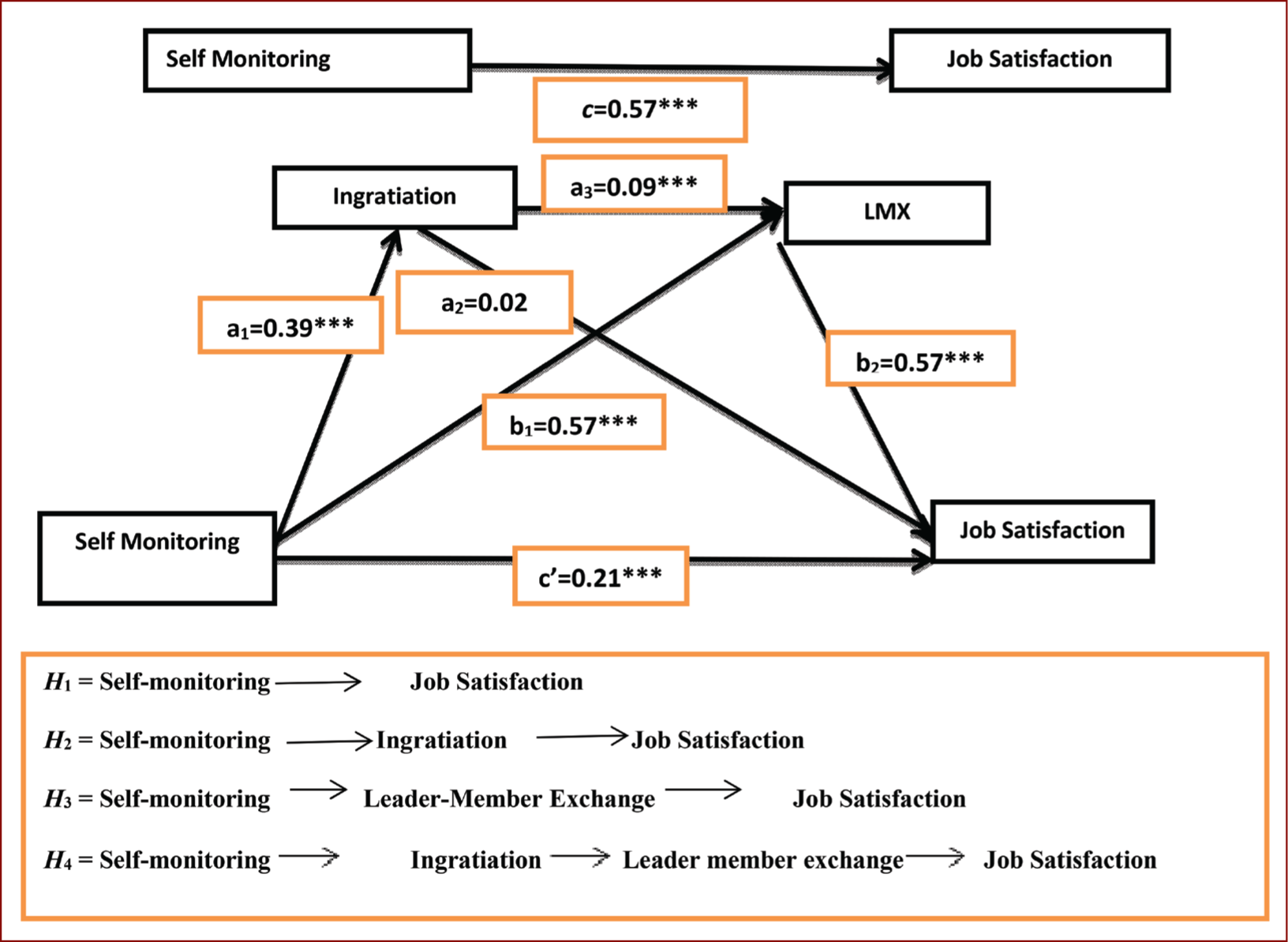
In our analytical model, we tested for a three-path mediated effect (Hayes et al., 2011; Taylor et al., 2008). We used the analytical approach outlined by Preacher and Hayes (2004) and Shrout and Bolger (2002) to test our mediation hypotheses. In Table 5, we provide estimates of the indirect effects, along with the symmetric and 95% bias-corrected bootstrapped confidence intervals for our path estimates. Figure 1 shows the serial mediation structural path coefficients in the research model. The analysis shows that H1, which states that self-monitoring is positively related to job satisfaction, is supported (β = 0.21; p < .001; refer to Table 4). H2, which states that ingratiation mediates the relationship between SM and job satisfaction, is not supported (β = 0.01; refer to Table 5). This is because the causal relation between ingratiation and job satisfaction (Table 4) was not significant (β = 0.02; p = .42). H3, which states the mediation of LMX in the relationship between SM and job satisfaction, was supported (β = 0.33; refer to Table 5). H4, stating the serial mediation of ingratiation and LMX in the relationship between SM and job satisfaction, showed partial mediation since the direct relationship was still significant (β = 0.02; refer to Tables 4 and 5).
Indirect effects were tested using the bootstrapping procedure with 10,000 bootstrap samples
Study 2: Qualitative
The qualitative study was carried out to get deeper insights into the nature of experience that subordinates shared with their leaders and how they used ingratiation for strengthening LMX ties.
Data Collection
As part of study 2, an online survey with open-ended questions (semi-structured questions) was carried out. The form was sent to 75 participants. We received completed forms from 47 participants. Of the 47 respondents, 29 were male and 18 were female respondents, 24 respondents were graduates and 23 were postgraduates. Under the category of experience, 17 respondents had up to 5 years of experience, 20 respondents had experience between 6 and 10 years and 10 respondents had experience of 11 years and above. With regard to experience in the present organization, 36 respondents had up to 5 years of experience, 9 respondents had experience between 6 and 10 years and 2 respondents had experience of 11 years and above in the present organization. Under the category of the organization sector, 15 respondents were from IT/ITES/BPR/consulting, 5 respondents were from banking and financial institutions, 4 respondents were from the pharmaceutical sector, 10 were from Heavy industries (shipping, power, aviation and construction) and finally 13 were from the service industry (education, hospitality, retail and consumer).
The open-ended survey included questions related to the formal/informal relationship with the manager/boss, experiences related to self-monitoring one’s behaviour in the organization, experiences of using flattery or any other strategy to impress one’s manager/boss and feelings related to job satisfaction or dissatisfaction. We analysed the qualitative data by going through the responses and coding them for the behaviour. Similar codes were placed under the broad themes.
Data Analysis
This study followed the qualitative data analysis procedure. As per qualitative research tradition, data collection, analysis and interpretation were intertwined parallelly (Fischer et al., 2009; Spiggle, 1994). We analysed the data by coding and clustering them into themes based on our research question (Daffa et al., 2022). Additionally, we employed the technique of conceptual content analysis (Berelson, 1952) to determine the frequency of the emerging themes.
Results
Following are the various themes that emerged from the qualitative data.
Leader–Member Exchange and Job Satisfaction
While analysing the data, we categorized respondents who found their relationship with their boss/manager as formal and informal.
Those respondents who found their relationship with their boss as formal reported their relationship as ‘professional’, ‘formal’ and ‘distant’ for various reasons such as ‘locational differences’ or ‘intercultural differences’.
R.23: I prefer to keep distance with my manager and interact only to an extent which is absolutely essential to get my work done, as she tends to be judgemental sometime and forms a perception.
The subordinates who found their relationship with their boss/manager as very close was termed as informal. Such subordinates found their leader ‘open for discussion’, ‘friendly’, ‘supportive’, ‘collaborative’, ‘motivating’ and ‘encouraging’ for skill improvement.
R.6: My relationship with my boss is close. For instance she guides me to grow in the organisation and give me opportunity to handle challenging projects in my organisation also helps me with suggestions when asked
In our data using conceptual content analysis (Berelson, 1952 we found that, 21 out of 47 respondents found the relationship with their manager formal, 22 out of 47 found it informal and 4 out of 47 responded as sometimes formal and sometimes informal.
Most of the respondents felt satisfied with their job (43 out of 47), a few said ‘can’t say’ (4 out of 47) and only one respondent was not satisfied with their job.
The reasons for job satisfaction included ‘autonomy’ to make decisions, ‘flexible working hours’, ‘transparency in working’, ‘new learning and growth opportunities’, ‘culture’ of the organization, ‘fairness at work’ and ‘work life balance’.
Those who responded as ‘can’t say’ or ‘no’ felt that ‘workload was too much’ and ‘limited growth opportunities.
1. Self-Monitoring and Leader-Member-Exchange
The study found that irrespective of whether the subordinates experienced formal or informal connection with their manager, most of them (37 out of 47 respondents) expressed desire to be part of their manager’s core team. The reasons were broadly categorised under three themes.
The first theme was desire to be in manager’s core team arising out of ‘work-related’ needs which included ‘opportunity to be part of key projects’, the manager’s ‘receptivity to new ideas’, ‘opportunities for responsibility and growth under the manager’, ‘professional environment’ and ‘opportunities’ provided by the manager which helped in role modelling the leader.
The second theme was the need arising out of leader’s behaviour, which included behaviours such as discipline, no discrimination between members, allowing members to take initiative, staying calm, understanding, trusting and supportive.
The third theme was related to need to be in manager’s team for the ‘access to learning opportunity’, including opportunities to learn ‘technical skills and business knowledge’.
The respondents who showed self-monitoring agreed that they consciously ‘managed’ their image at work.
The reasons given were ‘stakeholder management, ‘survival’, ‘getting their work done’ and ‘organizational politics’.
The low self-monitors perceived themselves as ‘neutral’, ‘data driven’, representing themselves ‘the way they are’ and ‘respecting others’.
Most of the respondents who indulged in self-monitoring (38 out of 47 respondents) did not find self-monitoring stressful. According to them, it was ‘part of their job’, and they were used to it. Those who found it stressful (10 out of 47) felt that they cannot be ‘untrue to themselves’; it is a ‘compromise’ and is ‘not what they would like to do’.
Most of the respondents (34 out of 47 respondents) found that body language was very helpful in understanding the emotions of the boss/manager to support their high/low self-monitoring behaviour, while few (12 out of 47) did not rely on reading emotional cues of the manager/boss for work citing reasons such as ‘people are pretentious at work’ and ‘emotions should not be used to judge a person at work’.
Ingratiation and Leader–Member Exchange
On the question around using ingratiation towards the leader/manager, most of the respondents (25 out of 47) declined using ingratiation, a few (10 out of 47) said that they used it sometimes, and the rest (12 out of 47) accepted using ingratiation.
Participants who reported using flattery claimed that they did so ‘to maintain a good relationship with their managers’. They shared that they frequently ‘complimented their managers for their working style’.
On the other hand, participants who did not use ingratiation felt that ingratiation was more like ‘not being true to oneself’.
Since a sizable number of respondents (25 out of 47) said that they did not use ingratiation and used phrases like ‘it depends on the relationship we build’, ‘flattery though is practiced, very few are good at it’ shows that most of the respondents were not very open in discussing about the use of ingratiation. It also shows that flattery, though useful, was not appreciated at work, and so the respondents were not open in talking about it.
We have captured the excerpts of the responses in Table 6 for all the broad themes identified.
Key Themes and Excerpts of the Content Analysis.
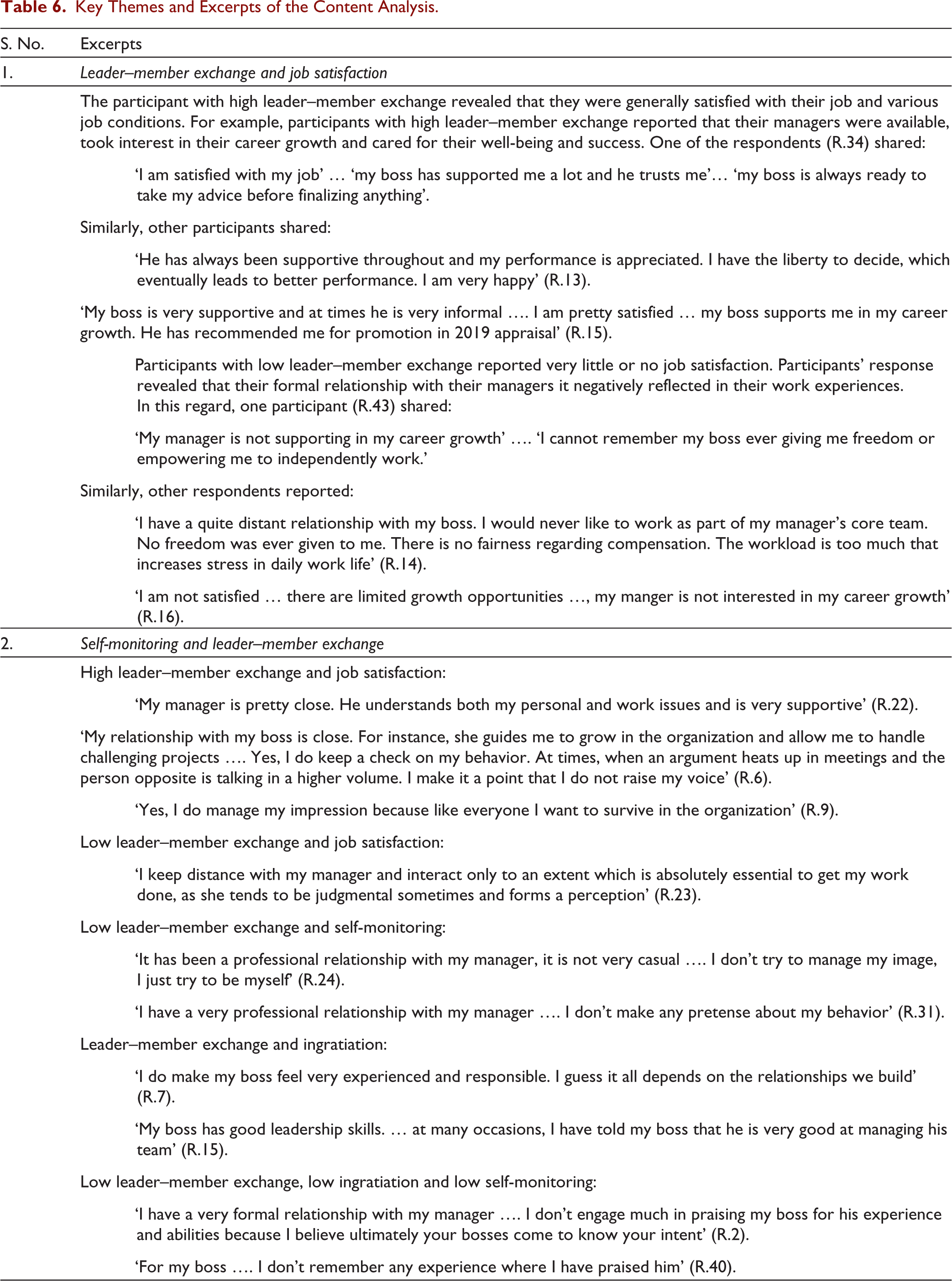
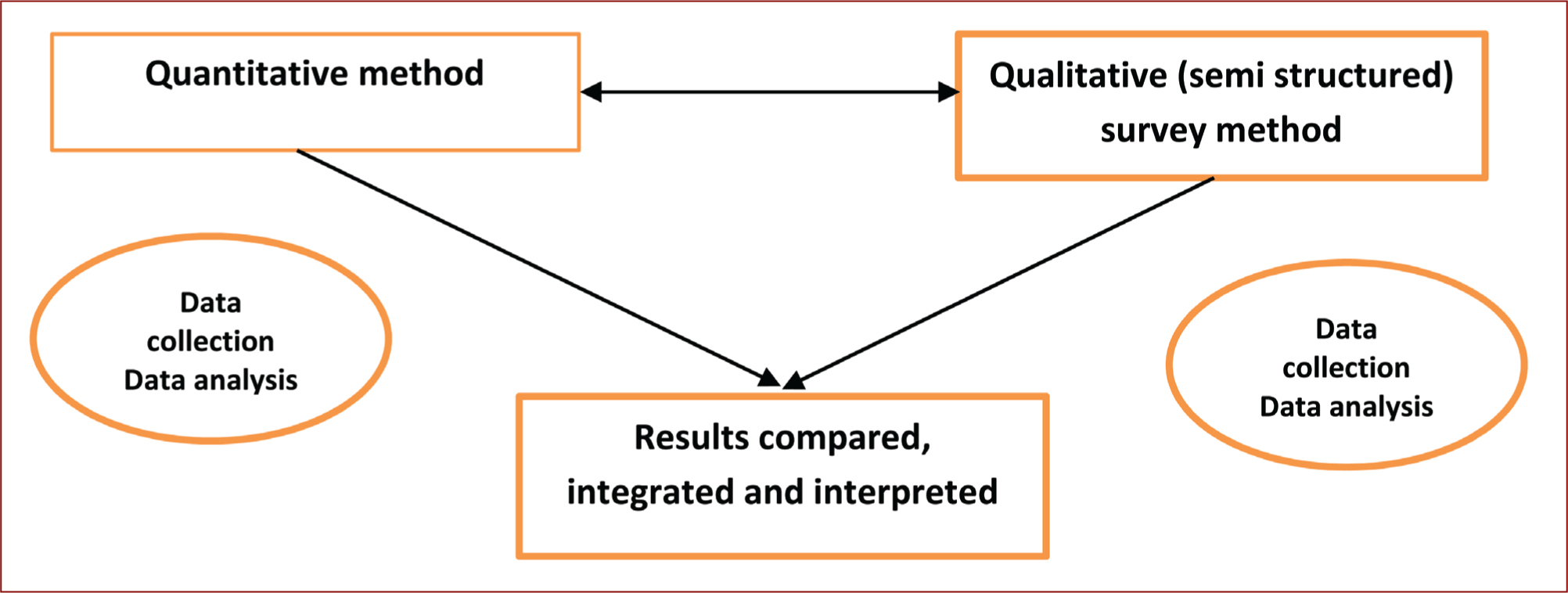
Of the four types of triangulation process (data, methodological, investigator and theory), we followed the methodological triangulation (Figure 2) where the results of the two studies were analysed for drawing conclusions (Denzin, 2012). In study 2, we found that most respondents made attempts to be in the core team with the boss (a self-monitoring behaviour), and it was satisfying to them (due to opportunities for learning, autonomy and work-life balance). Therefore, study 2 supports the findings of study 1, stating the positive relationship between self-monitoring and job satisfaction (H1) and LMX mediating the relationship between self-monitoring and job satisfaction (H3). In study 2, we found that the respondents in their effort to impress the leader forged strong leader connections and were not averse to using ingratiation. This finding adds more strength to study 1’s findings of the serial mediation of ingratiation and LMX in the relationship between self-monitoring and job satisfaction (H4). We also found that in study 2, most of the respondents were not very upfront and open in discussing and elaborating on the adoption of ingratiation in connecting with the leader. While they accepted that ingratiation was used by the subordinates to impress the leader, they were reticent and chose not to discuss it at length. The reason maybe that in a high-power distance culture like India (Hofstede, 2011), ingratiation is a necessary evil. This shows that ingratiation was not appreciated but accepted as a practice. This is a possible reason for the insignificant mediation of ingratiation in the relationship of self-monitoring and job satisfaction in study 1 (H2). The analysis shows that the conclusions drawn from study 1 were corroborated in study 2, thus triangulating the findings for a deeper understanding.
Triangulation.
Discussion
The present study is a concurrent mixed method study comprising two independent studies, where study 1 was quantitative and study 2 was qualitative in nature. The triangulation of the results showed that the qualitative responses emerging in study 2 supported the findings of study 1.
Study 1 attempted to unravel the complex interplay of LMX between the follower and the leader, where personality variables such as self-monitoring and impression management tactic of ingratiation played an essential role. Study 1 looked at LMX from the subordinates’ perspective using ingratiation as a tool leading to job satisfaction. Study 2 supported this finding. Results indicated that self-monitoring traits led to job satisfaction (H1 supported). Study 2 showed the respondents’ efforts in forging strong ties with the leader for satisfying outcomes. Our study 1 showed that LMX mediated the relationship between self-monitoring and job satisfaction (H3 supported). India being a high-power distance culture (Hofstede, 2001), there is an asymmetric power relationship, and upward ingratiation is often tolerated (Bhowmick, 2024). Instrumental dependence proneness of Indian subordinates on their supervisor involves developing a ‘personalized work relationship’ which encourages the usage of ingratiation in strengthening LMX. Therefore, ingratiation together with LMX serially mediated the relationship between self-monitoring and job satisfaction (H4 supported).
The mediation of ingratiation between self-monitoring and job satisfaction (H2) was not supported. This is because in the mediation analysis, the causal relation between self-monitoring and ingratiation was significant, but the causal link between ingratiation and job satisfaction was insignificant. The reason is that the studies suggest that ingratiation, or the attempt to gain favour with others, is primarily directed at other individuals, not at oneself (Asadullah et al., 2016). Therefore, ingratiation involves strategic behaviours aimed at influencing someone else’s impression of you, such as flattery or opinion conformity. Job satisfaction would be realized only if flattery aimed at the significant other is effective.
Additionally, studies have also shown some contrary findings showing that ingratiation is mildly pejorative (Pandey, 1978). People accommodate their actions to social norms. Ingratiation involves manipulative intent and deceitful execution which departs from normative expectations (Jones & Jones, 1964). Therefore, ingratiation is seen as an illegitimate side of social interaction and can be energy draining (Klotz et al., 2018). The results of study 2 also show that ingratiation, though practised, was not openly appreciated, but there was ambiguity around its acceptance. This is also because in high-power distance societies (Hofstede, 2011), ingratiation is a necessary evil and is used subtly to win favours and stay in proximity to the leader. This possibly explains the reasons for H2 not supported in study 1.
The merit of the study lies in the use of the mixed method approach. The analysis of both the studies (quantitative and qualitative) showed that high self-monitors consciously invested in developing more robust bonds with the leader, and ingratiation enabled them to strengthen LMX.
The present research is relevant in furthering the understanding of the mediating role of LMX between self-monitoring and job satisfaction.
The study has made significant contributions in the following ways: First, our study extends the earlier research where self-monitoring is the antecedent of ingratiation (Day et al., 2002; Kudret et al., 2019) to empirically show that ingratiation is also a mediator between self-monitoring and LMX. Second, it shows that followers’ personality trait of self- monitoring plays a role in strengthening LMX with the leader. In this approach, the role of ingratiation in getting the leader’s attention is also significant. Third, the study has also contributed to the theory of job satisfaction by linking the serial mediation of ingratiation and LMX to be more job satisfied. Fourth, the study adds to the body of knowledge of personality theories in general and self-monitoring personality traits in particular by showing how ingratiation and LMX mediate for improved job satisfaction. Fifth, the study was carried out in India and has contextual relevance. Culturally, India is high on power distance (Hofstede, 2011), leading to hierarchical interpersonal relationships at work with limited room for egalitarianism. The power distance in India is as much bottom-up as they are top-down (Tripathi & Vijayan, 2020). Employees with high-power distance orientation tend to accept their top-down relationship with supervisors (Javidan et al., 2006). In India, power does not always imply coercion or authoritarianism. Indians are highly receptive to soft power, be it the charisma of leadership, opinions of experts or the inherent respect for authority figures. At the same time, ingratiation is also perceived as a manipulative means to achieve the end. It is not openly appreciated and is often looked down upon, leading to experiencing an emotional toll by the actor (ingratiator). Therefore, ingratiation when carried out to impress the manager/boss should be done very carefully. When executed effectively, self-monitoring behaviour through ingratiatory tactic shown by subordinate is very useful in not only getting the attention of the leader but also forging closer ties.
Implications
Theoretical Implications
The present study supports the social exchange theory (Blau, 1964; Cropanzano & Mitchell, 2005; Gouldner, 1960) which states that individuals (who are adept at reading social cues) pick up the high LMX cues and subsequently alter their behaviour (using ingratiatory tactics) to please the leader. Therefore, it is highly likely that self-monitoring will lead to high LMX. The study also supports the reinforcement attraction paradigm (Byrne, 1971, 1997; Byrne & Rhamey, 1965), whereby the self-monitoring behaviour of followers coupled with ingratiation will increase the likelihood of more robust LMX behaviour by the leader, leading to improved job satisfaction.
Managerial Implications
The study has meaningful implications for managers. Self-monitoring behaviour through ingratiatory tactics shown by subordinates will be beneficial in getting the leader’s attention and making effective relationship leading to the success of teams and stronger LMX in dyads. Ingratiation as a tactic (in LMX) would bridge the psychological gap between the subordinate and the leader.
Organizations can develop structured training programmes that teach productive self-monitoring techniques while discouraging manipulative ingratiation. These programmes should help employees understand the difference between adaptive impression management and excessive ingratiation. Subordinates can be sensitized to deliberate the development of high-quality LMX relationships that are not dependent on ingratiation. Subordinates to be encouraged to develop relationships with their leader through meaningful work assignments and regular feedback sessions. This helps create relationships based on competence rather than flattery, particularly important in high-power distance cultures. Organizations should establish mentoring programmes that pair employees with leaders outside their direct reporting line. Organizations can also establish mentorship programmes that pair high self-monitors with less experienced employees. This allows for the sharing of effective self-monitoring strategies and helps to cultivate ingratiation in a constructive manner. Develop a curriculum that includes role-playing scenarios where employees can practice self-monitoring in various contexts and receive feedback from peers and supervisors. In high-power distance cultures, leaders should be encouraged to adopt an accessible communication style that promotes open dialogue. Managers can hold regular informal gatherings (e.g., coffee chats) where employees can share insights and express their concerns without fear of repercussions, fostering a more trustful LMX and reducing reliance on ingratiation.
All the above measures can lead to improved employee performance, higher job satisfaction and stronger organizational commitment by fostering positive relationships and understanding individual needs. A strong bond can lead to feelings of being valued, get favourable performance evaluations, promotions and higher positive exchange in relationships leading to career achievements. It can also lead to reduced turnover, mitigate conflicts, increase engagement, improved organizational learning and innovation.
Therefore self-monitors through ingratiation and strong LMX would enjoy the proximity to the corridors of power and greater organizational visibility too. Self-monitoring has emerged as an important and relevant trait in understanding individual behaviour, finding application in fields as diverse as educational psychology, health psychology, marketing and management. In the field of management, personality has been shown to significantly affect the performance of top managers (House et al., 1991), as well as the performance of occupants of boundary-spanning positions (Caldwell & O’Reilly, 1982a).
Limitation and Future Scope
The study was carried out in multiple organizations. Pooling of data from different organizations represents a limitation because group-specific variables may be operating in the samples from different organizations (Byrne et al., 1989). Combining data from different organizations may also reduce the chance that these unique factors will restrict the findings to the conditions in a single organization. India is diverse, and our results may not generalize to all Indian organizations. For example, the nature of the organizations (i.e., public vs private) the respondents worked for, may have influenced their responses on job satisfaction and subordinates’ perception of LMX. The study did not use the organization’s objective measure of performance and employee satisfaction data. Such external indicators can add more robustness to the conclusions drawn. Therefore, future studies should compare the organizational performance metric of subordinates indulging in self-monitoring and ingratiation with those who do not indulge in such acts to understand better the extent of explaining high LMX for job satisfaction.
Apart from this, future studies can expand the scope of research in LMX in multiple ways. First, studies can test the research model across cultures to test generalizability. Second, future studies can also test the reciprocal relationship between self-monitoring, ingratiation and LMX. This will help in understanding whether the quality of LMX determines the outcomes or whether other directions of effect also exist. Third, studies can focus on the effect of self-monitoring and ingratiation in both positive and negative dyadic relationships between the leader and the member or the supervisor and the subordinate. Fourth, future research can also focus on the dark side of the nexus of LMX, self-monitoring and ingratiation leading to counterproductive performance. Finally, future research should incorporate strategic contingency variables such as economic, technological and political forces that act upon organizations and leaders in different cultures that may support the prevalence of behaviour of self-monitoring and ingratiation for stronger LMX, leading to job satisfaction.
Conclusion
In conclusion, this study advances our understanding of the interplay between leader–member exchange (LMX), self-monitoring and ingratiation in the context of job satisfaction. The findings reveal that self-monitoring positively influences job satisfaction, with ingratiation serving as a significant mediator between self-monitoring and LMX. Although the mediation of ingratiation alone was not supported, the combination of ingratiation and LMX was found to enhance the relationship between self-monitoring and job satisfaction. Theoretical contributions include extending existing research on self-monitoring and ingratiation, while managerial implications emphasize the value of these personality traits in strengthening leader–subordinate relationships especially in high-power distance societies like India. Future research could further explore the reciprocal dynamics of these variables across diverse cultural and organizational settings.
Footnotes
Declaration of Conflicting Interests
The authors declared no potential conflicts of interest with respect to the research, authorship and/or publication of this article.
Funding
The authors received no financial support for the research, authorship and/or publication of this article.