






Abstract
This study adopts a social identity and gratifications perspective in the context of over-the-top (OTT) platforms to examine continuance intention among OTT retail users. This study assesses the influence of brand experiences, brand–lifestyle congruence, OTT platform quality and brand identification on identity-sustaining behaviour and consumer satisfaction. In this cross-sectional survey study, the purposive sampling method was used to collect 401 responses. Structural equation modelling was utilized to analyse data, and mediation was tested using PROCESS Macro. The findings revealed that brand experience has the most potent effect on brand identification, and brand identification mediates the effect among memorable brand experiences, brand–lifestyle congruity, OTT platform quality and identity-sustaining behaviour. This study is the first to explore the behaviour of OTT consumers at the post-adoption stage by integrating the theoretical perspective of social identity and uses and gratification. This study is based on cross-sectional responses obtained in a single country.
Keywords
Introduction
Over the years, the global media and entertainment industry has undergone a rapid transformation. The growth of ‘over-the-top’ (OTT) platforms has intensified competition within the entertainment industry (Harvey, 2020). The global OTT market is projected to surpass $434b by 2027, driven by rising popularity and competition (Markets and Markets, 2022). This rapid expansion has prompted OTT providers to prioritize both customer acquisition and retention (Soren & Chakraborty, 2023, 2024). With the availability of multiple OTT platforms and low switching costs, retaining consumers has become increasingly challenging. According to Popp and Woratschek (2017) and Kumar (2022), customer retention becomes challenging because of intense competition among OTT platforms. Such platforms must maintain user engagement and secure new subscriptions, as content costs are gradually amortized (Kim et al., 2026; Talwar et al., 2024). Consequently, minimizing consumer churn remains a concern for OTT platforms. Further, OTT platforms have targeted emerging economies as a new avenue of growth.
The growth of OTT platforms has sparked extensive academic research in this domain (Khanna et al., 2025; Singh et al., 2025; Yoon & Kim, 2023). Studies have explored various topics, including the adoption of OTT platforms (Sujata et al., 2015), consumer experience and satisfaction (See-To et al., 2012; Shin et al., 2021), willingness to avail subscriptions (Tsai, 2023), continuance (Chakraborty et al., 2023; Chavadi et al., 2025; Yoon & Kim, 2023) and word-of-mouth behaviour (Singh et al., 2025). However, most studies have focused on the initial adoption of OTT platforms (Bhatt, 2021; Nagaraj et al., 2021) and consumers’ willingness to pay (Kim et al., 2017), whereas post-adoption behaviours such as continued usage of the service remain understudied (Ajith & Mathew, 2025; Mishra, 2016; Yoon & Kim, 2023). Further, various theoretical frameworks have been used to investigate OTT consumption, including the consumption value theory (Chakraborty et al., 2023; Talwar et al., 2024), UTAUT, the theory of planned behaviour (Kim et al., 2024; Soren & Chakraborty, 2024; ), and the uses and gratification approach (Malik & Singh, 2024; Sadana & Sharma, 2021). These studies have highlighted the significance of content, accessibility, functional value, emotional appeal, habit and gratification in driving adoption and usage. However, only a few studies have applied the uses and gratification theory (UGT) to OTT consumption (Camilleri & Falzon, 2020; Malik & Singh, 2024; Yousaf et al., 2021), and none have examined the drivers of continued usage from a social identity perspective. Developing meaningful, deep and committed relationships with brands is crucial for fostering strong consumer loyalty through brand identification (Itani, 2021). Researchers have largely overlooked this perspective, even as OTT adoption has increased exponentially and OTT services have become integrated into consumers’ lifestyles (Li, 2020). Studies have primarily focused on adoption and use (Khanna et al., 2025), whereas this study examines post-adoption behaviour among OTT users. Moreover, limited research has examined how hedonic, functional and social gratifications influence OTT users’ behaviour after adoption.
To offer a novel perspective and identify key determinants of loyalty in OTT apps, this study grounded its analysis in two theoretical frameworks: (a) social identity theory suggests that brand identification offers a sense of psychological fulfilment and coherence between the consumer and the brand (Itani, 2021; Kassemeier et al., 2022) and (b) UGT explains why people choose to use certain technologies, how they use them and the consequences of post-adoption (Huang & Zhou, 2018; Phua et al., 2017). The integration of these two theories can provide a unique perspective on OTT continuance. The gratifications derived from OTT platforms translate into developing brand attachment, which further promotes loyalty and satisfaction with the platform
This study examines how brand experiences, OTT platform quality and brand congruity affect identity-sustaining behaviour (ISB) and customer satisfaction (CST). Accordingly, it addresses the following questions: The first research question (RQ1) is ‘How do brand experience, brand–lifestyle congruity and OTT platform quality contribute to the development of brand identification?’ The second question (RQ2) is ‘How does “consumer brand identification” (CBI) mediate the relationship between user gratifications and outcomes such as satisfaction and ISB?’
This study proposes several mechanisms to ensure long-term consumer retention. Existing research on CBI shows that identity- and congruity-based relationships tend to be durable (Wolter et al., 2017). Although the awareness of CBI has increased, the functional and emotional determinants of CBI remain underexplored (Büyükdag & Kitapci, 2021; Elbedweihy et al., 2016; Kassemeier, 2022), particularly within OTT contexts.
Empirically examining the research questions, this study makes several contributions: first, it highlights the role of functional, emotional and social gratifications in shaping CBI on OTT platforms. Limited studies have explored how functional, hedonic and social gratification affect CBI (Büyükdag & Kitapci, 2021; Confente & Kucharska, 2021; Khanna et al., 2025). Second, this study offers a holistic view of OTT consumers’ behaviour from an identity and lifestyle perspective, enriching the broader consumer behaviour literature by exploring post-adoption behaviour. This study is the first to integrate UGT with the social identity theory to identify novel determinants of loyalty in the OTT domain (Khanna et al., 2025). Overall, this study brings a novel perspective on OTT consumer behaviour by integrating underexplored psychological and experiential factors that play a critical role in sustaining user loyalty in a highly competitive OTT market in an emerging economy.
Theoretical Background and Literature Review
Uses and Gratification Theory
UGT is valuable in predicting continuance intention in media and technological platforms (Díaz et al., 2022). The UGT theory explains why people choose technology, the reason for using it and the post-adoption effects of consuming it (Cheng et al., 2025; Huang & Zhou, 2018). Research on media consumption suggests that uses and gratifications determine satisfaction and affinity with OTT (Menon, 2022). Recent research shows that the uses and gratifications of OTT platforms are crucial determinants of continued use and adoption (Khanna et al., 2025; Menon, 2022). OTT platforms are primarily for entertainment; hence, entertainment gratification, as an outcome of UGT, is achieved through OTT consumption. Certain gratifications, such as entertainment, information, congruity and connection, can determine satisfaction with OTT platforms. This relationship can be further strengthened by focusing on gratifications that lead to stronger brand identification and thereby promote continuance intention. While current research emphasizes adoption and loyalty in OTT platforms, focusing on technology adoption theories, we move beyond the technological paradigm to examine behavioural outcomes from a gratification and identity perspective, which can lead to a stronger consumer connection in fiercely competitive markets such as OTT. Therefore, UGT offers meaningful implications for consumer behaviour in the post-adoption stage.
Social Identity Theory and CBI in OTT Apps
The CBI concept, derived from the social identity theory (Elbedweihy & Jayawardhena, 2014), explains how identity influences behaviour. In the CBI process, customers forge a robust relationship with other consumers and the brand (Itani, 2021) and promise loyalty through the brand’s ups and downs (Mael & Ashforth, 1992). Marketers desire strong CBI with the brand (Bhattacharya & Sen, 2003) to retain customers. Positive effects of customer identification result in loyalty and citizenship behaviour (Utkarsh & Gupta, 2022), positive word of mouth (Elbedweihy et al., 2016) and the willingness to pay more (Carlson et al., 2009; Haumann et al., 2014). High-value brands facilitate stronger identification between consumers and brands, and consumers express their identity through such brands (Utkarsh & Gupta, 2022).
CBI is a relevant construct in the context of OTT platforms. CBI helps users emotionally connect with the brand and consider the brand’s success as their own. This relationship motivates users to recommend their brands to others through positive word of mouth (Bhattacharya & Sen, 2003). Netemeyer et al. (2012) demonstrated that CBI increases annual sales. Consequently, CBI has gained importance for achieving better marketing outcomes (Haumann et al., 2014; Wolter et al., 2017). In the technological space, OTT brands have become a reflection of social status, and modern platforms portray themselves as part of consumers’ lifestyles. In such a context, consumers identify with brands to enhance their own prestige. Therefore, CBI can play a critical role in enhancing consumer outcomes for OTT platforms.
Conceptual Model of the Study
Drawing on the uses and gratification paradigm, research on the motives for using technology and an identity-based perspective, we propose three crucial determinants of consumer identification with OTT platforms: hedonic, social and functional benefits. In the hedonic category, the first relevant construct is users’ memorable brand experience while using OTT platforms. Hedonic gratifications, such as memorable brand experiences, refer to the enjoyment users derive from personal experiences (Yin et al., 2021). Memorable brand experiences link the brand and self and contribute to CBI (Stokburger-Sauer et al., 2012). Consumers retrieve and relive positive experiences, which instil strong brand loyalty and lead to brand patronage. Emotional experiences shape affective responses as technologies become increasingly hedonic and interactive (Ding & Chai, 2015; Zheng, 2019, 2024).
Brand–lifestyle congruity is the second determinant of brand identification in the domain of social gratification. It represents social values that elicit emotional responses (Lu et al., 2022). Social interaction gratification allows consumers to connect with other users, forge relationships and express their identities (Yousaf et al., 2021). Such gratifications—rooted in both social and personal values—can foster a strong association between users and brands (Confente & Kucharska, 2021; Kuppelwieser et al., 2022; Zheng, 2024). OTT brands that embody these values can evoke strong consumer identification through emotional connections. Existing literature suggests that the association between brand and lifestyle significantly influences consumer loyalty and satisfaction (Büyükdag & Kitapci, 2021; Nam et al., 2011). Consequently, exploring the role of brand–lifestyle congruence in OTT platform preference is critical.
From the perspective of functional gratifications, OTT platform quality is a central driver in developing brand identification. It not only affects brand identification but also has a strong, direct relationship with consumer satisfaction. Therefore, including this variable in our model enables a more robust understanding of user behaviour. Utilitarian values, such as platform quality, refer to consumers’ evaluation of the performance and usability (Lu et al., 2022). Research has shown that brand identification driven by higher perceived value strengthens brand commitment (Utkarsh & Gupta, 2022).
Furthermore, OTT platform quality reflects whether a platform meets consumers’ standards (Datta & Utkarsh, 2022; Kim et al., 2024). Features such as ease of navigation, multi-device accessibility, on-the-go use and high-quality content enhance user satisfaction, promote loyalty and increase the likelihood of recommendations (Datta & Utkarsh, 2022; Yousaf et al., 2021). Our study emphasizes the effects of uses and gratifications on CBI, consumer satisfaction and identity-sustaining behaviour. This enables us to develop a comprehensive model that captures the managerially relevant outcomes. CBI reflects a construct that enables strong identity salience between the brand and consumers at the cognitive level. CBI positively affects consumer satisfaction by fostering favourable brand perceptions. Consumer satisfaction reflects the value a brand delivers. Similarly, identity-sustaining behaviour reflects the behavioural outcome of CBI, in which consumers prefer the brand over others to maintain the identity salience.
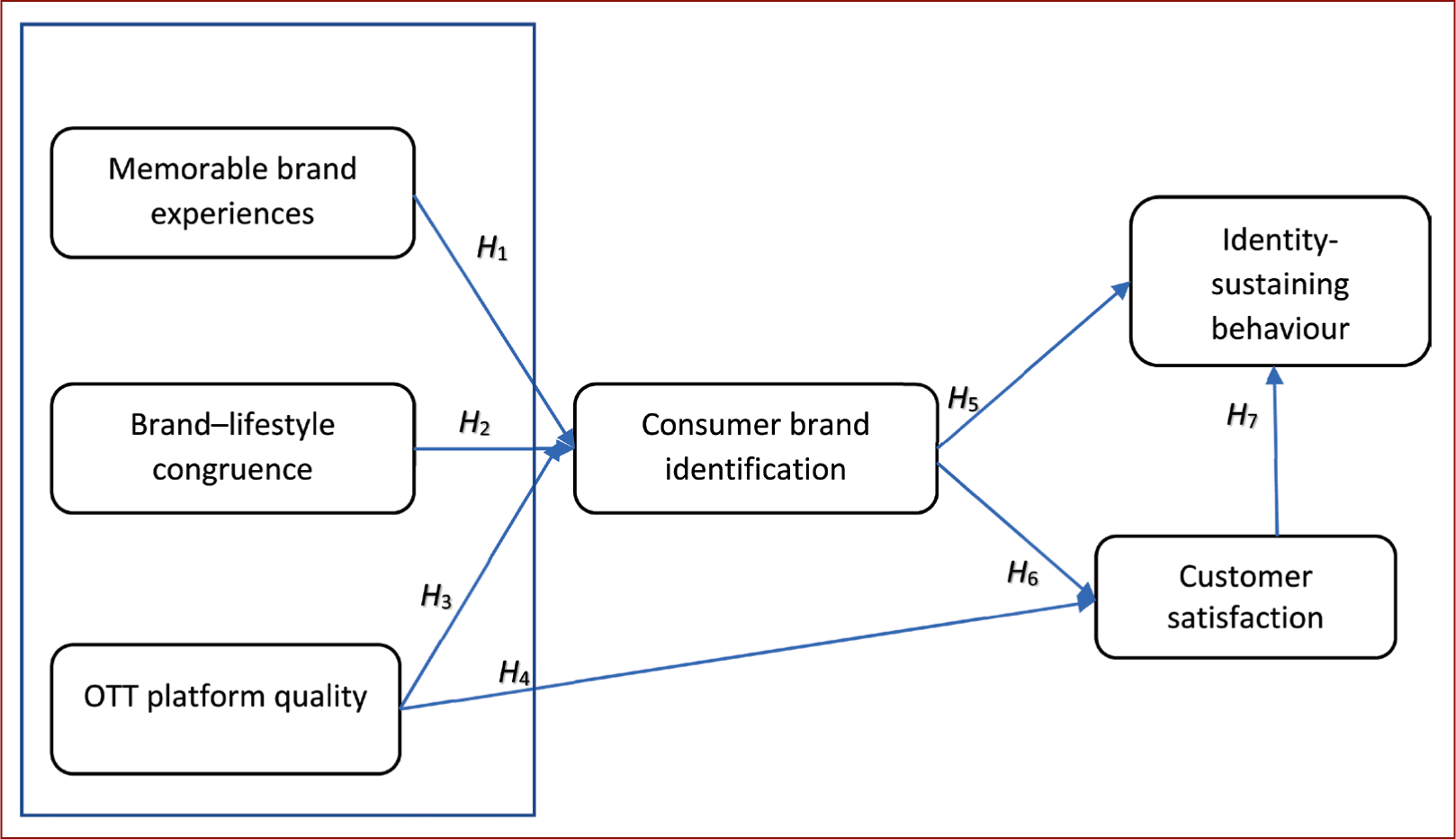
Together, UGT and the social identity theory provide a comprehensive framework for understanding consumer behaviour towards OTT platforms in the post-adoption stage. While UGT explains the functional and psychological motivations driving OTT usage, such as entertainment, information seeking, social connection and congruity, the social identity theory explains how these gratifications can foster stronger CBI, identity-sustaining behaviour and customer satisfaction. When consumers derive meaningful gratification from OTT platforms, they are more likely to connect with the platform (Kamboj, 2020) emotionally and perceive it as reflective of their lifestyle, values and social identity. Such identification strengthens consumers’ psychological attachment to the brand, leading to favourable behavioural outcomes, such as continuance intention, loyalty and positive word of mouth. For instance, on social media platforms, which increasingly position themselves as lifestyle and status symbols, gratification-driven experiences can transform transactional platform use into identity-based consumer relationships (Qin, 2020). Therefore, integrating UGT with the social identity theory offers a deeper understanding of how gratification experiences translate into stronger consumer–brand relationships and sustained engagement with OTT platforms. Figure 1 presents the conceptual model of the study.
Conceptual Model of the Study.
Hypotheses Development
Memorable Brand Experiences and Consumer Brand Identification
Regardless of usage frequency, different OTT players offer varied user experiences. Some brands leave emotional impressions even with infrequent users (Legendre et al., 2019; Yoshida et al., 2021). At the same time, when users perceive OTT content as enjoyable and pleasurable, and the technology facilitates a seamless experience, it provides emotional relaxation, creating positive emotional outcomes they wish to relive (Mishra, 2016). Furthermore, OTT content is consumed with family and friends, making it part of users’ hedonic routines. These emotionally positive experiences form memorable brand experiences and are not limited to high-involvement brands (Hwang et al., 2021). The ability to recall and relive these experiences instils strong nostalgia in users (Holbrook, 1993), thereby strengthening brand association (Yoshida et al., 2021).
H1: Consumers’ memorable brand experiences lead to a high level of their brand identification with OTT platforms.
Brand–Lifestyle Congruence and CBI
Lifestyle reflects beliefs, aspirations and attitudes. It explains consumers’ everyday preferences. Some consumers use brands to reflect their desired lifestyle (Büyükdağ & Kitapci, 2021). This creates a perceived alignment between the brand and the consumers’ lifestyle. Brand–lifestyle congruence is the alignment between consumers’ brand use and their lifestyle (Nam et al., 2011). Phau et al. (2015) found that consumers adopt brands to display status, enhance their image and express their lifestyle—especially when they feel the brand aligns with their values. Li (2020) emphasized that lifestyle plays a vital role in adopting OTT platforms. Users who relate to the content on an OTT platform and find it a lifestyle fit are more likely to recommend it to their social circles. Accordingly, we propose the following hypothesis:
H2: The higher the brand–lifestyle congruence a consumer perceives, the higher the CBI.
OTT Platform Quality, CBI and Customer Satisfaction
High-quality brands reduce uncertainty in decision-making. Nagaraj et al. (2021) demonstrated that OTT platform quality substantially influences OTT adoption. For users, quality includes high-quality content tailored to their requirements (Liou et al., 2015). Users receive user-based content recommendations from artificial intelligence based on their preferences (Mican et al., 2020). Limited studies have explored the role of quality in shaping consumer–company identification (Kassemeier et al., 2022; Lam et al., 2013). Kassemeier et al. (2022) documented that quality strengthens identification with the company by serving as a cue for self-continuity.
Regarding the quality–satisfaction relationship, need-satisfaction theories indicate that OTT platform quality is a crucial determinant of CST (Datta & Utkarsh, 2022). Since this relationship has been established in the literature on products and services, we include it in our framework rather than as a stand-alone hypothesis. Consequently, we hypothesize the following:
H3: Higher OTT platform quality of a brand leads to higher CBI. H4: Higher OTT platform quality of a brand leads to higher customer satisfaction.
CBI, Identity-sustaining Behaviour and Consumer Satisfaction
Customers with a strong CBI are more likely to be satisfied (He & Li, 2011). Moreover, consumers with a high CBI may be less disappointed with a brand than those with a low CBI, due to affective attachment (Chaudhuri & Holbrook, 2001). A positive relationship between CST and CBI has been observed (Mael & Ashforth, 1992; Nam et al., 2011). Empirical evidence indicates that favourable brand experiences during consumption can lead to brand identification, which, in turn, reinforces satisfaction.
When a brand outperforms expectations, customer satisfaction increases (Yi & La, 2004). He and Li (2011) argued that such brand performance exceeds consumers’ expectations, which would eventually result in a strong psychological attachment with the brand, leading to ISB. Consistent usage implies that the user is satisfied and loyal to the specific brand after usage (Al-Okaily, 2025; Velnadar et al., 2024). Extant studies have shown that satisfied users engage with OTT platforms (Gupta et al., 2020; Yoon & Kim, 2023). Accordingly, we propose the following hypotheses:
H5: CBI positively influences identity-sustaining behaviour. H6: CBI positively influences customer satisfaction. H7: Customer satisfaction positively influences identity-sustaining behaviour.
CBI as a Mediator
A match between brand image and lifestyle results in personal attachment and brand identification (Solomon, 2002). This attachment helps consumers embrace brands that enable them to express their individuality and aspirations (Phau et al., 2015). Relevant brands evoke strong emotions because they support self-related goals (Tran et al., 2022; Zheng, 2024). Consumers’ ability to identify emotionally with brands which allow them to showcase their lifestyle and connect with the self evokes emotions, facilitating brand identification and attachment. Identity salience significantly impacts the effectiveness of relationship marketing by fostering a consumer’s connection with a company through identity similarity, distinctiveness and prestige (Bhattacharya & Sen, 2003). Functional and hedonic gratifications are key in building this identification, which mediates the link between values derived and loyalty. Strong identification motivates consumers to stay loyal and support the company against negative feedback, even in competitive markets (Haumann et al., 2014). This underscores identity’s role in driving consumer commitment and satisfaction (Utkarsh & Gupta, 2022).
A strong association exists between customer identification and the preference for quality products (Bhattacharya & Sen, 2003; Kassemeier et al., 2022). According to some studies, OTT platform quality is a determinant of CBI, and quality is strongly related to CBI. Kuenzel and Halliday (2008) documented that consumer satisfaction with an organization’s products leads to better identification with that organization and that CBI influences ISB (Homburg et al., 2009). CST occurs when brand performance surpasses expectations (Yi & La, 2004). CST can be enhanced by increasing a product’s perceived value (Zhou et al., 2012). He et al. (2012) revealed a positive relation between brand identification and CST. We propose that satisfaction is a crucial condition to enhance ISB when consumers identify with a brand. Accordingly, a higher CBI leads to higher consumer satisfaction, thereby increasing ISB.
Hence, we hypothesize the following:
H8: CBI mediates the effect of memorable brand experiences on identity-sustaining behaviour. H9: CBI mediates the effect of brand–lifestyle congruence on identity-sustaining behaviour. H10: CBI mediates the effect of OTT platform quality on identity-sustaining behaviour. H11: Customer satisfaction mediates the association between CBI and identity-sustaining behaviour.
Research Methodology
Questionnaire Design
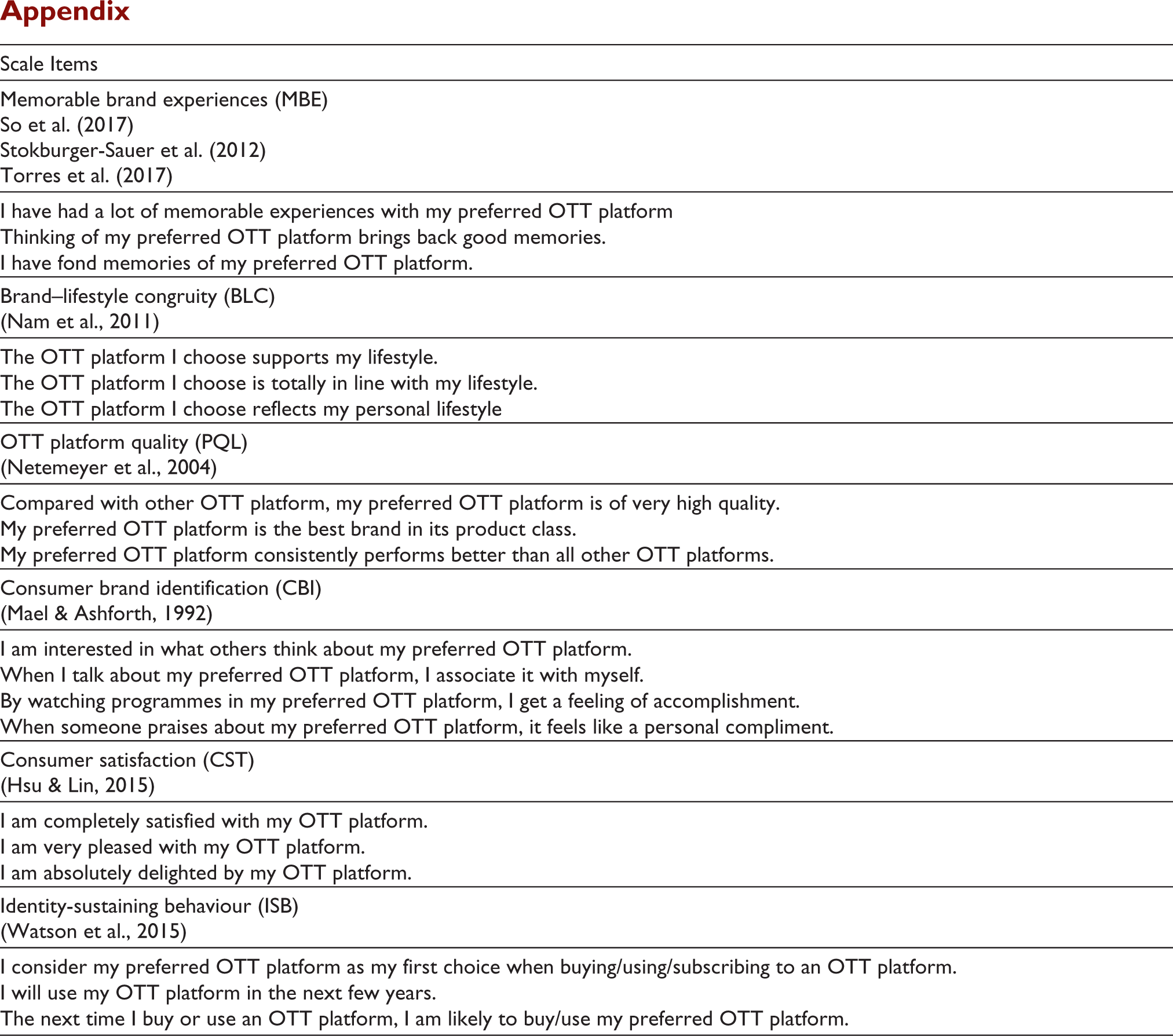
This research employed well-established measurement items identified in previous studies. All measurement scales were 5-point Likert scales (1 = ‘strongly disagree’ and 5 = ‘strongly agree’). Experts reviewed and assessed the preliminary questionnaire for content validity (Hair et al., 2010), and the questionnaire was pretested with 30 respondents to ensure the questions were understandable. Furthermore, some amendments were made to the questionnaire based on the respondents’ feedback. Established scales were used for each variable (refer to Table 2), and ‘Cronbach’s α’ for each scale was > 0.80. The final questionnaire comprised two sections: demographic questions (including OTT usage behaviour) and scale items for the study variables. The questionnaire was pretested using 10 participants.
Data Collection
A cross-sectional online survey was conducted to collect data from the target respondents. Purposive sampling was employed to collect responses. Online data collection was deemed suitable given the digital nature of OTT usage and allowed for a broad demographic reach (Albaum et al., 2010). Screening questions—‘Are you aware of OTT platforms?’ and ‘Do you use OTT platforms?’—ensured that the survey included only active OTT users. The questionnaire was shared across various social media platforms and online community groups, given the presence of OTT users.
All respondents were aged 18 years or older. An informed consent form was included with the questionnaire. The questionnaire and study received ethical approval from the first author’s institution. The researchers targeted 2,000 OTT users and received 455 responses, yielding a response rate of 22.75%. Furthermore, 54 questionnaires were eliminated owing to incompleteness, yielding a final sample of 401. The required sample size was calculated using G*Power, which is recommended for structural equation modelling studies. Using a medium effect size of 0.3, a significance criterion of 0.05 and a desired statistical power of 0.80, the analysis indicated a minimum sample size of 177 cases to detect significant relationships among the constructs. Since the study collected data from 401 respondents, the sample size was considered sufficient for conducting SEM analysis. The respondents were from different Indian cities and represented diverse multicultural backgrounds.
Analysis and Results
Before SEM was applied, a descriptive analysis was done to evaluate the respondents’ demographics, scale reliability and data normality and outliers in the data set. Harman’s single-factor test depicted that a single factor accounted for less than 50% of the variance, indicating the absence of common method bias.
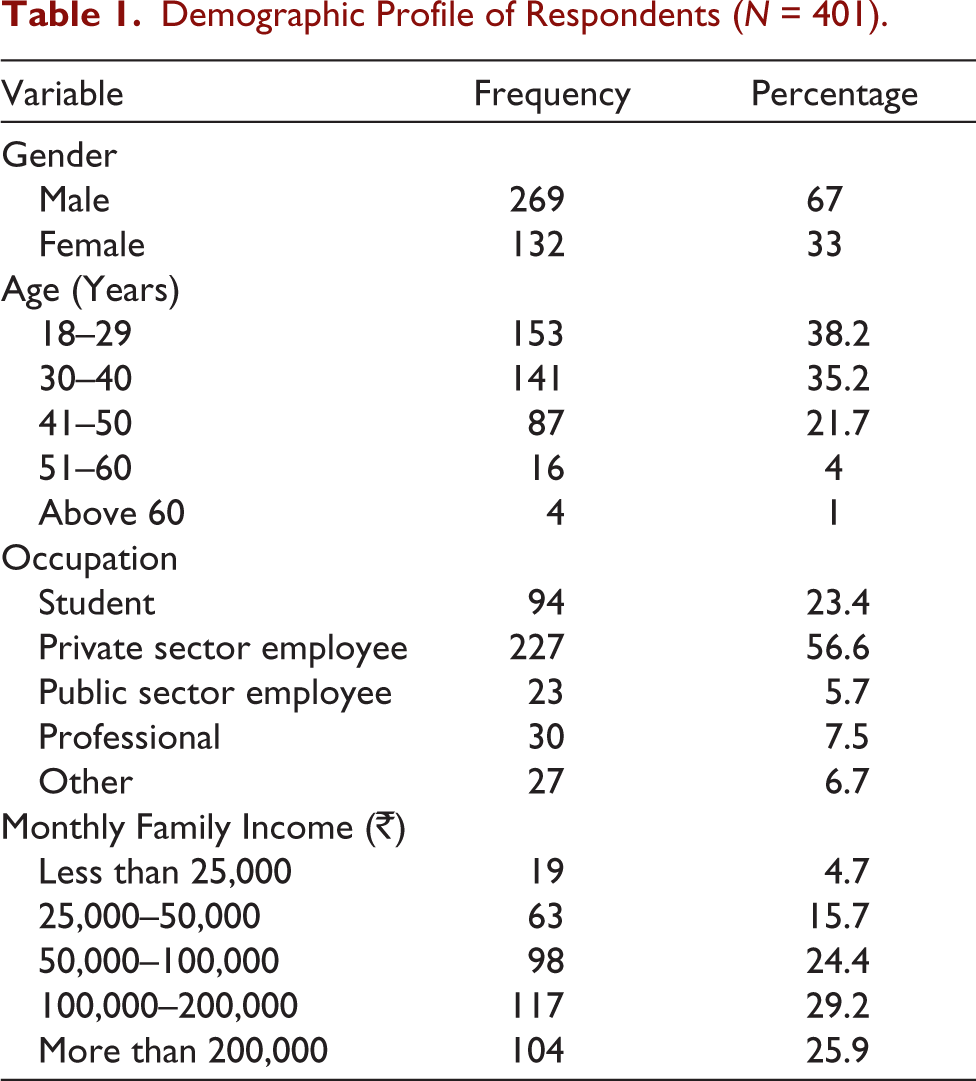
The demographic profile in Table 1 indicates that 67% of respondents were men and the remaining were women. Most respondents were aged 18–29 years (38.2%), followed by 30–40 years (35.2%), reflecting the young demographics of OTT users. Furthermore, most respondents were private sector employees (56.6%), followed by students (23.4%). Most respondents had a monthly family income of ₹100,000–200,000 (29.2%), followed by those earning more than ₹200,000 (25.9%).
Demographic Profile of Respondents (N = 401).
Measurement Model
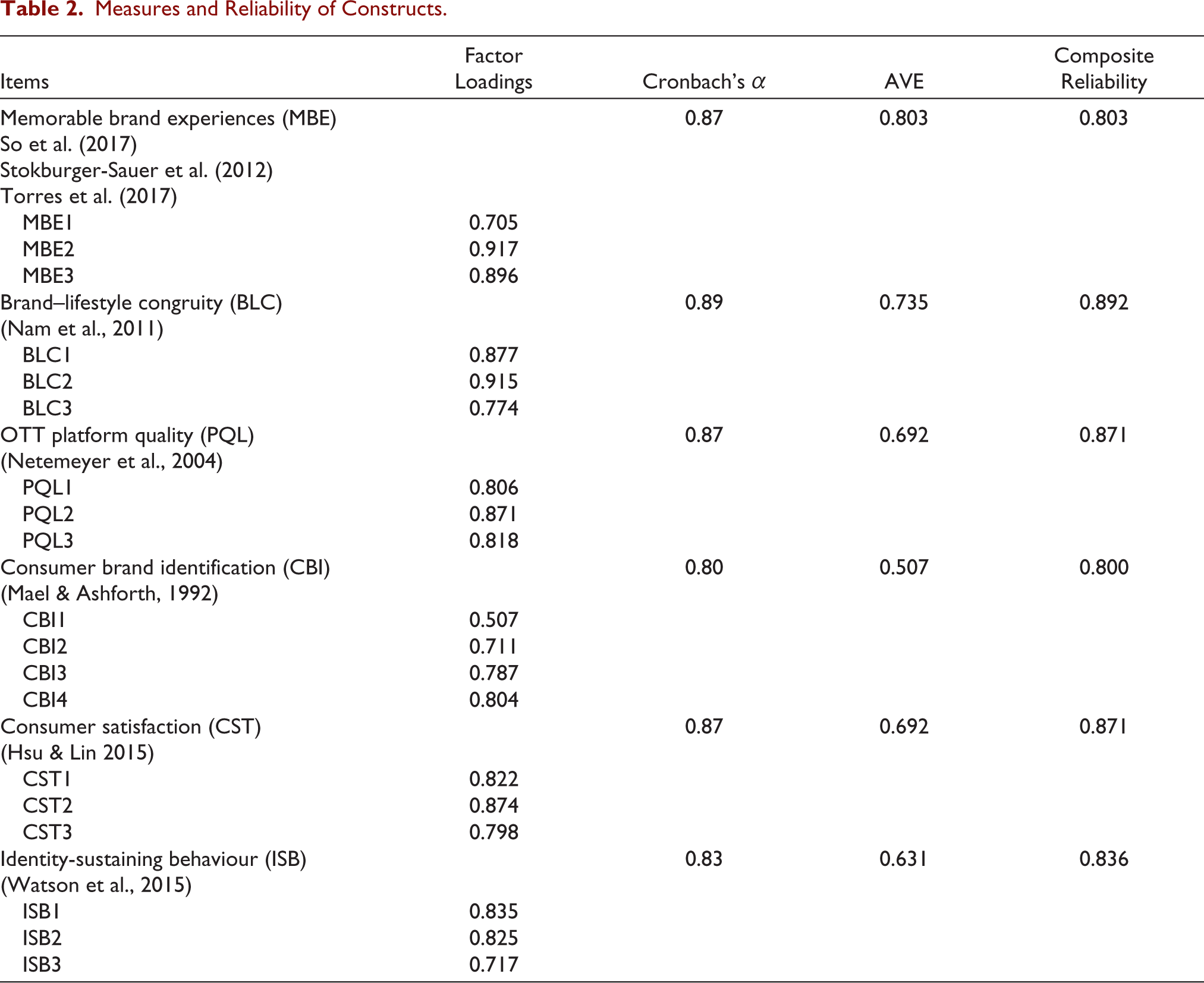
First, confirmatory factor analysis was conducted using AMOS. The model was assessed (χ2 = 386.917, df = 188, p < .000, GFI = 0.920, NFI = 0.928, CFI = 0.962, TLI = 0.953 and RMSEA = 0.051), which indicated a good fit. Furthermore, convergent validity was confirmed by average variance extracted (AVE) values exceeding 0.50, composite reliabilities exceeding 0.80 and standardized factor loadings exceeding 0.50 for each item (Table 2) (Hair et al., 2010). One item in the CBI had a low factor loading (0.507), but it was retained in the scale because removing it led to a poor Cronbach’s α. As per Hair et al. (2010), a factor loading of 0.5 is considered acceptable. As presented in Table 3, all the square roots of AVE (in parentheses) were greater than the correlation estimates between two pairs of constructs, ensuring discriminant validity (Fornell & Larcker, 1981).
Measures and Reliability of Constructs.
Correlations and Discriminant Validity.
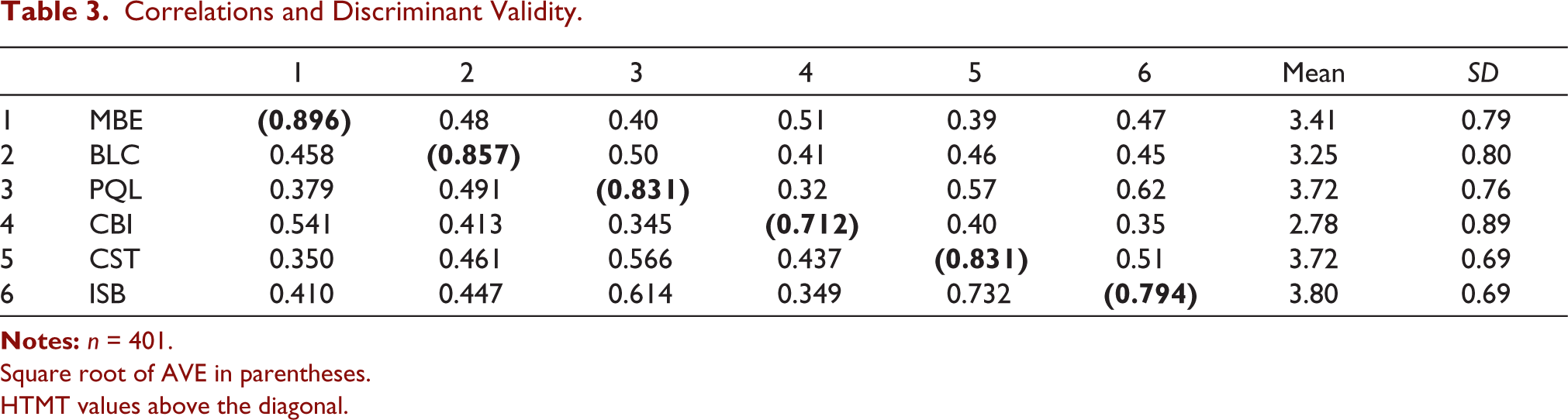
Square root of AVE in parentheses.
HTMT values above the diagonal.
Hypotheses Testing
The structural model fit was assessed. The model demonstrated a good fit, as indicated by the fit indices: χ2 = 370.226, df = 142, p < .000, GFI = 0.912, NFI = 0.918, CFI = 0.947, TLI = 0.936 and RMSEA = 0.063. Subsequently, the hypothesized direct relations between the constructs were assessed.
Memorable brand experience strongly positively affected CBI (β = 0.427, p < .001), supporting H1 (Table 4). Brand–lifestyle congruence (BLC) was positively associated with CBI (β = 0.184, p < .01), supporting H2. Furthermore, OTT platform quality (PQL) had a nonsignificant effect on CBI (β = 0.103, p > .05), thus rejecting H3. PQL positively affected CST (β = 0.506, p < .001), thereby supporting H4.
Structural Model Path Estimates.
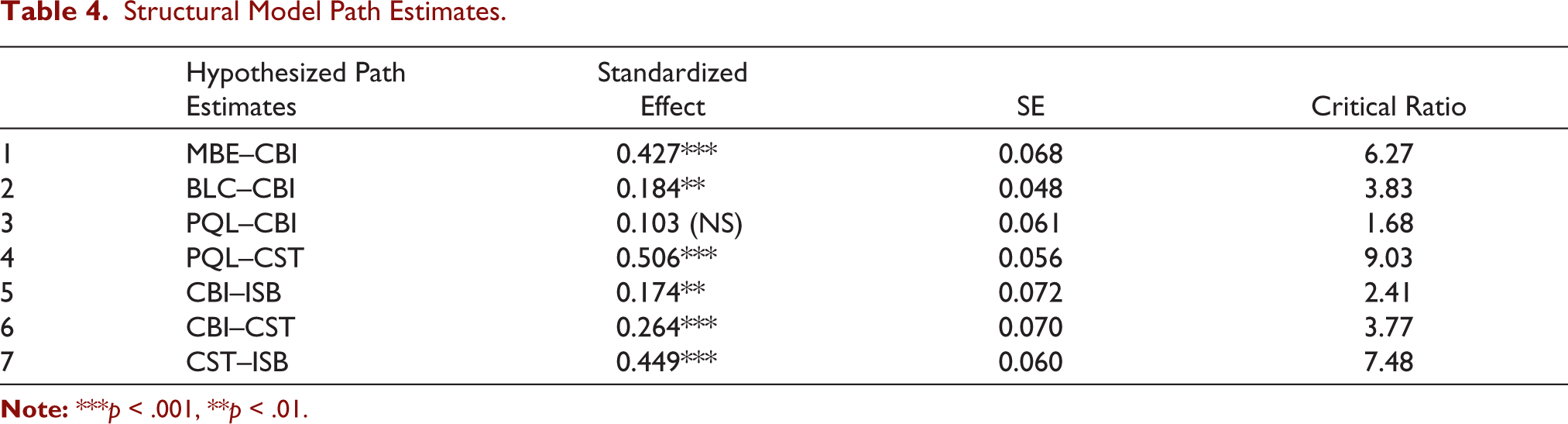
CBI positively affected ISB (β = 0.174, p < .01) and CST (β = 0.264, p < .001), supporting H5 and H6, respectively. Finally, CST positively affected ISB (β = 0.449, p < .001), supporting H7. Control variables such as gender, age and income were included in the structural model. Age had a significant negative effect on ISB (β = –0.147, p < .05). Neither gender nor income affected the study’s dependent variable.
Mediation Analysis
Preacher and Hayes’s (2008) guidelines were used to assess the study’s mediation hypotheses. Using 5,000 bootstrap samples and a 95% confidence interval, the PROCESS macro (Hayes, 2017) in SPSS 2020 was applied.
Table 5 presents the mediation results. The indirect mediation effect of CBI on the relationship between memorable brand experience and ISB was significant (β = 0.0575, LLCI = 0.0128 and ULCI = 0.1022), supporting H8. Furthermore, CBI exerted significant mediation effects on BLC and ISB, with significant indirect effect (β = 0.0584, LLCI = 0.0232 and ULCI = 0.0979), supporting H9. PQL exerted an indirect but significant effect on ISB via CBI (β = 0.0413, LLCI = 0.0151 and ULCI = 0.0730), supporting H10. CBI also had a significant indirect effect on ISB via CST (β = 0.1301, LLCI = 0.0828 and ULCI = 0.1853), thereby supporting H11. Thus, all the mediation hypotheses were supported.
Mediation Analysis.
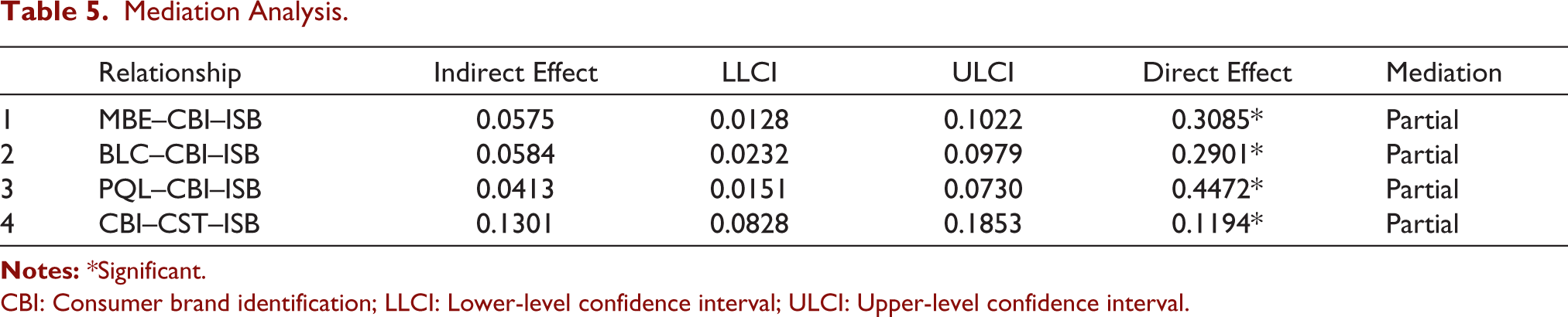
CBI: Consumer brand identification; LLCI: Lower-level confidence interval; ULCI: Upper-level confidence interval.
Discussion and Implications
The present study explores factors motivating consumers to engage with OTT platforms. First, the results revealed that a memorable brand experience is one of the strongest determinants of CBI. Consumers develop a sense of coherence with an OTT brand through memorable brand experiences. Memorable experiences are known to markedly contribute to brand association, recognition and equity (Pina & Dias, 2021; Zheng, 2024). This study supports the notion that OTT brands capable of creating memorable consumer experiences foster strong CBI (Büyükdağ & Kitapci, 2021; Legendre et al., 2019). Additionally, research shows that hedonic gratifications, compared with functional gratifications, have a strong influence on brand commitment (Lim & Kumar, 2019).
Second, consistent with previous findings (Büyükdağ & Kitapci, 2021; Kumar, 2022), the results demonstrated that brand–lifestyle congruence is another crucial determinant of CBI. When consumers perceive that an OTT platform reflects their ideal self and aligns with their lifestyle, they connect with it on an emotional level. This finding aligns with Li’s (2020) findings. Interestingly, platform quality does not significantly affect CBI, probably because quality is considered a baseline expectation in today’s technological era (Yousaf et al., 2021). However, OTT platform quality is strongly associated with CST, suggesting that while quality may not drive brand identification, it is crucial for satisfaction. This result warrants discussion, as it implies that utilitarian factors, such as platform quality, lead to positive outcomes, including satisfaction, but do not foster strong brand identification. However, our results show that hedonic gratification, such as brand–lifestyle congruence and a memorable brand experience, plays a strong role in the development of brand identification. Existing research shows that hedonic gratifications, compared with functional gratifications, have a strong influence on brand commitment (Lim & Kumar, 2019). We found a similar pattern in CBI.
Third, the study demonstrated that CBI positively correlates with ISB and CST. Strong CBI improves brand loyalty, which, in turn, fosters consumer satisfaction with the platform. These results support the social identity literature, which posits that consumers behave in ways that reinforce their self-concept (Yoshida et al., 2021), thereby motivating users to recommend their OTT brands to others through word of mouth (Bhattacharya & Sen, 2003).
Fourth, the findings established that CBI mediates the relationship between memorable brand experiences, brand–lifestyle congruence, platform quality and ISB. Grounded in the social identity theory, we propose that CBI is a pivotal construct that links gratifications derived from OTT use to consumer loyalty and satisfaction. Our study extends this domain by demonstrating how CBI can be enhanced through social and emotional gratifications in technological products and services. CBI is considered a crucial variable in enhancing long-term competitive advantage, satisfaction and well-being (Reitsamer, 2024; Sato et al., 2023; Stokburger-Sauer et al., 2012). Such enhancement of CBI will also lead consumers to defend the brand in a crisis and be less affected by negative word of mouth. By examining the effects of gratifications on CBI, we contribute to the existing literature (Reitsamer, 2024). CBI also mediates the relationship between PQL and ISB, but in the presence of CST, the association between PQL and CBI was insignificant. This requires further research to untangle the complex relationships between CBI, PQL, ISB and CST.
Fifth, the study unveiled that CST mediates the relationship between CBI and ISB. This finding offers a novel insight into why satisfied consumers are more likely to display supportive behaviours (Yoon & Kim, 2023).
This study offers two important theoretical contributions. First, this work proposes an integrated model that combines social identity theory and UGT to investigate the determinants of continued OTT platform use. Consistent with existing studies, CBI’s functional, social and emotional determinants (Elbedweihy et al., 2016; Kassemeier, 2022) were added to enrich the present study. Researchers predominantly focus on the initial adoption of new technologies using technology acceptance theories, rather than on post-adoption aspects. Thus, our analysis focuses on post-adoption aspects, such as satisfaction and loyalty to the OTT platform, thereby filling a critical gap in the literature (Laradi et al., 2025). This study contributes to the development of UGT theory by integrating it with social identity theory and showcasing how gratifications lead to identity development.
Second, this study found that memorable brand experiences and brand–lifestyle congruence enhance CBI and promote ISB. By identifying CBI determinants from the uses and gratification perspective, we add to the existing literature on CBI in the technology domain and to that on the broader consumer behaviour. Studies on the CBI domain have been instrumental in explaining consumer loyalty, co-creation behaviour, citizenship behaviour and consumer engagement (Elbedweihy et al., 2016; Itani, 2021; Pina & Dias, 2021; Utkarsh & Gupta, 2022), making it a key focus for marketing strategies (Haumann et al., 2014; Wolter et al., 2017). Further results from the demographic analysis indicated that age negatively affected ISB, suggesting that ISB decreases as age increases. This suggests that older consumers are less likely to continue with the brands despite deriving certain gratifications from OTT platforms. Our findings thus provide a novel lens to explore technological platforms beyond functional parameters such as convenience, content, accessibility and ease of use, offering insights into how emotional and social gratifications drive deeper and committed consumer–brand relationships, thereby contributing to emerging research on OTT platforms (Chakraborty et al., 2023; Soren & Chakraborty, 2024; Talwar et al., 2024; Yoon & Kim, 2023).
Managerial Implications
The findings offer practical insights for OTT platform managers. First, the study suggests that creating memorable experiences can significantly strengthen CBI. For instance, OTT brands enable consumers to host real-time watch parties with family and friends, thereby enhancing the platform’s hedonic value and making the experience more enjoyable and memorable. This improves brand identification, enhancing consumers’ loyalty and satisfaction by fostering a stronger emotional connection with the brand. Managers can create strong resonance with the brand by highlighting consumers’ experiences with it. Platforms can operationalize this by introducing synchronized watch-party functions with integrated chat, reaction emojis and co-viewing rewards. Managers should track success using measurable indicators such as co-viewing frequency, average session duration during social streaming and repeat-participation rates.
Second, the study identifies the importance of OTT brand–lifestyle congruence, which leads to higher brand identification among consumers. Brands shape perceptions and create identity in consumers’ minds through their positioning, quality and target segments. Consumers who are highly aware of the OTT brand image and associations can assess the brand–lifestyle congruence. Managers of OTT platforms should strive to align brand messaging with consumers’ values and lifestyles. For instance, emphasizing aspirational global content, minimalist interface design and culturally progressive narratives, as in Netflix’s positioning strategy, can strengthen perceived brand–lifestyle congruence. Managers can evaluate congruence effectiveness through brand-fit surveys, net promoter score (NPS) and engagement with curated lifestyle collections. Further, the study highlights the role of CBI in promoting consumer satisfaction and loyalty. Managers can focus on identifying strategies that foster a strong connection with the brand, thereby promoting consumer satisfaction and loyalty. Brands like Netflix emphasize connecting with lifestyle and identity, ultimately creating stronger resonance with consumers.
Specifically, from an emerging-market perspective, this research highlights the importance of creating meaningful brand experiences and integrating the brand into consumers’ lifestyles to ensure consumer retention. The study highlighted the key role of OTT platform quality in promoting consumer satisfaction. Emerging markets such as India have witnessed the launch of several OTT platforms, which can benefit from this study by understanding the crucial role of connecting with consumers at a deeper level and offering a high-quality experience, leading to higher consumer satisfaction and loyalty.
Limitations and Future Research Directions
Owing to the ‘cross-sectional’ survey design, this study provides only a snapshot of a particular phenomenon. Future longitudinal studies must investigate how OTT brand identification is nurtured over time and its effects on CST and ISB. Moreover, data were collected from a single country, underscoring the need for a more comprehensive cross-cultural collection. The data were also sourced from a single source and are self-reported, which may be subject to common method bias. Although the study examines novel antecedents of CBI in the context of OTT platforms, research indicates that CBI has multiple determinants. Future research should analyse the omitted variables to decipher more relations. Some variables of interest include self-relevance, community identification and gamification. Finally, the study assesses the preferences and views of OTT users, reflecting only users’ opinions, without considering those of non-OTT users. Future studies can include both OTT platform users and non-users to understand differences in their opinions.
Footnotes
Declaration of Conflicting Interests
The authors declared no potential conflicts of interest with respect to the research, authorship and/or publication of this article.
Funding
The authors received no financial support for the research, authorship and/or publication of this article.
Appendix
| Scale Items |
| Memorable brand experiences (MBE) So et al. (2017) Stokburger-Sauer et al. (2012) Torres et al. (2017) |
| I have had a lot of memorable experiences with my preferred OTT platform |
| Thinking of my preferred OTT platform brings back good memories. |
| I have fond memories of my preferred OTT platform. |
| Brand–lifestyle congruity (BLC) (Nam et al., 2011) |
| The OTT platform I choose supports my lifestyle. |
| The OTT platform I choose is totally in line with my lifestyle. |
| The OTT platform I choose reflects my personal lifestyle |
| OTT platform quality (PQL) (Netemeyer et al., 2004) |
| Compared with other OTT platform, my preferred OTT platform is of very high quality. |
| My preferred OTT platform is the best brand in its product class. |
| My preferred OTT platform consistently performs better than all other OTT platforms. |
| Consumer brand identification (CBI) (Mael & Ashforth, 1992) |
| I am interested in what others think about my preferred OTT platform. |
| When I talk about my preferred OTT platform, I associate it with myself. |
| By watching programmes in my preferred OTT platform, I get a feeling of accomplishment. |
| When someone praises about my preferred OTT platform, it feels like a personal compliment. |
| Consumer satisfaction (CST) (Hsu & Lin, 2015) |
| I am completely satisfied with my OTT platform. |
| I am very pleased with my OTT platform. |
| I am absolutely delighted by my OTT platform. |
| Identity-sustaining behaviour (ISB) (Watson et al., 2015) |
| I consider my preferred OTT platform as my first choice when buying/using/subscribing to an OTT platform. |
| I will use my OTT platform in the next few years. |
| The next time I buy or use an OTT platform, I am likely to buy/use my preferred OTT platform. |